Category: Speeches

  • Andrew Pakes – 2026 Speech on Getting Britain Working Again

    Andrew Pakes – 2026 Speech on Getting Britain Working Again

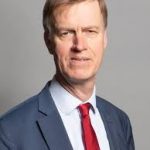
    The speech made by Andrew Pakes, the Labour MP for Peterborough, in the House of Commons on 14 May 2026.

    It is a pleasure to follow the hon. Member for Torbay (Steve Darling), and to speak in a debate on work in support of my right hon. Friend the Secretary of State for Work and Pensions. There are few Secretaries of State who have a work ethic as strong as his, and I thank him for that.

    I welcome the opportunity to speak in this debate on the Loyal Address. The phrase “Get Britain working” goes to the heart of the challenges facing both this Government and the country, and I will start by welcoming today’s growth figures.

    Debates such as this and the programmes of any Government will make no difference without stability as a foundation. I say kindly to colleagues on all sides of the House that economic stability matters. After the revolving door of Ministers and policies in the past decade, stability is not just a nice-to-have, but a must-have. From economic stability we can create the opportunities, fix our public services and share prosperity across our country.

    Nothing goes to the heart of Labour’s mission to grow our economy more than the dignity of work. Nothing will propel that growth more quickly, more justly and more sustainably than creating the jobs and opportunities to sit squarely behind the programme of this Government and the policies put forward in the Loyal Address. But equally, nothing says more about the challenge the Government face and the opportunities the Government need to pick up than the 70% drop in apprenticeships we inherited after the past decade of Conservative rule.

    These are challenges writ large in my constituency of Peterborough. In 2023-24 apprenticeship figures hit the lowest level in the six years for which data is available, with a fall in achievements across all apprenticeship levels. That not just an economic failure, but a moral failure that we inherited from the previous Government. Therefore, I welcome the focus in the King’s Speech on creating jobs, support and opportunities for young people to succeed. This is an agenda that builds on the existing achievements around apprenticeships and youth employment.

    Over the past couple of years I have spent as a Member of this House, I have met businesses, education providers and young people who have been shut out of opportunities for too long because of the bureaucratic nature of our skills system and the apprenticeship levy. It is this Government who have the opportunity to change that. The DWP has itself described Peterborough as a national youth unemployment hotspot, so the Government’s moves in the King’s Speech are welcome. I am pleased to put on record that Peterborough and Cambridgeshire were chosen for one of the first pilots for the youth guarantee, with up to £10 million over two years to support young people into education, employment and training. We get the welfare bill down by increasing opportunities and backing the next generation of taxpayers, something that this Government are focused on.

    Within the city I represent, we have the appetite to meet the Government’s ambition to address those issues. Peterborough College’s JobSmart provision is a great example of working with stakeholders—the DWP, Peterborough Council for Voluntary Service and the combined authority—to get more people into work. The youth employment hub, opened recently at Peterborough United, funded by the Government’s youth guarantee and opened by our Secretary of State and mayor, is a physical example of the bricks and mortar investment in our young people, as is the new Green Technology Centre opened at Peterborough College last year. This takes traditional apprenticeships and training opportunities, and updates them for new green skills such as EV mechanics, heat pump installation and sustainable construction skills.

    I welcome the expansion of the youth guarantee and the focus on expanding work experience and guaranteed employment for young people; the jobs guarantee, our promise of a work placement for all, with costs paid for by the Government; the youth jobs grant, a £3,000 grant for businesses that hire a young person who has been on universal credit for six months; and a £2,000 grant for small businesses that take on an apprentice. For cities like mine it could be transformative, creating opportunities and getting more people into work.

    I look forward to the legislative programme that will follow changes recommended in the Timms and Milburn reviews. It cannot be right that we write off so many young people as unfit to work, with a life on benefits. It also addresses something bigger: a greater inequality for too long between vocational and university education. This is not just about policy; it is cultural. For too long, we have made apprenticeships a second-class option. We have created a bias in our schools that favours university over apprenticeships. That, in turn, has been compounded by the destruction, under the previous Government, of careers advice and work experience for young people in cities such as mine. For a working city such as Peterborough, that legacy has been a disaster for people and for economic growth.

    I welcome our new university in the city, Anglia Ruskin University Peterborough, which does things differently. It has a focus on local students, business relationships and degree apprenticeships, growing our talent in the city, so that the talent of our city can grow the economy for this country as a whole.

    I also want to talk about jobs for the future and how we build jobs for the next generation of young people coming through. One third of people working in Cambridgeshire and Peterborough are employed in occupations that will be directly affected by the transition to the green economy. Major local companies such as National Gas and Caterpillar are already driving innovation in sustainable industries. Peterborough sits at the heart of the national gas transition and hydrogen networks. We could truly be the King’s Cross of the green industrial revolution for hydrogen. This transition from blue collar to green collar jobs and skills is one of the hallmarks of this Government’s achievements so far. I welcome the £800 million private sector investment that National Gas recently put into Peterborough and my region, and its choice of Peterborough as its new regional headquarters. We have the talent in our city which allows those jobs for the future to be grown, with Government support.

    I will say one more thing—a friendly piece of support, but I would like to stretch my elbows a bit—which is that what I know perfectly about my city is the potential of the young people who live in it. I also know the struggles that Peterborough college and further education have had to put up with. I welcome the investment the Government have put into further education, but I also know that my colleges could support many more small businesses and many more young people if they had the physical resources to do so. We are on the journey and we are making the investment to change that, but if we could do it faster, we in our city could deliver more for young people, but also for the Government’s ambitions.

    The appetite is there from learners, providers and businesses. The drive exists to meet Labour’s ambitions for new homes, clean energy and infrastructure, but we need the means to deliver it. It is a privilege to speak in support of the Loyal Address. We can get the job done with the Government’s support and with the Prime Minister’s support.

  • Steve Darling – 2026 Speech on Getting Britain Working Again

    Steve Darling – 2026 Speech on Getting Britain Working Again

    The speech made by Steve Darling, the Liberal Democrat MP for Torbay, in the House of Commons on 14 May 2026.

    It is a pleasure to follow the right hon. Member for Walsall and Bloxwich (Valerie Vaz). One would normally imagine that the King’s Speech was an opportunity to press the reset button, but I fear that Labour Members are searching for another reset button at this time. We Liberal Democrats fear that the King’s Speech is somewhat timid in its ambition, and does not drive the change that many of our communities have a thirst for.

    I will focus on youth unemployment and our NEETs—those not in education, employment or training. This is a massive challenge for our society. People are three times more likely to be unemployed if they are under the age of 25. To be fair to the Government, the issue was not created on their watch, but during their watch, they built on what happened under the Conservatives, due to the pressures on the system. When I meet young people, I know that they have faced a lethal cocktail, when it comes to being work-ready. There was the covid crisis through much of their educational life; there is the pressure cooker of social media, which eats into their confidence; and finally, there is the cost of living crisis, which young people are not immune from. It may mean not only that they have less opportunity, but that mum or dad face real pressures, so there are some real challenges.

    I pay tribute to organisations in the Torquay and Paignton area of Torbay that support young people, such as Eat That Frog, Sound Communities, Doorstep Arts and the South Devon college, which have all benefited from the shared prosperity fund. That ended without a replacement, and the world is therefore a poorer place, particularly for youngsters who had adverse childhood experiences and are on the margins of employment.

    As we have seen, the tax on work—the national insurance hike—has really hit opportunities for employment hard. Employment in the hospitality sector has shrivelled, with the loss of more than 100,000 jobs. It is a cold hand on the heart of the west country and our hospitality industry. When I speak to organisations such as Splashdown, a water park in Paignton, they say that they have money to invest, but fear a further economic shock. Sadly, Wild Planet Trust, which managed Paignton zoo for many years, had to pass the zoo over to a Dutch company, because the national insurance hike had a massive impact on its ability to make the figures work. Other businesses across Torbay, whether it is the Livermead House hotel or the outstanding Rock Garden pub and restaurant, tell me that they face real challenges and have had to shrink the number of youngsters they take on just to meet their budgets, partly due to inflation, but also because of the national insurance hikes, so we face some real challenges there.

    I say to the Government that we need to think about driving positive changes, because at the moment, it appears that they are papering over the cracks, rather than getting to the root causes of problems in our economy and helping to grow the opportunities for young people across the United Kingdom. I was pleased that the Secretary of State talked about Access to Work, and the Disability Minister often refers to Access to Work as the best kept secret, but the reality is that the system is broken. We are looking at 37 weeks for decisions on Access to Work applications, and people are losing job offers. The No Limits café in Newton Abbot, which served my constituents from Torbay, closed after a lack of liquidity in its finances because of delays in payments. We need to ensure that there are no behind-the-scene cuts to Access to Work through the Government failing to make inflationary increases to what people can claim, as was highlighted by the Disability News Service only last week.

    The Liberal Democrats fought the last general election on a pledge to clean up our waters, be they seas or rivers; the cost of living crisis; and the NHS. In Torbay and across the whole of Devon, we are looking at hundreds of redundancies in that service. The argument we regularly hear from the Government is that they have put up national insurance rates in order to invest, but we have had hundreds of millions of pounds of cuts to our services in Devon. That means fewer job opportunities for our people in Devon, which is hitting some of our most deprived communities.

    In conclusion, we need to back our communities. We Liberal Democrats believe that nobody should be enslaved by poverty, ignorance and conformity, and we need to set the foundations for supporting communities. However, the communities we really need to work with much more closely are our friends on the other side of the channel; we need to build stronger working relationships with our European partners to grow our economy.

  • Valerie Vaz – 2026 Speech on Getting Britain Working Again

    Valerie Vaz – 2026 Speech on Getting Britain Working Again

    The speech made by Valerie Vaz, the Labour MP for Walsall and Bloxwich, in the House of Commons on 14 May 2026.

    It is a pleasure to follow the shadow Secretary of State, the hon. Member for Faversham and Mid Kent (Helen Whately). I will try to address some of the points she made, but I am bound to mention the recent elections. Engaging in the democratic process is important, but not all areas had elections. The turnout across the wards in Walsall and Bloxwich was an average of 38%. I want to put on record my thanks to all the councillors who served their community in Walsall and Bloxwich.

    The leader of Reform, the hon. Member for Clacton (Nigel Farage), thought that Walsall council was Labour-controlled, but it was not; it was controlled by the Conservatives—I know it might be slightly difficult to see constituencies from a helicopter. Some of his candidates said that they had to pay to personalise their leaflets. The £5 million gift is quite interesting as he says it is for his personal safety. I know that Mr Speaker and all the Deputy Speakers take the safety of each and every one of us in this Chamber very seriously.

    The Representation of the People Bill is a carry-over Bill, so there is still time to ensure that we have compulsory voting and that we prevent cryptocurrency and bitcoin being used for donations to political parties—say, from Thailand—particularly from donors who go under two different names.

    I welcome the announcement in the Gracious Speech on improving our cyber-security defences. I do not know whether Members saw this, but there was an investigation by a consortium of journalists from The Guardian, Der Spiegel, Le Monde, The Insider, Delfi and VSquare about a Russian school called “Department 4” that provides special training on hacking and password attacks. A hacker unit known by western Governments as Sandworm is accused of unleashing destructive cyber-attacks targeting, for example, Ukraine’s power grid, the French presidential election in 2017 and the investigation of the Salisbury poisonings. That article was published on 7 May, and it is worth reading. We need to protect our democracy from the constant drip, drip of misinformation and disinformation on online fora.

    I welcome the energy independence Bill in the Gracious Speech. We have seen how we have been at the mercy of other countries, but now we are investing in renewables, which will protect our planet, roll out energy efficiency and bring down bills.

    Harriet Cross

    The energy independence—or dependence, as I think we can probably call it—Bill will make us more reliant on overseas imports of oil and gas. We will use oil and gas for many years because our system needs it. The Bill bans new licences in the North sea, making us more reliant on imports. Does the right hon. Lady really welcome that?

    Valerie Vaz

    I welcome the energy independence Bill. Let us see what is in the clauses when it is published, but the Secretary of State wants to make this country independent of outside forces. This is the first time a Government have invested so heavily in renewables. All this will get Britain working.

    It is outrageous that oil companies have made massive profits and traders have bet on the outcome of war in Iran as petrol prices go up. Someone somewhere is making money, and it is not my constituents. They may not even know who is making the money, yet they blame us.

    Jim Shannon

    I commend the right hon. Lady for her contribution. It is really important that we look upon renewables as an option, whether we like it or not—that is the way I see it. The Government are pushing their renewables policy for England and Wales, but does she believe that we should be doing this collectively? I think that Northern Ireland, Scotland, Wales and England should be working together on a policy that can take us forward and meet the targets, which are very important not just for us but for our children and our grandchildren.

    Valerie Vaz

    We are the United Kingdom of Great Britain and Northern Ireland, so it is very important that we all work together. When it comes to climate change policies, we cannot specify a particular area; they are for our whole country, and our whole planet.

    Those of us who were around at the time of Brexit—and I am pleased to see an EU Bill in the King’s Speech—will remember that we were allowed to see the impact assessments only if we left our phones behind and went across the road with just a pencil and paper. There we saw the impact assessments for each sector, and how leaving the EU affected every single one; we knew how important it was. The Federation of Small Businesses has warned that post-Brexit red tape and costs are driving smaller companies out of European markets. In a survey of 645 businesses, 30% indicated that they might reduce or cease trading in the EU without eased regulations. Many small businesses—64%—reported issues with customs documentation, 21% reported issues with physical inspections and 17% reported issues with product marking. To get Britain working, we need a closer relationship with our nearest market. If these small businesses close, working people and all of us lose out.

    I believe in the dignity of work. The hon. Member for Faversham and Mid Kent mentioned that there is no welfare Bill in the Gracious Speech, but measures have already been taken to increase the national minimum wage, rights at work and safety at work. We will get Britain working with the new work coaches and the right to try.

    I do not know whether Members have seen the television programme “The Pitt”, but in season two, a construction worker has to be taken to A&E and cannot afford his medical care, which is about $20,000. Watching that, we all know how lucky and blessed we are that we have our NHS, free at the point of need. We give people dignity when they fall ill. We take it for granted that our doctors and nurses are trained to the highest level. The NHS modernisation Bill will bring back the Department of Health and Social Care as one Department with accountability to the Secretary of State. There will not be the extra cost of NHS England; instead, there will be more money for the frontline.

    I have found some money down the back of the sofa, so I hope the Chancellor is listening. Fifty million pounds has been allocated for a free school in my constituency that, on the evidence, is not needed. The National Audit Office has reported falling rolls in primary schools, and that fall in numbers will feed into secondary schools. I was told that the decision about the school was made in 2017. There was a Walsall priority education investment area programme, and the Windsor Academy Trust just so happened to have a member on the programme’s board. Surprise, surprise—it got the contract for the free school. It is like insider trading with public money. A review was undertaken, but Ministers are pressing ahead with the decision. I am not sure why, when schools like Joseph Leckie, Blue Coat academy and All Saints academy require support for their buildings, as do many other schools. Despite what the evidence shows, there will be building on Reedswood Park, which is not what local people want. It is the same with the Walsall Leather Museum, a beloved local cultural and heritage icon; the deal with the then Conservative-controlled council was a novel and contentious transaction, made against the wishes of visitors, constituents and Government policy on promoting arts and culture. The museum must be retained in its current position.

    I believe in the dignity of education, which is why I welcome the Bill to raise education standards for all. We already have Best Start hubs in train—we know what a difference Sure Start made—and breakfast clubs. Anyone who has visited breakfast clubs knows that there is a glorious cacophony of excited children who have had a good meal. There are also quiet places, and I am pleased that some are taking part in the year of reading. Children are set up for the day. We cannot measure the results of a good education tomorrow; we have to see the benefits over a lifetime. I believe in the dignity of opportunity, and that is what this Government are giving people. We give people the tools to find and exploit their talents. Many do not know what their talents are when they start off in life, and they want to discover them over the years. That is how we get Britain working.

    We live in a society where, if we see something we want, we can buy it, and it is with us the next day, but Governments do not operate in that way. I want to end with a story about three workers constructing a road. When they were asked what they were doing, the first one said he was breaking stones; the second one said that he was constructing a road; and the third one said that he was constructing a road that would take children to their school, or the sick to hospital. We have to show people the significance of the actions that the Government are undertaking, so that they are like the third worker. Equality, opportunity, skills, justice and tolerance take time, patience and perseverance. We need to explain to people that our Government are standing up against vested interests and for all our citizens, and that is why I support the measures in our sovereign’s Gracious Speech.

  • Helen Whately – 2026 Speech on Getting Britain Working Again

    Helen Whately – 2026 Speech on Getting Britain Working Again

    The speech made by Helen Whately, the Conservative MP for Faversham and Mid Kent, in the House of Commons on 14 May 2026.

    I respect the Secretary of State. He has talked at some length about what is wrong with the welfare system, but the fact is that there is no welfare Bill in the King’s Speech. I reckon he is stuck between a rock and a hard place: he knows the benefits bill is out of control; he knows that the public are sick of seeing their taxes go on ever higher welfare handouts; he even knows how the savings could be made because I have told him [Laughter.] They are laughing, but they are the problem. The Secretary of State also knows that the Toggle showing location ofColumn 176MPs behind him will have none of it. With the Prime Minister clinging on by a thread, no wonder there was no welfare Bill in the King’s Speech.

    Here is the problem: failure to grip welfare puts the Government dangerously out of touch with people out there—the people he, I and all of us are here to serve. Let me read from an email that I received recently from a constituent; I will call her Sandra. She says:

    “I am writing to you with utter frustration. We work so hard and for what? What is the point of working please tell me. To watch everyone else do nothing and get paid more than you! I’ve done the benefit calculation online and I’d be better off quitting my job…I’d be better off getting universal credit…how is that normal or fair?”

    My constituent is far from alone. I have heard that feeling expressed time and again since I have been shadow Secretary of State—on the doorsteps, in the pub, in the supermarket, on the train and all over social media. Beyond Westminster, people are despairing. Family breadwinners are losing their jobs, homes are being sold to pay the bills and young people are losing hope. Millions have drifted out of work, and for many, claiming benefits simply makes more sense.

    For those who are working, each month they are seeing their earnings disappearing in higher taxes and higher bills, with nothing left over. No wonder they are fed up. People who are doing the right thing are paying for people who have opted out. And what is Labour doing about it? Absolutely nothing. The Government are making a big mistake because the bald fact is that alarm- clock Britain is sick of paying out for “Benefits Street”.

    Peter Swallow (Bracknell) (Lab)

    The hon. Lady makes a powerful case, but her party was the future once, so why were all the challenges that she identifies not fixed when the Conservatives were in government? They were the ones who set up and built this welfare system.

    Helen Whately

    I hate to tell the hon. Gentleman, but Labour is in charge now. It has had nearly two years and nothing is changing.

    You do not have to take my word for it, Madam Deputy Speaker; here are the numbers. Over 8 million people are claiming universal credit, almost 4 million people are claiming sickness benefits and over 600,000 households are getting over £32,000 a year in benefits. That is more than the take-home pay of the average British worker. Ninety-one thousand households are getting over £50,000, which is enough to put them in the top 10% of our nation’s earners, and 16,000 are getting over £60,000 in benefits every single year. A person who works would have to earn over £70,000 to have that. All that is costing the country £140 billion a year. People know when they are being taken for a ride.

    Yesterday, the Prime Minister had a chance—one last chance—to hit reset, reverse those trends, get people off benefits and bring down the welfare bill. But with his back against the wall, it is no surprise that the Prime Minister’s King’s Speech contained none of that. While hundreds of thousands of people struggle to find work, the Prime Minister is only interested in protecting one job: his own. Yes, the Secretary of State can claim that he is doing something—his work experience programmes, his youth schemes, the savings-free Timms review and all that—but we all know that that is just tinkering at the edges.

    The Government tried welfare reform last summer and failed. Now, they have given up altogether. They had no plan when they got into office and they still have no plan now, and that matters. For every day of inaction, hard-working taxpayers pay the price. Doing nothing costs money. The welfare bill will reach £170 billion by the end of the decade and that money could be so much better spent on things such as defence or making our streets safer or—think of this—it could be left in people’s pockets for them to spend.

    Sam Rushworth (Bishop Auckland) (Lab) rose—

    Helen Whately

    The hon. Gentleman wants me to give way. Does he have a welfare savings plan? If so, let us hear it.

    Sam Rushworth

    I certainly do. It is this Labour Government and it is getting people off NHS waiting lists and back into work. However, it is not for me to answer the questions; my intervention was simply to give the hon. Lady another opportunity to answer the question that was put to her by my hon. Friend the Member for Bracknell (Peter Swallow) and which she did not really answer. This broken system that she described as “Benefits Street” is a system that the Conservatives created. Why, in 14 years, did they do nothing about it? It is easy to create political anger, rather than to have dealt with it, and that is why this Government are now dealing with the Conservatives’ mess?

    Helen Whately

    Oh dear; what a shame. There were no ideas for savings there at all. If the hon. Gentleman thinks that will get him a job under the next Labour leader, I am afraid that he will have to keep trying.

    Labour claims to be the party of working people, but the facts do not back that up. Labour always leaves office with unemployment higher than when it arrives, and it is on track to do that again. There are now over 300,000 more people unemployed than when this Government came to power. Their policies—the jobs tax, the Employment Rights Act—have actively killed jobs. Now, as mentioned in yesterday’s King’s Speech, we have the regulating for growth Bill. You couldn’t make it up.

    Employers are being asked to swim against the tide with bricks in their pockets, and now the Government are planning to make it worse. Many businesses have stopped hiring; others are letting people go. Businesses tell me that they are getting hundreds of applications for jobs that they might have struggled to fill a couple of years ago. No wonder that there are 700,000 graduates on out-of-work benefits. Youth unemployment is at over 14%. This is a disaster.

    Young people want to get their lives going, earn money, pay their own way, save for a car; instead, hundreds of thousands are stuck. The Secretary of State knows that. That is why he has frantically announced a flurry of schemes at the cost of £2.5 billion. Obviously, a work placement is better than nothing, but the young people I speak to want jobs, not Government-funded work experience.

    Less than two years ago, the country voted us out and Labour Members in. They have laughed and jeered at us, but they are not laughing now because they have found out that governing is hard. They promised voters change, but the only change that most people have seen is that they are poorer. Who knows what they got up to in opposition? Clearly, it was not working out what they would do if they won the election. The Parliamentary Secretary to the Treasury is chuntering. I know that yesterday he called the Leader of the Opposition “rude” when, actually, she was just telling the truth. He does not like to hear the truth. Maybe he should do a little less talking from the Front Bench and a little more listening.

    Being in power is not an end in itself; what matters is what someone does with the power that voters trust them with. I am sure that many of those on the Government Benches care about our country, but caring is not enough. The question is: what are they going to do to fix it? If the King’s Speech that we are debating today tells us anything, it is that they do not know. The only things they can think of will make the situation worse; and on welfare, they have given up.

    I believe in learning lessons whenever one can. One lesson that Labour Members should learn is to make good use of time in opposition; work hard, think hard and make a plan. That is what we have been doing, and that is why we have been able to set out an alternative King’s Speech, which has more in it than the actual King’s Speech. Take our plans for welfare—and to be clear, these are just our plans so far. We have a plan to reform welfare and make £23 billion in savings. We will bring back the two-child benefit cap, stop handouts to foreign nationals, stop sickness benefits for anxiety and ADHD, bring back face-to-face assessments, ban “sickfluencers”, reform fit notes and restore the household benefit cap to its original purpose of ensuring work always pays better than benefits. No more gaming the system, no more free cars for tennis elbow or acne—Britain will no longer be a cash machine for the world.

    People have had enough. They can see our welfare system is not working. It is not even working for people who are seriously ill or disabled. We are not keeping our plan secret; it is all out there. Other parties are adopting our policies. Reform, for instance, has not been shy about doing so, although it has been confused, and its Members are not here today. The Secretary of State should feel free to do so too, and though the MPs behind him will hate it, we are here to help.

    This is the most surreal King’s Speech debate I have ever taken part in. People out there are angry, frustrated and fed up. They can see the country is not working. They want the Government to fix it, but Labour are too busy working out who should be in charge. The saddest thing is that it will not make a difference. They can change their team captain, but they are still the same team. I have heard them cheer on taxes for farmers, family businesses and schools. I have heard them cheer for lifting the two-child cap. I have heard them argue against welfare savings. They think you fix poverty by giving out free breakfasts, paid for by people who are struggling to pay the bills themselves. Labour’s answer is always the same: tax more and spend more of other people’s money, and it is the wrong answer.

    Sometimes in life you have to pick a side. We have picked one: we are on the side of people who get up each day and go to work. They are doing the right thing, and we back them. Sometimes things go wrong and people need help. That is why welfare should be a safety net, not a lifestyle choice. Labour have made their choice: it is to carry on as if nothing is wrong. Yesterday’s King’s Speech was a chance to fix things, and they blew it.

  • Pat McFadden – 2026 Statement on Getting Britain Working Again

    Pat McFadden – 2026 Statement on Getting Britain Working Again

    The statement made by Pat McFadden, the Secretary of State for Work and Pensions on 14 May 2026.

    It is a pleasure to open today’s King’s Speech debate on behalf of the Government. As His Majesty said yesterday, we are living in

    “an increasingly dangerous and volatile world”.

    This debate is about the labour market, so let us start with some facts. We have 332,000 more people in work than a year ago; the third highest employment rate in the G7; unemployment lower than most OECD countries and lower than the EU average; unemployment down in the three months to February; and economic inactivity down by over 350,000 since the election—it is lower today than in 13 of the 14 years of the previous Government. Since the general election, real wages are up by more than in the first 10 years of the last Government, and this morning’s growth figures were up by 0.6% in the first quarter of this year—services up by 0.8% and construction up by 0.4%. That is the fastest GDP per capita growth in four years and the highest GDP growth in the G7 reported this year. That is on top of GDP per capita growth last year, and on top of six interest rate cuts since the general election. Our economic management has put the UK in a stronger position, better placed to weather the storm of global shocks, and better placed to weather the volatility of which His Majesty spoke yesterday.

    The leadership task for the country now is to lead the country through the consequences of what is happening in the middle east, because there is no doubt that the shock from the Iran war and the continued closure of the strait of Hormuz is real. It will affect prices, it will affect jobs and it will affect growth. Our Prime Minister took the decision to keep us out of that war, but the UK, like most countries, will be affected by its consequences.

    However, none of those consequences were thought about by the Leader of the Opposition or the leader of Reform when they were urging us to get involved. What did the Leader of the Opposition say?

    Ben Obese-Jecty: The Secretary of State and many of his Front-Bench colleagues keep reiterating that point. He keeps saying that, but I do not believe it is true. Will he explain exactly what he thinks the Leader of the Opposition wanted to do in those circumstances?

    Pat McFadden: Let me read this out for the hon. Gentleman. The Leader of the Opposition said that the Government were

    “too scared to make foreign interventions”.

    She also said:

    “I say to Labour MPs that we are in this war whether they like it or not. What is the Prime Minister waiting for?”—[Official Report, 4 March 2026; Vol. 781, c. 803.]

    That is what she said.

    As for the leader of Reform, the hon. Member for Clacton (Nigel Farage), he said:

    “We should do all we can to support the operation. I make that perfectly, perfectly clear.”

    Instead of trying to douse the flames, they sought to pour as much petrol on them as possible. They would have jumped in with both feet, displaying not only a failure of judgment but a total disregard for the price that will be paid by British consumers in higher prices and higher interest rates. That is how much they cared about keeping Britain working when it came to the biggest judgment that this country has had to make for a long time.

    The Conservatives’ record when in office was: the lowest business investment in the G7; wages flatlining for their entire period in office; the worst Parliament on record for living standards; and the public finances trashed as debt soared. The reason I point that out is that month after month, and nowhere more than in the arena of welfare, the Conservative party finds things that it is outraged about in the system that it built, it designed and it created.

    Before I come to the system itself, let me state something that is obvious but too often left out of these debates: the welfare system is often the end of a process in people’s lives, not the beginning. I will tell the House what contributes to higher welfare bills and to people not working: hollowing out the NHS and leaving one person in seven on waiting lists, with a higher likelihood that they are unfit for work; increasing child poverty by 700,000, making it less likely that children will be ready for work when they leave school; explicitly rejecting the post-covid education recovery plan, and doing nothing about rocketing absenteeism from schools; neglecting our town centres and high streets, leaving too many places without hope or confidence in the future; and presiding over a 40% decline in youth apprenticeship starts, kicking away the first step in the career ladder for those who lose out. You cannot do all that and then stand at the Dispatch Box and credibly express outrage about the rise in benefit bills. It did not come from nowhere, and if we are going to tackle this area, we have to understand that.

    Harriet Cross: In that case, can the Secretary of State credibly stand at the Dispatch Box and talk about the impact of the rise in national insurance contributions and of the Employment Rights Act 2025 on employment? The Government are now paying companies to employ young people because of the mess they made.

    Pat McFadden: If it was down to those policies, we would not have seen a rise of a quarter of a million in the NEET—not in education, employment or training—numbers in the last three years of the hon. Lady’s party’s time in office. My point is that this did not come from nowhere, and we have to understand that. If we are to have a serious response, education, health treatment, youth apprenticeships and changes to the welfare system itself all have a part to play.

    On the health front, I have good news to report: waiting lists today are down by 110,000—the biggest monthly drop since 2008. Elective waiting time targets have been hit, and four-hour waiting time targets have been hit. This is how we get Britain working, whereas simply picking a number for benefit cuts, with nothing behind it, is not an answer; it is a press release. The Conservative party has shown no understanding of how people end up on benefits in the first place.

    Steve Darling: I would like to raise with the Minister the fact that we are looking at around 1,000 redundancies across the NHS in Devon, which is a significant employer. That is cutting the legs off employment in communities such as mine in Torbay.

    Pat McFadden: I refer the hon. Gentleman to the figures that I just read out. For the first time in many years, the NHS is heading in the right direction. That is good for people’s health, and it is also good for getting people back to work.

    As I said, the Conservatives show no understanding of how people end up on benefits in the first place. They are like a workman who wanders around someone’s house asking, “Who installed that?”, when the answer every time is that they installed it. The Conservatives say that the welfare bill is too high, but it went up by £100 billion when they were in power. They say that they want more face-to-face appointments, but they shut them down almost entirely, and then the right hon. Member for Central Devon (Sir Mel Stride), now the shadow Chancellor, signed off a bunch of contracts that allowed the assessors to work from home. The Conservatives say that there are too many people on health benefits, but they designed the system, they designed the gateways, and they designed the differences in income that have made that happen. We did not just inherit a mess; we inherited their mess.

    In fact, the shadow Chancellor personally oversaw the biggest single increase in welfare spending on record during his time as Work and Pensions Secretary. Two weeks ago, the Leader of the Opposition railed against there being 1.5 million more people on universal credit. She was outraged by the figure, as she often is, but there was only one problem: around 80% of the increase was a legacy transfer from old benefits that was decided, organised and begun by the Conservative party. It is no wonder the chair of the UK Statistics Authority wrote to the Leader of the Opposition to correct her. Her letter said of the figures quoted:

    “A substantial proportion reflects the ongoing transfer of claimants from legacy benefits to Universal Credit. This process has been a longstanding policy and has been implemented at scale by the Department for Work and Pensions (DWP) since May 2022, predating the current administration.”

    When it comes to the Conservatives owning their record, they might as well be giving CV advice to the leader of the Green party.

    As the King’s Speech made clear yesterday, reform of the welfare system is under way and will continue. Support must always be there for those who need it, but circling the wagons around the status quo is not the right answer. Nor do I believe that the system can act as a fantasy cashpoint for every cause going; instead, I believe that our task is to recast

    this system to put work and opportunity at its heart.

    Sir Ashley Fox: Twelve months ago, the Secretary of State’s predecessor, the right hon. Member for Leicester West (Liz Kendall), attempted to cut the welfare bill and was sent packing by Labour Back Benchers. In the autumn, the Government had to get rid of the two-child benefit cap because of Labour Back Benchers. Is the truth not that the Secretary of State is incapable of reforming the welfare system because he does not have permission from his Back Benchers?

    Pat McFadden: I will outline the changes to the system that we are making. At the heart of it, we have to change the question that the system asks in order to have a system that is suited better to the conditions of today. We should ask people not just what benefit they are entitled to, but how we can help them change their lives, and we have begun that task.

    The change to universal credit that came into force last month narrowed the gap between the health element and the standard element. Crucially, it is matched by an increase in employment support. Another change is the provision of £3.8 billion to help people into work over the next few years, ensuring personalised help to maximise people’s chances of moving into a good, secure job. We have to change the old Tory habit of people being signed off and written off, and instead move to a system that more actively helps people into work. Nowhere is that more true than among the young, because the longer young people are left on benefits or out of work, the harder it is to come off and the worse the consequences are. The issue with the system is not just about monthly income; it is about the story of people’s lives and how we change it.

    Jim Shannon: I thank the Secretary of State for enabling me to ask a question, and for the positivity in his comments so far. Like him, I am incredibly worried about whether young people are getting job opportunities, and many in my constituency unfortunately have not been. May I ask a question about apprenticeships? We need to get people into the building and construction sector, for instance, where there are opportunities because house building is continuing to grow, as is the Government’s commitment. Will he outline some of the good things that have been done for young people in relation to apprenticeships?

    Pat McFadden: Apprenticeships are really valuable and important. I visited construction apprentices with the Prime Minister just a couple of days ago, so I heartily endorse what the hon. Gentleman says.

    The issue of youth employment is really important to us because of the long-term consequences of young people staying on benefits. Let me illustrate this for the House. A young person under the age of 25 who is on the health element of universal credit is now less likely to get a job than someone over 55 on the same benefit. A 20-year-old on incapacity benefit is more likely to turn 30 and still be claiming it than to have held a steady job for a year. Perhaps worst of all, a young unemployed person is over 70% more likely than their peers to die prematurely. Changing those stories has to be at the heart of what we are doing.

    There are practical ways of doing that. We know that many disabled people—young and old—and people with health conditions want to work, but have been held back by the fear of losing their benefits if things do not work out, so just last month we changed the law to bring in the right to try. Keeping people locked on benefits because they lack the confidence to work is in no one’s interests—not the individuals’ and not the state’s. The change means that entering employment will not automatically trigger a benefit reassessment. This is practical welfare reform and this is what getting Britain working looks like.

    We also know that disabled people and people with health conditions need localised support to get back into work. There is no greater fan than me of the wonderful work that our elected local mayors are doing, so we are putting £1 billion of funding into local areas to help 300,000 people into employment over the next few years. That is what practical welfare reform looks like.

    Today, the Department has published new figures on fraud and error. They show continued progress and a fall since the post-pandemic period, but this is an ongoing effort. There is always more to do because there are unscrupulous individuals who will try to game the system, but whether it is £5,000 or £5 million from an undisclosed source—possibly someone located abroad—people are expected to declare it. There cannot be one rule for some and another rule for everyone else.

    In the coming weeks, my right hon. Friend the Minister for Social Security and Disability will set out our plans to deliver our manifesto commitment to tackle the Access to Work backlog. This important scheme provides grants to thousands of disabled people to help them get into and stay in work, through things like specialist equipment, assistive technology and adaptations. Members from across the House have raised with me the issue of backlogs and waiting times that grew under the Conservative Government. Well, under this Government, we are changing that to reduce the backlog and to help more disabled people into work. This is practical welfare reform and this is what getting Britain working looks like.

    We are restoring fairness in the system too. We are providing better value for money in the Motability scheme, with a target for half those cars to be made in Britain by 2035, so that this important scheme supports the British car industry too. We are stopping those who have not contributed from getting a British pension on the cheap. The work of reform will continue this year when, in the coming weeks, we receive interim reports from both the Milburn and Timms reviews, before they conclude later in the year. We will bring forward further proposals for reform, with work and opportunity at their heart, when those reviews have reported.

    Bob Blackman: Reports suggest that unemployed people who are signing on are getting trained for jobs that do not exist, not for the jobs in the sectors where there are opportunities to work. Will the Secretary of State reform the system so that those who are unemployed and seeking a job are trained to do the jobs that are available?

    Pat McFadden: That is precisely what we are doing, including by providing apprenticeship courses that are shorter than the usual eight-month minimum, because employers have told us that such short courses are exactly what they need. I am all in favour of more flexibility in the apprenticeship system to suit what employers need.

    Getting Britain working is also about the levels of investment in the economy: it is about the roads and railways we build, the capital programmes in education and health, and the year-on-year modernisation of the country. Here too there is a contrast with what we inherited. Compared with the plans that we inherited, there will be £120 billion more public investment over the course of this Parliament. That is what getting Britain working looks like—building and modernising the country. Underpinning all of this are measures in the King’s Speech to raise living standards in every part of the country, to attract investment, to work in partnership with business, to take advantage of new trading opportunities, to reduce the burden of unnecessary regulations, to unlock airport expansion, to build the roads that need to be built and, finally, to deliver a fair deal for the north of England.

    At the heart of our reforms should be the young, for the simple and obvious reason that if we do not get the young into work, there can be lifelong effects. We have almost a million young people not in education, training or employment. As I said in response to the hon. Member for Gordon and Buchan (Harriet Cross), in the last three years of the Conservative Government, that figure went up by a quarter of a million. Although the numbers have barely moved since the election, they are still far too high.

    Alison Griffiths: On that point, will the Secretary of State give way?

    Pat McFadden: I will proceed, if the hon. Lady does not mind.

    Unlike the Conservatives, who did nothing about the number of young people not in education, training or employment, we are doing something about it, because we will not leave a young generation behind. We will not give up on young people, and that is why our youth guarantee is so important. It will invest £2.5 billion in support for young people and employers over the next few years. From June, there will be hiring bonuses of £3,000 for employers who take on a young person who has been out of work for six months. For small businesses, there will be a hiring bonus of £2,000 to take on a young apprentice, and the Government will pay for all the training courses for young apprentices employed by small and medium-sized enterprises. [Interruption.] Youth hubs across the country will take support out of the jobcentre to where young people are, giving them access to community-based advice, skills training, mental health support, housing advice and careers guidance. In the spirit of generosity, I will give way to the hon. Member for Bognor Regis and Littlehampton (Alison Griffiths).

    Alison Griffiths: I thank the Secretary of State for giving way and for his astounding shopping list of action that he is taking, but the Conservatives can make life easy for him: if he had not put 2% on national insurance, increased the national minimum wage and used the Employment Rights Act 2025 to remove the option of zero-hours contracts, businesses in my constituency and across the country would not have been forced to remove jobs focused specifically on young people. It is this Government who are responsible for the increase in youth unemployment.

    Pat McFadden: I have to disappoint the hon. Lady. If this Government were responsible, it would not be case that youth employment never in a single year reached the pre-financial crash levels when her party was in power. If this Government were

    responsible, we would not have seen the number of young people who are not in education, employment or training rise by a quarter of a million.

    Beyond the hiring bonuses and the youth hubs, we are offering more work experience or workplace training with a guaranteed interview, designed in partnership with employers. For those who have been out of work for 18 months, we are offering a six-month paid job placement of 25 hours a week at national minimum wage rates. The reason we are doing all this is that we will not stand back and allow young people to graduate from school to a life on benefits. There has been too much of that in recent years, and to do that would be to accept the scarring effect for the rest of their lives and to accept the huge cost to the country and to businesses in lost talent.

    Changing this situation should be a cause for us all, and it should certainly be a Labour cause, to give hope to the country’s young people and to show that we believe in them, we back them and we want them to have a better future. This is a generational challenge. Of course it is an issue for young people, but it is also an issue for their parents and grandparents, because they all want a better future for young people, and so do we. There is an urgency about this issue. As the population ages and net migration falls, we need the young people of this country more than ever. They are our greatest resource and our greatest asset, and an investment in them is an investment in the future for all of us.

    In the volatile times that His Majesty spoke about, people look for security, and rightly so, but the future is not just about security; the future is about building opportunity too. It is about not accepting so many young people being written off and about giving them a chance to change the story of their lives. That is the message at the heart of the King’s Speech and that is what is at the heart of our youth guarantee. It is at the heart of all the changes in welfare reform that I have listed, and it will be at the heart of the changes to come, and I recommend them to the House.

  • Keir Starmer – 2026 Comments on Extremism

    Keir Starmer – 2026 Comments on Extremism

    The comments made by Keir Starmer, the Prime Minister, on 15 May 2026.

    We’re in a fight for the soul of this country, and the Unite the Kingdom march this weekend is a stark reminder of exactly what we are up against. Its organisers are peddling hatred and division, plain and simple.

    We will block those coming into the UK who seek to incite hatred and violence. For anyone who sets out to wreak havoc on our streets, to intimidate or threaten anyone, you can expect to face the full force of the law.

    My government will always champion peaceful protest but will act decisively against hatred. We all have a responsibility to speak out against those spouting vile divisive views wherever we see it.

    We are a country built on decency, fairness and respect, at our best when people from different backgrounds come together in common purpose.  That is what we must fight for.

  • Keir Starmer – 2026 Letter to Wes Streeting Following his Resignation

    Keir Starmer – 2026 Letter to Wes Streeting Following his Resignation

    The letter sent by Keir Starmer, the Prime Minister, to Wes Streeting on 14 May 2026.

    Dear Wes,

    Thank you for your letter. I am very sorry that you have stepped down from Government. We have worked together for many years and I want to thank you for all your hard work in helping to get us back into Government and for all that you have achieved as Health Secretary.

    When we came into Government the NHS was on its knees. Almost two years on, the statistics published today are a result of your work and determination and that of the whole of the NHS. Thanks to the choices we made to stabilise our economy, invest in our public services and reform the NHS, hospital waiting lists have been cut. Patients are now waiting less time for hospital appointments, ambulances are arriving sooner, the NHS is more productive, and people’s experience of healthcare is improving. The NHS is back on its feet.

    Alongside these performance improvements, you and your team have set out an ambitious policy agenda. The 10 Year Health Plan will modernise the NHS and wider health system. The Casey Commission and Fair Pay Agreement for adult social care puts us on a path to a National Care Service we can be proud of. Alongside this, the National Cancer Plan, HIV Action Plan, National Maternity and Neonatal Investigation, and Life Sciences Sector Plan are all ambitious pieces of work. The Tobacco and Vapes Act will save lives, and the Mental Health Act will improve lives.

    This is the difference a Labour government makes. This is the change we are delivering.

    Last week’s local election results were extremely tough. I know many colleagues saw good friends lose seats. Everyone in our party is acutely aware that our opponents are more dangerous than ever before. They are a real threat to the values we care about, to the communities we represent and to the country we love.

    It is incumbent on all of us to rise to what I see as a battle for the soul of our nation. As part of that we must deliver on all of the promises we made to the country, including our promise to turn the page on the chaos that was roundly rejected by the British people at the last general election.

    I am truly sorry you will no longer be sat at the Cabinet table helping to transform our National Health Service. But I have no doubt you will continue to play an important role in our party for many years to come. I hope we can work together to show that Labour in power can address the problems our opponents exploit, can install hope where they want despair, and can bring people together where they want division.

    All best wishes,

    The Rt Hon Sir Keir Starmer KCB KC MP

  • Angela Rayner – 2026 Statement on her Tax Affairs

    Angela Rayner – 2026 Statement on her Tax Affairs

    The statement made by Angela Rayner on 14 May 2026.

    I welcome HMRC’s conclusion, which has cleared me of any wrongdoing.

    I have been exonerated by HMRC of the accusation that I deliberately sought to avoid tax.

    When purchasing a home of my own with a mortgage, I did not own any other property and had no personal financial interest in the court-instructed trust set up to manage my son’s financial award. I was advised by experts that I should pay stamp duty at the standard rate.

    I set out to pay the correct amount of tax. I took reasonable care and acted in good faith, based on the expert advice I received, and HMRC has accepted this.

    I have always sought to act with integrity, and I believe politicians should be held to high standards – that is why I resigned from government and cooperated fully with HMRC.

    I wanted to ensure that I paid every penny that I owed, and have done so. I am relieved that my family can now move on – and that I can get on with my job.

  • Dan Jarvis – 2026 Statement on National Security and Threat Level

    Dan Jarvis – 2026 Statement on National Security and Threat Level

    The statement made by Dan Jarvis, the Security Minister, in the House of Commons on 14 May 2026.

    With permission, Mr Speaker, I will make a statement on recent national security developments, including the increase in the national terrorism threat level.

    The events of the last few weeks have illustrated the breadth and seriousness of the national security threats that we face, from both terrorists and foreign states.

    In responding to these threats, they have also highlighted the strength and resilience of our world leading law enforcement and intelligence agencies.

    Over recent weeks we have seen…

    A series of arson attacks and incidents against British Jews and opponents of the Iranian regime, including the horrifying terror attack in Golders Green, which seriously injured two members of the Jewish community.

    We’ve seen the recent conviction of a 21-year-old man who planned to commit a terrorist attack to further his extreme white supremacist agenda.

    And convictions last week against two individuals under the National Security Act for surveilling and intimidating dissidents on behalf of China.

    And we are seeing record levels of investigative casework on terror plots, espionage, and state-linked threats to individuals.

    Mr Speaker, on 30 April, the Joint Terrorism Analysis Centre (JTAC) raised the UK national terrorism threat level from ‘substantial’ to ‘severe’. The decision to change the UK’s terrorism threat level is taken independently of ministers, based on the very latest intelligence.

    ‘Severe’ means that a terrorist attack is highly likely in the next six months. The threat level was last at severe from November 2021 until February 2022.

    This increase in the threat from terrorism follows the recent stabbing attack in Golders Green, but it is not solely as a result of that attack.

    The terrorism threat in the UK has been gradually increasing. It is driven primarily by the broader Islamist and extreme right wing terrorist threat from individuals and small groups based here in the UK.

    While the UK national threat level reflects JTAC’s assessment of the terrorist threat in the UK, it comes against a backdrop of increased state-linked physical threats which is encouraging acts of violence, including against the Jewish community.

    In response, we have announced £25 million of immediate funding to strengthen policing, protect Jewish communities and provide reassurance.

    This brings the total protective security funding to £58 million this year – the largest investment a government has made in protecting Jewish communities.

    Now Mr Speaker, I have also initiated a review of the national threat level system, which currently captures only the threat from terrorism, to ensure that it remains fully relevant, and that we are communicating as clearly as possible with the public about the national security threats that we face today.

    Mr Speaker, CONTEST, the government’s counter-terrorism strategy, sets out a clear framework – Prevent, Pursue, Protect and Prepare – which aims to ensure people can go about their lives freely and with confidence.

    We are broadening our intervention capabilities to better support those at risk of being drawn into terrorism through the PREVENT programme.

    We have improved training and guidance for frontline professionals and practitioners to better spot the signs of radicalisation.

    And we are working with technology companies, international partners and Ofcom to tackle online content used to radicalise, recruit and incite terrorism.

    Coordinated intervention is crucial to reduce the terrorist risk. So we are providing children and individuals with the right support with our Interventions Centre of Expertise, which brings together MI5 and Counter Terrorism Policing with expertise from wider public services.

    MI5 and CT Police work tirelessly to stop terrorist attacks, with 19 late-stage attack plots disrupted since 2020 including a chilling ISIS-inspired plot to target Jewish communities in Manchester using firearms.

    We have delivered our manifesto commitment to improve the security of public events and venues across the UK through Martyn’s Law, and free expert advice, guidance and training is available to owners and operators of venues and public spaces through the ProtectUK website.

    Through closer working across the emergency services, we are maintaining strong, multi-agency working capabilities to respond to a range of different scenarios. We keep our preparedness under constant review, and the response is exercised regularly, ensuring that our emergency services can respond immediately to terror attacks – as we saw in their brave response to the violent antisemitic attack in Golders Green.

    Now Mr Speaker, terrorism and state threats are sometimes interrelated, as we have seen with threats from states such as Iran, and the wider use of both terrorist groups and proxies by state actors including Russia.

    We face a sophisticated and persistent challenge in responding to China, which presents a unique set of threats to the United Kingdom.

    The case last week demonstrates that we have the tools to successfully respond to that challenge.

    And Members of this House will know that a jury delivered its verdict following the nine-week trial of Bill Yuen and Peter Wai.

    The jury found both individuals guilty of assisting a foreign intelligence service – which, in this case, was the Hong Kong Police Force – this was done under the National Security Act. Wai was also found guilty of misconduct in public office.

    The verdict represents the first convictions under the National Security Act related to China – and sends a strong message that the full force of the law will be applied to anyone who carries out hostile acts in the UK on behalf of any foreign state.

    Both individuals held positions of power, leveraging these to conduct hostile activity on UK soil on behalf of China. It is simply unacceptable that an employee of a foreign power was conducting a shadow policing operation in the United Kingdom.

    That is why the Chinese Ambassador has been summoned, and the Foreign Secretary will be making clear to Hong Kong’s Chief Executive that this type of activity was, and will always be, unacceptable in the United Kingdom. The Foreign Office have also made it clear that Yuen’s employment at the Hong Kong Economic Trade Office must be terminated immediately.

    Now Mr Speaker, this trial has understandably caused considerable concern within the UK amongst the Hong Kong community.

    The safety and security of Hong Kongers in the UK is paramount. That is why my officials have been working closely with the National Security Protective Authority, to deliver new guidance on transnational repression. This guidance provides examples of what transnational repression might look like and what to do if anyone feels under threat from any state.

    Transnational repression from China however, is just one type of state threat activity. That is why the government is taking decisive action across a much broader range of state threats.

    We are…

    Rolling out new training for police officers and staff to increase their understanding of state threats.

    Driving forward the Counter-Political Interference and Espionage Plan to protect the UK’s democratic institutions and processes.

    Bringing forward fast-track legislation in the coming weeks which will clamp down on individuals and groups carrying out hostile activity for foreign states, including those who act as their proxies. This legislation will include new proscription-like powers to ban the activities of state-backed organisations who pose a threat to the UK’s national security.

    And we are implementing all the recommendations made last year by Jonathan Hall KC, the Independent Reviewer of State Threats Legislation.

    So we are responding to state threats in all their forms.

    Now Mr Speaker, national security is the first duty of government. As this House knows, that duty includes being able to respond to a range of threats.

    So we are giving our police and intelligence services the resources they need for that vital role. Last year we provided an extra £140 million for Counter Terrorism Policing, plus nearly £600 million more for our intelligence services. This takes their funding to record levels.

    And Mr Speaker, protecting our communities and standing up to hatred and intolerance is a shared responsibility of every person in the UK.

    So I urge the public to remain vigilant and report any concerns they have to the police. Their contribution is a vital part of our efforts to keep our country safe.

    And Mr Speaker, support to the victims of terrorism is a moral duty, and I would like to acknowledge the profound and enduring impact on the survivors and families of those affected by Golders Green, and all terrorist attacks, whose lives have been forever changed.

    I want to close by thanking those individuals serving in our police and security services for their dedication to keeping our country safe, and the public for their continued vigilance. We owe them all a debt of gratitude.

    Mr Speaker, I commend this statement to the House.

  • Wes Streeting – 2026 Letter of Resignation as Health Secretary

    Wes Streeting – 2026 Letter of Resignation as Health Secretary

    The resignation letter sent by Wes Streeting, the Secretary of State for Health and Social Care, to Keir Starmer, the Prime Minister, on 14 May 2026.

    House of Commons
    London SW1A 0AA

    14th May 2026

    Dear Prime Minister,

    The results are in and I am pleased to report that I have delivered against the ambitious targets you set for me when I became your Secretary of State for Health and Social Care. Today’s figures confirm that we surpassed our waiting times target despite strikes, and that waiting lists fell by 110,000 in March – the biggest monthly drop outside of Covid since 2008 – meaning that we are on track to achieve the fastest improvement in NHS waiting times in history.

    The only question that matters in government is whether we leave our successors a better situation than we inherited. Ambulance response times for heart attacks and strokes are now the fastest in five years. A&E waiting times are improving, with four-hour waiting figures also the best in five years. We’ve recruited 2,000 more GPs and satisfaction has risen from 60 per cent to 74.5 per cent since we came to office. We hit our target of recruiting 8,500 mental health staff three years early. We’ve achieved this at the same as balancing the books for the first time in nine years and smashing the 2 per cent NHS productivity target by achieving 2.8 per cent, which means the investment we’re putting in goes further and that the public can have greater confidence that their money is being well-spent.

    None of this would have been achieved without the brilliant leadership team of ministers, officials, and special advisers we have established in the Department of Health and Social Care and the NHS – superbly led by Samantha Jones and Sir Jim Mackey, who has been a knight in shining armour and a brilliant leader of 1.5 million staff upon whom all this success depends.

    The National Health Service is the embodiment of all that is best about Britain and our values. Thanks to our Labour government, it is on the road to recovery: lots done, but so much more to do.

    These are all good reasons for me to remain in post, but as you know from our conversation earlier this week, having lost confidence in your leadership, I have concluded that it would be dishonourable and unprincipled to do so.

    Last week’s election results were unprecedented – both in terms of the scale of the defeat and the consequences of that failure. For the first time in our country’s history, nationalists are in power in every corner of the United Kingdom – including a dangerous English nationalism represented by Nigel Farage and Reform UK. This represents both an existential threat to the future integrity of the United Kingdom, but Reform UK also represent a threat to the values and ideals that have made this country great. Progressives across our country understand this threat and our responsibility to confront it, but they are increasingly losing faith that the Labour Party is capable of rising to our historic responsibility of defeating racism and offering hope that Britain’s best days lie ahead through social democracy.

    There is no doubt that the unpopularity of this Government was a major and common factor in our defeats across England, Scotland and Wales. Good Labour people lost through no fault of their own. There are many reasons we could point to: from individual mistakes on policy like the decision to cut the winter fuel allowance to the ‘island of strangers’ speech, all of which have left the country not knowing who we are or what we really stand for.

    You have many great strengths that I admire. You led our party to a victory few thought possible in 2024 and I was proud to fight alongside you in the trenches of that campaign. You have shown courage and statesmanship on the world stage – not least in keeping Britain out of the war in Iran.

    But where we need vision, we have a vacuum. Where we need direction, we have drift. This was underscored by your speech on Monday. Leaders take responsibility, but too often that has meant other people falling on their swords. You also need to listen to your colleagues, including backbenchers, and the heavy-handed approach to dissenting voices diminishes our politics.

    As a member of your government, I know better than most that governing is hard. It should be, because it matters. There are enormous challenges facing this country. For the first time in our history the next generation faces a worse inheritance than the last. We have wars raging in Europe and the Middle East that are making our challenges harder, not easier. We are in the foothills of a technological industrial revolution that has huge implications for every aspect of our lives – not least the future of work. It is not clear whether democracy or tyranny will define the 21st century. After the financial crisis, austerity, the disaster of Brexit, Liz Truss, the covid pandemic, the war in Ukraine and now the war in Iran, the country needs to believe again that things can be better than this and that politics is part of the answer, not the source of the problem. These are big challenges that require a bold vision and bigger solutions than we are offering.

    It is now clear that you will not lead the Labour Party into the next general election and that Labour MPs and Labour Unions want the debate about what comes next to be a battle of ideas, not of personalities or petty factionalism. It needs to be broad, and it needs the best possible field of candidates. I support that approach and I hope that you will facilitate this.

    Serving as your Secretary of State for Health and Social Care has been the greatest joy of my life and, regardless of our differences this week, I remain truly grateful to you for the opportunity to serve and I am deeply saddened to be leaving government in this way.

    Yours sincerely,

    The Rt Hon Wes Streeting MP