Category: Scotland

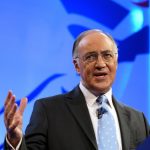
  • Michael Ancram – 2002 Speech to the Scottish Conservative Party Conference

    Michael Ancram – 2002 Speech to the Scottish Conservative Party Conference

    The speech made by Michael Ancram in Perth, Scotland on 17 May 2002.

    It is a particular pleasure to be back among so many old friends addressing the Scottish Conservative Party Conference in Perth again.

    We meet at a time of growing frustration in Scotland. Not with the Parliament. Certainly not with our MSPs who under David McLetchie do such sterling work.

    But frustration with the failure of those who run the Scottish Executive, those Labour and Liberal political inadequates who are undermining Scotland with their incompetence, diminishing Scotland with their pettiness, and burying Scotland in their mediocrity.

    You have a vital duty to perform for Scotland next year. You must chuck them out. You must sweep them away. You must replace them with Conservatives who have the vision to take Scotland forward again. You must win.

    This motion today has been most ably moved by a real winner, my parliamentary colleague Peter Duncan. He is the shining proof that you can and will win.

    Today’s debate has been important and constructive. Constructive in the excellent contributions we have heard. Important because we live once again in a disturbingly unstable world.

    It is a world where the Cold War certainties and the ironic but real equilibrium of the great blocs are gone, replaced by invisible enemies, by unscrupulous regimes and by the threat of weapons of mass destruction and of terrorists capable of using them against us all.

    September 11 woke us up to this. It reminded us of our vulnerability and made us conscious of the need to build and strengthen friendships in the world again.

    I have always believed in loyalty, and trust and friendship.

    Loyalty to those who have stood and still stand by us; trust in those with whom we can do business; and friendship with those whose values we share.

    Immediately after 11 September Tony Blair understood this. I paid tribute to his role in building the international coalition against terrorism, and we gave him our support – as we continue to give support to our brave servicemen and women who he has deployed actively in that fight on our behalf. On this day of reported engagement in Afghanistan today we wish them well.

    But then power went to Tony Blair’s head.

    Building coalitions suddenly turned into his extraordinary vainglorious ‘I can heal the World’ speech to his conference last October.

    Heal the world! He can’t even heal the public services here at home.

    Far from bringing healing, his so-called ‘ethical foreign policy’ has been shot through by betrayal and surrender.

    Blair told his Conference he would heal the scars of Africa, that “if Rwanda happened again today … we would have a moral duty to act there”, and that he would “not tolerate … the behaviour of Mugabe’s henchmen”.

    Brave words which raised hopes in Zimbabwe. Black and white Zimbabweans alike believed that Blair would move to halt the excesses of Robert Mugabe and his thugs and to secure the fair elections which would have got rid if him.

    But as is so often the case, Blair’s promises were only words.

    He went to Africa in January, but he never went near Zimbabwe.

    When the illegal land grabs began, he wrung his hands and did nothing. The same when voter registration began to be rigged last November.

    When we called for real pressure on Mugabe, he and Jack Straw accused us of irresponsibility. Well, whatever happened to their responsibility?

    In the face of murder and torture in Zimbabwe and the stolen election whatever happened to Blair’s ‘moral duty to act’?

    And since the elections in March what has he done? The murders continue, the torture and the violation of human right grows, the land grabs become ever more vicious, and what do Blair and Straw do?

    Where is the active non-toleration he promised? As Zimbabwe bleeds, they dither and they still do nothing. The betrayal continues, and it shames us all.

    There is still just a chance to retrieve something.

    We must build on the targeted sanctions and bring together a wider international coalition including the US, the Commonwealth, the EU, and the neighbouring states in Southern Africa to exert real pressure on the Mugabe regime to hold new free and fair elections under international scrutiny. Only that way can true democracy be restored and the betrayal be ended.

    There is another great betrayal.

    This Government have spent the last six months seeking to betray our fellow British citizens in Gibraltar, to sell out their British sovereignty, just to curry a little favour with Spain. I have little against Spain, but I do mind about loyalty and friendship.

    Blair and Straw together have turned their backs on centuries of loyalty to Britain. They have used the tactics of the bully down the ages, bad mouthing the people of Gibraltar, and issuing veiled threats as to what will happen if the Government does not its way get.

    They have sought to stitch up a shabby backroom deal with Spain to share sovereignty over the rock.

    But sovereignty shared is sovereignty surrendered, and ends up as no sovereignty at all.

    This has from the outset been a misbegotten and dishonourable process. Gibraltarians will have no part of it. And, as I made clear in Gibraltar last Monday, neither will we.

    An incoming Conservative Government will not feel bound by any deal on sovereignty which has not received the freely and democratically expressed consent of the people of Gibraltar.

    The Government is now set on a course which can only end in tears, in confrontation with the Spanish Government or with the people of Gibraltar or with both. They should without delay suspend these wretched talks, turn back from this betrayal and think again.

    And then there is Surrender.

    Surrender to the growing forces of integration in Europe.

    Surrender to the concept of a common foreign policy, so that we no longer know today – for instance on the Middle East – whether there is such a thing as British Foreign policy any more.

    Undermining NATO by our ill advised and headlong rush into the European Rapid Reaction Force without any prospect of securing the resources to make it work.

    Surrendering ever more areas of decision making within Europe. Thirty-one national vetoes surrendered in the Nice Treaty alone.

    Surrender is a word which flows readily from New Labour lips. It will not flow from ours.

    Certainly the ‘ethical foreign policy’ is dead and buried, replaced by sell-out, betrayal and surrender.

    And in the middle of all this poor old Jack Straw. Chased by Hain and Hoon who both want his job, and ignored by Tony Blair who does it.

    Our foreign policies will be based on the world as we find it. We will stop the fantasising and return to the basic principle of building our foreign policy on our national interests and on doing what we do best.

    In the Middle East we have a role to play, particularly with the lessons we learned the hard way in Northern Ireland, in showing how out of the most violent and darkest of situations, dialogue can be restarted and a roadmap of a possible way through to a two state agreement can be produced. Not by military action, nor by international bullying. But through dialogue which must be home grown.

    And there are wider international objectives we must pursue. September 11 created a new bond of friendship and shared values between the US and the UK in the knowledge that we can do things better together than by ourselves.

    This historic relationship has always been one of partnership not subservience.

    That is what we must now work on.

    A renewed Atlantic Charter based on the reality that Europe and America work best in partnership rather than in rivalry, with the UK at the heart of it.

    There are however those in Europe today who believe that the EU will only meet its objectives when it becomes a rival to America with its own Foreign and Security policy.

    They set a false and dangerous choice, one which could drive the US away from us at a time when the US does not so much need us as we need the US. It would be bad for Europe and for us.

    We want to see not Europe or America but Europe and America with us as the natural bridge.

    Europe must change, and Europe knows it. For the first time Europe is actually talking about itself critically, looking to the shape and structure it should take to meet the challenges of the 21st century.

    The growing gulf between people and institutions in the EU underlines the need for change and calls for greater democratic accountability, and so do we. Recent votes in Europe make that process ever more relevant and ever more urgent.

    That process has begun, and we want to be constructively engaged in it. We want to see a fundamental review of Europe to ascertain what is working, what is not, what is out of date and what can be improved. We believe that as the EU prepares with our support for enlargement the time for such a review has come.

    We believe in conducting that review there should be no ‘no-go’ areas, no sealed vaults, no untouchable ‘acquis’. We must be rigorous.

    That which is working in the right direction and is valuable, such as the single market, we must improve and strengthen. That which is not working or is obsolete we should discard.

    The ways forward are there.

    They certainly do not include the ridiculous suggestion yesterday of creating a new powerful presidential position at the top of Europe to give Emperor Blair something to look forward to in his retirement.

    Nor are they the cynical ‘now we see you, now we don’t’ Euro-games being played by the Prime Minster and his favourite side-kick ‘Honest’ Steve Byers.

    Such suggestions and games only increase cynicism and alienation.

    We want to deal seriously with the future of Europe. We want to see an enlarged Europe, a partnership of sovereign nations, working together to strengthen the single market whilst retaining basic rights of national self-determination.

    We want a European Union built from the bottom up, an EU which derives its power from the national parliaments and which is accountable to them.

    We are part of the EU and intend to remain so.

    But we also occupy that unique position from which we can bring Europe and America closer together – and the Commonwealth too.

    We can return to our traditional role of bringing people together, of bringing democracy and free trade to other countries to their benefit and ours.

    And in doing so we can show that we still believe in the United Kingdom of which Scotland is such a crucial part.

    That as so often in the past we are the only party which has pride in our values, in our history and in our future too.

    People instinctively know that in Iain Duncan Smith we have a leader who will always hold that pride and those values high.

    They cannot say the same for Tony Blair.

    So let our message be loud clear. We are proud of our country. We are proud of what we stand for.

    We will stand up for loyalty, for trust and for friendship again.

    We will show that the days of losing are over. That the days of being driven back are behind us.

    We have come out from behind the shadow of our own fear and have found our confidence again. We are on our way back.

    Let us go out from here and win.

  • Michael Howard – 2002 Speech to the Scottish Conservative Party Conference

    Michael Howard – 2002 Speech to the Scottish Conservative Party Conference

    The speech made by Michael Howard on 17 May 2022.

    Introduction

    Creating the right climate for enterprise to flourish is one of the most important goals for any government.

    When enterprise is undermined, it is the weakest and most vulnerable who stand to suffer the most. It is the most vulnerable who lose their jobs first when business has to lay people off to pay the latest tax. It is the most vulnerable who get left behind in pay, or in training, because companies have to spend their resources coping with another batch of red tape instead.

    But a strong enterprise economy helps those in work and those looking for work. And it helps us to fund the public services on which patients, parents and passengers rely.

    Yet that enterprise economy, on which our public services depend, is being undermined. While headline economic indicators have seemed favourable, there are worrying signs beneath the surface. Imbalances are developing in the economy. Problems are being stored up for the future.

    It is the Government itself which must shoulder much of the blame for this.

    Of course, not everything Labour have done is wrong. And where we agree with what they have done, as in the reforms which have taken place in the setting of interest rates, we will not be afraid to say so. Conservatives will not oppose for the sake of opposition.

    Nor will we change things for the sake of change. We understand that it is not in the interests of business or anyone else for economic policy to lurch from one extreme to another, just for the sake of it, whenever a new government gets elected. Where continuity can be achieved it should be nurtured.

    But we won’t be afraid to criticise Labour, either, in Westminster and in Holyrood, when we think criticism is justified.

    Our criticism on the economy is not that Labour have destroyed it single-handedly, or that they have imposed 98 per cent tax rates as they did in the past, or that they are embarking on wholesale re-nationalization.

    Our criticism is that Labour simply don’t understand how business works.

    Criticism of Labour on Enterprise

    The pace of change in the business world has never been faster than it is today. The prizes go to those who respond quickly and flexibly.

    So creating the conditions for enterprise to flourish involves reducing the burdens on business. Which means governments getting out of the way. Interfering less. Limiting the burden of tax. Getting rid of unnecessary red tape. Above all, allowing business to do what it does best: win orders and create jobs.

    And crucially, which firm wins the order and creates the jobs is decided at the margin. It is at the margin that the extra tax or new regulation can determine whether a company takes on an extra worker or lays one off – and, ultimately, whether that company succeeds or fails.

    That is why each additional business tax and each new piece of red tape from Labour is so damaging. On its own each measure may not seem much. But taken together Labour have imposed £6 billion a year of extra business tax, and another £6 billion a year costs in red tape.

    So for all the rhetoric about enterprise, the Government have been slowly undermining Britain’s enterprise culture. Month by month. Measure by measure. Step by step.

    Budget: General Effect on Business

    And the Budget which Gordon Brown announced last month was one such step. One more step in the undermining of Britain’s enterprise culture.

    No Chancellor who understood the needs of business would have introduced that Budget.

    Last year, Labour were elected on a Scottish Manifesto which said: `We must make Britain the best place to do business in Europe…. That means… the right competitive framework to support enterprise, small and large, manufacturing and services’.

    Then, after that promise, in his very first Budget after that election Gordon Brown lumbers business with a £4 billion tax on jobs and another £1.1 billion in business taxes on top.

    It is no good Labour talking the language of enterprise and business and then bringing in a Budget which will do as much to damage the future of enterprise and business as anything else they have done.

    And the timing for Scotland – and for the UK as a whole – could not have been worse.

    Just two days before the Budget, Strathclyde University’s Fraser of Allander Institute published the latest Scottish Chambers of Commerce Business Survey. It showed that the ‘prospects in manufacturing appear to be improving slowly, but there is still some way to go before growth returns’ (15 April 2002).

    In fact, over the last year manufacturing output in the UK has fallen at its sharpest rate for a decade. But just at the time when manufacturing is struggling to emerge from recession, the Government’s reward is a new tax on jobs. This tax is not a tax on profits. It is not a tax on turnover. It is, quite simply, a tax on jobs. A tax which now gives every firm in the land a direct incentive to hire as few staff as possible – and for larger firms to shift employment abroad.

    It is little wonder that the reaction from business has been so hostile. The Director of CBI Scotland said members were `very disappointed’ at the further burdens on business. The Deputy Director of the Scottish Chambers of Commerce said: `This increase in national insurance is likely to become an employment tax’.

    Even before the Budget, CBI figures showed that, of our five trading partners, only one had higher taxes on business. Now the ability of British companies to compete in world markets will be further undermined.

    Month by month. Measure by measure. Step by step. Undermining the enterprise culture in Britain.

    Oil Tax and Scotland

    And as one who represents a Scottish constituency, Gordon Brown of all people should have known the damage which another of his measures in particular will inflict.

    Across the UK, almost 300,000 people work in the oil and gas industry. Many more depend on it for their livelihoods. In fact oil-industry-related employment accounts for around 6 per cent of the total workforce in Scotland, and a much higher proportion in North East Scotland.

    The Government’s oil tax – the 10 per cent supplementary charge on profits – has been condemned by all in the industry, many of whom regard it as a fundamental breach of faith.

    In fact only a year and a half ago the Chancellor said this: `It has been put to me that North sea oil companies earning higher profits from higher oil prices should be subject to special taxes, but… I am determined not to make short-term decisions based on short-term factors. The key issue is the level of long-term investment in the North sea. This will be the approach that will guide Budget decisions in future’ (Hansard, 8 Nov 2000, column 317).

    So much for that pledge. So much for basing decisions on long-term perspectives rather than short-term factors. That is precisely what the Chancellor did not do with his oil tax.

    Chancellors come and chancellors go. But investment decisions last for decades. A Chancellor on the look out for new taxes to fill a back hole in his finances should recognise that this decision will have an effect for years to come. The industry has warned that some new fields, on the margin, may not now proceed, and that the tax could deter long-term investment.

    To remove an amount eventually totalling, on some estimates, £1 billion a year from the industry is bound to have an effect on investment decisions and on jobs, especially at a time of uncertainty in oil prices worldwide.

    Not only that but, despite all the Government’s talk about the importance of consultation, there was no consultation with the oil companies at all.

    Until a couple of years ago, Gordon Brown thought users of fuel were a soft target for his stealth taxes. He was proved wrong. Now he is trying to tax the producers as well. Once again he needs to be sent a clear message: hands off our fuel.

    Other Taxes

    The oil tax is not the only Labour tax rise to hit business in Scotland. The aggregates tax may have a disproportionately negative effect on the Scottish economy.

    And it is as a result of Labour’s policies north of the border that Scottish businesses are now expected to pay nine per cent more in business rates than their English counterparts.

    Public Services

    The great tragedy is that none of these tax increases, whether from Edinburgh or from Westminster, is likely to lead to the real improvement in public services everyone – including business – wants to see.

    Every year the Government promise us better public services in return for higher taxes. But every year we just get the higher taxes.

    Now, as in previous years, the Government claims the extra money is for the NHS. Of course the NHS needs more resources. But it also needs change and modernization. And without both, the Government wont be any more successful this year in keeping its promises to improve the NHS than it was last year or the year before or the year before that. And, more importantly, patients won’t get the standard of health care which they are entitled to expect.

    Anyone in England who doubts this just needs to ask the people of Scotland. Here, spending on health rose by 28 per cent ahead of inflation between 1996-7 and 2001-2. Yet the average waiting time for an outpatient appointment has risen by more than 25 per cent since September 1997.

    What’s more, public sector employers across the UK – nurses, doctors, teachers, police and fire officers – will themselves bear much of the brunt of the rise in National Insurance Contributions.

    This just goes to show the sheer absurdity of the Government’s position. First they refuse to change and reform the public services, so we will not see the improvements that we all want. Next they increase employee contribution rates for many of the very public sector workers that we are relying on to try to improve these services. And, finally, they hit the services themselves with a £1.2 billion tax bill, in the name of raising more resources for those very same services. The British people deserve better.

    Regulations

    Higher taxes are not the only ways in which the enterprise culture is being undermined. Last year 4,642 new regulations were introduced in the UK. Not only is that a record. It is an increase of nearly 50 per cent on the number introduced in 1997. That number includes 494 Scottish regulations – up from 203 in 1999, an increase of more than 140 per cent.

    I defy anyone to claim that introducing 4,642 regulations in one year is justified. Whether or not a valid reason can be found for each one, the cumulative total is undermining the enterprise culture. Measure by measure. Month by month. Step by step.

    Conclusion

    And so the Conservative Party north and south of the border needs to put the case for enterprise. In doing so, our themes will often be the same. So are many of our opponents.

    But the emerging success story for the Conservative Party in Scotland since devolution is how our shared Conservative themes and principles are being applied to the distinct circumstances of this nation. Our parties north and south are working together for success in the contests each of us face.

    The most immediate Parliamentary contest comes next year. This Conference is an important spring board for the Scottish Parliamentary Elections. We are showing how we can apply our Conservative principles to the development of fresh and distinct policies.

    Above all, this Conference is helping to demonstrate how Iain Duncan Smith is changing the Conservative Party, and we are getting back in touch with people’s priorities. That means providing better hospitals, better schools, better transport. It means extending a voice to the vulnerable, and opportunity to those who have been left behind. It means making a real and practical difference to the lives of everyone in our communities.

    Your task and mine, and the task of everyone who speaks for our Party, is to show how we are getting back in touch with the people of Scotland and England alike.

    So that north and south of the border we will have the opportunity to put our policies into effect. And to make a real difference to the lives of the people we serve.

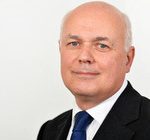
  • Iain Duncan Smith – 2002 Speech to Scottish Conservative Conference

    Iain Duncan Smith – 2002 Speech to Scottish Conservative Conference

    The speech made by Iain Duncan Smith, the then Leader of the Opposition, on 18 May 2002.

    Next year a new Scottish Parliament will be elected. Elections that will be a referendum, not just on the performance of the first Scottish Executive, but also on the performance of the Scottish Parliament itself.

    Three years ago, 129 MSPs were elected with the goodwill and enthusiasm of the Scottish people. And together they carried the high hopes of a proud nation into Holyrood.

    But three years of bickering, pettiness and politically correct trivia have dashed those hopes. Nothing illustrates this better than the way Tony Blair seeks to play games over the European issue. To have Stephen Byers brief the press that they are going to hold a referendum and then to deny it is cynical politics of the worst kind. Instead of trying to jump on the Euro issue he should be spending his time sorting out our failing health service, the rising levels of violent crime and the poor quality of our schools.

    Scotland, like Britain as a whole, faces deep-seated social problems and failing public services.

    The Scottish people looked to the Scottish Parliament for solutions but they have looked in vain.

    The Labour-Liberal Democrat Executive does not share the Scottish people’s priorities.

    As drugs continue to claim the lives of our young people, the only smack that the Scottish Executive seek to protect children from is the discipline of their parents.

    As rising crime drives decent people from the streets, the Scottish Executive seem more interested in making the fields safe for foxes.

    And as vulnerable people in our hard-pressed communities cry out for decent housing, Labour and Liberal Democrat politicians are spending £300m on a monument to their egos.

    For those of us that opposed the Scottish Parliament, the temptation is to say ‘I told you so’.

    But that is a temptation we must resist.

    In the overwhelming result of the 1997 referendum, the settled will of the Scottish people was made clear. And despite all the disappointments of the last few years, that will remains unchanged.

    The Conservative task is to make the Scottish Parliament work by ensuring that it rises to the challenge of serving every person and every community in Scotland.

    The Scottish parliament needs more MSPs with new ideas on how to improve our schools and cut hospital waiting times.

    The Scottish Parliament needs more Conservative MSPs who want to spend money on fighting crime rather than on expensive pet-projects.

    The Scottish Parliament needs more Conservative MSPs who will deliver effective help for the vulnerable.

    The Scottish Parliament needs more Conservative MSPs who will speak up for rural Scotland as well as urban Scotland.

    The Scottish Parliament needs more Conservative MSPs who aren’t going to spend all of their time campaigning for independence.

    It needs more Conservative MSPs to join a team so ably led by David McLetchie.

    Last week David set out the five key themes that will guide the Scottish Conservative Party as it prepares for next year’s Parliamentary Elections: economic security; safe streets; first class public services for all; support for stronger families and communities; and a real safety-net for the vulnerable.

    I spoke about helping the vulnerable during last summer’s Conservative Party leadership election. I spoke of “the caring hearts and practical agendas of men such as Wilberforce and Shaftesbury”.

    Wilberforce and Shaftesbury embody the Conservative approach to vulnerability: blending compassion with practical effectiveness.

    They championed great causes: freedom for the slave, help for the mentally ill, and education for all.

    And today is a time for championing great causes, too.

    People are switched off by politicians who would rather get a good newspaper headline than get something done.

    But they respond to people who hold strong beliefs that are matched by effective policies.

    The Labour and Liberal Democrat Scottish Executive is beginning to lose the battle of newspaper headlines but it has already lost the battle on public services and it has failed to help the vulnerable.

    Nearly three months ago David McLetchie and I visited the Easterhouse estate in Glasgow. Today I visited there again to learn about how beyond the reach of Government they are able to help those in difficulty and need.

    These visits are part of a number of visits that I and other Conservatives have been making to poverty-fighting projects all over Britain. But Easterhouse summed up the challenge that vulnerable people and vulnerable neighbourhoods face.

    All of the major signs of vulnerability were present: crime; drugs; inadequate housing; failing public services; too many people without rewarding work; and too many children who never see their fathers.

    But there were sources of hope, too: neighbours helping each other out; single mothers dedicating their lives to their children; and community and churchleaders providing constant care and support.

    People in Easterhouse have been failed by politicians. But they don’t want government to give up and run away – they want government to do things differently.

    I believe in a government that devolves power and responsibility to local communities. While Labour trusts the state, Conservatives trust people.

    When Labour thinks of community – it thinks of politicians, committees and taskforces. When Conservatives think of community we think of the family, local schools, charities, and places of worship. These are the people-sized institutions that operate on a human scale. In them we find friendship, identity and belonging. They are the building blocks of a neighbourly society.

    Government cannot solve every social challenge but government can support these institutions and the values that energise them.

    That is why the Conservative manifesto for the next Scottish Parliamentary elections will contain practical ideas to support families, charities, social entrepreneurs and other people in the frontline against poverty.

    The manifesto will also focus on schools, hospitals and crime-fighting. When I talk about failing schools, patients on waiting lists and street crime Tony Blair says that I’m exaggerating.

    When I read the relentlessly optimistic spinning put out by the present government, I am tempted to quote Groucho Marx: “What are you going to believe? Me? Or your own eyes?”

    For whatever Labour might want us to think, you do not need me to tell you that our schools and hospitals are getting worse. Our great public services desperately need reform.

    But not Labour’s kind of reform. Suffocating schools and hospitals under even more layers of bureaucracy, while leaving the underlying problems untouched.

    No, that kind of reform is all about helping Labour throw a cloak of lies over the evidence of their failure.

    It’s the sort of sleight of hand that keeps Tony Blair out of trouble, but leaves vulnerable people more exposed than ever.

    And it costs. Hard working families pay more in tax to fund these fake reforms. But as we know in Scotland, Labour can raise spending on schools and hospitals and still fail pupils and patients, teachers and nurses.

    Labour tax more and deliver less. The burden grows on rich and poor alike. But, the rich at least have a choice. They can pay again. They can buy their way out of the public sector and into private schools and hospitals.

    Most people don’t have that choice. Most people have nowhere else to go. Labour’s failure to reform the public services makes millions of people vulnerable – when illness strikes, when classrooms are disrupted, when crime brings fear to the streets.

    Labour’s fake reforms increase vulnerability. Conservatives are committed to real reforms that increase security.

    Conservative reforms that are straightforward and easy to understand. Conservative reforms that are built around familiar and trusted institutions and values.

    Conservative reforms that respect the public service professionals and strengthen the neighbourly society. What does that mean for the National Health Service?

    Its means an NHS that is responsive to local needs, local patients and local GPs. It means giving patients and their doctors a choice over their hospital treatment. It means freeing our hospitals from bureaucratic control and political interference. Hospitals will be part of the communities they serve.

    The same is true of our schools – which we will re-establish as local institutions. I want to stop that pitiless rain of central directives and clear the way for the leadership of head teachers and school governors.

    I am determined that teachers and school boards will have the respect not just of government, but, even more importantly, of their pupils too.

    We will not allow the disruptive few to damage the education of the many, we will give heads the authority to restore discipline in schools.

    And discipline will be the strength of schools that prepare their pupil not just for work, but also for life in all its fullness.

    Young people are under pressure as never before and parents want schools that help them to build character in their children, the strength to resist self-destructive behaviour and to achieve their hopes and dreams.

    We have failed our children for too long. And the evidence for that can be seen on the streets where young people are the victims of a culture of drugs and crime.

    We look to the police for protection and to the courts to stop the spiral of decline in both individuals and communities.

    But here too, the fake reformers are at work. Bureaucracy takes the place of action, central control the place of local accountability, political correctness the place of genuine care.

    Our police are pulled back from the fight against social disorder: and out of the petty crimes of vandalism, drug dealing and intimidation comes the threat and reality of mugging, rape and murder. None of us are completely safe, but again it is the vulnerable that suffer most of all.

    There is something seriously wrong with a society that leaves the poor, the young and the old unprotected on the frontline against fear. Conservatives will bring about real reform. We will put police back on the streets.

    Neighbourhood police officers that everyone knows – especially the local yobs.

    We will back them up with the powers that brought security back to the streets of American cities like New York.

    We won’t just hold the line against fear, we will take back the ground lost to forces of disorder and hand it back to the vulnerable.

    I want Conservatives to be the party most associated with new thinking on the real problems facing people and their communities.

    Conservatives will put forward real solutions to the problems of poverty, crime, hospital waiting times and poor discipline in schools.

    Only by focusing on real issues and effective solutions will politics be rescued from its current unpopularity.

    But politicians must also set a better example.

    Last week another terrible tragedy occurred on the railways. Every person who uses the railways sought reassurance that the government was serious about understanding what went wrong and that everything was being done to put things right for the future.

    Frankly, Stephen Byers was in no position to offer that reassurance.

    I simply do not understand why the Prime Minister keeps him in his Cabinet.

    Mr Byers is not only doing damage to the reputation of the Labour Party – my concern is that he is doing much greater damage to the whole reputation of politics and public life.

    People watch a Cabinet minister who lies and misleads but is never punished or rebuked.

    Mr Byers has demeaned Parliament and the office he holds. The longer he stays the deeper the taint in Tony Blair’s government.

    Politics will never be free from the kinds of people who make mistakes or behave badly. That is sadly the reality of human conduct in every walk of life.

    But politics needs leaders who will not excuse misconduct.

    I will not tolerate unacceptable attitudes or dishonesty from any Conservative politician.

    It is time that Tony Blair ended his weakness over his Transport Secretary.

    Mr Byers should go and he should go now.

    Labour in Scotland have had their own share of problems.

    David McLetchie properly exposed the office expenses scandal when the SNP opposition was either asleep or, perhaps, planning a photo opportunity at a TV studio.

    But the scandal of Scottish politics is as much about its scale as it is about its nature.

    There are simply too many politicians in Scotland.

    I began my speech by urging Scotland to elect more Conservative MSPs.

    But the Scottish Parliament needs fewer MSPs overall.

    Money being spent on extra politicians and their accommodation, spindoctors and bureaucracy can be much better used by the Scottish people themselves or by Scotland’s public services.

    Scotland’s voters reject the SNP because the SNP only have the one big, bad idea of smashing the United Kingdom.

    Scotland’s voters reject the Liberal Democrats because they surrendered their principles in return for a little power and must now share the blame for Labour’s terrible record on schools, hospitals and crime.

    For a long time Conservatives have been on the back foot in Scotland.

    In recent times there has been strong evidence that the tide is turning.

    For a start, there are more elected Conservatives across Scotland and for that I pay tribute to all of your hard work and to the leadership of Jacqui Lait and David McLetchie’s team.

    But even more significantly Scotland’s Conservatives are the party of new ideas. The party with the determination to find new solutions to the problems facing our schools, hospitals and other public services.

    In the 1980s and 1990s Conservatives focused upon the economy and by releasing the creativity of the British people the country was saved from economic meltdown.

    But we were not rejected without reason in 1997.

    People had not only become bored with us. Scotland’s people, in particular, felt we didn’t share their concerns and their values.

    The introduction of the poll tax in Scotland – one year ahead of the rest of Britain – encapsulated the problem.

    Things are changing.

    A difficult chapter of the recent Conservative Party history may be most associated with Scotland but it is a closed chapter.

    I urge Scotland’s people to look forward because the renewal of the Conservative vision was declared in Easterhouse and my commitment to helping the vulnerable is not a passing phase.

    We will deliver on the Conservative commitment to fight crime and improve Scotland’s schools and hospitals. No stone is being left unturned as we search for practical solutions in America, France, Sweden, Holland and Germany to improve peoples lives.

    Next year’s local and Parliamentary elections are vital for Scotland.

    Scotland’s voters will have a chance to endorse the terrible record of Labour and the Liberal Democrats or they can vote for real change.

    The SNP will never deliver real change because they never have any new ideas.
    David McLetchie and I are united as Conservatives but we are also united in our love for this country.
    Scottish Conservatives are from Scotland, of Scotland and for Scotland. We are the only alternative to the socialists, the separatists and the cynical Liberal Democrats.

    Only Scotland’s Conservatives will deliver action against crime. Action to improve our schools and cut waiting times. Action to cut the cost of politics – real solutions to the problems of vulnerable communities.

    Now is our opportunity to show the Scottish people that the Conservative and Unionist party deserves their trust again. It is a challenge for all of us and a challenge we must rise to.
  • Jacqui Lait – 2002 Speech at Scottish Conservative Party Conference

    Jacqui Lait – 2002 Speech at Scottish Conservative Party Conference

    The speech made by Jacqui Lait, the then Shadow Secretary of State for Scotland, on 18 May 2002.

    Ladies and Gentleman, before I begin, I have to make an announcement.

    A diary has been found, and it is clearly the property of someone who probably wants it back as soon as possible. It is a big – rather grand affair – BUT looking through it, it is pretty empty. It might help identify the owner if I read out a couple of the entries, in fact given how little of substance there is in the diary, I’m tempted to read out a whole week. – But I won’t!

    Whilst there is little real work listed, there does seem to be a lot of travelling, a lot of party meetings, and plenty of social events. There is even a reference to mid-week, mid afternoon French Lessons!!! It sounds just like Helen Liddell’s week and, so if she is watching, and lets me know, I will be happy to pass it to her.

    Since I accepted the Leader’s invitation to shadow Helen Liddell, I have been sad to see how the great office of Secretary of State for Scotland has been reduced. We now have a Cabinet Minister paid a salary of almost £120,000 who has so little to do that she spends an hour in the middle of the working week learning French. If she worked a 40 hour week, and took these lessons every week for a year, that would mean you and I paying £3000 to her to learn French. Now I know that we Scots have always had an affinity with the French, but I wonder how many of you think the Auld Alliance is worth paying for like this.

    Having a French surname as I do, you won’t be surprised to learn that I’m not anti French, in fact, I like them – but I don’t expect the taxpayer to fund me to learn their language!

    I believe that Scotland has a right to see the position of Secretary of State made to work properly. Scotland deserves a Secretary of State who does a full time job.

    Helen Liddell has my sympathy; after all, it cannot be easy sitting in a Cabinet with Gordon Brown and Tony Blair, who both think they own Scotland. Where every political event is interpreted as a power play between them with Robin Cook as a bit player in the wings. BUT if neither will back off and Tony Blair won’t give her the authority to do her job properly, she should resign. Wining, dining and learning French may be a nice way to spend her time. But what would serve Scotland better, some more nurses or a continuation of her part-time tenure? I know which I would vote for!

    Now it may of course be the case that our Secretary of State is actually far more active than we perceive. But she does little to make me believe it, for example, every time I ask her in the Commons to detail the action she is taking for Scotland she attempts to fob me off with empty and meaningless answers. Personally, I don’t doubt for a minute that there is a real job to do. However, the clear perception of many of those I talk to is that the once proud position of Secretary of State has become a part time job. Scotland needs and deserves a strong voice in the Cabinet, and to borrow a couple of well worn political slogans – Scotland deserves better, or to put it another way – Helen, it’s time for a change.

    But she need not go, if she is prepared to fight Scotland’s corner. To do this properly would mean standing up to the Prime Minister and the Chancellor of the Exchequer. I doubt she will ever be able to do this, but I live in hope that she will. TIME WILL TELL. Scotland needs and deserves someone at Westminster to fight our corner in Cabinet. What we do not need is an expensive ceremonial position.

    At last year’s Conference, despite our great success in Galloway and Upper Nithsdale, we were rather low but I think that as we look ahead now we can draw strength from the new realism that has gripped the Party – both North and South of the Border in the last 6 months. Yesterday, we heard from Murdo Fraser, Brain Monteith, David Mundell, Bill Aitken, Lord James Douglas Hamilton and, of course, David McLetchie, about the future that faces us. What is clear to me and will, I am sure, be clear to you is the fact that as a Party we are now prepared to recognise that the world has moved on from when we last won power.

    Here in Scotland, we now have a new approach with a new team. We have elected representatives at every level, from local councils, to the Scottish Parliament, Westminster and the European Parliament and I am delighted as I look around the Hall today to see so many of you representing the Conservative Party in all our democratic forums. Whilst everyone has been returned by the will of the Scottish people, I feel that I should especially congratulate Councillor Alasdair Hutton, who took a Liberal seat in a by-election in Kelso. Now, the Liberals are always saying that by-elections show the way ahead. In Kelso this certainly seems to be true.

    Since the Scottish elections in 1999 we have been winning seats from the other parties; in all the council by-elections since then our vote has gone up more than the other main parties.

    In my time as Shadow Secretary of State, I have come to realise the depth of talent we have in our team. I must briefly thank a number of people for the support they have given me, and for the work they have put in fighting for Conservative commonsense in Scotland. This battle is fought on a daily basis by our MEPs, John Purvis and Struan Stevenson who has the crucially important portfolio of chairman of the EP fisheries Committee, our MP Peter Duncan who is a true support to me and in the short time he has been in Westminster has shown himself to be both a great fighter for Galloway and Upper Nithsdale and an effective performer in the Commons. In the Lords, the Duke of Montrose and his team are able to hold this overweening government to account and do so on your behalf on a daily basis. And could anyone forget Tom Strathclyde, Leader of the Conservatives in the Lords, architect of many government defeats!

    In Holyrood, David McLetchie and the MSPs he leads deserve special praise for the extremely effective way they are working as a group in the Scottish Parliament. They are the real opposition to the leftwing hegemony of Labour, Lib-Dem and SNP. I am particularly impressed by the way David is preparing our Party for next year’s elections. I look forward to the battle to win more first past the post seats as well as more list places.

    Increasingly in Council Chambers around Scotland, our councillors have flown the flag and they and our candidates will be a crucial part of the election battle next May. At all levels our elected representatives have been supported very effectively by the team in Central Office in Princes Street. They in turn have worked closely with our small but dedicated team of professional agents and I thank them all for all they do. They are often the unsung heroes.

    This leaves one group, our volunteers and members. Since my appointment I have visited about a third of our Scottish constituencies and already there are many more visits booked. I am always pleased to receive invitations to support the vital work you do. You, above all, deserve our thanks, for it is you who make our party work, and work it will do – once again.

    The recent past has not been kind, but the future offers us the opportunity to re-establish ourselves as the party that represents Scotland’s interests. Most people I know in Scotland are increasingly fed up being told what is good for them. They are not convinced that the only way to sort out issues like the NHS is to throw vast sums at it, they see the need for real reform, not more central directives. Especially when it is their money that the Government is throwing at the problem.

    As I have visited different parts of Scotland, from Easterhouse to the high technology businesses of British Aerospace and Scottish Power, I have found a wish amongst many of those I have spoken to to see a real challenge to Labour in Scotland. Whatever they may claim, the Lib Dems will never offer this. – And the SNP are now more interested in the return of their former leader than in the people of Scotland. As I have talked to people – both on my own, and with Iain, and with David McLetchie it has become crystal clear that when Labour came to power with the slogan “things can only get better” they misled huge parts of Scotland.

    Time after time, Labour and the Liberals seek to imply that as Conservatives, we don’t care about those in need, and that we have no right to be involved with the vulnerable. Well, ladies and gentlemen, I am fed up being told by a bunch of left wing politicians that they have cornered the market in caring. Throughout my political life, I have fought to improve the lot of those less fortunate than myself. I have worked with drug and alcohol projects, mental health charities and the families of missing people. In fact only yesterday, in my position as a trustee of the National Missing Persons Helpline, I started the Missing Miles Walk in Glasgow.

    I have done my bit for charity, because I believe in the important role charities play in our society. AND you know what, it never ceases to amaze me how often those I meet when visiting charities in the daytime turn out to be the same people I meet in the evenings when I visit Conservative Association events. Time and again, I find charities staffed by the same people who keep our party going, So let’s not take lectures from our opponents about caring!

    And let us put an end to the fantasy that our opponents are business friendly. The businesses I talk to are increasingly fed up with a Government that talks about delivery, and yet is really only interested in headlines and spin. They are frustrated by a Government that claims to be business friendly but that ties their businesses up in red tape and bureaucracy. And they are fed up with higher business taxes than in England. After all, a country that gave the world many of its greatest inventors and engineers suffers more than most when it is ruled by a Party that has an innate hatred and mistrust of initiative and enterprise. Can anyone imagine Andrew Carnegie, Alexander Graham Bell or John Logie Baird supporting a Government that cares so little about business it chooses to raise National Insurance on both employees and employers in the budget.

    In many areas of Scotland, we have seen the equivalent of a one party state ruling in local government. And what exactly has this one party state delivered? Housing schemes like Easterhouse, Wester Hailes and Ferguslie Park.

    As a journalist remarked to Iain during the historic visit to Easterhouse, ‘this is Labour territory, what are you doing here?’ And our Leader, very reasonably replied ‘yes, look at it.’

    The Lib-Lab pact running the Scottish Executive is equally prone to one party state thinking – perhaps Jack McConnell should not be called First Minister, but, more accurately, Third Minister.

    However, let us not fall into the trap of assuming that because the Scottish Executive is not popular, this is also true of our new Parliament. The Parliament is here to stay, and as Conservatives we need to recognise that it is our responsibility to return enough MSPs to have a real say in how it affects peoples lives, as David McLetchie put it so eloquently yesterday. That means we must vote and use all the votes we will have to vote Conservative every time. As I go around, the complaints and concerns I hear relate not to the Parliament but to the Lib-Lab Pact running the Scottish Executive. They are the real culprits.

    We must be clear what we want for the future.

    Labour have backtracked over their legal commitment to reduce the number of MSPs in the face of resistance from those who fear losing their jobs. We however want to see fewer of them and we will not back down on this. Scotland needs a smaller Parliament. The Scotland Act specifies a reduction in the number of MSPs. We want to see the numbers fall from 129 to 108. Let those who oppose the reduction explain just what extra benefit the 21 extra MSPs bring to the average taxpayer. Each one draws a salary, expenses and the cost of staff and offices. Surely, if Labour wanted to put the voters first, it would direct this money to delivering services, not simply keeping its favourites in jobs. And, it is not just the Back Benchers who need culling. Scotland has 20 Ministers. We do not need more than 10! This would still be twice as many as the old Scottish Office.

    But don’t expect action just yet. It’s amazing those who used to despise the trappings of power become attached to those very trappings: once they settle down in the comfy back seat of their Ministerial cars.

    Politics is about people, and good politics is about making peoples’ lives better. Sadly, for the people of Scotland the Prime Minister, his Ministers and his MSPs only seem to care about staying in office. Come the next election Scotland will, I am confident, be choosing between a Conservative Party that has looked, listened and adapted, and a Labour Party that has failed to deliver at almost every level!

    It is there for us to win.

  • Alister Jack – 2022 Comments on Government Expenditure and Revenue Figures for Scotland

    Alister Jack – 2022 Comments on Government Expenditure and Revenue Figures for Scotland

    The comments made by Alister Jack, the Secretary of State for Scotland, on 24 August 2022.

    Today’s Scottish Government figures show how people and their families benefit massively from being part of a strong, resilient UK.

    Scotland’s deficit – the shortfall between taxes raised here, including oil, and public spending – stands at £23.7bn. But as part of the UK, we can rely on the Treasury to step up to support us in plugging the gap.

    At a time of unprecedented challenges, sharing resources around the UK has never been more important.

    As we continue to recover from the pandemic and confront global pressures on prices and the cost of living, it is clear we need a shared and a relentless focus on boosting the economy.

  • David Frost – 2022 Article on Devolution and Nationalism in Scotland

    David Frost – 2022 Article on Devolution and Nationalism in Scotland

    Part of the article on devolution and nationalism in Scotland, written by David Frost and published in the Daily Telegraph on 19 August 2022.

    In 1995, the then shadow Scottish secretary, George (now Lord) Robertson, made one of the worst political predictions of all time when he said that “devolution will kill nationalism stone dead”. We saw the result of this terrible misjudgment in the hate-filled mob outside the Tory leadership hustings on Tuesday night. Many people in England will have watched those television images and thought, “Why would I ever go to Scotland if that is what they think of us?” That is, of course, what the SNP wants. Those of us who believe in our country need to start fighting back.

    To be fair, Robertson was not alone in his opinion. It was the conventional wisdom in 1999 when the Scottish Parliament was established. We now know, of course, that one of the doubters, in private, was Tony Blair. Showing, as so often, that he was a more far-sighted politician than most of his critics, he described devolution in his memoirs as a “dangerous game … you can never be sure where nationalist sentiment ends and separatist sentiment begins”. He was right.

  • Boris Johnson – 2022 Letter to Nicola Sturgeon

    Boris Johnson – 2022 Letter to Nicola Sturgeon

    The letter from Boris Johnson, the Prime Minister, to Nicola Sturgeon, the Scottish First Minister, on 12 August 2022.

    Boris Johnson’s Letter (in .pdf format)

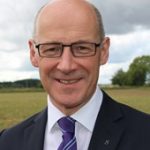
  • John Swinney – 2022 Letter to Nadhim Zahawi on Public Sector Pay

    John Swinney – 2022 Letter to Nadhim Zahawi on Public Sector Pay

    The letter sent by John Swinney, the Scottish Deputy First Minister, to Nadhim Zahawi, the Chancellor of the Exchequer, on 31 July 2022.

    Rt Hon Nadhim Zahawi MP
    Chancellor of the Exchequer
    HM Treasury
    1 Horse Guards Road
    London
    SW1A 2HQ

    31 July 2022

    Dear Nadhim,

    I write to notify you that I have taken on responsibility for the Finance and Economy portfolio whilst the Cabinet Secretary, Kate Forbes, is on maternity leave.

    I look forward to working with you and, while I appreciate there may be some limitations on the business of the UK Government pending conclusion of the Conservative leadership process, I am open to engagement with you through this period. I also appreciate the value of the on-going dialogue between our respective officials.

    There is one urgent issue I would wish to take the opportunity to raise given its importance to the delivery of public services in Scotland. Further to the joint letter from devolved administration finance ministers to you on 15 July, and in light of the UK Government’s subsequent announcements regarding public sector pay, I am concerned that no associated funding is being provided to meet these additional costs.

    Last year’s UK Spending Review, which as you know determines the majority of the Scottish Budget, did not take account of the levels of pay uplift now proposed or indeed the wider effects of inflation. The associated reduction in spending power across public-sector budgets is deeply worrying for our public services and our capacity to respond to the cost of living crisis, which will undoubtedly bring renewed challenges through the coming autumn and winter period. Given our fixed budgets, our restricted borrowing powers and the inability to change tax policy in year, the lack of additional funding for public sector pay deals via the Barnett Formula means the Scottish Government could only replicate these pay deals for public workers in Scotland with deep cuts to public services.

    I would urge you to consider appropriate funding for public sector pay, and would welcome early discussions with you on this matter.

    John Swinney

  • SNP – 2022 Submission to Supreme Court on Independence Referendum

    SNP – 2022 Submission to Supreme Court on Independence Referendum

    The SNP’s formal submission to the Supreme Court on an independence referendum, submitted on 2 August 2022.

    Text (in .pdf format)

  • John Swinney – 2022 Comments on Liz Truss Claiming Scottish First Minister Should be Ignored

    John Swinney – 2022 Comments on Liz Truss Claiming Scottish First Minister Should be Ignored

    The comments made by John Swinney, the Deputy First Minister in Scotland, on 1 August 2022.

    People in Scotland, whatever their politics, will be absolutely horrified by the obnoxious remarks that Liz Truss has made tonight.

    The unionist campaigners suggest Scotland should be at the heart of the United Kingdom and how Scotland can be expected to be at the heart of the UK when the democratically elected leader of our country is, in the view of the person most likely to be the next prime minister of the UK, somebody that should be ignored is completely and utterly unacceptable.

    I think Liz Truss has fundamentally with one, silly, intemperate intervention, fundamentally undermined the argument she tries to put forward: that Scotland, somehow, can be fairly and well treated at the heart of the United Kingdom.