The SNP’s formal submission to the Supreme Court on an independence referendum, submitted on 2 August 2022.
Category: Scotland
-

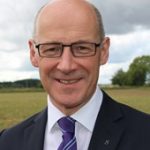
John Swinney – 2022 Comments on Liz Truss Claiming Scottish First Minister Should be Ignored
The comments made by John Swinney, the Deputy First Minister in Scotland, on 1 August 2022.
People in Scotland, whatever their politics, will be absolutely horrified by the obnoxious remarks that Liz Truss has made tonight.
The unionist campaigners suggest Scotland should be at the heart of the United Kingdom and how Scotland can be expected to be at the heart of the UK when the democratically elected leader of our country is, in the view of the person most likely to be the next prime minister of the UK, somebody that should be ignored is completely and utterly unacceptable.
I think Liz Truss has fundamentally with one, silly, intemperate intervention, fundamentally undermined the argument she tries to put forward: that Scotland, somehow, can be fairly and well treated at the heart of the United Kingdom.
-

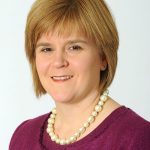
Nicola Sturgeon – 2022 Speech on the Conservative Leadership Contest
The speech made by Nicola Sturgeon, the Scottish First Minister, on 20 July 2022.
It was brilliant to see Glasgow voted 4th best city to visit in the world last week in an influential survey which helps people explore and experience the best places around the world.
As well as 4th overall (Edinburgh was number 1), Time Out’s ‘World’s Best City’ Guide also ranked Glasgow as the friendliest city in the world – a fact which comes as absolutely no surprise to those who of us live here or visit regularly.
It is a reminder that Scotland has so much to offer anyone who wants to visit. This is true, not just of Glasgow and Edinburgh, but all parts of our beautiful country – as proven by the immensely successful hosting of the 150th Open Championship in St Andrews over the weekend.
I was glad to have the opportunity to visit the ‘Home of Golf’ on Friday, to acknowledge such a huge and welcome boost to our tourism and hospitality industries, especially after more than two years of disruption caused by the pandemic.
It was great to see so many visitors from across the world once again enjoying Scotland’s beautiful scenery and top-class food and drink.
Much has happened in UK politics in the past weeks, including the resignation of Boris Johnson as Prime Minister. It won’t come as a surprise to anyone to hear my view that this did not come a moment too soon.
Although many in Scotland will have felt a sense of relief that the chaos of Boris Johnson’s tenure as Prime Minister is coming to an end, the fact remains that one Prime Minister Scotland did not vote for is about to be replaced by yet another.
It is also extremely concerning that the change of Tory leader seems certain to be accompanied by a shift even further to the right.
And, of course, a shift to the right from the Tories means a shift even further away from the mainstream of Scottish opinion and values.
So far, we have seen the candidates for Prime Minister promise tax cuts for the rich, cuts to public spending and public services. They have also launched blatant attacks on devolution and the powers of the Scottish Parliament.
While families and households across the country are trying navigate a severe cost of living crisis, caused by rising inflation and stagnant wages, we have heard next to nothing from any of these potential Prime Ministers on what they will do to alleviate these pressures.
Every minute the Tories spend squabbling over who gets to 10 Downing Street comes at the cost of support and investment to help people across the country who are struggling now.
It’s not good enough for UK Government Ministers to promise an update in due course – energy bills are sky-high and rising now, and with every day that passes, people become more anxious about how to pay these bills and feed their kids.
Action is needed – and it must be both significant and immediate.
The fact is that this cost of living crisis, which is the worst in living memory, has been made worse by decisions of Boris Johnson’s government, not least Brexit and its many damaging consequences.
No changing of the Westminster guard will reverse those decisions, nor will it set the UK on a better track.
The problems Scotland faces as a result of Westminster control run far deeper than any one individual, and the latest Tory leadership pantomime has brought into focus the significant and increasing democratic deficit that Scotland suffers as part of the UK.
No matter who becomes the next Prime Minister, it will be someone Scotland did not vote for, and they will impose policies we don’t support.
The issues that people here are focused on – tackling child poverty, supporting the recovery of our NHS, building a fairer economy, and making a just transition to net zero – will be hindered, not helped, by whoever becomes Prime Minister in the weeks ahead.
All of that underlines the necessity, in my view, of Scotland moving from Westminster control to independence.
Finally, a word about COVID. Cases have been rising over the last six weeks, and while vaccines are helping reduce the risk of serious illness, the sheer volume of cases is putting a strain on our NHS and the economy.
If you haven’t yet been vaccinated with your first, second or booster dose – for whatever reason – you can still visit drop-in clinics across the country.
A further booster vaccination will also be offered from September to those at highest risk of severe disease. This will include residents in care homes, frontline health and social care workers, adults over 50 and pregnant women.
The key message though is this – if you are eligible for any dose of vaccine, make sure you get it. It could save your life, and it will help protect those around you.
Controlling Covid will be key to alleviating pressure on our NHS as we move back into a busy winter period, so please continue taking care when in busy public spaces, and stay at home if you have symptoms.
-

Nicola Sturgeon – 2022 Speech on the Roadmap to Scottish Independence
The speech made by Nicola Sturgeon, the Scottish First Minister, on 28 June 2022.
Presiding Officer,
The campaign to establish this Parliament was long and hard.
It was rooted in the belief that self-government would improve the lives of those who live here. And so it has proved.
There were – and still are – honourable differences about the ultimate destination of Scotland’s self-government journey.
But all who campaigned to establish this place were united in and by this fundamental principle:
The democratic rights of the people of Scotland are paramount.
That principle of self-determination was encapsulated by these words in the Scottish Constitutional Convention’s Claim of Right:
“the sovereign right of the Scottish people to determine the form of government best suited to their needs.”
When the late Canon Kenyon Wright – who led the Convention – addressed Westminster’s refusal to accept the democratic demand for a Scottish Parliament with this question:
“What if that other voice we all know so well responds by saying, ‘We say no, and we are the state’?”
His answer –
“Well we say ‘yes’ – and we are the people” – was simple but powerful.
It is as relevant now as it was then.
Last May, the people of Scotland said Yes to an independence referendum by electing a clear majority of MSPs committed to that outcome.
The democratic decision was clear.
Two weeks ago, the Scottish Government started the process of implementing that decision with the first in the Building a New Scotland series of papers.
That paper presented compelling evidence of the stronger economic and social performance, relative to the UK, of a range of independent countries across Europe that are comparable to Scotland.
That should be both a lesson and an inspiration to us.
Scotland – over generations – has paid a price for not being independent.
Westminster governments we don’t vote for, imposing policies we don’t support, too often holding us back from fulfilling our potential.
That reality has rarely been starker than it is now.
The Conservatives have just six MPs in Scotland – barely 10 per cent of Scottish representation – and yet they have ripped us out of the EU against our will.
They have created the worst cost of living crisis in the G7;
And saddled us with the second lowest growth in the G20.
They are intent on stoking industrial strife, demonizing workers and provoking a trade war.
Businesses and public services are struggling for staff because freedom of movement has been ended.
Our young people have been robbed of opportunity.
Presiding Officer,
The Scottish Government will do everything in our power to mitigate the damage.
But that is not enough.
Our country deserves better.
And yet this Parliament, looked to for leadership by so many across Scotland, does not have the power to tackle the root causes of the financial misery being inflicted on millions.
We lack the full range of levers to shape our economy and grow the country’s wealth.
We are powerless to stop our budget being cut.
We can’t block the Tories’ new anti-trade union laws;
Or stop them tearing up human rights protections.
We’re not able to restore freedom of movement.
And while we invest billions in measures to help with the cost of living, tens of thousands of children can be pushed deeper into poverty at the merest stroke of the Chancellor’s pen.
Presiding Officer,
It does not have to be this way.
Independence is about equipping ourselves to navigate the future, guided by our own values, aspirations and interests.
It is about helping us fulfil our potential here at home and play our part in building a better world.
And that takes more than a changing of the guard at Westminster.
I fervently hope that the Tories lose the next election. They thoroughly deserve to.
But on the big policy issues of our time, from Europe to migration, to human rights and fairness for workers, Labour is more a pale imitation than a genuine alternative.
Labour won’t take Scotland back into the EU or even the single market. And neither will the Liberal Democrats.
They won’t restore freedom of movement for our young people.
They won’t prioritise tackling child poverty over investment in nuclear weapons.
Presiding Officer,
Independence won’t always be easy. It isn’t for any country.
But it will give us the opportunity to chart our own course.
To build a wealthier, greener, fairer nation.
To be outward looking and internationalist.
To lift our eyes and learn from the best.
Presiding Officer,
Now is the time – at this critical moment in history – to debate and decide the future of our country.
Now is the time to get Scotland on the right path – the path chosen by those who live here.
Now is the time for independence.
This parliament has a clear, democratic mandate to offer Scotland that choice.
The UK government, however, is refusing to respect Scottish democracy.
That is why today’s statement is necessary.
The UK and Scottish governments should be sitting down together, responsibly agreeing a process, including a section 30 order, that allows the Scottish people to decide.
That would be the democratic way to proceed.
It would be based on precedent.
And it would put the legal basis of a referendum beyond any doubt.
That’s why I am writing to the Prime Minister today to inform him of the content of this statement.
In that letter I will also make clear that I am ready and willing to negotiate the terms of a section 30 order with him.
Presiding Officer,
What I am not willing to do – what I will never do – is allow Scottish democracy to be a prisoner of Boris Johnson or any Prime Minister.
The issue of independence cannot be suppressed.
It must be resolved democratically.
And that must be through a process that is above reproach and commands confidence.
That is why I am setting out today the actions the Scottish Government and the Lord Advocate will take, in the absence of a section 30 order, to secure Scotland’s right to choose.
My determination is to secure a process that allows the people of Scotland – whether yes, no, or yet to be decided – to express their views in a legal, constitutional referendum, so that the majority view can be established fairly and democratically.
The steps I am setting out seek to achieve that.
They are grounded in – and demonstrate this government’s respect for – the principles of rule of law and democracy.
Indeed, these core principles – respect for the rule of law and respect for democracy – underpin everything I say today.
Respect for the rule of law means that a referendum must be lawful.
That, for me, is a matter of principle.
But it is also a matter of practical reality.
An unlawful referendum would not be deliverable.
Even if it was, it would lack effect.
The outcome would not be recognized by the international community.
Bluntly, it would not lead to Scotland becoming independent.
Presiding Officer,
It is axiomatic that a referendum must be lawful.
But my deliberations in recent times have led me to a further conclusion.
The lawfulness or otherwise of the referendum must be established as a matter of fact, not just opinion.
Otherwise – as we have seen again in recent days – opposition parties will just keep casting doubt on the legitimacy of the process, so they can avoid the substantive debate on independence which Scotland deserves, but they so clearly fear.
That is not in the country’s best interests.
Let me turn then to the detail of the steps we will now take to secure the objective of an indisputably lawful referendum.
And then ensure that, from today, we can focus on the substance of why Scotland should be independent.
Presiding Officer,
I can announce, first of all, that the Scottish Government is today publishing the ‘Scottish Independence Referendum Bill’.
I will draw attention, in particular, to three key provisions of the Bill.
Firstly, the purpose of the referendum, as set out in section 1, is to ascertain the views of the people of Scotland on whether or not Scotland should be an independent country.
In common with the 2014 referendum – indeed, in common with the Brexit referendum and the referendum to establish this Parliament – the independence referendum proposed in the Bill will be consultative, not self-executing.
Just as in 2014 – and recognised explicitly in the 2013 White Paper – a majority yes vote in this referendum will not in and of itself make Scotland independent.
For Scotland to become independent following a yes vote, legislation would have to be passed by the UK and Scottish Parliaments.
There has been much commentary in recent days to the effect that a consultative referendum would not have the same status as the vote in 2014.
That is simply wrong, factually and legally.
The status of the referendum proposed in this Bill is exactly the same as the referendums of 1997, 2014 and 2016.
The next provision of the Bill I wish to draw attention to relates to the question to be asked in the referendum.
The Bill states that the question on the ballot paper should be – just as it was in 2014 – ‘should Scotland be an independent country’.
Finally, Presiding Officer, the Bill includes the proposed date on which the referendum should be held.
In line with the government’s clear mandate this is a date within the first half of this term of Parliament.
Presiding Officer,
I can announce that the Scottish Government is proposing that the independence referendum be held on Thursday the 19th of October 2023.
These are the key elements of the referendum legislation that the Scottish Government wishes this Parliament to scrutinise and pass.
Let me turn now to the aim of establishing as fact the lawfulness of a referendum – which, as I have already indicated, I consider to be of the utmost importance.
I will start with what we know already.
We know that the legislative competence of the Scottish Parliament to pass this Bill in the absence of a section 30 order is contested.
We know that legislative competence can only be determined judicially.
And we know that for as long as there is no judicial determination, opinions will differ and doubt will continue to be cast on the lawful basis for the referendum.
That benefits only those parties opposed to independence, because it allows them to avoid the substance of the independence debate
Finally, we know that if this Parliament does seek to legislate without a section 30 order, the Bill will go to court.
That is inevitable.
The only questions are: when it ends up in court, and at whose hand.
If the issue of legislative competence remains unresolved at the point of formal introduction of a Bill, the UK Government will almost certainly use section 33 of the Scotland Act to refer it to the Supreme Court after it has passed.
It is also possible that one or more private individuals will lodge a judicial review of the Bill.
Indeed, it was reported last week that Tory supporters are already planning to do so.
A challenge by private individuals could also go through successive courts, and so be a very lengthy process.
Either way, at the point of Parliament passing the Bill, there would be no certainty about when, or even if, it could be implemented.
A court challenge would still lie ahead and the timetable I have set out today would quickly become difficult to deliver.
And, of course, between now and then, claim and counter claim, good faith arguments and bad faith fearmongering about so-called ‘wildcat referendums’ will continue to muddy the water, cast up doubt and taint the process.
Presiding Officer,
That may well suit politicians opposed to independence.
But none of it would be in the interests of the country.
And none of it would serve democracy.
The fact is neither legal opinions nor political arguments will resolve this point.
We must establish legal fact.
That is why, in my view, we must seek now to accelerate to the point when we have legal clarity; legal fact.
And crucially, in doing so – I hope – establish and safeguard the ability of this Parliament to deliver a referendum on the date proposed.
Presiding Officer,
It is to this end that some weeks ago I asked the Lord Advocate to consider exercising the power she has under paragraph 34 of schedule 6 to the Scotland Act to refer to the Supreme Court the question of whether the provisions in this Bill relate to reserved matters.
This is a power exercisable by the Lord Advocate alone, not by Scottish Ministers collectively.
Whether or not she does so is accordingly a matter solely for her.
However, I can confirm that the Lord Advocate has considered this request.
She has taken into account the following factors:
This government’s democratic mandate;
The constitutional significance of this issue;
The fact that the Bill does raise a genuine issue of law that is unresolved; and
The importance of ensuring that this government and Parliament act lawfully at all times.
And she has now informed me of her decision.
I can advise Parliament that the Lord Advocate has agreed to make a reference of the provisions in the Bill to the Supreme Court.
Indeed – as I speak, Presiding Officer – the process for serving the requisite paperwork on the UK Government by lawyers and Messengers at Arms is underway.
I can confirm that the reference will be filed with the Supreme Court this afternoon.
Presiding Officer,
Whether or not the reference is accepted, how long it takes to determine, and what judgement is arrived at, are all matters for the Court to determine.
I accept that.
As I have made clear throughout, this government respects the rule of law.
However, by asking the Lord Advocate to refer the matter to the Court now – rather than wait for others to do so later – we are seeking to deliver clarity and legal certainty in a timely manner, and without the delay and continued doubt that others would prefer.
Presiding Officer,
Obviously, it is this government’s hope that the question in this Bill, proposing a referendum that is consultative, not self-executing, and which would seek to ascertain the views of the Scottish people for or against independence, will be deemed to be within the legislative competence of this Parliament.
If that outcome is secured, there will be no doubt whatsoever that the referendum is lawful.
And I can confirm that the government will then introduce and ask Parliament to pass the Bill on a timescale that allows the referendum to proceed on xxx
Presiding Officer,
It is, of course, possible that the Supreme Court will decide that the Scottish Parliament does not have power to legislate for even a consultative referendum.
To be clear: if that happens, it will be the fault of Westminster legislation, not the Court.
Obviously, that would not be the clarity we hope for.
But if that is what the law establishing this Parliament really means, it is better to have that clarity sooner rather than later.
Because what it will clarify is this:
Any notion of the UK as a voluntary union of nations is a fiction.
Any suggestion that the UK is a partnership of equals is false.
Instead we will be confronted with this reality.
No matter how Scotland votes, regardless of what future we desire for our country, Westminster can block and overrule. Westminster will always have the final say.
Presiding Officer,
There would be few stronger or more powerful arguments for independence than that.
And it would not be the end of the matter. Far from it.
I said earlier that two principles would guide what I said today.
The rule of law and democracy.
Democracy demands that people must have their say.
So, finally in terms of process, let me confirm this – although it describes a scenario that I hope does not arise.
If it does transpire that there is no lawful way for this parliament to give the people of Scotland the choice of independence in a referendum – and if the UK government continues to deny a section 30 order – my party will fight the UK general election on this single question –
‘Should Scotland be an independent country’.
Presiding Officer,
The path I have laid out today is about bringing clarity and certainty to this debate.
Above all, it is about ensuring that Scotland will have its say on independence.
I want the process set in train today to lead to a lawful, constitutional referendum and for that to take place on xxx
That is what we are preparing for.
But if the law says that is not possible, the General Election will be a ‘de facto’ referendum.
Either way, the people of Scotland will have their say.
Presiding Officer,
As the Lord Advocate is now referring the question of legality to the Supreme Court, it need no longer be the subject of sterile political debate.
Indeed, the sub judice principle and our own Standing Orders demand that the arguments on competence now be made in court and not here in this chamber.
That means we can – and should – now focus on the substance.
That is what this government intends to do.
In the weeks and months ahead, we will make the positive case for independence.
We will do so with commitment, confidence and passion.
Let the opposition – if they can – make the case for continued Westminster rule.
And, then, let the people decide.
Presiding Officer,
To believe in Scottish independence is to believe in a better future.
It involves an unashamedly optimistic view of the world.
The belief that things can be better than they are now.
Above all, it means trusting the talents and ingenuity of all of us who live here, no matter where we come from.
It is not a claim to be better than anyone else.
It is about looking around at all the other successful, independent countries in the world – so many of them smaller than we are and without the resources we are blessed with – and asking, ‘why not Scotland?’
Think of all of our talents and advantages –
Unrivalled energy resources;
Extraordinary natural heritage;
Exceptional strengths in the industries of the future;
Brilliant universities and colleges;
A highly skilled and creative population.
There is no reason at all that an independent Scotland would not succeed.
Nothing in life is guaranteed.
But with hard work – and the independence to chart our own course – Scotland will prosper.
And the people of Scotland have told us – all of us in this chamber – that they want the right to decide.
Today we have set out the path to deliver it.

-

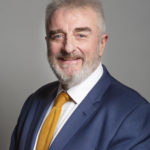
Tommy Sheppard – 2022 Comments on Independence Referendum
The comments made by Tommy Sheppard, the SNP MP for Edinburgh East, on 24 June 2022.
Six years ago today, Scotland voted overwhelmingly to remain in the EU but was dragged out against our will.
It was democratically indefensible then, just as the Tories’ refusal to accept our mandate for #indyref2 is now. Scotland will be back soon.
-

Tommy Sheppard – 2022 Speech on the Sharing Economy and Short-Term Letting
The speech made by Tommy Sheppard, the SNP MP for Edinburgh East, in the House of Commons on 16 June 2022.
Like many other aspects of our online lives, this started as a good idea: take a list of people who want short-term accommodation and use the internet to match it with a list of people who can provide it. Unfortunately, what we see today has become a grotesque distortion of the original idea. As has been mentioned, the vast majority of properties that are offered as short-term lets are not spare rooms in somebody’s house: they are whole properties being offered on a commercial basis. That is regrettable, because the process has become a driver for the removal of accommodation from the private rented sector into the short-term-let market, mainly catering for leisure uses. It has resulted in appalling consequences for the local housing market. Now, in effect, we have operators operating unlicensed hotels, but rather than the accommodation being in one building it is spread throughout an entire community in a pepper-pot fashion.
This is a problem throughout Scotland, but it affects some parts more than others. The highlands in particular has a very great problem, but probably the biggest problem of all is in our capital city, Edinburgh, the city I am proud to represent in this House. In 2019, fully one third of all the Airbnb listings in Scotland were in Edinburgh. In some of the wards, particularly those in the city centre, one fifth of all accommodation is listed on Airbnb. By the way, that is just Airbnb; there are other operators, so the scale of the penetration of short-term lets in Edinburgh city centre is probably even greater than that.
By the end of the previous decade, the situation had reached crisis proportions, which is why the city authorities, working with the Scottish Government, decided to act. I will say something about that in a moment, but first let me describe some of the consequences of the process for my local community. With this penetration of up to one in five properties being available for short-term lets has come a hollowing out of the local community, particularly in some of our historic areas, which we want to see thrive. It is impossible for people to get to know their neighbours if they change every week. The people who come—there used to be people who lived there on a permanent basis—no longer send their kids to local schools. They do not even use the local shops, because they tend to arrive and get an out-of-town supermarket delivery to the door. They play no role in building the local economy or in community cohesion. As a double whammy, they provide a great deal of disturbance and inconvenience to the people who are left to live there.
I repeatedly have casework on this issue. Just this week a local councillor, Finlay McFarlane, brought to me the case of a resident who has lived off the Royal Mile for more than 20 years. She is currently finishing her PhD thesis but is unable to do so because most of her block is now short-term lets, with people coming in to have parties, on week nights as well as at weekends, with the constant confusion, noise and disturbance that results. In her words, it has become “almost uninhabitable”. That is a common problem.
As well as the loss of homes, there is another consequence for a city such as mine that relies a lot on tourism and where tourism is very important. A number of bona fide hotel operators have come to me and pointed out that people are running unlicensed hotels on a commercial basis, without having health and safety standards, without meeting all the other requirements and without paying taxes. Hotel operators are being undercut as accommodation providers by people using the short-term-let sector. It is, then, grossly unfair in distorting the tourism market as well.
As has been referenced, we are trying to do something about this in Scotland. The law changed last year: from 1 March, the law has come in to create a new framework for the operation of short-term lets in Scotland, of which my own city is determined to take advantage. The key thing is to bring in a licensing framework, with the local authority being the licensing body. In order to operate a let on a short-term basis, one will require a licence. That will be the law from 1 October this year for anybody trying to enter the market as a new operator, and by 2024 it will be a requirement for everybody operating a short-term let to have such a licence, and it will be unlawful if they do not have it.
There is another important component to the legislation in Scotland. That is the ability of local authorities to ask for permission to designate a short-term-let control area within their boundary, where there is a particular need for housing stress or where there is a particular problem of abuse. The City of Edinburgh Council has taken the unusual step of asking the Scottish Government to designate the entire city as a control area. The council took that decision, with every party on the local authority supporting it, and after an extensive consultation involving 5,600 responses where more than 88% of respondents said that that was what they wanted. The Scottish Government have agreed to that. What that means is that, in order to let a property that is not currently let on a short-term basis, a person will require not just a licence, but planning permission. They will have to apply for and get a change-of-use planning consent as a condition of getting the licence if they are in a control area.
That is what will happen in Edinburgh, but it will take some time. It is important, as with other matters, that planning decisions are consistent with the local development plan, which means that they have to be evidenced and backed up, so we do need to make amendments and get them bedded in. I am confident that, in the years ahead, my city will be able to get control of this. If these measures do not work, I can assure Members that there is an appetite for going further and making sure that we get other measures that do work.
In conclusion, I shall reiterate what colleagues have said on a cross-party basis. This is not a matter of saying that there should not be short-term lets, or trying to do down people who want to rent out a spare room—far from it. It is simply saying that if people wish to do this on a commercial basis, then they have to operate on a level playing field, with the same obligations and the same consequences as anybody else who tries to run a business. They have to take cognisance and be respectful of the local community and the conditions in which they are trying to make that money. I hope the situation in Edinburgh and in Scotland will improve dramatically, and I commend these measures to the UK Government, because they may want to consider following Scotland’s lead and doing this in other parts of the UK where it is so urgently needed.
-

Andrew Stephenson – 2022 Comments on the Golborne Link
The comments made by Andrew Stephenson, the HS2 Minister, on 6 June 2022.
HS2 is a once-in-a-lifetime project that will transform travel across the entire UK as we know it and serve millions of people for hundreds of years to come and it’s absolutely vital that we get this right from the outset.
Removing this link is about ensuring that we’ve left no stone unturned when it comes to working with our Scottish counterparts to find a solution that will best serve the great people of Scotland.
-

Alister Jack – 2022 Comments on Platinum Jubilee
The comments made by Alister Jack, the Secretary of State for Scotland, on 2 June 2022.
I send my heartfelt congratulations to Her Majesty, Queen Elizabeth II, on her Platinum Jubilee.
The Platinum Jubilee is a reminder of what an extraordinary life The Queen has led. She has been, and continues to be, a dignified and hardworking figurehead to the nation. Not just dedicated, but compassionate, warm and humorous.
I know people across Scotland will join me in wishing her the very best on this huge milestone, and thanking her for her lifetime of service.
-

John McNally – 2022 Speech on the Cost of Living Crisis
The speech made by John McNally, the SNP MP for Falkirk, in the House of Commons on 17 May 2022.
The Queen’s Speech totally missed the cost of living crisis facing my constituents in Falkirk. As our communities emerge from two years dominated by the pandemic and all the personal loss, pain and anxiety that came with it, they now face a brutal financial crisis. Price rises are hitting families from every side. Energy bills are soaring, the price of basic foodstuffs is up, fuel is more expensive and inflation has reached a 30-year high and is going north.
Millions of people who have already cut back are having to choose between heating their homes and feeding their children. They cannot cut back any more. The WASPI women, pensioners and many personal friends who I grew up with are living in fear of opening their bills and putting fuel in their cars. They have had to stop giving to local charities. What a state of affairs to be going through at their age.
Age Scotland states that the 3.1% rise in the state pension falls far short of what is needed by our pensioners. As the OECD highlighted, the UK has one of the lowest public pensions in the developed world. The UK also has the highest percentage among neighbouring countries of retirees over 65 at risk of poverty, which is pitiful. To add insult to injury, the UK state pension provides retirees with an income of about 20% of the average national wage, compared with almost 40% across the OECD. That is a disgrace and an insult, treating people and pensioners with disdain.
An independent Scotland will have full powers to protect and improve both state and occupational pensions. I believe the cost of living crisis has been created by the Conservatives and Brexit has only made matters worse. The SNP repeatedly warned that Brexit would be damaging to business and trade, and that it would put food prices up, yet the Tory Government remain dangerously out of touch. They could have reversed their cuts to universal credit, but they did not. They could cut VAT on fuel bills. They could reduce VAT on the high street. They could tax companies—not only energy companies—on excess profits. They could increase benefits, but they have not.
As for the Tory MPs who demonstrated an utter lack of humanity with their recent views that struggling families should buy cheaper food and manage money better, and that people who use food banks cannot cook properly, let me tell them this: there are Tory Members here and in the Lords who can hardly peel a potato and have never brought a dinner plate to their table never mind make a meal, such is their sense of entitlement. The message from the Tory Government is very clear: “You live in your world and I’ll live comfortably in mine.” It is poverty versus privilege.
-

Kenny MacAskill – 2022 Speech on the Cost of Living Crisis
The speech made by Kenny MacAskill, the Alba MP for East Lothian, in the House of Commons on 17 May 2022.
All speeches, especially those outlining a programme for government, take place within a context and against a backdrop. I am talking about not just the rising cost of living, but the utter perversity of Scotland having a land that is energy rich while so many Scots are fuel-poor. Oil and gas, which in 2014 were said to be literally valueless and would soon be gone, are now worth a fortune and the UK sees them being exploited for decades to come. However, it extends beyond that, because we have renewables: we have not simply been blessed with hydro and with onshore wind, but we now have offshore wind coming—we are the Saudi Arabia of wind, with 25% of Europe’s resource being in Scotland.
Where are the benefits to our community? Where is our version of the oil fund that Norway has, which we can only look at and lament? Where is the benefit from offshore wind, when the jobs are going abroad and the revenue is going south? There is a perversity in my constituency: people can see the energy wealth, yet they are unable to heat their own homes.
This is not all the fault of Ukraine; of course it is a factor, but there are many more, including the profits being made. That is why I support a windfall tax, because there has certainly been a windfall for many of the corporate executives, while we suffer the absurdity and indignity of one third, and rising, of Scots now facing fuel poverty—it is more than half in the islands and in areas of deprivation.
Let us be clear that we are not talking about the invidious choice between heating and eating, or the appalling euphemism “self-disconnection”. It is not self-disconnection; it is disconnection forced by political decision making and political choice. Those people have no alternative. It is not an accident, but a political decision.
Let us also remember that it is not just a choice between heating and eating, because it goes beyond that. It is the person who wants to charge up and power their phone—we need a phone to live these days—because they want to be contactable for employment. It is the mother who wants to wash the clothes so her kids can go smart to school, even if the clothes had to be bought in a charity shop. It is the child who has been given an iPad because he comes from a deprived area and they want to try to level up, and his mum cannot put the power on. It is the person on dialysis who is sitting having to keep themselves alive and making the choice, if they keep their power on, about what they will not spend upon instead.
That is the situation. Yes, there are things that have to be done that cost money, but there are other things that are remarkably cheap. What about unregulated fuel? We have seen the costs of electricity and gas rise, but what about liquefied petroleum gas, heating oil and biomass? Some 7% of Scots are on unregulated fuel. Why can that not be regulated and at least capped when a cap is imposed? Everybody knows the costs of heating oil have gone up far more than the costs of electricity and gas, and those people have been left behind.
What about prepay meters? We have the ignominy in our country that those who have the least pay the most. Those who are dependent upon prepay meters are not simply those who are there by choice; many of them have no alternative because their private landlord insists upon it. Yet they pay a higher tariff and higher standing charges, and there is no reason for that. That is not a technical decision forced by the complexity of metering. It comes about because the Government will not direct Ofgem to enforce a change. The companies could change it.
Equally, as my friend the hon. Member for Ceredigion (Ben Lake) said, it is time now for a social tariff and a disability tariff. Other countries do that—Belgium does it, and Portugal and Spain have actions so that those who have least are protected. That means that those who have more, such as myself and other Members here, might have to pay a slightly higher rate, but indeed that can be done, as well as having money coming in from a windfall tax. This is not a situation we find ourselves in by accident. It is a political decision and it has to change.