Category: Obituary

  • OBITUARY : Norman Tebbit (1931-2025)

    OBITUARY : Norman Tebbit (1931-2025)

    OBITUARY

    Norman Beresford Tebbit, Baron Tebbit of Chingford, has died at the age of 94. A towering figure in British politics, his career was inextricably tied to the rise of Margaret Thatcher and the political and ideological battles of the 1980s.

    Born on 29 March 1931 in Ponders End, Middlesex, Tebbit’s early life was far removed from the corridors of power. He was educated at the local grammar school and served in the Royal Air Force as a pilot during his national service. After leaving the RAF, he became a commercial pilot with BOAC, flying long-haul routes. He entered Parliament in 1970, winning the Epping seat for the Conservatives, before later representing Chingford from 1974 until his retirement from the Commons in 1992. His style was blunt, direct, and unapologetically combative, a tone that resonated with many during a period of deep national change and division that defined the Thatcher years.

    Tebbit came to national prominence as one of Margaret Thatcher’s most loyal and effective lieutenants. Appointed Secretary of State for Employment in 1981, he wasted little time in introducing sweeping reforms aimed at curbing the power of the trade unions. The Employment Act of 1982 restricted closed-shop practices and gave individual workers greater protections against union coercion. It was one of the cornerstone measures of the Thatcher government’s agenda and marked a significant turning point in the changing balance of industrial power in Britain.

    He later served as Secretary of State for Trade and Industry, where he continued his work dismantling what he viewed as outdated and obstructive elements of Britain’s post-war economic settlement. His appointment in 1985 as Chairman of the Conservative Party and Chancellor of the Duchy of Lancaster placed him at the heart of government and firmly cemented his position as one of Thatcher’s most trusted strategists. Tebbit’s no-nonsense approach led to some of the most memorable lines in modern British political history. During the 1981 riots, he remarked that his father hadn’t rioted, he had simply “got on his bike and looked for work”. The phrase entered the political lexicon and, whether taken as a message of resilience or insensitivity, it captured the ideological mood of the time: hard-edged, unflinching and deeply divisive.

    In October 1984, while attending the Conservative Party conference in Brighton, he and his wife Margaret were caught in the blast of an IRA bomb that tore through the Grand Hotel. Tebbit was rescued from the rubble with serious injuries, but his wife was left permanently paralysed. The bombing, aimed at decapitating the government, failed in its political aims but left deep personal scars. Tebbit’s response was stoic and determined, and his care for his wife became a defining feature of his later life.

    He left frontline politics in 1987 to support Margaret, but his influence within the party remained strong. In 1992, he was elevated to the House of Lords as Baron Tebbit of Chingford, where he continued to make interventions characterised by the same clarity and conviction that had marked his Commons career. He was critical of the Major Government and as confusion over Thatcher’s European beliefs continued, he became an early and constant critic of the European Union, undermining the achievements of the Thatcher administration.

    Tebbit was not without controversy. His comments on integration, particularly his so-called cricket test for immigrants’ allegiance to Britain, drew accusations of xenophobia and cultural insensitivity. He remained unapologetic, insisting that he was speaking uncomfortable truths others preferred to ignore. His writing, particularly in retirement, was as combative as his speeches had been. He contributed regularly to newspapers and journals, critiquing the evolution of the Conservative Party and lamenting what he saw as a loss of moral clarity and ideological backbone.

    He is survived by his three children, and by the enduring legacy of a political life lived without compromise. Norman Tebbit was a man who inspired strong opinions and rarely sought the middle ground. For some, he was a warrior for common sense and national pride. For others, he was a symbol of a more unforgiving time.

  • OBITUARY : Lord David Lipsey (1948–2025)

    OBITUARY : Lord David Lipsey (1948–2025)

    OBITUARY:

    Lord David Lipsey, a distinguished political adviser, journalist and House of Lords member, has died aged 77 after swimming in the River Wye near Glasbury, Powys. His body was recovered on 1 July by Dyfed–Powys Police. Born in Dorset in April 1948, Lipsey was educated at Bryanston and gained a first in PPE from Magdalen College, Oxford. He began his career advising Labour politicians including Anthony Crosland and Prime Minister Jim Callaghan in the 1970s. He is credited with coining “New Labour” and the phrase “winter of discontent.”

    After leaving Number 10, Lipsey pivoted to journalism. He held prominent editorial roles at The Economist (as the “Bagehot” columnist), The Times, The Sunday Times, The Guardian, also being involved with the co-founding of the Sunday Correspondent and he received a Special Orwell Prize in 1997 for his work. In 1999, Tony Blair appointed him as a life peer, Baron Lipsey of Tooting Bec and in the House of Lords, he served on numerous commissions, including electoral reform and elderly care, and chaired both the All‑Party Group on Classical Music and the Greyhound Racing Board.

    Lipsey also supported harness racing and animal welfare, leading the British Harness Racing Club and the Greyhound Trust. He was a patron of the Glasbury Arts Festival and held trusteeships in arts and conservation charities. Keir Starmer described him as “loved and respected by so many” and “worked tirelessly for what he believed in.”

    Lipsey was 77 years old and is survived by his wife Margaret.

  • OBITUARY : Baroness Sally Oppenheim-Barnes (1928-2025)

    OBITUARY : Baroness Sally Oppenheim-Barnes (1928-2025)

    OBITUARY : Baroness Sally Oppenheim-Barnes (1928-2025)


    Baroness Sally Oppenheim-Barnes, a prominent Conservative politician and dedicated advocate for consumer rights, passed away on 1 January 2025, at the age of 96.

    Early Life and Education

    Born Sarah Amelia Viner on July 26, 1928, in Dublin, Ireland, to Jewish parents, Sally was raised in Sheffield, England, where her father established a steel and cutlery business. She attended Lowther College and initially worked as a social worker in London before transitioning into politics.

    Political Career

    Sally Oppenheim-Barnes’s political journey began with her election as the Conservative Member of Parliament for Gloucester in 1970, a position she held until 1987. In 1979, Prime Minister Margaret Thatcher appointed her as Minister of State for Consumer Affairs, a role she served in until 1982. During her tenure, she was instrumental in advancing consumer protection legislation and was known for her commitment to consumer rights. She led the National Consumer Council as chair from 1987 to 1989, and later served as vice-president of the National Union of Townswomen’s Guilds and as chair of the National Waterways Museum.

    In recognition of her contributions, she was appointed to the Privy Council in 1979. After retiring from the House of Commons, she was elevated to the House of Lords as Baroness Oppenheim-Barnes of Gloucester in 1989, where she continued her advocacy for consumer issues.

    Personal Life

    In 1949, she married Henry Oppenheim, a property tycoon, with whom she had three children, including Phillip Oppenheim, who later became a Conservative MP between 1983 and 1997, the first mother and son partnership in the Chamber serving together between 1983 and 1987. In March 1980, Henry Oppenheim died at the age of 66 following a brain haemorrhage, although Sally married businessman John Barnes in 1984. 

    Legacy

    Baroness Oppenheim-Barnes is remembered for her unwavering dedication to consumer rights and her significant contributions to British politics. Her work laid the foundation for many consumer protection policies that benefited countless individuals. She is survived by her three children.

  • OBITUARY : John Cartwright (1934-2024)

    OBITUARY : John Cartwright (1934-2024)

    OBITUARY : John Cartwright (1934-2024)

    John Cartwright, the former Labour and Social Democratic Party (SDP) MP for Woolwich, has died at the age of 90.

    Cartwright’s journey into the heart of Westminster began in the Labour Party. He rose through the ranks, serving as a councillor and ultimately leading Greenwich Council. This period instilled in him a deep commitment to social justice and the needs of his local community. In 1974, he was elected to Parliament as the Labour MP for Woolwich East, a position he held with distinction. However, the political landscape of the late 1970s and early 1980s was one of intense ideological debate and internal strife within the Labour Party. As the party drifted leftward, Cartwright found himself increasingly at odds with its direction. He was a passionate believer in social democracy, advocating for a mixed economy and a strong welfare state, but he also recognised the need for fiscal responsibility and economic pragmatism.

    This ideological conflict reached a head in 1981 when Cartwright made the momentous decision to cross the floor and join the newly formed Social Democratic Party (SDP). This act of defiance demonstrated his unwavering commitment to his principles. He was not afraid to stand alone, to challenge the prevailing orthodoxy, and to put his beliefs above party loyalty. His constituents re-elected him as their MP in two subsequent elections, this time under the banner of the SDP-Liberal Alliance. Throughout his parliamentary career, Cartwright remained a tireless advocate for his constituents, championing their concerns and fighting for their interests. He was known for his accessibility, his willingness to listen, and his genuine desire to make a difference in the lives of those he represented.

    Beyond his constituency work, Cartwright was a respected voice in Parliament, contributing to debates on a wide range of issues. He served on various committees, bringing his expertise and experience to bear on matters of national importance. His colleagues, even those who disagreed with him politically, admired his intellect, his integrity, and his commitment to public service. After leaving Parliament in 1992, Cartwright continued to serve the public, taking on the role of deputy chairman of the Police Complaints Authority. This position allowed him to apply his sense of justice and fairness to the complex and challenging world of law enforcement.

    Even in retirement, Cartwright remained active in his community, contributing his time and energy to various causes. He was a man of deep faith, a loving husband and father, and a loyal friend. He will be remembered for his warmth, his humour, and his genuine concern for others. John Cartwright’s life was a testament to the power of conviction and the importance of public service. He was a man who dared to stand up for what he believed in, even when it meant challenging the established order. He leaves behind a legacy of integrity, dedication, and a profound commitment to making the world a better place. He will be deeply missed by his family, friends, and all those whose lives he touched.

  • OBITUARY : John Prescott (1938-2024)

    OBITUARY : John Prescott (1938-2024)

    OBITUARY : JOHN PRESCOTT (1938-2024)

    John Leslie Prescott, Baron Prescott, passed away on November 20, 2024, at the age of 86. A towering figure in British politics, Prescott served as the Deputy Prime Minister under Tony Blair from 1997 to 2007, becoming a vital bridge between traditional Labour voters and the modernising forces of New Labour. Born on May 31, 1938, in Prestatyn, Wales, Prescott had humble beginnings. After failing the eleven-plus exam, he worked as a ship steward and became active in trade unions. He later earned degrees from Ruskin College and the University of Hull. His political journey began in earnest when he was elected Member of Parliament for Kingston upon Hull East in 1970, a position he held for 40 years.

    Prescott was renowned for his plain-speaking style and fierce advocacy for working-class issues. As Deputy Prime Minister, he played a pivotal role in maintaining cohesion within Blair’s administration, particularly during the often fractious relationship between Blair and Chancellor Gordon Brown. Prescott’s portfolio included housing, environmental policies, and transportation reform, and he was instrumental in negotiating the Kyoto Protocol on climate change. A man of contrasts, Prescott combined a deep connection to his working-class roots with an appetite for modern comforts, earning him the nickname “Two Jags” for his use of two official cars. His tenure was marked by controversies, including a public scuffle with a protester in 2001 and revelations of an extramarital affair in 2006. Nonetheless, his loyalty to Labour and his enduring commitment to social justice earned him widespread respect.

    After retiring from the House of Commons in 2010, Prescott was appointed a life peer, taking his seat in the House of Lords. He continued to advocate for climate action and media regulation and briefly returned to frontline politics as an advisor to Ed Miliband in 2015. In his later years, Prescott suffered a stroke in 2019 and was diagnosed with Alzheimer’s. He passed away peacefully in a care home, surrounded by his family and the music he loved. His wife Pauline and their sons, Jonathan and David, expressed their gratitude to the NHS and care staff who supported him in his final years.

    Tony Blair described him as “one of the most talented people I ever encountered in politics”, while Gordon Brown called him “a working-class hero.” Prescott’s legacy lies in his ability to connect with people from all walks of life and his lifelong fight for a fairer, greener society.

  • OBITUARY : John Nott (1945-2024)

    OBITUARY : John Nott (1945-2024)

    OBITUARY

    John Nott, the distinguished British politician who served in prominent government roles during the 1970s and 1980s, passed away on November 14, 2024, at the age of 79. A member of the Conservative Party, Nott was a significant figure in the arenas of defence, industrial policy, and economic reform, leaving an indelible mark on British public life. Known for his pragmatic and often controversial stances, he was a figure of both respect and criticism, admired for his intellectual rigour and determination but also for his willingness to make difficult and divisive decisions.

    Early Life and Education

    John Nott was born on November 19, 1945, in the seaside town of Newquay, Cornwall. The son of a local schoolteacher, Nott grew up in a working-class family, where his parents instilled in him the value of hard work and discipline. As a bright student, Nott won a scholarship to study at Harrow School, a prestigious London-based independent school. He later attended Exeter College, Oxford, where he read Philosophy, Politics, and Economics. After completing his degree, Nott briefly worked in the civil service before entering the private sector, where he worked in finance.

    Political Career and Rise to Prominence

    Nott’s political career began when he was elected as the Member of Parliament (MP) for St Ives, Cornwall, in 1974. He entered Parliament as part of the post-World War II generation of Conservative MPs who would help shape the direction of the party through the tumultuous decades that followed. A strong advocate of free-market principles, Nott was first appointed to a significant government post by Prime Minister Margaret Thatcher when she took office in 1979. Thatcher, who valued his pragmatic, no-nonsense approach to policy, made him Secretary of State for Defence.

    As Defence Secretary, Nott presided over a major restructuring of the British military, a decision that was both revolutionary and divisive. His decision to reduce defence spending and prioritise a leaner, more technologically advanced military force was highly controversial at the time. Many criticised Nott for weakening Britain’s military capabilities, particularly in the wake of the Falklands conflict, which placed increased focus on the role of the armed forces in national security. However, Nott was steadfast in his belief that Britain’s future defence lay in new technologies, including nuclear deterrence, rather than maintaining the large conventional forces of the past. His decisions to cut back on older, more traditional forms of military infrastructure were seen by some as forward-thinking and necessary but were labelled by detractors as ‘penny-pinching.’

    Perhaps Nott’s most significant and contentious achievement as Defence Secretary was his role in the 1981 defence review, which proposed deep cuts in defence spending, focusing instead on modernising the Royal Navy and investing in new technology, such as advanced submarines. This plan faced a considerable backlash from both the military establishment and the political opposition.

    The “Nott Review” and Industrial Policy

    Though his defence work is perhaps his most well-known achievement, John Nott’s political legacy is also defined by his work in other areas of public policy. In the early 1980s, Nott was appointed Secretary of State for Trade and Industry, a position that allowed him to influence Britain’s industrial and economic direction. Here, Nott took a bold stance in favour of privatisation, economic liberalisation and deregulation, echoing the free-market reforms championed by Thatcher.

    In 1984, Nott published what became known as the ‘Nott Review’, a groundbreaking report on Britain’s industrial policy. The report outlined strategies for privatising inefficient state-owned industries and embracing market-driven competition. While the report was lauded by many for its foresight and its encouragement of entrepreneurial activity, it was also fiercely criticized by the Labour Party and trade unions, who viewed the policies as threatening to workers’ rights and public services. Nevertheless, the review had a profound effect on the direction of British economic policy during the 1980s and 1990s.

    Nott was instrumental in overseeing the privatisation of major national industries such as British Airways, British Telecom, and British Gas. His arguably pragmatic approach to the challenges of economic restructuring earned him the respect of many of his colleagues, but he also faced considerable opposition from those who believed the government’s free-market zeal was harming working-class communities.

    The Later Years: A Shift in Political Identity

    In the mid-1980s, Nott began to distance himself from some of the more ideological elements of the Thatcher government. He became increasingly concerned about the social and economic implications of the government’s austerity measures, particularly in terms of rising inequality. In 1986, he announced that he would not stand for re-election as a government minister, choosing instead to focus on his consulting work and writing.

    By the 1990s, Nott’s political views had evolved. He became one of the more vocal critics of certain aspects of Thatcherism, particularly with respect to the dismantling of the welfare state and the weakening of labour protections. He expressed concern over the long-term effects of these policies on social cohesion and the fabric of British society. Nott’s post-political career as a public intellectual included authoring several books on economic and social policy, as well as working as a consultant to businesses seeking to navigate Britain’s increasingly globalised economy. Despite his critical stance towards some of Thatcher’s policies, Nott remained a committed Conservative and continued to champion the free-market principles that had defined much of his early career. He never returned to frontl-ine politics, but his writings and speeches on economic and social reform continued to influence political debates in Britain well into the 21st century.

    Legacy and Personal Life

    John Nott’s legacy is complex, marked by his transformation from a hardline defender of austerity and privatisation to a more reflective and nuanced voice on issues of economic and social policy. He was a man of formidable intellect, capable of balancing economic theory with practical decision-making. His work continues to resonate in the debates over the role of the state in the economy, defence policy, and social welfare. Whether hailed as a visionary or criticised as a cold technocrat, there is little doubt that Nott was a significant figure in shaping Britain’s modern political landscape.

    Nott is survived by his wife, Margaret, and their three children. Known for his deep love of literature and classical music, Nott was also a keen sailor and spent many summers in his later years navigating the Cornish coastline he had known since childhood.

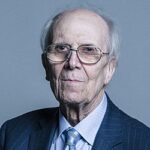
  • OBITUARY : Alex Salmond (1954-2024)

    OBITUARY : Alex Salmond (1954-2024)

    OBITUARY

    Alexander Elliot Anderson Salmond, the former First Minister of Scotland and a towering figure in the fight for Scottish independence, has died at the age of 69. His passing marks the end of an era in Scottish politics, where his charisma, intellect, and unwavering belief in his country left an indelible mark.

    Born in Linlithgow on Hogmanay 1954, Salmond’s journey from a small-town boy to a political titan is a testament to his ambition and political acumen. Educated at Linlithgow Academy and the University of St Andrews, where he studied economics and medieval history, Salmond joined the Scottish National Party (SNP) in 1973, a decision that would shape his life and the future of Scotland.

    His early career saw him working as an economist for the Royal Bank of Scotland and the Department of Agriculture and Fisheries for Scotland. However, his passion lay in politics, and in 1987, he was elected to the UK Parliament as the MP for Banff and Buchan. From the outset, he was a formidable presence in Westminster, known for his sharp wit, debating skills, and unwavering commitment to Scottish self-determination.

    Salmond’s leadership qualities were quickly recognised, and in 1990, he became leader of the SNP, a position he held for a decade. During this time, he revitalised the party, transforming it into a major political force and setting the stage for its eventual rise to power. He spearheaded the campaign for a Scottish Parliament, culminating in the successful 1997 devolution referendum.

    In 2007, Salmond led the SNP to victory in the Scottish Parliament elections, becoming Scotland’s first First Minister from the SNP. His tenure was marked by significant achievements, including the introduction of free university tuition, the abolition of prescription charges, and the successful negotiation of increased powers for the Scottish Parliament.

    However, it was his unwavering pursuit of Scottish independence that defined his political legacy. He spearheaded the campaign for the 2014 independence referendum, galvanising support for the “Yes” campaign and bringing the issue to the forefront of Scottish politics. Though the referendum ultimately resulted in a “No” vote, it energised the independence movement and laid the groundwork for future campaigns.

    Salmond’s political career was not without controversy. He faced accusations of sexual harassment, which he denied and was acquitted of in court. These allegations, however, tarnished his reputation and led to his resignation from the SNP in 2018. He subsequently formed the Alba Party, which campaigned for Scottish independence on a platform of a “super-majority” of pro-independence MSPs in the Scottish Parliament.

    Beyond his political achievements, Salmond was a complex and charismatic figure. He was known for his love of horse racing, golf, and good whisky. He was a gifted communicator, capable of captivating audiences with his wit and storytelling. He was also a fierce debater, relishing the cut and thrust of political argument.

    Alex Salmond’s impact on Scottish politics is undeniable. He was a transformative figure who reshaped the political landscape and brought the dream of Scottish independence closer to reality. He inspired a generation of Scottish nationalists and left a lasting legacy that will be debated and discussed for years to come.

    His passing will be mourned by many, not just in Scotland but across the UK and beyond. He was a political giant, a champion of his country, and a man who left an indelible mark on the history of Scotland. He will be remembered as a skilled politician, a passionate advocate for Scotland, and a complex and captivating figure who played a pivotal role in shaping the nation’s future.

  • OBITUARY : Stanley Clinton-Davis (1928-2023)

    OBITUARY : Stanley Clinton-Davis (1928-2023)

    OBITUARY

    Stanley Clinton-Davis, Baron Clinton-Davis, died on 11 June 2023 at the age of 94. He was born on 6 December 1928 and was educated at Hackney Downs School, Mercers’ School and King’s College before training as a solicitor. He became a local councillor, holding the position of the Mayor of Hackney between 1968 and 1969, and married Frances Jane Lucas with whom he had four children.

    Clinton-Davis served as the Labour MP for Hackney Central from 1970 and 1983, holding the Ministerial position of Parliamentary Under-Secretary of State for Trade between 1974 and 1979. He was also the first MP to ask Margaret Thatcher a question at Prime Minister’s Question Time, asking on 22 May 1979:

    “That is very interesting. Will the right hon. Lady take the opportunity today, or at least at an early stage, to explain to pensioners why her Government refuse to link the pension with earnings or prices, whichever is the higher? When will she say something about the electricity discount scheme? In replying to all questions will she please not be too strident?”

    The new Prime Minister replied:

    “As the hon. Gentleman is already aware, we have undertaken to implement the November increases in full. He is already aware that in the previous year his Government had a shortfall on their calculations. That is being made up this November. We announced it and we shall honour it.”

    During his maiden speech in the House of Commons on 6 July 1970 he mentioned the importance of race relations:

    “I want to stress the positive side of race relations. I believe that in my constituency we have a great example to offer to the country. It is so much more rewarding to talk about these things than to emphasise the alleged hopelessness and undesirability of the present situation. We have a long tradition in Hackney of racial tolerance. It is an area in which the fascists, both pre- and post-war, sought to merchandise their filthy wares, and they were met head on and routed. Today we have a cosmopolitan population considerably higher in numbers and proportion than in Wolverhampton, yet the atmosphere is far better.”

    Elevated to the House of Lords in 1990, he became the Minister of State for Trade between 1997 and 1998 as one of the few Labour parliamentarians who had previously served in Ministerial office. He retired from the House of Lords in 2018 and died on 11 June 2023.

    RESOURCES

    1970 Maiden Speech in the House of Commons

  • OBITUARY : Robert Key (1945-2023)

    OBITUARY : Robert Key (1945-2023)

    OBITUARY : Robert Key (1945-2023)

    Robert Key was born on 22 April 1945, the son of Maurice Key who went on to become the Bishop of Truro and Joan Dence. As a child he was educated at Salisbury Cathedral School and then Sherborne School before going to Clare College at Cambridge University. As a youngster he was walking with a group of friends when a wartime mine was detonated, killing five of the group. He told the Commons in his final Parliamentary speech in 2009:

    “On Friday 13 May 1955, when I was 10 years old, I was on Swanage beach in Dorset with some 20 other children of about the same age. We were doing what children on a beach on a Friday afternoon in May do-building sandcastles, digging holes in the sand, making dams and so on. I was building my castle with a chap called Richard Dunstan: five of my friends were digging holes, and then one of them found a tin. He thought that it was Spam, or something really exotic-yes, Spam was exotic in 1955. He was wrestling to move it, because it was lodged between two rocks. He got out a shoehorn but could not break the tin open. The boys stood back, and were seen throwing things at it.

    My friend and I got bored. We turned round. We had our backs to our friends, and were about the same distance from them as I am from you, Mr. Deputy Speaker, when there was a huge explosion. We were blown into the sea, and lived. Five of my friends died. Five British children were blown up by a British mine on a British beach, within my living memory, and the living memory of many other people. It was an extraordinary thing. It happened in the middle of the 1955 general election. The front page of the following day’s edition of The Daily Telegraph carried a story with the headline, “4 Boys Die, One Missing in Explosion”. Below that, smaller headlines stated, “Big Crater Torn in Beach” and “Wartime Mine Theory”. There was not much theory involved for the five who were killed, or for the two of us who were the luckiest people alive. I still think that I am the luckiest person alive in this House.”

    Key went on to teach economics at Harrow School between 1969 and 1983, although contested the Parliamentary constituency of Holborn and St Pancras South in 1979. He won the constituency of Salisbury in 1983 and he remained the MP until his retirement at the 2010 General Election. He made his maiden speech on 30 June 1983 focusing on technology.

    Whilst at Westminster he was supportive of those who were suffering from AIDS, becoming the chair of the all-party Aids group. He served for some years as a PPS to firstly Alick Buchanan-Smith and then to Chris Patten, becoming a Government Minister for the first time in October 1990 when he took on the role of Minister for Local Government and Inner Cities. He supported Margaret Thatcher in the leadership election that took place a few weeks after his appointment but was kept on by John Major following his election victory. Major appointed Key to become Minister of State at the Department of National Heritage following the 1992 General Election, then he was moved to the Department of Transport the following year. He left Ministerial office in June 1994, but was appointed by William Hague as a frontbench spokesperson on defence following the 1997 General Election. Although selected to stand again at the 2010 General Election, problems with osteoarthritis meant that he decided to stand down.

    Key married Susan Irvine in 1968 and they had four children, one of whom died in infancy. Robert Key died on 3 February 2023 at the age of 77.

  • OBITUARY : David Ramsbotham, Baron Ramsbotham (1934-2022)

    OBITUARY : David Ramsbotham, Baron Ramsbotham (1934-2022)

    OBITUARY : David Ramsbotham, Baron Ramsbotham (1934-2022)

    David Ramsbotham was born on 6 November 1934, the son of John Ramsbotham who later went on to become the Bishop of Wakefield. He served in the army between 1953 and 1993, later serving as the Adjutant-General to the Forces between 1990 and 1993. He was appointed as Her Majesty’s Chief Inspector of Prisons in 1995, serving in that role until 2001. The Guardian newspaper noted in 2001 that he had clashed numerous times with the Home Office:

    “Ramsbotham’s direct, military approach ruffled the mandarins. They confined him to talking to junior ministers, which, in the case of the then prisons minister Paul Boateng, could be regarded as a different form of penal servitude.”

    In  2005, Ramsbotham was elevated to the House of Lords as Baron Ramsbotham of Kensington and he sat as a crossbencher. He continued an involvement with the Prison Reform Trust who issued a tribute to him saying:

    “He was literally and metaphorically a towering figure in our world — instantly recognisable for his bearing and the meticulous care with which he framed his devastating critique of all that needed changing in our prison system.”

    Ramsbotham died following a fall on 13 December 2022, at the age of 88.


    Speeches by David Ramsbotham, Baron Ramsbotham

    Prisongate: The Shocking State of Britain’s Prisons and the Need for Visionary Change (Amazon Link) by David Ramsbotham and published in 2003.