Category: London

  • Grant Shapps – 2021 Comments on Transport for London Financial Settlement

    Grant Shapps – 2021 Comments on Transport for London Financial Settlement

    The comments made by Grant Shapps, the Transport Secretary, on 1 June 2021.

    This £1.08 billion financial package will support London and its transport network through the pandemic, and ensure it is a modern, efficient and viable network for the future.

    Throughout this process, the government has maintained that these support packages must be fair to taxpayers across the UK and on the condition that action is taken to put TfL on the path to long-term financial sustainability. As part of today’s settlement, the Mayor has agreed to further measures that will help ensure that.

  • Sadiq Khan – 2021 Comments on Victory in London

    Sadiq Khan – 2021 Comments on Victory in London

    The comments made by Sadiq Khan, the Mayor of London, on 9 May 2021.

    If you voted for me, from the bottom of my heart—thank you. If you didn’t, please know that I’ll never ignore your voice, your concerns or your worries. I’ll always be a Mayor for all Londoners—working to improve the lives of every single person in this city.

  • Rachel Maclean – 2021 Speech on Hammersmith Bridge

    Rachel Maclean – 2021 Speech on Hammersmith Bridge

    The speech made by Rachel Maclean, the Parliamentary Under-Secretary of State for Transport, in the House of Commons on 14 April 2021.

    I congratulate the hon. Member for Putney (Fleur Anderson) on securing this important debate on funding for the restoration of Hammersmith bridge and on her detailed speech this evening. I agree with her on the issues that she highlighted, setting out the devastating impact on the physical and mental health of residents and local businesses on both sides of the river, due to the long-standing catalogue of failures and lack of action by Hammersmith and Fulham Borough Council.

    The hon. Lady led a protest that took place on Easter weekend, and I commend her for doing so. I want to acknowledge her passion for getting the bridge reopened.

    Andy Slaughter

    Will the Minister give way?

    Rachel Maclean

    I will just make some progress.

    I assure Members that the Government wish to see the bridge reopen as soon as is safely possible. [Interruption.] I will take interventions, but I need to correct a number of inaccurate statements before I do.

    We want to make sure that Londoners can move around the capital easily by public transport, through active travel and on our roads and rivers. Therefore we want Hammersmith bridge to be reopened, despite having no statutory responsibilities for the bridge—particularly because it is wholly owned by the London Borough of Hammersmith and Fulham. The Government have stepped in to try to work collaboratively to find a solution. That is why we established a taskforce in September, led by Baroness Vere, bringing together all the relevant organisations to agree the best way forward and unblock any challenges.

    I reiterate that Hammersmith bridge is owned by the London Borough of Hammersmith and Fulham. That means that the responsibility for maintaining the bridge and making decisions on its repairs and funding lies solely with the borough and not the Government. It is a travesty that we have got to a situation where the bridge has to be closed altogether, given that the council could have prevented the serious safety concerns through regular repairs and maintenance.

    I would like to ensure that Members in the House and those watching are clear about what funding has been provided by the Government and what action has been taken. Since the structure was closed to vehicles in 2019, and to pedestrians, cyclists and river vessels in 2020, funding for maintenance and repairs has come from a variety of sources. The London Borough of Hammersmith and Fulham is the highway authority for the section of the A306 that runs over the bridge, so it has funded the acoustic monitoring and temperature control systems to the bridge. Those alert the borough to potential changes and allow it to take informed decisions about the safety of the bridge.

    I will correct the first inaccuracy that has been stated. As part of the TfL deal on 31 October 2020, the Government ensured that £4 million—much more than a penny—was committed to start immediate mitigation works on Hammersmith Bridge during the 2021 financial year. That has funded the blast cleaning and a visual inspection of the western pedestals, giving the borough a better insight into the condition of the bridge. That is a vital step before any other engineering works can be undertaken. Members and residents need to understand that.

    The funding means that risk mitigation works can begin so that the full repair programme is in the best possible position on cost, schedule and technical risk. As well as that, we have made the ferry service a condition of the TfL bridge deal, so that people, prams and bikes can cross the river safely.

    Andy Slaughter

    Will the Minister give way?

    Rachel Maclean

    I want to address one further inaccuracy. If I have time after that, I will take an intervention.

    As with any local infrastructure project, the Government expect the local authority to take the lead in promoting the scheme. We have heard from the leader of the council, who does not believe that the borough has the capital funds available to meet the costs of repairing the bridge. Indeed, on several occasions he has said that his residents are not users of the bridge and should therefore not be liable for the works.

    In discussions with the leader of the council and my right hon. Friend the Secretary of State, various options for contributions for funding the project have been discussed. Unfortunately, the council seems to look to the national Government with gold-tinted lenses, not understanding that we cannot and will not hand out a blank cheque for the works. How would that be fair to taxpayers up and down the country and to those who have been responsible, such as the constituency of my hon. Friend the Member for Kensington (Felicity Buchan)? This is what councils all over the country have to do when they are carrying out major infrastructure works.

    Sarah Olney

    Will the Minister give way?

    Rachel Maclean

    I am afraid I cannot, because I need to clarify a number of inaccuracies.

    It has been reported in the press by the hon. Member for Putney that my right hon. Friend the Secretary of State for Transport has asked the London Borough of Hammersmith and Fulham to contribute 50% of the cost. That option was discussed. All that was requested of the borough was that the leader send a plan for the borough’s funding proposal. So far, the so-called bids that have been sent in amount to nothing more than letters asking for an unsubstantiated amount. It is simply not appropriate to ask for funding from central Government on that basis. The Borough of Hammersmith and Fulham should have taken the time to understand what is required to submit a bid to the Government. We stand ready to help. There is plenty of help available for officials to put these bids together, but that has not been happening.

    When evaluating any temporary crossing solution, the complexity of procurement and requirement of various consents must be considered. Given these challenges, the borough and the taskforce determined that a ferry service would provide an immediately available alternative river crossing for pedestrians and cyclists. That has been provided and we are very grateful to the London Borough of Richmond upon Thames for its support.

    The closure of the bridge has affected not just those who need to cross it, but those who travel along the river beneath it. The taskforce is an essential first step. Contrary to statements earlier, the taskforce has met regularly. It stands ready to meet any Member who would like to meet my noble Friend Baroness Vere in the other place; she is more than happy to discuss in full the detailed complexities that we cannot possibly air in a 30-minute debate in a political environment such as we have here tonight.

    These are serious and complex engineering works. I am afraid that it is completely inaccurate to make the point in this House that there is no action from the Government. I will not stand here and let Opposition Members say that. We have taken on additional responsibilities—well over and above our statutory responsibilities—as Opposition Members know. We have gone out of our way to help.

    Andy Slaughter

    I am most grateful to the Minister for giving way. We need £4 million towards investigation work and there is a bill of over £140 million for repairs. Where does the Minister think that money is going to come from? She knows that it cannot come from TfL or from the London Borough of Hammersmith and Fulham. Her speech will be greeted with absolute dismay by people across London and beyond who use this major arterial route. The issue is simply not being addressed, after two years. It is a wholly irresponsible position for the Government to take. Where is that £140 million going to come from?

    Rachel Maclean

    I suggest to the hon. Member that his comments tonight are wholly irresponsible, because they have not reflected the work on the Government side to engage constructively with the London Borough of Hammersmith and Fulham in order to understand its funding position and what it can afford. The borough has not come back on any of the engagements and discussions that we have extended to it regarding realistic sums of money. If it cannot afford that amount of money, it should come back and tell us what it can afford. That is how infrastructure projects up and down the country are conducted. The hon. Member knows that very well.

    Sarah Olney

    I am grateful to the Minister for giving way. She referred earlier to fairness to taxpayers. Does she think that this is fair to the taxpayers of Richmond upon Thames, who are the most affected by this bridge closure? Their lives are being ruined, their businesses are closing, they cannot get to school or work, they cannot access medical services, and they have no say over what the London Borough of Hammersmith and Fulham does with its budget, but they understand that £140 million is more than that borough can afford. They are looking to the Government for assistance, and all they ask for is a commitment for the funding. The Minister stands here and talks about all the administrative barriers that are in the way. All we ask for is a commitment.

    Rachel Maclean

    I thank the hon. Lady for her comments. It is not fair to taxpayers in any part of the country that that London borough should think that, due to its lack of a maintenance programme on this bridge over the years, people from outside the borough should be expected to stump up for its failure and incompetence. No, it is not fair to them.

    In summary, as we have heard tonight, the closure of the bridge has affected not just those who need to cross it but those who travel along the river beneath it. The taskforce has enabled an agreement between the Port of London authority and the borough to allow limited and controlled river transits from 12 April when work is not being undertaken on the bridge. That is a very important point. It is welcome news for commercial river users, who can now continue operations as national lockdown restrictions ease.

    Ruth Cadbury

    Will the Minister give way?

    Rachel Maclean

    In a moment. I have given way several times already.

    I reassure Members that the Department continues to work closely with all parties involved to reach a funding solution that is fair to national taxpayers. As I have said many times, there are demands on the public purse from all over the country for all kinds of things.

    We must ensure that this bridge is reopened as soon as is safely possible. In all genuineness, I encourage the Members on the Opposition Benches to work constructively with the local council to get it to engage with the Government, who are going outside their statutory responsibilities to help to get this bridge reopened so that commuters, people listening tonight, residents on both sides of the Thames, users of the river, emergency services and wider businesses can make use of the crossing and ease pressures on Putney and Chiswick bridges.

    We cannot do any more without a detailed funding solution. The buck stops with Hammersmith and Fulham. It needs to present that case to the Government and then we can take action.

  • Fleur Anderson – 2021 Speech on Hammersmith Bridge

    Fleur Anderson – 2021 Speech on Hammersmith Bridge

    The speech made by Fleur Anderson, the Labour MP for Putney, in the House of Commons on 14 April 2021.

    I thank Mr Speaker for granting the debate, because this issue is of such interest to my constituents and to people in many other constituencies surrounding mine throughout south and west London. Hammersmith bridge has been closed for over two years. In that time, we have had a pandemic, moved billions of pounds around the country, and vaccinated half the country, yet we still have not fixed Hammersmith bridge. My constituents are really frustrated by that.

    Hammersmith bridge is an early prototype of the suspension bridge. It has a unique historical value, as well as being a major London artery, and we need a unique funding solution to enable a temporary bridge to open urgently, and for the restoration and the future of the bridge to be secured. Hammersmith bridge is not in my constituency, nor in the constituencies of some Members attending the debate, but that shows the wide-ranging impact of the bridge’s closure on hundreds of thousands of Londoners and why its reopening is so important and so urgent.

    Our health in Putney is being damaged by the increase in pollution on our high street from the additional 4,000 vehicles a day that are being diverted. Journeys to school, to work and to healthcare appointments are very long. Businesses are suffering. This cannot go on. Time and again, we have put the case to Ministers. I have raised the matter in Westminster Hall debates, at Transport questions and business questions, in written questions, through a public petition and in letter after letter, yet here we are again, and the bridge is still not open.

    Felicity Buchan (Kensington) (Con)

    Does the hon. Lady agree that the primary responsibility for the upkeep of the bridge lies with Hammersmith and Fulham Council, which owns the bridge and has responsibility for its maintenance? My borough has two bridges: Albert bridge and Chelsea bridge. It takes full responsibility for those bridges. Over the last 10 years, it has invested £12 million to £13 million in Albert bridge, and it is about to do work on Chelsea bridge.

    Fleur Anderson

    I am grateful for the hon. Lady’s intervention. It has been said many times in many places that it is up to Hammersmith and Fulham Council, but that is absolutely not the case. Hammersmith bridge is a unique historical structure with a unique bill—£141 million. No council in London could afford that. Therefore, this issue needs a unique funding solution. I will talk about that and the bid that Hammersmith and Fulham Council has made to the Government, but now is the time for the Government to step up, because Hammersmith and Fulham Council cannot do this on its own.

    I was on Putney embankment on Easter Saturday on what would have been boat race weekend, but the race could not run on the Thames because of the danger to the boats of going under the bridge. I teamed up with local rowing organisations and hundreds of constituents to protest the continuing inaction about Hammersmith bridge and to call on the Government to step up, play their part and fund its restoration. There were boats from the London Rowing Club, Wandsworth Youth River Club and Putney High School Boat Club out on the water, all of which are affected by the closure. Hundreds of local people came by, and it was not necessary for me to persuade anyone to sign the banner and send a clear message to the Secretary of State for Transport to open the bridge.

    Last week, I went out on my first canvass since the start of the pandemic. I knocked on my first door in Roehampton, eager to speak to constituents again, and asked, “What issue is important to you?” The first thing they said was, “Hammersmith bridge.”

    Sarah Olney (Richmond Park) (LD)

    The hon. Member is making an excellent speech, and I am extremely grateful to her for bringing the matter back to the Floor of the House for debate once more. I wonder whether she would mind me taking the opportunity to highlight the massive impact that the closure has had on the residents of Barnes in my constituency. She mentioned the difficulties that people have had in getting to work and accessing healthcare. The biggest growing issue that we have had since the reopening of schools at the beginning of March is children getting to school. They have all already suffered massive disruption to their education, but many are finding that, where they could previously walk to school in 10 to 15 minutes, it now takes them upwards of an hour on crowded public transport during the pandemic.

    On top of the pressures those children are already experiencing—some with exam stress, and all the uncertainty and disruption that they have faced—they now have the additional anxiety of how to get to and from school in a way that they have never experienced. I want to highlight the massive impact that the bridge’s closure is having on young people on both sides of the bridge and the really difficult experience they are having, and to urge the Minister to come to the table and find a solution.

    Fleur Anderson

    I thank the hon. Lady for highlighting the impact on young people. I have had an email from a sixth-former in my constituency who said that they formerly left from home at 7.30 am but now have to leave at 6 o’clock in the morning. This is having a really bad impact on students across the constituency.

    Ruth Cadbury (Brentford and Isleworth) (Lab)

    I, too, congratulate my hon. Friend on securing the debate and on her excellent speech. My constituents are also impacted, particularly by the additional road traffic that is finding its way through Chiswick as a result of the closure of Hammersmith bridge—2 or 3 miles away.

    May I highlight the concern for the businesses and operators that use the river and have been unable to gain access upstream and downstream of Hammersmith bridge? They may not go under Hammersmith bridge unless the RNLI is on an emergency call, or they have to book in advance for very restricted opening—it has been on Sundays. This has had an impact not only on the RNLI’s training, maintenance needs and refuelling, but on businesses such as boatyards and the commercial tour operators, whose core business is travelling up and down the river. There is effectively a block on that at the moment, and that will continue until Hammersmith bridge is made safe.

    Fleur Anderson

    I agree absolutely, and I thank my hon. Friend for sharing the impact that the closure is having on so many businesses and organisations, and even on the RNLI, in London.

    As the Minister will know, the bridge, which is one of the oldest suspension bridges in the world, was closed to cars two years ago and then fully closed to all vehicles in August 2020. The impact that is having in my constituency—and, clearly, in neighbouring constituencies —is catastrophic. However, I am not here to make the case for why the bridge needs urgently to reopen. That is so obvious, and I think it is something the Minister and I can agree on. I am here to spell out to the Minister and her Department that the biggest obstacle to progress at the moment is funding, and that only the Government have the funds, resources and legislative ability to make the changes needed to reopen and restore the bridge and to get south-west London moving again.

    I want to make three points: first, about the taskforce; secondly, about Hammersmith and Fulham Council; and finally, about solutions. The taskforce, which was set up in September last year, seems to have morphed into a significant barrier to any sort of progress, instead of making the urgent progress that we need. It is little task and no force. Hammersmith and Fulham Council, Richmond Borough Council and Transport for London have carried out the actions detailed for them in the taskforce meeting, but the Government have not brought the action needed from their side.

    Andy Slaughter (Hammersmith) (Lab)

    My hon. Friend is making an excellent case, but I think she is being slightly too generous towards the taskforce. A letter from the Hammersmith Society, which is a strictly non-political and very civilised body, to the Prime Minister two weeks ago ends by saying that

    “the communities on both sides of the river are unified in their anger, their disappointment and their despair at the failure of their government.”

    I held a debate identical to this a year ago when the Minister was engaging with the issue and looking at bids. We have actually gone backwards in the past year, and silly political games are being played, as typified by the intervention from the hon. Member for Kensington (Felicity Buchan). What we need is a solution and funding for this major project.

    Fleur Anderson

    I thank my hon. Friend for so eloquently sharing the frustration we are feeling. I think you can understand that, Mr Deputy Speaker, and that you are feeling it from all the interventions this evening.

    The taskforce has come up with no workable solutions, although the ferry will be opening in the summer. It has simply trotted out tired statements and has not discussed financing, which is why funding is the focus of the debate.

    My second point concerns the financial role of Hammersmith and Fulham Council. Many people have said to me, “Why can’t the council pay for the bridge?” To expect the council to fund the restoration of the bridge and any temporary measures is unfair and unreasonable—and in fact impossible. Hammersmith bridge is extremely expensive to fix compared with other London bridges, as was mentioned earlier, in part because it is London’s earliest remaining example of a suspension structure over the river, and because of the unusual materials it is built from—cast iron, which can shatter, wrought iron and wood—and its suspension mechanisms are unique. That puts the cost of repair at an eye-watering £141 million, which is unaffordable for Hammersmith and Fulham Council, as for any council.

    Felicity Buchan

    Will the hon. Lady give way?

    Fleur Anderson

    I will continue to explain and address the point the hon. Member made earlier.

    Since 2010, the Government have cut the council’s annual net budget from £180 million to £124 million this year. Even taking a loan would cause significant cuts to local services or huge rises in council tax, so the cost of repairing the bridge would be more than the council’s entire budget.

    Andy Slaughter

    My hon. Friend is being most generous in giving way. In fact, both Hammersmith and Fulham Council and Transport for London have contributed a sum of about £25 million. The Government have not contributed a penny towards the repair of Hammersmith bridge so far. Hammersmith has come up with schemes for a new temporary bridge, and so has TfL, and for stabilisation and repair. It is all there. The only people who will not engage with this are the Government, and they are doing that for deliberate political reasons.

    Fleur Anderson

    I thank my hon. Friend, and I hope that when the Minister has her opportunity to speak she will not ask again for Hammersmith and Fulham Council to fund an unprecedented 50% contribution to the bridge’s repair. That is clearly unreasonable, especially when the precedent for contributions from councils to national infrastructure projects is 15%. That makes me question whether the Government are genuinely interested in resolving the situation, or are just going to leave it.

    Instead, the taskforce suggested in October 2020 that Hammersmith and Fulham Council come up with a financing plan. The council, together with TfL, had made funding applications to the Government in December 2019, February 2020 and June 2020. All three bids were rejected by the Government, and we do not know why. Instead, Hammersmith and Fulham Council went away, talked to experts and came up with a new plan—the “Outline Financial Plan”—which it submitted on 19 February.

    I want to pre-empt any answer that the Minister may be ready to give about waiting for Hammersmith and Fulham Council to do more, or any repetition of the response of Baroness Vere of Norbiton to a joint letter from me, my hon. Friend the Member for Hammersmith (Andy Slaughter), the hon. Member for Richmond Park (Sarah Olney) and my hon. Friend the Member for Brentford and Isleworth (Ruth Cadbury). The Baroness’s response was:

    “I suggest that it would be most beneficial for you to support the local authority in developing its preferred funding option so that we can progress the business case.”

    The funding option was submitted on 19 February, seven weeks ago, and we are still waiting for a response. This is not the urgent action we need.

    Any response will need the Government to agree to set up a special company or trust fund. It will need Government legislation, financial underwriting and an assurance of future revenue from Government funds or from a toll. The council needs to have that input from the Government to continue. The ball is now firmly in the Government’s court, not that of Hammersmith and Fulham Council. To say that would be to play the type of party politics that local residents are absolutely fed up with.

    That brings me to my third and final point, about solutions. I hope that the Minister will shortly announce how the Government will take responsibility for the Government’s vital role in restoring the bridge. The ferry service is a partial solution—it starts in the summer—but it will not address vehicles going through Putney and it will not stop the long bus journeys for Roehampton residents.

    Sarah Olney

    Briefly, does the hon. Lady agree that one of the significant disadvantages to the ferry service, welcome though it is, is that local residents will have to pay a fare to use it, as opposed to being able to use the bridge perfectly freely?

    Fleur Anderson

    I thank the hon. Member for mentioning a disadvantage of the ferry. I am concerned that that the taskforce will say, “We’ve done the ferry, and now we are not going to fix the bridge.” Putney residents are concerned about that.

    A proposal to build a temporary truss bridge inside the current bridge—so, a double-decker bridge—has been given the green light as feasible, and could be built within a year, as soon as it is funded. We need that funding. The “Outline Financial Plan” was developed by Hammersmith and Fulham Council with a series of sector-leading consultants. That plan would not only see Hammersmith bridge repaired, but offer value for money to national and local taxpayers for the long-term.

    The “Outline Financial Plan” was submitted on 19 February. I would like to hear whether the Government agree with the plan and are going to get on with it, or do not agree with the plan and are going to come up with one of their own. Either way, we need urgent funding solutions. It is important that these plans are engaged with and taken forward.

    To sum up, my asks of the Minister tonight are fivefold. A lot of Putney residents and constituents from across south-west London will be listening tonight. First, the Government must urgently provide up-front funding for the temporary bridge, so that the original bridge can be restored and re-opened as soon as possible and the traffic diverted out of Putney High Street. Secondly, they must drop the requirement for Hammersmith and Fulham Council to provide 50% of the funding—that is not feasible, and the Minister knows it.

    Thirdly, the Government must expedite action on the funding proposals submitted by Hammersmith and Fulham Council on 19 February; they present workable and realistic ways forward and must not be left to simply sit and gather dust. Fourthly, I would like reassurance that the taskforce will start delivering and co-operating, so that Hammersmith and Fulham and Richmond Councils, Transport for London and the Government work together to come up with urgent solutions. Fifthly, I ask that the Secretary of State and the leader of the Government taskforce meet me and other concerned parliamentary colleagues as a matter of urgency.

    Enough talk. Our constituents want action. The Government know what they need to do. It is time they delivered on the funding agreement to finance the temporary bridge urgently and the restoration and re-opening of Hammersmith bridge.

  • Gareth Johnson  – 2021 Speech on Road User Charging in Outer London

    Gareth Johnson – 2021 Speech on Road User Charging in Outer London

    The speech made by Gareth Johnson, the Conservative MP for Dartford, in the House of Commons on 13 April 2021.

    I beg to move,

    That leave be given to bring in a Bill to provide that the Mayor of London may not impose charges for driving in Outer London; and for connected purposes.

    The Mayor of London’s financial stability plan, published in January, proposes a seven-days-a-week charge of £3.50 for all motorists using a vehicle registered outside Greater London, rising to £5.50 for the more polluting vehicles. Sadiq Khan is looking at building a literal financial wall between London and its neighbours. The proposal would divide communities and set Londoners against all others. It is quite literally a border tax. The Mayor of London’s proposal to charge drivers to enter Greater London would have a catastrophic impact on places like Dartford and all the areas surrounding London. It would also have a detrimental impact on outer London boroughs. Businesses located in outer London would suffer from people being reluctant to travel often the short distance across the border to use those businesses. That would have an impact on dry cleaners, pubs, takeaways, shops, hairdressers and more—exactly the businesses who are suffering the most from the coronavirus epidemic.

    The Mayor of London claims this is necessary to offset the £500 million of road tax Londoners pay out each year and cannot keep, but no other area gets to keep the road tax that they pay, either—Dartford does not even get to keep the revenue from the Dartford crossing. Although it is true that Highways England does not own a great number of roads in London, it does not have many roads in other areas either; London is not alone in that respect. Londoners do drive on motorways and those motorways have to be paid for.

    The Mayor of London claims that Transport for London has not had enough in subsidies. Even if you accept that argument—which I do not—the proposal for a border tax is completely the wrong approach. It is divisive, punitive and aggressive. It is as if the Mayor of London is saying, “Give us more money or look what I can do. I can ruin you. I can hit you financially and make you pay if I don’t get my way.” That is effectively what he is saying. This proposal sends out the clear message that, far from London being open, as the Mayor claims, it will be very much closed for motorists trying to enter the capital.

    Every mayor around the country is trying to raise revenue. That is perfectly understandable but it should not be attempted on the back of blackmail that says, “Give me money or I will charge you to visit your loved ones. Give me money or I will charge you for dropping off relatives to the local railway station. I will charge you for using London’s small businesses. I will charge you just for driving out of your road.” That is not commendable; it is an abuse of power.

    The Mayor said that the proposed charge will reduce pollution in the capital. This proposal has nothing whatsoever to do with pollution. Pollution in London is at its worst around the airports and in central London. It is not concentrated in outer London, so I do not understand why the Mayor of London seems to hate outer London so much.

    The border around London is not neat. It does not run along major routes. Instead, it straddles residential roads. In Dartford, for example, we have residential roads that are based in Kent that people cannot leave without entering the London Borough of Bexley. We have a number of roads just like that, and we have roads where the border literally goes down the middle of them, so people leave the road in Kent and re-enter it in London. Many of my constituents would therefore face having to pay at least £3.50 a day just to drive out of their road. This proposal is for the charge to apply seven days a week, so that hundreds of my constituents and thousands of people around London would pay over £1,200 a year just to be able to drive each day out of the road where they live—£1,200 a year just to get out of their house. For thousands of others, it would mean a £3.50 charge just to visit loved ones, to drop a child off at school, to visit a hospital or to go to work.

    So many frontline workers in London live in neighbouring counties. These are the people who keep London functioning. Over half of London’s police officers live outside the capital and the same applies to London firefighters. These people, whom Londoners rely on most, will be hardest hit by this proposal. They will be hit just for going to work.

    Possibly the worst aspect of this whole proposal is that the Mayor wants to levy a charge on people to whom he is totally unaccountable. The people who would have to pay the daily charge cannot vote for the London Mayor. They cannot vote to remove Sadiq Khan or do anything to stop this charge; he knows it, and that is why he is targeting them. It is taxation without representation, taxation without accountability, and it needs to be stopped.

    Dartford is not part of London. We are proud of our Kentish heritage, yet many people who are now Dartfordians used to live in London. Many Londoners move out to neighbouring counties. Many of us commute into London. There is a good relationship right now between London and the neighbouring counties, yet the Mayor of London wants to change all that. He wants to set London against its neighbours, but in doing so, he damages not just people who live outside London, but people who live inside London. It is no wonder that YouGov recently found that the majority of Londoners oppose this charge.

    It is claimed that opposition to the proposal is timed to marry up with the London mayoral elections. Actually, the timing is completely down to the Mayor of London. He decided when to announce the proposal, he is responsible for the timing and he published the document setting it out just three months ago, so it is hardly surprising that we are having this debate at this time.

    If the proposal goes ahead, it will have the most profound impact on Dartford and the other constituencies bordering London that we have ever seen. The decision will be taken by somebody over whom Dartfordians have absolutely no control. It is the most divisive issue ever conceived by a London Mayor and it needs to be stopped.

  • Matt Hancock – 2021 Comments about Health Situation in London

    Matt Hancock – 2021 Comments about Health Situation in London

    The comments made by Matt Hancock, the Secretary of State for Health and Social Care, on 1 January 2021.

    Over the past week we have seen infections and hospitalisations rise sharply across London and hospitals are coming under increased pressure.

    While our priority is to keep as many children as possible in school, we have to strike a balance between education and infection rates and pressures on the NHS.

    The situation in London continues to worsen and so today we are taking action to protect the public and reduce the spread of this disease in the community.

    Everyone across London must take this situation incredibly seriously and act responsibly to minimise the spread of this deadly disease.

  • Jim McMahon – 2020 Comments on Chaotic Scenes at Railway Stations

    Jim McMahon – 2020 Comments on Chaotic Scenes at Railway Stations

    The comments made by Jim McMahon, the Shadow Secretary of State for Transport, on 20 December 2020.

    The chaotic scenes at train stations came hours after the Prime Minister ducked the question of whether people should travel.

    Weeks ago, Labour proposed a plan to make public transport safe before Christmas. The Government ignored it.

    The Prime Minister’s dither, delay and lack of clear guidance mean we have – yet again – failed to control the spread of the virus.

  • Rupa Huq – 2020 Speech on Emergency Transport and Travel Measures in London Boroughs

    Rupa Huq – 2020 Speech on Emergency Transport and Travel Measures in London Boroughs

    The speech made by Rupa Huq, the Labour MP for Ealing Central and Acton, in the House of Commons on 4 November 2020.

    Travel and transport are what keep our capital going, and they produced its suburbs. When we add the covid emergency into the mix, however, questions are raised about the disproportionate numbers of black and ethnic minority people and transport workers who died earlier in the pandemic, at a time when they were not getting the protection they needed. Their families are still seeking death in service benefits. There is also the whole question of democracy in the age of the virus, and how we build back better, more sustainably and in a more resilient way on the other side of all this as part of the new normal.

    Happily, some of the issues I thought I would be addressing tonight have been overtaken by events. Thanks to the Transport for London bail-out at the weekend, there will be no extension of the congestion charge—phew!—and there will be no charging for under-18s. I pay tribute to our Mayor of London, Sadiq Khan—so much better than the guy before, isn’t he?—for all that.

    That leaves me with emergency traffic orders, which are those controversial things that have enabled pop-up cycle lanes, pavement widenings—some people call them “road smallings”—and controversial low-traffic neighbourhoods all over our capital. They have followed a sequence of implementation now, consult later.

    I want to make a confession: I am a confirmed, long- standing cyclist, dating back to when I went to school in what is now my constituency every day in the ’80s. We now have more bikes than people in our household. My own offspring replicate that journey in the ’90s when I was at Cambridge University, where it was almost compulsory to get on your bike every single day. I completely understand the benefits of cycling: it is free, it takes us door to door, and it is environmentally friendly. I am a confirmed cyclist.

    These low-traffic neighbourhoods seek to get us all on two wheels or on foot, in a move towards active travel—a modal shift. We can still get everywhere we need to go in a car; they just mean we have to go the long way round. A good recent example is Bowes Road in Acton, which first became known to me because every BBC cabbie, when they took me up there, would go down it rather than the A40. Residents hated that because their road had turned into a thoroughfare and they could not get out of their houses. Now a low-traffic neighbourhood has been introduced there, and they love it. There are these oversized flower pot things called planters, and bollards, and the residents have been able to reclaim their street. In that instance, a pre-existing problem has been dealt with and rectified.

    However, colleagues from every compass point of London, some of whom are here today, have told me about examples of LTNs that are not well-designed and are not working, in neighbourhoods that are already naturally low-traffic neighbourhoods. These things popped up with no consultation and no notice, even, and it feels to people like they have been inflicted on them. We have seen large-scale opposition all over London, with tens ​of thousands of signatures in Wandsworth and in my own borough, and in Islington I think there have been marches.

    Theresa Villiers (Chipping Barnet) (Con)

    Does the hon. Lady agree that a number of the changes that have been made have had a really negative impact on the taxi trade? The licensed taxi is one of the most accessible forms of transport. If we block it out of key routes such as Bishopsgate, we make it more difficult for people with mobility issues and disabilities to get to the places they need to get to.

    Dr Huq

    The right hon. Lady makes a really good point. We have relied on cabbies—remember that taxi exam, the knowledge? That is completely invalidated by these changes. She makes a really powerful point. I think people feel discombobulated because these changes are so radical and dramatic, and they appear to have come out of nowhere.

    I think that policies work best when policy makers take the public with them and act for them, rather than doing stuff to them, which I think many feel has happened. In our borough there are 37 different schemes, with over £1 million of funding. The most controversial is LTN 21—they all have these rather Stalinist names. Oh, sorry—I will be in trouble. Across three wards, nigh on every side street has been blocked; it has turned the area into a convoluted maze of planters at odd angles. The right hon. Lady referred to commercial vehicles. Delivery vans have become more and more prevalent in the pandemic; they are completely outfoxed by these measures.

    When news of this debate broke on a local forum, hundreds of replies—they were going up by the minute—came in with things that I should raise, so I will try to give voice to some of those.

    David Simmonds (Ruislip, Northwood and Pinner) (Con)

    I do not know whether the hon. Lady is more concerned about having been insufficiently enthusiastic in her mention of Stalin or having been too enthusiastic in bringing him up. In the context of low-traffic neighbourhoods, does she think that a good deal of consultation and discussion with the emergency services is critical? That has been a consistent problem with the implementation of LTNs, certainly in the view of my constituents and many others.

    Dr Huq

    The hon. Gentleman speaks so much sense. We are at one on Heathrow—actually, I think all three of us who have spoken so far are—and he is right. In theory, these people are not allowed to express an opinion, so the leadership say, “Yeah, fine,” but the people who have to implement these things—the ambulance personnel, police people and fire officers—all think that they have made a difficult job ever more difficult at a time when every second counts. The hon. Gentleman is absolutely right.

    Lilian Greenwood (Nottingham South) (Lab)

    I am sure my hon. Friend is reflecting the views of some of her constituents, but does she share my concern that while we worry about sending car drivers around the long way, pedestrians have to walk a long way down the road to find a safe place to cross every single day and no one ever notices, because it is so normal for pedestrians’ needs to be put behind those of the motorist?

    Dr Huq

    My hon. Friend is right. Pedestrians often feel at the bottom of the food chain. Actually, walkers have contacted me saying that they have got nothing out of this. Cyclists have got new cycle lanes, but they seem to have been a bit forgotten in all this. I think the key thing is to take people with you and get consent, and that also means consultation.

    Other issues that have popped up include kids being distressed at the much elongated minibus journey to the Log Cabin disabled children’s adventure playground. Elderly and infirm people and their carers are also affected. When we say, “Oh, the sat-nav will update”, they are a bit befuddled because they use the old-fashioned “A to Z”, as do I actually. I have a case of a lady who had regular out-patient appointments at a central London hospital, but has now been discharged because the taxi gave up on too many occasions, so that is a bit serious. This affects all sorts of businesses, such as workmen with all their tools. Shops say that they used to benefit from passing trade on the way back from longer journeys, and that has all gone now.

    If hon. Members have a little google, they can see on YouTube how, all over London, traffic that was supposed to be evaporating—it was meant to disappear because, after a while, people have new habits and give up driving—has actually been displaced to main roads. Those are residential roads, and people live there too. They already had unacceptably high levels of pollution, and it has just worsened. If the whole aim was combating emissions, that is undermined when there is a very long way round—five times, 10 times longer, or whatever. In some boroughs, compliance checks that no one is driving through are done with those sinister little motor vehicles that are idling, with NO2 emissions. Again, that seems a little bit serious.

    Felicity Buchan (Kensington) (Con)

    Does the hon. Member agree with me that consultation is important, but what is also important is signage? One of my constituents approached me to say that the family drives every day from Kensington through the borough of Hammersmith and Fulham, and on the first day that one of these schemes was operating, the family got eight tickets because they were not aware of it and the signage was so poor.

    Dr Huq

    Goodness me, the hon. Lady tells a chilling story. In Ealing, at least initially, there are no fines—maybe I should not be saying that—so that people get used to it. There is a softly-softly approach. Ultimately, I guess that people do get used to it, but it seems wrong to have that many tickets on day one.

    In a global pandemic, life is hard enough as it is, and to make life even harder feels punitive. This policy is well tried in places such as Copenhagen, but this is just copying and pasting that into outer London, a place that people liked because of suburban convenience and because of the grid system.

    Apsana Begum (Poplar and Limehouse) (Lab)

    I thank my hon. Friend for securing this important debate. I want to draw her attention to a recent report by the Institute of Race Relations called “The London Clearances”. This report found that regeneration projects are being used to actively dispossess working-class communities and low-income families of their homes. This process, which is commonly known as social cleansing, ​has mostly been understood as a class issue. However, given the over-representation of black, Asian and ethnic minority communities in social housing and the racialised language used to describe London’s post-war housing estates—for example, in the aftermath of the 2011 riots —I believe this is also very much a race issue. Certainly, constituents of mine have been in touch about the impact this is having on them and the fact that some of the measures have been targeted not towards housing estates in very congested or overcrowded areas but areas that have terraced homes—

    Mr Deputy Speaker (Mr Nigel Evans)

    Order. I am sorry, but interventions by their very nature should be short, and that was very long.

    Dr Huq

    I thank my hon. Friend for a point that deserved to be made at length. She makes the point about the main roads, and those are people too. They feel two-tiered now: their house prices are probably lower, and they feel they have a raw deal because of the constant gridlock forcing everyone there.

    At best, this has been a mixed experience. Where these measures work, where there is a need and where there is consultation, they are really good, but if it is felt that they have been illogically plumped somewhere they are not desired, that is a completely different matter. Somebody said to me the other day that a bollard had been put on a very short road that has got only one house on it. He said he did not ask for it and added, “We feel penned in like animals.”

    Bambos Charalambous (Enfield, Southgate) (Lab)

    Is not part of the problem the lack of consultation? Has not that been caused by the Government’s insistence that the schemes be implemented straightaway within an eight-week period, not allowing any consultation with communities or very limited consultation at best?

    Dr Huq

    My hon. Friend speaks so much sense. It is true that it feels that this catastrophising, saying, “Emergency, emergency, we have to do it by the end of September”, with no time for consultation apart from six months later, is just the wrong way round, putting the cart before the horse.

    We have had this vote today, and some of us have wrestled with our consciences about the lockdown. On balance, I thought it was the right thing to do, but coronavirus has greenlighted many incursions—some people call them draconian—on our civil liberties, on citizens’ freedom of movement. As I said, I strongly think that to gain consent, we should consult. Pictures have gone viral in Ealing of planters that have been vandalised and bollards that have been ripped out. Yes, that cedes the moral high ground: it is wrong to do that. Vandalism is bad, so it is a moral boost for the diehard proponents of the schemes, but it also shows this is not a consensual policy and that something has gone wrong if that is happening.

    Bell Ribeiro-Addy (Streatham) (Lab)

    Does my hon. Friend agree that the low traffic neighbourhoods are really important in constituencies such as mine, which has the A23 running through it and has so much pollution? Does she also agree that the lack of consultation could have a negative impact on future measures as the public ​will almost learn to react negatively because they feel like they have not been consulted in the past? We really do need those measures to protect our environment and change the nature of traffic in our areas.

    Dr Huq

    I completely agree that we have a climate emergency, we have our net zero obligations and we have an obesity crisis, but doing this without a consultation has just got people’s backs up. It sometimes feels that these things have been formulated, not by anyone who cycles or understands local traffic flows, but just in order to satisfy the criteria for a budget where there is money available and time is running out.

    Nickie Aiken (Cities of London and Westminster) (Con)

    Does the hon. Member agree that low traffic neighbourhoods can sometimes be important for air quality in constituencies such as mine in central London? One council is currently going through a consultation on the Hyde Park estate, and while residents welcome the ending of rat running, they are concerned that they have not been listened to. They have their own ideas and they want to work in partnership with the council to make those work. Does she agree that working in partnership with residents is the way forward for local authorities?

    Dr Huq

    The hon. Member, and former council leader for where we are now, speaks with authority and passion and makes total sense on this. We need a collaboration between residents, stakeholders and businesses—all the different actors in this—which sometimes feels like it has not happened.

    I know the Minister is a reasonable person and I have some questions for her. She is not the type to blame it all on Sadiq Khan, like some people would.

    Bell Ribeiro-Addy

    On the matter of Sadiq Khan, does my hon. Friend agree that he should be congratulated on seeing off the Government’s plans to extend the congestion charge zone and to begin charging under-18s for travel?

    Dr Huq

    Of course I agree with my hon. Friend. People would have been charged to go from Ealing to Acton, and possibly to use the A23, which goes to Brighton. It is good that that has gone, and congratulations to the Minister too, if she was involved in that.

    We are told that local authorities are the final arbiters, but there is so much mistrust around this. Is there any kind of mechanism to ensure that it does not look as though people are marking their own homework? Would she, or someone, be able to swoop in? The Secretary of State wrote to councils to say that they should have had pre-implementation consultation, and should respect all road users. How will that wish be operationalised, especially in places where the consultation takes place six months after implementation? Surely there is scope for some sort of review before then if things are not working. There have been reversals—wholesale in Wandsworth, partial in Redbridge and Harrow. Could the Minister give some guidance on that? I think some councils are getting a bit entrenched; they are not for turning, or for any modifications.

    In the final reckoning, does the Minister think a referendum might be a way forward? The scheme has been divisive in the way that Brexit was—sorry to bring ​that up, Mr Deputy Speaker, but it coloured all our lives for many years, and it has not gone away. A referendum would be completely equitable. If a council has a consultation tool on its website, only those with the right level of literacy, technology and energy will use it and make that count; what about the elderly and infirm? In a referendum, we could give as options, “Yes, with modifications, if need be”—then if “yes” wins, the modifications can be worked out—and “No” for those who want the measures removed.

    Apsana Begum

    I will be brief this time. Does my hon. Friend agree that there should not only be consultation, but due consideration should be given to equalities impact assessments, and to determining the socioeconomic impact of LTNs?

    Dr Huq

    My hon. Friend has read my mind. Impact assessments are missing in all this. There have been no baseline data or traffic surveys. It would be good to have a clear point of measurement, so we can ask, “Did it work?”. How will this be measured?

    I have suggestions for the Minister. There are ways to discourage car use other than taking this big-bang approach of setting up all the LTNs at once. Instead of our closing every side road, I would like us to have dedicated, segregated cycle lanes on main roads. More of those, please—but not the bollarded ones, because I feel kettled in those, and people cannot overtake or be overtaken in them. Could she address cycle theft, cycle storage, and even bike grants? Not everyone has the same ratio of bikes as the Huq household, so could she help out there, maybe?

    There could be more demand-responsive buses, and we could incentivise lift-sharing; on the other side of the pandemic, we will be allowed to be less than 2 metres apart. Perhaps we could even make public transport free, or cut fares—that was a Khan policy as well. There could be more charging points for electric vehicles. People who have bought those recently feel doubly diddled—or triply, if you count controlled parking zones, but that is probably another debate.

    The biggest side-effect of this noble policy, which has good intentions—reducing carbon emissions and obesity, and all that stuff—is that it has dichotomised residents into the Lycra-clad brigade of cyclists versus the greedy, gas-guzzler motorists who feel a sense of entitlement to drive around in a metal box, when most of us are both, if not many other things, too. We all inhabit complex Venn diagrams. I use the tube every day as well as doing all those other things. Just the other day, I was on my bike, near one of those bollards. A guy in a Transit van-type vehicle had to reverse a long way, and started effing and blinding at me for being on a bike. I do not think he knew who I was—I hope not. Anyway, that is what the policy has done: create binaries in previously harmonious communities. What I am trying to say is that a well-intended policy has had unintended consequences, but there is time to rectify them. I know that the Minister is a reasonable person; I am curious to hear her answers to all those points.
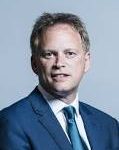
  • Grant Shapps – 2020 Comments on TFL Funding

    Grant Shapps – 2020 Comments on TFL Funding

    The comments made by Grant Shapps, the Secretary of State for Transport, on 1 November 2020.

    This deal is proof of our commitment to supporting London and the transport network on which it depends. Just as we’ve done for the national rail operators, we’ll make up the fare income which TfL is losing due to COVID-19. Londoners making essential trips will continue to be able to use tubes, buses, and other TfL services, thanks to this government funding.

    At the same time, the agreement is fair to taxpayers across the country. The Mayor has pledged that national taxpayers will not pay for benefits for Londoners that they do not get themselves elsewhere in the country.

    Over the coming months, as we look to move beyond the pandemic, I look forward to working with London’s representatives to achieve a long-term settlement, with London given more control over key taxes so it can pay more costs of the transport network itself. This agreement marks the first step towards that, potentially allowing a longer-term, sustainable settlement for TfL when the course of the pandemic becomes clearer.