Category: Health

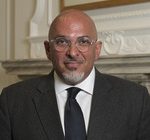
  • Michael Ellis – 2022 Infected Blood – Interim Compensation

    Michael Ellis – 2022 Infected Blood – Interim Compensation

    The statement made by Michael Ellis, the Minister for the Cabinet Office and Paymaster General, in the House of Commons on 5 September 2022.

    The infected blood inquiry has heard first-hand details of the terrible suffering experienced by the victims of infected blood over many years, and the urgent need to address the financial uncertainty faced by many.

    This Government commissioned Sir Robert Francis QC to produce an independent study with options for a workable and fair framework of compensation for those infected and affected by the tragedy. A copy of Sir Robert’s report is in the Library of this House.

    Following Sir Robert’s detailed evidence given to the inquiry in July, the chair of the infected blood inquiry, Sir Brian Langstaff, delivered an interim report to the Government. In accordance with section 26 of the Inquiries Act 2005, a copy of Sir Brian’s interim report has been laid before Parliament. In his report, Sir Brian made the following recommendations:

    “(1) An interim payment should be paid, without delay, to all those infected and all bereaved partners currently registered on UK infected blood support schemes, and those who register between now and the inception of any future scheme;

    (2) The amount should be no less than £100,000, as recommended by Sir Robert Francis QC.”

    On 16 August, I wrote to Sir Brian to confirm that the Government have accepted his recommendation in full and that we will be making an interim payment of £100,000, by the end of October, to all infected beneficiaries and bereaved partners registered with the four national support schemes. The date of effect of the recommendation is 29 July 2022, the date that Sir Brian delivered his report. Any infected person or bereaved partner registered with one of the four schemes operating in England, Scotland, Wales or Northern Ireland on that date will be eligible to receive the payments. Sir Brian’s recommendation —which this Government accept—was careful not to exclude any eligible person who, for whatever reason, may have not registered themselves with their relevant national support scheme. Should they do so in future, before the inception of any future scheme, they will also be eligible for such a payment, subject to successful application to the scheme.

    The intention is that payments will be tax-free and will not affect any financial benefits support an individual is receiving. In advance of the payments, the four support schemes will write to beneficiaries, confirming tax exemptions and benefit disregards, and provide practical details about how the payments will be made. The UK Government will provide the funding to ensure that those eligible, wherever they are living in the United Kingdom, will receive the payment.

    As recognised by Sir Robert Francis and Sir Brian Langstaff, this group of victims is the immediate priority for the Government because we recognise that, tragically, many of these individuals will not see the conclusion of the inquiry.

    However, I am mindful that there will be people deeply affected by this tragedy who will not benefit from these payments. Sir Robert’s detailed compensation framework study makes carefully considered recommendations about the further scope of compensation, including that carers and bereaved relatives—a cohort of affected people not currently supported by financial support schemes—should be compensated. In his interim report, Sir Brian makes specific reference to bereaved parents and children but notes the complexities in determining the approach to their compensation.

    To those individuals and others who are out of scope of these payments, I would like to emphasise that the interim payments the Government have announced are the start of the process and not the end. Sir Robert’s study has been warmly welcomed by the inquiry and, without prejudging the findings of the independent inquiry, I fully expect his wider recommendations to inform the inquiry’s final report when it is published in mid-2023. Until that time, the Government will continue work in consideration of the broader recommendations in the compensation framework study so that we are ready to respond promptly when the inquiry concludes its work.

  • Steve Barclay – 2022 Statement on Urgent and Emergency Care

    Steve Barclay – 2022 Statement on Urgent and Emergency Care

    The statement made by Steve Barclay, the Secretary of State for Health and Social Care, in the House of Commons on 5 September 2022.

    Mr Deputy Speaker, with permission, I’d like to make a statement on our support for urgent and emergency care.

    I know that this is an issue that has been of great concern to honourable members and I wanted to update the House – at the earliest opportunity – on the work that we’ve been doing over the summer.

    Bed occupancy rates have broadly remained at winter-type levels with COVID-19 cases in July still high, at 1 in 25 testing positive – that compares with 1 in 60 currently.

    This is without the decrease in occupancy that we would normally see after winter ends and ambulance wait times have also continued to reflect the pressures of last winter, although I am pleased, Mr Deputy Speaker to see recent improvements. For example the West Midlands today is meeting their category 2 time of less than 18 minutes.

    Mr Deputy Speaker, I’d like to update the House on the nationwide package of measures that we are putting in place to improve the experience for patients and colleagues alike.

    First, Mr Deputy Speaker, we have boosted the resources available to those on the frontline.

    We’ve put in an extra £150 million of funding to help trusts deal with ambulance pressures this year and on top of this, we’ve agreed a £30 million contract with St John Ambulance so that they can provide national surge capacity of at least 5,000 hours per month.

    We’re also increasing the numbers of colleagues on the frontline.

    We’ve boosted national 999 call handler numbers to nearly 2,300, about 350 more than September last year and we have plans to increase this number further to 2,500 by December, supported by a major national recruitment campaign.

    By the end of the year, we’ll have also increased 111 call handler numbers to 4,800.

    As well as this, we have a plan to train and deploy even more paramedics and Health Education England has been mandated to train 3,000 paramedic graduates nationally each year – double the number of graduates that were accepted in 2016.

    Second, Mr Deputy Speaker, we are putting an intense focus on the issue of delayed discharge – which is the cause of so many of the problems that we have seen in urgent and emergency care, and I think that’s recognised across the House.

    This is where patients are medically fit to be discharged but remain in hospital, taking up beds that could otherwise be used for those being admitted.

    Delayed discharge means longer waits in A&E, lengthier ambulance handover times and the risk of patients deteriorating if they remain in hospital beds too long – particularly the frail elderly.

    The most recent figures, from the end of July, show that the number of these patients is just over 13,000 – similar numbers to the winter months.

    We’ve been working closely with trusts where delayed discharge rates are highest, putting in place intensive on-the-ground support.

    More broadly, our National Discharge Taskforce is looking across the whole of health and social care to see where we can put in place best practice and improve patient flow through our hospitals. And as part of that of work, we’ve also selected discharge frontrunners who will be tasked with testing radical solutions to improve hospital discharge – and we’re looking at which of these proposals we can roll out across the wider system and launch at speed.

    This, of course, is not just an issue for the NHS.

    We have an integrated system for health and care and must look at the system in the round, and all the opportunities where we can make a difference.

    For instance, patients can be delayed as they are waiting for social care to become available and here too, we have taken additional steps over the summer.

    We have launched an international recruitment taskforce to boost the care workforce and address issues in capacity.

    And on top of this, we’ll be focusing the Better Care Fund, which allows integrated care boards and local authorities to pool budgets, to reduce delayed discharge.

    And in addition, we are looking at how we can draw on the huge advances in technology that we’ve seen during the pandemic and unlock the value of the data that we hold in health and care and that includes through the Federated Data Platform.

    Finally, Mr Deputy Speaker, we know from experience that the winter will be a time of intense pressure for urgent and emergency care.

    The NHS has set out its plans to add the equivalent of 7,000 additional beds this winter, through a combination of extra physical beds and the virtual wards which played such an important role in our fight against COVID-19.

    Another powerful weapon this winter will be our vaccination programmes.

    Last winter, we saw the impact that booster programmes can have on hospital admissions, if people come forward when they get the call.

    This year’s programmes gives us another chance to protect the most vulnerable and reduce demands on the NHS.

    Our autumn booster programmes for COVID-19 and flu are now getting under way and will be offered to a wider cohort of the population, including those over 50, with the first jabs going in arms this week, as care home residents, staff and the housebound become the first to receive their COVID-19 jabs. And over the summer, we became the first country in the world to approve a dual-strain COVID-19 vaccine, that targets both the original strain of the virus and the Omicron variant.

    And indeed this weekend, the MHRA approved another dual-strain vaccine, from Pfizer, and I’m pleased to confirm that we will be deploying that as well, along with the Moderna dual-strain vaccine as part of our COVID-19 vaccination programme, and in line with the advice of the independent experts at the JCVI.

    Whether it’s for COVID-19 or flu, I’d urge anyone who’s eligible to get protected as soon as you are invited by the NHS, not just to protect yourself and those around you but to ease the pressure on the NHS this winter.

    Today, I have also laid before the House a written ministerial statement on the work that we’ve been doing over the summer and I just wanted to draw the House’s attention to one particular feature within that written ministerial statement that has garnered interest in the House in the past.

    In November 2021 the government announced that it would make £50 million available in funding for research into motor neurone disease over 5 years.

    Following work over the summer between the Department of Health and Social Care and BEIS, through the National Institute for Health Research and UKRI, to support researchers to access funding in a streamlined and coordinated way, we’re pleased to confirm that this funding has now been ringfenced.

    The Department of Health and Social Care and BEIS welcome the opportunity to support the MND scientific community of researchers as they come together through a network and link through a virtual institute.

    I commend this statement to the House.

  • Maria Caulfield – 2022 Comments on Reciprocal Health Arrangements with Guernsey

    Maria Caulfield – 2022 Comments on Reciprocal Health Arrangements with Guernsey

    The comments made by Maria Caulfield, the Minister of State for Health and Social Care, on 31 August 2022.

    Post Brexit we are focussed on delivering deals which mean UK travellers can use their GHIC in more places, including in the Bailiwick of Guernsey where UK visitors will receive free healthcare should they need it during their visit.

    None of us can plan for unexpected medical emergencies, and I want to encourage anyone planning to travel to Guernsey next year to take their GHIC so they get all the benefits of this deal.

    This arrangement will help both residents of the UK and those across the Bailiwick of Guernsey, and is testament to the strength and close cooperation across the British family.

  • Liam Fox – 2002 Speech to Conservative Spring Forum

    Liam Fox – 2002 Speech to Conservative Spring Forum

    The speech made by Liam Fox, the then Shadow Secretary of State for Health, at Conservative Spring Forum on 23 March 2002.

    Hardly a day goes by without further evidence coming to light indicating that, under Labour, the NHS is failing. Dirty hospitals with high infection rates for patients. Cancelled operations leading to rising waiting lists. A care home crisis resulting in bed blocking, with frustration for patients and demoralization for medical staff.

    Yet, despite this bleak picture under a Labour government that promised so much, the public remains ambivalent about the NHS. At the same time as rising intellectual criticism about the quality of the service, there remains a strong emotional attachment to the institution itself. There is therefore both a demand for change but a suspicion that change may threaten the aspects most prized by the public, such as a service free at the point of use for those who need it.

    Complicating the picture is the fact that some of the harshest criticism of the NHS comes from those who were previously its fiercest defenders. Often, the combination of their own unhappy experiences and an increased awareness of better healthcare overseas has persuaded them that the NHS is not the only model capable of producing the quality and security of access they seek.

    It has been a serious handicap in the health debate in the UK that the terms “healthcare” and “the NHS” have for too long been politically synonymous. Only recently have events conspired to promote change, for example a Labour Government being forced to have British patients treated on the continent because of the explicit failures of the NHS. This backdrop provides a rare opportunity to open up a better quality discourse. That debate needs to begin with a clear understanding about the origins of a peculiarly British approach.

    The National Health Service was a product of the 1940s – that is of a collectivist era. Central planning was high fashion, as was the notion that state control was the best way to achieve change. This is unsurprising. The War had seen a massive increase in state regulation, which had been tolerated in the interests of victory. Austerity and rationing were necessary and accepted concepts.

    Now, 60 years later, we find ourselves in an era of affluence which the founding fathers of the NHS would not recognize. In 2002, austerity is no longer fashionable or necessary. Yet much of the British public have been willing to tolerate just such austerity in the field of healthcare. It is almost as if inadequate provision has been accepted as a classic case of Britain “muddling through”, with the Dunkirk spirit its guiding force.

    Increasingly, the patience of patients is wearing thin. There is a growing demand for the standard of healthcare befitting the World’s fourth richest country. We are no longer a nation emerging from the ravages of a War that almost drove us to extinction. It is no longer acceptable for the public to be constrained within an NHS that does most things quite well most of the time. What is needed, and increasingly demanded, is a system that does many more things very well all the time.

    Politically, Labour has been the party most wedded to the politics of the 1940s. But even they have been forced to abandon most of their discredited ideological positions from that era.

    On the economic front, they have retreated before reality. They no longer have Cabinet Ministers whose sole responsibility is Food or Prices. The major nationalizations have been overturned. Trades union reforms and labour market liberalization have brought prosperity and individual emancipation in the economic sphere.

    In the social sphere, however, individuals are still much more at the mercy of the state. Labour fought tooth and nail against Margaret Thatcher giving council house tenants the right to buy their own homes. In education, too many children pay the price for Labour’s obsessive centralisation, while in health, Labour deny people the right to choice and diversity taken for granted in so many other countries.

    Labour supporters cling to the NHS like a comfort blanket, because, in every other facet of policy, they feel that the Labour Party has abandoned its roots. The NHS is the last remaining manifestation of the Attlee government, of the era when Labour believed they had all the answers. But the NHS was never even the Utopia Labour like to portray. Within a few years, they were retreating from their New Jerusalem, with charges for spectacles and prescriptions, thus creating the service which Tony Blair describes as “largely” free at the point of use.

    The NHS, as an institution and not merely as the expression of a set of ideals, has thus acquired a totemic identity in the eyes of Labour politicians which has little to do with healthcare. Its continued existence in its present form owes more to the complex psychological needs of a Labour Party which is no longer a socialist party in a world where socialism no longer has a place.

    The NHS has now become the fig leaf for New Labour’s vapid core. Indeed, it is just about the only thing that allows Labour activists to live with their consciences, their Party having thrown virtually every other Labour nostrum over the side of HMS Blair in search of the rhetoric to please the focus groups. Politically, the NHS is now the ventilator on the Labour Party’s own life-support machine.

    And the joint victims in this tragedy are the patients, denied the care they need, and the medical professionals, unable to provide what they have been trained to do. The NHS, under Labour’s model, pursues equality of access at the expense of excellence, and seems almost to accept mediocrity as a manifestation of social values dating from “the golden collectivist era” of the post-War world.

    So, the first problem which Labour are landed with is that the NHS is over-centralized and over-politicized.

    For Bevan, this maxim was in full accord with the ethos of the day, and entirely deliberate. He thought it vital that he should be able to hear the crash of every bedpan from his office in Whitehall. This was why he rejected the proposal from the original Beveridge Report that the existing system of mixed healthcare provision should be retained, and instead nationalised virtually the entire system overnight.

    Successive Labour Health Secretaries have followed the script for the NHS which Bevan wrote in 1948, all determined to run the Health Service from behind their Whitehall desks.

    And, despite its focus group-friendly lexicon, New Labour’s grip on the healthcare system has been similarly vice-like. Time and again, they have brought clinical and political considerations into direct conflict. Ministers have swept aside concepts of clinical priority in favour of their own insatiable PR agenda. Professional freedom is suffocated, and ethics take a back-seat, as clinicians and managers are pressurised into making the political health of the Government, rather than the health of their patients, their main consideration.

    Examples of what this means for the patient are legion. There can be no clearer illustration than Labour’s hugely discredited waiting list initiative.

    This policy has been roundly condemned in most quarters for encouraging clinical distortion, as a result of which patients with more serious conditions actually wait longer while simple, less urgent cases are dealt with more quickly to bring numbers down. It has been pointed out, quite rightly, that this abandonment of the principle of treatment being undertaken on the basis of need has undermined the entire ethical and moral principles which the NHS was supposed to embody.

    It is entirely consistent with the narcissistic nature of New Labour that they are more concerned with how things appear than how they really are.

    Waiting lists are controlled by restricting the numbers of patients who get to see their Consultant (it is only then that their official waiting time starts). Thus there is a huge rise in the waiting list for the waiting list. Patients are still waiting in pain and fear in increasing numbers. But Ministers can claim to have met their targets.

    Systematic and widespread fiddling of the figures takes place. Consultant to consultant referrals are not counted. Patients who refuse a specific date or refuse to answer letters become “administratively” removed irrespective of their real problems.

    Only recently, a GP friend told me that he had just returned from holiday only to find that his daughter had been taken off a waiting list because, while they were away, the health authority sent a letter saying, “If you don’t write back within seven days, your name will be taken off the list.” Now she has to go back to the end of the queue. What sort of system is that?

    In another hospital, the maxillofacial surgeons were forced to add patients to the waiting list and give a date of 23 December for treatment, knowing that no patient would volunteer to go in for facial surgery so close to Christmas. Those patients were therefore taken off the waiting list.

    In March last year, the British Medical Association described the situation where ‘Artificial targets imposed on an overstretched service cannot be met without resorting to ingenious massaging of the figures. It does not fool, nor does it help, patients’.

    But it is the reaction of the Blair Government to exposure by the National Audit Office of fiddled waiting list figures that is most instructive.

    As you would expect, the Prime Minister tried to understate the issue, telling the House of Commons that:

    “It is important to put this matter in perspective. Over a period of four to five years, 6,000 people were misallocated on the lists.”–[Official Report, 19 December 2001; Vol. 377, c. 281.]

    Only 6,000! They are not mere statistics; they are real people, sick people. This outrage is, in my view, one of the greatest stains on this Government’s record and it is a direct result of the mindset of New Labour.

    One of the hallmarks of Labour’s stewardship of the NHS has been their clear intent to ensure that as many party political poodles as possible are in positions of NHS authority. Against the entire ethos of public service, Labour have ensured that appointments are made not on the basis of what individuals can bring to the administration of health care, but the loyalty they will bring to their party political masters.

    When Dame Rennie Fritchie was confronted with the evidence, she concluded that there were, indeed, an unacceptably high proportion of appointments made to Labour Party supporters. In the wake of this, the so-called Independent Appointments Commission was introduced. What difference has this made? In response to recent Parliamentary Questions, the Government has revealed that the proportion of Labour Party appointees has actually increased! In fact, this is little wonder. Although the Appointments Commission itself is supposedly independent, it is appointed by the Secretary of State.

    When Labour came to power in 1997, they promised to put more money into the health service by cutting administration. In practice, quite the reverse has happened. We now have the situation where, for the first time in the NHS, the number of administrators is actually greater than the number of beds. We have the absurd situation of having 1.15 administrators for every NHS. Under Labour the number of beds has fallen by 16,000 and the number of administrators has increased by 27,000.

    This problem is made worse by the fact that the increase in administration has largely been accounted for by people whose role is to make the system still more centralised. In other words, we have reached a position in which the NHS as a whole is over-bureaucratised, but individual Trusts might well be under-managed. The main reason for this is the constant interference, in the form of Ministerial circulars, and the resulting obsession with targets in the system.

    Under New Labour, if it moves it must have a target. The predictable result of this has been the emergence of target-orientated behaviour amongst hospital managers, whose job primarily is to meet centrally-set targets, irrespective of what this means for the running of their hospitals or the impact on the patients.

    We have seen the ridiculous situation where patients have been kept in ambulances outside Accident and Emergency Departments because their waiting time does not officially begin until they are clocked in to the A and E Department itself. This enables hospitals to meet their Accident and Emergency waiting time targets. But it makes no difference to the patients themselves. Likewise, when hospital trolleys have their wheels taken off, they technically become a bed – so, by the most bizarre manipulation of their own equipment, hospitals are again able to reach the Government’s targets with no benefit whatsoever to the patients.

    Perhaps most distressing of all is the concept of redesignation of parts of hospitals. Outsiders simply cannot comprehend that corridors could be redesignated as wards, with the result that, technically, patients are not waiting in corridors. Such cynical and essentially dishonest behaviour brings shame on those who have demeaned their own professional status by doing such things and denies patients the level of care and dignity they have a right to expect.

    There can be few organisations that will rival the NHS for sheer ability to waste resources. Almost unbelievably, the Head of Controls Assurance at the NHS, Stewart Emslie, identified £9 billion of waste in the NHS in 2001 – almost 20% of the entire budget. Amongst the items of waste that he mentioned were £2 billion as a result of bed blocking, between £1-3 billion of fraud and theft, over £1 billion wasted by hospital acquired infections, £300-600 million on medication errors, £300-600 million on wasteful prescribing, £400 million on clinical negligence and £100 million on avoidable management costs.

    It is inconceivable that any Chief Executive Officer of a major company would be able to hang on to his job, given such gross and unacceptable diversion of vital resources. Yet this is a system into which, with characteristic failure to understand the root problems, Labour is simply proposing to pour further huge sums of taxpayers’ money.

    The Prime Minister told us on the BBC’s recent NHS Day that more taxpayer’s money will have to be pumped into the Health Service. He is ignoring all the evidence if he believes that this alone will be the answer to the system’s problems. Labour has already spent considerably more in real terms, but to no effect.

    A Surrey consultant, Peter Williamson, recently told Hospital Doctor:

    ‘The Government claims it is putting great sums of money into the system – but this money is seldom seen by the people inside the service’.

    Experts at the King’s Fund have highlighted how the Government’s extra funding has had little impact on activity levels. They said:

    ‘The implication is that any reduction in the waiting list in the last three years has been achieved not through treating extra patients, but through fewer people being placed on to the waiting list each year. The figures show that there has been a fall in the rate of increase in NHS activity, despite a large increase in funding for the NHS.’

    Things are so bad that, despite a 30% increase in real terms in the level of health spending over the last three years, there was actually a fall last year in the level of NHS activity.

    We do not need to look far to see that spending alone is not the answer. Wales and Northern Ireland are already above the Institute of Fiscal Studies target of 8.9% GDP and Scotland is above the Government target of 8%.

    Yet in all parts of the UK the health service is failing, even in Northern Ireland, where spending is commensurate with France. Although Wales and Northern Ireland have higher spending than England, they also have longer waiting lists.

    From a significantly higher baseline, expenditure in Scotland is rising, but things are still getting worse. For example, over the period from 1999 to 2001, there has been a marked increase in the number of people waiting for treatment, patients are waiting longer for treatment and fewer patients are being seen. And over the last year, the number and rate of nurse vacancies has also risen.

    Despite higher spending in Scotland, a third more people die of heart disease and 40% more people die of lung cancer. It is clear from across the UK that the problems of the NHS monolith cannot be solved by simply throwing in more taxpayer’s money.

    “No more for the NHS until it gets better” the Chancellor told the Sun. Did we miss something? What event has occurred to justify the billions extra about to be spent? For, rest assured, billions more will be spent while mere tinkering goes on.

    Despite endless upheaval, very little will change in the NHS. The New Labour oxymoron of “earned autonomy” means “you can do what you want but only if it’s what we tell you”. The latest legislation gives many new powers to Whitehall to control activity in the NHS. For example, the Secretary of State will set all the budgets of the new Primary Care Trusts, and can withhold funds if they fail to meet his performance criteria.

    Talk of commissioning powers and the emergence of strategic health authorities makes many wonder if Labour are simply recreating the internal market they abolished in 1997, having wasted five years and countless amounts of money in the meantime.

    Labour’s relationship with the private sector is equally dysfunctional. They have alternated between support for a monopoly provider, a full partnership and a short-term expedient. The position, of course, depends on the audience, not the analysis. What is clear, however, is that the policy will have nothing to do with choice.

    Of all the failings in Labour’s approach to health, perhaps the greatest is their failure to understand the value of individual choice.

    From the moment a patient first experiences symptoms, their route through the healthcare system will be plotted by someone else, taking no account of any preferences he or she might have. And at all stages along that route, the patient will be within a system which is State-owned and State-run.

    The fundamental and inevitable failings of such a centralised and politicised State monopoly system manifest themselves from the very outset.

    The patient’s first point of contact is with their GP. They have little, if any, choice over who this is, they will belong to a “list” and the Government will regulate and restrict the number of GPs in any one area.

    If their condition warrants it, the GP refers the patient to a consultant. Needless to say, they don’t have any choice over which hospital the consultant works at, let alone that consultant’s identity. Their time of treatment will be dictated to them, and with increasing frequency may be cancelled. If they fail to observe all the rules set they will go to the back of the queue.

    What century is this? Why is it that the consumerist culture is entirely absent from our State healthcare system? The assumption seems to be that patients exist to service the system, rather than vice versa.

    Without giving greater control to individual patients over their own medical and surgical treatment, there will never be a liberation from the unacceptable position of the State holding the whip hand.

    As in so many other areas, the problems faced by our public services can be traced back directly to the very ethos of New Labour. Like the Clinton Administration, its project is about coming to government and staying in government, not about what to do when it is in Government. Policy consequently is replaced by endless reports and reviews. It is little wonder that a senior United States official was quoted recently as saying that Tony Blair seems more concerned about finessing a problem than dealing with it. How very perceptive.

    Any given problem is exacerbated by the fact that the Government has no core beliefs at all. One minute they will call for a monopoly NHS, another a public/private partnership or even full-blown private sector involvement. What they say depends entirely on the audience.

    This is a Government of intellectual incoherence, inconsistency and incompetence, in which the Prime Minister becomes ever more detached. And in doing so, he appears to grow increasingly contemptuous of his party – it seems to exist only to glorify the cult of his personality, spawning a Ministerial culture of blame, spin and re-announcement. When things go wrong, they are happy to blame the professionals, their predecessors in government, the Third Way – anyone but themselves. If that fails, they set new targets, shift deadlines and commission new reports. They stand for nothing, but will say anything.

    The public have instinctively trusted Labour on health, but their hopes are being, and will continue to be, shattered. The NHS is not delivering what it should. Despite a huge increase in resources, the NHS actually saw the number of patients treated last year fall. Waiting lists are rising. The crisis in care homes threatens to turn care in the community to neglect in the community. The number of cancelled operations is soaring. Hospital acquired infections are at record levels. Morale continues to plummet in the caring professions.

    Labour’s response is to pour in more taxpayer’s money and tinker at the edges of the NHS. Sadly, they will not succeed. The NHS is a collectivist model in a consumerist world. It is over-centralised. It is over-politicised. It is over-bureaucratised, yet under-managed. It is obsessed with targets, but failing to meet clinical need. It is wasteful; and spending and outcomes have increasingly become disconnected. Only the dedication of its staff keeps it afloat. Labour will fail because they will not accept these things.

    Without a historic depoliticisation and decentralisation, coupled with increased choice for patients, Britain will be consigned to second-rate healthcare.

    A solution will require a Conservative prescription. Tony Blair was right on one thing ” Britain deserves better”. Five years on, it is clear that this cannot come from Labour.

    I once likened the approach of the NHS to asking Dickensian peasants to queue up for their gruel, and to say thank you because there was nothing else on offer. Like Oliver Twist patients want more. It is what they deserve. But not just more of the same.

  • Steve Barclay – 2022 Statement on Opening of 50 New Surgical Hubs

    Steve Barclay – 2022 Statement on Opening of 50 New Surgical Hubs

    The statement made by Steve Barclay, the Secretary of State for Health and Social Care, on 26 August 2022.

    Yesterday I visited Moorfields Eye Hospital in London, where staff have significantly ramped up the number of cataract operations they can do in a single week – thanks to two of the 91 surgical hubs that are already enabling our NHS to carry out more operations quickly and efficiently under one roof.

    I want to reassure Times readers who are waiting for vital operations, or have a friend or loved one who is, that we are taking action. Today, I announced that hundreds of thousands of people across the country will benefit from more than 50 new surgical hubs, backed by £1.5 billion of government funding, to help us bust the Covid backlog.

    So far, locations for 16 of these new hubs have been confirmed and existing hubs are being expanded with new facilities. Bids for the remaining hubs will be considered over the coming weeks and months.

    From the Midlands to the South West, these new hubs will be located on existing hospital sites, speeding up the waiting times for common operations such as cataract surgeries and hip replacements that make up a large part of the waiting list.

    For example, United Lincolnshire Hospitals NHS Foundation Trust is using its surgical hubs to reduce the length of time that patients undergoing hip and knee replacements stay in hospital by about two days — meaning more people can recover in the comfort of their own home the day after surgery.

    Crucially, these new surgical hubs will deliver almost two million extra routine operations over the next three years – expanding on the progress we are already making.

    Thanks to the hard work of NHS staff, waits of over two years for routine treatment have already been virtually eliminated, the first target set out in our elective recovery plan. There has also been a drop of almost one third in people waiting 18 months or more for care since January.

    These new hubs will help us maintain this momentum and ensure more people can access life-changing operations more quickly.

  • Liam Fox – 2002 Speech to the 2nd Conservative Mental Health Summit

    Liam Fox – 2002 Speech to the 2nd Conservative Mental Health Summit

    The speech made by Liam Fox, the then Shadow Secretary of State for Health, on 25 June 2002.

    In the children’s story “The Emperor’s new clothes” it required the simple yet definite and courageous view of one individual to challenge the conventional wisdom and open the eyes of the population to their mass denial of reality. In dealing with the issue of mental illness we need a similar reality check asking whether recently adopted trends and measures are effective and relevant or merely rhetoric and fashion.

    The way in which a society treats those least able to play a full role is a measure of how civilised that society is. Sadly, I believe that we accept a level of care for those with mental illness that we simply would not accept for those with other types of illness. If you walk from Westminster up the Strand or into the heart of London and see people, many of whom will suffer from a mental illness, sleeping in the doorways of some of our wealthiest institutions then there is a policy failure that a humane society should not tolerate.

    THE UNSPOKEN EPIDEMIC

    It will come as a surprise to most people that one in four of us will suffer from sort of mental health problem at some point in our lives. One in four. I doubt there is a single person out there who has not experienced the impact of mental ill-health on someone in their life – be it relative, friend or colleague.

    Mental illness is society’s unspoken epidemic, one of its last taboos and so rarely discussed. People regard mental illness as a weakness. They stigmatise those individuals who suffer from it. Why else was Mrs. Rochester locked in her attic? Why else did it take Lorraine Wicks so long to accept her son Joe had schizophrenia in Eastenders, and for him to seek help? If we are to diffuse the stigma surrounding mental health, we must dispel the ignorance of people.

    The spectrum of mental ill-health is incredibly broad. It encompasses the Mum with post-natal depression, the Dad struck by depression after a period of prolonged unemployment and the son or daughter with a behavioural disorder who is underperforming academically and is disruptive in the classroom.

    It is also about the college friend who commits suicide (seemingly for no reason), the soldier returning from an overseas conflict but unable to adjust to the realities of daily life, and the elderly parent slowly being ravaged by the dehumanising erosion of the human spirit known as Alzheimers.

    While the safety of the public must always be at the top of our priorities we need to move the debate away from an obsession with the mercifully few incidents when someone with a mental illness harms someone else and remind ourselves that it is in the interests of that very public safety that we ensure adequate and appropriate treatment for all those who need it.

    THE CURRENT SITUATION

    Sadly, too many politicians seem to pay more attention to the potential dangers psychiatric patients pose, and issues surrounding their compulsory treatment than to the far more important issue of appropriate treatment of all patients. We need to shift the debate away from those rare incidents of violence which end up stigmatising anyone with a mental health problem.

    The situation is currently bleak with widespread staff shortages, acute and day-bed shortages, wide gaps in community provision, and a lack of effective step-down care for those returning to the community.

    It is a situation made worse by the knowledge that while funds are earmarked in the health budget they all too often fail to reach those in need. Cutting the mental health allocation is an easy way of balancing the budget. The mentally ill are least likely to complain, make a fuss or write to the newspaper columns.

    The evidence that the Government does not consider mental health a priority is stark. Buckinghamshire Mental Health NHS Trust has seen £1 million originally earmarked for mental health diverted into other areas. Half of all GP practices in Cumbria offer counselling to patients in need, and there are plans to axe the £78,000 service. The Avon and Wiltshire Mental Health Partnership Trust faces service reductions amounting to £500,000, and the Acupuncture Clinic at the Department of Psychiatry at North Manchester General Hospital is threatened with closure. It costs £60,000 a year to run. It’s quite clear that far from being a priority, mental healthcare is an afterthought for this Government.

    Our inner cities bear more than their fair share of the burden. Those who are homeless, or who have alcohol or drug addictions, frequently also have mental health problems. They end up in our inner cities – where they become invisible amidst the hustle and bustle of city life to those who might otherwise help them.

    But mental ill-health is not just an issue that afflicts inner cities. The crisis in our countryside has also led to an increase in mental health problems – such as the well documented tragedy of farming suicides which has touched my own constituency in North Somerset.

    A HISTORICAL PERSPECTIVE

    Throughout history, mankind has sought to put distance between itself and those deemed mentally ill. In the era of witchcraft, the treatment of the mentally ill consisted of the casting out of devils and theatrical exorcisms. Once civilisation had moved beyond that phase of superstitious fear, the commonly held view, for many centuries, was that insanity was untreatable. Any approach to dealing with the mentally ill had to focus on containment and custody. The mentally ill were hidden from human view in asylums and institutions, with varying standards of care. Locked away out of sight – and literally out of mind – those sent to asylums sometimes lay chained to their beds all day long. The corridors echoed to the screams of the undiagnosed and untreated deranged.

    For many the reason they were there in the first place was often forgotten. Having an illegitimate child was sufficient to have you labelled a ‘congenital imbecile’ or ‘morally defective’. You were condemned to an asylum for the rest of your natural life. Even in the 1960s, there were examples at an asylum in the Scottish Highlands of asylum ‘inmates’ having all their teeth removed to simplify oral hygiene, and false teeth being washed communally in a big bucket.

    For the countless thousands in these appalling institutions, those who were not ill to start with frequently ended up depressed, if not deranged, by the conditions they were forced to live in.

    THE CONSERVATIVE RECORD

    The Conservative Party has always been at the forefront of mental health reforms. It was Lord Shaftesbury who began to turn mental health from an instance of private misfortune to a matter of public concern. He highlighted the atrocious conditions in many of the London asylums, and changes began, albeit very slowly, to occur.

    The reliance on asylums and other custodial institutions was such that by 1954 the population of psychiatric hospital beds peaked at 152,000 – more than twice the current prison population.

    But it was Enoch Powell who took the first decisive step away from this model of care. In his own words, the 1959 Mental Health Act lit a ‘funeral pyre’ beneath the decaying network of asylums.

    He was at his most eloquent on this subject in 1961, in what has become known as his Water Tower speech. He talked of asylums which stood ‘isolated, majestic, imperious, brooded over by the gigantic water-tower and chimney combined, rising unmistakable and daunting out of the countryside’ His goal, broadly speaking, was to move treatment of the mentally ill away from remote asylums and into local hospitals ‘in the community’.

    With the development of new drugs, the possibility of treating patients actually in the community slowly became a reality. Starting with the findings of a committee into mental health chaired by Cecil Parkinson at the request Norman Fowler when the Conservatives were in opposition in the 1970s, policy development culminated in the 1983 Mental Health Act and Kenneth Clarke’s 1990 NHS and Community Care Act.

    CARE IN THE COMMUNITY

    Most people accept that it was right in principle to bring an end to the old asylums and have patients treated close to or within the community. Certainly the concept of care in the community had support right across the political spectrum.

    But, as Virginia Bottomley wrote in a letter to The Times in 1998: ‘In an institution, an individual can be monitored 24 hours a day. In the community, reporting and fail-safe mechanisms are necessary if tragedies are to be avoided. ….. The pendulum has swung too far.”

    That a warning in those terms should have been delivered by such a staunch supporter of the concept of care in the community ought to have set alarm bells ringing in government. But nothing was done.

    Now the suicide rate is rising again. The increasing breakdown of the family unit, homelessness, abuse, and the absence of any sense of community in inner city areas are all contributing to increasing prevalence of mental health problems amongst all ages, and particularly the young.

    This is not to ignore the fact that care in the community has provided many thousands with an opportunity to experience a quality of life far better than what they would have experienced inside restrictive institutions.

    Nor can criticism be laid at the door of medical, nursing and voluntary staff who have made a Herculean effort in the face of the greatest difficulties.

    I would reject completely the criticism of some that care in the community was nothing more than an unfortunate or catastrophic meeting of a desire for financial savings and a naïve passion for the rights of the individual.

    But the pendulum has swung too far- and too fast. Many now feel that care in the community was implemented too quickly, with inappropriate patient selection and in too many places, there was too little investment in training, finance and related areas.

    There has been, at times, too little care, scant support, and a form of community which has exposed the vulnerable- both patients and the public- to danger.

    Individuals were sometimes placed in a complex urban environment that they just couldn’t cope with. They lacked understanding of their condition, and their institutionalised background made them unable to deal with the complexities of modern living. And when they needed help, their cries went unanswered.

    We need a new balance to be struck which ensures the most appropriate treatment and environment for patients. A balance where those that need treatment in a hospital setting receive it and only those able to cope in the community are placed there.

    And we must accept as part of this balance that care in the community has been discredited in the public mind by a series of crimes committed by the mentally-ill who had fallen between the gaps or come off their medication.

    The litany of cases represent some of the most horrifying and frightening crimes of the past few decades – Christopher Clunis stabbing Jonathan Zito on the platform of Finsbury Park, Horritt Campbell attacking nursery nurse Lisa Potts, Michael Stone murdering Lin and Megan Russell on a Kentish country lane, the attack on the late George Harrison in his own home, the Liberal Democrat councillor Andrew Pennington attacked by a man with a sword at a Cheltenham advice surgery.

    A case from my own constituency: Sarah Beynon from North Weston, just outside Portishead, was sent to Broadmoor in August 1995 after killing her father while on leave from a clinic. An enquiry found that staff at the Southmead Hospital did not ensure she took her medication. Risks were taken unnecessarily, and she was not safely contained physically. There was a lack of communication between social workers at the Fromeside Clinic regional secure unit. At Fromeside, she was the only female in a ward of fifteen patients. The monitoring of her condition was often left to nursing staff without specific training.

    But these tragic cases are not just in the past. A 37 year old paranoid schizophrenic woman was ordered last April to be indefinitely detained after an indiscriminate outbreak of violence in which seven people were attacked in Leeds city centre. Formerly an in-patient treatment, she had been asking her doctors to change her medication at the time of the attack. No-one was around to pick up the signs that something was going wrong.

    As Michael Howlett of the Zito Trust told the Yorkshire Evening Post (11 April 2002): ‘People don’t just attack people in the street out of the blue. There’s always a build-up over weeks or months. These incidents are usually as a result of services breaking down and the danger signs not being spotted’.

    However, it is a misapprehension that because it is preferable not to institutionalise people that the community is invariably the place to locate all mental health patients.

    Let me just quote from the Sainsbury Centre’s briefing on in-patient acute care published the other week: ‘We have yet to develop realistic plans to deliver acute inpatient care which is therapeutic and supports recovery. Unless we develop and implement such plans, nationally and locally, we will see an increasing cycle of decline in acute mental health care with increasing user dissatisfaction, incidents and inquiries and the loss of high quality staff – all despite the best efforts of many committed staff. The situation is little short of a crisis and has to be addressed now. In some instances the quality of care is so poor as to amount to a basic denial of human rights.’

    A DANGER TO WHOM?

    Events involving just a few stigmatise the many – and lead others to overlook the danger some mentally ill people pose to themselves.

    The case of Ben Silcock is a good example. Mentally disturbed, it was he who was severely mauled after climbing into the lion enclosure at London zoo.

    Incidences of suicide, particularly in prisons, far outnumber the cases where the mentally ill patient harms someone else. Sadly, around 1,000 schizophrenics commit suicide each year. This contrasts with the 40 murders each year committed by people who have been in contact with mental health services, and who are not necessarily schizophrenics.

    It will always be the duty of government to protect the public from harm, if necessary by detention or compulsory treatment. But politicians must take care to adopt a balanced approach which does not stigmatise and thereby worsen the plight of those who pose no risk to anyone, except possibly themselves.

    WHAT CAN WE LEARN FROM ABROAD?

    Gordon Brown says we have nothing to learn from abroad when it comes to health. That is equally ignorant and arrogant, especially in the area of mental health.

    I was enormously impressed in Denmark during a visit to a psychiatric hospital at the profoundly calm atmosphere and the sense of patients being treated with dignity and respect.

    And some of you may have heard of the Hotel Magnus Stenbock in Helsingborg, Sweden. It is a good example of what might be termed a ‘halfway house’ for those moving between an institutionalised setting and the community. It has 21 single rooms. It offers a balance between private and social space. The hotel is not just about its structure and about the offering of crisis accommodation, but it is also about developing a sense of community, a sense of acceptance and offering a place of safety. It is run by the RSMH, an organisation of mental healthcare users, which runs a million-pound organisation that sustains and nurtures self-help models of care throughout Sweden.

    Perhaps the most striking comment I saw about the hotel was that of a shopkeeper who runs a store nearby the hotel. One might have thought the local population would have objected to the hotel being near them, but on the contrary, he said ‘The proximity of the hotel has not had any adverse effects on business, sometimes the general public are a little wary of users, but they see the staff in the shop are not afraid and are treating the hotel residents the same as all the other customers. It makes them more comfortable. We believe everyone has the right to be treated as a human being and at some point in everyone’s life we all encounter problems, some more severe than others’.

    This is symptomatic of the approach of Sweden and other countries. They regard mental illness as no different from any other illness. They are prepared to innovate. Variety is what matters. We need to offer services which reflect the diverse needs of those with mental health problems, rather than offering a limited range of services which the individual has to fit their mental health problem round. And the RSMH shows how the state does not need to be the only provider.

    MENTAL ILLNESS IN THE YOUNG

    It is amongst the young and old that there is the greatest propensity for others to dismiss the symptoms of mental health. The rate of mental health problems amongst children and the young is alarmingly high – twelve per cent suffer from anxiety disorders and ten per cent have disruptive disorders.

    The signs of mental ill-health are too often dismissed as growing pains yet mental health problems in the young can quickly lead to juvenile crime, alcohol or drug misuse, self-harm and so on.

    These problems affect children in care in particular. For example an Audit Commission report stated that two thirds of young people looked after by Oxfordshire County Council had a diagnosable psychiatric disorder, compared with only 15% living at home.

    It is also surely a cause for concern that a third of young men between sixteen and eighteen sentenced by a court are diagnosed with a primary mental disorder.

    Mental health problems not only make children unhappy but also retard their emotional development and social skills, and blight their education and life chances. The social problems that can consume young people such as school truancy, teenage pregnancies, bullying and school drop-out rates are as much part of the mental health agenda as the developmental and behavioural disorders more frequently cited.

    We have a duty to these children to ensure they receive the appropriate assistance rather than being condemned to a youth spent at the margins of an unwelcoming education system and a fearful civil society.

    The causes of mental health problems amongst the young are diffuse. Genetic influences can make children more likely to suffer from serious mental health problems, but very often it is societal influences that can influence the development of anxiety and conduct disorders. The increasing breakdown of the family unit, homelessness, abuse, and the absence of any sense of community in inner city areas can all contribute.

    Such problems can manifest themselves in behaviour which is often classified as wilful ill-discipline. Preventative work which involves educating schools and helping them to understand the wider implications of bad behaviour is a sensible step, as is involving the families. One difficulty, though, is that any suggestion of mental health problems is immediately seen as attaching a stigma to the child, and this impacts on the extent to which families are prepared to co-operate. They fear their child will be bullied (perhaps exacerbating the problem) and that the school’s attitude to a child who is potentially disruptive may also change. They wrongly feel that they protect their child by avoiding the issue.

    THE ELDERLY- TOO OFTEN FORGOTTEN

    Mental ill-health in the young is the wellspring of what I have described earlier as the ‘unspoken epidemic’. That epidemic is just as widespread amongst the elderly, and just as easily dismissed and ignored as with young people.

    A quarter of those over 85 develop dementia – perhaps the form of mental illness most associated with the elderly. However, between ten and sixteen per cent of those over 65 develop clinical depression. This sort of mental illness is too often ignored, as younger relatives assume the individual is just ‘slowing down’ and ‘getting on’.

    Older people deserve access to mental health services as much as anyone else. It is not enough just to assume that because elderly people have access to care homes, home helps, meals-on-wheels and the like anyway, an extra dimension of care on account of a mental illness they may have, is unacceptable. People are individuals, and they must be treated as such.

    PRISON-THE HIDDEN SCANDAL

    Enoch Powell may have lit a ‘funeral pyre’ beneath mental asylums when his 1959 Mental Health Act began the process of shutting them. But today, some seventy per cent of the prison population has a mental health or drug problem. Where once we hid our mentally ill in asylums, we now, unwittingly, locate many in our prisons.

    The incidence of mental disorders amongst the prison population far exceeds that in the population as a whole.

    It is a troubling thought that anyone who is mentally ill and has a brush with the law could find themselves subject to inadequate treatment in Dickensian surrounding at the beginning of the 21st century.

    Facilities often amount to little more than sick-bays with limited primary care cover. The assessment of a prisoner on his arrival at prison typically takes five to seven minutes. A retired GP or a locum who may have no specialist knowledge of mental health often conducts it. The level of training of staff does not always match the complexity of the conditions prisoners present with.

    Prisoners are thus less likely to have their mental health needs recognised, less likely to receive psychiatric help or treatment, and are at an increased risk of suicide. The number of suicides in 1999 – 91 – is almost double the figure of 51 from 1990.

    As a report from John Reed, the medical inspector of the inspectorate of prisons, states: ‘A period in prison should present an opportunity to detect, diagnose and treat mental illness in a population hard to engage with NHS services. This could bring benefits not only to patients but to the wider community by ensuring continuity of care and reducing the risk of reoffending on release’ (BMJ, 15 April 2000). That this opportunity is not grasped is an indictment of the current system.

    And John Reed has also said: ‘Many [prisoners] are quietly mad behind their cell door and are not getting any treatment. Care for mentally disordered offenders in prison is a disgrace’ (Nursing Times, 25 May 2000).

    The Prison Service must, therefore, as a matter of urgency, consider how to address the mental health needs of the people in their charge. Research is required, in particular, to determine how the prison environment impacts upon mental health. This may include issues such as overcrowding, confinement in cells, and the range of activities available to prisoners.

    A second problem is that prisoners with mental health problems remain within the prison service, and are not diverted to the NHS, as the Reed Report amongst others, recommended. It is inappropriate for prisoners with severe mental illness to be in prison. Sir David Ramsbotham has said ‘In my view mentally ill prisoners requiring 24-hour nursing care should be in the NHS, not prison’ (Nursing Times, 25 May 2000).

    But for diversion to work, an alternative must exist. More beds would be needed in special and medium-security hospitals. In addition, upon completion of sentence, there are insufficient beds in ordinary psychiatric units to discharge prisoners into. This lack of beds clogs the whole system up.

    Of course increasing capacity in the NHS whether for acute hospital beds or secure hospital places will require resources that will have to be contained within the envelope of health spending. Additional research is required to make an accurate assessment of exactly what is required and we shall now undertake this. But it is a question of values and priorities.

    Whether patients are within the criminal justice system or not, it is in everybody’s interest to make sure that their mental illness is properly treated, and in the right setting, before they are released from custody with a treatable condition.

    The Conservatives have already stated that we will spend what is required to provide better healthcare, but that imposes a duty to make the best use of the resources we already have before deciding what more might be needed.

    An NHS which, by its own estimate, wastes some £9 billion a year needs to ask some awkward questions about its use of resources.

    In addition, Derek Wanless dealt with the costs of mental illness and the potential savings of a better system in his recent report.

    He pointed out that MIND estimate the total costs of mental illness at £37 billion a year. Of this, £11.8 billion is lost employment. In 1995 over 91 million working days were lost as a result of mental illness.

    Home Office estimates put the overall cost of crime at £58 billion per year with a significant proportion being carried out by people with a mental illness.

    When asked about the cost benefits of better mental health care, Wanless said “It is difficult to estimate the exact value of potential savings, but it does not seem unreasonable to assume that there might be a 5 per cent reduction in the costs of mental illness and a 2 per cent reduction in the costs of crime…..giving a net saving across government as a whole of some £3.1 billion a year.” (Securing our Future Health: Taking a long term view, Interim report, Derek Wanless, April 2002, pp.115 and 116)

    A NEW AGENDA

    Health policies cannot hope to eradicate the problems of an entire society. That Utopian vision was crushed very soon after 1948. What health policies can do is seek to support those who do suffer in what can be, at times, an atomised and alienating society.

    That is why the Conservative Party is making mental health a central part of its health policy agenda. It is an issue that must become a matter of public concern, and not just a private misfortune. A self-enlightened society is one that realises, as they have done in Sweden and Denmark, that it is to the benefit of everyone that mental illness is treated – and if possible prevented – adequately.

    And perhaps we need to bring back another concept – ‘sanctuary’. We started off with Bedlam, then we had madhouses, Lord Shaftesbury gave us asylums, and then we looked to the community. Now we have to speak of what all these differing environments ought to provide – a sense of sanctuary.

    I recently visited a counselling service in Aylesbury where the described their office as “a place to feel safe.”

    And last week I had the very great privilege of visiting the Hillside Clubhouse in Holloway. The Clubhouse network was something I had not heard of before. I was struck from the moment I walked in the door that the people who used the clubhouse – and who had mental health problems – looked on the Clubhouse as somewhere they could go to feel safe. It offered them companionship, constructive activity and the chance to go and get a paid job in the community. It supported them without compelling them. Everyone found their own level, and progressed at their own pace.

    It was not somewhere they were forced to go, but equally it was somewhere that would keep in touch if they stopped coming along. In short, it offered genuine care in a real community. It was a sanctuary in an ever more complex and difficult society.

    With New Labour’s obsession with celebrity, glamour and the good life, many feel that the vulnerable in our society now have no champions left. Concern about the social welfare of those in society who have no-one to speak up for them is an essential part of any programme for a truly national party such as ours. There can be few more vulnerable groups than those with mental illness.

    We are not taking this stance because it is fashionable.

    We are not doing it because we have identified some interest group or section of the population who we can make politically beholden to us as a consequence.

    We are not doing it because we see some short-term gain to be had by pretending to interest ourselves in ‘soft’ social issues for a few months.

    We are doing it because we believe it is the right thing to do.

    That is what politics ought to be about.

  • Iain Duncan Smith – 2002 Speech on the Mentally Ill

    Iain Duncan Smith – 2002 Speech on the Mentally Ill

    The speech made by Iain Duncan Smith, the then Leader of the Opposition, at the Savoy in London on 25 June 2002.

    Much has happened since I spoke to you nearly a year ago at last year’s annual lunch.

    The Two Cities have been at the forefront of the national outpouring of affection and respect for the Queen during her Golden Jubilee celebrations.

    In May’s Elections Westminster City Council once again showed how successful Conservatives can be when we deliver high quality, good value local services. Simon Milton and his team have certainly played their part in our local government revival in London.

    And in the House of Commons your new MP, Mark Field, has marked himself out as a leading member of that new generation of Conservative MPs that I will make it my business to lead into Government.

    Twelve months that would have sounded fanciful. We had just suffered our second devastating defeat in four years.

    Yet today, our Party is more disciplined and more united than it has been for a decade.

    And Labour, seemingly impregnable back then, have been caught in their own web of intrigue and spin which has seen them lose the trust of the British people.

    This is all a very long away from the new dawn in British politics that Tony Blair promised on taking office in 1997 or from the promises he made at the last Election.

    How has a Prime Minister who said he would follow the People’s Priorities come to view those he claims to represent with such contempt?

    Integrity and politics

    The relationship between government and the governed is the cornerstone of democratic politics. It is usually vigorous and sometimes harsh, but when it reaches the point where the Government considers the people it leads as its enemy the very idea of democracy becomes debased.

    Whether it is smearing Rose Addis as racist or investigating Pam Warren and the survivors of the Paddington Rail crash for their political affiliations, one thing is clear. This Government believes that anyone who is prepared to speak out and contradict its message that things are in fact getting better, must have a political motive for doing so.

    Just last month, a newly-appointed Labour minister – the former Head of the Prime Minister’s Policy Unit summed up Labour’s governing philosophy. He said ‘Third Way triangulation is much better suited to insurgency than incumbency’.

    This is a polite way of saying that defining yourself by the people and things you are against instead of what you are for may win elections but isn’t much use when it comes to running the country.

    It is because Labour have failed to learn that lesson after more than five years in power, that they go after the likes of Rose Addis and Pam Warren with the venom that they do.

    Tony Blair said he would be ‘tough on crime, tough on the causes of crime’, but overall crime has started to rise again and violent crime and street crime are rocketing.

    The best David Blunkett can claim of nearly sixty headline-grabbing initiatives on law and order over the past year is that they are not Jack Straw’s.

    Tony Blair said ‘education, education, education’ would be their priority, but one in ten students in some inner city areas leave school without a single GCSE and indiscipline has become the standard in too many classrooms.

    And the best Estelle Morris can say is that the days of the one-size-fits-all comprehensive are over after David Blunkett abolished Grant Maintained schools.

    Tony Blair said Britain had ‘24 hours to save the NHS’, but five years later a quarter of a million people are having to pay for operations out of their own pockets because they cannot afford to wait any longer.

    And the best Alan Milburn can say about health is that there is now room for partnership with the private sector after boasting that the NHS would remain a state monopoly little more than a year ago.

    And where is the Chancellor in all this? He said National Insurance was ‘a tax on ordinary families’ and dismissed claims during the Election that he would increase it as ‘smears’. Ten months later he increased National Insurance by £8 billion while the state of our public services have declined still further.

    And the best Gordon Brown can do is to adopt a sphinx-like silence. But New Labour is his project too.

    Political discontent and cynicism have been accelerated by five years of a Prime Minister and a Chancellor who neither mean what they say nor say what they mean.

    Five years of seeking to be all things to all people.

    Five years when Labour’s only tangible achievement is to be neither the Party they once were nor the Government they replaced.

    They have poisoned the well for all politicians.

    So we cannot sit back and wait for the public disillusionment with Labour to grow. We have to show that the Conservative Party is changing, that we can deliver action not words.

    We do not have to stop being Conservative to win the next Election, but we do have to start showing how our principles will deliver solutions to the problems people face.

    Some people say it is not the job of the Conservative Party to talk about the vulnerable. I say it is part of our very purpose. It is what brought me into politics. That is why I will never be apologetic about putting the vulnerable at the centre of our strategy.

    Today Liam Fox is talking about giving mental illness a much higher priority within the Health Service. One in four people in this country suffer from mental illness of one form or another. It is our nation’s hidden epidemic and yet it is one our society’s last remaining taboos.

    There is nothing fashionable about championing the mentally ill, but they are the victims of an old consensus that has let them down.

    Too many people with mental illness now languish in prison and the Government plans to detain indefinitely people with personality disorders who have done no harm to others. The mentally ill have a right to be heard and we will give them a voice.

    Because it is vulnerable people – the elderly, the sick and the disadvantaged – who suffer most when public policy and public services fail.

    We have allowed issues like these to be colonised by Labour for far too long. The paucity of their methods and the poverty of their results can no longer go unchallenged.

    But it isn’t good enough for us just to talk the talk, we are going to have to walk the walk. People have to trust our motives, but they have to believe we will deliver.

    It is going to fall to us to tackle the problems of crime, failing schools, family breakdown and poor healthcare. Now, as in the past, we will work to give people back control over of their own lives, to direct power away from government to the places and the people who can use it more effectively. That is why I have set up a Unit to head the most wide-ranging review of our policies and our priorities for a generation.

    Better schools and hospitals, more responsive local government, means giving teachers, doctors, nurses and councillors the power to do their jobs and making them accountable for what they do.

    That is what happens in every other walk of life, it is also what happens in every other country whose standards of public services exceed our own.

    If we do these things people will see the difference. It is about putting people before systems, results before theory, and substance before spin. That is the right way to do things, but it is not Labour’s way.

    Taxation

    Instead of opening their minds to new ideas all they have done is open our wallets.

    The higher taxes announced in the Budget are intended to give us European levels of health spending.

    But European spending won’t give us European standards without reform. I was struck by recent figures which showed that the productivity improvements in the NHS before 1997 have been reversed over the last five years.

    And Tony Blair and Gordon Brown have shut the door on any serious debate reforming the NHS. Instead, they are simply going to give us higher taxes. That is an expensive recipe for disaster.

    In all, taxes will increase by around £8 billion pounds next year, and over half that sum will come from business, the very people who generate the country’s wealth in the first place.

    But this is not the first time Gordon Brown has raised taxes.

    Pensioners were his first target. In 1997, the Chancellor’s withdrawal of the ACT Dividend Tax Credit landed pension funds and pensioners with a £5 billion a year stealth tax from which they are still reeling.

    In 1998, the utility companies had to pay the second half of the £5.2bn windfall tax.

    In 1999, the very smallest businesses, personal service companies, first became aware that their vital contribution to the economy was to be attacked with the IR35 tax.

    In 2000, hauliers, taxi drivers and every single business reliant on road transport felt the anger of ordinary motorists at the highest taxes on petrol in Europe, culminating in the fuel crisis.

    In 2001, right in the middle of a painful manufacturing recession, Labour introduced the Climate Change Levy, a tax on energy which hit manufacturing the hardest.

    Finally, in Budget 2002, Gordon Brown announced half a billion pounds of higher National Insurance Contributions for the self-employed and £4bn more for all other businesses, not to mention £3.5bn extra that will now have to be paid by employees.

    Regulation and competitiveness

    But it’s not just the higher taxes that Labour have levied on business every single year.

    There’s the red tape, the Government’s favourite mechanism for getting business and the public services to do what it wants.

    Just this morning we hear that GPs are wasting two and half million appointments every year filling in repeat prescriptions and filling out sick notes to satisfy the thirst for bureaucracy.

    Businesses will recognise the pattern, as they cope with regulation upon regulation, from new payroll burdens that have turned businesses into unpaid benefits offices, to administrative juggernauts like the Working Time Directive.

    In monetary terms, the Institute of Directors calculates that these burdens have cost business a further £6bn every year, but no-one could ever really know the true cost of time which comes from having to fill in forms instead of creating wealth.

    And yet, despite all these taxes and all this red tape, Peter Mandelson, the architect of New Labour says, “we’re all Thatcherites now”.

    Well I’m a tolerant man and I believe in broad church politics, but I draw the line at heresy.

    Mr Mandelson says we all have to accept that globalisation “punishes hard any country that tries to run its economy by ignoring the realities of the market or prudent public finances”.

    Quite. So why is Labour ignoring one of the most fundamental realities of the free market: that to be competitive, to win orders and create wealth, you have to keep burdens on business to a minimum.

    We have become the fourth richest country in the world because Conservative Governments spent eighteen years freeing labour and capital markets, deregulating key sectors of industry, and slashing red tape and taxes.

    Every new regulation and every increase in business taxation introduced by Labour since then has undermined our long-term ability to compete in the global marketplace.

    Monetary stability and the Euro

    Another feature of the economic legacy that Conservatives passed to this Government was that we won the war against inflation. By 1997, inflation had already been running near to the 2.5% target for four years.

    The independence of the Bank of England has helped to reinforce this anti-inflationary environment and credit should be given to Gordon Brown for that measure at least.

    The real question now is this: do we want to give up those arrangements in favour of interest rates set by the European Central Bank?

    Joining the euro would mean no longer setting interest rates on the basis of what is best for Britain but submitting to a single rate that would benefit the whole of the Eurozone – an impossible task.

    The Prime Minister continues to drop hints about a referendum on the single currency next year.

    At a time when everyone is concerned about the state of their schools and hospitals, when we feel threatened by the rise in violent crime, he should focus on these issues and stop playing games over the Euro.

    Lately there are signs that the Prime Minister is getting cold feet, not because of the five economic tests but because of the only test that really matters to him, the opinion of the public.

    He grasps that a referendum on the single currency would also be a referendum on the breakdown of public trust in his Government.

    He is caught between the rock of the Pound’s popularity and the hard place of his own desire to scrap the Pound. His lack of conviction about everything else is getting in the way of the only conviction he truly holds. Such are the wages of spin.

    If the Prime Minister wants Britain to adopt the Euro, he should have the courage to say so, name a date and let the people of this country decide. If a referendum comes the Conservative Party with me at its head will campaign vigorously to keep the Pound.

    We will join with trade unions and businesses, and supporters of all parties and none who believe that replacing the Pound means away giving control over British interest rates, taxes, and public spending. It ultimately means British people giving away control over our politicians too.

    So not only will we campaign vigorously for a ‘no’ vote. We will not be alone. The Pound is more popular than any political party, because it doesn’t belong to any one political party. And we will fight to keep it that way.

    When Tony Blair entered Downing Street five years ago he had more going for him than any other incoming Prime Minister.

    A landslide election victory.

    The foundations of economic stability and success laid by his Conservative predecessors.

    The goodwill of the overwhelming majority of the British people.

    Never has a Government had so much, but achieved so little.

    With no fixed idea of who they are, they have chosen to define themselves by how they look. And the truth is after five years of lies and spin they are beginning to look pretty shoddy.

    They are no more capable of effective leadership to tackle the issues that undermine our society today than they were of grasping the economic reforms that were necessary in the 1980s.

    Whether it is raising standards in our schools and returning civility to our classrooms; restoring the rule of law to our streets; or dealing with the insecurities of infirmity and old age, it falls the Conservative Party to lead the way once more.

    That means fresh thinking and new ideas on education and health, on crime and policing, on finding new ways for people to share in economic growth.

    It means taking every opportunity to show ourselves as we really are: decent, tolerant and generous people who want the country we live in to be a better place for everyone.

    Above all it means showing that the difference between the Third Way and the right way is the difference between promises and delivery.

    We all know this in our hearts. Our job is to earn the right to prove it.

  • Iain Duncan Smith – 2003 Speech at the Launch of the Conservative Party Consultation Document on Health

    Iain Duncan Smith – 2003 Speech at the Launch of the Conservative Party Consultation Document on Health

    The speech made by Iain Duncan Smith, the then Leader of the Opposition, on 5 June 2003.

    The Labour Government is dangerously divided.

    And it’s got its priorities hopelessly wrong.

    That’s as plain today as it will ever be.

    We are not be going to spend today talking about the euro.

    We are going to talk about things that are already damaging the British people’s quality of life…

    Day in, day out…

    The public services on which they depend — and which are now failing them badly under Labour.

    But the Government are most certainly talking about the euro today.

    And they’ll still be talking about it tomorrow.

    And for a long time after that.

    Even as – we – speak, Mr Blair and Mr Brown are lining up their coalitions, on either side of the Cabinet table, ready for a battle over the euro — in which the losers will be the British people.

    While the Government are busy talking about something people don’t want — the euro — we will be talking about something they do want – better healthcare.

    This distracted and divided Government should be focusing on the things that really matter to the British people.

    The British people want better public services.

    Public services that work – and work well.

    We’ve already begun.

    For the past two years, we have been conducting the most wide-ranging policy review for a generation.

    A policy review focused on making the public services better.

    We have travelled – at home and abroad – learning from whatever works best for people.

    So last month, we promised to scrap Labour’s university tuition fees – their tax on learning.

    Today, Liam Fox and I are launching fresh, exciting proposals designed to give British people the better healthcare they need and deserve.

    Today begins a full consultation with patients and professionals on something that will make a real difference to people’s lives.

    The ‘patient’s passport’ is our plan to give people real choice over the health treatment they receive.

    This will be a fair deal for patients.

    A fair deal for everyone on healthcare.

    Our proposals will mean…

    Fairer healthcare, with no-one left behind, as we expand choice to everyone, not just those who can afford it.

    Fairer healthcare, with no-one held back, as we recognise the contributions of those who pay for their own treatment.

    Last year, a staggering number of people – 300,000 – paid for their own treatment.

    Most of them were pensioners — desperate people, who had suffered for too long.

    Under our proposals for a Patient’s Passport, everyone in the NHS will be able to get treatment at the hospital of their choice, free of charge.

    And people who choose to go outside the NHS for their treatment will be helped, not penalised.

    Our proposals would also mean…

    Better healthcare for everyone, with choice driving innovation and excellence.

    And more healthcare, as we expand the capacity of the health system in Britain.

    Our proposals would mean nothing less than a revolution in healthcare.

    We will preserve all the founding ideals of the NHS.

    Healthcare, according to your need not your ability to pay, and free at the point of delivery.

    But, for the first time in its history, the NHS would become a truly national health service — embracing our belief that healthcare is first and foremost about the patient.

    Compared to that, everything else is surely secondary.

    Our plans for a patients’ passport, combined with our plans to shift power from politicians to doctors, nurses and hospitals, will deliver a fair deal for everyone on healthcare.

    We care enough to find out what people really want, and we are open-minded enough to find out what really works.

    That’s why last month we promised to scrap Labour’s university tuition fees, abolishing their tax on learning.

    That’s why today we are proposing to give every patient in Britain a Patient’s Passport, making real choice available to all, not just those who can afford it.

    We have the courage and vision to commit Britain to a better course.

    Today, we are taking forward our fight, on behalf of the British people…

    For better public services — and a fair deal for everyone.

    A fair deal for people who find themselves paying higher and higher taxes, but not getting the improved public services they need.

    We will give them those better public services

    …public services where no-one is held back…

    …and no-one is left behind.

    A fair deal for people who deserve better healthcare.

    A fair deal for people who deserve a better education.

    A fair deal for people who have been made to wait and suffer too long.

    That’s our fair deal for everyone in Britain.

  • Liam Fox – 2003 Speech at the Launch of Conservative Party Consultation Document on Health

    Liam Fox – 2003 Speech at the Launch of Conservative Party Consultation Document on Health

    The speech made by Liam Fox, the then Shadow Secretary of State for Health, on 5 June 2003.

    Unless there is fundamental and radical reform, the NHS will never produce the quality of care we have a right to expect. And the people who would suffer most as a result would be the very people who rely most on the NHS.

    Labour’s internal divisions mean it is unable to deliver the reform that many
    recognise to be necessary. Only a Conservative Government will be able to deliver this.

    Our experiences during our extensive travels convinced us that we must undertake far-reaching reform on three broad fronts:

    – taking politicians out of running the NHS;
    – giving real freedom to health professionals; and
    – ensuring patients have real choice in health.

    We believe that the NHS is there to serve patients not vice versa.

    Freeing health professionals from the burden of red tape and the paperwork which targets bring will enable them to spend more time looking after their patients.

    This is vital, since ultimately greater professional satisfaction is the only route to more health care professionals, something which Labour has failed to understand.

    Our principle is that we want to see total spending on healthcare increase, but we will want to see the proportion of that spending that comes from other sources increase at a faster rate than that coming from the State. This will bring the UK more into line with the pattern of spending found in most of the European countries we have visited.

    We believe that choice – a Conservative word – must be available to all patients who will receive their health care through the NHS.

    But this alone is not enough. The standard of healthcare currently available to the British people is far below that which they have every right to expect in the world’s fourth largest economy.

    Over recent years, whereas there has been minimal growth in PMI, the number of people opting for self-pay (frequently the elderly, reflecting the high cost to them of PMI and their desperation to avoid excessive waiting times late in life) has increased by an average of over 20 per cent a year.

    In order to stimulate the creation of the new, non-NHS capacity referred to above, we will send clear signals that we are fully committed over the long term to measures designed to stimulate and strengthen demand in the voluntary and private sectors.

    The most effective way of doing this is to make it more attractive for individuals to supplement what is already being spent by the State through the NHS. This will therefore be on top of what they spend through their taxes, not, as Labour falsely claims, as an alternative.

    There are three main candidates which might be thus incentivised:

    • Personal PMI;
    • PMI available through company schemes; and
    • Patients who pay for a single procedure or item of care
    (the ‘self pay’ sector).

    We saw examples during our overseas visits of cash rebates, tax incentives and reductions of the price at source, with the State reimbursing providers.

    Attention needs to be given to companies who provide all their employees with a health insurance scheme and to those who negotiate reduced rates on their employees’ behalf with private insurers.

    This will include the large number of Trades Union members who benefit from these types of scheme.

    The self-pay market accounted for some 300,000 procedures last year (the age profile for which tends to be higher than that for personal PMI), a trebling since Labour came to power in 1997. If these patients did not opt to pay directly for defined elements of their care, in addition to what they have already contributed to the NHS through their taxes and National Insurance, they would be added to NHS waiting lists. It is doubtful whether the NHS would be able to cope with that extra demand.

    Under our proposals, patients will be able to move around the NHS, with the finance for their treatment automatically following them. This will mean that for the first time there will be access to a truly national health service. Patients will be given a greater say over where and when they are treated, and by whom.

    GPs could act as independent professional advocates for patients, advising them on factors such as comparative waiting times, outcomes and locations. This informed partnership between the patient and the GP would refute the argument advanced by Labour that patients would be unable to make sensible decisions about what form their treatment should take – a view which is both patronising and outdated.

    There is no acceptance in Labour’s centralised monopoly model that patients have any ownership, in part or full, of the funds they have contributed through their taxes to the NHS.

    We believe that the concepts of social solidarity – we all accept the need to cross-subsidise others in our society – and individual entitlement to contributions already paid are not mutually exclusive.

    We believe it is simply unacceptable for choice to be available to a small proportion of patients. We want it to become the norm that patients are free to get treatment beyond the NHS whatever their income. We will therefore extend the Patient’s Passport to services beyond the NHS – that is to the voluntary, the not-for-profit and the private sectors – as soon as capacity allows.

    This will yield two important benefits:

    • It will become a realistic option for a much larger proportion of the population to have access to a very much wider range of healthcare providers than is now the case.

    • Those who choose to have their health care provided within NHS hospitals will reap the benefit of shorter queues if more patients choose to have care elsewhere. Patients will, of course, be able to stay entirely in NHS hospitals if they choose: nobody will be compelled to go outside.

    The value of the Patient’s Passport beyond the NHS – i.e. whether patients take some or all of the standard tariff funding that patients can take to voluntary or private hospitals – will need to take account of several factors: the total cost to the public purse, the level of available capacity from other providers, the predicted effect on NHS demand, the effect on the current private insurance market and the need to promote greater diversity in provision.

    During the 1980s, the Conservative Government brought choice in home ownership to millions of people who had been denied it by socialist dogma.

    This laid the basis for a home-owning democracy in which all social groups were able to take part.

    The next Conservative Government will set patients free from the restrictions they face in the centralised Labour model of the NHS, so that all patients can benefit from the type of high quality and accessible care which is taken for granted by so many of our neighbours.

  • Liam Fox – 2003 Speech to Conservative Party Conference

    Liam Fox – 2003 Speech to Conservative Party Conference

    The speech made by Liam Fox, the then Shadow Secretary of State for Health, at the Conservative Party conference held in Blackpool on 6 October 2003.

    I want to begin today with a little general knowledge test. I’m sure we all remember Labour’s 1997 election campaign.

    Remember “24 hours to save the NHS”?

    Remember how they were going to get rid of hospital waiting lists?

    I wonder how many of you have been following the detail. Let me ask you. At the current rate of reduction, after six years of Labour government – how long would it take to deal with the backlog for NHS surgery?

    5 years, 15 years or 20 years? Well, actually, none of these .

    According to the Government’s own figures published last Friday, it will take no less than 62 years and 3 months to deal with the backlog of patients waiting.

    Some 24 hours to save the NHS.

    There is something going very badly wrong in Labour’s NHS. Record amounts of taxpayers money have been thrown at it. Yet despite huge spending increases, the number of hospital admissions actually fell last year. And the average waiting time for an operation actually went up not down. And the number of hospital beds fell …. again.

    It’s all because Labour have never learned the basic lesson that it’s not how much money you spend, it’s how you spend the money. It’s easy to spend money – especially, as a taxi driver in Birmingham pointed out to me last week, if it’s other people’s money. It’s easy to create waste and regulation and bureaucracy. It is much harder to carry out the real and difficult reforms which create greater choice, improved outcomes and more efficient use of taxpayers’ money.

    Yet to listen to Labour Ministers you would think everything was improving no end. Not that we can believe a word they tell us.

    What will they tell us next? That there are no pregnant mothers waiting more than six months for delivery?

    When they announced last year that only 2 patients were waiting more than eighteen months for treatment my office was inundated with calls from patients all over the country wanting to know who the other one was!

    There seem to be 2 NHSs. The one we all use and the virtual NHS that exists in the minds of the Government.

    So we need to ask them:

    If the NHS is doing so well, why are more nurses leaving Britain to work abroad than ever before?

    If the NHS is doing so well, why are we asset stripping some of the world’s poorest countries to staff our wards?

    If the NHS is doing so well, why is it harder to get to see your GP?

    If the NHS is doing so well, why are 3,500 elderly patients unable to leave hospital each day?

    If the NHS is doing so well, why are our hospitals so filthy, and why do so many patients pick up infections while they are in hospital?

    It is an appalling fact that 1% of all deaths in this country, the 4th richest in the world, are caused by hospital acquired infections.

    How many of us here today will be victims of what we catch while in hospital?

    How things have changed. Even when I was a hospital doctor, cleanliness was not a bolt on extra for patient care, it was taken for granted. Now, to add insult to injury, of the 20 hospitals with the highest infection rates, 15 got the Government’s top rating for cleanliness.

    The gap between the spin and the reality gets ever bigger, but it’s the public who are suffering while Ministers look the other way.

    DECENTRALISATION

    Over the past year, we have produced three Consultation Papers on our health policies.

    A central theme of all our reforms has been to take the politicians out of the day-to-day running of our public services.

    We know that politicians couldn’t run the airlines, couldn’t run telecoms and can’t run the post office.

    But if politicians couldn’t properly run any of these things, why does anyone think they can run the NHS? A complex and highly varied body employing over a million people and with a budget the size of the Egyptian economy!

    Too many Conservative governments wrongly believed that they could manage the NHS better than Labour.

    But let me tell you – it cannot be managed from Whitehall, from behind the Secretary of State’s desk. The NHS is too big, too diverse and too complex.

    And, of course, it’s all especially true for a Secretary of State who represents a seat in Scotland, where health is a devolved subject. What an insult to voters in England to have a Secretary of State who will have no electorate to answer to when he gets it all wrong. And what an insult for Labour to use their Scottish MPs to force through health legislation in England when they have no say in health matters in their own constituencies. That is the real unfinished business in the devolution settlement.

    No, when it comes to the running of the NHS, we intend to slash the central bureaucracy. We intend to abolish whole departments where possible. Whole quangos. And we will be able to do it because if we don’t have the targets we will not need those who implement the targets. And if we give more power to those on the front line we won’t need Whitehall babysitters to watch their every move.

    But there are some things we can learn from New Labour.

    Perhaps most importantly, we have seen the benefits Labour has derived from the discipline of an independent Bank of England. It is a lesson we must learn in the NHS. For too long, and especially under this Labour Government the allocation of health funding has been shrouded in mystery and used as a tool of political patronage.

    The NHS must not be used as a political football.

    That is why we will establish an independent NHS Board to allocate in a fair and transparent way the funding within the NHS. This step change will give the clearest possible signal that we are deadly serious about taking the politicians out of the day to day running of the NHS and it will be part of a rolling plan to reduce the powers of the Secretary of State and the Department of Health. It follows on to our plans to give hospitals greater financial independence and our frontline professions more freedoms.

    TARGETS

    But there is one other area of freedom they need.

    If there is one aspect of this interfering, controlling, know-it-all Government that has corroded the ethical basis of the NHS, it is their pathological obsession with targets. Let me give you just two examples.

    In the Thames Valley we have had the ridiculous sight of ambulances loaded with sick patients queueing around hospitals. Why? Because if Accident and Emergency Departments don’t admit the patients then it doesn’t count for their four hour waiting target. So not only do sick patients have to wait in ambulances instead of the hospital but the ambulances are not available when other patients may require them in an emergency.

    Can you think of anything more heartless, stupid or wasteful?

    And if you think that is bad, it is nothing to the experience of patients in Bristol. 25 patients have been documented as losing their sight permanently and, what’s worse, unnecessarily. Why? Because the Consultants who they should have seen for their follow up appointments for their glaucoma were instructed to see new patients instead. Because there is a target for new patients, but not for follow up appointments.

    Going blind to save the targets. Is this the ethical basis of Labour’s NHS? Am I the only one who finds this utterly disgusting?

    What’s worse, it is a policy instruction which comes directly from Ministers.

    It is entirely a product of Tony Blair and Gordon Brown’s whole approach to health care. It tells us all we need to know about the real moral basis of new Labour- run for them and not for us.

    CHOICE

    So we need to alter the balance in the NHS. Labour believe that the patients are there to service the system. We believe the system should be there to service the patients.

    People must be given a real say in what happens to them, or their children, or their elderly relatives.

    Labour’s pathetic so-called choice programme is little more than a watered down version of the system they abolished when they came to office in 1997. But it is the choices that they think you should be allowed to have and you are only allowed to get it once you have reached a maximum waiting time. In other words Labour only believe that patients deserve a choice once the NHS has already failed them.

    Let me remind them. We have already paid for this service through our ever mounting taxes. We don’t want a say about what happens to us- we demand a say in what happens to us. The NHS is not a gift from Government. It is a right we have already paid for.

    Gordon Brown loves to say that the NHS is the best insurance policy in the world. But who would buy car insurance or house insurance where your insurer could keep raising the premium whether you wanted it or not, where they wouldn’t tell you what was covered and didn’t have to deliver when you needed it.

    No, it simply won’t do in the world’s 4th richest country at the beginning of the 21st century for British patients to be denied the freedoms that are taken for granted in Germany, and France, and The Netherlands, and Sweden and Switzerland and any number of other European countries. Gordon Brown says “consumers cannot be sovereign in a health market” which is New Labour gobbledygook for saying that British patients would not be able to understand or operate the sort of choices, freedoms and control that is taken for granted by the French, the Germans, the Dutch, the Swedes or the Swiss. What breathtaking arrogance. What offensive patronising drivel – especially from a Chancellor who thinks that never smiling makes you an intellectual!

    PATIENTS PASSPORT

    That is why we will introduce the Patients Passport. It will work quite simply. There will be a standard price set for each treatment or investigation inside the NHS. Patients will be able to be treated wherever they choose and the bill will be paid by the NHS.

    It means that if you see your GP and they decide you need further treatment you will be able to decide where and when you would rather be treated and by whom. Still free of charge. But for the first time you will have access to a genuinely national health service rather than being sent to the hospital that is more convenient for those running the system.

    Why do we tolerate the elderly widow waiting in pain for her hip replacement when she could be treated more quickly elsewhere?

    Why should women be told that they cannot give birth at a midwife led unit because it is outside their district?

    How can we stand by while a war veteran goes blind when the cataract surgery that would transform his quality of life is denied because his local NHS won’t pay for his treatment anywhere else?

    Under the next Conservative Government each of these patients will get a patient’s passport that will empower them to take control over the treatment they get. After all, they have already paid for it through their taxes. What could be fairer than that?

    But never underestimate how much Labour fear and hate choice. It is at the core of their being that central planning is a good thing. That we need to be told what to do. That the man in Whitehall knows best. If Labour don’t have the NHS to run they don’t know what they’re for. Redundant. Pointless. Obsolete. They have no concept that patients might want to exercise choice to improve the care of themselves or their families. They have never understood that not everyone wants to wait at the mercy of the state – and they never will.

    We, on the other hand, will take patient choice and freedom much further. Each year more and more people use their savings to buy an operation or an investigation. Last year 300,000 patients did this- 3 times the number when Labour came to power. Often they are not wealthy but forced to use their hard earned savings to spare themselves or their loved ones a wait in pain or fear. Yet despite the fact that they have already paid for their healthcare often through a lifetime of contributions, the state will give them no help whatsoever. I believe that those who have already paid for their NHS care but who reduce the queues for others by going to the voluntary or not for profit or private sectors should be given a helping hand. That is why we will give patients 60% of the standard NHS price to take with them.

    What would that mean for a patient waiting for, say, a hip replacement? The standard price might be set at around £5,000. Our Patients Passport would mean that this money would automatically fund the patient’s care anywhere inside the NHS – entirely free to them at the point of use. If they chose to go outside the NHS they could take £3,000 with them to give them a helping hand. They would leave £2,000 behind to help the NHS and the queue would have got shorter. Everyone would benefit.

    Everyone should get a helping hand – choice should not only be available for the rich.

    In the 1980s Margaret Thatcher, our greatest peace-time Prime Minister set out to extend home ownership to those who had previously been unable to afford it. We didn’t force people to buy their homes. Nor did we give them away for nothing. But through our sale of council homes we brought a new choice within the reach of millions of people. Labour fought us every step of the way. But what we achieved in home ownership we are now challenged to do in health care.

    Our principle is clear. We believe that when you pay taxes you do so to cross subsidise your fellow citizens, but you have a right to expect the state, like any other insurer to deliver when you need it.

    And the difference, the essential political, philosophical, ideological difference between ourselves and Labour is this. Labour believe that when you pay your taxes it is their money. We believe that when you pay your taxes it is still your money.

    What we propose is nothing less than the fundamental recasting of the relationship between the state and the citizen – and no wonder the self-serving, centralising control freaks of New Labour are scared.

    No wonder there is no lie they won’t tell to distort our plans. Because they know that when the British people are given a freedom they will never give it back.

    CHRONIC CARE

    People say to me – it must be wonderful to be a doctor in your political position. I want to let you in on a little secret. It can be the most frustrating experience to sit in the House of Commons and listen to debates which have little resemblance to the real NHS that I worked in. Sometimes, to listen to Ministers, you would think that the only things the NHS did were hips, knees and cataracts.

    The PM says “it’s all about hospitals”. Well, actually, it’s not. Most of our health care is in primary care from our GPs, practice nurses, midwives and others.

    And what about those patients with chronic illness? Not the ones who can be easily counted on a waiting list, but those with conditions that cause constant misery. What about the stroke patients, the MS patients, the Crohn’s disease patients? What about those with rheumatoid disease or depression or in need of terminal care. They must be part of the picture too.

    That is why we intend to extend our Patient’s Passport to chronic illness as well. To help stroke patients determine where they are looked after and how support services are provided to them. To help those in need of palliative care to decide if they want to be in a hospital setting or at home or in a hospice. We must never assume that we always know best for the patient and we must never fail to recognise the wonderful contribution the voluntary sector makes to the care of patients and their families. We at this conference thank them and salute them.

    PUBLIC HEALTH

    Over the summer I outlined a new set of proposals on public health to deal with the horrendous rise in diabetes, sexually transmitted infections and TB afflicting our country. We need to act now to prevent not only enormous suffering but enormous financial liabilities arising for the NHS and our taxpayers.

    Today’s young people with chlamydia or gonorrhoea will be joining tomorrow’s infertility patients demanding expensive NHS care.

    Today’s overweight, underactive children will be tomorrow’s diabetics with eye problems, kidney problems or vascular problems. It’s a case of too many gameboys and not enough games.

    But politicians nowadays are too scared to criticise peoples’ lifestyles.

    That is why we are going to introduce a Public Health Commissioner who will be able to force governments to take action when it is needed instead of hiding behind some pathetic and cowardly concept of political correctness.

    One of my colleagues said to me: “Are you mad? Do you know what they would do to us in office”. Yes, I do. They might force us to do the things that are right for our people rather than what is comfortable for the politicians. And isn’t it about time.

    But the most controversial aspect of our proposals dealt with compulsory health screening for those coming to stay in Britain and health entitlement cards to prevent those so called health tourists who have contributed nothing from using the NHS free of charge.

    Let me put it bluntly. We are now seeing the resurgence of TB, especially in London. There are higher TB rates in Brent than Azerbaijan. Higher rates in Newham than Uzbekistan. It cannot be allowed to continue.

    That is why we intend to base our new public health law on the model adopted in Australia. Those seeking to come to reside in the country must satisfy three tests.

    First that they do not have an infectious disease that might put the public health at risk.

    Second that they are not coming to target relatively scarce resources such as renal dialysis or cancer care.

    And third that they will not be an undue burden on the public purse by requiring long term care.

    We are perfectly willing to give care to those who need it and are genuinely entitled to come to this country. That is our moral duty. But we also have a duty to ensure that our own citizens who have paid for these services get the priority they deserve.

    The NHS mustn’t be allowed to become the international health honeypot and a future Conservative government will ensure that it is not.

    There are those who try to claim these ideas are extremist. Let me give them this warning. If we, in the political mainstream are not willing to deal with these issues in a reasonable and responsible way then there will be those on the darker edges of our politics who will exploit them in a totally irresponsible and dangerous way.

    FAIRNESS

    Today we find ourselves confronted by a Government that has tried to hijack our language of fairness. So let’s ask Tony Blair what’s fair.

    What’s fair about patients with brain cancer, prostate cancer or ovarian cancer having to wait longer for treatment now than they did back in 1999?

    What’s fair about a system where those with mental illness are the last to get help and first to be forgotten?

    What’s fair about a system that leaves people blind to satisfy government targets?

    And what’s fair about a system that forces elderly people to sell their homes for care while those who have never paid a penny tax can come from overseas and use the NHS for free?

    No it’s not fair because fairness like truth is a casualty of New Labour’s mindset- that New Labour always come first and the British people come second.

    We now have a Government which has taxed and failed and taxed again and failed again.

    It is the most dishonest and untrustworthy Government we have ever seen.

    It is led by the most self-serving, self-righteous and un-British Prime Minister we have ever had. He doesn’t trust our people, despises our history and would sell out our national interests in a minute. We are constantly given distorted truths and fiddled figures especially in health care.

    But they are not just figures- they represent real people. They could be our families, our friends or ourselves.

    How do we counteract this corrosion of truth?

    We do it by treating our people with respect and telling them the truth even if it is not what they want to hear.

    We do it by remembering that politics is about leading the debate not following it.

    And we do it by remembering what made us such a formidable force. By being a truly meritocratic party which sees Britain as a single nation.

    We should have no talk about the grey vote or the gay vote or the black vote or any other vote that tries to define our fellow citizens. Our party’s and our country’s strength lies in offering opportunity to all those who are willing to contribute to their country. We offer not patronising slogans but opportunity to all those who want it.

    We judge people on the talents and endeavours they will give to Britain not what they look like or who their parents were.

    We have an urgent task. To prepare to be the Government our country needs.

    To govern not for north or south, for rich or poor nor any other divide. But for all our people. And when the call comes let us take our place with pride.