Category: Health

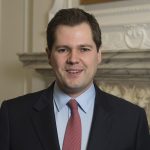
  • Paul Beresford – 2022 Speech on NHS Dentistry

    Paul Beresford – 2022 Speech on NHS Dentistry

    The speech made by Paul Beresford, the Conservative MP for Mole Valley, in the House of Commons on 20 October 2022.

    First, I must congratulate my hon. Friend the Member for Waveney (Peter Aldous). This is the second time that I have heard him pronounce on NHS dentistry—I think he has done it more often than that—and he is becoming something of an expert. I wonder whether the British Dental Association might give him an honorary medal or something for that. I also have an interest—a very part-time interest—that means that I have to speak on this; otherwise, the profession would ask me what the heck I was doing. I welcome my hon. Friend the Minister to the Government Front Bench to become our voice on dentists and dentistry. It might not last as long as he anticipated a few days ago, but it is a dubious honour and one in which he will find many friends and many on the other side of the argument.

    The problem we face is that there are not enough dentists. Many suggestions will come from the debate, so I will just skip through a few. The problem is not so much that there are not enough dentists—there are not enough dentists prepared to do NHS dentistry. That has been exacerbated by covid, but it is far from new. It has been a problem to a greater or lesser degree for more than five decades. I arrived in this country in 1970, produced my certificate from my university in New Zealand, got it rubber-stamped by the General Dental Council and went straight into business. I cannot see why we cannot do that now. I was one of a stream of New Zealand and Australian doctors and dentists. Once we moved into the common market, that stream was shut off.

    The practice of dentistry is complex and intricate if it is done properly. A small group of members of the all-party parliamentary group for dentistry and oral health recently visited King’s College dental school. I think it was enlightening for many to discover how complex and difficult dentistry is. The staff provided our members with a high-speed drill with a tungsten carbide bit and virtual molars. It is just as well that they were virtual molars—I have never seen so much tooth destruction in my life.

    As I said, the problem has been exacerbated by the covid backlog, and that will be with us for some time, but we are—I hope—looking at the long term and the short term. I will touch on the short term. Some with dental interests such as the organisation My Dentist are campaigning to increase the number of NHS dentists and other groups providing facilities, surgeries and so on. But there are—I hope that the Minister is aware of this—many dental firms working hard to pull dentists out of the NHS and into the private sector.

    As has been said, we must maximise the output from our dental schools. I am sure this has been done. I have heard calls for new dental schools; we have heard one today. Dental schools are enormously expensive organisations to build, stock and run. I was just in New Zealand, where there is a new school on the same site as the old one. It is fantastic, but it took years to build, stock and run it. A new school probably takes two to four years to set up and then it is four to five years before the graduates emerge. As with how a person gets their driving licence and then learns to drive, a dentist gets their certificate from the school and then starts to learn dentistry. In the short term, it would be faster and more productive if the General Dental Council were given the ability to enable overseas dentists with good English from competent overseas dental schools to enter the United Kingdom as practising dentists, without having to go through the insulting rigmarole and costs of further exams. It is an insult to most people from most of the top university dental schools to have to sit examinations here when the competence of their own schools is at least as good as those here. It would take only a small movement to enable that to happen.

    A large-ish number of elderly-ish dentists who are about to retire have pulled out of dentistry because of the bureaucratic overload. Many have retired because of the strain of the job. The regulatory strictures of the Care Quality Commission in particular have added to that. Of course, that applies to small practices. The CQC is necessary. We must have it, but its extensive, detailed, time-consuming form filling has been the final straw for many dentists, especially those in small practices. Many have just retired in disgust. For my tiny part-time practice, I pay an independent company £150 a month to help me ensure all regulations are met and documented as met. It is time-consuming, expensive and unnecessary. I would therefore rather like to see an opportunity for the GDC, with outside help, to look at the bureaucratic requirement and consider whether it could ease and reduce the strain on practitioners. When it has finished with that for the dentists, it could also start looking at how hospitals and medical surgeries are treated.

    Negotiations on the revision of the contract have been mentioned. It is a massive gripe among the profession in England, because of the use of the semi-mythological coinage called “units of dental activity”. They are a mythical thing. How many dentists get them to actually come together and work, and balance them so they are fair, is beyond me. Negotiations on the revision of the contract have been going on for many years. There have been many trials and heaps of tribulations. Over the past decades, dentistry has moved forward. Materials and techniques have been developed and adopted. The service available on the NHS dental menu has enlarged with that, but I question that some items on the menu are not strictly health, especially when alternatives are an option and would ease the strain on NHS dentists. If we accept that there is an NHS dental emergency, then I suggest the Government, for a short period of time, run a simple separate contract on a reduced NHS menu of strictly dental health items. A simple fee per item would remove arguments about those mythical units of dental activity. A simple contract could specifically target the NHS patients looking for a check-up and simple dental health care, particularly if it involves pain relief. At the same time, we ought to accept, because of the change in the nature of dentistry, that mixed private and NHS services are here to stay and should be encouraged, as that actually helps the NHS service.

    Finally, on two really positive points, one has already been mentioned and that is teaching children, even little children, how to brush their teeth. When I first came here, I spent a lot of time in east London. When I mentioned a toothbrush, the blank stares made it quite apparent that they just did not have a toothbrush, let alone use one. The excitement, in the schools that I and other dentists have been into, of little children with toothbrushes and toothpaste is really worth watching. And the mess is phenomenal!

    My final point is on fluoridation. We have now got to the stage where we can install fluoridation in our water supplies. We are an absolute disgrace in the western world. Much of the western world has 60%, 70% or 80% of their water supplies fluoridated, while we have 10%. The obstructions have been taken away and I ask the Minister to rapidly move forward with that. The payback period will be obvious after about two years and will make a tremendous difference, along with toothbrushing, as it progresses. We can be a nation with some of the best teeth in the world if we have 100% fluoride and if we teach every child, “This is a toothbrush and this is toothpaste—get on with it!”

  • George Howarth – 2022 Speech on NHS Dentistry

    George Howarth – 2022 Speech on NHS Dentistry

    The speech made by George Howarth, the Labour MP for Knowsley, in the House of Commons on 20 October 2022.

    May I, too, express my gratitude to the Backbench Business Committee for the opportunity to debate this important matter today?

    On 22 September, during a statement by the Health and Social Care Secretary, I raised these problems on behalf of the people of Knowsley and the Liverpool city region, and described the experiences they are having. I cited BBC research that showed that, to use the Secretary of State’s own term, Liverpool city region is a “dental desert”, with not one dental practice taking on NHS patients. In response, she said that she had

    “set out in the plan today what we are seeking to do with dentists. First of all, it is the role of the local NHS—the ICB—to take responsibility for such provision, and I expect it to do so.”—[Official Report, 22 September 2022; Vol. 719, c. 839.]

    Earlier this week, my office carried out a survey of dental practices in Knowsley to measure what, if any, progress had been made since that exchange. We found that, of the 13 dental practices in Knowsley, it is still the case that none—I repeat, none—is accepting new NHS adult patients, and only two are accepting children under the age of 18. I am therefore bound to conclude that no progress has been made in the ensuing weeks.

    Also on 22 September, I urged the Secretary of State to take measures in the short, medium and long term to address this disgraceful situation. Since then, the British Dental Association has pointed out that

    “the Government needs to show real ambition to bring NHS dentistry back from the brink.”

    Although the new Administration—goodness knows there will be another new Administration shortly—has placed dentistry as a top ABCD—ambulances, backlogs, care, doctors and dentists—priority, no new proposals have been made

    “to halt the exodus of dentists from the NHS”

    to care for patients. Moreover, the British Dental Association points out that the key issues of contract referral, chronic underfunding and growing oral inequalities have yet to be addressed. This is not just a matter of cosmetic treatment, important though that may be in many cases. As the association pointed out, this is also about how to spot oral cancer earlier, which is one of the fastest rising types of cancer and claims more lives than car accidents. That is a particular concern for Knowsley. As the British Dental Association went on to say:

    “People in the most deprived communities are significantly more likely to die from it than those in more affluent areas.”

    Our dentists are in many cases the first medical professionals to detect cases. Access to NHS dental treatment can in such cases be the difference between life and death. Knowsley is one of the most deprived boroughs in the country and it is consequently in a very vulnerable position regarding the early detection of oral cancer.

    The motion contains good points that I would happily endorse, but I am concerned that in terms of specific actions it calls for a progress report in three months’ time. My concern—I do not make this point to be at all mischievous—is that I do not know, and nobody in the House will be able to tell me, who is likely to be the next Secretary of State for Health and Social Care, and whether they will have a different strategy on NHS dental care. So we need something to be done more speedily. The Government have to take responsibility for the current turmoil, but the fact is that there is so much uncertainty and such issues are simply not being dealt with.

    The motion does not address what the Government could be doing in the short term to alleviate the problems confronting people in Knowsley and elsewhere. I have two suggestions on short-term action that could and should be taken. First, I urge the Secretary of State to introduce a procedure to enable those in need of urgent NHS dental treatment to be referred to a suitable dental practice, preferably locally. My constituency office recently dealt with the case of an 18-year-old constituent who needed urgent root canal treatment on two front teeth, which she was unable to afford. The problem was exacerbating an existing mental health problem. Since she was in constant pain and probably barely able to eat and drink, I contacted NHS North West. I am grateful that it was able to make arrangements for her to receive the treatment she needed at a local dental practice. I suggest that that approach, which I just happened to stumble across, should be added as a matter of urgency for those in need of urgent dental treatment.

    Secondly, I am aware that many NHS patients have been culled by dental practices, often on the basis that they were not making use of the service on a regular enough basis. I cannot give accurate figures for Knowsley, but I suspect that thousands of people are former NHS patients. However, no appeal process is available to such patients, who have just been struck off and there is nothing that they can do about it, other than pay to be treated privately. I am aware of one case involving a Knowsley resident who, as a result of extremely debilitating, extended cancer treatment, was unable to contemplate much-needed dental treatment. When he felt strong enough to do so, however, he tried to make an appointment as an NHS patient, only to discover that he had been struck off the list.

    My second short-term suggestion is therefore to urge the Secretary of State to institute an appeal process whereby such patients could apply to NHS England in order for it to prevail on the medical practice concerned to reinstate NHS patients who had good reasons for not being able to visit the dentist during lockdown, or who could not do so for medical reasons, such as those I have referred to. On the medium term and longer term, and the national problems to which I referred, I simply urge Ministers to enter into meaningful discussions with the British Dental Association to help to resolve the issues that I are so bedevilling NHS dental services nationally.

    I hope that Ministers will accept that I have tried in my approach to deal with this important matter as constructively as I can. I sincerely hope that they will respond in a similar way and try to help to resolve the short-term problems that my constituents are experiencing in ways that can be easily implemented.

  • Peter Aldous – 2022 Speech on NHS Dentistry

    Peter Aldous – 2022 Speech on NHS Dentistry

    The speech made by Peter Aldous, the Conservative MP for Waveney, in the House of Commons on 20 October 2022.

    I beg to move,

    That this House is concerned by the growing crisis in NHS dentistry; notes that nine out of ten dental practices in England do not accept new NHS patients; regrets the number of dentists moving away from NHS practice; welcomes the Government’s commitment to levelling up health outcomes and dental health across the country; calls on the Government to take urgent steps to improve retention of NHS dentists and dental accessibility for patients; and further calls on the Government to report to the House on its progress on the steps it has taken to address the NHS dentistry crisis in three months’ time.

    I thank the Backbench Business Committee for granting this debate, and the hon. Member for Bradford South (Judith Cummins) for her work in helping to secure it. I also highlight e-petition 564154, signed by 11,067 people, calling for an independent review of the NHS dental contract.

    Colleagues have been securing debates on the state of NHS dentistry for the past two years. This crisis has been brewing for a long time, and the situation can be likened to that of a house built on shallow and poor foundations that has come crashing down with the earthquake of covid. The King’s Fund describes NHS dentistry as being on “life support”, while the British Dental Association describes it as undergoing a “slow death”. In its monthly report for October, Healthwatch repeats that NHS dental care continues to be one of the main issues it hears about from the public, who across the country are clamouring for NHS dentistry that is both affordable and accessible.

    In Suffolk, there are 70 dental practices with NHS contracts, but not one is taking on new patients. Locally, there has been some welcome support in that, in Lowestoft, a local practice was granted additional units of dental activity that allowed it to see emergency patients until the end of September, and in July the Dental Design Studio was awarded a contract to deliver NHS dentistry for up to eight years. However, very quickly both practices were fully booked up and have had to turn away patients. There is a need for root and branch reform, and I shall briefly set out the issues that need to be included in a blueprint plan for NHS dentistry.

    Dr Andrew Murrison (South West Wiltshire) (Con)

    I congratulate my hon. Friend on securing this debate. Would he agree with me that the fundamental problem with NHS dentistry at the moment is the 2006 contract and the units of dental activity? Does he share my disappointment at the statement made in the summer about how to resolve the situation based on the consultation launched last year, and furthermore, does he hope that UDAs will be expunged from all of this so that dentists can be properly rewarded for the job they do and thus return to the NHS?

    Peter Aldous

    I thank my right hon. Friend for that intervention, and I agree wholeheartedly with him on that point. I will come on to it as I set out what I believe needs to be done to improve the situation, but I think he and I are very much on the same page on that issue.

    First, I will address the issue of funding. There is a need to secure a long-term funding stream. In recent years, the NHS dental budget has not kept up with inflation and population growth. Since 2008, NHS dentistry has faced cuts with no parallel elsewhere in the NHS, and the British Dental Association states that it will take £880 million per annum to restore the service to 2010 levels. I acknowledge the budgetary challenges that the Chancellor faces, but the reform process is doomed from the start without an appropriate level of investment. There is a need for a protected budget, and any funding that is clawed back must be kept in dentistry.

    Secondly, a strategic approach should be adopted towards recruitment and retention, with a detailed workforce plan being put in place.

    Jeff Smith (Manchester, Withington) (Lab)

    I congratulate the hon. Member and my hon. Friend the Member for Bradford South (Judith Cummins) on securing this debate. There is a crisis in south Manchester and across the country in trying to access NHS dentists. There are highly trained dentists from abroad who can help. I have some constituents who were trained at the dental faculty of the University of Hong Kong, which is among the top three faculties in the world—it has an English curriculum—but they cannot get registered or access the licence exams. I understand that the Government have said they are going to simplify the registration process. Would he join me in urging the Government to act very quickly to make that happen?

    Peter Aldous

    I thank the hon. Gentleman for his intervention, which came at an appropriate time. Indeed, he may well have been reading my speech, because that was the next point I was coming to. In the short term, we need to be stepping up recruitment from abroad. Although the legislation tabled earlier this month to streamline the process of recognising overseas qualifications is welcome, that will not address the problem on its own, and I hope that when he responds to the debate, the Minister will address that issue. In the longer term, we must improve dentistry training ourselves and ensure that it is available throughout the country. In that regard, the proposals being worked up by the Universities of East Anglia and of Suffolk are to be welcomed.

    Thirdly, as my right hon. Friend the Member for South West Wiltshire (Dr Murrison) said, there is a need for a new NHS dental contract. It is welcome that discussions have started on revising the contract, but there is a worry that the Government are looking only at marginal changes, when ultimately a completely new contract is required. At present, the NHS contract is driving dentists away from doing NHS work. Its target-based approach is soul destroying for so many, and it needs to be replaced with an agreement that has prevention at its core.

    That leads me to the fourth and penultimate component of a new system of NHS dentistry: the public promotion of the importance of good oral health, and looking after our teeth from the cradle to the grave. Denplan proposes that the Government and NHS should lead a public education campaign to emphasise the importance of oral health. There should be provision in the aforementioned new contract for dentists to go into schools, as well as into care and nursing homes. When economic conditions allow, let us be imaginative and exempt children’s toothbrushes and toothpaste from VAT. That can embed good oral healthcare at an early stage of life. It is welcome that the Health and Care Act 2022 facilitates the roll-out of water fluoridation projects, and the Government should work proactively with water companies to ensure that is universal.

    Finally, there is a need for clear transparency and full local accountability for overseeing and commissioning NHS dentistry services. I acknowledge the hard work and great effort of those working at NHS England, but we need to replace a system that is inaccessible, opaque, and confusing. The Health and Care Act provides us with the means of doing that, and it is welcome that from next April, many integrated care systems will be taking on responsibility for local NHS dentistry. That is the right approach, as good oral healthcare is essential for good general health and wellbeing, and inextricably linked to primary, mental and emergency care. It is vital that those involved in dentistry are represented on integrated care boards.

    Across the country there are a multitude of dental deserts. If we do nothing, if we apply the odd sticking plaster here and there, those will turn into one large Sahara. We owe it to those we represent to ensure that does not happen. That means that we need as a matter of urgency a blueprint plan for new NHS dentistry. That will not be delivered in one fell swoop, but we need clearly to lay down the route path and start taking meaningful strides down it. With that in mind, the motion calls on the Government to embark on that journey and report back on their progress in three months’ time.

  • Jeremy Corbyn – 2022 Comments on Pay for Nurses

    Jeremy Corbyn – 2022 Comments on Pay for Nurses

    The comments made by Jeremy Corbyn, the Independent MP for North Islington, on Twitter on 21 October 2022.

    Nurses’ pay must rise with inflation. That is the bare minimum.

    Applause on our doorsteps rings hollow without solidarity on the picket line.

    If nurses go on strike, they will have my full support.

  • Feryal Clark – 2022 Speech on East Kent Maternity Services – Independent Investigation

    Feryal Clark – 2022 Speech on East Kent Maternity Services – Independent Investigation

    The speech made by Feryal Clark, the Labour Health spokesperson, in the House of Commons on 20 October 2022.

    I thank the Minister for advance sight of her statement. I thank Dr Bill Kirkup and his team for the report. Today marks another milestone for another group of families in their fight for justice. The heartbreak they must feel is unimaginable, and my thoughts remain with them during what must be an incredibly difficult time.

    Sadly, this is another example of women’s voices not just being ignored but being silenced. When women in East Kent were told that they were to blame for their babies’ deaths, they were being told that their voices just did not matter. At a time when women are at their most vulnerable, they were let down by the very people they were relying on to keep them safe.

    After responding to the Ockenden review of Shrewsbury and Telford, I find myself having to repeat something that I never thought I would need to say again at this Dispatch Box: no woman should ever face going into hospital to give birth not knowing whether she and her baby will come out alive—no one. It is not a case of a few bad apples. What happened at East Kent, as with what happened at Shrewsbury and Telford and at Morecambe Bay, was years of systemic negligence that cost lives. As we have heard, up to 45 babies could have survived had they received better care. That is 45 lives that were cut needlessly short and 45 families made to suffer the most devastating heartache.

    Although I am heartbroken for the families that the review had to take place, it is vital that it did. Nobody who allowed this culture of neglect to set in should escape accountability. Such a review has been necessary again because, for too long, people turned a blind eye and tolerated the intolerable. That is why it cannot be allowed to sit on the Department’s shelf and gather dust. We must see action if we are to give women the care that they need and deserve.

    There is a pattern of avoidable harm in maternity units across the country. There were nearly 2,000 reported cases of avoidable harm at Shrewsbury and Telford. Half of maternity units in England are failing to meet safety standards. Pregnant women were turned away from maternity wards more than 400 times last year. One in four women is unable to get the help they need when in labour. That is why it is important that the Government fully accept all the recommendations in Dr Kirkup’s review without delay.

    This is a collective failure and we must all learn lessons from it. In the wake of the Ockenden review, the right hon. Member for Bromsgrove (Sajid Javid) announced an extra £127 million of funding for maternity services to help to deliver the reform that is clearly needed. Where is that money? Where has it been spent, what has it been spent on and how will its impact be measured?

    Underpinning the issues in maternity care, and across the NHS, is the workforce. More midwives are leaving the profession than are joining, and there is now a shortage of more than 2,000 midwives in England. We just do not have the staff needed to provide good and safe care. Even the Chancellor agrees: last week, he signed a report as co-chair of the all-party parliamentary group on baby loss that describes maternity and neonatal services as

    “understaffed, overstretched and letting down women, families and maternity staff”.

    He went on to call for safe levels of staffing. Will the Minister deliver on the Chancellor’s promise?

    The Government must provide the staff that maternity services desperately need to provide safe care across our NHS, as Labour has a plan to. All women are asking for is to have the confidence that they will be safe—that really is not much. It is high time that the Government delivered it.

  • Caroline Johnson – 2022 Statement on East Kent Maternity Services – Independent Investigation

    Caroline Johnson – 2022 Statement on East Kent Maternity Services – Independent Investigation

    The statement made by Caroline Johnson, the Parliamentary Under-Secretary of State for Health and Social Care, in the House of Commons on 20 October 2022.

    With permission, Mr Speaker, I will make a statement on the review into East Kent maternity services.

    Few things could be as tragic as the death of a child, yet knowing that that death was “wholly avoidable” comes with its own unimaginable pain. It is thanks to the tireless efforts, courage and determination of families in east Kent that we have been able to shine a light on maternity failings in East Kent Hospitals University Trust. Dr Bill Kirkup’s report, published yesterday, contains some stark and upsetting findings. From examining over 200 births in that trust between 2009 and 2020, he found that, had care been given at nationally recognised standards, 45 babies might not have lost their lives, and many more families might not have experienced such distress at what should have been their time of joy. He also found a toxic culture within the trust, with a

    “disturbing lack of kindness and compassion”

    and victims’ families even blamed for their devastating losses. Before I say more, Mr Speaker, I want to say this: I am profoundly sorry to all the families affected. This should never have happened, and we will work tirelessly to put it right.

    With the report having been published just yesterday, I am sure hon. Members will understand our need to carefully consider all of its details. I will be reviewing all the recommendations, and will issue a full response once I have had time to consider them. However, given the gravity of what the report reveals, I felt it was important to come to the House today and update colleagues on the steps we are already taking to improve maternity services in east Kent and across the country.

    The report itself is a litany of failure that makes for very difficult reading. It details failures of team working, failures of professionalism, failures of compassion, failures to listen, failures after safety incidents, and ultimately a failure of leadership. The review heard about women and family members feeling patronised, ignored or told off, with one woman hearing from a doctor:

    “Some parents just aren’t supposed to have children.”

    Some people felt they were unimportant, or too much trouble. One woman was reportedly told by a staff member that they were sorry for her loss, but that her baby was dead, and that there were other babies who were still living who needed attending to. These kinds of failures showed up at every level of patient care, with no discernible improvement over the whole timeframe of the review. The trust failed to read the signals and missed every opportunity to put things right.

    These are difficult things to hear, and especially hard because I know that so many of us have experienced for ourselves the brilliant care that NHS maternity services can offer. We must take nothing away from the hundreds of thousands of incredible people working day and night in maternity services across the country, yet we cannot pretend that the story of East Kent is a one-off. Reviews from Morecambe Bay and Shrewsbury and Telford paint a more disturbing picture. While they may be some of the most extreme examples—and we must hope that they are—they are certainly not isolated incidents. Colleagues will know that, just last month, Donna Ockenden began her independent review into maternity services at Nottingham University Hospitals NHS Trust.

    We entrust the NHS with our care when we are at our most vulnerable. Everyone has the right to expect the same high-quality care, no matter who they are or where they live. We are already taking a number of steps to improve the quality of maternity care in East Kent and across the country. An intensive programme of maternity support was put in place at East Kent Hospitals University NHS Foundation Trust in September 2019, overseen by NHS England, the Kent and Medway integrated care system and the trust’s board. The trust has been allocated a maternity improvement adviser and an obstetric improvement adviser. We will also continue to ensure the highest standards at national level.

    I am grateful to Dr Kirkup for the extensive recommendations in his report, but it is vital that they are not viewed in isolation. As Dr Kirkup said, since his Morecambe bay investigation in 2015,

    “maternity services have been the subject of more significant policy initiatives than any other service”,

    so his recommendations must be considered alongside existing work to improve maternity outcomes.

    First, there is our independent working group. The group is one of the key immediate and essential actions from the Ockenden review and has begun its important work. The group, chaired by the Royal College of Midwives and the Royal College of Obstetricians and Gynaecologists, is advising the maternity transformation programme in England on how it can take forward the findings of both the Ockenden and the Kirkup reports. Next, our new maternity quality surveillance framework is a vital tool for proactively identifying problems in trusts, so that they can get support before serious issues arise. In March 2022, NHS England announced a £127 million funding boost for maternity services across England, to help ensure safer and more personalised care for women and their babies. Even with that essential work, we recognise that there is still a long way to go and much more work to be done to put things right.

    In closing, I want to thank Dr Kirkup and his team. His experience has been invaluable, and I know that his approach of putting families first has been welcomed. I also know that hearing the accounts of families has been a harrowing experience at times, yet, as he said, it is difficult to imagine just how much harder it was for the families as they relived some of their darkest days. I am sure the whole House will join me in paying tribute to those families, whose tireless determination to find the truth and tell their stories has brought us to this important point. Nothing we do can bring back the children they have lost or fill the tragic void of a life never lived, but now we know their stories, we will listen, learn and act, so that no other family should ever experience such pain. I commend this statement to the House.


  • Caroline Johnson – 2022 Statement on Independent Investigation into East Kent Maternity Services

    Caroline Johnson – 2022 Statement on Independent Investigation into East Kent Maternity Services

    The statement made by Caroline Johnson, the Parliamentary Under-Secretary of State for Health and Social Care, in the House of Commons on 19 October 2022.

    I wish to inform the House that the independent review into maternity and neonatal services at East Kent Hospitals University NHS Foundation Trust has today published its report, which can be found here:

    https://www.gov.uk/government/publications/maternity-and-neonatal-services-in-east-kent-reading-the-signals-report

    NHS England commissioned Dr Bill Kirkup CBE to undertake an independent review into maternity and neonatal services at East Kent Hospitals University NHS Foundation Trust in February 2020, following concerns about the quality and outcomes of care. On behalf of the Government, I would like to thank Dr Kirkup, the families, and all those who contributed to the report.

    The report details the poor maternity care that over 200 families received at East Kent Hospitals University NHS Foundation Trust between 2009 and 2020. The trust failed to provide safe care and treatment which resulted in avoidable harm for mothers and babies, causing tragedy and distress that no family should have to experience. I am profoundly sorry to all the families that have suffered and continue to suffer from these tragedies. I also wish to pay tribute to the families who have come forward to assist the review.

    In line with the review team’s families first approach, I am pleased to hear that the families were able to see an advance copy of the report this morning ahead of the publication.

    I, and the Government, take the findings and the recommendations from the report extremely seriously and I am committed to preventing families from experiencing the same pain in the future.

    My Department along with NHS England has already established the independent working group, chaired by the Royal College of Midwives and the Royal College of Obstetricians and Gynaecologists. The independent working group will help guide the implementation and next steps of the immediate and essential actions from the Ockenden report and the recommendations from the East Kent report. The group has met twice to date, and the next meeting will focus on reviewing the recommendations for the East Kent report.

    In March 2022, NHS England also announced a £127 million funding boost for maternity services across England that will help ensure safer and more personalised care for women and their babies.

    I will be reviewing and considering all the recommendations from the report, and I will issue a full response once I have had time to consider the recommendations.

  • Therese Coffey – 2022 Comments on NHS Car Parking Charges

    Therese Coffey – 2022 Comments on NHS Car Parking Charges

    The comments made by Therese Coffey, the Deputy Prime Minister and Secretary of State for Health and Social Care, on Twitter on 16 October 2022.

    There have been inaccurate reports we are changing free hospital car parking. We have delivered our manifesto pledge to provide free parking for those who need it most at all NHS trusts. This will not change. #ABCD is about putting patients first and I’m determined to deliver it.

  • Eluned Morgan – 2022 Statement on Progress Implementing the Out of Hospital Cardiac Arrest Plan

    Eluned Morgan – 2022 Statement on Progress Implementing the Out of Hospital Cardiac Arrest Plan

    The statement made by Eluned Morgan, the Minister for Health and Social Services, on 14 October 2022.

    On 16 October, we mark Restart a Heart Day. Save a Life Cymru and its partners will be encouraging us to learn more about life-saving cardio-pulmonary resuscitation (CPR), using defibrillators and knowing how to help when someone has a cardiac arrest.

    I want to use this opportunity to provide Members with a further update about progress to implement the Out of Hospital Cardiac Arrest Plan and Save a Life Cymru’s work.

    The Out of Hospital Cardiac Arrest Plan was launched in 2017 and we established the Save a Life Cymru partnership that brings together organisations across Wales to help develop the Welsh public’s CPR and defibrillation skills so people feel confident to help if they witness someone experiencing an out-of-hospital cardiac arrest. Last year we increased the funding for this life saving programme.

    Earlier this month a new save a Life Cymru campaign was launched. ‘Help is closer than you think’ (Cofia, mae help wrth law) which focuses on increasing people’s confidence to intervene in a cardiac arrest emergency by highlighting the importance of calling 999 immediately, as well as the support provided by the call handler to do CPR and locate a registered defibrillator until an ambulance arrives. A TV, radio and social media advertisement went live from Monday 10 October.

    Save a Life Cymru has recruited a clinical out-of-hospital cardiac arrest programme manager who is developing an all Wales CPR and defibrillator framework to help communities become rescue ready and have the right resources in the right place to help someone having a cardiac arrest. It has also recruited four Save a Life Cymru community support coordinators, one of whom is already in post, and it is hoped the remainder will be in post before the end of November. They are also currently advertising for two Save a Life Cymru community support team leader posts.

    Save a Life Cymru is working with a range of organisations to support people of all ages and backgrounds to learn CPR and defibrillation skills, including:

    • Continuing to develop their partnership with the Football Association of Wales to broaden the reach of teaching CPR in Wales.
    • Following a successful pilot, Cardiff University has rolled out its model for all medical students who are trained in CPR to train all first year students.
    • Supporting One Voice Wales, which represents community and town councils, employing a person to co-ordinate CPR and defibrillator activity in communities across Wales, including ensuring defibrillators are registered and in good working order.
    • Appointing, in conjunction with Cardiff Metropolitan University, a post-doctoral research fellow who will develop research projects to initiate improvements in Out of Hospital Cardiac arrest outcomes in Wales
    • Partnering with Ospreys Rugby medical team to help raise awareness of CPR and defibrillation among its audiences.
    •  Producing a bilingual educational leaflet to support community CPR
    • Providing CPR training at the Welsh Government stand in some national events such as the Urdd Eisteddfod and Royal Welsh Show
    • Supporting Betsi Cadwaladr University Health Board (BCUHB) to produce a bilingual Primary School resource, supported by BSL, which teaches children the sequence of CPR through song and dance.

    During 2021/22 I announced a further £1m to purchase 1,000 additional defibrillators which community groups and public organisation across Wales were able to apply for.  638 groups and organisations successfully applied for a defibrillator and so far about 238 have been installed in communities across Wales. There have been some delays in groups being able to purchase and install the cabinets so defibrillators are still being distributed.

    Communities and organisations which already have defibrillators are being encouraged to register them on The Circuit – more than 7164 are registered and now 72% have a guardian. We have seen a significant increase in the number registered and in the percentage with a guardian but there is still more work to be done.

    Additionally, the Welsh Ambulance Service partnered with GoodSAM app to improve mobilisation of clinically trained staff and volunteers to life-threatening emergency calls. So when an emergency call is received by the ambulance service and classified to be of a life-threatening nature, details will automatically be sent through to the GoodSAM app to alert the nearest approved volunteer responder. They will shortly be relaunching the GoodSAM app in Wales, which was paused during the pandemic, and this will open up being a GoodSAM responder to all eligible individuals who have signed up and been approved by GoodSAM and partner organisations. This will be a huge step forward in Wales.

    We have made substantial progress over the course of the last twelve months and have heard stories of the differences this work is making to people’s lives. We know that every second counts when someone goes into cardiac arrest. We can all help raise awareness of the importance of dialling 999 and giving early CPR and defibrillation.

  • Will Quince – 2022 Speech on the Dental Training College

    Will Quince – 2022 Speech on the Dental Training College

    The speech made by Will Quince, the Minister of State at the Department of Health and Social Care, in the House of Commons on 11 October 2022.

    I congratulate my hon. Friend the Member for Broadland (Jerome Mayhew) on securing this debate on the potential merits of establishing a dental training college in East Anglia. It is clear that he has support from his neighbouring MPs—I know that one of them cannot be here this evening, but very much supports this endeavour—and from colleagues further afield and across East Anglia. I also thank him for raising the issue of access to dentistry in rural and coastal areas, particularly the challenges of seeing a dentist in Norfolk.

    As the new Minister for dentistry, I understand that areas across our country, as my hon. Friend has highlighted, have faced difficulties with recruitment and retention, including in his constituency of Broadland and in the east of England more widely. Those challenges have a significant impact on the provision of NHS dentistry and on patients’ ability to receive NHS care. My hon. Friend is right that we cannot ignore the problem, which I can assure him is a priority for me and for the Secretary of State. I hope that it will not have escaped my hon. Friend’s notice that dentists are a key element of the Secretary of State’s ABCD approach and of “Our plan for patients”.

    I am aware that my hon. Friend, alongside my hon. Friend the Member for North Norfolk (Duncan Baker), attended meetings with my predecessor, and I think even with my predecessor’s predecessor, to discuss the construction of a dental school in Norfolk. It is a testament to the character of my hon. Friend the Member for Broadland that he brought the issue to my attention just days after my appointment as a Minister in the Department of Health and Social Care. If I may say so, his constituents are fortunate to have such a passionate and persistent advocate in their corner.

    My hon. Friend set out in his speech to make a positive case for doing something about a long-term problem, and I think everyone in the Chamber this evening will agree that he has done so. He makes the case for a new dental school in Norfolk—a case that I know has the backing of my hon. Friend the Member for North Norfolk, who cannot be here this evening. On the face of it, it is a compelling case and is worth further exploration.

    I think that my hon. Friend the Member for Broadland knows me well enough to know that I am not someone who likes saying no to parliamentary colleagues, although sadly that is a responsibility that all too often comes with the job. On this occasion, it is a no, but it is “No for now, and let’s very much keep talking.” Let me explain why.

    Establishing a new dental school takes several years and would not influence service provision in the short term, as my hon. Friend rightly identified. Notwithstanding the strong case that he makes, it also would not guarantee the ongoing sustained retention of dentists or support staff in the area. Our focus is not just on training more dentists, important as that is, but on the better use of the full dental team and the progression and retention of all dental care professionals in the NHS. There is, of course, an argument about the medium to long term, which is why I suggest that we keep talking, and of course I would be delighted to meet my hon. Friend, as he requests, to further discuss his ideas and plans.

    My hon. Friends the Members for Broadland, for Waveney (Peter Aldous) and for Ipswich (Tom Hunt) all mentioned centres for dental development, the alternative training model identified by Health Education England in its 2021 “Advancing Dental Care” review report—that is a mouthful! The centres for dental development model would specifically benefit localities in which there is a shortage in provision and there are no nearby dental schools—as is the case in East Anglia, as my hon. Friend the Member for Broadland rightly pointed out.

    The premise is that the centres would build on any existing dental infrastructure in the area, bringing together training and the resultant provision of NHS treatment to patients in a co-ordinated way. Things like postgraduate training opportunities are more likely to be compatible than early undergraduate placements, as they would increase access to the more complex and specialist care that we know is often most lacking in certain areas of the country, otherwise known as dental deserts. This would work towards the aim, specified in the “Advancing Dental Care” report, to produce the skilled “multi-professional oral healthcare workforce” that could best support patient and population needs within the NHS. A further advantage of the centres for dental development model is that they would be tailored to suit the local workforce requirements, in addition to the education and training needs of the area, contributing to stronger, multi-disciplinary dental teams and local area workforce retention.

    Given that the centres would focus on postgraduate training or the later stages of undergraduate training, they could provide support in transitions from undergraduate to dental foundation training and more specialised training beyond those, all of which involve—as my hon. Friend mentioned—important decision-making moments in terms of career development and where dentists are likely to base their careers and practices. We believe that a broader range of placements across the country and in different clinical environments would enhance the student experience. The centres could offer a constructive alternative to dental schools, while acknowledging and addressing recruitment, retention and training gaps. I am sure my hon. Friend will be pleased to learn that Health Education England has now moved into its four-year implementation stage through its dental education reform programme—another mouthful!—following the “Advancing Dental Care” report and its recommendations.

    My hon. Friend rightly raised the subject of collaboration. With regard to establishing a centre for dental development in East Anglia—this has been mentioned by my hon. Friend and others—the University of Suffolk and the NHS Suffolk and North East Essex integrated care board have announced plans for a centre in Ipswich. I am informed—this also covers my area, so I have an interest in it as well—that the initial plans include proposals to offer postgraduate educational opportunities as well as wider training opportunities for newly qualified dentists, alongside the training of the dental therapists, hygienists and dental technicians who form a vital part of the dental workforce. I pay tribute to my hon. Friends the Members for Waveney and for Ipswich for the work that they have done in pushing so strongly for that development, along with the integrated care board, which is a trail-blazer in this regard. It would be wrong, at this juncture, for me not also to pay tribute to my hon. Friend the Member for Bury St Edmunds (Jo Churchill). She has pushed strongly for this as well, and, moreover, is—dare I say—a much-missed Minister at the Department of Health and Social Care. She has a passion for dentistry, and, within the Department, she really put it on the map. That is a legacy that I intend to continue.

    I strongly encourage my hon. Friend to meet the NHS and HEE regional teams for his areas, as centres for dental development are very much a local solution, tailored to the existing infrastructure and needs of an area. I, and those in my office, would be delighted to help facilitate such a meeting.

    I have mentioned integrated care systems and integrated care boards. As we make the transition to integrated care systems—this point was made by my hon. Friend the Member for Waveney—commissioning roles for dentistry will be delegated. This will ensure that dentistry decisions are considered at a local level, and that, for example, local workforce as well as local population health requirements are taken into account. I therefore encourage my hon. Friend to meet the integrated care board—I am sure he has already done so, but I think an ongoing dialogue would make sense—to discuss its plans further, and to talk about how they will affect Broadland and the rest of East Anglia.

    My hon. Friend touched on recruitment and retention, which I know is a particular issue in his constituency and more broadly. I have referred to the changes that we have made nationally through system reform, but NHS England in the East of England region has been working closely with the organisations that train dentists to improve the recruitment and retention of NHS dentists in East Anglia, and will continue to help those training organisations to develop the dental workforce. I am pleased to say that, in 2021-22, there was an increase of 539 dentists performing NHS dentistry compared with the previous year. In the East of England, there was a 3.5% increase, with an additional 105 dentists. However, as my hon. Friend pointed out, that is not enough: we need more dentists, and we need more dentists on NHS contracts.

    More broadly, I know that my hon. Friend will want to know what improvements are being made now which will improve access to dentistry for his constituents. He rightly focused on the medium to long term, but I know from my postbag that the pressing concern is often the here and now. We plan for the dental system improvements announced on 19 July as part of “Our plan for patients” to begin to take effect by the end of this year, and some of the improvements in the package have already taken effect and are beginning to bear fruit. The Secretary of State and I are looking at a number of further measures that we can take to aid recruitment and retention—I know that that is one of the key concerns of my hon. Friend and others, and I think my hon. Friend touched on one of the ideas that we are considering—and, in turn, improve access for constituents. As I have said, this is a priority for me, and I hope to share more details with my hon. Friend and the House in due course.

    I am committed to playing my part to improve access to NHS dentistry, particularly for those most in need of dental care, and I know that recruitment and the dental workforce will play a pivotal role in that. I hope my hon. Friend has been reassured that action is being taken to address the challenges in recruitment and retention across the country, and particularly in his constituency. I look forward to working with him as we develop our ambitious plans, and I know he will continue to be a champion for his constituents and hold the Government’s metaphorical feet to the fire as we deliver the improvements in dentistry access that we all want to see.