Category: Health

  • Chris Philp – 2022 Statement on the Health and Social Care Levy (Repeal) Bill

    Chris Philp – 2022 Statement on the Health and Social Care Levy (Repeal) Bill

    The statement made by Chris Philp, the Chief Secretary to the Treasury, in the House of Commons on 11 October 2022.

    I beg to move, That the Bill be now read a Second time.

    Let me start by reiterating that the central and defining mission of this Government is growth. This Government are completely and unashamedly committed to achieving that objective—economic growth. However, we are not committed to it simply for its own sake or for some abstract reason; we are committed to growth because of the impact it will have in so many ways on people’s lives.

    Growth brings higher wages, bringing prosperity to our constituents. Economic growth will create new and better-paid jobs and, critically, economic growth will create a sustainable tax base that will fund public services into the future. Without strong economic growth, we cannot have well-funded health services, education and police. It is quite clear that, with economic growth, everyone benefits—not in some trickle-down sense, but because it will elevate salaries for everybody, create jobs the length and breadth of the United Kingdom, and generate the tax income that will fund our public services.

    Crucially, this growth agenda set out by the Chancellor two or three weeks ago will pursue growth in a way that is fiscally responsible, and on 31 October—in just under three weeks’ time—the Chancellor will set out in detail how that will take place, buttressed by a full scoring and forecast produced by the Office for Budget Responsibility.

    The growth plan announced by the Chancellor just a fortnight ago is crafted to achieve 2.5% growth year on year. It aims to do so in a host of different ways. First, it will do so through lower taxation, because with lower taxation we incentivise companies to invest, we incentivise people to get into work, and we encourage companies and high-potential individuals to choose to locate in the United Kingdom as opposed to somewhere else. Many successful companies, and indeed successful people, have a choice about where they locate, where they do business and where they work, and by having internationally competitive rates of personal and corporate taxation we are encouraging them to make the choice to locate in the United Kingdom, all of which improves and increases economic growth.

    There is of course more to the growth plan than just that. We are working on infrastructure—whether road, rail or energy infrastructure—and speeding up its development, as well as supporting skilled employment, removing barriers to investment, getting the housing market moving and removing obstacles, such as the recent IR35 changes that have caused difficulties for many self-employed people and contractors. Critically, the growth plan has moved at pace to help both households and businesses with the terrible crisis posed by Putin’s illegal invasion of Ukraine and its consequences for energy bills.

    Just a few weeks ago, households and businesses in the United Kingdom were faced with the realistic prospect of domestic energy bills going up to £5,000, £6,000 or even £7,000 per year. The energy price guarantee takes that possibility off the table, not just for six months but for two years, ensuring that the average household will pay no more than £2,500.

    Peter Grant (Glenrothes) (SNP)

    Does the Minister accept that, regardless of what the Government have done, my constituents can expect to pay double for their energy bills this year compared with what they paid last year?

    Chris Philp

    The energy price guarantee ensures that the average household pays no more than £2,500 a year. The hon. Gentleman is correct that that is higher than average bills this time last year, and that is why the comprehensive package was put in place earlier this year. It amounts to a further £37 billion, and ensures that households on the lower one third of incomes receive £1,200 per year, which pretty much fills the gap that he described. The energy price guarantee, combined with that £37 billion intervention, is the kind of thing we can do as a Union and as a United Kingdom. It is the kind of thing we can do together that would be so much harder apart, and that is one of the benefits of our precious Union. There is a lot more in the growth plan, but I will not labour the point because we are here to talk about the health and social care levy.

    Hywel Williams (Arfon) (PC)

    Growth in Wales has for a long time—for many decades before and after devolution—been based partly on the idea of attracting high-worth individuals to invest in Wales. The mixed result of that gives me pause for thought as to that strategy. Does it do the same for the Minister?

    Chris Philp

    We will deliver growth if we encourage people across the whole income spectrum—people doing jobs on lower incomes, those on higher incomes, businesses big and small alike. We need to encourage the entire economy, which is why tax cuts in the growth plan are broadly based, like the tax cut we are debating now. We need to encourage them all, which includes companies and people who are internationally mobile. I used to be technology Minister, and most technology businesses have a choice about where they locate. They are very internationally mobile. They could go to New York, San Francisco, Singapore—they could go anywhere in the world. We need to ensure that every part of the United Kingdom is attractive to such businesses, and the growth plan intends to create those conditions that make us attractive as a nation.

    Alex Cunningham (Stockton North) (Lab)

    The Minister seems to have mentioned everything except the need for a healthy workforce. Local authorities spend £1.2 billion every year on social care needs caused by smoking, and that will get more expensive if the Government fail to address the issue of tobacco. This morning the Health and Social Care Secretary hinted that she will do less, not more, to tackle the dangers of smoking. Will the Minister join me and press her to bring forward the tobacco control plan, to help protect the health of the nation and save health and social care costs?

    Chris Philp

    I do not think I should trespass into the realm of my right hon. Friend the Secretary of State for Health and Social Care and Deputy Prime Minister. She will make her own views and policy on that issue without intervention from me. We are ensuring that the NHS is well funded so that it can provide the treatment our constituents need. Our commitment to NHS funding is undiminished.

    Let me turn to the Bill, which repeals the health and social care levy. Members will recall that the health and social care levy was originally announced in September last year, and the Health and Social Care Levy Act 2021 received Royal Assent on 20 October last year. The levy had two phases: first, a temporary 1.25% increase for employers and employees in the current tax year; and then from April 2023 a formal surcharge of 1.25%, which would have affected not just those of working age but also those of state pension age. The Bill repeals that Act with elegant simplicity. Clause 1 states simply:

    “The Health and Social Care Levy Act 2021 is repealed.”

    James Cartlidge (South Suffolk) (Con)

    This is my first opportunity to congratulate the Chief Secretary on his appointment. What he said on the energy support for my constituents and all our constituents is very important, and I very much welcome that. However, on repealing the levy, he is of course aware that one of the most important things that it was going to fund was the welcome cap on care costs introduced by the Government, which had been promised by successive Governments with many a White Paper and many a Green Paper. How will we now pay for that?

    Chris Philp

    I thank my hon. Friend for his kind words. We are long-standing colleagues, and I look forward to working with him for many years to come. To be clear, the funding that was to be provided via the levy for both health and social care, which in the case of social care amounted to £5.4 billion over the three-year spending review period, is completely unaltered. There is no change to that funding at all.

    My hon. Friend asked about funding for social care. The funding envelope for all public services will be set out by my right hon. Friend the Chancellor on 31 October via his medium-term fiscal plan. We will ensure that we are responsible custodians of the public finances by sticking to the spending plan set out in spending review 2021. We will be disciplined about doing that. We will ensure that we generally exercise spending restraint, mindful of the fact that we cannot have public spending forever increasing at faster and faster rates. We will be disciplined about how we manage the public finances.

    I also point to economic growth. If, or rather when, we are successful in delivering the growth plan’s mission to elevate trend growth from 1.5% to 2.5%, with an extra 1% per annum over a consistent period of time—for example, five years—by the fifth year that additional growth will deliver about £47 billion of extra tax revenue, as set out in the table on page 27 of the Blue Book that accompanied the growth plan. I hope that gives my hon. Friend a hint about our thinking, but really the medium-term financial plan on 31 October will provide the most complete answer.

    Hywel Williams

    The Chief Secretary is being generous with his time. I should say that the table on page 27 shows a target, rather than anything that will stand closer examination. However, in respect of the decision to increase national insurance to pay for social policy—in England, I might add—the Welsh Government had no say whatsoever, just as they had no say in the now paused policy of scrapping the additional rate of income tax. Does the Minister not think that the Welsh Government, who are, after all, responsible for social care in Wales, warrant consultation on a fundamental matter such as this?

    Chris Philp

    I do not think that the Government in Wales complained too loudly when they were provided with extra money to fund social care in Wales. On the hon. Member’s point about page 27 of the growth plan, he is right that it is a target, but it is a target accompanied by a plan to deliver it. There is a clear path to how we will achieve the increase in growth that I referred to.

    Let me return to the repeal of the health and social care levy. To be clear, the Bill will repeal the legislation from last year, reversing the temporary increase in national insurance contributions from 6 November—in just a few weeks’ time. Additionally, it will ensure that no new levy comes into force in April 2023. Members will understand that it takes a little time for His Majesty’s Revenue and Customs and businesses to prepare their systems for such tax changes. That is why we chose 6 November as the date of implementation, but that will ensure that the extra money gets into people’s pockets as quickly as possible.

    That brings me to the rationale for why we are repealing the levy. First, it is so that people can keep more of their own money, particularly at this time when that is so critical with the cost of living. In Treasury questions earlier today, many Members on both sides of the House referred to the cost of living challenges, most of which follow from Putin’s illegal invasion of Ukraine. By reducing this tax and urgently alleviating the tax burden on our constituents, that will immediately assist with cost of living pressures. I am not saying that it will solve them, but it will certainly assist with them.

    John Glen (Salisbury) (Con)

    I, too, congratulate my right hon. Friend on his new role.

    I acknowledge the narrative of growth and the therapeutic effect of the combination of supply-side reforms and tax cuts to generate growth. My concern is the interval between his assertions today and the medium-term fiscal strategy that will be announced on 31 October, and the markets’ confidence in that interval. Today we see a welcome announcement by the International Monetary Fund on the enhancement to growth, but we also see reference to the enduring effect of inflation. We have also seen in recent weeks the effect of interest rate changes on the cost of living challenges for families up and down this country. Will my right hon. Friend please take account of the interaction of those two conflicting realities?

    Chris Philp

    I thank my hon. Friend for his question. I pay tribute to him for his extraordinary service as City Minister. I think I am right in saying that he is the longest-serving City Minister ever—I think it was four years—and, I should say, he is the best to date. I pay tribute to him for his long and distinguished service.

    My hon. Friend raised a couple of points. One was the interaction between the announcements and the OBR’s scoring. There was a desire to get the growth plan done quickly and with a sense of urgency, and the energy price guarantee was something we wanted to do straight away. Families were genuinely worried. They had huge anxiety about the prospect of facing £6,000 or £7,000 bills this winter. We wanted to take that off the table immediately. We also wanted to alleviate the tax burden that we are discussing today as quickly as we could. By doing this so quickly, assuming the Bill passes, on 6 November—in just a few weeks’ time—our constituents will be alleviated of this burden at this time of cost of living challenges.

    As companies make decisions about where to invest—in the UK or elsewhere—they can do so in the knowledge that corporation tax in the UK will remain low. That is why we acted so quickly. I do, however, recognise my hon. Friend’s point about the need for market confidence, and that is why my right hon. Friend the Chancellor announced just yesterday that the medium-term fiscal plan would be brought forward from 23 November to 31 October. He recognised exactly the point that my hon. Friend made and similar points made by my right hon. Friend the Member for Central Devon (Mel Stride), the Chair of the Treasury Committee.

    The point about inflation came up repeatedly in Treasury questions earlier. We should be clear that we are in a global interest rate up cycle. In, for example, the United States of America, base rates set by the Federal Reserve have increased by three percentage points this year—from 0.25% in January to 3.25% now. The equivalent interest rate set by the Bank of England, the base rate, has also increased, but only by two percentage points from 0.25% to 2.25%. So we have seen higher base rate increases in the USA in the year to date than we have here. As a consequence, the base rate in the USA is a full percentage point higher than in the United Kingdom, and we should keep that international context firmly in mind.

    As I explained, we are repealing the levy so that people can keep more of their own money and so that we can help with the cost of living challenges at this time as a matter of urgency on 6 November and not delay any longer. I and the Chancellor think it is also important to boost incentives to work. We want to make sure that working is as attractive as possible and, by lowering the taxes on work, I believe that we will do that.

    Steve Brine (Winchester) (Con)

    I add my voice to those who have welcomed my right hon. Friend to his role. I think he will do a good job.

    Here is what is worrying me. Yes, we want work to pay, but we also want work to be available. There are lots of vacancies in the labour market, but there are also labour shortages. Lots of people, as we have heard today, are economically inactive, many of them because they are on the NHS waiting list. As my right hon. Friend the Chief Secretary will know, the first part of the levy was to fund the catch-up programme. I was in my local hospital on Friday to see how we are getting on with the catch-up programme. We are still waiting for news of our elective hub at the Royal Hampshire County Hospital in Winchester, which would help with the catch-up and get people back into the workforce. Is that affected by my voting for this repeal today?

    Chris Philp

    I can categorically assure my hon. Friend that that is not affected. The £8 billion that was allocated over the spending review period to catch up on the elective backlog is completely unchanged by this measure, and the funding for social care—£5.4 billion over three years—is also unaffected. The rest of the money, because that is not all of it, will continue to be available to the Department of Health and Social Care to spend on the NHS and social care precisely as was intended. As a result of repealing the Health and Social Care Levy Act 2021, not a single penny less will go to social care or the NHS, or in particular the elective programme that he refers to. I cannot answer on Winchester hospital, but I am sure that the Health Secretary would be delighted to discuss that with him.

    My hon. Friend also made a good point about vacancies. We have a lot of vacancies in the economy. Earlier this year, I believe for the first time in history, there were more vacancies than there were people in unemployment. If we are keen to tackle poverty and help people into a more prosperous future, getting them off benefits and into work is clearly the answer.

    Karin Smyth (Bristol South) (Lab)

    To follow on from the former Health Minister, the hon. Member for Winchester (Steve Brine), if it is true that the levy was essentially not needed for the social care reforms and the catch-up, and that everything is still staying, will the Minister tell us what advice he has had from the DHSC about what it will not do now that, presumably, there is less money for the other things that it was going to do?

    Chris Philp

    The funding provided by the Treasury to the DHSC is completely unchanged as a result of the reversal of the NIC increase. That applies both to the money that was essentially hypothecated to the DHSC and its other budget. It is completely unaffected, so we are not moving money from one part of the health service budget to backfill something else. The complete health service budget is unchanged. There is not a penny less for the health service in any way as a result of the changes, but we are changing the way we fund the expenditure. Instead of funding it from the health and social care levy, it will be funded differently, partly by general taxation and other means, which will be set out in the medium-term fiscal plan. However, not a single penny less will go to the health service as a result of this change.

    Several hon. Members rose—

    Chris Philp

    I am spoilt for choice; I will start with my hon. Friend the Member for South Suffolk (James Cartlidge).

    James Cartlidge

    I am lucky to have a second intervention already. I know that as a former businessman, the Minister cares passionately about growth, and I respect that. However, as a businessman, he must also know that the single most important factor for business is confidence and stability. When we speak to businesses at the moment, we hear that they are worried about the lack of stability. They want certainty and confidence. He needs to explain the basic question about the £17 billion of revenue from the levy to fund social care and the NHS. If the levy is going, surely that implies that borrowing fills the gap or some other change fiscally. Is it the case that that will be confirmed on the 31st?

    Chris Philp

    Yes, it is. My hon. Friend is asking entirely reasonable questions, but we have to look at this issue in the round across the entirety of public expenditure. The Chancellor will set that out in detail on 31 October to the House, accompanied by the OBR scoring.

    Alex Cunningham

    The hon. Member for South Suffolk (James Cartlidge) has made this point: if £17 billion is being removed from the Exchequer, how can we have all that extra spending on the NHS and on social care if there is no additional taxation?

    Chris Philp

    As I pointed out, we will set that out on the 31st. The Chancellor has a number of measures in mind to make sure, over the medium term, that this is fully funded, and critically, so that we can do this and the other things in the growth plan—this is obviously only one measure among many—to make sure that we get debt falling as a proportion of GDP. Hon. Members are asking entirely reasonable questions, but the point of the medium-term fiscal plan, and the details that will accompany it on 31 October, is to answer precisely those questions.

    Let me set out the benefits that the move will confer on employees earning more than £12,570 and self-employed people earning more than £11,909. The average saving for people in work who are earning more than those thresholds will be approximately £330 next year. Combined with the increase in the threshold that took effect last July, the saving for the average worker earning above those thresholds will be £500 next year. That will clearly be welcome at a time of economic challenge. Moreover, almost a million businesses—920,000—will get an average tax cut of just a shade under £10,000 next year: £9,600, to be precise. That will be very welcome indeed.

    It is worth being clear that the increase in the threshold that was put through a few months ago means that people on lower incomes pay very little in national insurance or income tax these days. I am sure that Members of this House who want to see the burden of taxation made as light as possible, particularly for those with lower incomes, will strongly welcome the increase in the threshold. It follows the very substantial increases in the income tax threshold over the past 12 years, from about £6,500 back in 2010 to £12,500 today, which have lifted people on the lowest incomes out of national insurance and out of income tax entirely.

    I have already made the point that the reversal of the levy is part of a much wider plan. Over the coming days and weeks, my colleagues the Secretaries of State for various Departments will announce further supply-side measures to stimulate growth in our economy, including by making the planning system faster, making sure that business regulations are not unduly onerous, improving childcare, addressing questions concerned with immigration and agricultural productivity, and improving digital infrastructure. As I have said, we will do so in a way that makes sure that debt over GDP falls over the medium term.

    Alex Cunningham

    Will the Chief Secretary give way?

    Chris Philp

    I was about to finish, but as the hon. Member is an old friend, I will give way one last time.

    Alex Cunningham

    I am grateful; I enjoyed my time dealing with justice issues opposite the right hon. Member. Twelve years ago, one of his predecessors—a Lib Dem, in fact—cancelled the new hospital for Stockton. The need for one is far greater than ever and the Chief Secretary seems very capable of splashing the cash, so will he finally approve funding for a new hospital in Stockton?

    Chris Philp

    The Government have a commitment, which we stand by, to build I think 40 new hospitals in the coming years. Of course, the details of that programme are in the hands of my right hon. Friend the Secretary of State for Health and Social Care. I am sure she would be happy to discuss a hospital for Stockton with the hon. Member, who is an eloquent advocate for his home town, as ever.

    Making sure that we act in a fiscally responsible way is a responsibility that falls partly on me as Chief Secretary. I have already said that we intend to stick to the limits set out a year ago in the comprehensive spending review—a three-year spending review, of which we are in the first year. We will exercise restraint in public expenditure, because we simply cannot have a state that continues to consume ever larger proportions of national income. Of course we need to make sure that public services are properly funded, but we need to do so in a way that does not impose excessively onerous burdens on taxpayers—our constituents who work hard day in, day out to earn a living and pay their taxes.

    Growing our economy is our central and defining mission. The United Kingdom needs a Government who are wholeheartedly and unequivocally committed to economic growth. We stand committed to growth in a way that the anti-growth coalition arrayed against us does not. This Government have a very clear growth plan. The reversal of the levy and of the temporary national insurance increase is an important part of that growth plan, which is at the heart of this Government’s mission. I commend the Bill to the House.


  • Chi Onwurah – 2022 Speech on Bowel Conditions

    Chi Onwurah – 2022 Speech on Bowel Conditions

    The speech made by Chi Onwurah, the Labour MP for Newcastle upon Tyne Central, in the House of Lords on 11 October 2022.

    I beg to move,

    That leave be given to bring in a Bill to require the Government to publish an assessment of incidences of bowel conditions and diseases, including an assessment of geographical and socioeconomic disparities.

    We have a hidden epidemic—a hidden epidemic that this Government are making no attempt to understand, and a hidden epidemic that is devastating the lives of many in Newcastle Central: a hidden epidemic of bowel disease and bowel conditions in the north-east.

    Bowel conditions are not a sexy subject; needing the loo rarely is, though it can be a source of humour. I know that children are always fascinated to learn that there was a curtain around your Chair, Mr Deputy Speaker, for over 600 years to enable Speakers to relieve themselves during long sessions. Fortunately, we have moved on since then, but there is still a curtain around bowel conditions. That is why we are all so grateful for the much missed and tireless “Bowel Babe”, Dame Deborah James, who did so much to tackle the stigma surrounding the diagnosis and care of people with bowel diseases.

    Bowel ill health has a significant impact on my constituents, leading to lives lost and stoma surgery, which requires ongoing care and support. Like Members across the House, my primary concern is the wellbeing of my constituents. That is why I, like so many of us, attended the “Stomas in Parliament” event in July, to better understand the impact of stomas on constituents’ lives. It is also why in July, I visited Richard Brady, consultant colorectal surgeon at Newcastle Clinical Research Facility, to see how they are trialling innovative surgical products from the company Coloplast that reduce the burden of leakage on stoma wearers. It was fascinating to hear and see the reality of stoma wearing and changing, but I also learnt of the difficulties confronting so many patients in Newcastle and the north-east.

    One person living with a colostomy told me that he felt invisible to Government. One who has had inflammatory bowel disease since she was 16 and, later, ulcerative colitis has “lost count” of the number of medications and surgeries she has had. Another living with stage 3 bowel cancer explained the frustration and embarrassment they felt in public spaces when a toilet was not available in shops. One patient said that, during the first few months following her ileostomy, her stoma nurse felt like her only friend. Another said that she felt as though the world was crashing down when she was diagnosed with colorectal cancer after experiencing no symptoms, and one person living with a stoma told me that his condition made him fear leaving the house, thus isolating him from the people he loved and the things he loved to do. The lived experiences of those with bowel disease can be very distressing.

    Bowel disease comes in many forms. There is colon cancer, inflammatory bowel disease, Crohn’s disease, diverticulitis, gastroenteritis, diverticular disease, colitis, ileus and many more. All these conditions impact patients differently, and each presents its own challenges.

    The north-east appears uniquely vulnerable to bowel ill health. Scientists believe that that is because we have the perfect storm of contributory factors. According to The BMJ, the north-east has the highest rate of ulcerative colitis in the country, and the UK as a whole has the highest rate in Europe. The north-east also has the highest rates of colorectal cancer in the UK, with 646 patients diagnosed per 100,000 people—14% higher than London. The UK also has one of the lowest survival rates of colorectal cancer in high-income countries.

    Diverticulitis, in which tiny bulges in the colon wall become inflamed, leading to severe pain, is another condition linked with many social factors that are more prevalent in the north-east. One is smoking; 13% of people in the north-east smoke, which is the highest rate in England. Another is obesity. In the north-east, 34% of adults are obese, which is the joint highest rate in England, and 29% of year 6 children are obese—the second highest rate in England.

    Another critical factor is economic deprivation, to which the north-east is particularly vulnerable following 12 years of Conservative economic mismanagement and neglect. Two in five children in the north-east live in poverty—the highest rate of any UK region. According to a recent Survation poll, a third of people in the north-east are worried that they might have to use a food bank—the highest proportion in the country. Access to primary care is also a factor, and can be linked to poverty: when a person works two jobs to make ends meet, it is harder to get to the doctor’s. Other factors include Celtic heritage, lack of exposure to sunlight, and a diet high in animal fat. The consequence of all these factors combined is that the north-east suffers from higher rates of bowel ill health. Despite that, it has lower rates of screening uptake. That means more advanced cases, and higher rates of stomas that result in ongoing care demands and have a significant impact on people’s quality of life.

    As I have said, Newcastle Hospitals NHS Foundation Trust is a centre for innovative bowel disease treatment, and patients cross the Pennines for its support, but the Government need to do much more to highlight and address the unacceptable regional disparities in bowel illness. In answer to my parliamentary questions, the Department of Health and Social Care told me that it makes no assessment of regional disparities in the prevalence of bowel disease. The Bill would make patients living with these conditions visible in the NHS and in Government datasets, which would aid treatment and help to identify areas with a higher prevalence of a condition.

    The Government also told me that there were just under 2,000 newly formed stomas in 2021, but analysis of NHS patient activity data suggests that the true number is around eight times higher, at between 160,000 and 200,000. The Government simply do not know what is happening. We need legislation to better understand, identify, prevent and address bowel conditions, so that we can better target investment, and focus resources on reducing inequity across the UK. My Bowel Conditions (Assessment) Bill would be the first step in addressing the issue, not only for my constituents, but for the country.

    The Bill would provide for the statutory collection and reporting of statistics by region and by socioeconomic indices. This data would be invaluable to all those involved in the treatment of bowel conditions. More importantly, it would help in supporting existing patients, and contribute towards prevention and diagnosis of future patients. Better understanding will save lives.

    The Bill would force the Government to assess, and ultimately address, the inequalities that have grown over 12 years of Tory neglect. Twelve years of Government mismanagement have resulted in record waiting lists for care, and chronic staff shortages. Cancer waiting times worsened in every one of those years prior to the pandemic, and according to Bowel Cancer UK, England is also poorer at diagnosing cancers at an early, more treatable stage than the best performing countries. That is why the next Labour Government will undertake one of the biggest expansions of the NHS workforce, and will produce a long-term workforce plan for the NHS.

    People living with bowel conditions deserve to live in dignity. For this to happen, we need the stories and voices of patients to be heard by the Government. The Bill will make that patient living with a stoma who said that he felt invisible visible to the NHS, to integrated care boards, to the Department of Health and Social Care, and to the Government. I hope that the Bill progresses today, so that we can finally address this hidden epidemic, which affects and cuts short the life of so many in the north-east.

    Question put and agreed to.

    Ordered,

    That Chi Onwurah, Liz Twist, Mary Kelly Foy, Catherine McKinnell, Kate Osborne, Mrs Sharon Hodgson, Mrs Emma Lewell-Buck, Ian Lavery, Ian Mearns and Grahame Morris present the Bill.

    Chi Onwurah accordingly presented the Bill.

  • Eluned Morgan – 2022 Statement on Emergency Care Services for Winter in Wales

    Eluned Morgan – 2022 Statement on Emergency Care Services for Winter in Wales

    The statement made by Eluned Morgan, the Minister for Health and Social Services, on 11 October 2022.

    I am pleased to update Members on our planning approach to support resilient urgent and emergency care services this winter.

    It is likely the winter period will present additional challenges to an already stretched urgent and emergency care system if there are increases in prevalence of both COVID-19 and influenza, and within the context of the cost of living and energy crises. Members will know there are plans in progress focusing on COVID-19 and influenza vaccination, and additional support for vulnerable people most likely to feel the impact of rising costs this winter.

    Planning for seasonal peaks in pressure is a year-round exercise and development of interventions that will enable additional resilience commenced many months ago. Additionally, a winter planning framework has been issued to NHS Wales organisations and Regional Partnership Boards to support them to plan and deliver resilient urgent and emergency care services this winter.

    Since Spring 2022, Health Boards have been working with partners to develop local urgent and emergency care plans focused on a small number of priorities set by the Welsh Government that will support people to access the right care, in the right place, first time. To support consistency and harness momentum, the winter planning framework sets out expectations for Health Boards to work with partners to build on these priorities and develop enhanced interventions for the winter period. These priorities include:

      • A national communications campaign to raise awareness of NHS 111 Wales, encouraging the public to use the 111 service as a first port of call for free, trusted health information to help ensure they access the right service, first time;
      • Optimising the role of third sector services to improve experience and outcomes for vulnerable people who access care in Emergency Departments or hospitals;
      • Increasing opportunities for people with urgent care complaints to be assessed and treated away from the Emergency Department and within Urgent Primary Care Centres;
      • £3m for the recruitment of 100 new ambulance clinicians expected to be operational by the end of December;
      • Increasing emergency ambulance response capacity through implementation of new staff rosters to deliver efficiency equivalent to around 70 whole time equivalents;
      • Reducing long ambulance patient handover delays to improve experience and unlock ambulance capacity;
      • A further £2m has been made available for health boards to improve their emergency department environments, to enhance patient experiences this winter; and
      • Extending same day emergency care services to seven-day accessibility to help people who may have ordinarily been admitted to hospital to return home to sleep in their own bed.

    In addition, Health Boards and Local Authorities have developed plans to increase community bed or bed equivalent capacity ahead of the winter period. These plans will aim to deliver additional step down to recover provision and community responses through a shared endeavour amongst partners.

    This additional capacity will be delivered alongside additional measures to boost the community care workforce, and is a key element of our enhanced winter planning approach. It will support people to return home or to their local communities when ready and as a consequence it should improve timeliness of care in other parts of the urgent and emergency care system.

    I expect Health Boards to work collaboratively with partners through Regional Partnership Boards to refine plans, drawing on learning from the previous winter and the ongoing challenges of the pandemic, with a focus on patient safety and wellbeing.

    Health Boards will be expected to submit winter resilience plans to their respective Boards for approval, and a review of each Health Board’s plan will form part of Welsh Government Integrated Quality Planning and Delivery meetings in October.

    I will provide Members with further updates throughout the winter period.

  • Eluned Morgan – 2022 Comments on Reducing Bowel Cancer Screening Age

    Eluned Morgan – 2022 Comments on Reducing Bowel Cancer Screening Age

    The comments made by Eluned Morgan, the Welsh Minister for Health and Social Services, on 4 October 2022.

    It is great to see the next phase of our plan to widen access to bowel cancer screening come into effect.

    We have previously introduced the more user-friendly test and started inviting those aged 58-59. This next phase of the programme widens access to those aged 55-57.

    This move will help us to identity more bowel cancer cases early and support improvement in survival rates.

    I’m also pleased to see that more people are taking part in the programme and that the uptake rate now meets the expected standard.
    In future, we plan to continue to optimise the programme by lowering the age range to 50 and increasing the sensitivity of the test until we come into line with UK recommendations.

  • Nadhim Zahawi – 2022 Comments about Moderna Vaccine

    Nadhim Zahawi – 2022 Comments about Moderna Vaccine

    The comments made by Nadhim Zahawi, the Chancellor of the Duchy of Lancaster, on 10 October 2022.

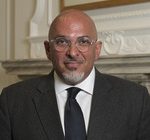
    In an interview yesterday I misspoke and said the Moderna vaccine protects against Covid and flu. What I meant to say was that Moderna is bivalent, which means it protects against both variants of Covid. You still need your flu vaccine too so please get jabbed if you’re eligible.

  • Keir Starmer – 2022 Comments on World Mental Health Day

    Keir Starmer – 2022 Comments on World Mental Health Day

    The comments made by Keir Starmer, the Leader of the Opposition, on 10 October 2022.

    On World Mental Health Day, it’s important to remember there is no shame in finding life hard at times and for saying so.
    But too many people are waiting too long for help they desperately need.
    A Labour government would guarantee mental health treatment within a month.
  • Liz Truss – 2022 Comments on World Mental Health Day

    Liz Truss – 2022 Comments on World Mental Health Day

    The comments made by Liz Truss, the Prime Minister, on 10 October 2022.

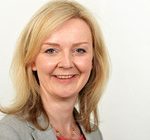
    This country has come a long way in how we talk about mental health, something we can all be proud of. I’m committed to ensuring people get the support they need to thrive, expanding mental health support for children and people getting back into work.

  • Chloe Smith – 2022 Comments on World Mental Health Day

    Chloe Smith – 2022 Comments on World Mental Health Day

    The comments made by Chloe Smith, the Secretary of State for Work and Pensions, on 10 October 2022.

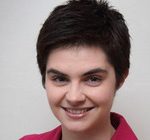
    On World Mental Health Day, it is important to recognise the virtuous circle between health and work – we know that giving people the support they need to work is very good for their long term health.

    The Government’s growth-focused agenda will deliver jobs, higher wages and greater opportunities – and I am delighted that people who have faced barriers to entering the workforce due to poor mental health will now be able to access support across England.

    Helping people access both clinical support for their mental health as well as employment advice gives them the tools they need to get into or return to work. This is vital to helping drive down inactivity and growing our economy so we can deliver more money and support for public services such as these.

  • Therese Coffey – 2022 Speech to Conservative Party Conference

    Therese Coffey – 2022 Speech to Conservative Party Conference

    The speech made by Therese Coffey, the Deputy Prime Minister and Health & Social Care Secretary, in Birmingham on 4 October 2022.

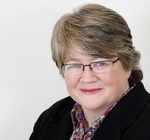
    Conference, I am delighted to be here in Birmingham for my first speech as Secretary of State for Health and Social Care, and as Deputy Prime Minister.

    I was here just a couple of months ago for the Commonwealth Games,

    And I was absolutely blown away,

    by the Games themselves,

    and also by how the city has been transformed since we were last here.

    And that is thanks to Conservative Mayor, Andy Street.

    Andy has shown,

    That being ambitious for the people and communities he represents,

    getting on with the job at hand,

    and focusing on delivery,

    is exactly what our voters want,

    and why he was re-elected,

    resoundingly.

    Conference, as a Conservative government,

    we believe in the Great British people,

    and we are ambitious for our country.

    Despite the severe challenges facing the global economy, in the wake of Putin’s illegal invasion of Ukraine, and the aftershock of Covid,

    Now is the time we must come together,

    to tackle the issues that we have long faced.

    And we will take decisive action

    to get Britain moving again….

    … from getting Britain building,

    to channelling investment into local areas,

    to helping families get on in life.

    We will deliver, deliver, deliver…

    Conference,

    Our National Health Service has the admiration and gratitude of the British people, particularly for getting us through COVID.

    The doctors, the nurses, the midwives, the paramedics, the chemists, the cleaners, and all the clinical and support staff,

    As well as all the carers, working in care homes or our communities.

    They regularly go the extra mile.

    They are the pride of Britain.

    The NHS is and always has been a national endeavour.

    That was set out in 1944, when it was a Conservative politician, Sir Henry Willink, who put forward the proposals for “A National Health Service”.

    That’s right, a Conservative MP,

    from my home city of Liverpool,

    who conceived the NHS,

    – a good omen, I think!

    And I continue to be proud of the many doctors, nurses, and dentists serving as Conservatives in Parliament,

    far more than we see in the Labour Party.

    And it is because of our Conservative Party’s commitment to the NHS,

    …That we will be spending 173 billion pounds this year on health and social care, in England alone,

    …up from 124 billion pounds when we entered office in 2010,

    …and that’s accounting for inflation –

    This has resulted in more doctors and nurses than ever before.

    But, as Health Secretary, it’s my job to be honest, and level with you about the scale of challenge ahead of us.

    And frankly,

    I won’t be turning to Labour for solutions.

    If you want to see the Labour Party running the NHS,

    just look across the border into Wales,

    where around 60,000 patients are still waiting for more than 2 years for treatment, higher than last year.

    This isn’t the time for brickbats though.

    It is precisely because healthcare matters so much

    that we need to have honest discussion

    and be prepared to hold the NHS to account

    forging a partnership with them focused on delivery, not on dogma.

    So, let’s be honest.

    While most patients receiving care in our NHS have a good experience,

    Too many do not…

    …Whether it’s the 8am scramble to see a GP…

    …Or the long waits to get tests or treatment…

    Or the struggle to see an NHS dentist at all.

    Much of this has been made worse by the pandemic.

    And I must level with you,

    Backlogs are expected to rise before they fall,

    as more patients come forward for diagnosis and treatment.

    But this isn’t just about Covid.

    There is still too much variation in patient experience.

    I saw that for myself this July when I went to A&E.

    I waited nearly nine hours to see a doctor,

    before being asked to return the next day for treatment.

    Now I knew, from previous experience,

    that would be too late,

    so I took myself to a different hospital,

    and was treated that same day.

    That is the sort of variation we see across the NHS.

    From two hospitals just a couple of miles apart, and it must change.

    That is why my first job in the Department was creating Our Plan for Patients, which puts the needs of patients front and centre.
    Our new Plan for Patients deliberately places an emphasis on primary care, the gateway to the NHS for most people.

    It empowers doctors and nurses by reducing bureaucracy,

    …which gets in the way of them doing their jobs.

    And it seeks to improve performance across the country by unlocking data.

    Now,

    You may have heard ‘ABCD’ are my immediate priorities.

    No, I wasn’t broadcasting my A Level results to the nation.

    Nor was I reciting a new hip hop beat by Dr Dre.

    Those four letters represent my commitment to focus – resolutely – on the issues that affect patients most:

    Ambulances.

    Backlogs.

    Care.

    Doctors and Dentists.

    And with my excellent ministerial team,

    Robert Jenrick,

    Will Quince,

    Neil O’Brien,

    Nick Markham,

    and our very own in-house ministerial medic, Dr Caroline Johnson,

    Together, we WILL focus on the issues that affect patients most

    To deliver their priorities.

    AND be their champion.

    Starting with ‘A’ for Ambulances.

    Access to urgent treatment can be life-saving.

    When people phone 999 because they think they or their loved one is having a heart attack or a stroke, they want to know help will come,

    and will come soon.

    Let’s be clear,

    Average waiting times are too long,

    So, we are increasing the number of 999 call handlers.

    And we must also get ambulances back on the road from handovers at hospitals,

    so we are placing a laser-like focus on our most challenged trusts, because as we saw last winter,

    nearly half of all handover delays were at just 15 trusts.

    We also know to be able to admit more patients,

    we need to open up more space in hospitals.

    So we are acting immediately to create more capacity,

    the equivalent of 7,000 more beds, this winter.

    But it’s not just capacity in our hospitals we need,

    it’s also in our communities,

    to help support people…

    …who could be cared for more appropriately at home or in a care home, rather than being kept in hospital, unnecessarily.

    That is why the ‘C’ for care is such an integral part of Our Plan.

    And why we have invested a further 500 million pounds this winter,

    so local councils and the local NHS,

    can work together to tackle delayed discharges.

    It isn’t all about emergency care though.

    It is also about diagnosis and treatment.

    And that is where we go back to ‘B’ for backlogs.

    The waiting list for planned care, made worse by the pandemic, currently stands at about 7 million.

    This includes people waiting for diagnosis, to know if they need any treatment at all.

    While, in England, we have now virtually eliminated waits of over two years,

    we are speeding up our plans to roll out community diagnostic centres, as well as new hospitals.

    And we will maximise the use of the independent sector too, when patients are waiting too long for treatment.

    Lastly, but key is ‘D’ – for doctors and for dentists.

    Now, I think it is perfectly reasonable when people need to see a GP, they should expect to do so within a fortnight.

    Of course, I would like to be more ambitious, and while I will not be prescriptive on how GPs interact with their patients,

    I am clear Patients must be able to see their doctors promptly.

    To help achieve these priorities,

    I will publish a lot more information for patients,

    so they can see how their local NHS is performing, including their GP practice, and on access to NHS care and treatment.

    Another key element is personnel.

    I have listened to why people say they are leaving the NHS,

    or what is holding them back, from offering more services.

    And I am responding.

    I am empowering GPs to use their funding more flexibly for the recruitment of more support staff, and making significant changes to pension arrangements.

    I am extending the emergency clinical register,

    so that health professionals who have come out of retirement,

    can continue to practise for a further two years.

    I am opening up more prescription capability and services to pharmacists.

    I am investing in IT for telephony and digital appointments.

    And I am making it easier for clinicians registered outside England to be accredited, to get to work more quickly, treating patients.

    It is, frankly, bonkers, that we have restrictions on the recognition of doctors, dentists, and nurses within the UK itself.

    That is why I am laying regulations next week,

    …which will allow the General Dental Council to get on with accrediting dentists to work right across our United Kingdom,

    so we can have oases of oral care, rather than dental deserts.

    This is all on top of our existing commitments,

    to boost the health and care workforce,

    including our manifesto pledge to recruit 50,000 more nurses by 2024.

    Conference,

    Whether you live in a city or a town,

    in the countryside or on the coast,

    this Conservative Government will always be on your side,

    when you need care the most.

    This is just the start of our ambitions for health and care.

    Our Plan informs patients and empowers them to live healthier lives.

    Because we know prevention is better than cure.

    It is right we continue our longer-term health approach,

    Strengthening mental wellbeing and resilience,

    as well as the physical health of the nation,

    because that is also good for the economic health of the nation.

    We have a record number of people, in work, on the payroll, but there are many vacancies still to be filled.

    We know work is good for you,

    both physically and for mental wellbeing,

    as well as putting more pounds in your pocket.

    That is why I will strive to support

    those not working now due to ill health,

    to help them to start, stay, and succeed in work;

    building on the Prime Minister’s pledge to have more mental health support in communities.

    Because together, we can deliver a healthier, more productive society, all the stronger, to help grow our economy.

    As the Prime Minister said on the steps of Downing Street,

    she has three clear priorities:

    growing the economy,

    tackling energy security and costs for households and businesses;

    and the NHS.

    When I first went into the Department,

    I asked what the biggest risk was this winter and what we could do to help?

    I was told – help with energy bills,

    so older people would not worry about the cost of turning on the heating,

    and for health and care providers too.

    The Prime Minister and the Chancellor listened.

    They acted.

    They have delivered.

    And we need to act on growing the economy too.

    We need a strong economy to have a strong NHS.

    We need a resilient, sustainable economy,

    to have a resilient, sustainable NHS.

    And we need a compassionate, and considered, Conservative government,

    to deliver, deliver, deliver.

    And that, Conference,

    is what we will do.

    Thank you.

  • Wes Streeting – 2022 Speech to Labour Party Conference

    Wes Streeting – 2022 Speech to Labour Party Conference

    The speech made by Wes Streeting, the Shadow Secretary of State for Health and Social Care, on 28 September 2022.

    If you want to see a monument to the Conservative Party’s mismanagement of the NHS is it this.

    David Wakeley, an 87-year-old pensioner with cancer.

    The makeshift tent was made by his son, to provide cover for David as he lay shivering on the rainswept concrete floor where he’d fallen.

    He had fractured ribs and a fractured pelvis.

    And he was forced to wait 15 hours for an ambulance.

    This is the state of the NHS in Tory Britain and it is an absolute disgrace.

    We have the highest NHS waiting lists in history.

    People unable to see their GP.

    Heart attack and stroke victims left waiting longer than an hour for an ambulance when every second counts.

    The Tories will try to blame the pandemic.

    But we had 100,000 NHS staff vacancies before the pandemic.

    NHS waiting lists were already at a record 4.5 million BEFORE the pandemic.

    The number of cancer patients not getting care on time rose in every single year since the Tories came to power BEFORE the pandemic.

    The longer the Conservatives are in power, the longer patients will wait.

    The Tories run from their record, but we’re proud of ours.

    Proud of 89,000 more nurses.

    44,000 more doctors.

    Faster cancer treatment.

    The lowest waiting times on record.

    And the highest patient satisfaction in history.

    That’s the difference a Labour government makes.

    But the challenge today is even greater than it was in 1997.

    The very principle of an NHS publicly funded, free at the point of use, is now under attack.

    Conservatives who spent the last 12 years running down the NHS are now using their failures to claim that the NHS is beyond repair.

    Lots of you know that I went through kidney cancer last year.

    When I received that cancer diagnosis there were so many things I worried about.

    But the one thing I didn’t have to worry about was the bill.

    So, to those who argue we should abandon a publicly funded NHS free at the point of use I say: over my dead body.

    I’m a Labour moderniser.

    I make no apology for it.

    Because if we don’t modernise and change the NHS, it will become unsustainable.

    So, here’s what we’ll do to make the NHS fit for the future.

    Without a workforce plan, the Conservatives have no plan for the NHS.

    Everything else they announce is a sticking plaster that fails to address the root cause of the NHS crisis.

    Politics is about choices. Labour believes the country needs doctors and nurses more than the richest need a tax cut.

    So, we will double the number of medical training places

    And create an extra 10,000 nursing and midwifery clinical placements every year.

    More doctors, more nurses, lower waiting times, higher standards for patients

    That’s the Labour pledge at the next general election.

    Alongside investment will come the change and modernisation that the public are crying out for.

    Voters won’t accept pouring money into 20th century healthcare that isn’t fit for the future.

    We don’t focus nearly enough on prevention, early intervention and care in the community.

    Because people can’t see a GP they end up in A&E, which is worse for them and more expensive for the taxpayer.

    Because people can’t get the mental health support they need, they reach a crisis point, which is worse for them and more expensive for the taxpayer.

    Because people can’t get the social care they need, they’re left stuck in hospital, which is worse for them and more expensive for the taxpayer.

    So, the next Labour Government will agree a 10-year plan with the NHS to shift the focus of healthcare out of the hospital and into the community.

    Our plan to recruit more doctors will deliver better access to GPs and ease pressure on A&Es.

    Our plan to recruit 8,500 mental health workers will provide faster treatment, support in schools, and ease pressure on hospitals.

    And our commitment to deliver better pay, terms and conditions for care workers, will reduce the 400,000 delayed discharges every month and provide better quality care for older and disabled people.

    The first steps on the road to a National Care Service.

    There are so many people in hospital who wouldn’t need to be there if we could provide quality care at home.

    District nursing will be at the heart of Labour’s plan.

    The Conservatives have cut four in ten District Nurse posts.

    Labour will double the number of District Nurses qualifying every year.

    For kids from working class backgrounds like mine, life chances and even life expectancy can be determined from the moment we’re born.

    Health visitors have such an important role to play in helping Mums and Dads but they are managing dangerously high caseloads.

    So, we will train 5,000 health visitors to tackle the shortage and give every child the best, healthy start in life.

    Our 10 year plan for the NHS will be the antidote to the Tory miserablism about the NHS and its future.

    I want Britain leading the revolution in medical science and technology.

    It offers a world of possibility for the NHS to transform patient care.

    Technology can diagnose patients more accurately than the human eye.

    Virtual wards allow people to receive hospital care at home.

    But the biggest prize of all is the advance in genomics and the data revolution that will allow us to transform our model care from one that diagnoses and treats illness to one that can predict and prevent it.

    This will be at the heart of Labour’s 10 year plan for change and modernisation.

    And so will higher standards for patients.

    As Labour’s Secretary of State for Health and Social Care, I’ll be the shop steward for patients.

    Giving patients a voice as well as choice.

    Patients deserve better than a two week wait to see a GP.

    I have higher standards for patients.

    When we were in government, Labour guaranteed appointments within two days.

    Labour will give all patients the ability to book online, the opportunity to self-refer to specialist services where appropriate and a wider range of choice so that we can choose whether we want to see someone face-to-face, on the phone or via a video link.

    The days of waiting on the phone at 8am to book an appointment with your GP will be over and we will bring back the family doctor.

    Patients need a Labour government.

    The NHS isn’t just Labour’s greatest achievement.

    It’s Britain’s greatest achievement.

    And the values that underpin the NHS – a publicly funded public service, free at the point of use – aren’t just Labour’s values, they are Britain’s values, too.

    And our Party has always understood that the NHS needs to change to adapt to modern challenges.

    So now it falls to our generation.

    No more over-flowing A&Es and waiting weeks to see a doctor.

    No more patients dying before they can get the treatment they need.

    No more staff in tears, leaving the NHS, broken and exhausted.

    No more cancer patients left under make-shift shelters in their gardens, waiting 15 hours for an ambulance.

    Instead – a Labour Government:

    Empowering patients.

    Cherishing staff.

    Shifting to prevention.

    Caring in the community

    Giving real choices.

    Tackling inequalities.

    Building a National Care Service.

    And an NHS fit for the future.

    The cavalry is coming with Labour.

    So, let’s go out there and win for Labour, win for the NHS and win for Britain.

    Thank you.