Category: Foreign Affairs

  • Yvette Cooper – 2021 Speech on Afghanistan

    Yvette Cooper – 2021 Speech on Afghanistan

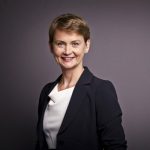
    The speech made by Yvette Cooper, the Labour MP for Normanton, Pontefract and Castleford, in the House of Commons on 18 August 2021.

    We have heard many sobering words in this debate already. I pay particular tribute to the words from our colleagues who have themselves served in Afghanistan, to all their colleagues over many years and to all those in our armed forces, particularly those who have lost their lives, including two brave soldiers from Castleford, Rifleman James Backhouse and Bombardier Craig Hopson. I also pay tribute to those who have worked in our aid agencies and for partner organisations to support development and education projects and to try to rebuild a future for Afghanistan, and to all those who have rightly worked so hard and made it possible for families to live in some semblance of security and for girls—children—to be able to go to school for many years.

    That is what makes it so disturbing, shameful and distressing to watch the events in Afghanistan right now: people who worked with us and helped us now hiding, their lives at risk; women and girls forced to hide in their homes simply because they are women and girls; hard-line extremists and terrorists back in charge, creating a security risk across the globe; and no evident strategy from the US, the UK and our allies, but what instead looks like just a chaotic retreat. We have a responsibility to respond, so I want to focus particularly on some of the practical things that should and can be done now to address the humanitarian crisis that we face.

    First, I turn to those who have put their lives at risk by working with us. I welcome the Afghan relocation and assistance policy, but it is too narrow. It refers to directly employed staff. For the last 20 years, much of the work of the UK Government, including aid work and nation rebuilding work, has been through contracts with UK agencies and organisations. The Taliban do not recognise the complexities of a contracting-out process, so many of those lives are also at risk.

    Some organisations have been in touch with their staff and former employees. One has told me that a woman who worked on the UK aid programme for three years and is now in hiding in Kabul has said this weekend:

    “only 3 weeks ago one of my neighbours told me that when they come he would tell them who I am and who my family is. A couple of days ago, a strange man told me in the streets, ‘I know where you work and who you are.’

    I fear seeing my kids tortured in front of my eyes or having my skin peeled off while I am alive. We remain locked inside, fearful of even looking out of the window—every time the door knocks fear goes through my whole body and I fear they are coming for me.”

    Another, who provided secure accommodation for UK embassy staff and British aid workers, has said:

    “Taliban fighters arrived at my father’s home this week asking for me by name. I just left my home city three days before and my father told the Taliban I had gone abroad for medical treatment. The fighters still forced their way into the house and searched every room.”

    We have obligations to these people.

    Emma Hardy

    I am sure that my right hon. Friend, along with many other Members across the House, have been contacted by people desperately worried about loved ones in Afghanistan. One of my constituents has contacted me, saying that his pregnant wife is in Afghanistan now. The Taliban have taken out the communication signals, so he is unable to contact her. He did not put in an application for her to come to this country because of the English language requirement on the application form. Surely now is the time to relax that rule temporarily to allow these people to come to our country.

    Yvette Cooper

    My hon. Friend makes a powerful point. This is the kind of flexibility that the UK Government could adopt right now. We need such measures for those who have families at risk, but we also need urgently to review and broaden the scope of the relocation scheme. The Home Secretary said in interviews this morning that those who have worked for NGOs that delivered UK aid programmes would also be included. I say to the Foreign Secretary that that is not happening on the ground right now; it is not reflected in the guidance that the Government are operating at the moment or in the application process, and people are being turned down as we speak. People have been turned down this weekend, even though they are at risk and have worked on UK-funded programmes. I urge the Government urgently to look at the relocation scheme. People cannot wait for the resettlement scheme to be in place.

    Let me say something about that too. I welcome the Government’s commitment to a resettlement scheme. The Prime Minister confirmed to me earlier that the pledge to help 5,000 people this year is in addition to the commitment made in 2019 to resettle 5,000 people a year from across the world, not instead of it. That existing resettlement scheme is not fully reinstated after covid and it urgently needs to be, but the fact that that infrastructure, those systems and that funding is in place should make it possible for us very urgently to put in place an Afghan relocation scheme, and to accelerate and be more ambitious than the announcement that the Home Secretary made this morning. Again, I urge the Government to work urgently with the agencies on the ground, which can identify straightaway the people who are at most at risk, and to recognise the position of those who are currently here, whose applications for asylum may have been turned down before circumstances escalated. Please can those cases be urgently reviewed rather than refused on out-of-date grounds? Finally, I urge the Government to do more to support refugees in the region, because we know more people will flee.

    We have a responsibility not to turn our backs. The situation may be bleak and the circumstances difficult, but we have a duty not to disengage.

  • Dan Jarvis – 2021 Speech on Afghanistan

    Dan Jarvis – 2021 Speech on Afghanistan

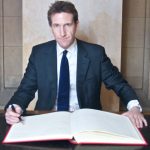
    The speech made by Dan Jarvis, the Labour MP for Barnsley Central, in the House of Commons on 18 August 2021.

    It is a great pleasure to follow the hon. Member for Plymouth, Moor View (Johnny Mercer), as it is the right hon. Member for Bournemouth East (Mr Ellwood) and the hon. Member for Tonbridge and Malling (Tom Tugendhat). They all spoke with great eloquence.

    Like many hon. Members, I am wracked with a profound sadness at the catastrophe that has unfolded in Afghanistan. Above all, it is an unspeakable tragedy for the people of that country, who, after generations of conflict, now live under a terrible cloud of fear and repression. Who could fail to be moved by the agonising scenes from Kabul airport just this week? How desperate must someone have to be to want to cling on to the side of a moving aircraft? These past 20 years have been a struggle for peace. We tried to break the cycle of war, and to give hope to women and girls. We tried to give the Afghans a different life—one of hope and opportunity—but the catastrophic failure of international political leadership and the brutality of the Taliban have snatched all of that away from them. The new Administration in Kabul should know that they will be judged not by their words, but by their actions. The world is watching.

    I want to reflect on the service and sacrifice of our brave servicemen and women, who have showed outstanding professionalism and courage throughout. As the hon. Member for Plymouth, Moor View said just a moment ago, recent developments have hit them hard, and they are grappling with the question of whether all the effort and sacrifice was really worth it. They are again grieving for fallen comrades who did not come home. Whatever the outcome in Afghanistan, those men and women, and their families, should be proud of their service, and we must be proud of them.

    Many of us who served in Afghanistan have a deep bond of affection for the Afghan people, and I had the honour of serving alongside them in Helmand. We trained together, fought together and, in some cases, died together. They were our brothers in arms. I shudder to think where those men are now. Many will be dead, and I know others now consider themselves to be dead men walking. Where were we in their hour of need? We were nowhere. That is shameful, and it will have a very long-lasting impact on Britain’s reputation right around the world.

    Mr David Davis (Haltemprice and Howden) (Con)

    The hon. Gentleman—a fellow litigant—is absolutely right in his description of the Afghan armed forces. Will he add that many of them are more heroic and better soldiers than they are given credit for around the world?

    Dan Jarvis

    I am grateful to the right hon. Gentleman, as always, and I completely agree with the point he made. It was particularly distasteful and dishonouring of President Biden to make reference to the lack of courage and commitment from those Afghan soldiers, who have served with such bravery and distinction.

    We have to be pragmatic, and at this difficult point we must think about what our next move will be. We should understand that the character of our country is defined, for better or for worse, by moments such as this. We should also understand that we face a moral and humanitarian crisis of enormous proportions, and the response from the international community and the British Government needs to meet the magnitude of the moment. We must step up the statecraft and engage with international allies and alliances, and with regional partners. Although it is a particularly bitter pill to have to swallow, we must engage diplomatically with the new regime in Kabul. It is in our cold-headed national interest to do so, because right now our armed forces are deployed on an operation to recover UK nationals and other entitled personnel. It is in their interests that we engage to try to ensure the safe passage of those who want to leave.

    We also know that many, many more will want to get out, and with our allies we need to work to establish safe routes to get them to safety. We must show compassion and genuine generosity to refugees, while accelerating and expanding the ARAP scheme to support those who supported us.

    We also need to defend the hard-won progress of the past 20 years or so—girls in school and women in Parliament and the judiciary. We must ensure that Afghanistan does not slide back to where it was pre-9/11. Then, when the dust settles, we need to look at what went wrong and learn the lessons of this failure: why, despite all the effort, could we not build an Afghan state free of corruption, with the legitimacy and competence to balance the competing forces in that country, and what does that now mean for our foreign and defence policy in this country?

    Regardless of all that, we must remain engaged; we must show leadership; we must use whatever influence we have to try to make things better. That is in our own national interest, it is in line with our values, and it is the right thing to do. We owe it to the people of Afghanistan and we owe it to ourselves.

  • Johnny Mercer – 2021 Speech on Afghanistan

    Johnny Mercer – 2021 Speech on Afghanistan

    The speech made by Johnny Mercer, the Conservative MP for Plymouth Moor View, in the House of Commons on 18 August 2021.

    I want to make three broad points about what has gone on over the past week. I want to talk about this place’s responsibility towards those who serve, and our Afghan friends and partners. I also want to speak, if I can, for veterans of the conflict to whom I have spoken over the past week.

    When it comes to responsibility, I urge Ministers to be very careful about talking exclusively about the Americans. We are very clear, and it is well understood, that the US is, or was, the framework nation in Afghanistan, but people who join the military from council estates in Plymouth, Newcastle, Stoke or Birmingham do not serve the American flag; they serve the British flag. They are proud to do so, and they do it at the behest of Ministers in this place. It dishonours their service simply to say, “The Americans have left—we are leaving.” We do not spend £40 billion a year on a tier 1 military for it to be unable to go out the door without the Americans, and the taxpayer does not expect that. I urge Ministers to take responsibility for the decisions that they make, particularly when talking with the families.

    I wish to talk about our Afghan friends and partners. I am pleased with the announcement today on refugees; it is a good start. People can talk numbers; they can say that they want more or that they want fewer, but the reality is—this is basic maths—that we will not get out of Afghanistan all those whom we promised to get out. We can say that we want more, or that we want fewer, but that is the reality. The truth is as well that we have to be honest in this place. For many, many years, people have campaigned against this relocation scheme and the previous intimidation scheme and said that it was not good enough. Decisions made by Ministers in this House have made this situation harder, so, although I welcome this change today and our onward progression, let us not kid ourselves about what has happened in the past and let us treat with a little more respect those who, with no self-interest, campaign for these people.

    Finally, I want to speak to veterans and for veterans. Over the past few days, it has become clear to me that we are dealing with new feelings—Help for Heroes put out something on this yesterday. We are not trained to lose and we are not trained to deal with the way that Ministers are choosing to be defeated by the Taliban. Was it all for nothing? Of course, it was not for nothing, and we must get away from that narrative. Whether we like this or not it is a fact that, for a period of time, Afghans—the average age in Afghanistan is 18 years old—will have experienced the freedom and privileges that we enjoy here, and no one will ever take that away from them, which is incredibly important. What are we here to do if it is not to be good, honourable people, to fight for the oppressed, to keep our families safe and to live to a higher calling? Our veterans did this over many years in some of the hardest conditions and against as dark an enemy as this nation has ever faced. We often look to our forefathers for inspiration. They emulated them. They did them proud, not in scale but in the same amphitheatre, They can be forever proud of what they did when the nation called. I say to them, “You played your role, but you cannot control what is happening now—remember that. What folk like me saw you do—the courage, the sacrifice and the humanity—will never die and it has defined us as human beings. You did that and nobody will ever take that away. I will never forget you. Every day the sun comes up, I will make sure that this place and this country do not forget you and your sacrifice on the altar of this nation’s continuing freedom.”

    The Government must now step up and support this group of bereaved families and veterans. We will see a bow wave of mental health challenges. We are not trained to cope with the feelings that we have now. I have done everything that I possibly could to support all the brilliant staff at the Ministry of Defence, the Office for Veterans’ Affairs, and the NHS, which works tirelessly supporting veterans up and down this country, but I must say to the House with a heavy heart that the Prime Minister has consistently failed to honour what he said that he would do when he was trying to become Prime Minister. He must not wriggle out of his commitments on this issue. He knows that the Office for Veterans’ Affairs is nothing like it was designed to be: the paltry £5 million funding was slashed after less than a year, there was a lack of staff, and there was not even an office from which to work. Even today, the brilliant staff at the Office for Veterans’ Affairs simply cannot cope with the scale of the demand. While his predecessors may get away with a certain degree of ignorance in this space, I am afraid that the Prime Minister has no excuse on this issue; it is a political choice. The ambivalence needs to end, and he needs to step up and listen to the charities and to the veterans, not to those whom he chooses to employ around him who do not believe veterans’ issues are worth the political capital required. The nation cares, and we will make this Government care. The scale of the challenge of dealing with this Afghan generation is only just beginning. I pay tribute to everybody who has spoken up in this debate, but particularly to those who do not have a vested interest in Afghanistan and can see the inherent injustice of what is happening now. Thank you, Mr Speaker, for recalling the House today.

  • Tobias Ellwood – 2021 Speech on Afghanistan

    Tobias Ellwood – 2021 Speech on Afghanistan

    The comments made by Tobias Ellwood, the Conservative MP for Bournemouth East, in the House of Commons on 18 August 2021.

    I do not often mention my brother Jonathan, who was killed by an al-Qaeda affiliate in Bali in 2002. That prompted my personal interest in Afghanistan, a distant country that I visited a dozen times over the past two decades to better understand what we were doing to help to rebuild that troubled country. I pay tribute to our armed forces for what they did, and to what the Secretary of State for Defence and the armed forces are doing today in the evacuation.

    It is with utter disbelief that I see us make such an operational and strategic blunder by retreating at this time. The decision is already triggering a humanitarian disaster, a migrant crisis not seen since the second world war and a cultural change in the rights of women, and it is once again turning Afghanistan into a breeding ground for terrorism. I am sorry that there will be no vote today because I believe the Government would not have the support of the House.

    The Prime Minister is not in the Chamber, but he says that the future of Afghanistan is not written. Well, its future is very much more unpredictable because of our actions. I do not believe for a second that there will be a peaceful transition to the Taliban. They are not universally liked in the country. The Uzbek and Tajik warlords are regrouping as we speak. The Northern Alliance will reform once again and a bloody, terrible civil war will unfold.

    John Redwood

    Does my right hon. Friend have any advice for the Government on how they could take action to try to prevent the recurrence of a terrorist threat under Taliban control?

    Mr Ellwood

    My fear is that there will be an attack on the lines of 9/11 to bookend what happened 20 years ago, to show the futility of 20 years. We should never have left—I will come to that in a second—because after 20 years of effort, this is a humiliating strategic defeat for the west. The Taliban control more territory today than they did before 9/11.

    I was born in the United States; I am a proud dual national and passionate about the transatlantic security alliance. Prior to him declaring his candidacy, I worked directly with President Biden on veterans’ mental health issues. He was the keynote speaker at a veterans reception here in the House of Commons, as my guest, so it gives me no joy to criticise the President and say that the decision to withdraw, which he inherited, but then chose to endorse, was absolutely the wrong call. Yes, two decades is a long time. It has been a testing chapter for Afghanistan, so the US election promise to return troops was obviously a popular one, but it was a false narrative.

    First, the notion that we gave the Afghans every opportunity over 20 years to progress, and that the country cannot be helped forever so it is time to come home, glosses over the hurdles—the own goals—that we created after the invasion. We denied the Taliban a seat at the table back in 2001. They asked to attend the Bonn talks but Donald Rumsfeld said no, so they crossed the Pakistan border to rearm, regroup and retrain. How different the last few decades would have been had they been included. Secondly, we did not start training the Afghan forces until 2005, by which time the Taliban were already on the advance. Finally, we imposed a western model of governance, which was completely inappropriate for Afghanistan, with all the power in Kabul. That was completely wrong for a country where loyalty is on a tribal and local level. That is not to dismiss the mass corruption, cronyism and elitism that is rife across Afghanistan, but those schoolboy errors in stabilisation hampered progress and made our mission harder.

    There is also the notion that we cannot fight a war forever. We have not been fighting for the last three years. The US and the UK have not lost a single soldier, but we had a minimalist force there—enough assistance to give the Afghan forces the ability to contain the Taliban and, by extension, give legitimacy to the Afghan Government. The US has more personnel based in its embassy here than it had troops in Afghanistan before retreating. Both the US and the UK have long-term commitments across the world, which we forget about. Japan, Germany and Korea have been mentioned. There is Djibouti, Niger, Jordan and Iraq, and ourselves in Cyprus and Kenya, for example, and the Falklands, too. It is the endurance that counts. Success is not rated on when we return troops home. Such presence offers assurance, represents commitment, bolsters regional stability, and assists with building and strengthening the armed forces. That is exactly what we were doing in Afghanistan.

    Last year, the Taliban were finally at the negotiation table in Doha, but in a rush to get a result, Trump struck a deal with the Taliban—by the way, without the inclusion of the Afghan Government—and committed to a timetable for drawdown. All the Taliban had to do was wait. The final question is about whether the UK can lead or participate in a coalition without the US. Where is our foreign policy determined—here or in Washington? Our Government should have more confidence in themselves.

    Graham Stringer (Blackley and Broughton) (Lab)

    The right hon. Gentleman makes perfectly reasonable and justified criticisms of the way the American Government came to a decision to leave in such haste, but like a number of other right hon. and hon. Members, the implication of his speech is that we somehow could have had an independent Afghan policy without the Americans. Can he explain how?

    Mr Ellwood

    First, the Americans are not leaving Afghanistan. This is a complete myth. The CIA will remain there, as will special forces and the drone oversight. Why? Because they will be haunted by another terrorist attack. It is the political inclination and the leadership that is disappearing—because of an American president, or two American presidents—and we could have stepped forward and filled the vacuum, but we did not. We need to have more confidence as a Government in ourselves, as we did in the last century. I thought that this was in our DNA. We have the means, the hard power and the connections to lead. What we require is the backbone, the courage and the leadership to step forward, yet when our moment comes, such as now, we are found wanting. There are serious questions to ask about our place in the world, what global Britain really means and what our foreign policy is all about.

    We must raise our game. Why? Step back. We seem to be in denial about where the world is going. As I have said in the House many times, threats are increasing. Democracy across the globe is under threat and authoritarianism is on the rise, yet here we are, complicit in allowing another dictatorship to form as we become more isolationist. What was the G7 summit all about? The western reset to tackle growing instability, not least given China, Russia and Iran. Take a look at a map. Where does Afghanistan sit? Right between all three. Strategically, it is a useful country to stay close to, but now we have abandoned it and the Afghan people as well. Shame on us.

    I hope that the Government think long and hard about our place in a fast-changing world. Bigger challenges and threats loom over the horizon. We are woefully unprepared and uncommitted. We—the UK and the west—have so many lessons to learn. I repeat my call for an independent inquiry. We must learn these lessons quickly. The west is today a little weaker in a world that is a little more dangerous because we gave up on Afghanistan.


  • Ed Davey – 2021 Speech on Afghanistan

    Ed Davey – 2021 Speech on Afghanistan

    The speech made by Ed Davey, the Leader of the Liberal Democrats, in the House of Commons on 18 August 2021.

    It is a genuine honour to follow the hon. Member for Tonbridge and Malling (Tom Tugendhat). I thank him, on behalf of the whole House and the whole country, not just for his powerful speech today but for his service and the service of men and women in our armed forces who showed his courage in Afghanistan. I agree with him wholeheartedly that if we are going to look forward, we need to work with our international partners in Europe and across the world. We need to forge new relationships and not be over-dependent on one ally, however important and powerful that ally is. The failure to do that—indeed, the backward steps that this Government have taken in that regard in recent years—is one of the reasons our nation is weaker today, and it has been for far too long.

    We are deeply proud of our armed forces, our diplomats and our aid workers who have done so much in Afghanistan, so it has been heartbreaking in the last few days to listen to the families, particularly of the 457 British soldiers who made the ultimate sacrifice, asking the question “What was it all for?” and to listen to veterans remembering their comrades. Captain James Kayll, who made two tours of duty in Afghanistan, said on Sunday:

    “After years and years of incredibly hard work from remarkable armed services in the country, I don’t know how I could ever, ever look the parents of fallen soldiers in the eye and say that what they did was worth it.”

    Will the Prime Minister look our injured veterans and the families of the fallen in the eye and tell them it was worth it, after his foreign policy catastrophe?

    The American decision to withdraw was not just a mistake; it was an avoidable mistake, from President Trump’s flawed deal with the Taliban to President Biden’s decision to proceed—and to proceed in such a disastrous way. The human impact on the lives of millions of Afghans, especially women and refugees, is the most obvious and alarming consequence, but the impact on global politics and on Britain’s national security will be so negative that I fear this mistake will affect the lives of millions around the world for years to come.

    Coalition forces were in Afghanistan for the protection and security of American and British people just as much as for Afghans. For well over seven years, coalition forces have not been doing the vast bulk of the fighting; the Afghan army has. Like others, when I heard President Biden blame Afghans for not fighting for their country, I could not believe it. He showed no awareness that more than 69,000 members of the Afghan forces have been killed.

    I cannot hold President Biden to account in this House, but I can hold our own Government to account. Our Prime Minister and his Cabinet cannot escape their culpability for this disaster—for both the mistaken decision to withdraw, and how the withdrawal has turned into such a catastrophe. From the Prime Minister’s self-evident lack of influence and clout in Washington, to his negligent inability, yet again, to master his brief and plan properly for the withdrawal, today’s occupant of No. 10 has become a national liability.

    If the Prime Minister wants to dispel that growing view of him, let him answer the following questions. What role did the British Government play in the negotiations with the Taliban that led to President Trump’s flawed deal with them? Did the Prime Minister raise any concerns with President Biden about the wisdom of withdrawal from Afghanistan? If he did, what impact did he have in changing anything about President Biden’s policy? Either the Prime Minister has a close relationship with the US but failed to exploit it, or he has no close relationship and nothing to put in its place. Frankly, his foreign policy is a total disaster.

    On Britain’s withdrawal planning, will the Prime Minister explain why he so misjudged the situation in Afghanistan that he told the House back on 8 July:

    “I do not think that the Taliban are capable of victory by military means”?—[Official Report, 8 July 2021; Vol. 698, c. 1112.]

    The Prime Minister appears to have had no understanding of the security and defence situation in Afghanistan as recently as last month. Despite being warned in this House and elsewhere that the Taliban would move rapidly on Kabul, his failures, along with President Biden’s, have led directly to the crisis that is unfolding before our eyes.

    Afghans who have risked everything to help our soldiers and aid workers are now desperate for our help to escape. Refugees are fleeing in fear of their lives. Women and girls are seeing their futures stolen. Last night’s announcement that the Government are willing to take only 5,000 refugees in the next year utterly fails to respond to this crisis or to meet our obligations to so many Afghans.

    Finally, there is the frightening failure to achieve the aim of the whole mission: to keep British people safe from international terrorists trained in Taliban Afghanistan. Where is the worked-through strategy, internationally agreed, to prevent Afghanistan from returning to the vector of terrorism that it once was? There isn’t one. Despite the Government’s having 18 months to prepare, they have not prepared a counter-terrorism strategy with our allies. I guess that that is why this Prime Minister will not ever be able to look the families of the fallen in the eye.

  • Tom Tugendhat – 2021 Speech on Afghanistan

    Tom Tugendhat – 2021 Speech on Afghanistan

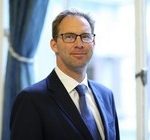
    The speech made by Tom Tugendhat, the Conservative MP for Tonbridge and Malling, in the House of Commons on 18 August 2021.

    Like many veterans, this last week has seen me struggle through anger, grief and rage—through the feeling of abandonment of not just a country, but the sacrifice that my friends made. I have been to funerals from Poole to Dunblane. I have watched good men go into the earth, taking with them a part of me and a part of all of us. This week has torn open some of those wounds, has left them raw and left us all hurting. And I know it is not just soldiers; I know aid workers and diplomats who feel the same. I know journalists who have been witnesses to our country in its heroic effort to save people from the most horrific fates. I know that we have all been struggling. If this recall has done one thing, it has achieved one thing already. I have spoken to the Health Secretary, who has already made a commitment to do more for veterans’ mental health.

    [Hon. Members: “Hear, hear.”]

    This is not just about us. The mission in Afghanistan was not a British mission—it was a NATO mission. It was a recognition that globalisation has changed us all. The phone calls that I am still receiving, the text messages that I have been answering as I have been waiting, putting people in touch with our people in Afghanistan, remind us that we are connected still today, and Afghanistan is not a far country about which we know little. It is part of the main. That connection links us also to our European partners, to our European neighbours and to our international friends, so it is with great sadness that I now criticise one of them, because I was never prouder than when I was decorated by the 82nd Airborne after the capture of Musa Qala. It was a huge privilege to be recognised by such an extraordinary unit in combat. To see their commander-in-chief call into question the courage of men I fought with, to claim that they ran, is shameful. Those who have never fought for the colours they fly should be careful about criticising those who have.

    [Hon. Members: “Hear, hear.”]

    What we have done in these last few days is demonstrate that it is not armies that win wars. Armies can get tactical victories and operational victories that can hold the line; they can just about make room for peace—make room for people like us to talk, to compromise, to listen. It is nations that make war; nations endure; nations mobilise and muster; nations determine and have patience. Here we have demonstrated, sadly, that we—the west, the United Kingdom—do not.

    This is a harsh lesson for all of us, and if we are not careful, it could be a very, very difficult lesson for our allies, but it does not need to be. We can set out a vision, clearly articulated, for reinvigorating our European NATO partners, to make sure that we are not dependent on a single ally, on the decision of a single leader, but that we can work together—with Japan and Australia, with France and Germany, with partners large and small—and make sure that we hold the line together. Because we know that patience wins. We know it because we have achieved it; we know it because we have delivered it. The cold war was won with patience; Cyprus is at peace, with patience; South Korea, with more than 10 times the number of troops that America had in Afghanistan, is prosperous through patience. So let us stop talking about forever wars. Let us recognise that forever peace is bought, not cheaply, but hard, through determination and the will to endure. The tragedy of Afghanistan is that we are swapping that patient achievement for a second fire and a second war.

    Now we need to turn our attention to those who are in desperate need, supporting the United Nations High Commissioner for Refugees, the World Food Programme and so many other organisations that can do so much for people in the region. Yes, of course I support refugees, although I am not going to get into the political auction of numbers. We just need to get people out.

    I leave the House with one image. In the year that I was privileged to be the adviser to the governor of Helmand, we opened girls’ schools. The joy it gave parents to see their little girls going to school was extraordinary. I did not understand it until I took my own daughter to school about a year ago. There was a lot of crying when she first went in—but I got over it—[Laughter]—and it went okay. I would love to see that continue, but there is a second image that I must leave the House with. It is a harder one, but I am afraid it is one that we must all remember.

    Adam Afriyie (Windsor) (Con)

    I wonder whether my hon. Friend could say a bit more about that second image.

    Tom Tugendhat

    I am very grateful to my hon. Friend, who was watching the clock more than me.

    The second image is one that the forever war that has just reignited could lead to. It is the image of a man whose name I never knew, carrying a child who had died hours earlier into our firebase and begging for help. There was nothing we could do. It was over. That is what defeat looks like; it is when you no longer have the choice of how to help. This does not need to be defeat, but at the moment it damn well feels like it.

    [Applause.]

    Mr Speaker

    Order. Please, this is a very serious debate, and that was a very emotive and very important speech. We must recognise that we have to get through.

  • Harriet Harman – 2021 Speech on Afghanistan

    Harriet Harman – 2021 Speech on Afghanistan

    The speech made by Harriet Harman, the Labour MP for Camberwell and Peckham, in the House of Commons on 18 August 2021.

    It is an honour to follow the Father of the House.

    I strongly agree with what was said by the Leader of the Opposition and by the right hon. Member for Maidenhead (Mrs May), who speaks with the experience of having served as Prime Minister. I particularly agree with what she said about the threat of terrorism and the need fully to reinstate our aid budget, the issues for NATO and the proud legacy of our troops.

    We have all looked on in horror as the events in Afghanistan have unfolded. I join everyone who is urging the Prime Minister and the Foreign Secretary to do everything they can to help UK nationals, including my constituents, who are stranded and in hiding in Kabul, desperately needing to get back home to the UK. We urgently need to evacuate those who worked with us, who thereby feel that they are vulnerable and to whom we have a moral obligation. The Government are setting up a refugee resettlement programme. I urge them to make a realistic and generous assessment of the scale of the need and to work with all local authorities that want to play their part in giving a warm welcome to those who are fleeing. The Government also need to work, of course, with NATO countries and more widely on an international resettlement programme.

    We need to think about those who cannot or do not want to leave, particularly women and girls. When the Taliban were last in control, there were literally no girls in school. Now—at least, up until the Taliban took over again—40% of schoolchildren are girls; over the last 20 years, there has been a whole generation of girls who have been educated, and a whole cohort of young women who have been able to work and want to continue to do so.

    When the Taliban were last in control, there were no women in public life—no women to speak up for other women. Women were silenced. Now there are 69 women Afghan MPs. Indeed, three years ago, one of them—Elay Ershad—came to this Chamber to speak from the Front Bench while participating in our Women MPs of the World conference, and was welcomed by the former Prime Minister to No. 10 Downing Street. The President has fled but Elay is staying in Kabul with her daughters, in solidarity, she says, with her people. What courage. The Afghan army has retreated, but so many Afghan women are standing their ground. All those women politicians and activists are determined not to let the progress of the last two decades be crushed. They now face great jeopardy. I know that the whole House, the Prime Minister and the Foreign Secretary will express publicly our solidarity with and admiration for Afghan women MPs, who, as parliamentary pioneers—having stepped forward into public life to make a reality of democracy for that half of the population of Afghanistan who are women and girls—are now, in the face of such an uncertain future, determined to protect and defend those rights.

    As to what we can do, I would say: do not just listen to the male leaders about what we need to do for women. I say to the Foreign Secretary, do not just speak to the men; pick up the phone to those women Afghan MPs, ask them what we can do to support women and girls in Afghanistan, and then do it.

  • Sir Peter Bottomley – 2021 Speech on Afghanistan

    Sir Peter Bottomley – 2021 Speech on Afghanistan

    The speech made by Sir Peter Bottomley, the Father of the House, in the House of Commons on 18 August 2021.

    While the best still apply to join our Royal Navy, the Army, the Royal Marines and the Royal Air Force, we can have hope for the future. We weep for the losses; we acknowledge mistakes; we will remember them. When I, like other MPs, have visited our armed forces in Iraq, Afghanistan, the Falklands and the former Yugoslavia, I was with ordinary people, working together to achieve remarkable results, of significance to us and often of lifesaving importance to others.

    Those who were here for the Saturday debate on the Falklands found, I think, a rather different style of debate, when people were united on what we ought to try to achieve. As Enoch Powell said, the reason to intervene in the Falklands was not that we were guaranteed to succeed, but that the mission was capable of success. That would not have been the case if we were trying to resist, say, China taking Hong Kong.

    Our experience in Afghanistan in the 19th century, and in the 20 years’ conflict that has now come to an end, will make people think about whether what was aimed for in Afghanistan after the initial targets were achieved was going to have an end that could be happy or content. I do not think it was an example of trying to resist nationalism, because the forces within Afghanistan are multifarious and have their histories, which I will not go into now.

    The second debate, which I have read up on a number of times during my parliamentary service, was the Norway debate, where again there were some speeches of most remarkable intelligence and experience, and others that, frankly, I think people should have been slightly ashamed of. We have to learn that what this Parliament can do is not to be Government but to try to question Government, support Government where appropriate, and get them to change at times.

    On the question whether there should be an inquiry, it would be interesting to hear the views of the Chairmen of the Foreign Affairs and Defence Committees, either today or some other time, because I think that would be useful.

    I do not want to spend too much time, because I want to make up some of the time that was used by my right hon. Friend the Member for Ross, Skye and Lochaber (Ian Blackford), who when he said he was concentrating seems to have lost his concentration once or twice, and when he said he was being wound up, some of us thought ought to have been wound down. [Laughter.]

    The key issues are obvious: what is happening now, what happens now and then what lessons can be learned. On what is happening now, the reports given by Ministers both in this House and to Members of Parliament across the Chamber are important and valuable; please can those continue? What can happen will be determined in large part by those who are presently in command in Afghanistan—whether they control Afghanistan is a separate issue—but people may look back and say that the speed of transition, in the end, might have been better than a prolonged start to a civil war. But that is in the future; we cannot judge that and I will not try to do that.

    I end by saying this. If we decide that we are not going to get involved in world affairs, the world will be worse. If we decide that we are going to have the capability to work with others when we can, and occasionally on our own, that is fine. But as a Parliament, we ought to be aware that we probably made a mistake in backing Government over one of the Iraq wars. In my view we certainly made a mistake in not backing Government over Syria. If we look at the number of people who have died in Syria and the number of refugees around the world and make the comparison with Afghanistan, I think we probably should be ashamed of our vote over Syria.

    I stop now, as an example to others.

  • Ian Blackford – 2021 Speech on Afghanistan

    Ian Blackford – 2021 Speech on Afghanistan

    The speech made by Ian Blackford, the SNP MP for Ross, Skye and Lochaber, in the House of Commons on 18 August 2021.

    Thank you, Mr Speaker, for facilitating the recall of Parliament. It is a pleasure to follow the right hon. Member for Maidenhead (Mrs May), and I hope the Government will reflect very carefully on her words—particularly her remarks at the end of her contribution about the role of NATO in the light of the American decision to pull out of Afghanistan. These are very real issues about the capabilities within NATO. If I may say so, it is about not just the capability of NATO but how we make sure the United Nations has all the tools at its disposal to do what we expect of it. We will have to return to these matters in this House when we come back from recess.

    I thank the Government for the briefings we have had over the course of the last few days, and in particular I commend the Defence Secretary for making himself available and for how he has conducted himself. Indeed, that is also true of Ministers in the Home Office—I think particularly of the Under-Secretary of State, the hon. Member for Torbay (Kevin Foster) and, from the Foreign Office, the Minister for the Middle East and North Africa. When we are talking about human lives being lost, it is important that we in this House work together where it is possible but—yes, of course—that we ask legitimate questions.

    There can be little doubt that the chaos and crisis that has been inflicted on the Afghan people is the biggest foreign policy failure of modern times. The sheer scale of that political failure is matched only by the humanitarian emergency that it has now unleashed. As we gather here this morning, the future and fate of Afghanistan has never been more uncertain. Afghanistan, a country that has been through so much, is once again facing a period of darkness. Over the course of the past week we have watched those tragic images from afar. The scenes of Afghans seeking to jump on to moving planes to escape will haunt us for the rest of our lives. We have watched from afar, but we all have a deep sense of sorrow about just how closely the UK has been involved in what has unfolded. Geographical distance does not for a second diminish the moral responsibility that we need to feel for the west’s role in this crisis. Washing our hands of this crisis will not make it go away, and it definitely will not wash away our responsibility to the Afghan people. We all know that acting now will be too little, too late, but better little and late than nothing at all.

    Today we have a choice: we can either offer meaningless words of sympathy and stand idly by, or we can start to do the right thing. We can take responsibility and act. The Home Secretary has today talked about evacuating more contacts of the UK Afghanistan operation from the existing resettlement scheme. Let me be clear: there should be no ifs or buts; everyone who has worked with UK forces and who by definition has a vulnerability, must be moved to a position of safety. No one can be left behind. That is our moral and ethical responsibility. All those who work with us are our responsibility. We do not, we cannot, walk away from them. Today I am asking the Government to make that commitment.

    That action needs to begin with a co-ordinated domestic and international effort to offer safe passage, shelter and support to refugees fleeing this crisis is obvious. That action cannot wait. If we are to act, we must act with the same speed with which the situation in Afghanistan has developed. I am sad that the scheme announced last night by the UK Government, and today by the Prime Minister, does not go nearly far or fast enough. It can only be right that the number of refugees we welcome here reflects the share of the responsibility that the UK Government have for this foreign policy disaster. This scheme falls way short of that responsibility. The scheme must be far more ambitious, generous, and swift to help the Afghan citizens that it has abandoned and left at serious risk of persecution, and indeed death. The scale of the efforts must match the scale of the humanitarian emergency.

    Liz Saville Roberts (Dwyfor Meirionnydd) (PC)

    Considering that the Government promised in 2016 to save 3,000 unaccompanied refugee children from Calais, is the right hon. Gentleman concerned that the number who have actually been saved stands at around 380? If those promises can be broken, and among those children were many from Afghanistan, is he concerned that the promises made today may be as unrobust as those of the past?

    Ian Blackford

    I agree with the right hon. Lady that it is important the House has the opportunity to reflect on this and consider what mechanisms we need to put in place to protect people in Afghanistan.

    The harsh reality is that 3 million people have already been displaced, and 80% of those fleeing their homes are women and children. These people are now crying out for our help.

    Brendan O’Hara (Argyll and Bute) (SNP)

    My right hon. Friend will be aware that yesterday the Nobel laureate Nadia Murad said:

    “I know what happens when the world loses sight of women and girls in crises. When it looks away, war is waged on women’s bodies.”

    Sadly, she is correct. Does my right hon. Friend agree that, if we do not act now and go so much further than the Government are proposing to protect women and girls, this political disaster will become a catastrophic moral failure?

    Ian Blackford

    I agree with my hon. Friend.

    I just reflected on the fact that 3 million people have already been displaced. We need to show a generosity of spirit that recognises the scale of the challenge we face, so that women do not face the loss of their human rights, so that women do not face persecution and, yes, so that women do not face even worse, including death.

    It is important to say that, if we are to support the Afghan people, this crisis needs to mark a point of fundamental change in this Government’s approach to refugees. In the past few months alone, this Government have introduced a hateful anti-refugee Bill that would rip up international conventions and criminalise those coming from Afghanistan in need of our refuge. The UK Government have spent a sizeable part of their summer making political play of turning away migrants and refugees in small boats who are desperately making their way across the channel.

    Jack Brereton (Stoke-on-Trent South) (Con)

    Given that Glasgow is the only city and authority in Scotland to be part of the resettlement scheme up until now, will the SNP stick to their rhetoric and start putting forward other authority areas to be part of the resettlement scheme?

    Ian Blackford

    My goodness, my goodness, my goodness. I do not think the hon. Gentleman has been listening to anything we have been saying over the past few days. I will talk about this in more detail, because I have been asking for the resettlement scheme to work on the basis of the Syrian scheme that we had in the last decade. I tell the House that the Scottish Government stand ready to work with the UK Government—[Interruption.] We are talking about people who are facing extreme risk, and that is what we get from the Government Benches. They should be careful, because people in the United Kingdom, and perhaps people in Afghanistan, are listening. Perhaps a bit of dignity from the Government Benches would not go amiss.

    I want to make sure that every local authority in Scotland has the opportunity to take refugees from Afghanistan, and that is precisely the position of the Government in Scotland, but is has to come with the Government in London and the devolved Administrations working together. There has to be a summit of the four nations to discuss exactly how this will work.

    Alan Brown

    Just to correct the record, my local authority, East Ayrshire Council, has resettled Syrian refugees.

    Brendan O’Hara

    As has mine.

    Alan Brown

    The hon. Member for Stoke-on-Trent South (Jack Brereton) should correct the record.

    Ian Blackford

    My hon. Friend is correct, and my area of the highlands has refugees from Syria, too, and they were made most welcome by the community. In view of the hostile environment that we are seeing once again from the Conservative party, let us reflect on the fact that these are people who came here to receive sanctuary and who have gone on to make a contribution to our life. They were welcome, refugees are welcome and Afghans are certainly welcome in every part of Scotland.

    Barry Gardiner (Brent North) (Lab)

    Before the right hon. Gentleman was rerouted by the hon. Member for Stoke-on-Trent South (Jack Brereton), he was making a powerful point about those who come across the channel in boats, and the Government’s proposals for them. Does he recognise that, according to organisations such as Safe Passage, 70% of the unaccompanied minors crossing the channel come from Afghanistan, and to criminalise them is a criminal act in itself?

    Ian Blackford

    Yes, I agree with the hon. Gentleman. The Government must reflect carefully on this over the course of the summer, and change their ways before we come back and debate these matters again.

    Several hon. Members rose—

    Ian Blackford

    I will make some progress before giving way again.

    We have just had it demonstrated that the hostile attitude and approach to refugees truly exists and extends to those from Afghanistan. Since the most recent conflict began, in 2001, the Home Office has rejected asylum for 32,000 Afghans, including 875 girls. The total number of Afghans in the system stands at 3,117, so if we are to have any confidence that this is a turning point, this UK Government need to rethink radically how they respond to the refugee crisis unfolding before our eyes.

    Dr Caroline Johnson (Sleaford and North Hykeham) (Con)

    No one in this House can fail to be moved by the scenes from Afghanistan we are seeing on our television screens, and I am delighted to hear that the Scottish Government stand ready to do their part. Will the right hon. Gentleman confirm how many refugees the Scottish Government are ready to resettle?

    Ian Blackford

    I will discuss that a little later on—[Interruption.] I have to say to Government Members that these are serious issues. I welcome the hon. Member’s intervention, and I will give the real-life example of what happened with Syria. Scotland took 15% of the refugees who came from Syria—

    Carol Monaghan (Glasgow North West) (SNP)

    Twenty per cent.

    Ian Blackford

    Twenty per cent.—so we have done our bit, and we stand ready to do our bit again. I commit myself as leader of the SNP here, and I commit my Government to work with the Government here in London—but they have to extend the hand of friendship to us.

    Jamie Stone (Caithness, Sutherland and Easter Ross) (LD)

    Let us hope that refugees do not become a political football in this place. All of us—all of us—care desperately about giving these people safe haven. We welcome them in the highlands, we welcome them everywhere, but does the right hon. Gentleman agree that the proper finance to support our local authorities must be forthcoming from the UK Government and the Scottish Government, because without it our councils will struggle?

    Ian Blackford

    Yes, I agree, and I thank the hon. Gentleman for that intervention because I know that he will associate himself with me in saying that we will extend 100,000 welcomes to those who wish to come to the highlands of Scotland.

    We have called for a four-nations summit to integrate our efforts across the United Kingdom. I hope that the Prime Minister will respond positively and take the opportunity to meet the devolved Administrations to discuss this. Perhaps he will indicate now that he is happy to do that.

    The Prime Minister indicated assent.

    Ian Blackford

    We have it on the record that the Prime Minister is happy to do that—that he is happy to have a four-nations summit. I am grateful.

    David Linden (Glasgow East) (SNP)

    There has been much focus today on making sure we offer sanctuary for people from Afghanistan, but last night I was speaking to my Carmyle constituent Mohammad Asif, who is originally from Afghanistan. He wants to make sure that we also offer humanitarian protection to those who are already seeking asylum in the City of Glasgow. On the point made by the hon. Member for Stoke-on-Trent South (Jack Brereton), yes, the City of Glasgow has done its fair share to welcome refugees and we stand ready to do a lot more, but I have to say to him that 30 refugees per parliamentary constituency is a paltry number that he should be ashamed of.

    Ian Blackford

    At the end of the day, it is important that we all do what we can. I commend Glasgow City Council and Glasgow’s MPs and MSPs, but it is the people of Glasgow who have done so much to welcome asylum seekers to their city.

    We believe that the resettlement scheme should emulate and exceed the Syrian vulnerable persons resettlement scheme. It must also be enacted and deployed much more quickly than the Syrian scheme. Afghan refugees should not—and cannot—wait for up to five years for safety. They need safe passage and they need it now. The scheme should be open to Afghans who supported UK Government-funded programmes and who worked for the UK and other international organisations. It should have a minimum commitment to welcome at least 35,000 to 40,000 Afghan refugees in the UK, in line with the population share of refugees welcomed from Syria.

    Three thousand of those Syrian refugees have made Scotland their new home. They have contributed to our economy and our communities. They were Syrians; they are now part of Scotland’s story. They are our friends and neighbours. It is only right that we offer the same warmth and welcome to Afghan refugees facing the same dangerous and desperate situation.

    The crisis has thrown into sharp focus the disaster of the overseas development cuts, which were rammed through before the summer recess. When the Prime Minister talks about the increase in spending in Afghanistan, it still does not take us to the level of spending that was previously committed. The cuts to overseas aid were immoral and shameful before this humanitarian emergency. It is now a policy—

    The Secretary of State for Foreign, Commonwealth and Development Affairs and First Secretary of State (Dominic Raab)

    You don’t listen.

    Ian Blackford

    Do I not listen? I am afraid that the person who is not listening—maybe he is still on holiday—is the Foreign Secretary. You have not taken the spending back to the level where it was. [Interruption.] No, you are not doubling it.

    Mr Speaker

    Order. We do not use “you”, as the right hon. Gentleman well knows, because I do not take responsibility, and he would not expect me to.

    Ian Blackford

    You certainly do not want to take responsibility for a Foreign Secretary who cannot realise the facts of the matter. You have taken spending to below where it previously was. If you cannot accept that, you cannot even count.

    Mr Speaker

    Order. The right hon. Gentleman keeps using “you”. He must come through me. I am the Chair. The Foreign Secretary is not the Chair.

    Ian Blackford

    Indeed, Mr Speaker.

    It is important that the cuts to overseas aid are reversed in their entirety. [Interruption.] I know that the Foreign Secretary is trying to wind me up. When the rest of us were doing what we could in the past few days, he was lying on a sunbed, so I will not take any lectures from someone like him. People are facing the worst situation imaginable and we have a Foreign Secretary who sits laughing and joking on the Government Front Bench. He should be ashamed of himself. He demonstrates that he has no dignity whatsoever. He can carry on saying that the amount has been doubled—

    Bob Seely

    On a point of order, Mr Speaker. We have had 20 minutes of speech and we now have a private conversation between Front Benchers. Should we not be debating the subject, Sir?

    Mr Speaker

    That is for me to decide and I have referred twice to both sides trying to antagonise each other, which is not a good idea. Whichever Front Bench it is, they should not be responding. I am sure that Mr Blackford is coming to the end of his speech. He did say that he would not take too long.

    Ian Blackford

    Mr Speaker, this is an important matter. Aid spending in Afghanistan is still below what it was meant to be and the Foreign Secretary does not have the decency to understand and accept that. It just shows that he is out of touch with what people want, in the House and across these islands. Perhaps the Foreign Secretary will get a chance to intervene later on, but continuing to chunter from a sedentary position shows, really, that he has no dignity. He ought to have some self-respect.

    When it comes to aid, it is telling to reflect on the chasm between the amount invested in this conflict and the amount invested in development. Since 2001, the UK Government have spent around £27.7 billion on military operations in Afghanistan. Over the same period, they have spent approximately £3.8 billion in aid. That amounts to eight times as much spending on military action as on supporting communities or helping to rebuild the country. Those figures alone should make this House seriously reflect on all the priorities, policies and political decisions that have ultimately resulted in this failure, and the failure rests on the shoulders of the Prime Minister and his Foreign Secretary. Billions have been invested to support these failed military decisions, and it is the Afghan people who are left paying the ultimate price.

    I have concentrated my remarks on the here and now because we understand that the immediate priority must be to do everything that we can to protect lives. But in time there must also be a chance to review how the UK’s involvement in the region went so badly wrong. It is right to put on record today that there must be a future judge-led inquiry into the war in Afghanistan. We owe that to the brave men and women in our military who were sent there—many of them not returning; many of them making the ultimate sacrifice. Let me thank each and every one of those who have given so much to secure peace in Afghanistan.

    As we exit Afghanistan, it is our forces that have to go back to facilitate our departure, putting themselves on the frontline once again. It is little wonder that so many of our service personnel and their families are asking what their involvement in Afghanistan was for. We have let Afghanistan down by the nature of our departure, but we have also let down our military. We should salute each and every one of them. They are right to be angry at the political failure. We owe that inquiry, too, to the many professionals and volunteers who were led to believe that they were there to support the Afghan people in building their nation; and we owe it to the future that such a massive foreign policy failure is never again repeated.

    It is clear that Afghanistan did not go from relative stability to chaos overnight. The current situation is an acceleration of an existing state of affairs, of which the UK, the US and the Afghan Governments were seemingly unaware. The exit strategy was not properly planned, so it appears that the only people who were planning were the Taliban. There remain so many massive questions for the Prime Minister and his Government. How did the 300,000 men of the Afghan national defence and security forces seemingly vanish overnight? Why was so much trust placed in an Afghan Government that disintegrated the moment that foreign troops left? Why did the UK Government not push for a United Nations-led exit strategy, rather than silently sitting on the sidelines as the US made their decisions? Although history may well cast the final verdict on many of these questions and decisions, we also need the answers and accountability that only a judge-led inquiry can ultimately bring.

    I began my remarks by saying that we are witnessing a humanitarian emergency from afar, but the sad reality is that this is by no means close to the first tragedy experienced by the Afghan nation. The story of Afghanistan is of a country and a people torn apart by tragedy time and time again. Over the years, great powers and vast armies have come and gone. It is the Afghan people who have always been left behind. There is, sadly, no evacuation and no escape for them from foreign policy failure. I am sure that many Afghan citizens simply see a cycle endlessly repeating itself. As an international community, we have collectively wronged these poor people for the best part of a century.

    We asked the citizens of Afghanistan to work with us. We watched as girls were able to receive an education, as women were able to excel in so many fields, so that a light could be lit, pointing a path to a brighter future for so many to benefit from freedom of opportunity. That light has been extinguished. The future for so many women and girls is dark and forbidding. We have let them down. It is time to do the right thing. For those deserving and in need of our aid and our support, now is the moment to act; now is the moment for leadership.

  • Theresa May – 2021 Speech on Afghanistan

    Theresa May – 2021 Speech on Afghanistan

    The speech made by Theresa May, the Conservative MP for Maidenhead and the former Prime Minister, in the House of Commons on 18 August 2021.

    I had the opportunity to visit Afghanistan twice, but I recognise that there are others across this House whose experience is more recent, more vivid, more practical, and longer and broader than mine. But when I was there, I was struck by the commitment and dedication of our armed forces serving there and of other British personnel. All were doing what they could to give hope to the people of Afghanistan—people who, thanks to our presence, were able to enjoy freedoms they had been denied under the Taliban.

    Twenty years on, 457 British military personnel have died in Afghanistan, and many more have suffered life-changing injuries. Yes, many girls have been educated because of British aid, but it is not just that the freedoms once enjoyed will now be taken away; many, many Afghans—not just those who worked with British forces—are now in fear of their lives. It is right that we should open up a refugee scheme, but we must make absolutely certain that it is accessible to all those who need it.

    Of course, the NATO presence was always going to end at some point in time, but the withdrawal, when it came, was due to be orderly, planned and on the basis of conditions. It has been none of those. What has been most shocking is the chaos and the speed of the takeover by the Taliban. In July of this year, both President Biden and my right hon. Friend the Prime Minister indicated that they did not think that the Taliban were ready or able to take over control of the country. Was our intelligence really so poor? Was our understanding of the Afghan Government so weak? Was our knowledge of the position on the ground so inadequate? Did we really believe that, or did we just feel that we had to follow the United States and hope that, on a wing and a prayer, it would be all right on the night?

    The reality is that as long as a time limit and dates were given for withdrawal, all the Taliban had to do was ensure that there were sufficient problems for the Afghan Government not to be able to have full control of the country, and then just sit and wait.

    John Redwood

    Does my right hon. Friend agree that President Biden decided unilaterally to withdraw without agreeing and negotiating a plan with either the Afghan Government or the NATO allies, and that the response of the UK Government in the circumstances has been fast, purposeful and extremely well guided to protect the interests of UK citizens?

    Mrs May

    What President Biden has done is to uphold a decision made by President Trump. It was a unilateral decision of President Trump to do a deal with the Taliban that led to this withdrawal.

    What we have seen from the scenes in Afghanistan is that it has not been all right on the night. There are many in Afghanistan who not only fear that their lives will be irrevocably changed for the worse, but fear for their lives. Numbered among them will be women—women who embraced freedom and the right to education, to work and to participate in the political process.

    My right hon. Friend the Prime Minister was right to make the education of girls a key aim of his Administration, but in Afghanistan that will now be swept away. Those girls who have been educated will have no opportunity to use that education. The Taliban proclaims that women will be allowed to work and girls will be allowed to go to school, but this will be under Islamic law—or rather, under its interpretation of Islamic law, and we have seen before what that means for the lives of women and girls.

    Sir Robert Neill (Bromley and Chislehurst) (Con)

    Some of the women who have shown most courage are the 250 women who serve as judges under the attempt that was made to impose a decent, honest legal system on Afghanistan. There is a particular fear that they are targets. The Bar Council and the Law Society have asked the Government to take cognizance of the particular risks they run. Will my right hon. Friend support the call for them to be given priority in being brought to safety, since they put their lives on the line for their fellow women and for their whole country?

    Mrs May

    My hon. Friend makes an important point. As has been said, there are many groups in Afghanistan who have put their lives on the line to support the Afghan Government, democracy and justice in Afghanistan, and it is right that we should do everything we can to support them in their time of need. However, as we know, under the Taliban regime the life of women and girls will sadly not be the same; they will not have the rights we believe they should have or the freedoms they should have.

    Wera Hobhouse (Bath) (LD)

    There are already reports from sources in Kabul that the Taliban is executing collaborators and homosexuals. Does the right hon. Lady agree that complacency is absolutely misplaced, and what does she suggest we do to protect those people who need to get out?

    Mrs May

    The Government are doing much to protect people in trying to ensure that people can access ways of leaving Afghanistan. A point was made earlier about not just expecting people to get to Kabul, and I hope that is something the Government will be able to look into and take up.

    Apart from the impact on the lives of women and girls, we see a potential humanitarian crisis, at least in some parts of Afghanistan. We have cut our international aid budget, but I am pleased that the Foreign Secretary has told me that more funding will be made available to deal with this crisis.

    It is not just the impact on the people of Afghanistan that must concern us, however; we must be deeply concerned about the possible impact here in the UK. The aim of our involvement in Afghanistan was to ensure that it could not be used as a haven for terrorists who could train, plot, and encourage attacks in the UK. Al-Qaeda has not gone away. Daesh may have lost ground in Syria, but those terrorist groups remain and have spawned others. We will not defeat them until we have defeated the ideology that feeds their extremism.

    Bob Seely (Isle of Wight) (Con)

    One of the most concerning things that is happening is that several thousand al-Qaeda operatives have been freed from prisons in Bagram, Kabul and Kandahar. Is my right hon. Friend concerned that those people will go back to their old ways, or do we hope that they will somehow go into retirement? It seems to me that we are going to restart with a new round of international terrorism.

    Mrs May

    My hon. Friend has anticipated exactly the point I was about to make. The Taliban has said that it will not allow Afghanistan to become a haven for terrorists again. Yesterday, in the press conference, it said it would not allow anything to happen in Afghanistan that would lead to attacks elsewhere across the world. However, we must look at its actions, not its words, and, as he has just pointed out, its action has been to release thousands of high-value Taliban, al-Qaeda and Daesh fighters. Its actions are completely different from its words, and it is essential that we recognise the probability that Afghanistan will once again become a breeding ground for the terrorists who seek to destroy our way of life.

    Mr Alistair Carmichael (Orkney and Shetland) (LD)

    The right hon. Lady is making exactly the points that I hoped to hear from the Prime Minister and did not. The reasons that we went into Afghanistan in 2001 remain valid today. If the actions taken in recent weeks render a military solution to that problem impossible, we have to have a non-military solution. What does she see that non-military solution as being?

    Mrs May

    I will refer to that issue later. The right hon. Gentleman is absolutely right that the question of a military solution has not been there for some time, because our combat mission ended some years ago, but we have been trying to provide support to enable a democratic Government to take proper control of that country. I would be happy to talk to him sometime about my views. I think that we should possibly have reconsidered the idea of trying to impose a western example of democracy in a country that is geographically difficult and relies a lot on regional government when we were going down that route, but I will not go down that road any longer, despite his temptations.

    Daniel Kawczynski (Shrewsbury and Atcham) (Con) rose—

    Mr Speaker

    Order. I am really concerned about the time for Back Benchers. I did suggest that it was seven minutes, and we are now heading to 10. I did not put a time limit on, but I will have to do so after this speech.

    Mrs May

    I am very grateful for your generosity to me, Mr Speaker.

    Another important element of our work in Afghanistan was stopping drugs coming into the United Kingdom. Sadly, that has not been as successful as we would have liked, but we supported a drug crime-specific criminal justice system in Afghanistan, and I assume that will now come to a complete end. Once again, that is another area where withdrawal is not just about Afghanistan but has an impact on the streets of the UK.

    What must also be a key concern to us is the message that this decision sends around the world to those who would do the west harm—the message that it sends about our capabilities and, most importantly, about our willingness to defend our values. What does it say about us as a country—what does it say about NATO?—if we are entirely dependent on a unilateral decision taken by the United States? We all understand the importance of American support, but despite the comments from my right hon. Friend the Prime Minister, I find it incomprehensible and worrying that the United Kingdom was not able to bring together not a military solution but an alternative alliance of countries to continue to provide the support necessary to sustain a Government in Afghanistan.

    Surely one outcome of this decision must be a reassessment of how NATO operates. NATO is the bedrock of European security, but Russia will not be blind to the implications of this withdrawal decision and the manner in which it was taken. Neither will China and others have failed to notice the implications. In recent years, the west has appeared to be less willing to defend its values. That cannot continue. If it does, it will embolden those who do not share those values and wish to impose their way of life on others. I am afraid that this has been a major setback for British foreign policy. We boast about global Britain, but where is global Britain on the streets of Kabul? A successful foreign policy strategy will be judged by our deeds, not by our words.

    I finally just say this: all our military personnel, all who served in Afghanistan, should hold their heads high and be proud of what they achieved in that country over 20 years, of the change of life that they brought to the people of Afghanistan and of the safety that they brought here to the UK. The politicians sent them there. The politicians decided to withdraw. The politicians must be responsible for the consequences.