Category: Foreign Affairs

  • Ursula von der Leyen – 2022 Speech on the Future of the European Union and Africa

    Ursula von der Leyen – 2022 Speech on the Future of the European Union and Africa

    The speech made by Ursula von der Leyen, the President of the European Commission, on 18 February 2022.

    We had a Summit, indeed, that was, I would say, packed and productive. It was a very good Summit. And we could see that, as Africa sets sail on the future, the European Union wants to be Africa’s partner of choice. This is basically the summary of this Summit. For this, indeed, we need a stronger partnership between us. What does it mean, concretely? It means remaining an economic partner you can trust. The European Union is the first trading partner and the first investor in Africa. And therefore, it is no coincidence that the first regional plan under our big investment strategy, Global Gateway, is the Africa-Europe plan, with more than EUR 150 billion of investment. And indeed, we have developed together very clear objectives we want to invest in. There is the big topic of the green transition, of course the renewables. I had several talks with partners, who immediately want to engage in the main topic of green hydrogen. There is transport networks, the connectivity within the continent is crucial for the Free Trade Area to function; digital connections, the satellite idea has been mentioned; but also sustainable agriculture; healthcare; and, most importantly, education. Now, what is important is: These priorities, we defined them together. And now, we want to work together on them, we want to deliver. And the first series of major projects have already been presented today.

    The second point that is important for me is to emphasise that a stronger partnership means stepping up our joint fight against climate change. We want to see green partnerships, like the ones we have with South Africa or Morocco, flourish across the continent. Because climate action is the challenge of our generation. It has been a big topic during this Summit. And yet, there lie also great opportunities for the next generation, if we act now. Africa is rich, rich in renewable power, if you look at hydropower, solar power, wind power. And Africa is rich in nature, with a quarter of the world’s biodiversity – one quarter! So to end climate change, the world needs Africa. Yet, the transition to clean energy will be a process for economies that rely heavily on coal, be it in Africa or be it in Europe. But we are both determined. And I am very much looking forward to Egypt hosting COP27 this year.

    And finally, from the health of our planet, to the health of our people. Europe is Africa’s number one partner in the fight against COVID-19. And we will do even more. We are on the right track to reach our goal to share at least 450 million vaccine doses by this summer. And indeed, together, we are building up mRNA manufacturing capacity across Africa. I will not go in detail because we have discussed that in the press conference this morning.

    But important is that we had a very good, intense, constructive discussion on the question of TRIPS waiver and compulsory licencing. We share the same goal. We have different ways to reach that goal. There must be a bridge between those two ways. And therefore, we have decided that the two Commissions – the African Union Commission and the European Union Commission – will work together. We will organise a College-to-College meeting here in Brussels, in spring. And at that time, at the latest, we have to deliver a solution. This will be accompanied by the WTO, Director-General Ngozi. And therefore, I always like it when a task is clear and defined. The task is set for the two Commissions. The frame is clear, the goal is clear, we have to deliver.

    So Europe wants to remain Africa’s first partner, a loyal partner. And we are moving – right now – from words to action.

    Thank you.

  • Liz Truss – 2022 Comments on Russian Cyber Attack on Ukraine

    Liz Truss – 2022 Comments on Russian Cyber Attack on Ukraine

    The comments made by Liz Truss, the Foreign Secretary, on 18 February 2022.

    The UK Government judges that the Russian Main Intelligence Directorate (GRU) were involved in this week’s distributed denial of service attacks against the financial sector in Ukraine.

    The attack showed a continued disregard for Ukrainian sovereignty. This activity is yet another example of Russia’s aggressive acts against Ukraine.

    This disruptive behaviour is unacceptable – Russia must stop this activity and respect Ukrainian sovereignty. We are steadfast in our support for Ukraine in the face of Russian aggression.

  • Liz Truss – 2022 Comments on Second OSCE Meeting Missed by Russia

    Liz Truss – 2022 Comments on Second OSCE Meeting Missed by Russia

    The comments made by Liz Truss, the Foreign Secretary, on 18 February 2022.

    Despite Russia’s claims to seek dialogue, all the evidence shows the opposite. This is the second OSCE meeting that Russia has boycotted. If Russia was serious about de-escalation, it would withdraw its troops and show up to these meetings. Instead we see contempt for the OSCE commitments to which it freely signed up.

    Russia has the opportunity to de-escalate, withdraw its troops, and engage in meaningful dialogue. It must do so.

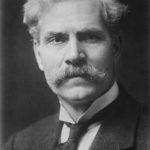
  • Ramsay MacDonald – 1923 Speech on Deportations to Ireland

    Ramsay MacDonald – 1923 Speech on Deportations to Ireland

    The speech made by Ramsay MacDonald, the then Labour MP for Aberavon, in the House of Commons on 12 March 1923.

    When I put certain questions to my right hon. Friend (Mr. Bonar Law) this afternoon my object was to find upon what constitutional procedure the action of yesterday took place. Every Member of this House must feel that when such proceedings take place it is the duty of the Opposition to see that the Government justifies itself. As the hon. Member for Silvertown (Mr. J. Jones) said, we do not associate ourselves in any way with any action of a hostile character taken against the Irish Free State. That is not the question that is involved at all. The question that we raise is, What power had my right hon. Friend to do what he has done, under what Regulations, under what Statute did he act in doing what he did. Did he take the power which he ought to take to safeguard the rights and liberties of the deported men? I am not a lawyer, and cannot approach the question from a legal technical point of view, but I do care for the proper administration of the law of this country, and for the rights, not, only of citizens of this country, but also of people who are domiciled in this country and made subject to the law of the country. This is not merely a lawyer’s point. We have got to bring to bear upon those questions a broad commonsense intelligence which will do justice to all people who are our citizens or our guests. I do not know whether the learned Attorney-General is going to speak first, but we want to know straight away the Government’s statement of its own case.

    I am not going to assume that the men who were deported are guilty simply because the Government or the Home Secretary has deported them. It is my duty to satisfy myself that my right hon. Friend acted legally in the performance of that duty. I would like to know what pains he took to satisfy himself that whatever statements were made against them were sound evidence against them? I ask how long he took to investigate this matter? It could not have been done in 24 hours, for the domiciles of these people were scattered pretty far, north, south, east and west. What machinery did he put into operation to investigate every case, as he had no business to deport any man unless the case against that man as a separate individual was established to his satisfaction? Moreover, what steps did he take to satisfy himself that the people deported were subjects of the Free State? Did he satisfy himself that he was not handing over any subject of this country to the independent jurisdiction of a, State that enjoys the status of an independent Dominion within the Empire? The right hon. Gentleman told us this afternoon that he acted under Regulations drafted in accordance with the Restoration of Order in Ireland Act of 1920. I do not know what view is taken by my legal friends to the right and to the left of me. I take the layman’s view, and I think it is the safest thing to take the layman’s view to begin with.

    What is the common-sense view of the Act of 1920? That Act was passed by this House at a time when the whole of Ireland was part of the sovereignty of this country. We were responsible for Cork, just as we were responsible for Belfast, and just as we were responsible for London. Ireland in 1920 was in rebellion against us we had our troops in Ireland; we had our police in Ireland. We were suppressing a rebellion that had broken out in Ireland. We drafted and passed the Restoration of Order in Ireland. Act, which applies not to the present disturbances in Ireland, but applied to the disorderly situation in Ireland when it was in rebellion against us. That was the purpose of the Act, and that is the meaning of the title of the Act. Certain Orders were issued under the Act. Regulation 14B in particular was drafted, not, for the purpose of sending people from England into Ireland, but for the purpose of deporting rebels in Ireland into England and to give them a residence here for the time being. What are the operative parts of 14B? So far as T can understand it and its application, the first paragraph applies to the case now before us, and the paragraph towards the end, which relates to arrests in Scotland and Ireland. It is purely technical, with no political substance in it. The political substance, as I understand it, is confined to the first Clause. What does it say? 14B enables the Secretary of State

    “by order to require a person forthwith, or from time to time, either to remain in or to proceed to and reside in such place as may be specified in the Order.”

    Is that what happened to the deportees of yesterday? Are they compelled by Order to remain in the place to which they are deported? Take the next words—

    “and to comply with such directions as to reporting to the police as to movement,”

    and so on. And then it goes on

    “or to be interned in such place as may be specified in the Order.”

    Has the Home Secretary specified the place in which they are to be interned in Ireland? We ought to get information on that point. As has been said, a very important thing has happened since 1920. Ireland is no longer in a state of rebellion against us. It may be in a state of rebellion, internal to Ireland itself, but the rebellion is not against us. That is not all. Ireland now has the benefit of the Irish Free State Constitution Act, which we passed last Session. What happens? Supposing these Regulations still run on common-sense lines as well as in law, what happens? If these Regulations had been put into operation in 1920, and Irishmen had been arrested here for engaging in a conspiracy to aid the rebellion in Ireland in 1920, and if they had been deported from this country under those Regulations and sent to Ireland, they would live been under the jurisdiction of the British military or of some British authority for which a Minister in this House was responsible. Therefore, if injustice had been done to the deportees in 1920, this House, which is the guardian, as it must always remain, of British liberty and the rights of individual British citizens, was at liberty to raise the question of injustice, to censure the Minister, and to pass judgment on what he had done. That is no longer the case. That is the common-sense, Constitutional and good, sound Parliamentary point of view.

    The Home Secretary agreed to deportation yesterday, and the arrested people have gone. They are now in Ireland. Suppose they were shot; I do not suggest it for a moment. Suppose something happened to them which we all agreed was an act of gross injustice. Who in this House is responsible for it? No one. I cannot question my right hon. Friend. I could question the Secretary of State for the Colonies, or his representative in this House, but supposing, as a result of the answer to those questions being altogether unsatisfactory, one of my hon. Friends asked Mr. Speaker for leave to move the Adjournment of the House, what would Mr. Speaker say? Mr. Speaker would say at once that under the Irish Constitution Act this Parliament had handed all its responsibilities to the Irish Government. Quite properly Mr. Speaker would say, “Therefore I cannot allow the matter to he discussed, and I will not accept, as being in order, a Motion for Adjournment.” Is not that a substantial argument? I am quite certain the very last man who would resist that argument is my right hon. Friend the Home Secretary. Therefore he must see that the responsibility which he took upon himself in allowing these Regulations to be regarded as alive in the circumstances of 1923, is an enormously greater responsibility than that which he would have taken upon himself had he deported under these Regulations in 1920. Moreover, I want to get some more information about the Committee to which the right hon. Gentleman referred this afternoon when replying to a question.

    The SECRETARY of STATE for the HOME DEPARTMENT (Mr. Bridgeman)

    The Advisory Committee?

    Mr. MacDONALD

    Yes, the Advisory Committee. It seems to me this is very much a case of hanging a man first, and trying him afterwards. That is why my first question was what steps did the right hon. Gentleman take to see that the evidence which justified deportation was good evidence. He replied to me this afternoon on the lines that he himself had been satisfied, that his legal advisers had been satisfied, and if the men concerned still had a grievance, then this Advisory Committee had been set up to investigate any statement they might make. I want to know what is the Advisory Committee? What is its power? Who are its members, and who is the legal authority? Who is President of it? That is the first point.

    The second point is: Whilst they are investigating in order to give advice, what is to be the position of the deported person? Is he to be kept in gaol in Ireland, or may he come here and await the advice which the Committee is going to give? The third point is this: Supposing the Advisory Committee comes to a conclusion upon the two cases which were cited this afternoon, the one cited by the hon. Member for Silvertown (Mr. J. Jones) of a person who is a British subject, and who, as the hon. Member says, was not, as a matter of fact, in recent times involved in any political conspiracy against the Irish Free State, and the other case cited by my hon. Friend the Member for North Battersea (Mr. Saklatvala), the case of mistaken identity. [HON. MEMBERS: “The same case.”] Is it the same case? Well, it does not matter. [Laughter.] It surely does not matter when it is a case of grave injustice being done. I quite honestly fell into a mistake. I understood there were two cases. It does not matter if there is only one; that is enough for me. I think one has as much right to justice as half-a-dozen. Let us take this one case. Supposing the Advisory Committee find on investigation that this case is genuine as stated by my two hon. Friends, what power has this Government to take it back? Has my right hon. Friend made an agreement with the Irish Free State that if any mistake has been made they guarantee to rectify that mistake?

    These are questions upon which, I make bold to say, every Member of the House of Commons who has got any respect at all for the duties of the House will insist upon getting information. It is not enough for a Minister to say, “There is a very bad state of affairs in Ireland and therefore I am going to act “—I think the right hon. Gentleman used the actual expression” according to the convenience of the Irish Government.” No. Hon. Members behind me have done quite as much for established self-government in Ireland as any other hon. Members? We believe in it quite as much, we back up that government quite as much, but that is not enough to justify deportation from this country upon such Regulations as those which my right hon. Friend has quoted. I therefore hope without any further delay, and in order to enable some hon. and right hon. Members who are more entitled to address the House than I am—[HON. MEMBERS: “Hear, hear!”]—on a point of law, yes, but not on points of policy. I know my duty to this House. I know the duty that must be performed in this House. Whatever the substance of the rights or wrongs of the case may be, this House must satisfy itself that the administration of the Government, especially in matters like this, is sound, is sane, is safe and is in accordance not with convenience but with law.

  • Jack Jones – 1923 Speech on Deportations to Ireland

    Jack Jones – 1923 Speech on Deportations to Ireland

    The speech made by Jack Jones, the then Labour MP for Silvertown, in the House of Commons on 12 March 1923.

    I beg to move, “That this House do now adjourn.” I hope, Sir, you will excuse me if during the course of the discussion I may display a certain amount of ignorance, as is only natural. I do not claim to be a constitutional lawyer. I only claim to ask for my fellow citizens their constitutional rights. We have been led to understand that the common citizen has a common right. The question I asked the Home Secretary to-day was not raised because I am a believer in the policy of those who are trying to upset the Free State Government in Ireland. I have been one of their most persistent and consistent opponents ever since they adopted the policy of trying to destroy the Treaty between Ireland and Great Britain and I have run some little risk in that connection. Therefore I am not here as a champion of those who want to destroy constitutional relationships between Great Britain and Ireland, but I believe even the Devil himself ought to get justice, even if he cannot always give it. Therefore I want to raise the case in the first place of one whom I happen to know. The only crime he has committed as far as I know—and I am acting upon information, personal of course—is that for some period he was the secretary of a branch of the Irish Self-Determination League in the East End of London, and he acted when all of us who are Irishmen stood on the same ground, and under similar circumstances will stand again, but when peace was made, when the two countries entered into an Agreement signed by the representatives of both, and when afterwards that Treaty was agreed upon by a Free Vote of the people North and South, and when eventually the Parliaments of Northern Ireland and Southern Ireland were constituted we accepted the situation loyally as democrats and agreed on the principle that the majority must govern. However we might have differed upon details we agreed upon the main principle.

    What has happened in the meantime? A certain number of people in the South and West of Ireland have repudiated the Treaty, have differed from the understandings arrived at between the representatives of the Government of both countries and have gone in for actions which have been more injurious to Ireland than anything the British Government could do against Ireland. None of us are defending the attitude which has been taken up, but there is a certain number of people in Great Britain who, because of their past history, have evidently been on the books of the Government of this country and have made themselves unpopular and, perhaps to some extent, undesirable. Amongst them there are men and women who have washed their hands of this policy ever since the Treaty was signed. Some of these have been arrested equally with those who may have been guilty.

    The point I want to raise is this. Since when has deportation become a British industry? I know aliens have been deported for offences against the State. That may be justified in international law. What I am protesting against is the deportation of our own English-born citizens to another country because of a constitution which you have arranged. The Home Secretary to-day in answer to questions said he was doing so under certain defined powers contained in Acts of Parliament. I notice that one of the Acts was passed before the Treaty was signed, which in my opinion, although I am not an expert in legal matters, makes a considerable difference. The Regulations that existed under the Defence of the Realm Act in War time are not exactly the same as after War time. They have been modified very considerably in my opinion, although of course I would not claim to have the same kind of knowledge as some right hon. Gentlemen opposite. If a British citizen feels he has no security that at midnight policemen and detectives may break into his house, escort him to the coast and take him away to any place they like, no man in this House or outside can feel secure in the expression of his political views.

    We have always posed as being leaders of constitutionalism all over the world, as being the Mother of Parliaments, whose Rules have been adopted by all other Parliaments, and we have been looked upon as the champions of liberty all over the world. I am not asking you to be the champions of licence. If a man breaks the law, let him be tried where he lives. Surely the law of England is strong enough to punish an Irishman if he breaks the law. But we have a bigger argument than that. What is going to be the result of this policy of the wholesale deportation of suspected persons from Great Britain? It is to feed the Irregulars with an argument which they have been using all the time, and which they can use now with greater force than ever. The argument will be that the Free State Government of Ireland is in a regular relationship with the British Government, and while we are striving to break down the barriers between Great Britain and Ireland which existed in the past and trying to kill race prejudice, we now have an argument that the Government in Great Britain is used against the people in Great Britain of whom the Free State Government may have a suspicion.

    I am not suggesting too much in asking this House to realise that citizens of this country who have been arrested, if they have committed a crime should be tried for it here. I am not defending any man who commits a crime. If a man wants to break the law, he must take the consequences of having done so. We are asking that this course of procedure shall be negatived and that we shall no longer put in force this policy, imitated from countries with which we have been at war, of sending away people because they have committed a crime. The ease to which I particularly referred in my question was that of a man who occupies a responsible position, whose whole life depends upon the position in which he now finds himself. I may be guilty also, because during the period this man was secretary of the Self-determination League in East Ham and Forest Gate was a member of the same organisation. I am not ashamed of it, and if there is any deportation to come along I will go. But I am not appealing for any mercy; I am only appealing for common justice, and common justice in this particular case, and the other case to which I can refer. The law of this country has been broken. I know that we shall have cases quoted against us, eases that occurred during the War. I have had some of those cases and I know exactly what they mean. During the War Irishmen coming to Great Britain carrying on a campaign against the interests of the British Empire, might find themselves in durance vile subject to all sorts of penalties, but I am suggesting that the Treaty was signed between Great Britain and Ireland, as a consequence of the movement that took place in Ireland, after the Defence of the Realm Act Regulations were so amended as not to give the same power as existed under the Defence of the Realm Act as originally instituted.

    Now we find the two Acts have got to be quoted. When did these two Acts become correlated so as to enable you to arrest any Irishman, and those not in the true sense of the term Irish, but who were born in this country, though probably of Irish parentage, and as a consequence are English citizens? What authority exists to deport English citizens from their own country to be tried in another country, it may be under martial law, for all we know? Have we agreed that martial law shall exist for English citizens? I suggest that we have amended those portions of the Defence of the Realm Act. Therefore, in moving my Motion, I ask those responsible for the government of this country to release all those persons who have been domiciled in Great Britain. Let them be tried here for any offence which they may have committed, and let the law of England deal with them as they happen to be English citizens.

  • Liz Truss – 2022 Statement on Russia Not Attending OSCE Meeting

    Liz Truss – 2022 Statement on Russia Not Attending OSCE Meeting

    The statement made by Liz Truss, the Foreign Secretary, on 16 February 2022.

    Russia is patently failing to live up to the international commitments it has made around transparency.

    If the Kremlin is serious about a diplomatic resolution, then it needs to show up to diplomatic meetings and commit to meaningful talks. Russia’s refusal to engage with the OSCE process demonstrates its contempt for the commitments it freely signed up to.

    It is Russia that is the aggressor here. The troops stationed on the border are clear threat to Ukraine. The UK and our allies urge the Kremlin to withdraw its troops and enter discussions based on the proposals put forward by NATO to improve transparency and reduce risk.

  • Boris Johnson – 2022 Comments on NATO

    Boris Johnson – 2022 Comments on NATO

    The comments made by Boris Johnson, the Prime Minister, on 10 February 2022.

    When NATO was founded, allies made an historic undertaking to safeguard the freedom of every member state. The UK remains unwavering in our commitment to European security.

    What we need to see is real diplomacy, not coercive diplomacy. As an alliance we must draw lines in the snow and be clear there are principles upon which we will not compromise. That includes the security of every NATO ally and the right of every European democracy to aspire to NATO membership.

  • Nicola Sturgeon – 2022 Article on Ukraine and Boris Johnson

    Nicola Sturgeon – 2022 Article on Ukraine and Boris Johnson

    The article written by Nicola Sturgeon, the Scottish First Minister, on 2 February 2022.

    The prospect of war in our continent is more than enough to avert our gaze from the latest Whitehall troubles.

    However, a prime minister who has found it so hard to speak the truth throughout his career surprised us all with a hard dose of it when he stood before parliament last week to address the situation in Ukraine, saying: “Ukraine asks for nothing except to be allowed to live in peace and to seek her own alliances, as every sovereign country has a right to do.”

    It was a sentiment echoed by the leader of the opposition, by my own party’s Westminster group leader, Ian Blackford MP, and by every other SNP MP who responded to the statement.

    As someone who has spent my life campaigning for the sovereign right of the people of Scotland to determine our own futures, sovereignty is a principle fundamental to my own worldview. To see such pressures being exerted on a state that has resolutely set itself on a path to integration with the liberal democratic order is unspeakable.

    A Europe split into 19th-century “spheres of influence” is not one in which small independent countries would prosper. The wealthier and more equal the nations of Europe become, the more equitable the relations between them should be. Indeed, the great steps that the likes of Estonia, Latvia and Lithuania have taken in the past 30 years are testament to the invigorating effects of independence in Europe.

    However, my agreement with the prime minister on these principles did not last long: question after question from the floor of the House of Commons brought him back to the issue of Russian funding in the Conservative party, and the continuing existence of “Londongrad”-style influence operations in the UK.

    Meanwhile, as long as the fortunes of Russia’s elites are based abroad, threats of economic sanctions are limp and ineffective.

    The UK’s allies are beginning to take note of the intractability of the problem.

    A report from the Center for American Progress – a thinktank close to the Biden administration – stated last week that “uprooting Kremlin-linked oligarchs will be a challenge given the close ties between Russian money and the United Kingdom’s ruling Conservative party, the press, and its real estate and financial industry”.

    After all, clear mechanisms to crack down on these practices exist.

    My government has long called for Westminster to legislate on the improper use of Scottish limited partnerships – just one favourite instrument of financial exploitation – to ensure that they are no longer used to facilitate the sort of financial corruption that has benefited authoritarians and their wealthy cronies for far too long.

    Corruption and lack of transparency are a drag on liberal democracy, and authoritarians have become adept at using these scandals as a way of saying to people ground down by them that all forms of government are the same, and all politicians are as bad as each other.

    And so I can only call on the prime minister to finally take action. He must recognise that his government and his party have enabled this situation, and he must acknowledge that the most resolute action he can take is at home, to rebuild his government’s tattered reputation.

    To quote the author and journalist Oliver Bullough from his book, Moneyland, which documented so much about the London “laundromat”: “Without trust, liberal democracy cannot function.” And as Bullough wrote more recently about the situation in Ukraine: “No one is more to blame than us for the fact that Russia’s richest can treat war like a spectator sport.”

    And while during such periods the temptation is to focus on individuals in power, this can lead us to forget the role of the competing factions within the Russian security state and the pressures they are exerting on the situation, and it may lead some to forget the pressure this is putting on 40 million Ukrainians – our fellow European citizens – as they go about their daily lives.

    In some ways, this is a reality many have been dealing with since 2014, especially those in Russian-occupied eastern Ukraine.

    So while Ukrainians must and will defend themselves from aggression if attempts at diplomacy fail, we cannot be blind to the circumstances that have led to the current crisis, and that includes the situation where wealth with direct links to the Putin regime has been allowed to proliferate here in the UK with often the scantest regard paid to its provenance or to the influence it seeks to exert on our democracy.

  • David Lammy and Rachel Reeves – 2022 Joint Letter on Ukraine

    David Lammy and Rachel Reeves – 2022 Joint Letter on Ukraine

    The joint letter send by David Lammy, the Shadow Foreign Secretary, and Rachel Reeves, the Shadow Chancellor of the Exchequer, to Liz Truss, the Foreign Secretary and Rishi Sunak, the Chancellor of the Exchequer, on 7 February 2022.

    Dear Foreign Secretary and Chancellor,

    Re: The Ukraine crisis and illicit finance

    Since the crisis on Ukraine’s borders began, we have been clear in our robust support for Ukraine’s sovereignty and our opposition to Russian aggression. We have supported the government’s diplomatic efforts and the practical defensive support provided to Ukraine.

    We believe however that there is much more that can be turn to address the UK’s openness to suspect Russian money.

    This week in the House of Commons, the government outlined its plans to bring forward new legislation to enable a robust and extensive package of economic sanctions against Russia in the event of any incursion or attack on Ukraine. We believe such sanctions must be broad, severe and comprehensive.

    However, these sanctions are all conditional on Russia’s actions. Their purpose is to form a serious deterrent, which, when matched by unified action across the West, will make President Putin think again.

    There is much more we must do irrespective of the decisions made by President Putin; measures it should not have taken an army threatening Ukraine to put in place and which we have repeatedly urged the government to take.

    For years, the Labour Party have raised the alarm about the role of dirty money in the UK and the lack of action from the Conservative government. Despite repeated warnings, the government has been asleep at the wheel and needlessly left our defences down at home.

    London is the destination of choice for the world’s kleptocrats. It is home to the services and enablers who help corrupt elites to hide their ill-gotten wealth. Britain has a completely deficient system of corporate registration that permits layers of secrecy to obscure the proceeds of corruption and crime. It is shameful that Britain is repeatedly described as the money-laundering capital of the world.

    Now this openness to illicit finance has begun to damage our diplomatic efforts, with the Biden administration being warned that the widespread presence of suspect Russian money in the UK could jeopardise Britain’s response to this crisis.

    We welcome the Prime Minister’s answer at Prime Minister’s Questions this week committing the government to bring forward an Economic Crime Bill in the third session of parliament. I hope the government recognises that had we already legislated for this then the UK would be in a stronger position to address dirty money from Russia.

    This is not simply a matter of targeting some individuals or entities through sanctions but about fixing a broken system – Britain’s openness to fraud and money laundering, inadequate regulation of political donations, lax mechanisms of corporate governance, and weakness to foreign interference.

    We believe we must take a broad range of robust steps to address these deficiencies and the Conservatives must do more including with the donations it receives. We would therefore be grateful if you address the following questions:

    When will the government undertake comprehensive reform of Companies House to prevent fraud at home and abuse from abroad?

    On what date will the government bring forward the Register of Overseas Entities Bill it has promised for years?

    Will the government bring forward a Foreign Agent Registration law?

    Where are the new counter-espionage laws, announced in the Queen’s Speech but still delayed?

    When will the government reform the Tier 1 so-called ‘Golden Visas’?

    Where is the replacement to the outdated Computer Misuse Act, as recommended by the Russia Report?

    Where is the additional resource and power for the Electoral Commission, which will strengthen our democracy’s defence from overseas governments and interests?

    Why does the government’s Election Bill make these problems worse by enabling limitless political donations from donors based overseas?

    Donors who have made money from Russia or have alleged links to the Putin regime have given £1.93m to either the Conservative Party or individual Conservative associations since Boris Johnson took power in July 2019. Will the Conservative Party agree to return it?

    Will the government reform the rules on political donations to defend our democracy from overseas interests using loopholes to influence British politics?

    These steps to strengthen our national security and democracy at home are not distinct from sanctions or diplomacy abroad – they must form part of a unified and coherent response.

    We can’t stand up to Russia’s aggression abroad while ignoring Russian-linked corruption at home.

    It is in our national and economic interests for the government to address the challenges of hostile influence and interference which the government’s inaction and behaviour have regrettably permitted.

  • James Cleverly – 2022 Speech on Anti-corruption Sanctions in Kazakhstan

    James Cleverly – 2022 Speech on Anti-corruption Sanctions in Kazakhstan

    The speech made by James Cleverly, the Minister for the Middle East, North Africa and North America, in the House of Commons on 3 February 2022.

    I am grateful to the right hon. Member for Barking (Dame Margaret Hodge) for securing the debate and I pay tribute to the work that she has done on these complex issues both in her former role as a Select Committee Chair and as chair of the all-party group on anti-corruption and responsible tax. As my noble Friend Lord Ahmad, the Minister with responsibility for south and central Asia, is in the other place, it is my pleasure to respond on behalf of the Government.

    This month, the UK celebrated 30 years of diplomatic relations with Kazakhstan, our largest partner in central Asia. Over the years, we have built a strong partnership in areas such as oil and gas investment, education and financial services, as well as promoting human rights and democratic values. We have had real success in encouraging a more open business environment in Kazakhstan, including through the Astana International Financial Centre.

    Hon. Members—though few are here—will have witnessed the violent clashes that took place in January after initially peaceful protests in western Kazakhstan over increased fuel prices. As the right hon. Lady said, the latest estimates are that more than 200 people died during those clashes. There were reports of organised attacks on property and law enforcement officers, and almost 10,000 people were detained. I am sure that she will join me and others in roundly condemning the violence and loss of life.

    My noble Friend Lord Ahmad has been engaged intensively on these issues, speaking to senior Kazakh contacts last month, including President Tokayev’s special representative on 14 January. In each of these calls, the Minister has underlined the importance of Kazakhstan respecting its international human rights commitments. President Tokayev has called what happened an “attempted coup” and we are urgently seeking further information about that very serious development. We welcome the President’s decision to establish an investigative commission to ascertain what led to these unprecedented events and loss of life. We support the Kazakh authorities’ commitment that this will be an effective and transparent investigation and have encouraged them to consider international and independent expertise.

    In his public remarks, the President was clear that the original peaceful protests were based on legitimate grievances about the socioeconomic situation and that urgent economic reform is needed. We support that message and we seek opportunities, with our international partners, to support those reforms.

    President Tokayev has also been critical of an existing social system that has seen economic growth largely benefit a small number of very rich people in society, as the right hon. Lady highlighted. We are well aware of reports on the alleged acquisition of assets by wealthy members of elite Kazakh society, including of substantial property holdings here in the UK. It is, of course, the role of law enforcement agencies to investigate any specific allegations of wrongdoing, as she said.

    As a leading financial services centre, the UK can, unfortunately, be the destination for the proceeds of corruption, despite findings from the Financial Action Task Force that the UK has one of the strongest systems to combat money laundering and terrorist financing of more than 60 countries assessed to date. Consequently, the integrated review of security, defence, development and foreign policy committed to take stronger action to bear down on illicit finance, including by bolstering the National Economic Crime Centre and working with our closest allies, such as the United States, to maximise our collective impact against this common threat.

    The recent spending review has put new resources behind that commitment: £42 million for economic crime reform from now until 2025. That is in addition to £63 million for Companies House reform and the introduction of the economic crime (anti-money laundering) levy, which will raise around £100 million per year from the private sector, to combat economic crime from 2023. These additional resources will significantly enhance our ability to tackle transnational corruption and illicit finance.

    Since 2006, the Foreign, Commonwealth and Development Office has funded the National Crime Agency’s international corruption unit, a world-renowned law enforcement capability focused on investigating corruption from developing countries with UK links. Since funding started in 2006, ICU investigations have resulted in the conviction of 30 people and companies for corruption offences. It has also frozen, confiscated or returned to developing countries more than £1.1 billion-worth of stolen assets.

    In addition, the UK leads and hosts the International Anti-Corruption Coordination Centre, which brings together specialist law enforcement officers from multiple agencies around the world to tackle allegations of grand corruption. The IACCC significantly enhances our ability to investigate complex, multi-jurisdictional corruption cases. Since its launch in 2017, it has provided support on 88 investigations.

    In 2019, the UK launched its economic crime plan that provides a joined-up public and private sector response to economic crime. The success of our public-private partnership is perfectly demonstrated by the work of the joint money laundering intelligence taskforce, a mechanism that enables law enforcement and the financial sector to work more closely together to detect, prevent and disrupt money laundering and economic crime. To date, the joint money laundering intelligence taskforce has helped more than 600 law enforcement investigations. This has directly contributed to over 150 arrests and the seizure of more than £34 million in illicit funds.

    Finally, in April last year, the UK launched the global anti-corruption sanctions regime, which the right hon. Lady mentioned in her remarks. This allows the Government to impose asset freezes and travel bans on those involved in serious corruption around the world, and it sends a message that the UK will not tolerate those individuals, or their ill-gotten gains, in our country. The regime does not target countries, but instead targets those individuals or organisations that are responsible. We believe that this is a strong, personal deterrent and it has been used so far to sanction 27 individuals in 10 different countries.

    Collectively, these investments significantly enhance our ability to bring corrupt actors to justice. They also send a clear message that we will use the full force of our capabilities to bear down on those who seek to use the UK as a destination for their illegitimate wealth.

    Criminals, corrupt elites and individuals who threaten our security are not welcome in the UK.

    Dame Margaret Hodge

    I am extremely grateful to the Minister, but he has given me a very general response. I named more than 20 individuals, many of whom are members of the same family. Will he undertake to investigate the circumstances that I briefly outlined, and undertake that, if I am correct, those individuals will face sanctions under the new regime?

    James Cleverly

    The right hon. Lady will, I am sure, understand that it can sometimes be counterproductive to go into details about what future sanctions designations the UK Government might undertake, but I can absolutely assure her that my officials, and indeed the House, will have taken note of the individuals she highlighted in her speech.

    In relation to Kazakhstan, or indeed any other country, our law enforcement agencies continue to monitor and, if necessary, investigate particular cases where circumstances require. We know that corruption and illicit finance can have a devastating impact on states and citizens by undermining democracy, bankrolling authoritarian agendas, and enabling serious and organised crime. The UK has shown, on the world stage, that it has both the means and the will to promote responsible financial behaviour. We have shown that we stand ready to take action, domestically and internationally, wherever necessary. I am sure you will agree, Madam Deputy Speaker, that we must now stand together to show that corruption has no place in this country.