Category: Foreign Affairs

  • Gavin Williamson – 2022 Speech on Somaliland

    Gavin Williamson – 2022 Speech on Somaliland

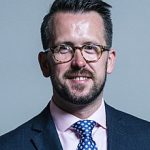
    The speech made by Gavin Williamson, the Conservative MP for South Staffordshire, in the House of Commons on 18 January 2022.

    I am very grateful for the privilege of being able to bring this Adjournment debate to the House today.

    In 1960, Somaliland emerged independent from the British empire after many years as the British Somaliland protectorate. For five days it was independent, before it took the step to merge with what was then the Trust Territory of Somaliland, historically Italian, to form a union. Both nations entered that union with optimism—a sense and a view of creating a pan-Somalia where all Somalis would be able to come together. The hope, for so many of those in Somaliland, was that this would be a union of equals.

    Sadly, over the following 30 years, those hopes and aspirations for what might have been were not fulfilled. Instead, as the years progressed, the situation got worse, with military dictatorships and, tragically, people from the north of Somalia in historically British Somaliland being discriminated against. What started to emerge was attacks on civilians. There were mass killings of tens of thousands of Somali civilians. It was one of the few conflicts where fighter jets took off from cities in one area in order to bomb the cities that they had taken off from, indiscriminately killing thousands of civilians.

    Rushanara Ali (Bethnal Green and Bow) (Lab)

    My constituency has a very large population from Somaliland, whose families suffered, as the right hon. Gentleman has described, in that conflict. Last year, Somaliland celebrated 30 years since the declaration of independence. It has built up its own independent Government, its own currency and democratic elections. It has shown the capability to establish a state. Is it not time that the UK Government formally recognise its right to self-determination and its need to be an independent state?

    Gavin Williamson

    The hon. Lady raises a very important point. The key reason for this debate is to discuss the fact that Somaliland has developed so much. In those years of conflict—where so many Somalilanders had their lives under threat, and so many hundreds of thousands were displaced, both internally within Somaliland and externally—that dream and that vision of creating their own homeland once again and re-establishing those old territorial borders burned bright, and that is what they were able to achieve in 1991.

    Stephen Doughty (Cardiff South and Penarth) (Lab/Co-op)

    I draw the House’s attention to my interest as one of the vice-chairs of the all-party parliamentary group on Somaliland. It has been a privilege to work with the right hon. Gentleman on these issues. Will he also pay tribute to my predecessor, Alun Michael, and the many members of the Somalilander community in Cardiff and across the UK for exposing those atrocities at the time, including in this House and elsewhere, and explaining what had gone on to the world? Will he commend them on what they did at that time?

    Gavin Williamson

    I pay tribute to the hon. Member’s predecessor and the many people who live in his constituency. In his constituency is a very established Somaliland community that has been there probably far longer than he or I have been on this earth. This country has deep links with Somaliland that go back not just many decades, but a century and more, with many Somalilanders calling Britain their home, as well as Somaliland itself.

    Tom Tugendhat (Tonbridge and Malling) (Con)

    I am delighted that my right hon. Friend has secured this important debate. Many of us have been supporting Somaliland as an independent state, and we very much welcome the fact that he is here. On that point, he will know no doubt that many of Her Majesty’s naval ships for 100 or more years have had lascars from Somaliland—stokers and others—who built the first mosques in this country. Does he not agree that recognising the Somalilanders here in the UK is also about recognising our own past and our own future together as investors in a new Africa? It would demonstrate that independent states that govern themselves well in democracies can succeed, and we can partner with them.

    Gavin Williamson

    My hon. Friend the Chairman of the Foreign Affairs Committee is absolutely right. By taking the brave step to recognise Somaliland, we would not just be opening up opportunities for Somaliland itself, but opportunities for British investors and British business to go there and work, very much creating the gateway to the whole of the horn of Africa.

    Mr Andrew Mitchell (Sutton Coldfield) (Con)

    I am grateful to my right hon. Friend, who has brought this most important subject to the Floor of the House. I visited Hargeisa when I was Secretary of State for International Development, and we spent quite a lot of time on exactly the issues that he and my hon. Friend the Member for Tonbridge and Malling (Tom Tugendhat), the Chair of the Foreign Affairs Committee have just raised. There is an enormous degree of normalcy there. The democratic structures, when they have elections, have held in extraordinarily difficult circumstances. There is proper governance. I have travelled on a bus in Hargeisa that was a result of British investment. The case that my right hon. Friend is making about Somaliland becoming an independent state is one where the Foreign Office normally takes the view that it does not want to lead it, but it would support it. Is he aware that the African Union is at least passively acquiescent in that view, if not actively supportive?

    Gavin Williamson

    On both areas that my right hon. Friend raises, he is absolutely right. One flies into Hargeisa airport, and it is a safe place to visit. One can get a bus to the centre of Hargeisa, as he did. When I visited, I must confess I did not get a bus, but I will endeavour to do so the next time I visit. He is equally right that this is an opportunity. The Foreign, Commonwealth and Development Office so often wants to be led on these issues, but there is sometimes a moment for Britain to lead, as against to be led.

    Alec Shelbrooke (Elmet and Rothwell) (Con)

    My right hon. Friend makes an important point about leading the world. Throughout the world, where western nations do not get involved, China does, and recently we have had many discussions about China’s influence. Does he therefore agree that when we look at development taking place in Somaliland, we can see that it is in our strategic interests and that of western countries not just to see what happens but to take an active, leading role and not allow that vacuum to be filled with those who, perhaps, we have difficulties with?

    Gavin Williamson

    My right hon. Friend is so correct. If we look to Djibouti, to the north of Somaliland, we see the Chinese investment that is going in. Where there is a vacuum, others do step in. If this country showed the leadership that it can by recognising Somaliland, that would show the Somaliland Government the value that we put on their friendship and partnership.

    Sir Robert Buckland (South Swindon) (Con)

    I commend my right hon. Friend for securing the debate. I am honoured to represent a Somaliland community in Swindon. Building on the points made by right hon. and hon. Members about Somaliland’s strategic importance, and in particular its proximity to international shipping lanes, we all know that with British leadership under our good friend the noble Lord Hague, we led the way in dealing with piracy emanating from the horn of Africa. Is this not another opportunity for Britain to show leadership and recognise stable government in a region that is in pitifully short supply of such a quality?

    Gavin Williamson

    My right hon. and learned Friend is accurate in his assessment. Even though we are not yet in a position of recognising Somaliland, we already have that level of co-operation with Somalilanders. When I visited Somaliland as Defence Secretary, I saw at first hand the co-operation that British forces already had with Somaliland in protecting its coastal waters—and by doing so, keeping them safe for the international community.

    Kim Johnson (Liverpool, Riverside) (Lab)

    I thank the right hon. Member for securing this important debate and commend the Government on the support they have been providing to the Administration in Somaliland. Liverpool Riverside has a long-established Somali community and Somalilanders. Will he join me in calling for the UK Government to support a binding referendum within two years to allow Somalilanders to express their democratic will, guaranteed by the international community?

    Gavin Williamson

    I am not sure whether you are an expert on Somaliland affairs, Madam Deputy Speaker, but this is the opportunity for you to brush up on them. The hon. Lady makes an important point, but there has already been a referendum in Somaliland, and it was absolutely clear about the wishes of the Somaliland people: they want to see recognition, to be independent and to have that independent state. However, if that is a hurdle to establishing international recognition for Somaliland, the Somaliland Government may wish to look at that.

    Barry Gardiner (Brent North) (Lab)

    The right hon. Gentleman has been extremely fortunate not only in the House allowing him a lot of time to debate this important topic but in the number of hon. Members in their places supporting him and the cause of Somaliland. Wembley has a huge Somaliland community of expatriates who have said to me that, in all likelihood, a new Somaliland would desperately want to join the Commonwealth. Does he agree with them?

    Gavin Williamson

    From my visit to Somaliland and my discussions with so many Somalilanders in the UK, I have a real sense of kinship between Somaliland, Britain and other Commonwealth nations. I think that Somaliland would very much want to join the Commonwealth, and I hope that the Commonwealth would welcome them with open arms.

    Mr Clive Betts (Sheffield South East) (Lab)

    I congratulate the right hon. Gentleman on securing this debate. I have the privilege of chairing the all-party group on Somaliland, and we have a large Somaliland community in Sheffield. The way he described the formation of what is currently legally Somalia was really interesting. Immediately on gaining independence, Somaliland was an independent country, and it voluntarily chose to enter into a union. The concerns about changing post-colonial boundaries do not apply in the case of an independent Somaliland; post-colonial boundaries, it was an independent country. The idea that Mogadishu now has any remit in Somaliland is a piece of nonsense, and it is time the Government recognised that.

    Gavin Williamson

    I very much agree with the hon. Gentleman. The boundaries being proposed are exactly the same as those that were agreed between Britain, Italy, and Ethiopia, and with the French in numerous treaties prior to that. Somaliland is not asking for a change to the boundaries, as they are very much what was there in 1960. There are precedents when it comes to unwinding acts of union and confederacies. One need only look to the other side of Africa, at the confederation between Senegal and Gambia, which was unwound in the late 1980s. This is not unprecedented. We are suggesting going back and recognising what were well-established international boundaries that we ourselves recognised and drew up.

    Stuart Anderson (Wolverhampton South West) (Con)

    I thank my right hon. Friend and constituency neighbour for giving way. The Defence Committee has just produced a report on the Navy and the importance of the sea in defence, and he mentioned his visits as Secretary of State for Defence. Does he agree that it is vital that we recognise Somaliland, given the strategic importance of the location in terms of defence?

    Gavin Williamson

    My hon. Friend is accurate in pinpointing the strategic importance of Somaliland. That is one of many reasons why it is so vital that not just Britain, but the United States and other NATO members lead the way in recognising Somaliland—not just because of the many brilliant things that have been done there, but because of the country’s strategic importance. The question is how we reinforce and support that Government.

    John Spellar (Warley) (Lab)

    If I may pursue that point, is it not desirable for a stable state in a region that is becoming increasingly unstable to achieve that level of recognition? We talk a lot about supply chain vulnerability; this is one of the most vulnerable places we have found. Even one ship blocking the Suez canal caused ripples right the way throughout industry. We should also recognise the importance of enabling communities here and in Somaliland to move freely, have passports that are recognised, conclude international agreements, and unleash the country’s energy. Having a properly administered state in the region would enable those communities to do those things. Is it not time that we grasped the nettle and recognised Somaliland?

    Gavin Williamson

    There is a level of consensus bubbling up that is not always typical of debates in this House. It is incredibly important to demonstrate the will and feeling of the House on this important issue. The right hon. Gentleman raises an important point about supply chains. DP World already invests in the port of Berbera, and the welcome investment from British International Investment—the old Commonwealth Development Corporation—amounts to hundreds of millions of pounds. The Government recognise the importance of Somaliland, and we are willing to invest hundreds of millions of pounds there, because we realise that it opens up so much of the horn of Africa to British goods and investment. However, we still do not recognise the state of Somaliland, which is a real tragedy. It is so sad to see that so many Somalilanders have difficulty travelling to Somaliland. They cannot fly direct from the UK, but have to go via either Addis Ababa or Dubai. By taking the step of recognising Somaliland, we can make so many British citizens’ lives easier.

    Alun Cairns (Vale of Glamorgan) (Con)

    I pay tribute to my right hon. Friend for securing this important debate; the attendance shows the strength of feeling across the House. Does he agree that recognition can take several forms, and that the Government could take interim steps to show willing, and to demonstrate progress towards the formal recognition that we all want? That could include the Department for International Trade—or the Foreign, Commonwealth and Development Office, which has responsibilities to DIT—channelling food and aid through Somaliland. That way, Somaliland will not be at the wrong end of the supply chain; it often ends up with a raw deal.

    Gavin Williamson

    That is absolutely correct. For so long, international development aid has been channelled through the Federal Republic of Somalia and the Government in Mogadishu, which sadly means that people in Somaliland have often not had the assistance that this Government expected them to get. A perfect example of that is vaccines. A large supply of vaccines was sent to the people of Somaliland, but it was channelled through the Government in Mogadishu. By the time it arrived in Somaliland, sadly, there was only a few days left in which to dispense most of the vaccines.

    Bob Stewart (Beckenham) (Con)

    I thank my right hon. Friend for allowing me to intervene. I do not have any Somalis in my constituency, but I have a great love for the country because my ayah came from Somaliland when we lived in Aden. I remind the House that the Aden Protectorate and the Somaliland Protectorate were very closely linked; I remember my father flying over to Somaliland as part of the Aden Protectorate Levies when there was that close link. The people of Somaliland have a real affection for this country. That goes back a long time, and it would be absolutely right of our Government to encourage, support and allow Somaliland to be a real nation.

    Gavin Williamson

    We have seen the people of Somaliland pay a price for the defence of this nation in both the first and second world war. If people go to Somaliland, they can see the Commonwealth war grave cemetery. So many Somalilanders gave their life in defence of this country and beat fascism on the horn of Africa. We owe a debt of honour to the people of Somaliland, and should restore to them the freedom that they fought to preserve for us.

    Paul Blomfield (Sheffield Central) (Lab)

    I congratulate the right hon. Member on securing this debate, which has demonstrated an exceptional degree of unity across the House in support of his proposal. He makes a good point about the debt of honour that we owe to the people of Somaliland. My hon. Friend the Member for Sheffield South East (Mr Betts) highlighted that we have a strong community of people who owe their origins to Somaliland in our city. In recognition of that, the council passed a resolution in 2014 adding its voice to the demands for independence. Does the right hon. Member for South Staffordshire (Gavin Williamson) agree that the parliamentary and local elections held last year were another successful democratic moment in Somaliland, further reflecting the maturity and strength of democracy in the country, which is an essential building block for recognition of statehood, and which the Government should recognise?

    Gavin Williamson

    I do not often advocate that a Government should follow the leadership of Sheffield City Council, but on this occasion I certainly do. The Government should try to catch up with what that city council has been doing. So many communities—Sheffield, Liverpool, Cardiff, Bristol, Swindon; we could go on and on—have welcomed Somalilanders, and Somalilanders have made these great cities and great communities their home, and will continue to do so.

    Ruth Jones (Newport West) (Lab)

    The right hon. Gentleman has demonstrated just how important this topic is to all of us here. Newport is home to the second-largest Somaliland community in Wales, and I want to place on record my thanks for the community’s amazing contributions to the city over the years. Has the right hon. Gentleman given any thought to how the devolved Governments can play a role in supporting the people of Somaliland as they continue to seek formal recognition?

    Gavin Williamson

    I strongly believe that this is a United Kingdom endeavour, in which we can all move forward in strengthening the bridges that already exist between the United Kingdom and Somaliland. Many steps have already been taken in municipal and devolved government to encourage the links between our great nations of the United Kingdom and Somaliland, but now is the time for the UK Government to take the lead—for the Foreign, Commonwealth and Development Office not to be shy, and not to think that policy is stuck in the 1960s.

    James Daly (Bury North) (Con)

    I congratulate my right hon. Friend on securing a debate on such an important subject. There has been unanimity this evening on the many reasons why we should recognise Somaliland, but does he, as a former Education Secretary, view and accept Somaliland as a champion of education in Africa for both boys and girls? We have heard about how the devolved Administrations and this Government can assist, develop and support Somaliland. In that context, the education system is not only something to be treasured, but perhaps a way in which we can provide support.

    Gavin Williamson

    One of the most precious things that a nation can have is democracy. That means justice, but it also means the education that we give our children. Those who have the privilege of visiting Somaliland will see both boys and girls being educated. There is no discrimination there; Somalilanders want to educate all, because they recognise that that is what will strengthen Somaliland for the future.

    Mr Mitchell

    My right hon. Friend has heard representations from people in a number of places where there are large Somaliland communities. Does he agree that the level of remittances to Somaliland from the diaspora is enormous? Some years ago, it was about six times the annual state budget. Perhaps, following this debate, the Minister could consult his officials on trying to make remittancing easier, so that there is more competition and lower charges, and the enormous Somaliland community in the United Kingdom can send money back through the remittancing structure without paying exorbitant fees.

    Gavin Williamson

    My right hon. Friend is right to highlight the importance of remittances going to Somaliland. This Government do not make that easier for people. Their view that Somaliland is locked in with Somalia makes it much more difficult for businesses to operate there, and to ensure that a flow of money from the diaspora community in this country goes back to Somaliland. The FCDO, working with Her Majesty’s Treasury, could take up this practical issue and consider how it could make improvements. I hope that my hon. Friend the Minister will be able to respond to that point at the end of the debate.

    Somaliland is a country that has incredibly proud links with our country. When we have been in need and have asked for help, it has responded by sending its young men to defend our values and our freedoms. In 1991, it emerged from years of subjugation to the regime in Mogadishu—from having so many citizens, including children, killed in cold blood—and it was able to establish its borders once more. It was able to put in place the structures for a legal system and elections. All across Africa, we are always asking for countries to have proper legal systems, to educate their boys and their girls and to ensure the establishment of democracy. In May last year, we saw the parliamentary elections in Somaliland. They were peaceful; they were calm; they were fair. We saw the roll-out of iris-recognition technology, the first use of that technology anywhere on the continent of Africa, to ensure that they were fair and properly run.

    All that goes to show the maturity of this country. In Somaliland, we have seen different parties enter government and leave it without questioning the veracity of their opponents’ claim. Indeed, as I recall, one presidential election was won by a margin of 80 votes. That vote was accepted, and we saw a peaceful transition. I cannot help thinking that there are some western democracies where, if the margin was quite so close, there might have been a little bit more controversy than we saw within Somaliland.

    Somaliland has been an amazing, shining beacon of everything we want to see flourish in Africa. It is the example we want others to follow, but it needs our help and our assistance, because around it are real challenges. To the south, in Somalia, we see the challenges of al-Shabaab. We see the disorder and difficulties in Ethiopia and some of the real security challenges in Djibouti.

    Somaliland is a country that wants to be our friend. It is a country that turns to us and asks us to show leadership. I ask my hon. Friend the Minister, instead of delivering the pre-prepared brief that no doubt every Foreign Office Minister has read out for the past 60 years, to show some guile, some leadership and some imagination—to show that he is a politician, not just a tool of Foreign Office officials to read their words. I have worked with him in the Whips Office; I saw some moments of merit.

    As politicians, and as this House, we must show leadership on this issue. We must show our friends in Somaliland that we are willing to defend them as they have defended us. Even if the Minister cannot give us all the promises we would like to hear—even if he cannot say at the Dispatch Box today that we can recognise Somaliland—he needs to go away, sit down and work out how we take the next steps. We cannot spend another 30 years pretending that the reality on the ground, an independent Somaliland, does not exist because it is not on the Foreign Office map. We must respond to those realities. We must lead on foreign policy. We must show our Somaliland friends that we are there for them and that we will deliver for them—that we will not just talk about our history, but talk about how we can make history together in the future.

  • Yvette Cooper – 2022 Comments on Foreign Interference in British Politics

    Yvette Cooper – 2022 Comments on Foreign Interference in British Politics

    The comments made by Yvette Cooper, the Shadow Home Secretary, on 13 January 2022.

    The information from the Security Service today is extremely serious. We condemn in the strongest terms the attempts by China to interfere in Britain’s democratic processes.

    We are seeking further information and briefing from the Home Office and MI5 on their assessment of the extent of the deception and interference and the ongoing risks of malign activity from foreign states.

    We are also asking the Government to ensure that all parliamentarians and political parties are given revised information from the Security Service on the security risks and measures to guard against any threat of interference in our democracy or national security.

  • Chris Heaton-Harris – 2022 Statement on UK-EU Negotiations on Gibraltar

    Chris Heaton-Harris – 2022 Statement on UK-EU Negotiations on Gibraltar

    The statement made by Chris Heaton-Harris, the Minister for Europe, on 13 January 2022.

    On 14 and 15 December 2021 the UK hosted a fourth round of negotiations with the European Union (EU) on Gibraltar, following previous rounds in December, November and October 2021.

    Talks have been constructive and are making positive progress. Discussions have covered a range of issues within the political framework agreed between the UK Government, together with the Government of Gibraltar, and the Kingdom of Spain on 31 December 2020.

    Ensuring the fluid movement of people between Gibraltar and the EU has been the key area of discussion. Other areas have included the movement of goods, law enforcement and criminal justice, transport, social security co-ordination, citizens’ rights, and data protection.

    Negotiations with the EU will continue in the coming weeks. The UK remains fully committed to seeking a treaty based on the careful and pragmatic balance achieved by the political framework. The UK has been clear we will not agree to anything which compromises UK sovereignty.

    We are, of course, working closely with our Gibraltarian friends for a solution that works for the people of Gibraltar so they can go about their business. The UK Government and Government of Gibraltar agreed our joint approach to negotiations at the UK-Gibraltar Joint Ministerial Council on 29 March 2021. Since then, we have and will continue to work closely together as discussions with the EU progress.

    The UK Government and Government of Gibraltar have also continued work to ensure robust plans are in place for all eventualities, including a no negotiated outcome. While the political framework provides the route to a treaty it is only prudent to prepare for all eventualities.

    In parallel to the UK-EU negotiations the UK Government, with the Government of Gibraltar, are maintaining a regular dialogue with the Kingdom of Spain.

    In December, the Foreign Secretary travelled to Madrid to meet the Spanish Minister of Foreign Affairs, José Manuel Albares, to discuss strengthening the bilateral relationship between our two nations. The Ministers also welcomed the constructive nature of negotiations between the EU and the UK, reaffirmed their shared commitment to the political framework and agreed that it is in everyone’s interest to conclude these talks in the first quarter of 2022. The UK looks forward to hosting the Spanish Minister of Foreign Affairs on a visit to London in the coming weeks.

  • Ben Wallace – 2022 Comments About UK and Nordic Countries Defensive Alliance

    Ben Wallace – 2022 Comments About UK and Nordic Countries Defensive Alliance

    The comments made by Ben Wallace, the Secretary of State for Defence, on 15 January 2022.

    The UK and our Nordic partners are united in our approach to upholding European security.

    My discussions this week have been directly about deepening bilateral relations, shared security and the consequences of Russian aggression towards Ukraine.

    Our discussions were clear that a Russian invasion of Ukraine would be a strategic mistake, violating the most basic freedoms and sovereignty.

    Britain and the Nordic countries have a long and shared history. Our European neighbours and allies remain vital partners as we work together to defend our common values, counter shared threats and build resilience in our neighbourhood – the UK will always stand with them.

  • Vicky Ford – 2022 Statement on the Humanitarian Crisis in Afghanistan

    Vicky Ford – 2022 Statement on the Humanitarian Crisis in Afghanistan

    The statement made by Vicky Ford, the Parliamentary Under-Secretary of State for Foreign, Commonwealth and Development Affairs, in the House of Commons on 12 January 2022.

    Afghanistan is facing a serious and worsening humanitarian crisis. It is affecting well over half the population, with 23 million people facing acute food insecurity. This is now the world’s most severe food security crisis. The UN has this week requested nearly $4.5 billion for 2022—the largest humanitarian appeal on record, reflecting the magnitude of the humanitarian challenge ahead.

    The UK has been at the forefront of efforts to address the situation, working with the UN Security Council, the G20, the G7 and countries in the region. The Prime Minister, the Foreign Secretary and other Ministers have all been working extensively with world leaders. In August, the Prime Minister announced that the UK would double its assistance for Afghanistan to £286 million this financial year, and we have now disbursed over £145 million. That will support over 3.4 million people in Afghanistan and the region, providing emergency food, healthcare, shelter, water and protection. We are working at pace to allocate the remaining funding in response to the developing crisis and the new UN appeal. Further details were in the ministerial statement on 15 December. I thank the British people for donating £28 million to the Disasters Emergency Committee appeal in December, of which £10 million was doubled by UK aid match funding. That has helped to provide lifesaving support.

    We were particularly concerned about the impact of the situation on women, girls and other marginalised groups. Last month I, alongside the Minister of State with responsibility for south Asia, Lord Ahmad, met organisations representing women, LGBT+ and religious minorities to discuss support for their needs. In allocating UK aid, we want to ensure that women, girls and other marginalised groups have equal, safe and dignified access to assistance and services. We have pressed the Taliban to respect humanitarian principles.

    Our partners report that aid is getting through. We continue to monitor the situation very carefully, especially in the winter months. Aid workers face challenges getting money into Afghanistan due to the banking system. We are working closely with multilateral organisations, banks and non-governmental organisations to address those challenges. We welcome the decision by the World Bank board in November to transfer £280 million to support the humanitarian response, but it is vital—it is vital—that the World Bank produces options to allocate the $1.2 billion remaining in the fund. It is important that donors across the world step up to the challenge, including by responding to the UN’s call for additional funding.

  • Mike Freer – 2022 Statement on the Prime Minister’s Trade Envoy Programme

    Mike Freer – 2022 Statement on the Prime Minister’s Trade Envoy Programme

    The statement made by Mike Freer, the Parliamentary Under-Secretary of State for International Trade, in the House of Commons on 12 January 2022.

    The Prime Minister has made two new appointments to his trade envoy programme.

    The new appointments will extend the total number of trade envoys to 34 parliamentarians, covering 72 markets. The Prime Minister’s trade envoy programme is an unpaid and voluntary role with cross-party membership from both Houses. The role supports the UK’s ambitious trade and investment agenda by championing Global Britain and promoting the UK as a destination of choice for inward investment. Trade envoys will help to make the most of our new trade deals and support the UK’s economic recovery through the levelling-up agenda, by helping business take advantage of the opportunities arising in export markets.

    The new appointments are:

    The hon. Member for Beverley and Holderness, Graham Stuart MP, has been appointed as the Prime Minister’s Trade Envoy to Vietnam, Cambodia and Laos.

    Lord Sarfraz of Kensington has been appointed as the Prime Minister’s Trade Envoy to Singapore.

  • Vicky Ford – 2022 Statement on Presidential Inauguration in Nicaragua

    Vicky Ford – 2022 Statement on Presidential Inauguration in Nicaragua

    The statement made by Vicky Ford, the Minister for Africa, Latin America and the Caribbean, on 10 January 2022.

    The steps taken by President Ortega and Vice President Murillo to prevent free and fair elections in Nicaragua were a clear abuse of power. The elections of 7 November 2021 lacked credibility, with opposition figures detained, including seven potential presidential candidates, and a crackdown on fundamental rights and freedoms. Today’s inauguration is therefore not a result of the freely expressed will of the Nicaraguan people and the UK will not attend.

    This increasing authoritarianism must end. The rule of law and the rights of the Nicaraguan people must be respected, and free and fair elections restored.

    The UK calls for the immediate and unconditional release of all opposition leaders and other political prisoners in Nicaragua and for the full restoration of their civil and political rights. We reiterate our call on the regime of Daniel Ortega to fulfil its international obligations, end the repression of independent media, allow for the return of international human rights observers and establish a meaningful national dialogue.

    The UK welcomes the sanctions packages announced by the US and the EU today. We will continue to voice our concerns to the Government, calling for Nicaragua to fulfil its international obligations by respecting the human rights of its citizens and bringing an end to the repression in the country.

  • Bernard Jenkin – 2022 Speech on Russia’s Grand Strategy

    Bernard Jenkin – 2022 Speech on Russia’s Grand Strategy

    The speech made by Bernard Jenkin, the Conservative MP for Harwich and North Essex, in the House of Commons on 6 January 2022.

    I beg to move,

    That this House has considered Russia’s grand strategy.

    Thank you, Madam Deputy Speaker, for safeguarding a touch more than the three hours that we were promised for this most important debate. I am very grateful to the Backbench Business Committee for providing time for it at this most crucial moment, with developments in Ukraine and elsewhere.

    The term “grand strategy” may seem something of a relic from previous centuries, and one that became irrelevant with the end of the cold war, but to think so would be to ignore what is happening in today’s world. There are many Governments around the world today who practise grand strategy, but sadly very few are allies of the west. Most are despotic regimes that are constantly challenging the rules-based international order on which western security and the global trading system depend. The most immediately threatening of such powers is, undoubtedly, Russia.

    Today’s Russia has inherited an admirably precise and uniformly understood meaning of the term “strategy”. “Politika”, meaning policy, stands at the top of a hierarchy of terms and describes the goal to be achieved; “strategiya” describes how the goal is to be achieved. Military strategy is merely a subset of global, national or grand strategy.

    So what is the goal behind Russia’s grand strategy? Putin’s goal is nothing less than to demonstrate the end of US global hegemony and establish Russia on an equal footing with the US; to change Russia’s status within Europe and become the pre-eminent power; to put Russia in a position to permanently influence Europe and drive a wedge between Europe and the USA; and to re-establish Russia’s de facto control over as much of the former Soviet Union and its sphere of influence as possible. As the strategy succeeds, Putin also intends to leverage China’s power and influence in Russia’s own interests. China, incidentally, will be watching how we defend Ukraine as it considers its options for Taiwan.

    On 17 December, the Russian Foreign Ministry unveiled the texts of two proposed new treaties: a US-Russia treaty and a NATO-Russia treaty. Moscow’s purported objective is to obtain

    “legal security guarantees from the United States and NATO”.

    Moscow has requested that the United States and its NATO allies meet the Russian demands without delay.

    This is, in fact, a Russian ultimatum. Putin is demanding that the US and NATO should agree that NATO will never again admit new members, even such neutral countries as Sweden, Finland and Austria, which have always been in the western zone of influence; that NATO should be forbidden from having any military presence in the former Warsaw pact countries that have already joined NATO; and that the US should withdraw all its nuclear forces from Europe, meaning that the only missiles threatening European cities would be Russian ones. The ultimatum is premised on a fundamental lie, which Putin has promulgated since he attended the Bucharest NATO summit in 2008 as an invited guest. That lie is that NATO represents a threat to Russian national security.

    As Deputy Foreign Minister Sergei Ryabkov explained:

    “The two texts are not written according to the principle of a menu, where you can choose one or the other, they complement each other and should be considered as a whole.”

    He described the NATO-Russia text as a kind of parallel guarantee, because

    “the Russian Foreign Ministry is fully aware that the White House may not meet its obligations, and therefore there is a separate draft treaty for NATO countries.”

    Putin’s intention is to bind NATO through the United States, and bind the United States through NATO. There is nothing to negotiate; they just have to accept everything as a whole.

    Russian media are already triumphant, proclaiming:

    “The world before, and the world after, December 17, 2021 are completely different worlds… If until now the United States held the whole world at gunpoint, now it finds itself under the threat of Russian military forces. A new era is opening”.

    Daniel Kawczynski (Shrewsbury and Atcham) (Con)

    My hon. Friend talks about Russian grand strategy and Russian grand design. I am sure that he will come on to talk about the way in which the Russians are using gas and energy to manipulate and coerce our key NATO partners in central and eastern Europe, such as Poland, with the Nord Stream 2 pipeline. Does he agree that it is a disappointment that our own Government have not imposed sanctions on the companies involved in the construction of that pipeline?

    Sir Bernard Jenkin

    I will not comment on that particular suggestion, but I will be coming to the question of gas.

    This ultimatum is, in fact, Russian blackmail, directed at both the Americans and the Europeans. If the west does to accept the Russian ultimatum, they will have to face what Deputy Foreign Minister Alexander Grushko calls

    “a military and technical alternative”.

    What does he mean by that? Let me quote him further:

    “The Europeans must also think about whether they want to avoid making their continent the scene of a military confrontation. They have a choice. Either they take seriously what is put on the table, or they face a military-technical alternative.”

    After the publication of the draft treaty, the possibility of a pre-emptive strike against NATO targets—similar to those that Israel inflicted on Iran—was confirmed by the Deputy Minister of Defence, Andrei Kartapolov. He said:

    “Our partners must understand that the longer they drag out the examination of our proposals and the adoption of real measures to create these guarantees, the greater the likelihood that they will suffer a pre-emptive strike.”

    Apparently to make things clear, Russia fired a “salvo” of Zircon hypersonic missiles on 24 December, after which Dmitry Peskov, the Kremlin spokesman, commented:

    “Well, I hope that the notes”—

    of 17 December—

    “will be more convincing”.

    We should be clear that Russia’s development of hypersonic weapons is already a unilateral escalation in a new arms race which is outside any existing arms limitation agreements. The Russian editorialist Vladimir Mozhegov commented:

    “The Zircon simply does its job: it methodically shoots huge, clumsy aircraft carriers like a gun at cans.”

    An article in the digital newspaper Svpressa was eloquently titled “Putin’s ultimatum: Russia, if you will, will bury all of Europe and two-thirds of the United States in 30 minutes”.

    How have we reached this crisis, with the west in general, and NATO in particular, so ill prepared to face down such provocation, when Putin’s malign intent has been evident in his actions for a decade and a half? Since the collapse of the Soviet Union, the west has too easily dismissed today’s Russia as a mere shadow of the former Soviet Union. Yes, it has an economy no greater than Italy’s; it has no ideological equivalent of communism, which so dominated left-wing thinking throughout most of the 20th century; it has very few if any real allies; and much of the rhetoric that emerges is bluster, reflecting weakness rather than strength. Nevertheless, we should not dismiss what Russia has done since 2008 and what Russia is capable of doing with its vast arsenal of new weaponry, and nor should we take a complacent view of Russia’s future intentions. After all, just months after the Bucharest summit in 2008, where he was welcomed as a guest, Putin seized Georgian sovereign territory in Abkhazia and South Ossetia. In 2014 he illegally annexed the Crimea. His aggression was rewarded, because we have tolerated these illegal invasions.

    Many western leaders, and the bulk of the western public, have failed to understand that Ukraine is merely a component of a long-running hybrid warfare campaign against the west. They fail to appreciate the extent and nature of Russia’s campaign or the range of weapons used.

    Dr Andrew Murrison (South West Wiltshire) (Con)

    I am following carefully what my hon. Friend has to say and agree with so much of it. Does he agree that the current Russian intervention in Kazakhstan is part of a piece? This is Putin running true to form. Although theoretically it is at the invitation of a Government that this country recognises, nevertheless it is likely to be classic Putin and expand into a long-term intervention, on the flimsy pretext that that country has a significant ethnic Russian population or one that speaks Russian.

    Sir Bernard Jenkin

    Indeed, and I will be explaining how these apparently disparate events are integrated in Russia’s grand strategy.

    Beneath the cloak of this military noise and aggressive disinformation, in recent months—Kazakhstan is another example—Russia has been testing the west’s response with a succession of lower-level provocations, and I am afraid that we have signally failed to convince the Russians that we mind very much or are going to do very much about them. They have rigged the elections in Belarus, continued cyber-attacks on NATO allies, particularly in the Baltic states, and demonstrated the ability to destroy a satellite in orbit with a missile, bringing space into the arms race. They continue to develop whole new ranges of military equipment, including tanks with intelligent armour, fleets of ice breakers, new generations of submarines, including a new class of ballistic missile submarine, and the first hypersonic missiles.

    They have carried out targeted assassinations and attempted assassinations in NATO countries using illegal chemical weapons, provoked a migration crisis in Belarus to destabilise Ukraine, and brought Armenia back under Russian control, snuffing out the democratic movement there. They have claimed sovereignty over 1.2 million square miles of Arctic seabed, including the north pole, which together contain huge oil and gas and mineral reserves. This followed the reopening of the northern sea route, with Chinese co-operation and support from France and Germany, which also hope to benefit. Meanwhile, the UK has expressed no intention of getting involved.

    Alec Shelbrooke (Elmet and Rothwell) (Con)

    My hon. Friend is making an excellent speech. He has just outlined some weapons that Russia has developed, but does he agree that the recklessness with which it has done so makes them even worse? The nuclear-powered Poseidon torpedo is cooled by seawater, and they feel that some of their hypersonic missiles are cooled by the air, so they have no concerns whatsoever about radioactive contamination from the delivery systems, let alone the payloads.

    Sir Bernard Jenkin

    My right hon. Friend is completely right. They are ruthless about pursuing what they regard as their own interests and disregard any other risk. Indeed, they are very far from being risk-averse, and the west has been far too risk-averse to compete with that. I will come to that later, but I thank my right hon. Friend for reminding us about the Poseidon torpedo, which is a nuclear-tipped torpedo—another escalation in the arms race.

    Russia has also been rearming the Serbs in the western Balkans, including the Serb armed forces and the police in the Serb enclave of Bosnia, with the intention of destabilising the fragile peace that NATO achieved 30 years ago. Russia has stepped up its activity and influence in north and central Africa and has even started giving support to Catalan separatists in Spain. Russia uses its diaspora of super-rich Russian kleptocrats to influence western leaders and exploit centres such as the City of London to launder vast wealth for its expatriate clients.

    Following the shaming chairmanship of Gazprom assumed by the former German Chancellor Gerhard Schröder, so Russia has now recruited former French Prime Minister François Fillon to become a board director of the massive Russian petrochemicals company Sibur, with its headquarters in Moscow. The Russians must have contempt for us for being so gullible and corruptible. Our unilateral withdrawal from Kabul also vindicates their narrative that the west is weak, pointing out that we failed to stand by our moral principles or our friends.

    Closer to home, look at how Gazprom has gradually and quietly reduced the gas supply to Europe, running down Europe’s gas reserves and causing prices to spike, leading to quadrupling gas and electricity prices in the UK. If Putin now chokes off the supply, it would take time and investment to put in place the necessary alternatives, which the Russians will seek to frustrate, as they already have in Algeria. Algeria was in a position to increase its supply of gas to EU, depending on the existing pipeline being upgraded, but a successful Russian influence campaign aimed at Germany and France prevented that from happening. Gazprom is enjoying its best ever year, so Putin can not only threaten western Europe’s energy supplies, but get the west to fund his war against the west.

    Moreover, as gas supplies to Germany through Ukraine seem less reliable, so Germany continues to support Nord Stream 2, the pipeline that will bypass Ukraine, strengthening Russia’s hold over both countries immeasurably. At least we have the option of re-exploiting our gas reserves in the North sea. For as long as we require gas in our energy mix, we should be generating our own, not relying on imported gas from Europe.

    John Spellar (Warley) (Lab)

    The hon. Gentleman’s last statement will be very much welcomed by workers in the gas and oil industry, but was it not also remiss of the Government a few years ago not to continue with the gas storage facility in the North sea, which would have provided us with some resilience? We should also have been working with other countries to build up their reserves, to diminish the ability of the Kremlin and Gazprom to blackmail us.

    Sir Bernard Jenkin

    All I can say is, do not start me on the lamentable incoherence of 20 years of UK energy policy, because it is a disgrace, and something that we could have done so much better and that this Government are starting to repair, but it will take some time.

    Daniel Kawczynski

    Will my hon. Friend give way?

    Sir Bernard Jenkin

    I have already given way to my hon. Friend, so I hope he will forgive me if I do not take up more time.

    The constantly high level of Russian military activity in and around Ukraine and the attention being drawn to it have enabled the Kremlin to mount a huge disinformation campaign, designed to persuade the Russian people and the west that NATO is Russia’s major concern, that somehow NATO is a needless provocation—I am looking at my right hon. Friend the Member for Gainsborough (Sir Edward Leigh), because I cannot believe how wrong he is on this—and that Russian activity is just a response to a supposed threat from NATO. That is complete rubbish.

    The only reason the west is a threat to the regime in Russia is who we are and what we represent. We are free peoples, who are vastly more prosperous than most Russians, liberal in outlook, relatively uncorrupted and democratic. The Russian narrative is nothing but a mixture of regime insecurity and self-induced paranoia. Putin feels that Ukraine becoming visibly and irrevocably part of the western liberal democratic family would show the Russian population that that path was also open to Russia as an alternative to Putinism. Let us remind ourselves that Russia’s war against Ukraine in 2014 was provoked not by Ukraine attempting to join NATO, but by its proposed association agreement with the EU.

    It is crucial to understand that Russia’s hybrid campaign is conducted like a war, with a warlike strategic headquarters at the National Defence Management Centre at the old army staff HQ, where all the elements of the Russian state are represented in a permanent warlike council, re-analysing, reassessing and revising plans and tactics. The whole concept of strategy, as understood and practised by Putin and his colleagues, is as something completely interactive with what their opponents are doing. It is not a detailed blueprint to be followed. It is primarily a measure-countermeasure activity; a research-based operation, based on real empiricism; an organically evolving struggle; a continual experiment, where the weapons are refined and even created during the battle; and where stratagems and tactics must be constantly adapted; and plans constantly rewritten to take account of our actions and reactions, ideally pre-empting or manipulating them. It is also highly opportunistic, which means that they are thinking constantly about creating and exploiting new opportunities.

    To guide such constant and rapid adaptation, the strategy process must include feedback loops and learning processes. To enable that, what the Russians call the hybrid warfare battlefield is, as they describe it, “instrumented.” It is monitored constantly by military and civilian analysts in Russia and abroad, by embassy staff, journalists, intelligence officers and other collaborators, all of whom feed their observations and contributions to those implementing the hybrid warfare operations.

    Meanwhile, western Governments such as ours still operate on the basis that we face no warlike challenges or campaigns. We entirely lack the capacity or even the will to carry out strategic analysis, assessment and adequate foresight on the necessary scale. We lack the strategic imagination that would offer us opportunities to pre-empt or disrupt the Russian strategy. We have no coherent body of skills and knowledge to give us analogous capacity to compete with Russian grand strategy. Our heads are in the sand. So much of domestic politics is about distracting trivia, while Russia and others, such as China, are crumbling the foundations of our global security.

    Why does this matter? It matters because our interests, the global trading system on which our prosperity depends and the rules-based international order which underpins our peace and security are at stake. We are outside the EU. We can dispense with the illusion that an EU common defence and security policy could ever have substituted for our own vigilance and commitment. We must acknowledge that while the United States of America is still the greatest superpower, it has become something of an absentee landlord in NATO, tending to regard European security issues as regional, rather than a direct threat to US interests. Part of UK national strategy must be to re-engage the US fully, but that will be hard post-Trump. He has left terrible scars on US politics, and the Biden Administration are frozen by a hostile Congress, leading to bitter political paralysis. Nevertheless, the priority must be to reunite NATO.

    Having initially refused to have a summit, President Biden has now provisionally agreed to a meeting with Putin on 9 and 10 January—this weekend—to negotiate what? We all want dialogue, and the right hon. Member for Tottenham (Mr Lammy) speaking from the Opposition Front Bench earlier said we want dialogue, but it should not be to discuss the Russian agenda. Being forced to the table to negotiate that way would be appeasement. It would be rewarding threats of aggression, which is no different from giving way to aggression itself. What further concessions can the west offer without looking like appeasers? The Geneva meetings have to signal a dramatic shift in the west’s attitude and resolve, or they will be hailed as a Russian victory.

    Some are now comparing the present decade to the 1930s prelude to world war two, where we eventually found we were very alone. If we want to avoid that, the UK needs to rediscover what in the past it has done so well, but it means an end to muddling through and hoping for the best. We cannot abdicate our own national strategy to NATO or the US. It means creating our own machinery of government and a culture in our Government that can match the capability and determination of our adversaries in every field of activity.

    Dr Julian Lewis (New Forest East) (Con)

    My hon. Friend is making a brilliant speech, and thereby shortening the one that I will make very considerably. He has made the comparison with the run-up to the second world war. One of the key final shocks in that catalogue of disaster was the unexpected Nazi-Soviet pact. Would the equivalent to that be some form of Chinese move against Taiwan, which would so distract the United States as to be the last piece of the jigsaw in the picture that he is painting of a Russian plan to dominate the European continent?

    Sir Bernard Jenkin

    I have no doubt that Russia and China are not allies, but they know how to help each other, and I think my right hon. Friend’s warning is very timely. As I said earlier, how we deal with Ukraine will reflect how Russia regards Taiwan and, I suppose, vice versa.

    I was talking about the need to create our machinery of government and our culture in Government that can match the kind of strategic decision making that takes place in Moscow. I can assure the House that there are people inside and outside Whitehall who are seized of this challenge, and Members will be hearing more from us in the months ahead.

    Madam Deputy Speaker (Dame Eleanor Laing)

    I hope we can manage this afternoon’s business without a formal time limit. If everyone speaks for between eight and nine minutes, we will do so. If people speak for significantly more than eight minutes, I will have to impose a time limit.

    John Spellar (Warley) (Lab)

    As we made clear earlier, there is considerable concern about the rapidly deteriorating situation in Ukraine, particularly on its frontier. In today’s debate, as has been well introduced by the hon. Member for Harwich and North Essex (Sir Bernard Jenkin), we need to look at that on a much broader spectrum—basically one of a revanchist Russia that is seeking to rewrite the end of the cold war. It is seeking to recreate the Soviet Union; to increase its influence, if not its direct acquisition—I do not think it would rule that out, however—of the former Soviet Republics; and to establish hegemony over the former countries of the Warsaw pact, as well as to keep Finland in a state of neutrality and to have considerable influence in the western Balkans. That is very clear. Most of those countries are members of NATO and of the EU, and some of them are members of both. I think that explains the Kremlin’s enormous hostility to both those institutions, as it seeks to do everything it can to undermine them.

    We need to recognise the nature of that threat, to which the hon. Gentleman drew attention very effectively. It is not just a military threat. We talk about the 100,000 troops on the border, and that is significant, although there might be a tendency to overestimate the efficacy of much of Russia’s equipment. Although Russia may be making advances and developments in hypersonics and so on, quite a lot of its other equipment—we see this particularly with its surface fleet—is distinctly substandard. We need a strong evaluation of that, and that would be much easier had Whitehall not dispersed so much of its Russia-watching capability after the fall of the Berlin wall, leaving a great gap. There may be some attempts to recreate that, but I do not think we have anything like the ability we once had to observe and understand what is going on.

    That is also tied to integration. The hon. Member described very well the integrating mechanisms within the system—it is very reminiscent of the Soviet system during the cold war—to integrate all areas: cultural life, political life and industrial espionage, so that they work together in a co-ordinated way. If I asked the Minister where in Whitehall was the UK’s integration along those lines—I am not aware of it—I think he would be hard pressed to put his finger on it. What frustrates me enormously is that in the past, we had quite a good record on this. During the second world war, the Political Warfare Executive—headed up, interestingly enough, by Richard Crossman, subsequently a Labour Member of Parliament and Labour Minister—pulled together journalistic and psychological expertise, and it had an extremely effective record.

    Sir Bernard Jenkin

    I want very briefly to relay two conversations that I have had about strategic thinking in Government. One was with a person who is now the former Prime Minister, who said, “Oh, Bernard thinks we should have a strategy, but I think we should remain flexible,” completely misunderstanding what strategy is. The second was with a Minister who is now serving in a very senior capacity in this Government, and who said, “What is our strategy? We think we have to work with NATO.” In this country, we are so far behind understanding what strategy is that we have a very great task in front of us.

  • Liz Truss – 2022 Statement on Russia and Ukraine

    Liz Truss – 2022 Statement on Russia and Ukraine

    The statement made by Liz Truss, the Foreign Secretary, on 7 January 2022.

    Russia’s military build-up on the border of Ukraine and in illegally-annexed Crimea is unacceptable. There is no justification for its aggressive and unprovoked stance towards Ukraine. We stand with our NATO allies in urging Russia to end its malign activity and adhere to international agreements it freely signed up to.

    We will defend democracy in eastern Europe and around the world. Our support for Ukraine’s sovereignty and territorial integrity is unwavering. We are clear that any Russian incursion would be a massive strategic mistake, for which there would be a severe cost.

    The Russian Government needs to de-escalate, pursue diplomatic channels and abide by its commitments on the transparency of military activities. We will be discussing this at the NATO-Russia Council next week.

  • Liz Truss – 2022 Quad Statement on Sudan

    Liz Truss – 2022 Quad Statement on Sudan

    The joint statement issued by the UK, the United States, the UAE and Saudi Arabia, on 8 January 2022.

    The Quad (Saudi Arabia, United Arab Emirates, the United Kingdom, and the United States of America) welcome the announcement that the UN Interim Transition Assistance Mission to Sudan is facilitating discussions to resolve Sudan’s political crisis.

    We strongly support this UN-facilitated, Sudanese-led dialogue initiative. We urge all Sudanese political actors to seize this opportunity to restore the country’s transition to civilian democracy, in line with the 2019 Constitutional Declaration. We look forward to this being a results–oriented process that will guide the country towards democratic elections, in line with the Sudanese people’s manifest aspirations for freedom, democracy, peace, justice and prosperity.