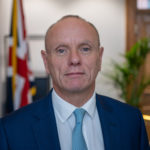
The speech made by Bernard Jenkin, the Conservative MP for Harwich and North Essex, in the House of Commons on 6 January 2022.
I beg to move,
That this House has considered Russia’s grand strategy.
Thank you, Madam Deputy Speaker, for safeguarding a touch more than the three hours that we were promised for this most important debate. I am very grateful to the Backbench Business Committee for providing time for it at this most crucial moment, with developments in Ukraine and elsewhere.
The term “grand strategy” may seem something of a relic from previous centuries, and one that became irrelevant with the end of the cold war, but to think so would be to ignore what is happening in today’s world. There are many Governments around the world today who practise grand strategy, but sadly very few are allies of the west. Most are despotic regimes that are constantly challenging the rules-based international order on which western security and the global trading system depend. The most immediately threatening of such powers is, undoubtedly, Russia.
Today’s Russia has inherited an admirably precise and uniformly understood meaning of the term “strategy”. “Politika”, meaning policy, stands at the top of a hierarchy of terms and describes the goal to be achieved; “strategiya” describes how the goal is to be achieved. Military strategy is merely a subset of global, national or grand strategy.
So what is the goal behind Russia’s grand strategy? Putin’s goal is nothing less than to demonstrate the end of US global hegemony and establish Russia on an equal footing with the US; to change Russia’s status within Europe and become the pre-eminent power; to put Russia in a position to permanently influence Europe and drive a wedge between Europe and the USA; and to re-establish Russia’s de facto control over as much of the former Soviet Union and its sphere of influence as possible. As the strategy succeeds, Putin also intends to leverage China’s power and influence in Russia’s own interests. China, incidentally, will be watching how we defend Ukraine as it considers its options for Taiwan.
On 17 December, the Russian Foreign Ministry unveiled the texts of two proposed new treaties: a US-Russia treaty and a NATO-Russia treaty. Moscow’s purported objective is to obtain
“legal security guarantees from the United States and NATO”.
Moscow has requested that the United States and its NATO allies meet the Russian demands without delay.
This is, in fact, a Russian ultimatum. Putin is demanding that the US and NATO should agree that NATO will never again admit new members, even such neutral countries as Sweden, Finland and Austria, which have always been in the western zone of influence; that NATO should be forbidden from having any military presence in the former Warsaw pact countries that have already joined NATO; and that the US should withdraw all its nuclear forces from Europe, meaning that the only missiles threatening European cities would be Russian ones. The ultimatum is premised on a fundamental lie, which Putin has promulgated since he attended the Bucharest NATO summit in 2008 as an invited guest. That lie is that NATO represents a threat to Russian national security.
As Deputy Foreign Minister Sergei Ryabkov explained:
“The two texts are not written according to the principle of a menu, where you can choose one or the other, they complement each other and should be considered as a whole.”
He described the NATO-Russia text as a kind of parallel guarantee, because
“the Russian Foreign Ministry is fully aware that the White House may not meet its obligations, and therefore there is a separate draft treaty for NATO countries.”
Putin’s intention is to bind NATO through the United States, and bind the United States through NATO. There is nothing to negotiate; they just have to accept everything as a whole.
Russian media are already triumphant, proclaiming:
“The world before, and the world after, December 17, 2021 are completely different worlds… If until now the United States held the whole world at gunpoint, now it finds itself under the threat of Russian military forces. A new era is opening”.
Daniel Kawczynski (Shrewsbury and Atcham) (Con)
My hon. Friend talks about Russian grand strategy and Russian grand design. I am sure that he will come on to talk about the way in which the Russians are using gas and energy to manipulate and coerce our key NATO partners in central and eastern Europe, such as Poland, with the Nord Stream 2 pipeline. Does he agree that it is a disappointment that our own Government have not imposed sanctions on the companies involved in the construction of that pipeline?
Sir Bernard Jenkin
I will not comment on that particular suggestion, but I will be coming to the question of gas.
This ultimatum is, in fact, Russian blackmail, directed at both the Americans and the Europeans. If the west does to accept the Russian ultimatum, they will have to face what Deputy Foreign Minister Alexander Grushko calls
“a military and technical alternative”.
What does he mean by that? Let me quote him further:
“The Europeans must also think about whether they want to avoid making their continent the scene of a military confrontation. They have a choice. Either they take seriously what is put on the table, or they face a military-technical alternative.”
After the publication of the draft treaty, the possibility of a pre-emptive strike against NATO targets—similar to those that Israel inflicted on Iran—was confirmed by the Deputy Minister of Defence, Andrei Kartapolov. He said:
“Our partners must understand that the longer they drag out the examination of our proposals and the adoption of real measures to create these guarantees, the greater the likelihood that they will suffer a pre-emptive strike.”
Apparently to make things clear, Russia fired a “salvo” of Zircon hypersonic missiles on 24 December, after which Dmitry Peskov, the Kremlin spokesman, commented:
“Well, I hope that the notes”—
of 17 December—
“will be more convincing”.
We should be clear that Russia’s development of hypersonic weapons is already a unilateral escalation in a new arms race which is outside any existing arms limitation agreements. The Russian editorialist Vladimir Mozhegov commented:
“The Zircon simply does its job: it methodically shoots huge, clumsy aircraft carriers like a gun at cans.”
An article in the digital newspaper Svpressa was eloquently titled “Putin’s ultimatum: Russia, if you will, will bury all of Europe and two-thirds of the United States in 30 minutes”.
How have we reached this crisis, with the west in general, and NATO in particular, so ill prepared to face down such provocation, when Putin’s malign intent has been evident in his actions for a decade and a half? Since the collapse of the Soviet Union, the west has too easily dismissed today’s Russia as a mere shadow of the former Soviet Union. Yes, it has an economy no greater than Italy’s; it has no ideological equivalent of communism, which so dominated left-wing thinking throughout most of the 20th century; it has very few if any real allies; and much of the rhetoric that emerges is bluster, reflecting weakness rather than strength. Nevertheless, we should not dismiss what Russia has done since 2008 and what Russia is capable of doing with its vast arsenal of new weaponry, and nor should we take a complacent view of Russia’s future intentions. After all, just months after the Bucharest summit in 2008, where he was welcomed as a guest, Putin seized Georgian sovereign territory in Abkhazia and South Ossetia. In 2014 he illegally annexed the Crimea. His aggression was rewarded, because we have tolerated these illegal invasions.
Many western leaders, and the bulk of the western public, have failed to understand that Ukraine is merely a component of a long-running hybrid warfare campaign against the west. They fail to appreciate the extent and nature of Russia’s campaign or the range of weapons used.
Dr Andrew Murrison (South West Wiltshire) (Con)
I am following carefully what my hon. Friend has to say and agree with so much of it. Does he agree that the current Russian intervention in Kazakhstan is part of a piece? This is Putin running true to form. Although theoretically it is at the invitation of a Government that this country recognises, nevertheless it is likely to be classic Putin and expand into a long-term intervention, on the flimsy pretext that that country has a significant ethnic Russian population or one that speaks Russian.
Sir Bernard Jenkin
Indeed, and I will be explaining how these apparently disparate events are integrated in Russia’s grand strategy.
Beneath the cloak of this military noise and aggressive disinformation, in recent months—Kazakhstan is another example—Russia has been testing the west’s response with a succession of lower-level provocations, and I am afraid that we have signally failed to convince the Russians that we mind very much or are going to do very much about them. They have rigged the elections in Belarus, continued cyber-attacks on NATO allies, particularly in the Baltic states, and demonstrated the ability to destroy a satellite in orbit with a missile, bringing space into the arms race. They continue to develop whole new ranges of military equipment, including tanks with intelligent armour, fleets of ice breakers, new generations of submarines, including a new class of ballistic missile submarine, and the first hypersonic missiles.
They have carried out targeted assassinations and attempted assassinations in NATO countries using illegal chemical weapons, provoked a migration crisis in Belarus to destabilise Ukraine, and brought Armenia back under Russian control, snuffing out the democratic movement there. They have claimed sovereignty over 1.2 million square miles of Arctic seabed, including the north pole, which together contain huge oil and gas and mineral reserves. This followed the reopening of the northern sea route, with Chinese co-operation and support from France and Germany, which also hope to benefit. Meanwhile, the UK has expressed no intention of getting involved.
Alec Shelbrooke (Elmet and Rothwell) (Con)
My hon. Friend is making an excellent speech. He has just outlined some weapons that Russia has developed, but does he agree that the recklessness with which it has done so makes them even worse? The nuclear-powered Poseidon torpedo is cooled by seawater, and they feel that some of their hypersonic missiles are cooled by the air, so they have no concerns whatsoever about radioactive contamination from the delivery systems, let alone the payloads.
Sir Bernard Jenkin
My right hon. Friend is completely right. They are ruthless about pursuing what they regard as their own interests and disregard any other risk. Indeed, they are very far from being risk-averse, and the west has been far too risk-averse to compete with that. I will come to that later, but I thank my right hon. Friend for reminding us about the Poseidon torpedo, which is a nuclear-tipped torpedo—another escalation in the arms race.
Russia has also been rearming the Serbs in the western Balkans, including the Serb armed forces and the police in the Serb enclave of Bosnia, with the intention of destabilising the fragile peace that NATO achieved 30 years ago. Russia has stepped up its activity and influence in north and central Africa and has even started giving support to Catalan separatists in Spain. Russia uses its diaspora of super-rich Russian kleptocrats to influence western leaders and exploit centres such as the City of London to launder vast wealth for its expatriate clients.
Following the shaming chairmanship of Gazprom assumed by the former German Chancellor Gerhard Schröder, so Russia has now recruited former French Prime Minister François Fillon to become a board director of the massive Russian petrochemicals company Sibur, with its headquarters in Moscow. The Russians must have contempt for us for being so gullible and corruptible. Our unilateral withdrawal from Kabul also vindicates their narrative that the west is weak, pointing out that we failed to stand by our moral principles or our friends.
Closer to home, look at how Gazprom has gradually and quietly reduced the gas supply to Europe, running down Europe’s gas reserves and causing prices to spike, leading to quadrupling gas and electricity prices in the UK. If Putin now chokes off the supply, it would take time and investment to put in place the necessary alternatives, which the Russians will seek to frustrate, as they already have in Algeria. Algeria was in a position to increase its supply of gas to EU, depending on the existing pipeline being upgraded, but a successful Russian influence campaign aimed at Germany and France prevented that from happening. Gazprom is enjoying its best ever year, so Putin can not only threaten western Europe’s energy supplies, but get the west to fund his war against the west.
Moreover, as gas supplies to Germany through Ukraine seem less reliable, so Germany continues to support Nord Stream 2, the pipeline that will bypass Ukraine, strengthening Russia’s hold over both countries immeasurably. At least we have the option of re-exploiting our gas reserves in the North sea. For as long as we require gas in our energy mix, we should be generating our own, not relying on imported gas from Europe.
John Spellar (Warley) (Lab)
The hon. Gentleman’s last statement will be very much welcomed by workers in the gas and oil industry, but was it not also remiss of the Government a few years ago not to continue with the gas storage facility in the North sea, which would have provided us with some resilience? We should also have been working with other countries to build up their reserves, to diminish the ability of the Kremlin and Gazprom to blackmail us.
Sir Bernard Jenkin
All I can say is, do not start me on the lamentable incoherence of 20 years of UK energy policy, because it is a disgrace, and something that we could have done so much better and that this Government are starting to repair, but it will take some time.
Daniel Kawczynski
Will my hon. Friend give way?
Sir Bernard Jenkin
I have already given way to my hon. Friend, so I hope he will forgive me if I do not take up more time.
The constantly high level of Russian military activity in and around Ukraine and the attention being drawn to it have enabled the Kremlin to mount a huge disinformation campaign, designed to persuade the Russian people and the west that NATO is Russia’s major concern, that somehow NATO is a needless provocation—I am looking at my right hon. Friend the Member for Gainsborough (Sir Edward Leigh), because I cannot believe how wrong he is on this—and that Russian activity is just a response to a supposed threat from NATO. That is complete rubbish.
The only reason the west is a threat to the regime in Russia is who we are and what we represent. We are free peoples, who are vastly more prosperous than most Russians, liberal in outlook, relatively uncorrupted and democratic. The Russian narrative is nothing but a mixture of regime insecurity and self-induced paranoia. Putin feels that Ukraine becoming visibly and irrevocably part of the western liberal democratic family would show the Russian population that that path was also open to Russia as an alternative to Putinism. Let us remind ourselves that Russia’s war against Ukraine in 2014 was provoked not by Ukraine attempting to join NATO, but by its proposed association agreement with the EU.
It is crucial to understand that Russia’s hybrid campaign is conducted like a war, with a warlike strategic headquarters at the National Defence Management Centre at the old army staff HQ, where all the elements of the Russian state are represented in a permanent warlike council, re-analysing, reassessing and revising plans and tactics. The whole concept of strategy, as understood and practised by Putin and his colleagues, is as something completely interactive with what their opponents are doing. It is not a detailed blueprint to be followed. It is primarily a measure-countermeasure activity; a research-based operation, based on real empiricism; an organically evolving struggle; a continual experiment, where the weapons are refined and even created during the battle; and where stratagems and tactics must be constantly adapted; and plans constantly rewritten to take account of our actions and reactions, ideally pre-empting or manipulating them. It is also highly opportunistic, which means that they are thinking constantly about creating and exploiting new opportunities.
To guide such constant and rapid adaptation, the strategy process must include feedback loops and learning processes. To enable that, what the Russians call the hybrid warfare battlefield is, as they describe it, “instrumented.” It is monitored constantly by military and civilian analysts in Russia and abroad, by embassy staff, journalists, intelligence officers and other collaborators, all of whom feed their observations and contributions to those implementing the hybrid warfare operations.
Meanwhile, western Governments such as ours still operate on the basis that we face no warlike challenges or campaigns. We entirely lack the capacity or even the will to carry out strategic analysis, assessment and adequate foresight on the necessary scale. We lack the strategic imagination that would offer us opportunities to pre-empt or disrupt the Russian strategy. We have no coherent body of skills and knowledge to give us analogous capacity to compete with Russian grand strategy. Our heads are in the sand. So much of domestic politics is about distracting trivia, while Russia and others, such as China, are crumbling the foundations of our global security.
Why does this matter? It matters because our interests, the global trading system on which our prosperity depends and the rules-based international order which underpins our peace and security are at stake. We are outside the EU. We can dispense with the illusion that an EU common defence and security policy could ever have substituted for our own vigilance and commitment. We must acknowledge that while the United States of America is still the greatest superpower, it has become something of an absentee landlord in NATO, tending to regard European security issues as regional, rather than a direct threat to US interests. Part of UK national strategy must be to re-engage the US fully, but that will be hard post-Trump. He has left terrible scars on US politics, and the Biden Administration are frozen by a hostile Congress, leading to bitter political paralysis. Nevertheless, the priority must be to reunite NATO.
Having initially refused to have a summit, President Biden has now provisionally agreed to a meeting with Putin on 9 and 10 January—this weekend—to negotiate what? We all want dialogue, and the right hon. Member for Tottenham (Mr Lammy) speaking from the Opposition Front Bench earlier said we want dialogue, but it should not be to discuss the Russian agenda. Being forced to the table to negotiate that way would be appeasement. It would be rewarding threats of aggression, which is no different from giving way to aggression itself. What further concessions can the west offer without looking like appeasers? The Geneva meetings have to signal a dramatic shift in the west’s attitude and resolve, or they will be hailed as a Russian victory.
Some are now comparing the present decade to the 1930s prelude to world war two, where we eventually found we were very alone. If we want to avoid that, the UK needs to rediscover what in the past it has done so well, but it means an end to muddling through and hoping for the best. We cannot abdicate our own national strategy to NATO or the US. It means creating our own machinery of government and a culture in our Government that can match the capability and determination of our adversaries in every field of activity.
Dr Julian Lewis (New Forest East) (Con)
My hon. Friend is making a brilliant speech, and thereby shortening the one that I will make very considerably. He has made the comparison with the run-up to the second world war. One of the key final shocks in that catalogue of disaster was the unexpected Nazi-Soviet pact. Would the equivalent to that be some form of Chinese move against Taiwan, which would so distract the United States as to be the last piece of the jigsaw in the picture that he is painting of a Russian plan to dominate the European continent?
Sir Bernard Jenkin
I have no doubt that Russia and China are not allies, but they know how to help each other, and I think my right hon. Friend’s warning is very timely. As I said earlier, how we deal with Ukraine will reflect how Russia regards Taiwan and, I suppose, vice versa.
I was talking about the need to create our machinery of government and our culture in Government that can match the kind of strategic decision making that takes place in Moscow. I can assure the House that there are people inside and outside Whitehall who are seized of this challenge, and Members will be hearing more from us in the months ahead.
Madam Deputy Speaker (Dame Eleanor Laing)
I hope we can manage this afternoon’s business without a formal time limit. If everyone speaks for between eight and nine minutes, we will do so. If people speak for significantly more than eight minutes, I will have to impose a time limit.
John Spellar (Warley) (Lab)
As we made clear earlier, there is considerable concern about the rapidly deteriorating situation in Ukraine, particularly on its frontier. In today’s debate, as has been well introduced by the hon. Member for Harwich and North Essex (Sir Bernard Jenkin), we need to look at that on a much broader spectrum—basically one of a revanchist Russia that is seeking to rewrite the end of the cold war. It is seeking to recreate the Soviet Union; to increase its influence, if not its direct acquisition—I do not think it would rule that out, however—of the former Soviet Republics; and to establish hegemony over the former countries of the Warsaw pact, as well as to keep Finland in a state of neutrality and to have considerable influence in the western Balkans. That is very clear. Most of those countries are members of NATO and of the EU, and some of them are members of both. I think that explains the Kremlin’s enormous hostility to both those institutions, as it seeks to do everything it can to undermine them.
We need to recognise the nature of that threat, to which the hon. Gentleman drew attention very effectively. It is not just a military threat. We talk about the 100,000 troops on the border, and that is significant, although there might be a tendency to overestimate the efficacy of much of Russia’s equipment. Although Russia may be making advances and developments in hypersonics and so on, quite a lot of its other equipment—we see this particularly with its surface fleet—is distinctly substandard. We need a strong evaluation of that, and that would be much easier had Whitehall not dispersed so much of its Russia-watching capability after the fall of the Berlin wall, leaving a great gap. There may be some attempts to recreate that, but I do not think we have anything like the ability we once had to observe and understand what is going on.
That is also tied to integration. The hon. Member described very well the integrating mechanisms within the system—it is very reminiscent of the Soviet system during the cold war—to integrate all areas: cultural life, political life and industrial espionage, so that they work together in a co-ordinated way. If I asked the Minister where in Whitehall was the UK’s integration along those lines—I am not aware of it—I think he would be hard pressed to put his finger on it. What frustrates me enormously is that in the past, we had quite a good record on this. During the second world war, the Political Warfare Executive—headed up, interestingly enough, by Richard Crossman, subsequently a Labour Member of Parliament and Labour Minister—pulled together journalistic and psychological expertise, and it had an extremely effective record.
Sir Bernard Jenkin
I want very briefly to relay two conversations that I have had about strategic thinking in Government. One was with a person who is now the former Prime Minister, who said, “Oh, Bernard thinks we should have a strategy, but I think we should remain flexible,” completely misunderstanding what strategy is. The second was with a Minister who is now serving in a very senior capacity in this Government, and who said, “What is our strategy? We think we have to work with NATO.” In this country, we are so far behind understanding what strategy is that we have a very great task in front of us.