Category: Foreign Affairs

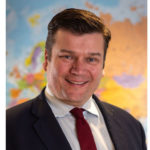
  • James Heappey – 2022 Comments on Support for Lebanese Army

    James Heappey – 2022 Comments on Support for Lebanese Army

    The comments made by James Heappey, the Minister for the Armed Forces, on 6 July 2022.

    The UK and Lebanon are close friends and partners. I was proud to see first-hand the positive impact of the military cooperation between our two countries that has spanned more than a decade.

    In times of need, the UK stands shoulder-to-shoulder with Lebanon and our partners around the world to tackle shared challenges. In the current context, it is more important than ever that we continue to work together to combat threats to global peace and security.

    I have greatly enjoyed my first visit to this beautiful country and hope to return.

  • Liz Truss – 2022 Speech at the Freedom of Religion or Belief Conference

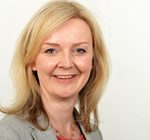
    Liz Truss – 2022 Speech at the Freedom of Religion or Belief Conference

    The speech made by Liz Truss, the Foreign Secretary, at the QE11 Conference Centre in London on 5 July 2022.

    Good morning, Ladies and Gentlemen, Excellencies, I’m delighted to welcome you to the freedom of religion or belief conference.

    This is the first of its kind to be hosted in the United Kingdom. I hope there will be many more. I’d like to thank Fiona Bruce for all her hard work as the Prime Minister’s Special Envoy and Lord Ahmad as our Minister for Human Rights.

    The freedom to believe, to pray and commit acts of worship, or indeed not to believe is a fundamental human freedom and has been one since the dawn of time. Societies that allow their people to choose what they believe are better, stronger and ultimately more successful.

    This fundamental right is covered in the very first clause of Magna Carta and Article 18 of the Universal Declaration of Human Rights. It is one of the Four Freedoms Franklin D Roosevelt said were “essential everywhere in the world”.

    Yet throughout history, we have seen oppressors crack down on freedom of religion or belief in order to exert control. Whether it the appalling persecution of the Jewish community over centuries or Stalin trying to stamp out religion in the Soviet Union.

    Today there is further evidence of this around the world:

    in Nigeria, terrorist groups in the North East, including Islamic State West Africa and Boko Haram, indiscriminately attack those who do not subscribe to their extremist views

    just a month ago, at least 40 people were killed in a heinous attack by gunmen while worshipping at the St Francis Catholic Church in Ondo State

    in Xinjiang, the evidence is clear of the extraordinary scale of China’s targeting of Uighur Muslims and other ethnic minorities, including severe restrictions on the freedom of religion

    in Afghanistan, many of those with a belief the Taliban does not condone are forced to follow this in secret or flee for their safety. They also die at the hands of Da’esh, or see their places of worship attacked

    These are a handful of examples. And we know that Hindus, Humanists and many others are prosecuted and persecuted for their beliefs.

    Persecution ranges from exclusion and discrimination to forced conversion, destroying places of places of worship and targeted killings.

    The Bishop of Truro’s 2019 review for the UK government provided recommendations to support members of all faiths, beliefs and those of no religious belief. I welcome all of those recommendations, and we have taken forward the 22 in a way that will make a real change for everyone persecuted for their religion or belief.

    Over the next 2 days, we will see people from across the world come together to discuss freedom of religion or belief, and the practical steps we can take to advance it.

    Ukraine is on the frontline of this struggle. They are a free democracy, one of the first countries to join the International Religious Freedom or Belief Alliance, fighting for their future.

    Vladimir Putin and his enablers claim that Russia is waging a holy war, but in truth they believe nothing is sacred. We are seeing growing evidence of heinous war crimes committed by Russian troops.

    Innocent civilians are having to shelter from Russia’s indiscriminate bombardment in places of worship. Churches, synagogues, and mosques have been reduced to rubble. Religion is proving to be collateral damage from Putin’s aggression.

    To Ukraine’s delegation in the audience today, I want to say: the UK will not rest until you prevail and until your people are free to live, believe and thrive.

    And I can see that sentiment is shared across this conference. We all want a world where people are free to believe.

    That is why since becoming Foreign Secretary I have taken a strong stand against anti-Semitism, condemning the hateful act of terrorism at a Texas synagogue earlier this year.

    I continue to stand with our international partners in calling out the shocking persecution of Uighur Muslims in Xinjiang. I am at the forefront of standing up for all those suffering in Ukraine including Orthodox Christians.

    Authoritarians and oppressors feel threatened by the freedom of religion or belief, fearing it will encourage people to think freely and question their authority.

    We cannot allow them to win. That is why we’re deepening links with our allies and partners to build a Network of Liberty around the world.

    As St Paul told the Corinthians: “Be on guard, stand firm, be courageous, be strong”.

    So let’s work together in that spirit to defend freedom of religion or belief and show the potential for positive change. Together, we can forge ahead to a fairer, safer world for people of faith across the globe.

    Thank you.

  • Ian Blackford – 2022 Speech on the CHOGM, G7 and NATO Summits

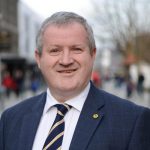
    Ian Blackford – 2022 Speech on the CHOGM, G7 and NATO Summits

    The speech made by Ian Blackford, the SNP MP for Ross, Skye and Lochaber, in the House of Commons on 4 July 2022.

    I thank the Prime Minister for the advance copy of his statement, and welcome him back from his travels around Africa and Europe. It is perhaps worth reiterating the support of all of us in this House for President Zelensky and Ukraine in their struggle against the war criminal Putin.

    The scale and depth of the challenge facing our global community are self-evident: war in Europe, the return of soaring inflation, rising interest rates, and a cost of living crisis that is punishing people in the pocket. We are faced not just with one crisis; this is an accumulation of crises that needs, deserves and demands a collective response. At moments like this, solutions can only come from a co-ordinated effort. Efforts during the 2007 financial crisis and the co-ordination during covid demonstrate just that right across the world, and none of us should be in any doubt that the crisis that we are now in is every bit as severe, steep and deep as anything we faced at the time of the financial crisis.

    I regret to say that so far the collective effort—that sense of urgency—has been badly lacking, particularly from organisations such as the G7. The response has been far too slow and far too small. Prime Minister, it is obvious that the G7 outcomes are nowhere near enough to combat the cost of living crisis that we now face. When can the public expect some leadership and action? When will we see a coherent, co-ordinated and credible plan to increase energy supply, cap prices and drive investment to the global economy before recession becomes inevitable, or is the plan really to delay until the winter, when things will only get worse? Leadership now, in responding to supply shocks, will allow us to fight inflation. A failure to take appropriate action will expose us all to longer-lasting inflationary risks.

    On Ukraine, can the Prime Minister go a little further and give us the outlook regarding what we will do to ensure that we can get grain out of Ukrainian ports? Four hundred million people worldwide rely on Ukrainian food supplies. This is now about stopping not just war, but famine.

    I am sure the Prime Minister will agree that all these global efforts will work only if there is trust between global leaders. Can the Prime Minister therefore explain, in this moment of many crises, how breaking international law and threatening to start a trade war with our neighbours helps anyone?

    The Prime Minister

    The right hon. Gentleman should look more carefully at what the G7 produced in terms of the plan to cap prices for oil and gas and particularly to try to stop Putin profiteering, as he currently is, from his illegal war. There is a plan. I will not pretend that it is going to be easy, but we are doing as much as we can. We are certainly taking a lot of other action, for instance, to help countries around the world with access to the fertiliser they need. He is right to raise the issue of the 25 million tonnes of grain currently held hostage in Odesa. There is a plan to get that out. It is not easy. If he looks at the numbers, though, he will see that we are gradually getting more grain out of those Ukrainian silos and into Europe and into Africa, and we will continue to do that.

    As for the right hon. Gentleman’s final point about the UK and the so-called breach of international law, I repeat what I said to the right hon. and learned Gentleman, the Leader of the Opposition: what the countries around the world see is the UK offering consistent leadership in the matter of standing up for the rule of law and standing up against Putin’s aggression. I promise him—that is what has been raised with me in the past 10 days.

  • Keir Starmer – 2022 Speech on the CHOGM, G7 and NATO Summits

    Keir Starmer – 2022 Speech on the CHOGM, G7 and NATO Summits

    The speech made by Keir Starmer, the Leader of the Opposition, in the House of Commons on 4 July 2022.

    I thank the Prime Minister for the advance copy of his statement, and I welcome him back to these shores. They say that absence makes the heart grow fonder, so I wish him the best of luck in seeing if that works as a party management strategy.

    It has been 131 days since Russia’s illegal invasion of Ukraine, 131 days of war at the heart of our continent, 131 days of Putin trying to make his neighbours cower and 131 days of brave Ukrainian resistance. I have always said that this House, and Britain’s allies, must put aside our differences in other areas and show unity in our opposition to Putin’s aggression. And we have done, driven by the inspiration provided by the people of Ukraine and the leadership and courage of President Zelensky.

    As this conflict reaches its sixth month and drags on in eastern Ukraine, it is important that we do not think our job is done. Putin would like nothing better than for us to lose our focus, for the grip of sanctions to weaken, for military aid to Ukraine to dry up or for cracks to appear in the unity of his opponents. So I welcome the progress made at the NATO summit last week, and congratulate our good friends in Finland and Sweden on their formal invitation to join the NATO alliance, and of course Ukraine on securing its candidate status to join the European Union. I hope that these processes can be concluded as quickly as possible to send a clear message to Putin that his war has permanently changed the European landscape, but not in the way he planned.

    I also welcome the commitment to strengthen our collective deterrent capabilities. I have seen at first hand how British personnel are working with other NATO forces to ensure that the collective shield that has protected us for three quarters of a century remains as strong as ever. So I welcome the agreement on the new NATO force model, ensuring that over 300,000 conventional troops will be at high readiness across Europe. Can I ask the Prime Minister how this agreement will affect British military planning and whether he believes our extra commitments can be met, given his cuts to UK troop numbers?

    The commitment made at the G7 of further financial support for Ukraine is also welcome, as are plans to help Ukraine with post-war reconstruction through an international conference. There can be no clearer case that aid spending makes Britain more secure and prevents the need for military spending in future, which demonstrates the folly in reducing our aid commitments at a time of global instability.

    I am pleased that unity was on display at both the NATO summit and the G7 summit, but I am concerned about current unity within the Commonwealth. The Commonwealth is a valuable and important institution for this country. It is not just a symbol of our past; it is important for our future, providing us with influence in all parts of the world. But in recent years, there have been serious signs of strain. When many major Commonwealth countries abstained at the UN over Russia’s invasion of Ukraine, the summit should have been an opportunity to widen the diplomatic coalition against Putin. Instead, the Prime Minister waged a divisive campaign against the Commonwealth leadership that ended in a humiliating diplomatic failure, only illustrating his embarrassing lack of influence.

    Instead of investing in aid that strengthens the alliance, the Prime Minister has cut it. Instead of upholding the rule of law that should define the Commonwealth, he reneges on treaties he has signed, undermining Britain’s moral and political credibility, when we need our word to carry trust. My fear is simple: the vacuum we leave behind will be quickly filled not by those who share our values, but by those who seek to destroy them. We cannot let that happen in Ukraine. We cannot let that happen anywhere.

  • Boris Johnson – 2022 Statement on the CHOGM, G7 and NATO Summits

    Boris Johnson – 2022 Statement on the CHOGM, G7 and NATO Summits

    The statement made by Boris Johnson, the Prime Minister, in the House of Commons on 4 July 2022.

    With permission, Mr Speaker, I will make a statement about the NATO, G7 and Commonwealth summits, held in Madrid, Schloss Elmau and Kigali respectively.

    In the space of seven days, I had the opportunity to work alongside more than 80 Governments—nearly half the entire membership of the United Nations—and to hold bilateral talks with more than 25 leaders, ranging from the new Presidents of South Korea and Zambia to the Prime Ministers of Japan and Jamaica, demonstrating the global reach of British diplomacy and the value of our presence at the world’s top tables.

    Our immediate priority is to join with our allies to ensure that Ukraine prevails in her brave struggle against Putin’s aggression. At the Madrid summit, NATO exceeded all expectations in the unity and single-minded resolve of the alliance to support Ukraine for as long as it takes, and to explode the myth that western democracies lack the staying power for a prolonged crisis.

    All of us understand that if Putin is not stopped in Ukraine, he will find new targets for his revanchist attacks. We are defending not some abstract ideal but the first principle of a peaceful world, which is that large and powerful countries cannot be allowed to dismember their neighbours, and if this was ever permitted, no nation anywhere would be safe. Therefore our goal must be for our Ukrainian friends to win, by which I mean that Ukraine must have the strength to finish this war on the terms that President Zelensky has described.

    When Putin claimed that by invading his neighbour he would force NATO away from Russia, he could not have been proved more spectacularly wrong, because the single most welcome outcome of the Madrid summit was the alliance’s agreement to admit Finland and Sweden. I hope I speak for the whole House when I say that Britain will be proud to stand alongside these fellow democracies and reaffirm our unshakeable pledge to come to their aid and defend them if ever necessary, just as they would for us. We were glad to smooth their path into NATO by giving both nations the security assurances they needed to apply for membership, and when I met Prime Minister Andersson of Sweden and President Niinistö of Finland last Wednesday, I told them I was certain that NATO would be stronger and safer for their accession.

    Before Putin’s onslaught, both countries had prized their neutrality, even through all the crises of the cold war, and it is a measure of how seriously they take today’s threat that opinion in Sweden and Finland has been transformed. It speaks volumes about Putin’s folly that one permanent consequence of his attack on Ukraine will be a doubling of the length of NATO’s border with Russia. If anyone needed proof that NATO is purely defensive, the fact that two quintessentially peaceable countries have chosen to join it demonstrates the true nature of our alliance.

    Now is the time to intensify our help for Ukraine, because Putin’s Donbas offensive is slowing down and his overstretched army is suffering heavy casualties. Ukraine’s success in forcing the Russians off Snake Island by sheer weight of firepower shows how difficult the invader will find it to hold the territory he has overrun. We need to equip our friends now to take advantage of the moment when Putin will have to pause and regroup, so Britain will supply Ukraine with another £1 billion of military aid, including air defences, drones and electronic warfare equipment, bringing our total military, humanitarian and economic support since 24 February to nearly £4 billion.

    To guarantee the security of our allies on the eastern flank, NATO agreed in Madrid to bolster its high readiness forces, and we in the UK will offer even more British forces to the alliance, including almost all of our surface fleet. We have already doubled our deployment in Estonia, and we will upgrade our national headquarters to be led by a brigadier and help our Estonian friends to establish their own divisional headquarters. If you follow the trajectory of our programmes to modernise our armed forces, Mr Speaker, you will draw the logical conclusion that the UK will likely be spending 2.5% of GDP on defence by the end of this decade.

    Earlier, at the G7 summit, the first full day of talks coincided with a Russian missile destroying a Ukrainian shopping centre, killing at least 18 people. This barbaric attack on an obviously civilian target strengthened the resolve of my fellow leaders to provide Ukraine with more financial, humanitarian, military and diplomatic backing for, and I quote the communiqué,

    “as long as it takes”.

    That is exactly the term later echoed by NATO. The G7 has pledged nearly $30 billion of financial support for Ukraine this year, and we will tighten our sanctions on Russia. The UK will join America, Japan and Canada to ban the import of Russian gold, which previously raised more export revenues than anything else except hydrocarbons.

    The G7 will devise more options for ensuring that nearly 25 million tonnes of grain, trapped inside Ukraine by Putin’s blockade, reaches the countries that rely on these supplies. Just as the world economy was recovering from the pandemic, Putin’s war has caused a surge in global food and energy prices, raising the cost of living everywhere, including here at home. The G7 agreed to

    “take immediate action to secure energy supply and reduce price surges…including by exploring additional measures such as price caps.”

    We will help our partners in the developing world to meet their climate targets and transform millions of lives by constructing new infrastructure according to the highest standards of transparency and environmental protection. Through our Partnership for Global Infrastructure and Investment, an idea launched by the UK at the Carbis Bay summit last year, we will mobilise up to $600 billion of public and private investment over the next five years.

    Many beneficiary nations will be members of the Commonwealth, and I was very pleased to attend the Kigali summit of this unique association of 56 states, encompassing a third of humanity. More countries are eager to join, and we were pleased to welcome two new members, Gabon and Togo.

    It is an amazing fact that our familiar legal and administrative systems, combined with the English language, knock 21% off the cost of trade between Commonwealth members. It is because the Commonwealth unites that advantage with some of the fastest-growing markets in the world that we are using the sovereignty that the UK has regained to sign free trade or economic partnership agreements with as many Commonwealth countries as possible. We have done 33 so far, including with Australia and New Zealand, and we are aiming for one with India by Diwali in October.

    It is true that not every member of the Commonwealth sees Putin’s aggression as we do, or exactly as we do, so it was vital to have the opportunity to counter the myths and to point out that food prices are rising because Putin has blockaded one of the world’s biggest food producers. If large countries were free to destroy their neighbours, no Commonwealth member, however distant from Ukraine, would be genuinely secure.

    The fact that, in a week, the UK was able to deal on friendly terms with scores of countries in three organisations shows the extraordinary diplomatic assets our country possesses. As we stand up for what is right in Ukraine and advance the values and interests of the British people, I commend this statement to the House.

  • Priti Patel – 2022 Comments on Immigration Partnership with Nigeria

    Priti Patel – 2022 Comments on Immigration Partnership with Nigeria

    The comments made by Priti Patel, the Home Secretary, on 4 July 2022.

    It is an important development that the UK and Nigeria have signed an agreement to co-operate on migration issues, to tackle illegal migration and the significant threat it poses to both nations.

    The deal will mean that operational teams in both countries will share their expertise to take the fight to criminal people smugglers who are responsible for a wider range of criminality and put profit before people while undermining the security of our two countries. This landmark agreement will increase the deportation of dangerous foreign criminals to make our streets and country safer.

    This is our New Plan for Immigration being put into action.

  • Liz Truss – 2022 Speech at the Ukraine Recovery Conference

    Liz Truss – 2022 Speech at the Ukraine Recovery Conference

    The speech made by Liz Truss, the Foreign Secretary, in Lugano, Switzerland, on 4 July 2022.

    Thank you very much Prime Minister, thank you very much to President Cassis for hosting the conference today. Ukraine’s recovery from Russia’s war of aggression will be a symbol of the power of freedom and democracy over autocracy.

    It will show Putin that his attempts to destroy Ukraine have only produced a stronger, more prosperous and more united nation.

    The United Kingdom is resolute in its support of Ukraine’s territorial integrity and we will remain at Ukraine’s side as it emerges as a strong and thriving democracy.

    We have led on support for Ukraine during the war and will continue to lead in supporting the Ukrainian Government’s Reconstruction and Development Plan.

    This needs to be a new Marshall Plan for Ukraine and it needs to be driven by Ukraine itself.

    We will push for immediate investment and to drive economic growth because it’s absolutely imperative we get the Ukrainian economy going, we need to need able to support returning Ukrainians returning to Ukraine, we need to give people hope about the future, and we need to give them the means to be able to support themselves.

    Reconstruction should embed reform, modernisation, technology and transparency.

    The United Kingdom is very pleased to join the Joint Reconstruction Coordination Group.

    It’s our view that it’s vital that that is open to partners right around the world, we need all of the free world supporting this effort. It must be open and comprehensive, and it must involve international organisations as are represented on stage at the moment.

    It must involve all of those who have been active in helping Ukraine defend itself and who back Ukraine for the long term through thick and thin, whatever it takes.

    The United Kingdom has committed to host next year’s 2023 Ukraine Reconstruction Conference.

    President Cassis, we have a lot to learn from you, it’s been a fantastic conference so far.

    We are also exploring how we engage British business, tech companies and universities in that reconstruction effort, we’re looking at how we can use English and Scots law to ensure investors have the confidence to participate in the reconstruction effort, and we will use the might of the City of London and the European Bank of Reconstruction and Development which is based in London to make Ukraine one of the world’s top destinations for investment in 2023.

    We think there is a real opportunity for Ukraine to near-shore manufacturing, agribusiness, technology, to be an extremely vibrant economy going forward. As the Prime Minister mentioned the United Kingdom is actively looking at how we legislate to seize assets from those who have contributed to this appalling war, it’s vitally important that we acquire those funds for the reconstruction of Ukraine.

    The UK will be championing the recovery of the Kyiv region, in response to President Zelenskyy’s specific request from our Prime Minister for UK leadership. We believe that despite the appalling suffering, despite the terrible war crimes that have taken place, the devastation, and the human cost, that Ukraine will emerge stronger and more successful after this war.

    President Zelenskyy you have demonstrated that Ukraine is a bastion of freedom and democracy, and it’s our duty as your friends and allies, as the free world, to do whatever it takes to support you.

    Thank you.

  • Vicky Ford – 2022 Speech on Iran’s Nuclear Programme

    Vicky Ford – 2022 Speech on Iran’s Nuclear Programme

    The speech made by Vicky Ford, the Parliamentary Under-Secretary of State for Foreign, Commonwealth and Development Affairs, in the House of Commons on 30 June 2022.

    I am extremely grateful to my right hon. Friend the Member for Newark (Robert Jenrick) and the hon. Member for Birmingham, Selly Oak (Steve McCabe) for securing this important debate. I share their grave concerns, and those of many Members, about the potential for a nuclear armed Iran.

    In his opening remarks, my right hon. Friend the Member for Newark said that it was important for the Government to listen to what Members say about this subject. We are listening, and it is my pleasure to respond on behalf of the Government. I am also grateful for the contributions of the other Members who have spoken, and I will try to respond to many of the points that have been raised.

    Time after time, we have seen Iran take actions that directly undermine global security, freedom and democracy, and challenge the international order. The UK is taking a tough stance: Iran must end its threatening behaviour and destabilising regional activity, and must also return to its JCPOA commitments.

    Iran’s nuclear programme has never been more advanced than it is today, and our objective remains to ensure that the country never acquires a nuclear weapon. The escalation of its nuclear activities is threatening regional and international peace and security, and undermining the global non-proliferation system. Along with our partners, the United Kingdom has worked intensively to find a diplomatic solution. Over the last year we have worked alongside Germany, France, the United States and others to find a solution that would return Iran to compliance with its nuclear commitments under the JCPOA.

    In March 2022, we left Vienna after reaching the end of talks. At that point there was a viable deal on the table that would return Iran to compliance with its commitments and return the US to the deal, reversing Iran’s nuclear escalation and lifting US sanctions related to the JCPOA. Iran has not accepted the deal, and time is running out. Iran should urgently take the offer on the table; there will not be a better one.

    I agree that the JCPOA is not perfect, but it does represent a pathway for constraining Iran’s nuclear programme. A restored JCPOA would provide a foundation for international diplomatic efforts to ensure that Iran’s nuclear programme remained peaceful in the long-term. As my hon. Friend the Member for Hendon (Dr Offord), my right hon. Friend the Member for Newark and the hon. Member for Strangford (Jim Shannon) pointed out, there are some issues regarding sunset provisions. The hon. Member for Birmingham, Selly Oak also mentioned the switching off of the cameras, as did my hon. Friend the Member for Bracknell (James Sunderland).

    I want to make it clear that if Iran returns to the JCPOA, our priority is the extension of the sunset clauses and enabling a stricter monitoring regime. Should the JCPOA collapse, however, we will consider all options in partnership with our allies. Let me repeat that: if a deal is not struck soon the JCPOA will collapse, and in that scenario we will carefully consider all our options in partnership with our allies. Those options may include new sanctions. I accept that the JCPOA does not address wider regional security issues, but a return to the deal would contribute positively to regional prosperity and security in the middle east and could pave the way for further discussions on regional and security concerns.

    Iran must stop its destabilising behaviour. We believe it is important to encourage Iran to take a more constructive approach to its relationship with its neighbours. The UK has long made clear our concern about Iran’s reckless destabilising activity in the region, including the political, financial and military support that it gives to militants and proscribed terrorist groups, including Hezbollah in Lebanon and Syria, to militias in Iraq and to the Houthis in Yemen.

    Iran’s support for these groups and activities risks the security and prosperity in the region. They pose a direct threat to the UK and to our interests as well as to the safety of our allies. Regional security and that of our allies remains one of our top concerns, and we are working with allies to constrain Iran’s ability to conduct destabilising activities in the region. We will continue to do so, whether or not a deal is signed.

    We will continue our work with allies and partners to hold Iran to account for breaches of UN security resolutions. That includes supporting enforcement of UN prohibitions on the proliferation of weapons to non-state actors in the region, including to Hezbollah and to the Houthis in Yemen. We continue to build on the existing co-operation between the UK and our partners to counter the activities of Iran and its proxies in the region, including in our work to support stability in Iraq and to end the conflicts in Yemen and Syria.

    My hon. Friend the Member for Hendon mentioned the Paris bomb plot and his experiences at that time. The UK Government always strongly condemn the targeting of civilians and we welcome the fact that those responsible for that plot in Paris in 2018 have been held to account. We also welcome the work by the Belgian courts in convicting four individuals last year, including Asadollah Asadi, who received a 20-year sentence.

    The integrated review outlines our contribution to maritime security, upholding the principle of freedom of navigation. The UK is working to ensure the safety of shipping in the middle east, including in the Strait of Hormuz. We deter Iran from disrupting maritime security through our contributions to the international maritime security construct and the combined maritime forces.

    A number of Members mentioned sanctions. The UK continues to maintain a range of sanctions aimed at addressing Iran’s destabilising behaviour. We have over 200 sanctions designations in place. Those include the Islamic Revolutionary Guard Corps, and sanctions related to human rights, proliferation and terrorism.

    My hon. Friend the Member for Harrow East (Bob Blackman) and others spoke in detail about the IRGC. We have made clear our concerns about its continuing destabilising activity throughout the region, and we maintain a range of sanctions that are working to constrain that activity. The list of proscribed organisations is kept under constant review, but we do not routinely comment on whether an organisation is under consideration for proscription so I cannot comment on that; I know that my hon. Friend understands the reasons why.

    A number of Members spoke about those who have been detained, and in particular about Morad Tahbaz. The Iranian Government committed to releasing Morad from prison on indefinite furlough but they failed to honour that commitment. His continuing horrendous ordeal sends a clear message to the international community that Iran does not honour its commitments. We continue to urge the Iranian authorities at every opportunity to release him immediately. He must be allowed to return to his family’s home in Tehran without further delay. Morad is a tri-national, and we are working closely with the United States to release him.

    Let me conclude by saying that it is in no one’s interest to see a nuclear-armed Iran. The UK is firm in its commitment to the security and prosperity of our allies in the region, and to working with the international community to hold Iran to account for its destabilising activity. We urge, and will continue to urge, Iran to cease its nuclear escalation and to conclude the deal currently on the table to restore the JCPOA while that is still possible. If that does not happen, we will work with our international partners to consider all options.

  • Bambos Charalambous – 2022 Speech on Iran’s Nuclear Programme

    Bambos Charalambous – 2022 Speech on Iran’s Nuclear Programme

    The speech made by Bambos Charalambous, the Labour MP for Enfield Southgate, in the House of Commons on 30 June 2022.

    I thank the right hon. Member for Newark (Robert Jenrick) and my hon. Friend the Member for Birmingham, Selly Oak (Steve McCabe) for securing this excellent and important debate, and hon. Members across the House who have contributed to it.

    The JCPOA was a landmark agreement. Labour fully supported the Vienna negotiations aimed at restoring it. We remain hopeful that a way forward can be found, including in the latest rounds of talks in Doha, co-ordinated by the European Union. It is absolutely right that the UK Government engage with those negotiations. We continue to believe that the JCPOA framework remains the best option to limit Iran’s nuclear programme, based on restoring Iranian compliance in exchange for sanctions relief. A pragmatic approach should be pursued, as the hon. Member for Bracknell (James Sunderland) said, and it is important that the US engages with Iran as part of the diplomatic process to restore the JCPOA.

    In the short term, pressure must be applied on Tehran to reverse its enrichment programme so that it is within the limits of the initial agreement. Iran must also refrain from further steps that would reduce the possibility of a return to that agreement. In the longer term, however, the UK Government must show leadership. Our aims should be not just to restore the JCPOA, but to address the long-standing issues and other aspects of the Iranian Government’s actions that cause serious concern. These include much more than restricting and monitoring the country’s nuclear capability, important though that is. I note that the right hon. Member for South West Wiltshire (Dr Murrison) has called for a “stronger, longer deal”. Indeed, we are greatly worried about the destabilising influence of Iran, which poses a serious threat to security in the region. That is why I believe we must do more to hold the Iranian regime to account.

    In 2018, as we know, the Trump Administration withdrew the US from the JCPOA. It was completely wrong for the US to walk away from the agreement and reimpose sanctions. That decision was taken without support from the other signatories to the deal, including the UK, and the reckless action of the US Government at the time has been deeply damaging. Since the American withdrawal from the JCPOA, Iran has flagrantly violated the agreement’s terms. It has pursued a dangerous path of non-compliance. It has increased the quality and quantity of its enriched uranium production far beyond the JCPOA limits.

    As the hon. Member for Strangford (Jim Shannon) and the right hon. Member for Clwyd West (Mr Jones) have pointed out today, Tehran’s persistent refusal to co-operate with the International Atomic Energy Agency, the global nuclear watchdog, in matters including its inquiry into prior nuclear activities, signals Iran’s lack of transparency while it continues to increase its nuclear capability. For example, the IAEA has reported that Iran is enriching uranium up to 60% to produce highly enriched uranium, and in August 2021 the IAEA verified that it had begun producing uranium metal, which has little civilian purpose and is applicable to nuclear weapons development. As we heard from the hon. Member for Grantham and Stamford (Gareth Davies), nuclear weapons in the wrong hands are the gravest of all threats.

    Earlier this month, the IAEA announced that Iran was removing 27 surveillance cameras from nuclear sites in what has been described as a “fatal blow” to the JCPOA and the monitoring of Iran’s nuclear programme. As Iran continues to escalate its nuclear activities, we believe that the IAEA’s inspection ability must be strengthened, and I would be keen to hear more from the Minister about the steps that the UK Government are taking to support the strengthening of the IAEA as a matter of urgency.

    More widely, we know that the Vienna talks have stalled since March, not least owing to Russia’s invasion of Ukraine. I would like to hear the Minister’s view on the consequences of the invasion for the future viability of the E3+3 format, which has been the basis for negotiations with Iran for more than 15 years. We also know that Iran is currently holding up conclusion of the agreement, which would return it to its JCPOA commitments and restore US involvement in the deal. As has been noted, a new round of talks is under way in Qatar, and we welcome that, but we cannot underestimate the challenges and the importance of securing an agreement.

    There has been increasing frustration with the Iranian intransigence that has been seen in these negotiations, and concerns remain that the regime is attempting to gain leverage for future negotiations while advancing its nuclear knowledge as talks are stalled. As was pointed out by the hon. Member for Harrow East (Bob Blackman), this may mean that at some point on its current trajectory, Iran will soon make irreversible nuclear progress, rendering the benefits of returning it to its JCPOA commitments meaningless. That is incredibly concerning. It remains our steadfast hope that a compromise can be found that will allow for the restoration of the nuclear agreement, which could then serve as a basis for addressing many other concerns.

    We cannot talk about Iran without discussing wider issues, many of which have been rightly raised by other Members today. Although the JCPOA is a critical agreement to limit Iran’s nuclear capability, it does not address Tehran’s ballistic missiles programme, which is designed to deliver nuclear weapons, or its support for terrorist groups and militias throughout the middle east, including Hezbollah and the Houthis in Yemen. That was mentioned by the hon. Member for Hendon (Dr Offord).

    These issues need to be addressed, and the Labour Party believes it is imperative to move them up the international agenda. We are seriously concerned about the threats that Iran has made against Israel. My hon. Friend the Member for Birmingham, Selly Oak referred to Iran’s stated desire to see Israel’s destruction. Moreover, the JCPOA does not hold Iran to account for its human rights violations against its own people, or for its continued engagement in state hostage-taking—an issue of which we in the House are acutely aware.

    As was pointed out by the right hon. Member for Islington North (Jeremy Corbyn), Mehran Raoof and Morad Tahbaz remain in Iran despite the release of Nazanin Zaghari-Ratcliffe and Anoosheh Ashoori earlier this year. It is shameful that the Iranian regime continues to use the two remaining hostages as political pawns, and the UK Government must do everything possible to ensure their safe return home to the UK, as their families were promised.

    As for the wider nuclear issues, we believe there is an opportunity for the UK to take a leadership role at the upcoming nuclear non-proliferation treaty review conference. The outlook at present is not good. Russia’s invasion of Ukraine has closed the space for dialogue on critical issues involving arms control, transparency and confidence-building. The flagrant violations of the Budapest memorandum send a dangerous message. Proliferation risks are very significant. There are also many crucial new issues that need to be addressed, including threats of emerging technology, especially in the domains of cyber and space. I urge the Minister to update the House on the UK’s priorities for the conference in August, and on how the UK can lead from the front on these matters internationally.

    If diplomacy and efforts to restore the JCPOA fail, the consequences may be severe. The return of sanctions, a rapid expansion of Iranian nuclear activity, and a heightened risk of military tension in the region are likely outcomes. As we have heard from right hon. and hon. Members on both sides of the House today, there is broad agreement that the restoration of the JCPOA would be an important step, and I therefore ask the Government to continue to pursue every possible avenue diplomatically to help to promote and restore the nuclear deal with Iran. However, it is not the only step, and it should not be the only aim. We must continue to support our international partners, including Israel, by holding the regime to account, and we must ensure that the wider issues that I, and many others, have mentioned today are not left unaddressed by the UK and our international allies.

  • Kirsty Blackman – 2022 Speech on Iran’s Nuclear Programme

    Kirsty Blackman – 2022 Speech on Iran’s Nuclear Programme

    The speech made by Kirsty Blackman, the SNP MP for Aberdeen North, in the House of Commons on 30 June 2022.

    I congratulate the right hon. Member for Newark (Robert Jenrick) on bringing this debate to the House, and I thank the Backbench Business Committee for ensuring that it could happen. There has been an awful lot of accord across the House today; it seems that we are all raising similar concerns and we are all keen to find a way forward. It is not quite a matter of semantics, but perhaps there is just a slight disagreement about the way forward and the best way to tackle the issue.

    The joint comprehensive plan of action was never ideal, but it was better than no deal and we need to recognise that it was a major diplomatic achievement. The SNP joins Members across the House who have called for Iran to halt its activities that are in violation of the JCPOA. We hope to see detailed, precise and deep talks this week. There is an urgent need for a diplomatic solution and an urgent need to end Iran’s nuclear escalation.

    We agree with the concerns that have been raised about Iran’s stated intention to end all JCPOA-related transparency measures and about the action that it has already taken in that regard. Transparency is incredibly important, and any future deal needs to put that at the heart of the agreements made.

    There are other risks that have not been mentioned in the Chamber today. Bilateral work on tackling climate change and on tackling the Afghan refugee crisis is currently on ice because of the present situation. Regardless of escalation and nuclear uranium enrichment, the climate crisis and the Afghan refugee crisis are not going away. We must work to tackle them. As several hon. Members have said, we must ensure that we put people at the heart of our approach and that we work to improve human rights in the region, as well as ensuring that the people of Iran are decoupled from the action of their Government and given the opportunity to flourish.

    We agree with the calls for the UK to use our place to press the regime—and to press all regimes that have issues with human rights or are committing human rights abuses, whether that is Iran, Saudi, Russia or any of the countries committing human rights abuses against their citizens or citizens of other countries.

    I criticise the unilateral actions that Donald Trump took, on the basis that taking unilateral action on this is not the way forward. The way forward is for everybody to work together as international partners to get a settlement. The reality is that the situation is potentially worse than it could have been if those unilateral actions had not been taken. It is better to act in concert.

    We welcome President Biden’s commitment not just to returning to the deal, but to strengthen the areas in which it is defective and extend the JCPOA. I have not much mentioned wider regional security, but we need to ensure that action is taken and that there is international co-operation with respect to Iran’s issues, its causing of regional instability and the actions that it is taking to destabilise countries around the world, as several contributors to the debate have mentioned. That needs to be a matter of priority.

    As somebody who believes that we should not have nuclear weapons anywhere in the world, I am massively concerned to see the upscaling of Iran’s potential nuclear capabilities. We need to ensure that talks happen, whether that is around the table this week or in some future round of talks. We need to ensure that the UK’s international power is used to put pressure on, and to de-escalate the situation as quickly and as properly as we possibly can.