Category: Foreign Affairs

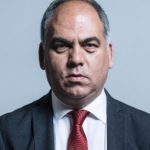
  • Rehman Chishti – 2022 Statement on Jagtar Singh Johal

    Rehman Chishti – 2022 Statement on Jagtar Singh Johal

    The statement made by Rehman Chishti, the Parliamentary Under-Secretary of State for Foreign, Commonwealth and Development Affairs, in the House of Commons on 7 September 2022.

    I am grateful to the hon. Member for asking the urgent question, and I pay tribute to his tenacious support for his constituent Mr Jagtar Singh Johal since his arrest in India in 2017. I appreciate what a difficult time this must be for Mr Johal’s family and friends. Again, I pay tribute to his Member of Parliament for all that he is doing for his constituent in these challenging circumstances.

    Consular assistance to British nationals overseas is the primary public service of the Foreign, Commonwealth and Development Office and a priority for the Foreign Secretary. Since Mr Johal’s arrest over four years ago, Ministers and officials have consistently raised our concerns about his welfare and treatment directly with the Government of India. With Mr Johal’s consent, this has included raising allegations of torture and mistreatment, and his right to a fair trial. The former Prime Minister, my right hon. Friend the Member for Uxbridge and South Ruislip (Boris Johnson) raised Mr Johal’s case with Prime Minister Modi in April. The then Foreign Secretary raised Mr Johal’s case with the Indian Minister of External Affairs, Dr Jaishankar, most recently in Delhi on 31 March. Lord Ahmad of Wimbledon, the Minister of State with responsibility for south Asia and the Commonwealth, is also in regular contact with his counterparts across the Indian Government. Since 2017, Ministers and officials have raised Mr Johal’s detention on almost 100 occasions, and they will continue to do so.

    In May, the UN working group on arbitrary detention published its opinion that Mr Johal is arbitrarily detained. We take this seriously, and we are committed to doing what we can to assist Mr Johal. On 9 June, the then Foreign Secretary met the hon. Member for West Dunbartonshire (Martin Docherty-Hughes) and Mr Johal’s brother Gurpreet to discuss this matter.

    In February this year, lawyers acting for Mr Johal issued a civil litigation claim against Her Majesty’s Government in the High Court. Last month, they detailed their allegations. We must let the legal process take its course, and I will therefore not comment on this matter, in line with long-established practice, as I am sure all Members will appreciate and as you, Madam Deputy Speaker, outlined before the start of the urgent question. I can assure the hon. Member for West Dunbartonshire and the House that we will continue to do all we can to support Mr Johal and his family.

  • Nadhim Zahawi – 2022 Comments on G7 Statement on Russian Aggression

    Nadhim Zahawi – 2022 Comments on G7 Statement on Russian Aggression

    The comments made by Nadhim Zahawi, the Chancellor of the Exchequer, on 2 September 2022.

    Since Putin’s brutal and unprovoked invasion of Ukraine the UK and our allies have imposed hugely damaging sanctions on the Kremlin war machine, pushing the Russian economy into a deep recession and putting the majority of Russia’s $640billion foreign exchange reserves beyond use.

    Following a productive meeting with Secretary Janet Yellen in Washington, and together with our G7 partners, we have agreed to go further. This has been a personal priority for me as Chancellor. We will curtail Putin’s capacity to fund his war from oil exports by banning services, such as insurance and the provision of finance, to vessels carrying Russian oil above an agreed price cap.

    We are united against this barbaric aggression and will do all we can to support Ukraine as they fight for sovereignty, democracy and freedom.

  • G7 Finance Ministers – 2022 Joint Statement on Russia’s War of Aggression against Ukraine

    G7 Finance Ministers – 2022 Joint Statement on Russia’s War of Aggression against Ukraine

    The joint statement made by the G7 Finance Ministers on 2 September 2022.

    We, the G7 Finance Ministers, met on 2 September 2022 to discuss our united response to Russia´s war of aggression against Ukraine and the war’s harmful impact on the global economy.

    We remain steadfast in our support for and solidarity with Ukraine. We will continue to stand with Ukraine for as long as it takes.

    We continue to condemn the brutal, unprovoked, unjustifiable and illegal war of aggression against Ukraine by Russia and aided by Belarus. Russia´s war of aggression is causing global economic disruptions and is threatening the security of the global supply of energy and food. The economic costs of the war and consequent price increases are felt disproportionately by vulnerable groups across all economies and particularly by those countries already facing food insecurities and fiscal challenges.

    We underscore our shared commitment to our determined and coordinated sanctions imposed in response to Russia’s war of aggression, which are already having a considerable impact on the Russian economy. The cumulative impact of these measures on Russia will amplify over time and starkly deteriorate its economic potential. We remain committed to fully implementing and enforcing our sanctions and remain vigilant against sanctions evasion, circumvention and backfilling.

    At their summit in Elmau, G7 Leaders reaffirmed a shared commitment to preventing Russia from profiting from its war of aggression, to supporting stability in global energy markets and to minimising negative economic spillovers, especially on low- and middle-income countries. To deliver on this commitment, today we confirm our joint political intention to finalise and implement a comprehensive prohibition of services which enable maritime transportation of Russian-origin crude oil and petroleum products globally – the provision of such services would only be allowed if the oil and petroleum products are purchased at or below a price (“the price cap”) determined by the broad coalition of countries adhering to and implementing the price cap.

    The price cap is specifically designed to reduce Russian revenues and Russia´s ability to fund its war of aggression whilst limiting the impact of Russia´s war on global energy prices, particularly for low and middle-income countries, by only permitting service providers to continue to do business related to Russian seaborne oil and petroleum products sold at or below the price cap. This measure would thus build on and amplify the reach of existing sanctions, notably the EU´s sixth package of sanctions, ensuring coherence through a strong global framework.[1] We welcome the decision of the European Union to explore with international partners ways to curb rising energy prices, including the feasibility of introducing temporary import price caps.

    In line with our extensive and ongoing engagement with a diverse group of countries and key stakeholders, we invite all countries to provide input on the price cap´s design and to implement this important measure. We seek to establish a broad coalition in order to maximise effectiveness and urge all countries that still seek to import Russian oil and petroleum products to commit to doing so only at prices at or below the price cap. We reaffirm our own measures to phase out Russian oil and products from our domestic markets and underscore that the price cap measure aims to relieve pressure on global oil prices and support oil-importing countries globally by enabling continued access to Russian oil at or below the price cap for countries that continue such imports. The measure has the potential to be particularly beneficial to countries, notably vulnerable low- and middle-income countries, suffering from high energy and food prices, aggravated by Russia’s war of aggression. We will also develop targeted mitigation mechanisms alongside our restrictive measures to ensure that the most vulnerable and impacted countries maintain access to energy markets including from Russia.

    We commit to urgently work on the finalisation and implementation of this measure in our own jurisdictions through our respective domestic and legal processes and with our partners. We acknowledge that, for the EU, unanimity among the 27 EU Member States is required. We aim to align implementation with the timeline of related measures within the EU´s sixth sanctions package.

    The initial price cap will be set at a level based on a range of technical inputs and will be decided by the full coalition in advance of implementation in each jurisdiction. The price cap will be publicly communicated in a clear and transparent manner. The price cap´s effectiveness and impact will be closely monitored and the price level revisited as necessary.

    We envisage that practical implementation of the price cap will be based on a recordkeeping and attestation model covering all relevant types of contracts. We aim to ensure consistent implementation across jurisdictions. In implementation, we would aim to limit possibilities for circumventing the price cap regime, while at the same time minimising the administrative burden for market participants. With a view to final design and implementation, we will continue to engage with a diverse group of countries and stakeholders to enhance clarity and compliance and enable trade to continue to flow at or below the envisaged price cap. We envisage that the coalition establishes a cooperation framework across jurisdictions to ensure compliance and enable monitoring and supervision. Once operational, the coalition may consider further action to ensure the effectiveness of the price cap. The price cap measure will be reviewed and reconsidered when appropriate.

    In line with G7 Leaders´ commitments at Elmau, we continue to encourage oil-producing countries to increase their production to decrease volatility in energy markets, and in this context welcome OPEC’s recent decisions to increase output amid tight supply conditions. We call on them to continue action in this regard. We will increase coordination with partners committed to bolstering efficiency, stability and transparency in energy markets.

  • Liz Truss – 2022 Statement Following the UN Human Rights Chief’s Report on Xinjiang

    Liz Truss – 2022 Statement Following the UN Human Rights Chief’s Report on Xinjiang

    The statement made by Liz Truss, the Foreign Secretary, on 1 September 2022.

    The report by the UN High Commissioner for Human Rights provides new evidence of the appalling extent of China’s efforts to silence and repress Uyghurs and other minorities in Xinjiang.

    It includes harrowing evidence, including first-hand accounts from victims, that shames China in the eyes of the international community, including actions that may amount to crimes against humanity.

    This includes credible evidence of arbitrary and discriminatory detention, torture, sexual and gender-based violence, violations of reproductive rights, and the destruction of religious sites. UN Member States must now be given the opportunity to consider the report fully.

    The UK has already led international efforts to hold China to account at the UN, imposed sanctions on senior Chinese government officials, and announced measures to help ensure no UK organisations are complicit in these violations through their supply chains.

    We will continue to act with international partners to bring about a change in China’s actions, and immediately end its appalling human rights violations in Xinjiang.

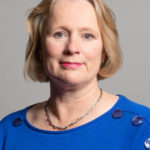
  • Vicky Ford – 2022 Statement on the Situation in Ethiopia

    Vicky Ford – 2022 Statement on the Situation in Ethiopia

    The statement made by Vicky Ford, the Minister for Africa, on 1 September 2022.

    The return to conflict between the Tigray People’s Liberation Front (TPLF) and the Ethiopian Government is catastrophic for the people of Ethiopia. This development risks tens of thousands of deaths – both directly through fighting, and indirectly through a further deepening of the already dire humanitarian situation. 22 months since fighting first began, it is clear that there is no military solution.

    The cessation of hostilities agreed in March 2022 created an opportunity to resolve this conflict politically and enable Ethiopia to return to sustained development and economic growth. The resumption of fighting makes the path to peace much more difficult. Tigrayan forces should immediately cease fighting in Amhara region and return to Tigray. Eritrean forces should leave Tigray. We remain confident that progress towards peace can be made if talks begin.

    The conflict in northern Ethiopia has contributed to one of the world’s worst humanitarian crises, leaving 13 million people in Tigray, Amhara and Afar requiring humanitarian assistance. Conflict, and the TPLF’s seizure of fuel from the World Food Programme, makes the work of humanitarian agencies more difficult. The UK urges all parties to the conflict to guarantee unfettered humanitarian access by immediately ceasing hostilities. The UK calls on the Ethiopian Government to urgently restore services to Tigray and the TPLF to enable the seized fuel to be used for aid distribution and critical services.

    Previous phases of the conflict were marked by terrible violations and abuses of human rights, including sexual violence. The UK will strongly support all efforts to ensure accountability for violations and abuses, including by the Ethiopian Human Rights Commission and the International Commission of Human Rights Experts on Ethiopia. There have already been reports of airstrikes on Tigray by the Ethiopian Government resulting in civilian casualties, and of ethnically targeted arrests. It is the responsibility of all parties to the conflict to prioritise the protection of civilians, respect human rights and uphold International Humanitarian Law.

    The only way to resolve this conflict is to reinstate the cessation of hostilities and immediately begin political negotiations. We support the African Union’s mediation efforts to this end, and urge a redoubling of these efforts to avert further escalation.

  • Alistair Burt – 2022 Comments on Liz Truss Saying Jury out on French President

    Alistair Burt – 2022 Comments on Liz Truss Saying Jury out on French President

    The comments made by Alistair Burt on Twitter on 26 August 2022, following Liz Truss, the Foreign Secretary, saying that the “jury is still out” on whether Emmanuel Macron was a friend or foe of the UK.

    This is a desperately serious error, which the Foreign Secretary should take back. The better answer would have been ‘of course he and France are friends and allies, both in NATO and the cause of freedom: it doesn’t mean we don’t have our differences and need to talk honestly, as I will’.

  • Sir John Major – 2022 Comments on the Death of Mikhail Gorbachev

    Sir John Major – 2022 Comments on the Death of Mikhail Gorbachev

    The comments made by Sir John Major, the former Prime Minister, on 30 August 2022.

    Mikhail Gorbachev was the most remarkable figure in post-war Russia, and was instrumental in bringing the Cold War to a close.

    At the moment it was needed, he acted and spoke for peace, and stood on the right side of history.

  • Keir Starmer – 2022 Comments on the Death of Mikhail Gorbachev

    Keir Starmer – 2022 Comments on the Death of Mikhail Gorbachev

    The comments made by Keir Starmer on Twitter on 30 August 2022.

    One of the great figures of the 20th Century, Mikhail Gorbachev’s pursuit of reform forged a path for diplomacy over conflict.

    He will forever be remembered as the last leader of the Soviet Union who had the courage and conviction to end the Cold War.

  • Joe Biden – 2022 Statement on the Death of Mikhail Gorbachev

    Joe Biden – 2022 Statement on the Death of Mikhail Gorbachev

    The statement made by Joe Biden, the President of the United States, on 30 August 2022.

    Mikhail Gorbachev was a man of remarkable vision.

    When he came to power, the Cold War had gone on for nearly 40 years and communism for even longer, with devastating consequences. Few high-level Soviet officials had the courage to admit that things needed to change. As a member of the Senate Foreign Relations Committee, I saw him do that and more. As leader of the USSR, he worked with President Reagan to reduce our two countries’ nuclear arsenals, to the relief of people worldwide praying for an end to the nuclear arms race. After decades of brutal political repression, he embraced democratic reforms. He believed in glasnost and perestroika – openness and restructuring – not as mere slogans, but as the path forward for the people of the Soviet Union after so many years of isolation and deprivation.

    These were the acts of a rare leader – one with the imagination to see that a different future was possible and the courage to risk his entire career to achieve it. The result was a safer world and greater freedom for millions of people.

    Even years after leaving office, he was still deeply engaged. When Mr. Gorbachev visited the White House in 2009, he and I spoke for a long time about our countries’ ongoing work to reduce U.S. and Russian nuclear stockpiles. It was easy to see why so many worldwide held him in such high esteem.

    We send our deepest condolences to his family and friends, and to people everywhere who benefited from his belief in a better world.

  • Michael Ancram – 2002 Speech to Conservative Spring Forum

    Michael Ancram – 2002 Speech to Conservative Spring Forum

    The speech made by Michael Ancram to the Conservative Spring Forum on 23 March 2002.

    It is a great pleasure to be addressing you here in Harrogate again. My role this year is different, but my aim is the same. To start to win the next election.

    I must thank you for the enormous help and support you gave me in my three years as Party Chairman. I know you will do the same for David Davis who has got off to such a flying start, and I wish him well.

    Our task over the coming months and years is to rebuild public trust in our Party. It will be won primarily on the public services. But it can be won on broader canvases too, and foreign affairs is one of them.

    September 11 changed many things. It changed in particular the perception of the invulnerability of powers like America and the UK.

    Defence strategies suddenly required new dimensions.

    International aid came centre stage as part of international economic planning and development.

    We have had a good session. The contributions we have had from the floor have been of great insight and common sense as well.

    Today we face a changed world where Cold War certainties and the stability of the great blocs are gone.

    What we have do now is to identify common interests, and to create agile international alliances from them.

    I also believe that loyalty, and trust and friendship have an important part to play.

    Loyalty to those who have stood and still stand by us; trust in those with whom we can do business; and friendship with those whose values we share.

    After 11 September Tony Blair did well. I paid tribute to his role in building the international coalition against terrorism, and we gave him our support.

    But since then power seems to have gone to his head.

    Building coalitions suddenly turned into his “I can heal the World” speech to his conference last October.

    That speech was vainglorious claptrap and it was dangerously misjudged.

    For a start, how can he aspire to heal the world when he so clearly cannot heal public services in Britain?

    And far from his much vaunted ethical foreign policy, too much of the rest of his actual foreign policy is coloured by three shaming features – let-down, sell-out and surrender.

    Firstly let-down.

    Blair told his Party Conference that “if Rwanda happened again today … we would have a moral duty to act there”, and that he would “not tolerate … the behaviour of Mugabe’s henchmen”. He talked about healing the scars on Africa.

    Brave words which raised high hopes in Zimbabwe.

    But they were words without action.

    Blair went to Africa recently, but he never went near Zimbabwe. Nothing new.

    When we called for targeted sanctions after the rigged parliamentary elections in 2000, this Government wrung its hands and did nothing. The same when the illegal land grabs began. And when voter registration began to be rigged in November.

    On each of these occasions we called for real pressure on Mugabe and on each occasion the Government did nothing. They even accused us of irresponsibility.

    And when in February they finally saw the light, it was too late.

    So in the face of murder and torture in Zimbabwe whatever happened to Blair’s ‘moral duty to act’?

    As Mugabe’s thugs stole the election where was the active non-toleration he had promised?

    Far from healing the world – or even the scars on Africa – he stood by while the open wound which is Zimbabwe gaped and bled, and he did nothing.

    He let the people of Zimbabwe down, and in the process killed his ethical foreign policy stone dead.

    There is still just a chance to retrieve something from this mess.

    The Commonwealth suspension was a start and I pay tribute to Australian PM John Howard for it.

    But we must start now in earnest to bring together a wider international coalition including the US, the Commonwealth, the EU and the states of southern Africa, to exert real pressure on the Mugabe regime to hold new free and fair elections under international scrutiny. Only that way can democracy be restored.

    Our Government should lead this initiative. They should stop talking and start doing – and we will chase them until they do.

    And then there is sell out, betraying one’s friends.

    This government has no qualms about betrayal.

    Blair and Straw are turning their backs on centuries of loyalty to Britain and to the Crown by selling out the sovereignty of the people of Gibraltar.

    They are preparing a deal with Spain to share sovereignty over the rock and a bribe for Gibraltar to accept it.

    But however it is wrapped up, sovereignty shared is sovereignty surrendered.

    Gibraltarians will have no part of it and neither will we.

    And nor can that deal just be parked for another day if Gibraltar says ‘no’. It must fall.

    Let me be clear. An incoming Conservative Government will not feel bound by any deal on sovereignty which has not received the freely and democratically expressed consent of the people of Gibraltar.

    And then there is Surrender.

    Bowing to European pressure against military advice to participate in the military initiative in Macedonia.

    Failing after five long years to get the illegal French ban on British beef lifted.

    Losing the agreement which we had with France to control asylum seekers at Calais.

    Surrendering ever more areas of decision making within Europe. Thirty one national vetoes surrendered in the Nice Treaty alone.

    Surrender may be a word which flows readily from New Labour lips. It will not flow from ours.

    And in the middle of all this poor old Jack Straw.

    Eaten alive by Peter Hain who wants his job, and sidelined by the PM who does it.

    Caught between the Rock of Gibraltar and the hard place of Europe.

    When you next see him on TV with his arm raised don’t be fooled. He’s not waving, he’s drowning!

    On Zimbabwe and Gibraltar our approach is essentially based on things as they are and not as we would wish them to be.

    September 11 created a new bond of friendship and shared values between ourselves and the US.

    The old ‘special relationship’ got a new lease of life as we were able to show America that once again our interests coincide and our values are the same, and that they can do things better with our help and with our counsel.

    That relationship has always been one of partnership not subservience.

    That is what we must now work on, a renewed Atlantic Charter based on the reality that Europe and America work best in partnership rather than in rivalry, and that the partnership of the US and the UK lies at the heart of it.

    Afghanistan and the destruction of al Quaeda is a good example. Iraq is another.

    The Iraqi threat is indisputable. Horrific weapons of mass destruction in the hands of a despot who will use them or give them to others to use in every part of the world.

    Our shared objective is the destruction of these weapons before they can be used.

    The means of achieving it must be effective and enduring. We cannot rule any option out.

    That is the perception we share with America. That is why we back them. And that is why we must persuade others in Europe to do the same.

    There are however those in Europe today who believe that the EU will only meet its objectives when it becomes a rival to America with its own Foreign and Security policy.

    They set a false and dangerous choice, one which could drive the US away from us at a time when the US does not so much need us as we need the US.

    It also would leave foreign and defence policy moving at the speed of the slowest ship in the convoy. It would be bad for Europe and for us.

    We want to see not Europe or America but Europe and America with us as the natural bridge.

    Europe must change, and Europe knows it.

    The growing gulf between people and institutions in the EU underlines the need for change and calls for greater democratic accountability, and so do we.

    That process has begun, and we want to be constructively engaged in it.

    The paths are there.

    We want to see an enlarged Europe, a partnership of sovereign nations, working together to strengthen the single market whilst retaining basic rights of self-determination.

    A vibrant Europe for the 21st century must be fuelled by deregulation and decentralisation, returning more power to the national parliaments, not least over agriculture and foreign aid.

    We want a European Union built from the bottom up, an EU which derives its power from the national parliaments and which is accountable to them.

    As constructive Europeans we should not be afraid to urge the reopening of the treaties to bring Europe up to date with the modern world. That after all is what IGCs are for.

    We should not be frightened of revisiting those areas that are not working.

    To do otherwise, Mr Blair, is to bury one’s head in the sand.

    If Europe is serious about change these are the challenges it cannot duck.

    We are part of the EU and we will remain so.

    But we also occupy that unique position from which we can bring Europe and America closer together – and the Commonwealth too.

    We can restore our traditional role of bringing people together, of bringing democracy and free trade to other countries to their benefit and ours.

    We can become a force for good by building relationships and partnerships with peoples and countries as we find them – once again from the bottom up.

    Even in opposition we can begin that process.

    We can start to rebuild international trust in our ability to deliver.

    And in doing so we can show that we believe in Great Britain again.

    That as so often in the past we are the only party which believes in Great Britain, which has pride in our flag and our history and our future too.

    People instinctively know that in Iain Duncan Smith we have a leader who will always hold that pride and that flag high. They cannot say the same for Tony Blair.

    When we speak with the voice of the British people we win.

    So let us be clear. We are proud of our country.

    We will speak with the voice of the British people for Britain again.

    We will restore respect and trust in Britain across the world again.

    We will stand up for loyalty, for trust and for friendship again.

    And we will win.