Category: Foreign Affairs

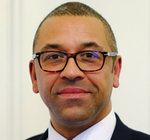
  • James Cleverly – 2022 Speech to UN Security Council Meeting on Ukraine

    James Cleverly – 2022 Speech to UN Security Council Meeting on Ukraine

    The speech made by James Cleverly, the Foreign Secretary, in New York on 22 September 2022.

    Madame President, Mr Secretary General, Mr Khan, Thank you.

    Seventy seven years ago, UN members agreed solemn principles in the UN Charter, vital for international peace and security. They undertook to refrain from the threat or the use of force against the territorial integrity, or political independence, of any state.

    Yet 7 months ago, President Putin invaded Ukraine illegally and without justification he ignored the resounding pleas for peace that I heard in this Council on 17 February.

    Since then, Ukrainians’ spirit of defiance, in defence of the protection of their country, continues to inspire free peoples and nations.

    Every day, the devastating consequences of Russia’s invasion become more clear. UN agencies have confirmed more than 14,000 civilian casualties so far – and the actual total likely to be much higher more than 17 million Ukrainians in humanitarian need; 7 million displaced within Ukraine and more than 7 million Ukrainian refugees in Europe.

    We see the mounting evidence of Russian atrocities against civilians. Including indiscriminate shelling and targeted attacks on over 200 medical facilities, and 40 educational institutions and horrific acts of sexual violence.

    We see from the reports of the Office of the High Commissioner for Human Rights that in parts of Ukraine currently under Russian control civilians are subjected to torture, arbitrary detention, and forced deportation to Russia. And we have seen more grisly discoveries in Izyum.

    It is not just Ukrainians who are the victims. President Putin’s war has spread hardship and food insecurity across the globe plunging millions of the world’s most vulnerable into hunger and famine.

    And once again, as we’ve seen here today, Russia has sought to deny responsibility. It has tried to lay the blame on those who have rightly imposed sanctions on President Putin’s regime in response to his illegal actions.

    To be clear we are not sanctioning food. It is Russia’s actions that are preventing food and fertiliser getting to developing countries. It is Russia’s tactics and bombs that are to blame for destroying Ukraine’s farms, infrastructure, and delaying its exports.

    I sat here in February, listening to the Russian representative assuring this Council that Russia had no intention of invading its neighbour. We now know that was a lie.

    And today I have listened to further instalments of Russia’s catalogues of distortions, dishonesty, and disinformation. He has left the Chamber. I am not surprised, I don’t think Mr Lavrov wants to hear the collective condemnation of this Council but we saw through him then and we saw through him today.

    We have information which means that we know that Russia is about to hold sham referenda on sovereign Ukrainian territory with no basis in law, under the threat of violence, after mass displacements of people in areas that voted overwhelmingly for Ukrainian independence. We know what Vladimir Putin is doing. He is planning to fabricate the outcome of those referenda. He is planning to use that to annex sovereign Ukrainian territory. And he is planning to use it as a further pretext to escalate his aggression. That is what he plans to do.

    And we call on all countries to reject this charade and refuse to recognise any results. We are used to seeing Russia’s lies and distortions.

    But let us listen to the testimony of Ukrainians who tell us about the reality of President Putin’s war.

    Dr Olena Yuzvak, her husband Oleh and their 22-year-old son Dmytro, were abducted by Russian forces from their home in Gostomel, near Bucha, in March. The soldiers shot Oleh twice in the legs, before they were all blindfolded and bundled into an armoured personnel carrier.

    I want you to hear Olena’s story in her own words:

    First, they took us to a bombed-out house. The Russian soldiers kept saying they were going to kill us. My husband was left for hours lying on the floor in a pool of blood. I don’t know why. We’d done nothing wrong. Then they took my son away from us. I don’t know where. I don’t know if we’ll ever see him again. I just want my boy back.

    Olena’s story, and those of many others, tell us the truth, the real truth.

    This is a war of annexation. A war of conquest. To which President Putin now wants to send even more of Russia’s young men and women, making peace even less likely.

    Mr Putin must understand the world the world is watching and we will not give up.

    As members of the Security Council, we must unequivocally reject Russia’s attempts to annex Ukraine’s territory. We must make clear to President Putin that his attack on the Ukrainian people must stop, that there can be no impunity for those perpetrating atrocities and that he must withdraw from Ukraine and restore regional and global stability.

    If he chose to, he could stop this war, a war which has done untold damage to the Ukrainian and the Russian peoples. His war is an assault on Ukraine, an assault on the UN Charter, and an assault on the international norms that protect us all.

    So we stand with our Ukrainian friends for as long as it takes. Because Ukraine’s fight for freedom, is the world’s fight for freedom. It is our fight for freedom. And if Ukraine’s sovereignty and territory are not respected, then no country is truly secure.

    These are the reasons why Ukraine can, and must win.

    Thank you.

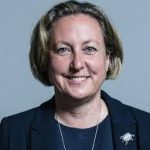
  • Vicky Ford – 2022 Speech to the Global Funds Replenishment Pledging Session

    Vicky Ford – 2022 Speech to the Global Funds Replenishment Pledging Session

    The speech made by Vicky Ford, the Minister of State for Development, at the United Nations General Assembly on 21 September 2022.

    Excellencies, colleagues, friends.

    What the Global Fund has achieved to date is nothing short of extraordinary.

    Saving 50 million lives, investing billions in healthcare systems and providing leadership on COVID-19. The UK was a founding supporter of the Global Fund, and we are its third largest ever donor having contributed more than £4.4 billion to date. This is just one important part of our contribution to fighting preventable diseases.

    We have invested over £2 billion in Gavi – the vaccine alliance – helping them to save 15 million lives and help countries prepare for the roll out of new malaria vaccines. UK expertise in R&D gives us a unique ability to drive forward innovation that can make a step-change in progress.

    We have invested around £400 million in Product Development Partnerships, harnessing the best of British scientific excellence to fight diseases of poverty.

    Our support for the Innovative Vector Control Consortium, helped it develop ground-breaking technologies which have averted up to 27 million cases of malaria including a novel type of bed net, that kills mosquitoes resistant to traditional insecticides.

    And our £500 million investment in Unitaid supported innovations that cut the cost of the best paediatric HIV medicines by 75%.

    This year, we set out our approach to strengthening global health in our International Development Strategy. As part of that we will continue to be a strong supporter and contributor to the Global Fund, helping to save lives, strengthen health systems and help countries prepare for and prevent pandemics.

    We will work with the Global Fund to fight for what counts, and make the world a safer place for everyone.

  • Liz Truss – 2022 Keynote Speech to the UN General Assembly

    Liz Truss – 2022 Keynote Speech to the UN General Assembly

    The speech made by Liz Truss, the Prime Minister, in New York, United States on 22 September 2022.

    Mr President, your excellencies, ladies and gentlemen,

    At the time of its foundation, the United Nations was a beacon of promise.

    In the aftermath of the Second World War, this building symbolised the end of aggression.

    For many decades the UN has helped to deliver stability and security in much of the world.

    It has provided a place for nations to work together on shared challenges.

    And it has promoted the principles of sovereignty and self-determination even through the Cold War and its aftermath.

    But today those principles, that have defined our lives since the dark days of the 1940s, are fracturing.

    For the first time in the history of this assembly we are meeting during a large-scale war of aggression in Europe.

    And authoritarian states are undermining stability and security around the world.

    Geopolitics is entering a new era – one that requires those who believe in the founding principles of the United Nations to stand up and be counted.

    In the United Kingdom we are entering a new era too.

    I join you here just two days after Her Late Majesty Queen Elizabeth II was laid to rest.

    We deeply mourn her passing and we pay tribute to her service.

    She was the rock on which modern Britain was built.

    And she symbolised the post-war values on which this organisation was founded.

    Our constitutional monarchy, underpinned by a democratic society, has delivered stability and progress.

    Her Late Majesty transcended difference and healed division. We saw this in her visits to post-apartheid South Africa and the Republic of Ireland.

    When she addressed this General Assembly 65 years ago she warned that it was vital not only to have strong ideals but also to have the political will to deliver on them.

    Now we must show that will.

    We must fight to defend those ideals.

    And we must deliver on them for all our people.

    And as we say farewell to our Late Queen, the UK opens a new chapter – a new Carolean age – under His Majesty King Charles III.

    We want this era to be one of hope and progress…

    One in which we defend the values of individual liberty, self-determination and equality before the law…

    One in which we ensure that freedom and democracy prevail for all people…

    And one in which we deliver on the commitments that Her Late Majesty the Queen made here 65 years ago.

    This is about what we do in the United Kingdom and what we do as member states of the UN.

    So today I will set out what steps we are taking at home in the UK and our proposed blueprint for the new era we are now in – the new partnerships and new instruments we need to collectively adopt.

    Our commitment to hope and progress must begin at home – in the lives of each and every citizen that we serve.

    Our strength as a nation comes from the strong foundations of freedom and democracy.

    Democracy gives people the right to choose their own path. And it evolves to reflect the aspirations of citizens.

    It unleashes enterprise, ideas, and opportunity. And it protects the freedoms that are at the very core of our humanity.

    By contrast, autocracies sow the seeds of their own demise by suppressing their citizens.

    They are fundamentally rigid and unable to adapt. Any short-term gains are eroded in the long term because these societies stifle the aspiration and creativity which are vital to long-term growth.

    A country where Artificial Intelligence acts as judge and jury, where there are no human rights and no fundamental freedoms, is not the kind of place anyone truly wants to live.

    It is not the kind of world we want to build.

    But we cannot simply assume there will be a democratic future.

    There is a real struggle going on between different forms of society – between democracies and autocracies. Unless democratic societies deliver on the economy and security our citizens expect, we will fall behind.

    We need to keep improving and renewing what we do for the new era, demonstrating that democracy delivers.

    As Prime Minister of the United Kingdom, I am determined that we will deliver the progress that people expect.

    I will lead a new Britain for a new era.

    Firstly, this begins with growth and building a British economy that rewards enterprise and attracts investment.

    Our long-term aim is to get our economy growing at an average of 2.5%.

    We need this growth to deliver investment around our country, to deliver the jobs and high wages that people expect, and to deliver public services like the National Health Service.

    We want people to keep more of the money they earn, so they can have more control over their lives and can contribute to the future.

    Secondly, it means securing affordable and reliable supplies of energy.

    We are cutting off the toxic power and pipelines from authoritarian regimes and strengthening our energy resilience.

    We will ensure we cannot be coerced or harmed by the reckless actions of rogue actors abroad.

    We will transition to a future based on renewable and nuclear energy while ensuring that the gas used during that transition is from reliable sources including our own North Sea production.

    We will be a net energy exporter by 2040.

    Thirdly, we are safeguarding the security of our economy – the supply chains, the critical minerals, the food, and the technology that drives growth and protects the health and lives of our people.

    We won’t be strategically dependent on those who seek to weaponise the global economy.

    Instead, we are reforming our economy to get Britain moving – and we want to work with our allies so we can all move forward together.

    The free world needs this economic strength and resilience to push back against authoritarian aggression and win this new era of strategic competition.

    We must do this together.

    So we are building new partnerships around the world.

    We are fortifying our deep security alliances in Europe and beyond through NATO and the Joint Expeditionary Force.

    We are deepening our links with fellow democracies like India, Israel, Indonesia and South Africa.

    We are building new security ties with our friends in the Indo-Pacific and the Gulf.

    We have shown leadership on free and fair trade, striking trade agreements with Australia, New Zealand, Japan and many others, andwe are in the process of acceding to the Trans-Pacific Partnership.

    Rather than exerting influence through debt, aggression, and taking control of critical infrastructure and minerals, we are building strategic ties based on mutual benefit and trust.

    And we are deepening partnerships like the G7 and the Commonwealth.

    We must also collectively extend a hand of friendship to those parts of the world that have too often been left behind and left vulnerable to global challenges…

    Whether it’s the Pacific or Caribbean Island states dealing with the impact of climate change, or the Western Balkans dealing with persistent threats to their stability.

    The UK is providing funding, using the might of the City of London and our security capabilities to provide better alternatives to those offered by malign regimes.

    The resolute international response to Ukraine has shown how we can deliver decisive collective action.

    The response has been built on partnerships and alliances and also on being prepared to use new instruments – unprecedented sanctions, diplomatic action, and rapid military support.

    There has been a strength of collective purpose – we have met many times, spoken many times on the phone, we have made things happen.

    Now we must use these instruments in a more systematic way to push back on the economic aggression of authoritarian regimes.

    The G7 and our like-minded partners should act as an economic NATO, collectively defending our prosperity.

    If the economy of a partner is being targeted by an aggressive regime we should act to support them. All for one and one for all.

    Through the G7’s $600 billion Partnership for Global Infrastructure and Investment we are providing an honest, reliable alternative on infrastructure investment around the world, free from debt with strings attached.

    And we must go further to friendshore our supply chains and end strategic dependence.

    This is how we will build collective security, strengthen our resilience and safeguard freedom and democracy.

    But we cannot let up on dealing with the crisis we face today.

    No-one is threatening Russia.

    Yet we meet here this evening…

    In Ukraine, barbarous weapons are being used to kill and maim people,

    Rape is being used as an instrument of war,

    Families are being torn apart.

    And this morning we have seen Putin trying to justify his catastrophic failures.

    He is doubling down by sending even more reservists to a terrible fate.

    He is desperately trying to claim the mantle of democracy for a regime without human rights or freedoms.

    And he is making yet more bogus claims and sabre-rattling threats.

    This will not work. The international alliance is strong and Ukraine is strong.

    The contrast between Russia’s conduct and Ukraine’s brave, dignified First Lady, Olena Zelenska, who is here at the UN today, could not be more stark.

    The Ukrainians are not just defending their own country – they are defending our values and the security of the whole world.

    That’s why we must act.

    That’s why the UK will spend 3% of GDP on defence by 2030, maintaining our position as the leading security actor in Europe.

    And that’s why – at this crucial moment in the conflict – I pledge that we will sustain or increase our military support to Ukraine, for as long as it takes.

    New UK weapons are arriving in Ukraine as I speak – including more MLRS rockets.

    We will not rest until Ukraine prevails.

    In all of these areas, on all of these fronts, the time to act is now.

    This is a decisive moment in our history, in the history of this organisation, and in the history of freedom.

    The story of 2022 could have been that of an authoritarian state rolling its tanks over the border of a peaceful neighbour and subjugating its people.

    Instead, it is the story of freedom fighting back.

    In the face of rising aggression we have shown we have the power to act and the resolve to see it through.

    But this cannot be a one-off.

    This must be a new era in which we commit to ourselves, our citizens, and this institution that we will do whatever it takes – whatever it takes to deliver for our people and defend our values.

    As we mourn our Late Queen and remember her call to this Assembly, we must devote ourselves to this task.

    Britain’s commitment to this is total.

    We will be a dynamic, reliable and trustworthy partner.

    Together with our friends and allies around the world, we will continue to champion freedom, sovereignty and democracy.

    And together we can define this new era as one of hope and progress.

    Thank you.

  • Tariq Ahmad – 2022 Statement at UNGA on Minority Rights (Lord Ahmad)

    Tariq Ahmad – 2022 Statement at UNGA on Minority Rights (Lord Ahmad)

    The statement made by Tariq Ahmad, Lord Ahmad, at the United Nations General Assembly on 21 September 2022.

    Your Excellencies, three decades on from this historic Declaration, members of minority groups in many places, tragically, around the world continue to live in fear.

    Citizens in countries face hatred. Why? Because of their race or their religion, the place they were born or their ethnicity, even because of the language they speak.

    Members here tonight, this evening, this afternoon, this morning have been united and are committed to change, and today is an opportunity to reflect and make pledges on what we can do collectively.

    The United Kingdom’s resolve is reflected in our landmark Inclusive Britain strategy, bringing together over 70 preventative and remedial actions to tackle racism or discrimination, be it in education, health, employment and in the criminal justice system, and indeed in public life as well.

    And I want to just share two particular examples. When we look at the issue of religious hatred, I am proud of the fact we have supported organisations such as our Community Security Trust, a charity which specifically protects British Jews from racism and antisemitism. And indeed our funding of the Measuring Anti-Muslim Attacks programme, which supports victims of anti-Muslim hatred in the UK. And I’m proud of the fact that we have also laws which protect not only religious freedom or belief, but also allow victims of crimes who have been targeted because of their religion or belief to report them as such. So if you are attacked as a Muslim, a Sikh, a Hindu or a Jew, you can go to your police station and report that crime as a religious hate crime. And as we bolster our efforts domestically to combat hatred at home, we pledge to clamp down on racist abuse online. This is a real challenge we are now facing, and we are doing this through our Online Safety Bill.

    And internationally, we pledge to continue working with you, including through the United Nations to uphold international law. But I now wish to touch briefly on country situations as well. There are many parts of the world that tragically we see discrimination rife amongst the country.

    Discriminatory provisions within citizenship laws, for example in Myanmar, where the Rohingya community, according to the laws of Myanmar don’t even exist. And other minorities face persecution. And in the case of the Rohingya specifically it culminates itself in ethnic cleansing.

    The systematic discrimination, harassment, and targeting of members of minority communities in Iran, such as those of the Baha’i faith.

    And we see in Afghanistan, where the Taliban have continued to target particular minority communities, including Sikhs, Christians and of course the Hazaras. And we call upon the Taliban to respect the law, respect the rights of their own constitution. Indeed respect the rights of the very faith they claim to follow which safeguards the rights of all minorities of whatever faith or belief they may be.

    And if I may finally turn to the former High Commissioner’s recent report on Xinjiang. We are deeply concerned, indeed it is a great concern to all of us when we see the harrowing evidence which it provided of China’s human rights violations in the region, particularly against the Uyghur muslins, including actions that , and I quote from the report, “may constitute international crimes, in particular crimes against humanity”. This also includes credible evidence of arbitrary and discriminatory detention, torture, sexual and gender-based violence, and the destruction, tragically, of religious sites. I know there are many in this room who share our concerns and join us in urging China to accept the report’s recommendations.

    Finally Mr. Chairman, I end by just saying that when we stand here in the United Nations it is incumbent on not just all of us to not just talk but act. Because everyone, everywhere, deserves the freedom to enjoy their culture, practise their religion and speak in their mother tongue.  This should be celebrated, and I am therefore greatly encouraged by pledges made by many members and hope that we will collectively work together to turn the words of this Declaration into a reality for all.

  • James Cleverly – 2022 Statement on Ukrainian Prisoners of War

    James Cleverly – 2022 Statement on Ukrainian Prisoners of War

    The statement made by James Cleverly, the Foreign Secretary, on 21 September 2022.

    I welcome the safe return of Ukrainian prisoners of war and one civilian, including five British nationals. Prisoners of war from other countries held by Russia-backed proxies have also been returned. This brings to an end many months of uncertainty and suffering, including the threat of the death penalty, for them and their families, at the hands of Russia.

    Tragically that was not the case for one of those detained and our thoughts remain with the family of Paul Urey.

    I would like to express my gratitude to President Zelenskyy and his team for their efforts to secure their release, and to HRH Crown Prince of Saudi Arabia, Mohammed bin Salman and his team, for their assistance. I continue to call on Russia to comply with International Humanitarian Law and not exploit prisoners of war and civilian detainees for political purposes.

  • Tariq Ahmad – 2022 Statement on Death of Mahsa Amini in Iran

    Tariq Ahmad – 2022 Statement on Death of Mahsa Amini in Iran

    The statement made by Tariq Ahmad, Lord Ahmad, the Foreign Office Minister, on 21 September 2022.

    The death of Mahsa Amini in Iran following her arrest for alleged dress code violations is shocking. We are extremely concerned at reports of serious mistreatment of Ms Amini, and many others, by the security forces.

    We urge the Iranian government to investigate the circumstances of her death with rigour and transparency, and to hold to account anyone responsible.

    We call on Iran to respect the right to peaceful assembly, to exercise restraint and to release unfairly detained protesters. The use of violence in response to the expression of fundamental rights, by women or any other members of Iranian society, is wholly unjustifiable.

  • Jonathan Evans – 2002 Speech on US Tariffs on Steel

    Jonathan Evans – 2002 Speech on US Tariffs on Steel

    The speech made by Jonathan Evans, the then Conservative MEP for Wales, on 13 March 2002.

    This week in Barcelona the European Council will gather to seek to build upon the Lisbon Process. At that meeting, we will be pressing for more action to be taken on deregulation, and for more liberalisation, ensuring that we learn the lessons of employment flexibility. There are those of us who have felt, ever since we have arrived in the European Parliament, that there is a lot of rhetoric in this place about free trade, but also a great deal of protectionism with Member States here in Europe.

    The entire agenda in Europe of taking forward a uniform competition policy and bearing down on state aid is geared towards ensuring that we have free trade. In these circumstances, those of us who count ourselves as the best friends of the United States are hugely disappointed by the action that the US President has taken. It is not putting it too strongly to say that, in a sense, we feel betrayed by it.

    I do not link this to our support for the United States following the events of September 11. The events of September 11 were so horrific that they should not be linked with any sort of agreement in any other policy area. But for those of us who have been pointing to the United States as an example of a deregulated and liberalised economy, it has been a shattering blow to see the way in which President Bush, faced with the difficulties that his steel industry is encountering, has gone for protectionism.

    What is even worse is to read in the Financial Times today a justification of this action from Robert Zoellick, the US Trade Representative. I feel sorry for Mr Zoellick, whom again we would regard as a friend of British Conservatives, because I must say that article destroys any credibility that he had in terms of discussion of trade issues.

    The US representatives watching this debate need to know that, while we may have heard from the usual suspects in terms of anti-Americanism, those of us who are friends of the United States feel very badly let down indeed.

  • Michael Ancram – 2002 Speech on Europe and America – Not Europe or America

    Michael Ancram – 2002 Speech on Europe and America – Not Europe or America

    The speech made by Michael Ancram, the then Shadow Foreign Secretary, at the Conservative Foreign Affairs Forum on 13 March 2002.

    Some weeks ago I spoke about the benefits of building partnerships of sovereignty rather than supranational structures. Tonight I want to pursue that debate in terms of its implications for our relations with Europe and with the United States of America.

    The end of the Cold War and the fall of the Berlin Wall, even more than September 11, represented a fundamentally important turning-point in international affairs. These events launched a process of change in which many cherished old assumptions perished. The era of the great countervailing blocs, of two great superpowers balancing against one another with a mix of military and economic might, ended. The solidity it offered was replaced by a fluidity last seen in the nineteenth century. This time, however, there was the added dimension of the “rogue state” complete with weapons of mass destruction – and unlike the blocs in the Cold War with no compunction about using them. This is a new challenge calling for new responses and new forms of relationships.

    At the heart of this new geopolitical environment stands America. America is in relative as well as in real terms probably the greatest superpower the world has ever known. It is the predominant force in the world today, and its predominance continues to grow. Count up the aircraft carriers, the aircraft, the frigates, the battle groups and the conclusion is inescapable. As we have seen in Afghanistan, its military power and reach are awesome.

    Nor is America’s strength merely military. Its technology leads the world. Its universities are the most advanced, its Nobel laureates the most numerous, its production now back to almost thirty percent of the entire global output. America is in every sense of the word a superpower. It is on its own not a bloc, not a supranational institution but a very big sovereign nation, jealous of its sovereignty and its independent rights of self-determination. In fact America with her flag, her sense of allegiance, and the clear values which underpin her nationhood is the epitome of the modern sovereign nation state.

    Yet like all great powers throughout history the USA gives rise to strong reactions and mixed feelings. These range on the one hand from the downright hostility of certain countries and regimes towards America, to feelings of great kinship and shared friendship in the face of common threats on the other. Between these, there has always been a danger that feelings of jealousy or inferiority, the instinctive envy of the ‘overdog’, could grow in the breasts of European integrationists as much as antagonism will grow in the hearts of those who have always seen American capitalism as the antithesis of the socialist utopias in which they still believe. The European Union official who was recently quoted saying that “it is humiliating and demeaning if we feel we have to go and get our homework marked by Dick Cheney and Condi Rice” was showing early symptoms of those feelings.

    Our Foreign Secretary’s ill-judged accusation that the US President’s foreign policy was motivated more by domestic politics than by international security considerations was a further manifestation. References by senior Europeans to American foreign policy as simplistic and absolutist in contrast to the sophistication of European foreign policy, only serve further to fan the embers of anti-Americanism and to set Europe against America. It is a misguided trend which stems from a false belief that a United Europe should somehow counterbalance the United States.

    What all this does, however, is to pose the choice – Europe or America. It infers that there are no realistic options outside this choice; and by inference that the wise will opt for Europe. It is a false choice because there is another. The Nations of Europe and America; the one I strongly support.

    Over the coming months the first option will be played out in the chancelleries of Europe as well as in our own British Cabinet Room on the delicate subject of Iraq. Already we have seen many of our European partners raising the flag of non-involvement in any future action to deal with Saddam Hussein and his weapons of mass destruction. Already we have heard senior Europeans striving to exculpate the regime in Iraq from accusations of ‘evil’. Once again the inference being created is ‘Europe against action in Iraq, US for action in Iraq.’ Again it is a false choice.

    The real option is the sharing with America of the evidence of real threats to international security stemming from Iraq and other similarly ‘rogue’ states, and the shared determination to deal with the problem. Europe and America rather than Europe or America.

    The Europe or America proposition is a dangerous one, particularly when it is posed with anti-American sentiment. Hostile rhetoric is an easy game for some Europeans to play. But it plays straight into the hands of those in the US who rejoice in what they see as their ‘unipolar moment’ and believe that they can go it alone. The truth is that Europe needs the US, and that the US needs Europe. The first because Europe is many years away from having the military resources required for its security and needs American intelligence and manpower. The second because September 11 demonstrated to America that it is now vulnerable and that it needs us and our European partners.

    Which leads directly to the Nations of Europe and America proposition, a partnership not of superpowers but of shared interests and shared objectives. With our close relationships with both, we are ideally placed to help build and secure this proposition. It will require a less introverted and bureaucratic Europe and a sense of shared values around which a renewed Atlantic Charter can be formed.

    It is an opportunity that our current Government cannot grasp. Mr Blair is publicly tholed to the building of a superpower Europe with all that that entails. A common foreign policy, that of the lowest common denominator. A common defence policy whose military capability will not even be fully and effectively operational for a decade. A single currency with the loss of economic self-governance and even greater harmonisation. This superpower Europe would find little to share in partnership with the American superpower with whom it would be designed to compete. It would be Europe or America – and Europe would be the loser.

    Europe and America is an opportunity we should grasp, but to do so we need to redirect the purpose and nature of the European Union. There could be no better moment. Europe, in preparation for the IGC in 2004, is examining its future structures, partly through the Giscard d’Estaing Convention, but more widely as well.

    Too often in the past this process has been caricatured as a fight between those who seek a more integrated and centralised Europe –with the New Labour firmly among them – and those who seek to see Britain withdraw from Europe. The Conservative Party adheres to neither of these positions.

    Where New Labour integrationists look for a pooling of sovereignty in Europe and where the anti-Europeans want no part in any European arrangements, we look for a partnership of sovereignties. We believe we are part of Europe, but that the relationship within the EU must be one in which our sovereignty is not ultimately dissolved by ‘pooling’ or rendered meaningless by a legally binding Euro-constitution.

    Where the New Labour centralists want ever closer monetary union, and ever greater regulation, and where the anti-Europeans want straight-forward divorce, we look for the strengthening of the single market, whilst retaining our own fiscal and macro-economic management.

    We believe that influence comes not from coercion or centralisation or harmonisation, or from hang-ups about single currencies or common foreign policies or European Armies, but from cooperation and mutual understanding. We are neither of the above. We are Constructive Europeans working within a Europe of Sovereign Nation States.

    We understand the present malaise that is afflicting the European Union. We can understand the erosion of democracy and legitimacy that has been allowed to occur. We know that enlargement, which we totally support, is opening up new divisions and in turn making the total reform of the entire Union, its structures and its methods, both essential and unavoidable. This is where from our Conservative European standpoint as Constructive Europeans within a Europe of Nations we have a significant role to play.

    It is our chance in the months ahead to develop and present a raft of new ideas for making EU institutions more accountable to national parliaments in order to strengthen democratic accountability. A Europe Minister based in Brussels but reporting back regularly to Parliament; committees of Parliament shaping the Commission’s agenda; and much earlier and more effective systems of scrutiny of matters European in the national parliaments.

    We should not be afraid to urge the re-opening of the treaties to bring Europe up to date with the modern world. We should seek constructively to reverse its centralising tendencies. We should challenge the aquis and urge repatriation of large parts of agricultural and foreign aid policy. We should be prepared to revisit those areas that have not worked. We would find surprising allies in Europe in so doing.

    We can show that the Lisbon Process is not working. The facts are that unemployment in Europe is still rising, and that the ‘competitive knowledge-based Europe’ simply isn’t happening.

    We can respond. Our constructive plans for European economic reform should be tied to low taxation, to enterprise, to innovation and above all to light regulation.

    All of these can help to lay the foundations for a genuine partnership of interests with the US. By creating a European Union which is genuinely a partnership of its member nations, which does not demand conformity of approach on international relations or in response to American initiatives, where there can be different layers of enthusiasm and participation. By encouraging a common understanding of the importance of America to us and the contribution we can make to America. By building the base of a lasting partnership in which there is competition rather than rivalry and admiration rather than envy; and where advice and consultation occur naturally and mutually from within the partnership rather than as hostile comment shouted from the sidelines.

    As Constructive Europeans who believe in the importance of the sovereign nation state we would be ideally placed to develop even closer relations with the most powerful sovereign nation state of all, the US. Yet to do so we must look at how, as America’s friend and partner, we can best influence how that power can more effectively be deployed to advance the concept of Europe and America.

    The old tried and tested if unwritten formula of the Atlantic Charter– partnership, not subservience – was right, and it still commands the overwhelming support of informed British opinion. We are the colleague and partner who offers advice in the spirit of greatest friendship and well-meaning. This is the basis of our ‘special relationship’ with America, greatly revived since September 11, which I would like now to see strengthened and entrenched as a durable feature of international relations in this new Century. That means not standing aside from America, but being actively involved with her; not indulging in the US-bashing so beloved by the Left, but participating in the delivery of a higher moral responsibility which has fallen upon the US precisely as a result of the overwhelming might which she possesses.

    But America cannot carry forward these responsibilities on her own. Nor can that spirit of openness and freedom, so crucial to American life, be protected by unilateral action. That openness can best be preserved and strengthened by America deploying her undoubted wealth and might not in the style of imperial mastership but in new and imaginative ways. It was President Theodore Roosevelt who identified the need for America to speak softly and to carry a big stick. Never has that advice been more relevant or more difficult to deliver. The big stick is present in unprecedented measure. But there needs also to be a spirit of international partnership and support, well presaged in the international coalition brought together in pursuit of el Qa’eda and the Taleban. America knows only too well that terrorism can never be defeated, or even contained, within the US itself; hence the international campaign against the scourge of international terrorism. Nor however can it be finally defeated from the decks of America’s gigantic carrier fleet. It can be ‘degraded’, if not physically destroyed, by military action; but it cannot be eradicated from the hearts and minds of those who are recruited to terrorism by threat or use of the big stick alone.

    The conditions in which terrorism can flourish and which terrorism seeks therefore to promote must be responded to as well. Terrorism is criminal but it feeds on the society in which it finds shelter and support, and on the prejudices and hatreds and fears and inadequacies of that community. As well as the big stick, this is where the soft talk and imaginative deployment of resources has a role to play, and where we can help America play it.

    Last December I visited Washington and had talks with senior members of the Administration. There was no arrogance of power, there was no desire for American hegemony. There was, and still is, a very clear appreciation of the awesome responsibility that has fallen to the United States through the way in which international events have developed in the last decade. The knowledge that history will judge them by their response is clear in their minds.

    They were examining every option, analysing every nuance, evaluating every possible consequence of every possible action or initiative. They left me very reassured that whatever courses of action are chosen they will be based on some of the most fundamental and comprehensive analyses of the facts and the options ever carried out. The fundamental truth is that being so powerful America is relied upon by much of the world. Often she must act in ways others cannot, and this unfairly attracts the stigma of arrogance. To the contrary, in my view American foreign policy is grounded in realism, with a well-honed understanding of the limitations of their role, and the extent of the world’s expectations of them.

    And that is why we can as America’s friend and partner advise her to look even more widely. The areas for soft talk are numerous and growing. Let me set out a few of those that I see to be most urgent.

    To work with Muslim moderates everywhere, but particularly in the Middle East and especially in Saudi Arabia where efforts to balance Islamic populism with Western values is a cause of potential dangerous instability. And while on the Middle East to help Israel down the difficult road of accepting a viable Palestinian state on her borders in return for guaranteed security for the democratic state of Israel.

    To help Russia overcome its current sense of exclusion by extending the hand of genuine cooperation on security, on internal terrorism and on economic development. Bringing Russia into the big tent and according her the respect and status she should enjoy is an important element of the agile partnerships of nations we should be seeking to create.

    To develop new thinking on global economic development in place of outdated and unsuccessful aid doctrines, especially in Africa, understanding that the keys to development lie in good governance, respect of property rights, the removal of trade barriers and acceptance of the rule of law.

    But most immediately and urgently to work together, and to seek regional support in so doing, to control and remove weapons of mass destruction and their delivery systems currently in the hands of unscrupulous regimes which threaten the stability not only of their regions but of the wider international community as well.

    And alongside this we should support the Americans in pressing our European partners in NATO into serious increases in defence expenditure. In the most diplomatic way the US should find the means of explaining to the European Union that the ESDP is an absurd distraction and duplication within the European theatre, and that its real timescale itself indicates that it is both a cover-up for inadequate defence budgets and a faintly pathetic attempt at Euro-machismo. ESDP is symptomatic of a wider malaise, a growing anti-Americanism and introspection. ESDP can be interpreted as advice for too many nations in Europe “to get America off our backs” and a disguise for inaction. America should join us in pressing for a strengthened European capability within NATO, just as NATO has backed America in the global anti-terrorism campaign.

    These are some of those areas which together amount to a powerful agenda of involvement and of partnership that can mobilise America’s wealth and strength in a way which will unite the world rather than divide it. It contrasts starkly with the tone emanating from EU institutions with their talk of a rival currency, of a balancing of superpowers and of challenging American hegemony. This is the language of confrontation, of Europe or America.

    I conversely have sought to set out a path for the nations of Europe and America. A Europe which in terms of the relationship with America is not a rival but a complement, not a critic but a counsellor. We here in Britain can lead the way, bringing America and Europe closer together on the basis of the common interests which we epitomise. A partnership of true friends. Europe and America together, with us at the hinge. A partnership for freedom, prosperity and peace.

  • Queen Elizabeth II – 2022 Statement on the Flooding in Pakistan

    Queen Elizabeth II – 2022 Statement on the Flooding in Pakistan

    The statement made by HM Queen Elizabeth II on 29 August 2022.

    I am deeply saddened to hear of the tragic loss of life and destruction caused by the floods across Pakistan.

    My thoughts are with all those who have been affected, as well as those working in difficult circumstances to support the recovery efforts.

    The United Kingdom stands in solidarity with Pakistan as you recover from these terrible events.

    Elizabeth R.

  • Mary Lou McDonald – 2022 Comments on Meeting with Nancy Pelosi

    Mary Lou McDonald – 2022 Comments on Meeting with Nancy Pelosi

    The comments made by Mary Lou McDonald, the President of Sinn Fein, on 9 September 2022.

    This week I have been in San Francisco for a series of engagements with business leaders, the local Irish community, trade unions and political leaders. We have discussed the challenges and the many opportunities for both Ireland and the United States in the time ahead and the unique ties which bond our two nations.

    Yesterday I met with US Speaker Nancy Pelosi and thanked her for her steadfast commitment to protecting the Good Friday Agreement and ensuring that the Irish people do not become collateral damage to the Tories’ Brexit plans. Speaker Pelosi’s commitment to protecting peace and all elements of the Good Friday Agreement is unshakeable.

    Speaker Pelosi reiterated to me the importance that the US Administration continues to place on protecting these important rights and affirmed again that the US stands firmly with the people of Ireland. We discussed President Joe Biden’s remarks earlier this week to the new British Prime Minister Liz Truss that she must show a change of tack from previous holders of that office and engage in good faith negotiations around the implementation of the protocol.

    British Prime Minister Truss must break with the bad faith agenda of her predecessors and change direction, end the unilateral actions and respect international law. We need to see a recommitment to the Good Friday Agreement, support the restoration of the political institutions and an end to game playing around the Irish protocol.