Category: Foreign Affairs

  • James Cleverly – 2022 Speech to Conservative Party Conference

    James Cleverly – 2022 Speech to Conservative Party Conference

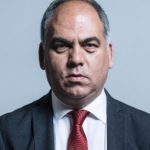
    The speech made by James Cleverly, the Foreign Secretary, in Birmingham on 4 October 2022.

    Thank you Conference.

    It’s great be back together,

    As a party.

    As a family.

    Big thank you to Jake Berry our chairman

    Organising conference is a mammoth task.

    And a big thank you our party staff, our volunteers,

    And you, the members.

    I loved being party chairman,

    working with you all, with Ben my co-chairman,

    And working alongside Boris.

    And if I remember rightly we did alright.

    an 80-seat majority –

    A great team of new MPs from all over our great country –

    And Boris’s leadership:

    …Delivered Brexit…

    …Got us through the Covid…

    …And he led the world in support for Ukraine.

    It’s a legacy that we should be proud of.

    And I was proud to serve under him.

    It’s a legacy that Liz Truss will build on.

    I’ve seen her take bold action as Foreign Secretary:

    …her steadfast support for Ukraine and standing up to Russia…

    …her passionate defence of our Union…

    …her determination to promote democracy and freedom around the world.

    As Prime Minister she is also being bold.

    …helping with energy bills…

    …ensuring you can see your doctor promptly…

    Reducing the taxes paid by ordinary, hardworking people across the country.

    I backed her from the start:

    And I know I made the right choice.

    I’m the foreign secretary of the United Kingdom of Great Britain and Northern Ireland.

    Wow, that still sounds strange!

    It is an honour to be the face and voice of our country overseas.

    I’m the UK’s sales guy.

    I’m pretty good at sales, it was how I paid my bills.

    But I know that the greatest salesperson that the UK ever had was her late Majesty Queen Elizabeth.

    Our greatest diplomat

    Our greatest advocate

    Our greatest champion

    Elizabeth the Great.

    I’ve had the honour of meeting King Charles,

    and I know he will work tirelessly and to continue her work…

    and be our new chief ambassador.

    During the funeral week of her late Majesty

    I was reminded of the standing that our country has in the world.

    When I travel on behalf of our country,

    I am lucky enough to see the UK as others see us.

    And I can tell you the view of here, from over there is really, really good.

    It’s not a terribly fashionable thing…

    To be proud of your country…

    But I am –

    So sue me!!!

    My mother chose to make this country her home.

    She was a young woman from Sierra Leone who adored this country then,

    Just as I adore this country now.

    In fact,

    I am from immigrant stock on both sides of my family:

    My mum came here from West Africa in 1966

    And my dad’s family came here from Normandy in 1066.

    There will always be people that talk our country down…

    Belittle our achievements…

    Underestimate our standing…

    Those self-loathing keyboard warriors…

    Who hate our country’s every success…

    And pray for bad news.

    Those people who aren’t happy until they’re unhappy:

    They want to stand on the side-lines,

    Never contributing,

    Only moaning and bleating.

    But that isn’t us;

    That isn’t this party;

    That isn’t this government;

    That isn’t this country.

    We aren’t commentators watching the match,

    And saying “Ohhhhh I wouldn’t have done that”.

    We are players on the pitch…

    Making a difference…

    Promoting our values…

    Competing on the world stage for what we believe is right.

    And we believe in freedom.

    We believe in the rule of law.

    We believe that an aggressor cannot invade its neighbour with impunity.

    This is why we stand shoulder to shoulder with those brave Ukrainians defending their homeland.

    And Britain has the strategic endurance to see this through to their victory.

    Back in February this year, at the United Nations I said that if Putin was foolish enough to attempt to invade Ukraine,

    The Ukrainians would defend their country ferociously.

    And they have done just that.

    Their bravery and passion has been amplified by the arms and training that we, the UK, have supplied.

    We will support them until this war is won.

    We will support them until their sovereignty is restored.

    We will support them until the last Russian tank is dragged away by a Ukrainian tractor.

    We need to have the strategic endurance to see this through to the end.

    Because, if we don’t…

    we send a message to every potential aggressor that our resolve is fragile.

    We cannot, must not, will not send that message to the world.

    And if you happen to be listening to this speech, Mr Putin, Mr Lavrov:

    Let me be clear:

    We will never recognise the annexation of Luhansk, Donetsk, Kherson, Zaporizhzhia, or Crimea.

    They are Ukraine.

    And when Ukraine has won this war,

    – And it will –

    then we will support them as they rebuild their homes, their economy, and their society.

    We will work with our friends and allies around the world to hold the perpetrators to account.

    To punish those who use rape as a weapon of war;

    To punish those who knowingly target civilian infrastructure;

    To punish those who murder women and children

    We do not do this alone.

    We are a member of many international groups:

    The commonwealth, NATO, UN Security Council, AUKAS, the G7, the G20.

    We intend to build more alliances, friendships and partnerships around the globe.

    It’s why we have ambassadors, high commissioners, and diplomats in hundreds of locations.

    It’s why I and my fantastic team of ministers travel the world.

    Trust me, it isn’t to stock up on those giant Toblerones.

    When there is war, our work on the international stage is visible and obvious:

    Building coalitions of condemnation at the UN for example,

    Coordinating sanctions against those who facilitate the war,

    Working to ensure the exports of food and fertiliser from the Black Sea ports.

    But much of what the FCDO does is less visible,

    But no less important

    I have just returned from a series of meetings in East and South East Asia.

    I paid my respects at the funeral of Japan’s former prime minister Shinzo Abe.

    Then I went to the Republic of Korea;

    And then to Singapore;

    In each country I met with senior ministers;

    met a number of international business people…

    I set out the details of our Indo-Pacific tilt.

    It’s a part of the world which is growing fast.

    And through trade agreements, cooperation agreements, and our ASEAN dialogue partner status,

    We are shrinking the distance between us.

    I spoke about the opportunities that at available to us all.

    And, of course, I spoke about the role that China plays in the region and globally.

    I made our position clear:

    That China could and should take a different path;

    That it should adhere to the rules and norms of the international community;

    And it should stop persecuting its people at home and stop sanctioning my friends and colleagues in parliament.

    And while I was on the other side of the world,

    FCDO ministers were in the USA, in European capitals, in Africa,

    And a number of my ministers are overseas as I speak.

    Because we have to invest in our international relationships.

    Patient, but effective diplomacy:

    We invest time,

    We invest energy,

    And yes, we invest money.

    Because that’s how we generate influence on the world stage

    And that’s how we drive improvements in the lives of people overseas,

    And how we improve the lives of people here in the UK.

    The development money that we spend,

    Our overseas development assistance or “ODA”:

    It helps women and children brutalised by conflict,

    It helps prevent starvation,

    We use our expertise in financial services through British Investment Partnerships to amplify the money that we provide to part-fund projects that generate green energy,

    And increase trade…

    And stimulate economic growth in some of the least developed countries.

    We don’t just stand idly by and watch problems happen:

    We step in to improve things,

    Not passive, but active.

    It is the right thing to do, it helps people that need our help.

    And it also helps us at home.

    Because safe, secure and prosperous countries don’t generate refugees or hundreds of thousands of economic migrants;

    Safe, secure and prosperous countries don’t export terrorism;

    Safe, secure and prosperous countries are good trade partners for us;

    So obviously we want to see more safe, secure and prosperous countries.

    That is the active role that our ODA plays.

    But just because we look to build peace and prosperity in distant places,

    we mustn’t forget the need to build prosperity closer to home.

    A good diplomatic and economic relationship with the EU and its member states is good for us all:

    we’ve worked closely on sanctions against Russians who have enabled the war in Ukraine.

    I want to see more cooperation across the channel and across the Irish Sea,

    And addressing the current problems with the Northern Ireland Protocol is key to that.

    I want to ensure that we restore the integrity of the UK internal market,

    I want to protect North/South trade,

    and restore the balance of the Belfast Good Friday Agreement, which has been disrupted by the protocol.

    I want to see all the communities in Northern Ireland represented again in the Stormont executive,

    So that devolved government is re-established.

    I will work hard to get that.

    Last week I spoke to the EU’s lead negotiator Vice President Maroš Šefčovič.

    We agreed on our desire to reach a solution that works for all parts of the UK, especially the people of Northern Ireland;

    We have the Northern Ireland Protocol bill working its way through parliament.

    In the meantime, we continue to pursue a negotiated settlement which respects the constitutional integrity of the United Kingdom and our single market,

    and supports the institutions of the Belfast (Good Friday) Agreement.

    As you can see my great ministers Vicky Ford, Jesse Norman, Leo Doherty, Zac Goldsmith, Tariq Ahmad, and Gillian Keegan and I have plenty to keep us busy.

    But it is a job worth doing.

    Promoting global Britain on the world stage

    And I speak for the ministers and the civil servants and diplomats in the FCDO when I say:

    It is an honour to represent the United Kingdom of Great Britain and Northern Ireland:

    It is a great country

    A country I am proud of

    A country I love

    Thank you.

  • James Cleverly – 2022 Statement on Peace in Yemen

    James Cleverly – 2022 Statement on Peace in Yemen

    The statement made by James Cleverly, the Foreign Secretary, on 1 October 2022.

    Yemen must not return to conflict. The truce expires tomorrow, but the Houthis continue to endanger the talks and deny Yemenis a peaceful future.

    The truce has brought tangible benefits to both Yemenis and regional security and we welcome the Government of Yemen’s commitment to extend it further if an extension can be agreed.

    We call on the Houthis to engage constructively with UN Special Envoy Hans Grundberg’s efforts to broker an extension to the truce, so that serious dialogue about achieving a peaceful, inclusive and Yemeni-led future can take place.

  • Joe Biden – 2022 Statement on Russia’s Attempt to Annex Ukrainian Territory

    Joe Biden – 2022 Statement on Russia’s Attempt to Annex Ukrainian Territory

    The statement made by Joe Biden, the President of the United States, on 30 September 2022.

    The United States condemns Russia’s fraudulent attempt today to annex sovereign Ukrainian territory. Russia is violating international law, trampling on the United Nations Charter, and showing its contempt for peaceful nations everywhere.

    Make no mistake: these actions have no legitimacy. The United States will always honor Ukraine’s internationally recognized borders. We will continue to support Ukraine’s efforts to regain control of its territory by strengthening its hand militarily and diplomatically, including through the $1.1 billion in additional security assistance the United States announced this week.

    In response to Russia’s phony claims of annexation, the United States, together with our Allies and partners, are announcing new sanctions today. These sanctions will impose costs on individuals and entities — inside and outside of Russia — that provide political or economic support to illegal attempts to change the status of Ukrainian territory. We will rally the international community to both denounce these moves and to hold Russia accountable. We will continue to provide Ukraine with the equipment it needs to defend itself, undeterred by Russia’s brazen effort to redraw the borders of its neighbor. And I look forward to signing legislation from Congress that will provide an additional $12 billion to support Ukraine.

    I urge all members of the international community to reject Russia’s illegal attempts at annexation and to stand with the people of Ukraine for as long as it takes.

  • James Cleverly – 2022 Comments on Latest Sanctions Against Russia

    James Cleverly – 2022 Comments on Latest Sanctions Against Russia

    The comments made by James Cleverly, the Foreign Secretary, on 30 September 2022.

    The UK utterly condemns Putin’s announcement of the illegal annexation of Ukrainian territory. We will never recognise the results of these sham referendums or any annexation of Ukrainian territory.

    The Russian regime must be held to account for this abhorrent violation of international law. That’s why we are working with our international partners to ramp up the economic pressure through new targeted services bans.

    What happens in Ukraine matters to us all, and the UK will do everything possible to assist their fight for freedom.

  • Jesse Norman – 2022 Speech at the Atlantic Future Forum

    Jesse Norman – 2022 Speech at the Atlantic Future Forum

    The speech made by Jesse Norman, the Minister of State at the Foreign Office, in New York on 29 September 2022.

    National and Economic Security Policy in a Geopolitical Age: the UK’s approach

    Thank you very much indeed, Samira, who can follow that extraordinary exchange we had just had between Eric Schmidt and General Sir Patrick Sanders. What an education that was in itself and what a delight it is to listen to and speak to you on this fascinating topic.

    I am responsible in the British government for the diplomatic interface with the technology of the kind we are talking about, it could be defence and security, or it could be other kinds and I will touch upon them a little bit later in my talk. Ladies and gentlemen, as you have heard and know this is not a world or a time for a grand strategy. We face a strained international order, characterised by state competition and mounting security threats as well as the kinds of non-state actors we have seen in recent years. As societies and economies have become more complex and more interconnected, new vulnerabilities have emerged and been exploited and they in turn damage the integrity of the open economic system which has underpinned our prosperity since the 1990s. We should think not in terms of two geographies, Europe and the Far East but also a third in the Middle East and that it going to impose new stresses and strains on that system.

    Russia’s invasion of Ukraine has brought that reality into the sharpest relief as we have just been hearing. This weaponisation of connectivity – whether grain or gas – has driven soaring global energy prices and plunged millions of the world’s most vulnerable into hunger and famine. Many miles from the theatre of war potentially into hunger and famine . As Eric said this is the first broadband war, this is not just in technologies but in mind-set and leadership. Technology has been central to the response. But this comes in both directions, but the unity and resolve in Great Britain and United States, European Allies and others in responding to such an act of aggression has been very striking. We have imposed major macro-economic cost on President Putin, frustrated his war machine and strengthened Ukrainian leverage and power. And we know it caught Russia off-guard: our sanctions have already seen Russia facing its first external debt default potentially for a century. Above all, it demonstrated that the ‘political west’ has the economic weight to defend global stability and promote the values we cherish – openness, sovereignty and freedom.

    Now this systematic competition that we have described is intensifying, and is growing in complexity. The geopolitical order is being superseded or placed within a wider new global order of opinion and connectivity and narrative. Our mission on economic security is clear and crystallising – at home and with partners, and I propose to touch on three aspects of that mission.

    The first is learning from our Russia/Ukraine experience in order to do more to resist aggression and coercion. That means for us focusing on deepening co-operation with G7 allies to build a new economic security mechanism; what the Prime Minster has called an ‘Economic NATO’ that will improve our collective ability to assess, deter, and respond to threats from aggressive powers, including economic coercion. In the simplest terms if the economy of one partner is being targeted by an aggressive regime we should be prepared and we will be prepared through this new mechanism to support them.
    Having such defensive economic measures alongside traditional measures of resistance in a state of readiness builds credible asymmetric deterrence to aggression including threats of military force. It underscores our commitment to a world in which respect for international rules and sovereignty is the bedrock of good relations, good business and healthy society.

    Secondly, we must build our own resilience to shocks – this has been a big theme of the last 24 hours – whether they are organic or come from outside. The most urgent part of this task is to build redundancies and to end our dependence on authoritarian states who would weaponise our very openness and integration and connectivity to hurt us. We have shown unprecedented resolve in this respect – divesting away from Russian energy supply is a signal of upmost importance in showing our willingness to bear short term economic costs in defending a sovereign free state from unprovoked aggression.

    We are also getting ahead in other possible areas of strategic dependence. Whether it is vital new technologies or the critical minerals that will power those technologies and support then. We are working to strengthen trusted supply chains that can be relied on whatever the geopolitical weather. Supply chains that can operate on a cost basis that allows them to be effective, wide spread and support our wider aims. That will mean helping allies pursue and consolidate strategic advantage – a practice of “friend shoring” across key sectors. And as we think to our friends, there is no closer or more trusted bond than that between our two countries the United Kingdom and United States of America. It is often said that democracies are slower to respond to threats but more resilient over time. We must change that, we must be quicker to respond and more resilient. We must be highly rapid in our response in a highly changing environment as Eric Schmit has pointed out.

    Finally, we must learn in this new world to “play offence” even better than we are at the moment. That means not to abandon but to practice and exemplify the values we are defending. That is to promote the liberal international trading order, whose transformative benefits we have seen for many decades across the world. And to be a dynamic, reliable and a trustworthy partner. This applies to the terms of trade. We are at a globally high standard. The free trade agreements we are developing are of the highest quality when it comes to transparency and trust. And our new independent trade policy allows us to do more for emerging economies including through the Developing Countries Trading Scheme – a scheme that will offer 65 developing countries greater opportunities from exporting to the UK.

    It also means extending our collective economic offer to the world – in the sectors that matter most to them, and without the strings of coercion we have seen our adversaries use. At the highest level, the G7 Partnership for Infrastructure and Investment (PGII) is an important leap forward. PGII will mobilise $600bn of reliable finance for infrastructure investment in low and middle-income countries over the next five years. What it shows is that combating future adversaries is not just liberties as a value itself but it is something we must turn our strength to and our capacity to innovate in support for the global good – in a whole range of sectors from vaccines to the next generation of energy production and many others. And these are sectors I will be focusing my team on within government in the coming months.

    Ladies and gentlemen, the war of the future is the war of hearts and minds as well as weapons. If it was ever thus, it is more so now than it ever before. But we need to build and maintain that trust. And we will. Thank you very much indeed.

  • Leo Docherty – 2022 Speech on the Russian Sham Referenda in Ukraine

    Leo Docherty – 2022 Speech on the Russian Sham Referenda in Ukraine

    The speech made by Leo Docherty, the Minister of State at the Foreign, Commonwealth & Development Office, in Vienna on 29 September 2022.

    Vladimir Putin’s sham referenda must be seen for what they are. A brazen and desperate attempt, to justify an unprovoked and illegal land grab, of sovereign Ukrainian territory.

    They are a clear violation of international law and the UN Charter. And wholly illegitimate.

    That is why the United Kingdom will never recognise the supposed results. Nor any Russian attempt to illegally annex Ukrainian territory.

    We have seen Vladimir Putin use this playbook before, in Crimea. As then, Russia will try to claim that these latest votes were free and fair.

    But no amount of Russian lies can hide what we all see plainly: A sham. A propaganda exercise. Without a shred of legitimacy. Conducted down the barrel of a gun, by soldiers accompanying ballots door-to-door, forcing Ukrainians to vote.

    For 7 months, in an attempt to destroy Ukrainian identity, Vladimir Putin’s forces have ruthlessly used violence and torture against civilians – and forced deportations – to exert control.

    Sham referenda held under such fear and harassment can never be free, nor fair.

    As highlighted by my Foreign Secretary last week, we know Vladimir Putin planned to rig the outcomes. Russia has no choice but to fabricate the results. These regions voted overwhelmingly to join an independent Ukraine in 1991, and for President Zelenskyy in 2019.

    Earlier this week, the United Kingdom announced sanctions against those behind these bogus votes, including 33 officials and collaborators deployed by Russia to conduct them.

    This latest Russian deception, and Putin’s decision to partially mobilise Russia’s population, only serve to highlight one thing: his invasion is failing.

    His war machine is depleted. His supply of volunteers willing to fight in Ukraine has been exhausted. Partial mobilisation will only send many more thousands of innocent Russians to die in Putin’s war-of-choice. A war which he could end right now.

    Vladimir Putin’s nuclear threats are irresponsible and will not work. Ukrainians are highly motivated. The international alliance is cast-iron strong. We and our allies are clear that any use of nuclear weapons by Russia would be met with severe consequences.

    The United Kingdom’s approach will not alter. We will be steadfast in support of Ukraine – and its right to defend its sovereign territory – for as long as it takes.

    We call on all participating States to join us in unequivocally rejecting the results of these illegitimate referenda, and any Russian attempts to illegally annex Ukrainian territory.

    If we allow Russia to change sovereign borders by force, then the core principles on which the OSCE was founded – of sovereign equality; the inviolability of frontiers; and respect for territorial integrity – lie in tatters.

    And all of our borders become less secure.

    This is about freedom and security for the people of Ukraine. But also about freedom and security across Europe and the World.


  • James Cleverly – 2022 Speech on the Indo-Pacific Tilt

    James Cleverly – 2022 Speech on the Indo-Pacific Tilt

    The speech made by James Cleverly, the Foreign Secretary, in Singapore on 29 September 2022.

    Huge thank you for giving me the opportunity to speak with you this afternoon – and it has been a bit of a whistle-stop tour, Japan, Korea and here in Singapore.

    Our High Commissioner highlighted the fact that I laid down an early marker that I was interested in international relations in my first speech in Parliament. But actually, my interest pre-dates that quite significantly.

    Because I’ve always loved maps. And I particularly loved the maps that I grew up with as a child.

    Perhaps because the maps that I looked at when I was a child had my house right in the centre. And the reason is, because I grew up just literally metres east of the Greenwich meridian.

    So, there was me, in the middle, and on one edge of the map there was the west coast of the United States of America, and on the other edge of the map were the Pacific islands. Literally on the periphery.

    So, perhaps, now, it is no surprise to you that I much prefer globes. Because, because globes remind us that there is no middle, there is no edge, there is no centre, there is no periphery. Every country is at the centre of its own world. And that we are all connected, that we all share opportunities, but we also have a duty to share the challenges.

    And I’m going to talk, in this speech perhaps more about challenges than opportunities. But I want you to understand – I am an optimist at heart. I know that the opportunities are many, and they are great.

    But the challenges that we all face are diverse, and they are significant.

    Disease, and ill health. Terrorism, and war – epitomised most recently by Russia’s brutal, illegal, and unjustified invasion of Ukraine.

    We see food insecurity, energy insecurity, economic insecurity, and of course the ongoing march of climate change. And climate change is the spectre that looms over us all and it amplifies all the challenges that we face. And these challenges cannot be solved by any one country alone, nor can they be solved by any one region alone.

    So when we look at our maps, or indeed our globes, we have a choice. We can either see a world divided, or we can seek to explore those things that bind us together. And we can choose to recognise that geography matters less – and it is our values that make us neighbours.

    We can see the countries which choose to be committed to trade and commerce, to those which stand up to oppression and coercion, those which seek to tackle climate change, those which look to innovation and technology to make the future better than the past.

    And those countries form a grid, form a network, they form partnerships. The UK is committed to overcoming the challenges that I described by reinforcing those grids, strengthening those networks, building more and deeper partnerships.

    The High Commissioner highlighted the fact that I’ve only been in the job for three weeks. Immediately prior to that, I was the Secretary of State for Education – for nine weeks. I’m hoping to outlast that appointment.

    But I tell you something, the three weeks that I’ve had have been pretty intense. But it has given me the opportunity to meet with world leaders and my foreign affairs counterparts. I’ve had the privilege of meeting world leaders and my international counterparts from across the globe.

    Firstly, sadly, at the occasion of the funeral of Her Late Majesty Queen Elizabeth II. Then in the heady, speed-dating environment that is the UN General Assembly in New York. Where more than 190 countries come together to discuss ways to strengthen global resilience, improve food security, and boost international investments.

    Now the UK is part of many networks – NATO, the Commonwealth, G7, G20 to name but a few. But we are looking to build on those pre-existing networks, to improve our partnerships. And our relationship with the Indo-Pacific is central to tackling those issues that I’ve just described, and our relationship with this region will be a driving force for a positive vision of growth and security in all our countries.

    Last year, in our Integrated Review, we set out our ‘Indo-Pacific Tilt’, underlining the strategic importance that we place as the UK upon this region. And it’s a region critical to our economy, to our security and to our ambition to support open societies.

    Let me describe the region in a couple of statistics. At least 1.7 million British citizens live across the region. Our trading relationships are worth over 250 billion dollars and they’re growing. In the decades to come it will be the crucible of solutions to many of the pressing global challenges that we face – from climate and biodiversity to maritime security and geopolitical competition linked to our rules and norms.

    Now the Integrated Review is a document. And it’s easy to put words on a page, or put lines in a speech. But I want to make it clear that we are committed to making the Indo-Pacific Tilt more than just a slogan, make it more than just rhetoric. That’s why we applied for, and secured, ASEAN Dialogue Partner status. The UK recognises the centrality of ASEAN to the region and the essential contribution it has made to peace, prosperity and security.

    And we take our responsibility to support those efforts seriously.

    This includes working with partners to ensure that other initiatives complement, rather than conflict with, the central role of ASEAN.

    We were the first European country to secure a Comprehensive Strategic Partnership with India. And we intend to be the first European country to accede to the CPTPP. It will give the region access to the UK’s world-class financial services sector as well as, as well as the world’s sixth largest economy. That’s why engagement between the UK and Indo-Pacific needs to cover the broadest spectrum of activity.

    So let me highlight the areas where we think this relationship matters.

    We all want to provide jobs for our young people and opportunities for our businesses. The UK is pursuing a low-tax, high growth economic strategy to deliver exactly this. And we are also working closely with countries in the Indo-Pacific to drive prosperity and growth through new trade opportunities.

    We have signed Free Trade Agreements with Australia and New Zealand – and we are working intensely to agree one with India soon.

    We have also signed free trade deals with Singapore, Vietnam, the Republic of Korea and Japan, and bilateral partnership agreements with the Republic of Korea and Indonesia.

    Within six months, we negotiated a Digital Economy Agreement with Singapore. It sets the standards in removing friction and increasing confidence in digital trade. And just last week, over 20 of our top tech companies were here in Singapore: and when they went home, they took with them new customers, investors and signed a number of joint ventures. And we are keen to do more. Our focus is on strengthening collaboration in science, technology, research and development – just as we have done here in Singapore.

    But we cannot talk about economic cooperation without also talking about climate. And the importance of our relationships in the region to accelerate the world’s transition to net zero. I felt that strongly in the conversations that I had at the Partners in the Blue Pacific initiative at the UN General Assembly.

    And earlier today I met the head of our new regional hub of British International Investment here in Singapore. BII, as we call it, is the UK’s development finance arm. And through it we intend to spend up to £500 million in the region over the next five years. We will work with public and private partners in the region to support quality, green infrastructure projects in Indonesia, in Vietnam, in the Philippines, in Cambodia, and in Laos. We have also committed up to £110 million to the ASEAN Catalytic Green Finance Facility, to boost renewables, to boost clean transport, and to boost other sustainable infrastructure projects.

    Secondly, our focus on defence and security. The Indo-Pacific Tilt also means recognising that security and prosperity in the Indo-Pacific are indivisible from Europe’s. We welcomed the condemnation of Russia’s violations of the UN charter and the decisions by many countries in the region – including Singapore, Japan, and the Republic of Korea – to impose sanctions on Russia for its aggression. Russia’s violation of the UN charter sets a dangerous precedent for the whole world.

    Peace and stability in this region matters in the UK. 60% of global trade passes though shipping routes here in the Indo-Pacific, so security here has a direct impact in households in the UK. And we are working with partners in the region to promote maritime security and uphold the UN Convention on the Law of the Sea. It is 40 years old this year but it still continues to play an essential role and supports ASEAN’s own security strategy.

    The UK has lots to offer as a defence partner. Our Prime Minister has committed to increase defence spending to 3% of GDP by 2030.

    Alongside the US, we are bringing world-leading submarine technology through our AUKUS partnership to support Australia’s defence and security capabilities, and this will bolster regional peace and stability.

    And the UK is working with partners across the Indo-Pacific to strengthen cyber security and secure critical national infrastructure.

    Including with ASEAN through their dedicated centre here in Singapore.

    Thirdly, partnership through our values. The UK and many Indo-Pacific countries are committed to shared values. Our commitment to sovereignty and territorial integrity, and freedom from economic coercion. Our shared beliefs in the value of democracy and open markets.

    The UK is committed to working with partners, old and new, in defence of those values. Which is why we support ASEAN’s efforts to restore peace and democracy in Myanmar. And it’s why we have worked so hard to respond robustly to Russia’s invasion of Ukraine.

    Because as I said in the Security Council chamber last week… if Ukraine’s sovereignty and territory are not respected, then no country can feel itself truly secure. This region’s commitment to those values has been on show at the United Nations in recent months, where it stood shoulder-to-shoulder with other countries around the world to condemn Russia’s invasion.

    The international rules-based system doesn’t only protect our freedoms and security. It protects fair trade, and it protects us online.

    And when we join the CPTPP, as I hope we soon will,

    we will approach this work and our membership in the spirit of cooperation, looking to protect people’s interests and freedoms.

    Now it would be impossible to give a speech in this region and not mention China. And I was pleased to meet Foreign Minister Wang Yi in New York last week. It’s important to talk even where we disagree. Actually, especially when we disagree.

    Because China is a major global actor and driver of growth. It has lifted literally millions of people out of poverty. But, the lessons I take from watching China across my lifetime, is that when China departs from global rules and norms, when it aligns itself with aggressive countries like Russia – its standing in the world suffers. Now China will always have a choice about the direction that it wants to take.

    But one thing that is certain is that the UK Government will always stand up for our sovereignty and economic security – and that of our partners.

    And no UK Government will ever turn a blind eye to repression, wherever it occurs.

    All of the achievements that I’ve outlined today are products of partnership. And the UK is working with friends and partners to address the challenges that we face but also to seize the opportunities ahead of us. And we are well on our way to becoming the European partner with the broadest, most integrated presence in the Indo-Pacific. I am here to make it clear that the Indo-Pacific Tilt is here to stay. It is permanent.

    We have gone from strategy to delivery. From economic theory to signing trade deals. From security discussions to deploying our Carrier Strike Group. From talking about our values to standing together in the face of Putin’s invasions. And if you take nothing from this speech other than what I’m about to say, then I would be comfortable with that. Because what I’m about to say, is that the UK will remain a committed, reliable partner to this region. Thank you.

  • James Cleverly – 2022 Statement on the UN General Assembly

    James Cleverly – 2022 Statement on the UN General Assembly

    The statement made by James Cleverly, the Foreign Secretary, in the House of Commons on 23 September 2022.

    The Prime Minister led the UK delegation to the high-level segment of the 77th Session of the UN General Assembly which took place in New York between 19 and 26 September.

    The delegation travelled to UNGA immediately after attending the state funeral for Her late Majesty Queen Elizabeth II. The UN and its member states joined the global expressions of grief and respect following the death of Her late Majesty, with UN Secretary-General Guterres leading the tributes. Her late Majesty had a long relationship with the UN, from the founding meetings in London in 1946 through to her visit in 2010 when she remarked that the UN had become “a real force for common good”.

    The Foreign Secretary represented the UK at the UN Security Council meeting on Ukraine, attended a separate event on strengthening co-operation on accountability for atrocities committed in the conflict, and spoke at the launch of the First Lady of Ukraine’s foundation. The Foreign Secretary hosted a UK-Gulf Co-operation Council Ministerial and attended the Secretary-General’s global crisis response group meeting, as well as meetings focused on global food security and the Indo-Pacific.

    He met counterparts from Australia, Canada, China, India, Indonesia, Rwanda, Saudi Arabia and the United States. Ministers Ford, Ahmad and Goldsmith participated in a wide range of events focused on international development, education, the environment, prevention of sexual violence in conflict and various regional issues, and met a number of counterparts.

    These events supported the Prime Minister’s and the wider delegation’s programmes—including a range of bilateral meetings and roundtables with business leaders in New York. The delegation engaged with Presidents Biden and Macron, as well as Prime Minister Jugnauth of Mauritius, Prime Minister Kishida of Japan, Prime Minister Lapid of Israel, President Nauseda of Lithuania, President Erdoğan of Turkey and President von der Leyen of the European Commission.

    To mark the UK’s support for our Ukrainian allies, the Prime Minister joined the Ukrainian First Lady and the Ukrainian Prime Minister at an exhibition on accountability for international crimes committed in Ukraine, maintaining the international spotlight on Russia’s aggression against Ukraine. She also set out to the UN General Assembly how the UK would use its network of partnerships across the globe, such as the Commonwealth and organisations like the G7, to strengthen the principles of sovereignty and self-determination, and to promote freedom and democracy in all parts of the world.

  • Tariq Ahmad – 2022 Speech on Improving Israeli-Palestinian Economic Cooperation as a Path to Peace

    Tariq Ahmad – 2022 Speech on Improving Israeli-Palestinian Economic Cooperation as a Path to Peace

    The speech made by Tariq Ahmad, Lord Ahmad, in New York, United States, on 22 September 2022.

    I am sincerely grateful to Norway for bringing us together and to the Government of Israel and Palestinian Authority for their participation.

    Let me begin by expressing our deep concern over the grave economic situation in the Occupied Palestinian Territories.

    If we are to achieve peace and stability in the region, it is of course vital that the Palestinian Authority and UNWRA are on a stable financial footing.

    The United Kingdom is committed to supporting this.

    We will continue to work directly with both parties to help boost economic development, trade and investment.

    This includes offering technical assistance to the Palestinian Authority and supporting Palestinian companies to boost exports, among other things.

    We were pleased to hear about the success of the E-VAT pilot and welcome Israel’s commitment to rolling out the system to all Israeli businesses.

    As we know, this has the potential to raise more than $100 million per year for the Palestinian Authority.

    It is a clear signal of the value of cooperation between the parties and the donor community.

    We also welcome the Government of Israel’s efforts to enable electronic payments to Palestinians working in Israel.

    And we are glad to see the positive steps taken by the Palestinian Authority, as outlined by Finance Minister Bishara, to reduce the public sector wage bill.

    Madame Chair,

    While we welcome commitments made by the parties and the spirit of cooperation they bring today, progress has not been as fast as we would have liked.

    We need much quicker progress on fiscal reforms, and efforts to reduce barriers to trade and investment in the West Bank, if we stand any hope of reviving economic growth in the Occupied Palestinian Territories.

    We call on the Government of Israel to undertake reforms to the clearance revenue mechanism and to renew efforts to tackle the restrictions and costs facing Palestinian businesses.

    We would also like Israel to take a decision on the handling fee on Palestinian Authority fuel purchases – which is disproportionate, in our view.

    We urge the Palestinian Authority to bolster work with partners, including the International Monetary Fund, on the reforms necessary to address the fiscal crisis and build a more stable future.

    We must also retain focus on the humanitarian situation in Gaza and the need for economic recovery and reconstruction.

    Only last month, we saw yet another escalation of violence on the strip.

    We welcome the increase in permits for Gazans to work in Israel but unemployment remains unacceptably high.

    We urge Israel to continue increasing work permits and reducing restrictions in order to create more jobs.

    Madame Chair,

    There is no hope of making progress on these issues without ministerial level engagement and dialogue, and we would like to see this stepped up.

    We welcome the parties’ commitments to re-establishing the Joint Economic Committee as the key body for decision-making, and call for this meeting to take place urgently.

    The UK will do all we can to support the parties to work together to address challenges and strengthen Palestinian Authority institutions for the future.

    Madame Chair,

    While we have rightly focussed on the economic situation today, I must also address the bigger picture. We are gravely concerned about the deteriorating security situation in the West Bank and the risk of instability.

    The UK calls on both parties to refrain from taking actions that undermine the prospect for peace.

    This includes all unilateral and provocative acts, and breaches of international law.

    These take us further from a negotiated two-state solution, and the long-term peace and stability that Israelis and Palestinians so deserve.

    The UK will do all we can to support progress towards that goal.

  • Tariq Ahmad – 2022 Speech on Supporting the UN’s Vital Work to Support Palestinian Refugees

    Tariq Ahmad – 2022 Speech on Supporting the UN’s Vital Work to Support Palestinian Refugees

    The speech made by Tariq Ahmad, Baron Ahmad, in New York on 22 September 2022.

    I am grateful to Sweden, Jordan and the UN Secretary-General for bringing us together.

    Let me begin by thanking UNRWA for your tireless work to support Palestinian refugees.

    You play an important role in helping to maintain stability in an increasingly fragile region, and the UK will continue to support you in every way we can.

    We announced a new multi-year funding agreement with UNRWA earlier this year.

    This year, we will provide £15m of funding to help you continue delivering high-quality services.

    I hope that all donors will consider similar predictable multi-year funding so that UNWRA can continue its vital work.

    We are, however, alive to the real financial challenges the agency faces.

    We commend your efforts to get on to a more viable financial footing and address the chronic funding shortfall.

    But these efforts alone will not be enough.

    We urge UNWRA to continue work on a robust and realistic plan for resource mobilisation, and on clear contingency plans to manage future financial challenges.

    Member States should continue to think creatively about opportunities to support UNRWA to resolve its perennial financial crisis and deliver on its mandate. This includes reviewing opportunities outlined in the 2017 paper by the UN Secretary General.

    Let me finish by reiterating that a negotiated, two-state solution is the only viable means of bringing the peace and stability that both Palestinians and Israelis deserve.

    Until that day, the UK will continue to support UNRWA and its vital work.