Category: Foreign Affairs

  • Benjamin Netanyahu – 2023 Statement on Attack on Israel

    Benjamin Netanyahu – 2023 Statement on Attack on Israel

    The statement made by Benjamin Netanyahu, the Israeli Prime Minister, on 7 October 2023.

    Citizens of Israel. We are at war, not an operation, not an escalation, a war.

    This morning Hamas launched a murderous surprise attack against the state of Israel and its citizens. We’ve been at it since early morning.

    I convened the heads of the security system, first of all I instructed to cleanse the settlements of the terrorists who had infiltrated – this operation is being carried out during these hours.

    At the same time, I ordered an extensive reserve mobilisation and a retaliatory war with a strength and scope that the enemy had never known.

    The enemy will pay a price he has never known. In the meantime, I call on all citizens of Israel to strictly obey the instructions of the army and the instructions of the Home Command.

    We are in a war and we will win it.

  • Mark Rutte – 2023 Statement on Hamas Attack on Israel

    Mark Rutte – 2023 Statement on Hamas Attack on Israel

    The statement made by Mark Rutte, the Prime Minister of the Netherlands, on 7 October 2023.

    Just spoke with Prime Minister @netanyahu about the unprecedented attack by Hamas on Israel. I told him that the Netherlands unequivocally condemns this terrorist violence and fully supports Israel’s right to defend itself.

  • James Cleverly – 2023 Statement on Hamas Attacks on Israel

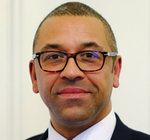
    James Cleverly – 2023 Statement on Hamas Attacks on Israel

    The statement made by James Cleverly, the Foreign Secretary, on 7 October 2023.

    The UK unequivocally condemns the horrific attacks by Hamas on Israeli civilians.

    The UK will always support Israel’s right to defend itself.

  • Rishi Sunak – 2023 Statement on Hamas Attacks on Israel

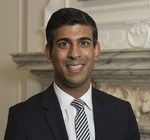
    Rishi Sunak – 2023 Statement on Hamas Attacks on Israel

    The statement made by Rishi Sunak, the Prime Minister, on 7 October 2023.

    I am shocked by this morning’s attacks by Hamas terrorists against Israeli citizens.

    Israel has an absolute right to defend itself.

    We’re in contact with Israeli authorities, and British nationals in Israel should follow travel advice.

  • James Cleverly – 2023 Speech at Conservative Party Conference

    James Cleverly – 2023 Speech at Conservative Party Conference

    The speech made by James Cleverly, the Foreign Secretary, in Manchester on 1 October 2023.

    It’s been a year since I’ve been appointed.

    And in that time, I have been on over sixty international visits,

    Have hosted over one hundred inward events,

    I have had over seven hundred meetings or calls with foreign representatives,

    I’ve also had the honour of accompanying His Majesty The King on two state visits.

    And my ministerial team has worked just as hard.

    And so, if you’re wondering where they are at the moment during this speech – they’re out in the wider world, promoting Britain on the world stage.

    And all those meetings, all those visits, all those calls, has allowed me to hear first-hand what the world thinks of us. As a result, my view of Britain’s standing in the world has never been clearer.

    People want to see us.

    People care about what we say.

    People admire what we stand for.

    But perhaps most importantly, people respect what we do.

    Far from being left on the sidelines, we remain right at the heart of things.

    And we should all be immensely proud of our country’s standing on the world stage.

    And let me explain why.

    And let me explain to the people who think Brexit has hindered us.

    Let me spell it out to the people who think our best years are behind us.

    Let me make it clear to those on the Labour benches who want to play politics and put our country down.

    This government, with Rishi Sunak at the helm, takes decisive measures and is prepared to take the tough, long-term decisions for the benefit of our country.

    And so, of course we send emergency rescue teams to Morocco, and to Turkey and Syria in response to those terrible earthquakes.

    And of course, we evacuate Brits caught up in the Sudan conflict.

    But we also sign Free Trade Agreements with countries around the globe,

    And we lead by example in our unrelenting support for Ukraine and call out Russia for its heinous crimes.

    And we sanction the brutal Iranian judges who target brave women campaigning for nothing more than their freedoms.

    We have consistently helped the worst-off in the world lift themselves out of poverty,

    We have consistently fought injustice wherever we see it,

    And we have consistently led the way in times of international crisis.

    Some people ask me when they talk to me, they say ‘James, that’s all well and good, but why does foreign affairs matter to the British people?

    How does it help the people of Braintree or Belfast, or Banchory or Bridgend?’.

    It helps because when we engage with our allies, old or new, we are safer, and we become more prosperous.

    The PM gets it. Our party gets it. You get it.

    Keir Starmer and his crowd don’t get it.

    And over the last few years, of course we have seen incredibly tough global circumstances.

    A global pandemic, and as my friend Grant just said, a brutal war on our own continent.

    But because this Prime Minister was prepared to take the tough long-term decisions that we needed.

    And we have thrived despite incredibly strong economic headwinds, powered by the pandemic and intensified by the war in Ukraine.

    And because of his long-term decisions our economy is back to pre-pandemic levels and Britain has recovered quicker form that pandemic than Europe’s biggest economies.

    Under this Prime Minister, we have made immense progress in very little time.

    Under Starmer, Labour are all talk,

    Under Sunak, we are about action.

    As I say, in the relatively time Rishi has been Prime Minister, let us look at what we have achieved.

    We agreed the Windsor Framework in February,

    We agreed the AUKUS deal in March,

    The Hiroshima Accord in May,

    The Atlantic Declaration in June,

    We’ve come to agreements with Europe that will grow our economy, stop the boats, and make us safer.

    Conference, we should all be proud of our country and incredibly proud of we achieved in this short period of time .

    And the Prime Minister’s leadership has allowed us to take full advantage of the bold decision we made in 2016.

    Let me give you a few facts and figures just to prove the point.

    Last year, service exports reached a record high.

    Exports of goods and services grew by over 20% in current prices and are likely to increase again this year.

    And we remain the second largest services exporter in the world – behind only the United States of America which, I may remind you, has five times as many people as us.

    And today, nearly 60% of UK exports go to non-EU countries – and that is up from 52% in 2010. And the long-term economic trend is clear.

    And it’s one we expect not just to continue but to intensify.

    And that’s why – because we are looking at the future, because we are facing forward – we recently concluded negotiations to join the Comprehensive and Progressive Agreement for Trans-Pacific Partnership – easier to say than you might believe.

    And, actually, it took me longer to say it than it did for us to join it.

    That’s because we are focused on building our friendships, our forces, and our relationships with the Indo-Pacific region.

    It’s why we are pushing to conclude a trade deal with India,

    an economy forecast to double in size by 2030, overtaking Japan and Germany as the world’s third largest economy.

    And it’s markets like these that are the future, and we recognise their value to us will grow enormously.

    And while we have a global outlook, Labour can hardly imagine a world beyond Brussels.

    The world has gotten used to engaging with a new, independent Britain –

    To engaging with a Britain that is free to forge its own destiny,

    Free to ratify its own law,

    And free to negotiate its own trade deals.

    And our newfound independence has enabled us to repeatedly get ahead of events.

    Whether that’s with the manufacturing of lifesaving vaccines, which then gave us the ability to lift out of lockdowns,

    Or whether it’s the sanctioning Russians involved in the illegal, brutal and disgusting conduct both domestically and abroad.

    And yes – I am especially proud of our record when it comes to the support of the people of Ukraine.

    We foresaw the extent and intensity of the price of the fight President Zelensky and his brave people faced in February 2022.

    And I consider it a personal privilege to have done what I can to maximise support for that courageous country.

    But never let anyone forget that for almost a decade now, every Conservative Prime Minister has backed Ukraine.

    From training Ukrainian troops after the initial invasion of Crimea in 2014, to standing up to Putin over the poisonings in Salisbury.

    From arming Ukrainians with the MLRS when Russia first initiated their full-scale invasion, to sanctioning Putin and his cronies who brutalise the Ukrainian people.

    And Prime Minister Rishi Sunak has continued this unwavering support.

    He was the first world leader to supply Ukraine with NATO tanks.

    The first leader to train fast jet fighter pilots.

    The first leader to supply long range missiles to support those fighting on the frontlines.

    And earlier this year, Rishi Sunak hosted the landmark Ukrainian Recovery Conference in London, where we secured billions in international funding so that Ukraine will be able to rebuild once they win this war.

    Whilst I occupy this great office, I have considered the many challenges we face as a nation and have contemplated the ways of making my department more effective at tackling those obstacles.

    For example, when it comes to stopping the boats, we have and will continue to coordinate and cooperate not just within government, but with our allies as well.

    We have collaborated with the governments of countries where these inhumane people-smuggling gangs are based.

    But I recognise that we need to keep going.

    Today, I have written to all of our ambassadors and high commissioners.

    I have instructed every ambassador, to do even more to work with the countries in which they represent the UK to help stop the abhorrent trafficking of human lives across the English Channel.

    Be in no doubt, our diplomats will redouble their efforts to bring about an end to this terrible, terrible injustice.

    Now, I’m incredibly proud of the diplomats I work alongside – I have no doubt that they are the best in the world.

    But I want to ensure that our diplomatic service is truly representative of the UK.

    And unsurprisingly, I believe that those who have served our nation on the battlefield can continue to contribute beyond their tours of duty.

    Which is why I have tasked my officials to carve out a space in our diplomatic service for veterans.

    And I look forward to working with Johnny Mercer, our Veterans Minister, to ensure that the men and women from our armed forces – who we know are among the best of us – to give them the opportunity to be the best of us representing the UK.

    And you’ll forgive me, but it does make me immensely proud to offer those who served our country with unparalleled distinction:

    The opportunity to serve once again.

    Speaking of service and pride, you will know that I served as the Chairman of this great party during the 2019 election.

    I remember the doomsters and gloomsters predicting another hung parliament, they predicted an outright Conservative loss or a modest Conservative gain.

    And those were the people whose amazing predictions predated the most significant electoral victory of recent times, and an 80-seat Conservative majority.

    And today, I see the same old politicians making the same old tired predictions.

    And when I look across the floor of the House of Commons, I see a group of spineless ditherers.

    Devoid of answers to any of the challenges the world faces or that our country faces.

    And yet, they are there – baying with disapproval at the tough but necessary decisions that governments have to make.

    And where, I ask myself, is leadership from their leader?

    Sir Keir can’t make up his mind on whether he supports leaving the EU or whether he supports remaining in the EU or rejoining the EU.

    He pledged to cut tuition fees to get elected as Labour leader, and then went back on his promise as soon as he became Labour leader.

    He resigned from Corbyn’s cabinet, then he rejoined Corbyn’s cabinet and campaigned to make Jeremy Corbyn Prime Minister.

    What we see is no clarity, no consistency, no policies, no plan – only the same old, tired, opportunistic politics.

    Keir Starmer’s Labour Party doesn’t stand for anything.

    And whilst Sir Keir and his comrades represent the tired politics of the past, the Prime Minister is prepared to do things differently.

    And why?

    Because the Conservative Party believes in Britain’s epic potential and the Labour Party is unwilling to take the tough decisions that will ensure the prosperity and the safety of this country for generations to come.

    Conference, I can think of nothing more counterproductive than handing over the keys of government to a group of political chancers and visionless ideologues.

    It is a scenario I refuse to entertain.

    Because a party that does not believe in Britain cannot be trusted to lead it.

    Only the Conservatives have a plan for the future.

    Only Conservatives will take the tough decisions that will keep us safe and keep us prosperous.

    Only the Conservatives will stand with pride on the world stage.

  • James Cleverly – 2023 Statement at the OSCE Reinforced Permanent Council

    James Cleverly – 2023 Statement at the OSCE Reinforced Permanent Council

    The statement made by James Cleverly, the Foreign Secretary, on 26 September 2023.

    Thank you for convening this reinforced Permanent Council and for the strength of your leadership in these difficult circumstances. I welcome this discussion. The Euro-Atlantic region faces its greatest security challenge since 1945. The importance of the OSCE therefore cannot be overstated – not least as a forum to hold Russia to account and help Ukraine prevail. But it currently faces its greatest ever threat.

    Like any organisation, the OSCE needs strong leadership and adequate resources to function. You and your team along with Secretary General Helga Schmid and the institution heads have provided leadership. And our flexible approach has so far provided the resources. But Russia’s insistence on blocking progress on institutional matters puts all of those things at risk. If Russia feels isolated, it is because it has isolated itself through its illegal war and through its blatant disregard for civilized norms of behaviour.

    There is of course a way to fix this – Russia can change its approach, and we call on Russia to do so. Not to do so will imperil the existence of an organisation that has helped ensure peace and security for five decades. The organisation needs a budget, it needs effective leadership, and it needs a Chair.

    The UK is grateful for Estonia’s offer to Chair in 2024. Estonia should know that it has our full support, as well as the support of most other members. We are also grateful to the Chair and the staff for providing options for managing the budget. But our ultimate aim is a properly functioning OSCE, no matter by which means. If Estonia’s candidacy does not secure consensus, we will support another state willing to Chair in line with the Helsinki principles. These are not normal times so we are willing to consider unorthodox options. If no alternative exists, the UK will support North Macedonia’s serving again or continuing as Chair. We applaud the exemplary leadership shown by the current four leaders in the OSCE under extremely difficult circumstances. The chances of us finding a consensus on replacements at this moment frankly are minimal. Let them then continue their work into 2024.

    We should be here preparing for a Ministerial Council and discussing the important work the OSCE does for all our citizens. Instead, sadly, we are forced to focus on these procedural matters. So I ask those who would block progress, if you oppose Estonia’s candidacy, if you would block colleagues from remaining in post, if you would prevent agreement of an adequate budget – what then do you propose in its place? History will not judge those kindly those who undermine the important work of this organisation and its just causes.

    Thank you.

  • Will Quince – 2023 Statement at the UN Universal Health Coverage High-level Meeting

    Will Quince – 2023 Statement at the UN Universal Health Coverage High-level Meeting

    The statement made by Will Quince, the Foreign Office Minister, on 25 September 2023.

    No matter where in the world they’re born, everyone has a right to affordable, quality health care.

    But every year, seeking health care pushes hundreds of millions of people into poverty. And millions more can’t get the care they deserve.

    We cannot let this continue. We can do better.

    That’s why today, we must reinvigorate our mission to achieve universal health coverage.

    The UK proposes three key priorities.

    First, we must focus our efforts on a primary health care approach.

    The UK is committed to doing this by building global partnerships.

    This includes working with like minded nations to champion sexual and reproductive health and rights as part of universal health coverage. And rolling out life-changing vaccines, medicines, and technology in communities.

    This week, we pledged up to £295 million for global research partnerships.

    These partnerships will help forge the tools and evidence we need to make universal health coverage a reality. As well as addressing other key priorities like ending the preventable deaths of mothers, babies and children, strengthening global health security, and tackling antimicrobial resistance.

    Second, we must combat financial hardship.

    This means Governments protecting the poorest in our societies from devastating health care fees.

    We recognise many countries face serious financial challenges, limiting their ability to do this.

    That’s why the UK is championing reforms to the international financial system to help developing countries access more finance to address their priorities. And achieving universal coverage must be at the heart of this work.

    Third, we must strengthen the global workforce, the lifeblood of our health systems.

    By 2030, there could be a global shortfall of ten million health workers. So, we must join forces to train, recruit, and retain more of these vital public servants.

    That’s why this year, we launched the first-ever long-term workforce plan for the NHS. And announced a £15 million international investment package, working with our partners Ghana, Nigeria, and Kenya to bolster their health workforces.

    But this is just the beginning.

    All our nations need to work together in a truly global partnership. We are stronger together than alone.

    Only then can we deliver universal health coverage, and build a fairer, brighter, and healthier world.

    So today, let’s roll up our sleeves and get on with the job.

    Thank you.

  • Andrew Mitchell – 2023 Statement at the UN Pandemic Prevention, Preparedness and Response High-level Meeting

    Andrew Mitchell – 2023 Statement at the UN Pandemic Prevention, Preparedness and Response High-level Meeting

    The statement made by Andrew Mitchell, the Foreign Office Minister, on 20 September 2023.

    The COVID-19 pandemic was the biggest challenge of our lifetime.

    The international response was punctuated with many high points of cooperation, and some low points of isolationism. We need to do better so that we are prepared for the next crisis.

    That means two things.

    First, we must provide help to lower and middle income countries so they’re better able to withstand health threats.

    The UK is committed to doing what it can to help strengthen health systems — they are the bedrock of effective pandemic prevention, preparedness and response.

    To boost collaboration on research and development, including clinical trials and data sharing.

    To help to improve coordination across the human, animal and environmental health sectors.

    And to work with partners to ensure that safe and effective vaccines, medicines and tests are available during pandemics to all who need them, when they need them.

    Today, the UK is announcing over £370 million to strengthen global health security.

    This will help tackle deadly diseases in Africa, expand the UK Vaccine Network programme, and establish research and technical partnerships in Africa and the Indo-Pacific.

    Second, we must improve multilateral co-operation. Central to this are the negotiations in Geneva on a new Pandemic Accord and agreeing measures to improve pandemic prevention, preparedness and response whilst respecting national sovereignty.

    We must also reform the international financial institutions to release more finance to lower- and middle-income countries — an agenda the UK is championing. And it means investing in the Pandemic Fund and other funds to strengthen preparedness. As well as ensuring that when the next pandemic strikes, faster funding is available.

    We face an important moment. We must reflect on the lessons learnt from COVID-19 and work together to protect future generations from the catastrophic impacts of pandemics. They will rightly not forgive us should we fail.

    Thank you.

  • Oliver Dowden – 2023 Statement at the UN Sustainable Development Goals Summit

    Oliver Dowden – 2023 Statement at the UN Sustainable Development Goals Summit

    The statement made by Oliver Dowden, the Deputy Prime Minister, on 19 September 2023.

    Your Excellencies. It is half time on the SDGs, and our collective promise is in peril.

    The UK was instrumental in developing Agenda 2030 and its SDGs.

    Today we recommit to them – and to reforming the international financial system that will play such a big role in helping us deliver them.

    We are driving reforms of the Multilateral Development Banks including stretching their balance sheets to release over $200bn of additional finance over the next ten years.

    To support this, the UK is announcing two innovative guarantees to scale up MDB lending one to unlock $1 billion in education financing and one to unlock up to $1.8 billion of climate finance for Asia-Pacific countries.

    I also reiterate our support for a bigger and better World Bank, which increases voice and

    representation of the poorest and most vulnerable.

    We support reforms to make the MDBs more agile, more shock responsive and better able to mobilise more private investment.

    We encourage MDBs and all other creditors to offer Climate Resilient Debt Clauses – pioneered by the UK – to pause debt repayments when disaster strikes.

    We will continue to mobilise billions through British Investment Partnerships for energy transitions and infrastructure –$40 billion by 2027 and we will support countries to collect taxes owed to them to invest in their development, with a new £17 million package of support.

    We must of course meet our global climate finance goals which is why at the G20, the Prime Minister announced $2 billion for the Green Climate Fund the biggest single commitment the UK has made to help the world tackle climate change.

    We must maintain the spirit of partnership that created the SDGs as we ensure the financing and investment to deliver them.

    We will do that through UK-hosted Summits on Food Security, AI, and Investment in Africa keeping up momentum through the autumn, into 2024, and all the way to 2030.

    Thank you.

  • Oliver Dowden – 2023 Speech to the UN General Assembly

    Oliver Dowden – 2023 Speech to the UN General Assembly

    The speech made by Oliver Dowden, the Deputy Prime Minister, on 23 September 2023.

    Mr President,

    As we meet here this evening millions of people in Morocco and Libya continue to struggle with the aftermath of a devastating earthquake and catastrophic flood.

    Let me extend the sympathy of the British people to all those who have lost loved ones.

    Our search and rescue teams have been deployed in Morocco and we have increased our humanitarian support for Libya.

    We will continue our support – alongside many other nations represented here in the weeks and months to come.

    This week, nations have gathered here to recommit to addressing the biggest challenges we face.

    Climate change, with catastrophic weather events telling us to act, now.

    The Sustainable Development Goals… and how to get them back on track after Covid.

    Migration, with millions crossing borders and dangerous seas, at the mercy of human traffickers.

    And Russia’s brutal invasion of Ukraine… an attack on a sovereign member of the United Nations by a Permanent Member of its Security Council.

    The most heinous assault imaginable on everything this organisation stands for, and was founded to prevent.

    With consequences felt not just by the brave people of Ukraine, but by millions more across the globe.

    Those hit by food shortages – particularly in developing countries – are Putin’s victims too.

    Russia could end this war tomorrow. Putin could end this war tomorrow. That is what the world demands.

    But until that happens, the United Kingdom will stand alongside Ukraine.

    Whatever it takes.

    For weeks, for months – if necessary, for years.

    Because if these United Nations – in which the United Kingdom believes, and helped to found – are to count for anything, it is surely for the cardinal principle that aggression cannot, and must not pay.

    These are the issues of the moment.

    But I want to focus on another challenge.

    A challenge that is already with us today, and which is changing – right now – all of our tomorrows.

    It is going to change everything we do – education, business, healthcare, defence – the way we live.

    And it is going to change government – and relations between nations – fundamentally.

    It is going to change this United Nations, fundamentally.

    Artificial Intelligence – the biggest transformation the world has known.

    Our task as governments is to understand it, grasp it, and seek to govern it.

    And we must do so at speed.

    Think how much has changed in a few short months.

    And then think how different this world will look in five years or ten years’ time.

    We are fast becoming familiar with the AI of today, but we need to prepare for the AI of tomorrow.

    At this frontier, we need to accept that we simply do not know the bounds of possibilities.

    We are as Edison before the light came on, or as Tim Berners-Lee before the first email was sent.

    They could not – surely – have respectively envisaged the illumination of the New York skyline at night, or the wonders of the modern internet.

    But they suspected the transformative power of their inventions.

    Frontier AI, with the capacity to process the entirety of human knowledge in

    Seconds, has the potential not just to transform our lives, but to reimagine our understanding of science.

    If – like me – you believe that humans are on the path to decoding the mysteries of the smallest particles, or the farthest reaches of our universe, if you think that the Millenium Prize Problems are ultimately solvable, or that we will eventually fully understand viruses, then you will surely agree that by adding to the sum total of our intelligence at potentially dizzying scales.

    Frontier AI will unlock at least some of those answers on an expedited timetable in our lifetimes.

    Because in AI time, years are days even hours.

    The “frontier” is not as far as we might assume.

    That brings with it great opportunities.

    The AI models being developed today could deliver the energy efficiency needed to beat climate change, stimulate the crop yields required to feed the world, detect signs of chronic diseases or pandemics, better manage supply chains so everyone has access to the materials and goods they need, and enhance productivity in both business and governments.

    In fact, every single challenge discussed at this year’s General Assembly – and more – could be improved or even solved by AI.

    Perhaps the most exciting thing is that AI can be a democratising tool, open to everyone.

    Just as we have seen digital adoption sweep across the developing world, AI has the potential to empower millions of people in every part of our planet, giving everyone, wherever they are, the ability to be part of this revolution.

    AI can and should be a tool for all.

    Yet any technology that can be used by all can also be used for ill.

    We have already seen the dangers AI can pose: teens hacking individuals’ bank details; terrorists targeting government systems; cyber criminals duping voters with deep-fakes and bots; even states suppressing their peoples.

    But our focus on the risks has to include the potential of agentic frontier AI, which at once surpasses our collective intelligence, and defies our understanding.

    Indeed, many argue that this technology is like no other, in the sense that its creators themselves don’t even know how it works.

    They can’t explain why it does what it does, they cannot predict what it will – or will not – do.

    The principal risks of frontier AI will therefore come from misuse, misadventure, or misalignment with human objectives.

    Our efforts need to preempt all of these possibilities – and to come together to agree a shared understanding of those risks.

    This is what the AI Safety Summit that the United Kingdom is hosting in November will seek to achieve.

    Despite the entreaties we saw from some experts earlier in the year, I do not believe we can hold back the tide.

    There is no future in which this technology does not develop at an extraordinary pace.

    And although I applaud leading companies’ efforts to put safety at the heart of their development, and for their voluntary commitments that provide guardrails against unsafe deployment, the starting gun has been fired on a globally competitive race in which individual companies as well as countries will strive to push the boundaries as far and fast as possible.

    Indeed, the stated aim of these companies is to build superintelligence.

    AI that strives to surpass human intelligence in every possible way.

    Some of the people working on this think it is just a few years away.

    The question for governments is how we respond to that.

    The speed and scale demands leaders are clear-eyed about the implications and potential.

    We cannot afford to become trapped in debates about whether AI is a tool for good or a tool for ill; it will be a tool for both.

    We must prepare for both and insure against the latter.

    The international community must devote its response equally to the opportunities and the risks – and do so with both vigour and enthusiasm.

    In the past, leaders have responded to scientific and technological developments with retrospective regulation.

    But in this instance the necessary guardrails, regulation and governance must be developed in a parallel process with the technological progress.

    Yet, at the moment, global regulation is falling behind current advances.

    Lawmakers must draw in everyone – developers, experts, academics – to understand in advance the sort of opportunities and risks that might be presented.

    We must be frontier governments alongside the frontier innovators.

    The United Kingdom is determined to be in the vanguard, working with like-minded allies in the United Nations and through the Hiroshima G7 process, the Global Partnership on AI, and the OECD.

    Ours is a country which is uniquely placed.

    We have the frontier technology companies.

    We have world-leading universities.

    And we have some of the highest investment in generative AI.

    And, of course, we have the heritage of the Industrial Revolution and the computing revolution.

    This hinterland gives us the grounding to make AI a success, and make it safe.

    They are two sides of the same coin, and our Prime Minister has put AI safety at the forefront of his ambitions.

    We recognise that while, of course, every nation will want to protect its own interests and strategic advantage, the most important actions we will take will be international.

    In fact, because tech companies and non-state actors often have country-sized influence and prominence in AI, this challenge requires a new form of multilateralism.

    Because it is only by working together that we will make AI safe for everyone.

    Our first ever AI Safety Summit in November will kick-start this process with a focus on frontier technology.

    In particular, we want to look at the most serious possible risks such as the potential to undermine biosecurity, or increase the ability of people to carry out cyber attacks, as well as the danger of losing control of the machines themselves.

    For those that would say that these warnings are sensationalist, or belong in the realm of science-fiction, I simply point to the words of hundreds of AI developers, experts and academics, who have said – and I quote:

    “Mitigating the risk of extinction from AI should be a global priority alongside other societal-scale risks such as pandemics and nuclear war.”

    I do not stand here claiming to be an expert on AI, but I do believe that policy-makers and Governments ignore this expert consensus at the peril of all of our citizens.

    Our Summit will aim to reach a common understanding of these most extreme risks, and how the world should confront them. And at the same time, focus on how safe AI can be used for public good.

    The speed of this progress demands this is not a one-off, or even an annual gathering.

    New breakthroughs are happening daily, and we need to convene more regularly.

    Moreover, it is essential that we bring governments together with the best academics and researchers to be able to evaluate the technologies.

    Tech companies must not mark their own homework, just as governments and citizens must have confidence that risks are properly mitigated.

    Indeed, a large part of this work should be about ensuring faith in the system, and it is only nation states that can provide the most significant national security concern reassurance that has been allayed.

    That is why I am so proud that the United Kingdom’s world-leading Frontier AI Taskforce has brought together pioneering experts like Yoshua Bengio and Paul Christiano, with the head of GCHQ and our National Security Advisers.

    It is the first body of its kind in the world that is developing the capacity to conduct the safe external red-teaming that will be critical to building confidence in frontier models.

    And our ambition is for the Taskforce to evolve to become a permanent institutional structure, with an international offer.

    Building this capacity in liberal, democratic countries is important.

    Many world-beating technologies were developed in nations where expression flows openly and ideas are exchanged freely.

    A culture of rules and transparency is essential to creativity and innovation, and it is just as essential to making AI safe.

    So that, ladies and gentlemen, is the task that confronts us.

    It is – in its speed, and its scale, and its potential – unlike anything we – or our predecessors – have known before.

    Exciting.

    Daunting.

    Inexorable.

    So now we must work – alongside its pioneers – to understand it, to govern it, to harness its potential, and to contain its risks.

    We will have to be pioneers too.

    We may not know where the risks lie, how we might contain them, or even the fora in which we must determine them.

    What we do know, however, is that the most powerful action will come when nations work together.

    The AI revolution will be a bracing test for the multilateral system, to show that it can work together on a question that will help to define the fate of humanity.

    Our future – humanity’s future – our entire planet’s future, depends on our ability to do so.

    That is our challenge, and this is our opportunity.

    To be – truly – the United Nations.