Category: Foreign Affairs

  • Anne-Marie Trevelyan – 2023 Speech to the Western Australia Defence Conference

    Anne-Marie Trevelyan – 2023 Speech to the Western Australia Defence Conference

    The speech made by Anne-Marie Trevelyan, the Foreign Office Minister, in Perth, Australia on 8 December 2023.

    Thank you, Rebecca, for your kind introduction.

    Firstly, I acknowledge the traditional custodians of this land, the Whadjuk Noongar people, and I pay my respects to their Elders past, present and future.

    I am delighted to join you all today – my fourth trip to Australia this year, and my third to Perth.

    It is not just the beauty of this vibrant city, your family of black swans on the river, or your wonderful climate, that keep bringing me back. Although my friend Stephen Smith, Australia’s High Commissioner to the UK and fiercely proud former Federal Member for Perth, often teases me that it is!

    The reason I keep coming back is Perth’s significance to AUKUS as the future home of Australia’s nuclear-powered submarine fleet. And, as you welcomed USS North Carolina into port in August, it was clear for all to see that the ‘Optimal Pathway’ is now underway.

    The Royal Navy is looking forward to joining our American navy colleagues here more frequently from 2026, as our fleet of Astute class nuclear-powered submarines visits regularly, to strengthen our naval partnership to protect the region’s freedom of navigation across Indo-Pacific waters.

    Your recent visitor USS North Carolina was a demonstration of the continuing steps forward in the long journey towards SSN-AUKUS become reality.

    So what was the rationale for AUKUS?

    AUKUS is a security partnership of global significance.

    Events in Israel and Gaza, and Russia’s continuing attack against Ukraine, remind us how events far from our shores reverberate at home, with implications for our security, our economy, and our society.

    The UK government is under no illusion about the risks to global economic security if stability in the Indo-Pacific is shattered.

    As an island nation and a global trading power, like Australia, the UK depends on open shipping routes and unimpeded sea lanes.

    Free flows of trade, energy and data – above and below the surface – must be our continuing focus. Because the security of Indo-Pacific waters has a direct impact on my constituents in Northumberland as well as households across the UK and around the world.

    That is why we recommitted our support to a free and open Indo-Pacific in our foreign and defence policy refresh.

    AUKUS is the UK’s biggest investment in the stability of the Indo-Pacific, and broader global security, for half a century.

    Its positive impact will be felt in the region, in our relationships with two of our oldest and closest allies – but also across defence, industry and academia in all three partner countries.

    That is why I, and the UK Government, will do all we can to support you, bringing UK industrial and academic expertise honed over 60 years.

    Taking on a nuclear-powered fleet is an enormous endeavour, and Western Australia is critical to delivering the availability and sustainment of this new generation of submarines for the Australian Navy, the workforce to support them and the infrastructure to underpin their requirements.

    On each of my visits over the last year, I have met with critical stakeholders.  And I am excited to say that on this visit I am really starting to feel the momentum picking up on real partnership building and the investment picture needed.

    During this visit, I have met with leaders from Defence West, the Australian Submarine Agency, and Curtin University’s new AUKUS Workforce Alliance.

    We have hosted Western Australian leaders in the UK, including the Honourable Paul Papalia, to share our knowledge and discuss the most effective relationships which can help you build this new, hugely complex, enterprise with the help of our experienced industrial enterprise.

    And, of course, AUKUS isn’t only about submarines.

    I’ve seen for myself the expertise and advanced capabilities within Western Australia’s defence sector.

    From cyber to AI to remote operations, this region is well-positioned to do well from AUKUS Pillar Two. And from increasing collaboration with your UK and US counterparts.

    Last week, AUKUS Defence Ministers made a series of major announcements on Pillar Two that will build our mutual deterrence posture to make us stronger and create lots of opportunities for our defence industries.

    Joint exercises will continue to improve our ability to offset an opponent’s advantage, and increase the sophistication and impact of our autonomous naval systems.

    We will accelerate the development of quantum technologies for positioning, navigation, and timing in military capabilities. This will bolster the resilience of our forces in the most challenging environments, and enhance stealth in undersea capabilities, which will also support SSN-AUKUS.

    We will collaborate on the Deep Space Advanced Radar Capability programme, which will use sites in all three countries to help identify emerging threats in space.

    And finally, we are working on cyber security with critical suppliers to the naval supply chain, which will give us greater insight into the threats to AUKUS and how to address them.

    The progress we are making proves that pooling resources and expertise, and focussing on interoperability, makes us stronger than we ever could be alone in tackling the present geopolitical strains.

    The delivery of AUKUS

    AUKUS has global significance. But its impacts are also in our local communities. AUKUS will be delivered by Australian, British, and American workers, civilian and uniformed. It will create and sustain thousands of jobs, and boost and regenerate industrial heartlands.

    The submarine enterprise – Pillar 1 – will bring together world-leading British design, with the very best technology, skills and industrial heft from all three partners.

    In the UK we have now committed £4bn of contracts to design and manufacture the first components for SSN-AUKUS. Rolls Royce is expanding its nuclear reactor manufacturing site in Derby, and BAe Systems is working with the town of Barrow to expand its site and skills. Babcock is continuing to invest in modernising their delivery of submarine sustainment and maintenance, which you will want to tap into in order to save time re-inventing the proverbial wheel.

    It’s good to see a few of the first cohort of workers from Australia embedded with UK and US counterparts, learning from the best and brightest in our defence industry.

    But let’s be under no illusion the scale of the challenge, especially in relation to the pace required to get to the start line.

    The scale and ambition of AUKUS is exciting for the defence industry. But at a time of heightened demand from Ukraine and Israel, and from other states who are bolstering their defences in light of Putin’s aggression, it will test the capability and capacity of defence sectors in all three partner nations.

    So, we must work together to build the next generations of designers, project managers, engineers, welders, and technicians. As well as the nuclear, cyber and digital experts, who will play a vital role in delivering AUKUS.

    These jobs demand unique skills and qualifications. Many require years of training. Developing the required workforce growth, without draining the existing skills bases, needs planning and investment.

    We also need to ensure our people can move easily between the three countries, to enable them to exchange knowledge, skills and experience. I know that the mobility agreement we agreed as part of our UK- Australia FTA last year will be important in supporting that flow.

    AUKUS is a multi-generational as well as multi-national endeavour, which will require us to adapt in order to continue to pull in the same direction.

    For the partnership to work to best effect, we need to ensure legal and regulatory frameworks are complementary. US ITAR controls being reviewed and legislated at the moment by US legislators, will enable us to navigate a path through export control regimes, so our industries can work more closely together.

    AUKUS is already changing how we work together, and we are working to overcome the challenges that arise from it.

    In the UK we are investing in our new Nuclear Skills Taskforce, to boost the capacity of our sector. We have appointed a cross-government Director-General of AUKUS, to provide leadership and enhance coordination.

    We must now work trilaterally to ramp up our engagement and delivery of urgent activity with industry. That’s why I was so pleased to hear about the brilliant Aukus Workforce Alliance created between HII, the US industrial maintenance lead for Virginias, Babcock, the UK’s industrial sustainment lead for UK Astutes and three Australian universities – Curtin, University of New South Wales and University of Adelaide. Forward thinking for the long-term skills challenge.

    We have established an AUKUS Defence Industry Forum, which will bring together governments and industry from all three countries to help drive forward delivery of advanced capabilities. And we have initiated the AUKUS Defence Investors Network to strengthen financing.

    To conclude, the scale of our ambition for the trilateral AUKUS partnership is vast, and there are enormous opportunities and responsibilities for government to enable industry to deliver the policy aims needed.

    Delivering across both Pillars of the partnership will be an exceptionally complex challenge. But it is a challenge we can overcome by working together.

    We must keep at the front of our minds at all times why we are doing this – we have a responsibility together to provide defence capabilities which will be capable of maintaining a free and open Indo-Pacific – not just for our trading and security interests, but for our neighbours, friends and allies.

    Global maritime security is under pressure – our challenge is to assure it in order to:

    • facilitate those flows of trade, goods moved about seamlessly day in day out from so many Indo-Pacific nations to the world;
    • assure flows of energy, by ship and by pipeline and undersea cables;
    • and ensure the safety of undersea data cables which underpin our global financial services.

    These conversations are critically important to helping policy makers set this enormous project on the right road. So, thank you firstly to Senator Linda Reynolds for asking whether I would support this – of course!; and to Gordon Flake and the US Asia Centre and Business News for making it a reality.

    So – please do tell me what you think we need to do to deliver our shared ambitions for AUKUS, drawing on the rich talents of the people and businesses of Western Australia.  The simple question is are we going fast enough to enable you to deliver the requirements to sustain and maintain a new fleet of nuclear-powered submarines here in Western Australia? Our mission is to reassure allies – and that will be achieved if we assure ourselves we are going hard and fast enough to meet delivery of the challenge.

    I know you won’t be shy in sharing your views, that’s one of the wonderful characteristics of Australians!

    Thank you.

  • Rishi Sunak – 2023 Speech at the COP28 Climate Summit

    Rishi Sunak – 2023 Speech at the COP28 Climate Summit

    The speech made by Rishi Sunak, the Prime Minister, in Dubai on 1 December 2023.

    I’m here at COP28 with two clear messages…

    First, the world needs to do more to tackle climate change.

    We’ve made real progress – including at the Glasgow summit…

    …but the climate science and mounting evidence of climate-related disasters…

    …show we’re not moving quickly or effectively enough.

    So I’m calling on major emitters to dramatically accelerate delivery on what they’ve already promised.

    Everyone can do more.

    And let’s be very clear – the UK is leading the charge.

    We’re absolutely committed to our Net Zero targets.

    We’ve already decarbonised faster than any other major economy.

    Our emissions are down 48 percent since 1990.

    Compared to limited cuts from others.

    And a 300 percent increase from China.

    We’re also one of the largest climate donors, because we want to help those suffering the impacts of climate change.

    My pledge from September of £1.6 billion for the Green Climate Fund was the UK’s biggest single climate change commitment.

    And we’re going further… announcing £1.6 billion today for renewable energy, green innovation and forests…

    …delivering on the historic Glasgow deal to end deforestation – because we can’t tackle climate change without nature.

    We’re also leveraging the genius of the City of London to deliver billions more in private finance.

    Again the UK is leading by example… and we need others to step up.

    Because my second message is this…

    As I said in September, we won’t tackle climate change unless we take people with us.

    Climate politics is close to breaking point.

    The British people care about the environment.

    They know that the costs of inaction are intolerable.

    But they also know that we have choices about how we act.

    So yes we’ll meet our targets…

    …but we’ll do it in a more pragmatic way, which doesn’t burden working people.

    We’ve scrapped plans on heat pumps and energy efficiency, which would have cost families thousands of pounds.

    We’ll help people to improve energy efficiency and cut bills – but we won’t force them too.

    We’ll support nature across the UK.

    Just this week I announced a huge new effort with 34 landscape recovery projects, a new national park – and more.

    And we’ll harness the opportunities of technology and green industry to deliver net zero in a way that benefits the British people.

    And today I can share more proof on the progress we’re making.

    I’m pleased to announce a new deal between Masdar and RWE…

    …which includes a commitment to jointly invest up to £11 billion into the UK’s new windfarm at Dogger Bank – which will be the biggest in the world.

    This is a huge boost for UK renewables…

    …creating more jobs…

    …helping to power 3 million homes…

    …and increasing our energy security.

    And, by the way, this comes just days after we announced £30 billion of investment at our Global Investment Summit… and £21 billion of investment from South Korea.

    We’ve quite frankly never seen a week like it.

    In Dubai today, I’ve also had conversations with a range of leaders – including Israel, Qatar, Egypt and Jordan – about the situation in Israel and Gaza.

    Our position is clear and consistent.

    We’ve been categorical in our support for Israel’s right to self-defence and to go after the architects of the atrocities of 7th October…

    …while stressing Israel’s obligation to act in line with international humanitarian law.

    I strongly welcomed the pause in fighting to get hostages out…

    …and we’ve been using the opportunity to get more aid into Gaza.

    The UK has trebled its aid, but still not enough is getting in via Rafah and other crossings.

    So we are actively exploring other routes, including by sea.

    The breakdown of the truce today is deeply disappointing, not least because a growing number of hostages were coming home.

    I pay tribute to the role of Qatar in helping facilitate these efforts – and I hope the process can be resumed.

    We want all the hostages released – and in this initial phase all women and children should be freed.

    I’ve said before that the number of civilian casualties and the scale of the suffering has been far too high.

    So the return of hostilities is concerning to us all.

    We’re making it clear that Israel must take maximum care to protect civilian life.

    We’re opposed to anything that would involve the mass displacement of people.

    We need to ensure that there are viable designated areas where safety can be guaranteed.

    And we need to ensure that critical infrastructure like water supplies and hospitals are protected.

    Again, we’ve been consistent on all of this.

    So I support the civilian protection plans outlined yesterday by the US Secretary of State.

    Indeed this has been a central theme in our discussions with regional leaders here, including Israeli President Herzog.

    Ultimately we will redouble our efforts create a political horizon in which hostages are freed and security, safety and dignity is assured.

    We will continue to work with our partners to create a lasting peace…

    …beginning with practical steps that address the crisis now.

    Thank you.

  • David Cameron – 2023 Statement on Israel-Hamas Hostage Agreement

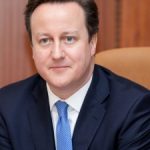
    David Cameron – 2023 Statement on Israel-Hamas Hostage Agreement

    The statement made by David Cameron, the Foreign Secretary, on 22 November 2023.

    This agreement is a crucial step towards providing relief to the families of the hostages and addressing the humanitarian crisis in Gaza.

    I urge all parties to ensure the agreement is delivered in full. Of course, we want to see all hostages released immediately and families affected by the horrors of the October 7th terror attack reunited.

    This pause provides an important opportunity to ensure much greater volumes of food, fuel and other life-saving aid can reach Gaza on a sustained basis. We have already doubled our aid commitment to Palestinians this year and will work closely with the UN to ensure it reaches those who need it.

    The UK will continue to work with all partners in the region to secure the release of all hostages, restore security and reach a long-term political solution which enables both Israelis and Palestinians to live in peace.

  • Andrew Mitchell – 2023 Speech to the Global Food Security Summit

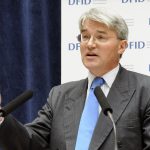
    Andrew Mitchell – 2023 Speech to the Global Food Security Summit

    The speech made by Andrew Mitchell, the Minister for Africa and Development, at the Global Food Security Summit in London on 20 November 2023.

    Ladies and gentlemen, Your Excellencies, friends.

    This is the first of 4 sessions that I mentioned entitled ‘Creating new approaches to ending preventable deaths of children’. And we’ve got here for the session some of the best minds in the world for tackling this subject. We’ve got an hour and a half to try to make real progress and I want to thank everyone in advance for focusing so hard on this vital subject.

    We know that too many children are going to bed hungry and malnourished. It’s a point the Prime Minister set out right at the beginning of his remarks. And we are here united in our determination to change that – bringing all your expertise and experience to bear.

    And as you know, we launched the UK international development white paper today, setting out our long-term vision for addressing critical global challenges. This includes preventing and treating child wasting, through new partnerships and sources of finance.

    The collective effort to produce the white paper drew on the most expert minds in the business, including charities and NGOs, the private sector, academia and our partners abroad. It’s been an enormous undertaking, and I am hugely grateful to those of you who shared your expertise.

    This morning we are bringing that expertise together again, with a focus on child malnutrition.

    This summit is an important opportunity to galvanise action, shifting the dial to do more on prevention. I’m looking forward to hearing your thoughts on how we can enhance preventative measures, build resilience and optimise funding, in order to have the biggest impact.

    A huge part of this will be vital scientific research. We’ve already seen some big breakthroughs over the years, with ready-to-use foods like plumpy nut, for managing child wasting in the community. This ground-breaking work dramatically reduced the need for inpatient care, increased the uptake of treatment and saved countless lives across the world.

    We need more breakthroughs like this. That’s why the Foreign Office is supporting an ambitious research programme through ELRHA, to build a package of evidence-based interventions in nutrition, health, water and sanitation.

    We are also proud of our work together with UNICEF. Since we launched our partnership three years ago to drive progress on child wasting, UNICEF has recorded some impressive results in the 9 targeted countries.

    Last year, more than 4 million children were reached with essential nutrition support like Vitamin A, a 60% increase on the year before. And the proportion of children given lifesaving treatment for severe wasting increased from a third in 2021 to nearly half last year. We are continuing our work together with UNICEF to catalyse more sustainable financing, build stronger supply chains and help prevent, detect and treat child wasting.

    I am also delighted to announce that we will extend this fantastic partnership to 2030, the year when the white paper ends, and double our funding with an additional nearly £31 million bringing the total to £61 million.

    We will be working with UNICEF and our partners, including many of you here today, to campaign for action to reach at least 350 million mothers and children with services to prevent, detect and treat child wasting in the hardest hit regions of the world. Now I am delighted today to be co-chairing this session with UNICEF’s Deputy Executive Director, Omar Abdi, and I am looking forward to hearing from him very shortly.

    We are also working together with the World Health Organisation and World Food Programme to strengthen the evidence for preventing and treating child wasting. The WHO is today launching new guidelines, including, for the first time, on prevention. And I am delighted that WHO Director General Tedros is with us this morning and I am looking forward to hearing from him.

    We are committed to implementing these guidelines and supporting you, our partners, to do the same.

    As the Prime Minister announced this morning, the new funding for UNICEF includes a further £16 million for the Child Nutrition Fund, which we are inaugurating this morning alongside our partners, the Bill and Melinda Gates Foundation and Children’s Investment Fund Foundation, where we had that fantastic announcement by Sir Chris Hohn of his additional $50 million.

    This is not just a UK-UNICEF partnership. It is, crucially, a partnership with the 10 countries that have joined us in using the Child Nutrition Fund Match-window to double supplies of therapeutic food within their health systems. And we hope more countries will join them.

    I’m glad that Pakistan’s minister of health, Nadeem Jan, is with us, and we look forward to hearing more about this from him.

    It is clear there is a great deal of expertise and determination in this room, so let us use this session, and this summit, to inspire each other to reach greater heights, save lives, and build a healthier future for the world’s children.

    Thank you very much indeed.

  • David Cameron – 2023 Speech to the Global Food Security Summit

    David Cameron – 2023 Speech to the Global Food Security Summit

    The speech made by David Cameron, the Foreign Secretary, in London on 20 November 2023.

    Thank you ladies and gentleman and thank you Andrew. A week into my new job and I am delighted this is my first speaking engagement because it is an issue that really matters.

    Thank you to Andrew Mitchell for bringing us here. Thank you to the Somalian President who I met with this morning for his attendance today and thank you to the UAE, our friends in the Emirates for being our co-hosts. And an apology, I am meant to be teaching a course in Abu Dhabi at New York University in January and I’ve had to cancel that because of my new role but I was very much looking forward to another stay in your remarkable country.

    And of course thank you to the Children’s Investment Fund Foundation and the Bill & Melinda Gates Foundation for their support. It is so good to be back working with you again on these sorts of issues that matter so much.

    This government has a proud record on development and I am proud of what we did on development and I am determined that we put development right back at the heart of our Foreign Commonwealth and Development Office, it is so important.

    You have had a long day, with lots of speeches. I have had an extraordinary day going to the House of Lords, doing all the right things, and nodding and saying yes and all the rest of it. So I’ll go home and tell Mrs Cameron she is now Lady Cameron, she’s absolutely furious about that. That is what happened to me today but you have had a long day and had lots of speeches so I just want to make 4 simple points.

    The first is what you have been doing today and talking about today, food security, really matters. I believe in all the SDGs – indeed, I was part of the committee that helped do the original work drawing them up. I care about all of them, but food is foundational to all aspects of development.

    Without secure access to a nutritious diet, nothing can be achieved. And malnourished children can never fully develop their bodies and minds, and it robs them of their futures and it robs their societies of their potential.

    The number of people facing acute food insecurity is the highest it has been in years. And this is just the tip of what I have called a ‘silent crisis’, with a third of the world unable to afford a healthy diet.

    So I promise you this today – the UK will continue to lead efforts like this.

    Now it is great to speak after Minister Dias as Brazil takes on the G20 Presidency. As Prime Minister, I hosted with Brazil summits on Hunger and Nutrition for Growth in 2012 and 2013. Together, we galvanised global action. It was more money invested in better outcomes and that’s what needed again.

    Second, this is an absolutely critical moment. Not just because this silent crisis is growing. But because we cannot separate it from other global crises.

    Putin’s illegal invasion brought this home, as he deliberately sought to rob us of one of the world’s great bread baskets. His cynicism was plain for all to see. He obstructed the Black Sea Grain Initiative. He then walked away from it. He then tried to destroy the very supplies that the world needs.

    But I saw for myself, in Ukraine, in the Port of Odessa, there is good news. Ukraine is pushing Russia back in the Black Sea. And with the new Unity Facility between UK insurance brokers and the government in Kyiv, shipping insurance for their food exports is affordable once more.

    So let the message go out. Ships are sailing, grain is being exported, Ukraine will continue to help feed us all.

    Third point, there is a vital link between food security and development, on the one hand, and the problem of state fragility and conflict on the other.

    Of course, farmers can farm, traders can trade, but without the rule of law, without property and land rights, without peace, without trusted institutions, you cannot get your product to market.

    That’s why it’s time to change the way we do development. That is what Andrew Mitchell’s excellent white paper published today is all about. It captures how Britain will help do this in the future. No more top-down targets that set up fragile states to fail. Instead working with them to make sure we back their priorities, help them deliver, help them to tell the story to their people about what they are doing to bring their countries to security and prosperity.

    We will work as partners on strategies and plans which developing countries can own and deliver.  We will push to unlock the full potential of development finance. I want us to watch as all those multilateral development banks look at their balance sheets and work out what more they can lend and we work with them to get that money into development, into the poorest countries and helping the poorest people.

    Finally, my fourth point – a note of optimism.

    We can tackle this problem. With innovation and technology, we are capable of feeding all the people on our planet. It can be done. We have the technology. We must bring it to bare.

    The Soviet writer Ilya Ehrenburg wrote of the victims of the Holodomor in Ukraine: “not one of them was guilty of anything”. And what was true then is true now.

    Today, we have heard from the experts. We have heard about the tools. We have seen the commitment we need to realise Zero Hunger.

    And I can tell you this, the United Kingdom, the Foreign Commonwealth and Development Office will be with you every step of the way as we do so.

    Thank you.

  • David Cameron – 2023 Comments on His Appointment as Foreign Secretary

    David Cameron – 2023 Comments on His Appointment as Foreign Secretary

    The comments made by David Cameron on 13 November after being appointed as Foreign Secretary.

    The Prime Minister has asked me to serve as his Foreign Secretary and I have gladly accepted. We are facing a daunting set of international challenges, including the war in Ukraine and the crisis in the Middle East. At this time of profound global change, it has rarely been more important for this country to stand by our allies, strengthen our partnerships and make sure our voice is heard.

    While I have been out of front-line politics for the last seven years, I hope that my experience – as Conservative Leader for eleven years and Prime Minister for six – will assist me in helping the Prime Minister to meet these vital challenges. Britain is a truly international country. Our people live all over the world and our businesses trade in every corner of the globe. Working to help ensure stability and security on the global stage is both essential and squarely in our national interest. International security is vital for our domestic security.

    Though I may have disagreed with some individual decisions, it is clear to me that Rishi Sunak is a strong and capable Prime Minister, who is showing exemplary leadership at a difficult time. I want to help him to deliver the security and prosperity our country needs and be part of the strongest possible team that serves the United Kingdom and that can be presented to the country when the General Election is held. I believe in public service. That is what first motivated me to get involved in politics in the 1980s, to work in government in the 1990s, become a Member of Parliament in the 2000s and put myself forward as Party Leader and Prime Minister.

    The UK’s Foreign Office, our Diplomatic Service, our Intelligence Services and our Aid and Development capabilities are some of the finest assets of their kind anywhere in the world. I know from my time in office that they are staffed by brilliant, patriotic and hard-working people. They have been well led by James Cleverly, with whom I look forward to working in his vital new role.

    It will be an honour to serve our country alongside our dedicated FCDO staff and provide the continued leadership and support that they deserve.

  • Will Quince – 2023 Speech at ASEAN Conference

    Will Quince – 2023 Speech at ASEAN Conference

    The speech made by Will Quince, the Minister for Health and Secondary Care, at the ASEAN Conference on 2 November 2023.

    Good evening, ladies and gentlemen, your Excellencies, our friends from South-East Asia.

    I’d like to let you all in on a little secret – being the Minister responsible for Global Health is one of my favourite parts of the job.

    Partially because I’m asked to attend receptions in beautiful rooms like these, which I must confess, are slightly nicer than what I’m used to!

    But also because it’s a real privilege to meet with our partners from across the globe.

    And today, I’m delighted to welcome the Secretary General of ASEAN, on his first visit to the UK.

    Your Excellency, your visit comes at a vital time. We stand at the dawn of a new partnership between ASEAN and the UK.

    In 2021, the UK became ASEAN’s first new dialogue partner in a quarter of a century. And since then, our relationship has continued to grow in confidence and in strength, because we share a vision of a free, open and stable Indo-Pacific region, governed by the rule of law.

    And the UK wants to play the fullest possible role in advancing that vision, drawing on the best of British expertise in finance, regulation, and healthcare. That’s why we applied to join the ASEAN Regional Forum.

    And it’s why we’re committed to working with ASEAN to meet the challenges of the 21st century, from climate change to global health, and harnessing AI’s potential.

    Your Excellency, I hope you’ve witnessed the UK commitment to our cooperation throughout your visit. I know you’ve have met with our Deputy Prime Minister. You have visited Oxford University, and tomorrow you will open the London Stock Exchange.

    As I can see in the room tonight, our leading scientific minds and industry partners are committed to finding solutions.

    Not just to current health challenges, but also those facing future generations – from pandemics to the impact of a changing climate on our health systems.

    As a health minister, I’ve got a front row seat to see the benefits our joint efforts will deliver for our people.

    I know investing in global health research isn’t just good for my country – it benefits the peoples of South-East Asia, and the world.

    And we all know it’s the only way we’ll prevent the next global health crisis.

    That’s why since 2016, the UK’s National Institute for Health and Care Research has joined forces with 27 institutions across South-East Asia, funding over £86m in critical health research.

    The UK’s Newton Fund has supported over 70 research teams to conduct crucial research on strategic areas like antimicrobial resistance, meningitis and COVID-19.

    And through the Fleming Fund, my department has invested £265m, supporting countries around the globe to generate, share, and use data on antimicrobial resistance (AMR).

    I’m proud this is the world’s single largest aid investment in AMR surveillance.

    It will continue to bolster our partnership with at least four ASEAN member states.

    But this is just the beginning. Today, I’m proud to announce we’re investing more than £30m of aid in four new vaccine manufacturing research hubs through the UK Vaccine Network.

    This will build partnerships between British universities and global vaccine developers.

    And that includes creating a dedicated UK-South East Asia Vaccine Manufacturing Hub, in a partnership between the University of Sheffield and twelve ASEAN partner institutions.

    So that if another pandemic strikes, lifesaving vaccines will be more readily available across South-East Asia and the world.

    And that’s not all. We’re also working closely with our friends in the Secretariat to develop a new programme: the ASEAN-UK Health Security Partnership.

    This will bring the full force of our expertise to bear in tackling shared global health challenges.

    And there is no greater symbol of our friendship, than the nearly 36,000 nurses and midwives, and the several thousand doctors from ASEAN member states who are working in our National Health Service.

    I pay tribute to their decades of dedicated service. And in recognition of that service, we’re giving leadership development opportunities to healthcare staff working in the UK and across ASEAN, through NHS England’s Global Fellowship Programme.

    With their help, together, we’ll build the resilient and inclusive health systems we need, to save lives across the world.

    Your Excellency, the measures we’re announcing today will help our countries tackle future pandemics, boost research into vaccines, and reduce deaths from infectious diseases.

    And I hope you return to the region, safe in the knowledge our partnership will go from strength to strength from here. Thank you.

  • George Freeman – 2023 Speech at ASEAN Conference

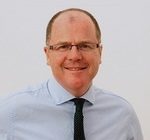
    George Freeman – 2023 Speech at ASEAN Conference

    The speech made by George Freeman, the Minister for Science, Research and Innovation, in London on 2 November 2023.

    Welcome

    Your Excellency, Secretary General to ASEAN, I am delighted to be here today to celebrate the deepening partnership between ASEAN and the UK.

    And thank you to our host this evening, Minister Quince.

    Tonight, let me share a few words on our science and technology partnership.

    AI Summit

    We are not shy about our plan to make the UK a science and technology superpower by 2030. In March we launched our roadmap – the UK Science and Technology Framework alongside £370 million to boost investment in innovation and seize the potential of new technologies like AI.

    Groundbreaking technologies like artificial intelligence have the potential to transform our societies and economies changing all our lives across the globe. It’s why, this week, the UK is hosting the AI Safety Summit – to set a new path for collective international action to navigate the opportunities and risks of frontier AI.

    Complex issues like this demand international dialogue. That is why relationships like UK-ASEAN are so important. And I am pleased we have Science and Technology Ministers from a number of ASEAN Member States here in the UK this week at the Summit. We must continue this close collaboration.

    UK-ASEAN

    Our Science and Technology partnership with ASEAN continues to grow. Just 2 weeks ago we held the first ASEAN-UK dialogue on Science, Technology and Innovation in the Philippines. And over the next year we will continue to work with the ASEAN Committee on Science, Technology and Innovation, focusing on AI and Engineering Biology as the technologies of tomorrow. This activity is just part of how we are delivering against the ASEAN – UK Plan of Action. We are committed to encouraging cooperation between our Science and Technology communities. A community which is so well represented here tonight.

    International Science Partnerships Fund

    I am happy to announce that our International Science Partnerships Fund (ISPF) will invest £337 million over the next 2 years in collaborations to tackle the existential challenges facing the world – from climate change, to pandemics, to the global race to harness the power and potential of emerging technologies.

    Of this, the UK government has committed £218 million to partnerships with low and middle-income countries to support sustainable development.

    The fund puts research and innovation at the heart of our international relationships. And I’m delighted about the partnerships that this fund will bolster with ASEAN Member States.

    ISPF directs government investment and effort into the science and research issues that really matter. It builds partnerships based on excellence to share knowledge and research infrastructure, cultivate strong diplomatic ties, promote global standards and values, and foster mobile talent in Southeast Asia and in the UK.

    Just a few examples include:

    • UKRI is proposing to allocate £21 million to support collaborative research on infectious diseases of relevance to Southeast Asia with epidemic and AMR potential. And early-stage discussions are taking place with potential partners in the region. The programme aims to establish a strong regional network of researchers, in partnership with the UK, on this subject of global health significance
    • BBSRC and NERC are scoping a £12 million programme focused on interdisciplinary approaches to enhance the sustainability and resilience of aquaculture systems in Southeast Asia
    • British Council is launching a £9 million programme, funding research collaboration on: Planet, Health, Tech, and Talent. For eligible research institutions in the UK and counterparts including Indonesia, Malaysia, the Philippines, Thailand and Vietnam
    • opportunities for early career researchers include a £2.5 million British Council fellowships programme, funding UK institutions to host researchers from Indonesia, Malaysia, the Philippines, Thailand and Vietnam, providing a foundation to launch careers while enhancing research capacity in their home countries

    Wider announcements (FCDO)

    And ISPF is not the only programme that benefits our science and technology partnership with ASEAN.

    We have 10 new UK-ASEAN Scholarships for Women in Science, Technology, Engineering and Maths (STEM). And, next year, we will launch a new ASEAN Chevening Scholarships Programme.

    Colleagues in the FCDO have launched, with the ASEAN Secretariat, a £1 million Research and Innovation for Development (RIDA) initiative to harness innovation and support low-income and vulnerable populations across ASEAN. This initiative will support partnerships between researchers and industry based in the UK and Southeast Asia. Partnerships which will develop and scale novel innovations on health, climate and energy.

    And last month the UK announced an additional £2 million to the ASEAN-Consultative Group on International Agricultural Research (CGIAR). The Innovate for Food and Nutrition Security programme will build resilience and sustainability of agriculture and food systems in ASEAN.

    We have already built strong science partnerships across ASEAN with the support of our Newton Fund and Global Challenges Research Fund. From cyclone prediction to engineering high-yielding breeds of rice, our research partnerships with our friends in ASEAN Member States are already bearing fruit. But it is clear there is so much more we can do.

    Your Excellency, Ambassadors, Business Leaders, Academics, Colleagues – I am proud to be here tonight, bringing together UK expertise, our thought leaders, our influential private sector – with one of fastest growing, most dynamic regions in the world. I look forward to the many exciting partnerships we will build together.

  • Anne-Marie Trevelyan – 2023 Speech at the South China Sea Conference

    Anne-Marie Trevelyan – 2023 Speech at the South China Sea Conference

    The speech made by Anne-Marie Trevelyan, the UK Minister for the Indo-Pacific, in Vietnam on 25 October 2023.

    Excellencies, ladies and gentlemen, friends. It’s good to be here with you in person this morning to show my support for an area of geopolitical importance.

    I am especially glad to be here this year during the 50th anniversary year of diplomatic relations between the United Kingdom and Vietnam. We are a close partner with Vietnam on maritime security and remain committed to strengthening our collaboration.

    I’m here because what happens in the South China Sea matters globally. As you’re aware, almost 60% of global maritime trade passes through the South China Sea. This makes it vital that all parties enjoy the same freedoms to navigate and exercise in the South China Sea.

    Russia’s illegal invasion of Ukraine offers an alarming example of the pain inflicted when supply chains are disrupted by conflict. Rising energy and food prices are harming the world’s most vulnerable people.

    Like you, the UK is committed to avoiding any such outcome in this region. We seek to preserve a free and open Indo-Pacific. We want to deepen relationships with our partners, support sustainable development and tackle the shared challenges we all face.

    What does this mean for the South China Sea? It means supporting stability and working together on climate change.

    It also means establishing and maintaining open lines of communication. That is the most effective way of managing tensions. Failing to do so risks escalation. You in this region know, more than anyone, the potentially catastrophic consequences that this could have. As the UK deepens its long-term partnership with ASEAN and others in the Indo-Pacific, we are committed to helping you to de-escalate tensions and maintain stability.

    That is why our commitment to the UN Convention on the Law of the Sea is unwavering. Last year, on its 40th anniversary, I reiterated the important role UNCLOS plays in setting the legal framework for activities in our seas and oceans.

    The UK takes no sides in the sovereignty disputes in the South China Sea, but we oppose any activity that undermines or threatens UNCLOS’ authority – including attempts to legitimise incompatible maritime claims.

    The recent instances of unsafe conduct against Vietnamese and Filipino vessels has demonstrated the serious risks posed to regional peace and stability. When we see actions that violate UNCLOS we will call them out – as we did following events around the Second Thomas Shoal this week. And we will support our partners to shine a light on this so-called ‘grey zone’ activity that creates tensions and risks escalation.

    Our ambassador in Manila joined partners this July in reiterating that the 2016 Arbitral Award is a significant milestone in resolving disputes peacefully and is legally binding on China and the Philippines. We call on both parties to abide by the findings of those proceedings.

    Our partnership with ASEAN supports our shared commitment for a free and open Indo-Pacific. We respect and admire the central role ASEAN has played in maintaining regional stability and prosperity.

    We look forward to working with you on advancing the ASEAN Outlook on the Indo-Pacific, with maritime cooperation being a key pillar. We also congratulate ASEAN on issuing its first Maritime Outlook and holding its first maritime Solidarity Exercise.

    I am also grateful to my Indonesian counterparts for their work as ASEAN chair this year in progressing negotiations for a Code of Conduct in the South China Sea.

    The UK strongly believes in the need for an agreement that is consistent with UNCLOS and reflects the interests and guarantees the rights and freedoms of all parties – including third countries. The UK’s Carrier Strike Group will soon return to the region to demonstrate these rights and freedoms in practice.

    Let me turn now to what the UK can offer.

    Like ASEAN, we hope that a sea of conflict can become a sea of cooperation. There is no more urgent need for cooperation than on environmental degradation. Pressures on fisheries, the destruction of the marine environment and rising sea levels pose an existential threat to the millions of people who rely on the South China Sea for their livelihoods.

    This is why we have launched new projects – including through our ASEAN dialogue partnership – to conserve the sea for our future generations.

    Our Just Energy Transition Partnerships, signed with Vietnam and Indonesia, encourage the early retirement of high-emitting coal fired power plants, investment in renewable energy and overcome barriers to support an inclusive and just transition.

    Our Blue Planet Fund, worth half a billion pounds, includes over £150 million for the COAST programme. This is designed to help vulnerable coastal communities across the region improve their climate resilience and become more sustainable.

    Other Blue Planet Fund programmes focus on tackling plastic pollution – a key ASEAN objective; testing innovative mechanisms to mobilise blue finance; protecting coral reefs; and commissioning studies into the impact of climate security risks.

    Furthermore, to sustain the South China Sea’s vital role as a provider for fish and livelihoods, this year the UK announced funding of £2.5 million on Illegal, Unreported and Unregulated Fishing – another key priority of the ASEAN Maritime Outlook. This support will help the coastal communities, fragile ocean ecosystems, and global food supply chains that face devastation. We have already started work with partners in the Philippines and we want to expand the scope of similar practical projects with countries in this region, including here in Vietnam.

    The UK also continues to support our regional partners’ resilience and security through our ASEAN-UK Maritime Cooperation Programme. We are helping to build capacity on maritime law and providing training and sharing expertise in Exclusive Economic Zone management, maritime domain awareness, and hydrographic research.

    Through our bids to join the ASEAN Regional Forum, and the ASEAN Defence Ministers’ Meeting Plus, we propose to make even stronger commitments to regional security and stability.

    In conclusion, the UK’s commitment in this region is steadfast. The peace and prosperity of the South China Sea must remain a priority for all. I wish you all a productive and successful conference and look forward to the rest of my time here in Vietnam to learn even more personally.

    Thank you.

  • Oliver Dowden – 2023 Speech to the Future Investment Initiative

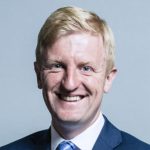
    Oliver Dowden – 2023 Speech to the Future Investment Initiative

    The speech made by Oliver Dowden, the Deputy Prime Minister, in Riyadh on 24 October 2023.

    Today’s theme is ‘defining dynamism amid global shocks’.

    And there could be no more apt place to discuss dynamism than Saudi Arabia.

    The pace of change in the Kingdom is dizzying:

    Asserting global leadership from the Gulf…

    …rocketing up the rankings for ease of doing business…

    …leapfrogging the world’s largest economies…

    …embracing technological change…

    … and transforming an economy fuelled by oil… into one powered by renewables…

    …making Vision 2030 not just a vision, but a reality.

    That is true dynamism: embracing change, and leading the charge.

    With your megacities and giga-projects, Saudi is not just adopting clean technologies but pioneering them…

    …delivering solutions that we will all be using in the future.

    So That’s why the UK is proud to partner with you in a huge array of areas, such as financial services, clean energy, urban regeneration, academia, defence, sports, e-gaming and more.

    Truly a partnership for the future.

    AGE OF SHOCKS

    But we do so in a world where shocks have become the new norm.

    We rightly refer to them as global shocks because their impact ripples from the epicentre right across our planet.

    The great financial crisis … the Covid pandemic … Russia’s invasion of Ukraine …

    …Record temperatures and devastating natural disasters…

    …and, of course, the brutal strike into the heart of Israel by Hamas terrorists just two weeks ago…

    …the very worst of humanity.

    Thousands of people have died horrifically… unnecessarily.

    Tens of thousands more are injured, or are in mourning.

    And millions are now living in fear of the consequences.

    This has caused untold misery and has led to deep, widespread insecurity.

    And we stand with all innocent victims of this conflict.

    Urging respect for international humanitarian law…

    And for parties to take every possible step to avoid harming civilians.

    And we welcome ongoing efforts to open up humanitarian access to Gaza…

    …we have pledged millions extra in aid…

    …and we remain committed to the two state solution.

    Britain stands together to reject terror, hate and prejudice.

    …and to reset the path to peace and long-term stability.

    TRADITIONAL SECURITY

    And as the Deputy Prime Minister of the United Kingdom, the Prime Minister has tasked me personally to drive cross-Government resilience towards shocks of all kinds.

    Understanding the nature of the threats we face today…

    …and scanning the horizon to predict the threats we may face tomorrow.

    The first duty of every government is to protect their civilians.

    Of course, our first line of defence is always our armed forces.

    Those brave men and women are our resilience personified.

    And the UK and Saudi Arabia have a proud partnership in security which stretches back into our history…

    …sharing intelligence, exchanging military hardware, training alongside one another…

    …and continuing into the future with our world-leading Typhoon jets.

    ECONOMIC SECURITY (AND TECH SHOCKS)

    But increasingly, the ripples of recent global shocks…

    …reverberate in an economic sense…

    …disrupting supply chains… driving up energy prices… and causing food shortages.

    And it on this economic front, where I am leading the UK’s charge to be out in front, in terms of our resilience…

    …developing and retaining critical domestic capabilities…

    …screening investment into UK companies…

    …protecting Government procurement from national security threats…

    …and better understanding our supply chains.

    As we scan the horizon, we see that rapid technological advancements will only make this task more urgent.

    We’ve had a glimpse into this future…

    …with cyberattacks bringing public services to a halt…

    …and ransomware wiping millions off companies’ share prices.

    Deepfakes have duped consumers…

    …bots have interfered in elections…

    …and intellectual property has been stolen from businesses and academic institutions.

    Now so far, these have been relative skirmishes…

    …wrought by an unholy alliance between hostile states and non-state actors.

    But with the enormous potential of artificial intelligence and quantum computing…

    …there is a very real possibility that the world’s next shock will be a tech shock.

    And so next week the United Kingdom will be convening the world’s leading nations and pioneering AI companies for the first global frontier AI safety summit.

    These emerging technologies represent exciting opportunities.

    …they exist at the cutting edge of development, often yet to be commercialised and with unknown end applications…

    But we also know that hostile state actors are actively seeking these technologies for their own competitive advantage…

    … or even to enhance their military capability.

    And the most valuable commodities to both businesses and nations are increasingly the source code… the technical designs… or other – intangible – intellectual property that underpins innovation.

    Where they have a military or dual-use application, traditional means of controlling these transfers are often simply not enough.

    These Intangible products can now be exported in a second – attached to an email…

    ….with no customs official to check any documentation…

    …nor a list of multilaterally agreed product categories to check against…

    …because these technologies have only just been invented…

    …often in small university spin-outs, rather than the established defence contractors used to working with Government.

    This dynamism in the tech sphere, must be met with dynamism within Government.

    Now I know that ‘Dynamism’ and ‘Government’, not, perhaps, two words which you often put together…

    But we cannot afford not to be…

    This is why I am reviewing our tools to ensure they are fit for purpose:

    • Examining our export regime controls, to ensure that it is striking the right balance for emerging technologies relevant to national security…
    • Exploring other paths through which this sensitive technology can leak out unchecked such as through outbound investment flows…
    • And working with academic institutions and start-ups to ensure they are alert to the risks, and have the toolkit to protect themselves.

    We need to build a policy environment that provides the private sector with the confidence to innovate…

    Confidence to build partnerships…

    Confidence to grow.

    Economic security should never be seen as a constraint on growth.

    It is an enabler of it.

    UK-KSA ECONOMIC PARTNERSHIP

    So just as allies work together on physical security, so we need to work together to build economic security.

    Just as important as the collaboration between nation states is the partnership between Government and business.

    Which is why, earlier this year, we established the National Protective Security Authority within MI5 – so that our security services can support business in understanding and protecting themselves against the threats they face.

    The partnership between the UK and Saudi Arabia is a fine example of the collaboration we need.

    We made the green finance deal made last year – ensuring we protect our energy needs for the future…

    We’ve made an agreement on critical minerals this year – enhancing our collaboration and exploring new sources of supplying these elements that are so vital to our future prosperity and national security.

    And through to next year I will personally be prioritising building the bond between our two kingdoms.

    So today I can announce that I will be leading a new strand of engagement with the Kingdom of Saudi Arabia  to enhance our cooperation and mutually-beneficial investment relationships, building on similar relations across the gulf.

    The partnership between our kingdoms has helped to shape the world we live in, and will be a linch-pin of shaping the future through to 2030.

    But just as important as the collaboration between nation states, is the partnership between government and business.

    So I will be Chairing a new Public-Private Forum between Government and business on economic security challenges… with the first meetings later this year.

    And I want to be very clear to all of you, that my door is always open to investors to discuss our economic security agenda.

    And our first task when Prime MInister Rishi Sunak was to restore the predictability and stability that investors so cherish in the United Kingdom.

    Our task now is to drive growth, jobs, prosperity and investment. And I know that the Kingdom of Saudi Arabia will be a key partner in that mission.

    PROSPERITY AGENDA

    But we should also never underestimate how much our peace, stability, and resilience to shocks are underpinned by our prosperity.

    A strong, growing economy doesn’t just allow you to invest in your armed forces….

    …it also allows you to deliver for your people…

    …it is a signal to the world that you are a serious partner and a key player.

    Those who will succeed in this age of uncertainty, as new economic powers vie for pole position…

    …are those with the fastest-growing, most vibrant, dynamic economies.

    And those nations – and those businesses – will get to shape the new global order.

    And the UK is laser-focused on that prosperity agenda.

    We are wide open for business…

    …a world-leader in climate solutions, life sciences and creativity…

    …a wonderful place to invest and innovate…

    …and a partner with whom to seize technological opportunities.

    Happily these areas where we excel are the areas where Saudi wants to grow.

    So your Vision 2030 is our vision too.

    We’re by your side…

    …with scores of fund managers flocking to Riyadh…

    …and hundreds of UK businesses operating all across Saudi.

    Meanwhile, of course London’s global financial centre remains committed to being the preferred hub for this part of the world…

    …thousands of Saudi students and tourists are in Britain…

    …and Saudi investment is benefitting every corner of our country.

    That is all part of a deepening partnership with the wider GCC – the UK’s 7th largest export market…

    …and with whom we hope to increase trade still further through a free trade agreement.

    Geopolitical shifts are a great challenge to all our economies…

    …but we can turn them into an opportunity to build a new world order based on rules, competition, open markets, innovation and investment.

    Because that is the definition of dynamism: turning challenges into opportunities.

    Not ignoring the threat of climate change but seizing the opportunities we have to build a green future.

    Not shunning artificial intelligence but using it to solve some of the greatest problems we face.

    Not turning inwards as new powers emerge and challenges arise, but forging new alliances and strengthening old ones.

    That is how we will withstand shocks, build resilience and embrace opportunities for all our people.

    Thank you.