Category: Foreign Affairs

  • Dominic Raab – 2021 Statement on Zimbabwe

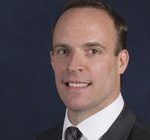
    Dominic Raab – 2021 Statement on Zimbabwe

    The statement made by Dominic Raab, the Foreign Secretary, in the House of Commons on 1 February 2021.

    On 1 February 2021, I imposed asset freezes and travel bans on four individuals under the Zimbabwe (Sanctions) (EU Exit) Regulations 2019.

    The four individuals designated were involved in brutal crackdowns by the Government of Zimbabwe on public protests. This includes events that led to the deaths of six demonstrators in August 2018 and of 17 demonstrators in January 2019, and resulted from the Zimbabwean security forces’ use of excessive and disproportionate force. As a result, the designations focus on some of the most egregious human rights violations since President Mnangagwa took power.

    This is the first set of designations of individuals under the UK’s autonomous Zimbabwe sanctions regime since the regulations came fully into force on 31 December 2020. These sanctions are not targeted at the wider economy or the people of Zimbabwe. The UK is on the side of the Zimbabwean people and we will continue to work to reduce poverty and help Zimbabweans secure their constitutional freedoms. This sanctions regime seeks to press the Government of Zimbabwe to: respect democratic principles and institutions and the rule of law in Zimbabwe; refrain from actions, policies or activities which repress civil society in Zimbabwe; and comply with international human rights law and respect human rights.

    These sanctions sit alongside the asset freeze on Zimbabwe defence industries, which was transferred from the EU Zimbabwe sanctions regime to the UK’s autonomous Zimbabwe sanctions regime at the end of the transition period on 31 December.

    The full list of designations is below:

    Owen Ncube – Minister of State for National Security

    Anselem Nhamo Sanyatwe – Formerly Brigadier General, Commander of the Presidential Guard and Tactical Commander of the National Reaction Force

    Godwin Matanga – Commissioner General of the Zimbabwe Republic Police

    Isaac Moyo – Director General, Central Intelligence Organisation (CIO).

  • Wendy Morton – 2021 Statement on Alexei Navalny and Human Rights

    Wendy Morton – 2021 Statement on Alexei Navalny and Human Rights

    The statement made by Wendy Morton, the Parliamentary Under-Secretary of State for Foreign, Commonwealth and Development Affairs, in the House of Commons on 27 January 2021.

    The UK is appalled by the politically motivated detention of Alexei Navalny on arbitrary charges. As the Foreign Secretary made clear, Mr Navalny is the victim of a despicable crime, and we call for his immediate and unconditional release.

    The Foreign Secretary has also condemned the Russian authorities’ unacceptable use of violence against peaceful protesters and journalists last weekend, and we have called on the Russian Government to respect their international commitments and to release those detained during peaceful demonstrations.

    The UK has galvanised the international community in condemnation of these deplorable detentions. As G7 president, the UK issued a G7 Foreign Ministers’ statement on 26 January, emphasising our deep concern at these developments and calling on Russia to adhere to its national and international obligations.

    The UK has led international efforts in response to Mr Navalny’s poisoning in August. We have worked closely with our international partners at the Organisation for the Prohibition of Chemical Weapons, to urge Russia to uphold its obligations under the chemical weapons convention. Last December, the UK led a joint statement in the OPCW, supported by 58 states parties, calling for Russia to be held to account.

    We have also taken robust, bilateral action. In October, the UK enforced asset freezes and travel bans on six individuals responsible for the poisoning of Alexei Navalny, as well on one Russian organisation. We keep further sanctions designations under constant review. However, it would not be appropriate to comment at this stage on possible future designations, as that could undermine their impact. We carefully consider all options under the relevant sanctions regimes.

    The UK has been clear in condemning in the strongest possible terms the chemical weapons attack against Mr Navalny last year. He was the victim of a nerve agent attack, and the UK has called repeatedly for the Russian authorities to investigate and explain the use of a chemical weapon on Russian soil and to declare its Novichok programme to the OPCW.

    The confirmed use of chemical weapons against opposition figures further undermines democracy and political plurality in Russia. More broadly, Mr Navalny’s detention is a further demonstration of the concerning deterioration in the human rights situation in Russia. We raise that regularly with the Russian Government, making it clear that Russia must uphold its international human rights responsibilities. I raised the issue myself during my visit to Moscow in November 2020, and our ambassador to Moscow raised Mr Navalny’s case immediately prior to his return to Russia, to underline that the UK was closely monitoring Russia’s actions.

    We condemn the detention of thousands of peaceful protestors and journalists on 23 January and the Russian Government’s continued disregard for the fundamental rights of its people to freedom of expression, association and peaceful assembly. The UK has also urged Russia to fulfil its commitments under the international covenant on civil and political rights, the European convention on human rights and all the relevant instruments of the Council of Europe and the Organisation for Security and Co-operation in Europe, and to guarantee those rights, including the right to freedom of expression, to its citizens.

    The UK’s policy towards Russia is clear: we want a different relationship, but Russia must stop its destabilising behaviour towards the UK and its partners. Russia’s pattern of aggressive behaviour undermines its claim that it is a responsible international partner upholding the rules-based international system.

  • Janet Daby – 2021 Speech on Detention of Anoosheh Ashoori in Iran

    Janet Daby – 2021 Speech on Detention of Anoosheh Ashoori in Iran

    The speech made by Janet Daby, the Labour for Lewisham East, in the House of Commons on 26 January 2021.

    I am grateful to have the opportunity to present the case of my constituent Anoosheh Ashoori today. Anoosheh is the 66-year-old father of Elika and Aryan, and a devoted husband to Sherry. As we speak, Anoosheh is lying in a prison cell in Evin, Tehran. The Minister will know some, if not all, of the details I am about to say, but I am saying them again because, in spite of the Minister and the Foreign Secretary being in full awareness of the facts of Anoosheh’s case, they have not improved their approach in the three and a half years he has been imprisoned.

    I am grateful to Anoosheh’s wife, Sherry, for telling me about his life before his capture. Anoosheh’s dream when he was a teenager was to become an astronaut—not so different from some of our children’s dreams perhaps. He had big ambitions and worked hard to make them happen. When he was 18, he moved to the UK from Iran to study, and he finally gained his masters in aeronautical engineering in 1977. When his father passed away in the 1980s, Anoosheh situated himself in Iran to take over the family civil engineering business, for which he won national awards. Anoosheh, Sherry and their young family moved back to the UK in 2004. Anoosheh spent the next decade working tirelessly to make his business successful in the UK. In 2015, they moved into their dream home, in my constituency of Lewisham East, and planned their retirement.

    It is obvious from Sherry that Anoosheh is absolutely besotted with his family. He uses his creativity to serve those he loves—from building baking machines to support his daughter to making a hobbit house in the family garden. Sherry has spoken of the pride that she and Anoosheh feel for their children: for Elika, who runs her own patisserie business, and for Aryan, who is an academic researcher with his own music label. It is clear that Anoosheh is a selfless, compassionate and caring family man. His devotion to his family is what led him back to visit his elderly mother in Tehran.

    On that horrid day in 2017, just minutes after speaking to his wife on the phone, Anoosheh Ashoori was kidnapped off the street, with a bag over his head, and bundled into a van. He has been detained in Evin prison ever since. He was charged with spying by the Iranian authorities, and given a 10-year prison sentence. There has never been a scrap of evidence presented, and Anoosheh was denied legal support for a trial that should never have happened.

    The conditions Anoosheh has had to endure in the past three and a half years are too painful for his family to recount, and I am confident that he spares them the details. Evin prison is known for the psychological and physical torture of its prisoners. There have been reports of mock executions, beatings, brutal interrogations and solitary confinement—not once or twice, but over and over again—of prisoners. Anoosheh has tried to end his life. He has attempted suicide three times, feeling unable to cope and to survive any longer.

    But what exactly did Anoosheh do to deserve this horrific ordeal? His only crime is his dual British-Iranian nationality. The Minister will know well of the trauma Anoosheh and other British prisoners in Iran go through. We have had several urgent questions—particular thanks to my hon. Friend the Member for Hampstead and Kilburn (Tulip Siddiq)—and we have heard many Government statements expressing their regret at the situation. However, our Government are simply not doing enough. Indeed, they are sitting on their hands when it comes to releasing innocent British citizens being held as hostages.

    In November, the happy news was reported that Australian national Kylie Moore-Gilbert was released from prison in Tehran. This was a bittersweet experience, as Anoosheh’s family wondered when their loved one would return home. We are left to wonder: why can the Australians, and the Americans, make it work for their citizens, but not us?

    The Foreign Office’s current strategy for dealing with consular disputes is not effective enough. It is imperative that the Government call out the hostage status of Anoosheh and those other dual British nationals being held by Iran for political leverage. To quote the international convention against the taking of hostages, international law dictates that:

    “Any person who seizes or detains and threatens to kill, to injure or to continue to detain another person…in order to compel a third party, namely, a State…to do or abstain from doing any act as an explicit or implicit condition for the release of the hostage commits the offence of taking of hostages”.

    Although this specifies individuals who take hostages, this is the precisely the mentality behind Iran’s strategy of hostage diplomacy.

    Related to the imprisonment of Anoosheh and other British citizens is the £400 million debt owed to Iran by the United Kingdom. Iranian officials have told Nazanin Zaghari-Ratcliffe that she is being detained because of the IMS debt. Our Foreign Office has repeatedly insisted that there is no link between Iran’s demand for payment and the taking of British prisoners. That is utter nonsense. For the rest of us, it is plain to see.

    Anoosheh, Nazanin, and other British people in Iranian prisons are not mere “consular cases”. They are not just numbers, but people with families and futures. They are people being brutally mistreated over an international financial dispute. They are hostages. When will the Foreign Office accept that and acknowledge them as such?

    Furthermore, court hearings were due to take place in the autumn to discuss managing the IMS debt, but they were postponed. Will the Minister give an update on the progress that his Department has made in resolving this sticking point? Iran is holding these prisoners in an attempt to hold Britain’s feet to the fire. The Government’s refusal to admit that and to act on that is only keeping the hostages in bondage for longer. To add insult to injury, last month the Foreign Secretary asserted that British citizens being held hostage abroad are not entitled to protection from the British Government. Surely I do not need to explain how absurd and inhumane that is. Will the Foreign Office issue a retraction of this damaging comment and assure the families of those randomly held that their loved ones will, of course, be given consular assistance?

    Ultimately, we need detailed assurances that the UK Government will do all they can to support Anoosheh’s release from prison and to step up their efforts to bring him home. Anoosheh needs hope that his brutal treatment will come to an end; and his family need to know that he will soon be home where he can begin to heal. I implore the Minister to give a commitment today that his Department will not just express “concerns” for Anoosheh’s welfare, but detail a clear plan of action that will explain how they will bring Anoosheh and Nazanin back to London where they belong.

    I also urge the Minister to confirm that the UK Government will not abandon my constituent and his family, but will in fact stand by British citizens who are being unlawfully detained abroad and that my constituent is as entitled to protection from the Foreign Office as the Foreign Secretary himself would be.

  • Dominic Raab – 2021 Comments on Alexey Navalny

    Dominic Raab – 2021 Comments on Alexey Navalny

    The comments made by Dominic Raab, the Foreign Secretary, on 18 January 2021.

    It is appalling that Alexey Navalny, the victim of a despicable crime, has been detained by Russian authorities. He must be immediately released. Rather than persecuting Mr Navalny Russia should explain how a chemical weapon came to be used on Russian soil.

  • James Duddridge – 2021 Statement on Presidential Elections in Uganda

    James Duddridge – 2021 Statement on Presidential Elections in Uganda

    The statement made by James Duddridge, the Minister for Africa, on 16 January 2021.

    The UK Government welcomes the relatively calm passing of the elections in Uganda and notes the re-election of H.E. Yoweri Museveni as President.

    Many in Uganda and beyond have expressed concerns about the overall political climate in the run up to the elections as well as the electoral process. It is important these concerns are raised, investigated and resolved in a peaceful, legal and constitutional manner. We ask that all parties, including the security services, but also all of Uganda’s political movements, act with restraint to ensure the peaceful resolution of disputes.

    We commend the role of the media, observers and civil society throughout the elections. The UK is concerned by the national internet shutdown, which clearly limited the transparency of the elections, and constrained the freedoms that Ugandans are entitled to.

    The UK is a steadfast advocate for Ugandan democracy and we will continue to work to achieve inclusive democratic progress that delivers for future generations. As a longstanding partner, we urge Uganda to continue to strive to meet its own international human rights commitments, including respecting the right to freedom of opinion, freedom of expression and freedom of the media.

  • Dominic Raab – 2021 Statement on Gibraltar

    Dominic Raab – 2021 Statement on Gibraltar

    The statement made by Dominic Raab, the Foreign Secretary, in the House of Commons on 13 January 2021.

    In the UK approach to negotiations on the future relationship with the EU as published in February 2020, the Government stated that they would act in these negotiations on behalf of all the territories for whose international relations the UK is responsible, which includes Gibraltar.

    We have worked side by side with the Government of Gibraltar to honour this commitment. As a consequence of the EU’s negotiating mandate which it adopted in February 2020, Gibraltar was not within scope of the UK-EU trade and co-operation agreement (TCA). The Commission made a declaration alongside the TCA stating that this would “not preclude the possibility to have separate agreements between the Union and the United Kingdom in respect of Gibraltar”, and that it stood ready “to examine any request from Spain, in agreement with the United Kingdom, to initiate the procedure for the negotiation of such separate agreements should they be compatible with Union law and Union interests”.

    To that end, the UK, working side by side with the Governments of Gibraltar and Spain, reached agreement on 31 December over a political framework to form the basis of a separate treaty between the UK and the EU regarding Gibraltar. We have sent this framework to the European Commission in order to initiate negotiations on the treaty.

    The political framework covers issues of key importance to Gibraltar and the surrounding region, including on border fluidity. It creates the basis for a bespoke model for Gibraltar’s future relationship with the EU that will permit an absence of physical checks at the land border with Spain, and therefore ensure fluidity of movement of people and goods between Gibraltar and the EU. The Governments of both the UK and Gibraltar judge that this framework provides a firm basis to safeguard Gibraltar’s interests.

    The UK and Gibraltar are committed to ensuring that cross-border arrangements can continue in the interim, until a new treaty enters into force. Arrangements have been agreed with Spain that include provisions for the border (goods and people), road transport, healthcare, waste disposal, and data. In addition, the UK Government provided financial and other support to ensure that Gibraltar was fully prepared for the end of the transition period.

    We remain steadfast in our support for Gibraltar, and its sovereignty is safeguarded.

  • Ben Wallace – 2021 Statement on No-Cost Supply of Vehicles to Lebanese Armed Forces

    Ben Wallace – 2021 Statement on No-Cost Supply of Vehicles to Lebanese Armed Forces

    The statement made by Ben Wallace, the Secretary of State for Defence, to the House of Commons on 12 January 2021.

    The UK intends to supply a fleet of vehicles at no cost to the Lebanese armed forces (LAF), in recognition of our strong relationship in tackling the shared terrorist threat.

    At present the LAF do not have the capability to fully patrol Lebanon’s border with Syria and have requested the UK’s assistance in providing suitable equipment to fulfil this requirement. The UK has agreed to supply 100 surplus army revised weapon mounted installation kit plus (RWMIK+) vehicles in response to a request from the Lebanese commander-in-chief.

    The supply of these vehicles will greatly enhance the LAF’s capacity to mount long distance patrols across rugged mountainous terrain and allow their land border regiments (LBRs) to more effectively counter the threat of armed smugglers and extremists trying to enter Lebanon.

    The 100 revised weapon mounted installation kit plus (RWMIK+) vehicles, valuing £1,502,000, are surplus to the needs of the British Army. The logistical costs of collating and then transporting the vehicles to Lebanon will be borne by the Conflict Stability and Security Fund, and training in the operation of the vehicles will be borne by the defence acquisition fund (south).

    Delivery of the RWMIK+ to Beirut is expected to commence in January 2021.

  • Lisa Nandy – 2021 Speech on the Situation in Xinjiang

    Lisa Nandy – 2021 Speech on the Situation in Xinjiang

    The speech made by Lisa Nandy, the Shadow Foreign Secretary, in the House of Commons on 12 January 2021.

    The persecution of the Uyghurs has been of great concern to hon. Members in all parts of this House. We have read the reports and heard the testimony, and it is past time to act. There must be a unified message from this whole House: we will not turn away and we will not permit this to go unchallenged. So may I thank the Foreign Secretary for advance sight of his statement but say to him that the Government had trailed in the media long-awaited sanctions on officials responsible for appalling human rights abuses in Xinjiang? We have waited months, and he briefed the papers that he was planning to announce this today. What has happened to this announcement, and who in government has overruled him this time? The strength of his words is, once again, not matched by the strength of his actions, and I am sorry to say that that will be noticed loud and clear in Beijing.

    I was pleased to hear the Foreign Secretary acknowledge that the Modern Slavery Act is not working. The independent review was right to say that it has become a “tick-box exercise”, and we need a robust response to ensure that companies are not just transparent but accountable. But there is little in today’s statement that is new, and I am left slightly lost for words as to why he has chosen to come here today. Back in September the Government said they would extend the Modern Slavery Act to the public sector. He mentioned France, which has already gone further than the UK, with its duty of diligence law, which includes liability for harm. The European Union intends to bring in legislation next year on due diligence, which will be mandatory. Even under the new arrangements, will a company profiting from a supply chain involving forced labour have broken any laws in this country? What law would a company actually be breaking if it profited from what the Foreign Secretary called the “barbaric” forced labour in Xinjiang? If the UK really does intend to set an example and lead the way, he will have to do more than tinker around the edges. One of the best things he could do for those British businesses he rightly praised is to make the playing field level for the many British companies that do the right thing.

    We warmly welcome the Foreign Secretary’s proposed review of export controls. If the Government are successfully able to determine whether any goods exported from the UK are contributing to violations of international law in Xinjiang, that will be a breakthrough, not just in taking robust action against China’s human rights abuses, but as a model that can be used in other countries around the world where British exports risk being misused. So we will pay close attention. He will also know that the House of Lords recently came together to pass two cross-party amendments that put human rights considerations at the centre of our trade policy. I was astonished not to hear any reference to them today. Do the Government intend to get behind those efforts to ensure that our trade policy defends, not undermines, human rights? I can tell him that I will be writing to MPs when the Trade Bill returns to this place to urge them to vote with their consciences. I hope the Government will not find themselves stranded on the wrong side of history.

    We cannot allow this moment to pass us by. The Foreign Secretary was right to say that this is truly horrific, and the House is united in condemnation of what is happening in Xinjiang. Members of all parties want Britain to act as a moral force in the world. Despite today’s disappointing statement, I believe he is sincere when he says that he wants the same, but now he has to make good on his promise to back up words with real action.

  • Dominic Raab – 2021 Statement on the Situation in Xinjiang

    Dominic Raab – 2021 Statement on the Situation in Xinjiang

    The statement made by Dominic Raab, the Foreign Secretary, in the House of Commons on 12 January 2021.

    With permission, Mr Speaker, I would like to update the House on the situation in Xinjiang and the Government’s response.

    The evidence of the scale and severity of the human rights violations being perpetrated in Xinjiang against the Uyghur Muslims is now far-reaching. It paints a truly harrowing picture. Violations include the extrajudicial detention of over 1 million Uyghurs and other minorities in political re-education camps; extensive and invasive surveillance targeting minorities; systematic restrictions on Uyghur culture, education and, indeed, on the practice of Islam; and the widespread use of forced labour. The nature and conditions of detention violate basic standards of human rights. At their worst, they amount to torture and inhumane and degrading treatment, alongside widespread reports of the forced sterilisation of Uyghur women.

    These claims are supported now by a large, diverse and growing body of evidence that includes first-hand reports from diplomats who visit Xinjiang and the first-hand testimony from victims who have fled the region. There is satellite imagery showing the scale of the internment camps, the presence of factories inside them and the destruction of mosques. There are also extensive and credible third-party reports from non-governmental organisations such as Human Rights Watch and Amnesty International, with the United Nations and other international experts also expressing their very serious concerns.

    In reality, the Chinese authorities’ own publicly available documents also bear out a similar picture. They show statistical data on birth control and on security spending and recruitment in Xinjiang. They contain extensive references to coercive social measures dressed up as poverty alleviation programmes. There are leaks of classified and internal documents that have shown the guidance on how to run internment camps and lists showing how and why people have been detained.

    Internment camps, arbitrary detention, political re-education, forced labour, torture and forced sterilisation —all on an industrial scale. It is truly horrific—barbarism we had hoped was lost to another era is being practised today, as we speak, in one of the leading members of the international community.

    We have a moral duty to respond. The UK has already played a leading role within the international community in the effort to shine a light on the appalling treatment of the Uyghurs and to increase diplomatic pressure on China to stop and to remedy its actions. I have made my concerns over Xinjiang clear directly to China’s Foreign Minister Wang Yi. We have led international joint statements on Xinjiang in the United Nations General Assembly Third Committee and the UN Human Rights Council. In the Third Committee, we brought the latest statement forward together with Germany in October last year and it was supported by 39 countries.

    China’s response is to deny, as a matter of fact, that any such human rights violations take place at all. They say it is lies. If there were any genuine dispute about the evidence, there would be a reasonably straightforward way to clear up any factual misunderstandings. Of course China should be given the opportunity to rebut the various reports and claims, but the Chinese Government refuse point blank to allow the access to Xinjiang required to verify the truth of the matter.

    We have repeatedly called for China to allow independent experts and UN officials, including the United Nations High Commissioner for Human Rights, proper access to Xinjiang, just as we in this country allow access to our prisons, our police custody suites and other parts of the justice system to independent bodies who hold us to account for the commitments to respect human rights that we have made.

    China cannot simply refuse all access to those trusted third-party bodies that could verify the facts and, at the same time, maintain a position of credible denial. While that access is not forthcoming, the UK will continue to support further research to understand the scale and the nature of the human rights violations in Xinjiang. But we must do more, and we will.

    Xinjiang’s position in the international supply chain network means that there is a real risk of businesses and public bodies around the world, whether inadvertently or otherwise, sourcing from suppliers that are complicit in the use of forced labour, allowing those responsible for violations to profit—or, indeed, making a profit themselves—by supplying the authorities in Xinjiang. Here in the UK, we must take action to ensure that UK businesses are not part of supply chains that lead to the gates of the internment camps in Xinjiang, and to ensure that the products of the human rights violations that take place in those camps do not end up on the shelves of supermarkets that we shop in here at home week in, week out.

    We have already engaged with businesses with links to Xinjiang; we have encouraged them to conduct appropriate due diligence. More widely, we have made a commitment to tackling forced labour crystal clear. With the introduction of the Modern Slavery Act 2015, the United Kingdom was the first country to require companies by law to report on how they are tackling forced labour in their supply chains. Today, I can announce a range of new measures to send a clear message that those violations of human rights are unacceptable and, at the same time, to safeguard UK businesses and public bodies from any involvement or links with them.

    I have been working closely with my right hon. Friends the Home Secretary, the Secretary of State for International Trade and the Chancellor of the Duchy of Lancaster. Our aim, put simply, is that no company profits from forced labour in Xinjiang, and that no UK business is involved in their supply chains. Let me set out the four new steps that we are now taking.

    First, today the Foreign, Commonwealth and Development Office, and the Department for International Trade have issued new, robust and detailed guidance to UK businesses on the specific risks faced by companies with links to Xinjiang, and underlining the challenges of conducting effective due diligence there. A Minister-led campaign of business engagement will reinforce the need for UK businesses to take concerted action to address that particular and specific risk.

    Secondly, we are strengthening the operation of the Modern Slavery Act. The Home Office will introduce fines for businesses that do not comply with their transparency obligations, and the Home Secretary will introduce the necessary legislation setting out the level of those fines as soon as parliamentary time allows.

    Thirdly, we announced last September that the transparency requirements that apply to UK businesses under the Modern Slavery Act will be extended to the public sector. The FCDO will now work with the Cabinet Office to provide guidance and support to UK Government bodies to exclude suppliers where there is sufficient evidence of human rights violations in any of their supply chains. Let me say that we in the United Kingdom—I think rightly—take pride that the overwhelming majority of British businesses that do business do so with great integrity and professionalism right around the world. That is their hallmark and part of our USP as a global Britain. Precisely because of that, any company profiting from forced labour will be barred from Government procurement in this country.

    Fourthly, the Government will conduct an urgent review of export controls as they apply, specifically geographically, to the situation in Xinjiang, to make sure that we are doing everything we can to prevent the export of any goods that could contribute directly or indirectly to human rights violations in that region. The package that has been put together will help to ensure that no British organisations—Government or private sector, deliberately or inadvertently—will profit from or contribute to human rights violations against the Uyghurs or other minorities. I am of course sure that the whole House would accept that the overwhelming majority of British businesses would not dream of doing so. Today’s measures will ensure that businesses are fully aware of those risks, will help them to protect themselves, and will shine a light on and penalise any reckless businesses that do not take those obligations seriously.

    As ever, we act in co-ordination with our like-minded partners around the world, and I welcome the fact that later today Foreign Minister Champagne will set out Canada’s approach on these issues. I know that Australia, the United States, France, Germany and New Zealand are also considering the approaches they take. We will continue to work with all of our international partners, but the House should know that in the comprehensive scope of the package I am setting out today the UK is again setting an example and leading the way.

    We want a positive and constructive relationship with China, and we will work tirelessly towards that end, but we will not sacrifice our values or our security. We will continue to speak up for what is right and we will back up our words with actions, faithful to our values, determined, as a truly global Britain, to be an even stronger force for good in the world. I commend this statement to the House.

  • James Cleverly – 2021 Statement on Preventing Terrorist Threats

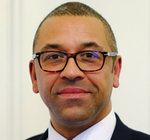
    James Cleverly – 2021 Statement on Preventing Terrorist Threats

    The statement made by James Cleverly, the Minister for Middle East and North Africa, on 12 January 2021.

    Mr President, I would like to thank you for hosting this important debate today, and also Under-Secretary-General Voronkov, Executive Director Coninsx and Ms Fatima Akilu for their informative and important briefings.

    It’s been twenty years since the Security Council established the Counter-Terrorism Committee. Our work has strengthened the cooperation we need to protect all our citizens and counter the scourge of terrorism.

    Subsequent Security Council resolutions have built an effective toolkit for guidance and measures for states to respond to the evolving threat.

    They now cover everything from international legal cooperation to counter-terrorist financing, from specific challenges like aviation security to broad issues like human rights, gender, and civil society.

    With the support of the Counter-Terrorism Executive Directorate, the Committee has helped assess states’ implementation of the resolutions and identified emerging challenges, examples of best practice, and opportunities for technical assistance.

    Of course, the Council and the Committee have not been acting alone.

    In 2014, the Global Coalition against Daesh brought together 83 partners, including the United Kingdom, to combat Daesh and liberate eight million people from its control.

    Organisations such as the Global Counter Terrorism Forum, of which the UK is a founding member, have bolstered international cooperation.

    Other parts of the UN system, most importantly the UN Office of Counter-Terrorism, have also played an important role.

    Through this work, and through the leadership of the United Nations Security Council, we have built a shared understanding of the terrorism threat and developed the tools to counter it.

    Mr President, as a result of our collective efforts, Al-Qaeda has been degraded. Daesh was defeated on the battlefields of Iraq and Syria.

    But sadly, the threat has evolved and remains with us.

    Terrorist groups, including Al-Qaeda and Daesh affiliates, continue to operate around the world.

    Terrorist narratives continue to radicalise individuals in diffuse and unpredictable ways. New threats from extreme right-wing groups have increased.

    So, the work of the Council and of the Committee remains vital.

    Looking forward, I want to stress four key priorities:

    Firstly, the Council should continue to learn and adapt to the latest threats and emerging trends.

    I mentioned extremist right-wing groups. Terrorist misuse of social media and other new technologies needs greater attention. We also need to tune in to how longer-term effects of COVID-19 might influence the terrorism dynamic.

    Secondly, the Council should reaffirm states’ obligation under international law to protect and promote human rights whilst countering terrorism.

    The threats posed by terrorism do sometimes require states to take extraordinary measures. However, too often counter-terrorism is used to justify egregious human rights violations and oppression. States must act within the boundaries of international law. Otherwise, we undermine the very rights and freedoms that the UN was established to promote.

    While it is not the only instance around the world, a case in point is the situation in Xinjiang where the Uyghur and other ethnic minority communities face severe and disproportionate measures, with up to 1.8 million people having been detained without trial.

    These well-documented measures are inconsistent with China’s obligations under international human rights law including the International Convention on the Elimination of All Forms of Racial Discrimination.

    They run counter to the Security Council’s long-standing requirement that counter-terrorism measures comply with States’ obligations under international law, including international human rights law.

    Third, the Council should reaffirm the importance of inclusion and partnerships.

    Effective counter-terrorism requires more than the cooperation of governments. It requires whole societies.

    That means promoting the leadership of women, young people, and minorities, building effective partnerships with the private sector, with religious leaders, and ensuring we listen to all the voices of our peoples.

    And fourth, the Council should push for coherence within the UN system.

    We welcome the existing close cooperation between the Counter-Terrorism Executive Directorate and the UN Office of Counter-Terrorism, as well as the Al-Qaeda and Daesh Monitoring Team and other UN agencies.

    It remains vital that this continues, especially in the area of capacity-building, so that resources are deployed effectively and where they can have the greatest impact.

    Mr President, as the terrorist threat endures and evolves, so too must our resolve to fight it remain firm.

    The Security Council’s counter-terrorism architecture has been an integral part of that fight over the last twenty years, and the United Kingdom will work to ensure it remains relevant, efficient and effective in the years ahead.

    Thank you.