The statement made by Dominic Raab, the Foreign Secretary, on 21 June 2021.
Following historic concerns regarding antisemitism, the UK has decided not to attend the UN’s Durban Conference anniversary event, later this year.


The statement made by Dominic Raab, the Foreign Secretary, on 21 June 2021.
Following historic concerns regarding antisemitism, the UK has decided not to attend the UN’s Durban Conference anniversary event, later this year.
The statement made by Dominic Raab, the Foreign Secretary, on 17 June 2021.
The UK Government extends its sincere condolences to the people of the Republic of Zambia on the death of former President Kenneth Kaunda.
Dr Kaunda was the defining figure in Zambia’s independence movement and laid the successful foundations of your nation, through his leadership, vision, and famous mantra ‘One Zambia One Nation’.
He was greatly admired too as a staunch activist against apartheid and a campaigner to address HIV/AIDS.
Our thoughts are with his family and the people of Zambia at this time of mourning.

The comments made by Stephen Kinnock, the Shadow Asia and Pacific Minister, on 17 June 2021.
The raid on Apple Daily and the arrests of journalists is yet another unacceptable attack on Hong Kong’s media freedom, guaranteed under the Basic Law.
Democracy and the ‘one country, two systems’ principle are being steadily crushed.
The UK must stand up to these efforts to silence the people of Hong Kong. It is time for the UK government to sanction Carrie Lam and other senior officials responsible for the crackdown, and withdraw support for British judges serving in Hong Kong’s compromised legal system.

The comments made by Wayne David, the Shadow Minister for the Middle East, on 16 June 2021.
It is vital that the ceasefire between Israel-Gaza holds. There can be no military solution to this conflict.
The priority now must be to establish a meaningful peace process that furthers the prospect of a sovereign Palestinian state alongside a safe, secure Israel.

The statement made by Boris Johnson, the Prime Minister, at the G7 Summit in Cornwall on 13 June 2021.
This Summit was the first gathering of G7 leaders – in fact the first gathering of pretty much any leaders – in almost two years.
And I know the world was looking to us to reject some of the selfishness and nationalist approaches that have marred the initial global response to the pandemic, and to channel all our diplomatic, economic and scientific might into defeating covid for good.
And I do hope we have lived up to some of the most optimistic of hopes and predictions
I should say I am sorry to hear that, owing to their pre-existing commitments, the England football team are not able to watch this press conference live in the way I’m sure they’d like to.
But I hope that, following their resounding victory, they will be able to catch up on the triumphs of the G7 later on.
A week ago I asked my fellow leaders to help in preparing and providing the doses we need to help vaccinate the whole world by the end of 2022.
I’m very pleased to announce that this weekend leaders have pledged over 1 billion doses – either directly or through funding to COVAX – that includes 100 million from the UK, to the world’s poorest countries – which is another big step towards vaccinating the world.
And that’s in addition to everything scientists and governments and the pharmaceutical industry have done so far to roll out one of the largest vaccination programmes in history.
And here I want to mention, in particular, the role the Oxford-AstraZeneca vaccine – the world’s most popular vaccine, developed 250 miles from where I’m standing today- by scientists who have rightly been given honours by the Queen this weekend.
Today over half a billion people are safe because of the development and production of that vaccine, funded – I may add – by the UK Government. And that number is rising every day.
It is popular, of course, because it is being sold at cost to the world and it was designed for ease of use in mind.
And because of that act of generosity by AstraZeneca who, just to reiterate, are making zero profit on the production of that vaccine, millions more vaccines have been rolled out to the poorest countries in the world. In fact 96% of the vaccines delivered by the COVAX distribution scheme have been Oxford-AZ.
But this weekend our discussions went far beyond defeating the pandemic.
We looked towards the great global recovery our countries have committed to lead, and we were clear that we all need to build back better in a way that delivers for all our people and for the people of the world.
And that means preventing a pandemic like this from ever happening again, apart from anything else by establishing a global pandemic radar which will spot new diseases before they get the chance to spread.
It means ensuring that our future prosperity benefits all the citizens of our countries and indeed all the citizens of the world.
At the G7 Summit this weekend, my fellow leaders helped the Global Partnership for Education – an organisation working to make sure that every child in the world is given the chance of a proper education – reach half of its five-year fundraising goal, including a £430m donation from the UK.
It’s an international disgrace that some children in the world are denied the chance to learn and reach their full potential, and I’m very very pleased that the G7 came together to support that cause.
Because educating all children, particularly girls, is one of the easiest ways to lift countries out of poverty and help them rebound from the coronavirus crisis. With just one additional year of school a girl’s future earnings can increase by 20%.
I’m proud that G7 countries have agreed to get 40 million more girls into school and 20 million more reading by the end of primary school in the next five years, and the money we have raised this week is a fantastic start.
But of course the world cannot have a prosperous future if we don’t work together to tackle climate change.
Later this year the UK will host the COP26 Summit, which will galvanise global action on fighting climate change and create a healthy planet for our children and grandchildren.
G7 countries account for 20% of global carbon emissions, and we were clear this weekend that action has to start with us.
Carbis Bay is one of the most beautiful places in the world as you can see and it was a fitting setting for the first ever net zero G7 Summit.
And while it’s fantastic that every one of the G7 countries has pledged to wipe out our contributions to climate change, we need to make sure we’re achieving that as fast as we can and helping developing countries at the same time.
And what unites the countries gathered here this weekend – not just the G7 but Australia, India, South Africa and South Korea who have joined us (I should say in India’s case joined us virtually) not just our resolve to tackle climate change, but also our democratic values.
It’s not good enough for us to just rest on our laurels and talk about how important those values are. And this isn’t about imposing our values on the rest of the world. What we as the G7 need to do is demonstrate the benefits of democracy and freedom and human rights to rest of the world.
And we can partly achieve that by the greatest feat in medical history – vaccinating the world.
We can do that by working together to stop the devastation that coronavirus has produced from ever occurring again.
And we can do that by showing the value of giving every girl in the world access to 12 years of quality education.
And we can also do that by coming together as the G7 and helping the world’s poorest countries to develop themselves in a way that is clean and green and sustainable
I want to thank finally, the police, everyone who helped organised this summit and all the people not just of Carbis bay (who certainly helped us put the carbs into Carbis Bay), but all the wonderful people of Cornwall for their hospitality. It’s been a fantastic summit and I know that all the other delegations would want to express their thanks as well.
The comments made by Dominic Raab, the Foreign Secretary, on 13 June 2021.
Tackling climate change is one of the greatest threats of our time as without action, it could push more than 100 million people below the poverty line as soon as 2030.This joint UK, US and German action will enable quicker responses to extreme weather and climate-linked disasters in countries bearing the brunt of climate change.

The comments made by Lisa Nandy, the Shadow Foreign Secretary, on 14 June 2021.
The approval of a new coalition government offers an opportunity for change in Israel and a chance to kickstart a meaningful process towards a peaceful two state solution.
As a priority the international community must reach out to the new Israeli government and the new US President to urge a renewal of negotiations, the protection of human rights, adherence to international law, and the importance of a two state solution, based on a safe and secure Israel alongside a viable, sovereign and recognised Palestinian state.
Whilst we are pleased the current ceasefire in Gaza is holding firm, the cycle of violence over the past few weeks only highlights diplomatic failures of the past.
This conflict continues to cost lives and bring needless suffering to millions of people. There is now a new opportunity to address this and work with Israeli allies, Palestinian leaders and Arab neighbours to start a dialogue about how we move away from conflict towards a more peaceful Middle East.
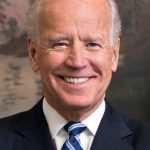
The statement issued by Joe Biden, the President of the United States, on 10 June 2021.
Today, President Biden visited the U.K. at the invitation of the Prime Minister and in advance of the G7 Summit. The President and the Prime Minister set out a global vision in a new Atlantic Charter to deepen cooperation in democracy and human rights, defence and security, science and innovation, and economic prosperity, with renewed joint efforts to tackle the challenges posed by climate change, biodiversity loss, and emerging health threats.
DEMOCRACY, HUMAN RIGHTS, & MULTILATERALISM
Building on the U.K. G7 Presidency’s focus on open societies, and looking ahead to the U.S.-hosted Summit for Democracy, the U.S. and U.K. will continue to make practical efforts to support open societies and democracy across the globe. We will do this by defending media freedom, advancing a free and open internet, combatting corruption, tackling disinformation, protecting civic space, advancing women’s political empowerment, protecting freedom of religion or belief, and promoting human rights of all people. The United Nations remains the cornerstone of the international system, and its foundational principles reflect our shared values. In the 75 years since the UN’s creation, international security has been increasingly challenged by threats that do not recognise borders: climate change, pandemics, famine, migration, organised crime, and terrorism. The U.K. and U.S. will work with the UN and our international partners to continue to adapt and reform the international system to tackle these evolving threats and to build back better for the 21st century, while remaining true to the universal founding principles of the UN and the core values of its Charter. We commit to promoting peaceful and inclusive societies to reduce injustice, inequality, poverty, and hunger worldwide. We carry responsibility for creating sustainable and viable conditions to global economic challenges through our commitment to the G7 Agenda and 2030 Agenda on Sustainable Development, and we will work together to address pre-existing inequities and inequalities being exacerbated by COVID-19, ensuring they no longer go unaddressed. The U.S. and U.K. are committed to promoting the advancement of gender equity and equality as a key pillar of foreign policy and national security, including through educating girls, empowering women socially, economically, and politically, and ending violence against women and girls.
DEFENCE & SECURITY
We commit to enhance further the world’s strongest bilateral defence, security, and intelligence partnership to overcome the evolving threats of the twenty-first century. This includes threats and challenges associated with: cyberspace, foreign interference, harmful influence campaigns, illicit finance, violent conflict and extremism, and terrorism in all its forms. To this end, we will continue our partnership on those challenges, including working together closely on cyber security, countering illicit finance, and tackling all forms of terrorism by working together to address it online and enhance international collaboration on thwarting violent extremism that is racially, ethnically or ideologically motivated, including a range of hateful and white supremacist ideologies.
Through strong and principled leadership we will work to shape and secure the international order of the future with NATO as the bedrock of our collective defence. We will work together to further strengthen and modernise NATO, and increase its common funding, so the Alliance can harness the full range of military and non-military capabilities to contest existing and new threats, including malicious cyber activity and attacks that test the resiliency of our societies. We intend to take operational measures to modernise and integrate our armed forces, and strengthen bilateral cooperation on next generation capabilities. Last month, the U.K.’s new aircraft carrier, HMS QUEEN ELIZABETH, sailed on her first operational mission with U.S. and U.K. F-35 aircraft on board – a demonstration of the unique interoperability of our Armed Forces. As we maintain close alignment on our nuclear deterrence and modernisation programs, we reaffirm our commitment to effective arms control and nuclear security, and to the goal of a world without nuclear weapons. We will draw on our extensive diplomatic, defence, security, civil and scientific cooperation to ensure Space is a safe and secure environment for all.
We look forward to bringing into force a robust bilateral data access agreement, to be based on a mutual recognition that both countries have an appropriately high level of data protection, that allows law enforcement investigations on both sides of the Atlantic to obtain the evidence needed to bring offenders to justice, whilst maintaining rigorous privacy standards. We will work together to maintain tightly-controlled lawful access to communications content that is vital to the investigation and prosecution of serious crimes including terrorism and child abuse. And we will work in partnership with technology companies to do this, protecting the safety of our citizens.
SCIENCE AND TECHNOLOGY
We will develop a new landmark bilateral technology partnership in 2021/22. It will enable a new era of strategic cooperation to guarantee: the safety and security of our citizens; that we continue to lead the world in R&D; wealth creation and tackling inequality; the values of liberal democracies, open societies and open markets; and that all of these are codified in and threaded throughout the design and use of technology globally We will strengthen cooperation in areas such as: ensuring the diversity, resilience and security of our critical supply chains; enabling our industries and research institutions to develop and apply existing and emerging technologies such as AI, quantum, and battery technologies; and reducing barriers to the accessibility and flow of data to support economic growth, public safety and scientific & technological progress.
We will continue to strengthen collaboration in science and technology. This will facilitate increased joint world-class research, as well as encourage the development of rules, norms and standards governing data sharing, technology, and the digital economy that reflect our values and principles. We will cooperate on the basis of openness, transparency, and reciprocity, and in hope of ensuring that our collaborative research benefits our people. We will combine our expertise to tackle global challenges, such as cancer, antimicrobial resistance, climate change, and pandemic preparedness. We will do this through closer coordination between the Prime Minister’s Council for Science and Technology and the President’s Council of Advisors on Science and Technology, and through closer collaboration between U.S. and U.K. senior science and technology advisers.
TRADE & PROSPERITY
We commit to deepening and strengthening our vital economic and trading partnership. We commit to the rapid settlement of the Large Civil Aircraft dispute. Both countries recognise that trade, when done right, can support our mutual interest in sustainable and green growth, good jobs for our workers, new opportunities for our innovators and businesses, and high labour and environmental standards. We will therefore work closely to identify and pursue opportunities to deepen our already extensive trade relationship.
We reaffirm our commitment to spur economic regeneration and build back better in a way that benefits all communities that have experienced the pain of economic change and advances equality for all – not just in cities, but also small towns and post-industrial areas. Mindful of the distributional consequences of economic policy and that current economic models do not serve all equally in society or adequately tackle issues such as the climate crisis, and recognising the need for equality of opportunity, we intend to launch a new joint initiative that brings together experts, practitioners and officials to advance a new “common sense” about how the economy works and the goals it should promote; the initiative will share best practice and review the evidence around public policies to tackle structural inequalities across the economy and deliver prosperity across society.
We are proud to welcome G7 leaders’ discussions around a values-driven, high-standard and transparent, infrastructure partnership that seeks to collectively mobilise private-sector capital through catalytic investments in low- and middle-income countries from our development finance tools. We look forward to discussing the outline of this new partnership with our G7 partners in Carbis Bay.
We also welcome the efforts underway through the G20/OECD Inclusive Framework to address the tax challenges arising from globalisation and the digitalisation of the economy and to adopt a global minimum tax. We commit to reaching an equitable solution on the allocation of taxing rights, with market countries awarded taxing rights on at least 20% of profit exceeding a 10% margin for the largest and most profitable multinational enterprises. We will provide for appropriate coordination between the application of the new international tax rules and the removal of all Digital Services Taxes, and other relevant similar measures, on all companies. We also commit to a global minimum tax of at least 15% on a country by country basis. We agree on the importance of progressing agreement in parallel on both Pillars and look forward to reaching an agreement at the July meeting of G20 Finance Ministers and Central Bank Governors.
CLIMATE & NATURE
Together we will work to: rally all countries to strengthen their climate ambitions; achieve the goals of the Paris Agreement; keep within reach the goal of limiting global average temperature rise to no more than 1.5 degrees above pre-industrial levels; and bend the curve of biodiversity loss by 2030. We will champion the best available science – particularly reports from the Intergovernmental Panel on Climate Change and the Intergovernmental Science-Policy Platform for Biodiversity and Ecosystem Services – and welcome global partnerships, including the COP26 Policy Dialogue on a Transition to Sustainable Agriculture and the Agriculture Innovation Mission for Climate to increase and accelerate research and development for innovation in agricultural food systems; and support a resilient transition to decarbonised economies with quality job opportunities; and make progress on climate action in a gender responsive manner. We underscore our commitment to achieving net zero emissions by 2050 at the latest, and call on all other countries to do likewise. We welcome the G7’s creation of an Industrial Decarbonisation Agenda (IDA), which will help drive innovation in, and lower costs of, the decarbonisation of heavy industrial sectors around the world.
We are committed to achieving an ambitious outcome at COP26 and to the collective developed country goal of mobilising $100 billion annually through to 2025 from a wide variety of public and private sources in the context of meaningful mitigation actions and transparency on implementation. We are both increasing our climate finance from 2020, including for adaptation, and are continuing to pursue additional opportunities to increase climate finance mobilisation. We intend to provide support to countries to enable adaptation, and address the effects of climate impacts, including through finance for nature-based solutions, and by scaling up disaster risk-management, including through the Risk-Informed Early Action Partnership. We are committed to mainstreaming nature across all sectors and into economic decision-making. We also commit to working even more closely together on forests, including through the Forest Agriculture, and Commodity Trade (FACT) Dialogue, the ocean, and finance for nature to conserve, protect and restore natural ecosystems including by championing an ambitious post-2020 Global Biodiversity Framework.
Recognising the impact that energy has on our national security, economy, net-zero ambitions, and shared prosperity, we are launching a new ‘Strategic Energy Dialogue’, led by the U.K. Department for Business, Energy and Industrial Strategy and the U.S. Department of Energy. This dialogue aims to deepen our cooperation in areas such as the development and deployment of innovative, clean energy technologies, industrial decarbonisation, nuclear energy, energy security and resilience, joint priorities in multilateral energy forums, and shared science, research, and innovation cooperation.
HEALTH
We are determined to work together to overcome the current pandemic, which has reversed progress on improving the human condition, and to be better prepared in the future. Reflecting our shared strength in science and technology, we commit to enhancing our cooperation on tackling variants of concern and emerging infectious disease threats with pandemic or epidemic potential. This will be underpinned by collaboration between the new U.K. Health Security Agency (U.K.HSA) Centre for Pandemic Preparedness and the new U.S. National Center for Epidemic Forecasting and Outbreak Analytics. Our collective strength in science will allow us to: scale up surveillance and genomic sequencing capacity, as well as variant assessment capabilities; adopt a One Health approach to account for animal health, and zoonotic and environmental risk; and support others without these capabilities. We welcome the plan to establish an integrated global surveillance system – the Global Pandemic Radar – and commit to working with the WHO and other partners to take this forward. Enhancing global surveillance is critical to achieving our collective ambition to deliver safe, effective and affordable vaccines, therapeutics and diagnostics within 100 days of a future pandemic threat being identified. We are committed to working together with fellow G7 chief scientists to drive progress toward the bold 100 day ambition and report back to G7 leaders on next steps later this year. We will strengthen collaboration on G7 action on clinical trials for vaccines and therapeutics, through more coordinated research agendas and better sharing of data and results.
We look forward to normalising two-way travel between our two countries. We will establish a joint U.K.-U.S. Experts’ Working Group, which will share expertise and provide recommendations to leaders on the return of safe and sustainable international travel, demonstrating the commitment of both countries to tackle COVID-19 together.
We will work together to help increase global vaccine supply through investments in manufacturing of safe and effective vaccines and the materials needed to produce them. We will promote the timely availability of vaccines, key components and equipment by encouraging bilateral trade and investment and avoiding export restrictions or other supply chain disruption. We will work together to strengthen multilateral vaccine initiatives, in particular COVAX and its partner organisations CEPI, Gavi, UNICEF and WHO. We will support resource mobilisation for partner financing needs, and work with international financial institutions to build delivery capacity in-country and develop long term, sustainable financing models to increase pandemic preparedness and response and global health security. To this end, the U.K. and U.S. will work together with likeminded countries to explore options for a new sustainable, catalytic health security financing mechanism. We will bring together government and industry to encourage further investment to tackle COVID-19 and prepare for the next health security threat, including by strengthening preparedness and resilience, increasing R&D spending, and tackling new variants. We will continue to help allies and partners accelerate implementation of, and compliance with, the International Health Regulations (IHR). To move towards this goal, we will both strive to promote and advance the Global Health Security Agenda and its bold 2024 target, including through capacity building to prevent, detect, and respond to infectious disease threats.
The U.K. and U.S. recognise the central importance of the WHO in global health security. The U.K. and the U.S. will work together and with like-minded Member States to implement the WHO strengthening resolution adopted at the World Health Assembly in May 2021. We will also support a timely, transparent and evidence-based independent process for the next phase of the WHO-convened COVID-19 origins study, including in China, and for investigating outbreaks of unknown origin in the future. We will take account of the recommendations of the International Panel for Pandemic Preparedness and Response as we work together to learn the lessons from the pandemic and strengthen future preparedness. We commit to advancing critical areas in global health, including strengthening health systems and building regional and country capacity to better withstand future shocks; expanding the availability, accessibility, and quality of essential health services among the world’s most vulnerable, marginalized, and inadequately-served; and prioritizing maternal, neonatal and child health, nutrition, malaria, tuberculosis and HIV/AIDS. We will also establish an institution-to-institution partnership to strengthen our approach to reducing health inequalities. We will elevate our partnership on Sexual and Reproductive Health and Rights advancing our renewed commitment throughout the 76th United Nations General Assembly. . We call on regional, local and national actors to support these efforts.
We will convene the first U.S.-U.K. Bilateral Cancer Summit and bring together researchers, patients, and other stakeholders to share ideas and identify opportunities for collaboration to accelerate advances in lifesaving approaches to cancer, which remains a leading cause of death worldwide.
COMMITMENT TO NORTHERN IRELAND
Northern Ireland has taken huge strides forward since its courageous leaders put reconciliation and progress before violence and division 23 years ago. We are proud of the achievements of the Belfast/Good Friday Agreement, and we remain fully committed to its three strand approach, that: established the democratic institutions in Northern Ireland; provided for consultation, co-operation and action across the island of Ireland; and created structures for British-Irish engagement. It took a deep partnership between the U.K., Ireland, and the U.S. to support the people of Northern Ireland in bringing the Troubles to an end, and it will take a continued and ongoing partnership to advance and safeguard Northern Ireland’s stability and prosperity into the future.
Today, the U.K. and U.S. reaffirm their commitment to working closely with all parties to the Agreement to protect its delicate balance and realise its vision for reconciliation, consent, equality, respect for rights, and parity of esteem. Unlocking Northern Ireland’s tremendous potential is a vital part of safeguarding the stability created by the Agreement, and the U.K. and the U.S. will continue working together towards that shared goal.

The comments made by Ben Wallace, the Secretary of State for Defence, on 10 June 2021.
It’s no secret that the US is our closest friend and most important defence partner. Combining the largest defence budget in the world and the largest defence budget in Europe, the US-UK alliance is a bulwark against those that aim to undermine the rules-based international order.
The extra £24 billion of UK Defence spending over the next four years means we have the resources going forward to modernise our Armed Forces and further integrate with allies so we can tackle the threats of the future together.
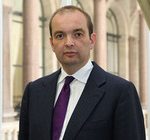
The comments made by James Duddridge, the Minister for Africa, on 7 June 2021.
I am concerned that the Government of Nigeria has suspended Twitter. We hope that all Nigerians are able to enjoy their full rights to freedom of expression, and do so responsibly.