Category: Environment

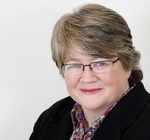
  • Therese Coffey – 2022 Statement on the Convention on Biodiversity COP15

    Therese Coffey – 2022 Statement on the Convention on Biodiversity COP15

    The statement made by Therese Coffey, the Secretary of State for Environment, Food and Rural Affairs, in the House of Commons on 19 December 2022.

    With permission, Mr Deputy Speaker, I will update the House on the outcomes of COP15 on the convention on biodiversity, which was held in Montreal and from which I have just returned.

    For too long, nature has been overlooked as the Cinderella of the story, but flora and fauna are important in and of themselves. Nature is both the essential foundation and a powerful engine of our economy, and helping nature to recover is one of the most cost-effective ways of tackling so many challenges, including the causes and impacts of climate change, thirst, hunger and ill health. and of bolstering peace and prosperity.

    Early this morning, the world came together to secure the strong, ambitious global framework we need to catalyse a decade of environmental action. The framework is on the scale of the Paris agreement, as required, and puts nature firmly on the map. The agreement includes global targets to protect at least 30% of the world’s land and at least 30% of the global ocean by 2030, and to see natural systems restored, species populations recovering and extinctions halted. It includes reporting and review mechanisms that will hold us all to account for making timely progress on bringing our promises to life, and commitments on digital sequence information to make sure communities in nature-rich countries feel the benefit of sharing the solutions that we know their flora and fauna can provide.

    Behind the scenes, over many months, we have been working with Ecuador, Gabon and the Maldives to develop the credible 10-point plan for financing biodiversity during this decade that played a critical role in getting the agreement over the line, by giving nature-rich countries confidence in our collective willingness and ability to secure the investment needed to protect the natural wonders on which their people and, in many cases, the whole world depends. On the back of those efforts, public, private and philanthropic donors committed billions of dollars to new investment in nature.

    The agreement includes commitments to create a new international fund for nature, to increase investment in nature from all sources to $30 billion a year by 2030, and to accelerate the vital shifts that are already under way to make sure our economies underpin our survival and our success. I thank our team of Ministers and pay tribute to all our UK civil servants from across Government and our world-leading scientists from a range of British institutions, including Kew Gardens and the Joint Nature Conservation Committee.

    We have been on this journey since the CBD COP14 in Egypt in 2018, which I attended. In meetings with delegations from around the world, time and again, we heard praise for how the UK’s world-class negotiators helped to broker this agreement. We know from our experience here in the UK that, when we set ambitious targets, we see an acceleration in action to meet them across Government, sectors and communities, which is why we have worked so hard to secure these global targets.

    Just before I set off for Canada, I announced that we have taken the next steps towards leaving the environment in a better state than we found it, by putting a set of new stretching domestic targets into UK law under the Environment Act 2021 on air, water and waste, as well as nature, land and sea, to improve the state of the environment in our country. These targets will be challenging to meet, but they are achievable. The global coalitions of ambition that we have been leading, co-leading and supporting will now shift towards supporting the implementation of the new international nature agreement.

    The UK is committed to playing our part now and in the months and years ahead. Although no country can solve this alone, if we work together to make this a decade of action, we not only stand to avoid the worst impacts but, by securing the abundance, diversity and connectivity of life on Earth, we stand to build a better future for every generation to come.

    I commend this statement to the House.

  • Therese Coffey – 2022 Statement on Environment Act 2021 – Final Environmental Targets

    Therese Coffey – 2022 Statement on Environment Act 2021 – Final Environmental Targets

    The statement made by Therese Coffey, the Secretary of State for Environment, Food and Rural Affairs, in the House of Commons on 19 December 2022.

    I am repeating the statement made by my noble Friend the Minister for Biosecurity, Marine and Rural Affairs, Lord Benyon, on Friday 16 December.

    Final Environmental Targets under the Environment Act 2021

    This Government are committed to leaving the environment in a better state than we found it. Following our consultation earlier in the year, we are confirming an ambitious suite of targets to deliver on that commitment.

    These targets will tackle some of the biggest pressures facing our environment. They will ensure progress on clean air, clean and plentiful water, less waste and more sustainable use of our resources, a step change in tree planting, a better marine environment, and a more diverse, resilient natural environment.

    The 13 targets that will be laid through statutory instruments are as follows:

    Biodiversity on land

    To halt the decline in species abundance by 2030.

    To ensure that species abundance in 2042 is greater than in 2022, and at least 10% greater than 2030.

    Improve the red list index for England for species extinction risk by 2042, compared to 2022 levels.

    To restore or create in excess of 500,000 hectares of a range of wildlife-rich habitat outside protected sites by 2042, compared to 2022 levels.

    Biodiversity in the sea

    70% of the designated features in the marine protected area network to be in favourable condition by 2042, with the remainder in recovering condition.

    Water quality and availability

    Abandoned metal mines target: halve the length of rivers polluted by harmful metals from abandoned mines by 2038, against a baseline of around 1,500 km.

    Agriculture target: reduce nitrogen, phosphorus and sediment pollution from agriculture into the water environment by at least 40% by 2038, compared to a 2018 baseline.

    Wastewater target: reduce phosphorus loadings from treated wastewater by 80% by 2038 against a 2020 baseline.

    Water demand target: reduce the use of public water supply in England per head of population by 20% from the 2019-20 baseline reporting year figures, by 2037-38.

    Woodland cover

    Increase total tree and woodland cover from 14.5% of land area now to 16.5% by 2050.

    Resource efficiency and waste reduction

    Reduce residual waste—excluding major mineral wastes—kilograms per capita by 50% by 2042 from 2019 levels.

    Air quality

    An annual mean concentration target for PM2.5 levels in England to be 10 µg m-3 or below by 2040.

    A population exposure reduction target for a reduction in PM2.5 population exposure of 35% compared to 2018 to be achieved by 2040.

    The suite of targets that we consulted on was the result of significant scientific evidence collection and development over preceding years that included input from evidence partners and independent experts, supported by over 800 pages of published evidence. We have full confidence in the final suite of targets, which represents the robust analysis already undertaken.

    These targets are stretching and will be challenging for us to meet, whether that is through Government, through business or indeed at home in our individual lives through choices we make. In turn this will support action to tackle climate change, restore our natural capital and protect our much-loved landscapes and green spaces.

    We will set out more details about our plans to deliver them in our environmental improvement plan: our manifesto for the environment for the next five years. We will publish this by 31 January, as required by law.

    The Government response to the consultation will be published on www.gov.uk.

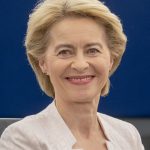
  • Ursula von der Leyen – 2022 Statement at the End of COP27

    Ursula von der Leyen – 2022 Statement at the End of COP27

    The statement made by Ursula von der Leyen, the President of the European Commission, on 20 November 2022.

    COP27 marks a small step towards climate justice but much more is needed for the planet.

    We have treated some of the symptoms but not cured the patient from its fever.

    I am pleased that COP27 has opened a new chapter on financing loss and damage, and laid the foundations for a new method for solidarity between those in need and those in a position to help. We are rebuilding trust. This is crucial moving forward because there can be no lasting action against climate change without climate justice. The European Union is already the world’s leading contributor of international climate finance, and I am satisfied that we confirmed our commitment to support the most vulnerable on our planet through a first contribution on loss and damage.

    COP27 has kept alive the goal of 1.5C. Unfortunately however, it has not delivered on a commitment by the world’s major emitters to phase down fossil fuels, nor new commitments on climate mitigation. But the EU will stay the course, notably through the European Green Deal and REPowerEU, because it is essential to keep the ambition of the Paris Agreement within reach.

    I extend my heartfelt thanks to the EU’s negotiating team in Sharm El Sheikh for their determination and hard work throughout the conference.

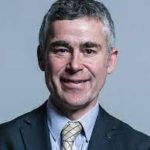
  • Luke Pollard – 2022 Comments on the Woodhouse Colliery in Cumbria Planning Decision

    Luke Pollard – 2022 Comments on the Woodhouse Colliery in Cumbria Planning Decision

    The comments made by Luke Pollard, the Labour MP for Plymouth Sutton and Devonport, in the House of Commons on 8 December 2022.

    Luke Pollard (Plymouth, Sutton and Devonport) (Lab/Co-op)

    The world is currently meeting in Montreal for COP15 to deal with the pressing climate and nature crisis that we are facing. A common message from there is that coal should be kept in the ground. It will be incredibly difficult for the Government to convince the public at home and abroad that opening a new coalmine is dealing with that urgent climate crisis in a progressive way. His colleague, the former COP26 President, described this decision as an “own goal”, so may I ask the Secretary of State whether he thinks approving a new coalmine in the middle of a climate crisis will enhance or damage Britain’s reputation as a global green leader?

    Michael Gove

    Again, I stress the importance of looking at what the inspector says. The hon. Gentleman quite rightly points out that international partners are meeting in Montreal, alongside the UK, in order to uphold the importance of biodiversity and to help protect species. I should point out that in paragraph 21.163 of the inspector’s report the inspector specifically addresses the question of biodiversity and says that he

    “is satisfied that the Supplemental Undertaking”—

    given by the applicant—

    “would ensure that the proposed development would provide for a minimum net gain”—

    in biodiversity—

    “of 10% prior to the commencement of production and further net gain to be achieved on restoration.”

    The inspector took account of biodiversity in coming to his judgment, and so have I.

  • Katherine Fletcher – 2022 Comments on the Woodhouse Colliery in Cumbria Planning Decision

    Katherine Fletcher – 2022 Comments on the Woodhouse Colliery in Cumbria Planning Decision

    The comments made by Katherine Fletcher, the Conservative MP for South Ribble, in the House of Commons on 8 December 2022.

    Madam Deputy Speaker, you know me to be a biologist and an environmentalist—I should confess to the House that I also get called a tree hugger by certain hon. Members of this House—but does my right hon. Friend agree that it is the “net” in net zero that is the crucial thing here? We have heard today from the Opposition that this development is not green, but they are wrong. It is better to do this mining on our shores and in a responsible way. Does he agree that the north-west of England has the pride, the heritage, the skills and the future to deliver not only this coking coalmine, but the future industries of 4.0?

    Michael Gove

    I am tempted to say that any tree that is hugged by my hon. Friend is a very lucky tree.

    On the substance of the very important point that my hon. Friend makes, yes, in order to ensure that we have a transition to net zero we do need to reduce our reliance on a variety of different materials. However, as the inspector makes clear, and as my hon. Friend quite rightly points out, the economic benefits that this development brings to the north-west are also entirely consistent with our broader environmental ambitions.

  • Alan Brown – 2022 Speech on the Woodhouse Colliery in Cumbria Planning Decision

    Alan Brown – 2022 Speech on the Woodhouse Colliery in Cumbria Planning Decision

    The speech made by Alan Brown, the SNP MP for Kilmarnock and Loudoun, in the House of Commons on 8 December 2022.

    The decision has been condemned by the Chair of the Climate Change Committee. Chris Stark, chief executive of the committee, retweeted that this is

    “climate vandalism and economic incompetence on a scale difficult to believe”.

    The International Energy Agency previously stated that no further fossil fuel projects can be built if net zero is to be achievable by 2050 and OECD countries need to end use of coal by 2030, so why license this mine to 2049? Ron Deelan, a former chief executive of British Steel, called it

    “a completely unnecessary step for the British Steel Industry”.

    Chris McDonald, chief executive of the Materials Processing Institute research centre, previously advised that British Steel could not use this coal because it is

    “not of the right quality”.

    The reality is that 85% of this coal is going to be exported, so talking about cancelling imports is a complete red herring. What we are doing is increasing our carbon footprint to support industry in the EU. It is illogical and we know demand for coking coal will fall, as the EU is further ahead on the development of green steel. Where is the UK progress on green steel? Coking coal is not even identified on the UK’s critical mineral strategy or in the National Security and Investment Act 2021, although it is a critical mineral for the EU. But, clearly, this mine is not needed for the UK. Given this decision, what steps are being taken to rapidly accelerate the net zero pathway, for example, by changing the Scottish carbon capture and storage cluster to track 1 status?

    The Secretary of State hides behind the recommendations of the Planning Inspectorate. Why did his Government override the Planning Inspectorate on Sizewell C? This coking coal is not critical for the UK. It is going to be exported, so why has he made this decision just to appease Tory Back-Bench climate change cynics?

    Michael Gove

    I am grateful to the hon. Gentleman for his questions. He quotes a number of individuals and draws explicitly—he was good enough to acknowledge this—party political conclusions. I relied on the inspector’s report and on the evidence in front of me. As I explained in my decision letter, no evidence was provided to suggest that any other metallurgical coal mine in the world aspires to be net zero, so the proposed mine is likely to be much better placed to mitigate greenhouse gas emissions than comparative mining operations around the world. On that basis, it is entirely in keeping with our net zero commitments, and indeed with the commitment to not only jobs, but the environment, to approve the inspector’s case.

  • Lisa Nandy – 2022 Speech on the Woodhouse Colliery in Cumbria Planning Decision

    Lisa Nandy – 2022 Speech on the Woodhouse Colliery in Cumbria Planning Decision

    The speech made by Lisa Nandy, the Labour MP for Wigan, in the House of Commons on 8 December 2022.

    I have one question for the Secretary of State: what on earth is he thinking? The decision to greenlight the reopening of the Woodhouse colliery is bad policy and bad politics. It is the latest in a string of absurd decisions from a Government in chaos, causing chaos in this Chamber and out there in the country. They are in office but not in power.

    This mine will produce coking coal used for steel, not for electricity generation. So, as the Secretary of State has had to admit today, the claim it helps to safeguard our energy security is nonsense, but it gets worse. The two big steel producers, Tata and British Steel, are phasing out this coal in favour of lower-carbon production methods. By the mid-2030s, at best, the UK will use less than 10% of the mine’s output. Across the world, demand for coking coal is projected to fall off a cliff, by 88%, by 2050.

    People in Cumbria deserve a long-term future, with lasting, well-paid jobs that power us through the next century. Instead, they are saddled with a weak, short-sighted and unambitious Government who, only two months ago, rejected a plan to bring new nuclear to Cumbria, which would have created not 500 short-term jobs but 10,000 jobs for the long term.

    The right hon. Member for Surrey Heath (Michael Gove) is supposed to be the Secretary of State for Levelling Up. The Tories were once the party of conservation, and now they are the party of environmental vandalism. He can fiddle the figures all he likes, but the reality is that this mine is projected to increase emissions by 0.4 million tonnes a year, according to his own advisers. That is equivalent to putting 200,000 more cars on the road every single year.

    This decision flies in the face of Britain’s net zero objectives, contradicts the aims of the UK’s COP26 presidency and undermines the 2019 Conservative manifesto. This is chaos. Successive Secretaries of State are contradicting each other and the Government’s independent adviser on climate change condemned the decision as “indefensible” even as the Secretary of State stands here trying to defend it.

    The Secretary of State told us that coal has no part to play in future power generation. He cannot even agree with himself. No leadership abroad. No leadership at home. Unable to lead even in his own party. I hope he will at least reassure the House today that this bizarre decision, which he cannot even defend, was not part of a deal to buy off Back Benchers after his U-turn earlier this week on onshore wind.

    People in Britain deserve better. Right across the country, communities such as mine in Wigan and across Yorkshire, Lancashire and Cumbria are proud of our mining heritage and of the contribution we made to this country, but we want a Government who look forward and match our ambition so that, through clean energy, our young people can power us through the next century like their parents and grandparents powered us through the last. Where is the ambition? Where is the leadership? Where is the government?

    The Secretary of State for Levelling Up, Housing and Communities (Michael Gove)

    Mr Speaker, thank you for your ruling earlier. I apologise to you and to the House. No discourtesy was intended. I appreciate the importance of maintaining the courtesies of the House, particularly with regard to statements.

    As I mentioned earlier, the context of this statement is a quasi-judicial process on a planning application. I always admire the rhetoric of the hon. Member for Wigan (Lisa Nandy), and she asks, “Where is the ambition? Where is the leadership?” I think we all know where the ambition and the leadership is: it is sitting right across from me.

    The hon. Lady will have her own views on future demand for coking coal, but I fear she elides the difference between coking coal used for metallurgical purposes and coal used for energy generation purposes. The inspector’s report makes it clear that coking coal is used not for energy purposes but purely for metallurgical purposes, for the manufacture of steel. Of course, we will need steel for decades to come, including in the renewables sector. How else will we ensure that we supply all the materials necessary for onshore wind and other renewable energy without using steel? If she or anybody else in the House has an answer, I and millions of scientists would love to hear it.

    It is important to look at the inspector’s report, as I have in detail. The inspector makes it clear on page 239, in paragraph 21.37, that in all the scenarios and forecasts presented to him there was

    “continued demand for coking coal for a number of decades.”

    He also made it clear that, at the moment, imports of coking coal come from Australia, the USA and Russia. As I pointed out in the statement, and as the inspector makes clear, no evidence has been provided to suggest that any other metallurgical coal mine in the world aspires to be net zero in the way the Whitehaven development does. Again, the inspector makes it clear that the

    “development would to some extent support the transition to a low carbon future as a consequence of the provision of a currently needed resource from a mine that aspires to be net zero.”

    The European Commission is clear that coking coal is a critical part of steel and that steel is necessary to the future of Europe. We recognise that the demand for this coking coal, both in the UK and in Europe, is better supplied from a net zero mine than from other alternatives. As the inspector makes clear, this decision will also be responsible for high-skilled, high-value jobs in Cumbria, alongside other jobs in the supply chain elsewhere, and that is without prejudice to the other investment that the Government are making in clean green energy sources alongside it.

    The inspector’s report is clear and, in responding to the questions from the hon. Member for Wigan, I urge every Member of the House to read the inspector’s report in full, alongside my decision letter. Those 350 pages lay out the evidence. They present the arguments for and against the decision. The inspector, an independent planning expert, has concluded that this development should go ahead and I agree with him.

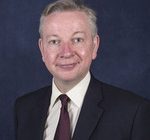
  • Michael Gove – 2022 Statement on New Coalmine at Whitehaven in Cumbria

    Michael Gove – 2022 Statement on New Coalmine at Whitehaven in Cumbria

    The statement made by Michael Gove, the Secretary of State for Levelling Up, Housing and Communities, in the House of Commons on 8 December 2022.

    With permission, Mr Speaker, I would like to make a statement following the decision I made yesterday to grant planning permission for a new metallurgical coalmine at Whitehaven in Cumbria.

    I think it is important to stress at the beginning of my statement that I am speaking with regard to a planning decision that I have taken in my capacity as Secretary of State in what is a quasi-judicial process. Members of the House will be aware that the decision may, of course, be subject to a legal challenge, so I urge all Members of the House who are interested in the decision to read the decision letter, which was published yesterday, alongside the detailed report of the independent planning inspector who oversaw the public inquiry into the proposals. Any mature and considered response needs to take account of both my decision letter and the planning inspector’s full report.

    I would like to refer in my statement to some of the arguments that the planning inspector has entertained and some of the arguments that he has made in the course of his report, but nothing that I say at the Dispatch Box should be taken in any way as a substitute for full engagement with the inspector’s report.

    It is important to note that it is rare that any planning decision is an open-and-shut matter. There are almost always competing elements for and against any planning scheme—particularly a substantial one of this kind, which can raise serious and passionate debate—but the open and transparent public inquiry system allows all those issues to be fully explored. It also allows all parties to put their case before an independent inspector.

    The decision that I issued yesterday was in line directly with the recommendation of the inspector, who heard all the evidence for and against the scheme and was able to test that evidence through the participation of interested parties. This was a comprehensive and thorough process, lasting over a month and hearing from over 40 different witnesses. It is summarised in a report of over 350 pages, which, again, I urge all hon. Members to read.

    I think it important to restate—as I think is well understood—that the proposal granted permission yesterday for the production of coking coal for use in steel production is not an energy proposal. Our net zero strategy makes it clear that coal has no part to play in future power generation, which is why we will be phasing it out of our electricity supply by 2024. Coal’s share of our electricity supply has already declined significantly in recent years. It was almost 40% of our energy supply in 2012, and less than 2% in 2020.

    I took account of the facts in reviewing the planning application, as did the inspector, taking into particular account the Department for Business, Energy and Industrial Strategy industrial decarbonisation strategy of March 2021, which explicitly does not rule out the use of coking coal in an integrated steel-making process, and makes it clear that, together with carbon capture and storage, that can be part of a net zero-compliant option.

    It is important to note, as the inspector makes plain on page 239 of the report, that it is clear all the scenarios and forecasts for the future use of coking coal which were put before the inquiry demonstrated a continued demand for coking coal for a number of decades to come. It is also important to state that the European Commission, as the inspector noted, recognised the indispensable role of coking coal during the steel industry’s transition to climate neutrality.

    It is also important to note, as the inspector did on page 238, that the UK is currently almost wholly dependent on imports of coking coal to meet its steel manufacturing demand. In 2017, 98.8% of the more than 3 million tonnes of coking coal used in UK steel plants was imported. The main exporters of coking coal at the moment are Australia, the USA and, of course, Russia. European metallurgical coal demand is forecast to remain between 50 and 55 million tonnes per annum for the next 28 years, and in the UK demand is forecast to remain at the current level of 1.5 million tonnes per annum.

    The coking coal that will be extracted from the mine in Whitehaven is of a particular quality. Coking coal is usually a blended product of soft and hard high volatile coals and low volatile coals. The coal from the proposed mine would have a low ash content of below 5%, compared with between 7% and 8% for US coal and 10 % for Australian coal. It would also have a low phosphorus content, lower than that of Australian coal, and a high fluidity. It is also important to note that, while the sulphur content of this coal has been referred to, and it is relatively high, the evidence before the inspector suggests that the coal handling and processing plant will produce coal with an average sulphur content of 1.4 %, and the applicant has stated its acceptance of the planning condition to ensure the product leaving the mine meets this level.

    It is also important to note that the applicant is making it clear that this will be the only net zero metallurgical coking coalmine in the world. It is vitally important that all of us recognise—as the inspector does on page 255—that the proposed development would to some extent support the transition to a low-carbon future specifically as a consequence of the provision of a currently needed resource from a mine that aspires to be net zero. I think it is also important that we recognise that, in any change of land use, there will always be a potential impact on biodiversity and on the local environment as well. Again, it is important to note that, on page 278 of his report, the inspector makes it clear that this mine would not cause any unacceptable impacts on ecology or result in a net loss of biodiversity. The inspector also makes it clear in paragraph 22.9 that the proposed development itself would have an overall neutral effect on climate change, and as such there would be no material conflict with Government policies for meeting the challenge of climate change.

    Taking account of all these environmental considerations, we should also bear in mind the impact on employment and on the economy, locally and nationally. As the inspectorate notes on page 279, the mine will directly create 532 jobs, which will make a substantial contribution to local employment opportunities because they will be skilled and well-paid jobs. The employment, and indirect employment, that would follow will result in a significant contribution to the local and regional economy, with increased spending in local shops, facilities and services. In addition, the exportation of some of the coal to European markets will make a significant contribution to the UK balance of payments. It is therefore the case that granting the application is compliant with planning policy, and the social and economic benefits should be afforded substantial weight.

    The inspector’s report makes a strong case, in a balanced way, for the granting of permission. After reading the inspector’s report in full, I am satisfied, in my role as Secretary of State, that it is the right thing to do to grant this planning application.

  • Therese Coffey – 2022 Speech at CBD COP15 Held at Natural History Museum

    Therese Coffey – 2022 Speech at CBD COP15 Held at Natural History Museum

    The speech made by Therese Coffey, the Secretary of State for Environment, Food and Rural Affairs, at the Natural History Museum in London on 7 December 2022.

    Thank you for joining us bright and early and thank you to the staff of the Natural History Museum for hosting us here before they open their doors to the public this morning as they have done for generations.

    We are proud to be backing your important work. And we are fortunate to have this cathedral of nature consecrated to 4.5 billion years of natural history to the pursuit of science and to the study and appreciation of the world’s flora and fauna right here, in our capital city.

    So it’s hard to think of a more inspiring place for us to meet as I call on all of you to help us come together to secure the future of life on earth and a better future for every generation to come.

    When I visited the Museum recently some of the scientists here reminded me that just five years ago, in Hintze Hall a diplodocus would have greeted us.

    But it is right that we are now dwarfed by the awesome, twenty-five-metre skeleton of a blue whale the largest animal that has ever existed bigger even than the biggest dinosaur.

    Forty years ago – following a coordinated campaign from schoolchildren and conservation experts alike – including many of the organisations you represent, sea-going nations from around the world came together at the Metropole Hotel in Brighton and agreed a moratorium on commercial whaling.

    In a global move to bring species back from the brink of extinction and find more peaceful ways of appreciating these wonderful creatures.

    As Environment Minister, a few years ago I had the privilege of watching humpback whales from a boat in Petite Passage, Nova Scotia and it was a profoundly moving experience.

    And while this work is ongoing, we should take heart from what we have achieved and our commitment to seeing it through. Because it seemed impossible until it was done.

    Because with blue whale populations now recovering Sir David Attenborough is right to say that ‘Hope’ is an important emblem of what we can achieve.

    And because sharing success is so important at a time when we need to steel our resolve to work together to solve so many challenges when we need to renew the trust between people and power around the world and when we must make the most of the UN nature conference, CBD COP15 in Montreal.

    For far too long the Cinderella of the story, it’s cinderellas time to shine but now rightly recognised by all of us here – as our best chance yet to secure the decade of action we need.

    I am proud that the UK laid the groundwork for success in Montreal through our presidency of COP26 – the climate COP – in Glasgow.

    Together, we brought nature – land and ocean – and effective, cost-effective nature-based solutions from the margins of the global debate into the heart of our collective response to the causes and impacts of climate change for the first time securing unprecedented investment in nature – land and ocean from all sources, public, private and philanthropic

    , including greater global backing for natural wonders on which the whole world depends from the Amazon to the Congo Basin and accelerating the economic shifts that are already underway to make sure every dollar in our economies takes us closer to our shared goals.

    At COP27 in Egypt, I saw the legacy of COP26 alive and kicking not least in the way countries and companies are now honouring their commitments – including on forests – and building on them as well.

    We are engaging the United Arab Emirates as hosts of COP28 next year to make sure we

    And in all of this, our ability to lead depends on our longstanding, ongoing commitment – across government to identify and then use every lever we have to leave the environment in a better state than we found it

    From the way we work with the private sector, including the financial sector

    – to secure the public good – to the way we use public money to support the production of food. Something I spoke to our famers about last week so we make the most of our newfound freedoms and our landmark legislation to make timely progress on meeting our domestic targets to reach net-zero by 2050 and halt the decline of nature by 2030.

    In support of that target I am delighted to announce that, this spring we will launch a new multi-million pound fund to create and restore wildlife-rich habitats, including on protected sites from scrub, to wetlands and grasslands where each investment will secure multiple benefits for nature, climate, and people and encourage opportunities for private funding by backing underfunded projects that give us the biggest bang for our buck.

    By making good on our commitment to double UK international climate finance to 11.6 billion pounds and to spend at least 3 billion on nature, including through our newly established 500 million pound Blue Planet Fund and our 100 million pound Biodiverse Landscapes Fund.

    We are building on decades of experience backing efforts to take on the whole host of threats that now face the world’s flora and fauna – well beyond climate change alone through the Blue Belt programme, protecting an area of ocean larger than India around our biodiverse Overseas Territories, our world-renowned 39 million pound Darwin Initiative and the Illegal Wildlife Trade Challenge Fund.

    And whether it’s taking on illegal, unregulated, and unreported fishing persuading countries to agree a new, legally-binding global treaty to end plastic pollution, by 2040 or supporting efforts to establish a global gold standard for taking nature into account across our economies on the world stage and behind the scenes the UK is leading, co-leading, and actively supporting the global coalitions that are committed to securing the maximum possible ambition and achieving the greatest possible impact.

    That includes our approach to the UN nature conference that kicked off yesterday.

    Our world-class UK negotiating team are in the hot-seat building on four years of talks with the support of our world-class scientists from a range of institutions, including Kew Gardens and JNCC.

    And later this week, I will lead a team of ministers from Defra, the FCDO and the Treasury, working as one to persuade our counterparts from around the world to give their negotiators the political backing they need to build consensus around a robust, ambitious global framework for action that will put nature on a road to recovery, this decade.

    That must include targets to protect at least 30% of the world’s land and at least 30% of the global ocean, by 2030 and to see natural systems restored, populations of species recovering, and extinctions halted by 2050 alongside strengthened reporting and review mechanisms that will hold all of us to account for the promises we make and commitments to work in partnership with indigenous peoples and local communities, who depend on nature most directly and understand it so deeply so we make sure everyone feels the benefit of seeing this through.

    And we know that demonstrating our collective willingness and ability to close the finance gap for nature is key to unlocking the ambition we need in Montreal.

    And that is why the UK has been working with our friends in Ecuador, Gabon, and the Maldives to develop a 10 Point Plan for Financing Biodiversity, an ambitious, credible blueprint for action that increases our chances of achieving consensus by making sure that any government approaching the negotiations in good faith will be able to see a potential solution to their concerns.

    Our Plan commands the confidence of developed and developing countries spanning five continents – and counting.

    We are doing all we can to persuade others to endorse it.

    And I hope that you too will help us to gather further support in this final furlong – and beyond.

    Ultimately, we all know that there is a long road between where we stand today, and where we need to be.

    In national parks in South Africa I have seen how the illegal wildlife trade pits people and wildlife against one another with devastating consequences for all.

    On visits to small island states I have heard what it means for communities when their homelands face an existential threat.

    And the evidence for why this is so urgent is now all around us in the wisdom of indigenous people and local communities, in the science and in events on every continent.

    But I genuinely believe that if we work together to make the road ahead a road to recovery, we stand not just to avoid the worst impacts but to save precious species by securing the diversity, abundance and connectivity of life on Earth that will also help to bolster the peace and prosperity we all want to see and fundamentally to improve the lives of people at home and around the world for generations to come as well.

    The UK is committed to playing our part and to continuing to work with all of you and our friends around the world to see this through.

    The action you take can have a massive impact and you have the power to inspire others to step up as well.

    So once again, I want to thank you for joining us and I urge you to keep up the good work.

    Thank you very much.

  • Therese Coffey – 2022 Speech to the CLA Business Conference

    Therese Coffey – 2022 Speech to the CLA Business Conference

    The speech made by Therese Coffey, the Secretary of State for Environment, Food and Rural Affairs, at the Oval cricket ground in London on 1 December 2022.

    It is a great pleasure to be to here with you today making my first public outing outside of Parliament since returning to Defra.

    I’ve always found the CLA to be a sensible voice at local and national level, and it’s had the great judgement to hiring Sarah Hendry as your director general, who was one of my best civil servants I ever worked with, during my first time at Defra when I spent 3 years there. It’s good to be back.

    The CLA have been at the forefront of thinking imaginatively, ambitiously, and practically about the future of farming for well over a hundred years now never mind since the British people voted to leave the European Union. You’re right Mark to reference your Rural Powerhouse Report. And it’s important that we continue to use documents like that with potential policy ideas and long may it continue.

    I thought it might be worth turning straight away to some of the comments made by Mark Tufnell and Professor Sally Shortall now. Some may not know this, when I was first in the role at Defra as Environment Minister, I asked to do more about rural life, and so I actually created the extra bit of rural life opportunities, and it is important that we have that focus in our department. Lord Benyon is our Rural Affairs Minister but I can assure that we all represent rural areas, we’re very conscious of the points that you’ve laid out. In Cumbria I think is the situation with the 16 plus bought instead of the daily trips to and from the college, recognising the opportunities to have. And indeed, some of the work I did at DWP, when we were in the framing of the levelling up framework that Michael Gove of course, pioneered, former Defra Secretary of State, and is leading once again in Government. One of the things I pointed out to my colleagues is that quite often you see a map of where people are considered to have really low income, and are not very well off and not particularly productive, and it really surprised them to hear that the district council areas with lowest median salary, were all rural, including the Prime Ministers own constituency, his council, was the third lowest median salary in the country. And that recognises quite a lot of the fact that the predominant sectors there are agricultural and tourism. And if you’re working in there rather than perhaps being the owner of one of the enterprises then the salaries are not as high as we’d like I’m sure.

    I want to stress that I will be having this important focus, and I know that all our Ministers are similarly engaged, recognising that we want to make sure that the prism of rural life is reflected and considered, particularly in things like levelling up, and the shared prosperity fund as we move forward.

    Turning to what Mark said, as he’s pointed out, overcoming barriers to business success is the main theme of this conference today, and while most of my comments will be about the farming side of your members interests, I think it’s a reflection that it’s absolutely critical that we get growth going again in this country and I do see the rural economy as a part of that. And I like to think that what we have done in the last 12 years, it may not be all complete I get that, but extending internet and broadband access that’s largely done; we still need to improve the mobile phone connection; I know that for farmers they welcome the fact that we’re adjusting taxes so that we can spread over 5 years instead of the annual tax return. And I thought that would be useful towards the cash flow challenges that sometimes come, as we see different outcomes every season.

    But indeed also, we have rightly kept the inheritance tax exemption under agricultural. But I think we’ve also tried to strive to help businesses find more sector diversify. I know that we’ve already changed planning rules and guidance to allow more use of our buildings, and I do want to point out that primarily it is the local government and local councils that make decisions on individual local planning applications, and to some extent the national planning policy framework will of course help guide that, but it is their decision on exactly where and how through their local plans they support the rural economy to thrive.

    And as I say, Lord Benyon is the rural affairs Minister, and I can assure you my time in 12 years as being a member if Parliament for Suffolk coastal where I’ve seen Grade 4 land – I’m not quite sure if Grade 5 land has been used – but Grade 4 land is used for very productive production of much of the food that gets eaten in this country, and indeed extending the seasons to get through crops of potatoes every year I think is particularly special. I continue to learn and I do see the CLA, pretty much every year at the Suffolk Show, and I’m very delighted to go and meet them as well as other my constituents.

    Now turning to the more broad substance, I know that there are many pressures that are coalescing right now that impact your businesses, whether that’s flooding and droughts that we’ve seen, outbreaks of pests and diseases, or indeed the global challenges affecting prices, energy and supply chains and we should be very clear the aftershock of covid I’m afraid will still be with us for some time and I cannot give you any timeline exactly on how long the illegal invasion of Ukraine will carry on but we know there will be consequences and there are consequences right now and that’s why the Government is making changes to its energy strategy to try and mitigate.. Those things will not come straight away apart from some of the support schemes that are already in place.

    But it is why we have set out urgent new measures and change on how we’ve dealt with avian influenza.

    It’s why we hope that the support we’re trying to give to farmers, recognising the rising input costs for feed and energy through a range of measures, whether that’s continuing the mini budget last year reinstated, the fuel duty and VAT cuts, and in terms of action to reduce business rates and indeed the businesses energy support scheme.

    So, knowing cashflow is probably the critical thing that we will help an enterprise keep going or not, it’s why to support farmers’ cashflows we changed BPS payment to twice a year, for the first time ever, and that’s only thanks to leaving the EU that we’ve been able to make those changes.

    We paid out £677 million out to you earlier this year. And a further £620 million will be paid from today. And I want to assure you that the Farming Minister, Mark Spencer, is meeting retailers and processors regularly, to encourage them to recognise that the burden of higher input costs is falling heavily on farmers.

    Thinking of these global impacts, I don’t think anywhere in the world has felt these more keenly than in Ukraine, traditionally the breadbasket of Europe.

    Amidst the turmoil of war, it is truly extraordinary that the farmers of Ukraine have managed to get so much of the harvest in. And at time when Ukrainians themselves are suffering so much I was really pleased that we were able to support this initiative to get grain from Ukraine to some of the poorest and most vulnerable people in the world. And I genuinely think that what they’ve done is an act of global humanity at its very best.

    That’s why at the weekend I was proud to join the conference and to send a contribution of £5m to Ukraine to support this initiative on behalf of the Government, the British people, and indeed particularly on behalf of farmers.

    Now I’m less than 2 months into the role, there is still a lot that I’m still working through at Defra. And while having spent 3 years in the department before I’m now the Secretary of State and have a much wider range of issues to tackle.

    But I felt it was important for me to be clear about our intentions for the future. So, I’ll cut to the chase.

    As we made clear in our manifesto, one of the biggest bonuses of leaving the EU, was the opportunity to free our farmers from the bureaucratic Common Agricultural Policy and move to a system as we set out in our manifesto based on spending public money in a way that helps us to secure the public good.

    I like to think we have already started cutting back the red tape that has held you and us back, scrapping the three-crop rule and greening requirements that really did so little for nature, because that actually caused real headaches for you without really much outcome.

    We certainly have guaranteed the annual farming budget over this Parliament but in return we want to support you to farm in a way that safeguards high standards of animal welfare and protects and enhances our natural environment. So we make timely progress towards meeting our vital targets to halt the decline of nature in our country during this decade and ultimately to reach net zero by 2050 – making progress with every carbon budget, securing the clean and plentiful water that we need to build the resilience of our businesses, our food system, and our whole country to the impacts of a changing climate, so that we can secure the strong foundation of our whole economy – and the engine of our rural economy as well.

    Farming is the backbone of our second largest manufacturing sector, it bring jobs to every county, and does play a vital role in rural communities across our country.

    That is why we decided, in good faith, to review our plans, to make sure that we achieve the greatest possible impact for our environment, that we would secure the biggest bang for our buck in the way we spend tax payer’s money, and so that it is easy and attractive for farmers get involved.

    I know you need certainty, you need to plan ahead for future investment cycles. But I also want to be clear we recognise the needs that we may need to be agile and retain the dynamism that we have set in motion so we make sure that we are funding schemes that work in terms of the outcomes and in terms of take up.

    That is why we will continue to work together to iterate and improve our approach over time.

    And I think back to when I was in the role before and I was told how HLS was the best designed scheme in Europe, and the problem was hardly anyone took it up, and that’s something we really need to avoid.

    So turning to the next steps, where decades, even generations of hard-won experience have given us a strong sense of what already works. I’m very clear we don’t need to reinvent the wheel.

    It’s important that we support your stewardship of our shared stock of natural capital across our brilliant landscapes and reflect the immense contribution you make to your communities and also respect the way of life that you cherish.

    I am pleased to tell you that the review is now complete and that we are moving ahead with the transition, on the same timescale and with three schemes.

    All the funding that we are taking out through reductions in BPS over time will continue to be made available to farmers through a combination of one-off grants and ongoing schemes and the advice you need to get your business on the right footing for the future.

    As we make those planned, steady reductions to BPS payments, we will offer payment to you to take action through our three environmental land management schemes.

    And our aim, across those schemes, is not ‘one size fits all’ but a range of options so everyone can find a combination that works for them.

    So whether you’re a commoner, upland farmer, or small family farm, and whether you’re a landowner or a tenant farmer recognising elements of the Rock review.

    As your president said, the choice is not producing food or doing environmental schemes, it’s about making space for nature and that must go alongside sustainable food production.

    They are not mutually exclusive. They can be symbiotic.

    And we need to embrace the complexity that holds the key to getting the critical decisions right on how we can make the most of our land to achieve all the things we want to do from planting forests and protecting peatlands to producing food.

    We can bolster sustainable, resilient food production and protect our shared natural heritage and our rural heritage. We need to build more of the homes that people need while we also get on with tackling the causes and the impacts of climate change as well as improving the state of nature.

    And we will have those honest conversations with you about how we maximise those multiple benefits for land.

    So, turning to our three schemes.

    As we reduce the amount being spent on BPS we will be adding options to our current offer so that by 2024, farmers will have access to the full range of actions they can be paid to take on their land.

    For our Sustainable Farming Incentive – our aim is to get as many of you as possible signed up.

    The initial phase is now live – and is focused specifically on securing the health of our soil that is critical to food production and to reducing inputs so that we support the natural world from the ground up.

    And we will build on that with more standards each year so you can choose more options for your business.

    I’m really pleased that over 30,000 farmers are now involved in our simplified, streamlined, and I hope overall, enhanced Countryside Stewardship scheme – that’s a 94% increase in three years. Something must be working.

    We have listened to your concerns, we’ve learned from your experiences and I hope we’ve made a lot of improvements – but we know there’s a lot more to do.

    I want to build on that success, by developing Countryside Stewardship, so we achieve the same ambitious outcomes that we intended to deliver through Local Nature Recovery but instead to have an enhanced version of the Countryside Stewardship scheme that is already part of thousands of farm businesses rather than introducing a whole new process.

    That is the right thing to do and the smart thing to do with public money as we develop the markets that will draw in finance from all sources.

    With the first 22 Landscape Recovery pilot projects up and running for our third scheme that holds true at scale as well.

    And it seems to me to be common sense that when communities come together locally or businesses come together to create the sort of wildlife corridors that are critical to the connectivity as well as the diversity and abundance of species and to the health of our waterways, the impact that they achieve together will be greater than the sum of its parts and as a consequence you will be rewarded accordingly.

    My priority is to make sure that we make it as simple and straightforward as possible for us succeed and, let’s be straight forward about this, in my view, farmers are the original friends of the earth. You are the stewards; you are the custodians of our countryside.

    I will tell anyone that will listen that our British farmers are outstanding in their field. We produce high quality food that is well-known around the world and working with nature – not against it is the natural instinct of every farmer I have ever had the pleasure of meeting.

    You look after more than 70% of our land. We cannot make these changes to improve the environment or get to net zero without you

    That’s why we want to work with you to tackle this together so we help the environment, backing the frontrunners and helping everyone to bring up their baseline.

    Sadly, there will still be and still are polluters who let the side down and end up threatening these collective efforts.

    And frankly if they don’t accept our support, we will tackle them head on, but we want to focus on all of you and help you take your businesses into the future.

    So, we are getting you the cutting-edge kit and the expert advice you need to improve productivity, health and welfare.

    We are investing in your connectivity, with new trials confirmed today to beam broadband into the hardest to reach rural areas directly from satellites in space

    As well as tripling the value of vouchers available under the Gigabit Broadband Voucher Scheme from early next year.

    We are funding the Institute for Agriculture and Horticulture so we can create the conditions we need to retain generations of experience, develop promising talent, and indeed attract fresh blood into the sector.

    And of course, we will back the world-class British science and innovation that is key to improving productivity and resilience, and we will make the most of new legislation that will confirm our newfound freedom to make sure British expertise leads the way on the precision breeding that is so important for food security around the world.

    In all of this, I am committed to making sure that we give you the clarity, certainty and support that I know you need.

    So early in the new year, I can’t make the announcements today, we will be saying more about what we’ll be offering to pay you to do in the next phase of all the schemes.

    And with the time it takes to get an SFI application done and dusted, it’s already been slashed from 6 months during the pilot to under 2 weeks for the full scheme – and often much less than that. My hope is that you will find it relatively quick and easy to identify a set of actions that works for your business, sign up for payments and crack on with your plan to make your business more resilient, more sustainable, more profitable, and indeed more productive in the months and years ahead.

    Lastly, I want to thank all of you who are working with us on the development of these schemes and for your continued engagement – as well as for all the other sterling work that you do.

    I can assure you we remain as ambitious as ever – on all fronts and it is essential that we continue to work together to get this done and get it right.

    I know we can do it.

    And we have to make this work, to tackle climate change, improve the state of nature, support our rural communities and to make sure the way we produce food is sustainable and resilient for the future.

    Thank you – and I wish you all the best for the rest of your conference.