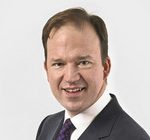
The statement made by Rishi Sunak, the Chancellor of the Exchequer, on 5 November 2020.
On Monday, the Prime Minister set out the action we need to take between now and the start of December to control the spread of coronavirus. In response, we are providing significant extra support to protect jobs and livelihoods in every region and nation of the United Kingdom: an extension to the coronavirus job retention scheme; more generous support to the self-employed and paying that support more quickly; cash grants of up to £3,000 per month for businesses that are closed, worth over a billion pounds every month; £1.6 billion for English councils to support their local economy and local healthcare response; longer to apply for our loan schemes and the future fund; the chance to top up bounce back loans; and an extension to mortgage payment holidays. That is all on top of more than £200 billion of fiscal support since March.
This statement follows the Bank of England’s monetary policy decisions earlier today, meaning all economic and monetary institutions are playing their part. As the House would expect, the Governor and I are in constant communication as the situation evolves. Our responses are carefully designed to complement each other and provide certainty and support to people and businesses across the UK. The Bank’s forecast this morning shows that economic activity is supported by our substantial fiscal and monetary policy action. Just last week, the International Monetary Fund described the UK’s economic plan as “aggressive”, “unprecedented”, successful in “holding down unemployment” and business failures, and
“one of the best examples of coordinated action globally”.
Our highest priority remains the same: to protect jobs and livelihoods. That is why we have already decided to extend the job retention scheme to December. But people and businesses will want to know what comes next, how long we plan to keep the scheme open, and on what terms. They want certainty. The Government’s intention is for the new health restrictions to remain only until the start of December, but, as we saw from the first lockdown, the economic effects are much longer lasting for businesses and areas than the duration of any restrictions. As the Bank of England has said this morning, the economic recovery has slowed and the economic risks are “skewed to the downside.”
Given this significant uncertainty, a worsening economic backdrop and the need to give people and businesses security through the winter, I believe it is right to go further, so we can announce today that the furlough scheme will not be extended for one month; it will be extended until the end of March. The Government will continue to help to pay people’s wages up to 80% of the normal amount; all that employers will have to pay for hours not worked is the cost of employer national insurance contributions and pension contributions. We will review the policy in January to decide whether economic circumstances are improving enough to ask employers to contribute more.
Of course, as the furlough itself is now being extended to the end of March, the original purpose of the job retention bonus to incentivise employers to keep people in work until the end of January obviously falls away. Instead, we will redeploy a retention incentive at the appropriate time. For self-employed people, I can confirm that the next income support grant, which covers the period November to January, will now increase to 80% of average profits, up to £7,500.
I also want to reassure the people of Scotland, Wales and Northern Ireland. The furlough scheme was designed and delivered by the Government of the United Kingdom, on behalf of all the people of the United Kingdom, wherever they live. That has been the case since March, it is the case now and it will remain the case until next March. It is a demonstration of the strength of the Union and an undeniable truth of this crisis that we have been able to provide this level of economic support only because we are a United Kingdom. I can announce today that the up-front guaranteed funding for the devolved Administrations is increasing from £14 billion to £16 billion. This Treasury is, has been and will always be the Treasury for the whole of the United Kingdom.
I know that people watching at home will have been frustrated by the changes that the Government have brought in during the past few weeks. I have had to make rapid adjustments to our economic plans as the spread of the virus has accelerated. I would like to take this opportunity to explain how and why this has happened. During the summer, as we began slowly unlocking, it was our hope that the country would continue to be economically open, albeit with local restrictions being put in place as and when needed. We knew that there would likely be a resurgence in the spread of the virus, but with increased NHS capacity and test and trace, our belief was that we would be able to stay ahead of the virus. On that basis, we designed an economic approach that continued to provide wage support to people, incentivised businesses to retain staff beyond the end of the furlough scheme, and created new job-creation and training schemes such as kickstart, all built to support an economy that was broadly open but operating with restrictions and overall lower demand. At the time, this approach was not Government acting alone. Our proposals secured wide-ranging support, from the TUC to the CBI. It was their hope, as it was ours, that the public health situation would allow us to keep businesses and workplaces open.
The virus, however, continued to spread. Localised restrictions were having an impact, so we intensified this approach and added further areas. As these restrictions intensified, the economic impact, particularly on industries such as the hospitality sector, was significant, so in response we altered our approach to wage support, making it much more generous to employers and in turn protecting jobs. We also introduced a range of grants to businesses, whether open or closed, to help them meet their fixed costs, and additional funding for local authorities to respond to specific local economic challenges.
But again, the virus continued to spread, but more quickly, and so we arrive at last week, when the Government’s scientific and medical advisers presented data which showed that R is greater than 1 in all parts of the country, that the NHS was at risk of being overwhelmed in a matter of weeks and the likely resultant loss of life that would accompany such an event. The only viable solution left to protect our NHS was the reimposition of temporary significant enhanced restrictions in England, in addition to those in Wales, Northern Ireland and Scotland. So given these changed public health restrictions and the economic trauma they would cause in job losses and business closures, I felt it best to extend the furlough scheme rather than transition at that precise moment to the new job support scheme.
Political opponents have chosen to attack the Government for trying to keep the economy functioning and to make sure the support we provide encourages people to keep working. They will now no doubt criticise the Government on the basis that we have had to change our approach, but to anyone in the real world that is just the thing you have to do when the circumstances change. We all hope for the best but make sure we plan for any eventuality. We can reintroduce the furlough now only because we kept the system on which it is based operational, because there was always the possibility that we would be back in this situation. I will leave it to the people of this country to decide whether they believe the Government are trying our best to support people through an unprecedented crisis, to decide whether it is a good or bad thing to alter our economic plans as the health restrictions we face change.
What I know is that the support we are providing will protect millions of jobs. What I know is that it is never wrong to convey confidence in this country and our economy through our words and action. And what I know is that today’s announcement will give people and businesses up and down our country immense comfort over what will be a difficult winter. I commend this statement to the House.
Anneliese Dodds (Oxford East) (Lab/Co-op)
Businesses and workers have been pleading for certainty from this Government, but the Chancellor keeps ignoring them until the last possible moment, after jobs have been lost and businesses have gone bust. The national lockdown was announced on Saturday, many weeks after both SAGE and Labour called for a circuit breaker. The Chancellor ridiculed those proposals for a shorter, more effective circuit breaker as a “blunt instrument”. Just a moment ago, he argued that it was only last week when the Government’s scientific and medical advisers presented data showing that the NHS was at risk of being overwhelmed. SAGE presented that evidence on 21 September, so I will give him the chance now to correct the record and state that actually, the Government knew about that evidence many weeks ago, rather than last week—he can intervene on me if he wishes to correct the record. No, he has not done that. That delay in implementing those measures, we know, has cost livelihoods and lives.
When the lockdown was announced, the Prime Minister said that furlough would be extended for a month, five hours before that scheme was due to end. Two days later, realising that the self-employed had been forgotten, there was a last-minute change to the self-employment scheme. Now there are further changes—the Chancellor’s fourth version of his winter economy plan in just six weeks. The Chancellor can change his mind at the last minute, but businesses cannot. We need a Chancellor who is in front of the problems we face, not one who is always a step behind.
Until last Saturday, hospitality workers in the north had to plan on the basis that they would receive two thirds of their previous income—not 80% or 93%, as I think the Prime Minister said, but two thirds for huge numbers of them, because of this Government’s failure to fix flaws in the social security system. The Chancellor said no to those hospitality workers, only to accept their demands today. Ahead of announcing a firebreak, the First Minister of Wales made workable requests that could have offered support for Welsh workers. Again, the Chancellor said no, only to U-turn now.
Labour argued that Scotland should have access to the furlough scheme should there need to be a national lockdown north of the border. Once again, the Chancellor said no, then the Prime Minister said yes—cue another undignified scramble to accept that demand today. How many jobs could have been saved if this Government had recognised reality and let businesses plan for the future? Will the Chancellor apologise to those who have already been made redundant because of this last-minute approach?
Earlier this week, I called on the Chancellor to use the moment of the national lockdown to set out a proper plan for the next six months. Finally, today, he has indicated that furlough will remain for lockdown areas until March, as Labour called for. Of course that is welcome, but many other questions remain. When will he deliver any information about the retention incentive, which Labour has been warning for months is poorly targeted?
By the time we get to March, it will be a whole year since the first economic support package, but there was still nothing in the Chancellor’s remarks for those people who have been excluded from Government schemes until now. What does the Chancellor say to those groups? Will we face another scramble before the end of March? Can he guarantee that we will avoid such uncertainty then—dependent, of course, on the health circumstances? Other countries seem to be able to plan for the future. Why cannot this one?
What is the future of the phantom funding formula, providing a seemingly arbitrary £20 a head to local areas under tiered restrictions for business support? How long will that support last? What happens when it runs out? When will the Chancellor fix social security, so that it stops penalising the self-employed, homeowners and huge numbers of other workers facing hardship because of problems that could be fixed quickly? What are his Government doing to rectify the problems with the £500 self-isolation payment, so that workers receive it when they need it and are not pushed into debt for doing the right thing?
Above all, when will this Government enable all local areas to deliver the test, trace and isolate system, which we know is more effective than the enormously expensive outsourced national system? The Chancellor needs to stop blaming our NHS, as he appeared to do a moment ago, when it is his Government who are still blocking local areas in lower tiers from delivering a more effective service. Our economy is struggling much more than many other countries’, because this Government simply will not acknowledge that, until they get a grip on the health crisis, they will not be able to deal with our economic crisis. Confidence is indeed key, and that is what this Government need to start delivering.
Mr Speaker
We do not have interventions in statements, so if Members are wondering why the Chancellor did not intervene, that is why. It is no problem at all; I am just trying to be helpful.
Rishi Sunak
I thank the hon. Lady for her questions. The claim that our action was too late is, in the words of the Government’s own medical advisers, a misapprehension, because there is no perfect moment at which to enact measures that have far-reaching and damaging consequences for the people and businesses of our country. We should only enact such measures when it becomes truly unavoidable. It is also entirely false of Labour Members to claim that things would somehow be different if only we did what they suggested, because they could not actually explain what their position was. At first, it was a circuit breaker for two weeks. Then it was an intervention that might last longer—I think yesterday we heard three weeks—and then it was something that would need to be reimposed again and again and again. That is not a plan that would support the businesses and people of this country.
The hon. Lady asked about the NHS. We have provided the NHS with tens of billions of pounds to ensure that they can do the very valuable job that they are doing, and they will have our full support over this difficult winter period. She asked about support for local authorities. We have provided just over £1 billion to give local authorities the ability to support their local businesses and economies through the winter period, on top of the direct support that those closed businesses will receive. She also asked about supporting local track and trace efforts. I agree that that is important, which is why we have provided, on a transparent funding formula, almost half a billion pounds to local authorities to ensure that they can carry out enforcement, compliance and local contact tracing at the level that they need.
The hon. Lady called for a six-month plan, yet she and her party have not put forward a six-month plan of their own, and I understand why. It is because they know—as most Members of this House, and most people and businesses in the country, know—that we are dealing with a once-in-a-century event. They know—as most Members of this House, and people and businesses up and down the country, know—that in the face of such an unprecedented crisis, the Government must be flexible to ever-changing circumstances. It is not a weakness to be agile and fast moving in the face of a crisis, but rather a strength; and that will not change.
Mel Stride (Central Devon) (Con) [V]
I agree with my right hon. Friend that taking an iterative approach to these problems as circumstances change is a strength rather than a weakness, but may I just focus for a moment on the lockdown itself? As my right hon. Friend will know, the minutes of the SAGE meeting held on 21 September stated:
“Policy makers will need to consider analysis of economic impacts and the associated harms alongside this epidemiological assessment. This work is underway under the auspices of the Chief Economist.”
My right hon. Friend knows that I wrote to him asking that the analysis referred to in those minutes be provided prior to the vote on lockdown that was held in the House yesterday, as this would have helped to inform that debate. The reply that I received did not provide the information requested, so will he confirm that the SAGE minutes are accurate when they state that the Treasury has worked on this analysis under the auspices of its chief economist? If they are accurate, will he confirm that the Treasury will release this analysis without delay?
Rishi Sunak
My right hon. Friend will know that I replied to him and his Committee with the answers to his question. There does not exist a specific prediction or forecast, which I think is what he is asking, but what we did provide—and the economic evidence that we considered—was the context for the lockdown being imposed and the impact that the initial lockdown has already had so one could make their own assumptions about what would happen thereafter.
My right hon. Friend will know as well as I do that the Office for Budget Responsibility is one of our pre-eminent forecasters, and it is already forecasting that the economy will fall by about 10% this year, that unemployment will reach 12%—an increase of 2.5 million people—and that in the medium term our economy will suffer scarring of about 3%, which represents tens of billions of pounds of less economic output. He will, of course, also know the impact that this is having on our public finances. That is the situation as it exists today, before we enter the new set of restrictions, which will obviously cause additional stress on all the numbers that I have outlined to him, and he will have seen the Bank of England’s comments this morning that the duration of further restrictions will increase their impact of long-term scarring on the economy.
Alison Thewliss (Glasgow Central) (SNP) [V]
I am tempted to read out the comments I made on Tuesday, or indeed any of the contributions I have made in the past six months, because it feels like I have been arguing for exactly the same things from the UK Government all this time. The reality is that Scotland, Wales, Northern Ireland and the north of England have been dingied by this Chancellor until he was forced to lock down in England. I am glad that furlough and the self-employment support scheme has been extended to March, but we should be clear that that kind of support is not unique to the UK. Countries of all sizes have been supporting their people, and many of them have done it more competently and more generously than the UK. Can he confirm that the furlough scheme is not tied to any particular tier and it will be available to all who need it at 80%? Will he refrain from cutting it back to 60%, as before, because that cost many businesses and many employees dearly? Many businesses are as good as closed, especially in hospitality, tourism, travel, events and culture, and they need ongoing support.
I return to the issue of those excluded from the support schemes. It is disgraceful and unacceptable that there is still nothing in the statement for them after eight months. Can the Chancellor tell me why he is still choosing to ignore 3 million people across these islands? Many sectors of the economy in which they work are not going back to normal any time soon. I spoke to Scottish hospitality reps this morning and they are deeply worried about the winter months ahead. They are increasingly indebted, and 70,000 to 100,000 jobs are at risk. It would help them immensely if the VAT cuts that the Chancellor previously announced could be made permanent. I welcome the additional £2 billion for Scotland, because Scotland has been able to provide hospitality businesses with rates relief, but we need clarity on the future longer-term funding to plan ahead.
A growing number of businesses cannot afford to pay for redundancies should they go bust, so what provision is the Chancellor making for supporting those who may yet lose their jobs as businesses go to the wall? Will he extend the £20 uprating of universal credit into the year ahead as well? Will he expand it to legacy benefits, because those on legacy benefits are really struggling? Will he enhance statutory sick pay? Will he listen to Maternity Action and Pregnant Then Screwed on their demands for women to be kept safe and their incomes protected?
This has been a complete bùrach, but it does not need to be. Will the Chancellor work with all parties and the devolved institutions? At the very least, could he give the Cabinet Secretary for Finance in Scotland, Kate Forbes, the courtesy of a phone call?
Rishi Sunak
I am glad the hon. Lady welcomed the extension of job support through to next year. With regards to Scotland, it is clear, as even the First Minister has conceded, that the generous support currently available in Scotland is only possible and affordable because we have a Treasury that represents the whole of the United Kingdom. I can, of course, confirm that the coronavirus job retention scheme is a UK-wide scheme. We will continue to apply the furlough to each part of the UK equally, treating every citizen, no matter which region of the nation they live in, the same.
The hon. Lady also asked some specific questions and I am happy to provide her with the answers. Scotland will receive an upfront guarantee today worth £8 billion. That is an increase of £1 billion on the previously agreed upfront guarantee. That funding is for the Scottish Government to use as they see fit. The hon. Lady asked many questions about supporting businesses and people. It is, of course, up to the Scottish Government to make those choices on what to do with their extra £1 billion. We look forward to hearing what they plan to do with that additional funding. It is also worth bearing in mind, as we hear from the hon. Lady about the future Scottish Budget, that the Scottish Government have the ability to raise taxes. The Scottish Government have the ability to raise the funds they need to fund the various projects they would like to fund. If those things are important, then of course the Scottish Government will be able to make those decisions on behalf of their people and be held accountable for them.
Dr Liam Fox (North Somerset) (Con)
I thank my right hon. Friend for demonstrating the strength of the Union and showing that, with the best will in the world, the Scottish Government would not have the ability to have the resources to protect Scottish jobs in this way. Is it not now more important than ever that, across the whole of the United Kingdom, we stimulate wealth creation, creating new goods and services using the natural creativity and innovation of all the people of the United Kingdom? Can we look forward to my right hon. Friend using his considerable energy to bring forward proposals in this area based on sound, financially prudent Conservative principles?
Rishi Sunak
I thank my right hon. Friend for his comments and I absolutely agree. He knows better than most the power of the Union and has seen it demonstrated countless times over the years of his service. He is also right about the power of free enterprise to drive our recovery. I can give him every reassurance that those sound free enterprise principles will be at the heart of everything we do, and ensure that we have a swift and generous recovery that will benefit citizens wherever they live.
Margaret Greenwood (Wirral West) (Lab) [V]
The Chancellor’s U-turn on furlough comes after intense lobbying by the TUC, the CBI, Labour and leaders in the Liverpool city region. Can the Chancellor explain why workers in the north were expected to get by on 67% of their pre-crisis wages when tier 3 restrictions were put in place, but that that has now changed to 80% once areas in the south of the country are being locked down? Will he give a cast-iron guarantee to the people of Wirral West that workers in the north will never again be treated as second-class citizens?
Rishi Sunak
It is simply not the case that the wage support schemes we have put in place differentiate between people on the basis of where they live. All the schemes, whether the furlough scheme or the job support scheme, treat people equally wherever they live in every region or nation of the UK. To suggest otherwise is simply wrong and, quite frankly, a misrepresentation of what the hon. Lady knows to be the case. She mentions the TUC, and the TUC welcomes the introduction of the job support scheme, and I am grateful for its help in designing it.
Harriett Baldwin (West Worcestershire) (Con)
Last week, the IMF singled out for praise the UK’s economic response to the coronavirus, citing the timeliness, the speed of response, the generosity and the flexibility of the approach. The managing director said:
“We welcome the continuing efforts the government has made to refine its support measures”.
Does my right hon. Friend also agree with the second part of what the IMF said last week, which is that over the medium to long term, we do need to put the UK public finances back on a sustainable footing?
Rishi Sunak
My hon. Friend is absolutely right, and she will of course know this well from her own experience. We welcome the independent scrutiny of institutions such as the IMF—they are helpful in providing accountability for the Government in our economic response—and I am delighted that it was so positive about what we have done. She is also right that it said, correctly, that over the medium term, we must restore public finances to a sustainable position. Now is the time to provide fiscal support through a very weak period, but we want to build resilience for future crises so that when the next one of these comes along, we can respond in the same strong and generous way that we have been able to do this time.
Alex Davies-Jones (Pontypridd) (Lab) [V]
I am pleased to see the Chancellor finally in his place today, but for constituents of mine in Pontypridd and for everyone across Wales, his words are a case of too little, too late. I am aware that the UK Government have confirmed that devolved Administrations will receive Barnett consequentials in respect of new funding. However, I know from experience that people in Wales cannot and should not rely on yet another promise from this UK Government. The Chancellor will also be aware that this is not the first time funding has been promised to the people of Pontypridd. I would like to take this opportunity to remind him of the devastating flooding that decimated communities across Rhondda Cynon Taf earlier this year, and it would be most irresponsible of this Government and utterly unfair for people in Wales if they are left behind once again. This Government have already blocked the Welsh Government from using both the coronavirus job retention scheme and the job support scheme, and businesses in Wales are suffering now. Will the Chancellor therefore finally commit to fair funding for people in Wales, and will he agree to meet me and fellow MPs who represent Rhondda Cynon Taf to allow our constituents the best possible chance as we move through the coronavirus pandemic?
Rishi Sunak
I am glad that over 10,000 of the hon. Lady’s constituents have had their jobs supported by the furlough scheme the UK Government have provided. I am also glad that the Welsh Government will now have received £5 billion in up-front funding guarantees for Barnett—£600 million more as a result of announcements today—and I am sure she can talk to the Welsh Government about how they plan to use that money to support her constituents.
Greg Smith (Buckingham) (Con)
I warmly welcome my right hon. Friend’s statement on measures that will both protect jobs and livelihoods through this lockdown and give businesses, as they plan for 2021 and beyond, real hope and confidence that there are better days ahead. With that in mind, does he agree with me and the Bank of England, with its forecasts this morning showing that economic activity in the UK is being supported by our substantial fiscal and monetary policy action, and its assessment that the extended coronavirus job retention scheme will mitigate significantly the impact of weaker economic activity in the labour market?
Rishi Sunak
My hon. Friend is absolutely right. It is important for monetary and fiscal policy to be co-ordinated well, as he says, and I am glad that we are achieving that. It is also good to see the Bank of England recognising, as the IMF and the Office for Budget Responsibility have also highlighted, that our interventions in the labour market—our furlough scheme and other measures—have succeeded in suppressing the rise of unemployment. That will remain a single overriding goal: to keep people in work.
Christine Jardine (Edinburgh West) (LD) [V]
The Chancellor told us in his statement that people and businesses want to know what comes next and how long we plan to keep the scheme open and on what terms. He said that they want certainty. They certainly do, and that is why businesses and individuals in my constituency and across this country are so tired of this constant chop and change. Will the Chancellor admit that he has to extend the furlough scheme through to the summer, to June 2021, to give those businesses the certainty they need to plan?
Rishi Sunak
We have provided that certainty through to the end of the spring, at the same time as saying that we will review the scheme in January to ensure that it is operating well and at that point review the employer contribution. Combined with all the other interventions we have made, I think that that provides the medium-term certainty that businesses need to plan through the winter and beyond.
Katherine Fletcher (South Ribble) (Con)
I am pretty awed, to be honest, by the incredible scale of the support that this Government are putting in place for the people of South Ribble and beyond. We have a massive recovery to undertake in jobs and employment, and this is absolutely vital. There is 2 billion quid being invested in kickstart to create opportunities for people leaving education. Does my right hon. Friend agree that prioritising help for those young workers, such as those leaving Runshaw College in Leyland, is the right thing to do and a key part of how we are going to recover?
Rishi Sunak
My hon. Friend is absolutely right. It is young people who are most impacted economically by the crisis we are experiencing, and she is absolutely right that they should be at the heart of our thinking about the recovery. The kickstart scheme is at the centre of that, providing fully funded job placements for at-risk young people. Tens of thousands are starting their jobs in the coming days and weeks, and we look forward to those young people having a new springboard into a bright career in her constituency and elsewhere.
Jim Shannon (Strangford) (DUP)
I thank the Chancellor for what he has said today. The equality for all the United Kingdom of Great Britain and Northern Ireland is good news. Whether we are in Edinburgh, Cardiff, London or Belfast, we are treated equally. In relation to the Northern Ireland Assembly, which has been in a circuit breaker for the past two weeks, the Chancellor has said that the help will go right through until March, but should it be needed beyond that, it will be important to have that in place. Can the Chancellor specifically tell me what support will be given to businesses that have recently been set up but are excluded from the financial support schemes and are under extreme pressure for their very survival? It is good to hear that the United Kingdom of Great Britain and Northern Ireland is being treated equally, but it is also good to have something for those small companies that have just been set up.
Rishi Sunak
I can confirm that all our job schemes work on a UK-wide basis, treating everyone equally wherever they live, and that will continue always to be the case. I am also pleased to confirm today a £400 million increase in the up-front funding guarantee for Barnett consequentials for Northern Ireland, bringing the total to £2.8 billion, and I am sure that the Northern Ireland Executive can use that funding to support businesses in the way that the hon. Member describes.
Robin Millar (Aberconwy) (Con)
I thank my right hon. Friend for the support that we have received. In Aberconwy, 8,800 jobs have been protected through the job retention scheme. Across Wales, 82,000 self-employed people have also been supported. Indeed, across Scotland, Northern Ireland and the whole of Wales, there have been unprecedented levels of support through schemes, through Barnett consequentials and more throughout this pandemic. Will he confirm again that this House stands for the whole United Kingdom, that it is our shared markets and strong economy that make this level of support possible and that all parts of our Union will continue to receive the attention and support of our Government?
Rishi Sunak
My hon. Friend puts it incredibly well. This is a crisis that has engulfed our entire United Kingdom, and we will get through it together as one United Kingdom. This Government will continue to support businesses and people, wherever they live.
Gerald Jones (Merthyr Tydfil and Rhymney) (Lab) [V]
Although I am disappointed that there was no mention of those who have been excluded so far, I welcome much of what the Chancellor has said, particularly in relation to the devolved nations. However, when I asked just two weeks ago for greater flexibility for the Welsh Government to support jobs during their fire break, that support was not forthcoming. Greater Manchester and other parts of the north of England received a similar response. I ask the Chancellor whether he and the Government realise that pitting areas of the UK against each other serves only to damage the integrity of the United Kingdom, and I urge him to recognise the need for equity across the Union.
Rishi Sunak
There is equity across the Union. I thank the hon. Gentleman for welcoming the measures, but there is equity because everyone is treated exactly the same under these nationwide schemes. With regard to support in Wales, as I have said, £600 million more was announced today for the Welsh Government, bringing the total up to £5 billion of funding. Again, I am sure that the Welsh Government can use that money in the way that he suggests, which is to support businesses, if that is indeed what they want to do.
Jonathan Gullis (Stoke-on-Trent North) (Con)
May I add my name to the long list of people who, once again, are thanking my right hon. Friend for his unprecedented support, which will be a great source of comfort to the residents of Stoke-on-Trent North, Kidsgrove and Talke? May I raise the fact that there is not just a financial incentive through the kickstart scheme for the under-25s, but a financial incentive now for the over-25s in the form of apprenticeships, which will be a huge boost to the jobs and economic recovery of Stoke-on-Trent and Staffordshire. Does he agree that this type of scheme is exactly the way forward and that employers should be taking it up to ensure that we can reskill and retrain a workforce, who, in Stoke-on-Trent, are sadly largely low-skilled and therefore stuck, in some cases, in low-wage jobs?
Rishi Sunak
My hon. Friend is absolutely right. For almost the first time, there is now a cash incentive for businesses to take on older apprentices, given the particular nature of the crisis that we face. I am glad that that will help to train and reskill people in his constituency. I hope that many of them will find their way to the world-beating ceramics industry that he champions so well, which I know will also be heartened by the extension of the furlough scheme today.
Stephen Doughty (Cardiff South and Penarth) (Lab/Co-op)
The Chancellor is right that the strength of our Union comes when we are working together, yet the reality of the delay in announcing the extended support for Wales meant that jobs were lost when all the Welsh Government were doing was following the evidence. The Chancellor had said that it was a strength to act in an agile and fast-moving way, and that is exactly what they were doing. He also described the extended restrictions as “the only viable option”. Will he now do the right thing, in the interests of the Union, in the interests of fairness and in the interests of equity, and backdate the extended support to 23 October and allow those who lost their jobs potentially to be rehired and then furloughed?
Rishi Sunak
I thank the hon. Gentleman for his comments. What I can tell him is that the new CJRS date for eligibility will be 30 October, which means that those who were notified to HMRC at any point up to that time will be eligible to be furloughed under the new scheme and, indeed, those who were let go before the announcement of the plans in September can also be rehired and put back on the scheme.
The details of that are in the guidance, which will be published imminently.
Peter Gibson (Darlington) (Con) [V]
I thank my right hon. Friend on behalf of the 1,900 self-employed people of Darlington who have benefited from the self-employed income scheme and who will welcome his announcement today, but may I urge him to ensure that this money gets out of the door as quickly as possible, particularly with Christmas just around the corner?
Rishi Sunak
I can give my hon. Friend that assurance. Those are three-month grants for the self-employed. The system will open in November so that grants can be paid in December, in time for Christmas, as he says. As he knows, that builds on our significant support for the self-employed. More than 3 million people are eligible for that support, which is now worth more than £14 billion. Today’s announcement will mean an additional £7 billion of support to those people over the Christmas period.
Hannah Bardell (Livingston) (SNP) [V]
My constituent Douglas McCarthy has been running the bespoke travel business Travelyard for many years and has seen his livelihood completely evaporate. Despite the fact that he has been bringing folk home and providing a vital service in the community, he feels that his industry has been virtually ignored by the UK Government and the insurance sector, which is failing to pay out on his business interruption insurance. In addition to the uncertainty over UK Government support, my constituent has had to fulfil full refunds out of his own pocket with very little support. Will the Chancellor, or someone from his team, meet my constituent and me to hear the specific concerns on what can be done to support him and travel agents like him?
Rishi Sunak
Travel agents’ businesses, coming under the retail category, will benefit from business grants in England, and that money has been Barnetted to Scotland, so the Scottish Government can choose to do something similar to support their travel agents. My hon. Friend the Economic Secretary has previously worked with the insurance industry and the Financial Conduct Authority to provide clarified and updated guidance on business interruption insurance.
Ms Angela Eagle (Wallasey) (Lab)
Will the Chancellor now admit that his premature wind-down of furlough, which he had scheduled to finish last weekend, in the middle of what many people expected to be a second wave, was actually a mistake? Will he admit that the virus does not conform to Treasury models or his own timetable for it to disappear? Will he continue to show flexibility? Will he confirm, for the avoidance of doubt, that if the current lockdown ends on 2 December, the furlough scheme will still be available to all those across the country, whatever tier of restrictions they are put back into?
Rishi Sunak
I can give the hon. Lady that assurance. The CJRS has been extended to the end of March for all people in the United Kingdom, not dependent on the tiers. We will review in January whether it is appropriate at that point to ask employers to start making a contribution as the economy recovers. We will make that decision in January.
Mr Peter Bone (Wellingborough) (Con) [V]
I thank the Chancellor for coming to the House again to update us on the current situation, and congratulate him on the enormous amount of help that has been given to the British people throughout this pandemic, but could he tell us how the country is going to pay for that support?
Rishi Sunak
My hon. Friend asks an excellent question. In the short term, we are paying for this through extensive borrowing. He will see that this year our debt-to-GDP will rise to roughly 100%. We are also carrying a significant ongoing borrowing requirement, as is evident in the forecasts that have been seen. That is not a sustainable situation, so as we continue to recover and grow, we will have to make sure that we reduce our structural deficit over time, in line with the recommendations from the IMF, to stabilise it. In the first instance, that will come through growth, but we also need to make sure that our public finances are balanced appropriately so that we can pass a strong economy on to the next generation.
Caroline Lucas (Brighton, Pavilion) (Green) [V]
In reply to a question I asked the Chancellor back in September, he said that those excluded from the self-employed scheme earned more than £50,000 and were in the top 5% of all earners. I would like him to admit today that that is not a fair picture of those who have been left out. Millions have been excluded who are not and never have been in the top 5% of all earners. Will he explain why he has deliberately left out so many people again when announcing this latest version of the self-employed scheme, and will he today finally commit to delivering justice for the self-employed?
Rishi Sunak
The hon. Lady talks about justice. We have spent over £14 billion to protect and support the self-employed, over 3 million of whom have been eligible for support. That is more substantial, comprehensive and generous than essentially any other country anywhere in the world. Today we have announced that that support is being increased in generosity and lasting longer, with an additional £7 billion, potentially, being paid out in December. I stand by what I said. One of the criteria for qualifying for the self-employment grant was that earnings were less than £50,000. Because we have less information about the self-employed, it was right to target that support at those who need it most. Of all the people who are majority self-employed, 95% earn under £50,000, and the average income of those over the £50,000 limit is about £200,000. I think that is a reasonable and fair way to make sure that we help the most needy in our society.
Scott Benton (Blackpool South) (Con)
I commend the Chancellor on his statement. The incredible £200 billion-worth of support this Government have already provided has protected thousands of jobs in Blackpool South, and I know that those businesses will warmly welcome the extension of the furlough scheme through to March. However, the reliance of coastal communities such as my own on tourism in the years ahead will present particular challenges, so will he meet me and my hon. Friend the Member for Blackpool North and Cleveleys (Paul Maynard) to discuss that, in order to make sure that we continue to keep this Government’s core ambition of levelling up on track in coastal communities?
Rishi Sunak
My hon. Friend is a fantastic champion for his local area and his local small businesses. I know how important tourism and hospitality is to his local economy. He will know that I am also a champion of that industry, and I would be delighted to meet him and other colleagues.
Yvette Cooper (Normanton, Pontefract and Castleford) (Lab) [V]
Only a week ago, the Government told West Yorkshire to go into tier 3, with pub and bar staff in my constituency told that their jobs were being completely stopped—it was to be the same for them as under national lockdown. When we asked the Government to give them the full furlough scheme because their jobs were being stopped, the Chancellor said no. The facts show that when the jobs being stopped by covid restrictions were just in the north, he decided that they were worth only 67% and he treated them as second class. We need a guarantee that he will not do the same again. We have heard his defensive explanation that he got all the decisions right all along the way up to now, so can he explain why one week ago jobs being stopped in my constituency were worth 13% less?
Rishi Sunak
I say to the right hon. Lady, as I have said before, that all the interventions we have made apply on a UK-wide basis; they treat people the same, equally and fairly, wherever they happen to live. That was the case, is the case and always will be the case, and I can give her that assurance.
Theresa Villiers (Chipping Barnet) (Con)
Like others, I am hugely grateful for this massive programme of support for jobs and livelihoods, which is helping so many people, including in my constituency, but it will all have to be paid for in the end, so will the Chancellor set out a plan to deal with the deficit and return the public finances to a sustainable footing for future generations?
Rishi Sunak
My right hon. Friend is right, and there will be a time when it is appropriate to do exactly as she suggests. Given the uncertainty at the moment, particularly with the economic forecasts, it is difficult to do that with precision and I think it would be inappropriate. However, in a few weeks’ time we will have an updated set of forecasts from the Office for Budget Responsibility. They will illustrate the future direction of the deficit and the public finances, which will give us a sense of the task ahead of us and allow us to have a conversation about how, over time, to return the public finances to the sustainable position to which she rightly says they should be returned.
Kate Hollern (Blackburn) (Lab) [V]
Businesses in Blackburn have been under additional restrictions since July and entered tier 3 almost three weeks ago. Despite agreeing to give Lancashire local authorities £30 million in business support, which is equivalent to about £20 per head, the Government are yet to provide a penny. Now that the country is going into lockdown, other areas are entitled to the same amount of support. It does not seem fair that businesses in Lancashire, Greater Manchester, South Yorkshire and Liverpool are entitled to the same amount as areas that were not under additional restrictions. Will the Chancellor explain the formula used to calculate the £20 per head business support grant, how long this funding is supposed to last and whether areas that were previously in tier 3, or may be returned to tier 3 after the current lockdown, can expect adjustments in the level of grant to reflect the greater economic impact that they are experiencing?
Rishi Sunak
I am pleased to tell the hon. Lady that the business grants schemes that were outlined—up to £3,000 a month for closed businesses and 70% of that for open businesses—have been backdated for those areas that were experiencing heightened restrictions for some weeks and months before the tiering system was introduced. That funding will be backdated, and I believe it will be paid in cash to local authorities next week, with the allocations given this week.
Steve Double (St Austell and Newquay) (Con)
May I again thank the Chancellor for his willingness to be flexible to respond to the changing needs of our economy during this crisis, and for the grants that will be made available to businesses that are forced to close? He will know that there will be many businesses in supply chains that will not be forced to close but whose revenues will be affected. Will he confirm that the money available to local authorities—I believe more than £5 million is coming to Cornwall Council—is specifically to support such businesses, and that local authorities will be able to use their discretion to apply those funds specifically to meet the needs of the local economy?
Rishi Sunak
My hon. Friend is right that, in aggregate, the sum is more than £1 billion for the country with Barnett funding for the devolved Administrations. That can be used at the discretion of local authorities to support their local businesses and local economy over the winter period in a way that they see meets their exact circumstances.
John Nicolson (Ochil and South Perthshire) (SNP) [V]
We welcome the news that the Chancellor will keep the £20 universal credit uplift beyond next April, but is he aware that that will still leave people seeking work £1,000 per year worse off than they were 10 years ago?
Rishi Sunak
I am not sure that I entirely understood the question. The uplift in universal credit is temporary, but it is in place until next spring. More generally, to protect the most vulnerable in our society, I point the hon. Gentleman to the data released over the summer that shows that the suite of Government interventions means that the incomes of the lowest income households have been protected the most. That is a compassionate Conservative Government looking after everyone in our society.
Jason McCartney (Colne Valley) (Con)
May I thank the Chancellor for extending the furlough scheme to March and for the cash grants for hospitality and other businesses that have had to close across my constituency? Will he continue to look at what support he can give to freelancers, including musicians, and company directors? Will he consider a beer duty cut to support my local microbreweries?
Rishi Sunak
I know my hon. Friend is a champion for his local brewing industry. The future of tax policy will be for Budgets. With regard to the self-employed, many of the people he mentioned will benefit from the increased generosity and timeliness of the self-employment support grants that we have announced today and before. They will be paid out before the end of the year up to the value of £7,500 per person.
David Linden (Glasgow East) (SNP)
The livelihoods of many self-employed Glasgow taxi drivers have been devastated in recent months. I note on page 9 of the Chancellor’s statement that he says that the income support grant for self-employed people will go through until January. Why will it not go through until March, in line with the furlough scheme?
Rishi Sunak
It will; the grant will be there for a second one. It has already been announced that there will be a fourth grant payable in the spring. The exact value of that will be determined in January at the same time as we decide on the future furlough employer contribution, because those things generally align with each other. There will be a fourth grant, as has already been confirmed.
Ellie Reeves (Lewisham West and Penge) (Lab)
I welcome the extension of the furlough scheme, but the Government have had since March to fix the gaps in the CJRS and the self-employment income support scheme, which have excluded more than 3 million individuals from support. That has caused huge damage to businesses and families. As we enter the second lockdown, the Chancellor could still amend that and fix the gaps that have been outlined extensively in this House. Will he commit to doing that? What is his message today to those 3 million excluded? What support will they be getting?
Rishi Sunak
The hon. Lady refers to gaps, but as I have explained in previous answers, some of those are deliberate policy decisions to target support on those who need it most, which is the right and principled thing to do. I have also said clearly that, when it comes to the self-employed, I appreciate we have not been able to help everyone in exactly the way that they would have liked, but I hope that across the suite of different things we have done, whether business rates holidays, tax deferrals, bounce back loans, improvements to our welfare system or the housing allowance, there is something that can benefit the vast majority of the British people.
Sir David Evennett (Bexleyheath and Crayford) (Con) [V]
I welcome the statement that my right hon. Friend has made today and all that he has done to help businesses during this pandemic. Does he agree that today’s increase of the third self-employed grant from 55% to 80%, on top of the £13.7 billion of support already provided, means that the package of support for the self-employed is one of the most comprehensive anywhere in the world? I believe that the self-employed in my constituency of Bexleyheath and Crayford will welcome the further assistance that my right hon. Friend has announced today.
Rishi Sunak
I thank my right hon. Friend for his comments. He is absolutely right: we should be very proud that we have been able to step in and support more than 3 million of those who are self-employed with comprehensive and generous support. That was the case at the beginning of this crisis and will remain the case all the way through to next year.
Cat Smith (Lancaster and Fleetwood) (Lab)
This morning, I received a phone call from my constituent, Hannah, who has a stall on the Lancaster charter market, which is an outdoor market. She and her business partner Hettie have been trading for just over a year and this is the second time that their business has had to close in that short period. She would like to ask the Chancellor whether traders who trade on outdoor markets should be considered differently from other traders, in order that such small, independent businesses might have a chance to thrive.
Rishi Sunak
What I say to Hannah and Hettie is that if they are registered for business rates themselves, they will be eligible directly for one of the business grants of up to £3,000 for every month that they are closed. We found that many traders in covered markets were not registered for business rates, which is why previously we provided discretionary funding to local councils specifically to deal with such examples as the hon. Lady has raised, so I hope that, if Hannah and Hettie are not registered for business rates, the local council followed the guidance and was able to provide them with support. We are now providing £1 billion of discretionary support to local councils, so I hope that the council can provide support to the hon. Lady’s constituents.
Sir Robert Neill (Bromley and Chislehurst) (Con)
This is a welcome package from my right hon. Friend, particularly in relation to the self-employed, but I hope we will look again at some of the detail of the exclusions and definitions in the self-employed scheme—things like the definition of trading profits and other matters that exclude some people.
Will my right hon. Friend also look at the position of the private and corporate events sector? Currently, businesses in the sector fall into a gap because they have not qualified for business rate relief because they sell food not directly to the public but through their clients, and they have not qualified for VAT relief on similar grounds. Such businesses are a critical part of the sector, worth many millions of pounds to the economy and employing some 600,000 people. Will my right hon. Friend look at what specific help they can be given?
Rishi Sunak
I am always happy to hear suggestions from my hon. Friend, particularly on improvements to technical language or drafting and guidance. If he has some suggestions, I look forward to receiving them soon.
Stephen Flynn (Aberdeen South) (SNP) [V]
In March, fewer than 8,000 people in Aberdeen were in receipt of universal credit; by September, the number had more than doubled to over 17,000 people. The Chancellor has made one spectacular U-turn today, so will he make another? Will he confirm that he will provide the funding necessary to maintain the £20-per-week universal credit uplift beyond the spring?
Rishi Sunak
Obviously, the Scottish Government are due to outline a budget at some point soon and, in respect of future tax and welfare policy, if that is something that the hon. Gentleman and the Scottish Government want to do, I am sure they have every tool and lever at their disposal to do exactly that.
Stephen Metcalfe (South Basildon and East Thurrock) (Con) [V]
I thank my right hon. Friend for all that he has done during this challenging time to support jobs and businesses. As he will know, this is Tomorrow’s Engineers Week. As the former engineering envoy, I am keen to see our vital engineering sector continue to thrive and prosper, so will my right hon. Friend tell the House what steps are being taken to ensure that the engineering sector has full access to and participates in the excellent kickstart scheme, to bring on the talent of the future?
Rishi Sunak
My hon. Friend is a fantastic champion for the engineering sector, which he cares deeply about and has spoken to me about previously. He is right: it is important that we train the engineers of tomorrow, and what better time than Tomorrow’s Engineers Week? I would be happy to talk to him and any organisations that he wants to connect me with to make sure that the sector fully benefits from the opportunities we are providing for companies to take on bright new people and provide them with a better future.
Tonia Antoniazzi (Gower) (Lab)
This is a simple question to the Chancellor: why does he dress up on social media the financial support—which, as he stated today, has been given equally and fairly, wherever people live—saying that the Welsh should be grateful for what is equally and fairly theirs to receive?
Rishi Sunak
As I have said before, this is a United Kingdom approach. We have universal schemes that benefit people equally wherever they live. On top of that, for those things that are devolved—that we do solely in England—I have announced today extra funding of hundreds of millions of pounds, with £5 billion in total for the Welsh Government, which can be used as they wish to support their constituents. I look forward to seeing how they plan to spend that money.
Dr Kieran Mullan (Crewe and Nantwich) (Con)
My constituents understand the enormous challenges that the Government face, and that we cannot save every single job, but does my right hon. Friend share my pride that the IMF has said that our response to covid is
“one of the best examples of coordinated action globally”,
and that it specifically praised our response for
“holding down unemployment”?
Rishi Sunak
My hon. Friend is absolutely right. At the heart of our approach throughout this crisis has been the protection of people’s livelihoods. We have strived at every turn to make sure that people can stay in work and their incomes are supported. As we go through this crisis, I assure every Member of the House, and the country, that that remains my overriding priority. We will throw absolutely everything we can at it.
Andrew Bowie (West Aberdeenshire and Kincardine) (Con)
In contrast to some of the churlish comments from colleagues north of the border, I thank my right hon. Friend for listening and acting and demonstrating yet again, as the Government have throughout this crisis, that this UK Government—this one nation Conservative Government—act for and support people around this country, no matter in what region or nation they reside.
Rishi Sunak
A fitting place to end, I think. My hon. Friend is absolutely right. It is a demonstration of the strength of the Union, and an undeniable truth of this crisis, that we have been able to provide this level of economic support because we are one United Kingdom.