Category: Criminal Justice

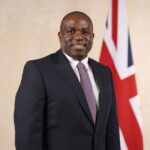
  • David Lammy – 2025 Speech at Lord Chancellor Swearing In

    David Lammy – 2025 Speech at Lord Chancellor Swearing In

    The speech made by David Lammy at the Royal Courts of Justice on 1 October 2025.

    My Lords, Ladies, friends, colleagues,

    Lady Chief Justice, thank you for that generous welcome, and your kind words.

    I am deeply grateful for your leadership…

    And look forward to working alongside you…

    In the months and years ahead.

    I congratulate my colleague and friend, Ellie Reeves…

    On her appointment as Solicitor General.

    Madam Solicitor, your dedication…

    Your expertise…

    And your energy…

    Will be of enormous value to this Government…

    And to this country…

    And I know you will serve the law with distinction.

    I also want to pay tribute to my predecessor, Shabana Mahmood…

    Who achieved so much in her time in this office…

    Steering the system back onto a steadier path…

    After such difficult years.

    It is the honour of my life to be sworn in as Lord Chancellor.

    The boy from Tottenham…

    Son of parents who came to this country from Guyana…

    Part of the great Windrush generation,

    Answering the call of a country…

    That needed rebuilding after the war.

    They came here with little, but gave so much…

    Because they believed in the values of this nation:

    In fairness, freedom, and equality.

    The boy whose Mum brought up five children alone…

    Working every hour god sent…

    Just to put food on the table…

    Teaching us the meaning of service, and sacrifice.

    The boy who fried chicken in KFC…

    But who carried aspirations far bigger than his uniform…

    Though not, perhaps, quite as big as this day…

    Nor indeed, quite as big as this uniform…!

    That boy could never have imagined…

    That he would be standing here, before you today.

    It has been a long journey…

    But in many ways, it feels like coming home.

    My whole life has been about justice.

    Growing up in the shadow of the Broadwater Farm Estate…

    Justice was not abstract.

    It was real.

    Ever-present.

    Often harsh.

    Too many boys who looked like me were written off.

    Too many were told to set their sights low.

    Too many found themselves on the wrong side of the law.

    But I was fortunate.

    Education gave me a way out…

    A gift that lifted my sights,

    … when others told me to lower them.

    Even then, though, I recall one teacher saying to me:

    “A barrister, David? Really?

    I think you should become a fireman.”

    But justice is what called me to the Bar….

    To advocacy…

    To giving a voice to those who had none…

    To defending the principle that all are equal before the law.

    It led me into public service…

    Into politics…

    And my work on the Lammy Review…

    Into racial inequality in our criminal justice system.

    From student, to barrister, to practice in California…

    Justice has been my compass.

    Justice has been my cause.

    And now, as Lord Chancellor…

    Justice is my charge.

    So I stand here humbled,

    I stand here honoured,

    And believe me when I say –

    I stand here feeling the full weight of this ancient office…

    More than a thousand years old.

    The names of its holders echo through history:

    Becket… Bacon… More… Wolsey.

    Some of them noble,

    Some… notorious.

    And I wonder what they would think about our nation’s first black Lord Chancellor.

    I think of those who came before me,

    Who gave new life to the ancient promise of Magna Carta:

    That no one is above the law…

    And that the law must protect the liberties of us all.

    I think of Lord Elwyn-Jones…

    Who, before he wore these robes, stood at Nuremberg…

    To face down the architects of racial hatred and war…

    Ensuring that even the most powerful can be held to account before the law.

    And who later passionately defended legal aid…

    So that fairness would not be the preserve of the wealthy.

    And I think of Lord Irvine of Lairg…

    Who brought the Human Rights Act into being…

    Weaving equality into the fabric of our common law.

    And so my task is threefold.

    First, to respect the rule of law.

    As Thomas Fuller once said – and Lord Denning often quoted –

    “Be you never so high, the law is above you.”

    That is the essence of our inheritance.

    No one is above the law, and all are equal beneath it.

    Woman or man.

    Rich or poor.

    Black or white.

    This is Britain’s greatest gift to the world.

    But we take these principles for granted…

    At our peril.

    As rights are eroded abroad…

    As democracy retreats in too many places…

    I will do everything in my power to defend those values…

    At home, and overseas.

    Second, I am to defend the independence of the judiciary.

    That independence is part of our prestige…

    It is why our justice system is trusted the world over…

    And why international businesses choose our courts…

    And our laws…

    To settle their disputes.

    And I promise you –

    I will defend that independence to the hilt.

    In recent years we have seen troubling signs…

    Of judges denounced for doing no more than interpreting the law…

    And even attacked in their own courtrooms.

    And we have seen, at the darkest extreme…

    Where this road ends.

    We see it in Putin’s Russia…

    Where the courts no longer speak for justice…

    But for power…

    To crush, silence and oppress critics.

    I am clear:

    In Britain there will always be space for dissent.

    There will always be space for debate –

    The freedom to disagree is part of who we are.

    But debate must never become intimidation.

    Disagreement must never become violence.

    You must be free to do your work…

    To make decisions on the most difficult and contested questions…

    Without interference…

    Without influence…

    And without fear for your safety.

    Because when those who uphold the law are threatened…

    The rule of law itself is threatened.

    That is something no free society can ever allow.

    And on my watch, it will not be.

    Finally,

    I am charged with the efficient and effective support of the courts…

    Ensuring they are fit for the people they serve.

    I inherit a system that has been under too much pressure…

    For far too long.

    The past few years have tested the justice system like never before.

    From the pandemic…

    To the pressures now facing our courts, prisons and probation services.

    I know you, our judiciary…

    And so many others across our courts and tribunals…

    Have carried that weight.

    You have kept the machinery of justice turning…

    Never letting it falter.

    I am profoundly grateful.

    Thanks to my predecessor, the justice system is now stabilising…

    And we are on the road to recovery.

    It will be a long journey…

    But we walk it with determination.

    Those efforts have, necessarily, focused in on criminal justice…

    On prisons, and probation…

    On driving down the backlog in the Crown Courts.

    And I will carry on that transformative work,

    Through the Sentencing Bill…

    Delivering punishment that cuts crime…

    And Sir Brian Leveson’s Independent Review…

    So our criminal courts are not just fit for today’s demands…

    But resilient for tomorrow’s…

    And so justice is no longer delayed, and denied…

    To so many.

    At the same time, our justice system is far broader…

    Touching every single part of our lives.

    Workers, seeking redress against unfair treatment…

    Small businesses, fighting for payment owed…

    Separating families, securing their child’s future…

    All of them rely on our civil and family courts…

    And our tribunals.

    So I will strive to protect and advance every part of that system…

    From legal aid, that protects the most vulnerable…

    To support for victims of crime.

    And I will champion our world class legal services…

    Which power growth…

    Generating over £42 billion for our economy each year.

    That is something we shouldn’t whisper about, but shout with pride.

    As Foreign Secretary, I once found myself in a skyscraper…

    In the heart of Abu Dhabi…

    Some 4000 miles away…

    Yet in that glittering tower…

    Billions of dollars in transactions…

    Were carried out under English law…

    Just one illustration…

    Of the phenomenal reach of our greatest export.

    English law is now used in around 40 percent of all cross-border business and financial transactions…

    But – we can go even further…

    And, supported by our new English Law Panel…

    We will…                                              

    To reinforce our position as a global legal leader…

    For the prosperity of this nation.

    I’ll come to a close with this.

    I pledge that this office will stand, as it has at its best moments in history…

    For fairness…

    For dignity…

    And for the belief that every citizen is equal under the law.

    To my wife, Nicola, and to my children: thank you.

    None of this would be possible without your love and support…

    Your patience…

    And dare I say it, your tolerance.

    I am proud – incredibly proud – to be the first Lord Chancellor of African-Carribean heritage…

    And to swear this oath today is the greatest honour of my life.

    I will work with determination.

    I will serve with devotion.

    And I will defend…

    With every fibre of my being…

    The rule of law.

    The boy from Tottenham is now Lord Chancellor…

    And he remains, above all, a servant of justice.

    Thank you.

  • PPE Medpro vs Government – Legal Case Documents on PPE

    PPE Medpro vs Government – Legal Case Documents on PPE

    The details of the legal case between PPE Medpro and the Government, published by the court on 1 October 2025.

  • Yvette Cooper – 2025 Speech at the Police Bravery Awards

    Yvette Cooper – 2025 Speech at the Police Bravery Awards

    The speech made by Yvette Cooper, the Home Secretary, at the Royal Lancaster Hotel on 11 July 2025.

    Thank you very much, good evening everyone, and thank you as ever to the Police Federation and of course Police Mutual for organising the event this year, and thank you for the invitation to speak and to present this inspirational award.

    I’m very conscious as well of being asked to speak before everyone gets to eat as well.

    I’ve actually been an MP now for 28 years, of which 15 of them I have had the honour to be able to come here to this event.

    It was an early mistake that I tried to learn from in my first years as an MP, where I had been invited to the annual dinner from a local community organisation. I had all of the briefing notes from my new office, and they said, they wanted to speak for three quarters of an hour.

    Three quarters of an hour? And then they asked me to speak before dinner as well – seriously? And I got to 25 minutes into this speech, and I could see everybody just getting really, you know, picking up the glasses, getting increasingly irritable.

    We’ve got a chair next to me, obviously rustling bits of paper, and I’m thinking, and it still says speak for three quarters of an hour. And I kept going. I had said literally everything I could think of about this community organisation. And finally I sat down and the chair said to me, said “right, well, we’ve cancelled the first course. We’re going to move on.”

    I said – what have I done? He said “so we did ask your office if you could speak for four to five minutes.”

    So I will learn from that experience and try not to speak for too long. But I did want to just have a chance to pay some tributes and to say a huge thank you, because it’s many times I have been here in shadow roles, in different roles, and to see a huge amount of work that policing does, the bravery that policing shows.

    But this is my second time here and at the end of just my first year as a Home Secretary, and it has been a huge honour to see every single day this year the incredible work that policing does in so many different parts of the country, so many different ways.

    But I actually wanted to start by paying tribute not to the officers who’ve been nominated, not even to all of the officers and staff that support them, but to all the family members who are here and who do so much to support all of the officers, all of our police family in the work that they do.

    The policing family includes all of those family members who are here, who have to put up with, who have to get the kids to school, who have to sort out everything, and also deal with the stress and the worry and provide the support so that every one of you can do your job. So please join with me in saying a huge thank you and paying tribute to all of the family members.

    I want to say thank you as well to not just all of you, but everyone within policing and the the officers, the officers who’ve had to face the most difficult situations, but also all of the colleagues, all of the PCSOs, the staff, from the forensics officers to the family liaison support officers, everybody within policing who holds policing together, that in turn holds our communities together and keeps all of us safe.

    And we often talk about the way in which you have to run towards danger when the rest of us get to walk away, but you also have to run towards the trickiest, the most difficult situations that the rest of us can’t solve. And when everybody else has given up, it’s you that have to pick up the pieces. And as one officer that I spoke to this evening said, he was saying “well, it’s just the job we do.” He said “who else are you going to call?”

    And it’s true, when everything else goes belly up, you are the ones that we call. So I just wanted to say a huge thank you, because we owe you a huge debt of gratitude for being the ones we call when everything else has gone wrong, and for being the ones who are there to pick up the pieces too.

    So I want to thank you too to recognise the impact and the consequences that that can have for all of you, because I know too that this really isn’t an easy job, and it’s a special job, and you do it with the most incredible dedication, but it also has consequences, and there’s a price to be paid for doing such a difficult job as well.

    And so I wanted to just also say we’re drawing up now, and Diana Johnson, the Policing Minister, is here today as well. We’re drawing up now a policing reform white paper that recognises many of the challenges that are faced across policing. And we’re trying to do this in a different way, working with police forces, working with policing in a way that I don’t think governments previously have done.

    But we will also make sure that respect for the workforce and the support the workforce needs is also a part of that white paper.

    And I wanted to particularly to thank everyone for the work that has been done to roll out, based on some of the pilots that’s been done, the first police specific mental health crisis line, to be able to provide that added support that we will need to build on to make sure that we recognise the impact that this has, this incredible job also has on those who do this.

    I want to say a huge thank you to all of them, the award nominees here tonight, and to pay tribute and to honour the huge bravery shown. You will hear the stories later on. And some of those who I’ve spoken to have said, well, I’ve heard everybody else’s stories, but really, you know, I shouldn’t have been nominated, because look at the bravery that everybody else has shown. And I think everybody has, I’ve heard say something similar, and would really just say to all of you, please do, let us pay tribute to you, because the bravery you’ve shown in those split second moments has been truly incredible and has helped save lives and has helped change lives, and has been the crucial things that we depend on you to do. And we are saying thank you, both to you and also to all of your colleagues, through you as well.

    Those stories of total selflessness, where we’ve had people trapped in burning buildings or freezing waters with no hope of survival, until our police officers from Lincolnshire, Staffordshire, Derbyshire, Essex, Manchester and Sussex came running to their rescue.

    The stories of the sheer instinctive courage, where dangerous men were stopped from doing huge harm to others only because officers from Bedfordshire, Cheshire, Dorset, Durham, Hampshire, Leicestershire, Leyton, Suffolk, Surrey, Thames Valley, Tower Hamlets and Wiltshire were willing to put their own lives on the line to keep everybody else safe.

    And the stories of the incredible compassion where people who were ready to end their own lives were pulled back from the brink by the interventions from officers from Kent, from Humberside, from Norfolk, South Wales, West Yorkshire.

    And stories of officers from Cambridge and North Wales, Nottinghamshire, South Yorkshire, dealing with apparently routine cases, issues that they were responding to, suddenly found themselves dealing with the most serious and deadly situations that they had to respond to with the utmost calm as well.

    And if the stories tell us anything, it’s the way in which all of you need to respond and be ready to respond to anything that you face, whether it’s the off duty officers in Lancashire or Southall breaking up fights in the street. Or in Cleveland, Cumbria, West Mercia, West Midlands, dealing with the mobs or gas explosions or speeding vehicles or dangerous dogs. Or in Northumbria, responding to the disgraceful disorder that broke out on the streets last summer.

    I am so sorry that so many of you who had to deal with frankly that disgraceful way, you should never have had to face the attacks on police officers by mobs, by missiles, and I will always back you in the job that you do to keep people safe.

    I think what the awards also show us is the fine line, the close margins between the miracles and the tragedies, and between the lives that you were able to save and the lives that no one could have saved.

    But you were still there, and you still did your best to help them, and the stories that we have this evening from Avon and Somerset, from Dyfed-Powys, from Gwent, from Northamptonshire and Warwickshire of officers trying to rescue individuals trapped in the most terrible of situations.

    So as we celebrate the lives that were saved, we also mourn the lives that were lost, and think of the victims too, and thank every officer for the incredible, incredible courage that was shown.

    And the same is true, perhaps most of all for our colleagues here this evening from Merseyside police, and I know they would give anything not to be in the room tonight and not to have their story be one of those that we once again, remember or be forced to relive that awful day once again.

    But we all know, and we’re all so grateful, because it was if it was not for you, and if it was not for your courage or the instinct that told you and your colleagues to run towards danger that day, there would be many more mums and dads in Southport today without their little girls to hold.

    So it’s a reminder, it’s a recognition of what something Sir Robert Peel said in a speech in Parliament 180 years ago when he talked about recognising the very best of public service, but also recognising you and through you, all of those that you work with too, because the service you have given, in his words, was “remembered, marked and honoured by a grateful country.”

    So I’m hugely grateful, but I say this on behalf of people right across the country. We’re hugely grateful for the bravery that you’ve shown, not just to face the really difficult things, but also then to get back up the following morning and to face it all again.

    So thank you for doing that. Thank you for caring so much for the job that you do, and thank you so much for being part of the amazing thing that is British policing. Thank you for keeping us safe.

  • Shabana Mahmood – 2025 Speech at the Council of Europe

    Shabana Mahmood – 2025 Speech at the Council of Europe

    The speech made by Shabana Mahmood, the Lord Chancellor, at the Council of Europe meeting on 18 June 2025.

    It is a privilege to be here in Strasbourg – the living symbol of Europe’s post-war promise: that freedom, dignity and the rule of law would never again be aspirations, but guarantees.

    It was here we took our first steps together, to create from the ashes of war a Europe bound not only by treaties and peace, but by shared principles.

    The United Kingdom is proud of the role it has played in keeping that promise.

    We helped found this council. We helped draft the Convention. And I can confirm that we remain firmly committed to both.

    But commitment is not the same as complacency.

    And across the continent, trust is being tested. Rules are increasingly being broken and undermined.

    And the values of democracy, human rights and the rule of law – once widely assumed – now face distortion, doubt, even hostility.

    In this context, the recent letter from nine European leaders demonstrates a desire for open conversation about the future of the Convention.

    And I welcome that dialogue.

    But as the Secretary General has said, that discussion needs to happen amongst us as member States.

    He went on to say that we must ensure that the Convention holds liberty and security, and justice and responsibility, in balance.

    I agree and I want to reflect today on what that means.

    Because our Convention was never meant to be frozen in time.

    It has been amended, extended and interpreted over decades – responding to new threats, new rights, and new realities.

    And we must consider doing so again. That is why the UK is not only open to this conversation, we are already actively pursuing it in how we implement the convention domestically – not to weaken rights, but to update and strengthen them.

    This is not a retreat from principle. It is the very essence of the rule of law.

    In these increasingly turbulent times, that phrase is often repeated, sometimes diluted.

    But the rule of law is not a vague ideal.

    It means simply that laws are clear and apply to all; that power is exercised within limits; and that everyone – government included – is bound by the rules.

    That principle runs through the United Kingdom’s legal tradition.

    It’s why my parents chose to make their lives there – because they believed in a country where institutions were independent, where power was accountable, and where justice didn’t depend on who you were, but on what was right.

    And it is not only our tradition.

    Every nation in this Council shares the practice of using written rules to underpin our democratic societies – we pay our taxes, respect others’ property and uphold due process.

    These rules bind not just people within a state, but the behaviour of states towards one another – as was made clear at the Luxembourg Ministerial.

    I commend strongly the speed with which the Council expelled Russia following its full-scale invasion of Ukraine, and the extensive work to set up the Register of Damage and towards creating a Special Tribunal for the Crime of Aggression.

    These are not symbolic acts. They are proud declarations that the rule of law still matters.

    To support this, I can today announce our contribution of €100,000 to the Council of Europe Ukraine Action Plan.

    This will support Council of Europe activities that are strengthening democratic governance and the rule of law in Ukraine.

    When I came in this morning, the Ukrainian and Council of Europe flags were at half-mast, and it is a sobering reminder of the daily horrors that the Ukrainian people are suffering.

    But the successes of our Convention cannot be taken for granted. Because when rules are broken with impunity, trust collapses – not just in states, but in the idea of democracy itself.

    And across Europe, public confidence in the rule of law is fraying.

    There is a growing perception – sometimes mistaken, sometimes grounded in reality – that human rights are no longer a shield for the vulnerable, but a tool for criminals to avoid responsibility.

    That the law too often protects those who break the rules, rather than those who follow them.

    This tension is not new. The Convention was written to protect individuals from the arbitrary power of the state.

    But in today’s world, the threats to justice and liberty are more complex.

    They can come from technology, transnational crime, uncontrolled migration, or legal systems that drift away from public consent.

    Again, I commend the good work that is going on.

    We must work together with the Secretary General to ensure that the Democratic Pact helps meet these challenges and builds on existing work such as the Reykjavik Principles on Democracy, the Venice Commission, and GRECO.

    But when the application of rights begins to feel out of step with common sense – when it conflicts with fairness or disrupts legitimate government action – trust begins to erode.

    We have seen this in the UK in two particularly sensitive areas: immigration and criminal justice.

    If a foreign national commits a serious crime, they should expect to be removed from the country.

    But we see cases where individuals invoke the right to family life – even after neglecting or harming those very family ties.

    Or take prison discipline. Being in custody is a punishment. It means some privileges are lost.

    But dangerous prisoners have been invoking Article 8 to try to block prison staff from putting them in separation centres to manage the risk they pose.

    It is not right that dangerous prisoners’ rights are given priority over others’ safety and security.

    That is not what the Convention was ever intended to protect.

    To be clear, this is not a critique of the Court of Human Rights.

    It was my pleasure yesterday to meet the new President of the Court, and he and his colleagues have my full support in their role of interpreting and applying the Convention.

    But when legal outcomes feel disconnected from public reasonableness, it is our job to respond.

    Because when people come to believe that rights only exist to protect the rule-breaker – not the rule-follower – those who would undermine the entire idea of universal human rights – the populists – will seize the space we leave behind.

    So, what should we do?

    We cannot leave these questions to the courts alone.

    If judges are being asked to solve political problems that parliaments avoid, we weaken both institutions.

    That is why reform must be a shared political endeavour amongst us as member States – to preserve our Convention by renewing its moral and democratic foundation.

    None of us can walk away from that discussion.

    In the UK, we are restoring the balance we pledged at the birth of our Convention: liberty with responsibility, individual rights with the public interest.

    There must be consequences for breaking the rules.

    Which is why we are clarifying how Convention rights – particularly Article 8 – operate in relation to our immigration rules. The right to family life is fundamental. But it has too often been used in ways that frustrate deportation, even where there are serious concerns about credibility, fairness, and risk to the public.

    We’re bringing clarity back to the distinction between what the law protects and what policy permits.

    Prisoners claiming a right to socialise – under Article 8 – is not just a legal stretch. It damages the public perception of human rights altogether.

    These are the reforms we are pursuing at home. The question for all of us now is whether the Convention system, as it stands, has the tools to resolve these tensions in a way that keeps the public with us.

    As I have said, our Convention has evolved before, through new protocols, new rights, and new interpretations. Always to reflect changing times, while staying true to its purpose.

    The rule of law and human rights are part of one system of thought.

    But when rights feel remote from fairness, or we appear to protect the rule-breaker over the rule-follower, trust disintegrates – and with it, the foundations of democracy.

    That is why this dialogue matters. Because the Convention matters so much.

    We can preserve rights by restoring public confidence in them rather than give ground to populism.

    The European Convention on Human Rights is one of the great achievements of post-war politics.

    It has endured because it has evolved.

    Now, it must do so again – as the Secretary General said, so it is strong and relevant

    And as it is our convention, it is our responsibility. It will not always be easy. But this is a conversation we need to have.

    I look forward to that conversation, today and in the months to come.

  • Robert Jenrick – 2025 Speech on the Independent Sentencing Review

    Robert Jenrick – 2025 Speech on the Independent Sentencing Review

    The speech made by Robert Jenrick, the Shadow Secretary of State for Justice, in the House of Commons on 22 May 2025.

    Today is about one question: should violent and prolific criminals be on the streets or behind bars? I think they should be behind bars. For all the Justice Secretary’s rhetoric, the substance of her statement could not be clearer: she is okay and her party is okay with criminals terrorising our streets and tormenting our country. The truth is this: any Government—[Interruption.]

    Mr Speaker

    Order. I thought people had come to listen to the statement and I expect them to listen. I expected the Opposition Front Bench to be quiet; I certainly expect better from the Government Front Bench.

    Robert Jenrick

    Mr Speaker, the truth is this: any Government serious about keeping violent criminals behind bars, any Government willing to do whatever it took, could obviously find and build the prison cells required to negate the need for these disastrous changes. What do the changes amount to? [Interruption.]

    Mr Speaker

    Order. Mr Swallow, you are getting very excited. You were telling me how good a schoolteacher you were; this is a very bad example of that.

    Robert Jenrick

    What do these changes amount to? They are a “get out of jail free” card for dangerous criminals. Has the Justice Secretary even gone through a court listing recently? Pick one from anywhere in our country: those currently going to jail for 12 months or less are not angels. They are Adam Gregory in Calne, who got 12 months for sexually assaulting his partner; Vinnie Nolan, who got 12 months for breaking someone’s jaw; Shaun Yardley, 10 months for beating his partner; or Paul Morris, who got six and a half months for shoplifting 36 times. Her plan is to let precisely these criminals loose. It is a recipe for a crime wave.

    What about the Justice Secretary’s plan for most criminals going to jail to serve just one third of their prison sentence there and for her slashing of sentences across the board—discounts so big they would make Aldi and Lidl blush? I would call it a joke if the consequences for the public were not so terrifying. In fact it gets worse, because criminals who plead guilty—and most do—already get a third cut in their sentence, so under her scheme a burglar who pleads guilty to an 18-month headline term would spend just one fifth of that term in jail—barely 11 weeks. Eleven weeks for smashing through a family’s door and storming through a child’s bedroom looking for valuables, leaving them traumatised for life. Is that the Justice Secretary’s idea of justice for victims? The least she could do is here and now guarantee that violent criminals, domestic abusers, stalkers and sexual assaulters will not be eligible for any discount in their sentence. Will she commit to that?

    If not prison, what is the plan to punish these criminals and to keep the public safe? Well, the Justice Secretary says it is digital prisons—as she puts it, prison outside of prison, words that lead most people in this country to conclude that the Justice Secretary is out of her mind. I am all for technology but tags are not iron bars—they cannot stop your child being stabbed on their walk home from school, or a shop being ransacked time and again, or a domestic abuser returning to their victim’s front door.

    Mr Speaker

    Order. I do not think that “out of her mind” is language that should be used. I am sure the shadow Secretary of State would like to reflect on that.

    Robert Jenrick

    Of course, Mr Speaker.

    The Ministry of Justice’s own pilot scheme found that 71% of tagged offenders breached their curfew. When it comes to stopping reoffending, tags are about as useful as smoke alarms are at putting out bonfires. What is the Justice Secretary going to say when she meets the victims of offenders that she let off? How is she going to look them in the eye and say with a straight face, “I’m sorry—we are looking into how this criminal escaped from their digital prison cell.” Her reforms are a recipe for carnage.

    I urge the Justice Secretary to change course and to make different choices—yes, choices—from the ones that we knew the Government would make from the day that the Prime Minister hand-picked Lord Timpson as Minister of State for Prisons, Probation and Reducing Reoffending, a man who is on record as saying that

    “a lot of people in prison…shouldn’t be there”—

    two thirds of them in fact, he said—

    “and they are there for far too long”.

    The Labour party is clearly ideologically opposed to prison and that is why the Government are letting criminals off with a “get out of jail free” card, rather than deporting the 10,800 foreign national offenders in our prisons—one in every eight cells—a figure that is rising under the Justice Secretary’s watch. If she is actually serious about keeping violent criminals off our streets and finding the cells that are needed, will she bring forward legislation, tomorrow, and disapply the Human Rights Act 1998, which is stopping us from swiftly deporting foreign national offenders?

    Some 17,800 prisoners are on remand awaiting trial—another figure that has risen under the Justice Secretary. In fact, her own Department’s figures forecast that it could rise to as many as 23,600. If she is serious, will she commit to taking up the Lady Chief Justice’s request for extra court sitting days to hear those cases and free up prison spaces? Will she commit, here and now, to building more than the meagre 250 rapid deployment cells her prison capacity strategy says she is planning to build this year? They have been built in seven months before, and they can be built even faster.

    If the Justice Secretary were serious, she would commit to striking deals with the 14 European countries with spare prison capacity, renting their cells from them at an affordable price, as Denmark is doing with Kosovo. Between 1993 and 1996, her beloved Texas, the state on which she modelled these reforms—a state that, by the way, has an incarceration rate five times higher than that of the United Kingdom—built 75,000 extra cells. If the Government were serious, why can they not build 10,000 over a similar time period?

    Labour is not serious about keeping hyper-prolific offenders behind bars. In fact, there is nothing in the Justice Secretary’s statement on locking them up or cutting crime, because the Labour party does not believe in punishing criminals and it does not really believe in prison. The radical, terrible changes made today are cloaked in necessity, but their root is Labour’s ideology. It is the public who will be paying the price for her weakness.

    Shabana Mahmood

    The shadow Secretary of State talks about serious Government—if the Government that he was a part of had ever been serious, they would have built more than 500 prison places in 14 years in office—[Interruption.] He is a new convert to the prison-building cause. He and his party have never stood up in this Chamber and apologised for adding only 500 places—

    Mr Speaker

    Order. I want the same respect from Members on the Opposition Front Bench. [Interruption.] Do we understand each other?

    Robert Jenrick indicated assent.

    Shabana Mahmood

    Mr Speaker, if I were waiting for respect from Opposition Members, I would be waiting for a long time, so it is a good job that I do not need it.

    The shadow Secretary of State talks about “iron bars”, but he was part of a Government that did not build the prison places that this country needs. Unlike him, I take responsibility, and it has fallen to me to clean up the mess that he and his party left behind. In case there is any confusion, let me spell out what happens when he and his party leave our prison system on the brink of collapse, which is exactly what they did, and set out the prospect that faced me on day one, when I walked into the Justice Department. When prisons are on the verge of collapse, we basically have only two choices left at our disposal: either we shut the front door, or we have to open the back door. The right hon. Gentleman’s party knew that that was the situation it was confronted with, but did it make any decisions? No, it just decided to call an election instead and did a runner.

    The public put the Conservatives in their current position. If they ever want to get out of that position, I suggest that they start by reckoning with the reality of their own track record in office. In any other reality, they should have started already with an apology. Conservative Members have had many chances to apologise to the country for leaving our prisons on the point of absolute collapse, but they have never taken them. Frankly, that tells us everything that anyone needs to know about the modern Conservative party.

  • Shabana Mahmood – 2025 Statement on the Independent Sentencing Review

    Shabana Mahmood – 2025 Statement on the Independent Sentencing Review

    The statement made by Shabana Mahmood, the Lord Chancellor and Secretary of State for Justice, in the House of Commons on 22 May 2025.

    With your permission, Mr Speaker, I will make a statement on sentencing in England and Wales. As the House will be aware, the independent sentencing review was published today. It was chaired by David Gauke and his panel comprised experts, including a former Lord Chief Justice, and representatives from the police, prisons, probation and victims’ rights organisations. The Government are grateful for the review’s recommendations, and I will ensure that a copy is deposited in the Libraries of both Houses. Today, I will set out our in-principle response.

    First, however, it is essential that we set the review in its proper context. A year ago today, the Conservative party called an election. They did so because they were confronted by the prospect of prisons about to collapse. Rather than confront their failure, they chose to hide it and hoodwink the public into re-electing them. It did not work, but their legacy lives on.

    Our prisons are, once again, running out of space and it is vital that the implications are understood. If our prisons collapse, courts are forced to suspend trials, the police must halt their arrests, crime goes unpunished, criminals run amok and chaos reigns. We face the breakdown of law and order in this country. It is shameful that, in this day and age, we are confronted by this crisis once more. The reasons are clear. The last Government added just 500 places to our prison estate, while at the same time, sentence lengths rose. As a result, the prison population is now rising by 3,000 each year and we are heading back towards zero capacity. It now falls to this Government to end this cycle of crisis. That starts by building prisons.

    Since taking office, we have opened 2,400 places. Last week, I announced an additional £4.7 billion for prison building, putting us on track to hit 14,000 places by 2031, in the largest expansion since the Victorian era. That investment is necessary, but not sufficient. We cannot build our way out of this crisis. Despite building as quickly as we can, demand for places will outstrip supply by 9,500 in early 2028, and that is why I commissioned the sentencing review. Its task was clear: this country must never run out of prison places again. There must always be space for dangerous offenders.

    At the same time, the review was tasked with addressing the fact that our prisons too often create better criminals, not better citizens. Instead of cutting crime, they are breeding grounds for it. The reviewers have followed the evidence and example of countries across the world. Today I present an initial response, with further detail to follow once legislation is placed before the House.

    Let me start with the report’s central recommendation: the move to a three-part sentence called the earned progression model, which the Government accept in principle. Under the model, an offender will not necessarily leave prison at an automatic point. Instead, their release date will be determined by their behaviour. If they follow prison rules, they will earn earlier release; if they do not, they will be locked up for longer. That echoes the model I witnessed in Texas earlier this year, which cut crime and brought their prison population under control.

    Under the new model, offenders serving standard determinate sentences with an automatic release of 40% or 50% will now earn their release. The earliest possible release will be one third, with additional days added for bad behaviour. The review suggests a new maximum of 50%, but for those who behave excessively badly, I will not place an upper limit. For those currently serving standard determinate sentences with an automatic release point of 67%, their earliest possible release will be 50%. Again, for those who behave excessively badly, I will not place an upper limit.

    David Gauke also suggests that those serving extended determinate sentences should also earn an earlier release. This we will not accept. Judges give extended sentences to those they consider dangerous, with no Parole Board hearing until two thirds of time served, and I will not change that. I can also confirm that no sentences being served for terror offences will be eligible for earlier release from prison.

    In the second part of the progression model, offenders will enter a period of intensive supervision. That will see more offenders tagged and close management from probation. The Government will therefore significantly increase funding: by the final year of the spending review period, an annual £1.6 billion will rise by up to £700 million, allowing us to tag and monitor tens of thousands more offenders. If offenders do not comply with the conditions of their release, the sentencing review has suggested that recall to prison should be capped at 56 days. We have agreed to this policy in principle, though the precise details will be placed before the House when we legislate. In the final stage of the three-part sentence, offenders could still be recalled if a new offence is committed, and I will also ensure that the most serious offenders continue to be subject to strict conditions.

    The review also recommends a reduction in short prison sentences. A compelling case for doing so has been proposed in this House many times. In the most recent data, nearly 60% of those receiving a 12-month sentence reoffended within a year. With reoffending rates for community punishment consistently lower, we must ask ourselves whether alternative forms of punishment would make the public safer. It is important, however, to note that the review recommends a reduction in short sentences, not abolition. It is right that judges retain the discretion to hand them down in exceptional circumstances. In considering exceptional circumstances, we will continue to ensure that courts have access to thorough risk assessments for domestic abuse and stalking cases, and breaches of protective orders linked to violence against women and girls will be excluded.

    The review also recommends an extension of suspended sentences from two to three years. In this period, the prospect of prison time hangs over an offender should they break any conditions imposed upon them, and we accept that recommendation.

    The recommendations set out above will see more community punishment. For that reason, it is essential that it works. The review recommends a series of measures to make community punishment tougher and force offenders to pay back to those they have harmed. We will consider new financial penalties, which could see offenders’ assets seized, even if they are not knowingly linked to crime, and expanded use of punishments such as travel and driving bans that would curtail offenders’ liberty.

    We accept a recommendation to expand intensive supervision courts. Those impose tough conditions, including treatment requirements, that tackle the root causes of prolific offending. Offenders are brought before a judge regularly to monitor compliance, and the prospect of prison hangs over them like the sword of Damocles.

    However, I believe community punishment must be tougher still. Unpaid work must pay back, so I will shortly bring together business leaders to explore a model whereby offenders work for them, and the salary is paid not to the offender but towards the good of victims. I will also work with local authorities to determine how unpaid work teams could give back to their communities, whether by filling potholes or cleaning up rubbish.

    I invited David Gauke to consider cohorts of offenders who this Government believe require particular focus. I welcome his recommendations on female offenders. Approximately two thirds of female offenders receive short sentences. Around the same number are victims of domestic abusers. I am pleased to say that the review’s recommendation on short, deferred and suspended sentences will reduce the number of women in prison.

    I asked David Gauke to consider how we tackle foreign national offenders. Today, our deportation rate is ahead of the last Government’s. I welcome the recommendations to make it quicker and easier to deport foreign criminals. Under the existing scheme, they are sent back to their country of origin after serving 50% of the custodial sentence. We will bring that down to 30%. We will also conduct further work with the Home Office on how we can deport foreign prisoners serving less than three years as soon as possible after their sentencing.

    I also asked the review to consider how we manage sex offenders. The review has recommended we continue a pilot of so-called medication to manage problematic sexual arousal. I will go further, with a national roll-out beginning in two regions, covering 20 prisons. I am exploring whether mandating the approach is possible. Of course, it is vital that this approach is taken alongside psychological interventions that target other causes of offending, such as asserting power and control.

    When discussing sentencing, it is too easy to focus on how we punish offenders when we should talk more about victims. Everything I am announcing today is in pursuit of a justice system that serves victims. If our prisons collapse, it is victims who pay the price. By cutting reoffending, we will have fewer victims in future, but there is more we must do to support victims today. The review recommends a number of important measures, including better identifying domestic abusers at sentencing, so that we can monitor and manage them more effectively. I pay tribute to those who have campaigned on this, particularly the hon. Member for Eastbourne (Josh Babarinde). I also welcome the recommendation to expand the use of specialist domestic abuse courts, where trained staff support victims. To improve transparency in the system, we will extend a pilot of free sentencing transcripts for victims of rape and serious sexual offences.

    I want to go further than the review recommends to better support victims. Exclusion zones are an important tool, preventing offenders from entering areas their victims might be in, but these place greater limits on victims than on offenders. I want to change that, locking offenders down to specific locations so that victims know they are safe wherever else they want to go.

    This review sets out major reform. I know its recommendations will not be welcomed by all. By appointing David Gauke, a former Conservative Lord Chancellor, I hoped to show that two politicians from different traditions can agree on the reforms our justice system requires. I do not expect Conservative Members to join me to solve this crisis. In fact, I can hear their soundbites already. “Just build faster,” they will say. Well, we are building faster than they did: we have already added 2,400 places, and we are now investing £4.7 billion more. “Just deport more foreign criminals,” they will say. Well, we are ahead of where they were, and today we have accepted major reform to go further and faster. “Clear the courts backlog,” they will say despite having created it themselves. Well, we are investing more in our courts than they ever did, and we are ready to embrace once-in-a-generation reform to deliver swifter justice for victims.

    While we are doing more on each of these areas than they ever did, these are not solutions that rise to the scale of the crisis that they left behind. We must build prisons on an historic scale, deport foreign national offenders faster than ever, and speed up our courts; and yet still, despite all that, we must reform sentencing too. So, more in hope than expectation, and despite, not because of, experience, by appealing to the better angels of their nature—if they have any—I end by inviting those opposite to help us fix the crisis that they left behind. I commend this statement to the House.

  • Lisa Smart – 2025 Speech on Counter Terrorism Policing Arrests

    Lisa Smart – 2025 Speech on Counter Terrorism Policing Arrests

    The speech made by Lisa Smart, the Liberal Democrat MP for Hazel Grove, in the House of Commons on 6 May 2025.

    I thank the Minister for updating the House and for advance sight of his statement. I also add my thanks to the security services and the police for all their work to keep us safe.

    Over recent years Members have been called to this Chamber to discuss plots to commit acts of terror on Britain’s streets at the hands of the Iranian regime—but consecutive Governments are yet to proscribe the Islamic Revolutionary Guard Corps as a terrorist organisation. In opposition, the now Foreign Secretary said:

    “The IRGC is behaving like a terrorist organisation and must now be proscribed as such.”

    Earlier this year I asked the Minister precisely this question: does he not agree that now is surely the time? In his earlier remarks, he mentioned the review that has concluded. If now is not the time for proscription, when should the House expect a further update?

    The Liberal Democrats have welcomed previous sanctions against those linked to the Iranian regime. However, I urge the Government to go a step further and look closely at whether those individuals and others with links to the regime have assets here in the UK. Will the Minister commit to carrying out an audit, so that we know where those assets are, enabling the Government to freeze them as appropriate? The Minister is right to reference the long-standing pattern by the Iranian intelligence service of targeting people of the Jewish faith and of Israeli nationality. Could he update the House on any conversations he has had with the UK Jewish community leadership, specifically the Community Security Trust, about threats here in the UK?

    Dan Jarvis

    I thank the hon. Lady for, as is always the case, the very sensible and reasonable way in which she has phrased her questions. I am always available to discuss these matters in more detail should she wish to do so. To her question on proscription, I hope she will acknowledge the response I gave to the shadow Minister a few moments ago.

    We take these matters incredibly seriously. The Home Secretary and I looked at them very closely in opposition, and that is precisely why the Home Secretary commissioned Jonathan Hall. He is the right person to look carefully at our legislative framework and make recommendations about whether we can toughen and strengthen our laws in this particular area. Mr Hall has now concluded his report; we are looking very closely at it, and it will be published shortly. As I said to the shadow Minister, we will not hesitate to bring forward further measures as required.

    The hon. Lady made an important and helpful point about sanctions and assets, and I know it will have been heard by the Foreign Office Minister, my hon. Friend the Member for Lincoln (Mr Falconer), with whom we work incredibly closely. We work hard to ensure that our response is always as joined up across Government as it can be. The Home Secretary works very closely with the Foreign Secretary, and I work very closely with my hon. Friend the Member for Lincoln on these matters, and we will consider whether further measures need to be taken.

    The hon. Lady’s final point about the Jewish community is a very important one. I give her and the whole House an absolute commitment that we will work tirelessly to ensure the safety of the Jewish community in our country. The Home Secretary and I, and other Ministers, are in regular contact with members of that community, including the CST, which she referenced and which does an excellent job. I will be meeting them in the very near future, and the hon. Lady can be reassured that we will work very closely with them to ensure that they get the protection that they need and deserve, and the assurances that they rightly want.

    Paul Waugh (Rochdale) (Lab/Co-op)

    I pay tribute to the bravery and professionalism of the counter-terrorist specialist firearms officers who took part in the arrest of an Iranian national in Rochdale over the weekend. It was a reminder of not only the constant threat that we face, but the intelligence and police services’ daily work to keep us all safe. Does the Minister agree that in this week of the 80th anniversary of VE Day, it is a reminder too that Britain is at war with a modern enemy: the fascism of Islamist extremism and state-sponsored terrorism? The message should go out loud and clear that my town, our country and this House will never surrender to such terrorism or to its ideology.

    Dan Jarvis

    My hon. Friend makes a powerful and important point. He is absolutely right that the Government will never drop their guard to the threats that we undoubtedly face in countering terrorism, whether the specific threat around Islamist extremism or state threats. We take these matters incredibly seriously, and we will work to ensure that all our security services and police forces have the resources and tools they need to address the threats we face.

  • Matt Vickers – 2025 Speech on Counter Terrorism Policing Arrests

    Matt Vickers – 2025 Speech on Counter Terrorism Policing Arrests

    The speech made by Matt Vickers, the Conservative MP for Stockton West, in the House of Commons on 6 May 2025.

    I thank the Minister for providing advance sight of his statement on this critical issue. People will have read the deeply concerning report suggesting that an attack may have been just hours away, and this will understandably be worrying to people across the country.

    This statement reminds us of the tragic incidents that have plagued our country in the past. This month marks 12 years since the death of Lee Rigby on our streets, as well as eight years since the horrific Manchester Arena bombing. Later this year, we will also mark the 20th anniversary of the 7/7 attacks, which brought to London a level of destruction that many of us never thought we would see in our lifetimes. These acts of terror, along with other cowardly acts, caused untold hurt to victims and their families.

    As we discuss the arrests over the past weekend, we must remember the importance of keeping the British public safe from those who seek to terrorise us, and I therefore pay tribute to the hard-working members of the police and intelligence services for their bravery in disrupting terrorist activities. In October, the head of MI5 said that the police and MI5 had together disrupted 43 late-stage attack plots since the Manchester bombing. We must remember that each of these cases is not merely a statistic, but represents someone’s life and someone’s future.

    I commend the Minister for recognising the work of the previous Government and for acknowledging the measures that were used effectively in this incident. In turn, we will support measures that enact the National Security Act and give the Government the powers needed to act against malign influences on our country.

    Turning to the incidents at hand, I would be grateful if the Minister could clarify certain points. While I am thankful for today’s statement, I hope the Government will be as transparent as possible about the details to avoid the vacuum of information we have previously discussed in this place. While I appreciate that the Government do not want to provide a running commentary, like many other Members I would be grateful if the Government could be as open as possible, given the seriousness of the arrests.

    As the Minister has outlined, there were two separate arrests of Iranian nationals in relation to terror offences, which has raised serious questions about how their networks were formed and what their intentions were. Can the Minister provide any further information about the suspects? For example, while we know they were Iranian nationals, what is their immigration status? Was the state aware that these individuals were in the UK, and was there any prior indication of the risk they might pose?

    On the broader issue of Iran, while I understand that the Minister may not be able to comment on proscription directly, the Home Secretary did address this while in opposition.

    In July 2023, she told the Royal United Services Institute that

    “instead of trying and failing to use counter-terror legislation to proscribe organisations like Wagner or IRGC, we will introduce a bespoke proscribing mechanism to address state-sponsored threats.”

    She also said at the Dispatch Box in April 2024 that Labour wanted

    “appropriately targeted proscription-style restrictions on the operations of state-linked organisations such as the IRGC.”—[Official Report, 15 April 2024; Vol. 748, c. 19.]

    However, it was only in March of this year that the Minister for Security announced the review by Jonathan Hall. Does he share my concerns that these mixed signals and the delay suggest a lack of prioritisation by the Government? Ultimately, we must all work together to ensure that the UK adopts the strongest possible stance on national security. As cross-party co-operation is essential, I urge the Government to take every possible step to prevent these cowardly acts of terror.

    Dan Jarvis

    I thank the shadow Minister for the sensible, reasonable and constructive tone of his response. He is absolutely right to draw the House’s attention to the tragic death of Lee Rigby, the tragic bombing in Manchester and, of course, the 20th anniversary of the 7/7 bombings that we will be commemorating in a couple of months’ time.

    Let me join the shadow Minister in paying tribute to all those who work tirelessly to keep our country safe. It is one of the greatest privileges of this particular role that we have the opportunity to serve in government, as Conservative Members will also have done, and to work closely alongside those incredibly committed members of the police and the intelligence services; we owe them a debt of gratitude.

    I am also grateful for the opportunity that the shadow Minister has afforded me to offer our thanks for the work that was done by the previous Government, both in introducing the National Security Act 2023, which has proved to be an incredibly valuable tool, and in creating CTOC, which is delivering very significant operational value. I can absolutely give an assurance that this Government, like the previous one, will continue to invest in that institution.

    The shadow Minister made an important point about transparency, and I can give him the reassurances that he seeks. He and the House will understand that we are just a couple of days on from those arrests that took place on Saturday. The Home Secretary will provide a further update as soon as we are operationally able to do so. I give the shadow Minister a commitment that we will be as transparent as possible while of course ensuring that we do not cut across live counter-terrorism operations.

    The shadow Minister mentioned proscription, and I understand why. I know that he will acknowledge—or at least I hope that he will—that on 4 March I announced a very strong suite of measures designed to most effectively address the nature of the threat that we face from Iran. Contained within those measures was a request from the Home Secretary for Jonathan Hall, who I know is held in very high regard because of the experience and credibility that he has in this area, to look very carefully at the legislative framework that might enable us to more effectively proscribe state-based entities. I can confirm that Mr Hall has completed his report and that the Home Secretary and I are considering it very carefully. It will be published shortly. I assure the shadow Minister that we will not hesitate to act if there is a requirement to bring forward further measures.

  • Dan Jarvis – 2025 Statement on Counter Terrorism Policing Arrests

    Dan Jarvis – 2025 Statement on Counter Terrorism Policing Arrests

    The statement made by Dan Jarvis, the Minister for Security, in the House of Commons on 6 May 2025.

    With permission, Mr Speaker, I will make a statement on the series of national security-related arrests that took place on Saturday 3 May. Protecting our national security is the first duty of Government, and it is a testament to our world-leading law enforcement and intelligence services that, through their tireless commitment, so many plots against the UK have been thwarted. I pay tribute to them again today for the work that they have done not just this weekend, but in recent weeks and months, on these important operations.

    The two operations that took place across multiple locations this weekend were significant and complex. They were some of the largest counter-state threats and counter-terrorism actions that we have seen in recent times, and I am sure the whole House will want to join me in thanking the police, the security services and other partner agencies across the country, who showed their professionalism and expertise in carrying out these operations to keep our country safe.

    Right hon. and hon. Members will understand that these are complex investigations. The police and the security services need time and space to be able to pursue their investigations, and our first priority must be to protect the integrity of that work so that we do not cut across those investigations and operations at a crucial time. However, these are serious matters, and the House will rightly want to remain informed. I will therefore outline as much detail as I am able, and I hope that right hon. and hon. Members will understand that there is a strict limit to what I can say at this stage, given that investigations are now ongoing.

    I will first outline the facts around the events on Saturday 3 May. Throughout the day, counter-terrorism police undertook a series of arrests relating to two separate investigations. In total, eight men were arrested by the Metropolitan police’s Counter Terrorism Command. Five men were arrested on suspicion of preparation of a terrorist act, contrary to section 5 of the Terrorism Act 2006, as part of a proactive investigation in the areas of west London, Swindon, Rochdale, Stockport and Manchester. All five men are Iranian nationals. While four of the individuals remain in police custody, the fifth has now been bailed with strict conditions.

    As part of the investigation, police officers carried out searches at a number of addresses in the Greater Manchester, London and Swindon areas. Investigations continue, with searches and activity still under way at multiple addresses across the country. The investigation relates to a suspected plot to target specific premises. Police officers have been in contact with the affected site’s representatives to make them aware and provide relevant security advice and support. However, the police have also been clear that for reasons of operational security and public safety, they are not—and I am not—able to provide further information on the target at this time, and I urge Members not to speculate about the site.

    In a separate police investigation, two men were arrested at two different addresses in north-west London, and one man was arrested at an address in west London. All three were arrested under the National Security Act 2023. These three men are also Iranian nationals, and remain in police custody. I can confirm to the House that these are the first Iranian nationals arrested under the National Security Act.

    The operations to execute these eight arrests under both counter-terror and counter-state threat powers—in different parts of the country, and in the space of 24 hours—were intensive. They involved a range of different organisations, including different police forces, counter-terror police, the National Crime Agency, and our security and intelligence services. These operations were co-ordinated through the world-leading Counter Terrorism Operations Centre, which brings together and co-ordinates the UK’s agencies, alongside the agencies of our Five Eyes partners, to detect and tackle national security threats. I welcome the work of the previous Government to establish CTOC in 2021, and this Government have continued to support it and invest in it since taking office.

    The significant point about both counter-terrorism and counter-state threats powers is that they allow the police to intervene early to prevent and disrupt threats, not just respond after events have taken place. This is crucial for public safety, but it also makes the investigations more complex, and that is why the police need the time and space to pursue them now, so we will not be providing a running commentary on the work that they are doing. However, what now follows is an incredibly complex set of investigations, involving hundreds more officers carrying out forensic searches, collecting vital evidence across different sites across the country and securing witness statements, backed up by the continued efforts of our security and intelligence agencies. This is careful, painstaking work.

    At this stage in the operations and investigations, it would not be appropriate for me to speculate on or comment further on the details of these two cases and the motivations behind any of the threats that were posed. However, the House will be aware that these operations come against a backdrop of complex, interconnected threats to the UK, where state threats and counter-terrorism as well as serious and organised crime are intertwined together.

    For 20 years, the greatest focus of our national security work was on terrorism—primarily from Islamist terrorism, with additional threats from Northern Ireland-related terrorism and other areas—and those threats have not gone away. Fifteen terrorist attacks have taken place since 2017, and there have been 43 late-stage disruptions of terrorism plots, but alongside that we have seen a serious, growing and complex challenge from state threats. Last year, Sir Ken McCallum, the director general of MI5, said that MI5 state threat investigations had increased by 48% in the previous 12 months. He added that, since January 2022, the police and MI5 had responded to 20 Iran-backed plots presenting potentially lethal threats.

    In March, I told Parliament that the UK is facing a growing and evolving threat from malign activity carried out by a number of states. My statement in March outlined the Government’s response to the unacceptable threat that we face from the Iranian state, and the steps we are taking to ensure that our intelligence and law enforcement agencies have the tools they need to disrupt and degrade Iran’s malign activity on UK soil. We have delivered on the commitments made. I announced that the whole of the Iranian state, including the Islamic Revolutionary Guard Corps and the Ministry of Intelligence and Security, would be placed on the enhanced tier of the foreign influence registration scheme. I laid the regulations to make this happen in the House on 1 April and committed to bring the scheme into force on 1 July. I trust that all Members will vote in favour when those regulations are debated shortly.

    Let me be clear: anyone in the UK who works for the Iranian state must declare it or they will be committing a serious criminal offence. We will also go after the criminal networks and enablers that Iran uses to carry out its work. Last month, the Government sanctioned the Foxtrot network—a network involved in violence against Jewish and Israeli targets in Europe on behalf of the Iranian regime. Training and guidance on state threats activity is now being offered by Counter Terrorism Policing to all 45 territorial police forces across the UK.

    The independent reviewer of terrorism and state threats legislation, Jonathan Hall KC, was asked by the Home Secretary to review the parts of our counter-terrorism framework that could be applied to modern-day state threats such as those from Iran. The Home Secretary specifically asked the reviewer to look at a state threats proscription tool, so we are not held back by limitations in applying counter-terrorism legislation to state threats. Jonathan Hall has now completed his review and will publish it shortly, and the Government will not hesitate to take action in response to Mr Hall’s advice.

    As we continue to support the police and the security services in their investigations, I can also tell the House that the Home Secretary has instigated a series of security assessments that are being done or refreshed in the light of the cases this weekend and the further information surrounding them, which will ensure that the Government can respond robustly and comprehensively to any wider national security issues raised by these cases.

    Working alongside our international allies to counter state threats is central to our success. The Foreign Office is engaging with our closest allies to outline the disruptive action that has taken place and will be considering potential future response options as the investigation progresses. The Home Secretary remains in close contact with my right hon. Friend the Foreign Secretary, who is committed to doing everything necessary to protect the country from these threats and to bring to bear all the diplomatic tools at our disposal.

    The Home Secretary and Ministers will provide an update on the national security position when we are able to do so, following both these operations and investigations and the wider security assessments that are under way. The Government will not hesitate to act robustly to respond to these plots at the appropriate time, but first, we must allow the investigations to continue. Our police, security and intelligence agencies are the best in the world and stand ready at all times to take action to keep our country safe. I am sure they will have the support of the whole House as they continue this vital work. I commend this statement to the House.