Category: Criminal Justice

  • Diana Johnson – 2024 Speech at the Police Superintendents’ Conference

    Diana Johnson – 2024 Speech at the Police Superintendents’ Conference

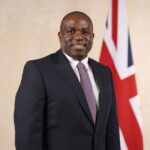
    The speech made by Diana Johnson, the Crime and Policing Minister, in Kenilworth on 10 September 2024.

    Hello everyone and thank you for having me.

    Given this is my first time addressing your conference, I’m tempted to ask you to take that into account, particularly in the Q+A.

    But having spent much of my time before the election asking uncomfortable questions as chair of the Commons Home Affairs Committee, including to ministers and policing leaders, I guess I need to get used to the roles being reversed.

    But – seriously speaking – my time in that role gave me a window into your world. The engagement we had with police bodies, including the PSA, helped to strengthen my understanding of the realities and challenges of policing today.

    And one thing I also just wanted to let you know was that I’ve been an MP for 19 years, and one of the very best things I have ever done as a member of parliament was the Police Parliamentary scheme, where I got the opportunity to spend 24 days with my local police force, Humberside, and it gave me a real opportunity to see what was happening on a kind of day-to-day basis for police officers. And I remember doing the kind of early morning shift, and I did nights, and I went out on public order, and I went out with the dogs, and it was just fascinating. So, I’m really pleased I did that, and I have that experience now I’m a Police Minister. So I want to say as well, as the Home Secretary just did, I want to say a heartfelt thank you to all of you.

    From the most routine acts of policing to national-scale operations and painstaking investigations, you make an immeasurable contribution to our society.

    And I do also want to say a few words about the summer disorder. And as you know, it has been an incredibly busy few weeks for this government, since the general election, and the events of the summer have left us all, I think, with much to reflect upon.

    The attack in Southport rocked that community to its core and the impact was felt around the country.

    For three little girls to lose their lives is just unspeakably horrific, and my thoughts are of course with their loved ones. I cannot begin to imagine the anguish they are going through.

    I want to take the opportunity to express my sincere gratitude to every officer involved in responding to that terrible incident. They showed tremendous courage in the most difficult of circumstances, and their actions saved lives.

    We all know what came next; at a time when we should have been focused only on supporting those affected by the attack in Southport, and allowing the urgent police investigation to get under way, we instead found ourselves responding to an outbreak of widespread violent disorder.

    The various incidents around the country have been catalogued in extensive detail so I will not get into a new blow-by-blow account.

    I will simply say that the hijacking of those poor families’ grief at that time was utterly shameful…

    …as was the violence directed towards police officers working to maintain order and protect the community.

    The immediate priority was to get back control of the streets and restore order.

    That’s why the Prime Minister and Home Secretary made clear from the beginning that you had our unqualified support in taking all necessary action to quell the disorder.

    And we sent the message loud and clear that anyone involved in criminality should expect to be caught and face the consequences of their actions.

    The swiftness of the response by policing and the wider criminal justice system was fundamental to getting the situation under control and restoring order.

    As part of the national mobilisation plan coordinated by NPoCC, more than 40,000 officer shifts were worked by public order officers over that 10-day period, with over 6,600 public order officers deployed on one day alone. Rest days, as you know, were cancelled and additional hours were worked.

    The fact that arrests were being made within hours and convicted offenders behind bars facing prison time within days not only showed we were serious when we said there would be a price to pay for criminality on our streets, but it also demonstrated to the law-abiding public that this behaviour will not be tolerated.

    So, I want to echo the Home Secretary’s words of enormous thanks to everyone across policing for your tireless efforts during what was an exceptionally difficult period.

    But I also want to say this: I’m appalled that new figures revealed today show that assaults on our women and men in uniform are still far too high.

    Even preceding the violent disorder of this summer – assaults on police officers are up, with a quarter of those incidents resulting in injury.

    The Home Secretary was right to call this a ‘stain on our society’ and to say that it will not be tolerated.

    So, we recognise your service and your sacrifice.

    Whether it’s responding to violent disorder, running towards danger, attending emergencies or investigating serious crimes, we know that the heroic daily work of the police exerts a huge strain on officers and their families.

    That’s why we will always support you, as you support your teams to serve our communities.

    It’s why we support the Police Covenant and why we are determined to work with you to ensure it delivers for all officers, staff and volunteers, recognising that wellbeing and mental health support is vital in maintaining a healthy and engaged police workforce who can effectively serve and protect the public.

    Turning now to the safer streets mission, which the Home Secretary referred to, I think it’s clear that those unacceptable attacks on the police speak directly to this Government’s wider Safer Streets mission.

    And that is to restore respect for the rule of law on British streets, including restoring respect for the police, which has sadly been eroded over many years.

    To do that, we will ensure that you have everything you need to get back to tackling the issues that matter most to the public.

    Too many town centres and high streets across the country have been gripped by an epidemic of anti-social behaviour, theft and shoplifting, which is corroding our communities and cannot be allowed to continue.

    There are thousands of incredible police officers and support staff doing an admirable job. But we do have to face the reality that there are still too many victims of anti-social behaviour who feel that when they call the police, no one listens, no one comes and nothing is done.

    Our neighbourhoods and police forces have suffered enough after a decade of decline, and this government will help restore neighbourhood policing, with skilled, resilient and dedicated local cops.

    We must rebuild these bonds of trust and respect between the police and local communities that have always been so central to our proud British tradition of policing by consent.

    That’s why we will implement a new Neighbourhood Policing Guarantee, restoring patrols to town centres, recruiting thousands of additional police personnel, and ensuring every community has a named local police officer to turn to.

    And as part of that plan, I can announce today that the government has agreed initial funding to support the College of Policing in rolling out a specialist new training programme for neighbourhood officers.

    The Neighbourhood Policing Programme Career Pathway will focus on anti-social behaviour, community engagement and problem solving and equip neighbourhood officers with the skills, knowledge and confidence they need to build local relationships and to tackle the issues that damage communities the most.

    Every community deserves local officers who understand what is needed to keep them safe, and with this new training and our Neighbourhood Policing Guarantee, we will deliver the change our towns and villages are desperate for.

    Supers are the operational leaders, you know what is going on in  forces day to day, and we want to tap into your insight and expertise as we restore neighbourhood policing and crack down on corrosive crimes like anti-social behaviour and shoplifting, which will help to restore public confidence that there will be consequences for criminality in their communities.

    But to deliver on the promise of change we have made to the British people, we also need to crack down on the serious crimes that devastate lives and communities across the country.

    That is why we are acting to address the deadly cycle of knife crime by getting more dangerous weapons off our streets and preventing young people from being drawn into violent crime in the first place, with a radical new Young Futures prevention programme and early intervention for those at-risk.

    And it is why we have set out an unprecedented mission to halve violence against women and girls over the next decade, working right across government, as well as with the police and the criminal justice system, on everything from prevention work in schools, to pursuing dangerous perpetrators and to getting survivors the support and the justice they need.

    Underpinning all of this is an unwavering commitment to protecting our national security, and those working to counter threats from terrorism, hostile states or any other source, and they have our full and enduring support.

    Law enforcement has an instrumental role in delivering this ambitious mission. So as with neighbourhood policing, we will be looking to you and your teams to work with us so we can deliver real and lasting improvements for the public.

    As the Home Secretary has said to many policing colleagues since the election – we will not be politicians who just shout from the sidelines. We will work in lockstep with you to deliver change – championing your successes, recognising your sacrifices and, yes, of course, holding you to account and asking difficult questions along the way to ensure that progress is being made in every corner of the country.

    Because for this mission to be successful, it will be critical to secure and maintain the confidence of the people you serve.

    The vast, vast majority of officers I know are decent, hardworking and professional. When standards are not met or powers are abused, I know that you all feel it deeply and it undermines your excellent work.

    That is why, together, we have to ensure behaviour and cultures are beyond reproach, right across the system.

    In charting a new path, I know that none of this is easy. There are deep-rooted issues that need to be reckoned with.

    One thing we know for sure is that none of our goals will be achieved unless there is close alignment between government and policing.

    But with the Home Secretary’s knowledge and leadership, I wholeheartedly believe we can chart a new, successful way forward.

    And I know this because I have seen first-hand how dedicated the Home Secretary is to supporting each and every member of the policing family.

    I know how keenly she feels her responsibility to ensure you have the powers and tools to fulfil your critical functions.

    And I can assure you that when she says she wants to work with you to get British policing performance at its very best, she means it.

    As superintendents and chief superintendents, but also as police leaders, you have an important and rightful role to play in helping us deliver safer communities.

    You have a wealth of knowledge, insight and expertise that we absolutely want to tap into to help us deliver on our mission.

    Whether that’s about the threats you and your teams are tackling day in and day out, or about more strategic policing issues, we want to and we need to hear from you in shaping our approach.

    In conclusion, again I want to offer my thanks again to the PSA for all the work they do and for giving me the opportunity to address you today.

    As Policing Minister, I intend to be your voice within government.

    And I do want to champion your successes, understand your needs and support your teams.

    As the Prime Minister and Home Secretary have made clear, we are serious. We are very serious about tackling crime, rebuilding confidence and putting neighbourhood policing back at the heart of our communities.

    You and your colleagues will all have an integral part and role to play in that mission.

    And I know it’s not going to be delivered overnight.

    I’m conscious – I think I’ve been post about 11 weeks, so I know that you know this is going to take some time,

    But what I have seen in my short time in my role has given me a renewed confidence that we will succeed.

    The dedication, the skill, the bravery, the willingness to make sacrifices…these are the core elements of British policing at its best and they have been on display in abundance over recent weeks.

    I will finish by saying how grateful I am to everyone across the service, and I very much look forward to working with you all as we strive to protect the public and make our country safer.

    Thank you very much for your time.

  • James Cleverly – 2024 Speech on Border Security and Asylum

    James Cleverly – 2024 Speech on Border Security and Asylum

    The speech made by James Cleverley, the Shadow Home Security, in the House of Commons on 22 July 2024.

    Thank you very much, Mr Speaker. I welcome you back to your place, on my first opportunity to do so. In my time as Home Secretary and, before that, Foreign Secretary, you were very kind about my minor indiscretions at the Dispatch Box, my late deployment of statements and my slight overruns. You have always been very kind to my family in sometimes quite trying circumstances, which I very much appreciate.

    I also take this opportunity to congratulate the right hon. Member for Pontefract, Castleford and Knottingley (Yvette Cooper) on her appointment as Home Secretary. It is a challenging but incredibly rewarding job and, because the nation’s security is now very much in her and her Ministers’ hands, I genuinely wish her all success in everything she is looking to do.

    The right hon. Lady inherits a dedicated team of Home Office civil servants who will help her to keep the country safe and secure. They helped me when I was in her position and, although it is disorderly to recognise their presence, if I were to wave my hand vaguely in their direction, I might take the opportunity to thank my previous private office civil servants.

    My notes say that I want to thank the Home Secretary and her team for advance sight of her statement, but I will put a line through that.

    The Labour party, and indeed the Home Secretary, likes to talk tough on border security, but today’s statement, despite all the hyperbole and the made-up numbers, is basically an admission of what we knew all along, which is that the Labour party has scrapped the Rwanda partnership on ideological grounds, removing a deterrent that the National Crime Agency said we needed.

    The level of discourtesy directed towards the people and Government of Rwanda is quite breathtaking. To have them read about this decision in the papers before anyone from the UK Government had the good grace to formally notify them is an error, and no one in this House believes for a moment that this level of discourtesy would have happened had the partnership been with a European country.

    Labour has given an effective amnesty to thousands of asylum seekers who were banned under Conservative plans. Labour’s plans amount to doing less than the Conservatives were doing when we were in government, merely changing the signs above a few desks in the Home Office with its so-called border security command and returns unit. Before the election, the right hon. Lady said that she would create a returns unit, and now the narrative is that she will redeploy some staff—not increase the number of staff, but redeploy some staff—which shows that the returns function already exists.

    There is no safe third country to which to return people who cannot be returned home, so where will the right hon. Lady send people who come here from countries like Afghanistan, Iran and Syria? Has she started negotiating returns agreements with the Taliban, the ayatollahs of Iran or Assad in Syria? If she is not going to send to Rwanda anyone who arrives here on a small boat, to which local authorities will she send them? We were closing hotels when I was in government, so I wonder which local authorities will receive those asylum seekers. If not Rwanda, will it be Rochdale, Romford or Richmond? Most importantly, can the right hon. Lady now confirm that people who arrive here illegally in a small boat will be able to claim asylum? Finally, how long after the right hon. Lady briefed the media that she is scrapping the Rwanda partnership did she have the courtesy to speak directly with the Rwandan Government?

    It is because we now have no deterrent that nobody wants to head her new so-called border security command. Neil Basu, a former senior police officer for whom I have huge respect, was Labour’s No. 1 choice, and he has ruled himself out. We now learn that General Stuart Skeates, a highly respected former general in the British Army, who was, in large part, responsible for delivering the Albania deal, which cut small boat arrivals from that country by 90%, has resigned from his position as director general for strategic operations. To misquote Oscar Wilde, “to lose one border commander could be seen as a misfortune; to lose two looks like carelessness”—perhaps even incompetence. I notice that the new job advert—it is available online for those who are thinking of applying—for Labour’s border security command says that the role is not located in Kent, where the channel is, but is flexible from Belfast, Bristol, Cardiff, Durham, Glasgow, Liverpool or Manchester, none of which, the last time I checked, are anywhere near the English channel.

    The reality is that everybody knows, including the people smugglers, that the small boat problem is going to get worse—indeed, has already got worse under Labour—because there is no deterrent. People are being sold a lie when they are being smuggled into this country, across one of the busiest shipping lanes. We need to stop them. Too many lives have already been lost. Sadly, six more have been lost in the channel in the last few weeks, and our hearts go out to them and their loved ones. We disagree on many things, but we can agree that we need to put an end to this evil trade. Sadly, the initial decisions made by her Government have made the problem worse, not better.

    Yvette Cooper

    I welcome the shadow Home Secretary’s words about the dedication of Home Office officials and about the importance of work on national security. As he knows, when I was shadow Secretary of State, I always worked with him and supported him around national security issues. I know he will do the same and I welcome him to his shadow post. I presume what we heard was the first of the Conservative leadership contest speeches.

    I will respond to some of the things the shadow Home Secretary said. We need to be clear about what we have inherited from him and his party. Under his party, we have had the highest level of spring crossings ever. Gangs have been left to wreak havoc, not just along the French coast but across our border, through our country and back through Europe. Asylum support costs are set to rise to £30 billion to £40 billion over the next four years as a result of his and his party’s decisions.

    As for the idea of deterrence, I am sorry but four volunteers being sent to Rwanda is not a deterrent to anyone for anything at all. The idea that he would spend £10 billion on this fantasy, this fiction, this gimmick rather than ever do the hard graft—£700 million has already been spent on sending just four volunteers in two and a half years. We have often warned that, frankly, it would be cheaper to put them up in the Paris Ritz. As it turns out, it would have been cheaper to buy the Paris Ritz.

    As for the amnesty, I do not know if the right hon. Gentleman has ever understood the Illegal Migration Act 2023, which he voted for and he inherited from his predecessors. He asks if people who arrive illegally can claim asylum—that is exactly what happens under section 9 of that Act. They can all claim asylum, enter the asylum system and be entitled to asylum support. That is what happens in the system, which we have inherited, that he has presided over and run since he became Home Secretary. The problem is that people enter the asylum system but never leave. He did not bring in operational arrangements to try to take decisions properly. His Home Office effectively stopped taking the majority of asylum decisions in May. Perhaps he did not know that, but that is what happened in his Home Office. This party and this Government do not believe in amnesties. We think that the rules need to be respected and enforced. His party is the one that has given an effective amnesty to people who can end up staying in the asylum system forever. We believe that the rules should be enforced. The problem is that that is what the shadow Home Secretary believes too. He does not believe any of the stuff that he has just said. He is only saying it for his Tory leadership contest; he is just too weak to tell his party the truth. He thought that the whole policy on Rwanda was “batshit” and then he went out to bat for it. It is just not serious.

  • Yvette Cooper – 2024 Statement on Border Security and Asylum

    Yvette Cooper – 2024 Statement on Border Security and Asylum

    The statement made by Yvette Cooper, the Home Secretary, in the House of Commons on 22 July 2024.

    May I thank you, Mr Speaker, for standing up for the Opposition Front Benchers, as I know you have often done for me in the past? I apologise to the shadow Home Secretary for the delay in the arrival of the statement.

    Most people in the United Kingdom want to see strong border security, with a properly controlled and managed asylum system where our country does its bit, alongside others, to help those who have fled persecution, but where rules are properly respected and enforced so that those with no right to be here are swiftly removed. At the moment, we have none of those things. Border security is being undermined by criminal smuggler gangs, and the asylum system is in chaos. Tragically, 19 lives have been lost in the channel so far this year, including children. No one should be making these perilous small boat journeys.

    Criminal gangs have been allowed to take hold along our border, and they are making huge profit from undermining our border security and putting lives at risk. They should not be able to get away with it. Crossings in the first half of 2024 are up by 10% on last year—the number is going up, instead of coming down. At the same time, the asylum backlog is getting worse, as decision making in the Home Office has dropped. Home Office spending on asylum support has increased sevenfold in the space of just three years. This cannot go on. Since my appointment two weeks ago, I have reviewed the policies, programmes and legislation that we have inherited from our predecessors, and I have been shocked by what I have found. Not only are there already serious problems; on current policies, the chaos and costs are likely to get worse.

    On our border security, it is clear that the security and enforcement arrangements we have inherited are too weak. Criminal gang networks are operating with impunity along our border, across the continent and beyond, and across the UK too. Action between Britain and France in the channel has improved, and is preventing some boat crossings. The work of the small boats operational command in the channel is important and will continue, but we need to go much further. We should be taking far more action upstream, long before the boats ever reach the French coast. Co-operation with Europol and other European police forces and prosecutors is far too limited, and enforcement against exploitation and trafficking in the UK is far too weak. Information sharing with our European neighbours has reduced, rather than increased. As a result of these weak arrangements, I am extremely concerned that the high levels of dangerous crossings that we have inherited are likely to persist throughout the summer.

    Let me turn to the Rwanda migration and economic development partnership. Two and a half years after the previous Government launched it, I can report that it has already cost the British taxpayer £700 million—in order to send just four volunteers. That includes £290 million on payments to Rwanda and the costs of chartering flights that never took off, detaining hundreds of people and then releasing them, and paying for more than 1,000 civil servants to work on the scheme—for a scheme to send four people. It is the most shocking waste of taxpayers’ money I have ever seen.

    Looking forward, the costs are set to get worse. Even if the scheme had ever got going, it is clear that it would have covered only a minority of arrivals, yet a substantial portion of future costs were fixed costs—for example, the annual direct payments to Rwanda, the contracts for escorts, the staffing in the Home Office, the detention and reception centres, and more. The taxpayer would have still had to pay out, no matter how few people were relocated. Most shockingly of all, over the six years of the migration and economic development partnership forecast, the previous Government had planned to spend over £10 billion of taxpayers’ money on the scheme. They did not tell Parliament that. I thank the Rwandan Government for working with the UK in good faith, because the failure of this policy lies with the previous UK Government. It has been a costly con, and the taxpayer has had to pay the price.

    I turn to the Illegal Migration Act 2023, which has been in place for a year. We were told that it would stop the boats, but it has clearly failed. The legal contradictions in the Act are so great that they make it unworkable; indeed, 12 months on, the central duty has not even been enacted. It is also costing the taxpayer billions of pounds. Under section 9 of the Act, people who arrive in the UK can claim asylum and get asylum accommodation. However, under section 30, if they arrived after March 2023 and meet key conditions in the Act, no decision can be taken on their case; they just stay in the asylum system. Even if they have come here unlawfully for economic reasons and should be returned to their home country, they will not be, because the law does not work. Only a small minority might ever have been sent to Rwanda; everyone else stays indefinitely in taxpayer-funded accommodation and support.

    The Home Office estimates that around 40% of asylum cases since March 2023 should be covered by those Illegal Migration Act conditions. The remaining 60%, under the previous Government’s policy, should still have been processed and cleared in the normal way. However, even though previous Ministers introduced this new law 12 months ago, they did not ever introduce an effective operational way for the Home Office to distinguish between the cases covered by the Illegal Migration Act and the other cases where decisions should continue—that is, between the 40% and the 60%. As a result, decisions cannot be taken on any of them.

    I have been shocked to discover that the Home Office has effectively stopped making the majority of asylum decisions. Thousands of asylum caseworkers cannot do their proper job. As a result, the backlog of asylum cases is now going up. This is the most extraordinary policy I have ever seen. We have inherited asylum “Hotel California”—people arrive in the asylum system and they never leave. The previous Government’s policy was effectively an amnesty, and that is the wrong thing to do. It is not just bad policy, it is also completely unaffordable. The cost of this indefinitely rising asylum backlog in hotel and accommodation support bills is astronomical. The potential costs of asylum support over the next four years if we continue down this track could be an eye-watering £30 billion to £40 billion. That is double the annual police budget for England and Wales.

    This newly elected Government are not prepared to let this chaos continue, so let me turn to the action we are urgently taking to restore some grip to the system, to tackle the chaos and to get costs down. First, I have informed the Rwandan Government that we will be ending the migration and economic development partnership. We will save £220 million on further direct payments to Rwanda over the next few years and we will immediately save up to £750 million that had been put aside by the previous Government to cover the MEDP this year.

    Secondly, we will invest some of the saved money from the migration partnership into a new border security command instead. It will bring together the work of the Border Force, the National Crime Agency, the small boats operational command and intelligence and security officers. The recruitment has begun for a new commander and we will put in place additional cross-border officers, investigators, prosecutors, and intelligence and security officers with the new counter-terror-style powers against organised immigration crime announced in the King’s Speech last week. We are immediately increasing UK officers’ involvement in Europol and the European Migrant Smuggling Centre.

    Thirdly, we will replace the Rwanda migration partnership with a serious returns and enforcement programme. We have immediately replaced the flight planning for Rwanda with actual flights to return people who have no right to stay to their home countries instead. We are immediately redeploying Home Office staff away from the failed Rwanda partnership and into returns and enforcement, to reverse the collapse in removals that has taken place since 2010. I have tasked the immigration enforcement team with intensifying enforcement activity this summer, targeting illegal working across high-risk sectors.

    Fourthly, we will end the asylum chaos and start taking asylum decisions again so that we can clear the backlog and end asylum hotels. The new border security, asylum and immigration Bill announced in the King’s Speech will bring in new replacement arrangements, including fast-track decisions and returns to safe countries. In the meantime, I am laying a statutory instrument that ends the retrospective nature of the Illegal Migration Act provisions, so that the Home Office can immediately start clearing cases from after March 2023. Making this one simple change will save the taxpayer an estimated £7 billion over the next 10 years. Fifthly, as the Prime Minister has just set out, we will work closely with our European neighbours to tackle the upstream causes of migration, including through the Rome process.

    This country will always do our bit alongside others to help those fleeing war and persecution, but we need a proper system where rules are enforced. There are no quick fixes to the chaos created over the last 14 years. It will take time to clear the asylum backlog, to bring costs down and to get new enforcement in place to strengthen our borders and prevent dangerous boat crossings, but there is no alternative to serious hard graft. We cannot waste any more time or money on gimmicks. The country voted for change, and that means it is time for a sensible, serious plan. I commend this statement to the House.

  • Keir Starmer – 2024 Statement on Rioting and Attacks on Police

    Keir Starmer – 2024 Statement on Rioting and Attacks on Police

    The statement made by Keir Starmer, the Prime Minister, on 4 August 2024.

    I utterly condemn the far-right thuggery we have seen this weekend.

    Be in no doubt: those who have participated in this violence will face the full force of the law.

    The police will be making arrests.

    Individuals will be held on remand.

    Charges will follow. And convictions will follow.

    I guarantee you will regret taking part in this disorder.

    Whether directly or those whipping up this action online, and then running away themselves.

    This is not protest. It is organised, violent thuggery.

    And it has no place on our street or online.

    Right now, there are attacks happening on a hotel in Rotherham.

    Marauding gangs intent on law breaking. Or worse.

    Windows smashed.

    Fires set ablaze.

    Residents and staff in absolute fear.

    There is no justification – none – for taking this action.

    And all right-minded people should be condemning this sort of violence.

    People in this country have a right to be safe.

    And yet, we’ve seen Muslim communities targeted.

    Attacks on Mosques.

    Other minority communities singled out.

    Nazi salutes in the street.

    Attacks on the police.

    Wanton violence alongside racist rhetoric.

    So, no, I won’t shy away from calling this what it is:

    Far-right thuggery.

    To those who feel targeted because of the colour of your skin…

    Or your faith…

    I know how frightening this must be.

    I want you to know this violent mob do not represent our country.

    And we will bring them to justice.

    Our police deserve our support, as they tackle any and all violent disorder that flares up.

    Whatever the apparent cause or motivation we make no distinction.

    Crime is crime.

    And this government will tackle it.

    Thank you.

  • Keir Starmer – 2024 Statement on Rioting

    Keir Starmer – 2024 Statement on Rioting

    The statement made by Keir Starmer, the Prime Minister, on 1 August 2024.

    This week – we are a nation in shock.

    A country coming to terms with an attack so inexplicably vile…

    That fear is an understandable reaction.

    Our first thoughts of course are with the families at the heart of this…

    Their pain is unimaginable.

    And so I call on everyone to give them and indeed the wider community at Southport…

    The space to grieve.

    And time for the authorities in Merseyside…

    To do their job.

    There will be a time for questions.

    And we will make sure that the victims and families in Southport…

    Are at the heart of that process…

    That’s the very least that we owe these families.

    But we also owe them justice.

    So while there’s a prosecution that must not be prejudiced…

    For them to receive the justice that they deserve…

    The time for answering those questions is not now.

    And I remind everyone that the price for a trial that is prejudiced…

    Is ultimately paid by the victims and their families.

    Who are deprived of the justice that they deserve.

    Let me turn now to the actions of a tiny, mindless minority in our society.

    Because in the aftermath of this attack

    The community of Southport had to suffer twice.

    A gang of thugs, got on trains and busses…

    Went to a community that is not their own…

    A community grieving the most horrific tragedy…

    And then proceeded to throw bricks at police officers.

    Police officers who just 24 hours earlier…

    Had been having to deal with an attack on children in their community.

    Their community.

    And make no mistake…

    Whether it’s in Southport, London – or Hartlepool…

    These people are showing our country exactly who they are.

    Mosques targeted because they are Mosques.

    Flares thrown at the statue of Winston Churchill.

    A Nazi salute at the Cenotaph.

    And so I’ve just held a meeting with senior police and law enforcement leaders…

    Where we’ve resolved to show who we are.

    A country – that will not allow understandable fear…

    To curdle into division and hate in our communities.

    And that will not permit, under any circumstances…

    A breakdown in law and order on our streets.

    Because let’s be very clear about this.

    It’s not protest.

    It’s not legitimate.

    It’s crime…

    Violent disorder.

    An assault on the rule of law and the execution of justice.

    And so on behalf of the British people…

    Who expect their values and their security to be upheld…

    We will put a stop to it.

    I want to thank all of the police officers, across the country…

    Who have already, as they so often do…

    Stood up to intimidation and violence in the past few days…

    And indeed, throughout the summer.

    And let me be clear – the meeting this afternoon was not about pointing the finger of blame…

    That is not how this Government of Service conducts its business…

    Because it doesn’t work.

    Rather – this was a meeting to pull together our response…

    A response both to the immediate challenge…

    Which is clearly driven by far-right hatred.

    But also – all violent disorder that flares up.

    Whatever the apparent cause or motivation – we make no distinction…

    Crime is crime.

    And so – to that end…

    I can announce today, that following this meeting…

    we will establish a national capability, across police forces…

    To tackle violent disorder.

    These thugs are mobile…

    They move from community to community…

    And we must have a policing response that can do the same.

    Shared intelligence…

    Wider deployment of facial recognition technology…

    And preventive action – criminal behaviour orders…

    To restrict their movements…

    Before they can even board a train…

    In just the same way we do with football hooligans.

    And let me also say to large social media companies and those who run them…

    Violent disorder clearly whipped up online…

    That is also a crime.

    It’s happening on your premises.

    And the law must be upheld everywhere.

    That is the single most important duty of Government…

    Service rests on security.

    And we will take all necessary action…

    To keep our streets safe.

  • Richard Hermer – 2024 Swearing In Speech at Attorney General

    Richard Hermer – 2024 Swearing In Speech at Attorney General

    The speech made by Richard Hermer, the Attorney General, on 15 July 2024.

    It is a profound privilege to address the Lady Chief Justice and the Lord Chancellor and all the members of this court.

    It is also a personal pleasure for me to make submissions in this courtroom when the risk of being asked tricky legal questions is at least lower than normal.

    Being in government is a privilege that carries the responsibility of having to make hard choices but as we face the challenging path ahead the rule of law will be the lodestar for this government.

    Governments should be judged by their deeds not by their rhetoric but I hope the professions and the public can take some comfort from the fact that, from the Prime Minister down, the new government is comprised of individuals who have the rule of law imprinted into their DNA, none more so than our new Lord Chancellor.

    For all the reasons set out by my lady and for many more, I can tell the Court that we have a Lord Chancellor with the character, authority, intellect and experience not just to protect the rule of law but to begin to address the deep challenges facing our justice system.

    We also have a Solicitor General who brings precisely the right mix of legal acumen, political nous and a dedication to public service to help make law and politics work together.

    We wish to work with all in our mission to protect and promote the rule of law.  Its principles are at the heart of the organisations the Law Officer’s superintend and we will work collegiately with the Bar Council, Law Society and CILEX in what I know is our shared endeavour to entrench the rule of law and promote human rights.

    We recognise the imperative of seeking to ensure a cross-party consensus about our shared fundamental values and how we protect them for future generations.

    The values that we are seeking to protect are not the property of any political party, they are not Labour values or Conservative values they are British values, indeed in many respects universal values.

    The task has never been more urgent.  In recent years, events at home and abroad serve to remind us all that once you start pulling on a single thread of the fabric of the rule of law system, when democratic norms are whittled away through attrition, the risk of systemic unravelling is great and the concomitant task of retrenching standards we once took for granted, very difficult indeed.

    So My Lady the Law Officers will work together with the Lord Chancellor on our mission to protect and promote the rule of law.  There is much to be done, too many tasks to describe in my allotted time, but let me say this.

    We will support the Lord Chancellor’s mandate to protect the independence of the judiciary, allied to this we will work with her to promote better appreciation in Westminster and beyond of our constitutional balance in which a respectful relationship between parliament, the executive and the courts is understood to be the bedrock of our framework of governance.

    We will work closely with the Lord Chancellor to promote the rule of law amongst the public, not least young people – seeking to use it to rebuild trust in our political system by explaining how it serves all of us and that no-one, least of all politicians, are above it.

    Just as we will promote the rule of law domestically, so we will seek to promote international law and the rule of law in the international legal order. We will support the Foreign Secretary in all his efforts – cognisant of the importance of international law and the rule of law for the prosperity and security of all global citizens.

    Looking inwards, we will seek to promote the highest standards in how we legislate – seeking to increase accessibility and certainty in how we make law, including not abusing the use of secondary legislation

    Finally, as Law Officers we will seek to provide the Government that we serve with legal advice of the highest calibre and ensure that law is at the heart of everything that it does.

    Notwithstanding the Law Officer’s commitment to the political aims of the government our legal analysis will always be guided by law not politics.

    As I told a meeting with all of GLD staff last week – it is our job to speak truth to power.  Sometimes we will get it wrong and in their judgments these Courts will explain why, and we will seek to learn and do better.

    That is how our system works, it is as Lord Bingham said, a cardinal feature of the modern democratic state and the cornerstone of the rule of law.

  • Greg Smith – 2024 Comments on Prison Capacity

    Greg Smith – 2024 Comments on Prison Capacity

    The comments made by Greg Smith, the Conservative MP for Mid-Buckinghamshire, in the House of Commons on 18 July 2024.

    I listened very carefully to the Lord Chancellor’s comments about Members present and past who had legitimate concerns about new-build prison proposals in their constituencies. She will no doubt be aware of the proposals for a new mega-prison in Buckinghamshire on farmland adjacent to HMP Spring Hill and HMP Grendon. Those proposals are deeply unpopular in my constituency, first, on fairness grounds—they are affecting communities just one mile from the construction of HS2, which are already under siege from big construction—and, secondly, because the prisons in Buckinghamshire cannot recruit to the vacancies that they already have. Fully staffing a brand new prison is just not going to happen, so I ask the new Lord Chancellor to do my constituents the courtesy of sitting down with me so that she can hear why this particular proposal just will not work.

    Shabana Mahmood

    I thank the hon. Member for his question. May I gently say that this is part of the problem? I am not going to get into the specifics of his particular constituency or those particular planning proposals—those proposals are already within the planning system, as the shadow Lord Chancellor, the right hon. Member for Melton and Syston (Edward Argar), alluded to in his remarks—but prisons have to be built in this country. We have to do more building, we have to do it more quickly, and we have rightly said that we will always treat prisons as of national importance. That was actually a change brought in by the previous Government to unlock the delays that they had faced for many years, particularly when concerns were raised by their own Members of Parliament.

    We take too long to build any kind of infrastructure in this country. That will not be the approach of this Government, so while I am very happy to consider any proposals that any Members of this House have about specifics in their constituency, the reality is that prisons will always be deemed by this Government to be of national importance, and they will be built.

  • John McDonnell – 2024 Comments on Prison Capacity

    John McDonnell – 2024 Comments on Prison Capacity

    The comments made by John McDonnell, the Labour MP for Hayes and Harlington, in the House of Commons on 18 July 2024.

    I declare a non-pecuniary interest: I am an honorary life member of the Prison Officers’ Association.

    In seeking to be fair, as she always is, my right hon. Friend is being too kind on the last Government. They brought about a staffing crisis in our prisons that has brought rehabilitation to an end and levels of violence that we have never seen before. Will she bring forward as soon as possible a workforce strategy for our prisons and probation? As a matter of urgency, will she look in particular at Feltham young offenders institution, which has become a violent emergency for staff and for prisoners themselves?

    Shabana Mahmood

    My right hon. Friend is right. I take this opportunity to pay tribute to all the staff in our prisons, who do an excellent job under very difficult circumstances. He is right to acknowledge that the levels of violence in our prisons have been increasing, placing those staff at ever greater risk. This is similar to the question that I just answered on probation. When prisons are so badly overcrowded, it is incredibly difficult to run any kind of regime that can do good work on rehabilitation, or provide a safe atmosphere for the staff who work in them.

    I will, of course, have conversations in the usual way when it comes to discussions about the spending review and other measures that the Chancellor will bring forward. I hope that I need not tell my right hon. Friend that I will bat hard for our Department and the people I represent. That will all happen in the usual way. We are committed to publishing our 10-year capacity strategy as quickly as possible so that we can begin the process of returning our system to some sort of health. I thank him for raising Feltham; I will look at that and write to him.

  • Alistair Carmichael – 2024 Speech on Prison Capacity

    Alistair Carmichael – 2024 Speech on Prison Capacity

    The speech made by Alistair Carmichael, the Liberal Democrat Justice spokesperson, in the House of Commons on 18 July 2024.

    I also welcome the Lord Chancellor to her new position, and thank her for advance sight of her statement.

    It has been apparent for months that measures of this sort would be necessary. These are described as temporary measures, but 18 months is a very long time for temporary measures. There would be a real danger of damaging public confidence in our criminal system if the measures were to be extended beyond that point.

    The answer surely has to be more than just building more prison capacity. The problem is not that our prison estate is too small; it is that we send too many people to prison, and that the time they spend there does nothing to tackle the problems of drug and alcohol dependency, poor literacy and numeracy skills, and poor mental health, which led to their incarceration. Can we hope to hear in the very near future the Government’s comprehensive plan to tackle the issue of the time that people spend in prison?

    Finally, may I bring to the Lord Chancellor’s attention the report published this morning by His Majesty’s inspectorate of probation on the failings of the Cambridgeshire and Peterborough probation delivery unit? That report outlined that our duty of care to those whom we lock up should not end the day they leave custody. When will we have a response to that report?

    Shabana Mahmood

    I welcome the right hon. Gentleman to his place. On the 18-month period, we have inherited a criminal justice system in complete crisis and at risk of total breakdown and collapse. It will take some time, by necessity, for us to be able to put that right. I do not want to mislead the public that somehow these changes will have a quick effect. The system is in dire straits and it will take time to repair it. It is right that we are up front and honest about that time, and I will update the House regularly.

    As I say, this Government’s approach will be very different from that of the last Government. We will have a regular release of data, and I anticipate that I will regularly appear before Members to talk about that data, but I welcome that opportunity because it is important that the public are kept updated, and that their representatives in this place are able to scrutinise what is happening and hold us to account. We will need time for the measures to take effect to enable us to move the system to a position of greater health.

    In terms of who goes to prison, why and for how long, when we have overcrowded prisons, there is no capacity to do much other than hold people in their cells. The activity that we know is important to help people in the prison system to turn their lives around, come out as better citizens and make better choices, having made amends to society, cannot happen in deeply overcrowded prisons. That is why dealing with the capacity crisis is so necessary not just to prevent the collapse of the criminal justice system but to cut reoffending in the long term. Creating some space will allow us to introduce proposals to bring down reoffending rates in the country.

    On probation, I pay tribute to all probation staff for their tremendous work. My first visit in my new role was to meet probation staff in Bedfordshire. I recognise that they have been working in a system and a service under extreme strain and facing real difficulty. That is why we will onboard 1,000 new trainee probation officers before March 2025 to add extra capacity, and why returning the probation system to health will be a key priority for this Government.

  • Edward Argar – 2024 Speech on Prison Capacity

    Edward Argar – 2024 Speech on Prison Capacity

    The speech made by Edward Argar, the Conservative MP for Melton and Syston, in the House of Commons on 18 July 2024.

    I am grateful to the Lord Chancellor for very timely advance sight of her statement. May I take this opportunity to congratulate her on her appointment, as well as the Under-Secretary of State for Justice, the hon. Member for Pontypridd (Alex Davies-Jones)? I congratulate the Minister of State, Ministry of Justice, the hon. Member for Swindon South (Heidi Alexander) on her return to this place. Notwithstanding the occasional tussle across the Dispatch Box, I look forward to working constructively with Lord Chancellor, and to holding her and the Government to account. She is of course a decent, courteous, and incredibly able person, and I wish her well in her role.

    We recognise the challenges and pressures facing the prison and criminal justice system, and the need to ensure that our prisons function effectively. Of course, the Government were well aware of those things when they were in opposition, as I know from challenging oral question sessions. In Government, we took the right decisions to significantly toughen up sentences for those who commit the worst crimes, in order to ensure that society was protected. To reflect that, we set in train the biggest prison building programme since the Victorian era. More than 13,000 additional prison places were delivered while we were in government. Two new prisons opened; one prison is under construction; there are two prisons with planning permission; and one prison is on the cusp of a decision. Labour’s planning permission proposal for prisons would not impact any of those developments. In that respect, it is simply a gimmick.

    Crucially, in the covid pandemic, supported by the then Opposition, we made the tough but correct decision not to mass-release prisoners as other countries did, and we maintained that bedrock of our justice system, trial by jury. Those correct decisions meant less space, and the number of people on remand waiting for trial or sentencing dramatically increasing from around 9,000 to 16,500, with resulting additional pressures.

    In deciding to reduce capacity pressure, the paramount consideration for the Lord Chancellor must always be public protection. With that in mind, although we will of course have to scrutinise the detail of her proposed sentence reduction scheme, I must say that we have significant public protection concerns about what she has announced so far, and I hope that she will be able to address those concerns today.

    The Lord Chancellor set out plans for limited exclusions relating to domestic abuse, but can she confirm that if a domestic abuser is convicted of, say, common assault, as is often the case, they would not be exempt from this policy? What exclusions does she plan to put in place to ensure that the worst, persistent, repeat offenders cannot benefit from this scheme? She set out that this was a temporary measure that will be reviewed after 18 months. What criteria will she set for its ending? Better still, will she commit to sunsetting the measure in the delegated legislation, and to returning to the House on this afresh in 18 months, if needed?

    What additional resources are being made available to probation? We hear what the Lord Chancellor says about getting 1,000 more trainee probation staff by March 2025, but how many of those will actually be new? How many will be additional to those whom we already planned to have in place through the existing trajectory for new trainees? Can she guarantee that no prisoners will benefit from her early release scheme without GPS tags and strict conditions? Indeed, will she mandate the imposition of GPS tracking? Can she confirm to the House progress on bringing HMP Dartmoor’s places back into use, and her long-term plans for HMP Dartmoor’s places? The previous Government committed £30 million to acquire land for building new prisons, and had already begun drawing up a site longlist. Is she expanding that fund, or merely re-announcing the same thing?

    More widely, the Lord Chancellor states that this is a temporary measure to ease pressure, so what are her long-term plans for meeting demand? Is she planning to scrap the tougher sentences for serious crimes that the Conservatives put in place to protect the public, and so to reverse our changes, or is she planning to build more prisons over and above the six that we committed to funding, to meet future demand? If it is the latter, has the Chancellor agreed the significant extra funding needed? Those are the long-term questions to which she and the Government owe this House and the public answers, given the changes that she is making today. I hope that she will be able to give clear answers.

    Shabana Mahmood

    I welcome the shadow Lord Chancellor to his place; we have always worked constructively together wherever appropriate, and I look forward to continuing to do so while he is in post. He made a heroic attempt to gloss over many years of failure in planning by the previous Government. I was surprised that he managed to say it all with a straight face. He knows full well that for many years the previous Government struggled to get such measures past many of their Back-Benchers, not all of whom have returned post the general election, but some of whom remain here, and remain implacable opponents of any kind of planning developments in their constituency. They think that national infrastructure is a good thing as long as it is elsewhere. I look forward to seeing whether there is a change of heart among those on the Opposition Benches. It would be welcome, because this Government will not allow the planning system to prevent our country from having either the prison places or the national infrastructure that we so desperately need. He also knows full well that of the 20,000 places that were supposed to have been provided by the previous Government by 2025, only 6,000 have been delivered.

    I am concerned about the position relating to prisoners on remand. The shadow Lord Chancellor rightly notes that the number of those on remand in our prison estate is around 16,000. Of course, judges need to be able to remand people to prison for public protection reasons. That will not change. He will know, given his former role in the Department, that there are no immediate solutions, because many of those individuals will in the end be sentenced to custody. I am considering all options available to me for driving that number down as much as possible. In the end, we will need our 10-year capacity plan to take account of what we expect the sentenced population to look like.

    On the sentences that are covered by this measure, the shadow Lord Chancellor will know that in order to make a change by means of a statutory instrument, it has to relate to specific offences. That is why we have taken every precaution and every option available to us to exclude sentences connected to domestic abuse. He knows that those will include—I am sure that he has seen the draft statutory instrument—offences related to the breaching of a non-molestation order; stalking, which I mentioned in my statement, including stalking involving the fear of violence, serious alarm or distress; strangulation or suffocation; controlling or coercive behaviour in an intimate or family relationship; the breaching of a restraining order; and a breach of a domestic abuse protection order. The common offences that we know are connected to domestic abuse are caught in the statutory instrument. On multiple and repeat offences, he will know that the decision relies on the combination that is reviewed when the sentencing calculation is done.

    As I said in my statement, I will return in 18 months to update the House. We want to remove this temporary measure as quickly as possible, and we will be transparent throughout. The shadow Lord Chancellor will not need to chase me around this building trying to find out what is happening, as I had to when I was in his position and we were considering the previous Government’s early release scheme. We will be transparent in a way that the previous Government simply were not. We will do a quarterly release of all the data, and we will update the House regularly.

    I am sure that the right hon. Gentleman followed the announcement on Friday closely, so he will know that the announcement on probation does not involve new money. It is a re-prioritisation of resources, because strengthening probation to make sure that it is in the strongest possible position to deal with the early release scheme is incredibly important to us.

    On Dartmoor, the right hon. Gentleman knows the history very well. Safety is our No. 1 priority, and after close monitoring of the situation at HMP Dartmoor, it has been decided that prison will be temporarily closed. I will update the House as the situation develops. I say to him gently that we have committed to a 10-year capacity strategy. We recognise that we need to make sure that this country has the prison places that it needs. We will deliver where the previous Government failed, and we will never allow the planning process to get in the way of having the prisons that we need in this country.

    Longer term, however, we will also look at driving down reoffending, because the entrenched cycle of reoffending creates more victims and more crime, and it has big impacts on our ability to have the capacity that we need in our prison estate. That is why this Government will make it a key priority to drive down reoffending. That is a strategy for creating better citizens, not better criminals. It is a strategy for cutting crime, and in the long term, it will deal with our capacity problems for years to come.

    Bambos Charalambous (Southgate and Wood Green) (Lab)

    I welcome my right hon. Friend to her place on the Government Front Bench. The imprisonment for public protection prison population is more than 2,700; 99% of those people are over tariff, and more than 700 prisoners are now 10 years over their original tariff. Can she accelerate the Ministry of Justice’s refreshed IPP action plan to help to reduce the prison population and right that wrong?

    Shabana Mahmood

    I thank my hon. Friend for that question. The situation with IPP prisoners is of great concern, and I know that huge numbers of Members on both sides of this House care about it deeply. I share that concern. IPP prisoners are not caught in the changes that we are putting forward; those are indeterminate sentences, not standard determinate sentences. We supported the previous Government in what we thought were sensible changes to the licence period and the action plan, and we will continue that work. However, any changes made have to account for public protection risks, first and foremost. We want to make progress with that cohort of prisoners, but not in a way that impacts public protection.