Category: Attack on Ukraine

  • Nia Griffith – 2022 Speech on Ukraine

    Nia Griffith – 2022 Speech on Ukraine

    The speech made by Nia Griffith, the Labour MP for Llanelli, in the House of Commons on 22 September 2022.

    For years, countries in eastern Europe such as Poland and the Baltic states have been warning about Russia under Putin. We absolutely must recognise the gravity, scale and multifaceted nature of the threat and the lengths that Putin may go to.

    While we have some encouraging bits of news, with terrain retaken in eastern Ukraine, we must not underestimate the scale of the challenges that remain. There is still extensive terrain to reconquer, the war efforts are taking a toll both on military personnel and on civilians, and Putin continues in his efforts to sow alienation and give false legitimacy to his invasion through the so-called referenda. A huge effort is also required to rebuild ruined towns and devastated communities.

    Putin’s clear aim is to divide and conquer, so while the world is looking at the physical—the ground war and the threat of nuclear weapons—there is at the same time a huge propaganda war, sometimes more subtle and sometimes less so, trying to undermine the west’s unity and resolve, with internet users bombarded with clever false messages masquerading as the truth. I stress again to the Minister how important it is for the UK and allies to invest in combating internet warfare and mounting counter-offensives.

    We need renewed efforts at diplomacy and at fostering unity. It is very important that we are putting money where our mouth is and supporting efforts in Ukraine. It is absolutely vital that we stand firm on sanctions, but we must foster the most positive and unified response from other countries. That includes, of course, investing Foreign Office expertise.

    This is not just about Europe and NATO. In the wider world, how do we maintain world peace and deal with the bullies? First, we need to be strong and show strength. Appeasement does not work. In 2014, after the invasion of Crimea, the lack of action by the west was a monumental failure. We need to stand strong in the face of aggression. For all their imperfections, we need to rebuild our respect for international organisations such as the United Nations, and repair the damage caused by Trump when he belittled international organisations, tore up treaties and cut funding to important international programmes.

    An important part of that international work is the need to tackle the gap between richer and poorer nations. Nations across the globe need reason to buy into international organisations and to feel that they are being heard. Coronavirus has taught us how interconnected we are, but that is also true in respect of security. We need to build up resilience and prosperity in developing nations, to stop them being used and manipulated by the world’s tyrants.

    While continuing our direct support for Ukraine, we must also focus on fostering unity among our allies and taking a lead in world organisations to stand firm against Putin.

  • Bob Seely – 2022 Speech on Ukraine

    Bob Seely – 2022 Speech on Ukraine

    The speech made by Bob Seely, the Conservative MP for the Isle of Wight, in the House of Commons on 22 September 2022.

    It was a pleasure to lead the delegation last week. For anyone who is interested, I am organising another to take place later in the year, and it will be lovely to see colleagues on it.

    That weekend when we were in Ukraine heralded a new phase in the war. First, while there is still a long way to go, there is now a sense in Ukraine of a pathway to Ukrainian victory and Russian military defeat, probably within the next three to 18 months. Secondly, the partial collapse of Russian forces will compel it to commit reserves that it would have wanted to build up until the spring for the chance of a spring offensive. From now on, Russia’s war will almost certainly become a defensive war of digging in and holding on.

    It is clear that Russia’s weakness is on the battlefield, while Ukraine’s is economic and political. It has an almost total economic dependency on the west, and it has a dependency on our arms supply. It is clear that Putin will try to break this alliance and gain a political victory where he cannot seize a military one. In military terms, the umbilical cord between us and Kyiv becomes the centre of gravity for the Russians to attack. This explains, in part, Putin’s decision to threaten the use of nuclear weapons and to annex territory to Russia, and his decision on the mobilisation.

    Is nuclear weapon use likely? Not by any means, but I think we should speak with a sense of care and proportion. In the minute I have left, I will try to explain a slight difference with the Government. To minimise the chances of nuclear use, tactical or strategic, we have to assume that that threat is real and that at some point, probably as Russian troops face collapse in the south, Putin will have—again, this is a military term—a decision point to either use tactical weapons or not. We have to assume that he may well use them, and the purpose of making that assumption is so that we can plan. To say that he is bluffing means that we do not have a plan, and we will again, as we have been doing since 2007, be playing catch-up in a disastrous situation, with a fascistic Russian state.

    Hope is not a strategy. Keeping fingers crossed is not a policy. At every point, Putin has chosen to escalate and increase risk. There is no sign that he will do anything different now. In short, we need to maximise the chance of avoiding tactical use that will kill thousands by planning for it now. I have run out of time, but I will in due course write further on this and what the Ukrainians told us.

  • Marie Rimmer – 2022 Speech on Ukraine

    Marie Rimmer – 2022 Speech on Ukraine

    The speech made by Marie Rimmer, the Labour MP for St Helens South and Whiston, in the House of Commons on 22 September 2022.

    Vladimir Putin has called up an additional 300,000 reservists. On the face of it, that seems a large number of reinforcements, but the fact is that most of those men have completed a fraction of the training that a NATO member would require. When this war first began, Russia was sending in conscripts who had had only a few days of basic training. It appears that Putin has not learnt his lesson; or perhaps he has, and simply does not care. To Putin, his own people are cannon fodder. They are being sent to the frontlines owing to his personal delusions of grandeur.

    The reality is that the latest reinforcements are likely to suffer a worse fate than the original battlegroups. Owing to the failure of the Russian army and, more importantly, the success of the Ukrainians, there is much less equipment for these reinforcements. In Russia’s recent disorganised retreat from the Kharkiv region, a substantial amount of Russian equipment was destroyed or captured. That is testimony to the bravery, skill and tactical prowess of the Ukrainians.

    The way in which the people of Russia have reacted to Putin’s mobilisation announcement is interesting. Almost as soon as he had finished speaking, “how to leave Russia” topped the Google trends in the country, and flights leaving Russia sold out or prices skyrocketed. More than 1,000 people who were protesting against reinforcements were arrested on the streets. Putin is pushing his own people to the edge, but he has a huge security apparatus protecting him and his cronies in Russia. His grip on power is strong. It is no good expecting him no longer to be in control or to suddenly do the right thing, because neither will happen. That is why our support for Ukraine must not waver.

    The Ukrainians have shown Russia and the world that they are a fully capable fighting force. The Government must do all they can to continue our support, and that includes looking again at steps that can be taken here against Putin’s supporters. There is still too much dirty Russian money around our country, particularly in London. There is much more that we can do. The pressure on Putin’s supporters needs to be tightened.

    There is only one acceptable way in which this war can end, and that is with a democratic Ukraine having control over all its own territory. Now is the time for us to double down. As I said months ago when the conflict started, this war is our war: Ukraine and Ukrainians are fighting it on behalf of all of us. We must give the Ukrainians what they need, and the Government must do our bit at home as well.

    I echo the comments of, in particular, my hon. Friends the Members for Birkenhead (Mick Whitley) and for Putney (Fleur Anderson) about refugees. We must do much more. We cannot let these people down. Please, please let us listen to them. I also thank my hon. Friend the Member for Putney for bringing her news to us, and I thank her so much for going to Ukraine.

  • Geoffrey Clifton-Brown – 2022 Speech on Ukraine

    Geoffrey Clifton-Brown – 2022 Speech on Ukraine

    The speech made by Geoffrey Clifton-Brown, the Conservative MP for The Cotswolds, in the House of Commons on 22 September 2022.

    Thank you, Madam Deputy Speaker. I will try to adhere to your three-minute rule.

    The message should go out from this debate to Volodymyr Zelensky and the Ukrainian people that we salute their bravery. They have suffered grievously. In just seven months, the world has seen one of the biggest refugee catastrophes since the second world war, with more than 7 million people displaced within Ukraine, 7 million people displaced to the rest of Europe, and more than 14,000 people dead or wounded. Hundreds of people have suffered war crimes of torture and sexual crimes, as the hon. Member for Bath (Wera Hobhouse) made clear, and hundreds of innocent children have been kidnapped, as my hon. Friend the Member for Huntingdon (Mr Djanogly) said.

    Quite simply, we have to help the Ukrainian people to win this conflict, because if they do not succeed in driving the Russians out of Ukraine, no country in Europe will be safe. I therefore congratulate my Government on the support and help that they are giving to Ukraine, as the Minister for the Armed Forces outlined in his comprehensive statement today. I am delighted that the new Prime Minister has made it very clear that we will stick by Ukraine for as long as it takes. Contrary to what some speakers today have said, I do not think that there will necessarily be a quick end to the conflict. All sorts of twists and turns could happen. As other hon. Members have said, although we hope that Vladimir Putin’s threat of using a tactical nuclear weapon is just that, we cannot be sure.

    We are absolutely right to give help. I understand that the British people are suffering grievously with the cost of living because of the price of energy and food, but as their politicians we must point out to them that if we do not continue to support Ukraine throughout this conflict, they will suffer even more.

    The issue I really want to talk about is grain, which we have not heard anything about in this debate. At long last, with the United Kingdom’s diplomatic help, the United Nations has negotiated for some grain shipments to cross the Black sea and go out through the Dardanelles to some of the most vulnerable and poorest people in Africa. We must make sure that that programme continues: it is vital for some of the poorest people in the world, and we must do all we can to prevent the Russians from stopping it.

    To all my constituents who have so generously hosted the Ukrainian people—I have met some of them—I say, “Please continue. I know it is difficult in some cases, but please continue your generosity.” To the British people, I say, “Please bear with the privations caused by this war. It will be difficult this winter, but our Government will do what they can. I am sure that right will eventually come through and the Russians will be driven out of Ukraine.”

  • Wera Hobhouse – 2022 Speech on Ukraine

    Wera Hobhouse – 2022 Speech on Ukraine

    The speech made by Wera Hobhouse, the Liberal Democrat MP for Bath, in the House of Commons on 22 September 2022.

    I wholeheartedly join the cross-party support for Ukraine. I will mention an issue that has been touched on but debated less this afternoon.

    Women are casualties of war and conflict, but they are very often overlooked. Women, including those who fight alongside men, suffer in a uniquely gendered way. Ukrainian women have displayed incredible strength in defending their country and their families both on and off the battlefield. As more Ukrainian territory is liberated, more terrible stories emerge of atrocities committed against women. By June, the UN human rights monitoring team had received reports of 124 alleged incidents of sexual violence. The Secretary-General’s special representative has warned that the number of reports is rising fast.

    Wartime sexual violence is one of the oldest crimes known to people. It has long-term implications for individuals and communities long after war has ended. The Government recognise the problem of wartime sexual violence, but that must be fully matched with support for women on the ground. Too often, wartime sexual violence is viewed as inevitable, as part of war. That is totally unacceptable. The sexualised threats faced by women and girls must be confronted head on and prosecuted like any other war crime. I am grateful for the recommendation from the hon. Member for Rutland and Melton (Alicia Kearns).

    The Government, along with the international community, need to aid Ukraine to ensure that there is a robust response to gender-based violence. That must include post-rape care, access to abortion and mental health support. Our human response demands that we make sexual, reproductive and maternal healthcare a priority. Perpetrators must be vigorously investigated and adequately punished, and the UK must help by providing support for Ukraine to do that.

    The majority of people fleeing Ukraine are women and children. The response from communities in bordering countries and in the UK has been incredibly powerful, but we should not be blind to the ongoing risks for women and girls. Female refugees have always faced disproportionate risk, especially if they are travelling alone. Many of my constituents have contacted me on behalf of Ukrainians who are stuck in dangerous places waiting for visas. While they wait, their funds run low and they are at greater risk of trafficking and abuse.

    Refugees are safest when they have options. They need full legal protection and the right papers, and they need to be totally aware of their rights. The Government must equal the outpouring of compassion that has been shown by the British public and allow Ukrainian refugees to come to the UK without unacceptable bureaucratic delays. Otherwise, we are driving vulnerable women and girls into the arms of opportunistic abusers. It is a matter of basic safety. As the war continues and shows no signs of being resolved, the British Government must do better at protecting women and girls. I am sure that many colleagues across the House share my admiration for the courage of the women of Ukraine; we must match it with action.

    Although we hope that the war will be over soon, it probably will not. Just as important as speeding up the process now is making sure that support for our Ukrainian refugees is sustained. What are the Government’s plans for six months’ time and beyond? How will we help families to find long-term accommodation, jobs and financial support? We should not underestimate the substantial trauma that women and children will have suffered, especially if they have experienced sexual violence. Support services will need funding beyond this year to rebuild lives in the long term. The Government will have to show a lot of stamina in providing not just military help, but humanitarian help to deal with the human tragedy beyond the here and now.

  • Jonathan Djangoly – 2022 Speech on Ukraine

    Jonathan Djangoly – 2022 Speech on Ukraine

    The speech made by Jonathan Djangoly, the Conservative MP for Huntingdon, in the House of Commons on 22 September 2022.

    I, too, was very pleased to join the all-party trip to Kyiv a week ago. It will soon be represented in my entry in the Register of Members’ Financial Interests.

    If a deal involving peace for land had ever been possible, it is clear now that Ukrainians will not start to negotiate until all their land is free from Russia—and that includes Donbas and Crimea. That was the firm view of every politician, soldier and citizen I had the opportunity to meet in Ukraine. One can see why, as the vile outcome of Russian occupation is revealed in territory retaken by the heroic actions of the Ukrainian military. Sadly, the horrors of Bucha are not an isolated horrific incident. Indeed, it is becoming clear that looting, torture, murder, rape and intimidation is standard practice for the Russian occupiers. Horribly, Russia has deported tens of thousands of Ukrainian children, including 2,300 orphans to Russia. These crimes must never be forgotten or overlooked. I was very pleased to hear how UK prosecutors have been helping local agencies with evidence collection and advice.

    This war is about more than just helping a freedom-loving people fight against a bullying aggressor. As others have said, Russian aggression has been used time and time again under Putin, right from the invasion of Georgia in 2008. There is nothing to show that unless stopped Russia would stop at Ukraine. To that extent Ukrainians are also fighting the war on behalf of all of us who refuse to accept a Europe where barbarity and violence call the shots. With that in mind, we should now consider Russia a state sponsor of terrorism and, as such, it would be equitable for frozen Russian state and state-linked assets, including frozen sanctioned individual assets, to be seized for payment to Ukraine for its reconstruction. That would require legislation similar to that passed by Canada in June.

    John Howell (Henley) (Con)

    Is my hon. Friend aware that we have just heard the news that a young woman was killed in Moscow by the Russian police for participating in anti-war demonstrations? Will he condemn that?

    Mr Djanogly

    I certainly will condemn that and the many other deaths in Russia that we are hearing about all the time.

    The question recently came up as to whether individual oligarchs should be able to buy their way out of sanctions. I am doubtful that that could work without the international sanctions system being holed under the water line. However, if any deal is considered, it has to be co-ordinated and approved by Ukraine, not just the sanctioning country, and the restitution money involved should go to Ukraine. In that way, any decisions on the release of assets would be properly co-ordinated.

    Over recent months, there have been many pictures of Russian tourists swanning around Europe as though nothing was happening in Ukraine. That should stop and we should now ban Russian visas to the UK other than for exceptional circumstances. Certainly, at the very least, we should not allow into the UK any member of Putin’s United Russia party. Sanctions are a slow-burn approach, but they are increasingly effective. However, there are so-called holes in the bucket—Turkey comes to mind and there are others. Will the Minister advise what efforts are being made to isolate such countries?

    Battlefield victories are accentuating the size of the challenges yet to be faced. First, militarily speaking, Russia still maintains a powerful and vicious threat. Putin is an unpredictable enemy who is wounded and concerned to protect his Crimea legacy to Russia. He may yet become even less principled over civilian rights. Indeed, only yesterday he upped the ante by calling up Russia’s reserves.

    Secondly, retaking occupied territory is one thing but holding it is another. Police, courts, schools and civil society all have to be re-established. War crimes and collaborators have to be prosecuted. Infrastructure has to be rebuilt. The cost and administrative challenges involved are enormous and urgent.

    Thirdly, the military requirements are changing. In the early days of the war, basic equipment for soldiers and defensive weapons, such as anti-tank missiles, were the priority. Then, longer-range artillery to break down Russian defences was—and still is—required to enable offensive operations. Following reoccupation, the priorities then changed again and the need for anti-missile defence systems is now coming to the fore, as was highlighted very much during our visit.

    If Ukraine is to encourage its more than 10 million internally displaced citizens and millions of foreign-based refugees to return to their homes in Ukraine, security from air attack becomes key to restoring confidence. That point was very much reinforced by Russian retaliation against lost ground, taking the cowardly form of missile attacks against civilian targets. Electricity and water infrastructure has already been bombed and the cold winter is approaching.

    The challenges are immense, but one thing is for sure and came across very strongly during my time in Kyiv—namely, Ukrainian recognition of British support and the gratitude that was shown by everyone we met. Ukrainians feel that the UK is in this battle with them for the long term, that we were the first to speak up for them in the international community, and that we then backed that up with money, arms and valuable advice. The Government and virtually all Members of all parties in this House are to be commended for their support. History is on our side.

    I was left with the strong impression that out of this war, out of this horror and barbarity, will develop an immensely strong and lasting relationship between our two countries. In the meantime, we must redouble our efforts to ensure a speedy victory for Ukraine as soon as possible and enable its restoration towards the modern democratic country that I know it has the potential to be.

  • Fleur Anderson – 2022 Speech on Ukraine

    Fleur Anderson – 2022 Speech on Ukraine

    The speech made by Fleur Anderson, the Labour MP for Putney, in the House of Commons on 22 September 2022.

    I visited Kyiv two weeks ago as a member of the first cross-party delegation of MPs since the war began, which has been mentioned by other Members—many of us are here today. We were a group of seven MPs from four parties. It was a long journey there and back, as there are no flights, but we were absolutely determined to go together to show solidarity and support for the Ukrainian Government, for the armed forces, for the sovereignty of Ukraine and for the people of Ukraine. I congratulate the Ukrainian armed forces on their victories of the past 10 days—it was an exciting weekend to be there as they were announced.

    I am proud of the welcome given by people in Putney, Southfields and Roehampton, and by so many families across this country, to people from Ukraine, many of whom I have met. However, I echo the concerns of other Members about what will happen at the six-month cliff edge of support for those families to whom we are saying, “We would like to be able to support you, but we just can’t.” What will happen to those Ukrainians who want to stay and cannot go back yet, but who do not have a guarantor or the necessary credit history to secure private accommodation? It will really undermine all the good words that we say in this House and the good support that we are providing for Ukrainians if we do not provide the longer-term welcome that is needed.

    As we have reflected in the past week on Her Majesty’s reign, we have seen the striking contrast between the transition away from the British empire during her reign and Putin’s aggressive, dominating, barbaric empire-building, which has Ukraine in its sights right now but could extend much further, including to the Balkans, where there is an election in Bosnia in just 10 days’ time. It is vital to stand up to the aggression of Putin and his regime, and to join with our allies in supporting Ukraine and looking to build a peaceful future together, at the same time as supporting the de-occupation.

    As a delegation of MPs, we met President Zelensky and his head of office, with the Minister for Defence and deputy Ministers, with MPs, human rights activists and soldiers, and with the staff of the Depaul aid agency, who are providing psychological counselling and aid.

    The reports coming from Bucha, Mariupol and the de-occupied regions are shocking: torture, mass graves and rape used as a weapon of war—war crimes by the Russian army. As co-chair of the all-party parliamentary group on prevention of genocide and crimes against humanity, I know that we mean “never again” when we say it in this House every year and when we remember past atrocities, but now is the time to put flesh on those words and to act against atrocities that we know are happening now. That is why we are proud, as the British people, to be supporting the people of Ukraine. Perhaps it is the only issue that unites us across the House, but we have been unequivocal supporters of Ukraine from the outset.

    The increase in energy prices may be a factor in what people are calling potential “Ukraine fatigue”, but I know that the British people understand that the link with that increase is another reason why we must support Ukraine and stop Putin blackmailing us over energy. We need to end the war decisively and as soon as possible, so that it does not cost even more.

    The needs are clear: the need for air defences; for military equipment support; for heating system support as a back-up during the winter; for the return of prisoners and the forcibly adopted Ukrainian children—a scandal that I do not have time to say more about, but one that is really shocking; for support for rebuilding and reparations; and for justice and, especially, a special international tribunal to try Putin for the crime of aggression. The International Criminal Court is a parallel process, but it will not deliver justice fast enough. Britain can therefore lead in calling for that international special tribunal.

    Finally, support for civil society humanitarian aid and long-term peacebuilding should be built into the process. It is not enough to have military, diplomatic and legal support; we must have that fourth essential element of civil society. That is how whole-Government support for Ukraine can be delivered. Kyiv is a beautiful city and Ukraine is a beautiful country. I want to return to a free and victorious Ukraine that will not fear future aggression. We can see that when we stand together.

  • Alicia Kearns – 2022 Speech on Ukraine

    Alicia Kearns – 2022 Speech on Ukraine

    The speech made by Alicia Kearns, the Conservative MP for Rutland and Melton, in the House of Commons on 22 September 2022.

    The world has just witnessed Ukraine pull off a stunning counter-offensive around Kharkiv. It liberated thousands of miles of territory in what was an incredible feat of military planning. Months of distraction around Kherson were put in place, with radio silence around what people were doing around Kharkiv. It was something that brought the world with them, and showed that, yes, Ukraine will be victorious if we stand by it. That victory was not just thousands of miles of territory, but it hit Russian logistics. It liberated major administrative and rail hubs that the Russians had been using, and it will castrate Russian ability to get what it needs and to rely on those rail logistics throughout. As a result we have seen a panicked response from the Kremlin, with sham referendums and a partial mobilisation of 300,000 men.

    Much has been made of that mobilisation, but a country cannot magically muster kit, strategy or skilled soldiers. We must be careful and challenge the arguments when we hear big announcements from Putin that are not tantamount to changing the situation on the ground. The performative referendums should be called “hostage referendums”, because that is what they are. It is vital that the world rejects them, and I am confident that we will. Years ago when we did not reject them, we saw Putin emboldened to do what he is doing today.

    Ukrainian gains are showing the scale of the atrocities being committed by Russian troops, and it is vital to consider how we can support those affected. I will therefore focus on recommendations for what the Government should be doing. First, our international justice infrastructure is not sufficient. The International Criminal Court cannot prosecute in this situation, and as one of the foremost powers when it comes to security and justice, we must convene a plan for how we will hold people who have committed atrocities at all levels to account. Secondly, I made the point earlier about creating a specific court or tribunal for sexual violence and rape that is established at the start of conflicts, rather than at the end when it is too late to collect evidence.

    We must also learn how we share intelligence. In September last year—this time last year—Britain and America went round and told our allies that Putin was going to invade. We had the intelligence, we were sure of it, but our allies did not believe us. The French said it just would not happen and that Macron had too good a relationship with Putin; the Germans said that that was not what their intelligence showed. When I asked European ambassadors why they did not believe us, they said it was because of Iraq. It is greatly concerning that they are making intelligence decisions based on what happened many decades ago when I was only a child. It also shows that we have manifestly failed to make the most important intelligence analysis and argument that we needed to make over the past decade.

    Putin is no master strategist—he is a gambler. He gambled in 2014 that we would turn a blind eye to the invasion of Crimea. He gambled in Syria, where we turned our backs, and he gambled in February that we would be too divided. He was wrong about that, but Putin bases his decisions on the critical assumption that we have not adapted to 21st-century hybrid warfare. We have spent the past two decades focusing on terrorists who behave like states, but between now and 2050 we must adapt to states that behave like terrorists. To do that we need whole state resilience. That is not easy, it is not sexy, and it will take decades to put in place, but that is how we protect ourselves and our allies in the long term. That covers everything from investment and supply chains, to defending our multilaterals and the rule of law, upholding human rights, the independence of our educational institutions, and our culture and digital security. We must recalibrate.

    Technology and the democratisation of information have fundamentally changed geopolitics. We are at war at all times, and the best enemies are the ones we do not know are there. We do not know we are at war with them. The point was made earlier that conversations could be taking place with people radicalised and recruited without a single word being spoken aloud. We are not ready, whether that involves energy and food sources, business, culture, finance or the military. Hostile states are infiltrating us at all levels, and we must tackle that. We as Britain can convene our allies—our ability to convene partners is one of our greatest strengths—and work together towards a more resilient society. If we do not double down, defend and stop neglecting our international institutions, we will further embolden Russia. This is our responsibility if we want fair play and respect for the rules-based order.

    Alyn Smith

    I am grateful to the hon. Lady for giving way; she is making a powerful speech. Does she agree that, on cyber-resilience especially, there is a lot of good work to build on, but that it needs more resource?

    Alicia Kearns

    Without question; the hon. Member is absolutely right. We are building those capabilities within the military, but they need to be cross-force and also need to bring in civilians, whether based in the Foreign Office or elsewhere. Back in 2016, I was in Ukraine training the Ukrainians how to conduct counter-disinformation operations and integrate that with cyber, and we have seen that work pay off—Members can look at what they did over the last few weeks.

    The lessons are clear. The decisions, defences and resilience that we implement now are what will defend us over the next 20 years. We need to make ourselves and our international alliances more resilient, because only in that way will we protect ourselves, return to moral leadership on the world stage, stop atrocities and be able to take a stand and protect ourselves from hostile states that will spend the next 20 years using their whole-state effort to undermine us and to hurt us.

  • Alyn Smith – 2022 Speech on Ukraine

    Alyn Smith – 2022 Speech on Ukraine

    The speech made by Alyn Smith, the SNP MP for Stirling, in the House of Commons on 22 September 2022.

    It is a pleasure to take part in this debate. I have been struck by the thoughtfulness and decency of several contributions from hon. Members on both sides of the House. I am proud of the SNP’s role in these discussions. I am proud that, despite our domestic priorities and political differences, we have been able to work with the Government. I commend the Minister for the Armed Forces and Veterans on his opening speech, and the Defence Ministers on their openness and the way that they have worked with both sides of the House. That is genuine on our part.

    Hon. Members can be damn sure that the SNP is part of the international coalition in defence of Ukraine: we believe in freedom, democracy and human rights and we believe that we should be good neighbours who should not live in fear of bigger powers. Of course, therefore, we are part of that and where we agree with the UK Government, we have agreed, as my good friend, my hon. Friend the Member for Glasgow South (Stewart Malcolm McDonald) said. On military support and sanctions, we have been vocal in our support of the UK Government’s position. We have often urged greater efforts than we have seen, but we have supported them.

    The only big difference between our position and that of the UK Government is on refugees. We would like to have seen the UK emulate the EU’s approach of waiving visas for three years. We think that would have been proportionate and fair. Instead, we saw a Home Office system that the Scottish Government have made work in Scotland. I pay tribute to the many big-hearted people across Stirling, Scotland and the UK who have opened not just their hearts, but their homes to the people of Ukraine who really needed support at that time. I was in Killin a few weeks back, and I was really struck by the care and affection that locals have had for the people who are guests in the community, and I do commend them on their effort.

    It is right today that we take due stock of events in Ukraine. As we have heard, the conflict is at a pivotal moment. Ukraine is winning and the Kremlin is losing. We take no pleasure in that fact, but there is a justice to it, in that aggression is not successful and there have not been the results the Kremlin was hoping for. President Putin’s statement overnight came from a position of weakness, as we have heard. His nuclear blackmail and his activation of the reservists, breaking a promise that he made, come from a position of weakness, not strength. We must be vigilant to the true risks that are presented by the Kremlin’s aggression not just against Ukraine, but against the liberal international order.

    We must also be steadfast in support of the Ukrainians themselves. We need to redouble our efforts. They are winning, but they have not won yet, and I fear there is an awful lot of heartache ahead for the Ukrainians before we see a resolution. So I was glad to hear from the Minister that military training and the supply of matériel and intelligence support will continue, and it does so with wholehearted SNP support. We may have points of difference and we will seek greater information on some points, but we do support that very strongly. I was also glad to hear that the eventual negotiated outcome—because there will be an eventual negotiated outcome; there always is to every conflict—is going to be on Ukrainian terms. A prerequisite for any talks, which as we have heard must be set from Kyiv, not from anywhere else, must be the withdrawal of all Russian occupying forces from all sovereign Ukrainian territory, including of course Crimea.

    I say that the conflict is far from over, but I would suggest to the Government a few points that we need to continue and take forward, because we cannot take our foot off the pedal. We have heard mentioned already the Ukraine fatigue among the general population and among the media, and we must make sure that we are not succumbing to it as well. Ukraine continues to need our support.

    We need to keep sanctions under review. I will be taking part for the SNP in the next debate, when we will revisit sanctions. We do need to keep them under review, to make sure that loopholes are closed because loopholes are being exploited, and we do need to make sure that any opportunity to raise pressure on the kleptocrats is taken. That is an evolving situation.

    We also need to be honest about and to guard against the influence of dirty money at home now. The UK is vulnerable to this, and we have seen a belated start on this from the UK Government, with our support, but we need to see much more. Our financial and property systems are nowhere near as transparent as they need to be, and they are vulnerable to dirty money. The overseas territories are playing a role that needs greater scrutiny than they have had, and we need to continue those efforts. We have seen a belated start to that, but we need to see more.

    On looking after refugees here, I have mentioned that people have opened not just their hearts, but their homes, and they need more support. We have seen a paper chase of a system that I do not believe is fit for purpose, but people have now largely negotiated through it. However, where we have seen too much paper chase, we are now seeing too little money. We strongly support—and we would really urge the Government to take this forward—doubling the monthly payment to £700 a month, because energy costs and the increased costs of having guests are hurting people, and that needs to be taken care of.

    Mr Richard Holden (North West Durham) (Con)

    To pick up the comments from my right hon. Friend the Member for Chingford and Woodford Green (Sir Iain Duncan Smith), there is a cost to this for people in the UK. He was right that we have to be honest about that, and I think the hon. Member is also making that point. However, we also need to reinforce the point that there is a bigger cost to our constituents if we do nothing. Does he agree with me on that point, and that we really need to ensure that people see we are doing this for a much greater reason? All the points he is making about refugees are absolutely right, but we are trying to prevent something much wider and much more destructive.

    Madam Deputy Speaker (Dame Rosie Winterton)

    Order. That was quite a long intervention and there is a time limit, so such interventions do prevent other people from having their allocation. If interventions are taken, it would be good if Members could still stick to their five minutes.

    Alyn Smith

    I thought it was an excellent intervention personally. I agree with it strongly, so I am very grateful for it. We do need to make the case on an ongoing basis for the support we are giving those in Ukraine, because it is not just their freedom, but ours. The hon. Gentleman makes an important point.

    We do need to see more accountability. I pay tribute to the UK for the support that it has given to the International Criminal Court and the Canadian co-ordination of these efforts, but we need to make war criminals and potential war criminals aware that there will be no amnesty and no hiding place. The UK can do more about that—the UK has a developed legal system and a number of practitioners who are very active in this field—so we need to put more resources into it. The SNP is part of this coalition. I am proud that we have been able to work together on this point, because this transcends boundaries and transcends politics, and that support will continue.
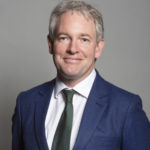
  • Iain Duncan Smith – 2022 Speech on Ukraine

    Iain Duncan Smith – 2022 Speech on Ukraine

    The speech made by Iain Duncan Smith, the Conservative MP for Chingford and Woodford Green, in the House of Commons on 22 September 2022.

    I recognise that others want to speak, and I will try to be as brief as possible. In a way, this debate is simple, because it is ultimately about the sovereignty, independence and self-determination of the Ukrainian people. All else is but a support to that simple position, and everything we do must be about securing that.

    Back in the 19th century, Gladstone made a very simple statement, which should underwrite all that we do on the matter. When he spoke about the attack of the then Turkish empire on Moldavia and Wallachia, he said that there was no greater bulwark for freedom than the breasts of free men and women. That is the truth of where we are today, and that is what we see happening in Ukraine—free men and women fighting in their homeland for the defence of their families and of that freedom that we take for granted.

    That freedom is not free; it comes at a huge price, and not only in the violence and the desperate depredations of the war brought about by the despot Putin. We need to readjust our thinking about defence spending to ensure we have the right equipment to support those who face something similar in future. This comes at a big price for us as we go into the winter months. As has been said, President Putin faces disaster, and yet his actions show that he still believes he has one card up his sleeve: the ability to split the alliance as we get towards winter.

    It is interesting that, even though India is moving away from Putin, China is indifferent, in a way, to where he is, and there was condemnation at the UN General Assembly the other day, he still thinks that if he puts the pressure on, the west will begin to break. There is some indication of politicians in the west feeding that. The other day, senior politicians in Italy were talking about why we should reduce the sanctions, because they were hurting us more than they were hurting him. As has been mentioned, there has also been talk in some other eastern European countries. He thinks it is working and he wants to double down.

    I will make one small criticism. In her remarks, the US ambassador to the UN, Linda Thomas-Greenfield, still talked about getting to a point where there can be negotiation and a negotiated settlement. I think that is quite wrong, because any talk about negotiation feeds Putin’s view that he will split the alliance. I would like to hear from the Government that we categorically believe that the only person who should ever be capable of talking about negotiation is Volodymyr Zelensky—not anyone in any country in the alliance, because all we do is help Putin. That is key to all that we do at the moment.

    To get through and make sure that we are stronger, all of us in the west, united, should surely talk to our public about the difficulties that they will face as a result of the war in Ukraine and of our need to support it despite those difficulties—the cost of living that we are trying to intervene on at the moment; the problems with energy costs and spikes; and the difficulties that they may see with higher food prices. We need to be honest with them.

    I say to the Minister that we need a second bit of honesty too. I intervened earlier about recognising that Russia sees tactical nuclear weapons as war-fighting weapons, which my right hon. Friend the Member for North Somerset (Dr Fox) also mentioned. That has always been part of Russia’s principal view. Instead of dancing around that sometimes and saying, “Well, we’re not going to be scared by rhetoric,” we should recognise that it is not rhetoric; they believe that to be the case. The question is whether they will decide to do it and whether the military will do it.

    Our answer to that must be to say, united, that if Putin ever does that, we will continue to bear down on him regardless and to give Ukraine the equipment and tools it deserves. If we are clear about that and about the possibilities, the public will be with us. It is when we surprise them by trying to say that there is no threat, when there is a major threat, that it is critical. We should be honest about that.

    Finally, China is watching. China invaded the South China sea and not a single thing was done about it. It has militarised it and very little was done about it. It is brutal to its own people at home and we have done very little about it. I simply say that the rules and lessons that we learn from Ukraine should have been learned in the 1930s. If we appease dictators who are hellbent on invasion and destruction, we lose the freedoms that we fought for. That is what this is all about.