Category: Attack on Ukraine

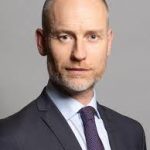
  • Stephen Kinnock – 2022 Speech on Ukraine

    Stephen Kinnock – 2022 Speech on Ukraine

    The speech made by Stephen Kinnock, the Labour MP for Aberavon, in the House of Commons on 22 September 2022.

  • Tobias Ellwood – 2022 Speech on Ukraine

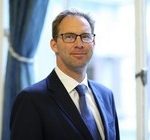
    Tobias Ellwood – 2022 Speech on Ukraine

    The speech made by Tobias Ellwood, the Independent MP for Bournemouth East, in the House of Commons on 22 September 2022.

    I also pay tribute to our armed forces, and their contribution to the incredible events that we saw play out on television over the past few days. It was no easy feat, and we can salute all our armed forces, but particularly those pallbearers who did such a magnificent job. I believe that a worthy way to immortalise Queen Elizabeth and what she did for our country as our longest-serving monarch would be to rename one of our bank holidays to Elizabeth day. That debate is for another day, but I hope we can return to it.

    It is an honour to follow the speech of my right hon. Friend the Member for Uxbridge and South Ruislip (Boris Johnson). He and I did not see eye to eye on everything, but in the case of Ukraine, I hope he recognises that I have always supported what he has done, and indeed, the nation can be proud of it. As I have seen on all my visits to Ukraine, the work Britain has done in stepping forward, more so than many other NATO nations, is recognised. Thanks are due to my right hon. Friend for leading that charge.

    I want to step back from what is happening in Ukraine for a second and look at the bigger picture. We must ask ourselves a fundamental question, one that I pose on a regular basis: is our world likely to become more or less dangerous over the next few years? I think the answer is very clear: it is the former. This is not just about Ukraine, but a worrying growth in authoritarianism versus democracy across the globe, and the emergence of a new alliance—one that is not so obvious yet—between Russia and China. They share a mutual disdain for not only our international rules-based order, but for the west and the United States in particular. They are challenging the status quo that we have enjoyed since the end of the cold war. We have enjoyed that relative peace for three decades, but we have become complacent in nurturing our democratic values, and authoritarian states are becoming bolder and more assertive in promoting their own agenda. Consequently, our world is becoming more siloed and more protectionist, and we have become more risk averse.

    Our actions now—what we do and how we handle Ukraine, given that the conflict is now moving into a darker chapter—will determine how the next decade plays out. China is watching our response carefully, given that it has its sights on Taiwan. Seven months on from Putin’s unprovoked invasion, the west is, I think, starting to wake up to the reality that state-on-state aggression is back, but our institutions built to constrain rogue actors are vulnerable, and new technology has given autocrats new forms of leverage. The art of conflict itself is consequently changing, with not just cyber-attacks, as mentioned already, but economic attacks, including the unprecedented use of international sanctions. All those things have global consequences for the way we do business.

    Mr Jonathan Djanogly (Huntingdon) (Con)

    Do we therefore need to look again at what constitutes going to war, not least because we can now destroy other societies without a single bullet being fired—through the use of cyber, for instance?

    Mr Ellwood

    This is moving into the area of Clausewitz and what exactly war is—whether it is simply the military on the battlefield, or the politics and the economics. We have not really woken up to that, but Putin is using politics and economics to harm the rest of Europe with oil and gas, as well as grain. There is an irony here: we will have a debate in this place tomorrow, as we absolutely should, about supporting people through the cost of energy crisis we are facing here, but many of our problems are actually in Europe. Sorting those out would be a huge step towards dealing with some of the local problems we are facing.

    We need to work more collectively and be less risk averse. We get spooked by some of the rhetoric that comes from Putin, and he has done it again by wanting to go down this avenue of using nuclear weapons. As has been touched on before, Russian doctrine includes the use of tactical nuclear weapons, and we need to understand that doctrine. The Minister refused to answer the question of my right hon. Friend the Member for Chingford and Woodford Green (Sir Iain Duncan Smith)—others are saying, “Quite right.”

    We need clarity on what our doctrine is because it needs to be confirmed with our allies as well. We could cross a threshold here and we would not necessarily know what to do. I am afraid that Putin has taken advantage of our risk-averseness and of the fact that we have put red lines in, such as over chemical weapons in Syria, and then not responded. People can shake their heads as much as they like. This is an awkward conversation that needs to be had as to what Britain, NATO and the United States will do if a low-yield tactical nuclear weapon is used in the Donbas region. I pose that as a question. We can take it behind the scenes and not discuss it, and then it will actually happen and we will look at each other and say, “What do we actually do?”

    Russia needs to know that we are willing to stand up to what Putin is doing, otherwise he will continue, as will other adversaries, to take advantage of our collective weakness. We have done well to provide the weapons systems to Ukraine to advance it in what it is doing. We now need to take it further and leverage that ability to push forward, as my right hon. Friend the Member for Uxbridge and South Ruislip said, to make sure that we can conclude what goes on in Ukraine. If we do not put out this fire in Ukraine, it will spread elsewhere.

  • Stewart McDonald – 2022 Speech on Ukraine

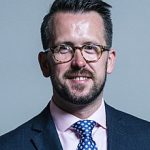
    Stewart McDonald – 2022 Speech on Ukraine

    The speech made by Stewart McDonald, the SNP MP for Glasgow South, in the House of Commons on 22 September 2022.

    I am grateful, Madam Deputy Speaker.

    I nodded along in agreement with much of what the former Prime Minister, the right hon. Member for Uxbridge and South Ruislip (Boris Johnson) said. I think it fair to say that when the February invasion took place, he and his Government, particularly the Defence Ministers on the Front Bench today, got the calls on Ukraine right. It is important to acknowledge that. Based on his remarks, I think he will do well in his new role as my warm-up act here in the Chamber.

    I pay tribute to the new Under-Secretary of State for Defence—the hon. Member for Wrexham (Sarah Atherton), who is not in her place right now—and congratulate those colleagues who have managed to stay in position amid the many changes. I also wish the right hon. Member for Tonbridge and Malling (Tom Tugendhat) well as the new Minister for Security. He was formerly the Chairman of the Foreign Affairs Committee, of which I am a member; I think we will be in for various auditions for his replacement as this afternoon’s debate goes on.

    Before I come to the crux of my remarks, I should also draw the attention of the House to my entry in the Register of Members’ Financial Interests.

    It was a pleasure, just two weeks ago, to be back in Ukraine and back in Kyiv—with some colleagues who I hope we shall hear from this afternoon—a country and a city that I have come to know and love over a few years now. On this occasion I was there to attend the annual YES—Yalta European Strategy—conference, which brings together civil society, political leaders, military leaders, academics, and others from around Europe to discuss Ukrainian and European security. There were many facets to the fascinating set of discussions that we had during the two days that our delegation spent there. It was also a real pleasure to meet members of Ukraine’s armed forces—who have so heroically not just fought for their country, but fought for what we all stand for and have cherished since 1945—and of course, the man himself, President Volodymyr Zelensky, who, as the former Prime Minister said, embodies everything that is noble in Europe right now.

    Here we are, seven months on from this wave of a war that started in 2014, in which we have witnessed a level of barbarism and butchery that few of us could have imagined. Hospitals, schools and people’s homes have been the targets. We have seen, in Bucha and also more recently, evidence of some of the most heinous war crimes imaginable.

    Wera Hobhouse

    I did not have the opportunity to ask the former Prime Minister about his commitment to treating sexual crimes as war crimes. Can we all, on both sides of the House—including the hon. Gentleman—come together in viewing sexual violence as a war crime like any other?

    Stewart Malcolm McDonald

    Yes, I think we can come together and agree on that. I am sure that other colleagues will want to discuss it in great detail.

    So here we are, seven months on from this invasion, and—as was mentioned by the former Prime Minister—much in the world has changed. Sweden and Finland have joined NATO, unity among western countries is something like never before, and, indeed, unity in this House is something like never before. In fact, we may have been only partly joking with our Ukrainian counterparts, during a recent visit, in saying that supporting Ukraine might well be the only issue that unites this House. Given the noises coming from the new Government, I suspect that that will be even more the case, but it is important for that unity to be maintained and developed in support of Ukraine.

    Back in February the German Federal Chancellor, Olaf Scholz, told us that not just his country but all of Europe was at a turning point: a Zeitenwende, as they say in Germany. Seven months on, however, it seems to me less like a turning point and more like Gramsci’s interregnum, in which the old is dying but the new cannot yet be born. At the moment, we are in a messy flux. While I think that the unity of purpose that we have is serving us well to get through the tumult that we are going through and Ukraine is going through, I also think that there is much in our own record—the record of all of us in the House and across the west—that we need to assess, going back, yes, to 2014, but also to 2008. I have to say to the former Prime Minister that we should consider the issue of how Russian money has been treated in this country.

    I think it takes a lot to admit it when one has got things wrong, and I think it only fair that we, as staunch partisans at times, give our opponents the space to make that admission. It is easier said than done, but if the new world that is incubating in the messy time in which we are currently living is to be born, that is the way in which I think we have to approach it.

    There is another important point to be made. As the winter bites and energy prices go through the roof, and as what in some quarters has been called “Ukraine fatigue” may start to settle in, there is a particular group of people in society of whom I think we should be mindful: those whom the Germans call the Putinversteher, the “Putin whisperers”, who would seek to apologise for, or contextualise, or somehow make excuses for Russian “legitimate” interests in Ukraine. They should be thoroughly ignored. Since the February invasion, they have, temporarily and rather embarrassingly, been silent, but they are undoubtedly starting to rear their heads again.

    Dame Nia Griffith (Llanelli) (Lab)

    Does the hon. Gentleman accept that many of those people are being fed by Putin’s cyber-warfare and that this country and our allies really need to invest in counter-offensive material?

    Stewart Malcolm McDonald

    Yes, I agree. The hon. Lady is absolutely spot on. One of the most insidious arguments from that particular group—and they can be found on the extreme left or the extreme right, in every country and in Parliaments, National Assemblies, the media, think-tanks and elsewhere—is that we should stop arming Ukraine. I am sure that I speak for everyone that I was in Ukraine with recently when I say that we could see and hear up close what a difference arming Ukraine is making.

    That support has to continue for three main reasons, which I will outline as briefly as possible. First, I do not believe that it is possible to negotiate with Vladimir Putin. We should look at his record not just in Ukraine right now but in Georgia and Syria. This is a Government who practise the famous double-tap strike, whereby the Russian armed forces hit an area, wait for the first responders to arrive and then hit it again. I do not think that it is possible to negotiate with a regime that carries itself in that way.

    The former Prime Minister is absolutely right to say—this is another important point—that anything we do going forward has to be on President Zelensky’s terms. Ukrainians do not want to negotiate with the regime in the Kremlin. We only have to look at the sheer joy on their faces when Ukrainian armed forces turn up in their towns and villages to liberate them and save them what has been experienced in Bucha, Mariupol and Kherson. The emotional scenes that we have seen and, I am sure, will continue to see tell us that we have got our support for Ukraine right. They should also put paid to the ideas of extremists—that is the only way to describe them—who would seek to divvy up Ukraine on a map. I would love to hear them tell me which towns they would like to see handed over to the Kremlin.

    When we were in Ukraine, we met a young 15-year-old guy and his father. I am sure that Members will have read about Andriy Pokrasa and his father. When Russians were surrounding his village, he had the bravery and ingenuity to launch his own drone into the air to take photographs of Russian positions and send them to the Ukrainian armed forces. Members can imagine what happened to those Russian positions soon afterwards. He is now back at school studying. It was an honour to meet him. I would love to see one of these armchair extremists tell him that he should instead have gone out and negotiated with the Russians at the end of his street. Imagine what would have happened had he been caught. They knew the danger, but still they did everything they could to defend not just their own hometown but their country as well.

    Lastly, the war is not just a war on territory. It is a war on values, liberalism, democracy, sovereignty and everything that we have cherished since 1945. I do not think that that is the kind of thing that can be negotiated away lightly. The Putin whisperers must be ignored. They must feel the complete contempt of those of us who want to see Ukraine win. The war could stop tomorrow if Russia stopped fighting, but if Ukraine stops fighting, the country will cease to exist. A Russian victory would be a disaster for everyone in Europe, and it is something that we should not even consider. Russian soldiers and now this latest group of conscripts will be fighting solely for their wages, while Ukrainian soldiers fight for their future and for ours. We all remain united in this House. Ukraine must win. We must continue to support them. And it is in that vein that I offer that support to the Government this afternoon.

  • Boris Johnson – 2022 Speech on Ukraine

    Boris Johnson – 2022 Speech on Ukraine

    The speech made by Boris Johnson, the former Prime Minister, in the House of Commons on 22 September 2022.

    It is now seven months since Vladimir Putin launched his vile, illegal and unprovoked war against an innocent European country. In those seven months, his actions have cost almost as many Russian casualties as were sustained in the whole 10-year Russian invasion and occupation of Afghanistan. If he continues at this rate, it will not be that long before Russian losses in Ukraine exceed American losses in the 20-year Vietnam conflict. And that is before we have counted the Ukrainian losses in the past seven months and the catastrophic suffering that Putin has inflicted on those people: the torture, systematic rape, mass murder and deliberate targeting time after time of apartment blocks, schools, kindergartens and hospitals.

    In all those seven months of horror that this modern Moloch has personally unleashed, he has not attained a single one of his objectives in a war that, let us not forget, was meant to be over in days. He has not overturned the Ukrainian Government or captured the capital city. He has not even secured the Donbas—far from it. Instead of coming to terms with the reality of his mistake—I mean his complete misunderstanding of what Ukraine is and what really motivates Ukrainians, which is a simple love of their country—he has decided to double down on disaster. He announced the mobilisation of 300,000 more young Russians, a move that has caused such panic among people about to be fed into the meat grinder of Putin’s warzone that yesterday, in a single day, the price of a one-way air ticket from Moscow to South Africa went up to $50,000.

    Those potential conscripts can see that what began as a war to rebuild the Soviet empire has collapsed into a shameful war to save Putin’s face. They have no desire to be sacrificed on the altar of his ego. At the same time, as Members from both Front Benches have pointed out, he is threatening to hold sham referendums in the territories he has occupied and then to defend those territories with every weapon, as he says, in his arsenal, in words that he hopes will make our flesh creep and weaken our resolve. He will fail in that pitiful bluster, because he can see and we can see that he is escalating his rhetoric not because he is strong, as has been said, but because he is weak. He is transparently a problem gambler who takes more risks not because he is winning but because he is now terrified of losing.

    Chris Bryant

    Putin did exactly the same, of course, in 2014. He held a fake referendum in Crimea and, unfortunately, the will of the west weakened. How do we make sure that people such as Orbán in Hungary and those who are preaching disinformation in Italy do not win the day and that we maintain the united strength of the west?

    Boris Johnson

    I thank the hon. Gentleman very much for his point and I will come directly to what happened in 2014 in just a minute. He should not underestimate the continued unity of the west. That is one of the signal achievements of Vladimir Putin in the past seven months: he has seen a more coherent and unified western alliance, and a stronger NATO perhaps, than at any time in the last 20 years.

    Dr Luke Evans

    Will my right hon. Friend give way?

    Boris Johnson

    If I may, I will just make some progress, Madam Deputy Speaker, as you wanted me to keep within 10 minutes. I will do my best.

    Thanks to the heroism of the Ukrainian armed forces, thanks in part to the weapons we are proud to be offering —I congratulate the Minister for the Armed Forces and Veterans, my right hon. Friend the Member for Wells (James Heappey) on his description of the work of the UK armed forces and the huge list of weapons we are sending—and thanks, too, to the inspirational leadership of Volodymyr Zelensky, the Russian forces have, in recent days, been expelled from large parts of the north-east of the country around Kharkiv. They are under increasing pressure in Kherson in the south. I have no doubt whatever that the Ukrainians will win, because in the end they have the inestimable moral and psychological advantage of fighting for their country in their country against an enemy that is increasingly demoralised and confused about what they are meant to be doing in that country and what they can hope to achieve.

    At this turning point in the war, it is more vital than ever that we have the strategic patience to hold our nerve and ensure that Ukrainians succeed in recapturing their territory right to the borders of 24 February and, if possible, to the pre-2014 boundaries, because that is what international law demands. The hon. Member for Rhondda (Chris Bryant) is correct: it was our collective failure to insist on upholding international law eight years ago that emboldened Putin to launch his disastrous invasion this year.

    If Putin is going to double down on his aggression, we must double down in our defence of the Ukrainians, and we must be prepared to give more military assistance and more economic support, so I welcome warmly the announcements from the Government this week. We must work with our friends and partners, as well as the Ukrainians, to ensure that we provide that country with the long-term assurance they need on their security and defence that we have failed so far to provide in the 31 years since independence.

    If anyone has proved the absolute necessity of those guarantees, it is Vladimir Putin and his war. We must close our ears in the months ahead to the absolute rubbish he talks. This is not some nuclear stand-off between NATO and Russia, as he seemed to pretend yesterday; this is a war of aggression by Russia against an innocent neighbour. We are helping with equipment and training, as we might help a neighbour to fight a fire when their house has been attacked by an arsonist. NATO is not engaged in a war against Russia. We are not engaged in a war against Russia, let alone against the Russian people.

    By the way, we are not concerned here with regime change in Moscow, as Vladimir Putin egocentrically likes to claim. Whatever politics may hold for Putin may be the subject of an interesting debate, but that is not the issue at stake. There is only one objective: the sovereignty, independence and freedom of the people of Ukraine. That is our objective and we must acknowledge that the months ahead will be tough for Ukraine, Britain and the world.

    For all the latest Ukrainian successes, Putin is still the possessor of almost 20% of Ukrainian territory and it may well be time-consuming and costly to winkle him out. I have no doubt that in the hard winter months ahead, with the price of energy continuing to inflict hardship on people in this country and around the world, there will continue to be some who draw the false conclusion that the Ukrainians must be encouraged to do a deal, to trade land for peace, to allow Russian gas to flow to Europe. Even if it were politically possible for Volodymyr Zelensky or any Ukrainian Government to do such a deal—which I very much doubt—there is absolutely no sign that Putin either wants such a compromise or can be trusted to deliver it, because he would continue to remain in position and could invade that country in the future.

    As I have told the House many times before, any such deal or compromise would send a signal around the world that violence does pay off, that might is right and that when the going gets tough, the great democracies will not have the stomach to stick up for freedom. That is why we have absolutely no choice but to stay the course and to stay resolute. We should be confident because, with every week that goes by, our position gets stronger and Putin’s position gets weaker.

    Although times are tough for families now, we should be in no doubt that this country has the economic muscle not just to help people with the costs of energy caused by Putin’s war, but to provide the long-term resilience of a secure and independent UK supply—including more nuclear, much more wind in the transitional period and more of our own hydrocarbons—to ensure that we are never again vulnerable to Putin’s energy blackmail.

    It is a measure of Vladimir Putin’s giant strategic failure that he has not only united the west against him—the strength of that unity is remarkable, and by the way he has encouraged two hitherto neutral countries, Sweden and Finland, to join the NATO alliance, which would have been unthinkable a year ago—but decisively alienated his most valuable western customers from his most important Russian exports, oil and gas, with incalculable consequences for his people’s economic future.

    Stephen Kinnock (Aberavon) (Lab)

    Further to the right hon. Gentleman’s point about economic resilience, does he think that enough was done during his time as Mayor of London, and indeed during his time in this place, to deal with the issue that London has become a laundromat for dirty Russian money? Does he think that there are lessons to be learned from that period that he can share with the House?

    Boris Johnson

    I think the whole House will agree that since the invasion on 24 February the UK has led the world in imposing sanctions on Russia and in mobilising diplomatic, political and military support for the Ukrainians. I think that most impartial observers around the world—and I meet a lot of them—believe that if it had not been for the actions of the UK Government, things might have been different. I am delighted to see this Administration continuing with the commitments that we began; the financial commitments in particular are extremely important.

    Wera Hobhouse (Bath) (LD)

    Will the right hon. Gentleman give way?

    Boris Johnson

    I am just about to conclude.

    If it were not for Putin’s inability to see what is really happening—if he were not locked, as it were, in a windowless dungeon surrounded by bodyguards, spies and sycophants in a sort of Lubyanka of the mind—he would see the tragedy that he has unleashed. He would withdraw from Ukraine before he is pushed out—and he is going to be pushed out.

    In the past seven months, the sufferings of Ukraine have moved the world; I know that they have moved everybody in this House and in this country. We grieve for the people of Ukraine, and we open our hearts to them as few other countries have done. We know that, thanks to their bravery and sacrifice, their day of freedom is coming. When that day comes, we will rejoice with Ukraine, and that rejoicing will echo around the world. Until that day comes, I am sure that this House and this country will stand in unshakeable support for the people of Ukraine.

  • James Cleverly – 2022 Speech to UN Security Council Meeting on Ukraine

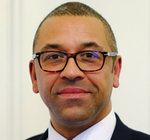
    James Cleverly – 2022 Speech to UN Security Council Meeting on Ukraine

    The speech made by James Cleverly, the Foreign Secretary, in New York on 22 September 2022.

    Madame President, Mr Secretary General, Mr Khan, Thank you.

    Seventy seven years ago, UN members agreed solemn principles in the UN Charter, vital for international peace and security. They undertook to refrain from the threat or the use of force against the territorial integrity, or political independence, of any state.

    Yet 7 months ago, President Putin invaded Ukraine illegally and without justification he ignored the resounding pleas for peace that I heard in this Council on 17 February.

    Since then, Ukrainians’ spirit of defiance, in defence of the protection of their country, continues to inspire free peoples and nations.

    Every day, the devastating consequences of Russia’s invasion become more clear. UN agencies have confirmed more than 14,000 civilian casualties so far – and the actual total likely to be much higher more than 17 million Ukrainians in humanitarian need; 7 million displaced within Ukraine and more than 7 million Ukrainian refugees in Europe.

    We see the mounting evidence of Russian atrocities against civilians. Including indiscriminate shelling and targeted attacks on over 200 medical facilities, and 40 educational institutions and horrific acts of sexual violence.

    We see from the reports of the Office of the High Commissioner for Human Rights that in parts of Ukraine currently under Russian control civilians are subjected to torture, arbitrary detention, and forced deportation to Russia. And we have seen more grisly discoveries in Izyum.

    It is not just Ukrainians who are the victims. President Putin’s war has spread hardship and food insecurity across the globe plunging millions of the world’s most vulnerable into hunger and famine.

    And once again, as we’ve seen here today, Russia has sought to deny responsibility. It has tried to lay the blame on those who have rightly imposed sanctions on President Putin’s regime in response to his illegal actions.

    To be clear we are not sanctioning food. It is Russia’s actions that are preventing food and fertiliser getting to developing countries. It is Russia’s tactics and bombs that are to blame for destroying Ukraine’s farms, infrastructure, and delaying its exports.

    I sat here in February, listening to the Russian representative assuring this Council that Russia had no intention of invading its neighbour. We now know that was a lie.

    And today I have listened to further instalments of Russia’s catalogues of distortions, dishonesty, and disinformation. He has left the Chamber. I am not surprised, I don’t think Mr Lavrov wants to hear the collective condemnation of this Council but we saw through him then and we saw through him today.

    We have information which means that we know that Russia is about to hold sham referenda on sovereign Ukrainian territory with no basis in law, under the threat of violence, after mass displacements of people in areas that voted overwhelmingly for Ukrainian independence. We know what Vladimir Putin is doing. He is planning to fabricate the outcome of those referenda. He is planning to use that to annex sovereign Ukrainian territory. And he is planning to use it as a further pretext to escalate his aggression. That is what he plans to do.

    And we call on all countries to reject this charade and refuse to recognise any results. We are used to seeing Russia’s lies and distortions.

    But let us listen to the testimony of Ukrainians who tell us about the reality of President Putin’s war.

    Dr Olena Yuzvak, her husband Oleh and their 22-year-old son Dmytro, were abducted by Russian forces from their home in Gostomel, near Bucha, in March. The soldiers shot Oleh twice in the legs, before they were all blindfolded and bundled into an armoured personnel carrier.

    I want you to hear Olena’s story in her own words:

    First, they took us to a bombed-out house. The Russian soldiers kept saying they were going to kill us. My husband was left for hours lying on the floor in a pool of blood. I don’t know why. We’d done nothing wrong. Then they took my son away from us. I don’t know where. I don’t know if we’ll ever see him again. I just want my boy back.

    Olena’s story, and those of many others, tell us the truth, the real truth.

    This is a war of annexation. A war of conquest. To which President Putin now wants to send even more of Russia’s young men and women, making peace even less likely.

    Mr Putin must understand the world the world is watching and we will not give up.

    As members of the Security Council, we must unequivocally reject Russia’s attempts to annex Ukraine’s territory. We must make clear to President Putin that his attack on the Ukrainian people must stop, that there can be no impunity for those perpetrating atrocities and that he must withdraw from Ukraine and restore regional and global stability.

    If he chose to, he could stop this war, a war which has done untold damage to the Ukrainian and the Russian peoples. His war is an assault on Ukraine, an assault on the UN Charter, and an assault on the international norms that protect us all.

    So we stand with our Ukrainian friends for as long as it takes. Because Ukraine’s fight for freedom, is the world’s fight for freedom. It is our fight for freedom. And if Ukraine’s sovereignty and territory are not respected, then no country is truly secure.

    These are the reasons why Ukraine can, and must win.

    Thank you.

  • Luke Pollard – 2022 Speech on Ukraine

    Luke Pollard – 2022 Speech on Ukraine

    The speech made by Luke Pollard, the Labour MP for Plymouth Sutton and Devonport, in the House of Commons on 22 September 2022.

    I start by welcoming the wonderful news of the release of British prisoners of war overnight. It is welcome that they are returning home, but we recognise the pain and hurt of all the families involved, because not everyone is returning safely.

    I also welcome the Minister’s new job in the Cabinet. Before the last reshuffle, the shadow Front Bench team said to the Front Bench team that we were hoping that he and the Defence Secretary would stay in their positions, and they have. I also welcome the new Minister, the Under-Secretary of State for Defence, the hon. Member for Wrexham (Sarah Atherton), to her place.

    Seven months on from Russia’s criminal invasion of Ukraine, we have reached a new and critical phase of the ongoing conflict. We should all be inspired by the remarkable resilience of the people of Ukraine, who have refused to bow to Russia’s oppression. I recognise the extraordinary Ukrainian counter-offensives that have taken place in recent weeks, which the Minister set out in such detail.

    Our argument has never been with the Russian people but with the dictator in the Kremlin. Overnight, we have seen brave Russian civilians stand up to the authoritarian state that curbs their freedom, restricts their voice and keeps the people in poverty while the oligarchs count their yachts and villas. Today, possibly thousands of Russian civilians are in jail, arrested simply for exercising their human right to protest. As we have stood with the Ukrainian people against aggression, I make special mention in the House of the courage of those protesters.

    The horrors of war that we have seen in the newly liberated areas remind us of the atrocities and the pain that many Ukrainians have suffered in the past weeks. I join the Minister in setting out a clear determination that those responsible must be prosecuted and brought to justice for the hideous war crimes that we are seeing unfolding.

    Dr Murrison

    It is welcome news that a load of generals and colonels have been sanctioned and placed in The Hague’s waiting room, as it were, but does the hon. Gentleman agree that we need to go much further down the food chain than that? Each and every one of the individuals involved in those atrocities needs to have their card marked. They have dishonoured the profession of bearing arms and need to be dealt with sooner or later.

    Luke Pollard

    I agree with the right hon. Gentleman. Anyone who perpetrates war crimes against civilians must know that, in the 21st century, they will be prosecuted and followed in the pursuit of justice from the day they commit that atrocity to the day they die. We must not leave any space, justification or excuse for war crimes— at all, anywhere, ever. That is a message that will be sent from hon. Members on both sides of the House to those people, regardless of rank, who have persecuted civilians and committed war crimes against them.

    Alicia Kearns

    One of my grave concerns is the prosecution of sexual violence in conflict. The issue is that, often, we cannot get the evidence, because by the time the prosecution has come—once the shame has been allowed to pass and there has been discussion—it is too late to collect that evidence. I would welcome the hon. Gentleman’s thoughts on a special tribunal formed to collect evidence and prosecute sexual crimes to ensure that, in all conflicts, evidence is collected at the start to ensure prosecutions at a later stage.

    Luke Pollard

    I am grateful for that intervention. The shadow Minister for Foreign and Commonwealth Affairs and International Development, my hon. Friend the Member for Cardiff South and Penarth (Stephen Doughty), and I were in Kosovo only a few months ago, where we witnessed the effects of the horrible sexual violence that was used as a weapon of war. The determination of the international community then was that it would never be repeated, but it has been in conflicts ever since. We need to make sure that not only is the evidence collected, but the victims are given the support that they will need, in many cases, for the rest of their lives. As we made it clear that killing civilians will not be countenanced, so we make it clear that using rape and sexual assault as a weapon of war will not be countenanced. We will come after those people as well.

    Bob Seely

    In the Syrian war, the Russians and their Syrian allies targeted hospitals as primary targets. Does the hon. Member agree it is regrettable that at the time we did not say and do more and that the international community did not say and do more to hold responsible those senior army officers who were responsible for the deliberate targeting of hospitals, which is one of the most basic breaches of the Geneva conventions?

    Luke Pollard

    I am grateful for the hon. Member’s intervention, and I do tend to agree with him. As a country, we need to take stock of the freedom that Putin has been given over many years—not just in Syria or parts of the countries bordering his country, but in Crimea—because the tactics the Russians are using in Ukraine now have been perfected over many years and the space the international community has given him to do that has encouraged the use of many of those tactics. We need to look carefully at how we stand up for such individuals in the future, but we will do that by standing firmly with the people of Ukraine at this time. I will make some progress before I give way again.

    It is clear that Vladimir Putin is a bully. His partial mobilisation announcements along with his sham referendums to illegally annex large swathes of Ukraine are shameless. They are a cynical attempt to justify a war that has gone badly wrong for Russia. We should view partial mobilisation as weakness—an attempt to hide the fact that, so far, Russian strategy has failed, weapons have failed, command and control has failed, and none of Russia’s war objectives has been met. Putin’s latest miscalculation will lead to more Russian families losing their sons, more Ukrainians being killed and more suffering. The mobilised forces sent to Ukraine will be on the receiving end of high-end western weaponry, and a determined and morally just Ukrainian military defending every inch of its country. In these circumstances, with the poorly equipped Russian conscripts facing cold weather, it is perhaps not surprising that we are seeing so many reports of desertion and troops being unwilling to fight. That means Putin will, I regret, resort to more and more fear to try to achieve his objectives.

    Richard Graham (Gloucester) (Con)

    I think the cross-party support we are hearing today for Ukraine and for the victims of murder and sexual violence sends a very powerful message. Does the hon. Member agree that the next challenge, even though it feels early to be thinking this yet, is to be preparing to win the peace? Quite often in the past, when we have left military successes—Iraq would be the outstanding example—we have not laid strong foundations to win the peace. Does he agree that we could use our soft power and places such as Wilton Park to hold conferences with the Ukrainians about what sort of democracy and peace we can help them create after this is all over.

    Luke Pollard

    I thank the hon. Gentleman for his intervention, and I agree with him that our commitment to the people of Ukraine has to be long term—ensuring not only that they win and Putin fails, but that they can rebuild a nation that is proudly sovereign, proudly independent, safe and secure, and able to stand tall on the international stage, which is precisely what Vladimir Putin would fear the most. That is what our commitment must be, and I share the hon. Gentleman’s view that that commitment and determination is cross-party—from every single party in this place.

    The actions and rhetoric we are seeing from Vladimir Putin are not new, sadly. I agree with the Minister when he says that Putin’s words on the use of nuclear weapons is sabre rattling, and it is a weakness of his argument that he is resorting to it. These are the actions of a desperate man clinging to power at the helm of a pariah state. His threats should not only be condemned by every party in our Parliament, as they are, but by every country—every peace-loving country—on this planet. His actions show how desperate he is, how weak he is and how much he has miscalculated, and those actions show that he must fail.

    We must not downplay the seriousness of the situation. People at home and abroad, having heard those words, are understandably worried about the gravity of the threats that have been made by Russia. In this House, however, we must be careful not to fan the flames of Putin’s information war of fake news. I think I speak for everyone in this place when I say that now is not the time for the UK to weaken or dilute our resolve for Ukraine, but to remember that at heart Putin is a bully and the only way of standing up to a bully is by making sure that we do so firmly and determinedly, and that such a commitment is long lasting.

    Chris Bryant (Rhondda) (Lab)

    I completely agree with what my hon. Friend is saying about Ukraine now, but we could have been saying it back in 2014. One problem is that we did not take this issue seriously enough in 2014, because that emboldened Putin and now we see what we see. I worry that sometimes we focus exclusively on things that Putin says about nuclear weapons, and not enough on the warfare in which he has already engaged with this country through cyber, targeting many Members of the House and the political establishment. Do we need to do far more to ensure that we are protecting ourselves?

    Luke Pollard

    I agree with my hon. Friend. His has been a siren voice that has been warning this House and the public about Putin’s actions for a great many years, and we must ensure that those lessons are learned. Putin has been telling the international community what he wants to do for many years, and he has been engaging in economic warfare, cyber-warfare, disinformation and political interference for many years. We need to strengthen all our fronts if we are to deter that type of behaviour, not only from Russia but from other states that wish to do us harm in the future.

    Alex Sobel (Leeds North West) (Lab/Co-op)

    To follow on from the point made by my hon. Friend the Member for Rhondda (Chris Bryant), my hon. Friend the Member for Plymouth, Sutton and Devonport (Luke Pollard) was with me in Kosovo a couple of months ago where we heard about a Russian disinformation, misinformation, and hacking centre that employs thousands of personnel in Serbia. Do we also need to take this fight to third countries that are facilitating Russian misinformation, disinformation and hacking, including in Ukraine, the Balkans, the Baltic states and around the world?

    Luke Pollard

    My hon. Friend is right. The cyber-campaigns against the west and against freedom and democracy are not contained only to bot factories in St Petersburg; they are deliberately being deployed around the world through, in many cases attempts of deniable cyber-warfare. We know that is coming, and we must ensure that we strengthen our own defences—political, military, economic and cyber—against that. At this very moment there are probably enormous numbers of posts on social media feeds across Britain that are seeking to spread misinformation. We must be alive to the reasons why they are there, to why Russia is investing in that capability, to what effect they are seeking to create in our society, and we must counter that. That is a job not only for ourselves, but we must also support our allies in doing so.

    We need a long-term joined-up strategy. We know that despite Putin’s strategic miscalculation, Russian aggression will continue. The Government have had Labour’s full backing to provide military support to Ukrainian troops, and they will continue to have that. We welcome the new Prime Minister’s confirmation that this year’s military funding for Ukraine will, as a minimum, be matched over the next year. However, we now need to set out a clear strategy for what military, economic and diplomatic support for Ukraine will be. In summer the Government said that they would set out a roadmap for that, and I would be grateful if, when he responds to the debate, the Minister said when he expects that to be published.

    Christine Jardine (Edinburgh West) (LD)

    Does the hon. Gentleman agree that one important aspect of that is that a great many other eastern European countries and former Soviet states along the Russian border have been carefully watching what happens in Ukraine with some trepidation? It is as important to have a long-term strategy for Ukraine as it is to reassure those countries of NATO’s commitment to their future.

    Luke Pollard

    I agree with the hon. Lady. Our commitment to our allies in eastern Europe must be concrete and long-term, and we must also consider the tactics and strategies used by Russia in Ukraine to update how we plan to defend and deter any aggression. We have seen with the development of pinpoint accuracy artillery fire and loitering munitions that some of the tactics we once thought we would deploy may need to be updated to ensure that we can deter any threat and, if a threat moves to actual military conflict, that we can win in those circumstances. I am grateful for the hon. Lady’s intervention.

    The strategy that I hope the Minister will outline should set up long-term, politically broad support for Ukraine in the future, because only a long-term strategy will reassure the Ukrainians, and also the British people, that we will stand unwaveringly with their country. It will also send a clear, unmistakable message to the Kremlin that Britain will continue to stand with Ukraine and our NATO allies for as long as it takes to see off Russian aggression, not just in Ukraine, but in the Baltic states, in Bosnia and Kosovo, in the Mediterranean and the middle east, in the north Atlantic and the high north, and on social media as well.

    That means that we need to look at the Prime Minister’s announcement in updating the integrated review. The Prime Minister’s commitment to match the funding for military assistance to Ukraine next year is welcome, but we are yet to see the action plan that will give us the detail. We need to see that in the context of the UK’s wider defence arrangements. A few weeks ago, the Leader of the Opposition and the shadow Defence Secretary visited the British Army’s outstanding training program for Ukrainian forces, meeting the brave Ukrainian troops who are by now on the frontline, fighting in the Donbas, having been armed with British skill on that training program. This is a vital training program for the Ukrainians, which should be expanded and extended throughout next year and beyond, if the Ukrainians need it, and should also include cold weather training.

    This week the Prime Minister also confirmed that the Government will update the integrated review of foreign and defence policy in response to the ongoing situation in Ukraine. I welcome this U-turn, which is good news. While Labour has been arguing for months for the need to update our defence plans, 20 of our NATO allies have already rebooted their defence plans and their spending since the invasion of Ukraine started in February. The decision that has now been taken should have been based on national security, not the Conservative leadership contest, but it is a welcome U-turn. Labour is ready to contribute and happy to support the Government in making sure that the next integrated review corrects the mistakes of the current one. However, if we want to pursue the persistent global engagement that was so present in the last integrated review, we must not cut 10,000 troops from our Army, and should look again at scrapping Hercules military transport planes, the plans to cut 10% of the reserves and our failure to have a war-fighting division able to be contributed to NATO until 2030.

    An updated integrated review must also make British industry and our peacetime defence procurement systems a major priority. We cannot support Ukraine in the long term or ensure our own UK security when, on day 211 of this conflict, the MOD has still not proved capable of signing the contract to produce replacement stocks for the highly valued NLAW—next generation light anti-tank weapon—missiles that the Ukrainians are using to defend against the Russians. I would be grateful if, in summing up, the Minister set out when the Government expect that contract to be signed and when those missiles will be delivered, because depleting our stockpile is not a good strategic answer.

    Wayne David

    I very much agree with my hon. Friend. Does he also agree that it is essential that, at this crucial time especially, the Government do not make snide remarks about our European partners? It is very important to have the maximum unity in opposing what Russia is doing in Ukraine.

    Luke Pollard

    Rebuilding our European relations is a key part of making any integrated foreign policy review work. Those of us on the Opposition Benches can say very clearly that our friends across the channel are our friends. They are not our foes—there is not a question mark about it—and we stand with them in the face of Russian aggression. This is not a political game to be played. When the Kremlin can find division between the allies of the west, it will exploit it. We must stand firmly with our allies against this.

    It would be remiss of me not to mention the armed forces’ incredible contribution on display last week during the late Queen’s state funeral. As a Plymouth MP, I am especially proud of the contribution of forces based across the south-west of England. I would like to put on record Labour’s thanks for the armed forces’ steadfast dedication to our country. They really have shown the best of Britain, and we are incredibly grateful for the part they played and continue to play in supporting Ukraine against Russian oppression. It was an honour to meet today, on a cross-party basis, some of the pallbearers who carried the Queen’s coffin.

    Finally, on the Labour Benches, we are taught, as part of the trade union movement, that unity is strength—that we stand together and we are not divided. I say to the Minister that this is now a cross-party sentiment in this place, because it is the strength of Westminster when the party that I represent, the party now in government and every other party stand together in the face of such aggression, and we will continue to do so until Ukraine is free.

  • James Heappey – 2022 Statement on Ukraine

    James Heappey – 2022 Statement on Ukraine

    The statement made by James Heappey, the Minister for the Armed Forces and Veterans, in the House of Commons on 22 September 2022.

    I beg to move,

    That this House has considered the situation in Ukraine.

    This is a timely debate. Since my right hon. Friend the Defence Secretary last updated the House on 5 September, the Ukrainian army’s counter-offensive has made rapid progress along three axes—west, north and east of Kherson. In lightning advances through the eastern region of Kharkiv, the cities of Izyum and Balakliya have been liberated. In the east of Kharkiv Oblast, Ukraine has now secured bridgeheads on the east bank of the Oskil river where Russia is attempting to consolidate its defences. Most recently, the Ukrainian authorities report that a village close to the eastern city of Lysychansk has been recaptured. That is a significant achievement as it means that Russia no longer has full control of the Luhansk region—the self-proclaimed “people’s republic”.

    So far, Kyiv says that as much 6,000 sq km of territory has been recaptured. Russia’s forces withdrew from the region in the face of the Ukrainian advance, while a significant number of troops deserted or surrendered. The withdrawal was anything but orderly, with large quantities of munitions and equipment abandoned. Russian airborne forces have also suffered substantial losses and fear being cut off from the main Russian force. As the Russian army attempts to consolidate on a new defensive line, poor logistics mean that its troops are without food and supplies, morale continues to plummet, and the Kremlin is worried about how to stop widespread desertion.

    On day 211 of a five-day operation, none of Russia’s initial objectives has been achieved. Its attempt to take Kyiv was thwarted. Its efforts to weaken NATO have backfired. Indeed, with Finland and Sweden joining, as a direct result of Russia’s aggression against its neighbours, the alliance has never been stronger. Not only do Russian casualties continue to climb, with an estimated 25,000 Russian dead, but tens of thousands have been injured and tens of thousands more have already deserted. Russia’s war machine is now severely depleted, with more than 3,000 armoured and protected vehicles destroyed, more than 400 artillery pieces decimated and scores of fixed-wing aircraft, helicopters and unmanned aerial vehicles downed.

    Seven months into this conflict, Russia lacks sufficient manpower in the field to achieve any of its objectives and the mood of Moscow is changing. Voices from across Russian society are speaking out against the military command and making barely veiled criticism of Putin himself. The reality is that Ukraine is winning. That is the context in which we should understand Putin’s latest escalation yesterday.

    Mr Toby Perkins (Chesterfield) (Lab)

    The Minister spoke about the mood in Moscow. We saw President Putin’s ludicrous recent announcement that he would consider any attack on any areas that he now considered Russian to be an attack that could be met with a nuclear response. Will the Minister reaffirm the conviction of this House that we will not be bullied by President Putin, that the Ukrainians have our complete support and that, if Putin wants to bring an end to this violence, he can do so at any moment—

    Madam Deputy Speaker (Dame Eleanor Laing)

    Order. I think the Minister has got it.

    James Heappey

    Thank you, Madam Deputy Speaker, but the hon. Gentleman is absolutely right: the nuclear sabre-rattling—that is what it is—is the act of a desperate man who knows that this is not going his way. We will not be deterred from doing what we have done so successfully for the past nine months.

    Bob Seely (Isle of Wight) (Con)

    My right hon. Friend speaks of sabre-rattling. Clearly, there is a great deal of bluff and threat and Putin is trying to break the alliance between Kyiv and the west. Are the Government saying that it is their belief that this is purely bluff?

    James Heappey

    My hon. Friend, more than anybody in the House perhaps, will know that the Government’s exact intelligence assessment is not something to be shared in the House. However, as I said in response to the previous intervention, we believe it is sabre-rattling and that it is designed to drive a wedge into the cohesion of the western alliance and to deter us from supporting Ukraine at the exact moment when Ukrainian troops seem to have the upper hand.

    Sir Iain Duncan Smith (Chingford and Woodford Green) (Con)

    If I may pursue that a little further, we have always known that Russia sees what we used to call tactical nuclear weapons as war-fighting weapons rather than strategic ones. Although NATO has said it will not be bullied, in truth, NATO is not directly involved in this conflict. What does my right hon. Friend think might happen if Russia were to use one of those weapons as a way of deterring it? What does that do to the alliance’s position?

    James Heappey

    I hope my right hon. Friend will allow me, but I am not going to discuss nuclear doctrine at the Dispatch Box.

    Sir Bernard Jenkin (Harwich and North Essex) (Con)

    In response to the intervention by the hon. Member for Chesterfield (Mr Perkins) about not being bullied, what discussions are the UK Government having with our American counterparts, who are saying they want a negotiation without specifying what the baseline of the negotiation is? Will we be making it clear that the baseline is that Russia has to get out of all occupied Ukraine as the basis for the negotiation?

    James Heappey

    I suspect my hon. Friend knows that we speak to our American and Ukrainian counterparts daily at every level, from the military operational level through to heads of Government. The UK and the US are entirely aligned in their view that this ends on President Zelensky’s terms; it is for him to define what the end state is. I have heard nothing from Washington to suggest that that is not also their view.

    Dr Andrew Murrison (South West Wiltshire) (Con)

    Nevertheless, will my right hon. Friend accept that unless we are going to defeat Russia in classical terms, which is unlikely and undesirable, there has to be an off-ramp to allow Putin to construct a narrative that will go down well among his population and through the media, which of course he controls? It is not acceptable to say that we cannot offer Putin something out of this that will enable him to save face and get whatever it is through with his population.

    James Heappey

    I am not sure I agree entirely with my right hon. Friend. If Putin were looking for an off-ramp, he has had plenty of opportunities to de-escalate and claim victory at some point along the route. In the 48 hours immediately following a mobilisation of Russian society—a clear escalation—I am certainly not going to stand here representing His Majesty’s Government and say that he deserves any further opportunities for an off-ramp, when he has made his decision on what should come next.

    Mr Tanmanjeet Singh Dhesi (Slough) (Lab)

    Recent shocking reports of war crimes and mass graves discovered in newly liberated areas of Ukraine are further evidence of the appalling conduct of Russian forces and the need to hold them to account. Can the Minister confirm what support our Government are providing to Ukrainian prosecutors and international efforts through the International Criminal Court to document, investigate and prosecute those crimes?

    James Heappey

    From memory, it is the Canadians who have taken the lead on that internationally, but the Ministry of Justice is engaged in supporting their efforts. Obviously, as we work with the Ukrainians and see evidence of those outrages, through the closeness of our relationship and the way we are sharing information so freely, we are passing the information on outrages, when we find them, to the appropriate international bodies to ensure that they are prosecuted.

    Jim Shannon (Strangford) (DUP) rose—

    James Heappey

    I would like to make some progress if I may, but I will come to the hon. Gentleman later.

    Vladimir Putin has been forced to announce a partial mobilisation, breaking his own promise not to mobilise parts of his population. He has brought in amendments to the criminal code, increasing penalties for desertion, surrender and refusal to fight, and he has agreed to imminent sham referendums in Luhansk, Donetsk, Kherson and Zaporizhzhia, effectively annexing those territories.

    Russia is unlikely to be able to muster the 300,000 mobilised reservists quickly, let alone deploy them as an effective fighting force. Indeed, Putin’s remarks sparked mass panic in Russia yesterday, with one-way flights out of Moscow immediately selling out. Putin is rattled and his tactics transparent. He is implicitly acknowledging his heavy losses and his armed forces’ inability to achieve any of their objectives. His false narratives, escalatory rhetoric and nuclear sabre-rattling are all, bluntly, admissions of failure.

    It is clear that Putin and his Defence Minister have backed themselves into a corner. They have sent tens of thousands of their own citizens to their deaths, ill-equipped and badly led, and they are now to send hundreds of thousands more—with little training and no winter uniform—into the teeth of the Ukrainian winter against an opponent that is motivated, well equipped and succeeding. Neither Putin’s nor Shoigu’s lies, threats and propaganda can disguise the truth: Russian conscripts are going to suffer horribly for the Kremlin’s hubris.

    Margaret Ferrier (Rutherglen and Hamilton West) (Ind)

    A key consideration as Russia mobilises will be atrocity prevention. That will be essential. Will the Minister ask the Prime Minister to make it a matter for the National Security Secretariat and ensure that it is at the very heart of the UK’s strategy?

    James Heappey

    The straight answer is that atrocity prevention has always been at the centre of our strategy, trying to deny the Russians the ability to take Ukrainian territory in order to commit those atrocities. Our priority since Ukrainian territory has been taken is to give the Ukrainians the means to retake that territory as quickly as possible, so that they can get in there and investigate what has been done.

    Jim Shannon

    I reinforce what the Minister has said, but I also want to outline the human rights issue and all the atrocities taking place in the occupied territory. For instance, 400 Baptist churches have been destroyed and pastors of Baptist churches have gone missing—they have disappeared and we do not know where they are. Families have been displaced and believers have had to move. That is an example of the barbarity and violence of the Russians against churches and against the right to freedom of religious belief.

    James Heappey

    The hon. Gentleman is absolutely right and I know he speaks with real conviction on matters of freedom of religion. It is extraordinary to me, every day that we read of a recaptured town or village, to hear what has been happening, on our continent, in 2022. It is all the motivation we need to maintain course and speed and keep doing what we are doing to support Ukraine so it can retake its territory as quickly as possible.

    Alex Chalk (Cheltenham) (Con)

    As the Kremlin grows more desperate, the disinformation grows more dishonest. What more can we do to ensure that the false narrative the Kremlin is seeking to peddle—namely, the complete dishonesty and fallacy that there are NATO troops in Ukraine—is entirely exposed for the sham that it is?

    James Heappey

    I think we have been clear throughout that NATO is not an active participant in this conflict. Putin tries to claim daily on Russian television that it is, but in reality, all that NATO has done as an organisation since February is to reinforce its eastern flank to guard against contagion in the conflict. It is purely a false narrative peddled by President Putin to say anything otherwise.

    Mrs Sheryll Murray (South East Cornwall) (Con)

    Will my hon. Friend join me in welcoming the safe return of the Ukrainian prisoners of war, including the five British nationals?

    James Heappey

    I absolutely will. I place on the record our enormous gratitude to the Ukrainian Government, for it is they who negotiated that release. We are hugely grateful to them for doing so.

    In the face of—

    Alicia Kearns (Rutland and Melton) (Con)

    Will my hon. Friend give way?

    James Heappey

    I was nearly there. I will give way one last time.

    Alicia Kearns

    I thank my right hon. Friend for that point about the hostages. However, Paul Urey’s family will have found yesterday incredibly difficult because he did not come home alive. Will the Minister please reassure me that the Government are doing all they can to hold Russian proxies to account for Paul Urey’s murder—it was exactly that—by a state?

    James Heappey

    We certainly are doing all we can. If my hon. Friend has any particular concerns, I would be very happy to meet her to discuss them.

    Philip Dunne (Ludlow) (Con)

    Will my hon. Friend give way?

    James Heappey

    One last time.

    Philip Dunne

    I am most grateful to my right hon. Friend for giving way just before he winds up. The Prime Minister reconfirmed earlier this week the United Kingdom’s leadership across the western alliance in undertaking that the British Government would maintain their commitment to supporting the Ukrainian Government with both munitions and finance. Before he finishes, is there anything the Minister could add to her statement to elaborate on what that means?

    James Heappey

    Oh that I were approaching the wind- up of my speech—although I will attempt to accelerate. The detail that my right hon. Friend is hoping for is a few pages away: we will get to it.

    In the face of such irresponsible language, we must show our resolve. Ukraine and the international community will never accept the outcomes of those referendums. The UK, alongside the international community, stands united behind Ukraine, and we will continue to do all we can to support it. Russia must be held to account for its illegal invasion and continued crimes against humanity.

    As we have already discussed, the evidence of these crimes continues to mount. Within the past week, the Kremlin has fired long-range missiles at Kharkiv and used missiles to strike Pivdennoukrainsk, Ukraine’s second largest nuclear power plant. A dam on the Inhulets river at Kryvyi Rih has been attacked for no ostensible military value, and a psychiatric hospital has been fired on, killing patients and medics. In the pine forests of Izyum, we have seen once more appalling evidence of war crimes—as we seem to every time Russian troops are driven out of an area.

    So far, the UN has verified that at least 5,916 civilians have died, including, sadly, 379 children. The complete toll is almost certainly higher and millions more have been displaced because of Putin’s actions. Meanwhile, Russia’s reckless behaviour around the Zaporizhzhia nuclear plant—the biggest of its kind in Europe—has continued. Currently, all six of the plant’s nuclear reactors are offline, and the situation remains precarious despite repair to one of the power plant’s power lines, which provides vital electricity to cool the reactors.

    Putin’s callous actions are having a devastating effect not just inside Ukraine. Russia’s weaponisation of Ukrainian grain supply has had global ramifications, undermining food security and causing rising food prices. The brokering of the Black sea grain initiative between the UN and Turkey—assisted by the UK’s diplomatic efforts—is now having an impact. To date, some 165 ships bound for Europe, the middle east, Africa and Asia have left Ukrainian ports, carrying around 3.7 million tonnes of food.

    Dr Luke Evans (Bosworth) (Con)

    Will my hon. Friend give way?

    James Heappey

    If my hon. Friend will forgive me, I will make progress just so that I do not test Madam Deputy Speaker’s patience.

    That has in turn precipitated a drop in global food prices, but it is essential that the current deal is extended beyond its initial 120 days and that Russia does not renege on that agreement. Unsurprisingly, food security is high on the agenda as world leaders meet at the United Nations General Assembly in New York this week. Russian aggression is causing hundreds of millions of people in the global south to go hungry, or even starve. Putin must answer for that.

    The destructive effects of Putin’s war underline why it is essential that it ends on President Zelensky’s terms, and why the UK must maintain its unstinting support. The UK is proud to have been the first European country to provide weapons to Ukraine, and proud of our efforts to help it to defend itself from land, sea and air. To enable our Ukrainian friends to better protect themselves against Putin’s brutal use of long-range artillery, we have sent them the multiple-launch rocket system with hundreds of missiles, which can strike targets up to 80 km away with pinpoint accuracy. These continue to have a major impact on the battlefield. I place on the record the UK’s thanks to Norway, which donated three platforms to the UK, enabling us to send more of our own platforms to Ukraine.

    To date, we have also gifted more than 10,000 anti-tank missiles, almost 200 armoured vehicles, 2,600 anti-structure munitions, almost 100,000 rounds of artillery ammunition, nearly 3 million rounds of small arms ammunition, 28 M109 155 mm self-propelled guns, 36 L119 105mm light artillery guns and ammunition, 4.5 tonnes of plastic explosives, maritime Brimstone missiles, six Stormer air defence armoured fighting vehicles fitted with Starstreak anti-air missiles and hundreds of missiles, and thousands of integrated air defence systems, uncrewed systems and innovative new electronic warfare equipment. We have also deployed a British Army squadron with Challenger 2 tanks to Poland to backfill for the T-72 tanks that Poland has donated to Ukraine.

    The funding package that we announced on 30 June is being used to deliver further matériel, including more than 100 logistics support vehicles, more armoured fighting vehicles, a further 600 short range air defence missiles, an additional 30,000 rounds of artillery ammunition, more integrated air defence systems, uncrewed systems and innovative new electronic warfare equipment, and more than 20,000 sets of winter clothing. In all, the UK has spent £2.3 billion, and is the second largest donor in the world.

    Mr Clive Betts (Sheffield South East) (Lab)

    I thank the Minister for giving way. I think there is strong cross-party support for the assistance that the British Government have given. The Ukrainians themselves say that they want longer-range missiles and more tanks, particularly from Germany. What is the Government’s position on that, and what are they doing to encourage other countries to respond positively to those requests?

    James Heappey

    I speak to my Ukrainian counterpart each week—often numerous times a week—as does the Secretary of State. At the military level, we are speaking all the time. We have a good understanding of what the Ukrainians need, and in reality, it is all those things. There is a sort of baseline of ammunition to keep them in the fight tomorrow, the day after and the day after that. Then there are the things they need to build a force capable of retaking territory. We are working on delivering it all, not just by ourselves but with our partners around Europe. Ukraine will continue to get all the support that it needs as it seeks to mount a counter-offensive this autumn and beyond.

    Barbara Keeley (Worsley and Eccles South) (Lab)

    It is very important to the war effort in Ukraine that Ukrainian culture is seen and appreciated in the UK. Earlier this year, I raised with the previous Home Secretary, the right hon. Member for Witham (Priti Patel), the support needed to allow musicians from Ukraine, such as the Ukrainian Freedom Orchestra, to perform at the BBC Proms. That performance by the musicians who had fled the war in Ukraine was made possible by a visa fee waiver and support with visa processing. As there is now uncertainty, will the Minister discuss the issue with the Home Secretary so that she can confirm that that essential support will be extended to other Ukrainians who are looking to enter and perform in the UK?

    James Heappey

    I am grateful to have been asked to speak to the Home Secretary, because although I have some expertise on where in the world 152 mm ammunition is manufactured, that is something I had not heard of. I will speak to the Home Secretary and come back to the hon. Lady as quickly as I can.

    Wayne David (Caerphilly) (Lab)

    We all warmly support the effective military support that this country is giving to Ukraine, but is the Minister addressing the obvious depleting of our own reserves of available missiles?

    James Heappey

    We absolutely are. Under the previous Prime Minister and under the current one, the Treasury was given very clear instructions, which it has been delighted to follow, to replace everything that we give on a new-for-old deal. We are grateful to the Chancellor of the Exchequer for agreeing to that.

    John Spellar (Warley) (Lab)

    Providing the cash is very welcome and necessary, but is there not a fundamental problem with equipment manufacture and particularly supply chain vulnerabilities, which do not just apply to the UK? What steps is the Department taking to mobilise the defence industry and its supply chain to ensure that those obstacles are overcome, and rapidly, for our supply as well as Ukraine’s?

    James Heappey

    The right hon. Gentleman is absolutely right, and he is expert in these matters. It is certainly the case that countries have depleted their own stockpiles to support Ukraine, and as a result of a profoundly changed global security situation, everybody has committed more money to defence. Although that is great news for the defence industry in the medium term, it brings with it more demand than current manufacturing capacity can supply. The former Minister for Defence Procurement, my hon. Friend the Member for Horsham (Jeremy Quin)—sadly, he left the Ministry of Defence in the latest reshuffle, but he has been brilliantly replaced by the new one, my right hon. Friend the Member for Elmet and Rothwell (Alec Shelbrooke)—worked hard to make sure that that new manufacturing capacity is brought online as quickly as possible.

    Training is as important as military hardware. Here, too, the UK has been in the vanguard, busily establishing a network of camps to train 10,000 Ukrainians. This has been accompanied by specialist armed training across a number of countries in Europe. To date, we have trained more than 4,700 troops from the armed forces of Ukraine in the UK, and our units are being joined by forces from Sweden, Finland, Denmark, Lithuania, Canada, the Netherlands, Norway and New Zealand. Our training offer is already making a difference to Ukraine’s combat effectiveness, and it will continue for as long as Ukraine wishes.

    Ukraine has proven its capability not just to halt the invasion but to roll the Russians back. Those who contended that the support provided by the UK and our international partners was futile have been proven wrong, but Ukraine now needs more support to get through the winter, to push home its position of advantage and to recover its territorial integrity. That means helping Ukraine to replenish its stockpiles of equipment and ammunition as well as service its existing kit. It means helping Ukraine to plug its capability gap and refurbish the equipment captured in recent offensives. It also means making sure that as temperatures plummet to minus 20° and below, Ukrainian soldiers remain warm, well fed and motivated while Russian soldiers freeze without any concern from their leaders in the Kremlin.

    At the beginning of August, at the invitation of the Danish Government, the Secretary of State co-chaired a conference to discuss further support for Ukraine on training, equipment and funding. At that conference, the Defence Secretary announced that the UK would establish an international fund for Ukraine to ensure the continued supply of essential military support throughout 2023. Last week, partner nations met again to reaffirm our commitment to supporting Ukraine for as long as it takes, and to maintaining momentum on planning and co-ordinating our continued support to Ukraine throughout the next year.

    In addition, the Prime Minister, speaking at the UN General Assembly, has pledged that this Government will match or exceed the £2.3 billion of support that the UK has given to Ukraine since February. This further cements our leadership internationally and our resolve to stand behind Ukraine as it retakes sovereign territory currently occupied by the Russians.

    It is vital that we maintain our momentum in support of Ukraine. There will inevitably be those who, given the rising impacts of Putin’s weaponisation of energy, argue that we should seek to normalise relations with the Kremlin on Putin’s terms and return everything to the way it was, but we must be honest with the public. We cannot succumb to Putin’s scaremongering and threats of blackmail. This Government are doing everything they can do address the energy crisis, and on Wednesday my right hon. Friend the Business Secretary brought forward an unprecedented package of measures to address those issues.

    Dr Liam Fox (North Somerset) (Con)

    Will my right hon. Friend make it very clear that however this war ends, Putin and his henchmen who are responsible for it can never escape from the sanctions imposed on them personally, and those responsible for war crimes will be held accountable for their actions?

    James Heappey

    On the last point, I can certainly confirm to my right hon. Friend that there is every intention to make sure that people are held fully to account for the outrages that they committed or that were committed in their name. On his former point about the ongoing imposition of sanctions against those who were involved, I know that colleagues from the Foreign Office and the Treasury will be keen to make sure that that is absolutely the case.

    What we cannot do is turn back the clock. The consequences of appeasing Putin would be catastrophic not just for Ukraine, but for security in the Euratlantic as a whole. Russia would continue to threaten the prosperity of the UK and its allies, and indeed the entire rules-based international system.

    We should not assume that Putin’s ambitions would stop at Ukraine. If we fail to maintain western resolve, Putin could seek to expand his ambitions beyond Ukraine and into NATO territory in the Baltics or against our other partners. An emboldened Russia would also mean an emboldened President Xi in China. In other words, relaxing our resolve would make the next 20 years on our planet far more uncomfortable, dangerous and expensive.

    It is therefore to the enormous credit of the British public that in the face of significant personal financial challenge, they continue to overwhelmingly support the Ukrainian war effort. Their support sends a more powerful message to Putin than anything I, or any other Minister, could say from the Dispatch Box. Let us make no mistake: His Majesty’s Government will not falter and Putin’s latest pronouncements will not change our course. We will continue to stand up for and with Ukraine for as long as it takes. We will continue to provide the Ukrainian people with all the support they need to rid their land of the Russian occupiers.

  • James Cleverly – 2022 Statement on Ukrainian Prisoners of War

    James Cleverly – 2022 Statement on Ukrainian Prisoners of War

    The statement made by James Cleverly, the Foreign Secretary, on 21 September 2022.

    I welcome the safe return of Ukrainian prisoners of war and one civilian, including five British nationals. Prisoners of war from other countries held by Russia-backed proxies have also been returned. This brings to an end many months of uncertainty and suffering, including the threat of the death penalty, for them and their families, at the hands of Russia.

    Tragically that was not the case for one of those detained and our thoughts remain with the family of Paul Urey.

    I would like to express my gratitude to President Zelenskyy and his team for their efforts to secure their release, and to HRH Crown Prince of Saudi Arabia, Mohammed bin Salman and his team, for their assistance. I continue to call on Russia to comply with International Humanitarian Law and not exploit prisoners of war and civilian detainees for political purposes.

  • James Cleverly – 2022 Comments on Russia’s Invasion on Ukraine

    James Cleverly – 2022 Comments on Russia’s Invasion on Ukraine

    The comments made by James Cleverly, the Foreign Secretary, on 20 September 2022.

    We live in an increasingly unstable, divided world. As Foreign Secretary, I will work to bring countries together to tackle aggression, overcome challenges and promote our democratic values. We will judge others on actions not words.

    Every day the devastating consequences of Russia’s barbaric tactics become clearer. There must be no impunity for Putin’s hostility.

  • Volodymyr Zelenskyy – 2022 Statement on the Situation in Ukraine (18/09/2022) – 207 days

    Volodymyr Zelenskyy – 2022 Statement on the Situation in Ukraine (18/09/2022) – 207 days

    The statement made by Volodymyr Zelenskyy, the President of Ukraine, on 18 September 2022.

    Good health to you, fellow Ukrainians!

    I started this day, as always, with a morning conference call.

    The Commander-in-Chief, the Minister of Internal Affairs, the heads of intelligence, the Minister of Defense, the Minister of Infrastructure, the Ministry of Foreign Affairs, the Secretary of the National Security and Defense Council, the Security Service, the Head of the Office, “Ukroboronprom” and some others who are responsible for the most important areas of assistance to our defenders.

    This is how my day starts. Often – with the same questions, often – with similar answers. And this is always the time for the most important words for Ukraine.

    Izyum, Balakliya, Kupyansk and the Kharkiv region in general are the cities and communities that we have liberated. These words are heard now. They are heard everywhere.

    Mariupol, Melitopol and Kherson are also heard, but they will sound even more often and louder when we liberate them.

    Donetsk, Horlivka and Luhansk – they will be heard as well. Dzhankoy, Yevpatoriya, Yalta – and they will, too. Definitely.

    We do not talk about what’s not ours. Only our words, Ukrainian words, sound.

    Every morning, every afternoon, every evening, every night – for 207 days already.

    They sound thanks to the Armed Forces of Ukraine, thanks to the Special Operations Forces, thanks to the Main Intelligence Directorate, thanks to the Security Service of Ukraine, thanks to the territorial defense, thanks to the border guards and the entire system of the Ministry of Internal Affairs – from the National Guard and the National Police to the rescuers of the State Emergency Service.

    The most important words that are heard thanks to our medical workers and transporters, thanks to energy workers and volunteers, thanks to fighters of the information front and educators, thanks to diplomats and many others who do their job in a way that makes us all stronger. Strengthens our ability to fight and win.

    Perhaps it seems to someone now that after a series of victories we have a certain lull. But this is not a lull.

    This is preparation for the next sequence. For the next sequence of words that are very important to us all and that definitely must be heard.

    Because Ukraine must be free – the whole of it.

    And in conclusion, as always, words that sound and will always sound. They are heard by us, they will be heard by our children, they will be heard by our grandchildren. They will be heard in free Ukraine.

    Eternal glory to all our heroes!

    Glory to Ukraine!