Author: admin

  • NEWS STORY : Nadhim Zahawi Sacked for “Serious Breach” of Ministerial Code

    NEWS STORY : Nadhim Zahawi Sacked for “Serious Breach” of Ministerial Code

    STORY

    Nadhim Zahawi has been sacked as the Chair of the Conservative Party by Rishi Sunak, the Prime Minister, following an investigation by Sir Laurie Magnus, the Prime Minister’s Independent Adviser on Ministers’ Interests. Magnus wrote in his letter that Zahawi had failed to report numerous aspects of a tax investigation, concluding “I consider that these omissions constitute a serious failure to meet the standards set out in the Ministerial Code”. Zahawi had refused to resign from his role, but following the investigation Sunak wrote to him noting:

    “Following the completion of the Independent Adviser’s investigation – the findings of which he has shared with us both – it is clear that there has been a serious breach of the Ministerial Code. As a result, I have informed you of my decision to remove you from your position in His Majesty’s Government”.

    Dan Neidle had investigated tax affairs over recent years and the former Conservative Party chair had threatened him with legal action with Zahawi yet to comment on why he decided to take that approach.

    RESOURCES

    Letter from Rishi Sunak to Nadhim Zahawi

    Letter from Sir Laurie Magnus to Rishi Sunak

    Nadhim Zahawi – Letter to Rishi Sunak Following Dismissal

    Nadhim Zahawi – Statement on His Tax Affairs

    News Story – Prime Minister to Launch Investigation into Nadhim Zahawi’s Tax Affairs

    Dan Neidle – Article on Nadhim Zahawi’s Tax Affairs

    EXTERNAL NEWS LINKS

    Guardian News Story

  • PRESS RELEASE : Joint statement – Blue Pacific and Pacific Islands [January 2023]

    PRESS RELEASE : Joint statement – Blue Pacific and Pacific Islands [January 2023]

    The press release issued by the Foreign Office on 28 January 2023.

    Strengthening Shared Understanding among the Partners in the Blue Pacific and Pacific Islands.

    Strengthening Shared Understanding Among the Partners in the Blue Pacific and Pacific Islands: Illegal, Unreported and Unregulated Fishing (IUUF) and Maritime Domain Awareness (MDA)

    A workshop on “Strengthening Shared Understanding Among the Partners in the Blue Pacific (PBP) and Pacific Islands: Illegal, Unreported and Unregulated Fishing (IUUF) and Maritime Domain Awareness (MDA)” was held 24-26 January 2023 at the Daniel K. Inouye Asia-Pacific Center for Security Studies in Honolulu, Hawaii.

    This workshop brought together officials and experts from the Pacific Islands Forum Secretariat; the Pacific Islands Forum Fisheries Agency; the Pacific Fusion Centre; along with Pacific Island representatives; PBP partners Australia, Canada, Germany, Japan, Republic of Korea, New Zealand, the United Kingdom, and the United States; and PBP observers including the European Union, France, and India.

    The participants discussed the challenges around IUUF and MDA in the Pacific through a series of plenary sessions led by regional subject matter experts. The workshop culminated in discussions about regional priorities and opportunities for deepening cooperation on MDA. The workshop strengthened shared understanding of the IUUF and MDA challenges facing the Pacific, and identified areas for further cooperation.

    For further information on PBP see:

    https://www.gov.uk/government/news/joint-statement-on-the-establishment-of-the-partners-in-the-blue-pacific-pbp

    https://www.gov.uk/government/news/partners-in-the-blue-pacific-pbp-joint-statement-september-2022

  • PRESS RELEASE : Empowering MINUSMA to adapt is essential to building peace and stability in Mali – UK Statement at the UN Security Council [January 2023]

    PRESS RELEASE : Empowering MINUSMA to adapt is essential to building peace and stability in Mali – UK Statement at the UN Security Council [January 2023]

    The press release issued by the Foreign Office on 27 January 2023.

    Statement by Ambassador James Kariuki at the UN Security Council briefing on Mali.

    Thank you, President, and thank you SRSG Wane for your briefing. I join others in expressing our deepest condolences following the deaths of two MINUSMA peacekeepers in December; we salute the dedication of all personnel and condemn any attacks on peacekeepers.

    Let me begin, Mr President, by underlining that the UK remains committed to supporting the people of Mali as we are doing through humanitarian stabilisation and development aid, and as we have done through our contributions to MINUSMA. The Malian people deserve the support of the international community to address the challenges they have faced in recent years.

    In this context, we welcome the publication of the Secretary-General’s report on the review of MINUSMA, and thank the Secretariat and the mission for all their efforts.

    I have three points to make.

    First, we agree with the Secretary-General that business as usual is no longer an option. The Mission cannot continue as it currently stands, with restrictions hindering operations and without the full cooperation of the host government. The safety and security of Peacekeepers is at stake, as well as the reputation of the UN if it cannot effectively deliver its mandate and uphold UN principles, including on human rights.

    Second, the four parameters set out in the review are key for the continued viability of the Mission. We need to see tangible progress on the political transition and renewed commitment and dialogue on the Peace Agreement, including a way forward on DDR. We urge the Malian authorities to adhere to the Status of Forces Agreement, ensuring freedom of movement for Peacekeepers, and we expect to see greater access for the Mission to investigate human rights allegations.

    Third, President, we need to re-evaluate the support provided by MINUSMA to the Malian Defence and Security Forces. As the Secretary-General highlights, a number of military operations have been marred by allegations of violations of human rights and international humanitarian law.

    As others have said, the report also confirms the presence in Mali of the Kremlin-backed Wagner Group. In this context, we need a hard look at the relationship with the UN mission and Malian forces.

    President, the Council should use this review to take stock of the challenges and ensure the Mission adapts, as needed, in order to remain effective in a changed reality.

    There is a short window until the next mandate renewal. Progress against the Secretary-General’s parameters will be essential if we are to empower MINUSMA to make a meaningful contribution to building the peace and stability the Malian people deserve.

    Thank you.

  • Gillian Keegan – 2023 Speech to the Church of England National Education Conference

    Gillian Keegan – 2023 Speech to the Church of England National Education Conference

    The speech made by Gillian Keegan, the Secretary of State for Education, on 27 January 2023.

    Good morning – it’s fantastic to be here with you all today.

    As education secretary I often get asked what “education” means. Is it a particular subject, a skill, or is it something else?

    And you know – I think there’s one unifying factor.

    An education lets you do things that you couldn’t beforehand.

    Preparing for this speech gave me the opportunity to reflect on my own schooling which was always in faith schools.

    It was a different denomination – Catholic. I remember starting school aged four at St Mary’s, in St Helens, which is just outside Liverpool.

    It was a terrifying experience, I think it is always quite a terrifying experience when you start school. But not least because it was run by nuns and they were dressed in black robes and they absolutely terrified me.

    Through their kindness, I eventually overcame my fears and began to flourish in school. I learned an early lesson not to judge by appearance.

    Overcoming fear is a valuable life skill and one that I use everyday in the world of politics.

    Indeed, I’m using it right now at the annual conference of a church. A clear demonstration that I’ve learned to do something that I didn’t used to do.

    That is the power of education. Even if those nuns might say, I’m addressing the wrong denomination.

    I am grateful to Saint Mary’s and all my schools.

    All the teachers at the fantastic faith schools have got me to where I am today. They also instilled faith in me, which is still a core part of who I am today.

    Faith is something I think that everyone here can understand – and I want you to know how much I value the role the Church of England plays in educating our children.

    Its reputation for excellence in schools speaks for itself, and you are one of my Department’s most valued partners.

    You provide over a fifth of state-funded schools, a quarter of primary schools, and are the largest provider of academy trusts.

    Your schools are more likely to be good or outstanding than those without a religious character.

    There are Anglican colleges in every continent of the world, bar Antarctica. There is a potential growth opportunity there.

    You are transforming lives. You should be proud of the work you do, and on behalf of the children you teach, I am eternally grateful.

    Put simply, without the Church of England – pupils across the country would be learning less and doing worse.

    And a big part of that is that you have used the academy trust model. This is the structure that we think is going to make the biggest difference for our children, but we know it only works if focused on improving quality all the time, always striving for excellence.

    And I can promise you I will work tirelessly to support quality teaching and spread best practice. I’m taking forward the Review of regulation and commissioning, so we can do this to help improve outcomes for all our children.

    That’s also why I want more schools to be in high-quality trusts.

    To support you we will protect your schools, so that when they become academies they retain the statutory freedoms and protections that apply to Church schools.

    It means working in each area to shape the right plan at the right pace that builds the quality that pupils need.

    In the past 10 years we have made huge strides to give every child the chance in life they deserve. And all of you are central to that success.

    Today 88% of schools rated Ofsted good or outstanding, compared to 68% when we took office.

    From 2010, in just eight years we brought the UK up the PISA rankings from 25th to 14th in reading and 28th to 18th in maths.

    Your schools have played a massive part in this. But to really flourish, we must go further still.

    I am determined to ensure more children meet our expected standards at reading, writing and maths and I agree with the Prime Minister on maths to 18.

    We all use maths every day, from grocery shopping, to buying financial products, to mortgages, to understanding good debt from bad. And we must equip our children to deal with life’s complexities.

    But to make this all add up, there have to be great teachers.

    Many of you will have heard me praise my apprenticeship which provided me with a great start to my working life at 18.

    But that journey began with a school teacher called Mr Ashcroft.

    He would stay late to teach me and another girl technical drawing and engineering, and that allowed me to get 10 O-levels at a school where most struggled to achieve only 4 or 5.

    All thanks to one teacher at one school, helping me to realise my one opportunity.

    I want every child to be inspired by a teacher like Mr Ashcroft. That’s why we’ve put in place a world-class teacher development system.

    This includes the delivery of 150,000 fully funded National Professional Qualifications by 2024 and I want all school leaders to think about how NPQs can benefit both their staff and pupils.

    I know the Church of England is a valued provider of these.

    We also know they are hugely popular. So we want to see even more of our teachers doing them.

    But for teachers to have an impact, they need to be in school.

    I understand the pressures many people are facing including our teachers and we struggle with the economic challenges due to the war in Ukraine. Inflation eats away at all our pay checks.

    On the top of my in-tray when I got this job was a joint letter from the four major teaching unions – it asked for an extra £2 billion next year and the year after to support our schools with increased costs and to help fund this years pay awards.

    We were one of the few departments to be given money in the Autumn Statement.

    And yes, we did get £2 billion more both years. The unions asked, we delivered.

    That uplift means we will be funding schools, in real terms, at the highest level ever in history.

    It may not have been smart to use so much political capital in my first couple of weeks. But I hope it goes to show my personal commitment.

    I know from my speaking to thousands of teachers, many in your schools, that there is more to do.

    My promise to you is I will always listen.

    Saying my door is always open is a cliché but it is true. I am a very open person.

    My ask of all of you now is that you now work with me to keep as many children in school as possible during the disruptive strike action.

    I began by saying how my education had helped me in my career. I’d like to finish by sharing three key things I’ve learnt through that career.

    First, you don’t get far without acting on what you know works; second, you won’t achieve much without a visionary leader and finally, you’ll barely get out of the starting blocks without working together and collaborating with others.

    And I am looking forward to collaborating with you all to make sure our education system flourishes for all our children.

  • Laurie Magnus – 2023 Letter to Rishi Sunak on the Personal Conduct of Nadhim Zahawi

    Laurie Magnus – 2023 Letter to Rishi Sunak on the Personal Conduct of Nadhim Zahawi

    The letter sent by Sir Laurie Magnus, the Prime Minister’s Independent Adviser on Ministers’ Interests, to Rishi Sunak, the Prime Minister, on 29 January 2023.

    Dear Prime Minister,

    29 January 2023

    Introduction

    1. You have asked me to review the circumstances and facts concerning certain tax affairs of the Rt Hon Nadhim Zahawi, Minister without Portfolio, and that I assess these circumstances in the context of Mr Zahawi’s obligations under the Ministerial Code.
    2. This report sets out relevant facts that I have established whilst respecting Mr Zahawi’s right to taxpayer confidentiality. It provides my assessment of the Minister’s conduct under the Ministerial Code, both in terms of its specific provisions and its overriding principles.
    3. I should acknowledge that the Minister without Portfolio has provided his full and open cooperation in assisting with my inquiries. I am also grateful for the assistance I have received from officials at HM Revenue & Customs (HMRC) and the Cabinet Office.

    Scope of work and areas of inquiry

    1. The matter under review concerns the fact that Mr Zahawi was the subject of an HMRC investigation that resulted in a determination that tax was owed and that a penalty should be applied, falling into the HMRC category of “lack of reasonable care”. Mr Zahawi and HMRC have confirmed to me that this matter was resolved in principle in August 2022 with a settlement agreement signed in September 2022.
    2. The technical detail of HMRC’s investigation and their determination is outside my scope. I have focused on Mr Zahawi’s handling of the matter in light of his responsibilities as a Minister who is subject to the provisions of the Ministerial Code. The Ministerial Code makes clear that Ministers are expected to “maintain high standards of behaviour and to behave in a way that upholds the highest standards of propriety”, observing the Seven Principles of Public Life and having an “overarching duty … to comply with the law and to protect the integrity of public life”.
    3. As well as considering the above overarching obligations, I have considered three specific areas under the Code:
      1. i)  How the existence of an ongoing HMRC investigation was declared by Mr Zahawi with reference to his obligations under Chapter 7 of the Ministerial Code (up to August 2022).
      2. ii)  How the settlement of the HMRC investigation was declared by Mr Zahawi (from August 2022), and in particular in relation to his current role as Minister without Portfolio.
      3. iii)  The accuracy of public statements made by Mr Zahawi in relation to the matter, in view of his obligations under the Ministerial Code to be open and honest.

    Findings
    Declarations of ministerial interests

    1. The Ministerial Code sets out that “Ministers must ensure that no conflict arises, or appears to arise, between their public duties and their private interests”. All Ministers are subject to an extensive and rigorous framework, designed to provide clear guidance on how interests are declared and handled. This includes a requirement that Ministers complete declaration of interests forms (which include questions about the status of their tax affairs), ensuring these are kept up to date at all times, and also discuss potential conflicts and other relevant matters on an ongoing basis with their Permanent Secretary. Ministers are also expected to disclose any relevant issues, including those which might give rise to possible conflicts, during the process of their appointment to any ministerial role. As a Minister of long standing, Mr Zahawi has operated within this framework over a significant period and should be familiar with its requirements.

    Declaration of interests – HMRC investigation

    1. With Mr Zahawi’s agreement, I have met with HMRC and received some details, including the timing, of his interaction with them. This commenced in April 2021 and included a meeting which he and his advisers attended with them in June 2021. Mr Zahawi has told me that he had formed the impression that he and his advisers were merely being asked certain queries by HMRC concerning his tax affairs, and that this impression persisted until he received a letter from HMRC on 15th July 2022 (dated 13th July). The principle of taxpayer confidentiality continues to apply. However, on the basis of the confidential information to which I have had access, including correspondence between HMRC and Mr Zahawi personally, I consider that an individual subject to the HMRC process faced by Mr Zahawi should have understood at the outset that they were under investigation by HMRC and that this was a serious matter.
    2. I consider that an HMRC investigation of the nature faced by Mr Zahawi would be a relevant matter for a Minister to discuss and declare as part of their declaration of interests. I would expect a Minister to inform their Permanent Secretary and to seek their advice on any implications for the management of their responsibilities. I would likewise expect a Minister proactively to update their declaration of interests form to include details of such an HMRC process.
    3. After his appointment as Chancellor on 5th July 2022, Mr Zahawi completed a declaration of interests form which contained no reference to the HMRC investigation. A later form acknowledged (by way of an attachment) that Mr Zahawi was in discussion with HMRC to clarify a number of queries. Only following receipt of HMRC’s letter received on 15th July 2022 (dated 13th July), did Mr Zahawi update his declaration of interests form to acknowledge that his tax affairs were under investigation, but he provided no further details other than the statement made previously that he was clarifying queries.
    4. Given the nature of the investigation by HMRC, which started prior to his appointment as Secretary of State for Education on 15th September, 2021, I consider that by failing to declare HMRC’s ongoing investigation before July 2022 – despite the ministerial declaration of interests form including specific prompts on tax affairs and HMRC investigations and disputes – Mr Zahawi failed to meet the requirement (at paragraph 7.3 of the Ministerial Code) to declare any interests which might be thought to give rise to a conflict.

    Declaration of interests – settlement of tax matter and penalty

    1. Following an in-principle agreement in August 2022, in September 2022 Mr Zahawi and HMRC reached a final settlement of his tax investigation. As Mr Zahawi has intimated in his public statement of 21st January 2023, the settlement included a penalty applied on the basis of “carelessness” which, in this context, according to the HMRC Compliance Handbook, indicates an individual’s failure to take “reasonable care” in relation to their tax affairs.1
    2. As set out at paragraph 11, I consider that Mr Zahawi should previously have declared the fact of the investigation. The subsequent fact that the investigation concluded with a penalty in relation to the tax affairs of a Minister also requires declaration and discussion. It is a relevant interest which could give rise to a conflict, and particularly so in the case of HM Treasury Ministers and the Chancellor of the Exchequer, who has responsibility for the UK tax system. As a result of my inquiries, I conclude that Mr Zahawi failed to update his declaration of interest form appropriately after this settlement was agreed in principle in August 2022. It was not until mid-January 2023 (see paragraph 16) that details of the earlier HMRC investigation and its outcome were declared.
    3. I also conclude that, in the appointments process for the governments formed in September 2022 and October 2022, Mr Zahawi failed to disclose relevant information – in this case the nature of the investigation and its outcome in a penalty – at the time of his appointment, including to Cabinet Office officials who support that process. Without knowledge of that information, the Cabinet Office was not in a position to inform the appointing Prime Minister.
    4. Taken together, I consider that these omissions constitute a serious failure to meet the standards set out in the Ministerial Code.
    5. Mr Zahawi informed me that on 16th January 2023 he submitted, to his Permanent Secretary, his declaration of interests form in relation to his current role as Minister without Portfolio, to which he was appointed on 25th October 2022, and that in that form he included detail of the outcome of the HMRC investigation. At the time of my investigation this declaration was under consideration by the Permanent Secretary and had yet to be submitted onward to me for consideration. Given the seriousness of this matter, I would have expected Mr Zahawi to attend to his submission much more rapidly and, as stated in paragraph 14 above, to have notified Cabinet Office officials at the time of his appointment.

    Public statements

    1. On 10th July 2022, following media speculation, Mr Zahawi made a public statement. He said:

    “There have been news stories over the last few days which are inaccurate, unfair and are clearly smears. It’s very sad that such smears should be circulated and sadder still that they have been published.

    “These smears have falsely claimed that the Serious Fraud Office, the National Crime Agency, and HMRC are looking into me. Let me be absolutely clear. I am not aware of this. I have not been told that this is the case.

    “I’ve always declared my financial interests and paid my taxes in the UK. If there are questions, of course, I will answer any questions HMRC has of me.”

    1 HMRC internal manual Compliance Handbook: https://www.gov.uk/hmrc-internal-manuals/compliance-handbook/ch81140

    1. Mr Zahawi has told me that at the time of this statement, he was under the impression that he was answering HMRC’s queries, but that he was not under investigation. As set out in paragraph 8, I consider that an individual subject to the HMRC process faced by Mr Zahawi should have understood that they were under investigation by HMRC and that this was a serious matter.
    2. Under section 1.3(d) of the Ministerial Code, Ministers have a duty to “be as open as possible with Parliament and the public”. Whilst this duty clearly does not extend to disclosing personal tax information, it does include a general duty to be accurate in statements to ensure a false impression is not given or maintained.
    3. Mr Zahawi did not correct the record until 21st January 2023, when Mr Zahawi’s public statement indicated that he had reached a settlement with HMRC following an investigation. I consider that this delay in correcting an untrue public statement is inconsistent with the requirement for openness.

    Conclusion

    1. The General Principles of the Ministerial Code are very clear. Paragraph 1.1 states, “Ministers of the Crown are expected to maintain high standards of behaviour and to behave in a way that upholds the highest standards of propriety”. Paragraph 1.3 states, “The Ministerial Code should be read against the background of the overarching duty of Ministers to comply with the law and to protect the integrity of public life. They are expected to observe the Seven Principles of Public Life”. One of the Seven Principles of Public Life is Leadership, which requires that holders of public office should not only exhibit the principles in their own behaviour but also actively promote and robustly support the principles.
    2. A Minister of the Crown has a responsibility to lead by example, demonstrating not just compliance with the Ministerial Code, but being an exemplar for integrity in public life. This means upholding high standards of propriety in their conduct as citizens and being actively conscious of possible conflicts between their private interests (financial or otherwise) and their ministerial responsibilities. Paragraph 7.2 of the Ministerial Code states that, “It is the personal responsibility of each Minister to decide whether and what action is needed to avoid a conflict or the perception of conflict”.
    3. I consider that Mr Zahawi, in holding the high privilege of being a Minister of the Crown, has shown insufficient regard for the General Principles of the Ministerial Code and the requirements in particular, under the seven Principles of Public Life, to be honest, open and an exemplary leader through his own behaviour. I want to commend Mr Zahawi for his willingness to assist with my inquiry. I also fully appreciate the pressures faced by Ministers as they address the complex issues of government and the difficulties they encounter in balancing the demands of their personal lives and their ministerial responsibilities. These factors, however, cannot mitigate my overall judgement that Mr Zahawi’s conduct as a Minister has fallen below the high standards that, as Prime Minister, you rightly expect from those who serve in your government.

    Yours sincerely,

    Sir Laurie Magnus CBE

    Independent Adviser on Ministers’ Interests

  • Rishi Sunak – 2023 Letter to Nadhim Zahawi Following His Breach of Ministerial Code

    Rishi Sunak – 2023 Letter to Nadhim Zahawi Following His Breach of Ministerial Code

    The letter sent by Rishi Sunak, the Prime Minister, the Nadhim Zahawi, the Conservative Party chair, on 29 January 2023.

    Dear Nadhim

    When I became Prime Minister last year, I pledged that the Government I lead would have

    integrity, professionalism and accountability at every level.

    That is why, following new information which came to light in recent days regarding your personal financial arrangements and declarations, I asked Sir Laurie Magnus, the Independent Adviser on Ministers’ Interests, to fully investigate this matter. You agreed and undertook to cooperate fully with the inquiry.

    Following the completion of the Independent Adviser’s investigation – the findings of which he has shared with us both – it is clear that there has been a serious breach of the Ministerial Code. As a result, I have informed you of my decision to remove you from your position in His Majesty’s Government.

    As you leave, you should be extremely proud of your wide-ranging achievements in government over the last five years. In particular, your successful oversight of the COVID-19 vaccine procurement and deployment programme which ensured the United Kingdom was at the forefront of the global response to the coronavirus pandemic. Your role was critical to ensuring our country came through this crisis and saved many lives. And as the Conservative Party Chairman, you have undertaken significant restructuring to Conservative Campaign Headquarters and readied us for important work in the coming months.

    It is also with pride that I, and previous Prime Ministers, have been able to draw upon the services of a Kurdish-born Iraqi refugee at the highest levels of the U.K. Government. That is something which people up and down this country have rightly valued.

    I know I will be able to count on your support from the backbenches as you continue to passionately and determinedly serve your constituents of Stratford-on-Avon and represent the many issues and campaigns you are dedicated to. Thank you for your service to this and previous governments.

    Yours sincerely Rishi Sunak

    The Right Honourable Nadhim Zahawi MP

  • Daniel Kawczynski – 2023 Parliamentary Question on Broadband Coverage in Rural Areas

    Daniel Kawczynski – 2023 Parliamentary Question on Broadband Coverage in Rural Areas

    The parliamentary question asked by Daniel Kawczynski, the Conservative MP for Shrewsbury and Atcham, in the House of Commons on 26 January 2023.

    Daniel Kawczynski (Shrewsbury and Atcham) (Con)

    What progress her Department has made on expanding broadband coverage in rural areas.

    Selaine Saxby (North Devon) (Con)

    What progress her Department has made on expanding broadband coverage in rural areas.

    The Minister of State, Department for Digital, Culture, Media and Sport (Julia Lopez)

    I wish to echo your words about the Holocaust Memorial Day Trust’s important work, Mr Speaker.

    We are investing £5 billion through Project Gigabit to deliver lightning-fast broadband to hard-to-reach areas across our country. Last week, we announced that thousands of people living in rural Cornwall will benefit from a £36 million contract. We have now awarded six such contracts, covering up to 681,000 premises. More procurements are in the pipeline and we have also upped our voucher scheme so that more premises can benefit.

    Daniel Kawczynski

    I thank my hon. Friend for that answer. Obviously, I am delighted that last week we secured nearly £19 million from the levelling-up fund for Shrewsbury town centre, but we will never really have levelling up across the whole of the United Kingdom unless rural parts of our constituencies have broadband coverage commensurate with metropolitan areas in coverage and speed. What is she doing specifically to make sure that improvements are made in the county of Shropshire?

    Julia Lopez

    My hon. Friend is right to talk about the importance of digital connectivity to the whole levelling-up agenda, which is why we are prioritising our procurement to some of the really tough-to-reach parts of the country that have been poorly served by broadband previously. I know that he has been campaigning hard on these issues since 2015. He has good superfast coverage now in his constituency, but I appreciate that gigabit is not where it should be in his county. I am pleased to say that our Mid West Shropshire procurement is going to be awarded in April to June this year, and I hope that his constituents will benefit from that.

    Selaine Saxby

    The roll-out of rural broadband has made great progress in the past three years. Will my hon. Friend outline when the new framework and guidance for fibre community partnerships and the gigabit roll-out will be available, so that the roll-out can continue at pace across North Devon?

    Julia Lopez

    I thank my hon. Friend, because the progress has been substantial and she has been a key part of that by making sure that political pressure is maintained to get this kind of connectivity to places such as her constituency. On the fibre community partnerships, Openreach temporarily paused the registration while the supplier worked through the current requests. We have been working closely with Openreach to assist its review of that scheme. We hope it will be reopening it as soon as possible, but she will be pleased to hear that we are also on track to launch the Devon and Somerset procurements in April. Again, I hope that her constituents will stand to benefit from that.

    Drew Hendry (Inverness, Nairn, Badenoch and Strathspey) (SNP)

    I recently met people from CityFibre in my constituency to celebrate the roll-out of full fibre in Inverness. CityFibre is now moving into the rural areas, and it has taken the full fibre coverage from 0.8% to 60%. What steps is the Minister taking to ensure that companies such as CityFibre, working in partnership with local councils and others, can continue to operate in this market as there is this competition, and that they have the ability to operate in and expand into rural areas?

    Julia Lopez

    I thank the hon. Gentleman for his constructive intervention and question. CityFibre been fundamental in driving stiff competition in this area, which has really accelerated the roll-out. We thank CityFibre and other altnets and providers for all the work they are doing. We absolutely prioritise having a competitive framework, because we think it has been so crucial to making sure that areas such as his are covered.

    Angus Brendan MacNeil (Na h-Eileanan an Iar) (SNP)

    As has been said, if levelling up is to mean anything, it would mean it in broadband. Often, what is needed is just a green cabinet and small amounts of money for rural areas. What confidence can people have that the Government will act in this Parliament? Other countries with a much worse topography have seen their rural areas get broadband years ago. What confidence can people have that the UK is going to act in the next two years—in this Parliament?

    Julia Lopez

    I am always grateful to hear from the hon. Gentleman. I know that his constituency is a very rural one with an island population, which creates particular challenges. Much of the broadband roll-out is being driven by the Scottish Government. Their R100 programme has had some problems, and I have spoken to Ivan McKee about how we can assist with those. We are keeping a very close eye on the matter, because we want to make sure that every part of our country is covered by this connectivity and is not disadvantaged by some of the local ways in which the projects are being managed.

    Esther McVey (Tatton) (Con)

    The Gigabit Broadband Voucher Scheme is not working as intended in the smaller rural villages of Tatton. The community groups have found that the scope of the local authority contract includes commercially viable areas, but excludes the remote areas. I thank the Minister for being very helpful, but, ironically, the more work that we did, the more we exposed the weaknesses. Will she meet me, representatives of Lower Peover and Building Digital UK to solve the issue?

    Julia Lopez

    I thank my right hon. Friend for all the work that she has done to make sure that Cheshire is connected. I have looked at the issues of Lower Peover. In particular, she highlights challenges with the voucher scheme. I want to assure her that we have upped the amount that can be claimed to £1,500 per premises. I am always happy to meet hon. Members on these issues, but I also hold BDUK surgeries regularly, so please book in for those, but, of course, I will meet her personally to discuss this.

    Jim Shannon (Strangford) (DUP)

    I thank the Minister for her answers and for the help that the central Government at Westminster give to Northern Ireland for rural broadband. One issue is banking, online shopping and postal services. Has the Minister had the opportunity to assess how, in relation to rural broadband, these things impact on banking services in rural areas? We are moving forward to new technology and new times. We need help.

    Julia Lopez

    The hon. Gentleman highlights just how important good connectivity is to accessing all the services that are going online. One great thing about Northern Ireland is some of the progress that it has made on gigabit connectivity from its contract with Fibrus, and we thank Fibrus for all that it has done. I am happy to look into any of the issues that he raises, but, as I have said, he highlights very well just why it is so important that people do have that connectivity.

    Mr Speaker

    I call the shadow Minister.

    Stephanie Peacock (Barnsley East) (Lab)

    Thank you, Mr Speaker. I wish to begin by echoing your words about Holocaust Memorial Day.

    From April, families across the country will face a 14% rise to their broadband bills, but, even before that increase, there were already more than 1 million households struggling to pay for the internet. Expanding gigabit coverage is vital, but it is pointless if families cannot afford a broadband package. How will the Department work with Ofcom to examine the impact of mid-contract price increases and wholesale prices rising by inflation?

    Julia Lopez

    I thank the hon. Lady for her question. She is right to highlight the cost of living challenges that are affecting so many households. We have worked hard on this. It is important that we have a stable regulatory framework that allows companies to invest, but we have hitherto had some of the most competitive telecoms prices in Europe and consumers have benefited from that. In relation to those who are really struggling with their bills, we have done a lot of work with telecoms providers on social tariffs. Unfortunately, the uptake of those tariffs is not where it should be, so I ask every Member of this House to help us raise awareness, because their constituents can get deals from as little as £10 a month. Trying to get them that connectivity is so important to people’s job chances, life chances and so on.

  • ISSUE OF THE WEEK 3 : Barbara Castle and the Rail Network

    ISSUE OF THE WEEK 3 : Barbara Castle and the Rail Network

    This is the third in our ‘issue of the week’ series which are designed to collect information and resources together about specific matters of political debate. Although we are publishing a number of documents every week for each new issue, we will also continually add new resources to these pages to make them as comprehensive as possible over time. We also hope that students will find the topics useful as a starting point for research on matters of political interest.

    Some of the interviews below were conducted for UKPOL, but there are also several new speeches that we’ve added to the web-site by Barbara Castle and from other politicians and commentators from the era. Many thanks to the Urban Transport Group for their assistance with this project and also to the National Archives. We have been offered additional resources relating to Barbara Castle which we will add to the web-site in due course.

    Particular thanks also to Christian Wolmar, a railway historian who has written a number of books including The Subterranean Railway: How the London Underground was Built and How it Changed the City ForeverCrossrail : The Whole Story and more recently, British Rail : A New History.


    INDEX

    Introduction

    Timeline

    Richard Beeching and the Cuts to the Railways

    Ernest Marples

    Tom Fraser

    Closures of Stations and Rail Lines By Year

    The Build-Up to a Transport Policy

    1968 Transport Act

    Was Barbara Castle an Effective Transport Minister?

    Further Reading


    “Barbara Castle was one of the most notorious or most effective transport ministers in history, depending on your view. She introduced the breathalyser, the 70 mph speed limit on motorways and car seatbelts, but also presided over 2,050 of Beeching cuts in a betrayal of Prime Minister’s Harold Wilson’s pledge to reverse them” – from the book On the Slow Train by Michael Williams


    INTRODUCTION
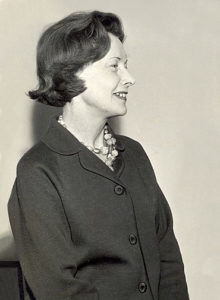
    Barbara Castle was a British politician who served as a Member of Parliament for over thirty years and held several high-profile cabinet positions in the Labour government of the 1960s and 1970s. She had been a trail blazer in many ways, she was the youngest female MP in the House of Commons in 1945 and only the fourth woman to hold a Cabinet position. She was a MP representing Blackburn between 1945 and 1979 and then was the MEP for Greater Manchester between 1979 and 1989. Following the election of the Labour Government in 1964 she was appointed as the Minister for Overseas Development, before a surprise move to become the Minister for Transport in December 1965.

    Castle followed on in the Transport Minister role from Conservative Ernest Marples, who had commissioned Beeching to write his report on the future of the rail network and her Labour predecessor Tom Fraser. Marples had a strong focus on roads, not least partly due to involvement in a road building company, whereas it has been said by politicians of the time and historians that Tom Fraser didn’t produce a clear direction for the railways. It was a challenging legacy for Castle who had to deliver on a new transport policy in line with the 1964 Labour Party manifesto.

    As Minister of Transport in the late 1960s, Castle oversaw the implementation of the Beeching cuts, a series of drastic reductions to the UK’s railway network that resulted in the closure of thousands of miles of railway lines and stations. The goal of the controversial Beeching cuts was to reduce losses on unprofitable lines and to shift investment to more profitable routes, however it also resulted in many rural communities and industrial areas losing their rail connections, and it also made it harder for people to travel for work and leisure. It was against the backdrop though of a railway network which grew in a fragmented way in the late nineteenth century, was used heavily during both war periods and under-invested in, leaving a bloated network which was losing substantial sums of money.

    Castle’s railway policy was met with some controversy and criticism at the time because it seemed to go against the promises made at the 1964 General Election to stop some of the major closures. However, defenders of her also note that there were external factors that needed to be considered, not least the rapid growth of car ownership. Barbara Castle wrote in 1984, when the Castle Diaries 1964-1970 were published, her comments on the background of what she faced. On the state of the network, Christian Wolmar said:

    “Some of what Beeching closed was inevitable. If you look at the maps there were little lines connecting villages and branches off branches, none of that was ever going to really be very useful in a motoring world”.

    Later on, Castle introduced major legislation, the 1968 Transport Act, which was wide in its scope but which did introduce the principle of subsidising some rail lines where there was a social need. She also looked at new ways of encouraging freight to be moved from road to rail and also introduced new passenger transport bodies to try and create more strategic public transport policies at a local and regional level. Opinions on Castle’s performance as Transport Minister are divided, some view her as a strong leader who modernised the country’s transportation system and made important changes to improve efficiency and profitability, while others see her policies as harmful to many communities and industries that relied on rail transport.


    TIMELINE

    14 October 1959 – Ernest Marples becomes Conservative Transport Minister

    27 March 1963 – First Beeching Report published (The Reshaping of British Railways)

    15 October 1964 – Labour win General Election and Labour Party manifesto

    16 October 1964 – Tom Fraser becomes Labour Transport Minister

    16 February 1965 – Second Beeching Report published (The Development of the Major Railway Trunk Routes)

    21 December 1965 – Barbara Castle’s diary entry on being asked to become new Transport Minister

    23 December 1965 – Barbara Castle becomes new Transport Minister

    31 March 1966 – Labour win General Election and Labour Party manifesto

    24 May 1966 – Barbara Castle’s diary entry following meeting with rail unions

    15 June 1966 – Barbara Castle’s statement on retaining routes for potential re-opening

    15 March 1967 – Barbara Castle’s statement in Commons on the Railway Network Map

    6 November 1967 – Barbara Castle’s speech in Commons on Government’s Transport Policy

    20 December 1967 – Barbara Castle’s statement in Commons on the Transport Bill

    6 April 1968 – Richard Marsh replaces Barbara Castle as Transport Minister

    25 October 1968 – Transport Act passed (Text of railway section of 1968 Transport Act)


    RICHARD BEECHING AND THE CUTS TO THE RAILWAYS
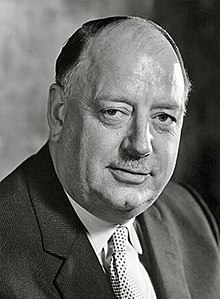
    Richard Beeching, Baron Beeching, was a British engineer and businessman who served as the chairman of British Railways from 1961 to 1965. During his tenure, he oversaw the creation of a plan which led to a major restructuring of the rail network, which included the closure of thousands of miles of railway lines and stations, known as the “Beeching cuts”. Although some blame Beeching for savaging the rail network, historians often have a more nuanced view that he was tasked with a specific objective by Ernest Marples and many of his recommendations proved to be useful for the modernisation of the rail industry.

    The goal of the Beeching cuts was to reduce losses on unprofitable lines and to shift investment to more profitable routes. Beeching’s report, “The Reshaping of British Railways”, which was published in 1963, identified over 5,000 miles of railway lines and over 2,300 stations as uneconomic, and recommended their closure. As a result, many rural communities and industrial areas lost their rail connections, and it made it harder for people to travel for work and leisure.

    It’s also useful to note that Beeching wasn’t the first to suggest cuts, they had already been taking place, it was just that his report laid out with clarity what the future held for specific lines and the network as a whole. HP White writes in Forgotten Railways that:

    “In 1963 came the British Railways Board’s publication ‘The Reshaping of British Railways’, which will also be known as the ‘Beeching Report’. It is rightly regarded as a landmark in the story of rail closures, but probably for the wrong reason. It is not generally realised that while the Beeching Report recommended the closure of some 5,000 route miles of passenger services, it did not initiate the closure programme. Between 1950 and 1962, 4,236 route miles had already been closed. What was important was that, for the first time, the approach was a planned one”.

    He adds:

    “As a result of the association of his name solely with closures, Beeching has been seen as having a purely negative approach to his brief. But in a message to BR employees in July 1962 he expressed the hope that, having talked hitherto largely about cuts, he would soon be able to talk of growth. That he was denied the opportunity was due less to his own inclinations than to Government policies – or rather lack of them”.

    The Beeching cuts were mostly implemented by the Labour government of the time, led by Harold Wilson, and were initially supported by Tom Fraser and at first Barbara Castle, the Ministers of Transport. The cuts were met with significant controversy and criticism, as they were seen as detrimental to many communities and industries that relied on rail transport. But, with Castle reluctant to push forward the second Beeching report, it was evident that a change was coming.

    Beeching’s report and the railway cuts have had a long-lasting impact on the British railway system and many people still regard the size of the cuts as a major mistake and a missed opportunity to modernise the rail network. Over recent decades there has been a political move towards what is called “Reversing Beeching” and reopening lines and services. The House of Lords have produced a library briefing discussing these potential efforts to reopen lines, with this research document also linking to a speech on this web-site by Andrew Adonis which was made to the IPPR on this subject.


    ERNEST MARPLES
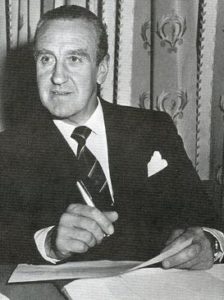
    Ernest Marples was a British businessman and politician who served as the Minister of Transport from 1959 to 1964. He played a key role in the restructuring of the UK’s rail network during this period. One of Marples’s most significant actions as Minister of Transport was the introduction of the “Beeching Plan” which proposed the closure of thousands of miles of railway lines and stations in order to reduce losses on unprofitable routes. The plan was named after the chairman of British Railways, Dr. Richard Beeching, who was appointed by Marples.

    The “Beeching Plan” was implemented by the Labour government that succeeded Marples’ and led to the closure of more than half of the UK’s railway stations and a third of its railway lines, causing significant controversy and criticism, particularly in the regions that lost their rail connections. To this day, Marples is known by many as one of the villains in railway history, as although some cutbacks to the number of lines and stations were inevitable where usage was particularly low, the fully implemented proposals would have devastated the network.

    Marples is also known for his involvement in the construction of the M1 motorway, the first of its kind in the UK, which was completed during his tenure as Minister of Transport. The road construction was also controversial given the personal interests that Marples had. Joe Moran writes in ‘On Roads – A Hidden History’ that:

    “Already, though, the flyovers were losing some of their lustre as they became embroiled in political wrangling. Ernest Marples remained a major shareholder in Marples Ridgway, the company he co-founded in 1948 which was involved in much of the early motorway building. When this company won the Hammersmith Flyover contract in 1960, the press challenged him over the conflict of interest. In a nod to the ancient road running along the chalk escarpment from the Dorset coast to the Norfolk Wash, this flyover became popularly known as the Maples Ridgeway. Marples was forced to divest himself of his shares – although probably not, as some history books have alleged, by selling them to Mrs. Marples. One MP asked the minister whether he would see to it that ‘before the opening ceremony the huge Marples nameplates which are scattered all over it, are removed in order that people can see the flyover?’”.

    In terms of legacy, Marples’ tenure as transport minister is viewed in a negative light by many due to the severe impact of the Beeching cuts on many communities and industries that relied on rail transport. His promotion of road infrastructure over rail also had a long-term impact on the UK’s transportation system and the environment. However, at the time there were those who supported his plans, including journalist Douglas Haig who wrote in December 1965 that he was the best of the recent Transport Ministers.


    TOM FRASER

    Tom Fraser was Labour’s Minister of Transport between October 1964 and December 1965, responsible for implementing the transport policy laid out in the 1964 Labour Party manifesto which said:

    “Nowhere is planning more urgently needed than in our transport system. The tragedy of lives lost and maimed; growing discomfort and delays in the journey to work; the summer weekend paralysis on our national highways; the chaos and loss of amenity in our towns and cities – these are only some of the unsolved problems of the new motor age. Far from easing these problems, the Government’s policy of breaking up road and rail freight co-ordination, of denationalising road haulage and finally of axing rail services under the Beeching Plan, have made things worse.

    Labour will draw up a national plan for transport covering the national networks of road, rail and canal communications, properly co-ordinated with air, coastal shipping and port services. The new regional authorities will be asked to draw up transport plans for their own areas. While these are being prepared, major rail closures will be halted.

    British Road Services, will be given all necessary powers to extend their fleet of road vehicles and to develop a first-rate national freight service. Reform of the road goods licensing system must now await the report of the Geddes Committee but, in the interests of road safety, we shall act vigorously to stop cut-throat haulage firms from flouting regulations covering vehicle maintenance, loads and driving hours.

    Labour believes that public transport, road and rail, must play the dominant part in the journey to work. Every effort will be made to improve and modernise these services. Urgent attention will be given to the proposals in the Buchanan Report and to the development of new roads capable of diverting through traffic from town centres. Labour will ensure that public transport is able to provide a reasonable service for those who live in rural areas. The studies already mentioned will decide whether these should be provided by public road or rail services”.

    The Government had come into power saying that it would review the Beeching cuts and look to form a new policy on how to tackle the losses in the rail industry, halting any major rail closures. Fraser was in the role for just over a year and he had ultimately decided that the general thrust of Beeching seemed correct, a view which had taken hold within the Transport Department. Despite the manifesto, he continued the closures policy, although he decided in June 1965 not to renew Beeching’s contract when his second report soon proved to be too politically difficult for the Government.

    One of Fraser’s most controversial decisions was the closure of the Varsity Line between Oxford and Cambridge even though this hadn’t even been listed by Beeching as track which should be shut. Over recent years, work has begun on plans to reopen the line to improve east-west rail links. Charles Loft wrote in ‘Government, the Railways and the Modernization of Britain’:

    “Fraser was unable to take decisions and was unduly reliant on his officials, his downfall was precipitated by his commitment to a planned transport policy. Even if such a policy could have been devised so as to justify a halt to the closure programme, it could not have been done quickly enough to satisfy important sections of Labour Party support; and without a new policy the advice that Fraser received on individual closure proposals was unlikely to differ from what Marples had received. Transport planning, it turned out, was at odds with the maintenance of an aura of dynamic change. It was in this respect that Fraser clearly failed to deliver and in which, on the face of it, things were to change with the arrival at the Ministry of Barbara Castle”.

    David Henshaw wrote in this book ‘In The Great Railway Conspiracy’ focusing on the closure of the Varsity Line:

    “In July 1965, the hapless Fraser – poorly briefed and seemingly disinterested – consented to closure [of the Varsity Line]. During this unhappy period, with lines being put forward [for closure] and processed at a rate of ten a month, this crucial link fell with hardly any national debate, as did others that were soon regretted. Implementation proved difficult, because there was trouble arranging bus services on a local basis, but the greater part of the line closed to passengers in November 1967, with the western end remaining open for freight, and a short section between Bedford and Bletchley for passenger trains. These remaining tenuous threads were to be of priceless value 30 years later, when action was finally taken to begin the long and complex task of reinstating the line”.

    He continues:

    “By the end of 1965, with the greater part of the Reshaping proposals now processed, there were few realistic candidates left for closure. Why then, did the Labour Government continue the process? According to Roger Calvert of the National Council for Inland Transport, the new and inexperienced administration had been bullied into submission by the powerful anti-rail civil servants at the Ministry of Transport, who were in turn being harassed by the Treasury over the railway’s growing deficit. Labour had, technically, arrived in power with a brief to integrate transport, but the railways were making big losses and Tom Fraser was getting top level advice that further closures were the way forward. In the end, there was no other game in town. He certainly seems to have had little interest in the transport job, and was understandably considered by the rail lobby to be openly road-biased”.

    Many of Fraser’s most notable decisions are in relation to the road network, as he introduced the 70mph speed limit, initially as a trial. His year in office was otherwise unremarkable, with many policies from the Conservative Government not being widely changed. This was the challenging backdrop of what Barbara Castle took over when she became Transport Minister, a need to try and create a new transport policy rather than just a continuation of what the Conservatives had been doing. Fraser was widely seen by politicians of the time and railway historians to have struggled with the role, hence why Wilson caused some initial shock, not least to her, by bringing Barbara Castle in to develop a new strategy.


    CLOSURES OF STATIONS AND RAIL LINES BY YEAR

    Railway line closures by year:

    1963 : 324 miles (521 km) [Conservative, Ernest Marples]
    1964 : 1,058 miles (1,703 km) [mostly Conservative, Ernest Marples]
    1965 : 600 miles (970 km) [Labour, Tom Fraser]
    1966 : 750 miles (1,210 km) [Labour, Barbara Castle]
    1967 : 300 miles (480 km) [Labour, Barbara Castle]
    1968 : 400 miles (640 km) [Labour, Barbara Castle and Richard Marsh]
    1969 : 250 miles (400 km) [Labour, Richard Marsh and Fred Mulley]

    Details of closed railway stations can be found at http://www.disused-stations.org.uk/.


    THE BUILD-UP TO A TRANSPORT POLICY

    Harold Wilson had given Barbara Castle the role of Transport Minister as Tom Fraser had struggled in the job and the Prime Minister wanted it to become a priority for the Labour Government. She faced challenges immediately, Fraser had effectively continued many policies from Ernest Marples and she needed to come up with an integrated transport policy which had been promised in the 1964 Labour party manifesto.

    TR Gourvish noted in his book ‘British Railways 1948-1973’ the scale of the administrative problems that she faced:

    “The Ministry, like the railways themselves, required improved planning mechanisms and a better co-ordination of departments. Castle was apparently shocked to find that she had been posted to ‘a huge, sprawling jungle’ of 7,000 civil servants, patently in need of major departmental reform”.

    Philip S Bagwell similarly noted in The Transport Crisis in Britain that “the overwhelming majority of the staff in the Ministry were concerned with road transport”. A few weeks into her new role, in February 1966, Barbara Castle stated her thoughts to how she would develop the Government’s transport policy. She said that:

    “The time has come for a radical new railway policy. We had to decide its shape and size, taking into account national and regional plans as well as social needs and also how we should pay for it, so identifying costs which should be borne by the community, giving realistic efficiency targets to British Railways and taking from them the slur of a deficit.

    The first requirement was to regard our railways as a valuable national asset, as the French did, and to concentrate on improving them. Labour had never denied that some pruning must be done, but there was no need to go to the other extreme and write off any part of it which didn’t fit in with the ‘superficially defined criteria of profitability’ without making any effort to see whether, by imaginative adjustments, the lines could be made more remunerative”.

    Lisa Martineau wrote in her biography of Barbara Castle that car usage was growing and that there were limits to what she could do as Transport Minister, noting:

    “Democratising car ownership would mean building new roads and spending more on existing ones, of course; but 90% of passenger traffic and 60% of freight was carried on the roads, and Barbara accepted that you would not get people out of their cars and ‘onto railways which could not take them where they wanted to go’. An accommodation with the car had to be found: ring roads, restrictions on cars in the centres of towns and cities, and subsidised public transport were obvious beginnings”.

    There were hints at the excitement of road building for Barbara Castle, when she noted in 1966 at the construction of the Almondsbury interchange that “these are the cathedrals of the modern world”. TR Gourvish comments in his book ‘British Railways 1948-1973’ that after getting to grips with the role, Castle wanted to redefine the Government’s policy:

    “When Castle took office, the Board was about to embark on the second stage of its passenger rationalisation programme, a systematic evaluation of all its passenger services in order to weed out those which were ‘suspect in the sense that earnings do not cover direct costs’. But this initiative was put to one side with the change of direction in 1966, which involved the identification of a larger, 11,000-mile network for development and a group of passenger services which would qualify for government subsidy. Castle was certainly expected to be more hostile to closures, particularly by those on the Labour backbenches and in the rail unions who had attacked Tom Fraser for perpetuating the Beeching-Marples approach. One of the myths of railway history is that the new Minister, by championing the cause of the commuter and rural rail user, finally nailed the lid on the Reshaping coffin”.

    The closures of railway lines kept coming, with Castle justifying many closures by saying that the cuts were less than Beeching had intended. She did save some lines from closure, but there were others cases such as the railway line from Buxton to Matlock which she authorised the closure of, even though it hadn’t been on the list proposed by Beeching. The debate on the future of the railways continued with the work towards legislation planned for 1968.

    Work was beginning on a new model for public transport, including what became regional passenger transport executives who could co-ordinate and organise at a regional level. In a parliamentary debate, prior to the passing of the Transport Act, in November 1967, the Shadow Transport Minister Peter Walker said:

    “I turn to the proposals for passenger transport authorities. These proposals have no friends. Local authorities do not like them; industry does not like them, and the bus industry in particular does not like them. Everybody is opposed to them”.

    Castle said in response:

    “The 1962 Act set up the railways as a separate entity, encouraged them to compete with other forms of nationalised transport and then left the profit and loss account as the sole criterion of success and did not even provide conditions in which the profit and loss account could be balanced”.

    Walker had said in his speech that Barbara Castle’s plans involved substantial nationalisation, but the proposals were more nuanced than that. They were an attempt to deliver an integrated transport policy, recognising that roads were now the future of transport for many, but also ensuring that bus and rail services would continue to be an option. Castle would have by nature of her political instincts been in support of more nationalisation as she was on the left of the party and had at other times argued for this approach, but she wanted in transport to be a partnership of public and private.

    There was another challenge evident with Barbara Castle’s diary entry following meeting with rail unions which was that it was necessary to keep the workers and the trade unions on side. This proved to be a real challenge, although the rail unions did recognise that things could have been much worse given the backing that Castle was trying to give to the network. Christian Wolmar said that “even today, the unions are strong enough to suddenly make a lot of trouble and part of the problem that the Government has now found itself in is because they haven’t talked properly to the unions”. He added that “Castle realised the importance of winning the unions over and devoted a lot of time to it”.

    Castle had by this time “become a media hate figure” according to Joe Moran in ‘On Roads – A Hidden History’, but much of this wasn’t with relation to railway policies, but instead because of her policies with regards to roads. She had introduced the breathalyser, she had effectively made permanent the 70mph road ban introduced by Tom Fraser and introduced compulsory seatbelts in new cars. There were protests about the motorway speed limit by many who felt they should be able to do what they liked in their car on the new motorways and didn’t appreciate being told what to do by a Government Minister.

    One controversial decision that Barbara Castle took was the dismissal of railway manager Gerry Fiennes, who had saved the East Suffolk line from closure by cutting costs locally and showing that the line could save money by competent management. He went public with an announcement that lines could be saved, but Castle thought that his book ‘I Tried to Run a Railway’ went too far. David Webster, the Shadow Transport Minister for the Conservatives condemned the dismissal and demanded an inquiry into the decision.

    Barbara Castle’s preparatory work in 1966 and 1967 was building up to one of the most substantial pieces of legislation that had been seen since the war, what became the 1968 Transport Act.


    1968 TRANSPORT ACT
    The text of 1968 Transport Act at legislation.gov.uk and the book ‘The British Railways System’ by Roger Spear et al is a useful detailed guide written for Open University students as to the structure of the railways at the time and the challenges which Ministers faced.

    The Transport Act 1968 was a major piece of legislation passed by the UK government that aimed to modernise and reorganise the country’s transportation system. The main architect of the act was Barbara Castle who wanted to not only deliver on the party’s 1964 manifesto but also to have clarity on the future of transport.

    The act was substantial in its scope and size, the largest since the Second World War. It aimed to achieve numerous objectives such as delivering a more integrated public transport system by the creation of PTEs and it created the National Freight Corporation (previously known as British Road Services), with the goal of improving the efficiency and profitability of the country’s freight operations.

    The Act also allowed for the establishment and development of liner trains, which evolved into Freightliner, which allowed containers to be transported by rail in an attempt to stop some of the move towards transporting goods by road. Despite progress actually being made, Barbara Castle wrote in her diaries that some of her proposals weren’t progressed, noting her successor:

    “Dick Marsh never brought them into operation because he did not approve of them, so the experiment in shifting goods from road to rail was never made”.

    The Act gave local authorities more powers to plan and provide public transport services, and it established the National Bus Company, which aimed to improve the efficiency and profitability of the country’s bus operations. The creation of PTEs, or Passenger Transport Executives, allowed areas (usually urban) to take control of bus routes in their region as well as working with the rail industry. There had until this point been a general policy to tackle urban transport problems by building new ringroads and flyovers in cities, leading to residential areas being demolished and causing environmental issues.

    Significantly, the Transport Act also included provisions for the closure of uneconomic railway lines and stations, with subsidies available for lines which fulfilled a social good for the community. HP White writes in Forgotten Railways that “until at least 1963 subsidy had been a dirty word for all political parties” and so Castle’s subsidy was “a very significant policy change”. Richard Pryke and John Dodgson note in their book The British Rail Problem : A Case Study in Economic Disaster:

    “Barbara Castle wanted to eliminate open-ended subsidies and impose some financial discipline on the Railways Board. The solution adopted was to identify those passenger services that were losing money and to cover their estimated deficits through a subsidy. It was hoped and expected that the Board would then be able to break even provided its capital charges were scaled down, and if it were relieved of responsibility for the highly unprofitable freight sundries service”.

    They add that:

    “The Transport Act of 1968 has failed in its objective: British Rail is once again heavily in deficit, despite the financial reconstruction and the receipt of a large subsidy. In 1969, the railways and their ancillary activities had a net profit of around £20 million, after taking into account the £76 million which they received from the Government. However, by 1971 they were once again in deficit, and in 1973 they sustained a net loss approaching £50 million, despite £94 million of subsidies”.

    Lisa Martineau wrote in her biography of Barbara Castle just how sizeable and revolutionary the legislation was:

    “Barbara’s labyrinthine Transport Bill was the longest non-financial Bill in parliamentary history and the longest Bill or any sort since the war. The experts and the media, for the most part, were impressed. She had, said the New Statesman, set out ‘to reform practically the whole of the internal transport system …. by a nice blend of traditional socialism and up to date technocratic intervention’. The Bill was often called a pantechnicon – a bazaar and a receptacle containing many miscellaneous objects, as well as a removal lorry – it was ‘stuffed with all the radical proposals for reorganising British transport that have been maturing under that neat crop of fiery hair for the past eighteenth months’ wrote The Times”.

    Some were disappointed by the Act in terms of how the road lobby still seemed to be winning the arguments over the future of transport, with David Henshaw writing in the Great Railway Conspiracy:

    “The 1968 Act proved a serious disappointment. The Government lost its nerve in the face of concerted opposition from the road lobby and eased the lorry taxation proposals. And the unremunerated railway grants system actually precipitated a fresh round of closures, because there was a cap on the total grant aid, and the level of grant for individual lines proved too generous, leading the Government to refuse aid in many cases. By 1970, the implementation of Dr Beeching’s Reshaping report was more or less complete, but with railway income falling, overall financial viability remained as far out of reach as ever”.

    Richard Pryke and John Dodgson note in their book ‘The British Rail Problem : A Case Study in Economic Disaster’ that:

    “The moral which the Railways Board appears to have drawn from the Transport Act was not, as the Government intended, that British Rail must do its utmost to cut its costs and trim its investment, but that, if the need arose, more assistance would be forthcoming”.

    Overall, the Transport Act 1968 and Barbara Castle’s efforts aimed to modernise and reorganise the country’s transportation system and to reduce losses on unprofitable lines, however it also resulted in significant controversy and criticism for the negative impact it had on many communities.


    WAS BARBARA CASTLE AN EFFECTIVE TRANSPORT MINISTER?

    Barbara Castle’s period as Transport Minister was one of the most remarkable of anyone who held the role, as there was an ambitious new policy position put together for the future of rail and road. The 1968 Transport Act was in many ways revolutionary in terms of public transport integration, subsidising rail lines and also developing freight services by rail.

    However, for those who believe the rail sector was badly damaged following Beeching, they will point to how many stations and miles of railway lines closed during her period in office. Castle, herself not a car driver, was always sympathetic to the needs of those without their own car, but she faced the challenge of a society where car ownership was becoming more common and there seemed to be a shift away from public transport. She once said:

    “I refused to be a King Canute trying to force people onto railways which could not take them where they wanted to go”.

    Christian Wolmar said that “she didn’t quite understand the impact that cars would have, like everyone else at the time” with not just politicians of the time, but also the Transport Ministry in the 1960s being very much in favour of a car focused future. Wolmar adds though that “it was a breakthrough” that Castle introduced the process of subsidising some rail lines where there were social benefits to doing so, adding that “many politicians today still don’t understand that and they talk about railways paying their way”.

    During the initial part of her period in the role, she did though continue the closure programme and she also extended it, closing lines such as Buxton to Matlock which hadn’t been part of the Beeching plan. Although Castle did approve the closures of thousands of miles of rail line, she did ensure that some routes were saved, including York to Harrogate, Manchester to Buxton and the Exeter to Exmouth line.

    Outside of the rail network, Castle was also known for other innovations, such as the introduction of the breathalyser which helped to tackle the shock figure in 1966 that 8,000 people had died on the roads. She also was also responsible for requiring seatbelts to be fitted into new cars and extending the 70mph limit on motorways so that it effectively became permanent. In addition to this, she enabled 1,400 miles of the British canal network to be saved in a substantial part for leisure use, despite objections from HM Treasury that it wasn’t commercially viable.

    Alfred F Havighurst noted in his 1985 book ‘Britain in Transition – The Twentieth Century’:

    “Barbara Castle’s notable Transport Act of 1968 reflected courage and intelligence in dealing with financial deficits and inefficiency in the railway and road haulage. For the nationalised railways this legislation wiped out financial losses which had piled up from the past, transferred unremunerative traffic to road haulage, and provided compensation for services which were still socially desirable though unremunerative. The goal for British Railways was operation without deficits by 1974. Also, the Transport Act completely transformed road haulage in the endeavour to make maximum use of railways in handling freight previously carried on congested highways, to eliminate competition between the railways and road haulage, and, in general to render road haulage safer, more efficient, and more economical”.

    Charles Loft wrote in ‘Government, the Railways and the Modernization of Britain’:

    “Castle’s reputation as an innovative minister of transport who restored a measure of coordination to transport policy and gave rail a better deal rests primarily on a series of measures contained in the 1968 Transport Act. Although she refused to recreate the BTC, the Act’s provision for Passenger Transport Authorities to coordinate transport in urban areas and its creation of a National Freight Corporation (NFC) to control the former British Road Services, the BRB’s collection and delivery services and various rail freight services, including freightliners, largely satisfied Labour’s desire for coordination. Its provision of subsidies for loss-making rail services and a ‘quantity licensing’ system for road haulage, designed to divert freight from road to rail, combined with her commitment to an 11,000 mile network, rather than the 8,000 implied by the final round of Beeching’s traffic studies, given even a critic such as Henshaw the impression that she successfully challenged the pro-road bias of the Ministry and its Permanent Secretary Sir Thomas Padmore, an impression which owes much to the weight of opposition brought to bear on quantity licensing by the RHA and the Conservatives”.

    David Henshaw wrote in this book ‘In The Great Railway Conspiracy’ about the legacy of Barbara Castle:

    “Castle has had a mixed press over the years. After the cheerfully road-biased Marples, and ineffective Fraser, she entered the Ministry like a breath of fresh air, standing up to the powerful civil servants and making a serious attempt to find a fair solution to the railway issue. On the other hand, she oversaw some disastrous closures that should never have been allowed. Unlike previous incumbents, her transport politics were hard to place. She rarely used railways, but needed a chauffeur because she couldn’t drive, and apparently had no desire to”.

    The individual reader can make up their own mind as to whether or not Barbara Castle was a successful Minister, but she was perhaps unarguably productive and industrious in developing policy directions. Much of what an individual might make of Barbara Castle likely depends on whether they feel she did enough to stop the rail closures that took place in the 1960s or whether her new policy of subsidising unprofitable lines actually meant an end to the closures at least from the 1970s onwards. Looking back though at transport policy in the twentieth century, it would be hard not to look at the 1968 Transport Act as being a revolutionary piece of legislation which contained some radical and innovative new visions for the future.

    Jonathan Bray addressed this question and concluded:

    “So, 50 years on, what is the legacy and the relevance? You can argue long and hard over whether she was in the end too radical or too pragmatic – or whether the positives are outweighed by the scars that haven’t healed from the lines that closed on her watch (and she would have loved to have the argument with you!). But you can’t fault her for ambition, determination and brio. She showed that you need to go out there and sell radical change (she always had her press people in for the key decisions and led from the front on making the case)”.


    FURTHER READING

    The Transport Crisis in Britain by Philip S Bagwell

    Fighting All the Way by Barbara Castle

    The Castle Diaries 1964 – 1970 by Barbara Castle

    I Tried to Run a Railway by Gerry Fiennes

    British Railways 1948-1973 by TR Gourvish

    The Great Railway Conspiracy by David Henshaw

    Little Book of Beeching by Robin Jones

    Politics & Power – A Biography of Barbara Castle by Lisa Martineau

    On Roads – A Hidden History by Joe Moran

    The British Rail Problem : A Case Study in Economic Disaster by Richard Pryke and John Dodgson

    Forgotten Railways by HP White

    On the Slow Train by Michael Williams

    British Rail : A New History by Christian Wolmar


    EXTERNAL LINKS

    Barbara Castle’s Archive at the Bodleian Library

    Barbara Castle’s Cabinet Diaries at the University of Bradford

    Article by Jonathan Bray – “The best transport secretary we’ve had?”

    Christian Wolmar

    National Archives

  • Barbara Castle – 1965 Diary Entry on Becoming Transport Secretary

    Barbara Castle – 1965 Diary Entry on Becoming Transport Secretary

    The diary entry on 21 December 1965 in Barbara Castle’s diaries, The Castle Diaries 1964-1970.

    TUESDAY 21 DECEMBER 1965

    At 8.45 pm phone call from Marcia [Williams]. Could I come down and see the PM? Harold [Wilson] waved me into his room, boyish and slightly dishevelled. “May I open my heart to you? You and I ought to talk more, only I’m so busy and you are, too. Have a whisky or brandy?”. When I said that I’d love a brandy, he said, “it’s the only thing that keeps me going. Fortunately I have a most intelligent doctor who prescribes it for me. It does something to my metabolism”.

    ……

    “I always knew that Tom [Fraser] was weak, but I was saddled with a shadow Cabinet, every one of whom expected a job” he went on, “I must have a Minister of Transport who can act. Tom has got a very strong Permanent Secretary whom Churchill got rid of in the Cabinet secretariat and brought in Burke Trend (though I’ll get rid of Helsby before I’m through). I am convinced he has killed integration. But we have got to have an integrated transport policy. I can’t hold the Party otherwise. And the Party is key to everything. We have offered Tom all sorts of advisers but he doesn’t know how to make use of them. Unless you accept my offer the reshuffle can’t take place. I hope you will, but, Barbara, if you say no I shan’t hold it against you. I know what you feel about Overseas Development, but I want you on the home side. I think you are the best person we have got. I want you to be Minister of Transport”.

    I closed my eyes.

  • Barbara Castle – 1966 Diary Entry on Meeting with Rail Unions

    Barbara Castle – 1966 Diary Entry on Meeting with Rail Unions

    The diary entry on 24 May 1966 in Barbara Castle’s diaries, The Castle Diaries 1964-1970.

    Tuesday 24 May 1966

    A vital day in the evolution of my policy. I met all three rail unions a BR’s headquarters in order to let Raymond [Sir Stanley Raymond] explain the proposed new rail network to them. My heart was in my mouth because I knew it meant the closure of 3,000 more miles of lines, although the outcome would be a network of 11,000 route miles instead of the 8,000 proposed in the second Beeching Report.

    I told Raymond to pile on the positive side of the policy and he excelled himself. I told them I had got my colleagues’ agreement to the survey into railway finances and stressed this meant a subsidy – open and overt – to the railways, something we had refused to other nationalised industries like coal. I then asked for questions. There was a long silence while I waited, hardly daring to breathe. As last Sid [Sidney Greene] said slowly, “I am very pleased with what we have heard. Clearly there is going to be a very good future for the men who are left in the system. Our trouble is, as I expect you know, with the men who will not have a place in it. I know you think we are always moaning and are against change, but we have to deal with our members and we have to speak for those who are affected. I shall to moan a lot more, but nonetheless I am pleased with what we have heard and not least for the fact that we have had it all explained to us so fully in this way, not like when the Beeching Report came out – that blue book – and the first we heard of it was when a copy was put into out hands two hours before publication”.

    The other unions leaders echoed him in turn, ASLEF saying almost pathetically, “You must help us with our members”. Tom Bradley played into my hands by asking how we proposed to get private hauliers to use the railways more. I launched into a passionate appeal for open terminals through which even Kelly sat silent, at a loss for a wrecking question. And I warned them that I was having trouble with TGWU who suspected I was favouring rail too much – so they had better hurry up and get as much on to rail as they possibly could while the going was good. In all a most encouraging afternoon.