Author: admin

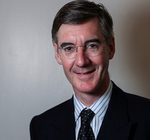
  • Jacob Rees-Mogg – 2022 Statement on the Energy Prices Bill

    Jacob Rees-Mogg – 2022 Statement on the Energy Prices Bill

    The statement made by Jacob Rees-Mogg, the Secretary of State for Business, Energy and Industrial Strategy, in the House of Commons on 17 October 2022.

    I beg to move, That the Bill be now read a Second time.

    I am glad that the House has agreed to the amended allocation of time motion—otherwise, I would have been in danger of filibustering my own motion. I am sure that hon. Members across the House agree with me about the urgency of this legislation. Nevertheless, I thank hon. Members for the speed with which the Bill is being considered. In particular, I thank Members of His Majesty’s official Opposition, and especially the right hon. Member for Doncaster North (Edward Miliband), for their constructive engagement.

    The world is facing a global energy crisis, which has been exacerbated by Russia’s illegal invasion of Ukraine. The soaring cost of energy means that families and businesses across the United Kingdom are facing rising energy bills this winter. On 8 September, the Prime Minister announced an unprecedented package of assistance, which will support households, businesses, charities and public sector organisations across the UK with the increasing cost of energy. This decisive action will help deal with the rising cost of energy while reducing inflation and supporting economic growth. The Bill puts the assistance announced by the Prime Minister on a secure legislative footing. The legislation is crucial to providing immediate support to people and businesses.

    The domestic scheme, the energy price guarantee that was announced, is already up and running. The Bill prioritises the legislative underpinnings of that scheme. The energy price guarantee will provide support to the end of March 2023 that will be equivalent to an annual bill of £2,500 for the typical household. The average unit price for dual-fuel customers on standard variable tariffs subject to Ofgem’s price cap paying by direct debit will be limited to 34p per kWh for electricity and 10.3p per kWh for gas, inclusive of VAT, from 1 October. It is important to emphasise that per-unit use.

    Jonathan Edwards (Carmarthen East and Dinefwr) (Ind)

    The Secretary of State will be aware that, in constituencies such as mine, a large number of homes are off the gas grid. The Government have come up with an alternative fuel payment of about £100 for those homes, but oil prices have nearly doubled. I know that changes to the whole policy have been announced by the Chancellor today, but will he commit to equivalent support for those off the gas grid?

    Mr Rees-Mogg

    I will come to that, but the intention is that the support should be equivalent to that for people on the grid.

    Alan Brown (Kilmarnock and Loudoun) (SNP)

    Talking about an average household bill of £2,500, the Prime Minister said that the measures would stop people paying £6,000 on average, but the explanatory notes to the Bill estimate that the measures will save people from bills reaching £4,200. Given that the support will end in April, what can people who, after April, will not be receiving any support expect to pay for an average household bill?

    Mr Rees-Mogg

    The Bill is setting the immediate support, which will run until April. The Government are reviewing how to ensure that support is more targeted in future, but there is no question that there will be support, and the Bill provides the powers for that. It is important to emphasise that bills will still depend on usage. That is why I am grateful for the work of my hon. Friend the Member for Hexham (Guy Opperman), who has emphasised the advantages of a prudent use of energy benefiting all users.

    Anna McMorrin (Cardiff North) (Lab)

    The Secretary of State talks about energy usage and families not having bills of more than £2,500, but bills for large families with high usage will be far, far more. How can families have certainty? If the Government will not have a communications campaign on reducing energy usage—they have said that they are against that on principle—how do we get that message across to people up and down the country?

    Mr Rees-Mogg

    What we are doing is making it clear that it will depend on usage and that the figures are average figures. The £2,500, therefore, is for an average family and, obviously, not necessarily for all families. Larger families will have particular pressures, but I am coming on to the other support that remains which will help families. The price per unit of electricity and gas is part of the package, but it is of course combined, and we recognise the difficulties that families and businesses will face with higher prices.

    Jim Shannon (Strangford) (DUP)

    I thank the Secretary of State for bringing forward the proposals he is outlining. I am very concerned for those I refer to as the working poor, and I know the Secretary of State is as well. With the cumulative money that people have to pay, the working poor, in my opinion, seem to be the ones who are losing out. Can he give us some reassurance that that will not be the case?

    Mr Rees-Mogg

    Yes, I think I can give the hon. Gentleman the assurance he is asking for. That is why the scheme is as broad as it is. The effect of the price rises we were in danger of seeing was so great that it would have affected people who were not on benefits. They would have found that they were in fuel poverty without this assistance. That is why it is so encompassing. The support is being provided at the point in the year when 60% of consumption takes place.

    The energy price guarantee comes in addition to the £400 of support provided by the energy bills support scheme for Great Britain, announced earlier this year.

    Sammy Wilson (East Antrim) (DUP) rose—

    Mr Rees-Mogg

    I see the right hon. Gentleman is about to intervene. I will just say one thing, because I am coming on to a point about Northern Ireland on the energy bills support scheme. It will be extended to Northern Ireland to provide domestic consumers with the equivalent level of support being provided to households in Great Britain. This is very much a Unionist package.

    Sammy Wilson

    First of all, I give our thanks to the Secretary of State for the diligent way he has sought to address the problems in Northern Ireland. He points out that the package is coming at the point of the year where energy consumption is at its highest. In Northern Ireland, because of the difficulties of one electricity company, it may well be that the whole scheme will be held up until it is ready to give a discount on bills. Can he give us an assurance that, since 60% of consumers are with companies that could do it tomorrow, there will be no delay in waiting for the slowest to catch up before the benefits are made available?

    Mr Rees-Mogg

    The point of the Bill is to bring in support from 1 October. It has already been done in GB for domestic users and it will be retrospective for Northern Ireland. That is what the Bill is trying to achieve.

    John Redwood (Wokingham) (Con)

    The way out of this problem is far more domestic capacity, so that there is a bigger supply in due course. That requires investment. Can my right hon. Friend reassure us that although there will be temporary subsidies, price controls and surrogate windfall taxes, sufficient incentives and signals will be sent to industry that we really do need the investment and that it will be worthwhile?

    Mr Rees-Mogg

    Yes, indeed. This is a temporary measure. The legislation runs out; there are various sunset clauses that will affect it. We need more of our own supply. Some will be renewable, and some will be oil and gas. We need to ensure that cheap energy flows in this country for the good of the economy.

    The legislation will enable the Government to provide support to consumers across the UK who are not on the main gas grid. This will benefit consumers who use alternative fuels to heat their homes, such as heating oil, as well as those who live on heat networks. Eligible households will receive a £100 payment this winter through alternative fuel payment powers, which are introduced under the Bill. The Government will be setting out the support available for non-domestic consumers on the same basis.

    The important point on the £100 payment is that it is designed with reference to changes in the price of heating oil from September 2021 to September 2022 and aims to provide support which is equivalent to that received by people who heat their homes using mains gas. I know right hon. and hon. Members are interested in how those figures have been calculated, so I will place more information in the House of Commons Library detailing the basis of our calculation.

    In addition, measures in the Bill will extend the energy bills support scheme to UK households that would otherwise miss out on the automatic £400 payment as they do not have a domestic electricity contract. That may be because they receive their energy through an intermediary with a commercial connection, or because they are otherwise off the electricity grid. The Bill will also ensure that in cases where intermediaries receive support from the schemes, they are required to pass it on to the end users as appropriate.

    For example, the legislation will provide powers so that landlords are required to pass on support to tenants. His Majesty’s Government are taking action to provide equivalent support to heat network customers. This includes measures that will ensure heat network suppliers pass on the support they receive to their customers. In addition, the Bill provides for the appointment of an alternative dispute resolution body, which will handle complaints raised by consumers against their heat network if it has not passed through the benefit.

    Let me turn to non-domestic schemes. As well as helping households, the Government are taking action to provide support to businesses, charities and public sector organisations through the energy bill relief scheme. We will provide support to non-domestic consumers as soon as possible to help businesses and other organisations with their energy bills this winter. The Bill is vital for the implementation of the scheme, which will provide a price reduction to ensure businesses are protected from excessively high bills. Initially, the price reduction will run for six months, covering energy use from 1 October. After three months, the Government will publish a review, which will consider how best to offer further support. It will focus in particular on non-domestic energy users who are most at risk to energy price increases. Additional support for those deemed eligible will begin immediately after the initial six-month support scheme.

    In addition to those unprecedented support schemes, the Bill will contain measures that will allow us to protect consumers from paying excessively high prices for low-carbon electricity. The provisions will limit the effect of soaring global gas prices by breaking the link between gas prices and lower cost renewables. This will help to ease the pressure on consumer bills in the short term, while ensuring energy firms are not unduly gaining from the energy crisis. In addition, the Bill will enable the Government to offer a contract for difference to existing generators not already covered by the Government’s contract for difference scheme. This voluntary contract would grant generators longer-term revenue certainty and safeguard consumers from further price rises.

    Taken as a whole, the Bill will ensure that families, businesses, charities, schools, hospitals, care homes and all users of energy, receive the urgent support they require owing to the rising costs of global energy prices. In addition, the legislation takes important steps to decouple the link between high gas and electricity prices, which will ensure consumers pay a fair price for their energy. I hope that Members, right hon. and hon. Members alike, will agree that this is a vital and timely piece of legislation.

    Caroline Lucas (Brighton, Pavilion) (Green)

    Will the Secretary of State give way?

    Mr Rees-Mogg

    I am within a moment of finishing, and I had better finish because time is so short.

    This is a crucial package of measures that meets the challenges posed by sky-high global energy prices and Russia’s illegal invasion of Ukraine. Without the launch of the schemes I have outlined, many individuals and businesses would be left facing growing financial turmoil in the face of increasing energy costs. Now is the time to act and the Bill delivers the support that is required. I therefore commend the Bill to the House.
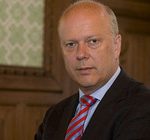

  • Chris Grayling – 2022 Speech on Financial Investment and Deforestation

    Chris Grayling – 2022 Speech on Financial Investment and Deforestation

    The speech made by Chris Grayling, the Conservative MP for Epsom and Ewell, in the House of Commons on 17 October 2022.

    I beg to move,

    That leave be given to bring in a Bill to require banks and investment institutions regulated in the UK to verify and certify that they do not provide any form of financial or investment support to businesses which derive income from forest risk commodities, or that relevant local laws were complied with in relation to such commodities; and for connected purposes.

    Deforestation around the world is a critical issue for the future of our natural world and our planet. The loss of forest cover has made climate change worse, has pushed millions of species closer to extinction and continues to cause real damage to ecosystems. The threat to the three biggest forest areas, in the Amazon, the Congo basin and south-east Asia, is particularly acute, and I am very proud that the United Kingdom has taken such a lead in the Congo in particular to try to halt deforestation and protect the key habitats there. I know that Members on both sides of the House share my concern about the conduct of the Brazilian Government over deforestation in the Amazon, and I will continue to use opportunities in the House to push for change there, regardless of who wins power at the elections later this month.

    The deforestation threats that remain around the world overwhelmingly result from commercial pressures driven by agriculture. Forests are being cut down to make way for palm oil plantations, for soya production or for cattle ranches. In some places, including Costa Rica and Gabon, Governments have put a brake on deforestation, which is hugely welcome, but in too many places illegal deforestation is still destroying the natural world.

    I am proud that this country has been at the forefront of creating legislative frameworks to help to address the commercial exploitation of forest-risk products. The Environment Act 2021 creates the first real framework to require UK businesses to know where their supplies are coming from and whether they come from areas affected by illegal deforestation, although I would say to Ministers that they need to move faster in putting the necessary regulations in place to back up the Act. What we have done should make it much harder for UK retailers to end up selling products from areas where illegal deforestation has taken place, but more needs to be done and that is what this Bill seeks to achieve. Solving the problem of illegal deforestation is not just about identifying where agricultural products originate from, or the sustainability, or otherwise, of supplies of commodities such as timber; it is vital to follow the money as well and that is where we need another round of change.

    We should all be proud that the UK has one of the tiny number of major financial centres around the world. The City of London is probably the most important part of our economy today, generating profits that bring taxes to the Exchequer and help to pay for things such as the NHS. But the City is also a place where deals are done that affect countries around the world, so it is a place where corporate responsibility is of exceptional importance. I want the City to provide financial resource and advice to investment projects and to corporations around the world—that is a given, and the City does a good job of it. In doing so, however, the institutions offering those services from the UK also need to be mindful of the impact the finance they provide has on the communities, countries and environments they work with. Although the clearance of an area of rainforest is often carried out at a local level by people creating a new farmland area, rather than by big corporations, it is the corporations that then arrive to buy the products of that illegal land clearance.

    The Government are rightly requiring retailers to know where products such as soy and palm oil come from, and that they do not sell products that are sourced from illegally deforested areas, but it has to be right that the financial institutions that bankroll those big corporations also apply a similar standard to the investments that they make, to the banking services that they supply, and to the shares that they purchase.

    Over the past couple of years, the Government’s global resource initiative taskforce has looked carefully at this issue and I commend the Ministers involved in setting up that initiative. However, it found that the UK finance sector lends and invests, directly and indirectly, in forest product supply chains where issues genuinely exist. Although it found that there is no overall figure for the UK finance sector’s exposure to forest-risk ventures, it clearly identified that the financial support and investment being provided to companies, sectors and financial institutions with high deforestation risk amounts to hundreds of billions of pounds. It also found that, although a handful of the biggest institutions internationally are working to try to address the issue, the majority of financial institutions have not taken steps to actively assess or manage deforestation risks.

    The majority of institutions do not have deforestation policies. Many of these are headquartered in the UK. Many others also operate local branches in the City of London.

    Barry Gardiner (Brent North) (Lab)

    Will the right hon. Member give way?

    Chris Grayling

    If I am allowed to. Am I? No.

    Madam Deputy Speaker (Dame Eleanor Laing)

    Order. This is a ten-minute rule Bill.

    Chris Grayling

    Madam Deputy Speaker, I know how passionately the hon. Member for Brent North (Barry Gardiner) feels about this issue. I am glad to number him among the Bill’s sponsors.

    Even where the head office team in an institution are working to try to change their approach, all too often decisions are being taken in a branch elsewhere by local teams that end up having the opposite effect. Whether through bond sales, banking services, investment funds or any other route, the reality is that the finance sector globally—this includes some institutions in London—is backing big international corporations that are still doing business directly or indirectly with those cutting down the rainforests. My Bill would change that. It would require financial institutions to include forest risk in the due diligence they do before making any investment or providing any banking service.

    We are moving to require retailers to know whether the products that they sell contain forest-risk products from areas of illegal deforestation, and I want to see the investment community required to do the same. I know that regulation and deregulation in the City is a live topic at the moment, and I share the ambition to see the removal of unnecessary red tape that is imposed on our financial services. All too often, regulation ticks a box but does not actually make a difference. However, I do not think that regulation around deforestation is an example of that; it is not the same thing.

    It is vital to all of us that we halt the loss of our natural habitats. We cannot afford to see the continuing loss of biodiversity in the Amazon or elsewhere, and the reality is that our financial services sector—whether it intends to or not—is financing those who make illegal deforestation possible. Businesses involved in financing projects around the world already do due diligence to work out financial viability and test risks. The Bill would not impose an extra process on them but simply add something to what they already do. That could make a massive difference. It is essential if we are to step up our combat against deforestation.

    We face a problem around the world that is disastrous for all of us. It must stop. My Bill would make it much more difficult for financial institutions to provide the support that is enabling illegal deforestation to take place in too many parts of the world. I commend it to the House.

    Question put and agreed to.

    Ordered,

    That Chris Grayling, Andrew Selous, Jim Shannon, Chris Bryant, Wera Hobhouse and Barry Gardiner present the Bill.

    Chris Grayling accordingly presented the Bill.

  • Andrea Jenkyns – 2022 Statement on the T-level Overlap List

    Andrea Jenkyns – 2022 Statement on the T-level Overlap List

    The statement made by Andrea Jenkyns, the Parliamentary Under-Secretary of State for Education, in the House of Commons on 17 October 2022.

    Today I am notifying Parliament of the next stage of the Government’s reforms to post-16 qualifications at level 3 in England—the publication of the final list of qualifications that overlap with the T-levels in Education and Childcare, Digital, and Construction and the Built Environment.

    In our response to the second stage consultation of the review of post-16 qualifications at level 3 and below, we set out our aims to streamline the qualifications landscape at level 3. The review aims to ensure that only qualifications that are necessary and lead to good outcomes are approved for public funding, delivering greater value for money for the taxpayer. It is important to ensure that all qualifications serve a clear and distinct purpose and lead to good progression and good outcomes for students. Supporting students to make a choice at 16 between an excellent academic or an excellent technical route will prepare students better for the next phase of their lives.

    We have already removed funding approval from over 5,000 qualifications at level 3 and below that had no or low enrolments.

    On 11 May Parliament was notified of the commencement of the next stage of our review—to remove funding approval for qualifications that overlap with T-levels. The rigour of T-levels, combined with the meaningful industry placement of at least 45 days, will equip more young people with the skills, knowledge and experience necessary to access skilled employment or further technical study. The results for the first three T-levels awarded in summer 2022 were fantastic, with a 92% pass rate—and feedback from this first group of students indicates that they have progressed to a variety of destinations, including higher education, apprenticeships or skilled employment. The removal of overlapping qualifications will give T-levels the space needed to flourish and maximise the number of learners on these important qualifications.

    We published the provisional list of qualifications that overlap with waves 1 and 2 T-levels in May, and awarding organisations had eight weeks to appeal their qualifications’ inclusion on the list.

    I can now confirm the final list of qualifications that will have funding approval removed at 16-19 because they overlap with the T-levels in Education and Childcare, Digital, and Construction and the Built Environment. These qualifications will have funding approval removed in August 2024.

    As the outline content of the T-levels in the Health and Science route is currently being reviewed by the Institute for Apprenticeships and Technical Education, this list does not include qualifications that overlap with these T-levels. Once the review has concluded, expected later this calendar year, we will confirm the final list of qualifications that overlap with these T-levels. Qualifications overlapping with these T-levels will have funding approval removed in 2024, at the same time as those overlapping with the other waves 1 and 2 T-levels.

    This review has been led by evidence. We commissioned independent assessors to conduct in-depth reviews of the qualifications. All qualifications placed on the final overlap list were rigorously assessed and considered against three tests:

    That they are technical qualifications;

    That they have demonstrable overlap of content and outcomes with waves 1 and 2 T-levels already on offer; and

    That they are aimed at supporting entry to the same occupation(s) as those T-levels.

    We will run another process to identify qualifications that overlap with T-levels in the remaining T-level routes in 2023, and qualifications that overlap with these T-levels will have funding approval removed in 2025.

    The next phase of the qualifications review will approve the qualifications that will sit alongside A-levels and T-levels in the new landscape. We are clear that other qualifications, including BTECs and similar qualifications, will continue to play an important role and we will fund these qualifications where they are high quality and where there is a clear need for them. We expect to publish details shortly of the process by which academic and technical qualifications at level 3 will be approved, and I will update Parliament on this.

  • Jeremy Hunt – 2022 Statement on Energy Markets Finance Scheme Contingent Liability

    Jeremy Hunt – 2022 Statement on Energy Markets Finance Scheme Contingent Liability

    The statement made by Jeremy Hunt, the Chancellor of the Exchequer, in the House of Commons on 17 October 2022.

    It is normal practice when a Government Department proposes to undertake a contingent liability in excess of £300,000, and for which there is no statutory authority, for the Minister concerned:

    To present a departmental minute to Parliament, giving particulars of the liability created and explaining the circumstances; and

    To refrain from incurring the liability until 14 parliamentary sitting days after the issue of the minute, except in cases of special urgency.

    I am writing to notify Parliament of a contingent liability that HM Treasury intends to create related to the energy markets finance scheme (EMFS) which is being delivered with the Bank of England and opens for applications today. This is a case of special urgency in which this liability will be incurred within 14 days of this minute being issued due to the extraordinary volatility of the energy market and need to deliver this scheme. The Treasury notified the Treasury Select Committee and Public Accounts Committee of this contingent liability when the then Chancellor confirmed this scheme as part of the growth plan on 23 September 2022. In parallel to laying a departmental minute, the Treasury has also written to these Committees to provide them with further details of the contingent liability.

    As set out to Parliament in the plan for growth on 23 September 2022, the EMFS provides a 100% guarantee to commercial banks to provide additional lending to energy firms. This guarantee is provided by the Bank of England, which is in turn indemnified by HM Treasury. The scheme provides a backstop for energy firms facing large and unexpected margin calls due to price volatility in energy markets, ensuring they can continue to operate and manage risk in a cost-effective way and eventually reduce costs for businesses and consumers.

    Margin calls can be large, with reports of them reaching multiple billions of pounds in some extreme cases. The facility will only support additional lending beyond what is commercially available to meet large margin calls. There is no cap on the facilities provided to firms due to the varying requirements of each firm, but a total size of the guarantee will be set for each firm as a part of the application process. Therefore, the total liability will depend on the take-up of the scheme and the specific circumstances of each applicant. However, any support provided will be on terms designed to protect the taxpayer.

    The guarantees may only be provided to firms playing a material role in UK energy markets and they will need to evidence their exposure to margin calls. Firms will also have to comply with other eligibility criteria, including being UK based/having a UK presence, facing short-term liquidity requirements and being otherwise of sound financial health. When using the scheme, firms will also have to comply with a set of policy conditions, such as restrictions on the use of funds, executive pay, and capital distributions.

    It is our intention that the EMFS is a scheme of last resort, to be used after existing commercial financing options are exhausted. This is reflected in the penal interest rate of the facilities, which will be significantly above market rate. As is standard practice for commercial lenders, an arrangement fee and commitment fee will be charged to firms, as well as an interest rate on drawn funds. Commercial banks delivering the scheme will not generate a commercial return which corresponds to remuneration for risk, given the Bank of England will wholly guarantee loans—but they will be allowed a commercial margin for admin costs incurred. The remainder of the proceeds of fees and interest on loans will flow back to the Exchequer.

    The Government will only face losses from the scheme if the lending is not repaid. To reduce the risk of this happening, a rigorous application process has been set up. Firms will have to meet a minimum credit rating threshold of BB—and applications will be assessed initially by the Bank of England and then by an advisory committee (AC), which will make a recommendation for the Chancellor to decide whether to approve or reject an application. The scheme will therefore have a robust assessment of default risk and solvency, with due diligence provided by external and expert advisers.

    The tenor of each facility agreement will last up to 12 months.

    HM Treasury, supported by UK Government Investments, will be responsible for the management and monitoring of the scheme once launched. The Bank will report regularly on the progress of the scheme, as set out in its market notice. If the liability is called, provision for any payment will be sought through the normal supply procedure.

    A departmental minute has been laid before the House of Commons.

  • Brendan Clarke-Smith – 2022 Speech on an Early General Election

    Brendan Clarke-Smith – 2022 Speech on an Early General Election

    The speech made by Brendan Clarke-Smith, the Parliamentary Secretary at the Cabinet Office, in Westminster Hall, Houses of Parliament on 17 October 2022.

    As always, it is an absolute pleasure to serve under your chairmanship, Mr Mundell. I thank the hon. Member for Newcastle upon Tyne North (Catherine McKinnell) for bringing this debate before us.

    The nation and the world face the challenges not just of Vladimir Putin’s war in Ukraine, but of recovering from the covid-19 pandemic. Putin’s war has caused a global economic crisis, with interest rates rising around the world. I am sure that nobody in this country would like a general election more than Vladimir Putin.

    Families and businesses are feeling the impact across the country, from the cost of their supermarket shop to their energy bills, as hon. Members have mentioned. In these tough times, therefore, the Government are taking decisive action to get Britain moving.

    Owen Thompson

    I am sorry to intervene so early, but will the Minister tell us how Vladimir Putin caused mortgage rates to shoot up to such an extent?

    Brendan Clarke-Smith

    We need to look at interest rates around the world, the strength of the US dollar and inflation rates around Europe. Curbing inflation is important to us, and I will come on to that and what the Chancellor is talking about today.

    Families were facing bills of up to £6,000 this winter. Tesco, which has been mentioned a lot today, says, “Every little helps”, but we think we can do better than that, because a little is not enough for many families around the country. That is why we took such decisive action with our comprehensive package, so that families would not face that. It has substantially reduced the expected peak inflation that we might have been looking at. We have supported the families who needed it the most, have been dealing with the tax burden and have cut the national insurance contributions of 28 million people as a result.

    Global economic conditions are worsening, so we have had to adjust our programme. That is the sign of a pragmatic Government. We are still going for growth, but need to change how we approach it. The Government are committed to investment zones, speeding up road projects, standing up to Russia and increasing our energy supplies so that we are never in this situation again. We are making it easier for businesses to take advantage of Brexit freedoms, so that they may do things more easily, leading to lower costs, lower prices and of course higher wages. The Government are on the side of hard-working people who do the right thing, and it is for them that we are delivering.

    We are putting our great country on to the path of long-term success. We are taking on the anti-growth coalition, from Labour and the Lib Dems to the protestors stopping people going to work by grinding roads and rail to a halt, as we have seen outside today. The Government’s focus is on bringing economic and political stability to the country. That will lower interest rates and restore confidence in sterling. We cannot afford any drift to delay that mission. Therefore, the last thing that we need now is a general election.

    The Government have several priorities for the remainder of this Parliament. We will use the power of free enterprise and free markets to level up the country and spread opportunity. We will drive reform and rebuild our economy to unleash our country’s full potential. We will cut onerous EU regulations that smother business and investment.

    A mandate is one of the reasons we are in Westminster Hall today. The Conservative party was elected with a majority in 2019. Recently, we have been through a process of electing a leader of our party who is committed to delivering that Conservative programme in government. We face significant global events that have changed our economic circumstances. We cannot ignore the impact of covid or Putin’s deplorable war in Ukraine, which has created much of the economic hardship that has pushed up the price of energy, not just for us but for the world. The Government acted immediately to provide energy support for families who needed it the most by laying out a plan for economic growth.

    The UK, as mentioned by the hon. Member for Midlothian (Owen Thompson), is a parliamentary democracy and does not have a presidential system. Prime Ministers hold their position by virtue of their ability to command the confidence of the House of Commons. Consequently, a change in the leader of the governing party does not trigger a general election.

    The fact that a change in the leader of the governing party does not necessitate an election is well established. There is precedent among both Labour and Conservative Prime Ministers in the past. Indeed, five of the last seven Prime Ministers, including my right hon. Friends the Members for Uxbridge and South Ruislip (Boris Johnson) and for Maidenhead (Mrs May), Gordon Brown and John Major, began their tenure in office without the need for a general election.

    In many cases the next election followed several years after a Prime Minister had been in office. In the post-war era, that has become very common. Gordon Brown was in office for three years before the 2010 election, and John Major for two between 1990 and 1992. Jim Callaghan held office in the 1970s without holding an election, just as Douglas-Home held office for a year without one in the 1960s. Prior to that, Harold Macmillan was Prime Minister for two years before calling an election in 1959. Famously, Winston Churchill’s wartime Administration were in office for five years, in exceptional circumstances, without an election taking place. I could go on. Chamberlain, Lloyd George, Asquith and Balfour are all relevant examples. My point is that Prime Ministers hold their position by virtue of their ability to command the confidence of the House of Commons. There is no requirement for an incoming Prime Minister to call an election immediately on assuming office.

    Catherine West

    The Minister is very generous in giving way. He is making an important point that general elections are not always necessary. Does he agree, however, that one of the problems besetting the majority party is that before the 2019 general election, Mr Farage’s party tipped into the Tory party, and that that has resulted in it splitting in two?

    Brendan Clarke-Smith

    The hon. Member makes a good point. Of course, all political parties will at times have disagreements. One of the things that makes me such a proud Conservative is the broad church of our operation, and I believe that it is that broad church that allows many of my colleagues with differing views to come together with shared values. That is why Conservatives, who have been elected and given a mandate, can change leadership but still have a Conservative Government delivering Conservative policies.

    Earlier this year, delivering on a Conservative manifesto promise, Parliament passed legislation repealing the Fixed-term Parliaments Act 2011. It was a flawed piece of legislation, which ran counter to the core constitutional principles of our country, and I believe that it had a damaging effect on the functioning of parliamentary democracy. The Dissolution and Calling of Parliament Act 2022 returned us to tried and tested constitutional arrangements for dissolving Parliament and calling elections. It received broad agreement across the House, and I do not believe that a single Labour MP voted against its Second or Third Reading. By repealing the 2011 Act and it opaque provisions, it reaffirmed the convention that the Government hold office by virtue of their ability to command confidence in the House of Commons.

    Members are in a privileged position to put views to the Prime Minister and senior colleagues, and I encourage them to do so. We have debates, such as this one, and other appropriate forums. The Government are entitled to assume that they have the confidence of the House unless and until it is shown to be otherwise. That can be demonstrated unambiguously only by means of a formal confidence vote. Thus, the Government, under the new Prime Minister, continue to command the confidence of the Commons.

    The Prime Minister can call a general election at any time of her choosing by requesting the Dissolution of Parliament from the sovereign, which, if accepted, leads to a general election. As a result, the decision of when the next election will take place rests with the Prime Minister.

    On the appointment of the Chancellor, who is currently giving his statement on the Floor of the House, the Prime Minister asked my right hon. Friend the Member for South West Surrey (Jeremy Hunt) to assume the role. As the Prime Minister has said, he is one of the most experienced and widely respected Government Ministers and parliamentarians. The Prime Minster has asked the Chancellor to deliver the medium-term fiscal plan, and he is giving a statement to the House as I speak. That will explain the support that the Government are giving.

    The hon. Members for Pontypridd (Alex Davies-Jones) and for Newport West (Ruth Jones) mentioned the cost of living. That is very important to us; we want to get this right. We want to bring in the energy price guarantee. We have already given £400 to every household, with £1,200 going to the most vulnerable, and £150 back on council tax, along with other support. We want to help the most vulnerable in society and we want the right targeted packages. Of course, to do that, we need to have sustainable public finances and to show fiscal responsibility. The Chancellor of the Exchequer will talk about that today. We want to bring our debts down; we want to ensure that inflation is low; we want to ensure that interests rates are sensible. We do not set interest rates—the Bank of England does—but we want people to be able to afford their mortgages.

    After I had bought my first house, the financial crisis happened—that was a difficult period for homeowners. We want to help people to get through this; we are a nation of homeowners. We want to protect people, including the most vulnerable, and, of course, we want people to be able to pay their energy bills and for their food shopping.

    Fleur Anderson

    I thank the Minister for the history lesson. I think the people who signed the petition thought that we needed a new Government not because of the change of leader, but because of the policies of the new leader—that is why so many people are signing it. Mortgages are going up by an average of £500 across the country, but that figure will be a lot higher in my constituency. Those homeowners are the ones signing the petition. They are saying, “We’ve had enough of these policies. There hasn’t been any fiscal restraint; it has been really damaging. We need a change of policies.”

    The current Prime Minister lost her credibility because her Budget has been thrown out—a new one is coming—so she may need to be replaced. How many changes of Conservative party leader does the Minister think there needs to be before a general election is called?

    Brendan Clarke-Smith

    People want stability and certainty, and that is also what the markets wanted, which is why we have acted decisively. The Prime Minister has been clear and has acted pragmatically. She has appreciated when things have not worked and has changed tack as a result. That is a sign of a strong Government, and I fully support the Prime Minister in those efforts.

    The hon. Member for Midlothian said that he also wanted another independence referendum for Scotland. I would argue that Scotland has already had a referendum and that people made a choice. They want the same stability; they want to know what the future holds for them. They made their choice and they see it as being part of that stability. They worry about their interest rates and their houses, and about inflation. We want to govern for the whole Union.

    Owen Thompson

    I find this slightly perplexing. A lot of the Minister’s argument has been about the strong decisions of the Government in changing their mind, and about the ability of the Prime Minister to change her mind and take a different direction. He then makes exactly the opposite argument when it comes to Scotland and deciding the constitutional future of our nation. How can the Prime Minister and the UK Government change their mind in a matter of weeks, but the people of Scotland—despite every promise that was made eight years ago during the 2014 referendum campaign—are not allowed to make a different decision?

    Brendan Clarke-Smith

    I bring the hon. Gentleman back to the point that we are in an ever-changing world: nobody expected the covid-19 pandemic or what Vladimir Putin has done in Ukraine. I take the point that circumstances change, but people want stability—they want to be able to support their families and pay their bills—and we believe that supporting the devolved Governments, working together and protecting our Union is the best way to ensure that.

    Alex Davies-Jones

    The Minister is, of course, a Minister for the Union. As the shadow Minister, my hon. Friend the Member for Putney (Fleur Anderson), quite rightly said, neither of the First Ministers of Scotland and Wales have received a phone call or any contact from the Prime Minister since she has been in post. If the Prime Minister and the Government are so committed to the Union, when exactly will she be in in touch with the First Ministers, and why has it taken so long?

    Brendan Clarke-Smith

    Over the summer, Members will have heard the Prime Minister speaking with great passion about protecting the Union. The £18 billion of annual funding for the Welsh Government is the largest annual amount in real terms since devolution began, so those were not just words but actions. I can also point to the £121 million in levelling-up funding for 10 projects, the £790 million of investment across four Welsh cities, the £115 million for the Swansea Bay city deal, and the £500 million for the Cardiff city deal. I am sure that the Prime Minister will, in due course, contact those elected leaders to see how we can work closely together.

    The hon. Member for Putney (Fleur Anderson) mentioned the ethics adviser. I understand that the Prime Minister is considering that matter and will provide an update in due course.

    We are in extraordinarily tough times—there is a global economic crisis—and we must remember where this country was heading only a month ago. Families and businesses were fearing unaffordable energy bills higher than £6,000. Inaction would have been unthinkable and the human cost unforgivable. Businesses would have gone bust and jobs would have been lost, and that is why we took the decision to protect people and businesses from the worst energy crisis this winter.

    We were elected in 2019 on a pro-growth, pro-aspiration and pro-enterprise agenda, to be on the side of hard-working people and all those who make our country great, and that is what we will continue to do. Today we have moved to cut national insurance, putting £330 in taxpayers’ pockets, and we are delivering a clear plan to get Britain growing through bold supply-side reform. Growth requires stability, and that is what we are offering. We need to move forward and deliver for the British people. A general election risks sending us back to square one by letting the anti-growth coalition into power. We will do whatever it takes to get through the storm and emerge a stronger and better nation.

    David Mundell (in the Chair)

    I call Catherine McKinnell to wind up the debate. You have approximately one hour and forty minutes.

  • PRESS RELEASE : The normalisation of relations between Kosovo and Serbia remains vital [October 2022]

    PRESS RELEASE : The normalisation of relations between Kosovo and Serbia remains vital [October 2022]

    The press release issued by the Foreign Office on 18 October 2022.

    Statement by Fergus Eckersley, UK Political Coordinator at the UN, at the Security Council meeting on Kosovo.

    Thank you Mr President. We thank the Special Representative for her briefing. And we welcome the representatives of Kosovo and Serbia to the Security Council.

    The United Kingdom welcomes the continued progress made by the Government of Kosovo on a number of important issues, this includes:

    Its continued commitment to reform, notably important work on the rule of law, and tackling organised crime and corruption.

    It includes Kosovo’s efforts to improve support to victims of Sexual and Gender based violence, and the integration of the Istanbul Convention into its Constitution.

    And it includes its work on transitional justice, not least for survivors of conflict related sexual violence, as well as the work of the Government Commission for Missing Persons.

    Recent reports from both the EU and the OSCE also show good progress on countering terrorism, public administration reform, the rule of law, the fight against corruption and organised crime, and the protection of human and fundamental rights.

    We welcome the government’s increased engagement with minority communities. Dialogue between communities is vital for the stability of Kosovo as a multi-ethnic state, and we encourage the Kosovan government to continue such engagement.

    In particular we encourage greater outreach to Kosovo Serb political leaders and representatives to resolve outstanding issues.

    President, the normalisation of relations between Kosovo and Serbia remains vital. We reiterate our full support for the EU-facilitated Dialogue between Serbia and Kosovo.

    Now is the moment for both parties to engage in the Dialogue in good faith, honour their Dialogue commitments, and avoid actions or rhetoric that could reduce prospects for reaching a comprehensive and sustainable normalisation agreement, benefiting the people of both countries.

    The progress referred to in the Secretary-General’s report, for example on the adoption of an energy agreement roadmap, is encouraging. But we were concerned to witness the rise in tensions on 31 July over the implementation of government decisions on car number plates and ID cards. Such decisions should not be used as an excuse for blockades or violence.

    We therefore welcome the resolution of the disagreement over ID cards, facilitated through the determined efforts of the EU Special Representative and international partners. This is a clear example of what can be achieved when both parties approach the process with pragmatism.

    Finally, President, UNMIK has played a vital role in the incredible progress Kosovo has made since resolution 1244 was adopted in 1999. Conditions on the ground are of course unrecognisable from 1999, and it would be the right time now to undertake a thorough review of UNMIK’s shape and role, and of the Council’s process that we have around it.

    In the meantime the UK would like to reiterate its gratitude to the Special Representative and the mission for all of their work, and for the professional implementation of their mandate.

    Thank you.

  • PRESS RELEASE : Science Minister in Italy for first meeting with European Space Agency [October 2022]

    PRESS RELEASE : Science Minister in Italy for first meeting with European Space Agency [October 2022]

    The press release issued by the Department for Business, Energy and Industrial Strategy on 18 October 2022.

    This week (Monday 17 October), recently appointed Minister for Science and Investment Security Nusrat Ghani arrived at the European Space Agency (ESA)’s Centre for Earth Observation to meet with ESA’s Director General Josef Aschbacher, and Austrian Minister for Climate Action, Environment, Energy, Mobility and Technology, Leonore Gewessler.

    Minister Ghani was joined by UK Space Agency CEO Paul Bate for the visit, the Minister’s first trip outside the UK since being appointed in her ministerial position within the Department for Business, Energy & Industrial Strategy.

    The meeting with Dr. Aschbacher came ahead of this year’s ESA Council of Ministers (CMIN22), set to take place in November, at which member states look to invest in the next evolution of ESA missions and programmes, and at which the UK contribution to ESA will be confirmed.

    November’s Ministerial council will present an exciting opportunity to help set the future direction of ESA, and to achieve an outcome for the UK that delivers on our National Space Strategy (NSS) objectives while driving growth and supporting safety and sustainability on Earth.

    Minister for Science and Investment Security Nusrat Ghani said:

    I am proud to be representing the UK space sector as we discuss our ambitions ahead of the ESA Council of Ministers next month. There are a series of important programmes on the table, and I want to harness opportunities in space to grow the UK economy, create jobs and inspire young people into STEM careers.

    It was important to me that my first international trip was with ESA and I look forward to the Council of Ministers meeting in November and campaigning for 2025 UK Presidency.

    We’re also making new funding available now to strengthen the UK’s position as a world leader in the satellite communications market, and I look forward to seeing the results of the competition.

    Having committed £374 million per year over five years to ESA in 2019, the UK’s investment and collaboration with the agency is of significant value to the economy and domestic sector, illustrated by new UK Space Agency report findings published this week, which find that for every £1 invested, ESA will generate an overall return of £11.80 for the UK economy.

    The visit to Italy also coincided with Minister Ghani’s unveiling of a new £15 million fund for UK businesses to revolutionise satellite communications technology. The competition will prioritise customer needs, support sustainable growth and catalyse further investment into the UK space sector, which already employs 47,000 people.

    The trip was indicative of the UK’s strong commitment to the space and R&D sector both at home and across Europe. The UK’s European and global partnerships form an essential part of this government’s ambitions in the field as we begin to explore the possibility of bidding for the ESA presidency for 2025, continue to advocate for our association to the Horizon Europe research programme, and look ahead to a busy pipeline of bilateral engagements across R&D.

  • PRESS RELEASE : Mali’s actions and statements call into question its commitment to partnership with the UN [October 2022]

    PRESS RELEASE : Mali’s actions and statements call into question its commitment to partnership with the UN [October 2022]

    The press release issued by the Foreign Office on 18 October 2022.

    Statement by Ambassador James Kariuki at the UN Security Council Quarterly Briefing on Mali.

    Thank you, President, and thank you, SRSG Wane, for your insights, your leadership of MINUSMA and the hard work of your team in the toughest of circumstances. I join others in expressing our deepest condolences following the deaths of the four Chadian peacekeepers in Kidal.  I also welcome the participation of Foreign Minister Diop in our meeting and express condolences for the deaths of civilians and military losses on the Malian side.

    Mr. President, when the Council met to discuss Mali in June, we encouraged the transitional authorities to continue engaging with ECOWAS on an election timetable. Since then, agreement has been reached, sanctions lifted and some positive steps made toward elections. The peace agreement monitoring committee has also met for the first time in over a year. As these endeavours move forward, we hope the authorities will ensure inclusive processes, particularly of women and young people, while promoting dialogue.

    We understand the Malian authorities are dealing with multiple challenges. AQ and IS-affiliated groups continue to expand their territory, preying on communities and attacking military bases. The 40% increase in cases of conflict-related sexual violence reported by the Secretary-General is a shocking illustration of just how urgent it is to improve human rights protection.

    But the terror imposed by these groups must not be countered with a military response that itself fails to protect civilians and their human rights. In August, the UN Independent Expert on human rights in Mali reported violations committed by Malian forces alongside – and I quote – ‘foreign military personnel described as Russian military officials’. The malign presence of the Wagner Group can no longer be ignored or denied.

    All perpetrators of human rights abuses and violations must be held accountable. Without accountability and justice, trust cannot be rebuilt and grievances will endure. MINUSMA must be granted unrestricted access to investigate human rights allegations independently. Mali’s statement in June that the authorities would not guarantee the mission’s freedom to achieve this was deeply concerning and it is part of a pattern of actions and statements that call into question Mali’s commitment to full partnership with MINUSMA. We urge the authorities to work constructively with the mission, lifting restrictions and facilitating the vital work of peacekeepers.

    The United Kingdom remains a strong supporter of MINUSMA and its mission. The UN’s forthcoming review of MINUSMA will need to answer some fundamental questions. These include whether and how the mission can maintain a viable presence in Mali. The review should present credible options reflecting realities on the ground. We look forward to engaging with colleagues on this in the coming weeks.

  • Kemi Badenoch – 2022 Speech at the Netherlands Trade Mission in London

    Kemi Badenoch – 2022 Speech at the Netherlands Trade Mission in London

    The speech made by Kemi Badenoch, the Secretary of State for International Trade, at the Tobacco Dock in London on 18 October 2022.

    Good afternoon everyone.

    Thank you Ambassador and thank you Liesje for that excellent speech and also an extra special thank you to the Dutch government for organising this event. I think it’s going to be very successful. It’s good to see you all here.

    What I’d start off by saying is welcome to Tobacco Dock. This is a symbol of our trading past. It’s a modern building now, but I think if you can imagine 200 years ago what it would have looked like, full of barrels shipped from all over the world – some no doubt from the Netherlands.

    Today it’s great to see it filled not with barrels but with people, and more importantly with businesses who are helping to shape our shared economic future. The future of the UK and the Netherlands are aligned. Our success relies on each other’s success.

    It’s wonderful to see you all here because it’s the symbolic nature of the steady stream of Dutch firms that are making the UK their home.

    In the last year Heineken and the chemicals company DSM, have injected tens of millions of pounds into their UK operations, creating hundreds of jobs…

    And smaller Dutch firms, in some of the sectors represented here today, like the e-bike manufacturers Van Moof and Ebke, are investing on this side of the North Sea too.

    The UK and the Netherlands exchanged almost £88 billion of goods and services in the year ending March – that makes the Netherlands our fourth largest trading partner.

    And by our most recent reckoning, Dutch business make up over 10pc of this country’s foreign direct inward investment.

    But, as we’re finding today, we can achieve more.

    I want you to know that we want companies, like yours, pioneers in new forms of transport, AI and data analytics, to flourish in our country.

    Why? First, because you will help drive the growth that will support our long-term economic security for both countries.

    Second, because your ideas and expertise will maintain the UK’s place as a technological trail blazer, helping to future proof us against a changing world.

    But I must emphasise, it is not a one-way street because we have something to offer as well.

    In return we can offer you one of the best places in the world for an innovative business to call home.

    We have four of the world’s top universities.

    We have a growing, energetic talent pool…

    We’ve committed through our National Infrastructure Strategy to invest in roads, railways and internet connections – making it easier for businesses both in the UK and the Netherlands to set up and thrive.

    And we’ve created a pro ambition, pro business regulatory environment.

    We’re also looking at how we can unlock opportunities in some of your sectors today:

    For example, last year we launched our AI Strategy, which spells out how we will support the sector and harness its advances.

    I’m sure my international trade team at the back of the room will be delighted to talk more about this.

    They’re a great team. Over the last three years, they’ve helped Dutch businesses to invest in scores of projects in this country – creating over 8,000 jobs.

    Of course, today is also a reminder of the strength of the UK-Dutch relationship.

    Britain’s prosperity didn’t come about by accident.

    It was built through a commitment to democracy, free markets and strong and mutually-beneficial partnerships, like the one we share with the Netherlands.

    We are both monarchies, long-standing allies, and our friendship has lasted from the era of Erasmus to the age of AI.

    For many years now, British expats have been making each other’s country home.

    Our universities welcome students from either side of the North Sea and our academic collaborations, like the one between the Universities of York and Maastricht, are advancing knowledge in critical areas like medical technology and data science.

    The UK and the Netherlands work together to make the world a better place.

    For over six decades, our Royal Navy has prepared large numbers of Royal Dutch Navy warships so they’re ready for operations around the world.

    Today we’re together standing up for freedom by imposing economic sanctions on Russia following its invasion of Ukraine…and our businesses are collaborating on major clean energy projects that will help us keep the lights on.

    We don’t have many differences. But like any good friends, when we come across issues, we work through them.

    So, I know that there is great potential for our relationship to hit new heights.

    As two old friends with a love of enterprise, innovation and independence…we have a real opportunity to create an even deeper and more productive trading partnership, that will serve us both well in future.

    I’ve just been discussing our shared priorities with Liesje in our meeting earlier.

    And I’m looking forward to continuing the conversation about how we can make it even easier for us to cooperate.

    I’ll end by saying that this trade mission is the latest in a long list of pioneering and productive collaborations between our nations…

    In the sixteenth century, the Dutch philosopher Erasmus, discussed with the English scholar Sir Thomas More, ideas that would shape our societies.

    In the 19th century, Vincent van Gogh was inspired by his stay in London to paint ­and influenced countless artists around the world.

    And your businesses, with their amazing advances, show how together we can push forward the boundaries of progress in the 21st.

    Her late Majesty Queen Elizabeth once said that our nations are: Innovators, traders and internationalists.

    That’s been true for five centuries. And from everything I’ve seen here today, I know it is more the case now than ever before.

    So, I’ll wish you all a fantastic trade mission. And every success for the future. Thank you.

  • PRESS RELEASE : Construction begins on brand new flagship London court in the Square Mile [October 2022]

    PRESS RELEASE : Construction begins on brand new flagship London court in the Square Mile [October 2022]

    The press release issued by the Ministry of Justice on 18 October 2022.

    The construction of a state-of-the-art combined court is underway in the heart of London’s legal centre as part of Salisbury Square, a new development on Fleet Street.

    • New civic quarter will increase the number of courtrooms from 8 to 18 in the City of London
    • Lord Chancellor unveils foundation stones of new court and police station
    • The court’s foundation stone will be the first to be inscribed with ‘KC’ in over 70 years

    The Lord Chancellor and Justice Secretary, Brandon Lewis, unveiled the foundation stones at the construction site today (18 October 2022).

    The City of London Law courts will be a modern, efficient and flexible centre for London’s legal services, providing a total of 18 hearing rooms, an increase of 10 on the courts they will replace in 2026. This consists of 8 Crown, six civil and four magistrates’ courtrooms. The court will focus on high-level fraud, cyber and economic crime.

    It forms part of wider HM Courts and Tribunals Service estate investment, with £105 million spent during 2021 to 2022 to transform courts and tribunals across England and Wales.

    Lord Chancellor and Justice Secretary, Brandon Lewis, said:

    The City of London Law courts represent a vision of how justice will work in future – with modern, innovative and flexible courts in fit for purpose buildings.

    The Salisbury Square development symbolises our place as one of the leading centres for business, law and justice as we ensure that the UK remains attractive to global business and investment.

    The court’s foundation stone is the first in the courts estate to be laid under the reign of King Charles III and the first to be inscribed with ‘KC’ – ‘King’s Counsel’ – in over 70 years.

    Developed by The City of London Corporation, Salisbury Square creates a new civic quarter in the Square Mile, bringing together first-class legal and law enforcement facilities. It will generate 400 new jobs and support 2,100 more, enhancing the UK’s reputation as a global destination for business and investment. Once complete, it will see millions invested into the City of London’s economy, thanks to the global appeal of the UK’s legal services.

    Policy Chairman at the City of London Corporation, Chris Hayward, said:

    Fraud is now the most common crime in the UK, costing the economy billions every year and causing misery for businesses and individuals.

    By strengthening our capability to crack down on economic crime, we will enhance the City’s reputation as a world-leading location to do business and keep consumers across the UK safe from fraud.

    The Salisbury Square Development will play a vital role in ensuring we can adapt to the changing demands of policing and delivering justice, supporting the UK economy and helping attract international business.

    The new building will provide ease of access for all those that use the court, from legal professionals to victims. Facilities will include lifts and wide corridors that provide access for wheelchair users, helping to ensure there are as few barriers as possible for people with disabilities or limited mobility.

    The court will be fitted out with all available courtroom technology, with screens and cameras enabling courtrooms to seamlessly transmit and receive video evidence with other court locations.

    The court complex has a lifespan of 125 years – triple the design life of a typical building – and sustainability is at the core of its construction, with the new court to run on clean energy sources. It will include an all-electric heating and cooling system provided by 300 metre deep thermal piles to store summer heat below ground for reuse in the winter months. The highly insulated external facades reduce the winter energy demand whilst façade solar shading reduces the cooling required in the summer. Materials will be reclaimed from the buildings that have been demolished for reuse in the new construction.

    Designed by Eric Parry Architects, Salisbury Square also includes a new headquarters for the City of London Police, as well as a commercial building. The development will rejuvenate its historic surroundings, forming a gathering place for people to enjoy with outdoor seating and new shops, bars and restaurants.