Author: admin

  • Helen Morgan – 2022 Speech on the Energy Prices Bill

    Helen Morgan – 2022 Speech on the Energy Prices Bill

    The speech made by Helen Morgan, the Liberal Democrat MP for North Shropshire, in the House of Commons on 17 October 2022.

    I am most concerned about what is missing from the Bill, particularly the lack of support for those in rural areas who are off the gas grid and rely on heating oil or liquefied petroleum gas. As an off-grid homeowner, I can verify that the cost of heating oil has almost doubled since this time last year, meaning that the average off-grid household is spending £1,200 more than last year to heat itself. I am afraid that £100 will not go near helping those families who are struggling to make ends meet in rural Britain. Beyond that, the scheme is confusing. It is unclear how consumers will be able to prove that they are eligible and submit a request for the grant to be applied to their electricity bills.

    However, it is not just rural off-grid households that are struggling, as I am sure a number of Members will testify this evening. Many on-grid users are also feeling the squeeze, given that £2,500 for an average household is still almost double what it was paying this time last year. Today Cornwall Energy predicted that next April bills would be more than £4,300, over 70% more than households are paying this year and more than 3.5 times more than they were paying last year. What will the Chancellor be saying to the millions of people who are worried about their energy bills next year, despite the Government’s promising them certainty. How will he help those who, while also dealing with spiralling mortgage costs, will struggle to make ends meet? The Government could have provided much more responsible assistance by extending the windfall tax on the oil and gas giants which continue to rake in extraordinary profits at the expense of British consumers, instead of botching a Budget and leaving taxpayers and mortgage holders to pay for this mess for years to come.

    The Government have also failed to take any steps to encourage reductions in energy use. Last week’s flip-flopping on the most simplest of options, a public information campaign on energy efficiency, highlights just how chaotic the plan for this winter is. The Conservatives have scrapped energy efficiency schemes, despite UK homes being the least efficient in Europe, and have reduced the standards for new homes, which means that 1 million homes have been built since 2015 to lower standards than before. Insulating homes is an important, practical step that would have helped people to help themselves. Also missing is the certainty that is needed for businesses to plan for the future. Six months of assistance is welcome, but, as with the rest of this Bill, it does not go nearly far enough. If the Prime Minister wants to promote economic growth, she must recognise that stability and certainty are vital preconditions for businesses to invest. This assistance is too little, too late: many businesses have already closed, and many more do not see how they can operate beyond the winter.

    The need for large-scale intervention to prevent many households from facing unimaginable difficulty this winter is beyond dispute, but the Government have made the choice—the wrong choice—to allow heating costs to double while refusing to properly tax the eye-watering profits of oil and gas companies.

  • PRESS RELEASE : Inspection Report Published – An inspection of the use of hotels for housing unaccompanied asylum-seeking children March – May 2022 [October 2022]

    PRESS RELEASE : Inspection Report Published – An inspection of the use of hotels for housing unaccompanied asylum-seeking children March – May 2022 [October 2022]

    The press release issued by the Home Office on 19 October 2022.

    This inspection examined the use of hotels to accommodate unaccompanied asylum-seeking children, with particular reference to the Home Office’s duty under Section 55 of the Borders, Citizenship and Immigration Act 2009 to safeguard and promote the welfare of children who are in the United Kingdom.

    Publishing the report, David Neal, the Independent Chief Inspector of Borders and Immigration (ICIBI), said:

    It is clear that the housing of these extremely vulnerable children in hotels represents a significant challenge to the Home Office, in both ethical and operational terms. This is not an area in which the Home Office should be operating. A clear cross-Government approach is required.

    The young people who spoke to inspectors all stated that they were happy and felt safe in the hotels, although the majority were keen to move on and resume their education. Inspectors found Home Office and contractor staff were, in the main, committed and engaged in their work and keen to provide the best possible environment for the young people in their care. However, this inspection did find areas of significant concern including two cases of staff who had not been Disclosure and Barring Service checked residing at hotels.

    More broadly, while the initial crisis response had transitioned to a business-as-usual operation, the practices and procedures developed by the Home Office did not represent a child-centred approach that fully acknowledged and provided for the safeguarding and wellbeing needs of the young people in the department’s care. Similarly absent was consistent and effective oversight by the Home Office of contractor activity. Guidance, processes and policies were slowly being developed but this gap in clarity led to clear shortcomings in the provision of key services for these children.

    Although staff referred to the need to end the use of hotels, there was little in the way of concrete planning for this to be achieved and no timelines provided by the Home Office.

    As we found in the inspection into the processing of migrants at Tug Haven and Western Jet Foil, a disjointed response at day one or even week one could be excused but at month 10 this is not acceptable. Senior leadership action is needed to unlock the sub-optimal ownership of this issue in order that these children and those who will keep on arriving over the next days and weeks receive a more effective service. In essence, a recognition of the enduring nature of the requirement is needed.

    I am particularly grateful for the expertise and assistance provided by Ofsted inspectors who accompanied my inspectors during the onsite phase of the inspection.

    This inspection made four time-bound recommendations. The Home Office has accepted one recommendation and partially accepted three. I welcome the news that the Home Office has moved to a sole occupancy model which means members of hotel staff, including those without DBS checks, are no longer able to sleep or reside onsite. However, it is disappointing to note that the time-bound nature of the recommendations appears to be a barrier to full acceptance, that overall the pace of implementation appears slow and that processes necessary to ensure the safeguarding of children remain ‘in development’. This approach continues to ignore the vulnerability of these children.

    This inspection report was sent to the Home Secretary for publication on 9 June 2022.

  • Barry Gardiner – 2022 Speech on the Energy Prices Bill

    Barry Gardiner – 2022 Speech on the Energy Prices Bill

    The speech made by Barry Gardiner, the Labour MP for Brent North, in the House of Commons on 17 October 2022.

    If it walks like a duck and quacks like a duck, it is a duck; and if it looks like a tax and takes money like a tax, it is a tax.

    This Bill introduces another windfall tax, not on the oil and gas producers but on the renewables producers. It is in the form of a cap on the revenues that renewable and nuclear companies can make. The electricity price is set on the basis of the wholesale gas price, and when the gas price went up companies saw an increase in the price they were paid for the electricity that they produced, although they did not have to pay the increased gas prices to produce it. When the Minister for Climate, the right hon. Member for Beverley and Holderness (Graham Stuart), told the Select Committee the other day that this was not a windfall tax, his official tried to persuade us that it was simply a reframing of the regulations, but in fact the Government are trying to force those companies into a retrospective contract for difference, and they should be honest about it.

    But look who benefits! The Government continue to allow the oil and gas companies to make excess profits from the global crisis, and also give them a way to claw back the windfall tax under the investment allowance scheme by claiming as a tax break 91p in every pound they invest in more production in the North sea. The Minister must explain why the Government are compensating these companies for the windfall tax, and also why the renewables companies—which are the ones we really need to incentivise to invest in more capacity—are being hit by this revenue cap, while not being given a similar investment allowance.

    Before the temporary windfall tax the UK levied the lowest tax take from its oil and gas producers anywhere in the world, and even with the temporary windfall tax it still taxes a full 6% below the global average. If the UK taxed these companies even at the global average, it would recover an extra £13.4 billion for the Exchequer each year. The Committee on Climate Change wrote to the previous Chancellor—when he was the previous Secretary of State for Business, Energy and Industrial Strategy but one—saying that he should support a tighter limit on production with stringent tests and a presumption against exploration. He took no notice, and the measures in this Bill are the consequences of the Government’s now being forced to protect consumers and business from their past failure to invest in renewables.

    Last year, energy prices meant that an average family was paying £1,100. After the windfall tax and the unfunded borrowing, that will now be limited to an average of £2,500. The cost would, for the two years, be £31 billion, but given the statement from—

    Madam Deputy Speaker (Dame Rosie Winterton)

    Order.

  • John Penrose – 2022 Speech on the Energy Prices Bill

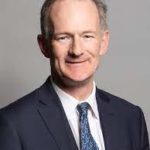
    John Penrose – 2022 Speech on the Energy Prices Bill

    The speech made by John Penrose, the Conservative MP for Weston-super-Mare, in the House of Commons on 17 October 2022.

    I have yet to hear a question to which, in the view of the hon. Member for Kilmarnock and Loudoun (Alan Brown), the answer is not more independence for Scotland.

    I rise partly to support this very necessary—albeit nose-bleedingly expensive—measure, which is essential to making sure that people can afford to heat their home over the next few months. However, while I support the fundamental underlying principle and the humanity behind it, I must register some grave disquiet in relation to the hon. Gentleman’s point about Henry VIII powers in the Bill.

    The concern is not just mine but from many in the industry. Nor is it just about the constitutional point, although that matters; the Secretary of State needs no lessons from anybody here on concerns about Henry VIII powers. Broadly speaking, clauses 13, 21 and 22 will give him the power to intervene and reach in, past Ofgem, with pretty much anything he likes and for pretty much as long as he likes, provided that he can persuade himself or a few other people that the emergency is continuing.

    That means two things. First, it means that nobody will be willing to invest in our energy industry if there is a continuing risk that the rules of the game are likely to be changed and the goalposts of the industry moved on a political whim. Secondly, I struggle to think of a measure that will be welcomed more by socialists on the Opposition Benches. It will give them carte blanche, without having to do anything in Parliament, to renationalise anything they like in any future Parliament, unless we trim these powers substantially and impose a significant sunset clause on them. At the moment, we have a programme that is supposed to last for six months and then be subject to a Treasury-led review, but these powers carry on well beyond that. That seems too broad, unconstitutional and a danger to investment in the industry. I urge my right hon. Friend to think carefully and urgently to trim that feature of the Bill.

    Finally, the one area in which there is no sunset clause —in which we are actually removing a sunset clause that already exists—is the energy price cap. It will no longer be subject to the sunset clause to which Parliament agreed when it was originally created. That means that legislation that has dramatically and demonstrably failed to do what it was originally supposed to, which was to kill off the loyalty penalty, will carry on like the undead. It will never die, yet it is the one thing that absolutely should. I hope that my right hon. Friend will think again about those important issues.


  • Alan Brown – 2022 Speech on the Energy Prices Bill

    Alan Brown – 2022 Speech on the Energy Prices Bill

    The speech made by Alan Brown, the SNP MP for Kilmarnock and Loudoun, in the House of Commons on 17 October 2022.

    Obviously everybody in the House welcomes any measures that will help people with the cost of energy crisis, but it beggars belief that this emergency legislation is being rushed through Parliament today, yet at 11 o’clock this morning the Chancellor pulled the rug from under it by saying that the support package will be not for two years, but for only six months.

    It was only last week that the Prime Minister’s robotic response to any question put to her was “Energy price guarantee for two years.” She stated that her measures would prevent households from paying more than £6,000 in energy costs in future. If the energy support package is to be pulled in April, what will the average future household bill look like? The Government say that they will bring in support to help the most vulnerable, but people need to know what their bills will look like. This is scaring millions of people, and the Government need to get a grip. When will we know what their support for the most vulnerable will look like? Will they give proper consideration to alternatives such as social tariffs?

    The Secretary of State was very clear in spelling out that the so-called guarantee is just a price cap per unit of energy, and that £2,500 is just an estimate for an average household. It is just a pity that the Prime Minister did not understand that: when she was doing media rounds for the Tory party conference, she kept saying that households would not pay more than £2,500. Her rhetoric was dangerous and misleading. Unfortunately, some families might have the wrong impression of the household bills they will pay, because the Prime Minister did not understand her so-called flagship policy.

    Even as we talk about limiting average bills to £2,500, we need to remember that just a year and a half ago the cap was set at £1,100, so energy bills for everybody are more than doubling. That is really difficult for people to deal with, and other costs are going up as well. Although the Government talk about an average bill of £2,500, it has been estimated that in Scotland the average household will pay £3,300, which is really difficult for people to manage. In Argyll and Bute, one of the most rural communities, the average dual fuel bill will be £4,400. Families are really struggling. National Energy Action estimates that 6.7 million households in Great Britain will be in fuel poverty even with the support package that the Government have announced, so we have really big concerns about what fuel poverty will look like when the package is lifted in April.

    Off-grid homes in rural Scotland and in rural Great Britain will suffer even more and will have to pay much higher costs, as the hon. Member for Carmarthen East and Dinefwr (Jonathan Edwards) pointed out in his intervention. The Secretary of State says that he will provide workings for the one-off £100 payment, but no matter what workings he provides, £100 will not be enough for people to deal with the increased cost of filling their oil or liquefied petroleum gas tanks.

    Sammy Wilson

    I do not know what calculations have been done in Scotland, but in Northern Ireland the regulator has estimated that to give equivalence, there would have to be a payment of £500 per consumer. There needs to be greater transparency about that.

    Alan Brown

    I have not seen that figure, but I agree that it seems more realistic. The reality is that the minimum delivery for a fuel tank costs £500 to £600, and completely filling a fuel tank costs £1,200. The cost per litre has gone up from about 30p to more than £1. It is a crippling cost, and there is no way that £100 will do anything to help people in the circumstances.

    It is fair to say that it is effectively Scotland that is paying for the support packages. First, the oil and gas windfall tax was clearly about the revenues from the North sea, and now the new measures are being charged to Scotland’s renewables sector. At the time, we challenged the Government to consider that in investment tax write-offs for the oil and gas sector, investment in renewables should be part of the deductible policy. That was ignored.

    Unless the detail of the cap revenue mechanism is examined properly, there is a risk that future investment in renewables will be put in jeopardy. Bizarrely, as the shadow Secretary of State, the right hon. Member for Doncaster North (Edward Miliband), said, we will incentivise people to invest in fossil fuels rather than renewables, which is certainly not the way to bring down bills. Another disparity between the Bill and the oil and gas profits levy is the time specified in the sunset clause: for the oil and gas profits levy, it is only two years. We need to ensure that we do not disincentivise investment in renewables.

    The Bill gives too much power to Ministers, with not enough parliamentary scrutiny. At one time the Secretary of State was a so-called champion of parliamentary scrutiny, but now that he is in the Cabinet he seems quite happy to take on parallel powers for himself, including the ability to spend sums of up to £100 million without any approval from the House. Even beyond £100 million, if he feels that it is too difficult to get a resolution of the House, he can still justify spending that much. That is hardly parliamentary sovereignty.

    We need to know much more about how the revenue caps will be set. What assessment has the Secretary of State made in respect of hedging? He touched on the fact that a lot of energy has been sold forward. How will the Government deal with that? How will they deal with multiple ownership structures? What discussions has he had with the sector?

    We welcome support for consumers, but given the Chancellor’s announcements today, there is clearly not enough. There is too much uncertainty for business. There is too much power in the Secretary of State’s hands. I would like to think that he will agree to amendments in Committee that would return a bit of power to Parliament and to this House, because we know he really believes in that. However, this shambles shows yet again that to go forward, what the people of Scotland really need is independence, proper utilisation of oil and gas revenues, and investment in a truly green future.

  • PRESS RELEASE : PM Liz Truss call with President Macron of France [18 October 2022]

    PRESS RELEASE : PM Liz Truss call with President Macron of France [18 October 2022]

    The press release issued by Downing Street on 19 October 2022.

    The Prime Minister spoke to French President Emmanuel Macron this afternoon.

    The leaders discussed their deep concern at Russia’s recent barbaric attacks on civilian areas in Ukraine.

    They agreed the UK and France will continue to work closely together with allies to support Ukraine and coordinate our response to Russian aggression.

    The Prime Minister and President Macron also welcomed the recent opportunity to meet in person at the leaders’ summit in Prague, and looked forward to continuing to deepen bilateral cooperation.

  • PRESS RELEASE : Investigatory powers Commissioner reappointment of Sir Brian Leveson [October 2022]

    PRESS RELEASE : Investigatory powers Commissioner reappointment of Sir Brian Leveson [October 2022]

    The press release issued by 10 Downing Street on 19 October 2022.

    The Prime Minister has approved the appointment of Sir Brian Leveson as the Investigatory Powers Commissioner (IPC) for a second three-year term, with effect from 21st October 2022.

    Background

    Sir Brian was appointed as the second IPC in October 2019, succeeding Sir Adrian Fulford. Before retiring as a senior judge in 2019, he was President of the Queen’s Bench Division and Head of Criminal Justice.

    The IPC is responsible for the independent oversight of the use of investigatory powers, ensuring they are used in accordance with the law and in the public interest. He is supported by a number of Judicial Commissioners, the Investigatory Powers Commissioner’s Office (IPCO) and the Office for Communications Data Authorisations (OCDA).

  • PRESS RELEASE : £170 million finance deal boosts British construction firms in Africa [October 2022]

    PRESS RELEASE : £170 million finance deal boosts British construction firms in Africa [October 2022]

    The press release issued by the Department for International Trade on 19 October 2022.

    • UK Government announces two landmark finance packages worth combined £174.5 million for vital construction projects in Benin and Togo
    • UK Export Finance support will unlock £82 million in export opportunities for UK businesses and build key infrastructure
    • Trade Minister James Duddridge to announce deals at first UK-Francophone West & Central Africa Trade & Investment Forum

    UK firms are set to benefit from landmark new deals worth a combined £174.5 million to finance construction projects in Benin and Togo.

    The deals, funded by both Deutsche Bank and MUFG Bank and guaranteed by UK Export Finance (UKEF), will be announced by Trade Minister James Duddridge today (19 October) in a speech to the inaugural UK-Francophone West and Central Africa Trade and Investment Forum in London.

    The event will bring together senior politicians and business leaders from eight African nations to boost trade and investment opportunities across a continent with an economy worth £2.6 trillion.

    The deals come as the government ramps up its support for West and Central Africa trade, reinforcing the UK’s ambition to be Africa’s investment partner of choice.

    Minister of State for International Trade, James Duddridge said:

    This landmark finance package will help businesses capitalise on investment prospects, support high-value jobs and provide new opportunities for UK exporters in some of the world’s fastest-growing markets.

    UK Export Finance has supported more than £760 million of projects in the Francophone West & Central Africa region in the last year, and we want to do even more. Today’s Forum is another opportunity to show the UK’s ambition to be Africa’s investment partner of choice has never been stronger.

    UKEF, the UK’s world-class export credit agency, has guaranteed a landmark £106.5 million loan from Deutsche Bank to the Benin Government which will fund the construction of a new Ministerial City in Benin.

    The project will transform the country’s government complex and unlock £35 million in export opportunities for UK businesses, who will supply equipment to Benin for the construction work whilst creating local jobs.

    Duddridge will also announce £68.6 million of UKEF-guaranteed financing from MUFG Bank to build a vital new road between Benin and Togo. This will accelerate inter-Africa trade, by opening up routes to dynamic markets, and unlock £47 million worth of UK exports to the region.

    At the same time, the road will connect over 200,000 people living in Togo’s Central Region with safer and crucial transport links to Benin.

    His Majesty’s Trade Commissioner for Africa, John Humphrey said:

    UK Export Finance has witnessed a growing interest in French-speaking West and Central African markets – an appetite which has seen consistent year on year increases.

    Recent successes in these markets include an award-winning and record-breaking financing facility for primary healthcare in Cote d’Ivoire, and an innovative infrastructure financing facility in Cameroon.

    Rose Kayi Mivedor, Togo Government Minister for Investment Promotion, added:

    This project is part of Togo’s Wider Road Infrastructure plan. Our government continues to make strategic investments in infrastructure to build and maintain a road network that not only helps move people and goods, but also stimulates growth in relevant cities.

    UKEF participation confirms the project strength and viability and through its expertise, the parties were able to put in place an affordable financing solution that will make this priority project a success for Togo’s economy.

    The UK was Europe’s top investor in Africa this year, according to the UN Conference on Trade and Development’s 2022 world investment report.

    Today’s new UKEF deals build on £3.2 billion of support for projects across the continent in the past two years, with even more deals expected in the year ahead.

  • John Redwood – 2022 Speech on the Energy Prices Bill

    John Redwood – 2022 Speech on the Energy Prices Bill

    The speech made by John Redwood, the Conservative MP for Wokingham, in the House of Commons on 17 October 2022.

    I welcome the Government’s announcement today that this scheme should be time-limited to six months and that a different scheme should be developed against the possibility that energy prices remain very high for the months thereafter. I do not think that we can go on indefinitely at the rate of the cost of this particular scheme over the winter. If this continues, we need to target the support much more clearly on the many people and families in this country who could not afford the bills otherwise and leave those who have rather more money and are using rather more energy on luxuries to pay more of that for themselves. We have time to sort out a scheme that we can target better. I am sure that this Committee, and the dialogue that will continue, will make sure, through pressure from Back Benchers and Front Benchers, that we do not leave anybody out. It is very important that everybody has proper support one way or another so that they can afford their energy bills this winter and beyond.

    I am also sure that the long-term solution is more domestic energy. We cannot carry on relying on unreliable imports, which can, at times, force our country to pay extreme prices on world markets to top up our gas or electricity because we do not have enough for ourselves. We are a fortunate country with many opportunities to produce fossil fuel and renewable energy. We have been a bit lax in recent years in not putting in enough investment, so I hope that the Secretary of State will look again at the incentives—as I am sure he will—and at the predictability of contracts and investment, so that Britain is a great place in which to invest for these purposes, and so we can exploit more of our energy and have more reliable supplies, even generating a surplus in some areas so that we can help Europe, which is very short of energy and does not have many of our natural advantages.

    My concluding point is that we cannot go on for too long with a complex net of subsidies, price controls and interventions without damaging the marketplace more widely and sending the wrong signals, so I am glad that this measure will be short-term. We need a better system for the future so that there can be plenty of support for those on low incomes if energy prices remain high, but also much more investment to solve the underlying problem.

  • Ed Miliband – 2022 Speech on the Energy Prices Bill

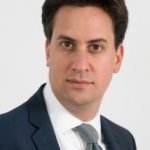
    Ed Miliband – 2022 Speech on the Energy Prices Bill

    The speech made by Ed Miliband, the Shadow Business Secretary, in the House of Commons on 17 October 2022.

    Thank you, Madam Deputy Speaker. I will try to be as brief as I can to let as many people as possible speak in this debate.

    Let me start by saying that Labour called for support for families and businesses in August through an energy price freeze, so we will support the passage of the Bill. I thank the Secretary of State for the conversations we have had on the Bill. This is an incredibly serious issue for families and businesses across the country.

    I have to say, before I get into the detail, what a shambles this Government are. We are debating what they describe as their landmark Bill for a two-year price guarantee. It was published only last Wednesday and it has already been shredded by the Chancellor this morning. Last Wednesday, Members were in the House for Prime Minister’s questions. The Prime Minister went on and on about her decisive action of a two-year guarantee. She even derided the Opposition’s approach of a six-month freeze, seeking to spread to fear about what would happen in March, and now the Government have adopted our proposal. Never mind a vision; never mind a plan for the years ahead—this Government cannot even give us a plan for the coming week. They are truly in office but not in power. This matters, because families and businesses need to be able to plan.

    I want to talk about the substantive action in the Bill and the way that the revenue to pay for it is raised, because there are important issues for the House. On the substantive action, there is a contrast with our six-month package. That was a real freeze, not a rise in bills, and £129 for millions of families across the country is significant. That even takes account of the £400. I worry about off-grid households, which we will talk about in Committee. I understand the basis of the Secretary of State’s argument. Our costed package provided £1,000 to help off-grid households. The Bill provides just a tenth of the support, and even with the Government’s measures, the University of York estimates that more than 10 million families will be in fuel poverty, so we will want to debate those issues during the Bill’s passage.

    I will focus my remarks on the second set of issues relating to the way that funding for the Bill is provided, which is important. Our argument five weeks ago, when the Government announced their energy price guarantee, was that they should do everything they could to find some of the money for this intervention from the energy companies that are making enormous profits. Anyone who heard the Business Secretary’s dulcet tones on the radio last week will have heard him say that there is no windfall tax in the Bill. The right hon. Member for Wokingham (John Redwood) described it as a “surrogate windfall tax”, which is a new invention. However, page 3 of the Bill’s explanatory notes states:

    “The Bill aims to do the following…Require certain generators currently receiving supernormal revenues to make a payment to a third party…for purposes of lowering the cost of electricity for consumers, or to meet expenditure incurred by the Secretary of State”.

    Payments on the basis of windfalls received to lower the cost of electricity for consumers, or to meet expenditure incurred by the Secretary of State—it sounds like a windfall tax. It works like a windfall tax. It talks like a windfall tax. It is a windfall tax.

    I want to hear during this debate that the Government will definitely use the powers to have a windfall tax that are in clause 16. That matters, because while we set out a clear plan for a windfall tax, the truth is that the Government, having resisted a windfall tax tooth and nail, have now taken the broadest and most ill-defined powers imaginable. Companies and the public have no idea from the Bill about the size of the levy, how much it will raise and how there will be fairness with the fossil fuel windfall tax that the previous Chancellor announced —to remind the House, that was four Chancellors ago, in May this year.

    We will probe two issues that go to the question of whether we will raise sufficient resources from the windfall tax, or “surrogate windfall tax”, in the Bill. First, according to their press release, the Government will start the windfall tax on electricity generators only in 2023. Those months of delay matter, because it will mean billions in extraordinary profits being left—[Interruption.] I do not know why the Secretary of State is shaking his head. This is a very important point: that will leave billions of pounds of extraordinary profits with the companies, and it means that the British people will be forced to foot billions more of the bill for energy price support. If having a windfall tax is the right thing to do, why not have it from the date of the intervention in September? I am very happy to give way to the right hon. Gentleman so he can explain why he is not doing that.

    Mr Rees-Mogg

    I am very happy to explain. The right hon. Gentleman knows perfectly well that the energy companies have sold their electricity forward, and therefore the profit is not accruing on the prices at which they have sold it forward.

    Edward Miliband

    That would mean that there are no windfalls, so why is the Secretary of State having a special payment made by the energy companies anyway? That makes no sense at all. We will definitely want to probe that during the debate. How can it possibly all have been sold forward, as he says? So he is saying that the energy companies are currently making no windfalls. That does rather prompt the question: why are they going to have to make special payments, if it has all been sold forward and they are making no windfall profits?

    Secondly, I want to talk about the question of the level playing field in what is happening to the fossil fuel companies and to the electricity generators. The previous Chancellor but one—I think that is right—introduced a super-deduction for fossil fuel companies as part of his windfall tax. That means that for every pound invested in oil and gas and fracking, companies get 91p back. But to be clear: that is not available to renewables, nuclear or other zero-carbon technology. That is an absurd tilting of the playing field towards fossil fuels and against investments in cheap, home-grown, clean power, and that is absolutely indefensible. It will not reduce bills. We will want to use the Bill as best we can, given the constraints of its scope, to debate the merits of that provision. I urge the House to support attempts to eliminate that preposterous loophole.

    In the time I have left, let me deal with the wider questions about the Bill. We will continue to be in this position unless we learn the proper lessons from this crisis. Those lessons are not some extreme fringe idea that fracking, which will not lower bills, is somehow the answer to the problems that we face. The answer is a clean sprint for clean energy—for solar, wind, nuclear as part of that and energy efficiency all together.

    The other day, the Secretary of State wrote an article in The Guardian, in which he said, “Dear Guardian reader”:

    “I can assure Guardian readers that I am not a ‘green energy sceptic’.”

    Let him prove it. He is for fracking, which will not lower bills and is dangerous. His colleague, the Secretary of State for Environment, Food and Rural Affairs, is seeking to block solar energy worth 34 GW—the equivalent of 10 nuclear power stations. That is not some whim of the DEFRA Secretary, but an instruction from the Prime Minister, who said that she does not like the look of solar panels. If the Business Secretary wants to convince people that he understands the stakes and what is necessary to get out of this crisis, he needs to make a proper sprint for green energy.

    The other thing that the Business Secretary needs to do—we will again discuss this during the passage of the Bill, and I think he may agree with this—is set a timetable for the proper de-linking of electricity and gas prices. We suggest that we should set a two-year timetable in the Bill for that to happen.

    Let me end by saying that the Bill is necessary, because we need support to be put on the statute book, but the truth about the Government is that they are lurching from U-turn to U-turn, and they cannot provide the country with the strategic direction that it needs to get out of the crisis. The truth is that, day by day, they are showing that they are out of ideas, out of time, and now, in the national interest, they should be out of power, too.