Author: admin

  • PRESS RELEASE : Five ways the new PM must tackle climate and energy crises [October 2022]

    PRESS RELEASE : Five ways the new PM must tackle climate and energy crises [October 2022]

    The press release issued by Friends of the Earth on 24 October 2022.

    Rishi Sunak has today been selected to succeed Liz Truss as leader of the Conservative Party, making him set to become the country’s next Prime Minister.

    His previous support for the fossil fuel industry and lack of climate ambition in his former role as Chancellor raises serious questions about his commitment to meeting the UK’s climate goals and rolling out the measures that will ease the cost of living crisis, warns Friends of the Earth.

    The environmental campaign group has identified five key priorities for the new PM which must be top of his agenda in order to restore nature, protect the climate and fix the cost of living crisis.

    Kierra Box, campaigner at Friends of the Earth, said:

    “The dual cost of living and climate crises remain the biggest challenges for the new Prime Minister, but they’re now even more pressing thanks to the political chaos and environmental back-pedalling of recent weeks.

    “Rishi Sunak has pledged he’ll deliver on the government’s climate targets. Yet his track record as Chancellor – which saw new North Sea oil and gas fast-tracked, levies for domestic flights cut and a weak windfall tax on profiting fossil fuel companies imposed – suggests otherwise.

    “He also backed fracking with community consent during the summer leadership race, but this proved to be the final nail in the coffin for Liz Truss’ premiership.

    “If Rishi Sunak plans to outlast his predecessor, he must learn from her mistakes, abandon runaway deregulation and the attack on nature and choose the sensible solutions to the cost of living and climate crises. That means saying no to more fossil fuels – including a new coal mine in Cumbria – as well as fixing our heat-leaking homes and boosting investment in cheap, clean popular renewables, which will lower bills and harmful emissions.”

    Five ways the new Prime Minister can tackle the energy and climate crises:

    Energy efficiency measures

    Insulation is a quick way to reduce the nation’s reliance on increasingly expensive gas.

    There are almost five million households in England and Wales without even basic measures such as loft or cavity wall insulation, which means their homes rapidly lose heat and cost more to keep warm. Friends of the Earth published research in August that identified the almost 9,000 ‘energy crisis hotspots’  across England and Wales.

    Energy crisis hotspots are neighbourhoods where energy use is high and typical household income is below the national average. In many cases, energy use is high in these neighbourhoods because homes are poorly insulated, meaning they require more energy to remain warm.

    Friends of the Earth is calling on the government to fund a free street by street home insulation programme  – targeted at neighbourhoods most in need. This could slash annual energy bills for many homes by around £1,000 or more after the price cap is lifted.

    Investing in renewables

    The UK has huge renewable energy resources. In addition to the rapid growth in offshore wind already promised by the government, we need to see the same commitment to boosting onshore wind and solar.

    The new Prime Minister must keep the Truss government’s pledge to lift the de-facto planning ban on onshore wind. Renewable power can be as much as nine times cheaper than gas and is popular. The limit which restricts the quantity of solar and onshore wind projects that the government will support through its Contract for Difference programme need to be lifted.

    Saying no to new expensive, polluting fossil fuel development

    Fracking: Fracking is incredibly unpopular amongst the public, and as we have seen, this sentiment is widely shared in parliament. Furthermore, it won’t have a meaningful impact on the UK’s energy security or our energy bills. The Conservative’s election manifesto said the party: “will not support fracking unless the science shows categorically that it can be done safely”. The new Prime Minister needs to confirm that the fracking moratorium is here to stay.

    Cumbrian coal mine: Following a public inquiry, the Secretary of State for Levelling Up, Housing and Communities is due to decide on whether to allow planning permission for a highly controversial new coal mine in Cumbria. The decision has already been delayed twice and is now expected “on or before 8 November 2022.”

    Friends of the Earth, which was one of the two interested parties that took part in last year’s Public Inquiry, says the case against the mine is overwhelming.

    The UK and European market for coking coal is set to rapidly diminish as manufacturers switch to greener steel, while coal from the mine won’t replace Russian imports (the latest statistics say that imports of coking coal from Russia are now zero ). The mine will, however, increase carbon emissions, with the government’s climate watchdog (CCC) describing it as “absolutely indefensible”.

    Friends of the Earth agrees West Cumbria needs new jobs and is calling for the region to be at the forefront of investment in building a greener future. More jobs would be created through a programme of housing retrofits. More info on the mine is here .

    New North Sea gas and oil developments: New gas and oil licenses in the North Sea will do nothing to tackle the cost of living crisis as new licenses take many years to develop. Indeed the Committee on Climate change  says “historically, the timeline from the issuing of an exploration license to production commencing ranges from under a decade to several decades, with an average of around 28 years.” This means that there’s a strong chance that licences granted this year won’t start producing gas and oil until around 2050 – at the very time the UK is legally committed to becoming Net Zero.

    Produce a lawful Net Zero Strategy

    Following a legal challenge by Friends of the Earth, ClientEarth and the Good Law Project, the High Court ruled in July that the current Net Zero Strategy was unlawful because it doesn’t meet the government’s obligations under the Climate Change Act to produce detailed climate policies that show how the carbon budgets will be met. The government is not appealing this judgement.

    Under the ruling, the government will have to update its climate strategy to include a quantified account of how its policies will achieve climate targets, based on a realistic assessment of what it expects them to deliver. The government’s own advisors, the Climate Change Committee, said in June 2022 that there were only credible plans for 39% of the emission cuts needed.

    The Truss government initiated a review of the Net Zero Strategy, led by Chris Skidmore MP. The court has ruled that the government must lay before parliament a report that complies with its legal obligations no later than 31 March 2023. The new prime minister will need to instruct the new cabinet to come forward with plans to ensure the redrafted Net Zero Strategy is fit for purpose.

    A Friends of the Earth press release  and briefing  give more information on the Net Zero legal challenge.

    Restore Nature

    Climate change isn’t the only environmental challenge facing the new Prime Minister. A nature recovery strategy is needed that will enable the UK to go to the long delayed international biodiversity talks taking place later this year in Canada, chaired by China.

    The government has made bold statements about protecting 30% of UK land for nature but does not have credible plans to do so. Meanwhile its targets for nature – due to be set under the Environment Act by 31st October – look unlikely to arrive on time, and have been criticised by the new Office for Environmental Protection as insufficient. The UK’s enormous damage to overseas biodiversity through the commodity trade – for example timber and wood products – is also not being sufficiently addressed.

    The recent government proposals to overturn planning and environmental rules in new ‘Investment Zones’, remove or radically alter swathes of sensible EU-derived safeguards and undermine habitats protections, constitute a further attack on nature and communities which the new prime minister must urgently reverse.

    More info on Environment Act targets is here and on trees and overseas trade here .

    A more detailed look at priorities for the next Prime Minister is available here .
  • PRESS RELEASE : Genetic Technology Bill to take on most pressing environmental problems of our time [October 2022]

    PRESS RELEASE : Genetic Technology Bill to take on most pressing environmental problems of our time [October 2022]

    The press release issued by the Department for Environment, Food and Rural Affairs on 31 October 2022.

    Legislation to unlock new technologies to boost food production and support farmers to grow more productive crops will return to Parliament today – paving the way for Britain to become the best place in the world to invest in agri-food research and innovation

    Third Reading of the Bill is scheduled for today (Monday 31 October) and is expected to be introduced in the House of Lords the following day.

    By introducing a more proportionate and science-based regulatory system for precision-bred plants and animals, it will unlock opportunities to develop crops that are more resilient against disease and the effects of climate change such as drought and flooding, and less reliant on pesticides.

    Farming Minister Mark Spencer said:

    We are already seeing how new genetic technologies can increase yields, make our food more nutritious and result in crops that are more resistant to disease and weather extremes.

    British scientists are leading the world in precision breeding and this Bill will put Britain at the forefront of agri-research and innovation – opening the door for more investment and continuing our work to provide farmers with the tools they need to innovate and use new, smart technologies.

    The Genetic Technology (Precision Breeding) Bill covers precision-bred plants and animals developed through techniques such as gene editing, where the genetic changes could have occurred naturally or through traditional breeding methods. This is different to genetic modification (GM), which produces organisms containing additional genes.

    While there is great potential for increasing innovation, the government recognises that there is a need to safeguard animal welfare in the new regulatory framework. That is why we are taking a step-by-step approach, enabling use of precision breeding technologies with plants first followed by animals later.

    Defra’s Chief Scientific Adviser Gideon Henderson said:

    This is an important time for agricultural science.  The ability to use gene editing to make precise, targeted changes to the genetic code of organisms, in a way that can mimic traditional breeding, enables development of new crop varieties that are more resistant to pests, healthier to eat, and more resilient to drought and heat as climate changes.

    For centuries, traditional breeders have made use of our understanding of genetics to breed plant varieties with desirable characteristics. Gene editing allows precision breeding to make the same type of genetic changes in a far more efficient and precise way, significantly reducing the time needed to create new varieties.  Precision breeding is a powerful and important tool to help us tackle the challenges of biodiversity and climate change, while feeding a still growing global population.

    Professor Nigel Halford, Crop Scientist at Rothamsted Research, said:

    It is tremendously exciting to see this Bill progress to the House of Lords because it will pave the way for this powerful technology to be used in crop improvement rather than just research.

    We are already behind much of the world in the application of precision breeding techniques and we are keen to see the Bill become law as soon as possible.

  • Suella Braverman – 2022 Comments on the British Empire

    Suella Braverman – 2022 Comments on the British Empire

    The comments made by Suella Braverman, the Home Secretary, in conversation with Christopher Hope on 4 October 2022.

    CHRISTOPHER HOPE

    [Asked how Braverman felt about stopping other people arriving her given her own heritage as her parents were from Mauritius and Kenya]

    SUELLA BRAVERMAN

    I have no qualms about that. Absolutely. Again, this is a kind of a common argument trotted out by the left that, you know, because of the colour of my skin and my heritage I have to think a certain way and I can’t declare certain truths.

    CHRISTOPHER HOPE

    [Asked if she annoyed the left]

    SUELLA BRAVERMAN

    I hope I annoy them, that would be my delight if I was annoying the left. But no, I disagree with that. My parents came here through safe and legal routes. My mother was recruited by the NHS and my dad came here because he was effectively kicked out of Kenya in the 1960s, but they came here legitimately. That was the policy of the government, they came here, they integrated, they loved this country from afar as children of empire. They don’t, by the way, have any qualms about extolling the virtues of the British Empire. It was the British Empire that brought infrastructure, the legal system, the civil service, the military to countries like Mauritius and Kenya. My parents are so proud. On my Mum’s side, I think it’s her great uncle and auntie, fought with the allies in World War Two and were so proud of that. So I think, you know, children of empire, there’s obviously a mixed picture and obviously there are bad things about empire.

    CHRISTOPHER HOPE

    [Mentioned that history was complex]

    SUELLA BRAVERMAN

    History is complex and nuanced, and I’m not going to apologise for empire. I’m not going to apologise for our past history.

    CHRISTOPHER HOPE

    [Asked if we should be proud of empire]

    SUELLA BRAVERMAN

    I am proud of the British Empire, yes.

  • Michael Gove – 2022 Comments on Suella Braverman

    Michael Gove – 2022 Comments on Suella Braverman

    The comments made by Michael Gove, the Secretary of State for Levelling Up, Housing and Communities, speaking on Sophy Ridge on Sunday on 30 October 2022.

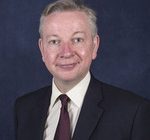
    We take security issues incredibly seriously, that’s why I have to be cautious in responding to the point that you’ve understandably made about Liz’s [Liz Truss, former Prime Minister] phone. It’s because we take them seriously that we have strict protocols in place that govern how information should be shared and with whom it should be shared.

    Suella is a first rate front rank politician and she acknowledged that she made a mistake had been made. She is working hard in order to ensure that our borders can be made more secure and that policing is more effective. She’s a valued member of the Cabinet and someone whom I admire.

  • Dennis Rogan – 2022 Speech on British Passports for Irish who have Lived in Northern Ireland (Lord Rogan)

    Dennis Rogan – 2022 Speech on British Passports for Irish who have Lived in Northern Ireland (Lord Rogan)

    The speech made by Dennis Rogan, Lord Rogan, in the House of Lords on 26 October 2022.

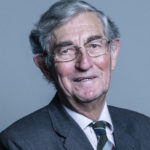
    My Lords, I too welcome the Minister to his place this evening. I am sure that we all wish him well in his new role.

    It is a pleasure to speak in this debate, which I congratulate my friend the noble Lord, Lord Hay, on securing. Your Lordships will be well aware of his long-held and understandably strong views on the matter before us tonight, which he has again outlined with the customary clarity we have come to expect from him. While we may be concentrating on his dilemma this evening, the anomaly applies equally to many more persons in a similar situation. My noble friend has been a passionate campaigner on the right of people living in Northern Ireland, but born in the Republic of Ireland, to hold a United Kingdom passport. This is an incredibly personal matter for him, and understandably so.

    As the House will be aware, the noble Lord, Lord Hay, was first elected to Londonderry City Council more than four decades ago and, in 1993, served as the mayor. He was elected to the Northern Ireland Assembly in 1998 in the wake of the Belfast agreement, and held the senior position of Speaker from 2007 to 2014. He is also a prominent member of both the Orange Order and the Apprentice Boys of Derry. I am proud to have marched with Willy Hay on many occasions down the years.

    In short, and despite the occasional political differences he and I may have had, there are few Northern Ireland citizens more committed to their British identity than the noble Lord, Lord Hay. As such, it should be described not as an anomaly but as an abomination that he is not allowed or entitled to a British passport as of right.

    The noble Lord mentioned the Good Friday agreement, as did the noble Lord, Lord Browne. Despite being on opposite sides of the debate in 1998, I am sure the noble Lords would agree that the Belfast agreement was a huge game-changer with regard to national identity. Under the provisions of that agreement, Northern Ireland residents can apply for an Irish passport, and many, from both political traditions, have chosen to do so. In contrast, people resident in Northern Ireland but born in the Republic of Ireland are not automatically entitled to a UK passport, even if, as in the case the noble Lord, they have lived there for many decades, paid their taxes there and, in his case, made a significant contribution to the public life of Northern Ireland.

    Speaking in another place last week, the Northern Ireland Office Minister Steve Baker proudly described himself as “defiantly and ferociously pro-union”. However, he proceeded to describe his holding of a United Kingdom passport as

    “an administrative thing, not a definition of who I am”.

    He added:

    “I gently make that point to illustrate that perhaps not all of us feel exactly the same way about our passport”.—[Official Report, Commons, 18/10/22; col. 242WH.]

    Mr Baker has not been in post for very long and, with the ministerial shuffles currently going on, he might not stay in place much longer. However, I respectfully suggest to your Lordships that this Minister’s understanding of the unionist mindset in Northern Ireland remains very much in the remedial stage.

    It will shock this House to learn that, despite his fresh-faced youthfulness and boundless energy, my friend the noble Lord, Lord Hay, was born in fact in 1950. However, that makes him one of an estimated 40,000 people born in the Republic of Ireland after 1949 and resident in Northern Ireland who are currently expected to apply for naturalisation before being entitled to a UK passport. That application currently comes at a cost of £1,330 and the process includes a requirement to pass the Life in the UK test and attend a citizenship ceremony. For people such as my noble friend, who have lived in the Province for many decades, it is nothing short of demeaning that this should be the case.

    I commend the work of the Northern Ireland Affairs Committee in another place which last year conducted an inquiry into the barriers to UK citizenship for Northern Ireland residents. The committee concluded that a bespoke solution was required for Irish citizens to gain UK citizenship, reflecting

    “personal ties, relationships, geopolitical realities and movement of people”

    between the United Kingdom and the Republic of Ireland. It also recommended that the current £1,330 application fee should be abolished, describing it as

    “at worst indefensible, and at best unreasonable and excessive.”

    I recognise the UK Government’s desire to better control our borders in a post-Brexit world, and I support this approach in principle. However, Northern Ireland is different, not least because of the 300-mile land border with our friends in the Republic, incorporating more than 280 crossing points. The issue we are debating today has nothing to do with Brexit. This is a matter which has been around for many years and which successive United Kingdom Governments have failed to deal with, hence the reason why my friend the noble Lord, Lord Hay, has rightly felt compelled to continue his high-profile campaign, not just for himself but on behalf of the many others in his position.

    The United Kingdom is a welcoming country and I would argue, without fear of contradiction, that Northern Ireland is its most welcoming component part. Like the noble Lord, Lord Hay, I am a committed unionist, and unlike many UK government Ministers down the years I am proud to describe myself as a persuader for the union. I want as many people as possible living in Northern Ireland to support the British identity in Northern Ireland and to embrace it collectively. It is something to be cherished, of that there is no doubt, but also something which should be shared.

    My friend the noble Lord, Lord Hay, is every bit as British as I am. He is every bit as British as everybody in this Room tonight. He and others like him should have that identity recognised in the same way as my British identity is recognised, and noble Lords’ British identity is recognised, by having the automatic right to hold a British passport. I commend my noble friend for bringing forward this important debate and I hope the Minister will finally signal a change of approach on behalf of His Majesty’s Government in his closing remarks. The noble Lord, Lord Hay, has my full support in what he is seeking to achieve.

  • Wallace Browne – 2022 Speech on British Passports for Irish who have Lived in Northern Ireland (Lord Browne of Belmont)

    Wallace Browne – 2022 Speech on British Passports for Irish who have Lived in Northern Ireland (Lord Browne of Belmont)

    The speech made by Wallace Browne, Lord Browne of Belmont, in the House of Lords on 26 October 2022.

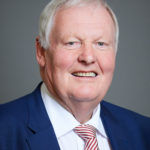
    My Lords, I am pleased to welcome the Minister to his post, and I know that he will bring a wealth of experience and knowledge to this House. I congratulate my noble friend Lord Hay of Ballyore on securing this short, but nevertheless important, debate. This issue, I know, is incredibly personal for him, but, more importantly, for the many thousands of others living in Northern Ireland.

    It is wrong that many Irish-born citizens, who have been living, working and paying their taxes in Northern Ireland and in the United Kingdom for years, have so many hurdles to go through before they can officially be recognised as British. They may have identified as British for years, or even for decades; but a costly, overly bureaucratic and uniquely discriminatory process has meant that, in the eyes of the law, they are technically not yet fully recognised as British citizens. Many of these people feel very strongly that holding a British passport should come naturally to them, as they have been law-abiding, taxpaying residents of this United Kingdom. As it stands, they feel, understandably, that they are being blocked in respect of this.

    This process is set in stark contrast to the simple and easy way of applying for an Irish passport for those born and living in Northern Ireland, whereby some who have never been to, or lived in, the Republic of Ireland can quickly apply for and receive Irish passports. Indeed, all they have to do is simply go along to their local post office, ask for an Irish passport application, fill it out and attach a relatively small fee of 80 euros; and the passport, when determined, will be delivered to the home by the post in a relatively short period of time. This is all under the terms of the Belfast agreement.

    Yet, those born a few miles across the border who are resident in the UK must pay £1,300 to register their citizenship, and then apply for a British passport. In terms of UK citizenship, it is clear that the people in this situation are still somewhat disadvantaged. Certain financial and bureaucratic barriers still exist that make it difficult for Irish-born residents of the United Kingdom to attain British citizenship or a British passport.

    It is false to claim that changing this would have any impact whatever on the Belfast agreement. Indeed, for true parity of esteem to exist, those Irish-born citizens who live and work in Northern Ireland should be able to avail of a British passport in the same way as Northern Irish-born British citizens can avail of an Irish passport. It is a curious situation that we presently have two groups: those who were born in the Irish Republic and live in Northern Ireland, who cannot easily obtain British passports; and those who were born in, have relatives in or live in Northern Ireland, who can easily and cheaply obtain Irish passports.

    Last year, the chief commissioner of the Northern Ireland Human Rights Commission called on the Government to fix this anomaly. He said categorically that,

    “the Belfast agreement presented no impediment to slightly changing the law, if the UK Government decided to exercise its discretion to do it.”

    If certain criteria were set, surely this could be resolved with relative ease.

    I, too, welcome the findings in the report published by the Northern Ireland Affairs Committee in the other place last year. I concur with the recommendations made in the report that the fees and the current unwieldly process should be abolished. Does the Minister agree with the findings, and will he commit to look at this further?

    The Government should take the opportunity presented today to look seriously at a different approach to this unique situation, which has created an unfair process. The issue has been overlooked for too long. As has been alluded to, this unique situation, which has been outlined today by my noble friend Lord Hay, goes directly against the grain of the Belfast agreement. Routes to British citizenship for those who have spent the vast majority of their lives contributing to British life or communities, and the tax base in the United Kingdom, should not be fraught with difficulty and uncertainty.

    It is right and proper that this issue should be addressed as a matter of urgency. It is wrong that successive Governments have failed so far to deal with this issue. I trust that today’s debate will help move us towards righting this wrong.

  • Willie Hay – 2022 Speech on British Passports for Irish who have Lived in Northern Ireland (Baron Hay of Ballyore)

    Willie Hay – 2022 Speech on British Passports for Irish who have Lived in Northern Ireland (Baron Hay of Ballyore)

    The speech made by Willie Hay, Baron Hay of Ballyore, in the House of Lords on 26 October 2022.

    To ask His Majesty’s Government what plans they have, if any, to grant an automatic right to a British Passport to people born in the Republic of Ireland who have lived in Northern Ireland for 50 years or more.

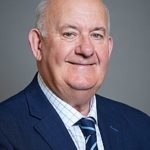
    My Lords, I welcome the Minister to the Dispatch Box and I wish him well in his new role. I am grateful to have the opportunity to hold this debate in your Lordships’ House. This is a very personal issue to me and to many out there who believe that this is a serious anomaly that needs to be addressed.

    I will give a brief history of how we got here. When the Irish Republic—previously known as the Irish Free State—left the Commonwealth in 1949, the British Government at the time allowed those who had been born in the Republic and had moved to Northern Ireland or elsewhere in the United Kingdom prior to that date to retain their British citizenship. That all changed after 1949: for people born in the Republic of Ireland after 1949, that right was taken away from them. Since 1949, many individuals who have lived here in the United Kingdom for many years, voted in UK elections and paid their taxes have found themselves disadvantaged by a bureaucratic and lengthy process.

    Indeed, instead of an application fee of £100, there is a large fee to apply for citizenship of around £1,300. These costs put many people off. There is also a requirement for Irish citizens who have been resident here in the UK for many years then to pass a Life in the UK Test. This is a discriminatory process for those who have been living and working in Northern Ireland, in the United Kingdom, for years, who find when they go to apply for British citizenship that they have many hurdles to clear that simply do not exist for others. They look around and see that many with no prior connection to the United Kingdom or Ireland find the process of applying for a British passport much quicker and far less hassle. Those Irish-born citizens who have lived, worked and voted in Northern Ireland and paid their taxes for many years—for many decades in some cases—have every right to British citizenship, to be an equal part of this United Kingdom and to hold a British passport. I question the very logic of this process. It impacts many thousands of people, and I question the hurdles that have been introduced.

    One point worth noting is that last February, the Court of Appeal found that similar fees of £1,000 for children to register as British citizens were unlawful and must be reconsidered by the Home Office. The current application process can be an increasingly long and frustrating one for many. It is especially challenging for those from lower-income backgrounds.

    The process of British citizenship applications can take six months, but usually it takes much longer. It has several steps and can be a major hurdle to people who genuinely want to apply for British citizenship. As part of the process, applicants are required to pay £350 simply for the privilege of a decisions report, where somebody will tell them whether they can apply and whether they qualify for British citizenship. That will cost £350, whether it is a “yes” or a “no” answer. In many instances, another frustration exists whereby even if registered as a British citizen and successful, this does not automatically entitle an individual to a British passport; it entitles them only to apply for a British passport.

    This is an insensitive situation for those who have paid taxes and national insurance contributions here for many years. Present census figures indicate that it affects approximately 40,000 people living in Northern Ireland, and this number is growing year on year. This is a huge number of people who cannot avail themselves of a British passport without navigating a long and winding process. It is quite clear that barriers exist in their route to citizenship.

    Of course, this is against the backdrop of a process that has been simplified in respect of Irish passport applications for people living in Northern Ireland. The Irish Government reviewed the whole process of application in 2011 and came up with a simple way of applying for an Irish passport for those living on the island of Ireland. If you apply for an Irish passport, the application is around €80 in total. Anyone born or living in Northern Ireland, or anyone who has a parent or grandparent living on the island of Ireland, is automatically entitled to apply for Irish citizenship. They have thrown the net so wide. Applicants do not need to have been born on the island of Ireland if their father, mother or a grandparent was born there; they are entitled to an Irish passport and Irish citizenship. It is a simple and quick process. When you apply for an Irish passport, you can trace the whole process, and online applications are completed in approximately 20 working days. This is a sharp contrast to the long and costly process that some Irish-born people living in Northern Ireland face when applying for British citizenship.

    There are ways to remove the financial and bureaucratic barriers in relation to this, if the will exists from government and the Home Office. There is a solution; a modest change in current practice could affect that group of 40,000 people. This is a sensitive matter that affects many and requires only a slight adjustment to be resolved. If an individual born in the Irish Republic after 1949 can prove that they have been living in Northern Ireland for between five and 10 years, have been working, voting and paying taxes and national insurance contributions, and are genuinely a part of that community, surely there ought to be a practical, sensible, streamlined way forward in this process.

    I welcome the report published by the Northern Ireland Affairs Committee in the other place last year and concur with its recommendations that these fees and this cumbersome process should be abolished. That committee has unionist, Conservative, Labour, Alliance and SDLP members, so there is unanimity in trying to resolve this issue not only in this House— I hope—but in the other.

    The great irony is that when we hear people in the media and Members of this House and the other House talk about the Belfast agreement, they often say “parity of esteem”: two communities working together and recognising whether someone is Irish, British or both. The extraordinary situation I have outlined today goes directly against the grain of the Belfast agreement. Let us not forget that the agreement is held up because it recognises the birthright of people living in Northern Ireland to identify themselves and be accepted as Irish, British or both. We are talking about people living in Northern Ireland for 30, 40 or 50 years, who were born five miles across the border in the Republic but have lived in Northern Ireland for virtually all their lives. To date, there has been a reluctance by government to act in relation to this. I welcome the opportunity to have this debate and trust that noble Lords will concur that this is an unfair process that could be remedied with minimal change.

    A number of Members in the other place agree with the recommendations that the lengthy process required and the payment of associated fees should be waived in the applications of long-term residents of Northern Ireland who were born in the Republic of Ireland and wish to access their British identity by holding a British passport. Other representations have been made to the Home Office in respect of this issue, which goes back as far as 2004 or 2005, when it was raised in the House of Commons by my colleague Gregory Campbell. For whatever reason, the Government have refused to address it.

    There should be real parity of esteem for people living in Northern Ireland who were born in the Republic. That is not the case. For many decades, the Government have failed to consider the history of the personal ties of thousands of people in this unique situation. This issue unites all backgrounds and traditions in Northern Ireland. That does not happen often, but on this issue, it is the case. I hope today’s debate will move us some way towards finally bringing a resolution.

    Does the Minister agree that this issue must be addressed? Will he commit seriously to doing so? It directly affects a large number of taxpaying residents in our United Kingdom. It is so bad in Northern Ireland at the minute that the number of people applying for British passports has dropped by 30%, while the number applying for Irish passports has gone up by 27%.

  • PRESS RELEASE : NALC highlights to the government the role local councils can have in net-zero [October 2022]

    PRESS RELEASE : NALC highlights to the government the role local councils can have in net-zero [October 2022]

    The press release issued by the National Association of Local Councils on 28 October 2022.

    The National Association of Local Councils (NALC) highlighted the role local (parish and town) councils could play in decarbonisation.

    NALC responded this week to the Business, Energy and Industrial Strategy (BEIS) independent review of net zero. NALC urged the government to recognise the role local councils can play to help the government meet its net-zero targets and not just factor in the private sector.

    NALC highlighted that local councils could achieve this by:

    • Showing leadership through using low-carbon and environmentally sympathetic practices in their day-to-day activities.
    • Encouraging residents and businesses to adopt lower-carbon practices.
    • Undertaking new initiatives which use low-carbon technology.

    Full Response (in .pdf format)

  • PRESS RELEASE : Humanitarian Teams Deployed in Philippines as Storm Hits [October 2022]

    PRESS RELEASE : Humanitarian Teams Deployed in Philippines as Storm Hits [October 2022]

    The press release issued by Save the Children on 29 October 2022.

    At the onset of tropical storm Paeng -international name, Nalgae – Save the Children Philippines immediately deployed humanitarian response teams on Friday 28 October, to conduct rapid assessment on impacted areas in Cagayan Valley, Central Luzon, Bicol, Eastern Samar, Panay Island, and the Bangsamoro Autonomous Region in Muslim Mindanao.

    Around 4.5 million people, of which 1.4 million are children, have been affected based on initial reports. The figures are expected to increase as Nalgae is poised to strengthen and become the 16th typhoon to hit the Philippines in 2022.

    In Maguindanao, Save the Children’s response teams are on the ground assessing the scale of the devastation and the needs of those affected. . So far, 67 of the 72 recorded deaths are in Maguindanao where about  78,000 families were reportedly affected by severe flooding.

    Meanwhile, Save the Children’s response teams in Luzon and Visayas, along with teams from civil society organisation partners, are currently monitoring and responding to the urgent needs of the affected children and their families..

    Jerome Balinton, Humanitarian Manager at Save the Children Philippines, said: “We are working to help affected families recover as fast as possible and putting in place disaster preparedness measures to reduce the impact of the storms. No child must be left behind, especially in times of emergencies.”

    Atty. Alberto Muyot, CEO of Save the Children Philippines, said: “In any crisis, children are always the most vulnerable. The message is loud and clear: children are most impacted by the climate crisis. That is why the whole of society must act now to safeguard future generations.”

    Save the Children stands ready to respond with the immediate dispatch of prepositioned relief items. These include plastic sheets that can be used as temporary shelters to displaced families, vital household items and family hygiene kits to prevent the spread of diseases, school supplies for children and teachers, and temporary learning spaces to safely resume classes.

  • PRESS RELEASE : Her Royal Highness The Princess Royal, Patron of Save the Children UK, has met families in Kyangwali Refugee Settlement in Uganda [October 2022]

    PRESS RELEASE : Her Royal Highness The Princess Royal, Patron of Save the Children UK, has met families in Kyangwali Refugee Settlement in Uganda [October 2022]

    The press release issued by Save the Children on 27 October 2022.

    Her Royal Highness The Princess Royal, Patron of Save the Children UK, has met families in Kyangwali Refugee Settlement in Uganda, to learn more about the impact conflict in the Democratic Republic of Congo (DRC) has had on children’s lives.

    Uganda currently hosts 5 million refugees – the largest refugee population in Africa. Due to the ongoing conflict in the DRC, thousands of refugees have crossed the border into Uganda this year.[1]

    In March 2020, schools across the country shut down as the Covid-19 pandemic took hold. Uganda kept schools fully or partly closed for over a year and a half, meaning children in Uganda faced the world’s longest school closure due to the pandemic.[2] To help children successfully return to school, Save the Children launched Catch-up clubs to accelerate the recovery of lost learning.

    Her Royal Highness visited a school in Kyangwali Refugee Settlement where she joined a Save the Children Catch-up Club and took part in an activity with children to work together and build a story from pictures. Later that day, The Princess also met children who have fled their homes due to the ongoing conflict in the DRC and are being supported by Save the Children’s child protection activities at a Child Friendly Space.

    Dragana Strinic, Country Director of Save the Children Uganda said:

    “It was an honour to host Her Royal Highness The Princess Royal today to raise awareness of the impact that conflict and Covid-19 school closures are having on millions of children in Uganda. Due to the ongoing conflict, Save the Children’s Catch-up Clubs have been a lifeline for children growing up in Kyangwali refugee settlement, without these clubs, some of these children may never have returned to school.”

    Her Royal Highness The Princess Royal has supported Save the Children for over fifty years. Queen Elizabeth II was a patron of the charity for 65 years, during this time they have both inspired thousands of supporters, volunteers, and staff, and highlighted the needs of some of the most disadvantaged children.

    HRH The Princess Royal became the Patron of Save the Children UK in 2017 after serving as the charity’s President since 1970. The Princess Royal spends a significant amount of time visiting Save the Children’s projects, both overseas and in the UK. She has travelled to Bangladesh, Sierra Leone, South Africa, Mozambique, Ethiopia, and Bosnia and Herzegovina.

    Over a quarter of a billion children are out of school globally and a record number of children – 1 in 6 – are living in war zones around the world.  The Children’s Emergency Fund allows Save the Children to support children growing up in conflict and help children keep learning in times of crises.