Author: admin

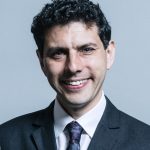
  • Alex Sobel – 2022 Speech on the Avian Influenza Outbreak

    Alex Sobel – 2022 Speech on the Avian Influenza Outbreak

    The speech made by Alex Sobel, the Labour MP for Leeds North West, in Westminster Hall, the House of Commons on 30 November 2022.

    It is a pleasure to serve under your chairmanship, Sir George. I join other Members in congratulating the right hon. Member for Maldon (Sir John Whittingdale) on securing this crucial and timely debate. Like me, Members are rightly concerned about the impact of this virus, and they have made excellent points. I thank the hon. Member for Westmorland and Lonsdale (Tim Farron), my hon. Friend the Member for Lancaster and Fleetwood (Cat Smith), the hon. Member for Tiverton and Honiton (Richard Foord), the right hon. Member for Witham (Priti Patel), the hon. Member for Torbay (Kevin Foster), and the esteemed Chair of the Environmental Audit Committee, the right hon. Member for Ludlow (Philip Dunne). Of course, no debate could exclude the hon. Member for Strangford (Jim Shannon), who shared an egg anecdote.

    I am delighted to be stepping in for my hon. Friend the Member for Cambridge (Daniel Zeichner), who is addressing farmers at the Norfolk Farming Conference and therefore could not be here. Norfolk and the east in general have suffered acutely from this crisis. He is disappointed not to be here himself to continue to press the Minister on this important matter. He has been asking repeated questions of the Minister in recent weeks at the Dispatch Box and in this Chamber, often not receiving direct answers, but we will try again—never fear. On my hon. Friend’s behalf, I am more than happy to keep the pressure on. Hopefully, we will get more answers today to the questions we have posed.

    The UK is currently experiencing its worst outbreak of bird flu, which is impacting the wild bird and farm bird populations. As the chief vet said in a DEFRA statement on 31 October,

    “We are now facing, this year, the largest ever outbreak of bird flu and are seeing rapid escalation in the number of cases on commercial farms and in backyard birds across England.”

    According to data provided by the Minister’s Department last week in response to a written question, 2.8 million farm birds have either been culled or died because of bird flu in 2022. Just under 2 million of those were since September. That figure is made up exclusively of chickens, ducks and turkeys. That relates to the many points that Members have made about Christmas.

    The rate of the spread has been alarming, with wild bird populations severely affected, and the problem has been known about for months. The RSPB, which gave evidence to the EFRA Committee yesterday, is helping to remove wild bird carcases, and I want to put on the record my thanks to it for that vital work. Some 65 species of wild bird have so far tested positive for avian flu in the UK, and population-level effects have been seen in seabirds including guillemots, kittiwakes, terns, great skua, gannets and barnacle geese, as other Members, including the hon. Member for Torbay, mentioned.

    The Government’s response has been criticised for being reactive instead of proactive in spite of early warning signs that there was a worsening problem. However, in the past month we have finally seen action from the Government, which we welcome. A full housing order was implemented on 7 November, which legally required all bird keepers to keep their birds housed, regardless of type or size. The Government altered their compensation process so that farmers could be compensated from the outset of planned culling, rather than at the end, and some regulatory liberalisation was introduced to allow poultry producers to freeze and then defrost birds between 28 November and 31 December to limit any supply issues in the run-up to Christmas, but has that been too little, too late?

    When the Minister delivered the Government’s statement on the housing order to the House of Commons, it was clear that he thought biosecurity was the most effective tool in tackling bird flu. I am sure he recalls what he said:

    “It is fair to say that the housing order has a twofold impact on the spread of avian influenza, whereas biosecurity can have a 44-fold impact on the spread, which is why our focus has been completely on biosecurity.”—[Official Report, 1 November 2022; Vol. 721, c. 806.]

    We accept that biosecurity is crucial to preventing the spread of bird flu, but the industry was calling for a full housing order weeks before one finally arrived.

    Will the Minister tell us what impact the housing order is having on the spread of avian flu? Is it proving successful in stemming the spread? As we have heard—I join the criticism from other Members—some devolved nations have not yet implemented full housing orders, so what can the Minister tell us about the situation there? I am sure he will want to comment on that, considering the debate we have had. Does the evidence suggest that, in England, the housing of birds has been successful?

    On support for farmers, we need to ask whether the Government are doing enough. The evidence provided yesterday to the Environment, Food and Rural Affairs Committee by the chief executive of the British Poultry Council, Richard Griffiths, and poultry farmer Paul Kelly of KellyBronze Turkeys, who was mentioned by the right hon. Member for Maldon and is from the right hon. Gentleman’s area, showed that they argue that the compensation scheme laid out in legislation from 1981 is out of date and does not reflect the consequences of the disease in 2022. With compensation being issued for healthy birds culled, smaller producers might see all their flock die before the APHA is able to arrive to cull, and be left without compensation.

    The growing worry is that financial loss, coupled with the trauma and mental strain of losing an entire flock—we heard from the hon. Member for Westmorland and Lonsdale about the historical effects of previous crises on other types of farming—might lead to producers deciding not to restock for next winter, so that they effectively leave the sector. It is not hard to understand why after hearing what Paul Kelly said yesterday during the Select Committee hearing after detailing the £1.2 million hit his farm has taken as a result bird flu this year: “Could we take the risk to produce Christmas poultry based on what we’ve seen this year? We couldn’t.” That is pretty telling.

    The Department issued £2.4 million in compensation in the six weeks from 1 October. Will the Minister put that in context? How many birds does that involve? I appreciate that the compensation scale is complex, and I hear that there are 13 different documents just for turkeys, but are farmers getting enough support to be able to restock and continue in business next year? To put it frankly, will they have confidence that the Government have a grip on the situation such that they stay in the sector?

    Avian flu has been returning year on year, as was stated by the esteemed Chair of the Environmental Audit Committee, the right hon. Member for Ludlow, so it seems as though there is no long-term strategy. Are discussions being had in the Department on vaccinations? Is consideration being given to speeding up the development of an effective vaccine? What discussions are being held with trading partners to ensure that vaccination becomes a viable proposition?

    Can we hear from the Minister about capacity in the APHA? We have heard many speeches here discussing that and capacity in the Environment Agency, but the recent report from colleagues on the Public Accounts Committee hardly inspires confidence. Do those agencies have the capacity to respond to another disease outbreak? The Public Accounts Committee doubts that. When my hon. Friend the Member for Lancaster and Fleetwood put that issue to the Secretary of State during EFRA questions just two weeks ago, the Secretary of State ducked the question. I hope we get a better response today.

    Crossing one’s fingers and hoping it does not happen does not constitute a plan. That is what Labour is concerned about—DEFRA’s long-term strategy for our agriculture sector. The Government seem content for the public to believe that bird flu is the cause of egg shortages and worries about Christmas turkeys, but we all know that farmers face more fundamental problems, and there have been warnings of egg shortages for months because producers could not make a return. Avian flu should not be used as cover for wider systemic problems and failings.

    Avian flu is a horrible disease that is dreadful for wild birds and harrowing for farmers and their flocks. Overall, the advice is that numbers lost should not cause supply problems on the shelves, but the Government need to keep on top of the outbreak. For individual farmers who lose their flocks, the impact is dreadful, and they deserve our support, not least because we need them to farm in the future. Across the country, staff at the APHA and other agencies, including local authorities, are doing everything they can to keep the country safe and our food system secure. We thank them for that. They are doing their job. The Government must support them, and enable them to do what they need to do.

  • Steven Bonnar – 2022 Speech on the Avian Influenza Outbreak

    Steven Bonnar – 2022 Speech on the Avian Influenza Outbreak

    The speech made by Steven Bonnar, the SNP MP for Coatbridge, Chryston and Bellshill, in Westminster Hall, the House of Commons on 30 November 2022.

    It is a pleasure to see you in the Chair this morning, Sir George. I thank the right hon. Member for Maldon (Sir John Whittingdale) for securing this important and timely debate, and for informing us all so well about the current avian influenza outbreak in the UK and further afield. I thank all hon. Members for their contributions to the debate.

    The latest outbreak of avian flu, commonly known as bird flu, is the largest and most invasive we have seen in the UK to date. The highly virulent H5N1 strain of the disease has meant that the virus has lingered persistently in wild and farmed birds since October 2021, even during the summer months, with no slowing down or dissipation of the virus due to its high pathogenicity. It is affecting wild bird populations as well as commercial or farmed birds and, of course, backyard flocks as well.

    Each member nation of the United Kingdom has handled the epidemic similarly, with avian influenza prevention zones being declared across the four nations to mitigate the risk of the disease spreading among poultry and other farmed birds. From Monday 17 October, it became a legal requirement for all bird keepers in the United Kingdom to follow strict viral security measures to help protect their flocks from the threat of avian flu. In early November, DEFRA and its Irish counterpart introduced a mandatory requirement to house all farmed birds in England and in the Republic of Ireland. We in the SNP welcome continued cross-border collaboration on both islands of Britain and Ireland to mitigate the risk of bird flu. The outbreak emphasises the need for pan-European and international co-operation on pandemic issues, now and in the future.

    Turning to the Scottish perspective, in July, the Scottish Government agency, NatureScot, announced it was setting up a taskforce to respond to bird flu. That followed outbreaks over the spring and summer months among our wild bird populations around Scotland’s coastlines. The main birds affected at that point were gannets, skuas, geese and gulls. Shetland was one of the worst affected areas, with carcases also found from the Mull of Galloway to St Kilda and East Lothian. The number of contact zones in place in Scotland has risen from six to nine as the risk of exposure increases.

    Scottish Government veterinary advice is that the current risk from avian influenza in Scotland does not justify mandatory housing of commercial birds, as has been announced in England, Wales and Ireland. Scotland’s chief veterinary officer, Sheila Voas, states that the evidence in Scotland does not currently justify a housing order being imposed:

    “Whilst we are keeping the situation under review we don’t believe the evidence, as yet, justifies mandatory housing here. We are keeping an eye on number of cases, we’re keeping an eye on wild bird results coming through and if the position substantially changes here then we may choose to go to a housing order as well.”

    Ms Voas added that keeping birds indoors should not be seen as a silver bullet for tackling avian flu and that other measures, such as keeping feed and bedding away from wild birds, can also be effective. I reiterate that the situation is being monitored and kept under constant review, and all breeders should be concerned and take whatever precautions they can to keep their flocks safe.

    Jim Shannon

    I am not being critical of what the hon. Gentleman is saying, but I do have some concerns. Scotland has decided not to house its birds in the way that has been decided in the rest of the United Kingdom, and indeed in the Republic of Ireland, but it seems to me to be logical that we all work together, as the hon. Member for Lancaster and Fleetwood (Cat Smith) said. The hon. Gentleman knows that I am not being critical, but we need to have a policy that we can all agree on for the betterment of us all.

    Steven Bonnar

    I thank the hon. Member for his intervention and I appreciate the points he has made. I think that DEFRA and the Scottish Government have an excellent working relationship, and work collaboratively across all areas to ensure the safety of our industries at all times. However, I must say that I think it is extremely rich, considering that we are coming off the back of a human pandemic that has seen hundreds of thousands of lives lost across the UK, when the Government were putting people back to work and telling people to eat out to help out, against the wishes of the Scottish Government. There was no such collaborative working then and there was no such good will coming forth from the UK Government.

    David Duguid

    I was about to ask to intervene just before the hon. Member for Strangford (Jim Shannon), so I will not comment on the most recent comments made by the hon. Member for Coatbridge, Chryston and Bellshill (Steven Bonnar), but I welcome his remarks about how the situation is being kept under review. I plan to meet—hopefully very soon—the chief veterinary officer for Scotland, Sheila Voas, who he mentioned. Does he share my concern, particularly as the most recent outbreaks are in my constituency and are very concentrated—although across Scotland it may look like there are not a lot of outbreaks on average, there is such a highly concentrated and focused series of outbreaks in one area—that housing orders, perhaps even in one location, may be required?

    Steven Bonnar

    I have a lot of sympathy with the hon. Gentleman’s point. This is a concern for every Member of Parliament, across all four nations of the UK. Of course there are specific outbreaks in his area. I am glad that he is meeting our chief veterinary officer. I am always quite willing and able to take the advice of the experts on these matters. The current advice from the Scottish Government is that mandatory housing is not yet required in Scotland, and I am quite happy to maintain that position.

    Cat Smith rose—

    Sir George Howarth (in the Chair)

    Order. Before the hon. Lady intervenes, can I just point out that I will call the Opposition spokesman shortly and I think the hon. Gentleman is about to run out of time?

    Cat Smith

    Thank you, Sir George; I will be brief.

    I do see a contradiction between the hon. Gentleman’s party’s approach to the human pandemic of covid and the approach it is taking now, by which it is trying to protect farmers in Scotland. I draw his attention to the fact that his party is in government in Scotland and the hon. Member for Banff and Buchan (David Duguid) has pointed out that many of his constituents have had outbreaks. Frankly, it seems that there needs to be a little bit more compassion from the hon. Member for Coatbridge, Chryston and Bellshill (Steven Bonnar) about the devastation that this disease is having on the livelihoods of Scottish farmers.

    Steven Bonnar

    I take the hon. Lady’s comments on board. I disagree with her comments about compassion; I am very compassionate about animal welfare right across the board, and of course I have compassion for anybody’s constituents in Scotland who are affected by this situation.

    I will move quickly on. Sadly, more than 100,000 birds have had to be culled at three Scottish farms so far. The National Farmers Union of Scotland has revealed that 72,000 birds had to be taken out at two farms in Aberdeenshire, while down in Ayrshire farmer Billy Robb has lost 32,000 hens in the past week. This is devastating for all those concerned with the keeping of animals and it has a profound effect on people in the farming community. As we heard at the EFRA Committee yesterday, livelihoods have indeed been lost due to the outbreak.

    Of course, it can also be concerning for members of the general public when they come across dead birds Just last week, 23 swans were found dead in and around Hogganfield Loch—a well-renowned and much-loved nature reserve, which borders my constituency and is frequently utilised by my constituents in the Stepps area. The severity of the outbreak has limited public access to the surrounding paths and advice has been given to people to avoid bringing dogs to the area, as they can also be at risk of infection.

    The risk of incursion to wild birds of highly pathogenic avian influenza has remained very high. NatureScot launched a surveillance network in October to track migrating geese and wintering waterbirds arriving in Scotland. Alastair MacGugan of NatureScot said:

    “As we head into the winter months, we are still very concerned about the potential impact of avian flu on our wild bird populations and we remain vigilant to ensure we can respond to the evolving situation. We’re monitoring wintering goose populations very closely for avian flu and are working with colleagues in Iceland and Norway to identify cases in migrating populations. Here in Scotland, we’ve set up a network of site managers and volunteers to provide real-time reporting on what is happening out in the field, helping us take swift and targeted decisions.”

    I will turn briefly to consumption. It is important to stress that the risk to the general public’s health from avian influenza is extremely low. Food Standards Scotland advised that bird flu poses only a very low food safety concern for consumers, and does not have an effect on the human consumption of any poultry products, including eggs. The Scottish Government are aware of a number of issues affecting egg supply; some shops, including Asda and Lidl, are starting to ration the number of eggs that customers can buy due to supply issues. Although the impact of avian influenza on all commercial flocks is a consideration, the cost of living increases and a number of other issues, such as labour shortages across all sectors of the industry, feed into that. It was refreshing to hear a Conservative MP identify that Brexit has caused a severe shortage in the workforce, and that a fuller workforce would have helped to combat the outbreak.

    As we head towards the Christmas period, people might be wondering whether any of the 10 million turkeys, 200,000 geese and 100,000 ducks, which are sold to some of the highest standards in the world each year, will be available as normal. The answer to that is yes. Of course there concerns, but about 50% of those tasty festive dinners are sold frozen, and the industry has managed the situation very well by carrying out early plucking, and using industry standard freeze and thaw processes.

    We can all play our part in combating this outbreak of bird flu. I will finish with some advice for my constituents in Coatbridge, Chryston and Bellshill and people across Scotland. If they encounter any dead birds, they should not touch them, but should report the findings of the following: a single dead bird of prey, three dead gulls or winter waterfowl, such as swans, geese or ducks, or five or more dead wild birds of any other species at the same time and in the same place. Any such findings should be reported to DEFRA’s UK-wide telephone number, which is 0345 9335577. In addition, although wild birds of high-risk species cannot be taken directly to Scottish Society for Prevention of Cruelty to Animals animal rescue centres, sick or injured wild birds in Scotland should be reported to the SSPCA via its telephone number, which is 0300 099 9999.

  • Philip Dunne – 2022 Speech on the Avian Influenza Outbreak

    Philip Dunne – 2022 Speech on the Avian Influenza Outbreak

    The speech made by Philip Dunne, the Conservative MP for Ludlow, in Westminster Hall, the House of Commons on 30 November 2022.

    I congratulate my right hon. Friend the Member for Maldon (Sir John Whittingdale) on securing the debate and everyone who has spoken to highlight not only the real and practical challenges the poultry industry is facing as a result of this incident, but the impact on our wild bird population.

    I alert the Minister to an incident that happened in my constituency last week. Members of the public reported to me and, as they should have done, to Shropshire Council and the Environment Agency sightings of dead geese around the River Severn near the bridge in Bridgnorth. I immediately contacted Shropshire Council, which promptly sent an animal health officer to investigate. By the time the animal health officer had arrived, the birds in question were in the river and not on public land, as had been thought. They were therefore inaccessible to the animal health officer. The council contacted the APHA, which did not have a watercraft available to assist. There was therefore a delay. The next time there was an inspection, three days later, the birds had not surprisingly disappeared—it is a fast-flowing river.

    There is a question over resourcing and the capacity in the EA’s workforce to respond to incidents. I appreciate that it is difficult to do this right across the country, but there is no doubt that this disease is becoming endemic in the wild bird population, in particular in migratory wildfowl, which can travel all over the country, as we have heard from hon. Members.

    On the poultry industry, my constituency in south Shropshire has a significant number of poultry farmers of several types. I pay tribute to my constituent James Mottershead, who is present in the Public Gallery today. He is a poultry farmer and happens to be chairman of the National Farmers Union poultry board. He has been engaging well with the Minister’s officials in DEFRA, and I pay tribute to their efforts in trying to find a resolution.

    I will mention a couple of challenges, building on what has been said by other hon. Members. On compensation, as my right hon. Friend the Member for Maldon said, given the speed with which this disease can take hold in a shed that has become infected, it is simply no good to pay only for birds that remain alive, because the vast majority may have been killed by the disease before the approval was granted. We need to look at the compensation mechanism. One of the knock-on effects of having inadequate compensation for farmers is that the insurance has now been withdrawn because the insurer did not expect there to be a contribution towards the loss. That means that sheds will not be restocked in the event of an incident, even once biosecurity efforts have been completed, because insurance is not available. Even if it were to be available, the cost would be far too heavy. A more realistic compensation payment would help to resolve that problem. That applies to layers as well as broilers.

    Finally, as I am conscious that I need to conclude, clearly the solution will be an effective vaccination. I encourage the Minister to pick up on the observations made by Members across the Chamber today that that has to be given the same level of priority as we gave to vaccinating against covid, if we are to have a poultry industry in this country and wild birds flourishing, as we would all like.

  • NEWS STORY : Labour win Majority in City of Chester By-Election

    NEWS STORY : Labour win Majority in City of Chester By-Election

    STORY

    Labour’s Samantha Dixon has won the by-election in the City of Chester constituency, caused by the resignation of the previous MP Christian Matheson. Labour increased their majority from 6,164 in 2019 to 10,974 at the by-election, with a swing of 12% which would be enough if replicated at the next General Election for the party to form a new Government.

    RESOURCES

    City of Chester Constituency Election Results

    EXTERNAL NEWS LINKS

    Chester Standard Newspaper

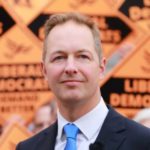
  • Richard Foord – 2022 Speech on the Avian Influenza Outbreak

    Richard Foord – 2022 Speech on the Avian Influenza Outbreak

    The speech made by Richard Foord, the Liberal Democrat MP for Tiverton and Honiton, in Westminster Hall, the House of Commons on 30 November 2022.

    It is a pleasure to serve under your chairmanship, Sir George. I will make some comments about compensation and timescales for restocking.

    On compensation, although the Government have made some moves in the direction of valuing the destroyed birds earlier following the avian flu outbreak, it is still not good enough. I want to describe the situation for one of my constituents. The birds that she and her family keep were infected in spite of being inside. Perhaps the avian flu got in via some fresh straw, but over 30,000 birds were destroyed. The valuation of the stock by the APHA was made promptly but, despite the outbreak occurring in early August, they have still not received any compensation for the second of their two sites. It was only last week that they received compensation for the first. This is entirely unacceptable given that their incomes ceased at the point of the cull and compensation was needed to ensure that bills were paid. Speedier payment of compensation is critical.

    Secondly, I will comment on restocking timescales. The secondary cleaning and disinfection protocol, as described by DEFRA, is not fit for purpose. It provides three options for restocking the farm. The quickest restocking option is unavailable to many small and medium-sized farms and free-range producers, which means that they are forced to choose restocking the poultry, and that cannot be carried out until 12 months after the avian flu outbreak. That is catastrophic for farm businesses whose main income is from poultry. They are stopped from trading for an entire year because of this legislation. It is causing otherwise viable businesses to go to the wall. In one case in my constituency of Tiverton and Honiton, when the bank became aware of this requirement for a 12-month pause in the farm being restocked, the lender requested that the constituent’s banking facility be removed.

    In addition to the volume of avian flu cases expected this winter, this legislation means that there will be shortages lasting well over a year, especially in the seasonal Christmas turkey market. Many farms, if stuck with the 12-month restocking option, will be unable to produce turkeys not only this Christmas, but next Christmas. I have not read any scientific evidence that backs up the 12-month restocking rule. Professor Ian Brown, head of virology at the APHA, confirmed at a conference this week that the virus can live during the winter period for six weeks. If the longevity of the virus is only six weeks, I see no reason why a farm should be forced to cease trading for a whole year.

    The secondary cleansing and disinfecting requirements, which must be achieved to restock a farm with poultry, are not fit for purpose. That is especially the case for a small, family-run and free-range farm, for seasonal poultry producers and for those operating on earth or stone floors. My hon. Friend the Member for Westmorland and Lonsdale (Tim Farron) is absolutely right that any enforced shutdown of a farm needs to be based on science. At the moment, there seems to be little or no scientific justification relating to the longevity of the virus that requires a 12-month shutdown.

    Sir George Howarth (in the Chair)

    Order. I remind the hon. Gentleman that there is one more speaker to be called and I will be calling the Front Benchers at 10.28 am.

    Richard Foord

    Thank you, Sir George; I will be brief.

    My constituents and I suggest that the current 12-month period should be reduced to six months, and the onerous and expensive cleansing and disinfecting requirements should be reduced. We propose that no differentiation should be made between the treatment of earth, stone or concrete floors. Having farms out of production for two Christmas turkey-producing seasons is catastrophic for small, family-run businesses. To summarise, the Government should think again about the payment of compensation and the timescales for restocking.

  • PRESS RELEASE : Historic £360 million devolution deal transfers building and skills powers to level up Cornwall [December 2022]

    PRESS RELEASE : Historic £360 million devolution deal transfers building and skills powers to level up Cornwall [December 2022]

    The press release issued by the Department for Levelling Up, Housing and Communities on 2 December 2022.

    A landmark devolution deal will transfer new money and power into the hands of local leaders in Cornwall.

    • Levelling Up Minister Dehenna Davison in Cornwall today to sign historic £360 million devolution deal at Spaceport Cornwall
    • The proposed deal gives Cornwall Council a locally elected Mayor and greater control over transport budgets, building, skills delivery, and greater influence with government to tackle challenges of second homes
    • The deal now sees almost 50% of England covered by a devolution deal

    A landmark devolution deal, which transfers new money and power into the hands of local leaders in Cornwall, will be signed by Levelling Up Minister Dehenna Davison later today.

    If approved, Cornwall will be devolved control over the Adult Education budget, so they can shape provision in a way that best suits the needs of residents and the local economy and will get immediate support to build new affordable homes on brownfield sites. Cornwall will also directly elect a Mayor who will sit as leader of Cornwall Council, giving them a stronger local voice in discussions with central government and others. A uniquely important issue locally, the deal also commits central government to work more closely with Cornwall Council when considering any changes to alleviate the challenges of second homes and short-term lets.

    This is an important first step towards devolution for Cornwall. The deal is subject to local consultation, and a council resolution and the transfer of powers will require local consent and parliamentary approval.

    Government funding worth £360 million will also be guaranteed to Cornwall over the next 30 years and this will enable the region to plan for the long-term, boosting levelling up across the region and unleashing its full economic potential, as well as addressing unique challenges it faces as a rural area.

    Levelling Up Minister Davison will attend a signing ceremony at the iconic Spaceport Cornwall later today, to officially sign the deal with Cornwall Council. The signing continues the government’s devolution revolution with England moving closer to being 50% covered by bespoke regional devolution deals. What’s more, the new agreement reaffirms the government’s commitment in the Levelling Up White Paper to offer a devolution deal to any area wants one by 2030.

    The proposed deal sets out the government’s plans to devolve more power to Cornwall Council through:

    • Housing: the deal provides £8.7 million for delivering more homes on brownfield land as well as closer working between government and the council on second homes policy and identifying opportunities to deliver new affordable homes. On top of this, it includes up to £10 million to support delivery of locally determined housing and heritage priorities in Cornwall.
    • Transport: Cornwall Council will receive £500,000 to improve transport planning across the region, as well as collaboration on new smart ticketing systems
    • Culture and heritage: Recognising Cornwall’s diverse and unique heritage, the deal includes a further £500,000 to support Cornish distinctiveness, including the protection and promotion of the Cornish language.
    • Tourism: The deal sets out that Government will work with Cornwall Council on ways to encourage more tourists throughout the year and support the supply of safe and sustainable short term holiday accommodation.
    • Education: Government will fully devolve the Adult Education Budget from 2025, giving the council control over how best to support adult learners.

    Ahead of the signing ceremony, Levelling Up Minister Dehenna Davison said:

    Cornwall is a beautiful area of the UK with a rich heritage, a renowned coastline and a fantastic array of businesses. But for too long it has not received the levers it needs to level up and address the unique challenges it faces.

    I am proud to sign the devolution agreement today and empower local leaders here who know best the issues that most affect the region.

    I look forward to working with Cornwall to turbo-charge levelling up, spread opportunity and unleash this great area’s full economic potential.

    Cllr Linda Taylor, leader of Cornwall Council, said:

    This is a big deal for the whole of Cornwall, and provides the certainty required to tackle the challenges we face. This gives us the opportunity to secure more decision-making powers as well as bringing in millions of pounds of extra investment which will allow us to shape the future of Cornwall for the benefit of residents for many years to come.

    The proposed deal provides clarity in uncertain times and would allow us to make future plans with confidence, enabling us to deliver on our priorities to create a carbon neutral Cornwall where everyone can start well, live well and age well.

    The government has made it clear that the proposed deal is conditional on making our governance change. I am appealing to one and all to carefully consider this huge opportunity for Cornwall to receive more funding, powers and influence – and have your say on the deal that will help shape Cornwall’s future when the consultation begins next week.

    Mark Duddridge, Chair of the Cornwall and Isles of Scilly Local Enterprise Partnership, said:

    The devolution of the Adult Education Budget (AEB) from central Government to Cornwall Council is welcomed as it will enable more tailored support to be provided to thousands of Cornwall’s residents every year to develop the skills they need for life and work. That will also allow employers to access a better skilled workforce they need for businesses to grow and thrive, particularly in Cornwall’s foundation and growth sectors.

    These deals are just the first steps in transferring power away from Whitehall into areas that want them. Since their first deal with government in 2014, Greater Manchester has done a further five deals with government, on areas covering planning, transport and health and social care, and is now negotiating with government for a further ‘trailblazer’ deal which will see deeper devolution.

    Cornwall joins York and North Yorkshire and the East Midlands who have already signed devolution deals this year, with further talks continuing with Suffolk, Norfolk and councils in the North East.

    Cornwall Council will move to change from its current leader and cabinet executive governance model to a directly elected Mayor and cabinet executive governance model via full council resolution under the Local Government Act 2000. Cornwall Council will make this decision following a local public consultation and consideration of its results.

    Further information:

    • The deal builds on the previous 2015 devolution deal for Cornwall and marks another major step in the Government’s pledge in the Levelling Up White Paper to offer devolutions deals to any area that wants one by 2030. It follows devolution deals already announced for York and North Yorkshire and the East Midlands.
    • It is anticipated that election for Cornwall Council’s new Mayor will take place in May 2024.
  • PRESS RELEASE : More than £70 million to turbocharge the future of clean transport [December 2022]

    PRESS RELEASE : More than £70 million to turbocharge the future of clean transport [December 2022]

    The press release issued by the Department for Business, Energy and Industrial Strategy on 2 December 2022.

    • More than £70 million in joint government and industry funding to develop clean transport technology
    • projects expected to support 3,300 jobs and drive economic growth across the UK over the next decade
    • innovations required for hydrogen-powered HGVs, a tractor powered by farmyard waste and more efficient methods of manufacturing electric motors among those awarded funding

    A world-first heavy tractor powered by farm waste is just one of the game-changing projects benefitting from £73 million in new funding for the development of clean transport technologies announced today (Friday 2 December).

    The joint government and industry investment will support projects right across the UK, from Burnaston to Bridgwater, in support of ambitions to build an end-to-end supply chain for zero-emissions vehicles (ZEVs) in the UK. The five successful projects are set to support 3,300 jobs across the UK, working on new ways to harness renewable fuels, electric motors that are both powerful and highly efficient, and new materials that’ll reduce the auto industry’s carbon footprint.

    The funding has been awarded through the Advanced Propulsion Centre (APC) Collaborative Research and Development programme, which supports the development of innovative low and zero-carbon automotive technology, with £36.4 million coming from government. This is backed by a further £36.6 million from the automobile industry – taking today’s total to £73 million.

    Business Secretary Grant Shapps said:

    “Our automotive industry is a world-leader, creating jobs whether in Essex, Somerset or Glasgow. Seizing the potential from new technologies will be a key part of its future success, while also making our roads cleaner, greener and more affordable.

    “Today’s multi-million-pound boost – created by government working hand-in-hand with industry – will put these firms in pole position to pioneer these innovations, staying at the cutting edge of the global race for decades to come.”

    Joint government and industry funding winners are:

    HVS, Glasgow
    Receiving £30 million to develop a hydrogen fuel cell-powered HGV cab and tractor unit to replace the highly polluting diesel-powered vehicles currently used to transport road freight.

    CNH Industrial, Essex
    Receiving £15.6 million to develop the world’s first liquid fugitive methane-powered, off-road, heavy tractor. It makes use of methane gas produced by waste from farms, that would otherwise escape into the atmosphere.

    Toyota, Derbyshire
    Receiving £11.3 million to develop a hydrogen-fuel cell version of the Hilux pickup truck, ideal for use in isolated settings where electric vehicle charging is impractical.

    Constellium, Slough
    Receiving £10 million to provide new sources of recycled aluminium that could massively reduce the auto industry’s carbon footprint.

    Electrified Automation, Somerset
    Receiving £6 million to up-scale a market-disrupting new method for manufacturing electric motors that are more cost-effective, powerful and efficient than much of the competition.

    Chief Executive at the APC Ian Constance said:

    “Supporting vital research and development in the UK, now more than ever, provides an opportunity to invest in transport decarbonisation as well as boost growth in the automotive sector.

    “The £73 million of funding announced today furthers world-leading innovation in net-zero technology for the automotive sector and beyond. These five fantastic projects are all collaborative by design, led by high-profile companies with innovative SME and academic partners, representing the best of UK industry.”

    Today’s announcement comes on top of funding also being invested by the government through the Automotive Transformation Fund (ATF) to develop a high-value end-to-end electrified automotive supply chain in the UK.

    This includes unlocking private investment in gigafactories, battery material supply chains, motors, power electronics, and fuel cell systems. The ATF is being delivered by the Department for Business, Energy and Industrial Strategy in partnership with the Advanced Propulsion Centre.

    The government has committed a record £211 million to battery research and innovation through the Faraday Battery Challenge, to help the sector deliver 100,000 jobs in battery gigafactories and the battery supply chain by 2040. The funding will be delivered by UK Research and Innovation (UKRI) with support from the Faraday Institution, Innovate UK and the UK Battery Industrialisation Centre (UKBIC).

    The UK Hydrogen Strategy sets out how government, working with industry, is aiming to develop 10GW of hydrogen production capacity by 2030, for use across the economy. This forms a part of the British energy security strategy for delivering secure, clean and affordable British energy for the long term.

  • PRESS RELEASE : New Disability Action Plan confirmed for 2023 as Minister meets Paralympians and opens pioneering lab at Olympic Park [December 2022]

    PRESS RELEASE : New Disability Action Plan confirmed for 2023 as Minister meets Paralympians and opens pioneering lab at Olympic Park [December 2022]

    The press release issued by the Department for Work and Pensions on 2 December 2022.

    Plan to build on Government’s leading work improving the lives of disabled people in areas such as technology, sport and global leadership.

    • Minister for Disabled People, Health and Work opens new Disability Innovation Hub ahead of International Day of Persons with Disabilities
    • Minister met with GB Paralympians as Government sets out plans to boost the participation of disabled people in sport and physical activity

    A new Disability Action Plan will be consulted on and published in 2023, the Government confirmed today (02 December 2022).

    The announcement follows the Minister for Disabled People, Health and Work, Tom Pursglove MP, officially opening the brand-new Global Disability Innovation Hub (GDI Hub) research lab at the Queen Elizabeth Olympic Park to mark the UN International Day of Persons with Disabilities (IDPD).

    The new Disability Action Plan will set out the practical action Ministers across Government will take over the next two years to improve disabled people’s lives.

    The policies in the Disability Action Plan will be further developed in the New Year, with a consultation expected in 2023, so that disabled people, disabled people’s organisations and other interested parties can have their say.

    Announcing the Government’s intention to develop and consult on a new Disability Action Plan at the event, the Minister detailed why he thought a new Disability Action Plan was needed.

    Minister for Disabled People, Health and Work, Tom Pursglove MP, said:

    “Over one in five people in the UK are disabled. It’s vital we continue to take concerted action across Government to improve disabled people’s lives.

    “I’ll be bringing forward our Disability Action Plan in 2023 to build on Government reform of the disability agenda, underlining our global leadership on disability rights and leading the way in areas such as assistive tech and accessibility.

    “It was inspiring to visit the GDI’s new research lab where this type of innovation is in action – unlocking opportunities so that more disabled people can reach their potential.”

    The United Nations is marking this year’s IDPD by focusing on innovation and transformative solutions to create accessibility and equality, with London’s GDI Hub – the world’s first centre on assistive technology to collaborate with the World Health Organisation – forging the path internationally to improve disabled people’s lives.

    The GDI Hub will be researching and creating a new generation of advanced technologies, ranging from Artificial Intelligence-powered navigation aids for visually impaired people, to using mobile communication to strengthen disabled communities.

    While at the Olympic Park the Minister was also welcomed to the Aquatics Centre by Paralympians, including Susannah Rodgers and Grace Harvey, to tour the state-of-the-art infrastructure and accessibility features. They spoke of their experiences competing at last year’s Paralympics and what it meant to them, as well as the impact of the London Olympics 2012 legacy work by the British Paralympic Association.

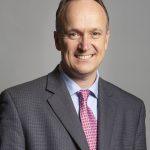
  • Neil Hudson – 2022 Speech on the Avian Influenza Outbreak

    Neil Hudson – 2022 Speech on the Avian Influenza Outbreak

    The speech made by Neil Hudson, the Conservative MP for Penrith and the Border, in Westminster Hall, the House of Commons on 30 November 2022.

    It is a privilege to serve under your chairmanship, Sir George. I pay tribute to my right hon. Friend the Member for Maldon (Sir John Whittingdale) for raising this important issue. I declare a strong personal and professional interest as a veterinary surgeon. My thoughts go out to the farmers, vets, officials and anyone on the frontline in this catastrophe. It is incredibly distressing. I pay tribute to the vets and officials at the APHA for all their work at this unprecedented time.

    We have heard about the impact of the disease on birds in the domestic market and on wild birds. I want to talk about its impact on people on the frontline. I sit on the EFRA Select Committee and in our urgent session on avian influenza yesterday, we looked at the impact not only on birds but on humans. It very much goes in parallel with our inquiry on rural mental health and the long-term effects of these situations on those on the frontline.

    I spent a period as a veterinary surgeon on the frontline during the foot and mouth crisis, and I witnessed sights that I never want to witness again in my lifetime. People on the frontline in the current situation are seeing things on a similar scale. We need to be cognisant of that moving forward. In the Committee’s session yesterday, we found that there needs to be more collaboration and more data collection, so that we understand more about the incidence of the disease in the wild bird population and the transmission pathway.

    My right hon. Friend the Member for Maldon mentioned that we have learned lessons from covid. Work needs to be done at pace to develop a vaccine. This is a highly pathogenic H5N1 strain, and the available vaccine is not suitable for this particular strain. This work needs to be done internationally; we need international collaboration and Government support. There needs to be a lot of research on the difference between naturally infected birds and birds that have been vaccinated. That technology needs to be moved forward at pace. We have learned lessons from covid, and this is a similar situation. Where there is a will, there is a way.

    We need to remember that viruses do not respect international or domestic borders. We need to have a UK approach and a global approach to tackle the disease. I pay tribute to the people at the APHA. They really are on the frontline and they are coping at this point. The EFRA Select Committee had the chief executive and the chief vet before us yesterday.

    As a member of the EFRA Committee, I guested on the Public Accounts Committee with the National Audit Office for the session on the APHA site at Weybridge. It needs a radical redevelopment and it is going to cost £2.8 billion. We know that there are fiscal constraints, but it is so important that we spend that money now to prevent us from having to spend a lot more in the future and, as we have heard, to stop the devastating impact on human and animal health. I urge the Minister to bat for DEFRA and make the case that it needs that £2.8 billion; £1.2 billion has been earmarked and we need the additional £1.6 billion as a priority. The APHA is coping, but heaven forbid that we get something else like foot and mouth disease, African swine fever or African horse sickness coming in. The potential outbreaks could be catastrophic for our country. We need resources, people and expertise.

    In some quarters, this situation has been likened to fighting a war with a peacetime army. That is probably where we are now. We are coping, but we must make preparations to ensure that we are resilient into the future, so we need sufficient vets and officials. The EFRA Committee has produced reports that recommend that the Government look at veterinary workforce issues and workforce issues across the agricultural sector, and ensure that our farming communities, who are so important to food security, are supported with the workforce they need.

    We have talked about compensation, and this highly pathogenic strain means that the compensation needs to kick in earlier in the cull process. I would like to hear from the Minister—this has been raised by other colleagues—whether there could be some help through insurance schemes, perhaps underwritten by Government, to help farmers have a bit of security. In addition, at what point would the Government act according to the Agriculture Act 2020 and say that we are in exceptional market conditions and that they can use the powers in the Act to help farmers?

    The hon. Member for Lancaster and Fleetwood (Cat Smith) spoke about free-range classification and that movement from post-16 weeks to not being free range. There is discussion at EU-level about whether, if the state vets say that the birds need to be indoors, the free-range status can be carried on longer. The UK needs to be cognisant of that and make preparations to ensure that our farmers are on a level playing field. I thank everyone on the frontline; my thoughts, feelings and prayers are with them. I look forward to hearing from the Minister.

  • Cat Smith – 2022 Speech on the Avian Influenza Outbreak

    Cat Smith – 2022 Speech on the Avian Influenza Outbreak

    The speech made by Cat Smith, the Labour MP for Lancaster and Fleetwood, in Westminster Hall, the House of Commons on 30 November 2022.

    I pay tribute to the poultry farmers of Lancaster and Fleetwood, many of whom I have had some very challenging and emotional conversations with in recent months. Clearly, the poultry industry is facing huge challenges from labour shortages, and the avian influenza outbreak is further compounding those challenges. Colleagues have articulated well the challenges posed by the compensation scheme not meeting the needs of those businesses. The scheme clearly does not work. I am sure the Minister will have heard that loud and clear from colleagues, so I will not dwell on it.

    On the issue of biosecurity, which will not stop this pandemic but is a very important part of controlling the speed of transmission, I tabled a written question about what conversations the UK Government are having with devolved nations regarding the housing of birds. I gently ask the Minister to look again at his response, which was basically to explain devolution. I am well versed in how devolution works; what I would like to know is what the Government are doing to come up with a UK-wide response that controls the speed of transmission of the disease.

    David Duguid (Banff and Buchan) (Con)

    I appreciate the point the hon. Member is making about the need for a UK-wide approach. She and the Minister may be aware that there have been five outbreaks in Scotland in as many weeks, all of which have been in my constituency. My constituency happens to be in the north-east, but as I think the hon. Member mentioned earlier, if it was closer to the border, that would be more of a concern in Cumbria and other places in north England. Will she join me in asking the Scottish Government—or the SNP representative, the hon. Member for Coatbridge, Chryston and Bellshill (Steven Bonnar)—to comment on that?

    Cat Smith

    I completely agree with the hon. Gentleman. Indeed, the fact that the outbreaks in Scotland have been so far from the border highlights the speed with which this disease is spreading and the requirement for us to act in a co-ordinated way, not just with different Governments in the UK but with our European neighbours. The whole nature of the disease is that birds move around, and wild birds are obviously spreading it. Many of my constituents have raised with me the difficulties they now face in getting insurance for their farms, so will the Minister touch on any support that the Government might be able to give farmers with that particular issue in the years ahead?

    One issue that has not yet come up is that of free range. I have a lot of free-range egg producers in my constituency. Currently, of course, there is a 16-week grace period during which a farm can maintain its free-range status. It is likely that a lot of those producers are going to breach that 16-week grace period because of the status of the avian influenza outbreak, and they will face additional costs from rebranding their products, which will no longer be free range, at the end of that period. What specific support will be provided to those free-range egg producers, who are going to face particular challenges?

    Vaccines are probably the only way out of this situation, and that is going to involve huge Government support. Colleagues have already touched quite a lot on this issue, but it is going to involve an international effort, so I would like to hear from the Minister what steps the Government are taking internationally on vaccines. Given that 50% of the UK’s protein comes from consuming poultry products, this is actually a food security issue. Indeed, the speed of the response is so critical because farmers will be making decisions in February about whether they go ahead with producing turkeys and geese for Christmas 2023. February is not that far away, and farmers will be making those decisions in the coming weeks. This could have long-term effects. Even if a vaccine were discovered tomorrow and rolled out, the reality is that if we have not taken control of this avian flu outbreak by February, then we will be looking at the consequences into the coming years.

    Katherine Fletcher (South Ribble) (Con)

    I am grateful to the hon. Lady, a fellow Lancashire MP, for giving way. Many of the farmers in her constituency are associated with the farmers in South Ribble. I want to emphasise her point about decisions and the future of the industry. Does she agree that it would be great if the Minister could provide some certainty, not only to clarify the rules on farm access, but to keep people in the industry, because they are seriously considering their future?

    Cat Smith

    I thank my Lancashire neighbour for making that point; she is absolutely right. Farming is a difficult industry. It is not an easy way to make a living. When I speak to farming constituents, many of them tell me that they are concerned about whether their children will go into the industry. In fact, many want their children to have more secure work and an easier way to make a living. That concerns me, because this is an issue of food security. I completely agree with the hon. Lady. To echo her point, I urge the Government to take prompt action and to communicate it clearly with the farming community.