Author: admin
-

Christian Wakeford – 2022 Parliamentary Question on Football Governance
The parliamentary question asked by Christian Wakeford, the Labour MP for Bury South, in the House of Commons on 1 December 2022.
Christian Wakeford (Bury South) (Lab)
Whether she plans to implement the recommendations of the fan-led review of football governance.
The Secretary of State for Digital, Culture, Media and Sport (Michelle Donelan)
The Government published their response to the recommendations of the independent fan-led review of football governance in April 2022. We do recognise the need for football fans to be at the heart of the game and for the reforms to ensure that the game is successful and sustainable in the long term. Football clubs are at the core of local communities and, for too long, fans have been an afterthought for some club owners.
Christian Wakeford
Football’s coming home, but it seems that a football regulator is not. Without a football regulator, there will be no say for fans and no financial or fit-and-proper assessment of new owners, with more clubs like Bury being at risk. Almost a year on from the fan-led review, the Government are no further on in implementing any of the changes. In that time, we have seen the sale of Chelsea and the near collapse of Derby. Why are the Government dragging their feet?
Michelle Donelan
It is important that I praise the work of my hon. Friend the Member for Chatham and Aylesford (Tracey Crouch), who got the fans’ voice right at the heart of her report. I and the Minister responsible for sport have met multiple football supporters’ groups and will continue to do so. The White Paper will be published imminently.
Kevin Foster (Torbay) (Con)
At last week’s annual general meeting of the Torquay United Supporters Trust, there was much debate about how the World cup in Qatar and the discussions around it have yet again focused attention on the governance of the game of football. Does my right hon. Friend agree that it is absolutely vital that we make changes to ensure fans get a voice, that there is real engagement with their clubs, and that we do not see more of the incidents we have seen across this country, where clubs have been moved from their historic locations into other communities due to disputes over stadium ownership?
Michelle Donelan
We on the Government Benches understand how important it is to get this right, and we will get it right. We will put fans’ voices right at the heart of what we do, and ensure that whatever we do has the teeth to ensure change.
Jeff Smith (Manchester, Withington) (Lab)
In the years since the fan-led review was published, Southend United faced a winding-up petition and a transfer embargo after financial failings; Derby County was in administration; Chelsea could only carry on because of special exemptions when its owner was sanctioned; and the Mayor of the West Midlands wrote to the Football League to express his worries that Birmingham City’s future is in jeopardy under its current ownership. Which clubs will face trouble next year, the year after, or each year until the Government stop delaying the introduction of an independent regulator? The Prime Minister committed to implementing all the recommendations of the review, so why do they not just get on with it? After the next election, a Labour Government will.
Michelle Donelan
After the next election, a Conservative Government will continue to get on with the job, as we have always been doing. The Government recognise the importance of acting decisively, but also of getting this policy right; we have been considering it and consulting very carefully. Of course, in the meantime, those in football can take forward some of the reforms themselves, including financial redistribution, which we continue to urge them to do. The report will be imminent.
-

Gary Sambrook – 2022 Parliamentary Question on Grassroots Participation in Sport
The parliamentary question asked by Gary Sambrook, the Conservative MP for Birmingham Northfield, in the House of Commons on 1 December 2022.
Gary Sambrook (Birmingham, Northfield) (Con)
What steps her Department is taking to encourage grassroots participation in sport.
The Secretary of State for Digital, Culture, Media and Sport (Michelle Donelan)
Grassroots sports bind our communities together and make people happier as well as healthier. Since 2019, Sport England has invested over £200,000 in my hon. Friend’s constituency, including £40,000 during the pandemic. In October, I announced £35 million of Commonwealth games physical activity legacy funding, opening up sporting opportunities across the west midlands. The Government are continuing to invest directly in grassroots sports facilities. I am sure that I can meet my hon. Friend to discuss this further.
Gary Sambrook
I recently met Matt and Alan from Northfield Town football club, who have ambitious plans for a new all-weather football pitch and female facilities for changing rooms and toilets. How can we support Northfield Town football club to make the new facilities a reality?
Michelle Donelan
Government investment, along with that from the Football Association and the Premier League, is delivered through the Football Foundation. Since 2019, the foundation has invested about £8 million in more than 300 projects in the Birmingham area, targeted based on local football facility plans. I am sure that the foundation would be keen to hear from Northfield Town about its ambitions. We will facilitate that via my office.
-
![PRESS RELEASE : The King has approved the nomination of The Reverend Paul Thomas to the Suffragan See of Oswestry, in the Diocese of Lichfield [December 2022]](https://www.ukpol.co.uk/wp-content/uploads/2022/08/downingstreet-150x122.png)
PRESS RELEASE : The King has approved the nomination of The Reverend Paul Thomas to the Suffragan See of Oswestry, in the Diocese of Lichfield [December 2022]
The press release issued by 10 Downing Street on 2 December 2022.
The King has approved the nomination of The Reverend Paul Thomas, Vicar of the Benefice of St James Paddington, in the Diocese of London, to the Suffragan See of Oswestry, in the Diocese of Lichfield.
Background
Paul was born and raised in West Wales and received a BA in Medieval English from Cardiff University in 1996 and an MA in 1998. He trained for ordained ministry at Ripon College Cuddesdon, and was ordained Deacon in 2002 and Priest in 2003.
Paul served his title at St Mary with Christ Church Wanstead, in the Diocese of Chelmsford, and in 2006 he was appointed Assistant Priest, and later Associate Rector, of St Marylebone in the Diocese of London. In 2008, he was additionally appointed Chaplain at St Marylebone Secondary School and Chaplain to the Royal Academy of Music.
Paul was appointed to his current role as Vicar of St James Paddington in 2011 and additionally served as Area Dean of Paddington from 2016 to 2021. Between 2017 and 2019 Paul also served as Acting Archdeacon of Charing Cross in the Two Cities Area of the Diocese of London.
-

Cat Smith – 2022 Parliamentary Question on Supporting Youth Services in the Voluntary Sector
The parliamentary question asked by Cat Smith, the Labour MP for Lancaster and Fleetwood, in the House of Commons on 1 December 2022.
Cat Smith (Lancaster and Fleetwood) (Lab)
What steps she is taking with Cabinet colleagues to help support the voluntary sector in delivering youth services.
Mr Speaker
Welcome back, Minister.
The Parliamentary Under-Secretary of State for Digital, Culture, Media and Sport (Stuart Andrew)
Thank you very much, Mr Speaker.
This Government know the importance of local youth services, and we have guaranteed that by 2025 every young person in England will have access to regular clubs and activities, adventures away from home and volunteering opportunities. That is a clear commitment based on feedback from 6,000 young people, supported by £560 million of funding.
Cat Smith
Last week I had the pleasure of spending my Wednesday evening with a group called the Squirrels, which is the new expanded offer from the Scouts, offering four and five-year-olds the opportunity to engage in new services. It was perhaps a refreshing change from this Chamber to spend time with 20 or so four and five-year-olds. More seriously, research by the Scouts has raised concerns about the rising cost of living, with parents unable to afford some of the fees for those services. In addition, the cost of delivering those services with rising rents and energy bills is putting pressure on organisations such as the Scouts. What support can the Government give to organisations such as the Scouts, which offer so many opportunities for young people, to help them meet that need?
Stuart Andrew
The hon. Lady is right to praise the work of many of our non-military uniformed youth groups. I am pleased to say that, in trying to tackle many of the waiting lists across England, we will be investing about £15 million in the area. I also recognise the additional cost of living pressure and am working with the sector to ensure that we feed in all the issues that it faces to the Departments that are looking at them for the long term.
-

Caroline Nokes – 2022 Parliamentary Question on Rural Broadband
The parliamentary question asked by Caroline Nokes, the Conservative MP for Romsey and Southampton North, in the House of Commons on 1 December 2022.
Caroline Nokes (Romsey and Southampton North) (Con)
What steps her Department is taking to expand broadband coverage in rural areas.
The Minister of State, Department for Digital, Culture, Media and Sport (Julia Lopez)
We are investing £5 billion through Project Gigabit to deliver lightning-fast, reliable broadband to hard-to-reach areas across the UK, and we are making great progress, having already launched procurements with a value of £780 million. Today, we announced the award of a new £108-million contract to connect up to 60,000 homes and businesses across Cumbria with the fastest broadband speeds. We are also boosting our voucher scheme: we have increased the value of the vouchers so that people can apply for as much as £4,500 towards the cost of installing gigabit-capable broadband in rural and particularly hard-to-reach areas.
Caroline Nokes
I assure the Minister that the people of Nether Wallop, Over Wallop and Barton Stacey do not feel that Project Gigabit is delivering for them. They have seen changed criteria; an inability to split postcodes, which is difficult when they are on a county boundary; delays in the processing of their applications; and then being told that they will not be able to reapply until 2023, because the project will still not be procured for those areas. They want answers and delivery, not the news that the project is delivering in Cumbria.
Julia Lopez
I thank my right hon. Friend, although I cannot agree with her on the importance of Cumbria, which is one of the hardest to reach areas of our country. That we are taking that area as one of our first shows just how much we care about narrowing the digital divide. More than 95% of premises in my right hon. Friend’s constituency now have superfast broadband, which is up 55% over the past 12 years. During the same period, gigabit-capable coverage has risen from 0% to 71% in her constituency. I appreciate that particular villages and parts of people’s constituencies do not have the coverage they need, and that is why we are significantly boosting the voucher scheme. We have launched two of our procurements in areas that cover my right hon. Friend’s constituency in Hampshire. I also host regular Building Digital UK drop-ins for colleagues—I hosted one yesterday—and if she would like to come along and speak directly to BDUK officials, we shall look into the villages affected.
-
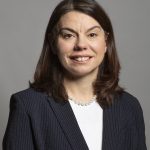
Sarah Olney – 2022 Parliamentary Question on the Potential Impact of Artificial Intelligence on Intellectual Property Rights
The parliamentary question asked by Sarah Olney, the Liberal Democrat MP for Richmond Park, in the House of Commons on 1 December 2022.
Sarah Olney (Richmond Park) (LD)
What assessment she has made of the potential impact of artificial intelligence on intellectual property rights for performers and creative workers.
The Minister of State, Department for Digital, Culture, Media and Sport (Julia Lopez)
The recent Intellectual Property Office consultation on artificial intelligence and intellectual property sought evidence and views on text and data mining. A response was published in June. We recognise that the creative industries have significant concerns about the potential impacts of the TDM proposal and as a result, we are reflecting on whether to progress it in its current form. The IPO will be engaging with interested parties over the coming months to help to inform the Government’s thinking and we will set out the next steps in due course.
Sarah Olney
It was encouraging to hear the Minister tell the Lords Communications and Digital Committee last week that she is confident that the text and data mining proposal will not go ahead. That has been warmly welcomed by the creative industries, which depend heavily on intellectual property rights for their income stream. What steps will the Minister be taking to ensure that any revised proposals to promote AI do not cause economic harm to the creative industries? Will she provide an update on her conversations with the Intellectual Property Office, including the detail of its plans to extend the consultation on the proposal?
Julia Lopez
I thank the hon. Lady for raising the issue and speaking on behalf of the creative industries; IP is the lifeblood of many of those industries. As I said in the Lords Committee, I am not convinced of the value of the proposal. Yesterday, the Under-Secretary of State for Digital, Culture, Media and Sport, my hon. Friend the Member for Sutton and Cheam (Paul Scully), and I met the Minister of State, Department for Business, Energy and Industrial Strategy, my hon. Friend the Member for Mid Norfolk (George Freeman), who has responsibility for the Intellectual Property Office. As I mentioned, he is extending the consultation on this and we will be talking to him in the meantime. We hope to provide further details as soon as we can.