
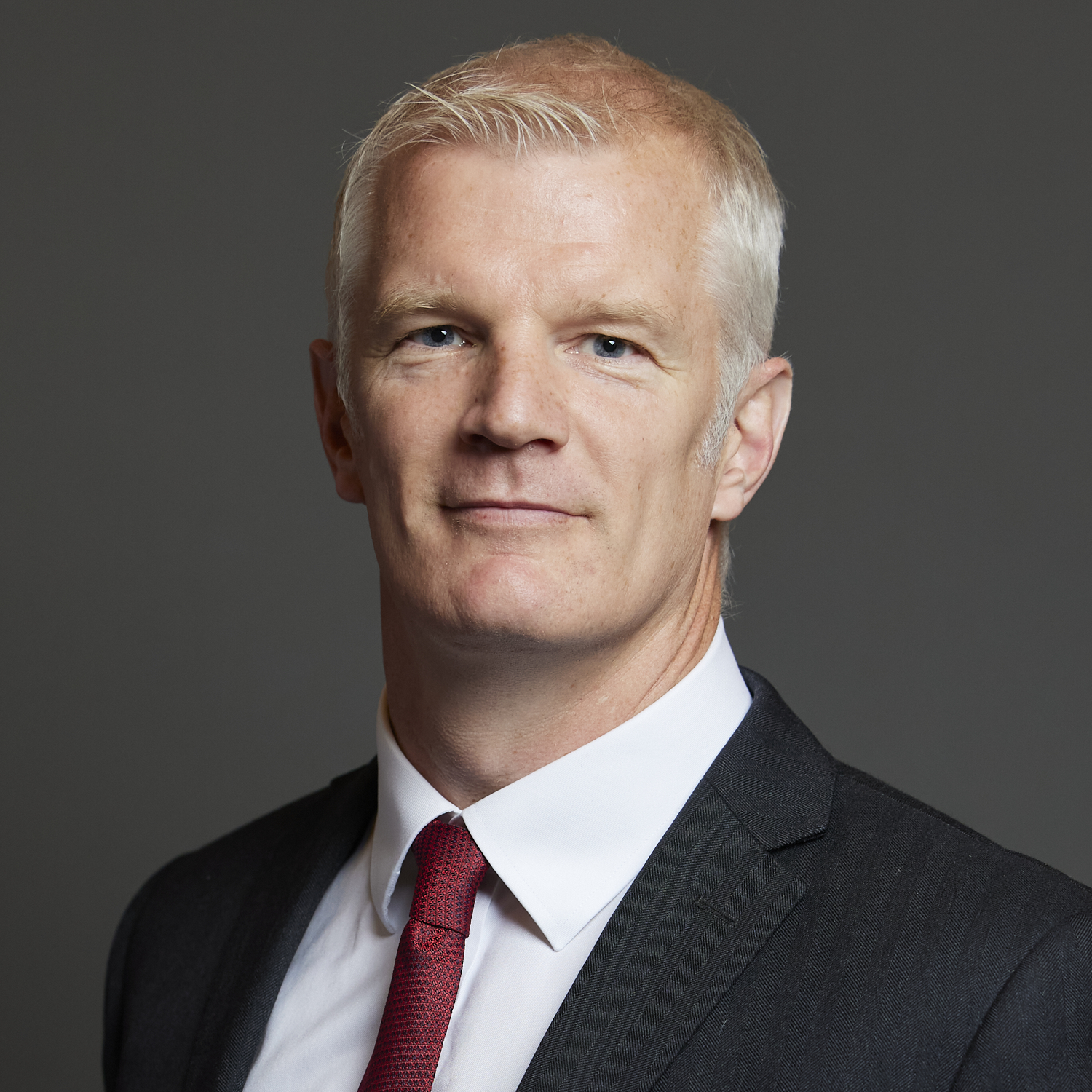
The statement made by Al Carns, the former Defence Minister, in the House of Commons on 16 June 2026.
With your permission, Mr Speaker, I would like to make a speech on my resignation.
I start by echoing the remarks of so many in the House on the 10th anniversary of the death of Jo Cox. While I did not know Jo, I know what she stood for. Her unwavering commitment to equality has left a lasting legacy, and her words—we have more in common than that which divides us—still ring true and are still worth fighting for. I also pay tribute to my right hon. Friend the Member for Rawmarsh and Conisbrough (John Healey). This is the second time I have followed him in the last week, and it is a privilege to do so.
Last week, I resigned as Minister for the Armed Forces. It was an exceptionally difficult decision. I have never quit anything in my life, as my mother will confirm; she tried to get me to quit the Marines for 24 years, but failed many times. I spent those 24 years in uniform, serving in operations around the world. I commanded men and women in combat and carried responsibility for their lives; I buried friends and stood beside families receiving the worst news imaginable. When I accepted ministerial office, I did so with a simple purpose: to serve those who serve us. I remain grateful to the Prime Minister for the opportunity to do so. I thank my ministerial colleagues, my hon. Friends on the Labour Benches, civil servants and, above all, the servicemen and women I have had the privilege to represent. But there comes a point when honesty requires action, and for me, that point came last week.
As hon. Members know, I came into politics for one reason: to enact change. In order to work out where we are going, we must realise where we have come from. The Labour party that I joined was chiselled out of the mines of the north-east, hammered out of the shipyards of Govan, Liverpool and Belfast, and forged in the factories of the industrial revolution by people with calloused hands and sore backs—people who did a hard day’s graft and asked for one thing in return: a Government who have their back. That is the tradition in which I serve in this House, and it is the tradition that shaped the decision I took last week.
I resigned for several reasons—first, because I no longer believe that the defence investment plan is preparing us for the wars we are most likely to fight. The character of warfare is changing at exceptional speed. In Ukraine, a navy without a ship has destroyed a navy. A drone costing thousands can destroy a tank costing millions. A drone can now strike 2,000 km into Russia at a fraction of the cost of a fighter jet. It is not either/or; it is an equitable mix of high-end sophistication coupled with low-end mass. That is the balance we must seek. In my view, the defence investment plan does not strike that balance for various reasons.
I want to give just a small example to bring home that point, because it can often get lost. In a town in Ukraine the size of Hereford, there were 12,000 drones in the air in one day. Just comprehend that: 12,000 drones in the air. Some 90% of all casualties are from drones—not the rifle, the grenade, the tank or the artillery, but the drone. I ask the House: what will it take to realise that these figures are not fiction? They are not an embellishment of the truth, but a hard fact born out of the blood and steel of a hot war. That is the maths of modern war: millions of drones against high-end, sophisticated systems that deliver late, with huge levels of inflation, and, importantly, cannot be reproduced at the pace required to sustain a conflict against a major adversary. What will it take to learn that lesson? Do we need to rerun the Snatch Land Rover? Do we need to rerun the lack of body armour? Do we need to rerun the lack of protected vehicles in Afghanistan, which I saw impact men and women on the frontline? We do not, and we should not.
Moreover, as the clouds of war darken Europe’s borders once more, do we need to learn the lessons our forefathers learned in world war two, or indeed the cold war? This is not about individual items of equipment or bespoke defence funding lines, but about preparedness, unity of purpose, prioritisation and national resilience. We are no longer packaging up our military to deploy to a foreign field; we must be ready to fight from here—from the home base—for democracy, for the right to self-determination and for European security. The reality is that we are spending too much time preparing for last year’s war, not tomorrow’s. I urge the House to push hard for transformation and to push for delivery this side of 2030.
Secondly, I resigned because even if the plan had been right, it was not adequately funded. I do not lay all the blame at the door of No. 10 or No. 11; we failed—I failed—to make that argument. But national security and economic security are not competing priorities; they are the same priority. A country that cannot defend itself will not stay prosperous for long. Put simply, a country that cannot defend itself will struggle to protect its prosperity.
Thirdly, I left because I could no longer ignore the continued failure to address the treatment of our veterans in Northern Ireland. It is a difficult issue, and I cannot describe how difficult this fight has been. Whatever people’s view of the troubles, a country owes a duty to those it sent into harm’s way under lawful orders, and that duty does not end when the uniform comes off. The labour movement was built on a simple idea—that the people who do the hard work that this country asks of them deserve the backing of the state in return. Too many veterans have carried uncertainty for too long, while others have benefited from political accommodations that were never available to those who served. I could not reconcile that with my own understanding of duty.
To go into slightly more detail, the IRA failed to achieve its political ends through the use of terrorist tactics, and we must be exceptionally careful that we do not help them achieve those ends through other means. Constant, never-ending legal wranglings that undermine the contract between the nation and those who serve is neither a good use of taxpayer money nor an effective execution of strategy. Having inquests, inquiries and an independent commission creates a hierarchy of truth. It will cost us hundreds of millions for 15 years, painting the state as an aggressor, supporting our adversaries, leading to political objections and causing untold anguish for those who only ever deployed to protect us. We have neither the political capital nor the resources to spare for this unjust journey.
In broader terms, in 2026 security means more than military strength alone. It means secure borders, secure energy, secure jobs and secure communities. It means people knowing that if they work hard and contribute, one unexpected bill will not push their family into crisis; it means knowing that their children will have opportunities that they did not. These things are absolutely connected. The cost of living is shaped by conflict thousands of miles from here. Hostile states target our infrastructure, supply chains and democracy. Energy security shapes economic security. Economic security shapes social cohesion. Importantly, above all else, social cohesion shapes national resilience.
The old line between domestic policy and national security is breaking down in front of us, but our history points the way. In 1945, Britain was exhausted and in debt. Our cities had been bombed, and rationing went on for years. Yet Attlee’s Government did not conclude that Britain could afford only one priority. They built the NHS, expanded the welfare state and invested in housing. They took the decision that Britain would become a nuclear power. Those decisions came from the same understanding of what this Government and Labour are for. A country worth defending should look after its people. A country that wants to look after its people must be secure enough to do so. That is the Labour tradition.
It is also, I would argue, the British tradition at its very best, but somewhere along the way we stopped thinking like that. We began treating defence, growth, energy, public services and social mobility as separate conversations. They are not. They are different parts of the same challenge: whether Britain can still provide security, opportunity and resilience for its people in a more dangerous world. That is why I ultimately concluded that I could no longer remain in Government. The issue was never simply a defence budget. It was whether the Government were moving with the urgency that the moment demands.
Nearly a million young people are outside education, employment and training. Poor mental health costs this country hundreds of billions. We know that our armed forces need modernising. We know that our adversaries are becoming more aggressive. We know that our energy system remains exposed. We inherited a mess, but the population is fed up of us pointing the finger. They are looking to us for courage, clarity and conviction to make changes at the scale and, importantly, the speed that the nation requires.
I have seen what our country can do. I have seen it in uniform. I have seen it in the communities across the nation. I have seen it on these Benches, where we are at our very best. The talent, the ideas, the passion, the courage—it is all here. Indeed, we have it all. I resigned because I believe that Britain and this Labour Government can deliver. I believe that we can think longer term and act earlier. I believe that we can once again build a country that provides security in the broadest sense of the word—security for our nation, communities, working families and the next generation. That is the debate that I am confident my resignation has started.