
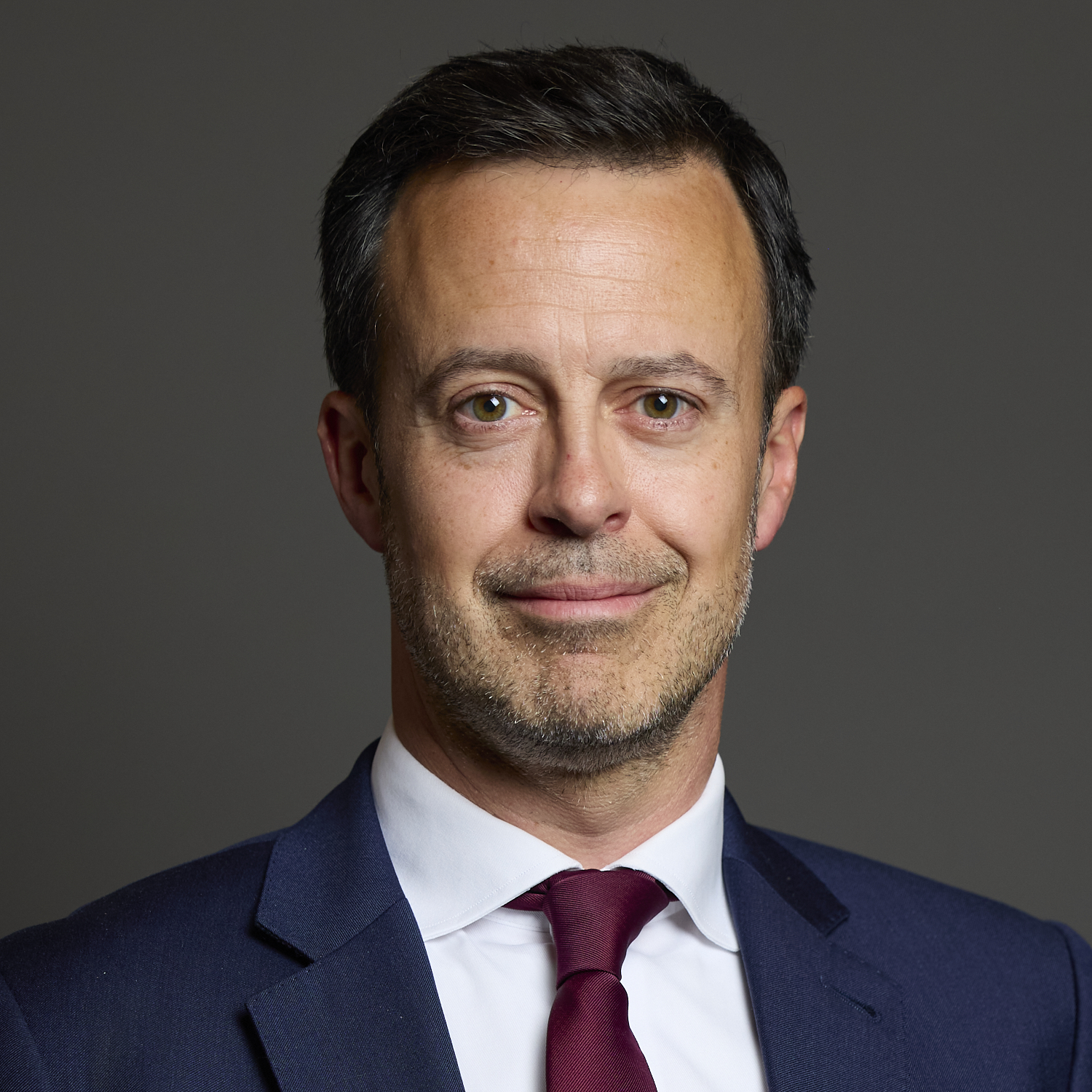
The speech made by Kevin Bonavia, the Labour MP for Stevenage, in the House of Commons on 13 May 2026.
I congratulate my hon. Friends the Members for Bradford West (Naz Shah) and for Harlow (Chris Vince). The hon. Member for Bradford West gave us a personal tale of strength through adversity, which should remind us why, as she said, this is the greatest country to live in. She spoke as a true patriot, and about a patriotism that is there for all of us if we choose to use it. We often have rivalries in the Chamber: my hon. Friend the Member for Harlow is a proud advocate for his new town of Harlow, and I am a proud advocate for the first new town in the UK, Stevenage. He has done so much for Harlow, including running for a good cause in Harlow. This Saturday I will join a resident of Stevenage, Luke Weynberg, who is running an ultramarathon, which is even further than a marathon, around Fairlands Valley Park in Stevenage. When I say I will join him, I mean for the park run bit.
Like my hon. Friend the Member for Harlow, each of us in this Chamber, for all our political differences, is proud of the constituents we serve. When we come together in this place for big moments, as we have done today, we should think about the country as a whole, not about what divides it.
I congratulate His Majesty the King. As has been said in this Chamber, he has recently given speeches of great depth, humour and wit, and I thank him for it. His speech to us today, as is normal for speeches in these buildings, was very serious. It was a serious speech for serious times. I recall his opening words:
“An increasingly dangerous and volatile world threatens the United Kingdom… Every element of the nation’s energy, defence and economic security will be tested.”
How true that is. It demands more than warm words in response: it demands strength, and it demands a Government who act. The world has changed—it is harder, less stable and less predictable—so we cannot treat security as something distant or optional. This Government are committed to investing in our nation’s security and, indeed, in the security of each of us in our own life.
It was a Labour Government, from 1945 onwards, who recognised the threats that our country faced following a devastating war and with an uncertain future. Among their many responses, they built new towns, such as Stevenage, to deal with the housing crisis—a crisis we face again today. Our new towns provided jobs, security and hope for the future. Some of those jobs, both in those days and to this day, have been in the critical defence sector that this country and the rest of the civilised world need.
Security is what we need today, but it cannot just be a slogan; it must be a plan that runs through everything we do. I am pleased that this Government are bringing forward the Cyber Security and Resilience (Network and Information Systems) Bill, because the systems that we rely on every day are now targets. Data centres, communications networks, the digital backbone of our economy—if any one of those things fails, everything else will follow. That is why we are also acting where security starts in the real economy.
When British Steel was pushed to the brink last year, this Government stepped in and saved it. We protected jobs and we protected capability. We acted because the industrial base is not optional in a more dangerous world. We cannot defend a country that cannot build. As the Prime Minister said earlier today, we need sovereign capability for that. Steel, engineering and precision manufacturing all feed directly into the defence supply chain. In Stevenage, that chain ends with highly skilled workers building and upgrading some of the most advanced systems in the world. At MBDA, workers are retrofitting Storm Shadow missiles—systems that are in use right now, protecting Ukraine’s civilians as they sleep. That is what industrial policy and national security look like when they are joined up: British steel, British engineering and British workers delivering real deterrence.
Security means ensuring that we are ready. The Armed Forces Bill will give us new powers to mobilise reservists and former personnel when the country needs them, because deterrence works only if it is credible. Credibility does not come from words alone; it comes from capability. It comes from the knowledge that this country can act, scale up and sustain itself in a crisis. We can see that credibility not only in what we deploy, but in what we build at home. In Stevenage, alongside the missile defence systems, we can see the next generation of secure military communications being developed at Airbus, connecting our forces and our allies securely in real time.
Security must also start at home, in the domestic field. A national security Bill will criminalise the glorification or normalisation of serious violence, because when violence is excused or made acceptable, that creates the conditions for more of it. We saw the consequences of that in Southport, and we cannot allow it to take root in our society.
The same applies across all our streets, where policing must keep pace with modern threats. In Stevenage, we have seen what proactive policing looks like. Under Project Vigilant, trained officers are out in our town centre identifying predatory behaviour before it escalates, intervening early to prevent harm and to protect women and girls. We are acting on organised crime, too. A recent operation targeting county lines gangs operating in Stevenage led to 19 arrests, with weapons seized and more than £27,000 taken off our streets. That is the reality of the threat. If people do not feel safe where they live, national security means nothing. The police reform Bill will build on that approach, giving our officers the tools they need to do their job, strengthening forces and creating a national capability to go after the most serious criminals.
Security also means being honest about the threats that we face from hostile actors. The tackling state threats Bill will give us the power to act directly against state-linked organisations that operate against our interests. It will mean that this Government can and will proscribe the Islamic Revolutionary Guard Corps as the terrorist organisation that it is. When organisations use violence, intimidation and terror, whether or not they are backed by a state, there can be no grey areas. Proscription is not optional; it is essential.
The threats that we face today are not always conventional. They are covert, they are persistent and they are designed to exploit any weakness. That includes our digital infrastructure, which is why the Cyber Security and Resilience (Network and Information Systems) Bill is so vital.
Security is not only about stopping threats; it is also about building strength. In Stevenage we can see that strength in our life sciences sector. At the Stevenage Bioscience Catalyst, the UK-based CAR T-cell therapy company Autolus is developing advanced programmed T-cell therapies and is at the forefront of a revolution in cancer treatment. That is British innovation at its best: highly skilled jobs, world-leading science and life-changing outcomes for patients.
A country that leads in science, in manufacturing and in innovation is a country that is more secure, more resilient and better prepared for the shocks that we know are coming. Those shocks are real. War has returned to Europe. Ukraine has shown us that peace cannot be taken for granted. The middle east has shown how quickly instability spreads, from conflict abroad to pressure on energy markets and prices at home. Some of the most serious threats are the ones that people never see: cables beneath our seas, networks under constant pressure and hostile states probing for weaknesses every single day.
We have already seen that in action. Just weeks ago, Russian submarines were detected operating over critical undersea infrastructure in waters around the United Kingdom and our allies. Let us be clear about what that means. These are the lifelines of our country. The vast majority of our data flows through those cables. Our energy supplies depend on them; our economy depends on them. This was a deliberate act by the Russian state to test our defences, and we must call it out for what it is: it is unacceptable, it is hostile and it will not be tolerated. Our armed forces tracked those submarines, exposed their operation and forced them to withdraw. The message to the tyrant Putin was clear: “We know what you are doing, and any attempt to damage our infrastructure will have serious consequences.”
In the modern world, there is no warning sound and there is no clear beginning. The attack comes quietly, and if we are not ready, we will feel the consequences before we even see the cause.
Let us be clear that security is not in one policy or Department; it is and must be a national mission. It runs through defence, policing, industry, science and the strength of our communities. It is about whether people feel safe on our streets, secure in their jobs and confident in their future. That is the first duty of Government. When we take it seriously, act and build the strength that we need, places like Stevenage show exactly what that looks like in practice. We will not just endure in a more dangerous world; we will lead Britain through it safely and securely.