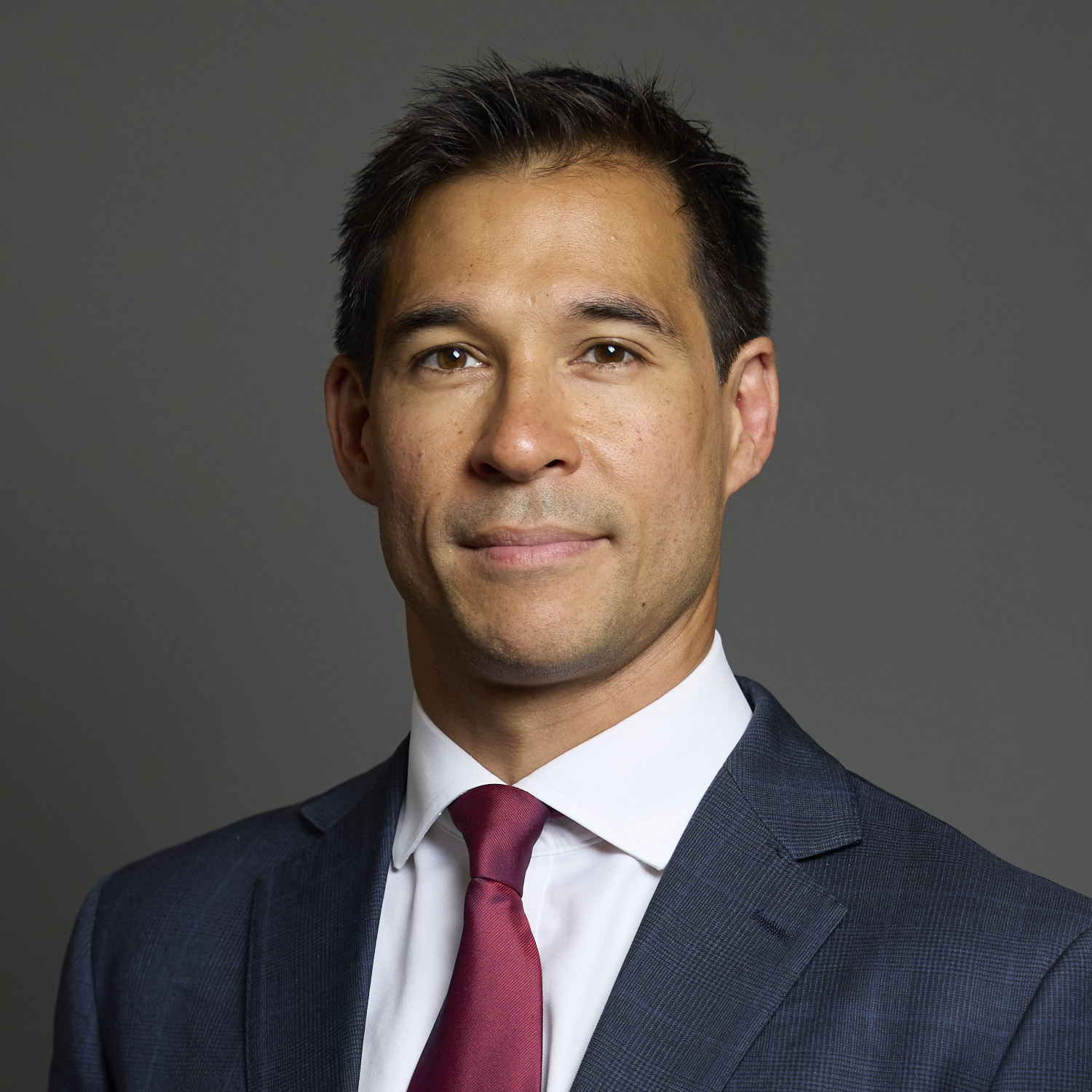
The speech made by Tony Vaughan, the Labour MP for Folkestone and Hythe, in the House of Commons on 5 January 2026.
I beg to move,
That this House has considered e-petition 702845 relating to free bus travel for people over 60.
Happy new year, Mr Mundell. It is, as always, a privilege to serve under your chairship.
I start by thanking the petition’s creator, Mrs Karen Hickman, and the 101,000 people who signed the petition—including 211 of my constituents in Folkestone, Hythe and Romney Marsh—for securing this debate on extending free bus travel to all over-60s across England. I also thank Transport for London, Age UK London, Independent Age and the Local Government Association, which were incredibly helpful in my preparation for this debate, which I am leading for the Petitions Committee.
There are many areas of our country where there is free bus travel for the over-60s: London, Liverpool, Wales, Scotland and Northern Ireland. Bus services are a critical form of public transport. They are a public good: they get people to work and allow them to visit friends and family, travel to health appointments and participate in social activities. Bus services support active lifestyles, reduce social isolation, and reduce car use, lower air pollution and make our environment cleaner and safer. It was a pleasure to meet Mrs Hickman. She was particularly frustrated by the regional differences that we have in this country when it comes to bus services, and she would like to see greater investment in rural bus services in her area of Lincolnshire.
In our country, there is a growing misperception that if someone is over 60, they are somehow financially blessed, with a house on which the mortgage has been paid off, and they have plenty of assets and capital washing around. Many people think that the over-60s do not need free bus travel. I challenge that narrative, as does Mrs Hickman. Based on households below average income data, 875,000 people aged 60 to 64 are living in poverty. A new report from Standard Life identifies a substantial rise in financial insecurity among people in their early 60s, after the increases in the state pension age since 2010, and highlights that there are a quarter of a million more people aged 60 to 64 in relative income poverty than there were in 2010.
In the UK, carer prevalence is greatest among adults in their 50s and early 60s, with people in that age group twice as likely as those in a younger adult group to be carers. Due to the rising pension age, many people in their 60s are seeking work. The high level of redundancy in this age group during the pandemic is one factor that has led to increased unemployment among 60 to 64-year-olds. Many people in this group are key workers: health and social care—a sector that is growing in my constituency—and retail are among the sectors with the highest proportion of older workers. In addition, over-60s with a disability or long-term health condition are more likely to face financial hardship.
There is already free bus travel for the over-60s in several parts of the UK, so this policy can work. The 60+ London Oyster photocard, operated and funded by TfL, is available to London residents over 60. There are 383,000 active users of that photocard, which I know makes a positive difference to the lives of the 24% of Londoners in that age group who live in poverty.
Residents of the Liverpool city region are eligible from age 60 for free travel on buses, trains and ferries. That is funded by the transport levy that the Merseyside local authorities pay. Looking for a moment at a younger age group in Liverpool, I commend the Liverpool city region combined authority for its recent introduction of the care leavers travel pass, giving free local travel on buses, trains and ferries to young adults leaving the care system. That is a commercially funded offer.
What most or all of these schemes have in common is that they were implemented as a result of local powers being used by local people for the benefit of local people. Is that not how our local communities should be run? In my view, it is. Local people know what the local needs are. I understand Mrs Hickman’s frustration at the regional differences that can occur when some local areas have powers that others do not, but thanks to the Bus Services Act 2025, passed by this Labour Government, all English local transport authorities now have the power to set routes and fares. In my view, it is right that each local authority now grasps the nettle and gets on with delivering the high standards of bus services that the public are entitled to.
Steve Darling (Torbay) (LD)
The issue that we face in Torbay is a significant shrinkage in the number of available commercial routes, whether for bus pass users or other bus users. Does the hon. and learned Gentleman agree that we need sustained investment in bus services to drive a better service for all our communities?
Tony Vaughan
I completely agree with the hon. Member. Central Government have to support local government in properly funding bus services. As I will come on to say, that is exactly what this Government have been doing, but the critical question will be whether those local authorities spend the money in a way that benefits passengers.
Mrs Hickman’s view is that this policy should be centrally administered and nationwide. According to the Local Government Association, making the policy nationwide would cost central Government roughly an additional £250 million to £400 million a year. Without that money, evening and weekend services would likely collapse. Losing more bus routes would be damaging for over-60s who rely on buses to get to work.
As the LGA suggests, many councils argue that £1 fares for apprentices and students offer a higher economic multiplier than free travel for the over-60s. That is especially important when we are desperately trying to raise our economy’s growth rate and reduce unemployment. There is also a strong argument for focusing more on getting apprentices and students to use buses, because that cohort of young people will develop the habit of getting on a bus, which will help to secure a more stable long-term revenue stream for bus operators.
As I just said, what we need is ample central Government funding for local authorities so that they can decide how best to run the bus network. The Government are backing our bus network with a £3 billion multi-year bus funding settlement for 2025 to 2029, helping to create more certainty, stability and predictability for our bus system. The aim of the funding settlement is to deliver lower fares and more frequent and reliable bus services, and the national single bus fare cap was extended to run until March ’27. The Government’s Bus Services Act empowers local authorities to take greater control of bus services, and makes them more reliable, accessible and affordable by enabling franchises, lifting bans on municipal bus companies and mandating zero emission buses.
In this debate we are rightly talking about the 60s, but it was the ’80s when it all started to go wrong for our bus network, with its reckless privatisation under the Transport Act 1985. The Bus Services Act takes a completely different approach by allowing local government to create locally and publicly operated and owned bus services.
Local authorities across the country have received significant funding boosts to improve local bus services. For example, the petitioner’s council, Reform-run Lincolnshire county council, received a boost of £11.8 million to support better bus services. In my area, Reform-run Kent county council this year received a boost of £42 million to spend on better bus services. The Government are not being partisan with funding decisions; Reform-run councils are receiving cash boosts to improve bus services from now until 2029, and the public should expect Reform to deliver in places such as Kent and Lincolnshire. We must hold them to account in ensuring that they spend the money not on political advisers, or mad adventures such as the Elon Musk-inspired DOGE 2.0 cuts programme, but on making bus services work more accessibly, reliably and affordably.
In December, I ran a bus survey to hear from my constituents how they would like the £42 million of extra bus funding to be spent. Many told me that bus services are not frequent enough and are often unreliable, with too many late and even cancelled services. Many highlighted the issue of affordability. They want Reform-run Kent county council to spend that £42 million of extra funding on protecting existing routes from private sector cuts, more frequent bus services, cheaper fares, improved evening and Sunday services, and better bus links to schools, colleges and hospitals.
One constituent suggested extending free bus travel to the over-60s, but many of my constituents talked about wanting routes that had been cut under the failed experiment of privatisation to be reinstated. They asked for changes such as frequent, direct bus services from Folkestone to the William Harvey hospital, more evening and weekend bus services across Kent, and the reinstatement of routes such as the 73, 77, 78 and 111 services in Folkestone, Hythe and Romney Marsh.
Tom Hayes (Bournemouth East) (Lab)
Before I was elected, I ran mental health services, including for older adults, so I understand the importance of older people being able to access services in a way that means they do not lose their appointment. We have 47,226 over-60s in Bournemouth, and many decisions about bus routes have not been taken with their views in mind, particularly in Throop, where I am trying to reinstate a bus service, but also across Southbourne and Tuckton. It sounds like my hon. and learned Friend might agree, but does he also agree that we should be using our new bus legislation to make sure that those communities that have been disenfranchised, left behind and left out are considered by local councils when they are deciding on routes?
Tony Vaughan
The situation my hon. Friend describes is symptomatic of what I call the begging bowl approach of trying to reinstate routes, where a private company decides how it will run the service, it cuts the routes that are more difficult to make money on but which people really need, and we all go with our begging bowl, banging on the door and asking the company to sort it out for our constituents. The way that all local councils should be using the Government’s legislation, now they have the money, is by actually listening to what local people want and providing services that allow our communities to be joined up. What he describes is exactly what I have experienced in my constituency and why these changes are desperately needed.
Rachael Maskell
I am grateful for the speech that my hon. and learned Friend is making and I thank the 237 people in my constituency who signed the petition. At the root of this debate is the issue of inequality. There are many forms of inequality around bus use. The petition draws attention to the geographical inequality, but we also see socioeconomic inequality, particularly when we look at putting resources into enabling older people to access bus services so that, instead of paying £6 for a return journey, they can access things such as health appointments on time. Is it not worth looking at people living in deprivation and putting money into supporting people from those communities to use buses?
Tony Vaughan
I thank my hon. Friend for her intervention. That is exactly why the Government introduced the Bus Services Act: to allow local authorities to be held to account for the decisions they make about how to fund bus services. I completely agree that bus services are a fundamental public good and a public service. In my constituency, they are essential to allow people living in rural areas, often in rural poverty, to reach GP surgeries or hospital appointments many miles away. It is not as if they can walk or rely on somebody to give them a lift; often, that is not available. A reliable and affordable bus service is often the difference between someone being able to access the town, with its shops and chemists and all the things that are needed to make life work, and sitting for days in pain, entirely cut off. I completely agree with my hon. Friend.
One survey response that stood out for a negative reason was this one:
“Doubt Reform will take much notice frankly”.
I totally understand that hard cynicism about Reform, given its bewildering incompetence in Kent. I implore Reform to spend the money wisely. I will take my bus survey responses and put them directly to the council, because we must see accountability and competence in the way our public services are delivered in Kent.
While I am sympathetic to the arguments for extending free bus travel to all over-60s across England, I believe that our policy focus should be on encouraging and supporting more local authorities to set up municipal bus companies so that we can reverse bus privatisation, which has, like in the rail and water sectors, been a failure and meant that, all too often, the interests of the private company and the shareholder have been put above those of the passenger.
Before closing, I have a couple of questions for the Minister. What action beyond what I have talked about are the Government taking to make bus travel more accessible and affordable for the over-60s? What are the Government doing to make rural bus services more accessible and reliable, especially for that age group? What measures will the Government put in place to hold to account councils such as Reform-run Kent county council and Lincolnshire county council to ensure that they spend their additional bus funding prudently and purposefully? How do the Government plan to use investment in our bus network to help to increase economic growth and lower unemployment? Finally, can the Minister explain how empowering local government can lead to improved bus services?
The answers to all those questions would be gratefully received, because my constituents constantly press me on this issue. We are a long, coastal constituency, so it is very difficult to get around unless there is reliable public transport. That is what we have to achieve over the coming years with the funding and the new powers that Kent county council has.