Tag: William Hague

  • William Hague – 2001 Speech on Two Britains

    williamhague

    Below is the text of the speech made by William Hague, the then Leader of the Opposition, on 6 June 2001.

    Thirty days ago, I began this campaign by saying we would show the nation a better way.

    We have done that. We have set out how we will bring taxes down, how we will hit crime hard, how we will bring discipline, standards and choice to schools in every town and city, how we and we alone will keep the Pound. We have shown how we will deliver lower taxes while safeguarding spending on the vital public services.

    Labour by contrast has ducked and weaved on tax and spending. They promise more money for services but refuse to say where it will come from. They cloak their plans for more stealth taxes on petrol on National Insurance on pensions in weasel words and arrogant evasions.

    We have spelt out what it means to be genuinely tough on crime. Our support for the police will be as unflinching as our hostility to criminals. They will serve the sentence they are given, they will not be released on to our streets to offend again before they have served even half their time. Labour has had nothing to say about crime short of promising new police officers when they can’t even keep hold of the ones they’ve got. We have demonstrated how our schools can become places where children learn, where teachers teach and where heads are given the responsibility and authority to lead.

    Labour can only repeat the mantra of ‘education, education, education’ while we put forward practical plans to deliver discipline, standards and choice to everyone.

    We have shown we can make Britain a safe haven instead of a soft touch, by introducing reception centres that will speed-up the claims of genuine refugees. Labour and their Liberal allies have tried to avoid the subject and have offered no alterative plans of their own.

    We have set out our plans to rescue the countryside, by ensuring that proper help is given to the rural businesses and farmers hit so badly by foot and mouth. All Labour have to offer are further attacks on our rural way of life

    And we have shown how Britain can be in Europe, not run by Europe, how we can play our full part in the EU without surrendering our independence or our currency. Labour meanwhile plot to scrap the Pound without telling us how much it will cost, at what rate we would go in to the Euro or how a referendum in which they would set the question and determine the funding could ever be a fair one.

    Issue by issue we have made and won our case. We have put forward answers that Labour have been unable to question and raised questions that they have been unable to answer.

    I am proud of the campaign we have fought. I am proud of what my colleagues have said and done. I am proud of the campaign you have fought. We alone have set the agenda in this campaign.

    But elections are fought on more than just issues alone. They are also about values, beliefs and commitment – the iron in the soul of a political party that can see it through bad times as well as good.

    We have shown that iron. What a contrast to New Labour. What a contrast to Tony Blair’s endless convolutions that lead him to praise Margaret Thatcher in one breath and try to bury her in the next. Unlike him and them, we know who we are and we know what we stand for.

    We have never campaigned to pull out of Europe.

    We have never campaigned for higher taxes.

    We have never campaigned for greater union powers.

    We have never campaigned to scrap our nuclear deterrent.

    But I will tell you who has, Tony Blair. No belief is too important for him to abandon it when circumstances dictate, No policy is so essential that Labour will hold to it no matter how temporarily unpopular it may be. No value is too central for it not to be jettisoned when the going gets rough.

    That is not my way, nor is it the way of the Conservative Party.

    Our core beliefs in freedom, justice, and tolerance, of respect for the individual, decency, a reluctance to meddle and interfere and above all our fierce belief that a country is happiest and most prosperous when the people and not the politicians rule have stood the test of time.

    That is why in this Election we are clear about what we want.

    We want people to keep more of what they earn, to be self-reliant and independent, to plan for their future.

    We believe our society is stronger when people have the authority and responsibility to shape their own futures and those of others.

    It is why we set such great store by upholding the rule of law and defending those who work hard and play by rules.

    It is why we will fight to keep our country as a self-governing nation with the ability to control its economy.

    These are the same principles I joined the Conservative Party to defend all those years ago, the principles I stood up and spoke for when I was 16, the principles I am proud to put forward as leader of the Conservative Party today.

    They are principles not learned from books or seminars or pollsters, but forged from the people I grew up with, the community we shared and above all the family whose love and support has always been unconditional. They are principles that have never changed and never will.

    I grew up in the 1970s, a decade torn by industrial strife and inflation. A decade when people seriously questioned whether Britain was even capable of being governed. In Rotherham, politics was never very far away because the evidence of the government was everywhere from the council estates where a lot of my friends at school lived, to the nationalised pits and steelworks that their fathers worked in.

    But whether they were miners, factory workers or small businessmen like my own dad, they were decent hard-working people with standards who wanted their children to have a better life than they themselves had had.

    We all went to the same schools, used the same family doctors and hospitals and wanted the same things, but it wasn’t a Labour Government, the supposed people’s party that made it possible to fulfil those ambitions. It was because of Conservative Government that my friends and neighbours eventually saw a real improvement in their lives.

    Slowly but surely better jobs and more opportunities came the way of our country as the Conservatives ended union tyranny, brought down taxes, and widened home ownership. For the first time in decades there was a real sense that we were no longer the sick man of Europe.

    The people I went to school with are now doing many different things. They own their own homes, they save for their pensions, they enjoy wider choice in their lives. Many now have families of their own. I took my own route to Oxford, business school in Europe and leading the Opposition. But the values we shared then are the same values we share now: pride, directness, generosity of spirit and, if I’m honest, a certain stubborn streak.

    A lot of them voted Labour at last election. They did do in spite of their values not because of them. They did so because they wanted what their own parents had wanted for them: better schools for their children, better hospital care for their families and because they believed Tony Blair when he said he would keep their taxes down and make their streets safer.

    So imagine first their disappointment, when he broke those promises, and then their anger when he blamed them for his own failure to deliver. His attack on the forces of conservatism and his attempt to heap all the ills and evils of the 20th century on the heads of decent people must rank as one of the most ill-judged political comments of all time.

    Tony Blair may have retreated in the face of the Women’s Institute and others, but they still remember, we still remember. And tomorrow the world will find out that the forces of conservatism are on the march.

    I have met them by the thousand during my Election campaign.

    They are farmers laid low by a foot and mouth outbreak which has lasted longer and bitten deeper than it need have done because of the dither and delay of this Government.

    They are the small businessmen and women crippled by Labour’s taxes and new bureaucracy.

    They are the teachers, the police, the doctors and the nurses who have been weighed down by red tape and political interference when they simply wanted to do their job.

    They are the market traders I met in Smithfield this morning who shouted at me ‘Whatever you do William, win’. Or in many cases, ‘Go on William, wipe the smile off his face’.

    They are down-to-earth people who in a quiet way love their country and are privately appalled by Labour’s plans to scrap the Pound and to undermine Britain’s independence.

    Above all they are people who don’t always think of themselves as Conservatives, who don’t always vote Conservative, but who are in the end the backbone of this nation.

    Tomorrow they have a choice. And tomorrow, I know they will be marching with us. They know the stakes are too high to risk another term of Labour Government. They know that, above all, because of Mr Blair’s plan to scrap the Pound and surrender to Brussels, this could be the last General Election in Britain when we can still run our own affairs in this country.

    Because tomorrow is a choice not just about who will run this country for the next five years, but about the country that their children and grandchildren will inherit.

    I am in no doubt about the kind of country people want.

    They want a Britain that is in control of its own destiny and a society where they can be in control of theirs.

    A Britain whose streets are safe for families and the vulnerable; not a Britain safe for convicted criminals.

    A Britain where basic values and discipline are taught in our schools and where doctors and nurses, police and teachers are respected for what the work they do; not a Britain where the rule of law is denigrated and the people running our public services are demoralised.

    A Britain where people keep more of what they earn and are encouraged to be independent the better to help themselves and others; not a Britain where families and retired people are taxed and taxed again until they are left depending on the state for their very existence.

    An independent Britain with its own currency; not a Britain so lacking in self-belief that it gives up the right to run its own affairs or its own economy.

    These are the two Britains on offer, and tomorrow is the last chance to choose between them.

    The more widely I have travelled, the more people I have met during these last 30 days, the more I am certain of the kind of Britain the vast majority of people want.

    So if you have had enough of arrogance and spin and broken promises, if you want a Government that offers you only what it can deliver; I say vote for what you value.

    If you have had enough of higher taxes and creeping dependency, if you want a Government that values self-reliance and believes you can spend your money more wisely than it can, I say vote for what you value.

    If you have had enough of being told that we should be ashamed of our history and cannot govern ourselves, if you want a Government that believes in the future of our country, I say vote for what you value.

    Vote Conservative tomorrow and on Friday we will begin the work of making this nation once again the equal of the people who live in it.

    Vote Conservative tomorrow and Britain will again be a place we can all be proud to call our home.

  • William Hague – 2000 Speech on the European eDimension

    williamhague

    Below is the text of the speech made by William Hague, the then Leader of the Opposition, on 16 March 2000.

    Today’s seminar could not be better timed. Next week, a special European Council will be addressing the crucial need for the European Union to take up the challenge presented by the knowledge economy. The European Parliament is just starting its second reading of the Electronic Commerce Directive, which will provide the platform for barrier free electronic trading across the EU. This morning, I will give an overview of E-commerce development in Europe, and the challenges now facing policymakers. I will also tell you about the Conservative approach to boosting E-Commerce activity at a European level, complementing the actions of our Westminster team. The Conservatives are playing a leading policy making role within our Centre Right Group (EPP/ED) in the Parliament, in making sure that our Open Market agenda is delivered successfully.

    E-commerce going to be of great importance to Europe’s global competitiveness. Big progress has been made towards a true Internal Market – in market opening, in uniform product standards, in eliminating trading barriers. We have an excellent climate in which to encourage cross border e-commerce activities. E-commerce offers a huge opportunity to finally complete the internal market, by allowing market forces to operate in levelling market barriers, exposing high tax, high cost economies and making protectionist practises (such as unnecessary advertising restrictions) completely transparent.

    Given its importance, it is a concern that Europe lags significantly behind the U.S.A. in the development of electronic commerce. Within the EU there are very significant variations in E-Commerce activity – with the Nordic countries, and Benelux being the leaders in PC use per household. In translating this into Internet activity, the Nordic countries lead is even more pronounced. Recent studies suggest that Spain and Ireland are among the leaders in their economic and business climate for e-commerce. There appears to be no in-built factor within Europe stopping the growth of e-commerce – which suggests that, as in the U.S.A, we should not flirt with market intervention, but allow market forces to work.

    Companies operating in e-commerce would like the security of a legal framework within their activities can develop. Since 1997, the Commission has been moving ahead with framework directives in crucial areas such as electronic signatures and copyright. The Commission has followed the right approach – ensuring market openness by preventing member states from blocking cross border transactions. At the same time, business participation will be encouraged – especially smaller companies. Consumer protection will generate trust and confidence. There will be special provisions for internet service providers. The legislation is ‘technology neutral’ – thus being flexible enough to encompass future developments in a fast moving market place. It also requires member states to encourage self-regulation for consumer protection and redress – the right approach given the immense change ahead in retailing and consumer services.

    The e-commerce Directive, which embraces all these provisions, has now been agreed by the Member States and is just starting its Second reading in the European Parliament. We intend to push forward quickly, with minimum changes, to secure approval by mid 2000. This will send out a strong signal that the Conservatives wish to encourage e-commerce and are prepared to move quickly to help end uncertainty for consumers and investors.

    But there is much more to be done if Europe is really going to take advantage of the knowledge economy. Europe needs the economic infrastructure to encourage entrepreneurs to exploit the power of e-commerce. It needs the communications infrastructure to deliver widespread, low cost access to the Internet for businesses and private consumers. It needs a new approach by public authorities to the use of electronic information. It needs the right training and skills base on which new industries can be developed.

    The Commission has produced an e-Europe strategy that claims to address these issues, but this document is a rather unfocussed collection of undeveloped promises. In reality, the major area that the European Governments must address is the tax and business climate to stimulate new, internet based businesses. We are promised yet another new ‘initiative’ for the Lisbon summit. A very welcome impact of e-commerce is that it is forcing Governments to address the well-known problems of the European labour market and the reasons why its job creation has been so poor:-

    · High social costs of employment

    · Inflexibility imposed by excessive employment regulation

    · High cost of company start ups and high penalties for failure

    · Excessive taxes on capital gains, particularly stock options, discouraging new entrepreneurs from taking risks

    We shall push strongly for these issues to be properly addressed, and will press our own ideas for encouraging e-business start-ups. For example, we should encourage e-businesses to register their companies, and take on employees, in any EU country that offers the most advantageous conditions. A market driven approach would soon have governments competing with each other in encouraging e-business. This could be stimulated by a start-up scoreboard giving fledgling entrepreneurs all the facts needed to make their decision.

    The new companies will need access to capital. There appears to be no proven need for market intervention at this stage, as there appears to be more capital available than good ideas on offer. The development of the Single European Market for financial services will bring about more dynamism and competition in the capital market. Unlike the Commission, which is toying with the idea of publicly backed funding, we see only a limited role for central intervention.

    We would also like to develop a tax incentive framework that would encourage large companies to spin off e-commerce start ups, using their existing human and financial resources. There are many middle managers who would leap at the chance of developing a new business idea, and becoming their own boss. Spin off companies, with the risks being underwritten by the strength of their parent, would have the chance to grow quickly. They would also encourage the development of entrepreneurial skills and practical knowledge within their feeder company and help its competitiveness in the new information driven economy.

    Governments also have a key role in market development as purchasers of e-commerce services. They should be encouraging ‘best practice’ and ensuring that their procurement systems are open to smaller, innovative companies.

    Although open markets will be the prime enabler of e-commerce, the existing European grant instruments – regional and social funds – can be targeted to help e-commerce ventures. In both rural and urban communities, e-commerce will provide powerful tools to tackle unemployment – by encouraging new business ideas, by giving fast and cheap access to market information, by developing networks of entrepreneurs and job seekers. In many cases, e-commerce will help to reinvent old business models and transform large, slow moving industries. People with existing skills can be encouraged to develop niche products for targeted customers and market them globally.

    The other key element to address is infrastructure. Low cost, widely available, broad band electronic communications will be an essential foundation for a powerful e-economy. The European Commission has published a bold plan for a single, open, electronic communications market, integrating fixed-line services, cable, digital television, and mobile. This structure, to be in place by mid 2000, would offer service providers open licensing and market entry opportunities across the EU. A key aspect of the proposals would be access to the local loop in every market, opening competition for services to every connected household.

    The EU is already significantly ahead of the US in mobile telephones. 3rd generation mobile technology will bring internet access to consumers at a much lower capital cost than a fixed computer based (or TV based) system.

    EU governments must encourage fast mobile internet growth by facilitating common standards and rules. They should be re-investing license fees or auction proceeds in repositioning public service operations in the radio spectrum and encouraging fast infrastructure investment and wide spectrum availability. Competition rules must allow global players to develop across one, barrier free, European market. The speedy growth of internet mobiles will also encourage new providers of simple, fast, useful data for phone users – based on travel, news, business and general information services, integrated with other services such as geographical data. These are areas where new European companies can gain a global lead.

    In thinking about the developing market, we must also be considering the implications for society as a whole of the widespread availability of information technology. Education must increasingly equip young people to be active on-line consumers and to develop the skills to work in the new information companies. Retraining and reskilling will be needed in existing organizations in public and private sectors. The information society offers big benefits for the less fortunate and the less mobile – disabled people, and the elderly, for example. There will be very significant security and privacy issues to be addressed. The European Commission, and member governments, are now working on many ideas to help the spread of information society benefits – and some of them would be worthy candidates for reinvestment of licence fees, as they would further stimulate adoption of e-services. But the priority, at this stage, must be to drive forward market adoption of the new technology.

    I have summarised the key aspects of the European scene for electronic commerce. The Conservative team in the European Parliament has taken a special interest in this area, and has raised the political profile of the issue across the Parliament. There is a big policy agenda to work through. Following the Electronic Signatures and E-commerce directives, there will be the Copyright Directive, the Distance Selling Directive and the Directive setting up a Single Financial Services Market, including Internet selling. We will be heavily involved in Electronic Communications liberalisation, both in the strategy and detailed legislation. The stimulus to Business start-ups will also be a focus of attention. Industry practitioners are invited to keep closely in touch with us to ensure that we have your views.

    You have seen today a united Conservative approach, in Europe and Westminster, focused on meeting and mastering a key challenge for all of us. We firmly believe that a market-based, light-touch approach will be the way forward. E-Commerce represents a huge opportunity to enhance the power of markets to provide real benefits for customers across, to stimulate business activity and economic growth. The Conservative team will work together quickly and effectively to make sure that this opportunity is fully realised.

  • William Hague – 2000 Speech on the Knowledge Economy

    williamhague

    Below is the text of the speech made by William Hague, the then Leader of the Opposition, on 16 March 2000.

    I am delighted to welcome you here today for the Conservative Party’s e-business conference. Many thanks to freecom.net for sponsoring this event; and to all of today’s speakers for giving their time to discuss the knowledge economy with all of us here today.

    It is the measure of how important e-business has become as an issue, that a political party is holding this kind of event – and, that so many of you are here to take part in it.

    Electronic commerce and its value to business has become one of the most important parts of the economic equation. You have been aware of this for some time, but it is now dawning on governments, the media and consumers that here is something that is changing the rules.

    It has the power to transform the way we live and it will become ever more central to our future success as a country. If we take the sensible route, the route that I will map out today, then e-commerce can do for this country in this century, what the railways did in the nineteenth century and the automobile in the twentieth century.

    It is vital therefore, that Government provides the right environment to nurture and support the talented business people who can lead us in this new economy and help to make Britain a leading player.

    When we left office three years ago the Conservative Government had already delivered the foundations for the E-revolution, and you in your businesses had already started to build on those foundations. There was draft legislation in place to enable e-commerce to flourish, bring our laws up to date and to further deregulate the communications industry. But that was three years ago – and the world of the internet, like the world of politics, has changed a great deal since then.

    Building on the knowledge economy that is springing up at such a fantastic rate will have huge implications for you in business – and for us in Government. I intend to touch on both of these areas this morning.

    Success in e-business will of course rely on many of the policies that we have long championed.

    So today I want to outline to you why low taxes are essential if Britain is to become a leader in the new economy.

    I want to talk to you about our Tax Guarantee and a war on over-regulation that will widen our competitive advantage in the age of e-business and trade without frontiers.

    I want to talk to you about the importance of nations competing with each other to be an attractive place for e-business, rather than driving that business away with higher taxes, more regulation and ever more centralised political systems.

    I believe there are two very clear choices before us.

    The first is to act in the belief that in a big jungle only big beasts survive; that as markets grow, so must the size of government. We can see this belief driving the way a number of Western European Governments behave, including our own.

    They are interfering more and more in the labour market, imposing statutory working hours, levy new taxes and enforcing new regulations in a mistaken belief that this will protect small citizens from the chill winds of the new economy. I say such an approach does not protect citizens. It puts them on the dole. Higher taxes and more regulations only serve to make it that much harder for any business, dot.com or more traditional, to be successful in the global market. Which is why my Party is particularly concerned that business in Britain is having to find £10 billion a year to meet the costs of new regulations and £30 billion of extra business taxes over the lifetime of this Parliament.

    I take a different approach, and I suspect many of you do as well.
    I believe Governments must recognise that this is the age of the small unit, the individual on the internet, the small business and large business alike using e-commerce, and that in this age it is the low tax, low regulation nation state is best placed to succeed.

    For in the dimension-less, go-anywhere world of the new economy, no country can take industry for granted – for industry can go to any country. The common sense approach would be to build on Britain’s existing advantages of the English language, our excellent software skills, and our entrepreneurial spirit by keeping government interference to a minimum.

    That is the way to command the electronic frontier. That is what the Conservative approach will be.

    We know this works. Take the example of Florida, which I visited a few weeks ago. There Governor Jeb Bush is attracting high technology companies to the state by creating what he calls Silicon Beach. He is doing it by building a low tax, low regulation, high skill economy.

    Already Florida has seen a wide array of companies begin to cluster in Miami. These are companies offering services such as chat-rooms and search engines – email and e-commerce opportunities – as well as sites in Spanish and Portuguese specifically designed for Latin American and U.S. Hispanic audiences.

    Britain is competing against places like Silicon Beach – and we cannot even offer the sunshine.

    So the danger is that as all this develops, we fall behind. We already lag behind the US and much of mainland Europe in terms of Internet access; and American sites today dominate the competitive landscape – just three of the top ten most visited sites in Britain are UK based.

    We also face higher costs and slower access to high speed services in Britain. As wireless and fixed communications are increasingly overlapping, it is absurd to have a regulatory structure that does not keep up with this technology.

    Educationally too, there is work to do. We need flexible learners who can cope with constant change, always hungry for new knowledge and ready to lead in the knowledge economy.

    A shift in skills is required right across the UK economy. Just look at recent employment headlines:

    ‘Tesco on-line business to create a further 7,000 jobs’ and;

    ‘Abbey National Internet Bank to create 500 new jobs’ are just two examples, while companies, such as Barclays Bank, cutting jobs in low skilled areas and creating them in what they term ‘knowledge areas’.

    While access to Information Technology in our schools and universities grows there is still too little evidence that IT is being used to enhance the learning process rather than IT just being an “add on”.

    We must also be sure that we don’t miss an important opportunity. The global reach of the Internet will drive students to look abroad for higher education qualifications. The UK is in a strong position to capitalise on this as UK qualifications are internationally well regarded. We must do so.

    If these problems are not tackled we lose out. We do not have the luxury of time. The scale and speed of the new global economy is staggering.

    Our sponsors today, freecom.net, state that the forecast for growth in the worldwide e-Commerce market has gone from £61 billion in 1999 to £0.7 trillion by 2003 – a phenomenal growth of 1,119% in four years.

    What then should be involved in a light touch approach? What can we do to build on the knowledge economy?

    You, of course, are in the driving seat. The new economy will create some big winners in business, and perhaps some big losers too in the years ahead. Like all of you, I watched with some amazement as new high-flying technology stocks ousted some of the ‘old economy’ giants from the FTSE 100 index.

    Shares in the hi-tech and dot com companies are soaring, mostly based on future profits – such is the expectation for the future of e-business.

    The challenge for professional investors is immense. We have to welcome the willingness of investors to bring their capital to help the growth of these companies, but they now have to develop their businesses in a way to deliver profits.

    But the knowledge economy is not just about new dot-coms. It is about all businesses, old as well as new.

    The Internet is reorganising the whole distribution process and taking out costs from the supply chain. It is lowering the cost of procurement, shortening delivery cycles and improving productivity.

    Businesses that belong to the ‘old economy’ can use the new one to breathe new life into their operations, providing they do not make the mistake of assuming the Internet nothing more than an on-line version of a company or organisation.

    Everything that I have said about the potential of e-commerce assumes of course, one thing – actually being connected to the Internet.

    Whether it is business-to-business, or business-to-consumer, e-business is no business unless we’re connected. For the past few weeks the television news has been full of ‘the great Internet race’.

    However it is important not to ignore the fact that the essence of e-commerce is that telecoms and service providers are interconnected. At one level you have the providers of the net, which is the backbone of the Internet, carrying the traffic. At the next level down, there are providers – the ISPs.

    Currently, the Government and the media are talking about reducing the costs of access between the ISPs and the consumers. This is very welcome but it s is only one level.

    There seems to be much less debate about the telecom providers, and the control that they wield over the Internet backbone. We must encourage openness and competition at every level of the Internet; over excessive dominance or control at any level would be detrimental to the system as a whole.

    At present 70% of all Internet access travels via the USA and is re-routed back to Europe. Too much control at the backbone, or ISP level could only serve to push this figure up further.

    If the providers of the Net take ‘ownership’ of the Internet, there is the potential of increased Internet costs, regardless of what the ISPs want to do. As one, or a few big, companies in effect start to own large parts of the Internet; the omens for healthy competition are not good.

    Nor does it help that for each method of delivery of internet by telephone wire, satellite, radio-waves, cable, digital broadcasting and analogue broadcasting there is a different set of regulators trying to enforce different sets of regulations. Which is why, as I say, if we are to have regulation, then it must keep pace with technological change.

    The internet revolution poses challenges for all your businesses. It also poses challenges for politicians too.

    It is not enough for us to stand up at these events and proclaim the obvious about how e-commerce is ‘dissolving physical barriers, and levelling the business playing field’. Politicians of all parties must avoid the temptation to take credit for what is already happening.

    I start from the position of someone who is profoundly sceptical about the extent to which the new global economy should be, or indeed can effectively be, regulated or taxed. This new economy has arisen in an astonishingly democratic fashion. And it has done so through the actions and ingenuity of countless individuals in what has probably been the most open and least regulated market in history.

    Therefore, the right policy is for Government to stay out of the way and let it flourish. I have to say that this is not the approach currently being adopted by this Government

    Take tax. Next Tuesday is Budget Day – a day on which some people think I earn half my salary since I have to give an immediate and detailed response to the Chancellor’s speech with no forewarning of what he is going to say.

    But this year I know one thing for certain. Whatever Gordon Brown says, taxes, including taxes on business, will be higher when the Chancellor sits down than on the day he walked into the Treasury.

    Even Downing Street now conceded that Britain’s tax burden has risen under this Government. Nearly £500 million of it will come in the form of the IR 35 stealth tax. Its name shows just how stealthy it is – it was sneaked out in Inland Revenue Press Release number 35 on Budget Day last year.

    IR35 is a tax on contractors. Small IT companies are deeply worried about this new tax regime, which is forcing them to consider setting up shop away from the United Kingdom. The outgoing Chairman of the Professional Contractors’ Group said that he fears IR35 will deal a massive blow to Britain’s enterprise culture. “American multinationals will be laughing all the way to the bank as the British Government destroys their home-grown competition”, was how he put it. IR35 could cause a brain drain not seen here since the 1970s. It is exactly the wrong approach to the new economy.

    This Government’s stealth tax increases also threaten the share option schemes that many high-tech companies need to attract highly skilled workers. Changes introduced by this Government which impose national insurance charges on employers offering share options badly undermines one of the best ways for dot.com companies to retain and motivate their workforce.

    Far from driving away the very people whose enterprise and innovation can build and drive the knowledge economy, we should be doing everything in our power to make them want to stay.

    Central to the our Common Sense Revolution is the promise that at the end of the next Conservative Government the state will take a smaller share of the nation’s income than at the beginning. In other words, we will cut the overall burden of tax on individuals and businesses.

    For while our tax burden as a proportion of GDP is now 8 per cent lower than the Italians and 13 per cent lower than the French, it is also 5 per cent higher than the Japanese, 9 per cent higher than the Americans and a full 14 per cent higher than the Koreans. If we are to prosper in the new economy, that must change.

    There is scope for tax reform too. For instance we must simplify our Capital Gains Tax. It is absurd that the reforms of the past few years have resulted in a more complicated, more distorting CGT system. Capital Gains Tax is now more difficult to collect than ever before. The British Venture Capital Association are right to favour a much simpler system and we are looking closely at how that might be achieved.

    Alongside lower, simpler tax we should ensure the minimum of government interference and regulation imposed by Acts of Parliament.

    Of course, some legislation in this area is needed. The Electronic Communications Bill will put into law the use of electronic signatures for the benefit of e-commerce, and we welcome that. But we had deep concerns about proposals included in that Bill, which could have imposed draconian new law enforcement powers and introduced the dreaded key escrow by the back door.

    A great deal of hard work by our first-rate Shadow DTI team, some of whom you will hear from today, saw this removed from the e-commerce Bill – to the relief of business and the IT professionals.

    The threat however, has only temporarily receded. Similar measures have re-surfaced in the Home Office Regulation of Investigatory Powers Bill, which is now before Parliament.

    We support the Bill in its aim of updating existing interception law and allowing law enforcement agencies to do their job in the information age, but we will once again seek to ensure it only reaches the statute book as a help and not as a hindrance to e-business.

    All businesses, new and old, are affected by the general increase in regulation and red tape. The British Chamber of Commerce has highlighted 17 major expensive new regulations that have hit firms since 1997 – including the Working Time Directive, trade union recognition and the European Social Chapter.

    In our Common Sense Revolution, our Party set out some initial proposals for driving down the cost of regulation on business. We will introduce regulatory budgets for government departments by costing the regulations they currently impose on business – and then force them to cut that budget year on year. We are also considering a legislative framework under which we could exempt small businesses altogether from whole classes of regulation. We are currently consulting business about the precise categories of legislation and sizes of business to which this principle could be extended.

    Some of you are no doubt a bit fed up with Politicians who tell you to reform but then do not themselves reform the way government does it’s business.

    Government has a very poor record in delivering IT. Angela Browning, our Shadow Trade and Industry Secretary will talk about this in greater detail later today. Let me just say that we believe Whitehall can use the Internet to deliver faster, better and cheaper government.

    Today I have touched on many of the challenges that lie ahead for all of us in this exciting new age.

    Although I believe passionately the role for the state is and must remain as small as possible, the responsibility on the shoulders of politicians is great. We did not create the new economy, but get it wrong and we could certainly destroy it.

    So we must get it right. We must act swiftly and decisively to let enterprise and innovation flourish. We must act swiftly to create the kind of environment in this country that really will make the UK the best place in the world to do e-business.

    We must create the low tax burden and low regulation base that gives all businesses, new and old the best possible chance to succeed in the new global.

    So the responsibility for politicians is great. Yet for you, for business, it is far greater still. The prosperity of our country depends on your imagination, your courage, your creativity, your skill. I know you will not let us down.

  • William Hague – 2000 Speech on Criminal Justice System

    williamhague

    Below is the text of the speech made by William Hague, the then Leader of the Opposition, on 26 April 2000.

    The Tony Martin case lit a touch-paper that has led to an explosion of anger and resentment among millions of law-abiding British people who no longer feel the state is on their side.

    The specifics of the particular case are best left to the criminal courts. But politicians aren’t doing their job if they don’t listen and respond to the unprecedented public outcry which has greeted the murder conviction for this Norfolk farmer who was defending his home against burglars.

    I understand the outcry and I share it. It is time we asked ourselves some blunt questions:

    What is the point of having a police service and prisons when three criminals, with 114 convictions between them, are allowed to wander about free to terrorise rural communities?

    What has happened to our courts system when career burglars and muggers get a few dozen hours community service, or a couple of months in prison if they’re unlucky, while people defending their homes against the very same criminals risk long prison sentences?

    Why is the Government cutting police numbers, and why has it hamstrung the job of those policemen and policewomen who remain, at the very moment when crime is starting to rise again?

    Politicians need to provide answers to these questions if public confidence in the criminal justice system is not to collapse altogether. If the Labour Government cannot or will not, then it is the duty of the Conservative Opposition to do so.

    These are the broad principles of our response to the anger expressed by the British people in recent days and months. I will expand on them further when I speak to the Police Federation Conference next month.

    First, we are going to restore confidence in our courts and prison service.

    The three men who broke into Tony Martin’s farm had each been convicted of dozens of criminal offences, ranging from burglary and theft to wounding and assault of a police officer. Most of the time they were fined paltry sums or given community service. Occasionally they got short prison sentences, and even then were released early after just a few months behind bars.

    Their histories of repeated crime and repeatedly lenient sentences is sadly familiar in today’s courts. No wonder the public despair and the police ask what the point is of catching criminals when they just get released back on to the street. Part of the blame lies with a liberal legal establishment that too often appears to put concerns for the rights of criminals before the rights of the millions of vulnerable people who live in fear of crime.

    The next Conservative Government will take a different approach.

    We will introduce honesty in sentencing, which means that criminals serve the sentences handed down in court. Automatic early release on licence will be ended. We will extend the ‘two strikes and you’re out regime’ to other crimes, such as selling drugs to children. We will greatly expand the number of Secure Training Centres so that young thugs are actually taken off our streets and locked up. And we will make prisoners work in prison, rather than sit about learning from each other about how to commit more crimes.

    These common sense policies are tough. Criminals won’t like them; nor will some left-wing pressure groups. That is because they restore the proper balance between justice and a safe society, and because they are true to the instincts of a British people fed up with the failure of the courts and prisons to deal with persistent criminals.

    Second, we are going to give the police the support and backing they deserve.

    One of the greatest deceits of this Government has been to promise to be tough on crime while at the same time cutting the number of police who fight crime.

    By the end of this Parliament, there will be 2,500 fewer police than there were at the beginning. What sort of message does that send to career criminals about our determination to catch them? What does it say to rural communities miles from the nearest police station, or families terrorised on sink estates, or elderly people and young women afraid to walk down our streets at night?

    This Government’s cut in police numbers is a total disgrace. Tony Blair and Jack Straw are failing in their most basic duty, that of protecting the public.

    The next Conservative Government will reverse Labour’s cut in the number of police. We will also give the police the support and backing they need. At the moment many policemen and policewomen spend just 20 per cent of their time actually fighting crime. We will make sure the police spend less time filling in forms and hanging around in court waiting rooms, and more time on the streets catching criminals.

    Third, we are going to re-balance the justice system to protect people who defend their families, their homes and their property against criminals.

    Vigilantes have no place in a civilised society. But there is all the difference in the world between the career criminal who sets out deliberately to burgle a house and the terrified home-owner who acts to protect himself and his home. Unless our laws reflect natural justice, then they fall into disrepute.

    The next Conservative Government will overhaul the law with a strong presumption that, in future, the state will be on the side of people who protect their homes and their families against criminals.

    Restoring confidence in our courts, supporting our police and tipping the balance of justice in favour of those who defend their homes and their families: these are three key principles which will guide any Government I lead.

    Conservatives believe in the first and foremost responsibility of the state is to protect its law-abiding citizens. This Government is failing in that responsibility, which is why the outcry over the Martin case has reverberated far beyond a small village in Norfolk.

    The Conservative Party has heard the outcry and is responding.

  • William Hague – 2000 Speech on Common Sense for Rural Britain

    williamhague

    Below is the text of the speech made by William Hague, the then Leader of the Opposition, on 12 May 2000.

    It is a great pleasure to be here today to open the Aske Hall Stable Block. I am particularly grateful to Lord Ronaldshay for issuing the original invitation for me to do this and to all of you for being here to give your support.

    And I am sure you will all agree what a truly excellent job has been done in converting an historic, but disused, Stable Block into premium, state of the art commercial offices. Thanks to this project we now have some of the most prestigious offices in the North-East of England. I can think of no more attractive environment, here in the Aske estate, in which a company could wish to locate. They are ideally situated for access not just to the major commercial centres in the North-East such as Darlington, Middlesborough and Newcastle, but also to Leeds, Bradford and York. London is only 2 ½ hours away from Darlington station, while Teeside airport is only half an hour away. And of course Richmond itself is only a mile away.

    All of us hope that in addition to securing the long-term future of this magnificent listed building, and providing these modern offices, the Aske Hall conversion will help to bring much needed jobs back into the rural economy. As Roger Tempest pointed out, this entire scheme has been devised and completed by his company, Rural Solutions – a Yorkshire company I am pleased to say – that specialises in the regeneration of rural buildings and land. Rural Solutions are providing a model of rural regeneration and diversification not just here in Yorkshire but across the entire country.

    I strongly welcome that, because far too often we hear politicians glibly talking about the need for diversification in the rural economy not just as the answer to everything, but also in the mistaken belief that it can suddenly be achieved overnight – as if just talking about it will somehow make it happen. Such attitudes reveal a profound ignorance of the countryside and agriculture. As you and I know the reality is far different.

    For many farmers, already struggling to make any sort of living in current conditions, diversification is not something they can suddenly achieve on a whim, or on their own. Diversification can raise highly complex issues in which farmers are not necessarily experts. They require help with things like access to new capital, marketing advice, help with planning applications, somebody to carry out construction work. That is why I believe that the private sector has such an important role to play. The work of Rural Solutions in the Aske Stable Block conversion demonstrates that role clearly, and with such impressive results.

    But there are things that the Government could be doing too. Many farmers find that when they try to diversify they face many costly and bureaucratic obstacles. That is why my party is looking at new policies that would help to ease many of the burdens that are currently associated with diversification. We would like to hear direct from farmers which of those obstacles they would most like to see removed.

    Issues like diversification have never been higher on the agenda for Britain’s farmers. And for one good reason – because farming, the countryside and our entire rural way of life is under threat as never before. Put bluntly, the countryside faces an uncertain and bleak future.

    Take agriculture. I hardly need to spell out the basic facts. Farm incomes are down a massive 75 per cent since 1997; the average incomes of hill farmers are down by another third this year; 25,000 jobs linked with the pig industry have been lost. And behind those statistics are stories of misery, bankruptcy and hardship not seen in rural Britain for generations.

    Nobody pretends that every problem in British agriculture began on 1 May 1997, but nobody can ignore the fact that since then the problems have become much worse. In response we have had platitudes, re-announcements and endless phoney initiatives and summits none of which have begun to tackle the chronic crisis that we face.

    Even the extra £200 million that Tony Blair promised in emergency aid after his Downing Street “Farm Summit” has turned out to be fraudulent. Just like last year’s much trumpeted farm-aid package that was condemned by the all-Party House of Commons Agriculture Committee as “misleading”. This year the Government has pulled off the same accounting tricks. For instance they portray the maintenance of the existing levels of support for hill farmers as new money, and seek the credit for waiving regulatory charges that they themselves had introduced.

    The fact is that even if we could believe the Government’s own figures, the money amounts to little more than sticking plaster for an industry in danger of bleeding to death. There is still no sign that the Government has any long-term solutions.

    I can’t pretend that there are any quick fixes or easy solutions. The problems facing farmers are in many cases too deep-seated for that. But I can set out what a Conservative Government would be doing differently or not at all.

    One of the solutions that I would not be putting forward is that farmers would be in a better position if Britain joined the euro. Of course I understand the problems of that the high pound causes as farmers try to maintain their competitive position. But I do not accept the case that this would be helped by the euro. In fact signing up to the euro now be disastrous for our farmers as we simply maintain the disadvantage caused by the current exchange rate in perpetuity. No – the only answer to the high pound is a different economic policy that contains spending, keeps inflation firmly under wraps and helps to bring down interest rates.

    But if there are no quick fixes, there are things that the Conservative Party in government would be doing to ensure a fair deal for Britain’s farmers and a secure, long-term future for the countryside.

    For a start we can stop the import of food into Britain that falls short of the hygiene and animal welfare standards that we impose here. It defies common sense to expect our farmers to survive when they are faced with regulations that do not apply elsewhere.

    We can also make sure that there is honesty in food labelling. It is crazy that food can be packaged and produced as if it were British without it containing any ingredients grown in this country. So we shall ensure that all consumers know the country of origin and the method of production of the food we are eating.

    We can stop farmers being crushed under the weight of pointless, ill thought out and ill conceived regulations which mean that many farmers spending as much time filling in forms as working on their farms. So we would bring common sense to farming regulations and force Ministers to cut the burden of red tape on farming year on year.

    We can stop the Government stealth taxes on farming – like the energy tax that will still cost farmers millions despite the temporary concessions made in the Budget.

    We can encourage our young people to go into farming and introduce retirement schemes so that family farms can be passed on to future generations.

    We can stop the bulldozing of our best agricultural land and the current policy of allowing housing development to go ahead on previously protected land. The Government should not be building on our best farmland.

    And we could ensure that British farmers at least have a Government that will actually stand up for and defend their interests in Europe. Regrettably, under the current Government it has all too often been a story of repeated failure. Failure to have the lifting of the beef export ban actually lifted; failure to gain adequate help for our pig farmers; failure to secure extra milk quota; and failure to achieve proper reform of the CAP

    The Government should go to Brussels with the determination to fight Britain’s corner as our European partners fight for theirs and to ensure that Britain’s farmers can compete on a level playing field.

    So there are real and practical measures that the Government should be taking to help ease the crisis in British agriculture and help to promote a flourishing rural economy.

    But agriculture is only one part of a much wider crisis that is afflicting the whole of rural Britain that has been caused by an urban culture at the very heart of Government.

    It is an urban culture that has no instinct or sympathy for the countryside and our rural way of life. It is an urban culture that cares even less about the people who live there. It is an urban culture that arrogantly dismisses and discounts the views of those who live in rural Britain, those who know the countryside best, while at the same time trying to impose the values of Islington wine bars on them.

    All too often the impression is given that this urban elite sees the countryside as some kind of theme park – a kind of rural version of the Dome – rather than a place in which real people work and live. The results have been disastrous.

    It has produced swingeing increases in petrol duties so that we now have the most expensive petrol in Europe and people in rural areas – where the car is essential – are priced off the road.

    It has produced cuts in the numbers of police that has left rural communities feeling isolated, exposed and vulnerable, in the face of rising crime, as was so tragically illustrated in the Martin case

    It has produced the remorseless bulldozing and concreting of the countryside to build homes for commuters to satisfy John Prescott’s arbitrary housing targets.

    It has produced plans that threaten the closure of rural post offices, for so long a cornerstone of village life in rural areas.

    It has produced the statutory right to roam without a thought for farmers or of the real needs of conservation.

    It has produced vindictive, ignorant and opportunistic attempts to ban country sports despite the facts that it would destroy centuries of tradition, strike at traditional bonds of community and endanger thousands of jobs.

    So it is little wonder that the Countryside Agency’s ‘State of the Countryside’ report, published last month, described a rural economy which contrasts sharply with the Government’s own claims that ‘in broad terms the countryside is prosperous, contented and reasonably well served’ or the Prime Minister’s comments in the west country in February that despite the headlines the countryside had no real problems. Instead it revealed deep-seated economic, social and environmental problems many of which have are the direct result of Government policy.

    I believe that rural Britain deserves better. Rural Britain deserves being listened to rather than being lectured. It deserves to be understood rather than ignored. It deserves to be protected rather than plundered. It is crying out for policies that help it rather than continue to harm it. Rural Britain is crying out for a Government that believes in the countryside, that values the countryside and will work for the countryside.

  • William Hague – 2000 Speech on Common Sense for Pensioners

    williamhague

    Below is the text of the speech made by William Hague, the then Leader of the Opposition, on 24 May 2000.

    A few weeks ago the Evening Standard published a story under the headline ‘Trendy oldies join Cool Britannia’. It read: ‘Ministers want to “rebrand” pensioners with a trendy name that will appeal to younger people. Some of Whitehall’s finest minds are working on the problem, while the Government is also seeking outside help to try to come up with the new title … Ministers believe words like “pensioners” or “elderly” carry a grey image with deters young people from thinking ahead’ (29th March 2000).

    That story sums up this Government’s attitude towards Britain’s pensioners.

    It sums up the attitude of Tony Blair when he talks about Britain becoming a ‘young country’ and has no time for those forces of conservatism who don’t fit in it.

    It sums up the attitude of Peter Mandelson, the man in charge of Labour’s election plans, who says there is ‘no mileage’ in targeting elderly voters because they are not ‘aspirational’ (Sunday Times, 16 April 2000).

    It sums up the attitude of the Chairman of the Labour Parliamentary Party, who recently came out with the breathtaking insult that pensioners are often ‘racist’. Of course he also said they were ‘predominantly Conservative’ (Sunday Times, 16 April 2000) and we intend to prove him right at least about that.

    It sums up the attitude of the Chancellor of the Exchequer, who has patronised older people by trying to buy them off with a series of badly targeted, bureaucratic gimmicks and then was only able to offer them a 75 pence increase in the basic state pension.

    Britain’s eleven million pensioners know that they are the unwanted, unwelcome, uncool guests at New Labour’s banquet. And they know that they have paid the price through their pockets.

    For three years pensioners have been at the sharp end of the Chancellor’s policies.

    At the sharp end of £150 average rises in Council Tax for Band D properties as Labour Councils and a Labour Government worked together to waste their money. The Government talks of a £150 winter fuel payment. Many pensioners have found that by the time they’ve paid their increased Council Tax the money has all gone.

    At the sharp end of increases in petrol prices. Pensioners who depend on their cars to preserve their independence have seen prices driven close to the £4 a gallon mark.

    At the sharp end too, when this Chancellor scrapped dividend tax credits, leaving 300,000 pensioners whose income is below the income tax threshold, having to pay an average of £75 a year more to the exchequer.

    In the same £5bn a year raid on pension funds, Gordon Brown set a timebomb for future pensioners by forcing working people to put up to £200 a year extra into their pension funds. Last year he abolished the Married Couples Allowance for all future pensioners too.

    He has also scrapped the Widows Bereavement Allowance without compensating all widowed pensioners properly, scrapped tax relief on medical insurance for the over 65s and abolished retirement relief for older people selling off their small businesses.

    Pensioners remembered all these blows when they reacted so angrily to the 75p basic rate rise.

    Gordon Brown hoped no one would notice. He hoped the anger of pensioners wouldn’t matter. How wrong he was.

    As anyone who campaigned in this year’s local elections, who knocked on doors and listened to hard pressed pensioners, knows: boy, did they notice, and boy, are they angry.

    Angry at a Labour Government that promised to be the pensioners’ friend and has comprehensively betrayed them.

    Angry at a Labour Government that used every low-down trick to win pensioners’ votes at the general election and then forgot all about them the day after.

    Angry at a Labour Government that has produced one gimmick after another, but doesn’t trust pensioners with a decent weekly income they can spend as they see fit.

    I have listened to their anger and their feelings of betrayal first-hand in hundreds of meetings around Britain.

    I listened to the elderly man in Bolton who told me ‘Labour’s priorities are all wrong – look at Europe, the Dome, these asylum seekers – more should be done on health and for the pensioners’.

    I listened to the lifelong Labour supporter in Plymouth who summed up what she thought of Tony Blair and his policies: ‘He thinks people like me are old has-beens, who aren’t important or glamorous, people who they think can simply go to the back of the queue’.

    I listened to the pensioner in Leeds who could barely contain his anger when he said to me ’75p was a joke, an insult … We don’t want all these gestures and gimmicks – we just want a decent basic pension’.

    And I listened also to another pensioner here in London who had a message for Conservatives. ‘I voted Labour because they promised so much. I’m terribly disappointed but I wonder if there is any alternative’.

    We’ve been busy listening to people while this Government has been busy forgetting them.

    Now we are offering an alternative. Our Party has listened to all these people, and in all sorts of areas we are now offering an alternative to the failed polices and broken promises of this Government.

    We offer a law and order policy that will back up the police, punish the criminal, and protect those, such as the elderly, who are particularly vulnerable to crime.

    We offer a health policy that will build a stronger NHS that puts patients before politicians, and which doesn’t treat older people as second class patients.

    We offer a long term care policy that protects the assets of responsible people who save for their retirement.

    Today, I want to build on those policies by tackling the central concern of millions of pensioners: the level of their weekly income and the basic state pension.

    What pensioners say over and over again is that they would rather have a reliable weekly income which is theirs by right to spend as they think best, than a series of handouts and gimmicks.

    Today we are setting out a carefully costed package based on a Conservative pension uprating in April 2001. It shows what we would do for pensioners in hard figures and in hard cash. We are calling it Common Sense for Pensioners.

    We would start by putting the money used on the winter fuel payment and the free TV licence into the basic pension instead. This also brings a bureaucracy bonus as we can save £40 million currently being wasted on administering, often very incompetently, these new schemes. Many pensioners received their winter fuel payments as winter drew to a close. We’re going to take that £40 million out of the budgets of bureaucrats and put it directly into the pockets of pensioners.

    We have also identified extra social security savings. We would abolish the New Deal for Lone Parents which is a £90 million a year flop. On the Government’s own figures, it is having zero impact on the employment prospects of lone parents. We have already announced separately our far more effective approach to lone parents. We would also recoup some money from the Social Fund, which has recently been increased substantially by the Government.

    Taken together, these measures yield almost exactly £2 billion. We would then put all this money into helping pensioners in the most straight-forward, honest, and effective way – increases in the basic contributory state pension. We would add it to the expected increase in next year’s pension uprating which, if awarded on the basis of current inflation forecasts, would be £2 to a single pensioner and £3 for a married couple.

    On this basis, if the normal uprating followed inflation, the Conservative uprating in April 2001would be:

    · £5.50 extra (£73 a week) for a single pensioner aged under 75.

    · £7 extra (114.90 a week) for a pensioner couple aged under 75.

    · £7.50 (£75.25 a week) for a single pensioner aged 75 or over.

    · £10 (£118.15 a week) for a pensioner couple aged 75 or over.

    We would also adjust tax allowances for older people to compensate pensioners for any extra that they might otherwise pay. And we would adjust means tested benefits to ensure that the poorest pensioners gain at least as much as other pensioners. I heard the Social Security Secretary on the radio this morning claiming that the poorest pensioners would lose out from our proposals. So let me make it absolutely clear that these increases will go to all pensioners, including those on means tested benefits. All pensioners will be entitled to these increases.

    These, then, are big increases in the basic state pension.

    In the main, we achieve these increases by consolidating all of the gimmicks into something which pensioners would far prefer – reliable increases in their weekly income. In other words, no more gimmicks means more on the basic pension.

    But on top of that we are also adding the £40 million bureaucracy bonus, as well as adding money found elsewhere in the social security budget. In total, this amounts to £320 million of new money for pensioners. Our increase in basic state pension will leave all pensioners better off with the Conservatives than under Labour.

    And to make sure pensioners can rely on it and that they will know that this is a promise that will be delivered, these increases in the basic state pension would be financed out of National Insurance. It would be a return on all those contributions pensioners have made through their working lives.

    This reform means dignity and choice and respect for pensioners. It means a larger state pension as an entitlement rather than making pensioners depend on occasional handouts from Government.

    By turning the handouts into entitlements, into a proper return on national insurance contributions, and by adding in the extra savings, all pensioners will be better off with the Conservatives. In other words, Common Sense for Pensioners means we are offering a real improvement in the income of all pensioners.

    Unlike the Labour Party, I am not going to make exaggerated promises that unrealistically raise people’s expectations only to shatter them later. I know that many pensioners find it difficult to make ends meet. I don’t pretend that an extra £10 a week will solve all the problems of pensioners.

    Let me tell you what I do promise.

    First, Common Sense for Pensioners means dignity and respect for pensioners.

    It rightly angers pensioners, who have paid national insurance contributions their entire lives, to have the government announce payments on budget day as if they were the charitable act of a merciful Chancellor. The basic state pension is not charity, it is a return on years of payments. Understanding this and reflecting this in pension policy is a matter of respect for pensioners. My Party is determined to show that respect.

    Quite apart from the fact that the Chancellor’s measures restrict pensioner choice and personal independence they are also patronising. They assume the Government knows better than pensioners how to budget for periods of greater expense and shouldn’t give pensioners money until the Government thinks they should spend it. This patronising attitude, too, shows little respect and is accordingly resented.

    Second, our policy simplifies a key part of the benefits system. This is true to another Tory principle that deplores government waste and inefficiency. Gordon Brown has deliberately made both our tax and benefits system more complicated. He prefers to act by stealth. In this way he is undermining confidence in politics and Government. With our reform pensioners will know exactly what they are getting and how much it is worth. That really is common sense.

    But let me deal here in advance with some of the slurs and attacks which I expect from our political opponents.

    Labour will claim that their policies are targeted on poorer pensioners, whereas we offer across the board increases. That is rubbish. Many of their schemes have been indiscriminate. The winter fuel payment goes to the 220,000 more affluent pensioners in residential accommodation or nursing homes who do not claim Income Support; but the payment is not available for the 280,000 in such accommodation who do claim Income Support. In other words better off pensioners get it and worse off ones don’t.

    What we are proposing is better targeted than Labour’s measures. We guarantee that this increase in the basic pension will reach all pensioners including those on means-tested benefits, so that poorer pensioners getting at least as much from the package as others. Moreover, we know that poorer pensioners tend to be older and we have therefore put extra money particularly towards pensioners aged over 75.

    Labour will also try to scare pensioners by claiming that the Tories are simply abolishing the winter fuel payment and the free TV licence.

    To save them the effort, let me remind the Millbank spindoctors now of what their own former Minister, Peter Kilfoyle, says: ‘pensioners believe that winter fuel payments and concessionary television licences are a diversionary measure … What pensioners want is an increase, week on week, in the basic pension. This is not just a matter of economics: it is a question too of pensioners’ dignity’ (Hansard, 27th March 2000).

    The dignity of pensioners is what our package is all about. The key fact, that no amount of Labour lies can obscure, is that all pensioners, regardless of which gimmicks they currently receive, will be better off.

    There will be others who say that our policy is no substitute for far-reaching welfare reform. I completely agree. This is not our last word on pensions policy. It is the beginning of presenting our vision for the future, one in which more and more pensioners enjoy rising living standards as a result of the savings and the funded pensions they have built up during their working lives.

    We want to ensure that pensioners participate in the rising living standards of the country as a whole. We will be setting out further proposals to spread funded pensions still more widely to the next generation of pensioners.

    But that is a policy for people of working age who have yet to become pensioners. It is too late for current pensioners. Many of the pensioners who are managing on such modest incomes retired without any entitlement to a funded pension. However strongly we push forward better funded pensions for the next generation, we still have a debt to the current generation of pensioners. That is what today’s package is all about.

    It gives pensioners a real choice, a choice which gets to the heart of the difference between our two parties.

    They can choose New Labour’s way. The way that treats pensioners as unfortunate misfits in their dreams of Cool Britannia. The way that patronises pensioners with handouts and treats them almost like charity cases.

    Or they can vote for a genuine Conservative alternative, from a Party which has been listening – a reliable guaranteed increase in the contributory basic state pension.

    It is quite simply a choice between being treated with contempt or being treated with respect.

    Today’s pensioners have contributed so much to building Britain into the great nation it is today. They have served in our armed forces and fought to keep our nation free; they have worked in our country’s businesses and built up its economy; and have they raised our generation and bequeathed us a Britain that begins this new century free and proud and prosperous.

    Yet despite all they’ve done their contribution isn’t in the past. They are part of our nation’s future too. For they are among our most active citizens. Among the most important contributors to voluntary organizations. Among the most important supports for family life. They support much which this country depends on.

    Today’s pensioners do not want sops or charity. They want to feel that they are getting benefits to which they have all their lives contributing to. They want the independence and respect that they have every right to deserve.

    This year, the Conservative Party has been speaking for the great mainstream majority of the British people on crime, on asylum seekers, on tax and on Europe. That is why we won the local elections so convincingly.

    Now we are moving on to new areas – areas which Labour have for too long regarded as their own. Today we are speaking for the great mainstream majority of pensioners who feel betrayed and neglected by this Government; today we offer substantial increases in the basic pension instead of gimmicks; today we offer a bold, common sense policy for pensioners.

  • William Hague – 2000 Speech on Common Sense for Schools

    williamhague

    Below is the text of the speech made by William Hague, the then Leader of the Opposition, on 4 July 2000.

    Today, I set out the bold agenda of the next Conservative Government to set Britain’s schools free; and I am particularly delighted to do so under the auspices of Politeia which, under Sheila’s energetic leadership, has made such an important contribution to the debate about education in our country.

    Conservative education policy could not be more ambitious: quite simply, I want Britain’s children to be the best educated, most motivated and inspired in the world – ready to seize with both hands all the opportunities which the twenty first century and the new global economy have to offer. I believe that is not possible unless our children are taught in schools that are free of bureaucratic state control, and by teachers who enjoy the professional respect and freedom they deserve.

    Good education is an end in itself. In a civilised society, every person has the right to be given the chance to stretch their mind, develop their talents and to realise their full human potential. But good education is also a social benefit. It is about creating good citizens, not by teaching classes in citizenship but by educating children in an environment that teaches civility and respect for others. That leads to a more ordered and law-abiding community. And a good education is also an economic necessity. If our country is to prosper in an increasingly global knowledge based economy, and is to be able to afford better health care and transport and other public services, then we have to have a well educated workforce.

    For all these reasons, Britain needs a first class schools system. But you do not need me to tell you that, today, we fall a long way short.

    For listen, as our Conservative candidate did, to the children in one school in Tottenham. They will tell you about how the drug dealers openly gather around the school gates. They will tell how discipline in the school has collapsed ever since the teachers were forced by the local authority to take back the young thug who threatened his classmates with a knife. Those children in Tottenham know they are being let down by the system, but they are powerless to do anything about it.

    Listen, as Theresa May and I did, to the heads of the teaching unions who came to see us last month and told us that the morale of their members has never been so low; or to the teachers I meet in every school I visit who are drowning in a sea of paperwork, Whitehall plans and meaningless targets.

    Listen, as I did, to the two dozen chairmen and chief executives of our leading technology companies, who sat around the table with me a few weeks ago and told me bluntly that unless Britain’s education system improves dramatically so that they can recruit youngsters with the right skills and motivation, then we will lose our foothold in the new global economy.

    The National Skills Taskforce reported a week ago that 25 per cent of today’s job vacancies cannot be filled because applicants do not have suitable basic skills to cope with the world of work. Improving the skills of our workforce also means improving our university and further education – and that is a whole subject for another day. Today I am focussing solely on schools.

    Of course, not every school is letting its pupils down; discipline has not broken down in every playground; not every school leaver is ill-equipped for the new economy. There are countless examples of outstanding personal achievement in our education system, and many tens of thousands of teachers who do a fantastic job.

    But individual success stories can seem like points of light in the gloomy scene of a state education system where, in too many areas, bad schools are still tolerated, parents have little choice, standards are stagnant, the lowest common denominator prevails, teacher morale is at an all time low, headteachers are powerless, discipline has broken down, waste is widespread and bureaucracy is rampant, grammar schools are victimised, the tyranny of political correctness has run riot and the whole thing is in the grips of a liberal establishment whose theories of progressive education have, over 40 years of mismanagement and interference, have brought some of our schools to their knees and betrayed too many of our nation’s children.

    It is that left-leaning liberal establishment, of which this Government is the living and breathing manifestation, which is failing our children, failing our teachers, failing the mainstream majority who expect to live in a civil and law-abiding society, and failing Britain as we compete to be a leader in the new world economy.

    We have to defeat that liberal establishment. The next Conservative Government will have to defeat it. We have to realise that ambition of becoming the best educated nation in the world by transforming one of the most mediocre education systems in Western Europe. For I issue this warning that if we do not, then Britain will decline into an educational and economic backwater and we may never return.

    That is why transforming our education system is the greatest challenge the Conservatives face when we return to office, but one which I relish.

    Of course, there was another politician not so long ago who said ‘education is my number one passion’, and who repeated it three times just in case anyone had missed the point – ‘education, education, education’.

    Three years later the sense of betrayal felt by many millions of parents was summed up by the mother I met in Birmingham, who said to me: ‘Tony Blair keeps harping on about education, education, education; but it’s all been a lot of wind, a lot of hot air and broken promises, and my daughter’s school has not get better it has got worse’.

    Tony Blair promised as the very first of his ten contracts with the British people that Labour would ‘increase the share of the national income spent on education’.

    But despite all David Blunkett’s gimmicks and re-announcements of extra money, the House of Commons Library confirms that over the five years of its term in office this Labour Government will spend an average of 4.7 per cent of GDP on education – less than the average of 5 per cent of GDP which the previous Conservative Government spent.

    Tony Blair promised, as every parent in the country remembers, to cut class sizes and appeared during the election brandishing one of his famous mugs embossed with the pledge of ‘smaller class sizes’.

    Since the election, class sizes for all but 5 to 7 year-olds have risen. The leading accountancy firm Chantry Vellacott has estimated that the proportion of school children taught in classes with 31 or more pupils has actually risen by 14 per cent. This is borne out by the experience of head teachers. As the headmaster of Haybridge High School in Worcestershire put it earlier this year: ‘class sizes in my school have definitely increased and it is very frustrating’ (Sunday Telegraph, 9th April 2000).

    Labour’s failure to deliver on education has not been lost on parents and teachers, so why is it that some commentators continue to credit the Government with substantial achievements in this field?

    The answer seems to be that they still believe David Blunkett is really a ‘Conservative’. The believe that the man who, as Council Leader, presided over the failures of education policy in Sheffield has re-invented himself as the radical Tory itching to put Politeia pamphlets into practice.

    Well it is time someone shattered this cosy myth of the education establishment. David Blunkett is not a Conservative in disguise. In fact, many of the things he has done are left-wing, centralising, bossy, interfering, bureaucratic, and gimmick driven. He is a modern municipal socialist presiding over an education system in which the freedom of parents and teachers and schools is being steadily diminished, and standards are stagnant.

    Look at how this Government actually runs Britain’s schools.

    First, they have greatly restricted the freedom of parents to choose the best education for their children – a freedom that more than anything else drives up standards in the class room.

    In the past three years, all the impetus from the Department for Education has been towards re-creating a monolithic comprehensive system in which choice and diversity have no place.

    In an act of sheer educational vandalism, Grant Maintained Schools, which took power out of the hands of local bureaucrats and gave it to parents, staff and governors, have been abolished and former GM schools have had their budgets cut by an average of £125,000 per school.

    Despite a ‘personal guarantee’ from the Prime Minister before the election that ‘a Labour Government will not close your grammar schools’, open season has been declared on these centres of excellence. David Blunkett has introducing a rigged ballot system and encouraged Labour Party activists all over England to re-ignite the class war. The whole exercise has divided local communities, consumed enormous amounts of energy in the schools under threat, and flown in the face of parental choice.

    Labour has also abolished, for no other reason than dogmatic hostility to private education, the Assisted Places Scheme – which gave gifted children from less well-off backgrounds the unique opportunity of studying at some of the best schools in the country.

    Now the Government is planning to take its crusade against parental choice and school diversity into the sixth form. The funding formula in the Learning and Skills Bill currently before Parliament could starve them of finance and force many school sixth forms to close. The impact on individual schools could be severe because, without a sixth form, they will find it harder to attract good teachers. It is all part of Labour’s levelling agenda of enforcing monolithic conformity, and denying pupils choice by pushing them into tertiary colleges.

    And there is New Labour’s assault on parental choice which flows from the Government’s desperate efforts to meet its early pledge on class sizes.

    The bizarre side effects of the Government’s Class Size Reduction Scheme are brought home in the letter which the Shadow Education Secretary Theresa May received a fortnight ago from a headteacher of a primary school in Kent.

    He writes of the case of a young boy who lives in the village and is presently in kindergarten with other children his age. This autumn, however, this boy will be the only child who does not go to the local primary school because the Class Size Reduction Scheme will not allow the school to take 31 pupils in the class. Instead he has to leave his local community and travel every day to another primary school in another village. In the words of the headmaster: ‘because of a policy made without reference to our school, the parents of a four year old child will soon have to explain to their son why all his classmates are going to one school and he is going to another’.

    This is not the behaviour of a Government that cares about choice and diversity in education.

    Forget, too, the spin about the Government giving freedom to schools, for this Education Secretary has tied headteachers and teachers in knots with a string of Whitehall diktats, meaningless targets and paperwork.

    Only last week I received a letter from a school which is being forced to lose a teacher this year because of budget cuts. At the same time, this school has been given a capital grant of £98,000 by the DfEE to up-grade all its windows, despite advice from the local glaziers that there is nothing wrong with the windows and that they will last another 20 years at least. The school would much rather spend the £98,000 on retaining the teacher, but Whitehall rules say it cannot.

    Thanks to New Labour’s obsession with gimmicks and pointless plans and irrelevant target setting, this kind of interference is now commonplace throughout our education system. We have had 17 plans including the education development plan, the early years development plan, the ICT plan, the community plan, the school organisation plan, the admissions plan, the class sizes plan, the new deal plan, the asset plans, the post inspection plan, and, my favourite, the education plan of plans.

    These plans are designed to meet targets. And we have had the target for truancy, the target for school leavers, the target for exclusions, the target for GCSE grades, the target for numeracy and literacy, and, of course, the target for the number of 16 year olds going to adventure camps every summer.

    These plans and targets are the extending tentacles of central government, as it seeks to control and regulate and interfere in everything going on in our education system, and destroy all freedom of initiative in our schools. This Government is turning headteachers into mere functionaries of the central state, and teachers into clerks filling in forms.

    As the Government’s own Better Regulation Taskforce investigation into the teaching profession reported in April this year: ‘there is a widespread and deeply held view that increased red tape is acting as a distraction from the drive to raise standards … Over-elaborate processes are being used to achieve straight-forward objectives, leading to unnecessary duplication and confusing excessive lines of accountability’.

    According to one survey, schools have received 685 publications and 377 regulations from the DfEE since the election. Add together the various forms, and you have the equivalent of over 17 million lessons a year in teaching time wasted on filling in paperwork. As the headteacher of one secondary school in Hampshire wrote recently to Theresa May: ‘we have received 477 documents from the LEA since 1st April 1999 and only three were relevant and the rest is administrative tripe’.

    That will only get worse with the Government’s so-called Performance Related Pay Scheme. It must be a good idea to reward good teachers with more pay, but any proper performance pay related scheme would award bonuses on a year by year basis rather than as a one off payment for all time. As it is, the main feature of the Government’s scheme seems to be the enormous amount of paperwork involved. Some teachers have told me that it is taking them up to twenty hours to fill in the form. Headteachers then have to spend a further two hours on each one of their teacher’s forms, which in large school means weeks of paperwork. The process does not end there. The Government is spending £25 million on an army of hired assessors to go through every single form all over again. Given the failings of the scheme itself, the Government might have spent the money better as a pay-rise to all teachers and save all those wasted hours of form filling.

    All this bureaucracy and Government interference not only costs the taxpayer large sums of money, it also affects standards in the classroom. For teachers raise standards by teaching well, not by filling in forms. Headteachers raise standards by managing and leading their schools well, not by following the latest Whitehall plan. Parents raise standards in schools by demanding good teaching from teachers and choosing the best school for their children, not by being forced to choose between identikit schools that cannot respond to their needs.

    The single most damaging act of this Government on standards in the classroom has been to restrict the freedom of schools to maintain discipline. We all know how one disruptive child can wreck the education of an entire class. We also know that learning about order and respect for the law at school is vital to creating a law abiding society.

    But all this is lost on the Government, which has set schools the completely arbitrary and unacceptable target of cutting the number of expulsions or – to use the proper jargon – the number of permanent exclusions by a third over the next two years. And to make sure their targets are met, they are fining schools up to £6,000 for every disruptive pupil excluded beyond the targets set by civil servants in Whitehall.

    If you want to know what that means in practice, listen to story of two London secondary schools which two months ago were forced to re-admit pupils they had permanently excluded for wielding knives and conducting gang-like vendettas. ‘Now’, say the headteachers, ‘all the other pupils are desperately frightened’ and the education of hundreds of children has been jeopardised for the sake of a tiny minority.

    Or listen to the story of Angeles Walford, a head-teacher seconded to a failing school, who said recently: ‘I excluded a boy who hit a teacher but was forced to give him a second chance. He came back and hit another teacher’.

    It is symptomatic of an Education Secretary in thrall to a liberal consensus that says you have to put the interests of the unruly minority over and above the rights of the mainstream majority. In this case, the rights of a few disruptive pupils are taking precedence over the rights of the many children to an ordered classroom in which they can learn.

    The same attitude expresses itself in the Government’s approach to school uniforms. When David Blunkett was in charge of Sheffield’s schools, he waged an obsessive battle against uniforms. Now he has escalated the war to the national stage. A recent DfEE Circular on Pupil Inclusion prevents headteachers enforcing the wearing of school uniforms. It says pupils may not be excluded for ‘breaching school uniform policy including hairstyle and wearing jewellery’, because heaven forbid any headteacher might try to ensure that the children at their school are tidy and well presented.

    What all this amounts too, of course, is the slow creep of political correctness through our schools.

    In recent months, a number of stories of political correctness in the classroom have caught the headlines. We have had the Prime Minister’s drive to abolish Section 28 and Margaret Hodge’s barmy plans to abolish musical chairs.

    But the real damage to our children’s education has been going on for decades, caused by a liberal consensus and its progressive teaching methods. The fashions may change, and the jargon is different, but the assault on more traditional teaching methods continue.

    For example, David Blunkett already insists that school children attend special ‘citizenship’ classes. Last week he announced at the C’Mon Everybody Citizenship Conference that he was going to spend a further £300,000 on this pet project.

    Of course, we all want children to learn to think for themselves, and we all want them to become good citizens. But good citizenship is not something you learn from a textbook in a citizenship class; good citizenship is something you develop from being in an ordered and civil environment, in which people understand their duties and respect the rights of others.

    Now we are told that the Education Secretary is planning to put so-called ‘thinking skills’ into the National Curriculum, with ‘thinking classrooms’ in which children become ‘active creators of their knowledge’. Children learn how to think by studying science or history or literature, not by going to thinking classes.

    Citizenship classes and thinking classrooms are part of the world of an out of touch elite in which all must be treated the same, everyone must sink to the lowest common denominator, the best must not be allowed to succeed, the worst must not be allowed to fail, everyone passes, nothing must be too difficult or too challenging, no one must be told to try harder.

    It is this patronising attitude that has led to failing schools, poor standards and children who cannot even spell the word ‘Oxford’ let alone aspire to go there. It is an attitude that, whatever the New Labour rhetoric, has pervaded so much which David Blunkett and Tony Blair have done with Britain’s education system in the last three years.

    The previous Conservative Government began to turn the tide with grant maintained schools, city technology colleges, the National Curriculum and regular schools inspections. But we did not go far enough and we were hampered in our efforts by left-wing local education authorities. Sadly, some of the improvements we did make have been dismantled by the present regime.

    The next Conservative Government will not just turn the tide – we will defeat once and for all the attitudes that are holding back our education system and we will set Britain’s schools free.

    Three simple but radical principles will underpin our policy.

    The first principle of Conservative education policy is that every school will be a Free School, free of bureaucratic and political control.

    All schools will receive all their funding directly, rather than via a local education authority. Headteachers and governors will then be free to manage their own budgets, free to employ their own staff, free to set their teachers’ pay, free to determine their own admissions policy, free to run their own school transport, free to manage their own opening hours and term times, and free to set and enforce their own standards of discipline. Small schools will be able to get together, if they wish, and pool their management.

    LEAs as we know them will cease to exist, although the local council will still have a role in certain areas of education – which we expect will include educational welfare, special needs statementing, and discharging the ultimate responsibility of seeing that every child gets an education.

    The second principle is that every school will be accountable to its parents.

    Parents will be free to apply to whichever school can best bring out the potential of their child. Government money will then follow the pupil, putting financial power behind parental accountability. There will also be some basic safeguards backing up parental accountability. We will give all parents a Guarantee that provides a means of changing the management of a bad school. We will retain the National Curriculum, albeit in a more flexible form. We will retain the literacy and numeracy hours, which owe their origins to the previous Conservative Government. We will give Ofsted greater powers of inspection, and publish expanded, value added league tables. And we will reform teacher training – an issue which I will leave for another speech.

    The third principle of Conservative education policy is diversity, for no one will have a monopoly on the provision of education.

    We will allow good schools to expand. We will allow new schools to be created, including new grammar schools and specialist schools. There will be state run and state owned schools, but there will also be privately run state owned schools and privately run privately owned schools all operating within the overall taxpayer funded education system. We will ensure that children with special education needs get the right help, and also introduce a form of the assisted places scheme for particularly gifted children. We will set out our policies for both special educational needs and gifted children in greater detail in the future.

    These three principles of freedom, accountability and diversity are the pillars upon which we will build an education system fit for twenty first century Britain.

    But school structures and funding mechanisms are the dry bones of the policy. What will Free Schools actually mean for the teacher in the classroom and the parent who just wants their child to get a good education.

    What do Free Schools mean for the school child?

    They mean the right to being taught to a standard that gets the very best out of them, and develops their full potential.

    In the current comprehensive system, far too many pupils are still taught in mixed ability classes. The result is that less able pupils struggle to keep up, while more able pupils are not stretched. In Free Schools the headteacher and governors will be totally free to stream or set classes according to ability, so that every child gets the appropriate level of teaching. They will be free to keep their sixth forms, which are so important to attracting the best teachers. And they will also be free to set their own school timetables and term times. It will be possible to find time in the week for extra classes for pupils who may need more help, and for pupils who can go much further in their learning. Under a Conservative Government, all schools will be Free Schools, so all schools will have the freedom to innovate in this way.

    One of the few restrictions on a school’s freedom will be the National Curriculum. The National Curriculum was introduced because some schools were failing to teach their pupils even the basics of a standard education. In our judgement, that safeguard needs to remain in place longer – at least until the Free Schools system is up and running, and delivering higher standards.

    However, I have listened to many teachers who have told me that the National Curriculum is far too prescriptive – and I agree. We will therefore simplify the Curriculum, and we will reduce the Curriculum requirements of consistently high achieving schools, who have demonstrated that they can be trusted to deliver a good rounded education.

    It is also crazy that pupils who are struggling to read, write and add up, are forced by the Curriculum to move on to other lessons. We will allow schools to exempt children who have not yet reached basic standards of literacy and numeracy from National Curriculum requirements, at least until they have caught up. Children who cannot yet understand English should not be forced to try to learn French. And we will give post 14 year olds, who feel that academic subjects offers them little, vocational curriculum options that train them for the world of work.

    We have also listened to Ofsted and accept their view that Literacy and Numeracy Hours in primary schools are proving a valuable tool in ensuring that for at least two hours a day, young children are taught the basics. The Literacy and Numeracy Hours owe their origins to the work of the last Conservative Government, were developed by the present Government, and I can tell you that the next Conservative Government will keep them.

    Free Schools give all school children the right to the best education suitable for their needs and their ability. But that right is meaningless if they cannot be taught in disciplined classrooms, where the education of the mainstream majority is given precedence over the disruptive behaviour of a few.

    I have already spoken about how this Government has undermined school discipline, and tied the hands of teachers, with its arbitrary exclusion targets and financial penalties.

    The next Conservative Government will abolish artificial exclusion targets and the stiff financial penalties. Good school discipline will no longer mean a heavy blow to school budgets. We will give headteachers and school governors the complete freedom, within the law, to set the standards and rules of discipline in their classrooms.

    There is absolutely no point excluding disruptive children from schools if you are unable to provide them with support. Or else, as we all know to our cost, today’s child terrorising a class room becomes tomorrow’s youth criminal terrorising a whole community.

    So we will draw on the pioneering work of the Zacchaeus Centre in Birmingham that has achieved remarkable results with difficult and disruptive children. We will establish a network of centres – which we shall call Progress Centres – that will provide everything from a one week’s special teaching for a child at risk of being excluded to full-time education for those pupils who are permanently excluded.

    These Progress Centres could be financed either by schools buying a course for a disruptive pupil; or, in the case of permanent exclusions, the Centre being paid the funds that would otherwise have gone to the school. We will also abolish the Government’s ineffective and gimmicky on site school ‘sin bins’ and use part of the money saved to help fund the work of the Progress Centres.

    When I announced these policies last month I received the near universal support of teaching unions whose members are fed up with having their authority undermined and their judgement second-guessed. Nigel de Gruchy of the NASUWT said Conservative policies on school discipline were ‘spot on’.

    Creating a strong school ethos in which children learn about civility and respect for others does not simply require good school discipline. A school ethos comes from pride in the school, a sense of team spirit, a bond between the teaching staff and the student body, and mutual respect between teachers and parents. There are many ways to bring that about – voluntary service in the community, a particular religious affiliation, interesting school trips, competitions against other schools, a healthy dialogue between teachers and pupils. Competitive sports are clearly very important in this, as are organised sports in primary schools, and we will be setting out our policy to encourage these over the coming months.

    A school uniform can also be a vital component of a strong school ethos. The liberal establishment have waged a long war against school uniforms, the latest salvo in which is the Government’s new rule that headteachers cannot exclude pupils who refuse to wear a uniform. The excuse they have used is that parents do not want to pay for a uniform. They clearly have never actually listened to any real parents.

    In my experience of speaking to many hundreds of parents, they want their children to go to school looking smart and wearing a uniform. As one parent in Maidstone said to me, ‘school uniforms are a great leveller. They make children respect each other’. The alternative, where children compete with each other to wear the latest brand fashions, is actually more expensive.

    The next Conservative Government will give schools the complete freedom to require their pupils to wear a school uniform, and give them the powers to ensure the uniform is worn.

    So Free Schools mean giving school children the right to a good education in a disciplined environment. What do they mean for parents?

    Above all, Free Schools mean accountability. Every parent wants his or her child to have a good education. Yet every morning, tens of thousands of parents wave goodbye to their children knowing that those children are going to a bad school. And they also know that there is absolutely nothing that they can do about it, because power in our education system rests with local education authorities and Whitehall bureaucrats. No wonder the parents I meet are angry and upset and bitter.

    The next Conservative Government will put the power in our education system where it belongs – in the hands of parents, heads and governors. We will do it by giving parents the freedom to apply to any school they feel is best for their child, and then make the money follow the child.

    That means schools that offer a good education and a good ethos will attract more pupils and more funding, and schools that offer nothing but bad teaching, low standards and disorder will attract fewer pupils and less funding. In other words, there will be a real incentive for schools to improve and a parent-driven mechanism for forcing the worst schools to close. This does not mean abandoning children in bad schools. Far from it. We will not allow bad schools to continue to fail their children.

    We will also give parents a real choice of different schools to suit the ability and talents of their child. Under a future Conservative Government, a great diversity of different schools will flourish.

    We will abolish the surplus places rule that prevents good schools expanding. Free Schools will be free to determine their own admissions policies, so that some of them can specialise in areas like art or science or sport or information technology. Some will wish to select 20 or 30 or 40 per cent of their intake, others will wish to be wholly selective. That will mean that new grammar schools can be created, reversing a 30 year policy which has done more than anything else to lower standards in our state education system.

    All the evidence suggests that even where all the schools in an area are free to determine their own admissions policy, no pupil falls through the net. For example, in Bromley, where all but one of the secondary schools was Grant Maintained, the schools regularly got together to make sure every child had a place.

    Just to make sure, we will give to local councils the ultimate responsibility of ensuring that every child in their area receives an education.

    We will also end the monopoly on education provision that has created such a barrier between the state and independent sectors. When David Blunkett took office, he liked to talk a lot about bringing private firms in to run schools and creating education action zones. Three years later, education action zones have run into the sand. Only one school has been contracted to a private company, and that was only because it was in a Conservative-run authority.

    We will sweep away the barriers by allowing independent foundations, be they companies or charities or religious groups, to run existing state schools – all under the umbrella of a taxpayer funded education system. We will also allow these independent foundations to found and build completely new schools, which will also receive taxpayer funding on an equal basis to existing schools. These schools will be called Partner Schools, and, to coin a phrase, they will be in the state education system but not run by the state education system.

    I believe this could be the most exciting and far-reaching development in state education since Rab Butler’s 1944 Act. Of course, there are those who will be enraged by this. They will hate the idea that some schools might do better than others. They will loathe the idea that anyone but the state might run a school. They will complain bitterly about replacing Whitehall Knows Best with Parents Know Best.

    So they will kick and scream, and claim that what Free Schools really means is that the Tories are abandoning sink schools in bad areas, and all that we are interested in is good schools in good areas.

    These people have obviously never visited schools like Archbishop Tenison’s School in a deprived area of inner city South London, as I did a month ago. A former grammar school, forced to go comprehensive, losing its sixth form, managed by Lambeth’s loony left, Archbishop Tenison’s was a monument to the absolute failure of our education system. That was until along came the freedom of grant maintained status, and with it headmaster Brian Jones. Now the school, which draws over 80 per cent of its intake from the Afro-Caribbean population, is one of the 29 most improved schools in the country, sends many of its pupils on to university, including this year to Cambridge.

    Give parents real power in our education system, and set schools free, and it is schools like Archbishop Tenison’s that will thrive, regardless of where they are located.

    Sometimes, however, it is not enough to allow parents simply to vote with their feet. In some areas and for some parents, the choice of schools is limited. That is why we will also introduce the Parents’ Guarantee. Where parents feel their school is not delivering an adequate education, we will give them the right to call for a special Ofsted inspection. Where the inspection confirms the judgement of the parents, then a new management will be sought for the school.

    If parents are to make informed choices about which school is best for their child, then they need access to high quality, independent information about the performance of different schools. National league tables and an independent schools inspection service were one of the most important achievements of the Conservative years. We propose to go even further.

    Alongside the raw data of school inspections, we will publish value-added league tables that enable parents to see clearly what progress children are making over a period of time in a particular school. That means knowing the point from which the children start, which is why we will publish for all schools the reading and maths results of Key Stage One – information which the Government currently keep secret.

    We will also beef up the powers of Ofsted. Chris Woodhead, Her Majesty’s Chief Inspector of Schools, has done more than anyone else in Britain to drive up standards in our classrooms and challenge our failing schools system. I do not just praise his work, I propose to build on it.

    At present, schools know long in advance when the Ofsted inspectors are coming. The result, as one parent in Bury told me, is that ‘everyone in the schools gets ready for it. For the week the inspectors are there, it all runs to clockwork. But as soon they’re gone, it’s business as usual’. That may be unfair on some schools, where the preparation for a visit by Ofsted can lead to a permanent improvement; but there is more than a ring of truth to it. So under a Conservative Education Secretary, Ofsted inspections will take place with little or no notice. But we will also reduce the level of surveillance of schools with a consistently high record of achievement, so that the inspectors can focus their work on schools with real problems.

    I have talked of the parents and the school children. But what does Free Schools mean for teachers, who today find themselves under more and more pressure and feel valued less and less?

    Free Schools means freedom for teachers. It means slashing away all the bureaucracy and paperwork and red tape that stops teachers doing their job. It means trusting headteachers to lead their schools to the best of their ability and judgement, and let teachers teach.

    Politicians are always promising to cut red tape, without ever getting specific. So that you know I mean business, let’s gets down to the specifics.

    We will abolish the early years development plan, the area educational development plan, the ICT plan, the school organisation plan, the admissions plan, the class sizes plan, the new deal plan, the asset plans, and, yes, the education plan of plans. And we will abolish all those Government targets on exclusion and university entry and adventure camps and so on.

    We will get Government off the back of teachers. All those hundreds of hours wasted filling in pointless forms will disappear, so that teachers can spend more time with their pupils – in other words, doing what they are paid to do. By trusting teachers to teach, and headteachers to run their schools, I believe we will dramatically raise the morale of our teachers and the status of the teaching profession in our society.

    Let me finally turn to the gritty question of money. What does Free Schools mean for the funding of education?

    Teacher and Parents have all got used now to this Government’s trick of announcing with a fanfare great telephone sums of money for our schools, and then, on closer examination, for those sums to turn out to be a tiny fraction of what was implied. And they have got used to Education Ministers re-announcing the same sums again and again. As no less an authority than the Guardian put it: ‘the truth is that Mr Blunkett’s £19 billion is largely conjured out of thin air by trickery, double counting, treble counting, and a steady stream of fundamentally misleading public statements’.

    The big difference between this Government and the next Conservative Government will be the way that money gets to schools. At present, well over £3 billion of the total schools budget is kept back by LEAs to spend, as they see fit, on their own activities and bureaucracy. A further £1 billion is kept back by the DfEE to spend on gimmicky grant schemes and pointless bureaucracy such as the near 300 person strong Standards and Effectiveness Unit.

    Under the next Conservative Government, these DfEE grant schemes would disappear and LEAs as we know them would cease to exist – the functions which we expect local authorities will retain financial responsibility for are statementing and special support for children with Special Education Needs, and Education Welfare services.

    All the money will go direct to the schools. Schools will be paid on a per pupil basis. And because £4 billion will no longer be kept back by Whitehall and local councils, every school in the country will get on average £540 more per pupil to spend as best they see fit. Of course, schools will have extra responsibilities such as organising school transport.

    But it is still £540 more per pupil per school – a real cash boost for headteachers to spend as they wish in the education frontline. And the most important thing is that a pound spent on schools will be a pound spent in schools.

    Free Schools mean higher standards for pupils, better discipline in our classrooms, real choice and real accountability for parents, a great expansion in the diversity of education provision, freedom for teachers to teach, and £540 extra per pupil going direct to the school. It means creating the high quality education service that Britain deserves, building an architecture of excellence on the foundations of freedom, accountability and diversity.

    I do not pretend that all this will happen overnight. There will be an important transition period, and we will consult widely with parents and teachers and governors and local councillors on how that is best carried out.

    But what I have set out today are the principles and practical applications of a radical Conservative education policy that will transform our schools system, put power in the hands of parents and governors, and give freedom to our teachers.

    The Government talked of ‘education, education, education’ and has delivered nothing but failure, failure, failure. Where they have failed, we will succeed. The watchwords of the next Conservative Government will be: freedom, standards, discipline.

    And our ambition is quite simple: to set children free to realise their full potential; set parents free to choose for their child a better education than they themselves received; set every teacher free to teach; set Britain free so that with skills, the civility and the aspiration, we can be the world leader in the new global economy.
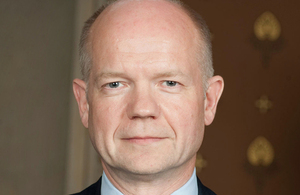
  • William Hague – 2000 Speech on Lord Norton Report

    williamhague

    Below is the text of the speech made by William Hague, the then Leader of the Opposition, on 10 July 2000.

    A year ago, I asked Lord Norton of Louth to chair a Commission of distinguished parliamentarians and constitutional experts to `examine the cause of the decline in the effectiveness of Parliament in holding the Executive to account, and to make proposals for strong democratic control over the Government’.

    In the months that followed, the members of the Commission took their responsibilities with the utmost seriousness. They took evidence from half a dozen ex-Cabinet Ministers, numerous ex-Ministers, journalists, academics, pressure groups, a former Speaker and a former Head of the Civil Service, as well as many current MPs of all major parties including – I am delighted to say – a former Minister of the current Labour Government and the current Chief Whip of the Liberal Democrats. No one can credibly claim that this has been a work of political partisanship.

    One year later, the Norton Commission has produced its Report on Strengthening Parliament which is of outstanding quality and far-reaching vision. It is the most important contribution to the debate about parliamentary democracy in Britain in a generation.

    The Norton Report takes a fresh look at what Parliament is for, and boldly reminds us why we need proper democratic accountability. It examines with great thoroughness Parliament’s decline under governments of all political persuasions, and sets out the case for radical reform. And, most usefully of all, it proposes many detailed recommendations that are not the stuff of fantasy, but are practical, workable and in sympathy with the history of our country’s institutions.

    In short, Philip Norton and his fellow Commission members have done a first class job. I sincerely thank them for all their work, and I think Parliament should thank them too.

    The Norton Report confirms what I have long feared: that Parliament is no longer able properly to hold the Executive to account, that legislation does not receive the quality of scrutiny necessary for good governance, and that the House of Commons has become less and less the focus of national political debate.

    This is something every Briton should be concerned about. For only in a country with a strong Parliament is there genuine representative democracy; only with a strong Parliament is government genuinely accountable; only with a strong Parliament is political decision making both robust and sensitive; and only with a strong Parliament do the people of that country have a say in the decisions that affect their lives.

    However, the Norton Report also confirms what I have long hoped: that the decline is not irreversible, that there are practical reforms we can make which will revive representative democracy, make government genuinely accountable and put a stronger Parliament back where it belongs – at the very heart of our national political life.

    The Report is 66 pages long and it contains almost 90 major recommendations for reform.

    The recommendations cover everything from the format of oral questions, to the timetabling of legislation, to the composition and powers of Select Committees, to the publication of draft Bills, to the handling of exclusively English laws, to the career structures of Members of Parliament, to the facilities available to the media, to the number of Government Ministers and the overall size of the House of Commons.

    It would be an insult to the work of the Commission to announce within minutes of the Report’s publication which recommendations my Party accepts, and which we reject. Each one of these recommendations deserve careful consideration not just within the Conservative Party, but, I would hope, within all political parties.

    For the future of Parliament does not belong to one political leader or one political party – it belongs to all parliamentarians, who hold our democracy in trust, and who, I believe, owe a responsibility to pass on to future generations a better and more effective Parliament than the one which they inherited.

    However, I am conscious that previous Oppositions have launched policy commissions with great fanfares, and then conveniently left their reports on the shelf gathering dust when they return to Government. To make sure that that does not happen with the Norton Report, I can today make three specific commitments that will form part of our Manifesto for the next general election.

    First, as Prime Minister, I will accept the Norton recommendation that the current single Question Time on a Wednesday should be replaced with two Prime Minister’s Questions a week.

    As soon as he entered Downing Street and without consulting Parliament at all, Tony Blair cut Question Time down to once a week. It means that in the fast changing world of politics, Members of Parliament and the Opposition only get one chance to hold the most powerful person in the land to account.

    Tony Blair’s decision to cut in half the number of times MPs could ask him questions showed his total disdain for the House of Commons and proper democratic accountability. I want to see the Prime Minister of the day held properly accountable to the representatives of the British people. Like the Norton Commission, I also want to see the Chamber of the House of Commons ‘restored to its position as the indisputable arena in which government can be challenged and embarrassed’. That is what democracy is all about. So, as Prime Minister, I will answer questions twice a week in the House of Commons, and I will do so for twenty minutes each time – which, over the course of the week, is longer than any Prime Minister before me.

    A second principle which we can immediately accept is that appointments to Select Committees should no longer be controlled by party managers and whips.

    Select Committees were proposed by the last Conservative Opposition and introduced shortly after we came to power. I agree with the Norton Report that they have been ‘a major success’ but that ‘in terms of parliamentary scrutiny, they represent the classic half full, half empty bottle’. The present Government has grossly abused the Select Committee system, with its own hand-picked members on Committees to leak Committee Reports to Ministers. The Norton Report makes a number of important changes to strengthen the work of departmental select committees, including changing the way in which the members are selected.

    As a former member of a Select Committee, as a former Minister who has been cross-examined by them, I agree that we need to make them stronger and we need to start with the membership. For it must be wrong that the Government, through the Whips Office, chooses the people who are supposed to hold the very same Government to account. I am not alone in thinking this, for Parliament’s own all-party Liaison Committee has reached the same conclusion in its First Report.

    So the next Conservative Government accepts the principle set out in the Norton Report and the Liaison Committee Report that appointment of Select Committee Members should be taken out of the hands of the whips and party managers. We will consult with all parties as to what appointment system we replace it with that guarantees the independence of Committee members.

    The third commitment I can make today is much broader in nature. Although the specific recommendations of the Norton Report deserve fuller and further consideration, what I can announce is that the work of the Norton Commission will be the route map by which the next Conservative Government dramatically strengthens the powers of Parliament to hold the Executive to account.

    Of course, we will be making a rod for our own back. That is why we will make our far-reaching changes to Parliament within weeks of a general election victory – and before ‘governmentitis’ sets in.

    By making Parliament stronger, and democracy stronger, the next Conservative Government will stand in stark contrast to the present Government that has, from the moment it took office, sought to diminish our democracy and side-line our Parliament.

    This week, we saw the latest instalment of that campaign with the Government-inspired proposals of the Labour-controlled Modernisation Select Committee. These include changing the voting procedures of the House of Commons in order dramatically to reduce the opportunities of the Opposition and the Government’s own backbenchers to scrutinise legislation and hold Ministers to account. The Modernisation Committees latest proposals on voting are a disgrace and we will have no part of them.

    Instead, today we have, with the enormous contribution of the Norton Commission, put on the table proposals for reform that will make Parliament stronger and make Government more democratically accountable. We have also made specific commitments to reintroduce two longer Prime Ministers Questions and set the appointments to Select Committees free from the control of party managers.

    For I believe the people of Britain deserve a stronger Parliament, better government and a revived and refreshed democracy, and I believe it is our duty to provide it.

  • William Hague – 2000 Speech on Believing in Britain

    williamhague

    Below is the text of the speech made by William Hague, the then Leader of the Opposition, on 5 September 2000.

    Today, with the publication of Believing in Britain, the Conservative Party takes another step to advance our common sense revolution.

    This Outline Manifesto sets out both the basic principles that guide our Party and the key elements of a bold programme for the next Conservative government.

    Today we are sending a copy of Believing in Britain direct to the home of every member of our Party, together with a ballot paper. For the first time in the Party’s long history, the basic principles of our programme for office will reflect the democratic will of the whole Party.

    I hope and believe that Party members will vote overwhelmingly to endorse Believing in Britain. And in doing so, we will send out a message that there is one political party that still has confidence in our people and ambitions for our country.

    There are some themes in Believing in Britain that will be familiar to many of you. Our commitment to a strong, low tax, competitive economy. Our determination to win the war against crime. Our concern to protect the countryside and enhance rural life. Our belief in a Britain that is in Europe not run by Europe. Our pledge to keep the Pound. And with these familiar themes, we set out new thinking and new policies about how we might achieve them – for example, you have already heard this week of our plans to put British companies at the forefront of the IT revolution, and about our proposals for ‘reserved powers’ that will protect the independence of our country.

    But Believing in Britain also contains many new themes and new policies for the Conservative Party.

    Policies to endow our universities and set our schools free, so that the next generation are the best educated and trained people in the world. Policies to transform our inner cities and get rid of the worst tower blocks that blight the lives of so many. Policies to provide young people who want it with a funded alternative to the basic state pension, so that tomorrow’s pensioners share in the wealth our country. Policies to give Britain a health service we can be proud of, in which doctors and nurses are set free from political interference. Policies to end the scandal of children in care; policies to help disabled people return to work; policies to encourage charities and voluntary groups to flourish.

    In short, Believing in Britain is a striking new social agenda for Conservatism based on one very simple, very Conservative principle: Freedom.

    Freedom for parents, for families, for pensioners, for teachers and doctors and nurses; freedom for inner city communities, for universities and schools, hospitals and local councils; freedom from big government, bureaucratic control, and all the targets, and gimmicks, and bossy, nannying, Whitehall interference that are the hallmark of the present Government.

    This new Conservative social agenda of devolving power to local people and local institutions and local communities shows that we have listened and learnt, and that we trust the instincts of the British people.

    It shows that we have the energy and the ideas to tackle the deep seated social problems of our country.

    It shows that we are not just interested in a healthy and strong economy, but also in a healthy and strong society too.

    Conservatives know the sort of Britain we want.

    We want a Britain where the creative and the talented can get ahead, because the government gets out of their way.

    We want a Britain where communities thrive and public services serve the public, because the government has handed back power to local institutions and given choice to local people.

    We want a Britain where the old and the sick and the vulnerable are cared for because the government reforms the welfare state to strengthen family life and personal responsibility.

    We want a Britain where women are safe to go out in their own street at night and parents need have no fear when their children play outside because government supports the rule of law with all its might.

    We want a Britain where the people of this country can hold their government to account because the country still governs itself.

    We know the sort of Britain we want.

    We want a Britain which the people of Britain themselves are crying out for – an ambitious, self-confident, prosperous, decent, responsible, independent country that is, quite simply: the best place in the world to do business, the best place in the world to live, and one of the most admired and influential counties in the world.

    Believing in Britain reflects those three ambitions.

    It shows how the next Conservative government will make Britain the best place in the world to do business.

    We will make Britain a world centre for the new economy, because we understand the way new technology is changing the rules.

    As business becomes more mobile, Conservative Britain will be cutting taxes. We will reduce the burden of tax and spend more on vital public services. That is because we will plan spending increases in line with the growth of the economy. For Government cannot spend what the nation hasn’t earned.

    As global trading becomes easier, Conservative Britain will also be cutting regulation. We will establish regulatory budgets for Whitehall departments and exempt small businesses from whole classes of red tape.

    As the opportunities provided by the internet and the IT revolution expand exponentially, Conservative Britain will be the capital of the new economy. Today, we set out a comprehensive package of specific policies to help IT industries flourish in our country – including reforming damaging brain-drain taxes, radically deregulating the telecommunications industry and encouraging more competition in local internet connections.

    And as good education becomes the most important resource a country can possess, Conservative Britain will transform our schools and universities so that they equip the next generation with the skills they need and liberate all people by giving them the chance to reach their full potential in a first class education service.

    One of the most exciting policies in Believing in Britain is our proposal to set our universities free for suffocating government control to become world-class centres of excellence. We will use the money raised from future government sales similar to the sale of the mobile phone licences to endow universities so that they are progressively less dependent on government funding.

    Believing in Britain also shows how the next Conservative Government will make Britain the best place in the world to live.

    We are going to have a common sense revolution in the way our public services are provided.

    We may be the fourth largest economy in the world at the dawn of the twenty first century, but you wouldn’t know it if you visited some of our schools, or many of our hospital wards, or tried to travel on our congested roads, or spent time in parts of our inner cities.

    It is not surprising when our public services are interfered with constantly by politicians who are blind to the choices and preferences of those who use it, patronising and untrusting of the people who work in it, and have turned their back on all that we know makes enterprise work.

    Today we show how will use patient choice, and the clinical judgment of doctors and nurses, and co-operation with the independent sector to help us transform the National Health Service from its present state of crisis into health system the people of Britain deserve.

    Today we show how we will use parent choice and the trust of teachers to help us transform education in Britain from a heavily centralised system where too many schools suffer from low standards and poor discipline, into a great diversity of high achieving, ordered, parent and teacher-run Free Schools where the money goes straight to the classroom and not to bureaucrats.

    Today we show how we will support families with Family Scholarships and by reintroducing a recognition of marriage into the tax and benefits system. And we show too how we will encourage charities, faith-based groups and voluntary organisations, so that people do not always turn to the state when they need help.

    We are going to have a common sense revolution too in the way welfare works.

    Our welfare system and policies to protect vulnerable are failing. As presently constituted how could they do anything else but fail? Anything would fail that penalised responsibility, was so badly targeted, was so needlessly complicated, was so unwilling to police its own rules, was so tolerant of a culture of failure.

    Today we show how the welfare bureaucracy will be transformed so that those who work in it are rewarded most when they get people off welfare into work.

    We show how welfare for disabled people will be reformed so that those who want to work are helped with rehabilitation and so that those who are able to save aren’t penalised when they do so.

    And, in one of the most important sections of this document, we set out our plans to reform the pension system so that today’s pensioners are given real dignity and choice, and so that tomorrow’s pensioners – today’s young people – are given the chance to build up a funded alternative to the basic pension. Let’s be clear. The basic state pension will still be paid to all who want it, but now people will have a genuine choice.

    Believing in Britain brings the common sense revolution to transforming our inner cities, which for a generation have trapped people in poverty and bad housing and crime-ridden estates. We’re going to get rid of the worst tower blocks, we going to protect people from ‘nightmare’ neighbours and we going to make sure these communities get the good schools and the proper law enforcement they deserve.

    We will expand on both our pensions policies and our inner city proposals in due course.

    And we are going to have a common sense revolution in the war against crime.

    Today we commit ourselves to reversing Labour’s cut in police numbers, to making sure criminals serve the sentences handed down in court, to abolishing special early release, to getting persistent young offenders off our streets, to tackling the evil of drug and child abuse, and by fighting the war against the criminal with no holds barred.

    And as we make our country the best place to do business and the best place in the world, we will ensure that Britain is one of the most admired and influential countries in the world. We do believe in Britain.

    Extraordinarily, the Conservatives will be the only major party fighting the next election determined to stop the surrender our most precious right as a country – the right to govern ourselves.

    By a combination of deliberate act and complacent failure to act, within a decade, perhaps less, many of the things that make our country a country, that make our nation a nation, that make Britain ‘Britain’, could have disappeared. And there we would all stand, the generation that threw away the rights and independence that so many of our countryman lived for and sweated for and died for.

    Say what ever else you like about a Conservative Britain, but at least a Conservative Britain will still be Britain.

    We live in a time of peace, of stability and of prosperity. The great mistake would be to do nothing and to change nothing and to reform nothing. Spend the money, take the stability for granted, let the future look after itself.

    That is what we fear our country is doing. Even though we have a Government that started with every political and economic advantage: a strong economy bequeathed by their predecessor, one of the biggest parliamentary majorities in history, unprecedented goodwill from the public and the media. They are frittering it away and squandering the chance. Our taxes are rising, our public services are failing, our inner cities are not improving, our welfare system is unreformed, our independence as a country is being undermined.

    Within a few years the money will have gone and we’ll still have the bills to pay. Within a few years business will have moved away and we’ll have the memory of a happy yesterday. Within a few years we’ll try desperately to act but even our power to do so will have been given away. Our country will pay dearly tomorrow for today’s complacency and drift.

    There is an alternative. I think the British people can take it. I think they can take it because they are ambitious for Britain. They have confidence in Britain. They believe in Britain. And so do we.

  • William Hague – 2013 Press Conference with French Foreign Minister

    williamhague

    Below is the text of the press conference with William Hague, the then Foreign Secretary, and Laurent Fabius, the then French Foreign Minister, on 21 August 2013.

    Thank you very much indeed, Laurent. Good evening, ladies and gentlemen.

    It’s a huge pleasure to be here with Laurent Fabius tonight and I’m grateful for his invitation to have these discussions here and I pay tribute to him and to the close work that we do together across a whole range of international issues.

    I think the Foreign and Defence policy cooperation between France and the United Kingdom is as close as it has ever been at any point in our history and that’s something we strongly believe in in the British government. It’s true in our cooperation not only on the subjects that Laurent has mentioned tonight, but also on preventing nuclear proliferation. We work closely together on issues such as Iran’s nuclear programme. On issues in Africa where I pay tribute to the work of the French government on Mali, helping to bring stability to Mali and the surrounding area where we have supported France’s initiatives just as they supported our initiatives on Somalia at the other end of Africa.

    So, we work closely together but foremost in our minds today as you have heard is the situation in various parts of the Middle-East: we have heard about a terrible act in Syria which may have involved the deaths of many hundreds, possibly as you have heard, more than a thousand people. Of course, the facts of this are still coming in. The reports of this are still coming in.

    But the United Kingdom and France called immediately for an urgent meeting of the Security Council that is about to take place; and we hope that the UN team in Damascus will be given immediate access to this area, unrestricted access to try to establish the truth. There is no reason for them not to be given access to an area not many miles from where they are doing their work now on the North East side of Damascus. This is where these events have taken place. So I hope the other members of the Security Council will join us in pressing strongly for that and I hope this will wake up some who have supported the Assad regime to realize its murderous and barbaric nature: a government that cares so little for the lives of the people of its own country.

    We’ve also been working hard today as you have heard in Brussels on the situation in Egypt, where we have agreed a good position with all of our EU colleagues. That is a position that supports democratic institutions in Egypt rather than individuals or parties and that is why we’ve condemned disproportionate violence from security forces, but also condemned attacks on churches and hospitals by those opposed to the authorities and it is why we support political dialogue in Egypt and we left the door open for European countries and the European Union to support that dialogue in the future.

    And of course, we want to keep faith with the great majority of people in Egypt who simply want a stable, prosperous, and free future. And so, we will continue to assist those people and not do anything that harms the people of Egypt as they try to bring about a better future for their country.

    So, this is what we have been discussing today and some of the things we will discuss tonight, and I’m grateful as always for the strong cooperation of Laurent Fabius and his team here.

    Thank you.