Tag: Speeches

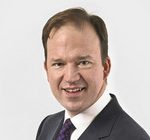
  • Robert Jenrick – 2020 Comments on Rough Sleepers over Winter

    Robert Jenrick – 2020 Comments on Rough Sleepers over Winter

    The comments made by Robert Jenrick, the Secretary of State for Housing, Communities and Local Government, on 5 November 2020.

    The way we have protected rough sleepers from COVID-19 is widely considered to be the best in the world.

    At the start of the pandemic we launched Everyone In, which protected thousands of vulnerable people. That work hasn’t stopped and we’ve backed it with £700 million.

    As the new national measures come into force, I am launching the Protect Programme to ensure councils are offering everyone sleeping rough on our streets today somewhere safe to go – protecting people from the virus and moving forward with our goal of eliminating rough sleeping.

  • Robert Jenrick – 2020 Comments on Protection for Renters

    Robert Jenrick – 2020 Comments on Protection for Renters

    The comments made by Robert Jenrick, the Secretary of State for Housing, Communities and Local Government, on 5 November 2020.

    We have already taken unprecedented action to support renters during the pandemic including introducing a 6 month notice period and financial support to help those struggling to pay their rent.

    We are now going further by protecting renters from eviction during the new national restrictions and throughout the Christmas period – with a pause on bailiff activity other than in the most serious circumstances, such as anti-social behaviour or fraud.

    Striking the right balance between helping tenants in need while ensuring landlords have access to justice in the most serious cases.

  • Theresa May – 2020 Speech on Public Health

    Theresa May – 2020 Speech on Public Health

    The speech made by Theresa May, the Conservative MP for Maidenhead, in the House of Commons on 5 November 2020.

    May I first say that I do not envy my right hon. Friend the Prime Minister and the Government the decisions that they are having to take and the difficult position they find themselves in? This pandemic has challenged Governments across the world, and Ministers have been under relentless pressure in dealing with this issue. However, just as Ministers are making tough decisions, so is Parliament, and Parliament will make better decisions if it is fully and properly informed.

    I want to comment on the circuit breaker idea. I looked at the SAGE paper of 21 September and what was absolutely clear was that this was not a two-to-three-week circuit breaker, full stop, end of story. It would have had to have been repeated, possibly again and again, and I doubt if any economy could have borne the irreparable damage that would have done, with the impact on lives that that would have had, which would have been significant.

    Of course the Government introduced the tiered approach. I would echo the comment made by my right hon. Friend the Member for Forest of Dean (Mr Harper) that one of the issues with that approach is that we have not had a proper analysis of its impact. The evidence from Liverpool shows that the number of cases is falling. I raised this in a briefing the other day and was told that that was because fewer students were coming forward to be tested. But when we look at the figures, we see that the number of cases is actually falling across the age ranges. We need a proper assessment of how the tiered approach is working.

    There are other examples of figures being used in a way that I think has been unhelpful to Parliament and to the public. Let me take the 4,000 figure. The decision to go for this lockdown appears to have been based—partly, mainly or to some extent—on the prediction that there would otherwise be 4,000 deaths a day. But if we look at the trajectory shown in that graph, we see that we would have reached 1,000 deaths a day by the end of October. The average number of deaths in the last week of October was 259, by my calculation. Each of those deaths is a sadness and our thoughts are with the families, but it is not 1,000 deaths a day, so the prediction was wrong before it was even used. This leads to a problem for the Government, because for many people ​it looks as though the figures are being chosen to support the policy, rather than the policy being based on the figures. We need these proper analyses; we need to know the details behind these models; and we need to be able to assess the validity of the models.

    There is one set of data that has not been available throughout. There is a lack of data on the costs of the decisions being made: costs in non-covid treatment in the NHS, and in non-covid deaths; costs in domestic abuse; costs in mental health, with possibly more suicides; and of course costs to the economy, with jobs lost, livelihoods shattered, businesses failing and whole sectors damaged. What sort of airline industry will we have as we come out of this? What sort of hospitality sector will there be? How many small independent shops will be left? The Government must have made that assessment, so let us see it and make our own judgments.

    I want to make one point about public worship, echoing the concerns of others. My concern is that the Government today making it illegal to conduct an act of public worship, for the best of intentions, sets a precedent that could be misused by a Government in future with the worst of intentions, and that has unintended consequences. The covid-secure remembrance service in Worcester cathedral will now be turned into a pre-recorded online service. Surely, the men and women who laid down their lives for our freedom deserve better than that.

    The public and Parliament want to support the Government to take the right decisions, and to do that we need to have the right figures, the right data and the proper information.

  • Keir Starmer – 2020 Speech on Public Health

    Keir Starmer – 2020 Speech on Public Health

    The speech made by Keir Starmer, the Leader of the Opposition, on 4 November 2020.

    I know that a lot of Members want to speak, particularly on the Government Benches, and so I will keep my remarks brief.

    Nobody votes for these regulations today with anything other than a heavy heart, on both sides of the House. I did not come into Parliament to restrict people’s freedoms, ​to prevent people meeting their friends and their loved ones, or to decide when people can and cannot leave their home or how many people may attend a funeral. I do not want Parliament to be closing businesses, gyms, bars or places of worship. Frankly, I do not want Parliament to be legislating on any of these issues, least of all after the British public have made so many enormous sacrifices already.

    Parliament probably should have had more time to scrutinise the regulations, to amend them and to consult. There are going to be anomalies and inconsistencies that we cannot amend and probably could have been ironed out. I am very concerned about the impact on businesses who spent thousands of pounds becoming covid-secure, doing everything the Government asked, only now to be forced to shut. However, while these regulations are not in any way desirable or perfect, they are now necessary because the Government have lost control of the virus, and we will support them.

    The country is at—indeed, we are several weeks past—the tipping point in the fight against the virus. We must never forget that on Monday, 397 people lost their lives to covid-19, more than 1,000 patients were on ventilators and there were over 20,000 positive cases. To anybody who disputes the trajectory of the virus or what the cost of inaction would be, I would point out that when SAGE warned 44 days ago that if we did not act at that time there would be catastrophic consequences, there were then, six weeks or so ago, 11 deaths from covid-19, just over 4,000 infections and 181 people on ventilators. That is not graphs. That is not projections. That is the grim facts in the past few weeks, and we know that the figures double, then double and then double again. That direction of travel has been clear for some time, and I am afraid the reality is that the two pillars of the Government’s strategy—the £12 billion track and trace and the regional restrictions—have been washed away by the second wave. If we are to have any chance of getting the virus back under control, to prevent many more people from falling ill or losing their loved ones and to protect the NHS, we need to take decisive action now.

    There are some wider points I want to raise, and I suspect that they are shared points. There needs to be additional support during the lockdown. This is going to be incredibly hard for the British public. Millions of people tonight are really anxious about what will happen over the coming weeks. They are anxious on the health front for themselves and their friends and family, and anxious about their jobs. That is why we called for the restrictions to be put in place some weeks ago when there could have been a shorter period, which would have been better on the health front, with fewer lives lost, and better on the economic front.

    More broadly, I was struck by the words of the chief executive of Mind, who warned earlier this week that the second lockdown was likely to be even harder on people’s mental health. We know that there has already been a large increase in demand for mental health services, so there needs to be emergency support in the next few weeks to address this. I think that this is a cross-party issue that we can work on together. I am also concerned about domestic violence, which was one of the issues in the first lockdown. We saw an appalling rise in domestic violence during that period. The charity Refuge reported a 50% increase in demands to its helpline, and there was a 300% increase in visits to its ​website. I passionately believe that we need to do much more as a country and as a Parliament to tackle this, and that must start with a clear, well-resourced plan for addressing domestic abuse during this lockdown and this winter.

    I want to turn to the question of faith, which has already been raised. These regulations will have a serious impact on faith communities and places of worship. There is real concern across faiths about the lack of consultation, and I hope that the Government can urgently address that, including by convening the places of worship taskforce.

    Sir Edward Leigh (Gainsborough) (Con)

    The leaders of every single faith community have now written to the Government asking for the evidence behind the closure of churches during the next four weeks. The fact is there is almost certainly no evidence. Can the right hon. and learned Gentleman confirm that all the faith communities —Muslims, Jews, Christians—have really done their best to comply, through cleansing and in every other way, and will he demand of the Government now that the churches, mosques and temples are opened as soon as possible?

    Keir Starmer

    On the question of whether all faiths have done their level best to comply, I do agree. A huge amount of effort has gone in, in places of worship and many other places, to try to defeat the virus. The British public have done a huge amount, and so have all the institutions and faith organisations, to try to keep the virus down, but the truth is that it is out of control. The taskforce needs to be convened so that these issues can be discussed during the next few days and weeks, because this is a very deep issue for many people.

    Tim Farron

    The right hon. and learned Gentleman is making some very important points. Does he accept that, for churches and other faith communities, although the buildings themselves may not be sacred, what goes on within them is? We have noticed over the last few months the importance of verbal and non-verbal cues when people are gathered together, which allows them to help one another when they are mentally and emotionally struggling. While I understand the logic behind the closure of these places, it is potentially hugely damaging to people’s mental health and wellbeing. Does he agree that this needs to be reviewed at the soonest possible opportunity?

    Keir Starmer

    I do agree that it should be reviewed as soon as possible. I think that is probably a shared sentiment across the House, as nobody wants these measures to be put in place. It is a bit like the care homes issue that I raised earlier. We all know the risks to care homes from the first phase of the pandemic, and we all know the toll that the next few weeks are going take—not only on those in care homes, but on the families who are desperate to visit those in care homes. That is why I think it may be possible, on a cross-party basis, to find a way to have safe visits during the next few weeks. There are very difficult questions.

    Let me turn to the question of homelessness, which is already a moral emergency in this country. The lockdown now comes as the weather has turned, the winter is setting in and sleeping rough is more dangerous than ever. It is therefore vital that the Government restart the ​“Everybody In” programme and reintroduce the evictions ban so that we do not see a further spike in homelessness. That needs to be done urgently.

    More broadly, the Prime Minister needs to show that he has a plan B on 2 December to control the virus and rebuild the economy and a clear strategy to ensure that we never, ever get into this situation again. The explanatory notes in the regulations show just how vague the plans for 2 December are, as they say: “It is expected that at the end of the 28-day period, the previous alert levels introduced in October will once again be brought into force. This policy is subject to review”. There are millions of people who have been in restrictions for many months who will be very worried about that paragraph.

    Let us take Leicester as an example. Leicester has been in restrictions for over 120 days. It is very hard to make the argument to the people of Leicester that the restrictions are working. It is very hard to make the argument to the people of Greater Manchester, who were in the equivalent of tier 2 restrictions for six weeks, that the tiered system is working. That is because the public’s experience of the tiered system is that areas that are in tier 1 or the equivalent end up in tier 2, and that areas that have been in tier 2, sometimes for weeks on end, drift towards tier 3. If the tier system worked, tier 2 areas would go back to tier 1; that would be success. But, actually, the vast majority—if not all of them—have gone up to tier 3.

    The Prime Minister sometimes says that this is a party political issue, but it is not. If the idea at the end of the exercise on 2 December is to go back to the system that we are leaving tonight, when that system—certainly in tiers 1 and 2—simply is not working, that is very hard for the public, because they know that that is not going to keep them safe, they know that it puts further health and economic matters at issue and they know that it means that Christmas is not going to be what it could be.

    Neil O’Brien

    The right hon. and learned Gentleman is talking about my constituency. I gently point out to him that during the period of the most restrictions in Leicester, the number of cases did come down from 160 to 25 per 100,000. That shows that tough controls of the kind that we are about to vote to bring in today do work.

    Mr Speaker

    Let me help people. A few Members have now intervened a couple of times. We want to get everybody in. If they go down the list, I am sure that they will appreciate that.

    Keir Starmer

    I have looked at the Leicester figures frequently; they do go up and down, but Leicester has never come out of the restrictions. It is a point that I have been making, and it is not a party political one. The point is that if an area is in restrictions and does not come out, the restrictions are not working. If an area was in tier 2 restrictions and ends up in tier 3, tier 2 did not work. To go back to that system does not make any sense. For heaven’s sake, we have got to use the next four weeks to come up with something better than that for 2 December, otherwise we will do the usual thing, which is to pretend that something is going to happen on 2 December, and then, when we get there, find out ​that what we said would happen will not happen. I can predict what is going happen because it has happened so many times in the past seven months: the Prime Minister says, “x won’t happen”; x will happen; it does happen; and we start all over again. It is not fair to the British public to pretend that something is going to happen on 2 December.

    Dr Andrew Murrison (South West Wiltshire) (Con)

    Is not the right hon. and learned Gentleman confounding his own logic? He has spent the past several days berating the Government for not introducing a circuit breaker, but at no time did I hear him explain how we would leave the circuit breaker, which it seems to me was simply the half-term holiday rebadged.

    Keir Starmer

    The lower the rate of infection and the lower the admissions, the more chance there is to get the virus under control. That is why you have to go early. If you want to safeguard the economy, go early. How on earth has it helped the British economy to delay and to go into a lockdown for four weeks when, on 21 September, SAGE was saying it could be two to three weeks? How on earth has it helped the British economy to miss the chance to do lockdown over half-term?

    All Members will have seen the data about schools. We all want schools to stay open. How on earth did it make sense to miss half-term? Most schools would happily have said, “We’ll get up early—the Thursday before half-term—and we’ll use Monday and Tuesday as inset days,” and we could probably have got the best part of two weeks of schools being closed naturally, because of half-term, and have the lockdown over then. I do not think there can be anybody in this House who does not think that would have been a better period for a circuit break, lockdown—call it what you like.

    It has not helped the economy to waste three weeks. If, at the end of those three weeks, the Prime Minister could say, “Well, there we are—the tiered system is now working, and I’m going to stick with it,” that would be one thing, but the Prime Minister is now saying, “I am going to do the lockdown,” which is failure. That is failure.

    The next four weeks cannot be wasted—cannot be wasted. We have got to fix test, trace and isolate. The last figures show that, in just one week, 113,000 contacts were missed by the system. Four in 10 people who should be contacted are not being contacted under the system. If you are not contacted, you cannot isolate. It is not just a number; that is 113,000 people walking round our communities when they should have been self-isolating. Hands up if you think that has helped to control the virus.

    We have been on about the track, trace and isolate system for months. The promises come by the wheelbarrow, the delivery never. Only 20% of people who should be isolating are doing it. Something is going wrong. Just continually pushing away challenge and pretending the problem does not exist is a huge part of the problem. Those figures have got to turn around, and they have got to turn around in the next four weeks. If we get to 2 December and those problems are still in the system, we will be going round this circuit for many months to come. If this is not fixed in the next four weeks, there are massive problems.

    The Government have also got to stop sending constant mixed messages: “Go back to work, even if you can work from home,” or “Civil servants, get to work,” only a ​week later to say, “Stay at home.” The constant changing of the economic plans is creating even more uncertainty. There have been huge mistakes made in recent weeks during this pandemic. We have been told so many times by the Prime Minister, often on a Wednesday afternoon, that there is a plan to prevent a second wave—it is working. Well, there was not, and it did not.

    Now, less than four months after the Prime Minister told us that this would all be over by Christmas, we are being asked to approve emergency regulations to shut the country down. That is a terrible thing for the country to go through, but there is not any excuse for inaction or for allowing the virus to get further out of control, so Labour will act in the national interest, and we will vote for these restrictions—these regulations—tonight.

  • Boris Johnson – 2020 Statement on Public Health

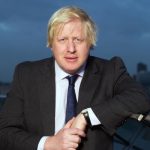
    Boris Johnson – 2020 Statement on Public Health

    The statement made by Boris Johnson, the Prime Minister, in the House of Commons on 4 November 2020.

    I beg to move,

    That the Health Protection (Coronavirus, Restrictions) (England) (No. 4) Regulations 2020 (S.I., 2020, No. 1200), dated 3 November 2020, a copy of which was laid before this House on 3 November, be approved.

    We come together today to implement time-limited restrictions across England from midnight, so that we can contain the autumn surge of the virus, protect our NHS and save many lives. Of course, this is not something that any of us wanted to do. None of us came into politics to tell people once again to shutter their shops, furlough their staff or stay away from their friends and family. In common with all Members, I feel the pain and anxiety that we will all share in the month ahead. But as Prime Minister, when I am confronted with data which projects that our NHS could even collapse, with deaths in the second wave potentially exceeding those of the first, and when I look at what is happening among some of our continental friends and see doctors who have tested positive being ordered to work on covid wards and patients airlifted to hospitals in some other countries simply to make space, I can reach only one conclusion: I am not prepared to take the risk with the lives of the British people.

    I know it might be tempting to think that, because some progress has been made, we just need to stay the course and see through our locally led approach. It is true that the extraordinary efforts of millions across the country—especially those in high and very high alert level areas—have made a difference, suppressing the reproduction rate of the virus below where it would otherwise have been. I want to record again my thanks to the millions who have put up with local restrictions. I want to thank the local leaders who have understood the gravity of the position.

    But I am sorry to say that the number of covid patients in some hospitals is already higher than at the peak of the first wave. Even in the south-west, which has so far had lower case rates than most of the rest of the country, hospital admissions are over halfway to their first-wave peak. The latest analysis from the Scientific Advisory Group for Emergencies, published on Friday, suggests that the R remains above 1 in every part of England, which means that the virus is continuing to grow among the population. Every day that the number is above 1 is another day that the number of cases will rise, locking in more hospital admissions and, alas, more fatalities, pushing the NHS ever closer to the moment when it cannot cope.

    Jim Shannon (Strangford) (DUP)

    Every one of us in this House has received numerous emails and telephone calls about the closure of church services. I understand that, and I am making a plea to the Prime Minister for that to be reviewed. For many people, it is the only outing they have in the week and the only opportunity to have any contact with people for prayer and contemplation. In Northern Ireland, churches have been able to remain open through the use of masks and ​hands, face, space. Could that be looked at? I believe that people across the United Kingdom of Great Britain and Northern Ireland would appreciate that, especially in England.

    The Prime Minister

    I know the hon. Gentleman speaks for many people in this House in raising that concern, and I feel it very deeply. It is an awful thing to restrict people’s ability to worship in a communal way. Obviously, as he knows, we are allowing private worship, but for many people that will not be enough. The best I can say is that in all reality, if we approve this package of measures tonight, we have a very good prospect of allowing everybody to return to communal worship in time for Christmas and other celebrations in December.

    The course we have before us is to prevent R from remaining above 1 and to get it down, otherwise we face a bleak and uncertain future of steadily rising infections and admissions until, as I say, the capacity of the NHS is breached. I know there has been some debate about the projections of some of these models.

    Neil Gray (Airdrie and Shotts) (SNP)

    On uncertainty, we have had a week of uncertainty from the Prime Minister and his Cabinet on whether the extension of furlough will apply to Scotland if it chooses to go into lockdown, if it needs to go into lockdown, beyond 2 December. That comes after the Prime Minister’s Government refused the request of the Scottish, Welsh and Northern Irish Governments for furlough support at the end of September.

    Can the Prime Minister finally provide us with a clear, unambiguous answer as to whether, if Scotland, Wales or Northern Ireland requests 80% furlough after 2 December, it will be granted?

    The Prime Minister

    The hon. Gentleman cannot take yes for an answer. Not only will I come to that point later, but my right hon. Friend the Chancellor will be saying more about the matter tomorrow, and the hon. Gentleman can interrogate him.

    What I will say, on the point of uncertainty, is that I know there has been a debate about the statistics on how big the loss of life might be and on the precise point at which the NHS might be overwhelmed, but all the scientific experts I have talked to are unanimous on one point. As the chief medical officer has said, if we do not act now, the chances of the NHS being in extraordinary trouble in December would be very high.

    Be in no doubt about what that means for our country and for our society. It means that the precious principle of care for everyone who needs it, whoever they are and whenever they need it, could be shattered for the first time in our experience. It means that those who are sick, suffering and in need of help could be turned away because there is no room in our hospitals—even in East Sussex.

    Huw Merriman (Bexhill and Battle) (Con)

    All of us in this place will be concerned about saving lives. What evidence has my right hon. Friend received that we will save more lives by the lockdown he proposes than we will lose from public health, from a lack of jobs and from a mental health crisis? That is the evidence I seek from the Prime Minister today in order to cast my vote his way.

    ​The Prime Minister

    My hon. Friend raises a very important point, and it is the crux of the debate. Alas, as leaders and as politicians, we have to look at the immediate peril we face. I do not in any way minimise the risks to mental health and physical health that come from the measures we have to apply. That is, of course, why we debate and insist that we explore every other avenue before we go down that route, but we have to look at the real risk of mortality, and mortality on what I think would be a grievous scale, that would stem from doing nothing.

    To give my hon. Friend a picture of what it would mean, those who are sick, suffering or in need of help could be turned away because there is no room in our hospitals.

    Several hon. Members rose—

    The Prime Minister

    I will give way in a moment.

    Doctors and nurses could be forced to make impossible choices about which patients would live and which would die, who would get oxygen and who could not. I know that some Members, like my hon. Friend the Member for Bexhill and Battle (Huw Merriman), are hearing from their local hospitals that the pressure is not that great yet, but the whole point about a national health service is that when hospitals in one part of the country are overrun, sick patients are transferred to another, until the whole system falls over. Let me be clear that this existential threat to our NHS comes not from focusing too much on coronavirus, as is sometimes asserted, but from not focusing enough, because if we fail to get coronavirus under control, the sheer weight of demand from covid patients would not only lead to the covid casualties that I have described, but deprive other patients of the care they need. We simply cannot reach the point where our national health service is no longer there for everyone.

    This fate is not inevitable. We are moving to these national measures here when the rate both of deaths and infections is lower than they were, for instance, in France, when President Macron took similar steps. If we act now, and act decisively, we can stem the rising waters before our defences are breached.

    Tim Farron (Westmorland and Lonsdale) (LD)

    I accept the Prime Minister’s logic and think it is far more dangerous to do nothing than to do what he proposes, but does he accept that we need to learn some serious lessons from the first lockdown, particularly about the impact on cancer patients? There was a 100,000 backlog when it came to treatment and diagnosis at one point. Cancer Research UK estimates that 35,000 people might unnecessarily lose their lives to cancer because of wrong decisions. Will he accept that, while there are many hospitals that are, shall I say, clean sites, where covid is not being treated or is not present, there is an opportunity to use those sites to treat cancer patients, catch up with cancer, save those lives and not make the same mistakes as we did first time?

    The Prime Minister

    The hon. Gentleman is exactly right and has encapsulated the argument that we make. My right hon. Friend the Health Secretary and I have talked repeatedly to Simon Stevens of the NHS and his teams about making sure that throughout this period, we continue to look after cancer patients—those who ​need the decisive care that the NHS can provide. I do believe that this approach—these regulations—are the way that we can do that.

    I know there are many in this House who are concerned about how long these measures might last and that, if people vote for these regulations today, they could suddenly find that we are trapped with these national measures for months on end. So let me level with the House: of course, I cannot say exactly where the epidemiology will be by 2 December, but what I can say is that the national measures that I hope the House will vote for tonight are time-limited. It is not that we choose to stop them. They legally expire, so whatever we do from 2 December will require a fresh mandate and a fresh vote from this House. As I have made clear, it is my express intent that we should return to a tiered system on a local and regional basis according to the latest data and trends.

    Mr Mark Harper (Forest of Dean) (Con)

    Will my right hon. Friend give way?

    The Prime Minister

    The whole House will share my sorrow and regret at the necessity of these measures, which I know is a perspective shared by my right hon. Friend—I am happy to give way to him.

    Mr Harper

    I have listened carefully to the argument and looked at the data very carefully. What I am troubled by—when I have looked at the basis on which the modelling has been done, both in terms of SAGE and the NHS—is that the modelling does not take into account the effect of the introduction of the tier system and any of the effects of it. I think, therefore, that we have acted too soon, because we are starting now to see the tier system working. The data from Liverpool yesterday, published by Steve Rotheram, is very encouraging and shows that the tier system is working, but the modelling that the NHS is using for its capacity usage does not take into account that introduction at all.

    The Prime Minister

    My right hon. Friend makes a very important point. He is expressing a point of view that is shared by many people, but, alas, I believe that he is wrong. The facts do not support his view. I looked at the data and, unfortunately, this is what we have: hospitalisations mounting very, very steadily, which, as he knows, are leading indicators of fatalities. We have 2,000 more people on covid wards than this time last week and 25% more people today than there were last week and, alas, 397 deaths tragically announced yesterday —more than we have had for many months. The curve is already unmistakable and, alas, incontestable.

    Neil O’Brien (Harborough) (Con)

    In the past two weeks, we have gone from seeing cases mainly among young people to them being mainly among older people. We have seen it going from a problem in a few cities to a problem across the country. Does my right hon. Friend agree that we do not need a fancy model to see the numbers piling up in hospitals and to see what has happened in France—because it has not taken action as quickly as we have—to know that the thing to do is to take action now, not just to save lives, but to save the economy as well?

    The Prime Minister

    The economic dimension of what we are doing is absolutely right and the argument, as my hon. Friend rightly says, works both ways. I know how difficult it is, particularly for businesses that have ​just got back on their feet, that have done their level best to make themselves covid-secure, installing hand- washing stations, plexiglass screens and one-way systems, and, as the Chancellor has set out, we will do whatever it takes to support them. We have protected almost 10 million jobs with furlough and we are now extending the scheme throughout November. We have already paid out £13 billion to help support the self-employed, and we are now doubling our support from 40% to 80% of trading profits for the self-employed for this month. We are providing cash grants of up to £3,000 per month for businesses that are closed, which is worth more than £1 billion a month and benefits more than 600,000 business premises. We are giving funding of £1.1 billion to local authorities in England further to support businesses in their local economy in the winter months.

    Drew Hendry (Inverness, Nairn, Badenoch and Strathspey) (SNP)

    The Prime Minister accused us earlier of not being able to take yes for an answer on differentiated furlough for the other nations of the UK. The problem is that we have not heard a clear, unequivocal yes to the question, so can he sort that out now? If Scotland, Wales or Northern Ireland need to introduce lockdown measures at different times than England, will the Chancellor be there to support us with furlough?

    The Prime Minister

    Yes. I really do not know how to exhaust my affirmative vocabulary any further—they won’t take yes for an answer, Mr Speaker. All of this comes on top, as the hon. Gentleman knows—

    Several hon. Members rose—

    The Prime Minister

    With great respect, Mr Speaker, I think that I have answered the question and I think that my friends opposite are going to oppose.

    This comes on top of the more than £200 billion that we provided since March. We will also ensure that, throughout this period, our schools stay open. We will not allow this virus to do any further damage to the future of our children. I said in the summer that we had a moral duty to reopen our schools as soon as it was safe to do so, and that they would be the last element of our society to close down again. We have stuck to that pledge. Our schools will remain open, as will colleges, universities, childcare and early years settings.

    The measures before the House are designed to arrest the virus, to drive it down and to get on top of it once and for all. If we are able to test on a big enough scale to identify the people who are infected, often without symptoms and who unwittingly and asymptomatically pass the virus to others, those people will be helped immediately—this is the key thing—to self-isolate and to break the chains of transmission, reducing the spread of the virus, reducing the numbers of people in hospital, and reducing the numbers of people dying. I think that if we all play our part in this system it could be a hugely valuable weapon in our fight against covid in the short, medium and long term, and an alternative to the blanket restrictions that have been imposed in so many parts of the world.

    This week we are piloting a mass test in Liverpool, where an immense effort benefiting from the logistical skill of the armed services will offer everyone a test, and ​our aim is to make mass repeated testing available for everyone across the country. Thanks to the pioneering work of British scientists, we already have a life-saving treatment for covid and the genuine possibility of a safe and effective vaccine next year. Taken together, these achievements provide every reason for confidence that our country can and will pull through this crisis, and that our ingenuity will prove equal to the challenge.

    Clive Efford (Eltham) (Lab)

    Will the Prime Minister give way?

    The Prime Minister

    No, I will not—I am finishing up.

    This year, I and the whole of Government have asked much of the British people: more than any Prime Minister, I believe, has asked of the British people in peacetime. I have to say that the public have responded magnificently and selflessly, putting their lives on hold, bearing any burden, overcoming every obstacle, and tolerating every disruption and inconvenience, no matter how large or small—or inconsistent—so that they could do the right thing by their fellow citizens. I wish that it had been enough to defeat this autumn surge. But while I am more optimistic now about the medium and long-term future than I have been for many months, there can be no doubt that the situation before us today is grave and the need for action acute.

    It is absolutely right for this House to have doubts—

    Mr Speaker

    Order. I am sorry, Prime Minister, but Mr Murrison, you cannot read newspapers in the Chamber.

    The Prime Minister

    It is absolutely right for hon. Members to consult relevant documents that may contain information to the advantage and betterment of the House.

    Mr Speaker

    He could have been reading his horoscope —come on!

    The Prime Minister

    I can assure my right hon. Friend the Member for South West Wiltshire (Dr Murrison) that his future is rosy.

    It is right for Members on all sides of this House to have the doubts that have been expressed, to seek answers from me, and to provide scrutiny. That is the purpose and duty of the House of Commons. But while it pains me to call for such restrictions on lives, liberty and business, I have no doubt that these restrictions represent the best and safest path for our country, our people and our economy. So now is the time for us to put our differences aside and focus on the next four weeks in getting this virus back in its box. I know that once again our amazing country will respond to adversity by doing what is right—staying at home, protecting the NHS and saving lives. In that spirit, I commend these regulations to the House.

  • Edward Argar – 2020 Statement on Health and Exiting the European Union

    Edward Argar – 2020 Statement on Health and Exiting the European Union

    The statement made by Edward Argar, the Minister for Health, in the House of Commons on 4 November 2020.

    I beg to move,

    That the draft Blood Safety and Quality (Amendment) (EU Exit) Regulations 2020, which were laid before this House on 8 October, be approved.

    Mr Deputy Speaker (Mr Nigel Evans)

    With this we shall take the following motions:

    That the draft Human Fertilisation and Embryology (Amendment) (EU Exit) Regulations 2020, which were laid before this House on 8 October, be approved.

    That the draft Human Tissue (Quality and Safety for Human Application) (Amendment) (EU Exit) Regulations 2020, which were laid before this House on 8 October, be approved.

    That the draft Quality and Safety of Organs Intended for Transplantation (Amendment) (EU Exit) Regulations 2020, which were laid before this House on 8 October, be approved.

    Edward Argar

    Today we debate four sets of regulations that are critical in giving effect to the Northern Ireland protocol for the safety and quality of blood, organs, tissues and cells, including reproductive cells.

    All hon. Members would agree that donated blood, organs, tissues and cells play a vital role in life-changing treatments for UK patients, whether blood transfusions to treat major blood loss, heart transplants to treat heart failure, stem cell transplants to treat blood cancer, or eggs and sperm to treat infertility. Patients rely on those treatments every day. Many people would not be alive today were it not for the generosity of donors and their families, and I pay tribute to them.

    The UK has always set high standards of safety and quality for blood, organs, tissues and cells, and those standards will always be of the utmost importance to this Government. The current safety and quality standards for blood, organs, tissues and cells are derived from EU law. Last year, in preparation for the UK leaving the EU, the Government made four statutory instruments to fix shortcomings in the current law caused by EU exit. These were made on a UK-wide basis and will come into effect on 1 January 2021. The 2019 statutory instruments maintain the current safety and quality standards across the UK. On 20 May 2020, we set out our approach to implementing the Northern Ireland protocol as part of meeting our obligations under the withdrawal agreement with the EU. We are committed to meeting these obligations, all the while recognising the unique status of Northern Ireland within the UK and the importance of upholding the Belfast/Good Friday agreement.

    These four instruments will come into force on 1 January 2021. They will ensure that Northern Ireland continues to be aligned with the EU blood, organs, tissues and cells directives, as required by the protocol. In particular, first, although the safety and quality standards will remain the same across the UK from 1 January 2021, for Northern Ireland those standards may be expressed by reference to EU legislation, whereas for Great Britain they are not. Secondly, the UK regulators for blood, organs, tissues and cells will continue to act as the competent authorities for Northern Ireland in respect of the EU. That means that the Medicines and Healthcare Products Regulatory Agency, the Human Tissue Authority and the Human Fertilisation and Embryology Authority will continue to meet the same EU obligations for Northern Ireland as they do now.​

    Thirdly, these instruments amend the definition of “third country” for imports into Northern Ireland to ensure that we meet the terms of the Northern Ireland protocol but also our commitment to unfettered access. That means that, from 1 January 2021, when establishments in Northern Ireland receive blood, organs, tissues and cells from Great Britain, they will need to treat them the same as those received from outside the EU. In accordance with our commitment to unfettered access for goods moving from Northern Ireland to Great Britain, there will be no changes to the requirements when sending blood, organs, tissues and cells from Northern Ireland to Great Britain. The movement of blood, organs, tissues and cells around the UK is critical for patient treatment, and we are committed to ensuring that this movement can continue from 1 January 2021.

    Fourthly, these instruments will require tissue establishments in Northern Ireland to continue using the single European code for traceability purposes, as they do now. Fifthly, the 2019 statutory instruments introduced some limited regulation-making powers into UK law for each of the UK nations. The European Union (Withdrawal) Act 2018 contains the powers needed to make changes in relation to safety and quality of blood, organs, tissues and cells for Northern Ireland. The powers in the 2019 statutory instruments are therefore no longer needed for Northern Ireland, and consequently, these regulations limit that regulation-making power to Great Britain. These instruments also make minor corrections to the 2019 statutory instruments to change references to “exit day” to read “implementation period completion day”, so that the regulations will function effectively at the end of the transition period.

    The regulators for the sector are working with licensed establishments across the UK to help ensure that they are ready for any changes that will arise from 1 January 2021. These changes affect only a small number of establishments in Northern Ireland—one blood establishment, one transplant centre, two licensed tissue establishments and four fertility clinics. There will be some minor administrative costs for establishments in Great Britain moving blood, organs, tissues and cells to Northern Ireland.

    Legislative competence for the donation, processing and use in treatment of human reproductive cells remains reserved to this Parliament. Competence in respect of all other human tissues, cells, blood and organs is devolved, and the relevant instruments are being made on a UK-wide basis with the consent of the devolved Administrations, for which I am grateful. There is work under way to put in place a common framework between the UK Government and the devolved Administrations to support co-ordinated decision making in the future on the safety and quality of blood, organs, tissues and cells after the end of the transition period.

    To conclude, these regulations are vital to the Government’s preparations for the end of the transition period. It is essential that they are made, to allow the UK to fulfil its obligations under the Northern Ireland protocol. The UK has high standards for the safety and quality of blood, organs, tissues and cells. These instruments ensure that the UK will continue to work to those high standards after the end of the transition period and that blood, organs, tissues and cells will continue to move around the UK from 1 January 2021. I therefore commend the regulations to the House.​

    Alex Norris (Nottingham North) (Lab/Co-op)

    There are many great trios and trilogies—we think of the Marx Brothers, the Lord of the Rings or Ali and Frazier, culminating in the “Thrilla in Manila”. This week the Minister and I have had our own trilogy of debates—two upstairs and now one, the main event, in the main Chamber—on three statutory instruments that are pretty much identical, but with different names. I do not see many people from those Committees in the Chamber, so as well as being able to recycle my gags, I can recycle some of my points of substance; I am sure the Minister will forgive me.

    These are technical, Brexit-related amendments, but they are also of life-saving importance. They refer to the safety and quality of blood and blood components, organs, tissues, cells and reproductive cells for treating patients. Among other technical changes, they will allow current regulators in these areas to continue as the competent authorities in relation to the EU for Northern Ireland. That is, of course, essential in both legislative and practical terms, so we will not be dividing on these regulations. It is vital that this and the rest of the protocol is implemented in good time. I asked the Minister for this on Monday and Tuesday, but, with fewer than 60 days to go, it is really important to put on the record his assurance that the rest of the protocol will be implemented in time.

    The UK legislation for the safety and quality of blood organs, tissues and cells is, of course, based on European law. The European Union (Withdrawal) Act 2018 ensures that the EU-derived domestic legislation will continue to have an effect after the end of the transition period. In 2019, this House introduced regulations to ensure that UK legislation in this area could function effectively after the transition period. However, Northern Ireland will remain subject to relevant EU laws as a result of the protocol on Ireland and Northern Ireland, so today these four statutory instruments amend those regulations and allow Northern Ireland to meet European law. This seems to be an area where divergence would not be of great interest across Great Britain and Northern Ireland, so it would be helpful to have some assurance from the Government—again, I have raised this twice this week—that there are no grand plans for significant divergence in this area. Similarly, I wonder whether I might press the Minister on how these regulations will relate to the Medicines and Medical Devices Bill. During the Commons stages of the Bill, we pushed a human tissue amendment to stop unwillingly harvested materials from entering the UK. Clearly, these regulations will have a bearing on underpinning that amendment. We were not able to make much progress in this place, but I am happy to say that, this week, the Government Minister in the other place, during the Lords stages, has indicated a willingness to try to come to a common agreement on this. If we can find such cross-party support in the other place, will the Minister make a commitment to look at this with an open mind?

    The OneBlood establishment in Northern Ireland, the Northern Ireland Blood Transfusion Service at Belfast City Hospital, will of course be able to continue to receive blood and blood components from similar establishments across the UK, but when this happens, Great Britain will be treated as a third country—as it will be. When the Minister was on his feet, I think he ​said that there would be no great frictions there, but I would like to understand that in practical terms and to have full assurances that there will not be a delay in the use of blood products and that patients will not be injured in waiting to receive them. I think that is something that requires a categorical assurance.

    Regarding organs for transplant, we know that the NHS Blood and Transplant service will continue to be responsible for organ donation and retrieval in the UK. Between April 2019 and March 2020, 32 organs from deceased donors moved from Great Britain to Northern Ireland and 126 organs moved from Northern Ireland to Great Britain. Organs will continue moving from Great Britain to Northern Ireland, but, as before, Northern Ireland-based establishments will now be treated in Great Britain as a non-EU member for these purposes, so we need a firm commitment on the record that this will not, as I say, hinder our ability to move those organs. Clearly, there is a significant need for such an assurance as this is likely to continue on a significant scale.

    The Human Tissue Authority says that human tissue establishments will need to vary their licences in order to continue their activities post-transition. This includes establishments that intend to import or export tissues and cells as the starting material for the manufacture of an advanced therapy medicinal product. That is extremely important, so what variance does the Minister foresee? Will there be delays? How will it happen? I wonder what consultation he has perhaps had with such centres.

    I wish to make a final point on fertilisation and embryology. What disruption is expected to patient treatment as clinics adapt during the transition period? Can the Minister say what proactive support is being offered to those clinics to limit the impact on patients?

    All of this would be much easier if we had a deal arranged. When these regulations were laid in 2019, my predecessor as shadow public health Minister, my hon. Friend the Member for Washington and Sunderland West (Mrs Hodgson), was saying then that there really was not much time to get a deal done, and that was 18 months ago. We have burned through those 18 months and are down to the last two, so, again, we would like a clear commitment from the Minister today that every effort is being made to reach a good deal for ourselves and for our partners, because that is what the British people were promised, and that is what the British people expect. In doing so, we need to make sure that disruption to such important things as those we have been discussing today can be avoided.

    Jim Shannon (Strangford) (DUP)

    Thank you, Mr Deputy Speaker, for the opportunity to ask some questions on this matter. I would like first to put on the record my thanks to the Minister for the opportunity, which he gives equally to every Member of this House, to bring to him our questions or concerns. He was very kind to do the same for me, and I appreciate it.

    I am a great supporter of organ transplants—that has always been one of my goals. I supported in this House the legislation that made them easier. I have also replied to a consultation in Northern Ireland to ensure that similar legislation can be introduced there. I have done that for a number of reasons. First, I believe that it is really important. Secondly, it is personal for my family, because my nephew Peter is a recipient of a kidney ​transplant. Without that transplant, that wee boy would never have progressed to become the man he is today, and all because someone gave him the gift of life.

    I have spoken at length during the pandemic to highlight the importance of organ transplants continuing. Some 3 million people in the UK have chronic kidney disease, including 1,000 children—my nephew would have been one of them all those years ago—and about 65,000 people are being treated for kidney failure by dialysis or transplant. In the UK, 6,044 people are on the transplant list, and 4,737 are awaiting kidneys.

    Interestingly, during the covid-19 crisis, more transplants took place in Northern Ireland than on the mainland, which shows why it is so important to have transplant organs going from the mainland to Northern Ireland, and from Northern Ireland to the mainland. The indication from the Minister is that that will happen, which is good news.

    At least one person a day will die because they have had to wait too long, and eight out of 10 people waiting are hoping for a kidney. NHS Blood and Transplant has estimated that this change in the law has the potential to lead to 700 more transplants each year by 2030. That might have to be extended by a year because of the pandemic. I hope that the pandemic will not prevent those who need a transplant from getting that opportunity.

    I am keen to get confirmation from the Minister in relation to the tissues regulation, which is a very technical matter. I have taken the opportunity to give him a copy of this, and I hope my description of it is appropriate and correct. Many constituents and people in Northern Ireland have raised this concern with me, so I just want to put it on the record, and perhaps he can provide an answer. I would like something clarified regarding the use of “aborted babies and their tissue”, as it is termed. If one reviews the instruments themselves, the word “aborted” is not referenced. The Minister and I have talked about that, and I understand that. However, in this instrument, it would be implied or covered under the broader term “tissue”, which is defined as

    “all constituent parts of the human body formed by cells”,

    but that does not include

    “gametes…embryos outside the human body, or…organs or parts of organs if it is their function to be used for the same purpose as the entire organ in the human body.”

    Does the Minister know whether the Human Tissue (Quality and Safety for Human Application) (Amendment) (EU Exit) Regulations 2020 address the concerns about the use of tissues or organs from aborted babies, and if so, how is the issue of consent dealt with? My constituents have asked me to ask that question and I want to put it on the record in Hansard tonight, and I know that he will do his best to answer it. I would appreciate it if he could outline that. I am being very honest with you, Mr Deputy Speaker, about where I am coming from, because every cell of that little one is precious and must be used with consent and appropriately, just as is the case with those incredibly brave men and women who chose to donate the organs of their lost loved ones in order to save others.

    I am always reminded—I will conclude with this thought—of a person who tragically died as a result of an accident in Newtownards. A few months later his father came to tell me that his son had been able to give seven parts of his body to organ donor recipients. That changed the lives of seven people. I am ever mindful of ​how important that is. I believe it is a worthy decision, and my family are beyond grateful for those who did this for us. However, we must always ensure that there is dialogue with the family, and this issue must be highlighted at every stage.

    Edward Argar

    As the shadow Minister alluded to, it always a pleasure, and an increasingly frequent one, to appear opposite him in dealing with delegated legislation. He is of course a fellow east midlands MP, which only adds to the pleasure of appearing opposite him. He raised a couple of broad issues, and then I will come to some of the specific points that he made. As ever, if I omit to answer something, I will endeavour to write to him so that he has that on the record.

    The shadow Minister asked about our intention to implement the Northern Ireland protocol and the regulations relating to it in good time. The fact that this is the third piece of delegated legislation relating to the implementation of the protocol that he and I have dealt with on consecutive days is a reflection of our commitment to getting on with it and bringing forward those regulations. We are doing that with his co-operation, for which I am very grateful.

    The shadow Minister talked about a negotiated deal. It will not surprise him to hear—he has heard this twice already this week—that the UK Government continue to negotiate with the European Union, and it would be wrong for me to prejudge, either in Committee or on the Floor of the House, the outcome of those ongoing negotiations.

    The shadow Minister asked a number of specific questions. He made a point about the divergence of regulations, either now or in the future. As my noble Friend Lord Bethell said in the House of Lords, on divergence from existing EU regulations:

    “There may be at an appropriate point in the future an opportunity for the department to review whether the UK’s exit from the EU offers us opportunities to reappraise current regulations to ensure that we continue to protect the nation’s health. When that moment arrives, we will consult, analyse and assess. The regulations put in place the opportunity to do that—but that is for a moment in the future and it is not envisaged in the near future.”—[Official Report, House of Lords, 2 November 2020; Vol. 807, c. GC238.]

    On the previous pieces of delegated legislation we have considered, I have highlighted the UK Government’s intent to continue to be world-leading on the issues that we have been dealing with on these three consecutive days.

    The shadow Minister mentioned the Medicines and Medical Devices Bill, which is currently going through the other place. As drafted, it will allow us to strengthen the requirements governing the use of human tissues and the development of medicines. Were it deemed necessary and appropriate to do so, powers under clauses 1 and 2 would enable us to introduce new requirements to the Human Medicines Regulations 2012 for medicines manufactured using human tissues. I look forward to the passage of that Bill through the other place and its becoming law in due course. I am confident that it will be in place in good time.

    The shadow Minister asked about the movement of blood and blood components, which is a hugely important issue. As he is aware, the UK is largely self-sufficient in the supply of blood and blood components, and it occasionally exports rare blood cells, although fewer ​than 10 units per year to EU and non-EU countries. Components are frequently shared across the four nations to meet need and clinical demand, and I believe that these regulations clearly ensure that that flow is not interrupted.

    On that theme, traffic between Great Britain and Northern Ireland will remain, as it will between Great Britain and the European Union. To give the shadow Minister further reassurance, I am glad to confirm that Northern Ireland will align with the EU, but we are committed to finding a way to work closely with it within the UK common framework, which is currently being developed, to ensure that that trade continues unhindered. He may even have mentioned these figures himself. Between April 2019 and March 2020, the UK exported 13 organs to the EU and imported 13 organs from it. Although those numbers may seem low, each and every one of those organs is vital to the individual receiving it. I am committed to maintaining the freedom of movement of those organs.

    Working with industry is a theme that the shadow Minister picked up in others of these delegated legislation sessions. We have already published some guidance, and we look forward to publishing more. We believe that it is absolutely vital that we work with industry to make sure it has all the information and support it needs to make a seamless transition to the new regulations.

    It is always a pleasure to see the hon. Member for Strangford (Jim Shannon) in his place. We missed him for a week or two when he was self-isolating, and the place was not the same without him, so it is a real pleasure to have him back. As ever, he spoke movingly and powerfully of the importance of these regulations in what they do to save lives. I hope I can offer him some reassurance, although the point he raised was a very technical one. He is right to say that that point is not explicitly mentioned in these regulations. I hope that that gives him some reassurance, but if it is helpful to him, particularly in the light of his constituents’ concerns, I or a fellow Minister will undertake to write to him with further clarification, so that he has that on record. With that, I commend the regulations to the House.

  • Rupa Huq – 2020 Speech on Emergency Transport and Travel Measures in London Boroughs

    Rupa Huq – 2020 Speech on Emergency Transport and Travel Measures in London Boroughs

    The speech made by Rupa Huq, the Labour MP for Ealing Central and Acton, in the House of Commons on 4 November 2020.

    Travel and transport are what keep our capital going, and they produced its suburbs. When we add the covid emergency into the mix, however, questions are raised about the disproportionate numbers of black and ethnic minority people and transport workers who died earlier in the pandemic, at a time when they were not getting the protection they needed. Their families are still seeking death in service benefits. There is also the whole question of democracy in the age of the virus, and how we build back better, more sustainably and in a more resilient way on the other side of all this as part of the new normal.

    Happily, some of the issues I thought I would be addressing tonight have been overtaken by events. Thanks to the Transport for London bail-out at the weekend, there will be no extension of the congestion charge—phew!—and there will be no charging for under-18s. I pay tribute to our Mayor of London, Sadiq Khan—so much better than the guy before, isn’t he?—for all that.

    That leaves me with emergency traffic orders, which are those controversial things that have enabled pop-up cycle lanes, pavement widenings—some people call them “road smallings”—and controversial low-traffic neighbourhoods all over our capital. They have followed a sequence of implementation now, consult later.

    I want to make a confession: I am a confirmed, long- standing cyclist, dating back to when I went to school in what is now my constituency every day in the ’80s. We now have more bikes than people in our household. My own offspring replicate that journey in the ’90s when I was at Cambridge University, where it was almost compulsory to get on your bike every single day. I completely understand the benefits of cycling: it is free, it takes us door to door, and it is environmentally friendly. I am a confirmed cyclist.

    These low-traffic neighbourhoods seek to get us all on two wheels or on foot, in a move towards active travel—a modal shift. We can still get everywhere we need to go in a car; they just mean we have to go the long way round. A good recent example is Bowes Road in Acton, which first became known to me because every BBC cabbie, when they took me up there, would go down it rather than the A40. Residents hated that because their road had turned into a thoroughfare and they could not get out of their houses. Now a low-traffic neighbourhood has been introduced there, and they love it. There are these oversized flower pot things called planters, and bollards, and the residents have been able to reclaim their street. In that instance, a pre-existing problem has been dealt with and rectified.

    However, colleagues from every compass point of London, some of whom are here today, have told me about examples of LTNs that are not well-designed and are not working, in neighbourhoods that are already naturally low-traffic neighbourhoods. These things popped up with no consultation and no notice, even, and it feels to people like they have been inflicted on them. We have seen large-scale opposition all over London, with tens ​of thousands of signatures in Wandsworth and in my own borough, and in Islington I think there have been marches.

    Theresa Villiers (Chipping Barnet) (Con)

    Does the hon. Lady agree that a number of the changes that have been made have had a really negative impact on the taxi trade? The licensed taxi is one of the most accessible forms of transport. If we block it out of key routes such as Bishopsgate, we make it more difficult for people with mobility issues and disabilities to get to the places they need to get to.

    Dr Huq

    The right hon. Lady makes a really good point. We have relied on cabbies—remember that taxi exam, the knowledge? That is completely invalidated by these changes. She makes a really powerful point. I think people feel discombobulated because these changes are so radical and dramatic, and they appear to have come out of nowhere.

    I think that policies work best when policy makers take the public with them and act for them, rather than doing stuff to them, which I think many feel has happened. In our borough there are 37 different schemes, with over £1 million of funding. The most controversial is LTN 21—they all have these rather Stalinist names. Oh, sorry—I will be in trouble. Across three wards, nigh on every side street has been blocked; it has turned the area into a convoluted maze of planters at odd angles. The right hon. Lady referred to commercial vehicles. Delivery vans have become more and more prevalent in the pandemic; they are completely outfoxed by these measures.

    When news of this debate broke on a local forum, hundreds of replies—they were going up by the minute—came in with things that I should raise, so I will try to give voice to some of those.

    David Simmonds (Ruislip, Northwood and Pinner) (Con)

    I do not know whether the hon. Lady is more concerned about having been insufficiently enthusiastic in her mention of Stalin or having been too enthusiastic in bringing him up. In the context of low-traffic neighbourhoods, does she think that a good deal of consultation and discussion with the emergency services is critical? That has been a consistent problem with the implementation of LTNs, certainly in the view of my constituents and many others.

    Dr Huq

    The hon. Gentleman speaks so much sense. We are at one on Heathrow—actually, I think all three of us who have spoken so far are—and he is right. In theory, these people are not allowed to express an opinion, so the leadership say, “Yeah, fine,” but the people who have to implement these things—the ambulance personnel, police people and fire officers—all think that they have made a difficult job ever more difficult at a time when every second counts. The hon. Gentleman is absolutely right.

    Lilian Greenwood (Nottingham South) (Lab)

    I am sure my hon. Friend is reflecting the views of some of her constituents, but does she share my concern that while we worry about sending car drivers around the long way, pedestrians have to walk a long way down the road to find a safe place to cross every single day and no one ever notices, because it is so normal for pedestrians’ needs to be put behind those of the motorist?

    Dr Huq

    My hon. Friend is right. Pedestrians often feel at the bottom of the food chain. Actually, walkers have contacted me saying that they have got nothing out of this. Cyclists have got new cycle lanes, but they seem to have been a bit forgotten in all this. I think the key thing is to take people with you and get consent, and that also means consultation.

    Other issues that have popped up include kids being distressed at the much elongated minibus journey to the Log Cabin disabled children’s adventure playground. Elderly and infirm people and their carers are also affected. When we say, “Oh, the sat-nav will update”, they are a bit befuddled because they use the old-fashioned “A to Z”, as do I actually. I have a case of a lady who had regular out-patient appointments at a central London hospital, but has now been discharged because the taxi gave up on too many occasions, so that is a bit serious. This affects all sorts of businesses, such as workmen with all their tools. Shops say that they used to benefit from passing trade on the way back from longer journeys, and that has all gone now.

    If hon. Members have a little google, they can see on YouTube how, all over London, traffic that was supposed to be evaporating—it was meant to disappear because, after a while, people have new habits and give up driving—has actually been displaced to main roads. Those are residential roads, and people live there too. They already had unacceptably high levels of pollution, and it has just worsened. If the whole aim was combating emissions, that is undermined when there is a very long way round—five times, 10 times longer, or whatever. In some boroughs, compliance checks that no one is driving through are done with those sinister little motor vehicles that are idling, with NO2 emissions. Again, that seems a little bit serious.

    Felicity Buchan (Kensington) (Con)

    Does the hon. Member agree with me that consultation is important, but what is also important is signage? One of my constituents approached me to say that the family drives every day from Kensington through the borough of Hammersmith and Fulham, and on the first day that one of these schemes was operating, the family got eight tickets because they were not aware of it and the signage was so poor.

    Dr Huq

    Goodness me, the hon. Lady tells a chilling story. In Ealing, at least initially, there are no fines—maybe I should not be saying that—so that people get used to it. There is a softly-softly approach. Ultimately, I guess that people do get used to it, but it seems wrong to have that many tickets on day one.

    In a global pandemic, life is hard enough as it is, and to make life even harder feels punitive. This policy is well tried in places such as Copenhagen, but this is just copying and pasting that into outer London, a place that people liked because of suburban convenience and because of the grid system.

    Apsana Begum (Poplar and Limehouse) (Lab)

    I thank my hon. Friend for securing this important debate. I want to draw her attention to a recent report by the Institute of Race Relations called “The London Clearances”. This report found that regeneration projects are being used to actively dispossess working-class communities and low-income families of their homes. This process, which is commonly known as social cleansing, ​has mostly been understood as a class issue. However, given the over-representation of black, Asian and ethnic minority communities in social housing and the racialised language used to describe London’s post-war housing estates—for example, in the aftermath of the 2011 riots —I believe this is also very much a race issue. Certainly, constituents of mine have been in touch about the impact this is having on them and the fact that some of the measures have been targeted not towards housing estates in very congested or overcrowded areas but areas that have terraced homes—

    Mr Deputy Speaker (Mr Nigel Evans)

    Order. I am sorry, but interventions by their very nature should be short, and that was very long.

    Dr Huq

    I thank my hon. Friend for a point that deserved to be made at length. She makes the point about the main roads, and those are people too. They feel two-tiered now: their house prices are probably lower, and they feel they have a raw deal because of the constant gridlock forcing everyone there.

    At best, this has been a mixed experience. Where these measures work, where there is a need and where there is consultation, they are really good, but if it is felt that they have been illogically plumped somewhere they are not desired, that is a completely different matter. Somebody said to me the other day that a bollard had been put on a very short road that has got only one house on it. He said he did not ask for it and added, “We feel penned in like animals.”

    Bambos Charalambous (Enfield, Southgate) (Lab)

    Is not part of the problem the lack of consultation? Has not that been caused by the Government’s insistence that the schemes be implemented straightaway within an eight-week period, not allowing any consultation with communities or very limited consultation at best?

    Dr Huq

    My hon. Friend speaks so much sense. It is true that it feels that this catastrophising, saying, “Emergency, emergency, we have to do it by the end of September”, with no time for consultation apart from six months later, is just the wrong way round, putting the cart before the horse.

    We have had this vote today, and some of us have wrestled with our consciences about the lockdown. On balance, I thought it was the right thing to do, but coronavirus has greenlighted many incursions—some people call them draconian—on our civil liberties, on citizens’ freedom of movement. As I said, I strongly think that to gain consent, we should consult. Pictures have gone viral in Ealing of planters that have been vandalised and bollards that have been ripped out. Yes, that cedes the moral high ground: it is wrong to do that. Vandalism is bad, so it is a moral boost for the diehard proponents of the schemes, but it also shows this is not a consensual policy and that something has gone wrong if that is happening.

    Bell Ribeiro-Addy (Streatham) (Lab)

    Does my hon. Friend agree that the low traffic neighbourhoods are really important in constituencies such as mine, which has the A23 running through it and has so much pollution? Does she also agree that the lack of consultation could have a negative impact on future measures as the public ​will almost learn to react negatively because they feel like they have not been consulted in the past? We really do need those measures to protect our environment and change the nature of traffic in our areas.

    Dr Huq

    I completely agree that we have a climate emergency, we have our net zero obligations and we have an obesity crisis, but doing this without a consultation has just got people’s backs up. It sometimes feels that these things have been formulated, not by anyone who cycles or understands local traffic flows, but just in order to satisfy the criteria for a budget where there is money available and time is running out.

    Nickie Aiken (Cities of London and Westminster) (Con)

    Does the hon. Member agree that low traffic neighbourhoods can sometimes be important for air quality in constituencies such as mine in central London? One council is currently going through a consultation on the Hyde Park estate, and while residents welcome the ending of rat running, they are concerned that they have not been listened to. They have their own ideas and they want to work in partnership with the council to make those work. Does she agree that working in partnership with residents is the way forward for local authorities?

    Dr Huq

    The hon. Member, and former council leader for where we are now, speaks with authority and passion and makes total sense on this. We need a collaboration between residents, stakeholders and businesses—all the different actors in this—which sometimes feels like it has not happened.

    I know the Minister is a reasonable person and I have some questions for her. She is not the type to blame it all on Sadiq Khan, like some people would.

    Bell Ribeiro-Addy

    On the matter of Sadiq Khan, does my hon. Friend agree that he should be congratulated on seeing off the Government’s plans to extend the congestion charge zone and to begin charging under-18s for travel?

    Dr Huq

    Of course I agree with my hon. Friend. People would have been charged to go from Ealing to Acton, and possibly to use the A23, which goes to Brighton. It is good that that has gone, and congratulations to the Minister too, if she was involved in that.

    We are told that local authorities are the final arbiters, but there is so much mistrust around this. Is there any kind of mechanism to ensure that it does not look as though people are marking their own homework? Would she, or someone, be able to swoop in? The Secretary of State wrote to councils to say that they should have had pre-implementation consultation, and should respect all road users. How will that wish be operationalised, especially in places where the consultation takes place six months after implementation? Surely there is scope for some sort of review before then if things are not working. There have been reversals—wholesale in Wandsworth, partial in Redbridge and Harrow. Could the Minister give some guidance on that? I think some councils are getting a bit entrenched; they are not for turning, or for any modifications.

    In the final reckoning, does the Minister think a referendum might be a way forward? The scheme has been divisive in the way that Brexit was—sorry to bring ​that up, Mr Deputy Speaker, but it coloured all our lives for many years, and it has not gone away. A referendum would be completely equitable. If a council has a consultation tool on its website, only those with the right level of literacy, technology and energy will use it and make that count; what about the elderly and infirm? In a referendum, we could give as options, “Yes, with modifications, if need be”—then if “yes” wins, the modifications can be worked out—and “No” for those who want the measures removed.

    Apsana Begum

    I will be brief this time. Does my hon. Friend agree that there should not only be consultation, but due consideration should be given to equalities impact assessments, and to determining the socioeconomic impact of LTNs?

    Dr Huq

    My hon. Friend has read my mind. Impact assessments are missing in all this. There have been no baseline data or traffic surveys. It would be good to have a clear point of measurement, so we can ask, “Did it work?”. How will this be measured?

    I have suggestions for the Minister. There are ways to discourage car use other than taking this big-bang approach of setting up all the LTNs at once. Instead of our closing every side road, I would like us to have dedicated, segregated cycle lanes on main roads. More of those, please—but not the bollarded ones, because I feel kettled in those, and people cannot overtake or be overtaken in them. Could she address cycle theft, cycle storage, and even bike grants? Not everyone has the same ratio of bikes as the Huq household, so could she help out there, maybe?

    There could be more demand-responsive buses, and we could incentivise lift-sharing; on the other side of the pandemic, we will be allowed to be less than 2 metres apart. Perhaps we could even make public transport free, or cut fares—that was a Khan policy as well. There could be more charging points for electric vehicles. People who have bought those recently feel doubly diddled—or triply, if you count controlled parking zones, but that is probably another debate.

    The biggest side-effect of this noble policy, which has good intentions—reducing carbon emissions and obesity, and all that stuff—is that it has dichotomised residents into the Lycra-clad brigade of cyclists versus the greedy, gas-guzzler motorists who feel a sense of entitlement to drive around in a metal box, when most of us are both, if not many other things, too. We all inhabit complex Venn diagrams. I use the tube every day as well as doing all those other things. Just the other day, I was on my bike, near one of those bollards. A guy in a Transit van-type vehicle had to reverse a long way, and started effing and blinding at me for being on a bike. I do not think he knew who I was—I hope not. Anyway, that is what the policy has done: create binaries in previously harmonious communities. What I am trying to say is that a well-intended policy has had unintended consequences, but there is time to rectify them. I know that the Minister is a reasonable person; I am curious to hear her answers to all those points.

  • Gavin Newlands – 2020 Speech on Dismissal and Re-employment of Employees

    Gavin Newlands – 2020 Speech on Dismissal and Re-employment of Employees

    The speech made by Gavin Newlands, the SNP MP for Paisley and Renfrewshire North, in the House of Commons on 4 November 2020.

    I beg to move,

    That leave be given to bring in a Bill to prohibit employers dismissing employees and subsequently re-employing them for the purpose of diminishing the terms and conditions of employment; and for connected purposes.

    Since I introduced the Employment (Dismissal and Re-employment) Bill in its first incarnation in June, I have been taken aback by the level of support for the measure. The messages I have received from people across the country asking how they can help and support the progress of my Bill have been touching and gratifying. I thank the great many colleagues from all parts of the House who have been supportive since the outset. That is perhaps evidenced by the fact that every political party that has elected Members in this place is represented in the list of sponsors of the Bill. I should add that without the help of Public Bill Office staff, I would have no Bill to speak to today, and I offer them my thanks for their help with getting it this far.

    Tens of thousands of workers have been forced to the edge of a cliff by employers who have suddenly discovered the value of ignoring loyalty. Some 30,000 British Airways employees were told to suck up huge wage cuts and slashed conditions or join the dole queue. For some, this meant a cut in take-home pay of 60%-plus. They were told that they were the lucky ones. More than 10,000 of their colleagues have joined that queue.

    Like many of my colleagues on the Transport Committee, I have received hundreds of emails from BA employees who have been subjected to such tactics. Those emails tell individual stories of fear, worry, anxiety, disappointment, anger and resignation, but they also paint a picture of a corporation intent on badness from the start. Workers who had decades of service with BA received emails just before midnight advising them to sign on the dotted line or face the sack. Employees who had recently returned from leave for ill health were told that their annual leave would be slashed, or they would face the sack. People were told that their wages would be slashed and they had no option but to accept, or face the sack. This is not how a modern, civilised country manages its labour market. These are the tactics and behaviour of characters from a Dickens novel, and the behaviour of these companies is like yet another remnant of the 19th century.

    No one argues that the economic crisis that the world faces means that businesses do not have tough decisions to make; of course they do. The impact of covid-19 on commerce and industry will not disappear as soon as we have tackled the virus and normality begins to return. The after-effects will be long-lasting and damaging, but that does not give employers the right to behave like absentee lairds, returning to their assets only to inflict yet more damage on people they appear to hold in contempt.

    We should expect—and, given their various answers and statements on the matter, the Government fervently hoped—that these companies might self-police their ​behaviour. Most other employers are able to treat their staff fairly, with decency and respect, but it is clear that we cannot rely on rogue bosses to show that same decency and fairness voluntarily. That is where the state, this Parliament and the UK Government must step in to guarantee fairness for every worker in the UK, as Governments around Europe have done in the past.

    It is one of the sad ironies of the British Airways situation that in the other two countries where its parent company, International Airlines Group, operates—Ireland and Spain—fire and rehire tactics are banned. IAG could not tell its Aer Lingus subsidiary to copy and paste from the playbook of Willie Walsh and Alex Cruz, because the Irish Dáil took a decision to extend protections to workers in Ireland. Ireland’s economy is better placed, better structured and better regulated than that of the UK. It is time for the UK Government to learn lessons from our nearest neighbour and follow its lead.

    The Government can, in the words of the Prime Minister himself, put their “arms around” millions of workers across these isles with one very simple action: put aside Government time for my Bill. Get it into Committee, where we can debate how best to offer workers more protection from rogue bosses, and encourage those who are yet to be convinced to back this measure. My Bill would simply amend the Employment Rights Act 1996 and equip workers with the tools to protect their living standards virtually overnight. It would put our labour market on a level playing field with those of our European friends and allies, and, crucially, it would put our workers on a level playing field with workers in the rest of Europe. It would put our businesses on notice that the Victorian era is fit for the history books, not a guide to human resources.

    As I said to the Minister when we met to discuss the merits and content of my Bill, I am not precious about it being my Bill—this Bill—that makes the changes required. If the UK Government and the Department for Business, Energy and Industrial Strategy come up with their own plan that achieves the same ends, I will wholeheartedly welcome it. I know that hon. Members on this side of the House would do the same, and that a great many of the Minister’s concerned colleagues, who have spoken to him about the issue, would also appreciate action.

    Workers do not care whose name is on the Bill. They care that their interests are being protected and that their jobs are not being used as pawns in a war in which the only winners are the likes of Willie Walsh and well-upholstered shareholders. The Minister said that although he and the Government could not support the Bill at this time, he remained open to looking at the issue and further protections. I hope to continue the dialogue.

    My Bill would make a simple amendment to the Employment Rights Act 1996 to add the re-employment of a worker on less favourable terms and conditions to the definition of unfair dismissal. That would allow employees to use the existing employment tribunal system to enforce their rights if required, and would mean that employers could no longer act with impunity. Amending the Act in that way would allow employees targeted for fire and rehire to take cases against unscrupulous employers and, where appropriate, secure reinstatement and compensation. In short, the Bill creates no extra bureaucracy, no extra administration and no extra ​complexity, but creates a necessary protection for workers that employers will be forced to respect or face judicial proceedings.

    I am grateful for the opportunity to lay out the case for action in that area. I look forward to the Labour Party re-tabling an Opposition day motion on it to allow us to have a real discussion and debate on the finer points. I also look forward to one or two Conservative Members potentially attempting to justify the actions of rogue employers such as Willie Walsh and Alex Cruz. Their actions were and are utterly shameful and immoral and should be illegal. After wrecking thousands of lives, they have both skipped off into the sunset. Mr Walsh took an £800,000 bonus pay-off having thrown more than 10,000 loyal staff on the dole in the middle of the biggest economic crisis since the war and effectively rehired 30,000 more on reduced terms and conditions.

    BA would say that fire and rehire has been taken off the table. Indeed, the outgoing chief exec told the Transport Committee a few weeks ago that that was the case, but there are two problems with that. First, a lot of the damage to thousands of lives has already been done. BA threatened the workforce with taking an effective pay-cut of 40%, 50% or 60% or taking redundancy, then followed through with the process of accepting voluntary requests, selecting who was successful in getting their old but less well-paid jobs back and making thousands more compulsorily redundant. Only then did it take fire and rehire off the table. That is callous and fools absolutely no one.

    Secondly, it seems that employees under the BA/IAG umbrella still face being fired and rehired at the turn of the year. When Alex Cruz confirmed to the Committee that it had been taken off the table, he was being at best disingenuous and at worst misleading. I should say that there is a new management team in place at BA. I wish them well in fixing the mess and trying to repair the broken relationship with the workforce. They need a lot of luck.

    It is not just British Airways. We said that its practice would be swiftly followed by others if the Government refused to follow the Prime Minister’s warm words with action, and so it has proven. Fellow blue-chip company, Centrica British Gas, has made the same fire and rehire threats to more than 20,000 of its employees, although it has not served notice on anyone at this point. Ground handler Menzies Aviation has also followed a similar path, despite assuring me personally that it would absolutely not be taking that approach. Many other companies across the UK, including Heathrow, have followed in British Airways’ dark and ever-growing shadow.

    Trade unions across the board, including Unite, GMB, Unison and Prospect; thousands of betrayed BA and Centrica workers; thousands more who feel that they ​will be next; and crucially, I believe, a natural majority in this House are all demanding action from the Government. They should act sooner rather than later, back our constituents and give them the support and protection they deserve, not just in the short term during the pandemic and its economic impact, but in the long term as we collectively build the economic recovery that we all need and hope for. But that recovery will be a hollow one if the Government leave workers in the same position they were in previously, at the mercy of corporations that treat the lack of regulation over their actions as a green light to mistreat and bully their employees.

    We must act to give workers security and dignity at work and my Bill would go some way—only some way, but an important way—to providing that security and dignity. I ask the Government and Government Members to go that way too and get behind my Bill.

  • Priti Patel – 2020 Statement on UK Terrorism Level Threat

    Priti Patel – 2020 Statement on UK Terrorism Level Threat

    The statement made by Priti Patel, the Home Secretary, in the House of Commons on 4 November 2020.

    On Tuesday, the Joint Terrorism Analysis Centre, JTAC, raised the UK terrorism threat level from substantial to severe. This means that an attack is highly likely.​

    JTAC’s assessments are made independently of Ministers and are based on the latest intelligence. The threat level is kept under constant review.

    JTAC’s decision to change the threat level has been driven by a number of factors, including the recent attacks in France and Vienna.

    Our police and security services work tirelessly to protect the UK from terrorism and will continue to do so. The public should remain vigilant and should report any concerns to the police.

  • Matt Hancock – 2020 Statement on Assisted Deaths Abroad

    Matt Hancock – 2020 Statement on Assisted Deaths Abroad

    The statement made by Matt Hancock, the Secretary of State for Health and Social Care, on 5 November 2020.

    Issues of life and death are some of the most difficult subjects that come before us in this House, and the question of how we best support people in their choices at the end of their life is a complex moral issue that when considered, weighs heavily upon us all. My right hon. Friend the Member for Sutton Coldfield (Mr Mitchell) asked an important question and I want to set out the precise position. Under the current law, based on the Suicide Act 1961, it is an offence to encourage or assist the death of another person. However, it is legal to travel abroad for the purpose of assisted dying where it is allowed in that jurisdiction. The new coronavirus regulations, which come into force today, place restrictions on leaving the home without a reasonable excuse; travelling abroad for the purpose of assisted dying is a reasonable excuse, so anyone doing so would not be breaking the law. These coronavirus regulations do not change the existing legal position on assisted dying.

    As this is a matter of conscience, the Government do not take a position. It is instead a matter for each and every Member of Parliament to speak on and vote according to their sincerely held beliefs, and it is for the will of the House to decide whether the law should change. The global devastation of the coronavirus pandemic has brought to the fore the importance of high-quality palliative care, just as it has shone a spotlight on so many issues and, as difficult as it may be, I welcome this opportunity to have this conversation about assisted dying, as it is one of the most sensitive elements of end-of-life care.

    I have the greatest sympathy for anyone who has suffered pain in dying or suffered the pain of watching a loved one battle a terminal degenerative condition, and I share a deep respect for friends and colleagues in all parts of the House who share and hold strong views. I am pleased that the House has been given this opportunity to discuss the impact of the pandemic on one of the most difficult ethical questions that we face.