Tag: Speeches

  • Nadine Dorries – 2021 Statement on the Independent Medicines and Medical Devices Safety Review

    Nadine Dorries – 2021 Statement on the Independent Medicines and Medical Devices Safety Review

    The statement made by Nadine Dorries, the Minister for Patient Safety, in the House of Commons on 11 January 2021.

    The report of the Independent Medicines and Medical Devices Safety Review (IMMDS Review) was published on 8 July last year. I would like first to sincerely thank Baroness Cumberlege and her team for their work on the review. I also pay tribute to the women and their families who bravely shared their experiences and brought these issues to light. Without their tireless efforts to have their voices heard, this review would not have been possible.

    The overriding question investigated by the review is how the health and care system listens and responds to patient concerns raised by patients, and women in particular. We must not forget that the Cumberlege review, alongside other independent inquiries including the Paterson inquiry, was commissioned because women did not feel listened to or their concerns acknowledged—today is another step towards righting this.

    On the Paterson inquiry, I would also like to provide a very brief update. Work on the Government response was temporarily paused last spring due to the first wave of the covid-19 pandemic. Efforts have since resumed at pace, and I can confirm today that I will announce and publish the Government’s initial response in Parliament shortly.

    Returning to the IMMDS review, many of the report’s recommendations have already been discussed in detail during the Committee stage of the Medicines and Medical Devices Bill, and this has helped us to determine our future direction. We are very grateful to Members from both Houses who have worked with us on this.

    I am today updating the House on the Government’s response to the report of the IMMDS review, taking each recommendation in turn.

    Recommendation 1: The Government should immediately issue a fulsome apology on behalf of the healthcare system to the families affected by Primodos, sodium valproate and pelvic mesh.

    In July, when I introduced this report to the House, I made an unreserved apology on behalf of the health and care system to those women, their children and their families for the time the system took to listen and respond. I assure those affected that the Government have listened, and will continue to listen.

    Recommendation 2: The appointment of a Patient Safety Commissioner who would be an independent public leader with a statutory responsibility. The Commissioner would champion the value of listening to patients and promoting users’ perspectives in seeking improvements to patient safety around the use of medicines and medical devices.

    The central recommendation in the report is for the establishment of an independent Patient Safety Commissioner. This recommendation has rightly ignited much interest and debate in both Houses, and the Government have listened carefully to the arguments made for a Commissioner, and how this might sit within the wider patient safety landscape.

    Patient safety is a key priority for the healthcare system. In my role as Minister of State for patient safety, I often hear from and meet with people who have been affected by issues of patient safety. Their stories have common themes—of suffering avoidable harm, of not being listened to—and of a system that is then difficult to navigate when things go wrong. We want to make the NHS as safe as anywhere in the world, and we must retain an absolute focus on achieving this goal.

    I can therefore confirm that the Government tabled an amendment to the Medicines and Medical Devices Bill before the Christmas recess to establish the role of an independent Patient Safety Commissioner, in line with Baroness Cumberlege’s second recommendation.

    The Commissioner will act as an independent advocate for patients, and strengthen the ability of our health services to listen to the voice of patients. The Commissioner will be established as a statutory office holder, appointed by the Secretary of State for Health and Social Care, and will act independently on behalf of patients.

    The Commissioner’s core duties will be to promote the safety of patients and the importance of the views of patients in relation to medicines and medical devices. To help in carrying out these duties, the Commissioner will have a number of powers and functions, including the ability to make reports and recommendations to the NHS and independent sector, and to request and share information with these bodies.

    The Government look forward to working with Members of both Houses to ensure this new post acts as a beacon for listening and reflecting the safety concerns of patients, so that we can drive positive culture change in our healthcare system.

    Recommendation 3: A new independent Redress Agency for those harmed by medicines and medical devices should be created based on models operating effectively in other countries. The Redress Agency will administer decisions using a non-adversarial process with determinations based on avoidable harm looking at systemic failings, rather than blaming individuals.

    The Government have no current plans to establish a redress agency as set out in recommendation 3. The Government and industry have previously established redress schemes without the need for an additional agency.

    Recommendation 4: Separate schemes should be set up for each intervention—HPTs, valproate and pelvic mesh—to meet the cost of providing additional care and support to those who have experienced avoidable harm and are eligible to claim.

    Recommendation 4 on redress schemes for sodium valproate, mesh, and HPTs remains under consideration.

    Recommendation 5: Networks of specialist centres should be set up to provide comprehensive treatment, care and advice for those affected by implanted mesh; and separately for those adversely affected by medications taken during pregnancy.

    Good progress is being made on establishing specialist mesh services, which are the fifth recommendation in the report. NHS England is working with NHS hospitals to establish specialist mesh services which are currently planned to go live from the spring this year.

    These services will bring together leading experts to provide multidisciplinary care and treatment for all women who have experienced complications due to vaginal or abdominal mesh procedures.

    With a centre in every NHS region, these new services will ensure nationwide provision, and centres will work together to hone their expertise and share best practice.

    We continue to consider the second part of recommendation 5, which is for specialist centres for those adversely affected by medicines in pregnancy.

    Recommendation 6: The Medicines and Healthcare products Regulatory Agency (MHRA) needs substantial revision particularly in relation to adverse event reporting and medical device regulation. It needs to ensure that it engages more with patients and their outcomes. It needs to raise awareness of its public protection roles and to ensure that patients have an integral role in its work.

    Patient safety is the MHRA’s top priority. The MHRA recognises that the major changes highlighted by the report, particularly recommendation 6, are very important.

    The MHRA has already begun a substantial programme of work to improve how it involves patients in all aspects of its work, to reform systems for reporting adverse incidents with medicines and medical devices, and to strengthen the evidence base for its regulatory decisions.

    Within the MHRA’s work to strengthen the evidence base, the safety of medicines in pregnancy is of utmost importance.

    In the UK, three quarters of a million babies are born each year, and more than half of expectant mothers will need to take medicines when pregnant. We must ensure that women have high-quality, accessible information to be able to make informed decisions about their healthcare.

    To that end, I would like to highlight two important developments of MHRA reform.

    Firstly, the MHRA expert working group on optimising data on medicines used during pregnancy is today publishing its report which recommends ways in which healthcare data can be better collected and made available for analysis. This will enable the generation of better evidence on medicines used in pregnancy and will be vitally important when developing clear and consistent advice for women.

    Second, the MHRA has established a safer medicines in pregnancy and breastfeeding consortium. This brings together 16 leading organisations from across the NHS, regulators, and key third sector and charitable organisations. Today, they are launching a strategy setting out how they will work to improve information on medicines for women who are thinking about becoming pregnant, are pregnant, or are breastfeeding.

    Sodium Valproate

    On sodium valproate, in response to concerns raised during the previous debate on the IMMDS review, I am pleased to announce that the National Director of Patient Safety has recently established a Valproate Safety Implementation Group.

    This Valproate Safety Implementation Group will drive forward work to reduce harm from valproate through taking action to reduce the number of women prescribed valproate, and improving patient safety for women for whom there is no alternative medication, for example by increasing adherence to the Valproate Pregnancy Prevention Programme. The programme will ensure that every girl or woman knows about the risks of valproate in pregnancy, that where appropriate she is on effective contraception, and that she has a review by her specialist prescriber at a minimum once a year, when a risk acknowledgement form will be discussed and signed by both prescriber and woman herself. Importantly, the Valproate Safety Implementation Group will work with patients to understand how women can be supported to make informed decisions about their health care.

    In addition, last week the MHRA published the conclusions of a safety review into antiepileptic drugs conducted by the Commission on Human Medicines. This will help clinicians identify safer alternatives to valproate for the treatment of epilepsy in women who may become pregnant.

    I am also pleased to announce that the first data from the new Valproate Registry will become available later this month. The registry is being developed by the MHRA and NHS Digital, and will support work to monitor adherence to the Valproate Pregnancy Prevention Programme, and allow for long-term individual patient follow up.

    Recommendation 7: A central patient-identifiable database should be created by collecting key details of the implantation of all devices at the time of the operation. This can then be linked to specifically created registers to research and audit the outcomes both in terms of the device safety and patient reported outcomes measures.

    The seventh recommendation in Baroness Cumberlege’s report rightly reflects on the importance of collecting the right data for monitoring the safety of medical devices. We recognise the need for improved data collection and analysis for medical devices.

    That is why the Government acted in June last year to amend the Medicines and Medical Devices Bill to create the power to establish a UK-wide medical device information system prior to the review report being published, as we recognised the need to deliver such an information system. This system will mean that in future, subject to regulations, we can routinely collect medical device, procedure and outcome data from all NHS and private provider organisations across the UK, ensuring that no patient in the UK falls through the gaps.

    The Government are grateful to Members in both Houses, including Baroness Cumberlege, for their support for establishing a medical device information system.

    Recommendation 8: Transparency of payments made to clinicians needs to improve. The register of the General Medical Council (GMC) should be expanded to include a list of financial and non-pecuniary interests for all doctors, as well as doctors’ particular clinical interests and their recognised and accredited specialisms. In addition, there should be mandatory reporting for the pharmaceutical and medical device industries of payments made to teaching hospitals, research institutions and individual clinicians.

    The Government are considering recommendation 8, which is that doctors’ financial and non-pecuniary interests should be declared and publicly available.

    Any publication of declarations of interest should cover all clinical decision-making staff, not just doctors: it would also need to be held where patients could most easily access and interpret the information, with appropriate governance arrangements. We will consider these issues in discussion with the GMC, other stakeholders and the patient reference group to ensure the views of patients are listened to and incorporated.

    Recommendation 9: The Government should immediately set up a task force to implement this review’s recommendations. Its first task should be to set out a timeline for their implementation.

    The Government have no plans to establish an independent taskforce to implement the report’s recommendations. A cross-system working group has already been set up, meeting regularly, to develop the Government’s detailed response to the report.

    However, the Government recognise the need for effective patient engagement both to build trust, and ensure effective implementation. I am pleased to announce today that we are establishing a Patient Reference Group, which is part of Baroness Cumberlege’s ninth recommendation. The Patient Reference Group will ensure that patient voices are heard as we move forward towards a full response to the report.

    Conclusion

    The report of the IMMDS review powerfully demonstrates the importance of hearing the patient voice in patient safety matters. The actions outlined here demonstrate the Government’s commitment to learning from this report, and will support vital work already underway to hear the voice of the patient as part of the NHS Patient Safety Strategy. We currently plan to respond further to the report of the IMMDS review during 2021.


  • Robert Buckland – 2021 Statement on the Whiplash Reform Programme

    Robert Buckland – 2021 Statement on the Whiplash Reform Programme

    The statement made by Robert Buckland, the Lord Chancellor and Secretary of State for Justice, in the House of Commons on 11 January 2021.

    I would like to provide an update on the whiplash reform programme.

    The Government remain firmly committed to the implementation of the necessary and proportionate measures set out in part 1 of the Civil Liability Act 2018 and the associated increase to the small claims track limit for road traffic accident-related personal injury claims.

    In my written ministerial statement of 21 April 2020, I spoke of the effect and impact that the covid-19 pandemic has had on the medical, legal and insurance sectors and the action that Government were taking to ease the difficulties caused by the outbreak. This included delaying the implementation of the whiplash reform programme to April 2021 in order to enable key sectors of this country’s business to focus on delivering their response to covid-19. This pause also allowed the Government to focus resource on the priority delivery of key justice services during the pandemic.

    Despite the challenges the pandemic has presented, the MOJ continues to work with the Civil Procedure Rules Committee to finalise the supporting rules and pre-action protocol. In addition, the MOJ’s delivery partner the Motor Insurers’ Bureau continues to make excellent progress on the build of the official injury claim service.

    I do however acknowledge the challenges experienced by all this year in the face of the pandemic. I said at the time of my April statement that the Government will continue to monitor developments in relation to the current pandemic and will, if necessary, make further announcements in regard to the implementation of these important reforms. So we have listened carefully to the concerns raised by stakeholders, in particular the need for as much notice as possible to take the necessary steps in anticipation of these reforms and to prepare their businesses for the changes to how small road traffic personal injury claims are managed. We understand the importance of industry preparedness and, after consideration, it is for that reason we have decided to allow an additional short period of time to further accommodate this. As such, we will implement the whiplash reform programme in May 2021.

    This is a sensible and pragmatic approach to take in order to achieve successful and effective implementation of the whiplash reform programme. Delivering these reforms remains a key Government priority and we will continue to work with stakeholders to ensure that all are sufficiently prepared for the new measures upon implementation.

  • Jon Cruddas – 2021 Speech on the UK’s Social Fabric

    Jon Cruddas – 2021 Speech on the UK’s Social Fabric

    The speech made by Jon Cruddas, the Labour MP for Dagenham and Rainham, in the House of Commons on 11 January 2021.

    I rise to speak about tomorrow’s publication from the think-tank Onward entitled “The Policies of Belonging”, which is part of its “Repairing our social fabric” programme. To avoid any confusion, I am well aware that Onward seeks to develop new ideas for the next generation of centre-right thinkers and leaders. Clearly, that does not include me—at least I hope it does not—and I might therefore be expected to use my time to attack the report and suggest it is part of a right-wing plot to dismantle the social fabric and ensure there is no such thing as society. On the contrary, I am here to welcome this piece of work and to congratulate the project’s supporting partners, which include the Joseph Rowntree Foundation, Power to Change and Shelter. This work could well provide the basis for a new cross-party conversation about how we rebuild the social character of the country as we emerge from the pandemic.

    It is in that spirit of across-the-aisle co-operation that I have given half my time in this short debate to the hon. Member for Devizes (Danny Kruger). The paper he produced last September proposing a new social covenant and tomorrow’s report are thoughtful contributions on how we rebuild our country in the tough years that lie ahead. They both deserve a wide audience across all parties. However, the danger is that we relegate such thinking in preference to economic policy. This remains an historic tendency in both of our political traditions, despite what we know about how people wish to live and what they value, which stretches beyond questions of GDP, utility and economic calculus.

    Last year, Onward introduced its UK social fabric index, which measures the relative social strength of every community in Britain, a significant new metric for politicians and public policy makers alike. Its covid-19 community report highlighted resilient local responses to the pandemic over the past 10 months, yet also detailed the limited opportunities for communities to genuinely take back control. The overall argument is quite simple but telling: the social divides that bedevil our country are just as strong as the economic divides. Talk of levelling up, therefore, needs to encompass social as well as economic policy.

    A desire to level up communities is not new. It has informed, among others, the community development projects of Harold Wilson, the single regeneration budgets of John Major, and Tony Blair’s new deal for communities. Yet none of those has unlocked the way we level up communities, not least, arguably, because of an overreliance on economic issues. In truth, politicians tend to gravitate towards grant funding issues, job creation schemes and physical infrastructure to foster community. We are most comfortable with that agenda. A more sustainable proposal would be to empower communities to respond themselves and endow them with the resources to do so.

    Jim Shannon (Strangford) (DUP)

    I thank the hon. Gentleman for giving way and congratulate him on securing the debate. I very much agree with what he says. Doe he agree that the charitable sector is a foundational partner in the make-up of the UK and that churches and community groups need help at this time to set up online and effective ways of carrying on their sterling work? While it is great to see some churches running online youth quizzes, for example, for others the technology is simply out of their reach, and they need help to purchase and use it. Does he agree that we should be encouraging churches and community groups to be more involved? Perhaps the Minister can ensure that that happens.

    Jon Cruddas

    I very much agree, and that is the tenor of much of the report being published tomorrow morning, so I urge the hon. Member to read it. The charitable sector and faith groups have been on the frontline of confronting the pandemic in my community, and I will comment on that in a minute.

    All the evidence suggests that citizens want the power and responsibility to revive their communities, so how can that be achieved? The report suggests, first, giving individuals the power to repair their social fabric through civic sabbaticals, youth-serving years, character education and new permanent volunteer schemes; secondly, giving individuals the capital to do so through new tax changes to support individual activities, reform of precarious housing, funds to support new civic leadership and adapting the apprenticeship levy; thirdly, giving communities the power to repair their social fabric with community improvement districts, new community councils, business rate exemptions and the reuse of empty buildings and shops; and fourthly, giving communities the capital to do so, controlled by the community themselves, with new social infrastructure funds, higher education reforms, community land trusts and charitable enterprise zones. The 17 specific policy recommendations are well worth a read tomorrow.

    This year could well shape a new cross-party dialogue about rebuilding our communities. As the MP for Dagenham, I feel that 2021 is an important year to have such a debate, as it marks our centenary. Modern Dagenham was literally built or born on 7 November 1921, when the first house on the Becontree estate was completed. Some 27,000 homes containing over 100,000 residents would follow, spread over 2,700 acres or 4 square miles, building the largest council estate in the world—a unique experiment: a state-led cottage community built from nothing. It was Lloyd George making good on his promise made immediately after the armistice to build

    “habitations for the heroes who have won the war”.

    The first migrants felt like pioneers, moving from east end slums into a muddy and empty wilderness, but a resilient community was created. Indeed, by the 1950s and ’60s, analysts from the Institute of Community Studies—now the Young Foundation—regularly used the estate to extol the virtues of settled extended working-class families, yet the twin effects of deindustrialisation and the right to buy dismantled a once stable community. We became, and still are, the fastest-changing community in the country, driven by the cheapest housing in London.

    Today, in our centenary year, we are seeking to forge new partnerships to re-establish that sense of community, and we are having some success. Traditionally, the community sector has been weak, but the council has recently worked to change its structures and culture and to work with and support the community in new ways that are more participatory and less paternalistic. Local services have been made less siloed and more friendly and integrated through an initiative labelled “community solutions”. We have invested in London’s first youth zone. BD_Collective has been formed, which is an independent platform for local civil society that now provides the borough’s infrastructure support in terms of civic and social support. We have Participatory City, a £7 million five-year experiment launched in 2017 to foster new forms of community activity. With four shop fronts and a large warehouse, it delivers scores of new community projects among a growing network of over 5,000 local people. We also have Collaborate, supported by Lankelly Chase, which helps to guide the local community on place-based change.

    When the pandemic struck, all this came together in an alliance of council, voluntary and faith organisations organised through nine local community hubs, labelled the Barking and Dagenham Citizens Alliance Network, to help the most vulnerable. Approaching 6,000 families have been helped with food, medicines, prescriptions, referrals and advice. Just days ago, it was announced that borough community organisations are set to benefit from a new endowment fund transferred by the council to a place-based charity called Barking and Dagenham Giving—the first authority in London to permanently endow such a fund in support of local community groups—with an additional investment of over £800,000, to be topped up annually.

    In Dagenham’s centenary year, major new initiatives are helping to rebuild our social fabric, but the Government need to do more to help us. The social fabric of Britain frayed after years of neglect. The ties that bind us together are in urgent need of repair. The best way to honour our collective sacrifice over the past 10 months would be to endow communities with the resources to foster a more civic culture. The agenda published tomorrow by Onward to repair our social fabric is a major step in that regard. As we enter—hopefully—our final lockdown, we should resolve to repair the social fabric on which we all rely. There would be no better monument to the hardship and heartache of the past year. I now give some time for the hon. Member for Devizes (Danny Kruger).

  • Keir Starmer – 2021 Comments on the Climate Emergency

    Keir Starmer – 2021 Comments on the Climate Emergency

    The comments made by Keir Starmer, the Leader of the Opposition, on 12 January 2021.

    Tackling the climate emergency is the defining challenge of the next decade. It must be at the heart of our rebuild from this pandemic. The way we rebuild will determine the kind of society we live in, and the kind of planet we live on, for generations to come.

    If we get this right, the fight against the climate emergency can create huge opportunities for our country. From good jobs in the industries of the future, to improved health and wellbeing and a more resilient natural world. That’s why Labour has called for a world-leading Green Economic Recovery; to protect jobs and communities as well as our planet.

    Warm words from the Prime Minister have not been backed up with climate action at the level required. The climate emergency will be central to Labour’s agenda both now and at the next election. I was delighted to meet with climate and environmental leaders today to reiterate that commitment.

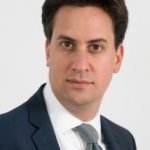
  • Ed Miliband – 2021 Comments on Supermarket Workers Earning Below Minimum Wage

    Ed Miliband – 2021 Comments on Supermarket Workers Earning Below Minimum Wage

    The comments made by Ed Miliband, the Shadow Business Secretary, on 13 January 2021.

    Every worker should be paid a fair wage they can live on. It’s just wrong that so many of our key workers, including in sectors like supermarkets and care, are being asked to survive on low pay.

    Labour strongly supports a real living wage of at least £10 an hour. As we rebuild our country and economy after coronavirus, we cannot just go back to business as usual.

    We owe the workers of our country an obligation to enable them to be paid a wage they can live and bring up their family on. The Government must take action to move our country to a real living wage.

  • Tulip Siddiq – 2021 Comments on Meal Parcels

    Tulip Siddiq – 2021 Comments on Meal Parcels

    The comments made by Tulip Siddiq, the Shadow Children and Early Years Minister, on 11 January 2021.

    The images that have been circulating on social media are shameful. But these revelations about the Government’s own guidance means that ministers’ newfound concern rings hollow. A couple of tins and a bottle of milk isn’t the difference between acceptable or unacceptable.

    The Government’s response has yet again been far too slow, with national food vouchers only becoming available from next week – two weeks after schools moved to remote learning.

    Children are going hungry now – this cannot wait.

  • Ruth Edwards – 2021 Speech on Global Britain

    Ruth Edwards – 2021 Speech on Global Britain

    The speech made by Ruth Edwards, the Conservative MP for Rushcliffe, on 11 January 2021.

    For centuries, Britain has led the world as a global industrial centre, importing and exporting goods, services and skills around the world. We now have an opportunity to strengthen old friendships and forge new ones. It is an opportunity for businesses large and small, those that have never exported and those that already do. Here in Rushcliffe, we are home to the world-famous Stilton cheese at Colston Bassett and Cropwell Bishop dairies. We make award-winning wines; a taste of Eglantine vineyard’s North Star wine will leave you in no doubt as to why. We develop state-of-the-art fitness equipment such as Wattbike and world-leading nutrition apps such as Nutracheck; I should say that they have kindly given me a year’s complimentary subscription, which is perhaps just as well after all that cheese and wine. The east midlands is also the beating heart of manufacturing, with the highest proportion of manufacturing jobs in England based here. We make planes, trains and automobiles and everything in between.

    The Government’s plan for a network of free ports is a great way to grow our economy, create jobs and encourage investment. Here in the east midlands, there is a fantastic, unique proposal for a free port that would cover East Midlands airport in North Leicestershire, a new advanced manufacturing cluster focused on green jobs in Ratcliffe-on-Soar in Rushcliffe and the east midlands automotive intermodal park in South Derbyshire—all situated at the heart of the country, with access to 90% of the population within four hours, on the site of the UK’s largest dedicated freight airport, connected by rail to our main deep sea ports and located at the centre of our national motorway network. What better place could there be to launch global Britain from?

    East Midlands airport is one of the largest air freight handlers in the UK, with capacity to treble the value of freight handled and create many more jobs on site. A successful bid will act as a catalyst to galvanise redevelopment of the Ratcliffe-on-Soar power station site into a hub for green businesses. What a legacy that would be on the site of one of the last coal-fired power stations left in Britain. It would improve the competitiveness of our region, helping to attract key investment from employers, and it would create jobs and training opportunities for local people. I am excited about the opportunities that lie in store for us as global Britain, and I hope that my right hon. Friends across Government will see the many ways in which a free port in the east midlands will help to deliver these.

  • David Morris – 2021 Speech on Global Britain

    David Morris – 2021 Speech on Global Britain

    The speech made by David Morris, the Conservative MP for Morecambe and Lunesdale, in the House of Commons on 11 January 2021.

    We have heard from most Members about the national benefits of leaving the EU and the prospects for global trade, and in the limited time I have I want to highlight the positive effects this deal will have on my constituency.

    In trade and business, along with the majority of my constituents, we overwhelmingly embraced exiting the EU and the prospects of trading on different global terms. The new link road in my constituency from Heysham port to the M6 is the quickest route in the country from a major transport artery to a major port. Heysham port has had over £10 million in recent years for upgrades from Government and the private sector, gearing up for increased volumes of trade through Ireland and Northern Ireland. It is only a matter of time before Heysham port is awarded freeport status, which I and the Morecambe business improvement district, among many others, would like to see. Indeed, I am in discussions about making this application in the very near future.

    Morecambe and the surrounding area have many international energy interests. After the referendum result had been declared I was given assurances by EDF that the vote to leave the EU would not affect jobs and investment; it was true to its word, and the Hydrogen to Heysham project, which along with EDF includes the European Institute for Energy Research and Lancaster University, has successfully demonstrated the technical feasibility of producing clean hydrogen by co-locating electrolysis facilities at our nuclear site in Lancashire. EDF Energy has confirmed that the project remains on its corporate agenda. EDF is now considering options for building on the learnings of the project to focus on low-carbon hydrogen applications and demonstrate them in the Morecambe bay area. This is clear proof that the EU ought to continue being a partner in the great successes of the energy and academic sectors in my constituency to ensure clean energy for the future.

    The Eden Project is coming to Morecambe, paving the way for Morecambe to move forward to a new golden era of regeneration and prosperity. We welcome Eden North, and in particular the future prospects for our young people, who have recently formed North West Youth for Eden. Lancaster and Morecambe College has, under the leadership of Wes Johnson, reached an agreement to train future generations to work in Eden, a prestigious brand with sites across the world. Likewise, the vice-chancellor of Lancaster University, Dame Sue Black, is already championing the benefits of Eden Project North and partnering for the future prosperity of my district in the next generations.

    On the space industry, the UK will remain a member of the European Space Agency and will continue to participate in the Copernicus project. This will enable intellectual property to be maximised by high-tech industries in my district. Along with other communication platforms, the UK is now a major stakeholder in OneWeb, the Earth-orbiting communication system.

    Finally, I pay homage to the Prime Minister and the previous Prime Minister in getting us to this point. Leaving the EU has not been an easy job, but we will have many options in the future.

  • Rupa Huq – 2021 Speech on Global Britain

    Rupa Huq – 2021 Speech on Global Britain

    The speech made by Rupa Huq, the Labour MP for Ealing Central and Acton, on 11 January 2021.

    Global Britain—a lofty ideal, but with recent months witnessing a dramatic reduction of the UK’s international aid and a hard Brexit, I want to strike a note of realism into the Government’s one-way triumphalism.

    Less than two weeks ago, we saw our relationship with our biggest and closest trading partner, five decades after a Tory Government took us into the European Economic Community in a 12-year process, fizzle out in another of these constrained debates—so much for the sovereignty of Parliament. The Committee on the Future Relationship with the European Union then began examining the detail of the 1,256 pages of trade and co-operation reduction downgrades. That Committee, too, is now having the plug pulled, when there is so much to scrutinise.

    Erasmus—gone, with its replacement set to foster British uniglotism. Touring musicians, facing ruinously costly obstacles for themselves and gear to get in the van and go—gone. Eighty per cent. of our economy is services, the biggest chunk being financial services. It got 90 mentions while fishing, 1% of the economy, featured 368 times. Too much of this is left “TBC”, and other horrors are only now coming to light. There is no end to red tape, as previously promised, for export/import firms that are reporting untold VAT complications and costs.

    The access to criminal databases enjoyed the week before last through the EU arrest warrant—gone. There is no more EU co-operation on defence, the environment, international aid—it is the opposite of global Britain as we shrink on the world stage socially, culturally, and in security and prosperity terms. It is better than no deal, yes, but it is a downgrade none the less, and with no guarantee of keeping up on employment protections and the environment. That is the opposite of levelling up.

    On international aid, Cameron, Brown, Blair, Major and even the last Prime Minister—every living Prime Minister —have condemned the cutting of the 0.7% contribution to the world’s poorest as morally unjustifiable and practically short-sighted, particularly at a time when the world faces the common enemy of coronavirus. It seems that we are going it alone when collective action would be wise. On having the courage to condemn old friends and allies when necessary, the past PM was the first to hold Trump’s hand, but now it is time to hold him to account.

    This Government have made a habit of U-turns—they occur daily nowadays. The next one must be to start off with reinstating the International Development and Brexit Committees and then go further, because otherwise, global Britain just becomes a mere Bozza buzzword.

  • Ian Paisley – 2021 Speech on Global Britain

    Ian Paisley – 2021 Speech on Global Britain

    The speech made by Ian Paisley, the DUP MP for North Antrim, in the House of Commons on 11 January 2021.

    I am all for global Britain, but I am more for global UK. I want to make sure that Northern Ireland gets its fair share of the action. I know that the Minister is doing his best to ensure that Northern Ireland is kept at the top of the agenda, and that is essential.

    I welcome the comments earlier from the right hon. Member for Maidenhead (Mrs May). There is absolutely no doubt that in the first 11 days of this year, the protocol that has been inflicted on Northern Ireland’s trade has been a complete and unmitigated disaster. That is not the fault of Brexit, but it is the fault of those who tried to frustrate Brexit. I hope the Government will urgently invoke article 16 and remove the pernicious clauses of the protocol that are damaging trade.

    Let me give an example. At the weekend, I had to field a call from my constituent who was moving home from Essex to Broughshane in my constituency. When she got her white van to Cairnryan, she was told that she required an export and customs declaration form—to move home from one part of the United Kingdom to the other! I was furious. That van had to turn and go back to Essex and she had to enter the boat at Cairnryan as a foot passenger to get to her home. It is utterly and totally disgraceful. If that is how we are treating citizens of global Britain, I am outraged and appalled that that is how citizens are being treated. Let us fix that, which we can do by invoking article 16, and let us fix it now, because the longer we delay, the more we will damage trade.

    I had another constituent on the phone today who imports personal protective equipment that is made in Britain—in Yorkshire—and when it got to the Cairnryan ferry terminal it was turned back. It was coming in to help frontline workers in Northern Ireland but it was turned back. That is another disgrace. It has to cease, and the quicker that happens, the better.

    I can tell the House one thing: I do not hear any Scots nationalists tonight demanding that they have this special protocol. The protocol has been a disaster for Northern Ireland and we are only on day 11. I hope that the Government fix it very quickly. Let us sort out our internal UK trade—sort out the friction that exists—and then we can get on with ensuring that we really can be a world player in the future of our market.

    I wish to put one other item on the agenda: it is essential that we seize the opportunity to be the world leader in hydrogen technology. This country is right at the cusp of that. We missed the battery opportunity; we can be the leaders in hydrogen technology. Let us use every opportunity to make sure we have hydrogen cities, hydrogen power, hydrogen opportunities and hydrogen jobs in the United Kingdom.