Tag: Speeches

  • Lisa Nandy – 2021 Comments on Boycott of 2022 Winter Olympics

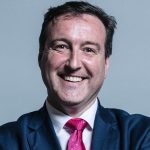
    Lisa Nandy – 2021 Comments on Boycott of 2022 Winter Olympics

    The comments made by Lisa Nandy, the Shadow Foreign Secretary, on 15 July 2021.

    Today’s landmark decision by Parliament to back a diplomatic boycott of the Beijing Olympics sends a clear message that appalling human rights abuses must have consequences.

    By refusing to back today’s motion, this Government is sleepwalking into a situation where members of government and the Royal Family will participate in a PR coup for the Chinese authorities while genocide is committed against the Uyghur. Global Britain must stand for more than this.

    With a global audience of billions, the Beijing Olympics must be the moment we show the world that we will not look away. The Government must use this moment to call time on one of the world’s most appalling human rights atrocities. We cannot turn a blind eye to genocide.

  • Matt Western – 2021 Comments on the National Student Survey Results

    Matt Western – 2021 Comments on the National Student Survey Results

    The comments made by Matt Western, the Shadow Universities Minister, on 15 July 2021.

    The Conservatives’ failure to control the spread of Covid and in letting successive variants into the UK has denied students the university experience they deserve.

    Universities have worked tirelessly to protect students learning throughout the pandemic, but the Government has let them down with late and inadequate guidance and pitiful student hardship support which has trailed far behind the Welsh Labour Government.

    Instead of supporting students and creating the opportunities young people need, the Conservatives are wasting time on unnecessary legal protections which would enable Holocaust Deniers and anti-vaxxers to sue universities if they are denied a platform to spread their ideas across campuses. These are clearly the wrong priorities.

  • Louise Haigh – 2021 Comments on Ireland’s Statement on Amnesty Proposals

    Louise Haigh – 2021 Comments on Ireland’s Statement on Amnesty Proposals

    The comments made by Louise Haigh, the Shadow Secretary of State for Northern Ireland, on 15 July 2021.

    The Government have serious questions to answer over the legality of their amnesty proposals. They must publish the legal advice they have received.

    Pressing ahead with proposals which undermine the rule of law, lack the support of victims, any political party in Northern Ireland or the Irish Government, would be divisive and undermine reconciliation.

    There must be a comprehensive legacy process as outlined at Stormont House, with families able to discover the truth, through effective investigations with full police powers. Ministers must not unilaterally abandon that.

  • Emily Thornberry – 2021 Comments on Falling UK Exports

    Emily Thornberry – 2021 Comments on Falling UK Exports

    The comments made by Emily Thornberry, the Shadow International Trade Secretary, on 16 July 2021.

    In last year’s annual report, Liz Truss boasted about her achievements in this area, saying ‘I am proud of the £24.4 billion in Export Wins my department recorded in 2019-20.’

    In this year’s report, slipped out without a press release last night, she has nothing to say about the catastrophic collapse she has presided over in government-backed export deals.

    At a time when we urgently need to buy, make and sell more British goods to drive our recovery from the pandemic, Liz Truss has shown she is just not up to the task.

  • Seema Malhotra – 2021 Comments on Gigafactories

    Seema Malhotra – 2021 Comments on Gigafactories

    The comments made by Seema Malhotra, the Shadow Business and Consumers Minister, on 16 July 2021.

    To boost our automotive manufacturing industry, Labour would be part-financing the creation of three new battery development plants by 2025.

    The UK has a world leading, competitive automotive industry that means we could win the global race in electric vehicle development. But a strong domestic battery supply chain is key to retaining that competitive edge and the SMMT has warned the Government that the UK is falling behind our competitors.

    This government has driven manufacturing into decline, and failed to invest in the jobs we need. As we recover from the pandemic, Labour has a plan to get our economy firing on all cylinders again with a plan to buy, make and sell more in Britain, so that we build the industries and skills of the future we need.

  • Jo Stevens – 2021 Comments on Music Streaming

    Jo Stevens – 2021 Comments on Music Streaming

    The comments made by Jo Stevens, the Shadow Secretary of State for Digital, Culture, Media and Sport, on 15 July 2021.

    When music lovers stream their favourite tracks they expect the artists who perform them to profit.

    Instead, they get a pitiful amount while streaming sites and record companies cash in.

    It is clear that attempts to reform the system have failed and legislation is urgently needed which is why Labour have supported the broken record campaign to fix this.

  • Christian Matheson – 2021 Speech on Foreign Aid Cuts

    Christian Matheson – 2021 Speech on Foreign Aid Cuts

    The speech made by Christian Matheson, the Labour MP for the City of Chester, in the House of Commons on 13 July 2021.

    The Prime Minister told the House earlier that there was common ground in the House. I think he is right, but I suspect, having listened to contributions from the Conservative Benches, that he is not standing on that common ground. I pay tribute to the right hon. Member for Sutton Coldfield (Mr Mitchell) for the courage that he and other Conservative Members have shown in standing up for this issue consistently, and also standing up for their manifesto, along with the rest of us. The Government have a good story to tell on this issue if they wanted to—on Gavi, for example, and on their support for education for women and girls. I wonder why they do not want to tell this story to the country. I think it is because too many of them are ashamed of it and because, as the right hon. Gentleman said, they are playing to a gallery but playing to the wrong gallery. It is a dangerous game that they are playing.

    The proposals before the House today are myopic and mean-minded. They are mean-minded because we can see that this is a trick—a fiscal trap. We were promised a straight up-and-down vote but we were not given one; instead we were given this little twisting mechanism. It is mean-minded, too, because, as we have heard, it will cost lives to make these cuts, and because they are already a cut to what would have been a smaller cake anyway. The money had already gone down and to cut it further is simply mean. With any of these programmes we cannot simply turn the taps on, then off and then back on again. The damage that will be done to British overseas aid programmes will carry on long after we restore the 0.7%, if, under this proposed mechanism, we ever do restore it.

    This cut will set programmes back. It will set research and development back, including for my constituents. I have a constituent who works in water purification and another who works in localised energy matters. These cuts will have an effect overseas, but let us be clear: they will have effects in this country as well, in terms of innovation and our ability to take technologies across the world. They will have effects in areas such as the polio eradication programme. As my right hon. Friend the Member for Leeds Central (Hilary Benn) has said, cuts of 95% will set that programme back. The cut is myopic, for the reasons already set out by my right hon. and learned Friend the Leader of the Opposition and the hon. Member for Tonbridge and Malling (Tom Tugendhat): it will damage British soft power, with the British Council telling me that it will lose 15% to 20% of staff and will be unable to carry out programmes in the countries where we need to be influencing; and it will affect our strategic position, as the Leader of the Opposition has said.

    Overseas aid is a moral issue, but if we cannot look at it like that, let us be clear: our adversaries, Russia and China, and our enemies, al-Qaeda and Islamic State, will fill the gap if we do not, and this will simply make matters worse in the long run. This is a short-sighted, short-termist cut. It is mean-minded. I pay tribute to the right hon. Member for Sutton Coldfield for his leadership, and I will not be accepting this motion tonight.

  • Greg Clark – 2021 Speech on Foreign Aid Cuts

    Greg Clark – 2021 Speech on Foreign Aid Cuts

    The speech made by Greg Clark, the Conservative MP for Tunbridge Wells, in the House of Commons on 13 July 2021.

    I am glad to see the Chancellor in his place; I have a couple of specific questions for him on science policy.

    First, in the context of this debate, I am very proud of our leadership and our contribution to supporting people right across the world. I voted enthusiastically for the Act of Parliament that brought the 0.7% commitment into law. I pay tribute to my right hon. Friend the Member for Sutton Coldfield (Mr Mitchell) for his work on that Act, but, in so doing, he will know that it specifically anticipated circumstances in which, temporarily, the 0.7% target may not be met, including

    “any substantial change in gross national income”

    and/or

    “fiscal circumstances…in particular, the likely impact of…the target on taxation, public spending and public borrowing”.

    It is hard not to consider that the circumstances that we are experiencing fall plumb into line with what the framers of the legislation and those who supported it had in mind.

    Mr Mitchell

    I was involved in the drafting of the Act and I do not believe that that is what we intended with those clauses. Has my right hon. Friend noticed that the Governor of the Bank of England has said that the economy will have been restored to pre-covid levels by next month? Does he not think that that is a very significant indicator of why we should not be doing what the Government would like us to do today?

    Greg Clark

    I am grateful to my right hon. Friend. I quite agree that that is an encouraging assessment, not least for the prospects of our returning to the 0.7%.

    I studied very carefully the Hansard transcripts of the debate, and some of the criticism was that the criteria might be insufficiently precise, so the innovation of establishing in advance and giving to the Office for Budget Responsibility the trigger for the return is a sensible course. Indeed, this mirrors, more or less, the fiscal rules that were once called the fiscal mandate that were in place at the time that the Act was originally adopted. I want the target back, and I hope, as the Governor does, that that will be sooner rather than later, and that the Chancellor will be able to confirm that it is his firm intention, as I think is clear from what he said in the written statement.

    My questions on science are twofold. First, the science budget is, very importantly, increasing from about £9 billion a year in 2017 to £22 billion a year from 2024-25. That includes, as it always has done, official development assistance. Will the Chancellor specifically reiterate the commitment to achieving that £22 billion by 2024-25? Secondly, will he reassure me on a report I read that the 0.5% limit on ODA could somehow prevent us from engaging in international scientific research projects that we were perfectly willing to fund because they are excellent and are justified as part of the budget that is rising to £22 billion? We all know that science is inherently international. The best science is global and the best teams are often international teams, so it would be a great concern if the 0.5% target would in any way be a cap on international collaboration. Knowing my right hon. Friend the Chancellor’s commitment to science and technology, I cannot believe that that is his intention. His commitment to the £22 billion budget and his reassurance that the target will not be a cap will be very important in establishing that the science aspect can continue, and that this is, in effect, the removal of a ring-fence rather than a limitation on international scientific research.

  • Geraint Davies – 2021 Speech on Foreign Aid Cuts

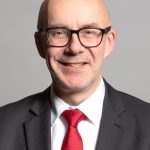
    Geraint Davies – 2021 Speech on Foreign Aid Cuts

    The comments made by Geraint Davies, the Labour MP for Swansea West, in the House of Commons on 13 July 2021.

    There is no economic or moral justification for cutting overseas aid from the richest to the poorest at this most desperate time in the eye of the pandemic storm, which spreads death, disease and hunger like a wildfire through developing nations. Let us imagine looking at our children starving in front of us, huddled in a tent in the blistering heat of Afghanistan, Yemen or Syria, as we think about the cars, houses, fridges and Netflix that people have in the west. Let us imagine looking at our daughters who could help create a better world with an education but will not get one, or our parents who have just died from covid. We can help alleviate such poverty, ignorance and disease by reinstating the aid budget. As host of the G7 and COP26, we should take moral leadership.

    Let us be clear: we can afford to help those in greatest need more, not less because the cost of UK borrowing is down, not up, since the pandemic. Why? Global interest rates are down, so our borrowing costs are down—from £37 billion in 2019-20 to £23 billion in 2020-21. That is a saving of £14 billion in spending on debt interest for the UK, but aid spending is still being cut by £4.4 billion. The Prime Minister has just said that every pound we spend on aid has to be borrowed. We can afford more aid now because our borrowing and debt interest costs are massively down. Now is the time to invest and to build back better out of the pandemic in the developing world, and to invest in climate change adaptation, with new green industries that will help all our environments.

    In a low interest world, now is the time to borrow and invest. A cut of £1 million in aid could be reinstated and service a debt of £100 million in investment. Only the G7 can borrow at such low interest rates; developing nations cannot. It is no use saying that we cannot afford it this year due to the pandemic and that maybe we will reinstate money in future years. We can afford it this year, and now is when the money is needed most. If savings were needed—and they are not—they should be made after the pandemic, when the poorest are back on their feet, not in their darkest hour of need.

    We know the politics of popular nationalism. We know that 7.6 million people in the UK are in hunger, so of course people are saying that charity begins at home. But that hunger is unnecessary too and we should not give other G7 nations an excuse to cut their aid. We need more aid, not less. Britain is better than this. Let us make the world better. Let us reinstate our aid budget now.

  • David Warburton – 2021 Speech on Foreign Aid Cuts

    David Warburton – 2021 Speech on Foreign Aid Cuts

    The speech made by David Warburton, the Conservative MP for Somerton and Frome, in the House of Commons on 13 July 2021.

    I am pleased that the House has an opportunity both to debate and to determine this question. I have always defended our aid budget, and I do not think that we should search for economies at the expense of the most vulnerable globally and at the expense of our own reputation and influence globally.

    I do not need to rehearse the case for ODA spending, which funds the vaccination of 55 million people; saves an incredible 10 million children from hunger; and helps to provide 50 million people with the means to climb out of poverty. I do not need to describe its soft-power benefits: the influence for Britain culturally, diplomatically, and politically; its symbolic significance; and its demonstration of leadership. I could not, therefore, support the reduction of that spending when the return to 0.7% is effectively at the whim or under the control of the Government. No matter how strong the intention to raise it again, events are always likely to overtake and overcome good intentions.

    I am very grateful to my right hon. Friend the Chancellor for the conversations that we have had in recent days. Given the uncertainty in the economy, I entirely understand his reluctance to offer a date for the restoration of the 0.7%. However, a set of conditions would provide a pathway, governed by objective circumstances, to a solution. Ceding control of the mechanism to the OBR and basing it on conditions that were met as recently as 2018-19—and forecasted by the OBR in 2018-19 and in 2020 to be met in the following financial year—would provide that pathway back to our manifesto commitment and our duty to the world.

    The Treasury is effectively outsourcing its spending decisions to the OBR and the state of the public finances. I do not believe that that has happened before and it provides us with the certainty we need that the cut is temporary and that our commitment to 0.7% will be upheld. It also ensures that our public finances are protected. That not only gives us a route back, but ensures that the current position is transitory, so I will support the motion. The worth of a commitment is whether it is upheld in the face of challenges, and the motion allows us to meet our challenges and our commitments.