Tag: Speeches

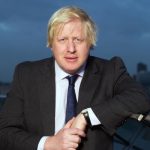
  • Boris Johnson – 2021 Comments on COP26 Conclusions

    Boris Johnson – 2021 Comments on COP26 Conclusions

    The comments made by Boris Johnson, the Prime Minister, on 10 November 2021.

    Negotiating teams are doing the hard yards in these final days of COP26 to turn promises into action on climate change.

    There’s still much to do. Today I’ll be meeting with ministers and negotiators to hear about where progress has been made and where the gaps must be bridged.

    This is bigger than any one country and it is time for nations to put aside differences and come together for our planet and our people.

    We need to pull out all the stops if we’re going to keep 1.5C within our grasp.

  • Chloe Smith – 2021 Apology Over Owen Paterson Vote

    Chloe Smith – 2021 Apology Over Owen Paterson Vote

    The comments made by Chloe Smith, the MP for Norwich North, on 9 November 2021.

    I am always prepared to justify my votes in Parliament and to be accountable to constituents for those. That is fundamental in this job. In this case, I recognise I got it wrong.

    I voted for the Leadsom amendment to the motion because I believe it contained some sensible points.

    It was designed to improve our standards system. I don’t think anyone thinks the current system is perfect, and there are some serious questions which need to be discussed.

    For example, under the present disciplinary system, the accused party has no right of appeal and few rights when it comes to presenting witnesses or other supporting evidence.

    However, reforms to the process should not be tied to a vote on a single case. Or, indeed, applied retrospectively. MPs should hold themselves to the highest standards in public life and must accept a rule book.

    The government recognises this too, and that they made a mistake.

  • Grant Shapps – 2021 Statement on Lorry Parking

    Grant Shapps – 2021 Statement on Lorry Parking

    The text of the statement made by Grant Shapps, the Secretary of State for Transport, in the House of Commons on 8 November 2021.

    I wish to update the House on the joint initiative between the Department for Transport and Department for Levelling Up, Housing and Communities on planning reforms for lorry parking, and to emphasise the critical importance of the freight and logistics sector to shops, households, assembly lines, hospitals and other public services across the country.

    The infrastructure that supports our hauliers is essential to the effective and resilient supply chains we need. This Government are committed to addressing the strategic national need for more lorry parking and better services in lorry parks in England and we must act now.
    To support our hauliers’ access to parking and services in the near term we are working with our partners to identify and deliver a number of temporary sites where short-term modular facilities can be installed to address some of our immediate need. We are encouraging National Highways to consider how their land holdings can be used to provide additional parking spaces nationwide, to give priority to the provision of lorry parking across the strategic road network and assist local authorities in identifying areas of lorry parking need.

    This Government are also determined that the planning system should play its part in meeting the needs of hauliers and addressing current deficiencies. Planning plays a critical part in the allocation of land for lorry parking.

    The national planning policy framework sets out that local planning policies and decisions should recognise the importance of providing adequate overnight lorry parking facilities, taking into account any local shortages, to reduce the risk of parking in locations that lack proper facilities or could cause a nuisance.

    In addition, the Government policy is clear that development proposals for new or expanded goods distribution centres should make provision for sufficient lorry parking to cater for their anticipated use. In preparing local plans and deciding planning applications, the specific locational requirements of different industrial sectors should be recognised and addressed. This should include making provision for storage and distribution operations at a variety of scales, and in suitably accessible locations.

    We have also published planning practice guidance setting out how local planning authorities can assess the need for and allocate land to logistics site uses and are accelerating work recommended by the National Infrastructure Commission to consider the appropriateness of current planning practice guidance. This includes taking forward a review of how the freight sector is currently represented in guidance.

    To ensure future decision making supports the needs of the sector, we are updating highways circular 02/2013 “The Strategic Road Network and the Delivery of Sustainable Development” fully to reflect the importance of providing logistics and freight, and are updating the national lorry parking survey to ensure strong evidence is available on the national picture in future. A programme of longer-term measures is under development supported by the £32.5 million in roadside facilities for hauliers announced in last week’s Budget, and we will publish a future of freight plan, a long-term strategic plan for the sector, in the coming months.

    The need for a reliable and efficient supply chain has recently come into sharp focus. It is therefore essential that we put in place mechanisms that deliver a supply chain network that is secure, reliable, efficient, and resilient, with no link in the chain overlooked.

    Taken together our planning policies and wider measures will support our logistics and freight sectors and the people that work in them. Working with industry and local authorities we will continue to monitor the situation closely and take further action when it is needed.

  • Nigel Huddleston – 2021 Statement on Standing in Football Stadiums

    Nigel Huddleston – 2021 Statement on Standing in Football Stadiums

    The statement made by Nigel Huddleston, the Parliamentary Under-Secretary of State at the Department for Digital, Culture, Media and Sport, in the House of Commons on 8 November 2021.

    On 22 September, the Department for Digital, Culture, Media and Sport and the Sports Grounds Safety Authority announced an early adopters programme for licensed standing in seated areas at football stadia. The programme will be implemented in the second half of this football season between 1 January 2022 and 31 July 2022. I can confirm today that the football clubs that will act as early adopters are Cardiff City, Chelsea, Manchester City, Manchester United and Tottenham Hotspur.

    The early adopters programme represents a significant step towards fulfilling the Government’s manifesto commitment to work with fans and clubs towards introducing licensed standing in seated areas at football grounds. It will enable the Government to evaluate how successful licensed standing areas could be as a strategy to manage persistent standing across five different football grounds with varying challenges, before it considers making any substantive policy changes or wider implementation. It will be subject to a formal independent evaluation.

    I have today laid a statutory instrument which directs the SGSA to amend the “all-seater condition”, which requires stadia to provide all-seated accommodation, in any licence to admit spectators issued to these five football clubs under the Football Spectators Act 1989 by the SGSA. This will allow the five specified clubs to admit spectators to their home grounds to watch designated football matches from a standing position, provided certain conditions are satisfied. This means doing so in areas of the ground where the seating accommodation has been adapted so there are seats incorporating a barrier or seats with an independent barrier. The SGSA has produced supplementary guidance (SG01) providing further information about the standards-requirements which must be met. This guidance is available online. These modern—non-terraced—stands or areas with seats therefore still allocate one person to one seat.

    The selection of these clubs followed an expression of interest process which was conducted by the SGSA between 22 September and 6 October 2021. The SGSA invited applications from football clubs in the top two tiers of professional football in England and Wales currently subject to the all-seater policy to become early adopters of licensed standing in seated areas. The SGSA analysed the applications against the published early adopter criteria, which are available online, before providing written recommendations to DCMS. This advice was carefully considered before receiving final ministerial approval.

    In addition, prior to their publication, the early adopter criteria and licence conditions for standing in seated areas were subject to a six-week consultation—28 July-6 September 2021—with key stakeholders. This included safety committee members—the Premier League, English Football League, Football Association, UK Football Policing Unit, Football Supporters’ Association, Football Safety Officers’ Association, Safety Advisory Group Regional Chairs Lead and the National Counter-Terrorism Security Office—local authorities, football governing bodies and licensed football clubs. DCMS worked closely with the SGSA to ensure that consultation responses were used to inform the final criteria clubs were required to meet to become early adopters, which are available online.

    The Government’s approach is driven by safety considerations. Given the wider context and background to the current all-seater policy, it is right that we carefully consider any wider change in policy, looking at all the evidence and assessing the potential safety impacts of any change. The Government are not complacent about spectator safety, nor are we complacent about the safety policies that have served spectators well for many years. We will continue to work closely with the SGSA, football clubs, the football governing bodies and local authorities to ensure that spectator safety remains paramount.

  • Lindsay Hoyle – 2021 Statement on Owen Paterson Controversy

    Lindsay Hoyle – 2021 Statement on Owen Paterson Controversy

    The text of the statement made by Lindsay Hoyle, the Speaker of the House of Commons, in the House on 8 November 2021.

    From time to time, we talk about the House being at its best. I regret to say that I do not think that the House has been at its best in the way in which it has handled standards issues over the past week. I would like to make a few points about where we are now and where we might get to if we can approach the issue in a genuinely constructive and non-partisan spirit.

    In my role as Speaker, I am required to maintain strict impartiality. That includes, for example, responsibility for giving the House the opportunity to consider orderly amendments that attract considerable support, whatever my own view of them may be. But I also feel a weighty responsibility to ensure that the House deals with these issues effectively and fairly, and that its reputation reflects that.

    One issue is clear. Owen Paterson has resigned as an MP, so it no longer falls to the House to decide whether he should be suspended, although I note that the House has not reached a decision on the report of the Select Committee on Standards. I understand that the Committee is nearing the end of its review of the code of conduct. After that report has been published, there may be some way of working with the Committee to build on its work.

    On Thursday, the Leader of the House indicated that he believed that there was cross-party support for reform of the standards process, and particularly for looking at a mechanism for appeals. He also said that

    “a Committee cannot work effectively without Opposition Members on it”.—[Official Report, 4 November 2021; Vol. 702, c. 1056.]

    I agree. If the House wishes to review the system, it must do so on a cross-party basis. Opposition parties have made it clear that they will not participate in the Committee established on Thursday. We therefore need to find a different way forward. I would also expect the Chair of the Committee on Standards to be invited to have a role in any process, given the extensive work that his Committee has already undertaken.

    In finding that way forward, I want to remind the House of two things. First, I repeat what I have said before about the importance of not criticising officials in this House who are not able to respond. Of course it is possible to make proposals to improve processes and practices, but please do not criticise the Commissioner for Standards, who is doing a job that we have appointed her to do. Secondly, I know that there have been concerns about what recent events mean for the Independent Complaints and Grievance Scheme. Let me be clear: the decision taken last Wednesday did not in any way affect the operation of the ICGS or that of the Independent Expert Panel. Let me say to those people who feel that they are not going to come forward because the ICGS will not be there that it is there: do not think that there is a barrier to people coming forward.

    Finally, and again in a spirit of finding the best way forward, I say to the House that I will do everything I can to help to ensure that all Members feel confident that we have an effective and fair system, and that those who follow our proceedings feel the same.

    I granted the debate today because I thought it was essential to sort out the mess that we are in. We can start to do that today, but it requires two things: for us all to tone down the party political sniping and focus calmly on making sure the system is as effective as it can be, and for everyone to recognise that, if we are going to achieve progress, we will only do so on a cross-party basis. I also want to remind the House that it is not in order to make allegations of impropriety against other named Members, unless the House is considering a substantive motion dealing with the issue directly. There are other routes for raising such claims. So please, use the routes that are available.

    I sincerely hope that all Members will take the approach I have recommended, and that by the end of this debate we will have a clearer sense of how we can move forward together on this important subject. Please, let us see the House at its best, as we have certainly seen it at its worst.

  • Jonathan Ashworth – 2021 Speech on David Fuller

    Jonathan Ashworth – 2021 Speech on David Fuller

    The text of the speech made by Jonathan Ashworth, the Shadow Secretary of State for Health and Social Care, in the House of Commons on 8 November 2021.

    I thank the Secretary of State for advance sight of his statement and for its content, and I welcome what he has announced today.

    This is an unspeakably vile and horrific crime, and across the House our thoughts and hearts go out to the families of Wendy Knell and Caroline Pierce, and to the families of those with deceased loved ones. Those 100 victims—we are talking about the corpses of 100 women —were, as has been reported in the press, violated in the most monstrous, vile and sickening way. Will the Secretary of State confirm that all the families impacted will have immediate access to the psychological counselling and support that they need? Will NHS staff at the hospital, many of whom will themselves be devastated, also have access to appropriate counselling and support?

    I welcome the announcement of an inquiry, and I pay tribute to local Members of Parliament across Kent and Sussex who have spoken up on behalf of their communities in recent days. In particular, the right hon. Member for Tunbridge Wells (Greg Clark) said over the weekend that authorities and politicians must

    “ask serious questions as to how this could have happened and…establish that it can never happen again.”

    I agree, and that is why an inquiry is so important.

    Will the Secretary of State offer some precision as to when the terms of reference will be published? Fuller was caught because of a murder investigation, which in itself prompts a number of questions about the regulation of mortuaries. The Human Tissue Authority, which regulates hospital mortuaries, reviewed one of the mortuaries in question as part of its regulatory procedures. It raised no security concerns, but found a lack of full audits, examples of lone working, and issues with CCTV coverage in another hospital in the trust. Will the inquiry consider—or perhaps this is the remit of the Secretary of State—the Human Tissue Authority’s standards, the way it reviews hospital mortuaries, and how those standards are enforced? Will the inquiry recommend new processes that the Secretary of State will put in place if it is found that a mortuary fails to meet the high standards for lone workers, for security and for care?

    The NHS has asked trusts to review their procedures; I welcome that. Will the Secretary of State ensure that all mortuaries document and record the access of all staff entering a mortuary, and will he ensure that standards for CCTV are enforced and that CCTV is in place comprehensively across all mortuaries? There are, of course, other premises where dead bodies are stored, such as funeral directors, that do not fall under the regulatory remit of the Human Tissue Authority, so will its remit be expanded, or will the inquiry look at regulation for other premises where bodies are stored?

    When our loved ones are admitted into the hands of medical care, that is done on the basis of a bond of trust—that our loved ones will be cared for when sick and accorded dignity in death. That bond of trust was callously ripped apart here. I offer to work with the Secretary of State to ensure that something so sickening never happens again.

  • Sajid Javid – 2021 Statement on David Fuller

    Sajid Javid – 2021 Statement on David Fuller

    The statement made by Sajid Javid, the Secretary of State for Health and Social Care, in the House of Commons on 8 November 2021.

    With permission, Mr Speaker, I shall make a statement on the appalling crimes committed by David Fuller and the Government’s next steps. In recent days, the courts have heard about a series of David Fuller’s shocking and depraved offences. The legal process is ongoing, as you have just said, Mr Speaker. David Fuller is yet to be sentenced, so there are some things it would be inappropriate for me to talk about at this time. I am sure the House will understand why the majority of my statement will focus on the steps that we are taking in response to those crimes and not the crimes themselves.

    Before I do, I will briefly update the House on this shocking case. In December, David Fuller was charged with the murder of two young women, Wendy Knell and Caroline Pierce, in the Tunbridge Wells area of Kent in 1987. Last week, he pleaded guilty to their murders. My thoughts, and I am sure the thoughts of the whole House, are with Wendy and Caroline’s family and friends.

    As well as that, the Kent and Essex serious crime directorate has been carrying out an investigation into his offences in hospital settings between 2008 and 2020. As a result, Fuller was charged with a series of shocking offences involving sexual offences committed in a hospital mortuary. He has also pleaded guilty to these offences. As sentencing has yet to take place, it would be inappropriate for me to comment on the case, but I will say that, in the light of what has happened, the Justice Secretary will be looking at whether the penalties that are currently available for such appalling sexual offences are appropriate.

    It has taken months of painstaking work to uncover the extent of this man’s offending. The fact that these offences took place in a hospital—a place where all of us should feel safe and free from harm—makes this all the more harrowing. This has been an immensely distressing investigation, and I would like to thank the police for the diligent and sensitive way that they have approached it. They have shown the utmost professionalism in the most upsetting of circumstances, and I would like to thank them for their ongoing work. I would also like to thank the local NHS trust—Maidstone and Tunbridge Wells NHS Trust—for co-operating so closely with the police.

    Officers have, tragically, found evidence of 100 victims. Of these victims, 81 have been formally identified, and specially trained family liaison officers have been supporting their families. Every family of a known victim has been contacted. We have been working closely with the police, the police and crime commissioner and the NHS trust to make sure that those families who have been directly affected receive the 24/7 support that they need, including access to dedicated caseworkers, and mental health support and counselling.

    If anyone else is concerned that they or their loved ones may be a victim, or if they have any further information, they should search online for the major incident police portal, and select “Kent Police” and “Operation Sandpiper”. I know how distressing the details of these offences will be for many people. The local NHS trust has put arrangements in place to support staff who have been affected, and regardless of whether or not someone has been directly impacted by these offences, they can access the resources that are available on the My Support Space website.

    This is a profoundly upsetting case that has involved distressing offences within the health service. The victims are not just those family members and friends who have been abused in this most horrific of ways; they are also those who are left behind—people who have already experienced loss, and now experience unimaginable pain and anger. They are victims, too.

    Even as we look into exactly what happened, I, as the Secretary of State for Health and Social Care, want to apologise to the friends and families of all the victims for the crimes that were perpetrated in the care of the NHS, and for the hurt and suffering they are feeling. I know that no apology can undo the pain and suffering caused by these offences, but with such serious issues of dignity and security, we have a duty to look at what happened in detail, and make sure it never happens again, so I would like to update the House on the steps we are taking.

    First, NHS England has written to all NHS trusts asking for mortuary access and post-mortem activities to be reviewed against the current guidance from the Human Tissue Authority. Trusts have also been asked to review their ways of working and to take a number of extra steps, including making sure that they have effective CCTV coverage in place, that entry and access points are controlled with swipe access, and that appropriate Disclosure and Barring Service checks and risk assessments are being carried out. NHS England will report directly to me with assurances that these measures have been taken, so that we can be confident that the highest standards are being followed and that we are maintaining security and upholding the dignity of the deceased. Next, the local trust has been putting its own steps in place. It has already conducted a peer review of mortuary practice, and it initiated an independent investigation into those specific offences.

    I thank the trust and its leadership for its quick initial work to set up that investigation, but given the scale and nature of these sexual offences, I believe we must go further. Today I can announce that I am replacing the trust investigation with an independent inquiry that will look into the circumstances surrounding the offences committed at the hospital, and their national implications. It will help us to understand how those offences took place without detection in the trust, identify any areas where early action by the trust was necessary, and consider wider national issues, including for the NHS. I have appointed Sir Jonathan Michael to chair this inquiry. Sir Jonathan is an experienced NHS chief executive, a fellow of the Royal College of Physicians, and a former chief executive of three NHS hospital trusts. He had been leading the trust investigation, and will be able to build on some of the work he has already done. The inquiry will be independent, and it will report to me as Secretary of State.

    I have asked Sir Jonathan to split his inquiry into two parts: the first, an interim report, which I have asked for early in the new year; the second, a final report looking at the broader national picture and the wider lessons for the NHS and other settings. We will publish the terms of reference in due course, and I have also asked Sir Jonathan to discuss with families and others to input into this process. Sir Jonathan’s findings will be public and they will be published. We have a responsibility to everyone affected by these shocking crimes to do right by those we have lost, and by those still left behind in their shock and their grief. Nothing that we can say in this place will undo the damage that has been done, but we must act to ensure that nothing like this can ever happen again. I commend this statement to the House.
  • Liz Truss – 2021 Statement Following the Attack on the Iraqi Prime Minister

    Liz Truss – 2021 Statement Following the Attack on the Iraqi Prime Minister

    The statement made by Liz Truss, the Foreign Secretary, on 7 November 2021.

    We condemn the attack on Iraqi Prime Minister Mustafa Al-Kadhimi that took place in Baghdad last night. We are relieved that the Prime Minister is safe and well, but our thoughts are with those injured as a result of the incident. We stand with the Iraqi government, security forces and people in their rejection of political violence and strongly support the Prime Minister’s call for calm and restraint.

  • Sajid Javid – 2021 Comments on Tackling Waiting Lists

    Sajid Javid – 2021 Comments on Tackling Waiting Lists

    The comments made by Sajid Javid, the Secretary of State for Health and Social Care, on 8 November 2021.

    Today’s multi-million pound investment will play a big role in levelling up diagnostics services across the country so patients can get faster results and healthcare professionals can get their job done more easily, reducing unnecessary administrative burden and making every taxpayer’s pound count.

    Getting a faster diagnosis for a health condition is the first step to getting more people the treatment they need and earlier on, and our funding will help ensure our NHS has access to the latest digital technology to drive up efficiency.

  • Anne-Marie Trevelyan – 2021 Comments on Climate Change

    Anne-Marie Trevelyan – 2021 Comments on Climate Change

    The comments made by Anne-Marie Trevelyan, the Secretary of State for International Trade, on 8 November 2021.

    We must act now to stop climate change from pushing more people into poverty. We know that climate impacts disproportionately affect those already most vulnerable.

    We are aiming for significant change that will ultimately contribute to sustainable development and a climate resilient future for all, with no one left behind.