Tag: Speeches

  • Seema Malhotra – 2022 Speech on the Commercial Rent Bill

    Seema Malhotra – 2022 Speech on the Commercial Rent Bill

    The speech made by Seema Malhotra, the Labour MP for Feltham and Heston, in the House of Commons on 12 January 2022.

    It is a pleasure to speak to new clause 1 and amendments 9 to 17, which stand in my name and in the name of my hon. Friend the Member for Brentford and Isleworth (Ruth Cadbury).

    A process for resolving commercial rent arrears is very much needed, as dealing with the financial pressures brought on by covid is vital for landlords and tenants alike. Against that backdrop, Labour broadly welcomes the Bill, but we believe that the Government can and should do more on business support. That context is important because covid is not over. Business costs continue to rise, and they are also driven by rising fuel costs and inflation. Economic forecasts for the next three to five years project low growth, high inflation and high taxes. Managing financial pressures and supporting viable businesses to do so—that is the helping hand that we need in place as businesses navigate the uncertain road ahead and as some sectors recover faster than others.

    To access the opportunities that we seek to ensure that the Bill provides, we need to be sure of the consistency, affordability and accessibility of arbitration and to ensure that the system operates effectively and fairly. On that basis, we have tabled new clause 1 and our other amendments in a positive spirit, to continue the dialogue that we had at the earlier stages of the Bill, because we support it and want it to work as effectively as possible.

    On consistency, the Minister will appreciate that there will be retail and hospitality businesses with numerous landlords, and landlords with numerous tenants; businesses may therefore be party to more than one case under the new system. Predictability and consistency will be vital if those businesses are to have faith in the system, so our new clause 1 would require the Secretary of State to conduct a review of awards to assess whether clauses 15 and 16 have been interpreted consistently. The review would need to be conducted

    “no later than three months following the day on which this Act is passed”,

    and where the Secretary of State identifies material inconsistencies, he would need to publish or amend guidance to arbitrators as necessary. We believe that such a review would be welcomed by landlords, tenants and arbitrators and would ensure that the system is well understood.

    On the accessibility and affordability of the new scheme, the definition of “business tenancy” in clause 2 has important consequences. Only tenancies in which the tenant is in occupation of the property fall within the Bill’s scope and can therefore access the arbitration scheme that it establishes. Let me give the House two examples of circumstances that could fall outside the Bill because of that definition.

    First, Sir Paul Morgan, a specialist in property arbitration, has set out the case of a tenant who leaves a property unoccupied because of covid restrictions and does not now intend to reoccupy it when the restrictions end. As Sir Paul explains, the tenant may have a viable business but may not wish to reoccupy the particular premises for which the rent was due. Under the Bill as it stands, there would not be a business tenancy in such a case and the tenant would not be able to claim the benefit of the Bill in relation to that property, where the company was a tenant of that property during the period that is protected.

    Secondly, there might be a situation where there is a head lease and a sub-lease on the property, for example where there is a franchising arrangement and the franchisee is the sub-tenant. In such a situation, the head lessee does not occupy the property and therefore could not benefit from the reliefs under the Bill, whereas the sub-tenant could.

    Labour’s amendment 9 would fill those gaps, broadening the definition of “business tenancy” to cover arrangements in which the property is not occupied by the tenant. Unless the Minister can confirm that in the examples I have given it is intended that the leases would fall outside the new regime, I very much hope that the Government will recognise the gap and support our proposed changes.

    We have tabled amendment 10, in relation to the period for reference to arbitration, in the same spirit of constructiveness. Clause 9 establishes a six-month period for a tenant or landlord to make a reference to arbitration, for which the clock starts on the day on which the Act is passed. We recognise and support the need to act quickly, but want to ensure that the full six months is available to tenants and landlords. The code of conduct suggests that the arbitration scheme will be operational on 25 March 2022, but what happens if the legislation passes before that date? Will that mean that parties have less than six months to make a reference? What if the legislation is not passed until a later date? Presumably, the current code of conduct would then need to be amended and existing protections extended. Amendment 10 reflects the suggestion by Bill Chandler of Hill Dickinson LLP that the date for referrals to open be fixed as 25 March 2022 irrespective of whether the legislation is passed. I would be grateful for the Minister’s feedback on that and on the importance of these questions in relation to improving accessibility to and the clarity of the new regime.

    Let me turn to the question of cost. The scheme will be a success only if it is affordable. In Committee, the Minister acknowledged the importance of affordability and suggested that he was working with relevant bodies that may be appointed to agree cost schedules. Could the Minister update the House on those discussions? Clause 19 gives the Secretary of State the discretion to specify ceilings for arbitration fees in secondary legislation. Given the concerns of stakeholders and the financial pressures they are facing, the Secretary of State should be required to set a limit on arbitration fees, and that is the intention of amendment 16.

    On county court judgments, the Minister will know that many commercial tenants were deeply frustrated that the temporary protections introduced to assist businesses struggling to pay their rent did not include protections against county court judgments and High Court judgments. UKHospitality and others have been calling for this protection for months. While it is welcome that the Government have finally listened to industry and to Labour, and improved the provisions that would stay any debt proceedings made after 10 November, choosing this cut-off date has had some perverse consequences.

    As we heard in Committee, the result of this arbitrary date means that any landlord who started proceedings before 10 November is now arguably in a better position than those who held off and pursued negotiations with their tenant. Surely this cannot be the Minister’s intention. As the British Retail Consortium explained, the more aggressive the landlord, the better the position they are now in on county court and High Court judgments. That is why we have tabled amendment 17, which would remove this arbitrary cut-off date. As a result, a party could apply to court to stay any debt claim that is made by a landlord and relates to protected rent debt, pending a resolution whether by negotiation or arbitration. We see this as an issue of basic fairness. Labour does not believe that landlords or tenants should be punished for in effect doing the right thing and seeking to negotiate a settlement.

    I turn now to Labour’s amendments designed to ensure that the new scheme operates effectively. First, on arbitrators and arbitration bodies, arbitral bodies and their members will be absolutely critical to the success of this arbitration scheme. The Government have taken a market-based approach to the running of the arbitration scheme, which will have a list of approved arbitral bodies, rather than a single provider. In Committee, we heard the concerns of stakeholders who wanted to understand what skills and expertise would be required of arbitrators. While some thought that financial and accounting qualifications were critical, others suggested that legal qualifications would be paramount given the complexity of the cases. I would welcome any update on the Department’s discussions with stakeholders and about the approval of suitable arbitral bodies.

    As well as ensuring that arbitrators are suitably qualified, it is vital that there is sufficient capacity. The Government’s impact assessment assumes 8,200 cases going to arbitration in its central scenario. While the appointed arbitral bodies will maintain their own lists of arbitrators, in a system where the Secretary of State may appoint several bodies, it is the Secretary of State who ultimately must ensure that there is sufficient capacity. The intention of amendment 13 is to make that an explicit and ongoing duty on the Secretary of State to ensure that the arbitral bodies appointed have sufficient numbers of arbitrators to hear and report on all cases as quickly as possible. If the impact assessment’s estimate is too conservative, our amendment would require the Secretary of State to appoint additional arbitral bodies to work with those bodies already appointed to increase their list of approved arbitrators.

    Stakeholders have also made it clear to me how vital it is that there is consistency across the new system in how different arbitrators interpret the legislation and any guidance under it. For example, an arbitrator must dismiss a reference to arbitration where it determines that the tenant’s business is not viable. As such, how arbitrators interpret viability is of central importance.

    On the conduct of parties, it is welcome news from stakeholders that the vast majority of landlords and tenants have already reached agreement on their covid rent arrears. The British Retail Consortium estimated in December that 80% to 90% of its members had reached agreement. For the minority of businesses that are yet to reach agreement, the arbitration scheme provides a lifeline for an independent and binding arbitration. However, we believe that the Bill could be improved to further ensure a fairer arbitration process.

    Clause 11 requires a reference to arbitration to include a formal proposal for resolving the dispute. The other party may then put forward their own counter-proposal. Both must be supported by supporting evidence. However, a requirement to submit supporting evidence is not the same as full disclosure on an open book basis. As the Property Litigation Association makes clear, parties are not required to provide any evidence which might be adverse to their proposal. This lack of an obligation to make full disclosure prevents the other party from making an informed counter-proposal and, arguably, ultimately the swift resolution of the dispute. That is why our amendment 14 revises clause 11 and requires a formal proposal to be accompanied by all evidence relevant to the proposal, whether helpful to that party or not.

    We are pleased to see the Government table Government amendment 4. Although a 50-50 split is fair in most cases, it is right that the arbitrator has the power to change how the arbitration fees are split, particularly if one party has acted unreasonably. However, we believe that the Bill should go further than that as it is vital that tenants and landlords are incentivised to approach the arbitration process fairly and in the spirit of resolution. That is why we have tabled amendment 12, which would provide the arbitrator with the power to make an adverse cost award, where one party has caused the other to incur costs by acting unreasonably. As Sir Paul Morgan said in his written evidence, that would be nothing new. In the case of many tribunals where the general rule is that each party will bear its own costs, the tribunal is typically given such a power.

    On swift resolution, the regime is intended to deliver swift resolutions for disputes, yet the Bill does not do everything possible to secure them. While clause 17 requires the arbitrator to make their award within 14 days in a case in which an oral hearing is held, where no oral hearing is held the arbitrator is required to make their award as soon as reasonably practicable. My understanding from debate in Committee is that the likelihood is that most arbitration hearings will not be oral hearings, but on the basis of paperwork. Can the Minister explain the logic here? Why is there no backstop requiring the arbitrator to make their award within a specific timeframe where there is no oral hearing, which, as I say, we understand is expected to be the majority of cases. Labour’s amendment 15 intends to ensure that awards are made within a specific timeframe irrespective of whether there is an oral hearing.

    In conclusion, in the current climate viable firms risk going to the wall. We believe that the Government can and should do more. From business rates to energy costs, the Government have let down British businesses and the impacts are now a part of a cumulative rise of cost pressures on businesses. In the context of commercial rent debt, we welcome the relief this Bill offers to commercial tenants facing the risk of eviction, bankruptcy or debt enforcement, and we welcome the prospect of resolution on covid rent arrears offered to landlords and tenants that have not been able to reach agreement. That is why the Opposition have taken a constructive approach to scrutinising this legislation, and I hope that, in recognising the spirit in which our amendments have been tabled, the Minister will respond favourably on the points we have raised today.

  • Luke Evans – 2022 Speech on Digitally Altered Body Images

    Luke Evans – 2022 Speech on Digitally Altered Body Images

    The speech made by Luke Evans, the Conservative MP for Bosworth, in the House of Commons on 12 January 2022.

    I beg to move,

    That leave be given to bring in a Bill to require advertisers, broadcasters and publishers to display a logo in cases where an image of a human body or body part has been digitally altered in its proportions; and for connected purposes.

    To set the tone for this speech, I will describe an advert put out about a year ago by Dove called “Reverse Selfie”. It starts with a young girl looking at her phone. On that phone, there is a picture of her. She may be in her late teens or early 20s. It starts to scroll backwards. She sees the comments underneath the photo of “you look amazing” suddenly disappearing, with all the likes slowly drifting away. Suddenly, the filter changes and so does her hair colour. The size of her face, including her nose, changes. Blemishes on her skin suddenly reappear.

    The process goes further. The girl puts the phone down and lies backwards and there behind her is a picture of her family that reappears on the wall—she has scrubbed it off—and a picture of her favourite teen band. Furthermore, the image shows make-up, including lipstick, coming off. Finally, what is left in front of us is a girl no older than 13 or 14. The advert finishes with a pertinent line: “The pressure of social media is hurting our girls’ self-esteem.” This is an all-too-common story happening up and down the UK to our daughters, our sons, our granddaughters and our grandsons. The advert is only a minute long but it encapsulates perfectly the problem facing our media-hungry society.

    Don’t believe me? One in five adults feel shame about their body. In teenagers, it is one in three. The Women and Equalities Committee inquiry into body image found that concerns about the way we look start younger, last longer and affect more people than ever before, with 61% of adults and 66% of children feeling “negative” or “very negative” about their body image. NHS England data released over the summer showed that there were 2,682 admissions of children under the age of 17 with a primary diagnosis of eating disorders between April 2020 and March 2021—an increase of 34% on the previous year. This issue is here, stark and getting worse. I have seen it in my own practice as a GP before being in this House, and I fear the numbers will only increase from the 1.25 million people who have suffered with eating disorders and the 1 million people in the UK using steroids, many in pursuit of achieving an image that is simply unattainable no matter what they do. The problem is palpable, prolific and pervasive.

    The growth of influencers’ collaborations and sponsored posts, particularly on social media, has added to the ever-growing list of tools advertisers have at their disposal, often featuring images that can be secretly edited. This, combined with the amount of time we spend endlessly scrolling through social media, has created a perfect storm for physical and mental health. Constantly seeing altered images warps our sense of reality and drives an aspiration that can never, ever be achieved. Even the social media companies know this, as the Facebook leaks have shown. We are setting up a generation to fail, and it is hurting us all.

    It comes as no surprise that the Women and Equalities Committee has reported on body image, the Advertising Standards Authority has opened an inquiry and a call for evidence on the issue, and the Health and Social Care Committee will, in the coming weeks, open its inquiry into body image. The UK is waking up to the issue, as have other countries across the world, with legislation in place in Israel and France and currently being brought forward in Norway. Body image is an issue that is multi-faceted and covers multiple Government Departments, with no silver bullet. We all understand that it requires a layered response from the likes of the Education Department, together with the draft online safety Bill and the assessment of risk. All these are rightly being looked at.

    My Bill is a simple stepping stone—a brick in the foundation to help tackle the problem. I am proposing a new law in Parliament that calls for commercial images featuring digitally altered bodies to be labelled with a logo where the body proportions are artificially doctored. To put it simply, if someone is being paid to post a picture on social media that they have edited, or advertisers, broadcasters or publishers are making money from an edited photograph, they should be honest and upfront about it. This is not about stopping people touching up their wedding photos or removing the red-eye on a post; it is targeted at those with significant, far-reaching influence and those with commercial intent.

    This area is already regulated by the Advertising Standards Authority and there are some similar precedents already in place. We have the “P” for product placement on TV, disclaimers on political adverts, and “Not actual video game footage” notices on adverts for video games. In more recent times, the ASA has done a significant amount of legwork on what is commercial and who the rules apply to, and the use of #ad on posts. The ASA advises:

    “In most cases, the use of #ad (or similar) is the clearest way of communicating the commercial nature of social media content. Alternatively, a platform’s own disclosure tools, such as Instagram’s Paid Partnership tool, can also help to distinguish advertising from other content…If an influencer fails to sufficiently disclose that a post is in fact marketing, then not only are they breaking the CAP Code, they—and the brand they’re working with—may well be breaking the law.”

    My proposal is simply a translation of current practice into the digital world of body image.

    Some detractors will wag their finger and say that this is the nanny state in action, but if anything it is the opposite. Those who put forward that position know full well that a perfect market needs perfect information, and this Bill is a step towards that. It does not ban changes; it simply empowers the individual to know that what they perceive is not reality, thus giving them information and, importantly, choice. However, the Bill would provide backup for the Secretary of State, should the industry not take action itself. Others argue that the evidence is not clear. They argue that logos and labels do not work and that in some cases labelling can even worsen outcomes. I would simply argue that the evidence is relatively scant and thin, as most would concede, and that the precautionary principle applies here, given the scale of the problem.

    Having my Bill in place will primarily prevent people and companies from feeling the need to doctor images in the first place. This is already evident from the many social influencers and companies that are shunning tools and filters because they see the negative connotations being perpetuated across society and see that brands are actively choosing to dissociate themselves from digital enhancement. But alas, many are still caught up in the arms race for the perfect selfie, which is why this Bill has a place.

    In closing, I find myself in a very strange position. I actually do not want to see such a logo on an image, ever. Why? Because I hope that we can foster a society that aims for body positivity without physiques that are impossible without digital manipulation. Failing that, or until then, the Government must consider primary and precautionary measures to help to curb the dramatic rise in poor mental wellbeing, the mass individual self-loathing that we have across the UK and the serious mental health disorders such as anorexia and bulimia that are becoming florid. I believe that my Digitally Altered Body Images Bill is a small but fitting way to start this journey.

  • Grant Shapps – 2022 Statement on Smart Motorways

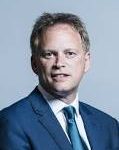
    Grant Shapps – 2022 Statement on Smart Motorways

    The statement made by Grant Shapps, the Secretary of State for Transport, in the House of Commons on 12 January 2022.

    Since becoming Transport Secretary, I have worked consistently to raise the bar on motorway safety and I am determined to make sure people using our motorways continue to benefit from one of the safest and best performing road networks in the world.

    To this end, one of my first actions as Transport Secretary was to order a stocktake of smart motorways. I also welcome the Transport Committee’s report published on 2 November 2021, following their inquiry into the roll-out and safety of smart motorways.

    The stocktake and action plan, which I published in March 2020, focused efforts on further upgrading the safety of smart motorways. I am pleased that these efforts have been recognised by the Committee, which agreed that the Government were right to focus on upgrading the safety of all lane running (ALR) smart motorways, rather than reinstating the hard shoulder—which the Committee recognised could cause more deaths or serious injuries on our roads.

    Having carefully considered the Committee’s report, I will be taking forward all of its recommendations. This includes the recommendation to pause the roll-out of future ALR smart motorway schemes until a full five years’ worth of safety data is available.

    During the pause, we will continue to make sure all existing ALR smart motorways are equipped with best-in-class technology and resources and are as safe as they can possibly be.

    I will also follow the recommendations to pause the conversion of dynamic hard shoulder smart motorways to ALR until the next road investment strategy; retrofit more emergency areas across existing ALR schemes; conduct an independent evaluation of the effectiveness of stopped vehicle detection technology; explore the introduction of the emergency corridor manoeuvre into the highway code; and investigate the benefits of health and safety assessments being undertaken by the Office of Rail and Road.

    Taken together and building on my initial stocktake these measures will ensure that our roads continue to be among the safest in the world—helping drivers not just to be safe, but crucially, to feel safe and confident when driving.

    I am grateful for the Transport Committee’s scrutiny and to all those that provided evidence for their work. I will be instructing National Highways to take immediate steps to implement the actions as set out in the response and will update the Committee on progress over the coming year.

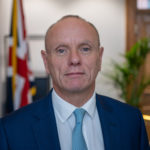
  • Mike Freer – 2022 Statement on the Prime Minister’s Trade Envoy Programme

    Mike Freer – 2022 Statement on the Prime Minister’s Trade Envoy Programme

    The statement made by Mike Freer, the Parliamentary Under-Secretary of State for International Trade, in the House of Commons on 12 January 2022.

    The Prime Minister has made two new appointments to his trade envoy programme.

    The new appointments will extend the total number of trade envoys to 34 parliamentarians, covering 72 markets. The Prime Minister’s trade envoy programme is an unpaid and voluntary role with cross-party membership from both Houses. The role supports the UK’s ambitious trade and investment agenda by championing Global Britain and promoting the UK as a destination of choice for inward investment. Trade envoys will help to make the most of our new trade deals and support the UK’s economic recovery through the levelling-up agenda, by helping business take advantage of the opportunities arising in export markets.

    The new appointments are:

    The hon. Member for Beverley and Holderness, Graham Stuart MP, has been appointed as the Prime Minister’s Trade Envoy to Vietnam, Cambodia and Laos.

    Lord Sarfraz of Kensington has been appointed as the Prime Minister’s Trade Envoy to Singapore.

  • Sajid Javid – 2022 Statement on PANORAMIC National Study

    Sajid Javid – 2022 Statement on PANORAMIC National Study

    The statement made by Sajid Javid, the Secretary of State for Health and Social Care, in the House of Commons on 12 January 2022.

    On 20 October 2021, the Government announced the procurement of two ground-breaking novel oral antivirals to treat UK covid-19 patients, supplemented by the announcement of additional volumes of these drugs on 22 December. I am writing to inform the House of the progress made on the platform adaptive trial of novel antivirals for early treatment of covid-19 in the community (PANORAMIC) national study and issue a call to action.

    On 8 December, the PANORAMIC national study was launched by the University of Oxford. This study was set up so that comprehensive data can be collected on how well these antiviral treatments work in a highly vaccinated population before making these treatments more widely available in the NHS to patients in the most effective way possible.

    This will ensure that both patients and clinicians have clear evidence and full confidence in taking and prescribing these treatments respectively across the UK. This has become even more important since the emergence of the omicron variant, as all research previously has been completed with non-omicron variants.

    The first antiviral being studied is molnupiravir, which was granted conditional marketing authorisation by the Medicines and Healthcare products Regulatory Agency on 4 November 2021. The study has recruited 3,176 participants as of noon on 12 January 2022. This is excellent progress for a community-based trial in its first month, but it is crucial that recruitment ramps up significantly to generate results as quickly as possible.

    We are encouraging people who receive a positive test for covid-19, are experiencing covid-19 symptoms beginning in the last five days, and are aged over 50, or are over 18 with certain underlying health conditions, to sign up to the study straight away.

    The study is available to people in this cohort across the UK and it is possible to sign up from anywhere, with the treatment delivered to a participant’s house directly. To ensure eligibility for the study, those who wish to participate must sign up as soon as possible after getting a positive covid-19 test result as antivirals are expected to be most effective when taken at the earliest stages of disease.

    Members of both Houses are requested to encourage constituents and others who may contact them to consider enrolling in the study online at www.panoramictrial.org or by calling the freephone number 0808 156 0017.

    The Antivirals Taskforce is working across the health and care system in the UK, including NHS England and NHS Improvement, the UK Health Security Agency and our partners in the devolved Administrations to plan the wider deployment of antiviral treatments as data from the national study becomes available.

    The Department of Health and Social Care will publish a further update in due course.

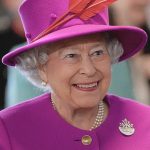
  • HM Queen Elizabeth II – 2022 Statement on Prince Andrew

    HM Queen Elizabeth II – 2022 Statement on Prince Andrew

    The statement made by HM Queen Elizabeth II on 13 January 2022.

    With The Queen’s approval and agreement, The Duke of York’s military affiliations and Royal patronages have been returned to The Queen.

    The Duke of York will continue not to undertake any public duties and is defending this case as a private citizen.

  • Kemi Badenoch – 2022 Speech to the LGA Local Government Finance Conference

    Kemi Badenoch – 2022 Speech to the LGA Local Government Finance Conference

    The speech made by Kemi Badenoch, the Minister of State at the Department for Levelling Up, Housing and Communities, at the LGA Local Government Finance Conference on 13 January 2022.

    Thank you, James [Jamieson]. Its what you get when a Treasury Minister comes in to local government rather than the other way around. So I’m glad that the sector is pleased, and I think I’d start off by saying a little bit about the role of local government just in terms of delivering for our communities. It’s never been more important than through this incredibly challenging period. And it was good to hear you speak about the sector’s priorities and how we can ensure that you all are well-equipped to do the best possible job.

    It’s my pleasure to be setting out the government’s position this morning.

    This is my first keynote speech as a Minister for Local Government so please be nice when it comes to the Q&A! I am still early on the learning curve.

    First of all I’d like to thank the many councillors, and council officers as well, who are joining us this morning for your tireless efforts – not just through the pandemic but in everything you do. I used to be married to a local councillor so I know what it’s like and I just want to say thank you.

    From the department’s perspective you have been – and remain – at the very forefront of our response to COVID.

    From your efforts in shielding the vulnerable, protecting those people who have been isolated, helping over 37,000 rough sleepers off the streets through Everyone In… all of this has been absolutely heroic.

    And right through to your on-going work today, you’re making sure that the booster rollout has been the incredible success that it has been. You’ve been welcoming and helping Afghan refugees safely settle in the UK through Operation Warm Welcome. And it’s really hard to think of a time when local government, local councils, local councillors, all of you, council officers, it’s hard to think of a time when you’ve played a more important part in the history of our country. So thank you very much.

    That’s why, since the start of the pandemic, we have provided £13 billion in support and compensation for income losses that you had, to help you tackle the worst effects that the virus wrought.

    And we are determined that you have the tools, the funding and the resources you need, not just to continue the work, but to forge a lasting recovery – you know, the PM talks about building back better, as he says – that’s really what we want you to be able to do going forward.

    Bigger picture

    So looking at the bigger picture – before turning to the settlement itself, I think it’s important to reflect on some of the broader developments the sector has seen over the past few months.

    There have been important developments in grant funding for councils, so the £1.6 billion of additional grant for the year 2022/2023 announced at the Spending Review last October.

    This new grant provides additional support for critical programmes like Supporting Families, of which I am very interested, and Cyber Resilience, as well as new funding which will be distributed through the settlement.

    We’ve seen changes in the way we support local investment too, this is before my time, but recognising the vital role this plays in service delivery, in housing provision and of course in levelling up, which is what we are all about.

    In June last year, I have been reliably informed by my visuals, we published our plan to make sure the capital investment system continues to support local decision-making freedom but at the same time preventing that excessive – the excess risk taking, from a small number of local authorities.

    And, as many of you know, in December, the government published the adult social care reform white paper, People at the Heart of Care, which sets out our 10-year vision along with a commitment to invest £5.4 billion in the sector over the next 3 years.

    Provisional local government finance settlement (LGFS)

    So as we look to the future, we want to work in hand in hand with you, given all the issues that you’ve raised with us over the last few months and year, that’s really the approach underpinning the provisional local government finance settlement we announced last month.

    So the settlement delivers an additional £3.5 billion for the sector and a real terms funding increase of over 4% for councils in the year ahead, which I hope you’re all really pleased to hear. Feel free to put the applause emojis on the Zoom. It’s not always easy getting money out of the Treasury but we’re very, very pleased with the settlement.

    Most of the £1.6 billion of new funding announced at Spending Review will be allocated through the settlement, including that additional £822 million for all services that you’re all curious about, through that one-off 2022/23 Services Grant – and we believe that this is substantial support in what remains a very testing time.

    You also asked us for stability – and this settlement provides stability, and a firm foundation on which to build and grow, rolling over support like the New Homes Bonus, the Rural Services Delivery Grant, and the Lower Tier Services Grant, and it also increases the Revenue Support Grant by £70 million and updates the funding floor, which is something James and others have been really keen to see, so it updates the funding floor so that no council anywhere in England receives less money than last year.

    And I know some of you will accuse us of just doing a Goldilocks, but we think we’ve done the right thing with a core referendum principle of 2%, plus an additional 1% adult social care precept, we believe this is a settlement that strikes the right balance between giving councils flexibility to raise income whilst also protecting our very hard-working taxpayers.

    Social care

    But importantly, this settlement also recognises the significant pressures on social care – with an extra £1 billion made available to alleviate this pressure in the year ahead.

    So this increases the Social Care Grant and the improved Better Care Fund. You can also make use of the 1% adult social care precept I just mentioned, in addition to the deferred precept flexibilities which have been rolled over from last year’s settlement.

    But please be in no doubt, we don’t underestimate the scale of support that the sector requires, especially as we start this decade-defining challenge of putting social care on a more sustainable footing.

    And it’s why, on top of this funding to address those core pressures, there’s also £162 million being made available to help you prepare for adult social care reform and ensuring the system is fit for future generations.

    Long-term future of the sector

    So in terms of the long-term future of our local government, our unequivocal ambition and Secretary of State will have told you this already – is to help councils – to help you – meet the challenges of today while planning for tomorrow’s opportunities. We don’t want you to always be in crisis mode, always being reactive.

    And that’s why we want to ensure that funding allocations are based on an up-to-date assessment of needs and resources.

    One challenge is that the data used to make this assessment has not been updated in several years – a lot of it is coming from 2013/14, nearly 10 years ago, and some even as far back as the turn of the millennium. I don’t want to say ‘pre-historic’ but it’s difficult to properly forecast using data that came before Windows XP!

    So, over the coming months, we will work closely with you and all our partners from across the sector to look at the many challenges and opportunities facing local government before consulting on potential reform in the spring.

    A key piece in this puzzle will be finding the right options to make sure that local authorities are supported through any change with transitional protection.

    So we also know that there is significant diversity across the sector, and that’s why we’re keen to hear your views and ensure that the unique circumstances of your local areas are fully understood. We’re not treating you as a homogenous block – that would be ridiculous. We have different needs and we want to know what we can do and as far as we can go in terms of tailoring the solutions to do what’s right for you.

    Conclusion

    It’s in that spirit of collaboration and partnership that we want to continue to work with you, bearing down on Omicron, plotting a clear course out of this pandemic and its one of the reasons why the local government finance settlement is never presented as a done deal. It’s always provisional until you’ve helped us make it final.

    I want to sincerely thank all of you who have taken part in the consultation on the provisional settlement. And for those who yet haven’t shared their views please do so today, deadline is 11:45pm. So, 15 minutes before midnight is when it closes. I can’t promise that I will be staying up quite that late to see your responses in person, but I really do want to hear your views and continue to work with you to put us on the best possible footing for this year.

    I will finish by saying that central government and local government are at their strongest when working together, united in purpose.

    And what we have accomplished over the last 2 years is nothing short of remarkable.

    So, this settlement – I believe – provides the strong foundations on which to go forward as we build a brighter future beyond COVID.

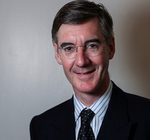
  • Jacob Rees-Mogg – 2022 Comments on “Lightweight” Scottish Leader

    Jacob Rees-Mogg – 2022 Comments on “Lightweight” Scottish Leader

    The comments made by Jacob Rees-Mogg, the Leader of the House of Commons, on Newsnight on 12 January 2022.

    Douglas Ross has always been quite a lightweight figure. I think the Scottish Secretary is a much more substantial figure in this.

  • Keir Starmer – 2022 Comments in House of Commons on Boris Johnson Attending Party

    Keir Starmer – 2022 Comments in House of Commons on Boris Johnson Attending Party

    The comments made by Keir Starmer, the Leader of the Opposition, in the House of Commons on 12 January 2022.

    We’ve got the prime minister attending Downing Street parties – a clear breach of the rules. We’ve got the prime minister putting forward a series of ridiculous denials which he knows are untrue – a clear breach of the ministerial code. That code says ministers who knowingly mislead parliament will be expected to offer their resignation.

    The party’s over, prime minister. The only question is will the British public kick him out, will his party kick him out or will he do the decent thing and resign?

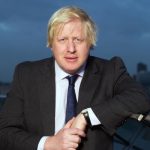
  • Boris Johnson – 2022 Statement on His Personal Conduct in Attending a Party During Lockdown

    Boris Johnson – 2022 Statement on His Personal Conduct in Attending a Party During Lockdown

    The statement made by Boris Johnson, the Prime Minister, in the House of Commons on 12 January 2022.

    I want to apologise. I know that millions of people across this country have made extraordinary sacrifices over the last 18 months.

    I know the anguish they have been through – unable to mourn their relatives, unable to live their lives as they want or to do the things they love.

    I know the rage they feel with me and with the government I lead when they think in Downing Street itself the rules are not being properly followed by the people who make the rules.

    And though I cannot anticipate the conclusions of the current inquiry, I have learned enough to know there were things we simply did not get right and I must take responsibility.

    No. 10 is a big department with a garden as an extension of the office which has been in constant use because of the role of fresh air in stopping the virus.

    When I went into that garden just after six on May 20, 2020, to thank groups of staff before going back into my office 25 minutes later to continue working, I believed implicitly that this was a work event.

    With hindsight I should have sent everyone back inside. I should have found some other way to thank them.

    I should have recognised that even if it could be said technically to fall within the guidance, there are millions and millions of people who simply would not see it that way, people who have suffered terribly, people who were forbidden for meeting loved ones at all inside or outside, and to them and to this House I offer my heartfelt apologies.

    All I ask is that Sue Gray be allowed to complete her inquiry into that day and several others so that the full facts can be established.