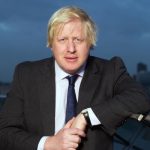
The speech made by Boris Johnson, the Prime Minister, on 22 November 2021.
Great to be here in Tyneside, the number one exporting region of the UK.
Great to be with the CBI.
And I want to begin with a massive thank you to British business.
For keeping going.
For looking after your employees.
For rising to the challenge.
For responding to the call for ventilators in those first dark days.
Dozens of you,
Kitchen appliance makers,
Hairdryer makers,
Formula one motor car manufacturers,
Turning your production lines over in days to try to save lives.
For making the masks and the gowns and the gloves at such speed.
Turning things round from that awful moment when we realised we simply didn’t have the domestic production.
So we have gone from being able to supply 1 per cent of our domestic needs to 80 per cent.
And thank you British industry, enterprise, commerce,
For producing not just one but perhaps half a dozen vaccines.
Because without you, let’s face it, we would simply not be here,
And nor would tens of thousands of people in our country and millions around the world,
Who owe their lives to your resourcefulness and inventiveness.
And while I’m on the subject, can I ask who has had your booster?
You all look far too young and thrusting to need a booster but get your booster as soon as you can.
Because it is by vaccinating our country that we have been able to get your staff back to their place of work, to open our theatres, our restaurants and to get back for longer now than any other comparator country to something like normal life.
Even if we are still bumping elbows and wearing masks.
I am not going to pretend that everything is going to be plain sailing.
We can see the state of the pandemic abroad.
The supply chain issues that we’re facing.
The pressure on energy prices that we’re all facing.
The skills shortages.
But don’t forget folks, my friends, it was only last year they were saying we would have an unemployment crisis now on the scale not seen since the 1980s or 1990s.
They were forecasting 12 per cent unemployment.
And what have we got?
Thanks to you, thanks to the resilience of British business, we have employment back in work at pre-pandemic levels.
It was only last year that we experienced the biggest fall in output in a century.
As we were forced to lock down the economy.
Well look at us now.
Thanks to you and thanks to British business bouncebackability, we are forecast to have the fastest economic growth in the G7.
And I was there in the 70s and 80s and 90s.
And I remember mass unemployment.
And the misery and the drain of the human spirit.
And I would much rather have our problems today – which are fundamentally caused by a return in global confidence and a surge in demand.
Because now we have a massive opportunity to fix these supply-side problems.
To transform whole sectors of our economy and to tackle the chronic problems underlying the UK economy.
The woeful imbalance in productivity across the country.
But also the imbalance between British business.
Between the go-getting world-beaters represented by so many people in this room,
And the long comet tail whose potential is frankly yet to be realised.
That don’t have the skills – particularly the IT skills – as Rishi the Chancellor so often points out.
That don’t have the banks behind them, that don’t have the investment.
And that is the mission of this country – to unite and level up.
Of this government – to unite and level up across the whole country.
And I’ve got to be honest with you, it is a moral mission.
As you get older, the funny thing is you get more idealistic and less cynical.
It’s a moral thing, but it is also an economic imperative.
Because if this country could achieve the same kind of geographical balance and dispersion of growth and wealth that you find in most of our most successful economic comparators,
And if all our businesses could reach more balance in their levels of productivity,
Then there would be absolutely no stopping us.
And we would achieve what I believe we can.
And become the biggest and most successful economy in Europe.
And today fate has handed us an opportunity to do that.
When the first industrial revolution began 250 years ago it was British industry that had first-mover advantage.
For hundreds of years, we maintained that pace.
Right up until the beginning of the 20th century we were producing more coal, smelting more iron, building more ships and boilers and making more machines than virtually any other country on earth.
And today we are on the brink of another revolution.
A green industrial revolution.
And again there are many ways in which we have first-mover advantage.
And today I want to tell you in the CBI how Britain is going to win in the new green industrial revolution.
Provided we act and act now.
I have had some pretty wonderful jobs in my life, but among the most purely hedonistic I would rank motoring correspondent of GQ magazine.
I drove:
Ferraris
Maseratis
Nissan Skylines
Proton Sagas
You name it, I drove it.
And I learned to admire the incredible diversity of the UK specialist motor manufacturing sector, which is actually the biggest in the world.
And I have spent hours in the traffic, listening to the porridge-like burble and pop of the biggest and most sophisticated internal combustion engines ever made.
And I have heard that burble turn into an operatic roar as I have put my foot down and burned away from the lights at speeds I would not now confess to my protection officers.
In that time, that great era, I only tried two EVs – electric vehicles.
An extraordinary wheeled rabbit hutch that was so tiny you could park it sideways.
And I tried the first Tesla for sale in this country, for GQ, that expired in the fast lane of the M40.
They’ve got a lot better.
And when a few years later as Mayor of London I tried to get London motorists to go electric and we put in charging points around the city, I must confess that they were not then a soaraway success.
And they stood forlorn like some piece of unused outdoor gym equipment.
But ten years after that – the tipping point has come, hasn’t it?
UK sales of EVs are now increasing at 70 per cent a year.
And in 2030 we are ending the market for new hydrocarbon ICEs, ahead of other European countries.
And companies are responding.
Here in the north east, Nissan has decided to make an enormous bet on new electric vehicles and together with Envision there is now a massive new gigafactory for batteries.
And around the world, these cars are getting ever more affordable.
And at Glasgow two weeks ago the tipping point came, as motor manufacturers representing a third of the world market – including the EU and America – announced that they would go electric by 2035.
And of course, Glasgow was far bigger and more important than that.
250 years after we launched the first industrial revolution, we are showing the world how to power past coal.
When I was a kid, 80 per cent of our electricity came from coal.
And I remember those huge barges taking coal up the Thames to Battersea power station and those four chimneys belching fumes into the face and lungs of the city.
By the time I became mayor, Battersea was a wreck.
Closed for being simply too polluting.
And good for nothing except the final shoot out in gangster movies.
But in 2012, we were still 40 per cent dependent on coal.
Today – only ten years later – coal supplies less than 2 per cent of our power.
And by 2024 it will be down to zero
And Battersea of course is a great funkapolitan hive of cafes and restaurants and hotels and homes
Thanks to the vision of the former Mayor.
And every time I made that point to leaders in Glasgow,
About the speed of the switch that we’ve made from coal,
I could see them thinking about it and I could see them thinking: right, ok, maybe this is doable.
And when I was a kid literally zero per cent of our energy came from wind.
And it seemed faddish and ludicrous to imagine that we could light and heat our homes with a technology that dated from 9th century Persia, I think.
And yet today – look at the coast of the north east where we are today.
Row after row stretching out to the north sea, of beautiful white mills as we claim a new harvest,
Rich and green from the drowned meadows of doggerland.
And on some days we derive almost half this country’s energy needs,
With the biggest offshore wind production anywhere in the world – and growing the whole time.
And that tipping point having been reached, the pace of change is now going to accelerate like new a Tesla.
Because I can tell you as a former motoring correspondent, EVs may not burble like sucking doves, and they may not have that arum arum araaaaaagh that you love,
But they have so much torque that they move off the lights faster than a Ferrari.
And we are now embarked on a new epoch.
And in just a few years’ time, after almost a century of using roughly the same technology, we are going to change radically.
We are going to change radically:
our cars
our trucks
our buses
our ships
our boats
our planes
our trains
our domestic heating systems
our farming methods
our industrial processes
our power generation
And much else besides.
And I can tell you the force driving that change.
It won’t be government, and it won’t even be business – though business and government together will have a massive influence.
It will be the consumer.
It will be the young people of today,
The disciples of David Attenborough,
Not just in this country but around the world,
Who can see the consequences of climate change and who will be demanding better from us.
And I confidently predict that in just a few years’ time it will be as noisome, offensive to the global consumer to open a new coal fired power station as it is to get on a plane and light up a cigar.
And as the world reaches this pivotal moment, post Glasgow, it’s vital that we recognise not just the scale of the challenge, but the opportunity now for British business and industry.
Because in the end it is you, it is business people, who will fix this problem.
Governments don’t innovate.
Governments don’t produce new products and get out and sell them in the market place.
And though governments can sell, governments can spend tens if not hundreds of billions,
We know that the market has hundreds of trillions.
And yet we also know that government has a vital role in making that market, and in framing the right regulation.
And to ensure that you, the British business succeeds in this new world, we have set out a ten point plan for government leadership.
A new Decalogue that I produced exactly a year ago, when I came down from Sinai and I said to my officials the new ten commandments thou shalt develop:
Offshore wind.
Hydrogen.
Nuclear power.
Zero emission vehicles.
Green public transport, cycling and walking.
‘Jet zero’ and green ships
7: greener buildings
8: carbon capture and storage
9: nature and trees
10: green finance
And for each of those objectives we are producing a roadmap, so that you in the private sector can see the opportunities ahead and what you need to do.
And we are regulating so as to require new homes and buildings to have EV charging points – with another 145,000 charging points to be installed thanks to these regulations.
We are investing in new projects to turn wind power into hydrogen.
And the net zero strategy is expected to trigger about £90 billion of private sector investment, driving the creation of high wage high skill jobs across the UK, as part of our mission to unite and level up across the country.
Not just in the green industrial revolution of course, but in all sectors of the economy.
And to help you, and to build the platform, to give you the advantage you need, we are now waging a cross-Whitehall campaign to solve our productivity puzzle and to rebalance our lopsided economy.
Fixing our infrastructure with investment on a scale not seen since the Victorians.
And we must begin with energy and power generation,
if we are going to have, allow, our manufacturing industry to succeed, we must end the unfairness that UK, high energy-intensive manufacturing pays so much more than our competitors overseas.
And that’s why we are going to address the cost of our nuclear power and we are all now paying for the historic under under-investment in nuclear power.
Which country first split the atom?
Which country had the first civilian nuclear power plant?
It was this one.
And why have we allowed ourselves to be left behind?
Well, you tell me.
So we are investing not just in big new nuclear plants but in small nuclear reactors as well.
And we are consulting on classifying this essential technology as “green investment”, so that we can get more investment flowing in and ahead of the EU.
Lenin once said that the communist revolution was soviet power plus the electrification of the whole country.
Well, I hesitate to quote Lenin, Tony, before the CBI, but the coming industrial revolution is green power plus the electrification of the whole country.
We are electrifying our cars, we are electrifying our rail.
Last week we announced three vast new high speed lines.
Cutting the time from London to Manchester by an hour.
And creating a new Crossrail of the north
Cutting the time from Manchester to Leeds from 55 to 33 minutes.
A crossrail for the Midlands,
Cutting journey times from Birmingham to Nottingham from one hour and 14 minutes to 26 minutes.
But these plans are far richer and more ambitious than some of the coverage has perhaps suggested.
To solve this country’s transport problems, you can’t just endlessly carve your way through virgin countryside.
You have to upgrade, and to electrify.
You have to use the tracks that already exist and bring them back into service.
And we are doing the Beeching reversals – that’s putting in lines that were taken out sadly in the last century.
You have to put other transport networks as well.
You have to put in clean buses, you have to improve,
4000 new clean green buses we’re putting in.
And of course, you have to fix the roads as well.
We cannot be endlessly hostile to road improvements.
And we have to do it now, we have to fix it now.
I know that there are some people who think that working habits have been remade by the pandemic, and that everyone will be working only on Tuesday and Wednesday and Thursday, in an acronym I won’t repeat.
I don’t want to be dogmatic about this, but I have my doubts.
And it is not just that young people need to be in the office to learn, and to compete, and to pick up social capital.
There are also sound evolutionary reasons why mother nature does not like working from home.
So I people prophesy that people will come back, Tony – they will come to the office.
And they will come back on the roads and the rail.
But people also want choice.
And that is why we must put in the gigabit broadband – as we are – which has gone up massively just in the last couple of years from 7 per cent when I became PM to 65 per cent at the beginning of next year.
And with safer streets,
With great local schools,
With fantastic broadband,
People will have the confidence to stay nearer the place they grew up.
To start business.
And business will have the confidence to invest.
And then of course there is one thing that business wants and that this country needs,
Far more than a hundred supersonic rail links,
Far more than broadband,
And that is skills.
And the people that you all need to staff your business.
It’s an astonishing fact that the 16-18 year olds in this country are getting 40% less time and instruction than our competitors in the OECD, and so we’re turning that round.
We are focusing on skills, skills, skills,
Investing in our FE colleges, our apprentices, in the knowhow and confidence of young people.
And since, as everybody knows, 80 per cent of the 2030 workforce are already in work,
We are giving every adult who needs it the chance to get a level three skill.
£3000 for a lifetime skills guarantee.
We are supporting bootcamps for everything from IT to entrepreneurship.
And at this pivotal moment in our economic history, we are taking advantage of our new freedoms.
To deliver freeports as well as free trade deals.
And to regulate differently and better,
To lengthen our lead in all the amazing new technologies of the 21st century:
AI cyber quantum computing
And all the rest and all the applications of those technologies to the areas in which we excel.
So you get fin tech, ed tech, bio tech, med tech, nano tech, ag tech, green tech,
So you sound basically like 15th century Mexico.
And that is what this country is doing
There are only 3 countries that have produced more than 100 tech unicorns
and they are, as you will know, well which are they? Let’s see who’s been paying attention to any of my speeches in the last few … which 3 nations have produced more than 100 tech unicorns?
Correct. They are the US, China and the UK
And the wonderful thing about the more than the 100 tech unicorns is they are dispersed now far more evenly across the whole of the UK than the tech unicorns of some of our rival competitor economies.
And that is a fantastic thing.
We want to see the dispersal of this growth and development across the UK. That’s why this government has doubled investment in scientific research – and again, we want to see the benefits of that research across the whole of the country
But in the end
And this is the most important message of all.
There are limits to what governments can do.
And I just want to be absolutely clear about this – because this has been an extraordinary period.
There has been the financial crisis of 2008, where government had to intervene on a massive scale.
Then Covid, when government had to intervene on a massive scale.
But government cannot fix everything and government sometimes should get out of your hair.
And government should make sure there is less regulation and indeed less taxation.
And the true driver of growth is not government, it is the energy and dynamism and originality of the private sector
And Tony, yesterday, I went as we all must to Peppa Pig World.
Hands up if you’ve been to Peppa Pig World – [not enough]
I was a bit hazy about what I would find at Peppa Pig World, but I loved it.
Peppa Pig World is very much my kind of place.
It had very safe streets.
Discipline in schools.
Heavy emphasis on new mass transit systems, I noticed.
Even if they are a bit stereotypical about daddy pig.
But the real lesson for me about going to Peppa Pig World was about the power of UK creativity.
Who would have believed, Tony, that a pig that looks like a hairdryer, or possibly a sort of Picasso-like hairdryer,
A pig that was rejected by the BBC,
Would now be exported to 180 countries,
With theme parks both in America and in China as well as in the New Forest,
And a business that is worth at least £6bn to this country, £6bn and counting.
I think that it is pure genius, don’t you?
No government in the world, no Whitehall civil servant in the world, could conceivably have come up with Peppa.
So my final message to you.
As we stand on the brink of this green industrial revolution.
As we prepare to use our new regulatory freedoms in what I believe will be a very strong post-Covid rebound.
We are blessed,
We are blessed not just with capital markets and the world’s best universities and incredible pools of liquidity in London, the right time zone and the right language and opportunity across the whole country,
We are also blessed with the amazing inventive power and range of British business.
And that above all is what fills me with confidence, members of the CBI, for the days ahead.
Thank you very much for your kind attention this morning, thank you.