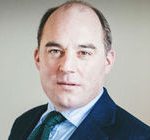
The comments made by Keir Starmer, the Leader of the Opposition, on 18 November 2021.
Yesterday Boris Johnson admitted he crashed the car when it came to sleaze.
Today he has derailed the trains.
He’s taking the country absolutely nowhere.

The comments made by Keir Starmer, the Leader of the Opposition, on 18 November 2021.
Yesterday Boris Johnson admitted he crashed the car when it came to sleaze.
Today he has derailed the trains.
He’s taking the country absolutely nowhere.

The comments made by Mick Whelan, the General Secretary of ASLEF, on 18 November 2021.
This government is not levelling up – as it has repeatedly promised to do – but levelling down. This is not the green, efficient, modern railway of the future we were promised. But a dodgy decision based on bad advice that means millions of people will not benefit from this project.
HS2 was meant to be a world-beater, and put Britain, the country which gave the railway to the world, back on the industrial and economic map. Instead, the Tories are letting us down. Not levelling up, but punching down on the north.
This government is a government of broken promises. It has announced Northern powerhouse rail an incredible sixty times – and I know because we’ve counted – and now it puts the project in the bin.
They have tried today to claim their new plans will deliver comparable benefits more quickly and cheaply. But that’s not true. It’s smoke and mirrors from a government which won’t, we now see, deliver for people in the north.
HS2 was never only a high speed rail link. Detractors like to say it only shaves a few minutes off the time between Birmingham and London. But HS2 was meant to make it quicker and easier to travel the length and the breadth of our country and to free up pathways on the East and West Coast main lines for more passenger services and for more freight trains. This decision means that lots of people will not enjoy the benefits of HS2 and the project will no longer free up routes for other services.

The comments made by Nick Thomas-Symonds, the Shadow Home Secretary, on 18 November 2021.
Instead of chasing headlines about unconscionable offshore processing, the Government should address its own failures.
There is no effective deal in place with the French Authorities, and, instead of providing properly managed safe and legal routes, the Government closed the Dubs Scheme that helped unaccompanied children.
The Government’s incompetence is dangerous, with ever-increasing numbers of people risking their lives in the English Channel.

The statement made by Boris Johnson, the Prime Minister, in the House of Commons on 15 November 2021.
Before I begin today’s statement, I would like to say a few words about the sickening attack that took place yesterday morning outside Liverpool Women’s Hospital. On behalf of the whole House, I want to pay tribute to the swift and professional response by the extraordinary men and women of the emergency services, who, once again, showed themselves to be the very best among us.
The Joint Terrorism Analysis Centre has today raised the nationwide threat level from substantial to severe, meaning that an attack is highly likely. The police are keeping both myself and the Home Secretary informed on developments and we will, in turn, keep the House updated on the investigation as it continues.
And now, Madam Deputy Speaker, with your permission I should like to make a statement on the United Nations Climate Change Conference, better known as COP26, which took place in the magnificent city of Glasgow over the past two weeks. It was the biggest political gathering of any kind ever held in the United Kingdom. One hundred and ninety four countries were represented. We had around 120 heads of state and heads of government, 38,000 accredited delegates, and countless tens of thousands more in the streets, parks and venues outside.
It was a summit that many people predicted would fail, and a summit, I fear, that some quietly wanted to fail. Yet it was a summit that proved the doubters and the cynics wrong, because COP26 succeeded not just in keeping 1.5 alive, but in doing something that no UN climate conference has ever done before by uniting the world in calling time on coal. In 25 previous COPs, all the way back to Berlin in 1995, not one delivered a mandate to remove so much as a single lump of coal from one power station boiler. For decades, tackling the single biggest cause of carbon emissions proved as challenging as eating the proverbial elephant—it was just so big that nobody knew quite where to start. In Glasgow, we took the first bite. We have secured a global commitment to phasing down coal. As John Kerry pointed out, we cannot phase out coal without first phasing it down, as we transition to other cleaner energy sources. We also have, for the first time, a worldwide recognition that we will not get climate change under control as long as our power stations are consuming vast quantities of the sedimentary super-polluter that is coal. That alone is a great achievement, but we have not just signalled the beginning of the end for coal; we have ticked our boxes on cars, cash and trees as well.
The companies that build a quarter of the world’s automobiles have agreed to stop building carbon emission vehicles by 2035, and cities from São Paulo to Seattle have pledged to ban them from their streets. We have pioneered a whole new model—an intellectual breakthrough —that sees billions in climate finance, development bank investment and so forth being used to trigger trillions from the private sector to drive the big decarbonisation programmes in countries such as South Africa. And we have done something that absolutely none of the commentators saw coming, by building a coalition of more than 130 countries to protect up to 90% of our forests around the world—those great natural soakers of carbon.
None of this was a happy accident or inevitability. The fact that we were there at all, in the face of a global pandemic, is in itself the result of a vast and complex effort involving countless moving parts. Right until the very end, there was the real prospect that no agreement would be reached. What has been achieved has only come about thanks to month after month of concerted British diplomacy—the countless meetings; the innumerable phone calls; the banging of heads at the United Nations General Assembly, the Petersberg dialogue, President Biden’s climate summit, the Security Council, the G7 and the G20—and the setting of several examples by the UK, because again and again the task of our negotiators was made easier by the fact that the UK was not asking anyone to do anything that we are not doing ourselves.
We have slashed our use of coal so much that our last two coal-fired power stations will go offline for good in 2024. We have more than doubled our climate finance, providing vital support for poor and vulnerable nations around the world. We have made a legally binding commitment to reach net zero—the first major economy to do so. We have set a date at which hydrocarbon internal combustion engines will reach the end of the road. We have shown the world that it is possible to grow an economy while cutting carbon, creating markets for clean technology, and delivering new green jobs that reduce emissions and increase prosperity.
Every one of those achievements was not just great news for our country and our planet, but another arrow in the quiver of our fantastic team in Glasgow—a team led by the COP26 President, my right hon. Friend the Member for Reading West (Alok Sharma). From the moment that he picked up the COP reins, he has been absolutely tireless in his efforts to secure the change that we need. Although I am pretty sure that what he really needs now is a well-earned break, I do not think that any of us here is going to be able to hold him back as he sets off pushing countries to go further still, and ensuring that the promises made in Glasgow are delivered and not diluted.
But success has many parents, so I want to say a huge thank you to the officials—in our own COP unit, in Downing Street and across Government, in UK embassies around the world and at the United Nations—who pulled out all the stops to make the event work and to shepherd through the agreements that have been reached. I also thank everybody on the ground at the Scottish Event Campus in Glasgow—security, catering, transport, the relentlessly cheery volunteers, the police from across the whole country who kept everybody safe from harm, the public health authorities who kept us safe from covid—and everyone in the Scottish Government. Above all, I want to say a big, big thank you to the people of Glasgow, who had to put up with so much disruption in their city and who welcomed the world all the same. I say to them: we could not have done it without you.
Is there still more to do? Well, of course there is. I am not for one moment suggesting that we can safely close the book on climate change. In fact, I can think of nothing more dangerous than patting ourselves on the back and telling ourselves that the job is done—because this job will not be complete until the whole world has not only set off on the goal to reach net zero but arrived at that destination: a goal that, even with the best of intentions from all actors, cannot be achieved overnight. While COP26 has filled me with optimism about our ability to get there, I cannot now claim to be certain that we will, because we have seen some countries that really should know better dragging their heels on their Paris commitments. But if—and it is still a massive if—they make good on their pledges, then I believe that Glasgow will be remembered as the place where we secured a historic agreement and the world began to turn the tide. Before Paris, we were on course for 4° of warming. After Paris, that number fell to a still catastrophically dangerous 3°. This afternoon, after the Glasgow climate pact, it stands close to 2°. It is still too high—the numbers are still too hot, the warming still excessive—but it is closer than we have ever been to the relative safety of 1.5°, and now we have an all-new roadmap to help us get there.
Aristotle taught us that virtue comes not from reasoning and instruction but from habit and from practice. So the success of the Glasgow climate pact lies not just in the promises but in the move that the whole world has now made from setting abstract targets to adopting the nuts-and-bolts programme of work to meet those targets and to reduce CO2 emissions. We are now talking about the how rather than the what, and getting into a habit of cutting CO2 that is catching on not just with Governments and businesses but with billions of people around the world. It is for that reason that I believe that COP26 in Glasgow has been a success and that 1.5° is still alive. That is something I believe that every person in our United Kingdom can and should take immense pride in, and I commend this statement to the House.
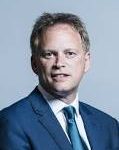
The statement made by Therese Coffey, the Secretary of State for Work and Pensions, in the House of Commons on 15 November 2021.
I would like to inform the House that, today, the Government will lay the text of a Convention of the International Labour Organisation, the Violence and Harassment Convention, in the form of a Command Paper in both Houses together with an explanatory memorandum stating the Government’s proposal that the UK should ratify it. If no objections are raised in the next 21 sitting days, the Government will move to draw up the UK’s Instrument of Ratification. The convention will come into force 12 months after the instrument of ratification is deposited with the International Labour Organisation.
This is the first international treaty to recognise the right of everyone to a world of work free from violence and harassment. This convention, along with its supplementing recommendation (No. 206), sets out a common framework for action to prevent and address violence and harassment in the world of work. It is a broad instrument, affording comprehensive protections to a broad range of individuals, including those most vulnerable to violence and harassment at work, in relation to a wide range of work environments and activities.
The Government already have the legal framework in place to meet the requirements of the convention, including civil and criminal law provisions, as well as occupational health and safety law.
Following our response to the sexual harassment in the workplace consultation, published earlier this year, the Government will also be introducing a new proactive duty requiring employers to take steps to prevent their employees from experiencing sexual harassment and introducing explicit protections for employees from harassment by third parties, for example customers or clients. These measures will not only strengthen protections for those affected by harassment at work but will also motivate employers to make improvements to workplace practices and culture.
The Government will not waver in our defence of the rights of women and girls to live free from violence and abuse. The UK will continue to protect and promote the safety and rights of women and girls overseas, and call for all member states to remain committed to international conventions, including by ratifying the International Labour Organisation Violence and Harassment Convention as a means of promoting its aims globally.
It has taken time to get to this point. The UK played a leadership role in the two-year negotiations on the content of the convention, building on our already strong position on violence against women and girls. Following this we consulted the devolved administrations and our social partners, all of whom are in full support of ratification.
Ratifying this convention is the right course of action and I hope it reassures the Houses of the Government’s commitment to tackling violence and harassment in the world of work.

The statement made by Maggie Throup, the Parliamentary Under-Secretary of State for Health and Social Care, in the House of Commons on 15 November 2021.
The UK’s covid-19 vaccine programme continues to protect the nation against the virus. As of 13 November, 50.5 million people have now received their first covid-19 vaccine dose and 46 million have had their second dose. Over 12.6 million of the most vulnerable have also received a third dose/booster vaccine to keep them as safe as possible over the winter months.
The independent Joint Committee on Vaccination and Immunisation (JCVI) has published further advice on the covid-19 vaccination programme. Her Majesty’s Government (HMG) has accepted this advice and all four parts of the UK intend to follow the JCVI’s advice.
Children and Young People aged 16 to 17:
The JCVI has provided further advice on the vaccination of those aged 16 and 17. 16 to 17-year-olds included in phase 1 of the adult vaccination programme, 16 to 17-year-olds who are household contacts of immuno-suppressed individuals, and those aged 17 and nine months or over are already eligible for a second dose of covid-19 vaccine. The JCVI has now recommended a second dose of vaccine be offered to all remaining individuals between 16 and 17 years of age 12 weeks after their first dose. The preferred vaccine for all those aged under 18 remains Pfizer/BioNTech.
Expansion of the COVID-19 booster vaccination programme to all those aged 40 to 49 years:
The JCVI has recommended expanding the covid-19 booster vaccination programme by offering all adults aged 40 to 49 years a booster vaccination, six months after their second dose.
The booster vaccination should preferably be undertaken with either the Pfizer/BioNTech vaccine, or a half dose of Moderna vaccine.
This announcement follows the advice published on 14 September which recommended booster vaccinations be given to individuals who received vaccination in phase 1—cohorts 1-9.
With deployment of the extended booster vaccination offer imminent, I am now updating the House on the liabilities HMG has taken on in relation to further vaccine supply via this statement and the Departmental Minute containing a description of the liability undertaken. The agreement to provide indemnity with deployment of further booster doses to the population increases the statutory contingent liability of the covid-19 vaccination programme.
Given the proximity between receiving JCVI advice and deployment, we regret that it has not been possible to provide 14 sitting days’ notice to consider these issues in advance of the planned extension to the booster programme in the UK.
Deployment of effective vaccines to eligible groups has been and remains a key part of the Government’s strategy to manage covid-19. Willingness to accept the need for appropriate indemnities to be given to vaccine suppliers has helped to secure access to vaccines, with the expected benefits to public health and the economy alike, much sooner than may have been the case otherwise.
Given the exceptional circumstances we are in, and the terms on which developers have been willing to supply a covid-19 vaccine, we along with other nations have taken a broad approach to indemnification proportionate to the situation we are in.
The covid-19 vaccines have been developed at pace, however at no point has safety been bypassed. The Medicines and Healthcare products Regulatory Agency approval for use of the currently deployed vaccines clearly demonstrates that these vaccines have satisfied, in full, all the necessary requirements for safety, effectiveness, and quality. We are providing indemnities in the very unexpected event of any adverse reactions that could not have been foreseen through the robust checks and procedures that have been put in place.
I will update the House in a similar manner as and when other covid-19 vaccines or additional doses of vaccines already in use in the UK are deployed.
HM Treasury has approved the proposal.

The statement made by Nadhim Zahawi, the Secretary of State for Education, in the House of Commons on 15 November 2021.
The Government’s policy is that GCSE and A/AS level exams will go ahead in 2021-22, with adaptations to take account of the disruption to education that students have experienced. These include providing a choice of topics or content in some GCSE subjects, advance information on the focus of the content of exams to support students’ revision, and support materials in some GCSE exams. These adaptations, along with our support for education recovery, public health measures and the approach to grading that Ofqual has announced, will help to ensure exams can proceed safely and fairly next summer.
However, there remains a small risk that further disruption due to the covid-19 pandemic will mean it is not possible for exams to go ahead safely or fairly. On 30 September the Department for Education and Ofqual therefore set out our intention to use Teacher Assessed Grades (TAGs) for GCSES, AS and A-levels in 2022 in the unlikely event that it proves necessary to cancel exams, and published a joint consultation.
The consultation outlined proposals on how teachers should collect evidence over the rest of this academic year to support the awarding of TAGs, if necessary, including arrangements for private candidates. The consultation also sought views on improvements to the 2021 arrangements for quality assurance and appeals.
On 11 November, the Department and Ofqual published the decisions taken following analysis of the responses to the consultation.
The proposals that were set out in the consultation received broad support and Ofqual has now published guidance for schools, colleges and other exam centres on collecting evidence that would be used to assess students’ performance if exams were cancelled. The guidance takes a proportionate approach and is being published now so that teachers know how to collect evidence from their students in advance of any decision to cancel exams. Ofqual has confirmed that, where possible, centres should use their existing assessment plans.
Ofqual will only publish guidance on how to determine TAGs, and centres would only be required to develop policies for awarding TAGs, if exams are cancelled.
Ofqual has also confirmed that it will not take decisions at this point about the quality assurance arrangements that would be used for TAGs in 2022, or how student appeals would work. These are both dependent on the timing of any decision to cancel exams and the reason for that decision, including any public health restrictions in place at the time.
If it proves necessary to cancel exams in some parts of England, exams will be cancelled for all students and the TAGs approach will be implemented nationally.

The statement made by Ben Wallace, the Secretary of State for Defence, in the House of Commons on 15 November 2021.
On 21 September, l committed to update the House on an investigation into MOD data breaches concerning the email addresses of Afghan nationals who are eligible for the Afghanistan relocations and assistance policy, but at that time remained in Afghanistan.
Incident
The first report of a data breach was received on the evening of 20 September and consisted of 245 live email addresses. On 22 September, following my statement to the House, the MOD was made aware of a previous breach of 55 addresses—10 of which were in addition to the first breach—which had occurred on 13 September. Subsequent investigations identified that a third breach had occurred on 7 September involving an additional 13 email addresses not previously compromised.
Upon learning of the initial breach, I immediately ordered the undertaking of an investigation and any actions that would prevent further breaches. The investigation was conducted in two parts. The first addressed the circumstances of the breach, its causes and the immediate and longer-term actions required to prevent recurrences and mitigate any potential additional risks to those Afghan nationals affected. The second part of the investigation concerned the data handling and data protection arrangements that were in use by the ARAP team and made recommendations on how best to ensure an appropriate data handling regime was in place.
Investigation findings
The investigation has concluded that the breaches arose in almost identical circumstances. All three took place in the ARAP casework team, tasked with providing personal support and advice to the cohort of ARAP-eligible Afghan nationals and all involved a group email to elements of that cohort, which used the “carbon copy” instead of “blind carbon copy” field to anonymise the recipients.
The cause of these mistakes was not simply human error in isolation, but a lack of written standard operating procedures and training, which should have prevented such a mistake being made. That in turn was assessed to be the result of several contributing factors, all arising from the intense speed, scale and operational pressure of the casework, and the fact that the team had been built and then expanded quickly in order to support the rapid increase in activity necessary as a result of the evacuation. As a result, some members of the team were inexperienced and insufficiently trained for such casework management.
The ARAP team’s efforts to evacuate as many Afghans as possible in a short period of time was followed by a rapid transition to communicating with those who were unable to relocate, in order to begin providing follow-on support. In the haste of this transition the risks arising from changing how officials communicated—which had previously been done on an individual basis, often by telephone rather than email—were not fully recognised or managed.
The MOD has undertaken further investigation of any possible increased threat to those affected. While media reports have indicated some localised Taliban reprisals against Afghan nationals formerly employed by coalition forces, the MOD assesses that the Taliban are not conducting centrally directed and co-ordinated targeting of ARAP-eligible persons. The investigation found that no further personal or locational information was revealed in the data breaches that has substantively increased the ability of the Taliban to target ARAP-eligible persons.
All ARAP-eligible individuals whose details were involved were notified within 30 minutes on discovery of the breach on 20 September and advised on actions to minimise the risk to them and have subsequently been contacted to provide additional security advice. The MOD is not aware that anyone has come to harm as a result of these breaches, but continues to provide security support to ARAP-eligible families while they await relocation to the UK.
Remedial actions
Significant remedial actions have now been taken to prevent such incidents occurring again. These include:
Establishing new data handling procedures for ARAP casework management.
Ensuring all staff appointed to the ARAP team are fully aware of those procedures and trained in their proper employment.
Creating a “Registry” function, with authority over data handling procedures and a remit to continually improve those processes and assure that all staff are familiar and compliant with them.
Appointing additional ARAP team members with specific responsibilities for all record keeping and information management.
Instigating a “two pairs of eyes rule” so that any external email to an ARAP-eligible Afghan national must be reviewed by a second member of the team before it is sent.
Ensuring that any group emails, such as routine updates, must be authorised at the OF-5 or B1 level (i.e. Colonel equivalent).
As a consequence of the breaches, two personnel were suspended from the ARAP team, pending the outcome of the investigation. The individuals’ actions that contributed to the data breaches were not found to have been deliberate or negligent, but the result of insufficient training and data handling procedures. They have subsequently been reassigned to other roles, outside of the ARAP team.
The ARAP team has now received additional recommendations and support from Defence Digital—the directorate responsible for ensuring effective use of digital and information technology across Defence—which are being applied to further improve the ARAP team’s handling and protection of casework data. Finally, the MOD reported itself to the Information Commissioner and will co-operate fully with all investigations and findings.
The remedial actions outlined above are already providing much greater assurance of data handling within the ARAP team. I am confident that their continued application is sufficient to prevent any recurrence, but have directed that the team seeks to continually improve its processes.
ARAP progress
The data breaches detailed above were unacceptable and fell short of the high standards to which the MOD typically holds itself. They were also a breach of the trust many former Afghan staff have placed in us to honour our commitment and do all that we can to keep them safe. We continue that work and it is also important to reflect on the scale of the challenges and achievements of the ARAP team.
Since the scheme was launched in April over 89,000 applications have been made and many more continue to be received, each requiring detailed review and processing. As a result of these efforts more than 7,000 Afghan nationals—staff and their families—who worked in support of the Government’s mission in Afghanistan have now been successfully relocated to start new lives in the security of United Kingdom.
There were a further 311 ARAP-eligible Afghans who were called forward with their families during the evacuation operation, but sadly unable to board flights. There are now fewer than 200 remaining in Afghanistan and we continue to work with urgency to relocate all those who remain via a range of routes. Those who have left Afghanistan for third countries are being provided with support in-country and assisted to continue their journey to the UK. As part of that process we have already conducted five RAF flights, carrying more than 400 people. The flights will continue as long as necessary and the ARAP scheme is not time-bounded so any further applicants who are found to be eligible will continue to be relocated indefinitely.
The scale of these achievements should not be underestimated and has been made possible by the professionalism and determination of the ARAP team and their colleagues across Defence who continue to honour our debt of gratitude to the Afghan nationals who supported our operations in the country. ARAP remains a foremost priority for the MOD and I continue to closely monitor the progress of the ARAP team to ensure its performance remains of the highest possible standard.
I would like to take the opportunity to assure the House that although the impact of these breaches appears to have been limited, all breaches of personal data are taken extremely seriously by MOD.
Finally, I offer again my sincerest apologies to all those affected by these data breaches and assure them that we continue to make every effort to relocate them to the UK as quickly and safely as possible.

The comments made by Sadiq Khan, the Mayor of London, on 16 November 2021.
Keeping Londoners safe is my number one priority and my draft Police and Crime Plan demonstrates I will continue to be both tough on crime and tough on the complex causes of crime, taking the action needed to keep our city safe and to ensure that victims of crime are supported.
Thanks to relentless effort by the Met Police and record funding from City Hall, violent crime is now falling – but there is still much more to do in order to prevent violence and stop the terrible loss of young lives in our city. I will continue to support the police in bearing down on criminality, providing record funding to put more officers on the streets, and stopping violence from happening in the first place by funding programmes that divert vulnerable young people away from crime, and providing positive opportunities for young Londoners.
This Plan also reflects my determination to increase the trust and confidence of all Londoners in their police service. I will continue to work with the Metropolitan Police and London’s Black communities to deliver my Action Plan for Transparency, Accountability and Trust in full, including an overhaul of community scrutiny of police tactics including stop and search, use of force and Taser. I will also continue to support the independent review into the Met’s culture and standards, to help rebuild women and girls’ trust in the police.
It is more important than ever that we involve everyone across London, as we all have a part to play in helping make our city a safer, better place. I want to encourage Londoners to feed into the public consultation on my plan, to ensure I’m taking the action they want to see on the issues that matter most to them.