Tag: Speeches

  • Allan Dorans – 2022 Speech on the Murder of WPC Yvonne Fletcher

    Allan Dorans – 2022 Speech on the Murder of WPC Yvonne Fletcher

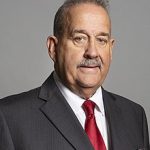
    The speech made by Allan Dorans, the SNP MP for Ayr, Carrick and Cumnock, in the House of Commons on 22 February 2022.

    May I begin by paying tribute to and thanking all the police officers who at this very moment are policing our streets and putting themselves at risk and in danger to protect others and to keep us all safe?

    I declare an interest in this matter: in January 1972, I joined the Metropolitan police as a police cadet, on the same day as John Murray, who features prominently in this speech. We trained together for over a year and became friends. Mr Murray is present this evening in the Under Gallery. In addition, I was a serving detective sergeant in the Metropolitan police on duty and nearby on the day Yvonne was murdered.

    In 1984 Yvonne Fletcher was a 25-year-old police officer who had served in the Metropolitan police for seven years and had recently become engaged to be married. In the words of her late mother, Queenie,

    “Yvonne loved being a policewoman. It was her life.”

    On 17 April 1984, Yvonne and her policing partner and friend PC John Murray had paraded for duty at Bow Street police station expecting to undertake their normal duties as community police officers in the Covent Garden area. However, instead, they were requested by the duty inspector to assist in the policing of a political demonstration which was expected to take place outside the Libyan People’s Bureau in St James Square. The bureau, formerly known as the Libyan embassy, had been taken over and was under the control of a new revolutionary committee consisting of four individuals, including a senior official known as Saleh Ibrahim Mabrouk.

    Just after 10 am, about 70 anti-Gaddafi demonstrators congregated behind barriers on the pavement directly opposite the bureau. WPC Fletcher and PC Murray were positioned on the road in St James Square with their backs to the bureau and facing the demonstrators. At about 10.20 am, two windows on the first floor of the bureau opened, and Sterling sub-machine-guns were pointed out of those windows and opened fire towards the crowd of demonstrators and the police officers standing between the bureau and the demonstrators. Yvonne, who had her back to the bureau, was struck in the back by a bullet and fell to the ground. PC Murray, who was standing next to her, immediately went to her assistance and with colleagues moved her to the safety of a nearby street. An ambulance attended and PC Murray accompanied Yvonne in the ambulance, where it was clear that she had sustained injuries that were likely to prove fatal. At that time, PC Murray promised Yvonne that he would find whoever was responsible. That promise became the basis for the campaign for justice for Yvonne that Mr Murray has continued tirelessly and relentlessly for 37 years.

    Margaret Ferrier (Rutherglen and Hamilton West) (Ind)

    I congratulate my hon. Friend on securing this debate, which I know carries great personal meaning for him as a former officer with the Met. PC Fletcher unfortunately paid the ultimate price in the name of public service, and it is shameful that even now, more than three decades on, the onus remains on her former colleagues and not on the Government to continue to fight to hold those responsible to account. I am keen to know whether the Government intend to open an inquiry into the matter, which I am sure my hon. Friend will push for tonight.

    Allan Dorans

    I totally agree with my hon. Friend.

    Yvonne was conveyed to Westminster Hospital, but sadly she succumbed to her injuries on the operating table about an hour after arriving at the hospital.

    Bob Stewart (Beckenham) (Con)

    I have studied the matter at length and must say that the bravery of that lady after she was wounded was astonishing. I understand that all she was concerned about was the safety of other people. What service. How wonderful for the Metropolitan police.

    Allan Dorans

    I thank the right hon. Gentleman for his intervention and for holding a previous Adjournment debate on this matter.

    The fact that the shots that murdered WPC Fletcher and injured others were fired from the Libyan People’s Bureau is not disputed and is supported by overwhelming eyewitness accounts, videos and forensic evidence. Immediately following the events of 17 April, Saleh Ibrahim Mabrouk, along with other members of the bureau, was deported to Libya. Mr Mabrouk was subsequently allowed to return to this country by the British Government and in 2011 he settled permanently in Reading. As there was evidence that he was involved in a conspiracy, we must ask why he was ever allowed to return.

    Jim Shannon (Strangford) (DUP)

    In Northern Ireland, we have had more than our full share of murder and heartache. It must be remembered that our officers, past and present, offer to pay the ultimate sacrifice in their service. The fact that WPC Fletcher was willing to sacrifice her life will never make that sacrifice acceptable and negate the need for justice for her family. When the hon. Gentleman asks for a public inquiry, I want him to know that I fully support him.

    Allan Dorans

    I thank the hon. Gentleman for his intervention. I will address that matter later in my speech.

    Sir Mike Penning (Hemel Hempstead) (Con)

    As the hon. Member—my friend—knows, I have been involved in this issue for many years; before that, Sir Teddy Taylor was trying to get justice for the murder of Yvonne Fletcher. The question I have to ask—I asked it when I was the police Minister and I have asked it in parliamentary questions—is: why was that man allowed to come in and out of the country? He was not just a suspect in the Yvonne Fletcher murder but accused of other criminal activities, and yet he walked in and out of this country. That is why an inquiry is vital.

    Allan Dorans

    I thank the right hon. Gentleman for his intervention. I agree. Hopefully we will get answers to those questions.

    In 2015, Mr Mabrouk was arrested by the Metropolitan police following an investigation of money laundering and in connection with the murder of Yvonne. Following a two-year investigation, it was announced by the Crown Prosecution Service in 2017 that no prosecution was possible due to evidence withheld by the Government on the grounds of national security not being available to it. Mr Mabrouk was therefore released without charge.

    There is no suggestion that Saleh Mabrouk fired the weapons that killed Yvonne. He was in police custody—perhaps intentionally and conveniently—when the shots were fired. However, there is significant evidence that he, as a senior member of the revolutionary committee responsible for the control of the people’s bureau, was involved in the events that led to the shootings taking place. He is a clearly a major suspect in a criminal conspiracy that led to the death of Yvonne.

    Following the failure of the Government to support a criminal prosecution, the only avenue available to bring Mr Mabrouk to justice of any kind was for John Murray to initiate a civil court action against him. Accordingly, in November 2018, while Mabrouk was still resident in this country, John Murray lodged a civil court action against him in the High Court for the nominal sum of £1. The civil court action was brought primarily to bring the evidence of Mabrouk’s involvement in the death of Yvonne into the public domain and to prove that he was involved in, and liable for, Yvonne’s death. Very shortly after the case was filed on 9 January 2019, the Home Secretary wrote to Mr Mabrouk at his address in Libya informing him that he was excluded from the UK on the grounds that his presence here would not be conducive to good public order due to his suspected involvement in war crimes against humanity in Libya.

    On 1 July 2020, I asked a question at Prime Minister’s questions in relation to reopening the criminal investigation into the murder of Yvonne. The Prime Minister, in response, said:

    “The murder of WPC Yvonne Fletcher was sickening and cowardly.”

    He agreed to meet me to

    “see what we can do to take the matter forward.”—[Official Report, 1 July 2020; Vol. 678, c. 327.]

    We met in the Prime Minister’s office on 29 September 2020. My memory of that meeting is very clear. I asked the Prime Minister a series of questions, the most significant of which was: would he carry out a review of whether evidence, which had been withheld by the Government from the Crown Prosecution Service during the criminal investigation into Saleh Mabrouk on the grounds of national security in 2017, could now be released as Saleh Mabrouk had now left the country and had been excluded from returning by the Home Office. He replied that yes, he would do that and would reply to me.

    On 10 November 2021, the civil court case brought by Mr Murray against Saleh Mabrouk took place at the Royal Courts of Justice and was presided over by an experienced senior judge, the honourable Justice Martin Spencer. Despite being properly served with notice of the court proceedings, Saleh Mabrouk failed to respond. He was also given the opportunity to appear by video link, but again no response was received. The trial judge’s conclusion was that Mr Mabrouk had chosen to play no part in the trial, and that the trial could fairly proceed in his absence. Mr Justice Spencer delivered his judgment on 16 November 2021, which runs to 25 printed pages.

    These are just a few of the highlights from that judgment. Mr Justice Spencer said:

    “I am satisfied on the balance of probabilities that there existed a common design to respond to the planned anti-Gaddafi protest by using violence, and specifically by firing shots at or in the direction of the protestors. Witness statements and statements made by Mr Mabrouk demonstrate not only his knowledge of the common design, but also his views of the inevitability of that response.”

    He quoted Mr Mabrouk as saying: “We have guns here and there’s going to be fighting,” and said that:

    “This is a statement confirming a plan to shoot protestors.”

    The judge went on to say:

    “Coupled with his position as one of the few leaders of the Revolutionary Committee controlling the People’s Bureau, it amounts to confirmation of the common design to fire upon the demonstrators, in which he was an active participant. On that basis, I am satisfied that on the balance of probabilities the defendant”—

    Saleh Mabrouk—

    “is jointly liable for the shooting of WPC Yvonne Fletcher on the doctrine of common design.”

    That was a hugely significant judgment delivered by a senior High Court judge, having heard evidence from witnesses over three days. It was clear that Saleh Mabrouk was involved in, and jointly responsible, for the death of WPC Yvonne Fletcher. It is without doubt a landmark victory secured as a direct result of John Murray’s determination, courage and commitment to seek justice for his murdered friend and colleague.

    I ask the Minister to address the following questions. Given that the evidence presented and accepted at the High Court has been available for over 37 years, how can the Government justify that it was left to John Murray, himself a victim in this case, to bring Saleh Mabrouk to justice in a civil court, rather than see him prosecuted in a criminal court? Will the Government undertake to review whether the evidence withheld from the Crown Prosecution Service in 2017 can now be safely released, as requested by me and agreed by the Prime Minister at our meeting on 29 September 2020? Has Saleh Mabrouk ever been provided with a letter of comfort or letter of assurance by the British Government, which guarantees that he will never be prosecuted in a British criminal court?

    Will the Government acknowledge that the judgment delivered by Mr Justice Spencer confirms Mr Mabrouk’s culpability in the murder of Yvonne Fletcher, and in the light of that, what action are the Government and the Metropolitan police now taking to bring Saleh Mabrouk to justice by requesting his extradition from Libya to face a criminal prosecution for the murder of WPC Fletcher? Will the Government now reconsider the need for a public inquiry into the events surrounding the murder of WPC Yvonne Fletcher and subsequently?

    Before the Minister responds, I pay tribute to John Murray, who, for the past 37 years, has worked tirelessly and relentlessly to achieve justice for Yvonne and without whose efforts the callous murder of a young policewoman, for which no one has ever been charged, may have faded in people’s memories. I also thank the police officers who have served for their service—some of whom are present in the Public Gallery this evening—and those who have helped and supported John through these incredibly difficult years to keep the memory of Yvonne and the campaign for justice for Yvonne alive.

    Finally, in addition to seeking answers to those questions, my hope, in bringing this debate to the Chamber this evening, is that it will send a powerful message to the Government and to Saleh Ibrahim Mabrouk that the murder of Yvonne has not been, and will never be, forgotten. The campaign for justice for Yvonne continues. It will never give up; it is not going away; and it will continue the fight, by any legal means possible, to finally achieve justice for Yvonne.

  • Ed Davey – 2022 Speech on Ukraine

    Ed Davey – 2022 Speech on Ukraine

    The speech made by Ed Davey, the Liberal Democrat MP for Kingston and Surbiton, in the House of Commons on 22 February 2022.

    It is time to start treating Russia like the rogue state it is. I strongly welcome the Prime Minister’s statement in this darkest of moments and recognise the Leader of the Opposition for his strong cross-party support. In that cross-party spirit, I urge the Prime Minister to go further today and commit to the following. First, freeze and begin seizing the assets of every single one of Putin’s cronies in the UK and expel these oligarchs from our country as part of a much stronger sanctions regime. Secondly, recognise the existential threat posed by Putin to our NATO allies by immediately cancelling his misguided decision to cut our armed forces by 10,000 troops. Thirdly, no longer tolerate international sporting or cultural events hosted in Russia. Will he confirm what I think he implied in answer to a previous question, that he will push for this year’s champions league final to be moved from St Petersburg? President Putin has made a terrible decision. Will the Prime Minister ensure that he pays a terrible price?

  • Ian Blackford – 2022 Speech on Ukraine

    Ian Blackford – 2022 Speech on Ukraine

    The speech made by Ian Blackford, the SNP Leader at Westminster, in the House of Commons on 22 February 2022.

    I thank the Prime Minister for advance sight of his statement and thank the National Security Adviser, who has briefed Opposition leaders.

    This is a dark day for the people of Ukraine and for people right across our European continent. Europe stands on the brink of war as a consequence of Russian aggression. It is a day that communities across Scotland, right across these islands and indeed across Europe desperately hoped would never come to pass. But although that sense of darkness defines today, how we now collectively respond will define the days to come.

    This Chamber has, especially during recent months, seen fierce debate and disagreements, but today it is important to say, in the face of Russian aggression against Ukraine, that in this House we all stand together: we stand together and stand with our partners across Europe and indeed across the globe. But more importantly, we stand with the Ukrainian people, who are now under assault. A European country—an ally—is under attack. We should be very clear about what is now happening: this is an illegal Russian occupation of Ukraine, just as it was in Crimea. Russia has effectively annexed another two Ukrainian regions in a blatant breach of international law. This effectively ends the Minsk process. It is a further violation of the sovereignty and territorial integrity of Ukraine. No one should even repeat the Russian lie that this is about peacekeeping; this is warmongering, plain and simple. President Putin must hear the call from here and elsewhere to draw back before any further escalation can take place.

    I and my party welcome the sanctions that are now being brought forward, but it is deeply regrettable that the delay has allowed many Russian individuals to shift dirty assets and money in the last number of weeks. However, may I ask the Prime Minister specifically if the Russian state and individuals will be immediately suspended from the SWIFT payments system? Just as economic sanctions against Russia are welcome, Ukraine needs immediate economic and indeed humanitarian support if required. When will economic and humanitarian support be enacted and what will it entail? Can the Prime Minister also confirm that there will be exemptions for partners of UK citizens residing in Ukraine to come to the UK? They need that certainty and they need it today.

    In the days ahead we can no doubt expect a barrage of disinformation from the Russian media and its proxies. So can the Prime Minister update us on how the United Kingdom Government intend to combat that threat? This is also the moment to end the complacency in implementing the Intelligence and Security Committee’s Russia report; will the Prime Minister now commit to its full implementation and update the House accordingly?

    Can I also ask the Prime Minister, after the UN Security Council’s brief meeting last night, when it will next meet and what co-ordination is happening across all international organisations to force President Putin to step back from the brink before it is too late?

    Finally, let President Putin hear loudly and clearly that he must now desist from this act of war, this attack on a sovereign nation. Let us all demonstrate that we stand with the people of Ukraine.

  • Keir Starmer – 2022 Speech on Ukraine

    Keir Starmer – 2022 Speech on Ukraine

    The speech made by Keir Starmer, the Leader of the Opposition, in the House of Commons on 22 February 2022.

    Yesterday was a dark day for Europe. The Russian President denied the right of a sovereign nation to exist, unilaterally recognising separatist movements that he sponsors and that seek to dismember Ukraine. Then, under the cover of darkness, he sent in troops to enforce his will. Putin appears determined to plunge Ukraine into a wider war. We must all stand firm in our support for Ukraine. We support the freedom of her people and their right to determine their own future without the gun of an imperialist held to their head.

    There can be no excuses for Russia’s actions. There is no justification for this aggression. A war in Ukraine will be bloody, it will cost lives, and history will rightly scorn Putin as the aggressor. Putin claims to fear NATO expansion, but Russia faces no conceivable threat from allied troops or from Ukraine. What he fears is openness and democracy. He knows that, given a choice, people will not choose to live under the rule of an erratic and violent authoritarian, so we must remain united and true to our values across this House and with our NATO allies. We must show Putin that we will not be divided.

    I welcome the sanctions introduced today and the international community’s efforts to unite with a collective response. However, we must be prepared to go further. I understand the tactic of holding back sanctions on Putin and his cronies to try to deter an invasion of the rest of Ukraine, but a threshold has already been breached. A sovereign nation has been invaded in a war of aggression based on lies and fabrication. If we do not respond with a full set of sanctions now, Putin will once again take away the message that the benefits of aggression outweigh the costs. We will work with the Prime Minister and our international allies to ensure that more sanctions are introduced.

    Russia should be excluded from financial mechanisms, such as SWIFT, and we should ban trading in Russian sovereign debt. Putin’s campaign of misinformation should be tackled. Russia Today should be prevented from broadcasting its propaganda around the world. We should work with our European allies to ensure that the Nord Stream 2 pipeline is cancelled. Whatever the sequencing of these sanctions, this will not be easy. Britain must work with our European allies to handle the disruption to the supply of energy and raw materials. We must defend ourselves and our allies against cyber-attacks. We must bring together the widest possible coalition of nations to condemn this action against a sovereign UN member state.

    Ukrainians are defending their own country and democracy in Europe. We must stand ready with more military support for Ukraine to defend itself, and we must stand ready to do more to reassure and reinforce NATO allies in eastern Europe, but we must also get our own house in order. The Prime Minister said that the lesson from Russia’s 2014 invasion of Donbas is that we cannot just let Vladimir Putin get away it, but until now we have. We have failed to stop the flow of illicit Russian finance into Britain. A cottage industry does the bidding of those linked to Putin, and Russian money has been allowed to influence our politics. We have to admit that mistakes have been made, and we have to rectify them.

    This must be a turning point. We need an end to oligarch impunity. We need to draw a line under Companies House providing easy cover for shell companies. We need to ensure that our anti-money-laundering laws are enforced. We need to crack down on spies, and we have to ensure that money is not pouring into UK politics from abroad.

    Russian aggression has now torn up the Minsk protocol and the Budapest memorandum, but even at this late hour we must pursue diplomatic routes to prevent further conflict, so can the Prime Minister tell us what international diplomatic efforts are going on and what role the UK will have in that process? We know Putin’s playbook. He seeks division; we must stay united. He believes the benefits of aggression outweigh the consequences, so we must take a stand, and he believes the west is too corrupted to do the right thing, so we must prove him wrong. I believe we can, and I offer the support of the Opposition in that vital endeavour.

  • Boris Johnson – 2022 Statement on Ukraine

    Boris Johnson – 2022 Statement on Ukraine

    The statement made by Boris Johnson, the Prime Minister, in the House of Commons on 22 February 2022.

    With permission, Mr Speaker, I will make a statement about the situation in Ukraine. Last night, President Putin flagrantly violated the Minsk peace agreements by recognising the supposed independence of the so-called people’s republics of Donetsk and Luhansk in eastern Ukraine. In a single inflammatory speech, he denied that Ukraine had any “tradition of genuine statehood”, claimed that it posed a

    “direct threat to the security of Russia”,

    and hurled numerous other false accusations and aspersions.

    Soon afterwards, the Kremlin announced that Russian troops would enter the breakaway regions under the guise of peacekeepers, and Russian tanks and armoured personnel carriers have since been spotted. The House should be in no doubt that the deployment of these forces in sovereign Ukrainian territory amounts to a renewed invasion of that country. By denying Ukraine’s legitimacy as a state and presenting its very existence as a mortal threat to Russia, Putin is establishing the pretext for a full-scale offensive.

    Hon. Members will struggle to contemplate how, in the year 2022, a national leader might calmly and deliberately plot the destruction of a peaceful neighbour, yet the evidence of his own words suggests that is exactly what President Putin is doing. I said on Saturday that his scheme to subvert and invade Ukraine was already in motion before our eyes. The events of the past 24 hours have, sadly, shown this to be true.

    We must now brace ourselves for the next possible stages of Putin’s plan: the violent subversion of areas of eastern Ukraine by Russian operatives and their hirelings, followed by a general offensive by the nearly 200,000 Russian troops gathered on the frontiers at peak readiness to attack. If the worst happens, a European nation of 44 million men, women and children would become the target of a full-scale war of aggression waged, without a shred of justification, for the absurd and even mystical reasons that Putin described last night. Unless the situation changes, the best efforts of the United States, Britain, France, Germany and other allies to avoid conflict through patient diplomacy may be in vain.

    From the beginning, we have tried our utmost—we have all tried—to find a peaceful way through this crisis. On 11 February, my right hon. Friend the Defence Secretary and the Chief of the Defence Staff, Admiral Radakin, paid the first joint visit to Moscow by the holders of their offices since Churchill, who was also Defence Minister at the time, travelled to Russia with General Alanbrooke in 1944. They held over three hours of frank discussions with the Russian Defence Minister, General Shoigu, and the chief of staff, General Gerasimov, demonstrating how seriously we take Russia’s security concerns, how much we respect her history and how hard we are prepared to work to ensure peaceful co-existence.

    My right hon. Friend the Foreign Secretary delivered the same messages when she met her Russian counterpart in Moscow on 10 February. I have spoken on a number of occasions to President Putin since this crisis began, as has President Biden, while President Macron and Chancellor Scholz have both visited Moscow. Together we have explored every avenue and given Putin every opportunity to pursue his aims by negotiation and diplomacy.

    I tell the House: we will not give up—we will continue to seek a diplomatic solution until the last possible moment—but we have to face the possibility that none of our messages has been heeded and that Putin is implacably determined to go further in subjugating and tormenting Ukraine. It is because we suspected as much that the UK and our allies repeatedly sounded the alarm about a possible new invasion, and we disclosed much of what we knew about Russia’s military build-up.

    Britain has done everything possible to help Ukraine to prepare for another onslaught: training 22,000 soldiers, supplying 2,000 anti-tank missiles, and providing £100 million for economic reform and energy independence. We will now guarantee up to $500 million of Development Bank financing. I travelled to Kyiv to meet President Zelensky on 1 February and I saw him again in Munich at the weekend. I spoke to him last night, soon after President Putin’s speech, and assured him—as I am sure the whole House would agree was the right thing to do—of Britain’s unwavering support for Ukraine’s sovereignty and territorial integrity.

    Now the UK and our allies will begin to impose the sanctions on Russia that we have already prepared, using the new and unprecedented powers granted by this House to sanction Russian individuals and entities of strategic importance to the Kremlin. Today the UK is sanctioning the following five Russian banks: Rossiya, IS Bank, Genbank, Promsvyazbank and the Black Sea bank. And we are sanctioning three very high net worth individuals: Gennady Timchenko, Boris Rotenberg and Igor Rotenberg. Any assets they hold in the UK will be frozen, the individuals concerned will be banned from travelling here, and we will prohibit all UK individuals and entities from having any dealings with them.

    This is the first tranche—the first barrage—of what we are prepared to do, and we hold further sanctions at readiness to be deployed alongside the United States and the European Union if the situation escalates still further. Last night, our diplomats joined an emergency meeting of the UN Security Council, and we will raise the situation in the Organisation for Security and Co-operation in Europe.

    Let me emphasise what I believe unites every member of this House with equal determination: the resolve of the United Kingdom to defend our NATO allies is absolute and immovable. We have already doubled the size of our deployment in Estonia, where the British Army leads NATO’s battlegroup, and when I met President Levits of Latvia and Prime Minister Kallas of Estonia in Munich on Saturday, I told them that we would be willing to send more British forces to help protect our allies if NATO makes such a request.

    We cannot tell what will happen in the days ahead, but we should steel ourselves for a protracted crisis. The United Kingdom will meet this challenge side by side with our allies, determined that we will not allow Putin to drag our continent back into a Hobbesian state of nature where aggression pays and might is right. It is precisely because the stakes are so high that Putin’s venture in Ukraine must ultimately fail—and must be seen to fail. That will require the perseverance, unity and resolve of the entire western alliance, and the UK will do everything possible to ensure that that unity is maintained.

    Now our thoughts should turn to our valiant Ukrainian friends, who threaten no one and who ask for nothing except to live in peace and freedom. We will keep faith with them in the critical days that lie ahead, and whatever happens, Britain will not waver in our resolve. I commend this statement to the House.

  • Liz Truss – 2022 Statement on the EU-UK Withdrawal Agreement Joint Committee

    Liz Truss – 2022 Statement on the EU-UK Withdrawal Agreement Joint Committee

    The statement made by Liz Truss, the Foreign Secretary, in the House of Commons on 22 February 2022.

    The Withdrawal Agreement Joint Committee met yesterday in Brussels. I co-chaired the meeting alongside European Commission Vice-President, Maroš Šefčovič. A joint statement was agreed and published on gov.uk.

    The Committee received an update on the work of the Withdrawal Agreement Specialised Committees since the last meeting on 9 June. They also discussed citizens’ rights and progress on negotiations to find practical solutions to the problems with the Northern Ireland protocol.

    On citizens’ rights, both parties noted the continued constructive collaboration to ensure that the rights of our respective nationals are protected. The UK urged the EU to ensure consistent support for all UK nationals living in the EU, with a focus on three areas of concern: first, UK nationals in member states having difficulties accessing their rights because of requests for permits which are not required; secondly, member states requesting information of UK nationals which is not required under the withdrawal agreement in order to secure their status; and thirdly, a lack of safeguards and clarity on appeals where residence is not granted. The EU raised its concerns with aspects of the UK’s EU settlement scheme, focused on the legal base for guarantee of rights and the need for those with pre-settled status to apply for settled status at the point of qualification. The UK made clear there is no legal uncertainty for EU citizens in the UK.

    In relation to the Northern Ireland protocol, both parties emphasised that they shared an overriding commitment to protect the Belfast/Good Friday agreement in all its dimensions. The UK outlined the problems the protocol posed for trade within the UK internal market and Northern Ireland’s integral place in the United Kingdom, which was putting at risk the delicate balance essential to that agreement and political stability in Northern Ireland. This underlined the increased urgency of finding solutions. Both sides reiterated the importance of further engagement, including with the Northern Ireland Assembly and Executive, and wider Northern Ireland civic society and business.

    The UK and EU also discussed activity in the Withdrawal Agreement Specialised Committees since the previous Withdrawal Agreement Joint Committee on 9 June 2021, and agreed to adopt two technical decisions:

    Decision No. [1]/2022 amending the agreement on the withdrawal of the United Kingdom of Great Britain and Northern Ireland from the European Union and the European Atomic Energy Community—principally covering data sharing linked to social security co-ordination.

    Decision No. [2]/2022 amending decision No. 7/2020 establishing a list of 25 persons who are willing and able to serve as members of an arbitration panel under the agreement—to reflect a change on the EU side.

  • Mims Davies – 2022 Statement on DWP Train and Progress

    Mims Davies – 2022 Statement on DWP Train and Progress

    The statement made by Mims Davies, the Parliamentary Under-Secretary of State for Work and Pensions, in the House of Commons on 21 February 2022.

    The Government will be expanding the additional training flexibility element of DWP Train and Progress until April 2023.

    DWP Train and Progress is a key policy initiative introduced in April 2021 that reinforces the importance of work coach engagement to identify and help address claimants’ skills needs. It is part of the overall support offered to assist in meeting their work and career goals.

    It mobilises our network of jobcentres to make best use of existing flexibilities within the universal credit system to deliver the skills interventions designed to help people move into work.

    A core element of DWP Train and Progress is to enable universal credit claimants to access and participate in full-time work-related training opportunities for up to 16 weeks such as Department for Education funded skills bootcamps and the equivalent delivered by both the Scottish and Welsh Governments.

    It is vital the Jobcentre Plus support offer includes the ability to enable claimants to enhance their existing skills or gain the new skills that local employers need. The recently announced Way to Work campaign will ensure eligible benefit claimants are rapidly supported to take on the many vacancies that remain unfilled in the wider labour market. The Government also recognise that for some claimants and some job roles additional upskilling will be necessary in order to enter and progress in sustained employment.

    Through the current flexibilities, UC claimants have been able to access wave 1 of the £540 million Department for Education skills bootcamps and claimants will be able to learn skills in sectors such as construction, engineering, and logistics as roll-out continues.

  • Grant Shapps – 2022 Statement on TFL Funding Extension

    Grant Shapps – 2022 Statement on TFL Funding Extension

    The statement made by Grant Shapps, the Secretary of State for Transport, in the House of Commons on 21 February 2022.

    I am updating the House on an interim extension of the current Transport for London funding settlement that was due to expire on 18 February 2022 by one week to 25 February 2022. This was requested by TfL and has been accepted by Government.

    Since the start of the pandemic, we have supported TfL with over £4.5 billion of funding through extraordinary funding settlements for Transport for London. We have recognised the reliance of London’s transport network on fare revenue. We have recognised that demand and therefore passenger revenue has been volatile and have responded accordingly, compensating TfL for that revenue loss to ensure services can be maintained.

    The Government are still committed to supporting London’s transport network as we have since the start of the pandemic and they had offered TfL and the Mayor of London a fourth extraordinary funding agreement. TfL has asked for an extension of one week to allow the Mayor of London to consider the terms of the settlement letter and agree it with Government.

    The Government are committed to supporting London and the transport network on which it depends, balancing that with supporting the national transport network. I will update the House on the details of the next financial settlement after the close of this extension period.

  • Priti Patel – 2022 Statement on Tier 1 Investor Route

    Priti Patel – 2022 Statement on Tier 1 Investor Route

    The statement made by Priti Patel, the Home Secretary, in the House of Commons on 21 February 2022.

    On Thursday 17 February 2022, I laid before the House a statement of changes in the Immigration Rules, which closed the Tier 1 (Investor) route to new applications with immediate effect.

    The Government have taken this step because it is no longer clear the Tier 1 (Investor) route offers the best means of encouraging investment-related migration to the United Kingdom, and it is considered that reforms to the existing innovator route offer a better means of making more targeted provision for investment-related migration and reducing the risk of exposure of the immigration system to illicit finance and hostile state actors.

    The closure of the Tier 1 (Investor) route had immediate effect for operational reasons and to preserve the integrity of the immigration system. It is our assessment that were the route not closed with immediate effect, closure of the route would prompt a large number of applications, with a risk that closure would particularly attract applications from those most motivated to exploit the current arrangements before they end, whether they are those who may not comply with the requirements of the immigration rules or those who may pose national security risks.

    The statement of changes does not affect the position of those who have already obtained a permission under the route, and who may wish to seek an extension of stay or apply for settlement under the current arrangements.

    The Tier 1 (Investor) route has provided a route of entry and stay for overseas nationals with access to a minimum level of funds and an intention to invest those funds in the United Kingdom, without testing the economic benefit to the United Kingdom of that investment or the track record of the individual as an investor. The overall conclusion of the Migration Advisory Committee’s assessment of the route was that it primarily benefits the investors rather than the UK.

    The operation of the route has facilitated the presence of persons relying on funds that have been obtained illicitly or who represent a wider security risk. In addition, the route has been compromised by organised abuse of its requirements through bogus investments schemes.

    These concerns have been highlighted, for example, in the findings of the Intelligence and Security Committee’s Russia report in relation to the scheme, as well as the recent Chatham House report on money laundering.

    In response to these concerns, the Government have previously committed to publishing a review of historical issuance of visas under this route. That review is being finalised and it is our aim to publish it in the near future.

    The Government have concluded that arrangements for attracting investment in the migration system warrant a substantively different approach to what has gone before. It is therefore our intention that new provision for investment-related migration should be delivered through reforms to the existing Innovator route, which we expect to deliver in the autumn of this year. This reformed offer will make provision for overseas nationals who can show they are skilled and experienced professional business angel investors, with a track record of founding and investing in innovative businesses overseas, along with access to a minimum level of funds and credible plans to engage in similar activity in the UK.

    The proposed future scheme will no longer focus exclusively on having cash in the bank and making passive investments. It will instead be focused on attracting the brightest and best through a rigorous assessment of an applicant’s business background, skills and investment plans. This will ensure those given a visa are appropriate individuals who will genuinely bring tangible benefits to the UK economy. Settlement will be conditional on applicants achieving genuine and tangible economic impacts, such as job creation, directly through their economic activity in the UK. They will ensure the British public can have confidence that those who obtain this significant privilege have genuinely earned it, rather than having bought it.

    It will be for the reformed Innovator route’s endorsing bodies to make an assessment of whether these criteria are met. The Government have already indicated that the selection of new endorsing bodies to support the operation of the Innovator route will be delivered through a commercial exercise. We are taking steps to inform the market that this expansion of the scope and purpose of the Innovator route will form part of the commercial requirement as we go to tender in the near future.

    To be clear, these future arrangements will remain subject to Home Office security checks, alongside requiring appropriate checks by both the financial institutions handling applicants’ funds and by the endorsing body, ensuring three levels of scrutiny of each application.

  • Nadhim Zahawi – 2022 Statement on Political Impartiality in Schools

    Nadhim Zahawi – 2022 Statement on Political Impartiality in Schools

    The statement made by Nadhim Zahawi, the Secretary of State for Education, in the House of Commons on 21 February 2022.

    Last week, the Department for Education published non-statutory guidance on schools’ legal duties on political impartiality, as set out in sections 406 and 407 of the Education Act 1996, part 2 of the schedule to the Education (Independent School Standards) Regulations 2014 and many academies’ funding agreements.

    These requirements have applied to schools for many years, and most schools are experienced in meeting them. However, the Government are aware that a number of recent issues have raised concerns and have made some teachers less confident to apply them in practice. Therefore, we have developed this guidance, working with the sector to ensure it is comprehensive and helpful.

    Teaching about complicated and sensitive political issues can be challenging, but it is important that teachers can cover the full range of political issues they need to with confidence. The guidance is clear that it is not seeking to limit the range of political issues and viewpoints schools can and do teach about.

    It is important that children are supported in their education to understand a range of perspectives and form their own views, without being unduly influenced by the personal views of those teaching.

    This is what helps children and young people go on to become active citizens who can engage in our democratic society and who have an understanding and respect for legitimate differences of opinion.

    This guidance will offer assurance to most schools that their legal duties in this area are being met without issue and help them continue their good work. For other schools the guidance should help them put in place the necessary processes to ensure adherence going forward.

    Importantly, this guidance should also help all parties—including parents, carers, and others—to understand how schools should go about meeting their legal duties, allowing issues around impartiality to be taken seriously and resolved calmly through dialogue.