Tag: Speeches

  • Volodymyr Zelenskyy – 2022 Statement on the Situation in Ukraine (19/04/2022) – 55 days

    Volodymyr Zelenskyy – 2022 Statement on the Situation in Ukraine (19/04/2022) – 55 days

    The statement made by Volodymyr Zelenskyy, the President of Ukraine, on 19 April 2022.

    Ukrainians!

    All our defenders!

    The 55th day of our defense against Russia’s full-scale aggression is coming to an end. At present, virtually the entire combat-ready part of the invaders’ army is concentrated on the territory of our state and in the border areas of Russia. They drove against Ukraine almost everyone and almost everything that can fight us.

    Therefore, in this confrontation, in this defense, before the eyes of the whole world, we are really opposing the army, which was considered the second or third in power. And the way our Armed Forces are holding on, the way our entire nation is boldly defending itself shows that the Ukrainian army has long deserved to be higher than the Russian one in global rankings.

    If we had access to all the weapons we need, which our partners have and which are comparable to the weapons used by the Russian Federation, we would have already ended this war. We would have already restored peace and liberated our territory from the occupiers. Because the superiority of the Ukrainian military in tactics and wisdom is quite obvious.

    That is why I emphasize the simple truth in literally every contact with the leaders of the democratic world, in all negotiations, in all interviews – it is unfair that Ukraine is still forced to ask for what its partners have been storing somewhere for years. If they have the weapons that Ukraine needs here, needs now, if they have the ammunition that we need here and now, it is their moral duty first of all to help protect freedom. Help save the lives of thousands of Ukrainians.

    If we had received what we are getting now in the first week of the war, the benefit for Ukraine and for freedom in Europe would be greater, I am sure. And if we get what some partners plan to hand over to Ukraine in the coming weeks right now, it will save the lives of thousands of people.

    I hope that the partners will hear this thesis and understand that every day matters. Any delay in helping Ukraine gives the occupiers an opportunity to kill more Ukrainians.

    The intensity of fire by Russian troops in the Kharkiv direction, in Donbas and in the Dnipropetrovsk region has increased significantly. They still consider ordinary housing infrastructure normal targets for them. In this war, the Russian army will forever inscribe itself in world history as perhaps the most barbaric and inhuman army in the world.

    Purposefully killing civilians, destroying residential neighborhoods, civilian infrastructure, using all kinds of weapons for this, including those prohibited by international conventions, is the signature of the Russian army. And this is vileness, which will mark the Russian state as a source of absolute evil for generations.

    And when a special tribunal is set up to convict all those guilty of war crimes, a Russian passport will mean only one thing in any country: unequivocal condemnation from all decent people, unequivocal unwillingness to cooperate.

    The situation in Mariupol remains unchanged – as severe as possible. The Russian army is blocking any efforts to organize humanitarian corridors and save our people. The occupiers are trying to carry out deportation or even mobilization of the local residents who have fallen into their hands. The fate of at least tens of thousands of Mariupol residents who were previously relocated to Russian-controlled territory is unknown.

    Unfortunately, we do not hear a response from Russia to the exchange offer, which could save the civilians and defenders of Mariupol. And this silence should be noted by all who have been or may be associated with Russia. When your fate is decided, Moscow will be silent. This is illustrative. And this is the best argument not to have contacts with the Russian Federation.

    In the south of our country, the occupiers are trying to demonstrate at least something that can be presented in Russia as the alleged readiness of Ukrainians to cooperate with Russian structures. It looks pathetic. After 55 days of war, the occupiers didn’t manage to attract anyone to their side except for some outcasts.

    The situation is quite clear – Ukrainians in all regions of our state support Ukrainian national unity. They support our national statehood.

    And I am grateful to all the residents of the temporarily occupied cities, temporarily occupied communities – Kherson, Kakhovka, Melitopol and all our other communities – for this clear position. No cooperation with the occupiers. No support for the collaborators. The more principled we are, the more principled you will be, the sooner normal life will return.

    I held a meeting with representatives of the Verkhovna Rada today. We discussed the plan of parliamentary work, agreed on important draft decisions for the state, which need to be adopted in the near future.

    In particular, the deputies were offered to support the technical decision to extend the martial law. This is necessary for the legal support of the defense of our state and the stable operation of all structures.

    We also discussed a bill on the procedure for deploying the capacities of the enterprises that were evacuated from the combat zone. A bill with amendments to the Criminal Procedure Code of Ukraine, which are necessary for cooperation with the International Criminal Court. A bill on the legal regime in the temporarily occupied territories.

    The conversation was substantive, and I hope that the deputies will work out these bills soon enough.

    I spoke today with Prime Minister of the Netherlands Mark Rutte. Informed him about the current situation in the areas of hostilities and especially in Donbas. Expressed gratitude for the strong support for Ukraine. We coordinated the next steps needed to protect our state and freedom in Europe. Agreed to increase the supply of heavy weapons, including armored vehicles.

    I also spoke with European Commission President Ursula von der Leyen. In particular, on the defensive, financial and humanitarian needs of Ukraine. We are accelerating procedures so that Ukraine can move forward in European integration as fast as possible. Now, during the war, this movement and its speed are also elements of protection of our state, preservation of freedom for our people.

    More and more global companies are announcing the shutdown in Russia. Today, the German company Henkel has joined hundreds of other such large companies.

    I want to emphasize that this is inevitable: any normal business will have to make such a decision and leave Russia. Now the Russian state is at a level where any association with it and any support for it means complicity in mass killings. Complicity in what will be called crimes against humanity and genocide.

    Before delivering this address, I signed the traditional decree on awarding our defenders. 286 servicemen of the Armed Forces of Ukraine were awarded state awards. 229 of them are servicemen of the 36th separate brigade of marines, which together with other units heroically defends Mariupol. Maximum gratitude from all the Ukrainian people to the 36th brigade, Azov, the 12th brigade of the National Guard of Ukraine, border guards, Right Sector volunteers, the 555th military hospital, police officers and territorial defense.

    Eternal glory to everyone who stood up for Mariupol, our entire state and the people of Ukraine!

    Eternal memory to everyone who died for Ukraine!

    Glory to Ukraine!

  • Volodymyr Zelenskyy – 2022 Statement on the Situation in Ukraine (18/04/2022) – 54 days

    Volodymyr Zelenskyy – 2022 Statement on the Situation in Ukraine (18/04/2022) – 54 days

    The statement made by Volodymyr Zelenskyy, the President of Ukraine, on 18 April 2022.

    Ukrainians!

    Our defenders!

    The 54th day of our defense against the Russian invasion is coming to an end. The Russian army is not slowing down the use of missiles against Ukraine. Although it should have realized that it will be extremely difficult for it to restore the missile arsenal given even already imposed sanctions. Without imports, they can’t even do that. And when all the loopholes used to circumvent sanctions are closed, and when even tougher sanctions are imposed, restoring Russia’s missile capabilities will be unrealistic. That is, Russian missile strikes lead to only one thing – missile self-demilitarization of the Russian Federation.

    A similar process is taking place with other Russian weapons. Producing new artillery, aircraft, new helicopters and cruisers under sanctions will be a daunting task for Russia.

    None of the missile strikes has changed the situation for Russia tangibly. And if you evaluate them all together, the conclusion will be – this is strategic nonsense.

    Today’s strikes at Lviv, at the Dnipropetrovsk region and any other Russian strikes mean only one thing: we, the world and history will take from Russia much more than Russian missiles will take from Ukraine. Every lost life is an argument for Ukrainians and other free nations to perceive Russia exclusively as a threat generation after generation. And any infrastructure can be restored. And we will definitely do it.

    In the east and south of our country, the occupiers are recently trying to attack in a little more thought-out manner than before. They are putting pressure, looking for a weak spot in the defense of our state to go there with the main forces…

    Apparently, Russian generals, accustomed to neglecting any losses, have already killed so many Russian servicemen that even they have to be more careful, as there will be no one left to attack.

    However, they should not hope this will help them. It is only a matter of time when the whole territory of our state will be liberated. It can now be stated that Russian troops have begun the battle for Donbas, for which they have been preparing for a long time. A very large part of the entire Russian army is now focused on this offensive.

    No matter how many Russian soldiers are driven there, we will fight. We will defend ourselves. We will do it daily. We will not give up anything Ukrainian, and we do not need what’s not ours.

    And I am grateful to all our fighters, to all our heroic cities in Donbas, to Mariupol, and also to the cities of the Kharkiv region which are holding on, defending the fate of the whole state, repelling the forces of invaders. Rubizhne, Popasna, Zolote, Lysychansk, Severodonetsk, Kramatorsk and all others that have been with Ukraine all these years and forever.

    I spoke with the President of the Republic of Lithuania and friend of our country Gitanas Nausėda. I informed him about the situation in the combat zones and especially about the situation in Mariupol. We are coordinating our actions to increase Russia’s liability for the war.

    I also spoke with the Prime Ministers of Bulgaria and Croatia. About the threats created by Russia to free navigation in the Black Sea, about our cooperation at the level of the European Union, about the effective support for Ukraine and the development of solutions for the restoration of peace.

    I held an important meeting today on the post-war reconstruction and development of Ukraine. We need to work out everything in detail already now to be fully prepared when the war is over.

    We are developing a comprehensive plan that provides for the reconstruction of what’s destroyed, the modernization of state structures and the maximum acceleration of Ukraine’s development. It is not just about the amount of physical work – to build housing, restore businesses, attract new businesses that will work to rebuild infrastructure and renew economic relations in our country. It is also about rethinking how our country will develop in the future. What industries can be the basis of growth after the war. What solutions and resources are needed to increase the level of processing in Ukraine and stop selling raw materials, as it was before. Which cities will become the locomotives of economic and technological growth, pulling up the surrounding areas.

    As of now – if you listen carefully to all the discussions that are taking place in our country at different levels about the post-war reconstruction – the main topic in them is actually about money. What financial package is needed to recover from the war? But I always emphasize that money is not the foundation for the country’s development. Ideas, people – that’s the foundation. And when there are ideas, when there are our people, you begin to see what money is needed for and in what amount.

    We need to have a clear vision of this or that branch of our economy, the direction of development we expect from this or that city, the benefits this or that institution can bring to the state as a whole.

    Of course, for small and medium-sized businesses we must provide the most comfortable and free environment. In terms of taxes and administrative relations. Of course, digitization is a top priority. Security is also a top priority for us. Defensive potential must be at a new level. Of course, judicial, anti-corruption and other important reforms need to be brought to fruition.

    But all this must work for a concrete vision of what Ukraine will be like. What it will be like a year after the war, 5 years after the war, 10, 20 years after. What exactly will be important for our people. What exactly will be important for global business. How many jobs and in what industries will be available to Ukrainians.

    Ukraine’s accession to the European Union is an integral part of this strategic vision. And in this context, today was a historic event – we are going through one of the stages before joining the EU. We provided answers to a questionnaire received from Ursula von der Leyen, President of the European Commission, and Josep Borrell, Head of European Diplomacy.

    Each country that joined the European Union went through the same procedure with the questionnaire. The only difference is that it took them years, and we completed it in a little more than a week. We will provide the second part of the answers shortly. And we hope that Europe’s decision in response will be quick.

    The status of a candidate for membership in the European Union will open for us unprecedented opportunities in our history for the restoration and modernization of Ukraine.

    We are negotiating with countries at the bilateral level and with international financial institutions to support our country’s reconstruction program. Of course, we will involve global business as much as possible. But we are primarily interested in creating jobs and added value in Ukraine. Therefore, localization will continue to be an important process for us.

    In the evening I signed a traditional decree on awarding our heroes. 192 servicemen of the Armed Forces of Ukraine were awarded state awards, 24 of them posthumously.

    Eternal memory to all who died for Ukraine!

    Eternal glory to each of our defenders!

    Glory to Ukraine!

  • Robin Walker – 2022 Statement on the Sustainability and Climate Change Strategy

    Robin Walker – 2022 Statement on the Sustainability and Climate Change Strategy

    The statement made by Robin Walker, the Minister for School Standards, in the House of Commons on 21 April 2022.

    As the House will be aware, at COP26 the Department for Education launched its draft sustainability and climate change strategy for the education and children’s services systems. Since then, we have engaged widely with young people, educators, academics, sector leaders, and governing bodies in developing the finalised version of this strategy. I am delighted to inform the House of this strategy today.

    The UK requires the education sector to play its role in positively responding to climate change and inspiring action on an international stage. The Department for Education and the education sector have a joint responsibility for preparing children and young people for the challenges and the opportunities they will face, with the appropriate knowledge and skills and opportunities to translate them into positive action and solutions. The vision in the strategy is that the United Kingdom is the world-leading education sector in sustainability and climate change by 2030. In England we will achieve this through the following strategic aims:

    Excellence in education and skills for a changing world: preparing all young people for a world impacted by climate change through learning and practical experience.

    Net zero: reducing direct and indirect emissions from education and care buildings, driving innovation to meet legislative targets and providing opportunities for children and young people to engage practically in the transition to net zero.

    Resilient to climate change: adapting our education and care buildings and system to prepare for the effects of climate change.

    A better environment for future generations: enhancing biodiversity, improving air quality and increasing access to, and connection with, nature in and around education and care settings.

    Several major initiatives bring together activity to drive our strategic aims to increase opportunities for climate education and access to nature and increase biodiversity and climate resilience, co-ordinating and leading a whole-setting approach to climate change and sustainability.

    First, by considering the physical education estate as one large entity, a virtual national education nature park, we have a unique opportunity to deliver improvements in biodiversity, contribute to the implementation of the nature recovery network, play our part in halting nature’s decline and drive greater climate resilience.

    The national education nature park will engage children and young people with the natural world, directly involve them in measuring and improving biodiversity in their nursery, school, college or university, helping reinforce their connection with nature.

    Secondly, a climate leaders award will complement classroom learning and allow us to celebrate and recognise education providers, children and young people for developing their connection with nature and establishing a sustainable future for us all. This award will provide a structured route through existing awards, and will be designed to support progression to employment and further study.

    Across five key action areas, the strategy commits to ambitious activity that responds to recommendations for education from the Committee for Climate Change, the Dasgupta review, the green jobs taskforce report, and supports the delivery of the Government’s 25-year environment plan and net zero strategy.

    The first of these action areas is climate education. In line with our wider commitments in the schools White Paper, we will support and empower teachers to provide excellent, knowledge-rich education about matters relating to climate change and sustainability. By 2025 we will aim to introduce a natural history GCSE, giving young people a further opportunity to engage with and develop a deeper knowledge and understanding of the natural world.

    To support excellent teaching, we will include climate change and sustainability in science teachers’ continuing professional development (CPD) to ensure all young people receive high-quality teaching on the scientific facts about climate change and environmental degradation. Furthermore, when DfE tenders new continuing professional development (CPD), we will include content on sustainability, where it is relevant to the subject area. We are also providing free climate education resources so that teachers of all levels feel confident in teaching this subject.

    The second area where we will take ambitious action is in green skills and careers. It is critical young people and adults have the green skills that will allow them to build careers and participate as Britain leads the world into the green industrial revolution and strives for nature’s recovery. In addition to the extensive skills reforms set out in the net zero strategy, the strategy sets out how we are increasing the opportunities for young people and adults to engage in wider green skills and jobs needed to deliver the Government’s 25-year environment plan. We will actively support young people and adults to understand the training and careers opportunities available to them and we will support existing organisations in their endeavours to promote green careers.

    The third area where we will drive change is in our education estate itself. A green, sustainable education estate that is resilient to the impacts of climate change will inspire young people to live sustainable lives, with impact felt widely in their families and communities. All new school buildings delivered by DfE (not already contracted) will be net zero in operation. The implementation of ultra-low carbon education buildings will be accelerated and by 2025 at least four schools and one college will have been built via the gen zero platform that we demonstrated at COP26.

    The strategy also sets out action to ensure our existing estate is resilient to the effects of climate change. A strategic approach to piloting new building technology will also be launched in order to support the future retrofit of the education estate and act as catalyst to the construction sector for implementing new technology. Our building technology pilots will support action to adapt the existing estate to protect against the current and future effects of climate change. Our approach will be to innovate, test and invest.

    Equally, we have set out action to ensure our operations and supply chains are sustainable.

    Here, we have a valuable opportunity to drive change by introducing children and young people to more sustainable practices such as the circular economy, waste prevention and resource efficiency. We will start rolling-out carbon literacy training for at least one person in every locally maintained nursery, school, college and university to build their knowledge of climate change, access to public funds, engagement with the nature park and climate leaders award, understand emissions reporting and how to development a climate action plan. By attending carbon literacy training, sustainability leads will be able to share learning and training within their own setting as appropriate—such as leaders, support staff, caretakers, cooks and teachers.

    The final area where we will make a difference is in the international strand of our strategy. We will work closely with multilateral institutions (UNESCO, UNEP, OECD and in the G7 and G20) and youth partners for exchange of good practice, through global discussions on climate education, learning and sustainable development. We will identify appropriate export opportunities for our climate learning programmes including the national education nature park and climate leaders award, sharing our expertise on flood resilience and flood risk assessments, and to export innovative sustainable products such as the gen zero platform and biophilic primary school.

    This strategy thus encompasses actions and initiatives that will put climate change and sustainability at the heart of education, and I commend it to the House.

    The attachment can be viewed online at: http://www.parliament.uk/business/publications/written-questions-answers-statements/written-statement/Commons/2022-04-21/HCWS777/.

  • Karl Turner – 2022 Speech on Referring Boris Johnson to the Committee of Privileges

    Karl Turner – 2022 Speech on Referring Boris Johnson to the Committee of Privileges

    The speech made by Karl Turner, the Labour MP for Kingston upon Hull East, in the House of Commons on 21 April 2022.

    I intend to speak for less than five minutes. This is probably the most unusual debate that I have had the privilege of speaking in since I was elected to this House in 2010. It is unusual because when I suggested on Tuesday that the electorate had already concluded that the Prime Minister was either a liar or an idiot, I was called to order by Mr Speaker, who was perhaps right to do so; but the truth is that we have good reason to suggest that we have been misled by the Prime Minister, because he repeatedly said that no rules were broken and that no parties had taken place. He then suggested that he did not understand the terribly complex rules that had been written by him and his Government, and that he could not get his head around them.

    Contemptuously, the spin men and women of Downing Street then suggested that the Prime Minister’s fine was a bit like a speeding offence. As the hon. Member for Bromley and Chislehurst (Sir Robert Neill) said, it is nothing like a speeding offence; it is a criminal sanction. In fact, if we want to talk about speeding offences, there is something called the totting-up procedure. If someone gets one speeding offence, they receive three penalty points. If they manage to end up with four offences in three years, they are disqualified from driving for a minimum of 12 months. If a newly qualified driver does not understand the rules and gets two speeding penalties, they are disqualified from driving. In fact, they have their driving licence revoked.

    I had rehearsed a speech that I was intending to make today, but I have binned it because my constituent Wendy Phillips contacted me while I was waiting to be called. She is watching the debate and said:

    “Your constituent Lily Camm, Tory voter for over 50 years, fell ill with Covid exactly 2 years ago—4 weeks later died in care home whilst PM partied. Family feel so guilty as she was only in care home for her safety for 5 months. We let her down.

    Am watching this in tears—I let her down, I was her voice & I persuaded her to enter this care home for her own good. I carry the guilt daily.”

    I pray in aid Conservative Members, who should think very carefully about the decision that they take on behalf of their constituencies. They should look in the mirror and see who is looking back. Is it someone who is honourable, and who is not prepared to put up with a Prime Minister misleading the country? If they do not, I am afraid to tell them that the electorate, who have already decided, will make their anger known at the next election.

  • Steve Baker – 2022 Speech on Referring Boris Johnson to the Committee of Privileges

    Steve Baker – 2022 Speech on Referring Boris Johnson to the Committee of Privileges

    The speech made by Steve Baker, the Conservative MP for Wycombe, in the House of Commons on 21 April 2022.

    The whole House can now see that this matter has moved far, far beyond law into matters of deep politics and fundamental values. As we consider both the motion and the issue at hand, every last Member of this House might remember some very old wisdom: if anyone ever says that they never fall short, never break a rule or never harm someone else, they deceive themselves and truth is not within them.

    I am very grateful that we live in a society where there is the possibility of redemption and the possibility of mercy—where if somebody fulsomely apologises in a spirit of humility, going on for some hours, there is a possibility of redemption. That, of course, is not to excuse what has been done; it is not to defend it or condone it, or in any way to say that what went on was okay. It is to accept that it was wrong and nevertheless forgive—and forgiveness is difficult; no one should pretend otherwise.

    Wera Hobhouse

    Will the hon. Gentleman give way?

    Mr Baker

    I think the hon. Lady is going to enjoy the rest of my speech, but I give way for a moment.

    Wera Hobhouse

    The hon. Gentleman talks about redemption and forgiveness, but should not things be done at the earliest point possible rather than drawing them out like the Prime Minister has done? This is his main problem. Had he come here immediately and at least expressed his doubt about maybe being at something that he did not consider to be a party, it would have been better, but the fact that he denied everything is the main problem that we in this House find so difficult to swallow.

    Mr Baker

    I am grateful to the hon. Lady. I think she will recognise the spirit and inspiration of what I am saying, as people did on Tuesday, but I do not wish to be drawn excessively into theology about the timing of one’s repentance, and I will move on.

    Many Members of this House—I can see some of them on the Opposition Benches—choose to live their lives under certain commands: to love even their enemies, to bless those who curse them and, yes, to forgive as they are forgiven, sometimes for grave matters. So when I sat here and listened to my right hon. Friend the Prime Minister say the words he said in the House of Commons—which I will not put back on the record, because people know what he said—and when I read them again in Hansard, I think that is an apology worthy of consideration of forgiveness for what went on, because this has moved beyond law. As far as I know, no one else in this country is being investigated by the police for retrospective offences—it is gone, it is behind them, it is past—but those in No. 10 Downing Street are being held to a higher standard in ways that other members of the public are not. [Interruption.] I can hear Members barracking, but that is right.

    When we imposed these not merely draconian but barbaric rules on other people, everybody in the centre of power should have understood that they had to obey not merely the letter but the spirit of those rules. There should have been no cake in No. 10 and no booze in No. 10; these things should not have happened. I do not defend or condone in any way what happened.

    Stella Creasy (Walthamstow) (Lab/Co-op)

    I am mesmerised by the hon. Gentleman’s psychic powers if he does not understand that all offences are retrospective—unless he knows someone who is going to commit an offence. To err is human and to forgive divine, but to transgress repeatedly, as the report already shows us, is something else. Is it not important that we have this inquiry now to understand whether that has happened and there has been a repeated offence against the House? In the past year, half of the public have lost what little trust they had in politicians. The longer this goes on and the more repetition there is, the more all of us are besmirched. Is it not right, in the spirit of forgiveness and redemption, that we are all given the opportunity for salvation?

    Mr Baker

    Not for the first time, the hon. Lady tempts me to give her references. On the point about repeated offences and forgiveness, I would encourage her to look at Romans 7. She invites me to clarify what I said. Of course all offences are retrospective. My point is that the police are treating Downing Street staff especially harshly in a way that the rest of the public are not being treated. [Interruption.] If the hon. Member for Middlesbrough (Andy McDonald) wants to say that is not true, I will take his intervention.

    Andy McDonald (Middlesbrough) (Lab)

    There are people up and down this country who have received fines way beyond what was imposed on those in Downing Street. The hon. Gentleman has to get his facts straight before he stands up and says they have been treated more harshly. That is simply not accurate.

    Mr Baker

    Of course people up and down the country have been fined, punished and all the rest of it, and the hon. Gentleman knows perfectly well that I have stood here and complained about those things far more than he or any Opposition Member has. The point I am making is that the police are going back some months to offences committed some time ago in a way that they are not doing for other people. I think that that is accurate and that my hon. Friend the Minister was nodding along earlier.

    The Parliamentary Under-Secretary of State for Work and Pensions (Mims Davies) indicated assent.

    Mr Baker

    Indeed, she nods again.

    When I sat here and listened to the Prime Minister’s words, I was deeply moved. For all that I have said that if he broke the law, acquiesced in breaking the law or lied at the Dispatch Box, he must go, I still felt moved to forgive. But I want to be honest to the House, and to my voters, and say that that spirit of earnest willingness to forgive lasted about 90 seconds of the 1922 Committee meeting, which I am sorry to say was its usual orgy of adulation. It was a great festival of bombast, and I am afraid that I cannot bear such things. This level of transgression and this level of demand for forgiveness requires more than an apology in order to draw a line under it and move on in the way that the Prime Minister sought to do overnight with his interviews.

    I am sorry to be saying that on the record like this, but I am afraid that the Prime Minister and those who advise him need to understand that this is a permanent stone in his shoe. Those of us who want to forgive him have to see permanent contrition, a permanent change of attitude and permanent acknowledgement of people such as my constituent who did not get to see his wife in a care home on their 50th wedding anniversary. I think he saw her only through a window on her 75th birthday. I have been married for only 25 years, but I know what that would mean to me. What am I to say to that man, who did not see his wife before she died? I could say, “You and I are Christian men, and forgiveness is hard.”

    I do not like forgiving the Prime Minister. My spirit is much more full of wrath and vengeance. I feel much more Ezekiel 7:3 about this issue, and I invite everybody to look that up. I do not want to forgive our Prime Minister. The trouble is that I like him and helped him to get where he is—I will come back to that in a moment—and the problem is that I am under a command to forgive.

    I will talk about what the right hon. Member for Ross, Skye and Lochaber (Ian Blackford) said. When I and others went out of our way not only to make my right hon. Friend the Prime Minister, but to do our bit—in my case, systematically—to help get an 80-seat majority, of course we did not think that he would exhibit a meticulous grasp of tedious and boring minute rules. But we did know that he had two jobs: he had to get us out of the European Union, which he was fully committed to doing, and he had to defeat the radical leaders of the Labour party. He had to do so in an environment in which everyone was exhausted, we were testing our constitution to destruction, and the internal stability of the United Kingdom was at stake. That is the job we gave him to do, and by goodness he did it. For that I am thankful, and he will live with my thanks forever. He deserves to be lauded in the history books.

    The problem that I now have, having watched what I would say was beautiful, marvellous contrition, is that the Prime Minister’s apology lasted only as long as it took to get out of the headmaster’s study. That is not good enough for me, and it is not good enough for my voters—I am sorry, but it is not. I am afraid that I now have to acknowledge that if the Prime Minister occupied any other office of senior responsibility—if he were a Secretary of State, a Minister of State, a Parliamentary Under-Secretary, a permanent secretary, a director general, a chief executive of a private company or a board director—he would be long gone. The reason that he is not long gone is that it is an extremely grave matter to remove a sitting Prime Minister, and goodness knows I have had something to do with that too. It is an extremely grave matter and an extremely big decision, and it tends to untether history. All of us should approach such things with reverence, awe and an awareness of the difficulty of doing it and the potential consequences.

    That is why I have been tempted to forgive, but I have to say that the possibility of that has now gone. I am sorry, but for not obeying the letter and the spirit of the law—we have heard that the Prime Minister knew what the letter was—the Prime Minister should now be long gone. I will certainly vote for the motion but, really, the Prime Minister should just know that the gig is up.

  • Ed Davey – 2022 Speech on Referring Boris Johnson to the Committee of Privileges

    Ed Davey – 2022 Speech on Referring Boris Johnson to the Committee of Privileges

    The speech made by Ed Davey, the Leader of the Liberal Democrats, in the House of Commons on 21 April 2022.

    I will start by going back to the excellent speech by the hon. Member for Rhondda (Chris Bryant). In his concluding remarks, he talked about the economic crisis facing our country and our constituents. He is right to bring that context to the debate today, because it speaks about the need to have a Government with a leader who can command respect.

    With inflation at 7%—its highest rate for 30 years—and rising still, with families facing the deepest fall in their living standards since the 1950s, with the pain of energy bills and rising food prices compounded by the Government’s unfair tax rises, we know that our constituents are facing real hardship. It is not just a cost of living crisis; it is a cost of living emergency. At such a time, the country needs a Government that will be focused on tackling that economic emergency. Crucially, it needs a Government that it can trust—with, as the hon. Gentleman said, moral authority.

    I do not believe this Prime Minister and this Government have that. I believe that the Prime Minister’s behaviour has been profoundly damaging to that trust. He broke the very laws he himself introduced: laws he was telling everyone else to follow, laws that he rightly said were essential to save lives and protect our NHS, laws that forced countless families to make enormous sacrifices.

    I believe it is time that Conservative MPs listened to the British people, the people who kept to the rules and made those sacrifices. For example, a small business owner in Bramhall said:

    “Whilst I had to sit and watch the business I had built up for thirty-five years collapse because my customers and I obeyed the rules, the Prime Minister decided he would ignore them. My family and I will never forgive him and those that treated us like fools.”

    The hon. Member for Cheadle (Mary Robinson) would do well to reflect on her constituent’s words when she continues to support this lawbreaking Prime Minister. Or there is this message to the hon. Member for Eastbourne (Caroline Ansell) from a constituent of hers, who attended his father’s funeral just four days after the Prime Minister’s birthday party:

    “We sat apart. We didn’t hug each other. We weren’t allowed to have a wake to celebrate his life. I just came home and cried that he was gone… When the next election comes around, I will remember.”

    A constituent of the hon. Member for Lewes (Maria Caulfield) said:

    “My parents were unable to attend my uncle’s funeral. This pain will remain with them. The conduct and subsequent untruths of the Prime Minister are disgraceful and only add insult to their hurt.”

    That is the key point. It is not just the fact that the Prime Minister broke his own laws, but that he thought he could get away with it by taking the British people for fools. He stood at the Dispatch Box and told this House and the country, repeatedly, that there was no party—that all guidance and rules were followed at all times in No. 10. The fact that he thought he could get away with such absurd claims—claims that, let us be honest, we all knew were false at the time, and that the police have now confirmed were false—speaks volumes. It says clearly that this Prime Minister takes the British people for granted. He thinks the rules that apply to the rest of us simply do not apply to him.

    As a constituent of the hon. Member for Wimbledon (Stephen Hammond) says:

    “The Prime Minister seems a man without shame and devoted to one principle only: staying in Number Ten. He is a disgrace to the office of Prime Minister and an insult to the millions of the electorate who played by the book.”

    Stephen Hammond (Wimbledon) (Con)

    I would be grateful to understand where that quote comes from, because I do not recognise it.

    Ed Davey

    If he has not written to the hon. Gentleman, I will make sure that he does.

    The fact that Conservative MPs have let the Prime Minister get away with all this until now speaks volumes about them. They could have kicked this Prime Minister out of Downing Street 10 months ago and begun to restore the public’s trust and confidence in the Government and in our democracy. Instead, Conservative MPs have so far—

    Stephen Hammond

    On a point of order, Mr Speaker. Unless I misheard the right hon. Gentleman, he has just said that I wrote something—[Interruption.]

    Mr Speaker

    Order. He says he did not, so that clears that mess up.

    Ed Davey

    Instead, Conservative MPs have so far ducked their responsibility, only eroding that public trust and confidence even further.

    The Solicitor General, for example, once said that his red line for resignation from the Government was if there was a “scintilla of a suggestion” of unlawful action. Well, the Prime Minister has been fined by the police, yet the hon. and learned Member for Cheltenham (Alex Chalk) is still drawing his Government salary. By keeping the Prime Minister in his job, Conservative MPs have made themselves guilty by association. They should know that if they vote to kick the can down the road again, if they vote to bend the rules to let one of their own off the hook again, if they do not hold this Prime Minister to account for his law-breaking and lies by voting him out, their constituents will hold them to account at the ballot box.

    Perhaps the hon. Member for Winchester (Steve Brine) should listen to the vet in his constituency who says:

    “If I broke the rules and lied about it, I would get struck off. So why hasn’t the Prime Minister been?”

    Lifelong Conservative voters in Guildford are saying they cannot vote for the Conservatives any more. Conservative Members complain about elections; the problem is that if they will not hold this Prime Minister to account, the electorate will have to hold this Prime Minister to account.

    A constituent of the right hon. Member for Wokingham (John Redwood) tells me that his MP—

    Mr Speaker

    Order. We are mentioning a load of Members and Members’ constituents. I hope the Members were notified that they were going to be namechecked.

    Ed Davey

    I am sorry but I have not notified them. [Interruption.]

    Mr Speaker

    Shh. So I would suggest that we do not name any more unless the Members are aware of it. It is only fair that we do that.

    Ed Davey

    I take your ruling, Mr Speaker. I was quoting from their constituents. That was the point, so that their voices could be heard in this House.

    The past 24 hours have shown that the Government are in total disarray. Conservative MPs are clearly too ashamed to back the Prime Minister but still too complicit to sack him. The people each of us represent know the truth. They know the Prime Minister deliberately misled them and deliberately misled this House. It is an insult to their constituents, especially bereaved families in their seats, and it will be another Conservative stain on our democracy. If Conservative Members fail to sack this Prime Minister, they will leave the British people no choice. In the council elections on 5 May, let alone the next general election, it will become the patriotic duty of every voter to send this Conservative Government a message that enough is enough by voting against them. The Prime Minister has held this House, and the whole country, in contempt for far too long. Now it must be this House’s turn to hold him in contempt.

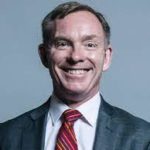
  • Chris Bryant – 2022 Speech on Referring Boris Johnson to the Committee of Privileges

    Chris Bryant – 2022 Speech on Referring Boris Johnson to the Committee of Privileges

    The speech made by Chris Bryant, the Labour MP for Rhondda, in the House of Commons on 21 April 2022.

    I warmly commend the hon. Member for Hazel Grove (Mr Wragg) for the speech he just gave. He did so with great courage and honesty and, frankly, with the integrity that a lot of us have seen him show in his chairmanship of the Public Administration and Constitutional Affairs Committee. This House knows that serving on and chairing Select Committees is not always easy, because quite often people come to Select Committee meetings with fixed views. They are not all that interested in the evidence that is presented to them and resolutely hold the same view after the meeting that they held at its beginning, even though everything has been proved to be quite the opposite of what they thought. I know from those who serve on the hon. Gentleman’s Committee that he listens to the evidence, and he is a very good parliamentarian as Chair of the Committee.

    It all got a bit religious earlier and I felt like I was back at theological college. Being, I think, the only person in the House who can actually pronounce absolution on anybody, I thought I was suddenly going to get a new job!

    I also warmly commend the work that the Chief Whip has done this week, because he has got us into a much better place today than the House would have been in if he had not made the decisions that, doubtless advised by others, he has made today.

    I had not expected to speak in this debate. I will be very straight with the House—if you see what I mean—in saying that it is sometimes difficult being the Chair of the Committee on Standards and of the Privileges Committee, because one is asked to comment on literally every single Member of the House at some point. I am absolutely scrupulous in making sure that I never comment, in public or in private, on anything that might possibly come to either of the Committees. I did not think this matter would come to the Privileges Committee, which is why I commented on it. Consequently, it is quite right that I recuse myself: I will not take part in the deliberations of the Committee on this matter if this motion is passed in any shape or form. I think I could have done it fairly—I chaired the Standards Committee when we had the Prime Minister before us in respect of a different matter and we disagreed with the Commissioner for Standards and found in the Prime Minister’s favour—but I understand that the House needs to know, absolutely for certain, that the process will be fair. In a strange way, that means that I can actually say something today.

    Joanna Cherry (Edinburgh South West) (SNP)

    Will the hon. Gentleman give way on that point?

    Chris Bryant

    Oh, all right.

    Joanna Cherry

    I commend the hon. Gentleman for his speech and thorough sense of decency. Does he think the same principle should apply to other members of the Privileges Committee?

    Chris Bryant

    I will say something about the Privileges Committee later but, having recused myself, I do not think it is really for me to tell its members what to do or how to behave.

    One thing I am very keen on is this: I passionately care about Parliament. I believe in Parliament. I believe in democracy. The only way that I can get change for my constituents is through the democratic process. Anything that undermines trust and confidence in Parliament damages my opportunity to do anything useful in my life at all. That is why I always want to urge the House to be extremely careful in these matters of standards and privileges. Each generation of MPs has a responsibility to burnish, not tarnish, the reputation of this House, because we hand democracy on to a future generation, and if we have undermined it, it may not last.

    I draw to the House’s attention the fact that in this Parliament, two MPs have been found guilty of serious offences in a court of law, and another two are awaiting trial; four MPs have been suspended for one day; a Minister was suspended for seven days; seven MPs have been required to apologise to the House for breaches of the code of conduct; three MPs have resigned their seats in the face of convictions; and the Independent Expert Panel has suspended a Member for six weeks for sexual harassment, made another apologise for bullying staff, and found another guilty of such terrible sexual harassment that he resigned his seat before he was sanctioned. All that is without any consideration of whether any right hon. or hon. Member has lied to the House. And it is not yet six months since the Owen Paterson saga, which I do not think covered the House in glory.

    In a very short period of time, two of our colleagues have been murdered, and others are wearing stab vests. We have to take the reputation of the House extremely seriously. We have to burnish it, not tarnish it.

    I have heard Ministers argue, quite rightly, that there must be due process. I say to the House that this is the due process. It always has been the due process. When there has been a claim that a member of the public or a Member of the House might have committed a contempt of Parliament by lying to the House, breaching the confidentiality around a Select Committee report or whatever, the standard process is that it is sent to the Committee of Privileges—or, as it used to be, the Standards and Privileges Committee, and before that the Committee of Privileges—so this is the due process.

    I have absolute confidence in the other members of the Committee and that they will do a good job. They will think very carefully about, as the hon. Member for Stone (Sir William Cash) said, making sure that there is a fair hearing. The court of public opinion is not very good at providing a fair hearing, I find; the House should do a great deal better than the court of public opinion. We try to uphold the rule of law—that is one of the duties for all MPs—so it is particularly important that we make sure that there is a fair process. I am sure that the other Committee members will do that.

    Hannah Bardell (Livingston) (SNP) rose—

    Mr Steve Baker rose—

    Chris Bryant

    I am not sure where that came from. I give way to the hon. Member for Wycombe (Mr Baker).

    Mr Baker

    The hon. Gentleman is making a powerful and important contribution. This mostly relates to Members of Parliament, but he will know that occasionally somebody feels it necessary to use parliamentary privilege to say in the House things over which those outside the House might otherwise sue for defamation. Will the hon. Gentleman confirm that he will consider whether the public ought to have a right to reply, so that if we use privilege, they have some chance to put their side of the story?

    Chris Bryant

    The hon. Member makes a good point. We have had some discussions about that issue outside the Chamber. The difficulty is that I am not sure that is a matter for the Standards Committee or the Privileges Committee; I think it is a matter for the Committee on Procedure. There is a good argument for putting something in place so that there is a right of reply. I cannot go further, for reasons of which the hon. Gentleman may be aware—

    Mr Speaker

    Order. I do not want to open up that area of debate. I know exactly what is going on—we can leave that part of it there.

    Chris Bryant

    Thank you very much, Mr Speaker.

    My second point about fair process is that it is actually quite a high bar that the Privileges Committee will have to consider. As the Leader of the Opposition said earlier, I do not think it is debated that the House was misled. I think even the Prime Minister admits, in effect, that the House was misled. It was said that rules were not broken and it is self-evident that rules were broken, so the House was misled—it got a false impression. The question is whether that was intentional. The Committee will have to devise ways to investigate whether there was an intention.

    Hannah Bardell rose—

    Sir William Cash rose—

    Chris Bryant

    I think I ought to give way to the hon. Lady first.

    Hannah Bardell

    The hon. Gentleman is making an excellent and poignant speech. Does he not find it strange and deeply worrying that we seem to be in a position in which the Prime Minister seemed unable or incapable of following his own rules and his own laws, yet he is using the rules and processes of this place to frustrate the course of, as the hon. Member for Stone (Sir William Cash) said, natural justice?

    Chris Bryant

    I would normally agree with the hon. Lady on these kinds of things, and I sort of would have agreed with her last night, but I think we are getting to a better place now. In a sense, sometimes the Back Benchers persuade the Front Benchers of a better course of action—I am looking intently at the Government Chief Whip at the moment.

    As the Clerk advised in the case of whether Stephen Byers had misled the House on a single occasion in 2001:

    “In order to find that Mr Byers committed a contempt in the evidence session of 14 November 2001, the Committee will need to satisfy itself not only that he misled the Sub-Committee, but that he did so knowingly or deliberately.”

    As I said, that is quite a high bar, but it is for the Privileges Committee to decide that.

    Sir William Cash

    I am grateful to the hon. Gentleman, because what he just said is what I was going to raise with him. The “Ministerial Code” says that it is open to a Minister to correct

    “any inadvertent error at the earliest opportunity. Ministers who knowingly mislead Parliament will be expected to offer their resignation to the Prime Minister”.

    The question rests on “knowingly”, and I am grateful to the hon. Gentleman for making that point clear.

    Chris Bryant

    I think the hon. Gentleman is agreeing with me, so—

    Mr Speaker

    We will leave it at that.

    Chris Bryant

    The only difference I have with the hon. Gentleman is that he was talking about the “Ministerial Code”. The “Ministerial Code” is for the Prime Minister. This House adjudicates on its rules, its code of conduct and contempts of Parliament, so they are different matters. This is about upholding a simple principle around making sure that Ministers speak honestly.

    I will say one other thing about the Committee: it is very important that the six members of the Committee are not pressurised by anybody. Members may not be aware of this, but the Attorney General and the Solicitor General can attend those meetings and take part in the deliberations, but they are not allowed to move amendments or to vote. It is very important that the Committee is able to do its business without being leaned on by anyone.

    My final point is why I think all of this is important. I care far more about what is happening in Ukraine and on the cost of living crisis than about this—far more. I have constituents who are in tears about their finances at the moment. They have absolutely no idea how they will pay their bills, how they will pay the rent, and how they will be able to provide school uniforms and things such as that. They are in tears. All of us have seen the horror in Ukraine. In 2014, I said that if we did not take Putin far more seriously and if we did not impose far stricter sanctions, he would end up coming for the rest of Ukraine. I care far more about those things than I do about this motion today, but they are not alternatives. I would argue that, in the coming months, the Prime Minister may have to come to this House and say that we will have to change our strategy on Russia. We may have to consider offensive weaponry. We may have to consider British troops being put in a place of danger. Similarly, the Prime Minister may have to come to this House and say, “I have to ask the British people to make further sacrifices because the economy is in a very difficult place, and the public finances are in a very difficult place.” At a moment of national and international crisis, we need a leader of completely and utterly unimpeachable moral authority. We do not have that at the moment, not by a long chalk, but that is why these two things are intimately connected and not separate. It is why I believe that this must be referred to the Committee of Privileges.

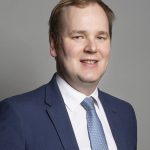
  • William Wragg – 2022 Speech on Referring Boris Johnson to the Committee of Privileges

    William Wragg – 2022 Speech on Referring Boris Johnson to the Committee of Privileges

    The speech made by William Wragg, the Conservative MP for Hazel Grove, in the House of Commons on 21 April 2022.

    Thank you for calling me so early in this debate to deliver my sermon, Mr Speaker. If I may, by means of parish notices, let me wish Her Majesty a happy 96th birthday.

    My intention was to vote against the Government’s amendment and that would still be my intention were it to be moved. I appreciate the efforts by my right hon. Friend the Chief Whip to find a way through—he is somebody we are lucky to have in his role—but we were at risk of making a mistake. The original motion is perfectly acceptable and allows for much of the spirit of the amendment. For example, the publication of the Gray report would be automatic upon the conclusion of the Metropolitan police’s work. There was no need to complicate matters.

    The Ukraine situation is of huge importance, but the invasion of a sovereign nation by a dictatorial aggressor should not be a reason why we should accept lower standards ourselves. I have told the Prime Minister to his face that I think he is doing a good job in robustly supporting the Ukrainian Government. Her Majesty’s Government, along with our nation, can be proud of their role and generosity. Let us give credit where credit is due. However, much as I may have tried, I cannot reconcile myself to the Prime Minister’s continued leadership of our country and the Conservative party. I say this by means of context, so that everyone, particularly my constituents and colleagues, can understand my position, without hiding my views with ever more elaborate disguises. To those constituents who disagree with me, I say that I appreciate their anger, just as I can appreciate the anger of colleagues. However, say what you mean and mean what you say.

    I submitted my letter of no confidence to my hon. Friend the Member for Altrincham and Sale West (Sir Graham Brady) in December last year. I did so for the following reason. It followed the leak of the Allegra Stratton mock press conference video. I believe that in that video she did nothing wrong. She nervously laughed and sought to make light of an embarrassing situation. To see her crying on her doorstep, feeling the full weight of responsibility and anger of a country, was deeply moving and I felt immensely sorry for her. I hope that she is well and will be able to continue her distinguished career. But what alarmed me most was that, later that evening, a press preview of the winter covid plan B measures was brought forward to try to move matters on. We debated those measures at length, but we can agree, if not on their extent or importance, that they none the less sought to compel or restrict what people in this country could do. I therefore thought to myself: if a Government were prepared to bring such measures forward earlier in order to distract from their own embarrassment, the Prime Minister was no longer fit to govern.

    I care deeply about my colleagues. I know that a number are struggling at the moment. We have been working in a toxic atmosphere. The parliamentary party bears the scars of misjudgments of leadership. There can be few colleagues on this side of the House who are truly enjoying being Members of Parliament at the moment. It is utterly depressing to be asked to defend the indefensible. Each time, part of us withers.

    I have questioned my place in this party in recent months and perhaps that is symptomatic of a swathe of our voters in the country, but I tell them firmly that I am not going anywhere and I urge them to stick with us in the forthcoming elections. But for us to maintain their trust and confidence, we must be seen to do the right thing. It is our responsibility—it is the Conservative parliamentary party’s responsibility. We must stop delegating and delaying our political judgment. We each only have our own limited and imperfect integrity. We cannot keep spending it on others whom we cannot be sure will not let us down.

    I have great empathy for all those who worked at No. 10 and in the Cabinet Office. They bore an immense burden and worked under the most intense pressure. They worked hard and made sacrifices. I extend that same empathy to my right hon. Friend the Prime Minister, who knows more than most the personal challenges and personal battles that came from the pandemic. But the matter before us is one at the heart of this institution, of our Parliament.

    I love this place, believing it to be a place of high ideals and purpose. What is said here matters. Quite apart from the Facebook clips about roundabouts and drains in our constituencies, or indeed the confected anger to wind people up, it should be a place venerated by those of us given the singular honour of being sent here. Of course it can be a pantomime, a farce, turgidly boring and obscure, but it should always be reasonably honest. It is for that, I hope not naive, principle that I cannot support the amendment and I will vote for the motion.

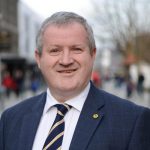
  • Ian Blackford – 2022 Speech on Referring Boris Johnson to the Committee of Privileges

    Ian Blackford – 2022 Speech on Referring Boris Johnson to the Committee of Privileges

    The speech made by Ian Blackford, the Leader of the SNP at Westminster, in the House of Commons on 21 April 2022.

    On a day like this, we think of all those who made so many sacrifices over the covid pandemic and those who lost so many loved ones. Our thoughts and our prayers today are with each and every one of them. There is one reason why it is so important that this motion be debated and passed today. At the very heart of the scandal, there is one thing that needs to be said and heard, and it is the very reason why we all need to act. The reason is this: the Prime Minister of the United Kingdom is a liar. I genuinely do not say that lightly, and I do not say it loosely. I honestly believe that it is right that we are slow to use that word, but equally, I consider it right that we should never be slow to say it, and to call it out, when it is so obviously true. Members across this House know it to be true, and the public have long known it to be true. That is why it needs to be said today, and why we all need to act.

    Every single day, motions come before this House that are complex and nuanced. There are usually two sides to the argument, and valid reasons for any position that is proposed, but I think we can safely say that this definitively is not one of those debates. The evidence in the motion speaks for itself. It is as clear as day. If there ever was an open-and-shut case, this is it.

    Last December, the Prime Minister came to this House and denied that there were any parties in 10 Downing Street during the long covid lockdowns. Typically, and tellingly, he hid behind his staff in saying that. He told us that he was given firm reassurances that no parties had happened, and that no rules had been broken. Every Member of this Parliament witnessed that; the public saw it with their own eyes; and, shamefully, to this very day, it is still on the record of this House. But we know the truth, and the truth contains no ifs, buts or maybes. The House was misled, and so were the public. We were all misled deliberately, because the Prime Minister knew the truth. Not only were parties happening, and not only was the law broken, but the Prime Minister was at the very parties that he denied had even happened. The truth is simple: he lied to avoid getting caught, and once he got caught, he lied again. There is no other way to describe it. There is no other word for it.

    I can understand that this may be a terrible truth for those on the Government Benches to hear, but it is a truth that they need to hear, and that they need to live with. I say to the Father of the House, for whom I have the utmost respect, that this has nothing to do with any elections. This is about the behaviour of a Prime Minister in office. Much more importantly, the uncomfortable truth that the Prime Minister of the United Kingdom is a liar is exactly why those on the Government Benches finally need to act and remove him from office. Other Prime Ministers, including all his predecessor Conservative Prime Ministers, would have been long gone by now. Members on the Government Benches put the Prime Minster in power; they have the power to remove him, and the public expect them to act. We have reached this point. A motion of contempt for a sitting Prime Minister is shocking, but unfortunately it is no surprise.

    Drew Hendry (Inverness, Nairn, Badenoch and Strathspey) (SNP)

    My right hon. Friend makes an important point about Conservative Members being here to listen and watch. Regardless of the number of flushed or drained faces on the Conservative Benches, what does he say to those who previously called for the Prime Minister to resign, but who, as things got worse, changed their position, and are not here today?

    Ian Blackford

    I will come on to that in a little more detail, but the Tory MPs who are here, and those who are not here for whatever reason, should show some moral fibre and show a backbone. They should recognise what this Prime Minister is doing to the very fabric of our democracy. Today of all days, they should do the right thing and support this motion in the name of the Leader of the Opposition and of the leaders of so many other parties in this House.

    We should not forget that, when the Tories put this Prime Minister into Downing Street nearly three years ago—[Interruption.] Actually it was the Conservatives who elected Boris Johnson as their leader. The important fact is that the Tories knew exactly the kind of person they were putting into the highest office in the land. They knew his track record; they knew his character; they knew who he was and what he was; and they still chose him as their leader. Conservative Members know better than anyone else in the House that a trail of scandal and lawbreaking was always going to define his time in office.

    In three short years, those who made those predications have unfortunately not been disappointed. The sleaze and the scandal has been ten a penny. From lying to the Queen to illegally proroguing Parliament—

    Mr Speaker

    Order. We have to be careful. I have asked for moderate, more temperate language. I am not having the Queen brought into it. Withdraw that point.

    Ian Blackford

    In deference to you, Mr Speaker, I will do so.

    Let us not forget the fact that the Prime Minister was found by the highest court in the land to have illegally prorogued this Parliament.

    Mr Speaker

    Order. I said this at the beginning, and I know the right hon. Gentleman will want to stick to what I said. We cannot go beyond the terms of the debate. I know he is very good and can stick to the script that I have explained.

    Ian Blackford

    I will happily take your guidance, Mr Speaker. Of course, we will reflect on the Supreme Court’s judgment.

    Stuffing the House of Lords with Tory party donors, VIP lanes for covid contracts, and even dodgy donations to decorate Downing Street—this is who the Prime Minister is. It is who he has always been. As Prime Minister, he has done exactly what it says on the tin. The real point is that as the days pass with him staying in power, it is who the entire Conservative party has become.

    Martyn Day (Linlithgow and East Falkirk) (SNP)

    My right hon. Friend is making a very measured and powerful speech that will strike a chord with the electorate in my area, where people of all political persuasions have been writing to me calling for the Prime Minister’s resignation. They are not surprised by his repeated pattern of behaviour and the lame excuses, but they are surprised that Conservative Members are keeping him in office. Why does my right hon. Friend think that is?

    Ian Blackford

    I hope Conservative Members listen very carefully to what my hon. Friend says, because the power to remove the Prime Minister rests with them. They can submit letters to the 1922 committee, and they can recognise the damage that the Prime Minister is causing to the fabric of our democracy—and, yes, to the integrity, honesty and decency of this House.

    Mr Steve Baker (Wycombe) (Con)

    Will the right hon. Gentleman sit down?

    Ian Blackford

    Here we go. Once again, the Conservatives want us to sit down and shut up. They do not wish to hear the voices of those of us, here to represent our constituents, who are frankly appalled at the way the Prime Minister has laughed at the people of these isles with his behaviour during covid. If Conservative Members vote down this motion, not only will they be endorsing all those scandals and all that sleaze, but they will be handing the Prime Minister a blank cheque to do it all over again. I would be surprised if the hon. Gentleman accepts the scandals, the sleaze and the corruption and is prepared to give the Prime Minister a blank cheque. I do not want to do that. If he does, he can explain why.

    Mr Baker

    The right hon. Gentleman is right to be surprised, because of course I am appalled; that is why I encouraged him to sit down. If he would let us speak, he might advance his own cause. Some of us are actually extremely disappointed. The right hon. Gentleman heard what I said on Tuesday. He is a brother in Christ. Does he not believe in redemption?

    Ian Blackford

    I believe in truth and justice, and I believe that a Prime Minister who has misled the House should face the appropriate sanctions.

    Martin Docherty-Hughes (West Dunbartonshire) (SNP)

    The hon. Member for Wycombe (Mr Baker) talks of contrition. Does my right hon. Friend think that, when the Conservative party attacks the very foundations of the Church of England—the Conservative party at prayer—we should take no lectures from them on being contrite or reconciled sinners?

    Ian Blackford

    We have had the usual deflection from the Prime Minister over the past few days. To see the Archbishop of Canterbury, the leader of the established Church of their nation, being traduced in the way he was by the Prime Minister, my goodness. How utterly shameful.

    Emma Hardy (Kingston upon Hull West and Hessle) (Lab)

    I wonder whether it is worth pointing out to the House that, before we can have Christian forgiveness, we must first have confession and contrition, neither of which we have seen from the Prime Minister.

    Ian Blackford

    How we get confession from a Prime Minister who denies everything, I just do not know.

    Mr Speaker, I know you will understand that I cannot let this moment pass without a special word for the spineless Scottish Tories. In fairness, the Scottish Tory leader is probably the only person in the Conservative party who finds himself in a deeper hole than the Prime Minister. In fact, he is so far down a political hole that he obviously found it impossible to dig his way out and make it down to London to vote his boss out tonight. I understand that plenty of people back home are looking forward to the Scottish Tories being given a straight red in the council elections in a few weeks. [Interruption.] There we go again. I hope people in Scotland are watching, because what we see is the Conservatives trying to shout down parliamentarians in this House. That is what is happening.

    For most people, it is very understandable—[Interruption.] There is Scotland’s answer from the Tories: “Let’s shout Scotland down.” That is what they are doing this afternoon. [Interruption.]

    Mr Speaker

    Order. Can we just calm down? I want to hear the right hon. Gentleman, and I know he wants to get back on track. He does not want to distract from this important debate.

    Ian Blackford

    Thank you, Mr Speaker.

    It is understandable that most people’s main reaction to the flip-flopping Scottish Tory leader and his support for the Prime Minister is disbelief and justified anger. I have to admit that, when I reflect on the position of the Scottish Tory leader, my main reaction is something I know he will appreciate far less. I actually feel sorry for him, because he is by no means the first person to have his career ruined by the Prime Minister. That pile of people is a mountain high. Everybody, and I mean everybody, is eventually thrown under the Boris bus. As we saw yesterday, not even the Archbishop of Canterbury is safe. Clearly, the days of the Church of England being the Conservative party at prayer are long gone. The Prime Minister’s party is obviously praying to another god these days, although no doubt even that will not guarantee its salvation.

    But in all seriousness, that unjustified attack on the archbishop gives another toxic insight into the thinking and methodology of this Prime Minister. His modus operandi is very simple: when he finds himself under political pressure, he finds someone else to blame—anyone else, just as long as he never takes responsibility himself, because nothing and nobody else matters. The only thing that does matter is that this Prime Minister will stop at nothing to save his own skin. That is why Conservative Members should not save him today. Think about it: he would not even lift his finger to help them. So if they have any self-respect, they need to ask themselves why they should even be contemplating walking through the Lobby for him.

    Let me end on this point. It might surprise hon. Members to hear, from a party that is unapologetically seeking out of this very institution and out of this Parliament, that I actually do care how it acts and operates, and about the values it holds. I care deeply for this reason. Today’s motion is not just about this Parliament or about this place. We should all know by now that democracy and decency are under assault the world over. If we fail to defend these values in every single institution we are part of, these values will decay and decline. It was George Orwell who famously said:

    “Political chaos is connected with the decay of language”.

    I know that people are deeply fearful about just how real that prophesy has felt in the last few years because, when language decays, so does the truth and so does trust in our politics. A Prime Minister who cannot be trusted with the truth marks the end of that dangerous decline. So if today is about anything, it has to be about finally ending that decline.

    That decline did not start with this Prime Minister, but it needs to end with him. We should all be very clear as to what the consequences are if this House fails to act today. If we don’t act—if we don’t stop—this Parliament will be endorsing a new normal in this Parliament and across our politics: a new normal where no one is held responsible, no one is held to account and no one ever resigns. That is exactly why this motion matters, because it can and it will only ever become a new normal if we put up with it. It only becomes normal if those responsible are not held to account and are not made to answer for their actions. So I genuinely say to Members from across the House, but especially those Members opposite: if they have any interest in maintaining some dignity and decency in public life, they should finally hold this Prime Minister to account for his actions and remove him from office. They should support this motion, they should submit their letters of no confidence and they should finally show this Prime Minister the door.

  • Keir Starmer – 2022 Speech on Referring Boris Johnson to the Committee of Privileges

    Keir Starmer – 2022 Speech on Referring Boris Johnson to the Committee of Privileges

    The speech made by Keir Starmer, the Leader of the Opposition, in the House of Commons on 22 April 2022.

    Thank you, Mr Speaker. I beg to move,

    That this House

    (1) notes that, given the issue of fixed penalty notices by the police in relation to events in 10 Downing Street and the Cabinet Office, assertions the Rt hon Member for Uxbridge and South Ruislip has made on the floor of the House about the legality of activities in 10 Downing Street and the Cabinet Office under Covid regulations, including but not limited to the following answers given at Prime Minister’s Questions: 1 December 2021, that “all guidance was followed in No. 10”, Official Report vol. 704, col. 909; 8 December 2021 that “I have been repeatedly assured since these allegations emerged that there was no party and that no Covid rules were broken”, Official Report vol. 705, col. 372; 8 December 2021 that “I am sickened myself and furious about that, but I repeat what I have said to him: I have been repeatedly assured that the rules were not broken”, Official Report vol. 705, col. 372 and 8 December 2021 “the guidance was followed and the rules were followed at all times”, Official Report vol. 705, col. 379, appear to amount to misleading the House; and

    (2) orders that this matter be referred to the Committee of Privileges to consider whether the Rt hon Member’s conduct amounted to a contempt of the House, but that the Committee shall not begin substantive consideration of the matter until the inquiries currently being conducted by the Metropolitan Police have been concluded.

    The motion seeks to defend the simple principle that honesty, integrity and telling the truth matter in our politics. That is not a principle that I or the Labour party have a special claim to. It is a British principle. It is a principle that has been cherished by Conservatives for as long as their party has existed. It is embraced by Unionist and nationalist parties alike and still guides members from every political party in this House.

    Mr John Baron (Basildon and Billericay) (Con)

    I lost my mother to covid in the first lockdown. It was a very painful experience because she was in a hospital bed and, as we obeyed the rules, we could not be by her side when she passed. I have made my disquiet known to the Prime Minister a couple of times, and he has taken that on board. I am deeply unhappy about how No. 10 performed over the period in question. However, I suggest to the right hon. and learned Member that it is perfectly natural in this country to weigh all the evidence before deciding on intent. As the central issue is whether the Prime Minister misled Parliament, does he agree that, in us all accepting that the matter should be referred to the Privileges Committee, that Committee needs to weigh all the evidence before coming to a decision, and that that includes the Sue Gray report?

    Mr Speaker

    Order. May I say to Members that interventions are meant to be short? If you are on the list to speak and you intervene—I know that the hon. Member for Basildon and Billericay (Mr Baron) is not and would not want to be as he has made his speech—you will go down the list.

    Keir Starmer

    I am sorry for the loss in the hon. Member’s family. We all send our condolences. I know how difficult it has been for so many during this period. In relation to the substantive intervention, I have two points, which I will develop later. First, there is already a clear case before the House: the Prime Minister said “no…rules were broken”, and 50 fines for breaking the rules and the law have already been issued, so there is already a reasonable case. Secondly—I understand the sentiment behind the intervention—if the motion is passed, the Committee will not begin its substantive work until the police investigations are complete, so it will have all the evidence before it, one way or the other, to come to a view. That is within the body of the motion and is the right way; the way it should work. I hope that addresses the concerns raised.

    Jim Shannon (Strangford) (DUP)

    Further to the point made by the hon. Member for Basildon and Billericay (Mr Baron), many of us in the Chamber have lost loved ones in the last period of time and feel greatly aggrieved that we have not had our day in court, if that is perhaps the way to put it. We feel the need to have justice seen for all those who have lost loved ones—those who passed away and whom we miss greatly. Does the right hon. and learned Gentleman feel that, when it comes to justice, while we do need to see all the evidence, there must be accountability in the process, and accountability means that people have to answer for their actions?

    Keir Starmer

    Again, I express my sadness at the loss that the hon. Member and his family have endured. I was particularly struck—I think we all were—by how he spoke about that in this House just a few months ago.

    On the substantive point, which is the point of the motion, this is about honesty, integrity and telling the truth in this place. It is an important principle, and one that we all share—as I say, I do not claim it as a Labour party principle—because we know the importance of it. That is why it is a matter for the House to consider. But it is a principle under attack, because the Prime Minister has been accused of repeatedly, deliberately and routinely misleading the House over parties held in Downing Street during lockdown.

    That is a serious allegation. If it is true, it amounts to contempt of Parliament. It is not, and should never be, an accusation made lightly. Nor should we diminish the rights of Members to defend each other from that accusation. But the Prime Minister’s supporters do not seek to do that. Instead, many of them seek simply to dismiss its importance. They say, “There are worse crimes,” “He didn’t rob a bank”, “He only broke the rules for 10 minutes” and, “It was all a long time ago.” Every time one of those arguments is trotted out, the status of this House is gradually eroded and our democracy becomes a little weaker. The convention that Parliament must not be misled and that, in return, we do not accuse each other of lying are not curious quirks of this strange place but fundamental pillars on which our constitution is built, and they are observed wherever parliamentary democracy thrives. With them, our public debate is elevated. When Members assume good faith on behalf of our opponents, we can explore, test and interrogate our reasonable disagreements about how we achieve our common goals. Ultimately, no matter which Benches we sit on, no matter which Whip we follow, fundamentally we are all here for one reason: to advance the common goals of the nations, of the peoples, that make up our United Kingdom.

    Layla Moran (Oxford West and Abingdon) (LD)

    I am grateful to the Leader of the Opposition for giving way. He mentioned some of the arguments around, “Well, it was just nine minutes.” I met a woman, the daughter of a serviceman who lost his life the week before that birthday party. She said to me, “What I wouldn’t give for just nine more minutes with him.” I congratulate the right hon. and learned Gentleman on the way he is rising above party politics here. To diminish nine minutes as just anything diminishes us all across both sides of the House. Would he not agree?

    Keir Starmer

    I am grateful for that intervention, because it goes to the heart of the matter. Some have tried to suggest equivalence between these fixed penalty notices and speeding. That just does not understand the enormity of the difference. It is very rare that the whole nation goes through something together—a trauma together, that was covid. There are awful cases of funerals, of weddings that were missed, of parents who did not see the birth of their children. They are awful cases, but I think almost every family was marked during this period, including my own, by things we did not do that we would have liked to have done—usually visiting elderly parents and seeing children. There was a huge sense of guilt that we did not do it, including in my own family: guilt that because we followed the rules, we did not do what we thought was actually right by our elderly relatives. That is why it hurts so much. That is why anybody trying to say, “This is just like a speeding ticket” does not understand what this goes to politically and emotionally.

    Going back to the principles, I want this debate to be about the principles, because that is where I think the debate should be. The Committee will be charged, if the motion goes through, with determining whether there was any misleading. But this is about the principles we all care about. That is why I think everybody should simply vote for the motion this evening to uphold those principles. Those principles, that we do not mislead the House and in return we do not call each other liars in this House, ensure that we make good decisions and avoid bad ones. It is what makes our democracy grow in ways that reflect the hopes and tackle the fears of those we represent. It is what makes our democracy thrive. It is what makes this House thrive. It is what makes Britain thrive.

    Mr Speaker, we do not have to look far to see what happens when that faith is lost and there is no hope of reason resolving disagreements. When nations are divided, when they live in different worlds with their own truths and their own alternative facts, democracy is replaced by an obsession with defeating the other side. Those we disagree with become enemies. The hope of learning and adapting is lost. Politics becomes a blood sport rather than a quest to improve lives; a winner-takes-all politics where, inevitably, everyone loses out.

    Sir Edward Leigh (Gainsborough) (Con)

    The Leader of the Opposition was big-hearted enough to say that he unwittingly misled the House. I am sure he would agree that it is very important to stick to the convention that we do not call each other liars, and there is a good reason for that. Two of our colleagues have been killed and there have been a lot of attacks on colleagues. In this debate, can we just accept that everybody here is an honourable Member and that when they speak here, although they may unwittingly mislead the House, they think that they were, for instance, abiding with the rules? Can we tone down the whole nature of this debate?

    Keir Starmer

    I thank the right hon. Gentleman for that intervention; I will try to keep within those parameters and elevate this debate to the principles that we apply when we debate in this Chamber.

    Mr Toby Perkins (Chesterfield) (Lab)

    I am grateful for what my right hon. and learned Friend said about the fact that we do not want Opposition Members to have a monopoly on truth. He makes a very important point, but does he agree that the fundamental point is about whether we as Members of Parliament are fit to hold our powers to hold people to account or whether politics will always get in the way? It was disturbing to hear that Conservative Members might vote against the motion because a Labour Chair was involved, and it is disappointing that my hon. Friend the Member for Rhondda (Chris Bryant) felt that he had to step down. The principle of whether we either have an independent process or do it ourselves is very important.

    Keir Starmer

    That is very important. We have these procedures to hold us all to the rules of the House, and it is very important that they are applied in the right way with the right principles.

    Caroline Lucas (Brighton, Pavilion) (Green)

    The right hon. and learned Member is making a very powerful speech. On procedures, does he agree that there is a bigger point about Parliament’s governance structures? Our whole system of checks and balances is completely out of date. It is beyond ludicrous that the arbiter of whether the ministerial code has been broken is the person who is accused of breaking it—in this instance, the Prime Minister. Does the Leader of the Opposition agree that we also need a wider look at those governance structures, which are simply not fit for purpose?

    Keir Starmer

    I am grateful for that intervention, because it raises a very serious point. A lot of our conventions, rules and traditions are based on the principle of honour and on the fact that Members of this House would not, other than inadvertently, mislead the House. That is why the rules are set, and they are set on that proposition. If a Member of the House—whoever that is—does not abide by those honourable principles, we have that stress test of the rules.

    Several hon. Members rose—

    Keir Starmer

    I will take one more intervention and then I will make some progress.

    John McDonnell (Hayes and Harlington) (Lab)

    I understand completely the point made by the right hon. Member for Gainsborough (Sir Edward Leigh) about toning down the rhetoric—[Interruption.] I understand that position, but let me make this point, because I have known him over the years: we cannot tone down the seriousness of this matter. I was in the Prime Minister’s constituency earlier this week; it is the neighbouring constituency to mine and we are campaigning for the London Borough of Hillingdon in the election. There is some shift in the vote from Tory to Labour because of this issue, but that is not the significant point. What is significant is the number of people we found who were totally disillusioned, who had had enough of the system and who were blaming the system itself. That is what we are fighting and campaigning for. We are campaigning to restore the credibility of our country’s democratic processes.

    Keir Starmer

    That is a really important and powerful point, because if we do not pass this motion and take this opportunity to restate the principles, we are all complicit in allowing the standards to slip. We are all complicit in allowing the public to think that we are all the same, that nobody tells the truth and that there are alternative sets of facts.

    Jacob Young (Redcar) (Con)

    Will the right hon. and learned Member give way?

    Keir Starmer

    I will in a minute; I have given way a lot and I want to make some progress, but I will try to come back to the hon. Member.

    Felicity Buchan (Kensington) (Con)

    Will the right hon. and learned Member give way?

    Keir Starmer

    I will make some progress and try to come back to hon. Members when I can.

    The conventions and the traditions that we are debating are not an accident. They have been handed down to us as the tools that protect Britain from malaise, extremism and decline. That is important, because the case against the Prime Minister is that he has abused those tools, that he has used them to protect himself rather than our democracy, and that he has turned them against all that they are supposed to support. Government Members know that the Prime Minister has stood before the House and said things that are not true, safe in the knowledge that he will not be accused of lying because he cannot be. He stood at the Dispatch Box and point-blank denied that rule breaking took place when it did, and as he did so he was hoping to gain extra protection from our good faith that no Prime Minister would ever deliberately mislead this House. He has used our faith and our conventions to cover up his misdeeds.

    Mike Wood (Dudley South) (Con)

    Will the right hon. and learned Gentleman give way?

    Keir Starmer

    I will just finish this point. After months of denials, absurd claims that all the rules were followed and feigned outrage at his staff discussing rule breaking, we now know that the law was broken. We know that the Prime Minister himself broke the law, and we know that he faces the possibility of being found to have broken it again and again and again.

    As the police investigation is ongoing, we do not need to make final judgment on the Prime Minister’s contempt of Parliament today. When the time comes, the Prime Minister will be able to make his case. He can put his defence—of course he can. He can make his case as his defence that his repeated misleading of Parliament was inadvertent; or that he did not understand the rules that he himself wrote, and his advisers at the heart of Downing Street either did not understand the rules or misled him when they assured him that they were followed at all times; or that he thought he was at a work event, even while the empty bottles piled up. He can make those defences when the time comes.

    Sir William Cash (Stone) (Con) rose—

    Keir Starmer

    I will give way in just a minute.

    We already know that he has a case to answer. The Prime Minister said that no rules were broken, but more than 50 fines for breaching the rules and the law have now been issued, including to the Prime Minister. Anybody who denies that simple fact has their head in the sand or has given up any interest in the truth and in the traditions of our nation in order to prop up a lawbreaking Prime Minister.

    Today’s motion would refer the matter to the Privileges Committee, a Committee that has a Government majority. No one can say that the Prime Minister is not being judged by his peers. The Committee would investigate the Prime Minister for contempt only once the police had concluded their investigation. No one can say that there is prejudice to the rest of the inquiry. And, of course, any findings the Committee comes to and any sanctions it might propose would then come back before the House as a whole, so no one can say that it is too soon for the House to decide. It is a system of self-governance, and it should be, because with the great privilege that comes from sitting in this place comes the great responsibility to protect the conventions that underpin our democracy.

    Jacob Young

    On conventions, does the right hon. and learned Gentleman agree that language is equally important? Will he therefore take this opportunity to distance himself from the right hon. Member for Hayes and Harlington (John McDonnell), who said that he wanted to lynch another hon. Member, and from the right hon. Member for Ashton-under-Lyne (Angela Rayner), who is sitting right next to him and who called Members on this side of the House Tory scum? He should distance himself from them.

    Keir Starmer

    That is a shame. I thought that we were having a reasonably serious debate—[Interruption.]

    Mr Speaker

    Order. The hon. Member for Kensington (Felicity Buchan) needs to sit down. In fairness to the right hon. and learned Member for Holborn and St Pancras (Keir Starmer), he has taken a lot of interventions, but I certainly do not need her standing up and waiting to catch somebody’s eye.

    Keir Starmer

    If the debate descends into a shouting match, Mr Speaker, we lose the principle that is there to defend all of us, including all the Conservative Members. We are not claiming a principle to support those on the Opposition Benches and not those on the Government Benches; it is a principle that supports us all. If we fail—

    Sir William Cash rose—

    Keir Starmer

    I will take the intervention from the hon. Gentleman.

    Sir William Cash

    The Leader of the Opposition has just said, quite rightly, that this issue affects everyone in the House. Does he accept that at this moment there is a complication, namely that the Committee on Standards is conducting a report, under the aegis of Sir Ernest Ryder’s recommendations, which raises questions about whether a fair trial and natural justice are possible at this juncture? That is currently under discussion in the House. The same rule applies with regard to the question of the Committee of Privileges, which has already been criticised. I was on the Joint Committee on Parliamentary Privilege, and I can assure the Leader of the Opposition that serious problems arise in relation to the need to rectify those omissions in procedural fairness.

    Keir Starmer

    I have heard the hon. Gentleman put his case on natural justice a number of times, and of course he has every right to do so. I disagree, but that is the point of the debates we have. However, a debate about natural justice, or due process, need not hold up the current process. This motion can and should be passed today, and everyone should support its being passed today to uphold the principles to which I have referred. There is a discussion to be had about natural justice—an interesting debate, in which we will take different views—but it need not hold up this process.

    Mr Alistair Carmichael (Orkney and Shetland) (LD)

    The right hon. and learned Gentleman is entirely correct to prosecute the case on the basis of principle, but there is still an amendment on the Order Paper, even if the Government will not move it, which would indicate that not everyone in the House shares his view of the importance of these principles. Does he share my view that at the conclusion of this debate there should be a Division, so that we know where every single Member of this House stands on the principles? At a time like this, on an issue like this, there should be no hiding place for anyone.

    Keir Starmer

    I agree. We have a duty here today, in relation to this motion and these principles. If we fail in that duty, the public will not forgive and forget, because this will be the Parliament that failed—failed to stand up for honesty, integrity and telling the truth in politics; failed to stand up to a Prime Minister who seeks to turn our good faith against us; and failed to stand up for our great democracy.

    It is not just the eyes of our country that are upon us. There will also be the judgment of future generations, who will look back at what Members of this great House did when our customs were tested, when its traditions were pushed to breaking point, and when we were called to stand up for honesty, for integrity and for truth.