
The letter from Boris Johnson, the Prime Minister, to Nicola Sturgeon, the Scottish First Minister, on 12 August 2022.
Tag: Speeches
-
G7 – 2022 Joint Statement on Zaporizhzhya Nuclear Power Plant
The joint statement issued by members of the G7 on 10 August 2022.
Statement by the foreign ministers of Canada, France, Germany, Italy, Japan, the UK and the US, and the High Representative of the European Union:
We, the G7 Foreign Ministers of Canada, France, Germany, Italy, Japan, the United Kingdom and the United States of America, and the High Representative of the European Union, re-reiterate our strongest condemnation of the ongoing unprovoked and unjustifiable war of aggression of the Russian Federation against Ukraine. The Russian Federation must immediately withdraw its troops from within Ukraine’s internationally recognized borders and respect Ukraine’s territory and sovereignty.
In that context, we demand that Russia immediately hand back full control to its rightful sovereign owner, Ukraine, of the Zaporizhzhya Nuclear Power Plant as well as of all nuclear facilities within Ukraine’s internationally recognized borders to ensure their safe and secure operations. Ukrainian staff operating the Zaporizhzhya Nuclear Power Plant must be able to carry out their duties without threats or pressure. It is Russia’s continued occupation control of the plant that endangers the region.
We remain profoundly concerned by the serious threat that the occupation seizure of Ukrainian nuclear facilities and other actions by Russian armed forces pose to the safety and security of these facilities, significantly raising the risk of a nuclear accident or incident and endangering the population of Ukraine, neighbouring states and the international community. They It also undermines the IAEA’s ability to monitor Ukraine’s peaceful nuclear activities for safeguarding purposes.
We welcome and support IAEA Director General Grossi’s efforts to strengthen nuclear safety and security in Ukraine and we thank the Director General and the IAEA staff for their steadfast commitment in this regard. Against this background, we underline the importance of facilitating a mission of IAEA experts to the Zaporizhzhya Nuclear Power Plant to address nuclear safety, security and safeguard concerns, in a manner that while respecting full Ukrainian sovereignty over its territory and infrastructure. We strongly endorse the importance of the Seven Pillars of Nuclear Safety and Security as outlined by Director General Grossi.
We reiterate our full and continued support for the IAEA. IAEA staff must be able to access all nuclear facilities in Ukraine safely and without impediment, and engage directly, and without interference, with the Ukrainian personnel responsible for the operation of these facilities. The safety of all individuals implementing these efforts must be addressed to strengthen nuclear safety, security and safeguards in Ukraine.
We encourage all countries to support the IAEA’s efforts.
-

Suella Braverman – 2022 Speech at the Policy Exchange
The speech made by Suella Braverman, the Attorney General, at the Policy Exchange on 10 August 2022.
Good afternoon,
I feel very honoured to have been invited here today by Policy Exchange’s Judicial Power Project. The Judicial Power Project focuses on the proper scope of judicial power within our constitution and highlights how and by whom public power is exercised. It’s so influential, and so often mentioned in Parliament, both on the left and right. At times it seems that it is the only public defender of constitutional orthodoxy – but scratch beneath the surface of the legal Twitterati, you’ll find that there is a lot of support for their clear, Diceyan view of our constitution. I want to put on record my thanks to Prof Richard Ekins, Lord Godson and all of the academics and big brains at Policy Exchange for your thought leadership.
My speech today is about equality and rights, and I’ve titled it, ‘conflict and the need for clarity’. Despite what our critics might say, rights can be difficult to get right. Sometimes, things that seem clear in the abstract become distorted when they are applied in the real world, with unintended consequences. That’s when we need clarity. How do we balance the rights of minorities with the rights of majorities? Or the rights of different minorities against one and other? But we reject this quasi-religious narrative. We know humans are flawed and changeable and there will never be a perfect framework that solves everything. We also know that tolerance for difference, for robust debate, can sometimes be more appropriate than restricting freedom.
It’s so tempting to see things superficially.
But all rights, however noble, impose limits and obligations on other people, some with tricky trade-offs.
Should protesters have the right to block the streets? Or block ambulances? How far does a state’s duty to protect its citizens extend vis a vis a foreign national offender’s human right to remain here? Should women have the right to single-sex spaces? Do our feelings about who we are, change the rights to which we are entitled?
There is a now serious risk that the fight for rights undermines democracy and harms the very people for whom the fight was intended to benefit. In the context of a mature democracy – with a responsive and pragmatic common law tradition – is it always right that minority groups impose their claims upon the rest of society? We need to make sure that the costs of protecting rights are worth the pay-off.
The judicially expanded European Convention on Human Rights and the Human Rights Act marked a radical change in ‘how’ fundamental rights are protected in the UK, with alarming constitutional and practical consequences. We now have a ‘rights culture’ in a way that did not exist prior to 1998. Aspects of this are causing confusion and distress. Sometimes – but not always – we see a triumph of common sense, fairness and freedom of speech. Increasingly we see cases arising in the workplace that are symptomatic of a culture where fringe campaign groups, purporting to champion rights, have claimed a moral high ground and have adopted an attitude of intolerance. No doubt right-wingers and left-wingers will disagree on the precise causes of how we got to a place where stating the facts of biology might risk your job. In relation to the Equality Act, the main problem is that businesses and institutions are currently misinterpreting these laws and applying a perceived moral obligation to go beyond the law, when it comes to equality.
The magnitude of the departure from a Parliament-led to a Court-led development of Human Rights law is visible when viewed against our distinct constitutional and political history. The Government’s track record on human rights law demonstrates a better understanding of this British human rights edifice, and the importance of incremental changes, coupled with the primacy of parliamentary sovereignty. The Human Rights Act, which borrowed heavily from continental understandings of rights protection, was a significant change in our legal tradition. This stark contrast is still visible today, as the Government embarks on the first-ever reform of the Human Rights Act. The Deputy Prime Minister / Lord Chancellor has introduced a new UK Bill of Rights in Parliament, a further step towards ‘taking back control’ which I welcome. His work in strengthening our UK tradition of freedom whilst injecting a healthy dose of common sense into the system. This Government needs to enact this legislation as soon as possible.
I will raise three areas where the conflict of rights has played out unsatisfactorily: first, the use of the judicially expanded European Convention on Human Rights to obstruct the Government’s action on illegal migration, secondly the use of human rights and its legal test of ‘proportionality’ as a defence to criminal damage charges and third the gold-plating of the protected characteristic of gender reassignment in the context of single sex spaces.
Despite the debates around these issues, I believe the Government has a duty to confront all of this with intellectual honesty and courage – so that clarity might bring compassion rather than conflict.
1. The Tradition of British Human Rights
Human rights are “inherited” as opposed to “natural”, and tradition is the tool to ground the abstract in the concrete.
This philosophy is encapsulated in the most fundamental principle of our Constitution: Parliamentary Sovereignty. It is a principle of constitutional law and political fact, which intwined with democracy, allows the British people to fully and directly participate in their own government.
Lord Hoffmann, in ex parte Simms, explains the extent of this Sovereignty for the purposes of statutory construction he said: “Parliamentary sovereignty means that Parliament can, if it chooses, legislate contrary to fundamental principles of human rights. […] The constraints upon it exercised by Parliament are ultimately political, not legal. The principle of legality means that Parliament must squarely confront what it is doing and accept the political cost.’
Or Lord Bingham in Jackson v Attorney General: ‘The bedrock of the British constitution is, and in 1911 was, the supremacy of the Crown in Parliament…Then, as now, the Crown in Parliament was unconstrained by any entrenched or codified constitution. It could make or unmake any law it wishes. Statutes, formally enacted as Acts of Parliament, properly interpreted, enjoyed the highest legal authority.’
Parliament’s voice, through legislation, is the final word. This may appear stark but the fact that this “rights inheritance” is protected by a “moral and political responsibility” that is not legally enforceable does not diminish its importance.
The British Constitution was always a combination of legal and political elements, premised on the awareness that individual liberty could not be protected exclusively through legal devices.
We have a rich heritage of rights in the UK. Though we’ve sometimes fallen short, the belief in equality has been persistent enough in our culture that we’ve always had loud voices calling on us to mend our ways, like in the case of slavery. We now have a large body of rights for people who work in factories, building sites, drive HGVs and work nights. We’ve passed anti-discrimination laws when it comes to disability and sex. We now, rightly, have a right to compassionate leave, paternity leave, maternity leave and shared parental leave.
Our values lie at the heart of the centuries‐long development of human rights in the UK. For instance, on women’s rights, in 1928 Parliament gave women the right to vote. Between two world wars, it ratified international human rights treaties protecting women and children. The Government promoted same sex marriage. Over the years, administrations have pushed through several human rights statutes such as the Police and Criminal Evidence Act 1984 (promoting rights to liberty and to a fair trial) and the Children Act 1989. The Protection of Freedoms Act 2012 and the Defamation Act 2013 were promoted by the Government to protect privacy and freedom of expression. What these human rights achievements have in common is the leading role of Parliament in setting the scope of protection of these rights.
Further, let’s not forget that it was Sir Winston Churchill who made the embedding of human rights a war aim, achieved by the founding of the United Nations and its Universal Declaration of Human Rights. In substance, though, both the UN declaration and the Convention did little more than summarise the rights already enjoyed by British citizens in 1950 under UK law. This is why, for almost 40 years, something like the Human Rights Act was not considered necessary. For Britons, rights were recognised by the Convention, not created by it.
But when it comes to equalities, there is now very little consideration of the costs of affording more and more rights to particular groups, of the negative impact on wider society or how personal responsibilities should define our roles in society.
2. Equality, Diversity and Inclusion
The new sector called Equality, Diversity and Inclusion is a by-product the rights culture born out of the Convention and the Human Rights Act, combined with misinterpretations of the Equality Act.
Often with vastly inflated salaries and armed with a Newspeak dictionary, they have created mighty citadels of grievance across the public sector and made huge inroads into the private sector.
Equality laws have been misconstrued and weaponised to fight those who challenge their views as perpetrators of hate speech, calling for them to be swiftly no platformed or cancelled. The are now many concerning examples of how inclusion has trumped fairness.
Added to the mix is Critical Theory. Anti-Western pseudo-scientists have spawned a new category in which our characteristics form a hierarchy of oppression. If you are black, if you are gay, if you have a disability, if you are a woman, you apparently automatically face some form of oppression, regardless of any evidence and regardless of any anti-discriminatory rules within your institution.
We are told that our unconscious bias means we discriminate against these people without thinking. Asking for evidence of this has become proof of your status as oppressor; or your failure in allyship.
I have been dismayed by the expense and resource spent on such Equality and Diversity Training within the civil service. When I investigated this recently I was disappointed to discover that civil servants spent thousands of hours of their taxpayer-funded time last year attending lectures on unconscious bias training, on ‘micro-incivilities’, different ‘lived experiences’ in ‘oppressive systems’, and ‘how to be a straight ally’, courtesy of Stonewall. They are referred to so-called experts on white privilege. They are told that if an ethnic-minority person says that something is offensive, then it is offensive and they don’t have a right to question it. This is despite a January 2020 ministerial directive that unconscious bias training would be phased out in departments.
This kind of thinking does nothing to create solidarity and encourage support but rather keeps emphasising difference, creates a sense of ‘otherness’ and pits different groups against each other. It is tearing up the fabric of our society.
And aside from how divisive it is, how the voters in my constituency of Fareham would consider this to be value for taxpayers’ money is beyond me.
All of this finds its roots in the legal and political turn that was taken in the incorporation of the Convention, through the Human Rights Act and misinterpretations of the Equality Act. They marked a breakaway from the distinct constitutional and human rights tradition of Britain founded in parliamentary sovereignty and democratic oversight.
I’ll focus now on three areas where there are problems.
3.1 Convention Rights and Illegal Migration
In the late 1970s the European Court of Human Rights in Strasbourg introduced the so-called “living instrument” doctrine and began to interpret the Convention in ways that cannot be squared with the intentions of the signatories.
The doctrine hides the uncertainties of human rights behind the claimed certainties of judicial decision making.
In his Reith Lecture, Lord Sumption – the former UK Supreme Court Judge – masterfully explained the crisis of legitimacy generated by the Strasbourg Court. He observed that by interpreting the Convention as a living-instrument, the Strasbourg Court recognises rights which states did not intend to grant, and which are not within the Convention’s original object and purpose. This is contrary to legally binding norms of treaty interpretation. This is why Lord Sumption describes the Convention as a “dynamic treaty”. In his words, the result is “to transfer an essentially legislative power to an international body standing outside the constitutional framework of the United Kingdom.”
This hampers legal certainty, which requires a sensible and intention-led construction of legal texts. The rule of law and democracy are also undermined by the Strasbourg Court deciding matters of policy that should be determined by the democratically elected branch of government – i.e. Parliament.
These issues are heightened as the Strasbourg bench of judges is composed by justices from continental legal systems. They are used to operating without a formal doctrine of binding precedent. This means that their habit is to force the ‘right’ result in the case – even if that means straining the law – with less of a focus on how that case will influence future cases. When coupled with the living instrument doctrine, the Convention has rapidly and unpredictably expanded. As Lord Hoffmann has said, this has meant that the Convention is given meanings ‘which could not possibly have been intended by its subscribers’.
Stark examples of the real-world impact of the living instrument doctrine include the expansion of Article 8, the right for respect of private and family life. The Convention originally conceived this right as guarding against arbitrary Government intervention in family life – like house searches by the police – as a direct reaction to authoritarianism. However, this right has been radically extended today.
Take the case of a Nigerian national – called OO by the court – who was sentenced in 2016 to four years in prison for offences including possessing crack cocaine and heroin with the intention to supply, and then pleaded guilty in 2017 to battery and assault. Serious offences. In 2020, the First-tier Tribunal allowed his appeal against deportation on grounds that OO’s ‘very significant obstacles’ to integration in Nigeria outweighed the public interest in his deportation, despite the serious nature of his offending, and deportation was irreconcilable with Article 8 (the right to respect for private and family life). The Upper Tribunal upheld that decision on appeal.
Similarly, Article 3 which prohibits torture has been radically expanded to impose wide-ranging positive obligations on the State. This, despite having no bearing to the objective meaning of torture, inhumane or degrading treatment as originally envisaged in the Convention. In D v UK, a case of a non-national convicted drug dealer, the Strasbourg Court held that the effect of discontinuing his medical treatment available in the UK but not available in his destination country, amounted to inhuman or degrading treatment under Article 3.
After a series of contradictory decisions by the Strasbourg Court, more procedural burdens were created by our Supreme Court in AM (Zimbabwe) v Home Secretary in 2020. States wishing to remove someone must now prove that the medical facilities available to the deportee in their destination country would remove any real risk that their lifespan would be shortened by removal from NHS facilities. When someone is being deported from a developed to a developing country this will often be the case. This places increased burden on our national resources and extends the concept of ‘fundamental rights’ beyond what was originally intended.
In short, the Strasbourg Court has operated to thwart aspects of our domestic policy making in relation to illegal migration. This conclusion that is aptly demonstrated by the authoritative study for Policy Exchange by John Finnis QC and Simon Murray, and strongly endorsed by Lord Hoffmann.
3.2 Human Rights Act, Criminal Law and Rights to Protest
The problems generated by judicial policy-making in Strasbourg do not solely sit at an international level. When the Human Rights Act came into force, domestic courts were empowered to oversee rights protection and stand in judgement over decisions made by Parliament and government about how best to act. At the time, extensive efforts were put in to training judges in this new rights framework and how it should be interpreted.
This created a direct avenue for Strasbourg interpretive methods to pervade British judicial reasoning. The intensive standard of proportionality under the Human Rights Act – in contrast to British test of Wednesbury unreasonableness – has proven problematic. A clear example is in relation to its use enabling Convention rights as defences to criminal damage charges.
In the Ziegler case, the UK Supreme Court set aside several protestors’ convictions for wilfully obstructing a highway. It held that in light of Articles 10 (freedom of expression) and 11 (freedom of assembly and association) of the Convention, protestors can claim a ‘lawful excuse’ for deliberate physically obstructive conduct even where it prevents other users from exercising their rights to pass along the highway. In the Colston statue case, the trial judge directed the jury that, before they could convict for criminal damage, the jury must be sure that doing so would be a ‘proportionate interference’ – in other words compatible – with the defendants’ exercise of their human rights. The legal uncertainty that these cases illustrate prompted me to refer questions of law to the Court of Appeal. The questions concern the proper scope of defences to criminal charges arising from protests, and the directions which should be given to juries in such cases. My referral will not overturn the acquittals in this case but the backlash that I have received for merely referring this question – on a point of law! – demonstrates how politicised and inflamed many of these issues have become precisely because they have been removed from the political arena and placed in unattackable court rooms. There was at least one other voice of reason in this media storm, which was the Policy Exchange paper by Charles Wide QC, who made it very clear that there was a compelling case for referral. We await judgment and clarity from the Court of Appeal.
This Government’s reforms to the Human Rights Act will bring welcome predictability to these imported and vague Human Rights standards. They will prevent trivial human rights claims from wasting judges’ time and wasting taxpayer’s money by introducing a permission stage in court, requiring claimants to show they have suffered a significant disadvantage before their claim can go ahead. They will also reinforce in law the principle that responsibilities to society are as important as personal rights by ensuring courts consider a claimant’s relevant conduct, like criminal behaviour, when awarding damages.
3.3 Equality Act and Single Sex Spaces
Cases that have arisen under the Equality Act 2010 are yet another ‘vivid illustration of how aspirational legislation can so easily be blown off course’. This point was made by Lord Faulks QC in his foreword to Paul Yowell’s excellent Policy Exchange paper on the Act. The Act represents a codification of the UK’s anti-discrimination law – some 116 prior Acts and Regulations. In part prompted by European Union law, the Act gold-plates and goes further than what the EU required in some areas. The aim of the Act was no doubt laudable, but its interpretation sits uncomfortably with our Human rights tradition. Its interpretation by various sectors is causing huge confusion for those attempting to decipher the correct balance of competing rights and protected characteristics. To be clear, I do not advocate repealing or scrapping the Equality Act. I am concerned about incorrect interpretation of its provisions.
This particularly applies to how we, as a society, support those people who claim protection of ‘gender reassignment’ whilst at the same time supporting those who seek protection of rights defined by biological sex. Both public and private bodies are struggling to understand their obligations. My aim today is to provide clarity on the law.
For the purposes of Gender Recognition Certificates, we do not operate a system of self-identification in England and Wales. But some service providers behave as if they have a legal duty to admit biological males who identify as females into women-only spaces, from rape crisis centres and domestic abuse refuges to bathrooms and changing rooms. In my view this is not in accordance with the law.
The law supports the position adopted by my colleagues Nadine Dorries as Culture Secretary and Nadhim Zahawi when in post as Education Secretary. Paragraphs 26 and 27 of schedule 3 of the Equality Act are clear. They permit direct discrimination on grounds of sex: they permit “women only” and “men only” services, provided that the rule is a proportionate means of achieving a legitimate aim.
In law, single sex services are intended for one sex only: that is the very thing permitted by schedule 3. It follows that it is not possible to admit a biological male to a single-sex service for women without destroying its intrinsic nature as such: once there are XY chromosome adults using it, however they define themselves personally, it becomes mixed-sex. The existence of a Gender Recognition Certificate can create a legal position but cannot change biological reality. The operation of the Equality Act is such that the permission to discriminate on grounds of gender reassignment is permission to discriminate against someone who may be the ’right’ biological sex for a particular activity but has the protected characteristic of gender reassignment.
By way of example a ‘women-only’ rule for a women’s judo class excludes all men and will be lawful under paragraph 26 if a joint service would be less effective, and it is a proportionate means of achieving a legitimate aim. It will no doubt put people with the protected characteristic of gender reassignment (e.g. trans-women, by that I mean a biological male who identifies as a female) at a disadvantage compared to those without that characteristic. But in my view if the benefit that it confers is sufficient to justify direct discrimination against the whole class of men, it will in almost all circumstances be sufficient to justify indirect discrimination against a much smaller class of trans-women.
This interpretation is in fact supported by the explanatory notes to the Equality Act. Those notes give an example of a group counselling service for female victims of sexual assault. In that case, it is clear that an individual with the protected characteristic of gender reassignment (e.g. a trans-woman) could be lawfully excluded, if organisers believed that otherwise, women would be unlikely to attend the session. This position has also been upheld by recent guidance from the Equality and Human Rights Commission as well as case law such as the Elias case in the Court of Appeal, approved in Homer in the Supreme Court.
So if one group incurs a modest particular disadvantage and another group incurs a more serious particular disadvantage, justification for exclusion can be lawfully established.
Schools
The challenge is particularly acute in schools and for those whose professional responsibilities are to child welfare. Obviously school staff are highly motivated to do their best for children. To do this, they need to understand their legal obligations, understand the evidence about how best to support gender questioning children and know how to make a best interest decision for each and every child under their care.
The problem is that many schools and teachers believe – incorrectly – that they are under an absolute legal obligation to treat children who are gender questioning according to their preference, in all ways and all respects, from preferred pronouns to use of facilities and competing in sports. All this is sometimes taking place without informing their parents or taking into account the impact on other children. Anyone who questions such an approach is accused of transphobia. In my view, this approach is not supported by the law.
For the sake of clarity, I will set out my view on the legal position under the Equality Act. By way of preliminary note, under 18s are unable to obtain a Gender Recognition Certificate and schools will generally be dealing with children whose sex for the purposes of the Equality Act is that registered at birth. As used by Dr Hilary Cass in her interim report, I use the terms trans-boy to mean a biological female who identifies as a male and trans-girl to mean a biological male who identifies as a female. I use both as shorthand to include all those claiming protection under the characteristic of ‘gender reassignment’, as referred to under the Equality Act. Taking each issue in turn:
Yes, it is lawful for a single sex school to refuse to admit a child of the opposite biological sex who identifies as transgender. This can be a blanket policy to maintain the school as single sex. This does not constitute unlawful direct discrimination on grounds of sex under schedule 11 nor does it constitute unlawful indirect discrimination on grounds of gender reassignment. This is clearly a proportionate means of achieving a legitimate aim.
Yes, it is lawful for a mixed school to refuse to allow a biologically and legally male child, who identifies as a trans-girl, from using the girls’ toilets. This does not constitute direct sex discrimination and is not unlawful indirect discrimination on grounds of gender reassignment. Indeed, if the school did allow a trans-girl to use the girl’s toilets this might be unlawful indirect discrimination against the female children. Further, in law, there is a duty to provide separate single sex toilets, a breach of which would be unlawful under the School premises (England) Regulations 2012 and the Education (Independent School Standards) Regulations 2014.
Similarly, yes, it is lawful for a mixed school to refuse a biologically and legally male child who identifies as a trans girl from using a single sex girls’ dormitory. This is neither direct sex discrimination or unlawful indirect discrimination on grounds of gender reassignment. Sufficient comparable accommodation must be provided to both girls and boys. Protecting girls’ privacy, dignity and safety are eminently legitimate aims.
Yes, it can be lawful for schools to refuse to use the preferred opposite-sex pronouns of a child. This does not necessarily constitute direct discrimination on grounds of sex, particularly if unsupported by the child’s parents or by medical advice. Nor is it necessarily indirect discrimination on grounds of gender reassignment where a school has considered and can justify the approach. As set out in the interim Cass report, this is ‘social transitioning’ and is not a neutral act. It is a serious intervention and should only be done upon the advice of an independent medical practitioner. Furthermore, schools and teachers who socially transition a child without the knowledge or consent of parents or without medical advice increase their exposure to a negligence claim for breach of their duty of care to that child.
Yes, it can be lawful for a school to refuse to allow a biologically male child, who identifies as a trans girl, to wear a girls’ uniform. This will be a significant part of social transition and the inherent risks of that could present an ample legitimate aim. Therefore, this does not necessarily constitute unlawful direct sex discrimination nor is it likely to constitute unlawful indirect discrimination on grounds of gender reassignment. Court of Appeal authority permits different dress codes for male and female employees and no rational distinction can be made for school uniforms.
Yes, it is lawful for a school to refuse a biologically and legally male child who identifies as a trans-girl from participating in girls’ single sex sporting activities. This does not constitute unlawful direct sex discrimination nor is it unlawful indirect discrimination on grounds of gender reassignment. This single sex exception is based on the average performance of male and female participants.
And lastly, yes parents have a right under the Freedom of Information Act 2000 to request access to teaching materials used in their children’s state funded schools. They could also make an internal complaint followed by referral to the Department for Education and ultimately via judicial review. But parents do have the right to know what is being taught to their children.
It is therefore wrong for schools to suggest that they have legal obligations which mean that they must address children by their preferred pronouns, names, or admit them to opposite sex toilets, sport teams, or dormitories. A right not to suffer discrimination on grounds of gender reassignment is not the same thing as a right of access to facilities provided for the opposite sex. The exceptions in Schedule 3 and 11 create a mechanism whose sole purpose is to ensure that even though there is a general prohibition of sex discrimination, schools are legally permitted to take a single sex approach. This is supported by the case law. Parliament could not have plausibly intended for these specific exceptions to be subject to collateral challenge by way of complaints of indirect discrimination by other protected groups such as those with reassigned gender. This would be to risk the Equality Act giving with one hand, and promptly taking away with the other.
Schools should consider each request for social transition on its specific circumstances, and individually, and any decision to accept and reinforce a child’s declared transgender status should only be taken after all safeguarding processes have been followed, medical advice obtained and a full risk assessment conducted, including taking into account the impact on other children. I hope that understanding the law will free up schools to act in each and every child’s best interest rather than being driven by a generic misunderstanding of legal duties.
This legal view is supported by the emerging evidence. As the interim Cass Report points out, ‘it is important to acknowledge that it is not a neutral act’ to socially transition a child and there are different views on the benefits versus the harms and ‘better information is needed about the outcomes’. Given – I quote – the ‘lack of agreement, and in the many instances the lack of open discussion’ among clinicians there are very real legal dangers of schools ‘socially transitioning’ children in this way. Since the interim Cass report, schools must be sensitive to the fact that gender distress may be a response to a range of developmental, social and psychological factors- that something else may be going on. The fact that there has been an enormous increase in the number of cases, in addition to a complete ‘change in the case-mix’ of those with gender distress within the last decade, from predominantly boys presenting in early childhood to teenage girls with no prior history, the fact that ‘approximately one third… have autism or other types of neurodiversity’ and ‘there is over-representation’ of looked-after children, should illustrate the complexity of what schools are dealing with. Schools have a duty of care in relation to the health, safety and welfare of their children and they risk breaching this duty when they encourage and facilitate a child’s social transition as a blanket policy; or take the decision to do so without medical advice. Given the emerging nature of the evidence and the fact that even clinical professionals find it challenging to know whether transition is the right path for a child, it is not reasonable or fair for teachers to have to make this onerous decision alone. This is a decision that can have lifelong and profound consequences for the child.
This is particularly so when the child is harmed as a consequence, especially if social transition were to lead subsequently to binding, or medical or surgical procedures, and even more so if done without the knowledge or consent of the child’s parents.
To emphasise again, before going ahead with social transition, schools should get the best multi-disciplinary team around the table – including clinical professionals – and parents. In children’s healthcare the legal presumption is that parents act in the best interests of their children, until and unless there are strong grounds to suggest otherwise. There is no other situation where a school would make a significant life changing decision about a child without involving the parents – these children should not be treated any differently.
I understand that my comments may make those experiencing gender distress anxious, particularly when they may be waiting to access support from the NHS. More needs to be done to ensure that children do receive that support in a timely fashion, and more generally that being gender non-conforming is accepted and supported. Stereotypes of what it means to be a boy or girl can be challenged. But it is important that we take a prudent approach, particularly as we await the full Cass report.
Interpretations that support unthinking and absolute approaches to gender are rooted in new political ideologies outside the intention or scope of the Equality Act. They undermine other rights which do merit protection under the Act; including protecting those who attempt to question the dogma. These ideologies propagate the view that a person’s biological sex is quite distinct from their gender. These theories are premised on an assumption that regardless of biological sex, children must be assisted to decide their gender. This highly-contested outlook presupposes that gender is subjective and binary approaches to sex are exclusionary. To assert that a person’s biological sex is objective and cannot be changed is now a risk to someone’s employment status. Freedom of thought, belief and conscience are often set aside in this debate.
These ideas are pervading the public sector and are being taught in some schools without any democratic scrutiny or consideration of the consequences. It is a highly politicised agenda promoted under the guise of ‘diversity, tolerance and inclusion’. This is despite the DfE guidance published in February this year which makes clear that where partisan political views are covered, schools ensure that these are presented with the appropriate context, which supports a balanced presentation of opposing views. It is important to be clear what are scientifically tested and established facts, and what are questionable beliefs.
In my view, a primary school where they are teaching Year 4 pupils, aged eight and nine, ‘key words’ such as transgender, pansexual, asexual, gender expression, intersex, gender fluid, gender dysphoria, questioning or queer, would be falling foul of government guidance. Nor is it not age-appropriate to teach 4 year olds that people can change sex or gender. In line with Department for Education Guidance, primary schools do not need to set exercises relating to childrens’ ‘self-identified gender’.
In these instances, schools – who may be well-intentioned but misinformed – are breaching their duty of impartiality and indoctrinating children into a one-sided and controversial view of gender. Age appropriateness is the critical factor, the younger the child and the more simplified the explanation, the greater the risk that schools won’t achieve the right balance.
Further, no child should be made to fear punishment or disadvantage for questioning what they are being taught, or refusing to adopt a preferred pronoun for a gender questioning child, or complaining about a gender questioning child using their toilets or changing rooms, or refusing to take part in activities promoted by Stonewall or other such organisations. The right to freedom of belief, thought, conscience and speech must be protected.
True diversity and equality are at risk when, as a society, we divide everyone into separate groups and then silence views which may challenge those groups. This is not what democracy is about and it is not what the law requires. Of course this is a complex and emerging area of the law, but I hope to provide legal clarity to schools and parents today.
Conclusion
We have gone through a lot today, but I want to make two concluding remarks so we don’t lose sight of the bigger picture.
First, what I have considered today is not “whether” human rights should be protected in this country, but “how” they should be protected. And I have endeavoured to state the legal position.
This takes me to my second point. The specific issues that I have raised are controversial, and no doubt will animate society with diverging views on the scope of the competing human rights engaged. No matter what side of the debate one takes on the scope of fundamental rights, and what the law ought to be, the primary and legitimate vehicle to resolve disagreement is Parliament. The reason for this is simple and yet profound: it is because our Parliament is elected by the people, for the people, to enable self-government. Parliament – the voice of the people and the original source of law – must answer these profound questions. And clarity of law is vital to achieve that goal.
Thank you
-

Caroline Flint – 2010 Comments on Unequal Financial Support for Councils
The comments made by Caroline Flint, the then Shadow Communities and Local Government Secretary, on 20 December 2010. The text in bold is from the Labour Party’s press release.
[Sheffield hit four times as hard as Cameron’s Witney
Caroline Flint MP, Labour’s Shadow Communities and Local Government Secretary, has responded to House of Commons figures revealing that the most deprived councils in England will see a fall in revenue spending power in 2011/12 on average nearly four times as big as the least deprived councils.
Meanwhile, Labour Party analysis shows Tory Cabinet Ministers’ constituencies getting off lighter than many other areas, including those of their Lib Dem colleagues.
Nick Clegg’s Sheffield council will suffer a cut of 8.4% whereas David Cameron’s Witney constituents living in Oxfordshire County Council will get off with only a 1.9% reduction. Oliver Letwin’s Dorset County Council will even see its central government support rise.]
These figures confirm what many feared – we’re not all in this together. While Sheffield council taxpayers will see their council lose eight percent of its central government support, Tory Cabinet ministers’ areas are getting off much lighter.
The Tory-Lib Dem Government has chosen to hit the poorest councils hardest, with average cuts for the most deprived communities four times bigger than those in the better off areas. In some cases, the cuts are nearly nine times as big.
That’s unfair and it shows just how out of touch this Government is with ordinary people.
Eric Pickles must now explain why the hardest pressed towns and cities up and down the country are faced with spending cuts substantially greater than the best off areas.
-

Paul Stephenson – 2011 Resignation Statement from the Met Police
The statement made by Sir Paul Stephenson, the then Commissioner of the Metropolitan Police Service, on 17 July 2011.
I have this afternoon informed the Palace, Home Secretary and the Mayor of my intention to resign as Commissioner of the Metropolitan Police Service.
I have taken this decision as a consequence of the ongoing speculation and accusations relating to the Met’s links with News International at a senior level and in particular in relation to Mr Neil Wallis who as you know was arrested in connection with Operation Weeting last week.
Firstly, I want to say what an enormous privilege it has been for me to lead this great organisation that is the Met. The recent example of the heroism and bravery of Met officers in chasing armed suspects, involving the shooting of one of my officers, is typical; but is in danger of being eclipsed by the ongoing debate about relationships between senior officers and the media. This can never be right.
Crime levels in the Met are at a ten year low. You have seen the Met at its glorious and unobtrusive best on the occasion of the royal wedding; the professional and restrained approach to unexpected levels of violence in recent student demonstrations; the vital ongoing work to secure the safety of the capital from terrorism; the reductions in homicide; and continuing increased levels of confidence as the jewel in our crown of Safer Neighbourhoods Teams serve the needs of Londoners.
I am deeply proud of the achievements of the Met since I became Commissioner.
Let me turn to phone hacking and my relationship with Neil Wallis. I want to put the record straight.
I met Mr Wallis in 2006. The purpose of that meeting was, as with other journalists, to represent the context of policing and to better inform the public debate carried out through the media on policing issues.
I had no knowledge of, or involvement in, the original investigation into phone hacking in 2006 that successfully led to the conviction and imprisonment of two men. I had no reason to believe this was anything other than a successful investigation. I was unaware that there were any other documents in our possession of the nature that have now emerged.
I have acknowledged the statement by John Yates that if he had known then what he knows now he would have made different decisions.
My relationship with Mr Wallis continued over the following years and the frequency of our meetings is a matter of public record. The record clearly accords with my description of the relationship as one maintained for professional purposes and an acquaintance.
In 2009 the Met entered into a contractual arrangement with Neil Wallis, terminating in 2010. I played no role in the letting or management of that contract.
I have heard suggestions that we must have suspected the alleged involvement of Mr Wallis in phone hacking. Let me say unequivocally that I did not and had no reason to have done so. I do not occupy a position in the world of journalism; I had no knowledge of the extent of this disgraceful practice and the repugnant nature of the selection of victims that is now emerging; nor of its apparent reach into senior levels. I saw senior figures from News International providing evidence that the misbehaviour was confined to a rogue few and not known about at the top.
One can only wonder about the motives of those within the newspaper industry or beyond, who now claim that they did know but kept quiet. Though mine and the Met’s current severe discomfort is a consequence of those few that did speak out, I am grateful to them for doing so, giving us the opportunity to right the wrong done to victims – and here I think most of those especially vulnerable people who deserved so much better from us all.
Now let me turn to the suspicion that the contractual relationship with Mr Wallis was somehow kept secret. The contracting of Mr Wallis only became of relevance when his name became linked with the new investigation into phone hacking. I recognise that the interests of transparency might have made earlier disclosure of this information desirable. However my priority, despite the embarrassment it might cause, has been to maintain the integrity of Operation Weeting. To make it public would have immediately tainted him and potentially compromised any future Operation Weeting action.
Now let me turn to the reported displeasure of the Prime Minister and the Home Secretary of the relationship with Mr Wallis.
The reasons for not having told them are two fold. Firstly, I repeat my earlier comments of having at the time no reason for considering the contractual relationship to be a matter of concern. Unlike Mr Coulson, Mr Wallis had not resigned from News of the World or, to the best of my knowledge been in any way associated with the original phone hacking investigation.
Secondly, once Mr Wallis’s name did become associated with Operation Weeting, I did not want to compromise the Prime Minister in any way by revealing or discussing a potential suspect who clearly had a close relationship with Mr Coulson. I am aware of the many political exchanges in relation to Mr Coulson’s previous employment – I believe it would have been extraordinarily clumsy of me to have exposed the Prime Minister, or by association the Home Secretary, to any accusation, however unfair, as a consequence of them being in possession of operational information in this regard. Similarly, the Mayor. Because of the individuals involved, their positions and relationships, these were I believe unique circumstances.
Consequently, we informed the Chair of the MPA, Mr Malthouse, of the Met’s contractual arrangements with Mr Wallis on the morning of the latter’s arrest. It is our practice not to release the names of suspects under arrest, making it difficult to make public details of the arrangements prior to Mr Wallis’s release the same day. The timing of the MPA Committee that I appeared before at 2pm that day was most unfortunate.
Now let me briefly deal with the recent story in relation to my use of Champney’s facilities. There has been no impropriety and I am extremely happy with what I did and the reasons for it – to do everything possible to return to running the Met full time, significantly ahead of medical, family and friends’ advice. The attempt to represent this in a negative way is both cynical and disappointing.
I thought it necessary to provide this lengthy and detailed account of my position on aspects of the current media questions and speculation concerning my conduct. I do this to provide the backcloth to the main purpose of this statement.
There are a great number of things I value as part of my professional life – very high in this list are my reputation for judgement and integrity.
On judgement: running a large and overwhelmingly successful organisation like the Met must be dependent to a great extent on others providing the right information and assurances. I could reiterate that I had no reason to doubt the original investigation into phone hacking or be aware of the documents and information in our possession and only recently provided by News International. I could point to the many other successes of the Met. I could point to the long history of how and why the relationship between the Met and media has developed a way of doing business that has brought real benefits but perhaps runs the risk of misinterpretation or worse. In this particular regard it is clear to me that the current furore marks a point in time, a need to learn and change.
However, as Commissioner I carry ultimate responsibility for the position we find ourselves in. With hindsight, I wish we had judged some matters involved in this affair differently. I didn’t and that’s it.
I do not believe this on its own would be a matter for me to consider my position as Commissioner.
However, the issue of my integrity is different. Let me state clearly, I and the people who know me know that my integrity is completely intact. I may wish we had done some things differently, but I will not lose sleep over my personal integrity.
Nevertheless, I must accept that the intense media coverage, questions, commentary and indeed allegations, as demonstrated by this weekend’s attempt to misrepresent my arrangements for my recovery from illness, not only provide excessive distraction both for myself and colleagues, but are likely to continue for some time. In particular the Public Inquiry must take time, with even the first part scheduled not to report within a year. A year in which the Met must face not only the enormous challenges that are the staple diet of this incredible organisation, but also the Olympics.
This is not a 12 months that can afford any doubts about the Commissioner of the Met, I have seen at first hand the distractions for this organisation when the story becomes about the leaders as opposed to what we do as a service. I was always clear that I would never allow that. We the Met cannot afford this – not this year.
If I stayed I know that the Inquiry outcomes would reaffirm my personal integrity. But time is short before we face the enormous challenge of policing the Olympics – this is not the time for ongoing speculation about the security of the position of the Commissioner. Even a small chance that that there could be a change of leadership must be avoided.
Therefore, although I have received continued personal support from both the Home Secretary and the Mayor, I have with great sadness informed both of my intention to resign. This will allow time for the appointment of my successor and for that person to take a firm hold of the helm of this great organisation and steer it through the great challenges and necessary change ahead, unencumbered by the current controversy. I will miss many things, but most of all it will be the overwhelming majority of honest, hard working professionals who it has been such a great pleasure to lead.
-

Chris Skidmore – 2022 Comments on Defecting from Supporting Rishi Sunak to Liz Truss
Some of the comments made by Chris Skidmore on 10 August 2022, with the full article at the Daily Telegraph.
Do we seek to continue with business as usual on the economy, knowing that this approach has led us to where we are now, or are we prepared to face the future and recognise that we, along with the country, must embrace change and innovation if we are to succeed?
The status quo cannot be an option. Initially, I had backed Rishi Sunak during the MPs’ stage of the contest. Yet over the past few weeks, I have grown increasingly concerned by his campaign’s consistently changing position, especially on the economy, to chase votes. I am convinced that we need a bolder, more positive approach to the UK’s future.
Above all, we need a leader who will unite the party. Liz Truss has demonstrated that she has the leadership and personal ability to bring us all together. We cannot afford to be seen as a divided party, and I now believe that Liz is the best person to unite us and the country in meeting the challenges we face.
-

Rehman Chishti – 2022 Comments on Presidential Elections in Belarus
The comments made by Rehman Chishti, the Parliamentary Under Secretary of State at the Foreign Office, on 9 August 2022.
Over the last two years, Lukashenko has led a campaign of repression against his own people. There are now almost 1,300 political prisoners in Belarus. The authorities have tried to silence independent media and civil society.
We support the democratic aspirations and human rights of the people of Belarus. We urge the authorities to abide by international law, release all political prisoners immediately and unconditionally, and permit those in exile to return home without fear of arrest or repression. We also condemn Lukashenko’s support for, and complicity in, Russia’s illegal invasion of Ukraine. We will hold Belarusian authorities accountable for their actions.
This includes through sanctions. Since Russia’s invasion of Ukraine, we have designated over 50 Belarusian individuals and organisations who are aiding Russia’s reckless aggression towards Ukraine. Furthermore, the legislation we laid in Parliament on 4 July extends recent Russia sanctions to Belarus by introducing new financial, trade and transport measures. These are in addition to the 117 designations we had already made in response to the fraudulent election and subsequent human rights violations.
There must be free and fair elections; the people of Belarus should be able to enjoy the democratic right to decide their future.
-
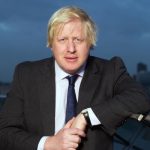
Boris Johnson – 2022 Speech at the Points of Light Downing Street Reception
The speech made by Boris Johnson, the Prime Minister, in Downing Street on 9 August 2022.
In these difficult financial times people are feeling the squeeze across our country and they’re feeling the impact in particular of the energy price spikes that are being caused by Putin’s war in Ukraine, and of course it’s right that the Government is doing everything that we can to help, and we’re putting £1200 into the pockets of the 8 million most vulnerable households and £400 for everybody to help with the cost of energy – £300 for pensioners, £150 off council tax – and the money will keep coming in throughout the Autumn – more coming in September and October.
And of course as some of you may have picked up, this is going to be one of my last events in the garden in Downing Street and there will be a new Prime Minister very shortly, I can tell you for certain will be either a man or a woman. Whoever he or she may be, I’m absolutely certain they will be wanting to make some more announcements in September/ October about what we’re going to do further to help people in the next period in December/ January and I just want you to know that I’m absolutely confident that we will have the fiscal firepower and the headroom to continue to look after people as we’ve done throughout.
And it’s absolutely vital in tough times, that the Government should recognise that there are also people who are doing fantastic things to help the vulnerable across our country and who need proper recognition and respect.
And I want to pay tribute to all of you Points of Light. I want to pay tribute to centenarians, like Dabirul Choudhury, who’s walked round his communal garden 100 times and has raised prodigious sums. I want to pay tribute to artists like Lucy Kent whose works are on display also raising money. The Spitfires have been flying overhead and proclaiming our gratitude to the NHS.
I want to think about particularly somebody I’ve met before – Tony Hudgell. Tony is seven years old and thank you for coming. It’s fantastic to see you. Tony has already raised £1 million for the hospital that helped to save your life, and you’ve also instituted Tony’s Law to make sure that people do not suffer the kind of abuse that you suffered so tragically, and thank you Tony for coming.
I’m going to give an award shortly to Steven Carr. Steven is one of the many thousands and thousands of people across this country who have been helping to look after people who have fled Ukraine in the last few months and I want to thank you Steven for everything that you’ve done to find homes for Ukrainian children.
I can’t mention all of the wonderful things that you’ve done but I do want you to know that so far in Number 10, and I say this careering towards the climax of my time in No10, I’ve done 736 Points of Light letters. That’s more than any other previous Prime Minister.
And I think you do wonderful, wonderful things. And every time I sign those letters and I read the things that you have done, I have a lump in my throat because I think you embody the spirit of service to other people, the spirit of community and I think the spirit that will get our country through the tough times and beyond in ever better shape. And if you, the 736 Points of Light that I’ve done, were a constellation, which of course you are, I think that you would represent the spirit of hope. And I think that you are the very best of Britain.
Thank you very much for everything.
-

Andrea Jenkyns – 2022 Comments on Student Loan Interest Rates Cut
The comments made by Andrea Jenkyns, the Minister for Skills, on 10 August 2022.
We understand that many people are worried about the impact of rising prices and we want to reassure people that we are stepping up to provide support where we can.
Back in June, we used predicted market rates to bring forward the announcement of a cap on student loan interest rates down from an expected 12% and we are now reducing the interest rate on student loans further to 6.3%, the rate applying today, to align with the most recent data on market rates.
For those starting higher education in September 2023 and any students considering that next step at the moment, we have cut future interest rates so that no new graduate will ever again have to pay back more than they have borrowed in real terms.
-

Naomi Wimborne-Idrissi – 2022 NEC Candidate Statement
The candidate statement from Naomi Wimborne-Idrissi.
Candidate Statement
My purpose on the NEC – to represent grassroots members
Let’s face it – the left in the Labour Party is under existential threat. The policy gains and the process of democratisation under Jeremy Corbyn’s leadership are being jettisoned. The response has to be solidarity and unity.
If elected I will work with comrades to re-energise embattled grassroots members, advocating against militarism; for international solidarity with the oppressed; and for collective mobilisation in unions, CLPs and communities where resistance is building against racist threats, crumbling public services and attacks on working conditions.
I will stand firm against proscription of left groupings; defend those unjustly accused; oppose antidemocratic actions by the leadership; and commit to open communication with members.
My experience:
Trade union activist since the 1970s; workplace rep in the NUJ and then NUT; vice-chair of Chingford and Woodford Green CLP 2016-20; currently Waltham Forest NEU International Solidarity Officer; Jewish Voice for Labour Media Officer.
I have worked collaboratively with left organisations in the party and unions, defending socialist policies, democracy and members’ right to free speech.
I am standing to add my voice to those of current left NEC reps Mish Rahman, Gemma Bolton and Yasmine Dar.