Tag: Speeches

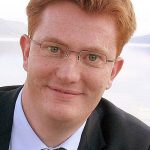
  • Danny Alexander – 2011 Speech to the House of Commons on Public Service Pensions

    Danny Alexander – 2011 Speech to the House of Commons on Public Service Pensions

    The speech made by Danny Alexander, the then Chief Secretary to the Treasury, in the House of Commons on 2 November 2011.

    I wish to update the House on progress in reform of public service pensions to set out the new offer we have made as we seek to bring this issue to a conclusion by the end of this year.

    Our objective is to put in place new schemes that are affordable, sustainable and fair – to both taxpayers and public service workers. And to put in place schemes that can be sustained for decades to come.

    It’s not easy, but it’s the right thing to. I recognise that this is a contentious area. Public service workers deserve a good pension in retirement, as a fair reward for a lifetime spent serving the public.

    That is why in June last year the Chancellor commissioned Lord Hutton, the Work and Pensions Secretary in the previous Government, to take an impartial, dispassionate look at this to bring forward proposals for reform.

    His landmark report has set the terms of the debate, and I am sure the whole house will share my gratitude for his work.

    In his interim report, he found that there was a clear justification – based on the past cost increase borne by the taxpayer for an increase in member contributions.

    We accepted that recommendation, and increases in member contributions will take place starting next year – although next year’s increase merely reflects the increase already planned by the previous Government.

    In his final report, he set out a blueprint for a new landscape of public service pensions based on retaining defined benefit schemes, but moving to a fairer career average basis, and increasing the retirement age in line with the State Pension Age to protect the taxpayer against future increases in life expectancy.

    We accepted his recommendations in full as a basis for consultation, and we have been discussing the recommendations with the trade unions.

    Those discussions started in February, and are still going on. Despite some of the public comment, significant progress has been made. And I want to pay tribute to the Minister for the Cabinet Office and the General Secretary of the TUC for their tireless work to reach common ground on reform.

    The trade unions have welcomed many of the commitments that we made at the start of this process:

    • That public sector schemes will remain defined benefit, with a guaranteed amount provided in retirement
    • That all accrued rights will be protected. Everything public servants have earned until the point of change, they will keep and will be paid out in the terms expected, at the retirement age expected. Final salary means just that – your accrued rights will be based on the final salary not at the point of change, but your final salary whenever your career ends or you choose to leave the scheme.

    No public sector worker needs to have anything to fear at all for any of the entitlements they have already built up.

    We have reached agreement the importance of transparency, equality impacts, participation rates and opt-outs, scheme governance, and high level principles to inform consultations on scheme level pensions.

    However, the central issue of the value of new schemes remains to be agreed.

    Two aims need to bet:

    First, that for most low and middle income workers, the new schemes would generate an income at retirement at least as good as the amount they receive now.

    Second, that the taxpayer needs to be properly protected from the future risks associated with further increases in life expectancy, by linking the scheme normal pension age to State Pension Age.

    In early October, we set cost ceilings to meet these tests.

    Cost ceilings based on Lord Hutton’s recommendations that generate an accruals rate of 1/65th for the new schemes.

    Scheme by scheme discussions have been taking place on this basis, since the beginning of October.

    And while the talks have been productive,  trade unions and departmental ministers have given consistent feedback about what they think needs to change.

    Last week, the Minister for the Cabinet Office and I met the TUC negotiating team who pressed for a more generous cost ceiling was needed, and explicit protections for those workers nearest to retirement.

    I have received similar feedback from the Secretaries of State for Education and Health.

    Having listened to their views, I have decided to revise the government’s offer.

    Cabinet discussed these matters yesterday, and I met the TUC this morning to set out the terms of our new offer.

    It is an offer that increases the cost ceiling and provides for generous transitional arrangements for those closest to retirement, and I have made available to Members today a document that sets out the detail.

    This generous offer should be more than sufficient to allow agreement to be reached with the unions.

    But it is an offer that is conditional upon reaching agreement.

    I hope that on the basis of this offer, the Trade Unions will devote their energy to reaching agreement not on unnecessary and damaging strike action.

    That way this offer can inform the scheme by scheme talks that will continue until the end of the year. Of course, if agreement cannot be reached we may need to re-visit our proposals, and consider whether those enhancements remain appropriate.

    I can announce today that I have decided to offer an increase to the cost ceiling. So future schemes will now be based on a pension to the value of 1/60th of average salary, accruing for each year worked. That is an 8% increase on the previous offer.

    Let me give some examples of what that means.

    A teacher with a lifetime in public service with a salary at retirement of £37,800 would receive £25,200 each year under these proposals, rather than the £19,100 they would currently earn in the final salary Teachers’ Pension Scheme.

    A nurse with a lifetime in public service and a salary at retirement of £34,200 would receive £22,800 of pension each year if these reforms were introduced, whereas under the current 1995 NHS Pension Scheme arrangements they would only get £17,300.

    Pensions that remain considerably better than available in the private sector.

    To earn the equivalent pension in the private sector, the teacher retiring on £37,800 would need a pension pot of around £675,000, the nurse retiring on £34,200, a pot of £600,000. Both would require an annual contribution of around a third of their salary.

    In addition, I have listened to the argument that those closest to retirement should not have to face any change at all.

    That is the approach that we have taken in relation to increases to the State Pension Age over the years, and I think it is fair to apply that here too.

    I can also announce that scheme negotiations will be given the flexibility, outside the cost ceiling, to deliver protection so that no-one within 10 years of retirement will see any change in when they can retire nor any decrease in the amount of pension they receive.  .

    Anyone ten years or less from retirement age on 1 April 2012 are assured that there will be no detriment to their retirement income.

    We need to be clear about the backdrop against which this offer is made.

    I fully understand that families across the country are feeling financial pressure right now. These are unprecedented and tough economic times.

    But reform is essential because the costs of public service pensions have risen dramatically over the last few decades.

    The bottom line is that we are all living longer.

    The average 60 year old today is living ten years longer now, than they did in the 1970s. That is a remarkable and welcome feat of science and healthcare. But it also means that people are living in retirement longer and claiming their pension for longer.

    As a result the costs of public service pensions have risen to £32bn a year. An increase of a third over the last 10 years. And whilst they accounted for just under 1 % of GDP in 1970, they account for around 2% of GDP today.

    More than we spend in total on police, on prisons, and the courts.

    And for the most part, it hasn’t been the public service workers footing the bill. It’s been the general taxpayer.

    We have to reform to ensure the costs of pensions are sustainable in the long term and to ensure costs and risks are fairly shared between employees and taxpayers.

    I believe this package is affordable. I believe it is also fair, not just to public sector workers, but delivers significant long term savings to taxpayers who will continue to make a significant contribution to their pensions.

    If reform along these lines is agreed, I believe that we will have a deal that can endure for at least 25 years and hopefully longer.

    People are living longer, so public sector pension reform is inevitable. But we’ve listened to the concerns of public sector workers, and come up with a deal that’s fair and affordable. The lowest paid and people ten years off retirement will be protected – and public sector pensions will still be among the very best available.

    If reform of this sort is agreed, then no party in this house will need to seek further reform of the overall package. This sustainability is an important prize.

    So I hope that the trade unions will now grasp the opportunity that this new offer represents.

    And I hope party opposite will do the right thing, put party politics aside, and support the proposals, which came from John Hutton, in the interests of securing a long term consensus on the future of public service pensions.

    It is the chance of a lifetime to secure good, high quality, and fair public service pensions.

    Yes we are asking public service workers to contribute more.

    Yes, we are asking them to work longer, along with the rest of society

    But we are offering the chance of a significantly better pension at the end of it for many low and middle income earners.

    A fairer pension, so that low income workers stop subsidising pensions of the highest earners.

    A sustainable deal, that will endure for at least 25 years.

    An affordable deal, that ensures that taxpayers are being asked to make a sensible contribution, but keeps costs sustainable and under proper control.

    That is the new offer I am putting on the table today, it is an offer that the opposition should support and the unions should agree to and I commend this statement to the House.
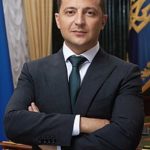

  • Volodymyr Zelenskyy – 2022 Statement on the Situation in Ukraine (15/09/2022) – 204 days

    Volodymyr Zelenskyy – 2022 Statement on the Situation in Ukraine (15/09/2022) – 204 days

    The statement made by Volodymyr Zelenskyy, the President of Ukraine, on 15 September 2022.

    Good health to you, fellow Ukrainians!

    Today in Kyiv, a new plaque dedicated to President of the European Commission Ursula von der Leyen was unveiled on the Walk of the Brave. It was really a great honor and simply a pleasure for me to take part in this unveiling, in the recognition of Mrs. Ursula’s bravery. She is one of the central figures of the European policy towards Ukraine, she is one of those thanks to whom the European space and European values are now really being protected.

    Today Mrs. Ursula has visited our country for the third time since February 24. And every time her visits open a new stage in the rapprochement of Ukraine and the European Union. We discussed all the key points in our relations. But now I want to highlight the issue of integration, the movement of our country towards full membership in the EU.

    Whatever the circumstances, we will still implement every detail of our arrangements to open the possibility of membership negotiations. Already in November, we are to fulfill the seven recommendations of the European Commission, which we received when we obtained the candidate status. The assessment by the European Commission of our progress in integration should begin as soon as possible. And next year, we should clarify the key issue: when we can start membership negotiations. The Ukrainian side will do everything for this. And as elements of rapprochement, we consider such things as the regime of the EU internal market for Ukraine, as the unification of our institutional work, for example, at customs – in joint customs control between Ukraine and EU countries. We are already working on this.

    Today I thanked Mrs. Ursula for the support already provided – macro-financial, sanctions, defense. We also discussed energy cooperation, which is extremely important for Ukraine and for every EU country on the eve of this winter, which Russia will try to use against all of us in Europe.

    I told about a new and particularly vile tactic of Russian terrorists – attacks on energy and hydrotechnical infrastructure. Just during the stay of the President of the European Commission in Ukraine, the Russian army launched new missile attacks on Kryvyi Rih, on the Kirovohrad region. In both cases – on hydrotechnical structures. The purpose of these strikes is completely clear. These are attacks on people, on the normality of life in Ukraine. The terrorist state is trying to show that it can allegedly compensate with such strikes for the cowardice and incompetence of its military, for the failure of its efforts to avoid sanctions and economic isolation.

    In response, we must show that there will always be a tough and principled reaction to every manifestation of Russian terror. That is why the eighth EU sanctions package is needed – we talked about it with Mrs. Ursula. A principled decision by the United States of America regarding the terrorist state, the legal recognition of this status is also needed, and we discussed this, by the way, recently during the visit of US Secretary of State Antony Blinken to Kyiv. We also discuss this issue during contacts with congressmen.

    Progress is needed in providing Ukraine with air defense systems. We already have agreements with certain countries, our diplomats are working with others. I want to emphasize that without providing us with a sufficient number of sufficiently effective air defense systems that will protect the Ukrainian skies, Russia will continue to feel impunity and provoke new local and global crises. Therefore, protecting Ukraine from Russian missiles is truly a basic element of global security.

    In general, supporting Ukraine with weapons, ammunition and finances is crucial for peace in Europe. The better support we have, the sooner this war will end. I talked about it with the representatives of the leading think tanks of Poland, Britain, France and the US who arrived in Kyiv. Real protection of freedom and common values of the free world is possible now only as a result of Ukraine’s victory in this war.

    I also spoke about further support for Ukraine with Canadian Prime Minister Justin Trudeau. As always, very substantive, specific. We discussed various security issues, including Russian missile strikes, defense assistance, training of our military, prospects for the developments on the battlefield, restoration of critical infrastructure before the winter period. I am grateful to Mr. Prime Minister for the support already provided to us, in particular financial, for the funds for the purchase of gas. And for understanding the steps we need to take to ruin Russia’s terrorist plans.

    An important IAEA resolution was adopted today – a resolution demanding that Russia cease all actions against the Zaporizhzhia nuclear power plant at the plant itself, at any other nuclear facility in Ukraine. Although international organizations are often limited in their ability to respond, we see that the IAEA clearly identifies the source of radiation danger, namely: the Russian military presence at the Zaporizhzhia power plant, Russian actions against the nuclear power plant. Therefore, the complete demilitarization of the plant, the immediate withdrawal of all Russian troops from there is the only thing that can ensure the implementation of this IAEA resolution. And this is also a basic element of global security. As long as Russian soldiers remain at the nuclear power plant, the world remains on the brink of a radiation disaster – worse than even Chornobyl. And it is the joint responsibility of everyone in Europe and the world – to remove the Russian presence from the territory of the ZNPP.

    Today I want to thank all the representatives of the State Emergency Service, utility services, construction workers, police officers, military personnel, representatives of local authorities, business representatives – everyone who is involved in eliminating the consequences of Russian missile terror, who helps those who suffered from the strikes. In Kryvyi Rih and the Kirovohrad region, in Kharkiv and Zaporizhzhia, in Mykolaiv and the Donetsk region – in all the cities and communities that Russia tortures with its missiles.

    The terrorist state has already used more than 3,800 different missiles against us. But no missile will bring Russia closer to its goal. There will be no subjugation of Ukraine. And each missile brings Russia closer to greater international isolation, greater economic degradation and even clearer historical condemnation.

    And finally. A mass burial site was found in Izyum, Kharkiv region. The necessary procedural actions have already begun there. There should be more information – clear, verified information – tomorrow. Tomorrow there will be Ukrainian and international journalists in Izyum. We want the world to know what is really happening and what the Russian occupation has led to. Bucha, Mariupol, now, unfortunately, Izyum… Russia leaves death everywhere. And it must be held accountable for that. The world must hold Russia to real account for this war. We will do everything for this.

    Eternal memory to all those whose lives were taken away by the occupiers! Eternal glory to everyone who fights for Ukraine!

    Glory to Ukraine!

  • Karan Bilimoria – 2022 Tribute to HM Queen Elizabeth II (Baron Bilimoria)

    Karan Bilimoria – 2022 Tribute to HM Queen Elizabeth II (Baron Bilimoria)

    The tribute made by Karan Bilimoria, Baron Bilimoria, in the House of Lords on 9 September 2022.

    My Lords, I was in Boston yesterday and at lunchtime, Boston time, I came out of a meeting with one of my Harvard Business School professors, looked at my phone and saw the sad news about Her Majesty.

    Some of my earliest memories going back to my childhood are of seeing the photographs, which are in our house in India to this day, of Her Majesty the Queen and His Royal Highness the Duke of Edinburgh on their state visit to India in 1961, when Rajendra Prasad was the President of India and my father, at that time Captain Bilimoria, was the senior ADC to the President of India.

    Little did I know that years later, I would be privileged to not only meet but get to know them both. What I saw was a couple who were devoted to each other. Her Majesty the Queen was absolutely devoted to His Royal Highness the Duke of Edinburgh, and he to her. A few years ago, when His Royal Highness the Duke of Edinburgh came to visit the Zoroastrian centre in Harrow, I accompanied him. When we went up to the prayer room, we had to take off our shoes; when we came out of that room, we were sitting next to each other, putting our shoes on and tying our laces, and he said to me, “Do you know, I’ve had these shoes since the day I got married?” Such was the sentimentality between this couple.

    As we heard from the noble Lord, Lord Howell, Her Majesty was not just the Queen of the United Kingdom but Head of the Commonwealth—a Commonwealth of 56 countries, all voluntary. Not one of those countries has to be a member of the Commonwealth; they do it out of choice. She was not just the figurehead but the leader of this array of nations—from giants such as India with its 1.4 billion people to tiny Caribbean countries—making up a third of the world’s population. We heard just now from the noble Baroness, Lady Grey-Thompson, about the Commonwealth Games. I am privileged to be chancellor of the University of Birmingham and was there on 7 October when Her Majesty drove up in the courtyard in front of Buckingham Palace, stepped out and handed over the baton to its first relay holder. It went all around the world, across all the Commonwealth countries and territories.

    Prime Minister Liz Truss described the Queen as the rock of the nation over seven decades. Republics do not have this advantage that we have. Presidents change regularly; we have had continuity for 70 years—not just continuity but somebody who has been apolitical, objective and completely independent. She cared for Great Britain and for Northern Ireland; she cared for the Commonwealth. Her stamina, of course, is legendary. I remember that at the state visit of the President of India to Windsor Castle, it was late into the night at a post-dinner reception when I was suddenly summoned by the Master of the Household, saying, “Her Majesty would like you to accompany her for a while, please.” So I went up to her and asked, “Your Majesty, where is the President?” The Queen said, “She and her husband have retired”, yet she stayed on until past midnight, meeting visitors.

    Fast forward: a few years ago, the Queen and the Duke of Edinburgh came up to Birmingham to reopen New Street Station. That was a big enough thing in itself but, from there, they came over to the University of Birmingham to open the new dental centre at Pebble Mill. Not only did she open that dental centre, they stayed for lunch, spent the whole afternoon and went back. It was absolutely remarkable, and how wonderful that we were able to celebrate her Platinum Jubilee.

    This year, I was proud to be a member of the committee at the Royal Windsor Horse Show. Her Majesty always came to attend the final night, and that night we were warned: “She may not come and if she does, she may come only for a few minutes. She has not been well.” If your Lordships remember, she had missed the State Opening of Parliament just before that. We were all seated at 8 pm when she walked in, on time for the show to start. She stayed the full two hours—clapping, smiling, laughing and enjoying every minute, and it did not stop there. She then got into the Range Rover and did a whole lap of the arena, waving to everyone who was there. She left after 11 pm.

    Winston Churchill, the Queen’s first Prime Minister, was born 100 years before today’s Prime Minister, Liz Truss. It is truly remarkable. I have been proud to be a deputy lieutenant, representing Her Majesty in Greater London. I was appointed on 9/11 in 2001, when I was still in my 30s. I remember the vice lord-lieutenant at the time, Sir Michael Craig-Cooper, telling me a story about accompanying the Queen. She was going through crowds and stopped in front of a teenage girl. The teenage girl curtsied and, at that moment, her phone rang. The Queen said, “Maybe you should answer that. It could be somebody important.” That was her sense of humour.

    I remember sitting opposite her at a lunch at Buckingham Palace. There were the famous stories about the corgis. The corgis were sitting around her and one of the butlers, or waiters, walked behind her—she did not see this happen—and tripped over one of the corgis. It was like slow motion in a comedy movie; somehow, he managed not to drop the tray.

    We loved Her Majesty the Queen and the world loved her. As she said, the price of love is grief. We are grieving. We have received messages from all over the world; I have received messages from the Middle East, India and America. We thank Her Majesty. My mother in India, who I spoke to this morning, said, “What a dignified woman.” She was majestic, magisterial, a true leader. She was an authentic leader: she had the abilities and the empathy of a true leader; she really cared.

    She was the Queen of all Queens, the monarch of all monarchs. She was not only the most famous monarch in the world but the most respected, by miles. I have said time and again that the United Kingdom has one of the strongest combinations of hard and soft power in the world. Of that soft power, the number one factor is our luckiness as country to have had Her Majesty the Queen, our strongest element of soft power. She is the most priceless asset our country has had.

    His Majesty King Charles III has not just a hard act to follow but an impossible one. Yet I hope—I know—that, looking ahead, like Isaac Newton, he will be able to say:

    “If I can see further, it is because I am standing on the shoulders of giants”,

    and of one giant in particular. Your Majesty the Queen, we will miss you but your inspiration will live on with us forever. We offer our heartfelt sympathy and condolences to His Majesty the King and the Royal Family. Long live the King, King Charles III. Long may he reign.

  • Aamer Sarfraz – 2022 Tribute to HM Queen Elizabeth II (Baron Sarfraz)

    Aamer Sarfraz – 2022 Tribute to HM Queen Elizabeth II (Baron Sarfraz)

    The tribute made by Aamer Sarfraz, Baron Sarfraz, in the House of Lords on 9 September 2022.

    My Lords, I too offer my deepest condolences to the Royal Family on the passing of Her Majesty the Queen. My family and I will join millions of people in praying for them during this difficult time. There is a simple reminder that all Muslims say out loud when someone passes away: “Ina lilahe wa ina ilayhe rajioon”, or “We come from God and to God we shall return”.

    All day I have been receiving messages from friends all over the world offering condolences on Her Majesty’s passing. It is touching to see just how much love there was and always will be for Her late Majesty. In Singapore, for where I am the Prime Minister’s trade envoy, Parliament will observe a minute’s silence and flags will fly at half-mast—such is the sentiment across the Commonwealth and beyond. Rarely has one person meant so much to so many people.

    When I was born, Her late Majesty had already reigned for 30 years. Personally, today I feel a great sense of gratitude to her. I am grateful for her tireless service to our country up until the day she passed, for her love, for her selflessness, for her great spirit and for being the flag around which we all could rally at the hardest moments. She embodied our history, our values and what it means to be a servant of this great nation.

    I wish His Majesty the King strength and fortitude in building on his mother’s legacy and forging a legacy of his own. Long live the King.

  • Sarah Teather – 2011 Speech to the National Children and Adult Services Conference

    Sarah Teather – 2011 Speech to the National Children and Adult Services Conference

    The speech made by Sarah Teather, the then Children’s Minister, on 24 October 2011.

    Thanks to NCAS. It’s a great pleasure to be here today.

    This is not an easy time to be in government at any level. It’s not an easy time to be in national government, and it’s not an easy time to be in local government. I am sure I speak for all Ministers in saying that we’re extremely grateful for all that you have done working with us over the last year at a time when I know that it hasn’t been easy for you.

    Despite challenging financial circumstances, the government is determined to stick to the principles I outlined to you last year. Our priorities are early intervention; a focus on the most disadvantaged; and we want to do that by working through principles of localism.

    In an ideal world I could wave a magic wand and conjure up more money. I am sure that all of you wish that you could too. But the truth is that neither of us can. You know as well as I do that the government has to tackle the deficit and we have to get the economy back onto a sound footing.

    It makes it an incredibly challenging time for all of us to play a leadership role. But you don’t get to choose your moment to be in government. You only get to choose how you act. It’s more important now, than at any other time, that we have very clear priorities, and that we stick to those despite the challenging circumstances in which we’re working.

    It would have been easier for us to have acceded to calls to reintroduce ring fencing, to tighten up targets, and to introduce more prescriptive guidance. We chose not to. We made a promise to you that we would give you more freedom and give you more power to act. Localism is something that we believe in and it is something that we’ve tried to stick to.

    Similarly, I imagine it would have been easier for you to have cut deeply into early intervention services. But many of you have chosen not to do that this year. Most of you have worked incredibly hard to protect frontline services. Most of you have done your best to prioritise Sure Start Children’s Centres, by merging back office functions, clustering services, because you know that this makes sense. You know that it makes sense for children, it makes sense for families and, in the long term, it makes good financial sense for you if you’re running a council.

    Tough times are the times when leadership comes to the fore. We know we need to give DCSs the space to fill that leadership role. We have recently issued a consultation on revised statutory guidance on the role of the DCS and Lead Member for Children’s Services.

    It is much shorter and much less prescriptive. It will be up to local authorities to determine their structures. It is important that we’re able to assure ourselves that we have in place the clear line of accountability that Lord Laming and Professor Munro saw as critical to the well-being and safety of children and young people. This is a question of balance, a question where we’re trying to make sure that we clearly balance our priorities with our localist principles. I would certainly encourage you to respond to the consultation.

    Part of leadership is about sharing knowledge with one another. There is an enormous amount that you can teach others, very much including myself.

    We’ve seen that clearly in the 18 authorities who are participating in trials this year to develop provision or capacity for the new entitlement for two year olds.

    Already some promising evidence is filtering through. For example, in Rotherham, settings have boosted the number of places they can offer through earlier opening times and stretching the offer across all weeks of the year, rather than just during term time. One setting now offers 45 places rather than 14.

    Similarly, we’ve seen great examples in Medway, where they’ve created a database to track the development of each child or cohort, so that children starting to fall behind are identified promptly.

    Examples like this are just the tip of the iceberg. I’m sure that there will be many examples in your local authority where you know that you’re really challenging practice; that you’re taking ideas forward; that you’re doing things on the ground that others could learn from. I hope that conferences like this are opportunities for you to flaunt those examples and advertise them to others to make sure that everyone is learning from the good practice that is working on the ground.

    We’ve been trying to tap into that ingenuity and good practice in the way in which we are developing policy.

    Early Years

    Just before the summer recess we issued a document called Families in the Foundation Years. We worked on that document in a different way: through a co-production process, working with local authority representatives and professionals from the early years to make sure we were actually developing policy from the ground up.

    There’s a considerable amount of work now building on that initial work that we announced in the summer. We have our consultation on Early Education and Childcare coming up. This is really important – for lead members and DCSs as well as for early years leads.

    It is important because it sets out proposals for which disadvantaged two-year-olds will be eligible for free early education from September 2013.

    We want to make sure that your teams have local discretion to fund other disadvantaged two years old who might benefit. In particular, that means children with disabilities or with special educational needs.

    Included in the consultation is draft guidance for the delivery of free early education for 2, 3 and 4 year olds, along with strengthened criteria for free early education places so that we have a more open process for identifying quality and promoting improvement.

    I think you’ll also be pleased to hear it has dropped in size from 100 pages to fewer than 20. I hope that’s good news! It’s something that we are trying to do across the piece.

    And do please feed in to Professor Nutbrown’s upcoming review, which will be looking at the early years workforce, something which is incredibly important and which many of you have raised with me at previous conferences. It will be formally launched at the end of this month, through a ‘call to evidence’ to the sector. We’re very keen to hear your views, so please do get involved.

    Payment by results is another good example of where the sector leading the way in shaping future services. Local authorities are supporting one other under the guidance of the ADCS, SOLACE and the LGA.

    Trials of payment by results for children’s centres have started in 26 areas. These will find ways to reward children’s centres and local authorities for improvements in outcomes, rather than inputs, with a particular focus on child development, school readiness and reducing inequalities for the most disadvantaged families. We’re looking forward to hearing what makes a difference on the ground, and what needs to change.

    Another critical aspect of leadership is joining up services in the interests of children. I know that this is something that you do every day in your work.

    It’s something that is core to what we’ve been trying to do through our Green Paper on Special Educational Needs, and the reforms that we’re taking forward.

    We want health services to be firmly integrated into a local offer, a single assessment process and the Education, Health and Care plan.

    Local authority leaders have key role in achieving this ambition. I’m grateful to those of you whose teams are currently involved in the pathfinders. We’ve already seen some very exciting ideas coming out from them, and it’s a tremendous credit to the local authorities involved.

    We have a lot to do to make sure that these proposals work. They’ve been developed with the ideas that have come from you and come from others over the first 18 months that we’ve been in government. A lot of work is going to be needed to hold all of those professionals’ feet to the fire, including making sure that we properly integrate that work with health, something that I know many of you feel very strongly about. I’m going to need all of your help on the ground to make sure that we develop that properly.

    The pilots are trying to make sure that we look through to 25; that we deal with the issues around transition that we know are so difficult. Bringing together assessments and bringing together the role of the voluntary sector.

    I hope that it will put children, young people and families at the heart of the process. Making sure the services they receive are not just about adults, but about the children and young people who are receiving them.

    There are many exciting opportunities coming up for local authorities – getting more involved in public health, for example. Tom Jeffery and David Behan are giving a presentation on this subject on Friday, and looking at issues around the new relationship with public health, something that I know many of you will be interested in.

    I know that this is a tough time, and I also know that it’s not going to get any easier in the short term. We both know that.

    But we can’t stand still in that time, no matter how difficult it may be. We have to put in place now the right changes. The right structural changes that will benefit us in the long term. Making sure that we’re clear about our priorities. Making sure that partnership working really does work.

    A great deal can change, even in days when money is short, by working better together. By changing how we work. By changing the way in which we learn from one another.

    That takes leadership. And it takes a different style of leadership. Leadership which is open – open to challenge, open to new ideas. Not necessarily ideas that were started here, but also making sure that we’re making the most of ideas that started in other places too.

    Let me finish by saying a huge thank you to you for all that you have done, for all the work that you’re taking forward; for all the ways that you’ve positively responded to consultations and requests that we’ve made of you for more information, detail and examples to make sure that we’re getting our policy right. I’m determined that we continue to work in that spirit, and look forward to working with you over the next twelve months.

  • Nick Gibb – 2011 Speech at the Reading Reform Foundation Conference

    Nick Gibb – 2011 Speech at the Reading Reform Foundation Conference

    The speech made by Nick Gibb, the then Education Minister, on 14 October 2011.

    I’d like to start by thanking the experts I have worked with over the last five years, people like Ruth Miskin, Jennifer Chew, Sue Lloyd, Debbie Hepplewhite and others.

    I am profoundly grateful to them and to all of you for teaching me and the children in your care so much about reading. Thanks to your patience, perseverance and passion at the most vital stage of a child’s education, hundreds of thousands of pupils have taken their first successful step in a lifetime of education.

    The Government is determined to improve the teaching of reading in schools, and close the gap in attainment between the wealthiest and poorest pupils. We want to help all children, from all backgrounds, to become fluent and enthusiastic readers. Only once children have learnt to read, can they read to learn.

    We already know how to tackle reading failure. High-quality international evidence has proved that systematic teaching of synthetic phonics is the best way to drive up standards in reading. Taught as part of a language rich curriculum, systematic synthetic phonics allows problems to be identified early and rectified before it is too late.

    But although this country is one of the world’s highest spenders on education, too many children are failing. When teachers should be helping children to develop a lifetime’s love of reading, poor teaching strategies and practices are condemning too many children to a lifelong struggle.

    The figures speak for themselves:

    Only 73 per cent of all pupils on free school meals, and only two-thirds of boys eligible for free school meals, achieve the expected standard in reading at Key Stage 1;
    More than 83,000 seven-year-olds achieved below Level 2 at Key Stage 1 this year;
    One in five 11 year-olds leaves primary school still struggling with reading. Even worse, nine per cent of 11-year-old boys only achieve Level 2 or below at Key Stage 2;
    Looking just at white boys eligible for free school meals, 60 per cent still aren’t reading properly at the age of 14;
    And the reading ability of GCSE pupils in England is more than a year behind the standard of their peers in Shanghai, Korea and Finland, and at least six months behind those in Hong Kong, Singapore, Canada, New Zealand, Japan and Australia;
    Overall, in the last nine years, England has fallen in PISA’s international tables from 7th to 25th in reading.
    Early reading failure can affect a child’s education and attainment for the rest of their life. A recent report from the Centre for Social Justice pointed out that “significant literacy and numeracy problems are found in between 50 and 76 per cent of children who are permanently excluded from school”.

    The report also identified literacy and numeracy problems in 60 per cent of children in special schools for those with behavioural problems, and in 50-60 per cent of the prison population. As the report’s author, Adele Eastman, concluded: “Many display challenging behaviour to hide the fact that they cannot read.”

    And too many children grow to adulthood without ever learning this basic skill. Just this week, Army recruiting offices revealed that hundreds of would-be soldiers are being turned away because they cannot pass the most basic literacy and numeracy tests – that is, because they do not have a reading age of more than 11.

    As a report by Civitas has stated, “Weak reading lies at the heart of both the educational apartheid between the advantaged and disadvantaged and stalled social mobility. The inability to read properly is the single greatest handicap to progress both in school and adult life”.

    So for all these reasons, tackling reading failure is an urgent priority for this Government. We are completely focused on improving the teaching of reading in reception and Year 1 of primary school, with an emphasis on systematic synthetic phonics as the most effective means to achieve it.

    And as well as mastering the basic skill of decoding, we want to encourage children to experience the joy of reading and develop a lifelong love of books.

    One of my greatest pleasures when visiting a good school is listening to the children talking with real passion about their favourite books – the characters they have grown to love and the stories they have learnt.

    But according to the OECD, the UK is ranked 47th out of 65 nations on the number of young people who read for enjoyment. Only six out of 10 teenagers regularly read for pleasure in this country, compared to 90 per cent in countries like Kazakhstan, Albania, China and Thailand. The difference in reading ability between pupils who never read for enjoyment, and those who read for just half an hour a day, is equivalent to a year’s schooling at age 15.

    So we’re also working on policies to promote reading for pleasure. We’re currently considering ways to encourage children to read large numbers of books, and I will bring you up to date on our plans in due course.

    We have already introduced a number of measures to ensure that more children learn the essential skill of decoding, and to equip teachers with the necessary skills, resources and training.

    From next summer, our new Year 1 reading check will help teachers confirm whether individual pupils have grasped fundamental phonics decoding skills, and identify which children may need extra help.

    The check will provide a national benchmark for phonic decoding, allowing schools to judge their performance on a local and national level, and encouraging them to set high expectations for what their pupils can achieve by the end of Year 1.

    It will also help to give parents confidence that their child has learnt this crucial skill, reflecting research that found that 73 per cent of parents thought a year 1 reading check is a good idea.

    Our pilot this year took place in around 300 schools across the country. Independent evaluation by a team from Sheffield Hallam University showed that three quarters of the schools felt that the check assessed phonic decoding ability accurately, while the vast majority of schools (over 90 per cent) thought that most aspects of the check’s content were suitable for their pupils.

    Most importantly, almost half of the pilot schools (43 per cent) indicated that the check had helped them to identify pupils with phonic decoding issues of which they were not previously aware.

    We’re now planning to roll out this short, simple check across the country next summer. The check will consist of a list of 40 words and non-words, 20 of each, which a child will read one-to-one with their own teacher.

    The independent evaluation of the pilot showed that most children actively enjoyed the non-words, and thought they were “fun”.

    Of course, it is important that children understand the difference between real words and non-words, and we are taking steps to address this issue: helping teachers to introduce non-words clearly, and carefully considering how non-words should be labelled or presented.

    But I am very glad to see that our overall plans for the reading check have been welcomed by the Reading Reform Foundation (RRF), and that you believe that it will “ensure that all children have a good phonics foundation, and identify those pupils who need extra help”.

    I hope that we can recruit all of the RRF’s members to help us raise awareness about the check among schools, teachers and parents, and highlight the benefits of using systematic synthetic phonics to give children the skills they will need to succeed.

    Of course, it goes without saying that ongoing teacher assessment alongside the check will continue to be hugely important in ensuring that pupils are making progress.

    To ensure that teachers have the necessary skills and training, we’ve reviewed the qualified teacher status (QTS) standards under Sally Coates. It is now an explicit requirement that teachers of early reading should demonstrate a clear understanding of the theory and teaching of systematic synthetic phonics. You won’t be able to acquire QTS as a primary teacher unless you can demonstrate a skill in teaching phonics.

    As a consequence the Training and Development Agency, together with the Universities Council for the Education of Teachers, is working to ensure that all university teacher training faculties are improving the training of teachers in this area.

    And so that all schools have access to high-quality phonic resources, we have introduced matched-funding of £3,000 per school. This funding will support schools in choosing and purchasing the appropriate resources for their pupils, together with our recently released catalogue of well-respected phonics products and training, The Importance of Phonics. We are considering running a new procurement process for inclusion in an updated catalogue of resources in Spring 2012, and more information on that will be available in due course.

    Finally, Ofsted has published a new inspection framework which draws a closer link between teaching quality and the overall grade schools receive. This new way of inspecting schools will allow Ofsted to spend more time in the classroom and I am very pleased that, for the first time, Ofsted inspectors will listen to pupils reading aloud to check their rate of progress – with a particular focus on weaker readers.

    We hope that these measures will help all children to master the essential and life-changing skill of turning words on the page into images, information and ideas in their heads.

    In this work I am delighted to have the support of the Reading Reform Foundation, and delighted to be here with you all today. Thank you again for all your hard work and I look forward to working with the RRF over the coming months and years as we take this important task forward.

    For children from all backgrounds, being able to read is the vital skill that unlocks all the benefits of education. Together, I hope that we can give more children the key to reading and tackle reading failure.

  • John Inge – 2022 Tribute to HM Queen Elizabeth II (Lord Bishop of Worcester)

    John Inge – 2022 Tribute to HM Queen Elizabeth II (Lord Bishop of Worcester)

    The tribute made by John Inge, the Lord Bishop of Worcester, in the House of Lords on 9 September 2022.

    My Lords, like millions of others across the globe, I was immensely sad to learn of the death of Her late Majesty Queen Elizabeth II. I have just travelled up from Worcester and lots of people are gathering at the cathedral to pay their respects, as they are at many other parish churches. I am sure I speak on behalf of all the people in Worcestershire and Dudley in the diocese of Worcester in saying how desperately sad we are at this news.

    In my tribute to her late Majesty today, I shall refer to my particular place in the Royal Household. For some 10 years I have been privileged to be the Lord High Almoner to the Queen, a rather esoteric title for an ancient role. Cardinal Wolsey was one of my predecessors, and he did not come to a very good end. Traditionally, the almoner has been responsible for all the monarch’s almsgiving. Nowadays my duty is to take overall responsibility for the Royal Maundy Service. At that service, as your Lordships will know, the same number of men and women as the monarch’s age—so 96 men and 96 women this year—are awarded the Maundy money in recognition of their exemplary Christian service over a long period. I was moved to be able to accompany Her Majesty the Queen, someone who herself gave exemplary Christian service over her lifetime, in honouring those who had done the same. It seemed to me that as they looked into one another’s eyes, they understood one another and what made them tick. Her Majesty took the Royal Maundy Service very seriously, I think because it symbolised what motivated her. She served because of her faith in Jesus, who came not to be served but to serve. In doing so, she was an inspiration to millions around the globe.

    The Royal Maundy Service is a very serious matter but, with the constant twinkle in her eye and that radiant smile, the Queen managed to put people at their ease, immensely nervous though they were. I told them beforehand that they should just say, “Thank you, Your Majesty” or “Thank you, Ma’am”, as the Queen approached them and then give a bow. But, one year, there was a woman who could not resist thrusting a pot of marmalade into the Queen’s hands as a sort of return gift. As you can imagine, the Queen dealt with that unexpected development with great aplomb. All those who were privileged to know Her Majesty can attest that not only was the Queen a fount of wisdom, but she had a great sense of humour and fun. Only latterly did James Bond and Paddington make that plain to everyone.

    This is a time of deep grieving, but the Queen was a person of profound Christian faith, who believed in a God whose love is stronger than death. Some 16,000 Anglican parish churches and cathedrals, as well as other places of worship, that have symbolised that Christian hope for centuries are now open for people to give thanks, reflect and pray. As we give thanks for the life of this most remarkable monarch and wonderful woman and commend her to the God in whom she believed, I pray that we shall all come together as a nation as we honour her. That would surely be the most fitting tribute to our late beloved Queen who was, through her faith and service, the glue that held us all together.

    We pray too, as we do so, for His Majesty the King, for him to be given the strength and grace that he needs as he takes over the reins of the monarchy. God save the King.

  • David Howell – 2022 Tribute to HM Queen Elizabeth II (Baron Howell)

    David Howell – 2022 Tribute to HM Queen Elizabeth II (Baron Howell)

    The tribute made by David Howell, Baron Howell, in the House of Lords on 9 September 2022.

    My Lords, so many good things have been said this afternoon about our late and wonderful Queen. There have been some really uplifting speeches, one of which we heard just now.

    I shall concentrate on just one aspect of the whole wonderful story. The Queen was the founder of the modern Commonwealth. There have been lots of references to her famous 21st-birthday dedication of her whole life and efforts to what later became the Commonwealth; it has been quoted here and in broadcasts many times.

    I have two further insights from Her Majesty to cite in making my feelings understood. The first, 62 years after that dedication on her 21st birthday, was:

    “The Commonwealth is in many ways the face of the future.”

    That came out of her Christmas broadcast in 2009. The second was when she observed, only a few sad months ago:

    “Today, it is rewarding to observe a modern, vibrant and connected Commonwealth that combines a wealth of history and tradition with the great social, cultural and technological advances of our time.”

    Let us ponder those two statements. I say: what prescience and insight they show into the 21st century, which we should all have been sharing and following much more closely. As the world switches increasingly to Asia and Africa and an entirely different international order from that of the last 60 or 70 years, it is our membership of this giant network, consisting of eight nations at the start and 56 now, with several more wanting to join, that gives us back our strong role with purpose and direction and, if handled wisely, our advantage and our exceptionalism. That is what I place at the centre of my thoughts at this sad time.

    For me, this reflects the constancy throughout the Queen’s long lifetime and her understanding of the future, well beyond most of those around her. For that insight and wisdom, I believe we must now give deep thanks beyond words. We wish King Charles all the strength and good fortune in the world to follow in his mother’s footsteps. I believe he will do well. He is the best-prepared new monarch in our history. Long may he reign.

  • Jonathan Hill – 2010 Speech at the National Launch of Studio Schools

    Jonathan Hill – 2010 Speech at the National Launch of Studio Schools

    The speech made by Jonathan Hill, the then Education Minister, in London on 18 November 2010.

    Good morning everyone and thank you Geoff for that warm welcome.

    The more observant among you will by now have realised that I’m not Michael Gove, who unfortunately has been called away at the last minute. He has asked me to apologise on his behalf and to say how sorry he is not to be here. I know that he is a big fan of studio schools, a great admirer of the pioneering work done by the Young Foundation, and a keen supporter of the Studio Schools Trust, which he recently described as ‘superb’.

    But I am delighted to be here in his place because it gives me the chance – less eloquently than Michael no doubt – to put on the record my own support for the work of the Studio Schools Trust and my appreciation for what you do.

    I have been lucky enough to go to Barnfield College in Luton, shortly after it opened one of the first two studio schools in September. And last Friday I was at Futures Community College in Southend-on-Sea – not a studio school but doing something similar around practical training.

    I am the new kid on the block, but you don’t have to be a rocket scientist to get the point.

    Switched-on, positive children working hard and learning practical skills.

    Switched-on, positive employers telling me how brilliant it was for them.

    Academic and vocational teaching being offered side by side; learning tailored to pupils’ individual needs; aspirations raised, so that going to university or getting a good job becomes a realistic prospect for children in families where aspiration and expectation has been very low.

    So I want to thank them, as well as everyone at the Netherhall Learning Campus in Kirklees, the Studio Schools Trust and the Young Foundation for the enormous amount of work they’ve done to push the boundaries forward and make the argument for why we need to offer young people the chance of acquiring high-quality practical and technical skills, as well as high-quality academic qualifications.

    The challenges

    I came to this new job not having worked in education. For the last 12 years, I ran my own business. It has meant I have had – and still have – a steep learning curve, but coming to something fresh is not without advantages.

    It means you have to approach things from first principles and you have to ask lots of questions.

    Questions like: are enough of our children leaving primary school able to read and write properly?

    Are we equipping young people with the skills, knowledge and aspirations employers and universities are demanding?

    Have we got an exam and qualification system to which we have confidence? Have league tables and equivalents led to gaming of the system?

    Are we motivating and enthusing the workforce of tomorrow – so they fulfil their potential and have the confidence to succeed? Or, at the very least, know how to turn up on time, work in a team, or take direction from a manager?

    Is vocational and practical training strong enough so we can compete internationally – or even be able to fill jobs at home without having to recruit from overseas?

    How do we measure up against best practice internationally?

    To which, my answers are: no, up to a point, not really, yes, not well enough, no and it’s a very mixed picture.

    The truth is that too many young people still don’t get the right skills and qualifications for work and further study.

    Too many young people are turned off learning at an early age, fall behind and then get left behind.

    And it’s not good enough for more young people to be staying on in education if the qualifications they’re working towards aren’t valued by future employers.

    I also can’t help feeling that out of a well-intended desire to give vocational and academic skills parity of esteem – which is right – we have ended up undervaluing both.

    We’ve forced vocational and academic qualifications to have some kind of uneasy equivalence, when actually we should just be making sure that they are all high quality and do what universities and employers need. And above all that they should be tailored to what individual children need.

    So, what are we doing about it?

    The top line is that we are trying to get out of the hair of professions to allow them to get on with what they do best. To come up with ideas of their own – like studio schools – as to how they can best cater for their children.

    We also want to stop directing and prescribing quite so much, I hope leaving more space for professionals to learn from each other, forming partnerships, spreading good practice and raising standards through collaboration and the sharing of experience.

    Reform

    More specifically, we have a number of clear aims.

    First, to strengthen qualifications so they are more robust, rigorous and teach the economically valuable skills that employers demand to keep pace with the rest of the world.

    We will also give universities and employers more say over developing A levels. It’s right that those with the strongest interest in making sure young people have the right skills have a louder voice.

    Second, we’ve asked Professor Alison Wolf to lead an independent review of vocational qualifications. Alison’s review isn’t about creating yet another set of Whitehall-designed, top-down qualifications – it’s about giving colleges and schools the flexibility to offer qualifications that meet the labour market’s constantly shifting demands and higher expectations.

    Third, we want to raise the quality of careers guidance.

    Fourth, we are expanding the number of Apprenticeships.

    It’s sobering that only eight per cent of employers in England offer Apprenticeships – compared with 24 per cent in Germany. And of businesses with at least 500 employees, it’s just 30 per cent here compared with more than 90 per cent across in Germany.

    Fifth, we are trying to put the right structures in place through our wider reform programme.

    People sometimes say to me: why are you making these structural changes? Surely its teachers who make the difference? Stop messing around and concentrate on the teachers.

    I agree totally that it always comes down to people – and we will be saying more about that in our white paper to be published shortly. But the point of the structural changes is to give those people more space and it provides the opportunity for new ideas to bubble up from below.

    So we’re expanding the Academies programme and we’re ensuring that new providers including parents, community groups and businesses can come together and open new Free Schools where there’s demand – bringing outside expertise and experience into the state sector.

    That’s why we back Lord Baker, who through the Baker-Dearing Trust that he set up with the late Lord Dearing, is doing a fantastic job in pioneering a new generation of University Technical Colleges.

    They will offer high-quality technical qualifications – all as autonomous institutions, sponsored by leading local businesses and a local university.

    The JCB Academy in Staffordshire is already open – offering hard practical learning alongside academic GCSEs.

    The new UTC in Birmingham will specialise in engineering and manufacturing when it opens in 2012 – with students working with Aston University engineering staff and students, as well as local business and colleges.

    And Ken has ambitious plans to open many more in cities across the country.

    Studio schools – the way forward

    And it’s in that same spirit that we are right behind the studio schools movement and keen to see it grow, and we hope that the wider education system sits up and takes note of your distinctive philosophy and ethos.

    We think that studio schools have huge potential, and it’s not just us who think so. I gather that there is a great deal of interest from overseas.

    Studio schools have a fresh and new culture for young people at risk of dropping out elsewhere. They are all ability, have high aspirations for all pupils and make sure young people get the strong qualifications they need to get into employment or university, whether that’s GCSEs, A levels, Diplomas, BTECs or NVQs.

    But they also give them the practical skills employers demand in trades like construction, hospitality, plumbing and engineering, as well as softer skills like team working, communication, initiative and punctuality – exactly the kind of intangibles that businesses want but often can’t find in school leavers.

    Studio schools show us how to go beyond so-called ‘traditional’ teaching by using some of the most innovative teaching methods like personal mentoring and coaching, project-based learning which cuts across subjects, and rooting lessons in practical, real-life situations. And they use smaller classes to back up high-quality staff, allowing them to focus more attention on pupils who might have been at risk of falling behind or switching off.

    And one vital point: this doesn’t mean dumbing down – it’s about making sure young people are inspired and excited to invest the time and effort in their own futures.

    They mustn’t be seen as some kind of halfway house between mainstream provision and PRUs, as some sort of sticking plaster. This is exactly the kind of false label, often attached to vocational education, which we need to squash. It doesn’t do justice to the teachers teaching or the pupils learning in them. And it misses the point about the enormous potential that studio schools have.

    By bringing employers into the classroom, it’s a win-win for them and the children.

    Young people are doing real work in real business environments – the over-16s are paid a proper wage, but above all they are getting the chance to work alongside professionals on real commercial projects.

    I like the fact that employers involved in studio schools recognise that there is not much value in making noises-off about the quality of skills, while not actually working in schools directly. So it is absolutely right they are reaching out to young people directly and taking them under their wing.

    By working together, I know we can spread the word about the studio school approach. And I would urge everyone here who thinks they might be interested to talk to the Studio Schools Trust.

    Conclusion

    Today is a celebration of the launch of the first two studio schools, but I hope it also heralds more to come.

    It is extremely important that the pioneers do well, not just for the children you are teaching, but because of the role models you can be.

    Showing that it is possible to break down the long-standing divide between academic and vocational qualifications that has existed in our country for too long. Showing that it is possible to re-engage young people and get them to set their targets higher.

    And showing that we can give more young people real choice in their lives.

    I believe that studio schools can help achieve all of that.

    And I hope this is just the start of things to come.

    Thank you.

  • Nick Gibb – 2011 Speech at the Centre for Social Justice

    Nick Gibb – 2011 Speech at the Centre for Social Justice

    The speech made by Nick Gibb, the then Schools Minister, on 12 September 2011.

    It is a pleasure to be here at the launch of another important report from the Centre for Social Justice. Since the think tank was founded in 2004, by Iain Duncan Smith, it has contributed hugely to the public debate about how to tackle some of Britain’s most intractable social problems. Its seminal report, Breakthrough Britain, highlighted the central role of education in the life chances of us all and the role that poor quality schools have played in “stifling the chances of children in our poorest areas”.

    This report looks in more detail at educational exclusion, whether that be the literal exclusion of persistently poorly behaved children from school or the metaphorical educational exclusion of those attending schools that fail to deliver the type of education available to the most advantaged in society. The report makes an important contribution to the education debate and for that we are deeply indebted to the Centre for Social Justice and in particular to Adele Eastman.

    I have long taken the view that education is the only route out of poverty and a poor education is, in this modern world, a clear pathway to low income and narrow opportunities.

    And the starting point to anyone’s education is learning how to read. This country is one of the world’s highest spenders on education and yet one in five 11 year-olds leaves primary school still struggling with this basic skill. Nine per cent of 11-year-old boys leave primary school with a reading age of seven or younger. And that problem is compounded further when you look just at white boys eligible for free school meals amongst whom 60 per cent aren’t reading properly at the age of 14.

    Today’s CSJ report points out that “significant literacy and numeracy problems are found in between 50 and 76 per cent of children who are permanently excluded from school”. It also points to literacy and numeracy problems in 60 per cent of children in special schools for those with behavioural problems and in 50-60 per cent of the prison population. As Adele Eastman correctly concludes:

    “Many display challenging behaviour to hide the fact that they cannot read.”

    There is a strong body of opinion and evidence that the reason for this country’s problems with reading is the teaching method that was introduced in the 1950s known as Look and Say, that asserted that exposure to and repetition of high frequency words was the easiest way to teach children to read. But evidence from longitudinal studies such as the Clackmannanshire study by Rhona Johnston and Joyce Watson, showed that early systematic synthetic phonics was the most successful method of teaching children to read. Indeed the Clackmannanshire study of 300 pupils over seven years showed that at the end of that seven year period systematic synthetic phonics had given those children an average word reading age of 14 by the time they were 11. The multi-million dollar meta-analysis from the US, the National Reading Panel, came to similar conclusions.

    That’s why the Government is giving primary schools matched funding of up to £3,000 to buy phonics materials and training. We’re also introducing a phonic check at the end of year one of primary school to ensure that every child has mastered the basic skill of decoding words. Too many children are slipping through the net, with their struggle with reading allowed to continue without the help they need.

    The OECD’s PISA report also shows that Britain ranks 47th out of 65 countries when it comes to reading for pleasure. Four out of 10 teenagers fail to do so in this country compared to just 10 per cent in Kazakhstan, Albania, China and Thailand. So we’re also working on policies to promote greater reading for pleasure.

    Today’s CSJ report, interestingly, points to boredom as a factor. “Boredom”, the report says, “has been regularly cited as a factor in challenging behaviour and a reason for disengagement with education”. There are obviously a range of reasons why children might be bored with some lessons. Not being able to read might be a factor or the skills-based approach to history or geography.

    A report by the Centre for the Use of Research and Evidence in Education points to a significant proportion of pupils not being challenged sufficiently. In that study 8,000 children were asked whether they agreed or disagreed with the statement, “lessons are often too difficult for me”. 50 per cent disagreed and 20 per cent strongly disagreed with the statement.

    So that’s why we are reviewing the national curriculum, slimming it down so that it concentrates on the core knowledge that pupils need to be taught. We are looking at the curricula of the best performing education systems in the world to ensure that our national curriculum is on a par with the best.

    The OECD has also been looking at how some students around the world are able to overcome their socio-economic background when it comes to educational achievement. The report shows that deprived pupils from this country perform significantly less well than deprived pupils in most OECD countries – putting us 39th out of 65 countries.

    It is measured in terms of the resilience of students to their social backgrounds. In the UK just a quarter of pupils from poor backgrounds are “resilient” according to the PISA measure compared to three-quarters in Shanghai-China and Hong Kong and nearly half in Singapore. The OECD average is 31 per cent. The OECD concludes that what helps disadvantaged students to overcome their social backgrounds and achieve well in school in spending more time in class, particularly in science.

    “Among disadvantaged students, learning time in school is one of the strongest predictors of which students will outperform their peers. In practically all OECD countries … the average resilient student spends more time studying science at school – on average between one and two hours per week – than the average low-achiever.”

    That’s why the English-Baccalaureate is such an important concept. Last year only 22 per cent of all students and just 8 per cent of those eligible for FSM, were entered for the E-Bacc subjects at GCSE – English, Maths, at least two of the three sciences or the double award, history or geography and a language. Indications are that GCSE choices for this September show that figure rising to 47 per cent and while we don’t have the breakdown of that figure to show the FSM proportion, it is likely to have increased across the board.

    It is the quality of education available to those pupils from disadvantaged backgrounds that is the driving force behind all our education reforms. We want to see the attainment gap between those from wealthier and poorer backgrounds narrowing and ultimately closing.

    For example, less than 10 per cent of schools with the highest proportion of pupils eligible for FSM make languages compulsory compared to 50 per cent of schools with the lowest level of pupils eligible for FSM. Pupils on FSM are three times more likely to be persistent absentees and around three times more likely to be excluded than non FSM pupils. So again, we believe the E-Bacc policy will increase opportunity and encouragement to study languages even in areas of the greatest deprivation.

    And it’s why we are so determined to drive forward the academies programme – because academies, in some of the most challenging areas of the country – are improving their academic results at twice the pace of non-academy schools. It’s why we believe the Free School policy will make such an impact – with 24 such schools opening this month after just 16 months in office. 50 per cent of those free schools are in the most deprived 30 per cent of local areas.

    It is why we have raised the threshold when it comes to persistent absence from schools, so now being away for 15 per cent of the school year rather than 20 per cent is the new definition and ultimately we need to take that down to 10 per cent.

    And we also need to do more to make schools safe, happy and calm places where pupils are free to study and able to learn. Persistent low level disruption distracts children, it helps spread poor behaviour and it drives out talented teachers from the profession. The OECD estimates that 30 per cent of effective teaching time is lost because of poor behaviour in schools.

    We have to restore the respect for teachers and shift the balance of authority in the classroom away from the child and back to the adult. This is what pupils want as much as teachers and parents. That’s why the Education Bill going through Parliament at the moment will strengthen teachers’ powers to enforce school rules.

    It will remove the absurd 24 hours’ notice rule for detentions and it will seek to improve the quality of alternative provision for those pupils who are excluded from school by allowing Pupil Referral Units to have the same autonomy and freedoms as academies. We’re also encouraging new providers to establish alternative provision free schools and we’re piloting a new approach to exclusion in which the school will be responsible for selecting any alternative education and be held accountable for the academic results of those excluded pupils.

    Early intervention is also key which is why we’re recruiting an extra 4,200 health visitors to support parents after the birth of their children, extending free childcare for three and four year olds to 15 hours per week from the current 12.5 hours, and introducing 15 hours a week free childcare for the poorest two year olds.

    The CSJ and this Government share many objectives – the principal one being to tackle social disadvantage and to close the attainment gap between those from poorer and wealthier backgrounds. Today’s report is a welcome contribution to understanding how we deliver on those vital objectives and I look forward to working with the Centre for Social Justice on what more we can do to ensure that our joint objective becomes a reality.