Tag: Speeches

  • Peter Kyle – 2022 Speech to Labour Party Conference

    Peter Kyle – 2022 Speech to Labour Party Conference

    The speech made by Peter Kyle, the Shadow Secretary of State for Northern Ireland, on 26 September 2022.

    Conference, despite all the challenges, Northern Ireland is a thriving part of our United Kingdom.

    Its creative industries go from strength to strength, entertaining and thrilling people across the world.

    And it is a powerhouse in cybersecurity and financial services, in Europe and beyond.

    But the politics of Northern Ireland is hurting.

    The assembly and executive lie dormant, the divide between communities widens.

    Progress has stalled.

    This should worry us all – and would spur any decent government into action.

    But not this one.

    For months after the Northern Ireland Executive collapsed, there was no visit from the Tory prime minister.

    No multi-party talks in Downing Street.

    Not even a statement to Parliament.

    Conference, the greatest threat to progress in Northern Ireland is not misguided policy.

    It’s not even the lies told by this rotten government.

    The biggest threat is Tory neglect.

    The only hope of progress is a Labour government.

    The Tories see problems as a chance for a row, to deepen division.

    We see problems as a chance to solve the challenges that hold us back, to create new opportunities and bring people together.

    That requires a leader capable of statecraft. Who knows hard graft.

    Who shows people respect, even when they sometimes disagree.

    That’s why I’m proud to have Keir Starmer as our leader.

    He has the skills Northern Ireland needs to succeed.

    Unlike Liz Truss, who creates more problems than she solves.

    To imagine what Labour can deliver for Northern Ireland, just look at what we did deliver.

    Next Easter we mark the 25th anniversary of the Belfast/Good Friday Agreement.

    That totemic moment in time when leaders from across political divides and communities decided a new future was possible.

    It was only there to grasp because a Labour prime minister with his Northern Ireland secretary believed in their hearts that radical change wasn’t just possible, it was deliverable in that moment.

    They put in the time.

    They brought people together.

    They pulled the impossible into reach and provided the opportunities that leaders in Northern Ireland, and the Irish Government, had the courage to seize.

    Conference, we salute those who made peace possible, with a Labour government.

    We thank Tony Blair and the remarkable, one-off talent of our Mo Mowlam.

    We recognise the courage of David Trimble who we said goodbye to this summer, and John Hume.

    They led their communities into an era defined by peace and growing prosperity.

    Labour bequeathed the Tories a Northern Ireland that was increasingly at ease.

    But they squandered it with their lies and neglect.

    It was the Tories who proposed, drafted, negotiated and signed the Northern Ireland protocol into international treaty.

    Yes, there are issues with it, but they can be solved.

    We know that negotiation is the only path forward.

    But a year has already been wasted.

    A year in which politics in Northern Ireland has stumbled and the Tory government in Westminster looked the other way.

    A Labour government would deliver rapid deals with the EU on the flow of goods, the sharing of data and making it easier for agricultural products to move around the UK and the island of Ireland.

    We’ll fight hard for our interests using statecraft, diligence and graft – not the Tory way, which always seems to end, somehow, in breaking the law.

    The difference in approach and ambition between the Tories and Labour couldn’t be starker.

    Labour delivered peace, prosperity and confidence to Northern Ireland.

    The Tories can’t even negotiate a prawn sandwich across the Irish Sea.

    Conference, the people of Northern Ireland deserve better.

    With Keir Starmer and a Labour government they will have it.

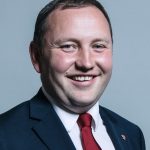
  • Ian Murray – 2022 Speech to Labour Party Conference

    Ian Murray – 2022 Speech to Labour Party Conference

    The speech made by Ian Murray on 26 September 2022.

    It’s a pleasure to speak to you today.

    Everyone says how great Liverpool is, but coming from a Scot, you know I really mean it.

    Because the connection between this incredible city and my country runs so deep – shared values, the same weather, and the feeling that a meal isn’t a meal without something that has been deep fried.

    Even just walking around Liverpool, you could be mistaken for thinking you’re in Glasgow.

    And for a guy born and bred in Edinburgh I think that’s a compliment.

    Of course, the footballing success of this city has been in partnership with some fantastic Scots.

    None more so than Bill Shankly, born in Ayrshire, but made at Liverpool FC.

    Kenny Dalglish, and Alan Hansen, legends of the game – even the current Scotland national team captain.

    Despite what Ally McGovern might say, there is another team in this city, especially with the Scottish internationalist heroes from the past like Alex Young and Nathan Patterson from today.

    But there’s something else both Scotland and Liverpool have in common.

    The desire to kick out this corrupt and out of touch Tory government.

    Our Shadow Chancellor Rachel Reeves in her wonderful speech earlier spoke about the Tories disastrous record.

    Her big announcement that Labour would fund the ACORN carbon capture and storage project in Scotland is absolutely transformative.

    There are few better demonstrations of “just transition”, with 20,000 high quality jobs at its heart, than supporting this technology.

    It is something the Tories have relegated to a reserve list.

    And at the last Scottish conference, I called on the SNP government to use their own Just Transition Fund to support the cluster but all we got were warm words.

    Instead, the SNP continue to be more interested in stoking grievance than storing carbon.

    Conference, I want to touch on just one of the many ways in which the Tories are failing our country.

    And that is by failing to protect its very existence.

    Because the biggest threat to the Union today is not the SNP – it’s the Tories.

    And what was Liz Truss’ first priority? Cutting bankers bonuses and huge tax cuts for the richest.

    Her administration is the most unfair, unjust and divisive government in our lifetime.

    When she was elected Tory Leader, Liz Truss tweeted she would hit the ground – promise delivered.

    They give money to those that don’t need it and nothing to those that do – paid for by those who can’t afford it rather than those who can.

    So, it’s little wonder that many Scots see Westminster as beyond repair.

    And make no mistake, the SNP thrive off of such disdain.

    They don’t want to make devolution work.

    They don’t want a Labour government.

    Conference, let me be very clear – the SNP are not our friends – they exist for one reason only – to rip Scotland out of the UK.

    And don’t forget, at the last election Nicola Sturgeon encouraged people in England to vote Green, not Labour.

    So let me reiterate Keir’s message – No deals with the SNP.

    None.

    No, nay, never.

    The only deal we want to make is directly with the Scottish people.

    Our party was founded by a Scot.

    Scotland has been integral to our movement.

    That will never change.

    Of course, we can’t resolve the imbalances in our country overnight.

    There is a lot of work to do.

    But it will be work that will be at the heart of the next Labour Government.

    That’s why Keir Starmer asked Gordon Brown to oversee a commission into the UK’s future.

    The commission is tasked with clearing up and clearing out the centre, so that the United Kingdom works for every part of it.

    It will be a plan for reinvigorating economic devolution where we unleash the talents and contributions of all parts of the country. Growth for everyone, everywhere wherever you are.

    Part of its purpose will not just try to convince Scotland to stay, but to make Britain such a good place to be that everyone, in all corners of our country, will want to be part of it.

    I’m pleased to announce that Gordon Brown’s critical work is nearing completion and will be launched in the coming months.

    Conference, let’s thank Gordon Brown in his own words ‘thanks for all you do’.

    There is a clear message from this Labour Party to Scottish voters.

    If you want rid of this Tory government then help us do it.

    If you want a UK Government that works for Scotland then help us elect it.

    If you want away from binary choice of separation versus the broken status quo then help us deliver it.

    Over the last 18 months, the change that has taken place in Scottish Labour is remarkable, and unprecedented.

    In the Scottish Parliament election, we overshot expectations and managed to prevent an SNP majority.

    This May, we beat the Tories and got back into second place.

    And I believe, at that election, Scotland will help elect a Labour government across the UK as we have done so with every Labour government since 1945.

    At least then, I’ll have some friends on the train to London.

    Conference, the person that has made that happen deserves every ounce of praise he receives.

    He is the most popular politician in Scotland and is exposing the utterly deplorable record of Nicola Sturgeon every day. It’s my great pleasure to introduce my friend and the Leader of Scottish Labour, Anas Sarwar.

  • Lisa Nandy – 2022 Speech to Labour Party Conference

    Lisa Nandy – 2022 Speech to Labour Party Conference

    The speech made by Lisa Nandy, the Shadow Secretary of State for Levelling Up, Housing and Communities, on 26 September 2022.

    Conference. Comrades. Friends.

    We meet today in one of the country’s historic northern cities.

    Where at the water’s edge so much of modern Britain was shaped.

    Dockers who looked outwards to the world to build Britain’s wealth through difficult, often dangerous work and fought the longest battle for dignity, respect and fair reward in the history of Britain.

    Those were the struggles that formed the backdrop to my childhood.

    I grew up not far from here with a Tory Government that waged war on its own people.

    Brought up by my mum when the Tories were attacking single mums.

    With an Indian dad when they said Britain was being swamped by immigrants.

    They came for us, they came for our jobs and they came for our community.

    But we stood together, we fought together and we won together.

    Now they’re at it again.

    So when your boss earns £3.5m and gives themself a 32% pay rise – and you ask for a below inflation rise –you’re the one to blame for inflation.

    And when you keep our country moving during a pandemic and then they cut your pay, threaten your job and refuse to get round the table to discuss it – you’re the one who’s militant.

    Conference this country’s problem isn’t militant workers. It’s a militant government.

    This is Tory Britain where the foundations of a decent secure life have been slowly eroded leaving us with an economy we work hard for every day – but doesn’t work for us.

    Where the contribution of most people and most places has been written off.

    So in towns across the country, too many young people, have to get out to get on.

    Taking with them the spending power that once sustained our high streets, banks, buses and post offices.

    People are left to grow old hundreds of miles from children and grandchildren.

    And our cities are plagued by soaring housing costs, air pollution and strain on public services.

    Now, Liz Truss says her government will grow our economy by turning the North into Singapore on Sea.

    So they can stash their wealth in our towns and cities, pushing up the cost of housing and dodging tax.

    Slashing taxes for big corporations so the rest of us can grind for a living in an Amazon warehouse.

    Handing £55,000 to millionaires while people can’t afford to pay their rent, feed their kids and heat their homes.

    More money for millionaires than the whole North of England.

    In the words of Liz Truss – that.is.a.digrace

    Conference. It’s time to stand up and fight again.

    Not just to see off the Tories.

    But to build the country I’ve believed in all my life – where everyone can contribute and everyone has a stake in our future.

    It will be about the real wealth creators – the women and men who work in our shops, who drive our buses, who deliver our mail, who produce our food, who care for our families and teach our children – who make sure we have what we need to live every day of our lives.

    To those people we say you are the foundation of our economy.

    We believe that when people have a stake in the outcome, they work harder, they try longer, they think more creatively and they do more.

    The people of our country are our great untapped asset.

    Labour will tilt the balance of power back in their favour.

    In the first 100 days we will end fire and rehire, repeal the 2016 anti- trade union Act and raise wages for the lowest paid.

    And we’ll usher in a great rebalancing of power, with wealth, security and opportunity spread across the whole country.

    They say you can power a modern economy using only a handful of people in a handful of places in one small corner of the country.

    We say that’s like trying to fly a jet on one engine.

    This country doesn’t belong to a few of them, it belongs to all of us.

    So we will invest to bring clean energy jobs to the industrial and coastal towns across Britain, so that young people in places that were once the engines of Britain can power us through the next century like their parents and grandparents powered us through the last.

    The road to net zero is paved with a million good jobs and we’ll bring them to Britain.

    Empowering our brilliant leaders – Steve, Tracy, Andy, Marvin, Shaun – with new powers to drive growth in every part of Britain.

    And handing power back to our people with a community right to buy land and assets – the football clubs, historic buildings and pubs that make a place home.

    So those with skin in the game, who are in it for the long haul, will feel the whole system pulling in behind them.

    That – Liz Truss- is how you grow the economy.

    But I have learnt that progress is not inevitable.

    If we want to live in a country where children don’t have to go to school too hungry to learn.

    Where people with disabilities can live the richer, larger lives they deserve.

    Where people don’t have to fear growing old without dignity or warmth.

    If we want that country, we have to go out and fight for it every single day.

    So I am asking you today to get ready.

    Because together, with every person, in every place we’re going to rebuild this country from the ground up.

    And I can say to you today that in Government I will make it my priority to tackle the housing crisis because nothing, nothing is more important than a home.

    The Tories have turned housing into a racket.

    Incentivising speculation and profiteering while millions languish on waiting lists in cold damp homes.

    So we will mend the deliberate vandalism of our social housing stock.

    Because the idea of a home for life handed on in common ownership to future generations.

    Is an idea worth fighting for.

    Council housing is not a dirty word.

    So today, I can announce we will be the first government in a generation to restore social housing to the second largest from of tenure.

    This will be our mantra.

    Council housing, council housing, council housing.

    We’re going to rebuild our social housing stock and bring homes back into the ownership of local councils and communities.

    With home ownership opened up to millions more.

    And for private renters we will tilt the balance of power back to you through a powerful new renters charter and a new decent homes standard – written into law.

    Because security in your home, the right to make your home your own and most of all the right to live in a home fit for human habitation.

    Is non-negotiable.

    Because housing isn’t a market it’s a fundamental human right.

    It’s tempting at a time of national crisis, to retreat and to play it safe.

    That’s not who are.

    It was with ambition, courage and conviction in the darkest times.

    That out of the devastation of war, we built more council houses than any Government in history.

    We built the NHS, the Race Relations Act, the Equal Pay Act and the Minimum Wage.

    And rebuilt our great northern cities from the ashes of Thatcherism.

    Conference, we led global action on climate change and flew the pride flag in countries where love is a crime.

    A light on the hill at home and overseas.

    And we are going to finish the job.

    Because we know – we are the only party that knows – that by the strength of our common endeavour we achieve more than we achieve alone.

    So Conference let’s rise to meet this crisis in a great national mission to rebuild our country.

    We have done it before.

    We’re going to do it again.

    And we will do it the only way that counts – together.

  • Bank of England – 2022 Statement on the Collapse of the Pound

    Bank of England – 2022 Statement on the Collapse of the Pound

    The statement made by the Bank of England on 26 September 2022.

    The Bank is monitoring developments in financial markets very closely in light of the significant repricing of financial assets.

    In recent weeks, the Government has made a number of important announcements. The Government’s Energy Price Guarantee will reduce the near-term peak in inflation. Last Friday the Government announced its Growth Plan, on which the Chancellor has provided further detail in his statement today. I welcome the Government’s commitment to sustainable economic growth, and to the role of the Office for Budget Responsibility in its assessment of prospects for the economy and public finances.

    The role of monetary policy is to ensure that demand does not get ahead of supply in a way that leads to more inflation over the medium term. As the MPC has made clear, it will make a full assessment at its next scheduled meeting of the impact on demand and inflation from the Government’s announcements, and the fall in sterling, and act accordingly. The MPC will not hesitate to change interest rates by as much as needed to return inflation to the 2% target sustainably in the medium term, in line with its remit.

  • Kemi Badenoch – 2022 Statement on Trade Negotiations with Israel and Canada

    Kemi Badenoch – 2022 Statement on Trade Negotiations with Israel and Canada

    The statement made by Kemi Badenoch, the Secretary of State for International Trade, in the House of Commons on 23 September 2022.

    The first round of United Kingdom-Israel free trade agreement negotiations took place between 12 and 20 September.

    In parallel, the third round of United Kingdom-Canada free trade agreement negotiations commenced on 12 September and concluded on 16 September.

    Following the death of Her late Majesty Queen Elizabeth II, these rounds proceeded, with appropriate adjustments.

    The round of negotiations with Israel was conducted in a hybrid fashion; a small group of United Kingdom officials travelled to Jerusalem for in-person discussions, with further officials attending virtually from the United Kingdom. During this initial round, talks focused on gathering insights on key interests and priorities across policy areas as well as building a shared understanding of each other’s initial positions. Technical discussions focused on 29 policy areas in over 50 sessions.

    A new agreement with Israel—with services and innovation at its heart—will build upon our existing trade and partnership agreement. It will cement our relationship with a rapidly growing economy and take our trading relationship to the next level. It will support United Kingdom jobs, and update outdated trade rules, unleashing our high-tech innovative economies.

    The negotiations with Canada were conducted in a fully virtual format. Technical discussions were held across 26 policy areas across over 50 separate sessions.

    Talks focused on reaffirming the United Kingdom’s positions, having tabled and presented text across the majority of chapters in the previous round. The United Kingdom’s negotiating team made progress on understanding areas of policy convergence and divergence with Canada. They agreed text where possible and in the United Kingdom’s interests and objectives to support economic growth.

    The negotiations continue to reflect a shared ambition to secure a progressive deal which looks to build on the United Kingdom-Canada trade continuity agreement, and strengthens our existing trading relationship, already worth over £21 billion in 2021.

    We are clear that any deals we sign will be in the best interests of the British people and the United Kingdom economy. We will not compromise on our high environmental and labour protections, public health, animal welfare and food standards, and we will maintain our right to regulate in the public interest. We are also clear that during these negotiations, the NHS and the services it provides are not on the table.

    We are working towards holding a second and fourth round of negotiations with Israel and Canada respectively in due course.

    Parliament will be kept updated as these negotiations progress.

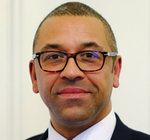
  • James Cleverly – 2022 Statement on the UN General Assembly

    James Cleverly – 2022 Statement on the UN General Assembly

    The statement made by James Cleverly, the Foreign Secretary, in the House of Commons on 23 September 2022.

    The Prime Minister led the UK delegation to the high-level segment of the 77th Session of the UN General Assembly which took place in New York between 19 and 26 September.

    The delegation travelled to UNGA immediately after attending the state funeral for Her late Majesty Queen Elizabeth II. The UN and its member states joined the global expressions of grief and respect following the death of Her late Majesty, with UN Secretary-General Guterres leading the tributes. Her late Majesty had a long relationship with the UN, from the founding meetings in London in 1946 through to her visit in 2010 when she remarked that the UN had become “a real force for common good”.

    The Foreign Secretary represented the UK at the UN Security Council meeting on Ukraine, attended a separate event on strengthening co-operation on accountability for atrocities committed in the conflict, and spoke at the launch of the First Lady of Ukraine’s foundation. The Foreign Secretary hosted a UK-Gulf Co-operation Council Ministerial and attended the Secretary-General’s global crisis response group meeting, as well as meetings focused on global food security and the Indo-Pacific.

    He met counterparts from Australia, Canada, China, India, Indonesia, Rwanda, Saudi Arabia and the United States. Ministers Ford, Ahmad and Goldsmith participated in a wide range of events focused on international development, education, the environment, prevention of sexual violence in conflict and various regional issues, and met a number of counterparts.

    These events supported the Prime Minister’s and the wider delegation’s programmes—including a range of bilateral meetings and roundtables with business leaders in New York. The delegation engaged with Presidents Biden and Macron, as well as Prime Minister Jugnauth of Mauritius, Prime Minister Kishida of Japan, Prime Minister Lapid of Israel, President Nauseda of Lithuania, President Erdoğan of Turkey and President von der Leyen of the European Commission.

    To mark the UK’s support for our Ukrainian allies, the Prime Minister joined the Ukrainian First Lady and the Ukrainian Prime Minister at an exhibition on accountability for international crimes committed in Ukraine, maintaining the international spotlight on Russia’s aggression against Ukraine. She also set out to the UN General Assembly how the UK would use its network of partnerships across the globe, such as the Commonwealth and organisations like the G7, to strengthen the principles of sovereignty and self-determination, and to promote freedom and democracy in all parts of the world.

  • Tom Pursglove – 2022 Speech on Campsfield House Immigration Removal Centre

    Tom Pursglove – 2022 Speech on Campsfield House Immigration Removal Centre

    The speech made by Tom Pursglove, the Minister of State at the Home Office, on 23 September 2022.

    I have listened with close interest to the debate today, and I thank the hon. Member for Oxford West and Abingdon (Layla Moran) for setting out her case in the way she did, albeit that I disagree with considerable elements of it. I will set out the case from the Government’s perspective as to why that is. I welcome the opportunity to respond to the points that have been raised, as I also did in my recent letter to the hon. Lady.

    Let me state at the outset that the Government are committed to a fair and humane immigration policy that welcomes those who arrive legally and, crucially, that maintains the integrity of our border and works in the interests of the people of this country. Each week, we see more people arriving in the UK after crossing the channel on small boats, putting their lives at risk and yet more money in the pockets of the evil people smugglers who exploit them. That cannot be allowed to continue, and I have set out the arguments on that many times on the Floor of the House.

    Our immigration system must encourage compliance with the immigration rules, as well as protecting the public. Immigration detention is an essential part of effective immigration control and management. It is used sparingly, with 95% of people who are liable for removal from the UK managed in the community while their cases are progressed. We continue to support people to leave voluntarily wherever possible. That work happens day in, day out. It is important that the immigration removal estate can respond to changes.

    We need to ensure sufficient resilience and capacity in the right locations for the men and women it is necessary to detain for the purpose of removal. That is why the April announcement on tackling illegal migration made it clear that the removal estate would be expanded. Our plans for the site of the former Campsfield House immigration removal centre in Oxfordshire are part of that expansion. I should emphasise that it would be wrong to characterise the plans as a simple reopening. We accept that by the time the centre closed in 2018 it needed significant investment, although it is worth noting that the last report by the local independent monitoring board in 2018 found the centre to be well run.

    Under our plans, we will invest in significant improvement to the site, with a clear focus on welfare and safety. The new centre will provide decent, safe and secure accommodation for up to 400 men in detention. I can confirm that it will not be for the purpose of detaining families. Although planning is in the early stages, the intention is to use a mix of refurbished buildings and new-build accommodation on an area within the secure perimeter of the existing site. The refurbished part of the new centre will house approximately 160 people, compared with almost 300 in the previous centre. The refurbished accommodation will reflect current best practice, with most rooms being dual occupancy. Rooms in the new-build accommodation will all be dual occupancy.

    All IRCs in England have dedicated health facilities run by doctors and nurses, commissioned by NHS England and delivered to the equivalent quality standards of services in the community. As in other IRCs in England, NHS England will commission healthcare services for the centre. In a previous ministerial capacity I visited Derwentside in County Durham, and there has been a lot of learning from the experience there. I hope it provides some reassurance to say that a bespoke healthcare offer appropriate to the site will be developed to meet the need that exists.

    On riots, escapes, self-harm and suicide at the former Campsfield House centre, I want to emphasise that in developing the site, our focus is on dignity, welfare and safety. Significant improvements have been made to detention in recent years, with a programme of reforms introduced following Stephen Shaw’s 2015 and 2018 reviews of welfare in detention, to which the hon. Lady rightly referred. His reports, and others by external bodies including His Majesty’s inspectorate of prisons and the Independent Chief Inspector of Borders and Immigration, have informed both our strategic and tactical approach to detention.

    The new IRC will not be operational until at least late 2023. Our plans are at an early stage, and we are committed to listening to local and other voices. My officials have written to local stakeholders and are listening to their views. We have already met with the local parish council, and we will continue to engage with it and others over the coming months.

    On planning and procurement of services, we are reaching out to the local planning authority and we have made it clear that we will go out to the market to procure the services to run the site. We are looking both for value for money and for good quality, safe and secure accommodation that meets the needs of the residents in the facility. We have held a market engagement event with interested potential bidders, and there has been a good level of interest in delivering the services.

    I want to be clear that we do not and cannot detain people indefinitely. It is not lawful to do so. The law is clear that we can detain people only where removal is a realistic prospect within a reasonable timescale, or initially to establish their identity or basis of claim. That is set out in both legislation and domestic case law. Over time, the Government have necessarily adapted their strategic approach to the use of immigration detention, in response to the international challenge of illegal migration and the need to break the business model of the evil people smuggling gangs. Decisions on the appropriateness of an individual’s detention or continued detention are always made on a case-by-case basis.

    I hope I can offer some reassurance on the hon. Lady’s point about age-disputed children and the particular case that she referred to. In some cases, individuals who are detained subsequently claim to be children. When this occurs, they will usually be afforded the benefit of the doubt and released into the care of social services until a further assessment of their age has been made, unless their physical appearance and demeanour strongly suggest that they are significantly over 18, or other evidence shows that they are an adult.

    I also refer the House to the measures on age assessment in the Nationality and Borders Act 2022, which will make a considerable difference in helping to identify, and make appropriate decisions about, the age of those who claim to be children. We will deliver those reforms at the earliest possible opportunity. We will make progress on this, because we recognise the significant safeguarding concerns that arise, in both directions, when there is a need to identify a child’s age. I was disappointed that the hon. Lady and her colleagues were not supportive of the 2022 Act, which was in many respects arguably designed to expedite cases. It aims to ensure that people are not in detention for any longer than is necessary, to end the cycle of claims and appeals, and to end the efforts made on occasion to frustrate proper removal from our country.

    Of course, we want to provide certainty on individual cases as quickly as possible, and to maintain a fair immigration system in which those with a right to be here are properly cared for as quickly as possible and those who have no right to be here are removed without needless delay. That is what the reforms aim to achieve; I hope that the hon. Lady and her colleagues change their view when we enact them.

    We have a series of detention safeguards, including the detention gatekeeper, case progression panels, and our “Adults at risk in immigration detention” policy, to ensure ongoing proper scrutiny of detention decisions. People are provided with written reasons for their detention when they are detained, and then at least every 28 days thereafter. That includes information about what steps have been taken in progressing their claim to remain in the UK, and/or in relation to their return.

    Individuals in immigration detention can apply for bail at any time. The use of detention is subject to rigorous scrutiny, including by the independent monitoring boards, His Majesty’s inspectorate of prisons, the Independent Chief Inspector of Borders and Immigration and, of course, the courts. To pick up on the point about visiting, as is the case in detention facilities around the country, visiting is permitted and appropriate arrangements will be made to allow that to happen. I am certainly willing to raise with officials the voluntary work done in the hon. Lady’s community to facilitate those visits. I thank those involved in helping to organise visitation in her area.

    I know that the hon. Lady had concerns about local employment when the previous centre closed, and particularly about the impact on the jobs of those who worked there when it closed. I am sure that we are in agreement on the benefits of opening a new centre for jobs in the area. The recently opened Derwentside facility provides around 200 jobs in that area. I fully expect that the reopening that we are discussing will provide several hundred jobs in the hon. Lady’s area, which is not insignificant.

    Initial estimates of the operating costs were in the region of £170 million over the lifetime of the contract, as we said in the prior information notice that we published on Wednesday 21 September. Actual costs will be known only when the procurement is concluded, but the approach being taken will ensure value for money, and we anticipate that costs will be lower than that initial estimate. In addition to the operating costs, there will be building and refurbishment costs.

    I thank the hon. Lady for her contribution today. We have begun engagement with the council and other key local stakeholders to ensure that we have a full understanding of the impact of our plans. This debate has been a welcome opportunity to hear some of those views. We will of course reflect on what we have heard as we develop the plans. I am always happy to speak to colleagues from across the House about immigration matters that are relevant to their constituencies, and that most certainly applies to this project. More widely, we will continue driving forward the reforms needed to make our immigration system fairer and more effective. That is what the public expect, and what we are determined to deliver.

  • Layla Moran – 2022 Speech on Campsfield House Immigration Removal Centre

    Layla Moran – 2022 Speech on Campsfield House Immigration Removal Centre

    The speech made by Layla Moran, the Liberal Democrat MP for Oxford West and Abingdon, in the House of Commons on 23 September 2022.

    I am grateful to the House for allowing me another chance to raise the proposed reopening of Campsfield House immigration removal centre, after business was so mournfully changed two weeks ago.

    I start by thanking the Minister for engaging with me and my office on this issue and answering my questions today. However, I am deeply disappointed that we have to debate this issue again at all. One of my first campaigns as a parliamentary candidate for Oxford West and Abingdon was the campaign to close Campsfield House. At the time, Campsfield was a detention centre for over 200 adult men facing deportation. My community fought tirelessly for over two decades to close the centre, and make no mistake: we are ready to fight again.

    The Government are now planning to reopen the centre, with an expanded capacity of 400 beds at a cost of £227 million to the taxpayer. Our opposition comes primarily from concern over the welfare of the detainees, the impact that has on everyone in the community and also the cost efficiency of this plan in the immigration detention estate. It is expensive and does not achieve its aims. But most of all, it is cruel.

    I want to start with detainees’ own descriptions of Campsfield. One man detained at the centre said:

    “Some of us have been here for over 3 years with no prospect of removal or any evidence of future release. There is no justification whatsoever for detaining us for such a period of time. Our lives have been stalled without any hope of living a life, having a family or any future.”

    Another former detainee talked about finding solace in music:

    “I tried to create a kind of musical environment around me in Campsfield. It genuinely helped me so I didn’t get too depressed. It saved me from self-harm and suicide, which I saw many people try. It made me feel like I was reaching out beyond the fences. Sometimes I think it’s ok to escape reality in that kind of a place because the reality there can feel like you are living in a nightmare.”

    The nightmare of immigration detention was made much worse by failures in processes and procedures. In 2013, I uncovered that a child was being held at Campsfield. A boy was held there for between two and three months. He would have been the only child in an adult-dominated, guarded facility with barbed wire fences. He would not have been allowed to go to school and he would have been unable to interact with other children or lead any sort of normal childhood. We know very little about him other than that he was between 12 and 16. I hope that all hon. Members will agree that that was and is totally unacceptable—but he was not the only one. Another boy was incorrectly identified by social services as being an adult and was held at Campsfield for 62 days. He was 16. The chief inspector of prisons said that he

    “was held by mistake and should never have been detained”.

    That is fine, but there is only one way to ensure that such an atrocity does not happen again at Campsfield, and that is simply not to reopen it.

    Accidental child detention is not the only concern. As detainees faced unacceptable conditions, tensions often boiled over into aggression and protest. There were riots, fires and escapes. Detainees completed suicide. One asylum seeker completed suicide at Campsfield after being detained for six months and denied bail three times. He was only 18 years old.

    As hon. Members might imagine, all that causes enormous distress to the local community. It is important to note that detention has an enormous effect far beyond the fences. A volunteer visitor service was set up by local people and became the wonderful organisation Asylum Welcome, which does fantastic work to support asylum seekers across Oxfordshire and plays a pivotal role in welcoming Ukrainian refugees.

    One former visitor said:

    “The men detained at Campsfield House were representative of a broad range of humanity—not all were angels, although most that I spoke to were very decent people. But they were all human and therefore deserving of their human rights, and none deserved to be locked away without having committed a crime”.

    That is critical: most of the detainees who passed through Campsfield were true asylum seekers—they were not criminals. The Home Office claims that Campsfield is necessary to hold foreign national offenders, yet in 2017 an average of only 98 were held at Campsfield at any one time. Why do we need a 400-bed centre away from the main airports?

    Immigration detention is described by the Home Office as having a “limited, but crucial role” in helping to control our borders. There are a stringent set of circumstances in which the Government have the power to detain an individual: to enable removal from the country; to establish the basis of someone’s identity or claim; and when the Home Office suspects that someone will not comply with immigration bail. The Home Office’s own guidance states:

    “Detention must be used sparingly, and for the shortest period necessary.”

    On the face of it, that is sensible. I make it clear to the Minister that I can see the need for a small number of detention places, very close to airports, for people to be held for an extremely short time. That is not in question. But what is happening now, with the expansion of the detention estate, starting with Campsfield, shows that there is a failure in that system.

    When the chief inspector of prisons carried out a final inspection before Campsfield closed, the average length of detention was 55 days, but some men were held for “excessive periods”. The longest detention in that year was one year and five months, but we have heard from detainees who were held for more than three years. Many detainees are not held in one centre but are deported, released, or moved around the system. They are passed from one centre to another and not allowed to form relationships. An MP might advocate for them, but then they move and the MP cannot do so anymore. They do not have consistent caseworkers. That is cruel, but it is also incredibly costly.

    The cost element needs to be explored. When Campsfield was open, it cost £86 a day to detain someone there, but costs have increased. In the first quarter of 2022, the average cost of holding someone in detention was £107 per day. The more individuals we detain, and the longer we keep them behind bars, the more costly it is. As the Minister may well remember, we are in a cost of living crisis. Families are struggling to afford food; pensioners cannot afford to turn their heating on. We heard this morning the Chancellor’s grand plan to tackle the economic crisis—I am sorry, but the way to solve this is not to keep detaining people at enormous cost, it is instead to invest that money in a system to improve processing times.

    Taxpayers deserve a Home Office that does its job properly. Figures from the House of Commons Library reveal that the same amount of money that the Government will be spending on re-opening Campsfield could be used to fund more than 1,000 asylum caseworkers, who are desperately needed to process that backlog. Why are we not investing that money in staff? How many new caseworkers do the Government intend to bring into the system, or are they just accepting failure?

    We raised concerns at the time about the welfare of those in Campsfield, but we must also understand why there has been this shift in policy. That is why this debate is so important. Campsfield was shut in 2017 off the back of the Stephen Shaw review, which concluded that the “direction of travel” for the detention estate in the UK should be “downwards”, both for reasons of welfare and for better use of public money. The Home Office agreed with that recommendation and made the decision to reduce the immigration detention estate, aiming to reduce it by almost 40%. As part of that Campsfield closed, but the Government have now changed direction and numbers are climbing to the same levels that we saw before 2019. Not only are they re-opening Campsfield, but there is another detention centre at Haslar in Hampshire, both with more beds than they had before. That is a clear, active change of policy, and we have not had an explanation for what has changed. Which recommendations in the Shaw review does the Minister now not accept?

    How does that change of policy fulfil the Government’s legal obligations? There have been legal challenges on human rights grounds for those held on the detention estate, but most of those people—and this is where we must end—are not criminals. Most of those people are true asylum seekers, and 80% of those who try to claim asylum in the UK are granted asylum. When we combine the fact that there are a small number of foreign prisoners who should be detained and supported, and that 80% of those who try to claim asylum are granted asylum, I simply ask the Minister why the Government are doing this, and whether they will reverse the decision to reopen Campsfield House.

  • Rachel Reeves – 2022 Response to the Chancellor’s Fiscal Statement

    Rachel Reeves – 2022 Response to the Chancellor’s Fiscal Statement

    The speech made by Rachel Reeves, the Shadow Chancellor of the Exchequer, in the House of Commons on 23 September 2022.

    Thank you, Mr Speaker.

    I would like to welcome the Rt Hon Gentleman to his place and I thank him for his statement.

    He is the third Conservative Chancellor this year – and it’s still only September.

    The Chancellor has confirmed that the costs of the energy price cap will be funded by borrowing, leaving the eye-watering windfall profits of the energy giants untaxed.

    The oil and gas producers will be toasting the Chancellor in the boardrooms as we speak – while working people are left to pick up the bill.

    Borrowing higher than it needs to be, just as interest rates rise.

    And yet the Chancellor refuses to allow independent economic forecasts to be published which would show the impact of this borrowing on our public finances on growth and inflation.

    It is a budget without figures.

    A menu without prices.

    What, Mr Speaker, has he got to hide?

    This statement is an admission of 12 years of economic failure.

    And now here we are – one last throw of the dice, one last claim that these ministers will be different.

    For all the chopping and changing and chaos and confusion there has been one person here throughout.

    The Prime Minister.

    She’s been a minister for a decade, out defending every single economic decision.

    When the Prime Minister says she wants to break free from the past, what she really means is she wants to break free from her own record.

    Because where have the last 12 years left us?

    Lower growth, lower investment, lower productivity.

    And today, we learn we have the lowest consumer confidence since records began.

    The only things that are going up are inflation, interest rates and bankers’ bonuses.

    As the Tories become more and more detached from reality millions of people are lying awake at night worrying about how they’ll make ends meet.

    Labour won the argument that action on energy bills was necessary.

    But the question is: who pays?

    The energy producers who have profited so much from the rise in prices should make a contribution.

    But when the country asked who should foot the bill for their energy rescue
    package the Conservatives responded: “you”, the British people.

    Instead of standing up for working people, the Conservatives chose to shield the gigantic windfall profits of the energy giants leaving tens of billions of pounds on the table and pushing all the costs onto borrowing to be paid for by current and future taxpayers.

    This Prime Minister and Chancellor have no regard for taxpayers’ interests or the concerns of working people.

    It’s not just that this Conservative government is not working for ordinary families – it’s actively working against them.

    Mr Speaker, we have had six so-called growth plans from the Conservatives since 2010.

    A litany of failure.

    I do at least commend the Chancellor on having the ambition of achieving two and a half percent growth a year – the last Labour government’s rate of growth.

    But to achieve that sort of growth and for that growth to be sustainable, you need a credible plan.

    And the truth is that this government does not have one.

    The Prime Minister and Chancellor are like two desperate gamblers in a casino, chasing a losing run.

    The argument peddled by the Chancellor today isn’t a great new idea as much as he’d like us to think so.

    What this plan adds up to is to keep corporation tax where it is today and to take national insurance, which they voted to increase, back to where it was last March.

    Some new plan!

    And it’s based on an outdated ideology that says if we simply reward those who are already wealthy, the whole of society will benefit.

    They’ve decided to replace levelling up with trickle down.

    As President Biden said this week, he is “sick and tired of trickle-down economics.”

    And he is right to be.

    It is discredited, it is inadequate and it will not unleash the wave of investment that we need.

    Mr Speaker, it’s not just this side of the House with concerns.

    The Rt Hon Member for Surrey Heath, described the Prime Minister’s economic plans as ‘taking a holiday from reality’.

    The Rt Hon Member for Richmond, two Chancellors ago, was perhaps too honest with his party when he told them:

    “We tried having a … low corporation tax … as a means of getting businesses to invest.”

    But that “It has not worked.”

    The new Chancellor and Prime Minister used to agree with that.

    They voted for the corporation tax rise, and Labour supported it too.

    Members opposite might have changed their minds, but we have not.

    Because the evidence shows that low rates of Corporation Tax are not the best way to boost investment and productivity and the Tories’ own record shows that.

    Britain has the lowest headline rate of corporation tax in the G7 but we also have the lowest rate of private investment.

    That’s why Labour would do what businesses are actually asking for:

    Using targeted investment allowances to boost productivity and growth.

    And scrapping outdated and unfair Business Rates, that harm our small businesses and high streets replacing them with a system that’s fit for the 21st Century.

    What about their other policies?

    Let’s take these so-called ‘investment zones’.

    Again, these are nothing new.

    Every time they were tried, all they have achieved was moving growth around
    the country, not creating growth.

    The best way out of this high tax, low growth spiral that the Tories have created is to get the economy firing on all cylinders in all parts of the country.

    It’s going to take much more than a stamp duty cut to get our economy back on track and home ownership back to the levels last seen under the Labour government.

    These stamp duty changes have been tried before.

    Last time they did it, a third of the people who benefited were buying a second or third home, or a buy to let property.

    Is that really the best use of taxpayers money when borrowing and debt are already so high?

    And can the Chancellor confirm today how much of his stamp duty cut will go to those purchasing multiple properties?

    Instead of a stamp duty rates going up and down like a yo-yo, we’ve got to get building.

    We need to target support at first time buyers and tackle the issue of homes being sold to overseas investors.

    The Chancellor has made clear today who his priorities are. Not a plan for growth, a plan to reward the already wealthy.

    A return to the trickle down of the past, back to the past, not a brave new future.

    This Chancellor and Prime Minister proclaimed in Britannia Unchained that ‘the British are amongst the worst idlers in the world’.

    And to prove they mean it, instead of supporting working people this government is cutting their rights at work.

    Working people are the backbone of Britain and should be respected not sneered at.

    Labour will always stand up for their rights.

    The Chancellor has in effect today admitted he has broken his fiscal rules.

    This is the 10th time the Tories have broken their own rules, something that I’m sure the Office for Budget Responsibility would have confirmed if they had been allowed to publish their forecasts today.

    Mr Speaker, it is unprecedented to have a fiscal statement of this scale with no independent forecasts from the Office for Budget Responsibility.

    Never has a government borrowed so much and explained so little.

    Economic institutions matter.

    Yet this government has undermined the Bank of England, sacked the respected Permanent Secretary at the Treasury and silenced the Office for Budget Responsibility.

    That is no way to build confidence.

    This is no way to build growth.

    Mr Speaker, Labour believes in wealth creation.

    We will always support enterprise, creativity and hard work.

    We want British businesses to grow, to be successful and contribute to our wider prosperity.

    We don’t believe – as the Chancellor and Prime Minister do – that British workers are idlers.

    We understand that it is the workers who turn up every day to make the great product at a factory or deliver a great service in the store who generate growth.

    It is the teachers giving the young people the skills they need.

    It is the doctors and nurses keeping people well.

    It is the entrepreneur taking a personal risk to start a new business.

    These are the people who generate growth – and they all deserve to share in it too.

    Mr Speaker this statement is more than a clash of policies.

    It is a clash of ideas – two different ideas of how our country prospers.

    If you’re a pensioner worried about the cost of living, a working family seeing your mortgage costs going up or a small business owner whose costs are spiralling, the government’s announcements today do little to reassure you.

    Bigger bonuses for the bankers and huge profits for energy giants, shamelessly shielded by Downing Street.

    And all the while, ministers pile the crushing weight of all these costs onto the backs of taxpayers.

    The Conservatives can’t solve the cost of living crisis.

    The Conservatives are the cost of living crisis.

    And our country cannot afford them anymore.

  • Suella Braverman – 2022 Statement on the Economic Crime and Corporate Transparency Bill

    Suella Braverman – 2022 Statement on the Economic Crime and Corporate Transparency Bill

    The statement made by Suella Braverman, the Home Secretary, in the House of Commons on 22 September 2022.

    The Government are today introducing the Economic Crime and Corporate Transparency Bill, as committed to in the Queen’s Speech at the start of this parliamentary Session. Building on the recently enacted Economic Crime (Transparency and Enforcement) Act 2022, the measures in this new, significant Bill enable us to bear down further on kleptocrats, criminals and terrorists who abuse our open economy, strengthening the UK’s reputation as a place where legitimate business can thrive while driving dirty money out of the UK.

    The UK is at the forefront of global efforts to tackle illicit finance and economic crime. There have already been a number of important strides forward in the effort to confront and address economic crime in recent years, including:

    being the first G20 country to establish a public register of domestic company beneficial ownership in 2016 (the “people with significant control” register);

    the introduction of new powers in the Criminal Finances Act 2017 to include unexplained wealth orders and account freezing orders;

    allocating £400 million through the spending review and new economic crime levy to support law enforcement over the next three years, as well as a £63 million spending review settlement over the next three years for implementation of Companies House’s transformation programme;

    the publication of the economic crime plan in 2019 and the progress made against it by both the public and private sector;

    establishing the national economic crime centre to co-ordinate the law enforcement response to economic crime and the combatting kleptocracy cell in the National Crime Agency to focus on targeting corrupt elites and their assets in the UK; and

    most recently, passing the expedited Economic Crime (Transparency and Enforcement) Act.

    The economic crime landscape is constantly evolving, and we cannot be complacent about the threat. That is why we are bringing forward this further legislation to help tackle these problems and transform our fight against illicit finance.

    The key elements of the Bill include:

    broadening the registrar’s powers so that the registrar becomes a more active gatekeeper over company creation and custodian of more reliable data, including new powers to check, remove or decline information submitted to, or already on, the companies register;

    introducing identity verification requirements for all new and existing registered company directors, people with significant control, and those delivering documents to the registrar;

    providing Companies House with more effective investigation and enforcement powers and introducing better cross-checking of data with other public and private sector bodies;

    tackling the abuse of limited partnerships (including Scottish limited partnerships) by strengthening transparency requirements and enabling them to be deregistered;

    creating powers to more quickly and easily seize and recover cryptoassets;

    creating new exemptions from the principal money laundering offences to reduce unnecessary reporting by businesses carrying out transactions on behalf of their customers;

    enabling businesses in certain sectors to share information more effectively to prevent and detect economic crime; and

    providing new intelligence gathering powers for law enforcement.

    These new measures will tackle economic crime, including fraud and money laundering, by delivering greater protections for consumers and businesses, boosting the UK’s defences, and allowing legitimate businesses to thrive. They will also protect our national security, by making it harder for kleptocrats, criminals and terrorists to engage in money laundering, corruption, terrorism financing, illegal arms movements and ransomware payments. And they will support enterprise by enabling Companies House to deliver a better service for over four million UK companies, maintaining our swift and low-cost routes for company creation and improving the provision of data to inform business transactions and lending decisions across the economy.

    This Bill forms a key part of the wider Government approach to ensure that law enforcement and the private sector have the tools needed to help tackle economic crime, sitting alongside the key provisions in the Online Safety Bill which will tackle online fraud, as well as the upcoming second economic crime plan and fraud action plan.

    This Bill has been developed in close partnership with law enforcement agencies, as well as with the financial sector, professional and business groups, and civil society organisations. This reflects the breadth of the measures in the Bill, the nature of the threats posed and the importance of working across sectors to tackle economic crime.

    The Government remain committed to tackling economic crime and illicit finance, and to strengthening the business environment across all of the UK. We will continue to work with the devolved Administrations on these measures and the formal legislative consent motion process.