Tag: Speeches

  • Jeremy Purvis (Lord Purvis of Tweed) – 2022 Tribute to HM Queen Elizabeth II

    Jeremy Purvis (Lord Purvis of Tweed) – 2022 Tribute to HM Queen Elizabeth II

    The tribute made by Jeremy Purvis, Lord Purvis of Tweed, in the House of Lords on 9 September 2022.

    I am privileged to follow the profound eloquence of the noble Baroness in her tribute and I echo many of her regards. It is to the personal, the local and the international personified by her late Majesty that we pay tribute today. As the sorrowful but necessary processes in my home country north of the border pass, she will continue in the wee dark hours over the border, on her last journey home, through my home town of Berwick. Like many noble Lords, I have memories of meeting her in my home area; they no doubt felt when they met her as I did—that she knew our area more than we knew it ourselves. It was just one of the many attributes she held that are receiving tribute today.

    Queen Elizabeth II lived for nearly a third of all the time of our union and was sovereign of it for nearly a quarter. This will never be repeated in the future story of these isles: a semi-mystical link between old and new, a shelter of calm in storms of turbulent political waters and, in the wider world, an embodiment of reliability as the tectonic shifts in how the world sees itself have moved, along with the place of our country in this transformation, from empire to Commonwealth, from military prowess to cultural influence.

    I reviewed the Motions of condolence for the late King George VI in 1952. From these Benches, Viscount Samuel quoted Prime Minister Nehru of India as saying that

    “when the relationship between England and India took a new turn and was based on friendship and free association … I was impressed by his thoughtfulness and understanding of us and our position, and we welcomed him most willingly as Head of the Commonwealth”.—[Official Report, 11/2/1952; cols. 1080-81.]

    Her late Majesty built upon this foundation and became the reason beyond all others as to why peaceful transition with complex moral dimensions on an immense scale, touching every part of the world, has been a success.

    Today, I was due to be arriving in Khartoum. Friends from there messaged me last evening, as others have from other parts of the world. I was greatly moved by the news that the pictures of her Majesty’s visit there in 1965 have been circulating widely. That country is vastly different from before and after independence—as is the world. Another Sudanese friend messaged me saying, “Her legacy in the decolonisation era will especially be remembered in our region of the world”.

    No other leader of a country in world history has ever travelled so much or met more leaders and people from more countries. As one American publication put it this morning, “Among Queen Elizabeth II’s many talents was an ability to turn the most powerful man on the planet into an overexcited fanboy—tea with the Queen outranking a nuclear arsenal”.

    At home in the Borders, where her visits were frequent and her knowledge of our equestrian common ridings was thorough—as was that of other members of the Royal Family; in fact, the Queen Consort was due to be in Galashiels yesterday—we will feel a gap as she passes through for the final time.

    Her late Majesty made me feel it that it was a remarkable stroke of good fortune to be born British, and I know the pride felt by many people who have come and made Britain their home. That pride for our history is in my heart, but there is a sense of anxiety in the pit of my stomach for the future. Many people of my parents’ generation and, indeed, my own, and I myself, feel loss, but some will feel lost. Who will be the constancy in times of churn to come? So, for our union at home and our place in the world abroad, I thank her late Majesty, and I wish the new King every success.

  • Steve House – 2022 Tribute to HM Queen Elizabeth II

    Steve House – 2022 Tribute to HM Queen Elizabeth II

    The tribute made by Steve House, the Acting Commissioner of the Metropolitan Police, on 8 September 2022.

    Tonight every member of the Metropolitan Police Service joins the nation in mourning the death of Her Majesty The Queen.

    On their behalf, I send my deepest condolences to the entire Royal Family, as well as all those who have been affected personally by Her Majesty’s death.

    I, like every officer in the Metropolitan Police Service, swore an oath to Her Majesty and for us all that is the greatest honour.

    I know Her Majesty’s lifetime of public service will continue to inspire generations to come.

  • Nick Gibb – 2010 Speech to the SSAT National Conference

    Nick Gibb – 2010 Speech to the SSAT National Conference

    The speech made by Nick Gibb, the then Education Minister, in Birmingham on 25 November 2010.

    Thank you, Nick, and thank you for allowing me to speak today rather than yesterday, when we were launching our White Paper. The least I could do in return for causing you the inconvenience of re-jigging your conference agenda was to get up at the crack of dawn, catch the early train up from London and be here by 9.15am!

    But I am delighted to be here again and to have this opportunity straight away to discuss the contents of the White Paper and the detail of the policy direction behind it.

    The White Paper itself is entitled ‘The Importance of Teaching’, reflecting the earnestness of our desire to raise the status of the teaching profession and to return teaching to the centre of what happens in our schools.

    It’s also called ‘The Importance of Teaching’ because many of its policies have been influenced by leading teachers and headteachers, as well as organisations such as the Specialist Schools and Academies Trust.

    In my speech at this conference last year, I talked about how we were listening to what schools had told us about the need to cut bureaucracy, to increase autonomy and to improve behaviour.

    And most importantly that if we were elected, our approach to education policy would be based not on ideology but on the things that the evidence tells us works and the things that headteachers tell us work.

    The case for change

    As the introduction to the White Paper says: ‘All the evidence from different education systems around the world shows that the most important factor in determining how well children do is the quality of teachers and teaching.’

    The latest McKinsey report, just published, entitled Capturing the Leadership Premium, about how the world’s top school systems are building leadership capacity, cites a number of studies from North America, one of which found that:

    … nearly 60% of a school’s impact on student achievement is attributable to principal and teacher effectiveness. These are the most important in-school factors driving school success, with principals accounting for 25% and teachers 33% of a school’s total impact on achievement. (p7)

    Also in the McKinsey report, an analysis of Ofsted inspection reports concludes that:

    For every 100 schools that have good leadership and management, 93 will have good standards of student achievement. For every 100 schools that do not have good leadership and management, only one will have good standards of achievement.

    This is why, when you read the White Paper, you see that its constant theme is the central importance, above all else, of the profession, and what we can do to ensure every child has access to the best possible teaching.

    You will already have seen – and I hope been part of – our drive to increase the autonomy of schools through expanding the Academies programme and giving teachers and headteachers more control over their own destiny. Alongside teacher quality, research from the OECD cites autonomy, combined with rigorous and objective external accountability, alongside teacher quality, as the other essential characteristics of the highest-performing education jurisdictions.

    This is just one of the series of reforms that we’ve begun to take forward over the past six months to bear down on unnecessary burdens, to grant schools greater freedoms and to extend teachers’ powers to enforce discipline.

    And we’ve done so because our education system, as a whole, is still some way short of achieving its potential.

    Still a long way to go

    We have some of the best schools in the world, but the truth is that we also have too many that are still struggling.

    We have some of the best headteachers and teachers working in our schools, but too often they say they’re constrained by needless bureaucracy, central targets and guidance, and an overly prescriptive curriculum that dictates, for example, that lessons should be in three parts, with a beginning, middle and end.

    More young people now stay on in education – but some learn skills and earn qualifications that aren’t as highly valued by employers and universities as we would wish.

    And we simply aren’t doing enough to ensure there really is, as the title of this conference suggests, excellence for all, by supporting the education of the most disadvantaged and helping them to overcome life’s lottery.

    This is really brought home by the OECD international table of performance, in which we’ve fallen in recent years from fourth to 14th in science, seventh to 17th in literacy, eighth to 24th in maths.

    Studies undertaken by Unicef and the OECD tell us that we have one of the most unequal education systems in the world, coming 55th out of 57 countries for educational equity and with one of the biggest gulfs between independent and state schools of any developed nation.

    Michael Gove used to cite the unacceptable fact that of 80,000 GCSE students qualifying for free school meals, just 45 went on to Oxford and Cambridge a few years later. He’s had to stop using that figure because the latest year’s figure is that just 40 go on to Oxbridge – a drop of 12.5 per cent.

    That’s why the challenge facing us is to reform the whole schools system.

    That is the challenge that our White Paper will allow us to meet.

    And we want to do so by making the catalysts that have driven improvement in the country’s best state schools available to all schools.

    Greater freedom

    Over the past decade, the Specialist Schools and Academies Trust has played an important role in raising standards, promoting greater innovation and improving the life chances of hundreds of thousands of pupils.

    The near universal network of specialist schools attests to what can be achieved when schools are allowed to innovate and have the freedom to develop their own distinct character and ethos.

    And it has also demonstrated that if you trust headteachers and the profession, the benefits accrue faster.

    It is because specialism is now so firmly rooted in our schools that we’ve decided that it’s the right time to give schools greater freedom to make use of the opportunities offered by specialism and the associated funding.

    And just so that we’re all clear, we’ve not removed the funding – all of that money will continue to go to schools – but we have removed all the strings attached to it so that schools have the freedom to spend it on, and buy in, the services they want and need without central prescription.

    And while this will naturally also remove the need for schools to re-designate, I hope that the SSAT, and in particular the National Head Teacher Steering Group, will continue to provide a loud and influential voice on behalf of all of its membership.

    Alongside greater control over budgets, we’ve scrapped the burdensome self-evaluation forms for school inspections and the overly bureaucratic Financial Management Standard in Schools.

    We are also committed to reducing central bureaucracy still further, cutting down on unnecessary data collection burdens and reforming Ofsted so that inspection is more proportionate with fewer inspection criteria: instead of the 17 we have now, just four – leadership, teaching, attainment and behaviour.

    And we will slim down the National Curriculum. At present the National Curriculum contains too much that is not essential, too much that is unclear and too much prescription about how to teach.

    We need a new approach to the National Curriculum so that, to quote from the White Paper, it:

    …specifies a tighter, more rigorous model of the knowledge which every child should be expected to master in core subjects at every key stage. (p 10)

    It is our view that in a school system that moves towards a greater degree of autonomy, the National Curriculum will increasingly become a benchmark against which schools can be judged rather than ‘a prescriptive straitjacket’ into which education is squeezed.

    What underlies an effective education is the ability to read. Despite the hard work of teachers there are still too many children who fail to master this basic skill to a level that gives them the key to secondary education.

    Fifteen per cent of seven-year-olds don’t reach the expected level in reading at Key Stage 1. One in five 11-year-olds leave primary school still struggling with English. And I’ve been to too many secondary schools where the head tells me that a significant minority of their intake has a reading age below nine or eight or sometimes six or seven.

    This is unacceptable, which is why we are introducing a new light-touch, phonics-based reading test for six-year-olds, to ensure all children are on track with literacy at an early age.

    We need to identify early on those children who are struggling so they don’t slip through the net and so that schools can give those children the support and help they need. We want all children to acquire that basic decoding skill early on in primary school so they can spend the remaining five or six years reading to learn, developing their vocabulary and comprehension and a love of books. It can’t be right for children to spend seven years of primary education continually struggling with this basic educational tool.

    And because we understand why schools might have felt that the system – and Government – hasn’t been on their side in the past, there are also new measures in the White Paper to improve the exclusions process, further strengthening schools’ powers to ensure heads have the confidence they need to use them – including by ensuring the anonymity of teachers facing allegations from pupils or their parents.

    We believe these measures will help all schools to innovate and allow headteachers and teachers to focus on teaching – but the schools that will reap the greatest benefits from our attack on bureaucracy will be the academies.

    Greater autonomy

    Of course, academies are already free from central control and aren’t constrained by choice of specialism or the need to re-designate.

    They are the schools in which headteachers have been given the greatest autonomy to shape their own curriculum, to insist on tougher discipline, to set their own staff pay and conditions, and to extend school terms and school hours.

    And they’re also the schools that have improved the fastest. Last year the rate of improvement in academies was twice that of other schools, and some individual academies, such as Burlington Danes Academy in central London, have delivered incredible improvements of between 15 and 25 percentage points in just one year.

    In this year’s Ofsted annual report, published earlier this week, 26 per cent of academies were rated outstanding compared to 13 per cent of secondary schools nationally.

    Back in 2005, the former Prime Minister promised that all schools would be able to enjoy academy freedoms – but many of these freedoms were curtailed. An artificial ceiling of 400 academies was placed on the programme and primaries were refused entry.

    The Academies Act removed both of these barriers to the rapid expansion of the programme by giving all schools the chance to take on academy status – starting with those rated outstanding by Ofsted.

    Since the start of this school year, 144 academies have opened and a further 70 are due to open in the coming months. There are now 347 open academies, with more opening every week.

    Just under half of these replaced failing schools and we will continue to challenge schools that are underperforming with converting to academy status under a strong sponsor as one of the options available to deliver improvement.

    Last week we began the next phase of the expansion of the Academies programme, which will mean that schools that need to improve can join academy trusts where they will be supported by some of our best leaders in education.

    We expect all of the outstanding schools that have converted so far to use their new-found powers and freedom to support weaker schools, and we’ve now extended the invitation to convert to academy status to schools judged by Ofsted as ‘good with outstanding features’.

    So the result of the Academies Act will be greater autonomy within a culture of collaboration, where the bonds between schools are strengthened and there is a further step-change in system-led leadership.

    A culture of collaboration

    In the late 1980s and 1990s, grant-maintained schools were allowed to opt out of local government control. Many enjoyed great success in doing so – but the mistake made then was that people felt that their autonomy created a ‘them and us’ culture.

    But in my experience, the very best school leaders are characterised by their refusal to put a cap on aspiration for children and, consequently, tend to be those who are working in more than one school.

    This might mean that they’re an executive head in a federation where they lead two or more schools.

    It might now mean they’re an academy principal in an outstanding school working with another school to help them improve.

    Or it might mean they’re an NLE or LLE. I’m a huge admirer of all those heads who are NLEs or LLEs. They’re demonstrating that their aspirations have no bounds and that they want to go the extra mile to improve standards – not just for the children in their own schools, but in other schools too.

    That’s why we want to double the number of NLEs and will designate 1000 over the next four years.

    We all have a duty to ensure there are minimum standards of performance through the school system. It isn’t acceptable to any of us that we have so many schools in which two-thirds of children fail to secure five good GCSEs.

    Minimum standards have certainly risen in recent years, in line with the increased aspirations of parents and communities and thanks to the hard work of school leaders.

    But given the quickening pace of school improvement across the globe, it’s essential that we demonstrate that we are raising the bar for all schools. And that is why our White Paper sets new floor standards that will apply from January next year once we’ve verified final examination data from last summer. For secondary schools, this will be at least 35 per cent of pupils with five or more GCSEs at grades A* to C including English and Maths – and for primary schools, 60 per cent of the cohort achieving level 4 in English and Maths combined and where progress is below the expected level. Crucially, both of these new floor standards will involve a progression measure as well as the raw attainment figure.

    In doing that, we also want to avoid the errors of the past when some schools felt unfairly labelled as failing by Government.

    That is why on top of the pupil premium, which will tackle disadvantage at root by providing additional money to schools to extend opportunity to the poorest pupils, we’ve created a new education endowment fund worth £110 million to drive improvement in the most underperforming schools.

    But the biggest shift in our White Paper is in how we support teachers.

    It is widely recognised around the world that nothing matters more than teaching and that the most important thing we can do is recruit the best, train them well and help them and the teachers we already have to develop throughout their professional careers.

    That’s why we’re expanding Teach First and introducing other new high-quality routes into teaching.

    Teachers also want the capacity to be able to learn from other teachers if they are to grow as professionals, which is why we are removing the rules preventing classroom observation and why we intend to designate the best schools led by the best heads as teaching schools.

    In the NHS, teaching hospitals have become centres of excellence in their local areas by training current and future generations of doctors and nurses while also providing excellent medical care.

    We want teachers to have the same opportunities so teaching schools will work with other schools and with universities to deliver excellent initial teacher training, ongoing professional development and leadership development, while also providing an excellent education to pupils.

    And as well as ensuring that high-quality training is available, teaching schools will become engines of school improvement themselves because a vital part of their role will be to identify the best leaders and deploy them in a way that will allow them to support those schools that need to improve.

    But most importantly, teaching schools recognise that the biggest asset in schools is its people.

    They have to be our focus if we’re to achieve excellence for all.

    Excellence for all is a fitting title for this conference because it is, I know, what all professionals strive to achieve every single day.

    It is what we are striving for too.

    And with our White Paper, the reforms that I’ve spoken about today and the continued leadership of the SSAT and its members, it is finally a realistic ambition.

    Thank you very much.

  • Tim Loughton – 2011 Speech at the Edith Kahn Memorial Lecture

    Tim Loughton – 2011 Speech at the Edith Kahn Memorial Lecture

    The speech made by Tim Loughton, the then Education Minister, on 9 February 2011.

    Can I start by saying how delighted and privileged I am to be asked to give the 20th Edith Kahn Memorial Lecture? My association with the excellent organisation that is CSV goes back to 2001 when I became a trustee, and whilst I regretfully and reluctantly had to give up that position after the election this year, that does not mean that my respect and association with the charity should be any less enthusiastic. And can I thank, on behalf of CSV, all the supporters – many of them represented here today – for all that you do to make the work of the CSV possible?

    This year we are in the House of Lords – a slightly ominous development given the not-entirely apocryphal anecdote about graffiti in one of our noble colleagues’ loos here which poses the question – ‘What do you call 2 MPs at the bottom of the ocean?’ – to which has been added the answer: – ‘a good start!’ It is gratifying, however, that politicians are still invited to address such august audiences after everything that has passed.

    It is a truth universally acknowledged that a voluntary organisation in possession of a good idea and in want of a meeting with a minister will use the buzz phrase ‘Big Society’ before breakfast, lunch and dinner – to open with a cacophonous car-crash of mixed misquotes. But it does seem that every time I receive a letter or email requesting a meeting, let alone the subsequent meeting itself, there is something of a target quota system operating to see how many times ‘Big Society’ can be inserted into the dialogue.

    The trouble is that most people don’t know what the Big Society really means, least of all the unfortunate ministers who have to articulate it. What actually is the Big Society, let alone is it good or not? Exactly how big is it now or is it going to be? Is it, in fact, Ann Widdecombe? Is it a very British thing? Or is it another American import?

    In America, the Big Society can, of course, mean something completely different, as a recent survey showed that one in three Americans weighs more than the other two put together – a statistic that gave rise to a recent Sun headline to an article on an environmental report that ‘Fatties cause global warning’.

    More appropriately, however, we perhaps heard early rumblings of what it meant when President Lyndon B. Johnson spoke in 1964 of America’s ‘opportunity to move not only towards the rich society and the powerful society, but upward to the great society’. His predecessor John Adams, however, the second president of the US, warned more ominously that ‘the happiness of society is the end of government’.

    On the other side of the Channel, Rousseau put it more desperately: ‘Nature makes man happy and good but society corrupts him and makes him miserable’.

    So is there anything more British about the Big Society? Well, of course Britishness is something of a movable feast these days. Being British these days is about driving in a German car to an Irish pub for a Belgian beer, then travelling home via an Indian restaurant or grabbing a Turkish kebab on the way, to enjoy a TV supper sitting on Swedish furniture, watching American shows on a Japanese television.

    Only in Britain can a pizza get to your house faster than an ambulance.
    Only in Britain do supermarkets make sick people walk all the way to the back of the shop to get their prescriptions while healthy people can buy cigarettes at the front.
    Only in Britain do people order double cheeseburgers, large fries and a diet coke.
    And only in Britain do banks leave both doors open and then chain the pens to the counters.
    Clearly then, to be born British is to be born into a world of contrast and contradiction, where eccentricity and manners, faith and cynicism, tradition and modernity, have all conflated to create this collective sense of identity that is framed far more by its ambiguities than its consistencies.

    And yet, through some quirk of anthropology, those same great ambiguities also combined to create one of most enduring, and famed, of all national characteristics -the British sense of fair play – with the nation both admired and mocked, in almost equal measure, for its strict codes of social conduct and propriety, which Sir Malcolm Bradbury once jokingly described as ‘the most rigid system of immorality in the world’.

    Now, in part, you could argue that that reputation was never much more than a fig leaf, conceived of on the playing fields of Eton. But in reality, the British sense of social justice and generosity goes far deeper than that, with an extraordinarily rich catalogue of great names and moments that have helped shape, and distinguish, our communities over the years. Whether that was the first time William Wilberforce stood up in the House of Commons to make the case for the abolition of slavery. Whether it was Mary Seacole setting sail from Jamaica to volunteer as a nurse during the Crimean War, or whether it was the RAC volunteers who gave up their cars to take men and women to hospital during the blitz, and the continued, unabated acts of charity by organisations like the British Red Cross, Barnardos and – of course – CSV. Each, in their own right, helping to define what it now means to be British.

    Increasingly however, volunteering and acts of charity have become a less and less visible feature of our national conscience, largely forgotten and bypassed by successive governments who have tended to ignore the good and focus on the bad when they design and institute policy. Which explains, perhaps, why we’ve seen so many governments attempt to muscle in on family and community life over the last 30 or so years – in a well intentioned but ultimately unsuccessful attempt to make up for the fact that families have become increasingly nuclear, and communities increasingly fragmented.

    Sadly, as we all know, this approach has largely failed – and many of the gravest problems we today associate with those social changes are, in fact, greater than ever, with the UK suffering from some of the highest levels of drug and alcohol abuse amongst young people anywhere in the world, having the highest teenage pregnancy rates in Europe, stubbornly high levels of child poverty, and more than a million young people suffering from some kind of mental health condition.

    So today I wanted to argue the case for a return to social policies that reinforce and support communities rather than supplant them. And a return to the kind of governance that promotes the work of organisations like the CSV, and its workers and volunteers, and helps families and local communities to tap into the spirit of generosity that’s such an important hallmark of British life. That is the starting point for the Big Society.

    Because the simple reality, as I see it, is that although our society has changed in many ways, our nature hasn’t. For as long as humans have stalked the Earth, we have been distinguished by our altruism and sense of community. When hunter gatherers emerged from the tree line some 12,000 years ago, dragging their knuckles behind them, they didn’t survive by bashing each other over the heads with their clubs; they survived because they offered each other support. Altruism was, to put it bluntly, crucial to their social cohesion – precisely because a cohesive group was more likely to survive in interactions with other groups.

    Even now, scientists argue over why that is – with many of the most eminent claiming it must be an evolutionary mistake and others, like Richard Dawkins, famously saying, ‘we have to teach generosity because we are born selfish’. But for the rest of us, it is, perhaps, simply enough to know that altruism does indeed exist. And that its benefits to our communities are vast, as, in fact, are its psychological and practical benefits to individuals. We know, for instance, that volunteering stimulates the reward centres in our brains. It helps people access social networks, provides opportunities for learning and developing skills, and gives us the satisfaction of making a contribution. In the case of CSV research, we notoriously know, of course, that 17 per cent of 18- to 24-year-old volunteers also claim that volunteering improves their sex lives.

    In short, not only is being nice good for others – it is also personally rewarding and likely to be reciprocated. Conversely, of course, being selfish or unpleasant is likely to reap its own rewards.

    A lesson was vividly highlighted to me on the train the other day by my private secretary, who told me a story about the late Alan Clark – who, although a wonderful politician and writer, had something of a reputation for his fiery personality. Apparently, whilst he was in government, one of his speechwriters decided to get his own back after a series of particularly bruising encounters – just before Clark was due to deliver an address at a major conference on employment law.

    The speechwriter presented Clark with the draft just before he went on stage. The first page said something like, ‘Good morning. I’m delighted to be here. Today I will run you through seventeen complex issues in employment law, which are in desperate need of reform’. On the second page, the speechwriter had simply scrawled the words, ‘You’re on your own now, you bastard…’

    I restocked the jelly babies I keep on my desk for officials almost immediately after hearing that story.

    The fact is, we are healthier, happier, safer, and more socially cohesive when we are at our most altruistic – a point that has long been recognised by many of our greatest leaders, both past and present – with Churchill once famously saying that, ‘we make a living by what we do but we make a life by what we give’, and Barack Obama making the point, when he launched his new age of responsibility in the States, that people who join together ‘do amazing things’.

    Nevertheless, I’ve heard the somewhat disingenuous arguments that the Big Society is either a way of providing public services through the back door or that it’s profoundly over-optimistic about the scale of change it can deliver.

    The first is, perhaps, the most important to counter, because it makes the tacit – and frankly rather discredited assumption – that public services are like a glorious medicine chest of potions, lotions and tablets that have the capacity to cure all social problems. The simple reality is that too much government frequently adds to problems rather than solve them – by stripping away individual accountability and responsibility. That is what Rousseau was talking about. And by supplanting the family and community support structures that give each and everyone one of us our mental resilience, adaptability and strength.

    As to the second charge against the Big Society, around the scale of its ambition, the answer is, I think, all around us. It’s in the work of great, great organisations like the CSV and its members. It’s in the continued commitment of the 22 million plus volunteers who support their communities. And it’s in the growing interest of business in corporate social responsibility – as we heard so strikingly from a previous Edith Kahn memorial lecturer, the Chief Executive of Timberland, who has been in the vanguard of corporate employee volunteering schemes. In short, no matter where you look, kindness, generosity and community activism are on display.

    The London Olympics, for example, has already attracted well over 100,000 volunteers who want to help out for those two weeks in 2012 – huge numbers of people who have put their names forward despite the fact that most of them know they’re not going to be handing Usain Bolt his tracksuit top or marshalling the Opening Ceremony, but are instead doing it because they know that volunteering is something special.

    In business there is a growing realisation amongst chief execs that the promotion of volunteering and social responsibility amongst staff has potentially huge benefits for both morale and balance sheets. I was at an event hosted by News International recently to mark its decision to allow each member of its staff to take up to four days off work for volunteering each year, which is then posted on their pay slip. Their scheme has been modelled on that of Timberland and I am delighted that it was CSV who helped broker that sharing of best practice.

    Perhaps this is really a new manifestation of older schemes and even older notions – philanthropy, particularly local philanthropy. When I think back to my own constituency and the town of Worthing, many of the municipal good works that marked a period of frenetic development in the early nineteenth century when we officially became a town were instigated not from central government but from local businessmen and community-minded residents. The theatre, assembly rooms, baths and circulating library all have their origins in this period, and later the town’s drainage system, as Worthing promoted itself in contrast to nearby Brighton as ‘a nice place for nice people’.

    Last week I joined a group of business leaders in Blackburn working with the founders of the Bolton Lads and Girls Club – the best youth club in the UK – to establish a network of similar youth facilities across the North West. Complimented by some seed corn public funds, they are looking to build state-of-the-art facilities for young people; help run and maintain them with volunteer time from their employees; develop them as hubs for other voluntary organisations, educational and other activities; and use them to train and bring on young people as potential recruits. This surely is a microcosm of what the Big Society is all about, with Government as enabler and supporter, and surely that contributes to a good society.

    Elsewhere in our communities there are countless thousands of smaller projects, organisations and volunteering opportunities in action – whether that is acting as a ‘toad warden’ and helping toads across the road, or whether it’s taking the simplest of civic responsibilities in your community. Just a few weeks ago, for example, I was at an event at Google headquarters in London, where the ‘Fix my Street’ website was mentioned, which if you haven’t seen it online already, basically gives people the opportunity to report anything and everything from broken street lights, to pot holes on their road. I’m told it is now so successful that there’s even an iPhone app for it, and an Australian spin-off called – in good old Aussie fashion – ‘It’s Buggered Mate’.

    The point is surely this: we’re all volunteers, even if we don’t realise it. It might not be the grandest gesture, or even a life-changing experience, but we all have that deeply ingrained understanding of the benefits of altruism and reciprocity.

    And, as one of my old opponents, the former Home Secretary and longstanding CSV supporter, David Blunkett, once pointed out, this spirit of generosity should be a cornerstone of any good government. Or, in his own words: ‘People coming together on a voluntary basis to achieve common aims is a key feature of a dynamic democracy … Volunteering empowers people … it strengthens the bonds between individuals which are the bedrock of strong civil society’.

    How right he was. And the Big Society is about harnessing this understanding and using the enormous pool of goodwill, sense of fair play and desire for social justice that we know exists in this country, to help create, as Matthew Parris has called it, a ‘big-hearted society’.

    Does that mean Government wriggles out of its responsibilities? Does it mean Whitehall has no role to play in family and community life? The simple answer is no, absolutely not. A Big Society remains a supported society, where government has a hugely important role to play.

    But I see our job as one of making it easier for the voluntary and community sector to step in – to provide that help – part of which is making sure organisations like CSV have the advice and support they need to develop and grow. Part of which is providing greater financial support and the policies to unlock volunteering and community action.
    The Big Society bank, for instance, which formed one of the main compacts in the Coalition Agreement, will unlock hundreds of millions of pounds worth of new finance, using unclaimed assets to finance and sustain the voluntary sector.

    We are also giving neighbourhoods the ability to take greater ownership of local projects. Whether that’s helping parents to open new schools so that they have greater control over their children’s education, or whether it’s giving communities the opportunity to take over local amenities such as parks and libraries that are under threat.

    However, I do also think there is a trade-off in the sense that the voluntary sector itself needs to become more savvy about the way it works – particularly where it is being supported by government money. And we in turn, need to think smarter about how we use the voluntary sector in local services.

    This is one of the reasons why we want to offer every young person in the country the opportunity to take part in an experience – through the National Citizen Service – that will help their personal development, strengthen their sense of identity, and give them the opportunity for community service. But provide it through civil society organisation rather than through an almost inevitably less effective, and less inventive, government programme.

    In addition, we are encouraging local councils in particular to consider how they might use outstanding voluntary and community organisations to provide services for young people in particular.

    We are providing neighbourhood grants for the UK’s poorest areas, with that money going to charities and social enterprises to work with new and existing groups in the most deprived and broken communities.

    And we are establishing national centres for community organising that will train thousands of independent community organisers who can then, in turn, help communities to tackle the individual social challenges they face – a project that has, I must add, already been hugely successful in US cities like Chicago.

    There is, though, another aspect to the Big Society because it is not just a one-way street where government withdraws and frees up local energy and talent and generosity to get on with it. Government – national and local – needs to do its bit too. Back in 1992 when I first stood for Parliament against David Blunkett in Sheffield and narrowly lost by 22,681 votes on the day, one innovation was the Citizen’s Charter and in particular, the Tenant’s Charter. Council tenants who did their bit and looked after their properties only to bang their head against a brick wall when it came to help from the Council with essential repairs, were empowered to have the work done privately and then send the bill to the Council. Yet even when tenants did join together and look after their own properties and even their neighbourhoods, there was no recognition of this and no two-way street when help was required.

    This was self-defeating and the Big Society must mean that good citizens who do their bit must be recognised, and the local authority must do its bit in return. When you play to the strengths of people we know that many of them will step forward and go beyond their responsibilities. It’s cheaper, quicker and just better. Many innovative housing associations, such as the Irwell Valley in Salford, have been practising this for years. Tenants who look after their properties, keep the environment tidy and discourage anti-social behaviour in their localities are rewarded with a gold card discount scheme, faster repairs and preferential tenancies for their children. The Big Society has much to learn from Irwell Valley and its counterparts.

    The point is, this is a new kind of governance that can adapt to the changes in society we have seen over the years, but takes as its starting point one of the most fundamental building blocks of our cultural development – altruism. Everyone can be part of it, although a bit of motivation and energy is preferable. Even those who might claim that they are not so much lazy but rather ‘blessed with a lack of ambition!’

    Our society was not made great by big government; it was made great by big communities and individuals – with people willing to share, trade, help, cooperate and support each other – whether that is a man like Wilberforce, a woman like Seacole, or an organisation like the CSV. History remembers those who have given back to their communities rather than those who have taken from them.

    So whilst it is true that the recession has made the case for radical reform greater and more urgent, the Big Society has never been an idea born of economic expediency. It is an idea based on optimism and on the example of great, great organisations like the CSV, its members and its volunteers. It is an idea based, at its most beautifully simple, on human nature.

    So maybe everything I have spent the last half an hour articulating was academic and unnecessary, occasionally boring and occasionally irreverent. Because surely one of the starkest manifestations of the Big Society is right in front of me – CSV. Led by what we can call a one-woman Big Society in the form of Dame Elisabeth Hoodless, who in the 45 years she has run this wonderful organisation has been ahead of the game in promoting, in practical terms, what the Big Society is all about – and surely that has been, and is, an undeniably good thing.

    Thank you.


  • Michael Gove – 2011 Speech to the National Conference of Directors of Children’s and Adult Services

    Michael Gove – 2011 Speech to the National Conference of Directors of Children’s and Adult Services

    The speech made by Michael Gove, the then Secretary of State for Education, on 9 February 2011.

    Thank you, Shireen, and thank you Marion, for your very kind introduction.

    It’s a special pleasure to be here in Manchester, home of one of our greatest football clubs (Manchester City), home of one of our most amazing schools (Manchester Academy), and home to one of the most striking examples of urban regeneration in the country – Manchester’s revived city centre. All of them evidence that when local people, local institutions and local government are given a broader canvas on which to operate, their ambitions can exceed anything imagined.

    I want to say a little bit today about the ambitious agenda the coalition government has for education – and children’s services. And in particular I want to outline how, working together, we can be more ambitious about what children and young people can achieve in Britain.

    A power shift and a horizon shift

    It’s been 6 months since the new coalition government was established as a partnership between two parties determined to work together in the national interest to resolve the big problems our country faces.

    Since the government was formed we’ve set to work to restore our finances, reduce the massive deficit we inherited and put public services on a sustainable footing. We have started to reform our political system to make it fairer, more accountable and more transparent; embarked on reforms of education, health and welfare to promote social justice; and taken steps to accelerate economic growth by improving vocational training, investing in science and lifting the bureaucratic burden on business.

    Our reform programme is driven by two principles shared across the coalition parties. We believe in shifting power down from central government to the lowest possible level – to local authorities, schools, mutuals and co-ops, GP consortia, community groups, families and individuals. And alongside this power shift, we believe in setting policy with a determined eye on the long-term. Whether it’s reforming higher education, taking radical action on energy efficiency or investing more in pre-school learning for our 2-year-olds, the government believes in a horizon shift where tough decisions are taken now so the country can enjoy a more sustainably prosperous future.

    It’s a challenging agenda. But then again it needs to be, because our country can’t afford – literally cannot afford – not to change radically.

    The economic mess we find ourselves in means we need to change.

    The huge numbers of talented young people who still do not achieve as they should means we need to change.

    And the new demands from the public that we deliver services much more efficiently means we need to change.

    Changing does not mean rejecting the gains we have already made as a society. It’s quite the opposite – unless we change we will not be able to generate the wealth and opportunities, we will not be able to provide the security and comfort, that we have grown used to expecting.

    I am an unreserved admirer of many of the advances we’ve made as a country over the last few decades. In the 80s we put the days of relative economic decline behind us. In the nineties we became a more tolerant, compassionate and open nation. And over the last decade there’s been a renewed emphasis on spreading opportunity more widely.

    Specifically, there’s been a growing sense that we must ensure our taxpayer-funded public services are as responsive to individual demands and as efficient in their operations as those private sector organisations that have benefitted from innovation and competition.

    Together, these forces and trends have driven progress. But even as we look back and see how far we’ve come, it is much more important that we look around us and see how fast others are going.

    Across the globe other nations are modernising their economies, reforming their ways of working, challenging vested interests, demanding better performance, transforming public service, and making power more accountable, government more transparent and opportunity more equal. And the pace of change is everywhere accelerating. In East Asia, millions more are being educated to a higher level than ever before every year. In Scandinavia, taxes are being cut and technological change is driving new business growth. In North America, new ways of providing public services are being pioneered which put the empowered citizen in control.

    We cannot ignore, or resist, these trends. It’s in the nature of our world that jobs, investment, innovation and growth will migrate to those jurisdictions with the best trained workers, the best educated citizens, the most efficient governments, the most responsive services, the most civilized public square. If we are to ensure our citizens enjoy a civilized future, with the economic growth which will sustain a prosperous and comfortable future for all, then we must accelerate reform here. We have to keep pace with the world’s innovation nations. And, sadly, at the moment we are falling behind.

    The fierce urgency of the need for education reform

    In the last ten years we have fallen behind other countries in the international league tables of school performance – falling from fourth in the world for science to fourteenth, seventh in the world for literacy to seventeenth, and eighth in the world for maths to twenty-fourth.

    If we are to raise attainment for all children, turn round underperforming schools where students have been poorly served for years, close the gap between rich and poor and make opportunity more equal, we need to work at every level to accelerate the pace of change.

    Local authorities have a central role to play. The services you provide are critical to our shared mission of giving every child, and young person, the best possible start in life. From the support given in the earliest years, through Sure Start and other settings, to the effective policing of admissions rules to guarantee fair access for all students; from the expertise required to support children with special educational needs to the challenge which underperforming schools require to improve, local authorities are our essential partners in the fight to extend every child’s opportunities.

    I am grateful for all the support, advice and encouragement I have received from colleagues in local government, councillors from all parties and officials at every level, and the Schools White Paper we plan to publish later this year will reflect the conversations I have had with local government colleagues as well as outline new and exciting ways of working together.

    Increased autonomy for local authorities

    I have been influenced by the growing sense among the most innovative leaders in the public sector that we will only secure the progress we need to make as a country if we continually drive responsibility and decision-making down to the lowest possible level.

    Progress depends on encouraging creativity, making services more responsive to individual citizens, allowing valid comparisons between different providers to be made and using transparency – not central direction – to drive value for money.

    There are huge opportunities here for local government.

    As we shift power downwards, there is massive potential for the creative use of greater autonomy on the part of those who lead both schools and local authorities.

    We propose to give local authorities progressively greater freedoms as they become strategic delivery partners. At the moment there are countless targets, onerous inspection regimes and a stultifying culture of compliance, with a proliferation of ring-fences, an overkill of regulations and a burgeoning thicket of guidance. All of these centrally-driven interventions have made government less local.

    That is why we are stripping them away. By removing comprehensive area assessment and ending local area agreements, we have begun to remove the bureaucratic burdens that have been applied by central government to local government.

    The space has been cleared for local authorities to be more daring and imaginative in how they provide services and deploy resources.

    Today I am going a step further to liberate local authorities by announcing the ending of statutory requirements on them to set and then police a whole range of externally imposed performance targets on schools and Early Years settings.

    Instead, local authorities will be able to develop their own plans to improve the quality of Early Years provision. And you will be free to develop new and innovative ways of supporting the vulnerable across your local areas. With the additional resources we are making available for the education of the poorest two-year olds, the schooling of all poorer children and early intervention to help those most in need, you will have the funding, and the freedom, to make a real difference.

    Sharper accountability for underperforming schools

    As well as granting local authorities greater autonomy, the Coalition Government is also making good its commitment to grant schools greater autonomy. I am grateful for the constructive way in which local authorities have worked to ensure we can offer all schools the promise of greater control over their destiny.

    We have extended the opportunity to all schools to move towards academy status, with outstanding schools leading the way. One new academy has been created every working day of this new school term.

    Those schools have used their new freedoms to help others. And all schools, whether or not they are making the journey towards academy status, are being given greater freedoms from central government.

    We have abolished the self-evaluation form, reduced the data collection burden and told Ofsted to slim down its inspection criteria. We will be slimming down the National Curriculum, making governance simpler and financial management less onerous. All of these steps will give school leaders more freedom to concentrate on their core responsibilities – teaching and learning.

    Different schools will go down different paths, at different paces. Some will want to move rapidly to academy status; others will follow, perhaps as part of a broader trust or federation. Yet others will want to maintain their current status.

    A partnership for good

    And because there will be a diversity of paths, so there will be a different role for local authorities with respect to schools.

    We want all local authorities to play a central role as guardians of social justice, ensuring admissions are fair.

    We expect all local authorities to discharge an essential role as providers of support for children with special educational needs.

    We will work with all local authorities to ensure there is sufficient high-quality alternative provision.

    And we will encourage all local authorities to be champions of educational excellence – challenging individual schools to improve, encouraging great schools to share their expertise, putting underperforming schools on notice if they are not improving.

    But we anticipate, and will welcome, a more diverse approach to the provision of school improvement services.

    The success of the work of National Leaders of Education, the National College of School Leadership, and trusts led by great school leaders such as Mike Wilkins or Barry Day, demonstrates that school-to-school improvement generates great results.

    I expect that local authorities will want to make more use of NLEs, and encourage the creation of more federations to drive improvement.

    If local authorities believe they can provide a strong school-improvement service themselves, they should be free to do so by offering their service to schools on a level playing field to other providers. That could mean some local authorities offer school-improvement services to schools beyond their own geographical borders. Greater diversity, and contestability, can only help drive up standards and I know that is our shared goal.

    Addressing disadvantage head on

    Because I know that all of you, like me, have as one of your top priorities turning round the performance of our most challenging schools.

    We all have a duty to ensure there are minimum standards of performance through the school system. It can’t be acceptable to have so many schools in which two-thirds of children fail to secure five good GCSEs.

    Minimum standards at GCSE have risen in recent years, in line with the increased aspirations of parents and communities. Those school leaders and local authorities who have driven the fastest improvements deserve special credit.

    But given the quickening pace of school improvement across the globe, I believe it’s now essential that we demonstrate that we are stepping up our reform programme.

    I will therefore be finalising details of new floor standards shortly, for inclusion in my forthcoming Schools White Paper. These will apply from January 2011, when we have the verified and final summer 2010 examination data.

    In setting new standards I want to be clear that we are determined to tackle underperformance, but I want to avoid the errors of the past which meant some felt unfairly stigmatised. That is why we will be offering support first. On top of the pupil premium, and in addition to other financial support for those in greatest need, I have announced the creation of a new education endowment fund worth £110 million. Local authorities should be among those bidding to use this additional money to raise attainment in our most challenging schools.

    We will identify the schools in the most challenging circumstances in the fairest and most rigorous way possible. The measures we use will recognise the need for schools to improve both their levels of attainment and the progress they make with their pupils.

    Academy sponsors and underperforming schools

    Central to our approach to school standards, especially in tackling the most significant areas of underperformance, will be our Academies programme.

    I am delighted that so many local authorities and school leaders have seen how academies can improve performance, with academies securing improvements at GCSE level twice as fast as other schools and the best academy chains doing much, much better than that.

    I want to expand the programme in three important areas.

    First, we should be looking to spread the experience of academies to tackle underperformance in the primary sector, which is why we will have clear floor standards for primaries.

    Second, the central role of some academies in federations of schools and more extended networks is demonstrating the potential for academies developed through clusters of schools within a local area.

    And most important of all, too many underperforming schools that were above the minimum threshold we inherited have not received sufficient attention and support.

    I want the Department to work with sponsors and local authorities to consider solutions to a wider range of underperforming schools. I have been encouraged by my conversations with many local authorities, which have confirmed the potential for further progress. I would like local authorities to consider more schools for academy status, where both attainment and pupil progression are low and where schools lack the capacity to improve themselves.

    In particular, I want to focus our shared attention on how to improve schools where:

    • attainment is low and pupils progress poorly
    • the most recent Ofsted judgement is that the school is eligible for intervention or is merely satisfactory (the latter is included to reflect wider issues in the school such as its capacity to improve, or in key areas such as leadership and governance)
    • there is a record of low attainment over time – whether or not the most recent results have crossed a minimum threshold, we should be looking at whether the previous results indicate those increases are sustainable
    • and pupils in secondary schools achieve poorly compared to schools with similar intakes.

    The minimum standards on attainment and progression will be set out in the white paper. But these should be regarded as guidelines, not rigid criteria. Where schools fall outside these benchmarks but local authorities consider that schools would still benefit from the involvement of sponsors, I would encourage you to make proposals for the conversion of those schools.

    However, where schools are facing challenges across the board, decisive action is clearly needed.

    Some of the most successful academy sponsors have been deepening their relationships with local authorities and with groups of schools, to consider how they might bring new solutions to other underperforming schools without the initial involvement of the Department.

    I have actively encouraged sponsors to work directly with local authorities in this way.

    Equally, we are seeing an increasing number of local authorities proposing the development of new academies and making links directly with sponsors, which I also very much welcome. Officials from the Department will continue to support and facilitate the brokering of new academies between schools, local authorities and sponsors. I see this as a continuation of the collaborative approach that has been fostered over the years to secure the replacement of such schools with academies. I very much want that partnership approach to continue.

    For some years, we have also had powers on the statute book for the Secretary of State to intervene directly in failing schools. The new Academies Act enables me to make an Academy Order in respect of any school that is eligible for intervention. This includes, specifically, schools that Ofsted has judged to require special measures or significant improvement or which have failed to respond to a valid warning notice.

    I will be ready to use this power in the months ahead where I judge that academy status is in the best interests of an eligible school and its pupils, and where it has not been possible to reach agreement on a way ahead with the local authority, the school or both. Of course, I would hope that I do not need to use these powers extensively as I fully expect local authorities to use their own extensive intervention powers to bring about change in poorly performing schools that are failing to improve. But where there is a lack of decisive action or a reluctance to consider the necessary academy solution, then I will not hesitate to act.

    Officials in the Department will be talking both to local authorities and to sponsors, to identify the best opportunities for progress.

    Children at the heart of everything we do

    Because publication of our Schools White Paper is imminent, I have concentrated so far today on the work we can do together to improve education.

    But I am critically aware that your responsibilities extend far beyond the school gate.

    From reforming child protection to protecting child and adolescent mental health services, from safeguarding the provision of play facilities to enhancing youth services, from supporting Sure Start to improving careers advice for school leavers, your responsibilities are also my priorities.

    And the same principles, and vision, which drive our approach to schools guide us in all these areas.

    We believe in trusting professionals more, just as much when they are social workers as when they are teachers, which is why we have commissioned Eileen Munro to review how we can better support social work professionals.

    We believe in opening up the provision of services to new providers with new ideas and anticipate we can improve support for the vulnerably by harnessing the dynamism of civil society.

    We believe transparency aids good government and makes decision-making better, which is why we have asked for serious case reviews to be published.

    We believe that nothing is more important than overcoming barriers to social mobility, which is why we are investing more in getting Early Years education right.

    And we are convinced that young people deserve to have their horizons broadened and aspirations raised beyond the expectations of previous generations, which is why we will reform careers advice and guidance.

    I appreciate this is change at a pace and across a range of policies which is nothing if not demanding.

    But I believe that the world in which we live means we have no option but to embrace change and take control of the future. If we do not shape global forces they will shape us.

    And it is, above all, my desire to grant individuals the right to shape their own future, which drives me. Education is, for me, about freeing people from imposed constraints, liberating them from the accidents of birth, allowing them to acquire the knowledge, skills and qualifications which allow them to choose the satisfying job they have always aspired to and the rich inner life which brings true fulfilment.

    Everything we are arguing for, and all the changes we hope to make, are about giving more children and young people the power to decide their own fates, to become authors of their own life stories.

    I know you all share that ambition, and every time we meet I am continually impressed by the energy, ambition and idealism you bring to the mission of improving all our children’s lives – which is why it is such a pleasure to work with all of you and to be with you today.

  • Valerie Amos (Baroness Amos) – 2022 Tribute to HM Queen Elizabeth II

    Valerie Amos (Baroness Amos) – 2022 Tribute to HM Queen Elizabeth II

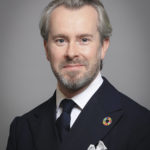
    The tribute made by Valerie Amos, Baroness Amos, in the House of Lords on 9 September 2022.

    My Lords, I shared in the shock and sadness of people in this country and across the world when we heard the news of the Queen’s passing last night. Of course, I share the sentiments already expressed in this House about the Queen’s extraordinary commitment to public service, her sense of duty and her leadership.

    In my brief remarks I will focus on the Queen’s standing internationally, which went far beyond her lifelong commitment to the Commonwealth. I have been struck by the numerous messages I have received since yesterday—there have been many, as I am sure we have all received—from family, friends and colleagues around the world about their deep sense of loss and sadness. They felt a connection with our Queen and, through her, us. It is a connection that speaks to values and, crucially, to stability and calm in a turbulent, complex and changing world.

    The Queen was not just a confidante to our Prime Minister. She played that role with many Prime Ministers and Presidents over the years. As a Foreign Office Minister I was very conscious of this. I also saw it in many discussions I had when I engaged with politicians internationally. She gave wise advice and brought a light touch to those interactions, which helped to give those Prime Ministers and Presidents the confidence to do things that they thought might be too difficult.

    The noble Lords, Lord Jay and Lord Ahmad, have spoken about the Queen’s important diplomacy role. Some noble Lords will have seen the heartfelt tribute last night from Prime Minister Trudeau, who spoke absolutely to this. I would also like to pay tribute to the way in which she has led Britain through extraordinary change. The Britain that my family arrived in in the 1960s was very different from who we are today. We are a diverse, multi-ethnic nation, and throughout this change the Queen was a constant.

    Perhaps I might end on a very personal note—there have been plenty of anecdotes today. In June, I had the privilege of a personal audience with the Queen ahead of Garter Day. Our conversation ranged over a number of subjects, some light-hearted, some very serious. A number of references have been made to the Queen’s sense of humour. She relished telling me the story of the filming of that skit with Paddington Bear and the challenges of acting with a bear who was not moving or speaking. She also told me that the jars of marmalade were already beginning to arrive at Windsor Castle. It was a warm and very special experience for me, and I will always treasure it. I offer my condolences to His Majesty King Charles III, the Queen Consort and the other members of the Royal Family.

  • Alan Smith (Lord Bishop of St Albans) – 2022 Tribute to HM Queen Elizabeth II

    Alan Smith (Lord Bishop of St Albans) – 2022 Tribute to HM Queen Elizabeth II

    The tribute made by Alan Smith, the Lord Bishop of St Albans, in the House of Lords on 9 September 2022.

    My Lords, I join in with the tributes to Her Majesty Queen Elizabeth for the extraordinary reign we have observed, for which we pay tribute today.

    Like many noble Lords, I too have my anecdotes. I remember going up to stay in Sandringham for the weekend. Coming from a farming background, I had expressed interest in her racehorses and she was very keen to show them to me, so I was summoned outside. There was a Range Rover there, and she came out very brusquely and shouted across to me, “Jump in, Bishop; I’m driving”. She set off at a rate of knots, and I was holding on for dear life. She taught me a great deal about prayer at that point, which is perhaps why she was called Defender of the Faith.

    I want to briefly draw your Lordships’ attention to one other thing about Her Majesty which I think is really significant. Some people have asked, “Why has she had such an impact?” One of the features or tendencies of many of those in leadership for a long time is that the longer they are in leadership, the less they really listen. What struck me about Her Majesty the Queen was that she really listened. I am not saying that she did it superficially. The first significant time I met her was when I had paid homage and, afterwards, we had a conversation. She immediately wanted to ask my views on various aspects of the history, industry and background of Bedfordshire and Hertfordshire. In an informed way, she showed that she absolutely knew what was going on—but what did I think about it? What did I think was happening?

    At a later stage, when I was staying at Sandringham, there was an odd moment when I was sitting around with other guests, and Her Majesty had come down and was playing patience. I remember thinking, “Do I just wander across and have a chat with her? Well, I’m not going to get invited again, I don’t suppose, so let’s go for it.” I went across and asked, “May I join you?” She said, “Please do”, as she was playing cards. It was just after Christmas, and she wanted to know what I had thought about her Christmas message. She wanted to know how people had heard it and whether it had been able to speak and communicate with people. It caught me totally by surprise that that was what she was interested in. She was so concerned that she was not only on transmit mode, as it were, but engaging with people of different groups. She wanted to ask whether I had spoken to people in various places to hear what they had thought about it. I was able to assure her that people had been very grateful for the words she had expressed. That quality of attentive listening is one of the reasons why so many people relate to her as a person. It is a wonderful gift to be able to do that at the end of a reign of 70 years.

    To finish, I just want to comment on one picture, which the noble Lord, Lord Newby, mentioned. There have been a number of what I think people today call “iconic” photographs, but it is that picture—I think it is the last photograph we have—of her standing with such fragility and frailty. In a world where it is endlessly presented to us that the only style of leadership is that which is bold, aggressive and so on, she was showing us that there are other sorts of leadership, which can come from humanity and fragility. That picture of her leaning on her stick, stooped over with her hand outstretched, will stay with me as a picture of welcome and warmth. For that, I give thanks to God. I give thanks for her life and, along with many other Members of this House, I say: may she rest in peace and rise in glory.

  • Jonathan Hill – 2011 Speech to the IAA National Conference

    Jonathan Hill – 2011 Speech to the IAA National Conference

    The speech made by Jonathan Hill to the IAA National Conference at the Royal Horseguards Hotel in London on 3 February 2011.

    Thank you so much for inviting me. And thank you most of all for everything you have done and are doing to improve education and increase opportunity. Nothing this government or the last government has tried to do with academies could have happened without your hard work and dedication. You didn’t do it for the fame or money, but because of what you have done, the lives of tens of thousands have been changed for the better. So thank you and thank you to the IAA for the fantastic support it has given to the academies programme. And finally, and in particular, a big thank you to Mike [Butler – IAA Chair].

    I know he is standing down as IAA chair shortly so I wanted to take this opportunity to put on the record my and the Department’s gratitude for his passion, enthusiasm and commitment, and for everything he has done in the course of education.

    So as part of my thank you to Mike let me start by saying that I agree with him entirely that the work of academies in areas of deprivation and with disadvantaged young people must remain a key part of the programme.

    You know the figures but I am going to say them again.

    Children not on FSM are twice as likely to get five good GCSEs as those who are on FSM.

    Last year 40 out of 80,000 children on FSM went onto Oxford or Cambridge.

    Children who attend private schools are three times more likely to achieve three A-grade A Levels than those who attend state-funded schools.

    Gaps in attainment start young and get worse as children grow older.

    These figures are a reproach to us all.

    Confronting these challenges is what gave the Academies programme its moral purpose. I know it is what drove Andrew Adonis as it is what drove Joel Klein, the former Chancellor of the New York City Department of Education, and Mike Feinberg, the inspirational founders of the KIPP programme, whom I was lucky enough to meet last week. We went to the King Solomon Academy in Westminster where we saw brilliant, energetic teaching and fantastic switched on children. Joel said something very simple, but very powerful: ‘If we can do it here, why can’t we do it anywhere?’.

    It is that simple thought that drives so many involved with academies. And it is what continues to drive heads, sponsors and teachers to work flat out, day in day out, providing opportunity, raising aspiration and raising standards.

    And we know that academies do raise standards. Not at all the same rate, but across the board, average GCSE results are improving at about twice the rate of the rest of the secondary sector. More than a quarter of you are rated outstanding by Ofsted – compared to under a fifth of all maintained schools.

    Many of you in this room were the pioneers and it is because of your success and hard work that we have been able to roll the academies programme forward as Lord Adonis and Tony Blair had always planned. I am very happy to pay tribute to them and before them to Ken Baker and CTCs – because without them, we would not now be able to open up the potential of academy freedoms to thousands more schools.

    I was the lucky person who had the task of introducing the Academies Bill to the House of Lords on my second day in the job.

    I know some people wondered what the rush was. Well, the rush was that children only get one shot at education. When all the evidence from around the world shows that there is a very strong correlation between top-performing education systems and autonomy at school level, Michael Gove was impatient – rightly so – to extend these freedoms to others.

    As a result of that Bill we have opened up academy status to every single state primary, secondary and special school which wants it.

    What has been particularly exciting in recent months has been the number of approaches that we have been having from schools wanting to become academies in chains or clusters. I recognise that at the time of the Academies Act last summer the key message coming across was about autonomy. What has become clear to me when talking to schools is that perhaps even more powerful than autonomy is the combination of autonomy and partnership. That seems to me to combine the advantages of professional freedom, with the real move that there has been in recent years towards schools working together and learning from each other.

    We don’t want academies to be seen as islands – and nor do the academy principals that I talk to. That is one of the reasons why we said in the Academies Act that we expected outstanding schools which wanted to convert to partner another local school which would benefit from their support.

    As you will know, in November we announced a further opening up of the programme by saying that any school could apply for academy status, regardless of its Ofsted rating, if it applied as part of a group with a school that was rated as outstanding or good with outstanding features. There has been a strong response to that, as schools have come up with their own ideas for working together – groups of secondaries, or primaries, or primaries clustered around a secondary, perhaps with a special school. This development seems to me to go with the grain of the culture of schools, and the fact that it is bubbling from the bottom up makes me think that it is all the more powerful.

    We continue to roll the programme out and extend its freedoms to others. The new Education Bill, introduced in the House of Commons last week, extends the academies programme to FE and sixth-form colleges and also to alternative provision.

    So when I look back over the last six months, what do I see?

    More than one academy opening every working day, and the interest continuing to grow.

    10 per cent of secondary schools are now academies.

    The growing success of multi-academy chains like Harris or ARK – working with weak schools to raise standards with a distinctive ethos and strong leadership.

    All-through academies up and running.

    The first special schools going through the application process to open later this year.

    The first generation of university technical colleges and studio schools on track – offering high-quality, work-based technical and vocational education. I am a huge fan of UTCs and studio schools. While I can probably never match the sheer energy and enthusiasm of Ken Baker, I support wholeheartedly what he is trying to. With the UTC movement picking up pace and the review of vocational qualifications being carried out by Alison Wolf, I think we have a fantastic opportunity to make a profound and positive change to the education.

    The independent sector – HE and FE, charities, business and other groups with good track records keen to sponsor projects, now the brakes have been let off the programme.

    And the first Free Schools now set to open in September in under a year – with eight projects having their business cases approved last week, and with another 35 applications moving forward.

    So we have made a brisk start. But there is more to do. Where there is much to admire and build on in the current system, there are still too many weak schools in deprived areas. Teaching is only rated as satisfactory in half of our schools. And we’re slipping back against our international rivals – falling from fourth to sixteenth in science, seventh to 25th in literacy, and eighth to 28th in maths in the latest PISA rankings. Despite all the efforts of recent years, the rest of the world has not been standing still.

    Autonomy and accountability

    So that’s why the white paper and Education Bill set high aspirations for the whole education system.

    International evidence shows that freedom for schools, coupled with sharper public accountability, is the key to driving up standards.

    So we’re freeing outstanding schools and colleges from inspections – so Ofsted concentrates on those performing less well.

    We are legislating so that Ofqual makes sure our exams keep pace with international standards.

    We are overhauling vocational qualifications through Professor Alison Wolf’s review to make sure young people are equipped with the skills employers need.

    It’s also why we’ve introduced the English Baccalaureate, about which I suspect some of you have views, to make sure that while students get the broadest possible curriculum, their parents know exactly how they perform in the core subjects at 16, just as they do in Japan, Singapore and Hong Kong.

    And it’s why we’ve set tougher but fairer floor targets.

    We want firm, decisive action when results are persistently below this, where management is weak with little capacity to improve, or when there is serious Ofsted concern.

    That’s why we’re extending ministers’ intervention powers in underperforming schools.

    And why we’ve appointed Dr Elizabeth Sidwell, the Chief Executive of Haberdashers’ Aske’s Federation, as our new Schools Commissioner.

    Few in education have her pedigree, quality or experience. And she won’t be shy in challenging local authorities and heads to come up with robust improvement plans – brokering academy arrangements, recruiting sponsors, enthusing heads and governors to go for academy status, and promoting Free Schools to prospective proposers.

    I know that there has been a lot of emphasis on the structural reforms we have introduced – the academies and Free Schools. But structures without people are nothing. We all know that the key to good schools are great heads and great teaching. So the purpose of the structural change is to give heads and teachers greater freedom and more control over their own destiny, so that they can get on with doing what they do best – teaching and running their schools.

    And that brings me – finally and you might think belatedly – to the theme of your conference: Academies, the new orthodoxy. L&G, let me make a confession: I am suspicious of orthodoxies. Orthodoxies tend to be top down, inflexible and controlling. They value order and consistency over innovation and freedom. What is so exciting at the moment is that ideas are bubbling up from below – teachers who want to set up Free Schools, rural primary schools wanting to form a chain and cluster around a secondary school, parents wanting to set up schools in libraries and yes, in the Department for Education. One of the points we made early on about the Academies Bill was that our approach was permissive, not coercive. So whether the Academies programme is a success and becomes the norm is not up to me, but to you and the thousands of people like you.

    So let me end where I started: in thanking you for what you have done and in looking forward to working with you to try answer the question posed to me last week by Joel Klein, ‘If we can do it here, why can’t we do it anywhere?’.

  • Jonathan Hill – 2011 Speech to the SSAT Guildhall Reception

    Jonathan Hill – 2011 Speech to the SSAT Guildhall Reception

    The speech made by Jonathan Hill, Lord Hill, to the SSAT Guildhall Reception at the Guildhall in London on 20 January 2011.

    Thank you so much for that warm welcome. Having spent much of the last four days stuck camping away in the House of Lords in my sleeping bag. I can tell you that it is extremely nice to be here. It may seem a funny way to run the country, but at least – thanks to our sleeping arrangements – I can now say that I having finally slept with a member of the cabinet.

    The second thing to say is how very sorry the Secretary of State is not to be here. I know he has been looking forward to tonight and he has asked me to pass on his best wishes and to thank the SSAT and you for all you do.

    Apart from the change of scene, I consider myself very lucky to be here tonight with you, the real heroes and heroines of our education system, the people who are day to day helping out to lay the foundations for the better, fairer society which all of us want to create.

    No one becomes a teacher for fame or money. And no one gives up their time by becoming a governor or a school sponsor out of anything other than a deep sense that education is the means by which we enable children to enrich their lives and fulfil the limits of their potential.

    Over the eight months or so since I became a schools minister, I’ve developed a huge admiration for the work that all of you do.

    Your vision, passion, expertise and leadership is what ultimately will make much more difference than anything I can do in central government. Because in any system I can think of it is people who matter the most.

    So although an important part of my job is to do with structures, I am very clear that those changes are merely a means to an end. In a nutshell, what we are trying to do is to create the space for professionals to get on with what they do best and to allow people who are passionate about education and young people to make their contribution without feeling they are constantly having to wade through treacle.

    So I’m delighted to have the chance this evening to celebrate your achievements and, also, to say thank you.

    If this event is a celebration of the very best of our education system, I also want to recognise the role SSAT plays in it. I am grateful to them and to the work they have done in helping and supporting academies.

    Expanding the academies programme

    International evidence tells us very clearly that schools see fastest improvement where school leaders are given the greatest control over what happens in their schools.

    The near-universal network of specialist school shows what can be achieved when schools are allowed to innovate and have the freedom to develop their own distinct character and ethos.

    We want to remove the bureaucracy that surrounds specialist status so that all schools can decide how to develop their specialisms in the light of the total resources available to them.

    And more generally we want to extend the autonomy that schools can enjoy.

    That’s why the very first thing we did when we took office was to lift the brakes that had been placed on the academies programme and gradually open it up to all schools, including primaries and later this year special schools.

    The response has been very encouraging.

    There has been real enthusiasm in many schools to take advantage of the freedoms that academy status can bring.

    Why? Because they’ve recognised that it can help them to offer an ever-better standard of education.

    We now have well over 400 academies.

    More than one academy has opened every working day since the beginning of the school term in September.

    And the pace seems to be quickening. We had 129 new applications in the first week back in the New Year alone.

    What I am particularly excited about is the combination of autonomy and partnership that the Academies programme is opening up. We don’t want academies to be islands entire unto themselves to mis-quote John Donne. So one of the developments I am keen to encourage is applications from clusters or chains of schools – from groups of primaries, or primaries grouped around secondary as part of a dealing with the issue of transition.

    But there’s no way that we could have done what we’ve done – or what we want to do – without the support of many of the people in this room.

    The role of the SSAT and sponsors

    The SSAT has played a vital role helping schools that want to make the transition to academy status.

    I know that well over a thousand headteachers have attended the seminars that you’ve organised where they’ve been able to hear about the benefits of converting and about the experiences of those who have been through the process.

    The National Headteacher Steering Group has also provided us and prospective convertors with invaluable advice that has been crucial in allowing us to achieve this early momentum.

    There is no doubt that networks like those operated by the SSAT are the best way of spreading the word, telling it like it really is and developing the culture of collaboration in which schools help other schools to innovate, develop their staff and offer a better educational experience to young people.

    Expanding the academies programme also means there will be more opportunities for business people, charities, faith groups, successful schools, higher and further education institutions and other groups with a track-record of success in education to come forward as sponsors.

    I am keen to encourage more primary schools to convert to academy status and for more sponsors – both existing and new – with expertise of working with primary schools to come forward as sponsors.

    I hope more sponsors with an excellent track-record of working with schools to help them to innovate and improve will come forward. I know that the SSAT itself has exciting plans to become a sponsor, a move which I am keen to encourage. There are certainly plenty of outstanding role models here tonight for any one that wants to do so.

    It is only because of the often superhuman efforts of sponsors and school leaders that the specialist schools and academies programmes have been such successes.

    It is therefore only right that on a day like today we stop for a moment to celebrate the fantastic life-enhancing contributions that you make day in, day out across the country. And I would like to thank you for allowing me to be here to share in it with you.

  • Jenny Jones (Baroness Jones of Moulsecoomb) – 2022 Tribute to HM Queen Elizabeth II

    Jenny Jones (Baroness Jones of Moulsecoomb) – 2022 Tribute to HM Queen Elizabeth II

    The tribute made by Jenny Jones, Baroness Jones of Moulsecoomb, in the House of Lords on 9 September 2022.

    I rise to express sincere condolences to the Royal Family at this time of loss and grieving. As many noble Lords have said, it is true that the whole UK is grieving in a similar way.

    The Queen represented us in all sorts of ways for her whole life and for 70 years of public service, and she was absolutely tireless. I first met her when she opened City Hall in 2002. We were a new Assembly, we had a mayor and it was all very exciting to be in a new building. It was obvious that she took it very seriously. She went along the line-up at the end, probably 80 or 90 people, as if she was really enjoying it. Prince Philip took the opportunity of telling me what was wrong with the Greens. He told me quite forcefully, and I took it to heart; perhaps he was right.

    I met her on other occasions, and the same attitude was there: absolute dedication to and concentration on what she was doing at the time. It was not like someone doing a job or performing their duty but someone who seemed interested and curious in what was happening.

    I had a tiny taste—a glimmer—of what it was like to do such public service when I was deputy mayor under Ken Livingstone. He gave me lots of jobs he did not want to do—to meet people, go to meetings and make speeches he did not want to make. It was the first time ever that I was not representing myself or my political party. Sometimes I had to do things that were at odds with my nature: being very polite, listening to boring speeches and generally appearing to be interested and polite the whole time. I found that putting on a fascinated face, which is what Her Majesty did for 70 years, was incredibly difficult. I did that for 13 months; she did it for 70 years. It left me feeling what an extraordinary woman and an amazing monarch she was.