Tag: Speeches

  • Jeremy Hunt – 2022 Comments on Health and Social Care

    Jeremy Hunt – 2022 Comments on Health and Social Care

    The comments made by Jeremy Hunt, the Conservative MP for South West Surrey and the former Secretary of State for Health and Social Care, in the House of Commons on 22 September 2022.

    I welcome the Secretary of State to her new role. As I know, it is the hardest job in Government, but she has a zen-like calmness which means that she is well suited to dealing with the pressures that lie ahead.

    There is much to be welcomed today, particularly the pension rule changes, the additional funds for social care and the new powers for pharmacists, but may I ask the Secretary of State to rethink the new two-week access target for general practice? If targets were the answer, we would have the best access in the world in the NHS, because we have more targets than any other healthcare system in the world. GPs alone have 72 targets, and adding a 73rd will not help them or their patients, because it is not more targets but more doctors that the NHS needs. Will the workforce plan to which the Secretary of State recommitted herself—I welcome her commitment to publishing it—include hard numbers, so we can know how many doctors we will need in 10, 15 and 20 years’ time and whether we are actually training them, and will she publish it before Christmas so that staff can at least go into the winter knowing that there is a plan for the future?

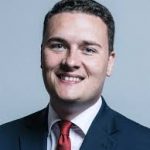
  • Wes Streeting – 2022 Speech on Health and Social Care

    Wes Streeting – 2022 Speech on Health and Social Care

    The speech made by Wes Streeting, the Shadow Secretary of State for Health and Social Care, in the House of Commons on 22 September 2022.

    I welcome the Secretary of State and her team to their new posts. I thank her for advance sight of her statement, but if any evidence were needed of a Government and party out of ideas, out of time and without a clue about the scale of the challenge that our country faces, the statement would be it.

    The NHS is facing the worst crisis it has ever seen, with patients waiting longer than ever before in A&E, stroke and heart attack victims waiting an hour for an ambulance, and 378,000 patients waiting more than a year for an operation—and that was in the summer. We have gone from an NHS that treated patients well and on time when Labour was in office 12 years ago to an annual winter crisis, and now a year-round crisis under the Conservatives. But don’t worry: the Health Secretary has a grip on the key issues. She does not have an answer on the workforce, but she has sorted out the Oxford comma. I am sure that the whole country is breathing a sigh of relief about that.

    The Health Secretary promised a digital revolution in the NHS. Well, Conservative Health Secretaries have promised a digital revolution 17 times since 2010. [Interruption.] Oh, apparently she did not say that—she is not promising a digital revolution. That is good news, because I do not think that the staff who are slogging their guts out in the most difficult conditions in history will be particularly impressed by the introduction of that cutting-edge modern technology, the telephone. The NHS can finally axe the carrier pigeon and step into the 20th century. I am sure that staff are absolutely delighted.

    Madam Deputy Speaker,

    “these measures will not come close to ensuring patients who need to be seen can be seen within the timescales set out…they will have minimal impact on fixing the current problems that general practice is facing over the winter”.

    Those are not my words; they are the NHS Confederation’s verdict on the Secretary of State’s plans. Are they not the truth? The Secretary of State says that patients will be able to get a GP appointment within two weeks, but her party scrapped the guarantee of an appointment within two days that Labour introduced when we were in government. She made it clear this morning that it is not a guarantee at all, but merely an expectation—and what is the consequence if GPs do not meet her expectation? As we heard on the radio this morning, her message to patients is “Get on your bike and find a new GP.” Are patients supposed to be grateful for that?

    Who will deliver the appointments that the Secretary of State is promising: the 6,000 GPs her party promised at the last election but will not deliver, or the 4,700 GPs her party has cut over the past decade? Where will these GP appointments take place? Certainly not in the 330 practices that have closed since the last general election alone. The Conservatives promising to fix the crisis in the NHS is like the arsonists promising to put out the fire that they started.

    As if that were not bad enough, the super-massive black hole at the heart of the Secretary of State’s plan is the lack of a workforce strategy. She has no plan to provide the doctors that our NHS so desperately needs. Despite her “Sesame Street” approach to politics, in her A, B, C, D plan—by the way, last time I checked, S was for social care—she has missed the N for nurses. I say to the Secretary of State that without a plan to tackle the staffing crisis, she does not have a plan for the NHS. What is she going to do about the staff shortage of 132,000 in the NHS today?

    The Secretary of State talks about £500 million to speed up delayed discharges. Is that a new investment or a re-announcement? She is right to say that if patients cannot get out the back door of hospital because care is not there in the community, we get more patients at the front door and more ambulances queuing out at the front. That is exactly where we are under the Conservatives today. But she misses the crucial point: unless the Government act on care workers’ pay and conditions, employers will not be able to recruit and retain the staff they need. What is her plan to address that?

    Patients will have been concerned to read reports that after the Conservatives failed to hit the four-hour A&E waiting time target for seven years, the Health Secretary is planning to scrap it altogether. I notice that she was not brave enough to say that today; I hope that she will not do so. Can she reassure the House and patients across the country that her response to the crisis in the NHS will be not to lower standards for patients, but to raise performance instead?

    The Secretary of State is the third Health Secretary in less than three months. The faces change but the story remains the same. There is still no plan that comes close to meeting the scale of the challenge—no plan for staffing and no real plan for the NHS. It is clear that the longer the Conservatives are in power, the longer patients will wait. As Dr. Dre might say: time for the next episode.

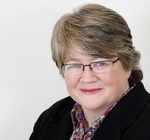
  • Therese Coffey – 2022 Statement on Health and Social Care

    Therese Coffey – 2022 Statement on Health and Social Care

    The statement made by Therese Coffey, the Secretary of State for Health and Social Care, in the House of Commons on 22 September 2022.

    I am pleased today to set out to Parliament our plan for patients. As the Prime Minister said on the doorstep of Downing Street, she had three clear priorities: growing the economy; tackling energy security and support for households and businesses; and the NHS, with patients being able to get a GP appointment.

    Patients are my top priority and I will be their champion, focusing on the issues that most affect them or their loved ones. Most of the time, patients have a great experience, but we must not paper over the problems that we face. We expect backlogs to rise before they fall as more patients come forward for diagnosis and treatment after the pandemic, and the data shows, sadly, that there is too much variation in the access and care that people receive across the country.

    The scale of the challenge necessitates a national endeavour. As we work together to tackle these immense challenges, I will be proactive, not prescriptive, in our approach as we apply a relentless focus on measures that affect most people’s experience of the NHS and social care.

    Today, we are taking the first step in this important journey by publishing “Our Plan for Patients”, which I will lay in the Libraries of both Houses. It sets out a range of measures to help the NHS and social care perform at their best for patients. The plan will inform patients and empower them to live healthier lives; place an intensive focus on primary care, the gateway to the NHS for most people; use prevention to strengthen resilience and the health of the nation; and improve performance and productivity.

    To succeed, we will need a true national endeavour, supported by our making it easier for clinical professionals to return to help the NHS, as well as drawing on the energy and enthusiasm of the million people who volunteered to help during the pandemic by opening up opportunities for them to help in different ways. That could be by becoming a community first responder, or by, for example, strengthening good neighbour schemes across the country. We will also explore the creation of an ambulance auxiliary service.

    The plan sets out our work on the ABCD of priorities that affect most people’s experience of the NHS and social care. First, on ambulances, I want to reduce waiting times for patients and apply a laser-like focus on handover delays, so that ambulances get back on the road and to patients, where they are needed most.

    Our analysis shows that 45% of the delays are occurring in just 15 hospital trusts. That is why the local NHS will be doing intensive work with those trusts to create more capacity in hospitals—the equivalent of 7,000 more beds—by this winter through a combination of freeing up beds, with a focus on discharge, and people staying at home and being monitored remotely through the sort of technology that played such an important role during the pandemic. In addition, when patients call 999, the speed of answering is critical, so we will increase the number of call handlers for both 999 and 111 calls.

    Next is the backlog, where the waiting list for planned care currently stands at about 7 million, exacerbated by the pandemic. This summer, we announced that we have virtually eliminated waits of over two years, and we remain on track to reach the next milestones in our plan. To boost capacity, we are accelerating our plans to roll out community diagnostic centres as well as new hospitals, and we will maximise the use of the independent sector to provide even more treatment for patients.

    As well as capacity, we are also getting more people on the frontline, making it easier for people to work in and help the NHS. We know that people are leaving the workforce for a variety of reasons. We have listened, and we are responding and addressing a number of those reasons. For instance, pension rules can currently be a disincentive for clinicians who want to stay in the profession or to return from retirement and help our national endeavour. We will correct pension rules relating to inflation; we will expect NHS trusts to offer pension recycling; and we will extend until 2024 measures that will allow people to stay or return to the NHS.

    I can announce today that we will extend the operation of the emergency registers for health professionals for two more years. That is, of course, on top of commitments to boost the health and care workforce, such as our manifesto pledge to recruit 50,000 more nurses by 2024. That will sit alongside the design and delivery of our forthcoming workforce plan.

    C is for social care. At the moment, one of the key challenges is discharging patients from hospital into more appropriate care settings to free up beds and help improve ambulance response times. To tackle that, I can announce today that we are launching a £500 million adult social care discharge fund for this winter. The local NHS will be working with councils with targeted plans on specific care packages to support people being either in their own home or in the wider community. That £500 million acts as the down-payment in the rebalancing of funding across health and social care as we develop our longer-term plans.

    I know that there is a shortage of carers across the country. We will continue to work with the Department for Work and Pensions on a national recruitment campaign. In addition, since last winter, we have opened up international recruitment routes for carers. We will support the sector with £15 million this year to help to employ more care workers from abroad. We are also accelerating the roll-out of technologies such as digitised social care records, which can save care workers about 20 minutes a shift, freeing up time for carers to care.

    Finally, D is for doctors and dentists. I am determined to address one of the most frustrating problems faced by many patients: getting an appointment to see their doctor, or getting to see a dentist at all.

    Starting with doctors, we are taking five steps to help make that happen: first, setting the expectation that everyone who needs a GP appointment can get one within two weeks; secondly, opening up time for more than 1 million extra appointments, so that patients with urgent needs can be seen on the same day; thirdly, making it easier to book an appointment; fourthly, publishing performance by practice to help to inform patients; and fifthly, requiring the local NHS to hold practices to account, providing support to those practices with the most acute access challenges to improve performance.

    Clearly, clinicians are best placed to prioritise according to the clinical need of their patients. In July, 44% of appointments were same-day appointments, but too few practices were consistently offering appointments within a fortnight.

    To help free up appointments, we will ease pressures on GP practices by expanding the role of community pharmacies. I am pleased to announce that we have agreed a deal for an expanded offer over the next 18 months. Pharmacists will be able to prescribe certain medications rather than requiring a GP prescription. As well as other measures involving community pharmacists, we estimate that that will free up 2 million appointments. We are also changing funding rules to give freedoms to GPs to boost the number of staff to support their practice. We estimate that that measure could free up 1 million GP appointments.

    For patients, we will make it easier for them to contact their practice, both on the phone—we are making an extra 31,000 phone lines available this winter, followed by further deployment of cloud-based telephony—and online, particularly through the NHS app. As I set out, we will also correct pension rules so that our most experienced GPs can stay in practice. By extending the emergency register, we are creating opportunities for people other than GPs to undertake tasks such as vaccinations.

    On dentists, there are too many dental deserts. That is why we are setting out an ambition that everyone seeking NHS dental care can receive it when they need it. We have already started changing the dental contract to incentivise dentists to do more NHS work and take on more difficult cases. I pay tribute to my predecessors in this role for their success in beginning to tackle this long-standing issue.

    We will also streamline routes into NHS dentistry for those trained overseas so that they can start treating patients more quickly. We will make it a contractual requirement for dentists to publish online whether they are taking on new NHS patients.

    These measures, across a number of important areas, are the start, not the end, of our ambitions for health and care. They will help us to manage the pressure that health and care will face this winter and next, and they will improve these vital services for the long term. My priorities are patients’ priorities, and I will endeavour, through a powerful partnership with the NHS and local authorities, to level up care and match the expectations that the public rightly have. Whether you live in a city or a town, in the countryside or on the coast, this Government will be on your side when you need care the most. I commend this statement to the House.

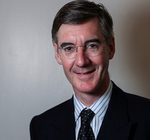
  • Jacob Rees-Mogg – 2022 Statement on Shale Gas Extraction

    Jacob Rees-Mogg – 2022 Statement on Shale Gas Extraction

    The statement made by Jacob Rees-Mogg, the Secretary of State for Business, Energy and Industrial Strategy, in the House of Commons on 22 September 2022.

    What a pleasure it is to be continuing on this theme—

    Dame Angela Eagle (Wallasey) (Lab)

    Get the right page!

    Mr Rees-Mogg

    Indeed, the hon. Lady is right to be saying that I need to find the right page because I am having some difficulty in finding the right page immediately, but do not worry. [Interruption.]

    Mr Speaker

    Order. Is there another copy we can give the Secretary of State? [Interruption.] He has got it.

    Mr Rees-Mogg

    I am very grateful to the right hon. Gentleman for asking his urgent question. I am glad to be able to announce that the moratorium on the extraction of shale gas is being lifted, and a statement about that has been laid before the House.

    As I set out in the previous urgent question, it is important that we use all available sources of fuel within this country. It is more environmentally friendly to use our own sources of fuel than to extract them in other countries and transport them here at great cost, both financially and in terms of carbon. It is therefore something we need to revisit, and we need to revisit the seismic limits to ensure that shale gas extraction can be done in an effective and efficient way.

    Edward Miliband

    This is obviously a case of “the dog ate my homework”, and it is hardly surprising. Let us start by taking the Secretary of State’s excuse for lifting the fracking ban—that it will make a difference to the energy bills crisis. It will not, because gas is sold on the international market. The current Chancellor said so in February of this year:

    “No amount of shale gas…would be enough to lower the European price”

    of gas. In an article published yesterday, even the founder of Cuadrilla said that the Secretary of State is wrong. First, why does he not admit the truth that anyone who knows anything about this subject says his claim that fracking will cut bills is nonsense?

    Next, let us come to safety. The 2019 manifesto, on which the Secretary of State and every Conservative Member stood, said:

    “We will not support fracking unless the science shows categorically that it can be done safely.”

    They are lifting the ban, but they cannot supply the evidence, and the British Geological Survey report published today certainly does not do it. So in the absence of the evidence, his approach is to change the safety limits. He says in his written statement laid before this House that

    “tolerating a higher degree of risk and disturbance appears to us to be in the national interest”.

    I look forward to him and his colleagues explaining his charter for earthquakes to the people of Lancashire, Yorkshire, the midlands, Sussex, Dorset and, indeed, Somerset who will be part of his dangerous experiment. Let me tell the Conservatives that we will hang this broken promise round their necks in every part of the country between now and the next general election.

    The Conservative manifesto also said:

    “Having listened to local communities, we have ruled out changes to the planning system.”

    Does the Secretary of State stand by that promise, and how will he abide by the Prime Minister’s commitment to local consent? The truth is that he does not understand that we cannot escape a fossil fuels crisis by doubling down on fossil fuels. Renewables are today nine times cheaper than gas. The only way to cut energy bills and have energy security is with zero-carbon home-grown power, including onshore wind and solar, which his wing of the Conservative party hates and he continues to block. For communities in every part of our country, today shows that they can never trust a word this Government say again, and he has shown he is willing to break his promises to support dangerous fringe ideas that put the interests of fossil fuel companies above those of the British people.

    Mr Rees-Mogg

    There was plenty of energy in that, Mr Speaker, but it was, I am afraid, more sound and fury that signifies nothing. We know that shale gas is safe. It is safe in the United States, where it has been one of the biggest contributors to the decline in carbon emissions of any activity that has gone on in that country. We know, even if Labour Members wish to ignore it, that seismic activity of 2.5 and below on the Richter scale takes place millions of times a year across the world. Our standards for ground-level movements for construction work are double those that have ever been achieved by any shale gas exploration in this country. There is a huge margin over what we allow for building work against what has actually happened in terms of shale gas. The right hon. Gentleman seeks to deny the ordinary rules of supply and demand. He ought to be aware that when we increase supply and demand remains steady, that has an effect on pricing, and pricing is always set at the margin. The price of any commodity is set by the final user who demands that commodity. If supply exceeds demand prices fall, and any increase in supply helps to reduce costs.

    But there is another point. We have—all of us— constituents with gas boilers, and we are going to have them for many years to come. Do we really want them to be dependent on strange dictatorships that wage war in this world, or do we want to have our own security, and our own supplies? Do we want to maximise what we receive from the North sea and from underneath our feet? This seems to me to be just good common sense. It is safe, it is shown to be safe, and the scare stories have been disproved time and again. The hysteria about seismic activity fails to understand that the Richter scale is a logarithmic scale. It seems to think it is a straight arithmetic scale, which of course it is not. Bringing on the supply will bring us cheaper energy, which we need, and that will help our constituents. It secures our supply, which will ensure that our businesses can continue to operate whatever the weather. This is of such importance, and it is sheer Ludditery that opposes it.

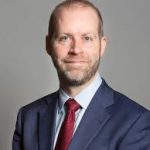
  • Jonathan Reynolds – 2022 Speech on Supporting Business

    Jonathan Reynolds – 2022 Speech on Supporting Business

    The speech made by Jonathan Reynolds, the Shadow Secretary of State for Business, Energy and Industrial Strategy, in the House of Commons on 22 September 2022.

    I welcome the new ministerial team to their posts.

    The energy crisis poses a severe challenge to businesses of every size, many of which have been desperate for clarity and reassurance. While the Conservative party spent much of the summer distracted by its own internal drama, the Opposition spent that time arguing that the crisis demands a response commensurate with the scale of the challenge, paid for by a windfall tax on the excess profits that have accrued because of Russia’s illegal invasion of Ukraine.

    While I welcome the Government’s damascene conversion to freezing energy prices, we must all acknowledge that for too many companies the news will have come too late to save them. Businesses cannot plan on speculation and briefings. It is regrettable that a Minister who respects the role of Parliament chose to avoid parliamentary scrutiny, instead opting for a sparse press release and a short media interview. That is why the Opposition have tabled this urgent question: to get the much-needed clarity on these plans that businesses desperately need.

    May I ask the Secretary of State what, specifically, the review after three months will be looking at and what the criteria will be for determining whether to extend the support? Secondly, how will the taxpayer be protected from energy traders inflating prices, knowing that the Government will be picking up a substantial slice of the costs come what may? Thirdly, what support will the Secretary of State be offering to businesses in the long term to protect themselves from rising energy costs through efficiency measures and the transition to renewable energy?

    I also ask the Secretary of State to address the elephant in the room: who is paying for this? The Government say that they cannot cost this package, but it is clearly expensive. This Government say that they can cut taxes, increase spending, increase borrowing and magically pay for it through the higher growth that, after 12 years in office, has completely eluded them. This is fantasy economics. It is a threat to British businesses and to the financial stability of the country. What can the Secretary of State say to reassure the country that these plans are robust, responsible and fair, as well as being sufficient to get us through the crisis and better protect businesses in the long term?

  • Jacob Rees-Mogg – 2022 Statement on Supporting Business

    Jacob Rees-Mogg – 2022 Statement on Supporting Business

    The statement made by Jacob Rees-Mogg, the Secretary of State for Business, Energy and Industrial Strategy, in the House of Commons on 22 September 2022.

    That is why I am saying that I am very grateful, Mr Speaker. I always think it is important that this House gets to know, and your generosity in setting a precedent where statements can be made on the days set aside for taking the Oath is, I think, a good one.

    It is vital that businesses have the support that they need to pay their energy bills this winter. His Majesty’s Government are determined to grow the economy. We cannot do that if business becomes insolvent thanks to what is tantamount to blackmail by a malevolent state actor. His Majesty’s Government announced yesterday that they will provide a discount on wholesale gas and electricity prices for all non-domestic customers, whose current gas and electricity prices have been significantly inflated by global energy prices. That includes all UK businesses and covers the voluntary sector, such as charities, and the public sector, such as schools and hospitals. The scheme will apply to fixed contracts that have been agreed on or after 1 April 2022, as well as to deemed variable and flexible tariffs and contracts. It will be applied to energy usage for six months from 1 October until 31 March next year.

    As with the energy price guarantee for domestic customers, in order to benefit from the scheme, customers do not need to take action. The discount will automatically be applied to their energy bills from 1 October. In terms of real-world savings, non-domestic users will start to see the benefits of the scheme in their October energy bills, which are typically received in November. The level of price reduction for each business will vary depending on its contract type, the tariff and the volume used.

    We will publish a review of the operation of the scheme in three months to inform decisions on future support after March 2023. The review will focus in particular on identifying the most vulnerable non-domestic customers and on how the Government will continue assisting them with energy costs beyond the initial six-month period.

    A parallel scheme—based on the same criteria and offering comparable support, but recognising the different market fundamentals—will be established in Northern Ireland. For those who are not connected to the gas or electricity grid, equivalent support will be provided for non-domestic consumers who use heating oil or alternative fuels instead of gas. Further detail on this will be announced shortly.

  • Lindsay Hoyle – 2022 Statement on the Personal Conduct of Jacob Rees-Mogg

    Lindsay Hoyle – 2022 Statement on the Personal Conduct of Jacob Rees-Mogg

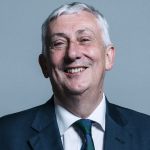
    The statement made by Lindsay Hoyle, the Speaker of the House of Commons, on 22 September 2022.

    Before I call the Secretary of State for Business, Energy and Industrial Strategy to answer the urgent question, I have to say how disappointed I am that the subject of an urgent question was extensively set out in the media yesterday before being presented to the House. I hope that, as a former Leader of the House who was very supportive of me in criticising Secretaries of State for not coming to the House, the right hon. Member will be especially aware—as I know he is—of Ministers’ duties to explain that important policies are first to be heard in this House.

    I understand the importance of the matter and the need for our constituents to have the information as soon as possible and, for that reason, I would have been willing to allow a statement yesterday, if I had been asked. I am deeply concerned that I have to make another statement like this only a few sitting days into this new Administration’s existence. I ask the right hon. Member and all his colleagues to do their utmost to ensure that this is the last time I have to do so. I am not angry; I am so disappointed, and I hope that we will treat the House with the respect that it is due.

  • Liz Truss – 2022 Keynote Speech to the UN General Assembly

    Liz Truss – 2022 Keynote Speech to the UN General Assembly

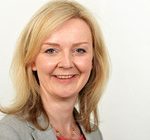
    The speech made by Liz Truss, the Prime Minister, in New York, United States on 22 September 2022.

    Mr President, your excellencies, ladies and gentlemen,

    At the time of its foundation, the United Nations was a beacon of promise.

    In the aftermath of the Second World War, this building symbolised the end of aggression.

    For many decades the UN has helped to deliver stability and security in much of the world.

    It has provided a place for nations to work together on shared challenges.

    And it has promoted the principles of sovereignty and self-determination even through the Cold War and its aftermath.

    But today those principles, that have defined our lives since the dark days of the 1940s, are fracturing.

    For the first time in the history of this assembly we are meeting during a large-scale war of aggression in Europe.

    And authoritarian states are undermining stability and security around the world.

    Geopolitics is entering a new era – one that requires those who believe in the founding principles of the United Nations to stand up and be counted.

    In the United Kingdom we are entering a new era too.

    I join you here just two days after Her Late Majesty Queen Elizabeth II was laid to rest.

    We deeply mourn her passing and we pay tribute to her service.

    She was the rock on which modern Britain was built.

    And she symbolised the post-war values on which this organisation was founded.

    Our constitutional monarchy, underpinned by a democratic society, has delivered stability and progress.

    Her Late Majesty transcended difference and healed division. We saw this in her visits to post-apartheid South Africa and the Republic of Ireland.

    When she addressed this General Assembly 65 years ago she warned that it was vital not only to have strong ideals but also to have the political will to deliver on them.

    Now we must show that will.

    We must fight to defend those ideals.

    And we must deliver on them for all our people.

    And as we say farewell to our Late Queen, the UK opens a new chapter – a new Carolean age – under His Majesty King Charles III.

    We want this era to be one of hope and progress…

    One in which we defend the values of individual liberty, self-determination and equality before the law…

    One in which we ensure that freedom and democracy prevail for all people…

    And one in which we deliver on the commitments that Her Late Majesty the Queen made here 65 years ago.

    This is about what we do in the United Kingdom and what we do as member states of the UN.

    So today I will set out what steps we are taking at home in the UK and our proposed blueprint for the new era we are now in – the new partnerships and new instruments we need to collectively adopt.

    Our commitment to hope and progress must begin at home – in the lives of each and every citizen that we serve.

    Our strength as a nation comes from the strong foundations of freedom and democracy.

    Democracy gives people the right to choose their own path. And it evolves to reflect the aspirations of citizens.

    It unleashes enterprise, ideas, and opportunity. And it protects the freedoms that are at the very core of our humanity.

    By contrast, autocracies sow the seeds of their own demise by suppressing their citizens.

    They are fundamentally rigid and unable to adapt. Any short-term gains are eroded in the long term because these societies stifle the aspiration and creativity which are vital to long-term growth.

    A country where Artificial Intelligence acts as judge and jury, where there are no human rights and no fundamental freedoms, is not the kind of place anyone truly wants to live.

    It is not the kind of world we want to build.

    But we cannot simply assume there will be a democratic future.

    There is a real struggle going on between different forms of society – between democracies and autocracies. Unless democratic societies deliver on the economy and security our citizens expect, we will fall behind.

    We need to keep improving and renewing what we do for the new era, demonstrating that democracy delivers.

    As Prime Minister of the United Kingdom, I am determined that we will deliver the progress that people expect.

    I will lead a new Britain for a new era.

    Firstly, this begins with growth and building a British economy that rewards enterprise and attracts investment.

    Our long-term aim is to get our economy growing at an average of 2.5%.

    We need this growth to deliver investment around our country, to deliver the jobs and high wages that people expect, and to deliver public services like the National Health Service.

    We want people to keep more of the money they earn, so they can have more control over their lives and can contribute to the future.

    Secondly, it means securing affordable and reliable supplies of energy.

    We are cutting off the toxic power and pipelines from authoritarian regimes and strengthening our energy resilience.

    We will ensure we cannot be coerced or harmed by the reckless actions of rogue actors abroad.

    We will transition to a future based on renewable and nuclear energy while ensuring that the gas used during that transition is from reliable sources including our own North Sea production.

    We will be a net energy exporter by 2040.

    Thirdly, we are safeguarding the security of our economy – the supply chains, the critical minerals, the food, and the technology that drives growth and protects the health and lives of our people.

    We won’t be strategically dependent on those who seek to weaponise the global economy.

    Instead, we are reforming our economy to get Britain moving – and we want to work with our allies so we can all move forward together.

    The free world needs this economic strength and resilience to push back against authoritarian aggression and win this new era of strategic competition.

    We must do this together.

    So we are building new partnerships around the world.

    We are fortifying our deep security alliances in Europe and beyond through NATO and the Joint Expeditionary Force.

    We are deepening our links with fellow democracies like India, Israel, Indonesia and South Africa.

    We are building new security ties with our friends in the Indo-Pacific and the Gulf.

    We have shown leadership on free and fair trade, striking trade agreements with Australia, New Zealand, Japan and many others, andwe are in the process of acceding to the Trans-Pacific Partnership.

    Rather than exerting influence through debt, aggression, and taking control of critical infrastructure and minerals, we are building strategic ties based on mutual benefit and trust.

    And we are deepening partnerships like the G7 and the Commonwealth.

    We must also collectively extend a hand of friendship to those parts of the world that have too often been left behind and left vulnerable to global challenges…

    Whether it’s the Pacific or Caribbean Island states dealing with the impact of climate change, or the Western Balkans dealing with persistent threats to their stability.

    The UK is providing funding, using the might of the City of London and our security capabilities to provide better alternatives to those offered by malign regimes.

    The resolute international response to Ukraine has shown how we can deliver decisive collective action.

    The response has been built on partnerships and alliances and also on being prepared to use new instruments – unprecedented sanctions, diplomatic action, and rapid military support.

    There has been a strength of collective purpose – we have met many times, spoken many times on the phone, we have made things happen.

    Now we must use these instruments in a more systematic way to push back on the economic aggression of authoritarian regimes.

    The G7 and our like-minded partners should act as an economic NATO, collectively defending our prosperity.

    If the economy of a partner is being targeted by an aggressive regime we should act to support them. All for one and one for all.

    Through the G7’s $600 billion Partnership for Global Infrastructure and Investment we are providing an honest, reliable alternative on infrastructure investment around the world, free from debt with strings attached.

    And we must go further to friendshore our supply chains and end strategic dependence.

    This is how we will build collective security, strengthen our resilience and safeguard freedom and democracy.

    But we cannot let up on dealing with the crisis we face today.

    No-one is threatening Russia.

    Yet we meet here this evening…

    In Ukraine, barbarous weapons are being used to kill and maim people,

    Rape is being used as an instrument of war,

    Families are being torn apart.

    And this morning we have seen Putin trying to justify his catastrophic failures.

    He is doubling down by sending even more reservists to a terrible fate.

    He is desperately trying to claim the mantle of democracy for a regime without human rights or freedoms.

    And he is making yet more bogus claims and sabre-rattling threats.

    This will not work. The international alliance is strong and Ukraine is strong.

    The contrast between Russia’s conduct and Ukraine’s brave, dignified First Lady, Olena Zelenska, who is here at the UN today, could not be more stark.

    The Ukrainians are not just defending their own country – they are defending our values and the security of the whole world.

    That’s why we must act.

    That’s why the UK will spend 3% of GDP on defence by 2030, maintaining our position as the leading security actor in Europe.

    And that’s why – at this crucial moment in the conflict – I pledge that we will sustain or increase our military support to Ukraine, for as long as it takes.

    New UK weapons are arriving in Ukraine as I speak – including more MLRS rockets.

    We will not rest until Ukraine prevails.

    In all of these areas, on all of these fronts, the time to act is now.

    This is a decisive moment in our history, in the history of this organisation, and in the history of freedom.

    The story of 2022 could have been that of an authoritarian state rolling its tanks over the border of a peaceful neighbour and subjugating its people.

    Instead, it is the story of freedom fighting back.

    In the face of rising aggression we have shown we have the power to act and the resolve to see it through.

    But this cannot be a one-off.

    This must be a new era in which we commit to ourselves, our citizens, and this institution that we will do whatever it takes – whatever it takes to deliver for our people and defend our values.

    As we mourn our Late Queen and remember her call to this Assembly, we must devote ourselves to this task.

    Britain’s commitment to this is total.

    We will be a dynamic, reliable and trustworthy partner.

    Together with our friends and allies around the world, we will continue to champion freedom, sovereignty and democracy.

    And together we can define this new era as one of hope and progress.

    Thank you.
  • Tariq Ahmad – 2022 Statement at UNGA on Minority Rights (Lord Ahmad)

    Tariq Ahmad – 2022 Statement at UNGA on Minority Rights (Lord Ahmad)

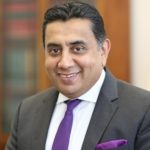
    The statement made by Tariq Ahmad, Lord Ahmad, at the United Nations General Assembly on 21 September 2022.

    Your Excellencies, three decades on from this historic Declaration, members of minority groups in many places, tragically, around the world continue to live in fear.

    Citizens in countries face hatred. Why? Because of their race or their religion, the place they were born or their ethnicity, even because of the language they speak.

    Members here tonight, this evening, this afternoon, this morning have been united and are committed to change, and today is an opportunity to reflect and make pledges on what we can do collectively.

    The United Kingdom’s resolve is reflected in our landmark Inclusive Britain strategy, bringing together over 70 preventative and remedial actions to tackle racism or discrimination, be it in education, health, employment and in the criminal justice system, and indeed in public life as well.

    And I want to just share two particular examples. When we look at the issue of religious hatred, I am proud of the fact we have supported organisations such as our Community Security Trust, a charity which specifically protects British Jews from racism and antisemitism. And indeed our funding of the Measuring Anti-Muslim Attacks programme, which supports victims of anti-Muslim hatred in the UK. And I’m proud of the fact that we have also laws which protect not only religious freedom or belief, but also allow victims of crimes who have been targeted because of their religion or belief to report them as such. So if you are attacked as a Muslim, a Sikh, a Hindu or a Jew, you can go to your police station and report that crime as a religious hate crime. And as we bolster our efforts domestically to combat hatred at home, we pledge to clamp down on racist abuse online. This is a real challenge we are now facing, and we are doing this through our Online Safety Bill.

    And internationally, we pledge to continue working with you, including through the United Nations to uphold international law. But I now wish to touch briefly on country situations as well. There are many parts of the world that tragically we see discrimination rife amongst the country.

    Discriminatory provisions within citizenship laws, for example in Myanmar, where the Rohingya community, according to the laws of Myanmar don’t even exist. And other minorities face persecution. And in the case of the Rohingya specifically it culminates itself in ethnic cleansing.

    The systematic discrimination, harassment, and targeting of members of minority communities in Iran, such as those of the Baha’i faith.

    And we see in Afghanistan, where the Taliban have continued to target particular minority communities, including Sikhs, Christians and of course the Hazaras. And we call upon the Taliban to respect the law, respect the rights of their own constitution. Indeed respect the rights of the very faith they claim to follow which safeguards the rights of all minorities of whatever faith or belief they may be.

    And if I may finally turn to the former High Commissioner’s recent report on Xinjiang. We are deeply concerned, indeed it is a great concern to all of us when we see the harrowing evidence which it provided of China’s human rights violations in the region, particularly against the Uyghur muslins, including actions that , and I quote from the report, “may constitute international crimes, in particular crimes against humanity”. This also includes credible evidence of arbitrary and discriminatory detention, torture, sexual and gender-based violence, and the destruction, tragically, of religious sites. I know there are many in this room who share our concerns and join us in urging China to accept the report’s recommendations.

    Finally Mr. Chairman, I end by just saying that when we stand here in the United Nations it is incumbent on not just all of us to not just talk but act. Because everyone, everywhere, deserves the freedom to enjoy their culture, practise their religion and speak in their mother tongue.  This should be celebrated, and I am therefore greatly encouraged by pledges made by many members and hope that we will collectively work together to turn the words of this Declaration into a reality for all.

  • Nick Gibb – 2012 Speech at the Diana Award

    Nick Gibb – 2012 Speech at the Diana Award

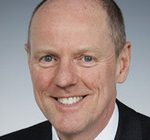
    The speech made by Nick Gibb, the then Education Minister, on 25 April 2012.

    Thank you. It’s great to see so many committed young people here today, and I want to thank the Diana Award for their kind invitation for me to come and speak today.

    I am pleased to be here today. We live in a world of continuous technological and cultural change. We all have experience of the changes in IT and we all are aware of the way society is developing. Keeping up with those changes poses a real challenge to all of us.

    But keeping up with cultural trends – what’s cool and what’s not, and how we ‘should’ behave – is, I think, particularly difficult for young people. That’s because, at school and in our friendship groups, we explore and form our identities. And young people face tremendous pressure, not just from their peers, but from the media, which projects constant messages about what we should look like, what music we should listen to, even how we should and shouldn’t speak.

    An interesting truth about our society is that everyone’s being told that they should be an individual. Yet if we’re different in the wrong way, the social consequences can be serious. As anti-bullying ambassadors will know only too well, it’s the perception that someone’s different – and the intention to cause physical or psychological harm to someone because of it – that is at the root of bullying.

    That difference could be related to a minority group, for example because of disability or sexuality. Or it could be something else entirely which just happens to fall outside the bounds of what’s cool or acceptable – someone wears glasses, they do well in maths, they wear a certain brand of trainers. Some people are bullied because of their success. Tom Daley, who became an Olympic diver at the age of 15, was bullied because of his sporting achievements and had to change schools as a result. He was perceived to be different, and he was bullied for it.

    Technology and the media have a huge role to play in setting the boundaries of what is ‘normal’ or ‘acceptable’, and what is not, largely based on celebrity commentary – who’s hot and who’s not. And the expansion of reality TV programmes like ‘My Big Fat Gypsy Wedding’ and ‘The Undateables’ has encouraged us to look at groups of people and marvel at how different they are, and how different their lives must be compared to our own. They accentuate difference, but they don’t accept it.

    That perceived difference is at the root of bullying is an obvious point. What is less obvious, perhaps, is that people do certain things to avoid being bullied, for instance smoking or extreme dieting. Those kinds of behaviour can be just as damaging to young people’s lives as bullying itself. So when we start to really think about the issue of bullying, we realise that it’s not just people who bully, or people who are bullied, who are affected, but all young people. And every single young person has a role to play in stopping it.

    As Diana Award anti-bullying ambassadors, I know that you play a vital role in tackling bullying in your schools and communities, and I know that we’re going to see some examples of the excellent work that you do. I want to take this opportunity to thank you for the time you give up and the energy you put into such an important cause.

    You will all know as well as anyone that bullying is not an easy thing to address, and particularly now that technology has opened up so many more forums for it. It’s a stark reality in my job that everyone is constantly plugged into what’s happening. I can guarantee that, when I go back to the House of Commons this afternoon, without having told fellow MPs where I’ve been today, someone will ask me how today’s event went, or ‘do I really think such and such about bullying?’ News travels fast.

    It’s the same in the playground. What someone said on a social networking site from the privacy of their own home can be all round the school the next day, via texts, emails, and instant messaging. But funnily enough, although unpleasant remarks about people can be transmitted to a much bigger audience, the fact that it can happen anonymously through technology rather than face to face means it can be better hidden from the teachers and parents who can sort it out.

    The possibility for people to participate in bullying indirectly, and to witness bullying, is far greater than ever before. Everyone can be a bystander. Bullies do what they do to gain social power and status over others. But whether or not the school bully achieves that status is up to the rest of the pupils in the school. Without bystanders to laugh at their jokes and encourage their poor behaviour, a bully is not a leader of their peers – they’re just a bully.

    Bullying is not just an issue for the bully and the bullied. It is something for every single one of us to think about, and to ask ourselves: ‘do I treat others with respect?’; ‘in my daily life, does my behaviour cause other people hurt and upset?’; ‘this edited photo of my classmate might look funny at first glance, but how would I feel if it was a photo of me, and how are they going to feel at school tomorrow?’
    If you laugh at a horrible joke about someone, you may not be directly bullying them, but you’re endorsing the bully’s behaviour. If you forward a nasty text message about somebody, you’re saying to the bully ‘this behaviour is socially acceptable, because it’s funny.’ Actually, it’s not funny. It hurts people and it shouldn’t be acceptable. And it could happen to any one of us.

    For us to be able to be clear about what’s acceptable, pupils themselves have to reject poor behaviour. Every single pupil in every single school needs to have the quiet courage to resist media and peer pressure to conform, to question our own views of normality and difference, and to reject unkind, hurtful behaviour.

    I remember being told at primary school that if something happens on a school bus we should do something about it. But it doesn’t always mean intervening. It means not forwarding horrible text messages. It means not talking about people behind their backs. And it means not playing with children who are horrible to others until they change their behaviour. Each one of us quietly standing up for what we know is right.

    I want every single school to have an ethos of good behaviour, where pupils are kind and respectful to one another not because they fear punishment but because they know that that’s the right way to behave. This is what the very best schools do already.

    Despite a wealth of cultural and social change, one of the great constants we have in our society is a set of rules about how to treat one another. Some people call it manners. Some call it etiquette. Others call it respect, compassion, or even humanity itself. I think it is all of those things. They are fundamental values that allow us to live together and protect us from hurting one another. They are fundamental to society, and they are fundamental to education. Indeed they are the very essence of it, which is why I believe good manners should be a social value that is taught and expected in our schools.

    I believe that every single person has a part to play in preventing and tackling bullying. It is a quiet role. An individual stance: not laughing at nasty jokes, not playing with children who want to bully others, not forwarding on malicious text messages or posting horrible things on peoples’ Facebook wall.

    This is the true power of individuality, of quietly respecting difference, and of standing up for what you know is right. Not gawking at others’ difference or laughing at it, but quietly respecting it and standing up for it. That is the sort of society we want to create for the future, and every single young person in our schools today can have a hand in shaping it. As young people you are the leaders of society’s future change. As anti-bullying ambassadors, you are the guardians of those crucial, universal values. Thank you.